
Senate debates Questions without Notice: Take Note of Answers
Answers to Questions

Kerrynne Liddle SA, Liberal Party, Shadow Assistant Minister for Health and Aged Care
3:08 pm
I move:
That the Senate take note of the answers given by ministers to questions without notice asked today.
I rise to respond to answers to questions. Labor, it's hard to believe you can think it's feasible that, when the pump is dry and when fuel is rationed, there is not a supply issue. When last in government, the coalition implemented a comprehensive fuel security package which included the establishment of a domestic fuel reserve through a minimum stockholding obligation, which safeguarded key transport fuel stocks at a baseline level, with a 40 per cent increase in diesel stock holdings from mid-2024; delivered support to ensure Australia's long-term refining capabilities through the fuel security services payment; and established a diesel storage program.
The coalition has written to the Minister for Climate Change and Energy seeking assurances the government has access to up-to-date data on Australia's fuel stocks and an explanation of the strategy in place to ensure adequate fuel supplies. Despite the government claiming there is plenty of fuel supply in the country, there are reports that wholesalers have begun rationing petrol and diesel and some transport companies have been cut out from bulk supplies and forced to purchase fuel at higher retail prices.
In South Australia, three days ago, people were pulling up to bowsers to be let down not just at the pump but by this Labor government—flat-footed, incapable of recognising risk and even less capable of responding to it. They were met with '20 litres of fuel only due to fuel shortage' signs on the bowsers. Another says that it's $200 for those seeking to fill up tanks. Another quote is: 'Sorry, out of order'—let alone $2.23 per litre for petrol and above $2 per litre for diesel. The list goes on. In fact, you only have to look at a fuel app right now to see that, in Canberra, fuel is $2.40. In Darwin, it's $2 45. It's $2.60 in Alice Springs, $2.50 in Adelaide and $2.60 in Port Augusta. It's not just a supply issue; it's also a cost issue, and Australians deserve better answers than the ones we heard today. For tradies, truckies and everyday Australians, the reality, for them, is that the fuel's not flowing—not on the weekend, not yesterday, not today. They need the wheels to go 'round, not your round table.
The coalition has requested an urgent briefing on the current situation. The coalition has asked why the government's publicly reported petroleum stockholding data has not been updated since December 2025 and whether the department is providing the government with daily updates on fuel stock levels across the country. The letter also seeks advice on what action the government is taking to identify industries at serious risk of fuel shortages, including transport, agriculture, manufacturing, mining and fisheries. What steps are you taking to protect those sectors? Angus Taylor, as energy minister, stepped in to save Australia's last two refineries and legislated the Fuel Security Act to ensure that governments had the powers to prepare for exactly this kind of crisis. The issue today is not whether the government had the tools; it is whether it had the judgement to use them. The buck stops with the energy minister and the Prime Minister.
It is on the government. With all the information it tells us it has at its disposal and all the horsepower of the public service, which we know is growing bigger and bigger, they could have ensured Australia had adequate supplies of fuel. You could have ensured that the risk that the conflict in the Middle East posed was able to be responded to. Last week, we sat in here and I watched five ministers cross the floor over and over again. They shouldn't have been in here; they should have been working out what was going to happen in Australia within their portfolios, given the conflict in the Middle East. But, instead, they were crossing the chamber over and over again in here. We know the Albanese government will not and cannot protect our way of life or restore our standard of living. They're not prepared for it nor are they capable of it.

Charlotte Walker SA, Australian Labor Party
3:13 pm
I rise to address the many questions regarding fuel security that those opposite have sought to prosecute this week. Our government is trying to protect fuel security, while we've got those opposite trying to turn the servo into the toilet paper aisle from 2020. This government's job is to keep Australia moving. The opposition seems to think being the panic-buyer rizzler of the news cycle is somehow economic policy. The government is trying to keep Australia's fuel secure and the economy snatched. The coalition is out here posting panic-buying content and wondering why everyone's filling jerry cans. Moments like this demand national unity, but we've seen nothing like that from those opposite. We all know that you're really desperate for your social media clips, so desperate that you'll seek to run a scare campaign on fuel supply.
I think this is wild behaviour from those who claim to care about supply chains. Barnaby Joyce has said that Australia's fuel supply has been made vulnerable because of Labor's climate policies—high-key embarrassing to be so wrong about two policies in the same sentence. Anyway, I digress. Hearing senators and MPs talk about the crisis in the Middle East, which is experiencing a devastating conflict across the whole region, and use it as an excuse to whinge about climate policies in Australia gives me the ick to the highest degree.
Our ministers are in constant contact with fuel suppliers daily to ensure supplies of diesel and other fuel are delivered to retailers. Petrol companies are telling us that their fuel stock continues to arrive on time and in the quantities that they expect. We're also hearing that in some places about a month's worth of fuel is being sold in a couple of days. Jerry cans of fuel are being put on Facebook Marketplace. Bunnings even reckon they're running out of jerry cans. As Minister Ayres mentioned earlier, the government has been in contact with the ACCC to also make sure that everyday Australians aren't being price-gouged at the bowser. We have as much fuel coming through the ports as was coming in before this began. Those opposite know this but choose to ignore it because it simply suits their agenda.
Of course it's important to acknowledge all of the stories that are coming in from across the country at the moment. As someone who grew up in the regions, I understand the fears and the concerns facing our community. I want to urge people in the metro areas in Australia not to panic. There is enough petrol for all of us. However, if you are trying to stockpile, this will hurt regional and remote Australians.
We all know that the coalition is truly, truly broken, but to seek to take advantage of the situation that we're in for political gain is a real shame. Those opposite need to understand, in relation to the words that we use in this place, that people listen to what we say. We have a responsibility to provide facts to the community, not to play into misinformation.
It's ironic that those opposite raise this not only in the context of fuel security but also in the context of cost of living. I'm aware that those opposite aren't too keen on practical things to actually help everyday Australians with cost of living. We can't forget they're the ones who took higher taxes to the last election. It was really good to have a read of their federal election review as well. To those opposite who haven't had a chance to read the election review: I'd really encourage you to do so. It's a great read.
I should also remind those opposite that Angus Taylor, the then energy minister, stored our fuel reserves in Texas. It was our government that actually changed the law to make sure it was kept onshore for when we needed it. But it's nice to see that—perhaps after reading the election review—Senator Duniam said on 2CC that we only have two refineries in Australia because of legislation passed under the former coalition government.
We are not experiencing a fuel shortage; we are experiencing a localised disruption due to a significant spike in demand. People who are panic-buying must stop. At the end of the day, it's hurting our farmers and it's hurting those who put food on our tables. A petrol station manager from my home state, in Mount Gambier down in the south-east, has said that panic buying is creating unnecessary pressure on fuel supplies and collegiate shortages that don't actually exist. They have suggested that people stay calm and buy as usual.
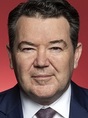
Dean Smith WA, Liberal Party, Shadow Assistant Minister to the Shadow Treasurer
3:18 pm
Everyone knows that the answer to this question is no: is your life better off under Labor? The answer is no—higher energy prices, fewer houses, higher inflation, falling living standards, a trillion dollars worth of debt and higher interest rates. Unfortunately for Australian families and businesses, bad is about to get worse. The discussion today about fuel security is today's challenge—today's crisis—but it will lead to the challenge of tomorrow and next week and next month: rising inflation and rising interest rates. So the precarious situation we are in today is not just for a brief moment; it is for a long time. Higher petrol prices lead to higher inflation, which leads to higher interest rates, and Australian families and businesses will pay for it.
You don't have to believe coalition senators. Listen to what the Deputy Governor of the Reserve Bank of Australia has said today and listen to what the Governor of the Reserve Bank of Australia was saying on the eve of this Middle East conflict. The Deputy Governor of the Reserve Bank has said today that fuel prices will lead to inflation being above the 4.2 per cent that the RBA has already forecast. A crisis in fuel and a lack of preparedness on the government's part are pushing up fuel prices that will put inflation beyond the RBA's forecast. Interest rates will lead to higher pain for Australian businesses and families. The government has left Australians and the economy dangerously unprepared. The deputy governor said that rising inflation is 'toxic' and that high inflation is 'bad for everyone'.
Before the Middle East conflict, the government had let inflation run out of control in this country because it was lazy about restraining government spending. Unfortunately, 2026 is going to be a very difficult year for Australian families. The Governor of the RBA herself said, on the eve of this Middle East conflict:
High inflation imposes real costs on people and the economy. It puts pressure on household budgets, which means people need to spend more time searching for the lowest prices and working out how to make ends meet.
That's the Governor of the Reserve Bank. She also said:
High inflation also makes it harder for businesses to plan.
She said that, when businesses have to spend more time managing rising costs, they have less time to plan how they can grow their business and how they can find productivity improvements.
Today the conversation has been about petrol prices. Next week and next month the discussion will be about higher inflation and higher interest rates because the government has failed for four years to be responsible—to restrain government spending in order to keep a lid on inflation and a lid on interest rates. I started with a question: is your life better under Labor? The answer today is no, and the answer tomorrow and next week and next month will also be no. (Time expired)

Raff Ciccone Victoria, Australian Labor Party
3:22 pm
Just for the record, I should say—Senator Smith mentioned inflation—that, when Labor first came into office after the 2022 election, let's not forget that those opposite had an inflation rate of 7.8 per cent. After we came in, it was down to 6.1 per cent, and then, by the end of 2024, two years after, the hard work of both Senator Gallagher as Minister for Finance and Treasurer Jim Chalmers in the other place managed to get inflation down to 2.1 per cent, and that is a fact. That is a fact.
It is another fact that the now opposition leader, Mr Taylor, when he was the energy minister, made arrangements that he put in law to have our fuel reserves in Texas, over in the United States of America—not a Texas here in Australia but overseas. When we came into government, we made sure we changed those rules and changed those regulations to make sure that more of that fuel was actually stored onshore here in Australia. In case the worst ever happened, we would have enough in the supply chain domestically before we would have to call on our other reserves over in the United States.
But we understand that people are feeling uncertainty now and feeling very worried about it. That's just human nature. We get that. But the government have listened, and we are making it very clear that we want to reassure them, not scare them like those opposite.
Our nation's fuel reserves are secure. We are above our minimum domestic fuel obligations, and our reserves are stored here in Australia. We're also fuel secure because the government has acted since it was elected back in 2022—and thank God for that. The government has also been very clear that the international crisis we are seeing right now is not one where businesses are seeing a commercial opportunity to raise the cost of petrol but one impacted by what is happening over in the Middle East.
It is also worth mentioning and putting on the record that we have—this is the domestic reserves—36 days of petrol, 29 days of jet fuel and 32 days of diesel. That's a lot more than when those opposite were in government. This shouldn't be a competition, quite frankly, because the people in the gallery and people listening today are sick and tired of the politics that are being played out, and sick and tired of some in this place trying to scare the bejeezus out of people, who are now rushing to petrol stations around their suburbs and their townships both in metropolitan and regional parts of Australia trying to get fuel supply—and I don't blame them, because they are listening to information that they shouldn't be listening to. This fact is true: we do not have a fuel shortage in this country. There is enough fuel in Australia. When we went through COVID, people were panicked—and rightly so—but there was enough in the supply chain to make sure that we had essential goods for people so that they could continue to feed their families.
Petrol companies have informed us that fuel stocks continue to arrive in Australia on time—and, they are also saying, in the quantities they expect. It's also clear that there have been some impacts on the supply chain, but, again, unfortunately, it goes to some of the scaremongering we are seeing. The National Oil Supplies Emergency Committee, which brings all the states together, has already met twice now, as an information-sharing forum, and has considered that there is no shortage of supply.
As Minister Ayres also mentioned in question time—and I want to repeat this—the government is now doubling penalties for any misleading conduct in the fuel market, with fines increasing to as much as $100 million for serious breaches. We're putting petrol companies on notice. These are stronger penalties that send a very clear message that misleading Australians or exploiting uncertainty will have very serious consequences. The government is also ramping up surveillance of suspicious price spikes to ensure that companies can't take advantage of global events to drive up prices unfairly.

Maria Kovacic NSW, Liberal Party, Shadow Assistant Minister for Women
3:27 pm
I stand here and I'm confused by the comments that come from the other side of the chamber, as if there is a suggestion that those on this side of the chamber are driving some form of misinformation in relation to fuel shortages and fuel price increases. The reality is that, when we've asked these questions of the minister about what is occurring, there's been reference to misinformation and panic buying. Why has this occurred? The panic buying is occurring because Australians don't have clear guidance from government. We have asked questions.
I listened in silence. Deputy President, I expect to be heard in silence as well.

Maria Kovacic NSW, Liberal Party, Shadow Assistant Minister for Women
When we ask questions around why the government isn't acting as it should and whether it has identified evidence of hoarding or bottlenecks or supply being withheld, there's prevarication. The reality is that there is evidence of that. People are coming to us and telling us about that. There are people who need fuel for their businesses, for their farms and for their vehicles, and they're not able to get it. Pointing the finger at somebody else isn't the appropriate way to manage the situation at hand.
Minister Ayres talked about how purchasing behaviour has changed—people are buying more, and it's shaped by what's occurred in the last few weeks. It's incumbent upon the government, the Prime Minister and the Energy Minister, Chris Bowen, to actually stand up and say: 'It's okay. We have this under control. We have sufficient supplies of petrol, of diesel and of aviation fuel for Australia's needs. We have sufficient supply of petrol, diesel and aviation fuel to ensure that our supply chain remains intact.' But we haven't had those answers, and that's why people are worried. That's why people are concerned.
Not everybody lives in a city. Not everybody goes to an office job and can jump on public transport or is fortunate enough to walk to work or to school. There are some people who have to use their vehicles in order to be able to effectively run their businesses or get to work, and they want to be certain that there is a stable supply of fuel in our country. When Senator Canavan asked questions around Pelican Airlines and Ripple Creek Transport and Senator Nampijinpa Price asked questions about a petrol station in the New England region, instead of being answered genuinely, those questions were answered with disdain. It was questioned if the petrol station actually exists. It does exist. Australians are telling us about their experiences.
The purpose of this chamber, and particularly of question time, is for us to ask those questions of government. It's not disdainful for us to ask that. It's not misinformation if we ask a question based on information that we've received. It is incumbent upon the government to answer those questions. That's the purpose of this very chamber. To be insulted because you asked a question about something that might be uncomfortable most properly reflects the problems that the government has in managing the economy and in managing the serious issues that we have at hand at the moment.
One of the other things that really interested me was that, in an answer to Senator Canavan, Minister Ayres talked about the minimum stockholding obligations—which, indeed, the coalition put in place—and 'other measures', but he didn't tell what us a single one of those measures is. I put it to the minister that there are no other measures, that nothing else has been done, and that Australians are right to be worried about the fuel supply, to want to have questions answered in relation to the fuel supply and to be worried about what will happen if fuel prices go up even further, given that Australians have suffered nothing but a cost-of-living crisis under this government. Obviously, there are other crises include the housing crisis as well. Australians are paying a great deal for the errors of this government.
Question agreed to.