
Senate debates Bills
Appropriation Bill (No. 1) 2025-2026, Appropriation Bill (No. 2) 2025-2026, Appropriation (Parliamentary Departments) Bill (No. 1) 2025-2026; Second Reading

James Paterson Victoria, Liberal Party, Shadow Minister for the Public Service
6:46 pm
I rise to make a contribution on behalf of the opposition on Appropriation Bill (No. 1) 2025-2026, Appropriation Bill (No. 2) 2025-2026 and Appropriation (Parliamentary Departments) Bill (No. 1) 2025-2026. Of course the opposition will not be opposing the passage of these bills, just to put minds at ease on the other side of the chamber. As is normal practice, we'll be facilitating this because it is important to ensure the ongoing usual operations of government. But I want to take the opportunity to speak on these bills to set out where we do disagree with the government when it comes to fiscal policy. Our support for this legislation does not imply agreement with the government's approach to economic or budget management, and especially that of the Treasurer, Dr Chalmers.
We are deeply concerned about the direction of fiscal policy under this government, and I think these are concerns which are increasingly being shared by the Australian people. Our concerns were especially highlighted during Senate estimates recently when officials from the departments of finance and treasury gave significant evidence about the government's mismanagement of our budget in recent times. In the 2024-25 financial year, the Commonwealth raised $717 billion in receipts, which is equal to 25.9 per cent of GDP. That is the highest level of revenue collected as a proportion of our economy in 25 years. The last time the federal government collected that much revenue as a proportion of GDP was in 2000-01 financial year under the Howard government. But the difference was that, under the Howard government in 2000-01, the budget was in surplus, not in deficit, to the tune of $3.25 billion, and it remained in surplus thereafter for the rest of the Howard government's term. This is in stark contrast to this year's budget which produced a deficit of $10 billion, even with that 25-year record-high revenue.
Thanks to Senate estimates, we also know that this was a deficit of choice. In the last financial year, the government made $22 billion of net spending decisions, as Finance officials admitted. In effect, the government chose to spend $22 billion more than it offset in savings, and, had they instead fully offset that new spending, they could have delivered a surplus of $12 billion. As officials from the treasury department later admitted, this is a breach of the government's own already very rubbery fiscal rules—in particular, their commitment to bank most of the revenue upgrades they've received, and their commitment to keep spending low until debt as a proportion of GDP is falling.
Dr Chalmers is the luckiest Treasurer in generations. He has benefited from $370 billion of higher revenue than was forecast when Labor came to office in 2022, and yet the 2025-26 budget projects an eye-watering deficit of $42 billion, with large deficits projected not just across the forward estimates but as far as the eye can see in the medium term as well. The causes of these increasing deficits are not complicated. They are not due to a lack of revenue. Spending under this government is out of control. Payments now total 26.2 per cent of GDP and, outside the pandemic or an international financial crisis, you have to go back nearly 40 years to 1986-87 to find an Australian government spending at such a rate. Spending is at a 40-year high; therefore, revenue, at even a 25-year high, is not enough to cover the difference, and the budget is now back in deficit.
Those opposite sometimes like to say that the Howard government had high levels of revenue, and that's true. But what the Howard government did differently, particularly under then treasurer Peter Costello, was use those economic good times to reduce taxes, deliver services and pay off debt. They created the Future Fund and left office in 2007 with net assets, not debt. In contrast, the Prime Minister and Dr Chalmers are running up larger and larger deficits in the good times, meaning Australia will be ill prepared for future economic shocks. We know that debt is forecast to rise to more than $1 trillion this financial year for the first time ever. The government projects that it will reach $1.2 trillion of debt by the end of this term. That would have been absolutely unthinkable a decade ago.
We in the opposition are not the only ones making this point. When the Reserve Bank governor, Michele Bullock, says that Australia needs to 'make hay while the sun shines', she is sounding the same alarm. Her warning that government spending is 'growing very quickly and revenue's not as strongly' comes as the economic weather begins to turn. The spending numbers do not lie. In the last financial year, real spending growth was 5.5 per cent, about four times faster than the economy. These are numbers which would make even former treasurer Mr Swan blush. His budgets managed an average spending growth of just two per cent.
The Treasurer can stand up at press conferences and talk about restraint all he likes, but, on his watch, spending is increasingly unrestrained and deficits are getting larger, not smaller. Dr Chalmers has made no secret of the fact that he idolises Paul Keating and seeks to emulate him, and, indeed, his budget strategy appears to have emulated that of Mr Keating, delivering what John Howard once described as 'five minutes of economic sunshine'. We've already seen the best finances that this government can produce in their first term, and those weren't particularly good. It appears it will be all downhill from here.
These budget failures have real consequences for everyday Australians. Spending is now $160 billion, or $16,000 for every Australian household, higher than when this government came to power. The cost of living is only getting worse, and the consumer price index results for the June quarter have told this story. Electricity rose 8.1 per cent in that quarter, following a 16.3 per cent rise in the March quarter. Rental prices rose 4.5 per cent over the 12 months to the June quarter. Fruit and vegetables are up 4.3 per cent. Garments rose 3.5 per cent, and footwear rose 5.7 per cent. As much as the government crows about the headline inflation figures, when you drill down, this has not been the experience for most Australian households, who are struggling to cope on an ongoing basis with price rises to basic family necessities. It's no wonder, then, that, in the face of these numbers and Dr Chalmers's out-of-control spending, the Reserve Bank has reduced interest rates far more slowly than expected a year ago and far less than many other countries around the world.
Another concern for our economy on this government's watch is the unemployment rate. The seasonally adjusted rate in September rose to 4.5 per cent, about a point higher than when Labor first took office. The trend is now clear. After the coalition government brought unemployment down following the pandemic, under Labor it is creeping up, slowly but surely. It's extraordinary that, despite all of this uncontrolled spending, the government still can't reduce the pressure of the cost of living and is seeing unemployment increase.
At the same time, we're seeing the biggest drop in solvent businesses in our history. Private enterprise is shrinking while the public sector swells—a seriously dangerous imbalance for any economy. As the Australian Industry Group has been warning for some time, what growth there is in the Australian economy has been almost entirely driven by the nonmarket sector. A year ago AiG warned that 85 per cent of jobs created in Australia in the previous quarter had been from the health, education and public administration sectors. In 2025 it has been no better. This government is being propped up by a growing public sector as local private enterprise continues to struggle. This is clearly unsustainable.
Just as concerning is the growing evidence that the basic expectations of government are not being met. For example, defence, our most sacred duty, is being asked to do more with less. Just last week the Australian newspaper reported:
The Chief of the Air Force, Stephen Chappell, has initiated reviews of capability and sustainment costs as part of a service-wide push to "mitigate overspending" and "address budget challenges".
The same article noted:
… Chief of the Defence Force David Johnston has capped the number of days ADF reservists can work at 150 a year, down from 200.
In a world that's growing more dangerous, Australia cannot afford a government that weakens its own shield. The first duty of any nation's budget is to keep Australians safe. Yet, in a period of out-of-control spending more broadly, the Defence Force is making cuts on the frontline, and over the last three years we've seen a weakening of our borders.
To ensure the normal operations of government services, the opposition will, of course, allow these appropriation bills to pass the Senate. But let there be no doubt that we will continue to hold this government to account for their increasingly poor economic record, which has resulted in record spending, higher power prices, increased food costs, interest rates coming down slower than anyone would wish and slower than the rest of the world, and unemployment growing higher.

Jane Hume Victoria, Liberal Party
6:56 pm
I rise to speak on the Appropriation (Parliamentary Departments) Bill (No. 1) 2025-2026, Appropriation Bill (No. 1) 2025-2026 and Appropriation Bill (No. 2) 2025-2026, collectively known as the additional appropriations bills. These bills determine exactly how taxpayer dollars will be spent for the rest of the financial year. This is a decision that obviously deserves scrutiny, but it certainly doesn't require a rubber stamp. That said, the opposition will not be opposing these bills. We recognise that they are a necessary mechanism for the continued functioning of government, but do not mistake this for one second as a pass.
The reckless spending, weak discipline and waste that have defined this government are not things that we support, and they are not things that we will let go unchecked. Every dollar that the government spends is a dollar that is earned by hardworking Australians. Government spending is a declaration of priorities. These bills, collectively, tell Australians everything they need to know about Labor's priorities. Appropriation is not simply an act of administration; it's an act of trust—a trust that governments will be spending your money carefully, wisely and only where necessary. The Albanese government has time and time again betrayed that trust.
This government is taking in more revenue than any government in 40 years. There is more money rolling through the door. There's $717 billion in receipts. It's quite extraordinary. That's equal to 25.9 per cent of GDP, and yet it's still running deficits. That's the highest level of government revenue since 1986-87, as a percentage of GDP. It's equal to the level achieved under the Howard government in 2000, but with one crucial and stark difference. The Howard government ran a surplus. It used its strong revenues to do what is most important, and that is to pay down debt. This government, however, does the exact opposite. It spends every single cent that it collects and then some. After it has spent your money, it then borrows more. It treats the public purse—the money of ordinary, hardworking Australians—as its own personal bailout fund.
That's not the only record that Labor has managed to break either. The Albanese government is spending 26.2 per cent of GDP. That is the highest level outside of a pandemic or financial crisis in nearly four decades. Real spending growth is 5.5 per cent. That is almost three times the rate under the Rudd-Gillard-Swan era. Spending is now $160 billion higher than when the government came to office. That's a $160 billion blowout, or, put another way, it's $16,000 taken from every single household in Australia. That's not budget restraint; that's reckless spending dressed up as responsibility. Wherever there is a chance to make a rational, commonsense decision, Labor actively chooses to take an opposite or ideological path.
You don't have to trust me on this. Both a former Treasury secretary, Ken Henry, and the former RBA governor Philip Lowe have urged spending restraint. As Dr Lowe put it last year, it seems to be, 'Where there is a need, we'll spend.' The current RBA governor, Michele Bullock, has sounded that alarm as well. She warns that government spending is growing very quickly and revenue not as strongly. When she said that, she also said, 'We need to make hay while the sun shines.' She wasn't talking about farmers there, clearly; she was talking about the Treasurer. She was sending him a message of fiscal restraint. Did he listen?
Independent economists are just as clear. Stephen Walters, the chief economist of Optimal Economics, called the lack of fiscal rules in place by this government a key reason that Australia has fallen into a budget black hole. He pointed to the root of the problem. He said it was 'one of the first substantive things that Treasurer Chalmers did back in 2022' and 'his first big mistake'.
Fiscal rules are not there to be bureaucratic tools. They are not there for decoration. They are not there to put unnecessary grit in the wheels. They are a discipline. They are what keeps spending contained. That's what stops the natural urge of governments to spend and spend more and more. They keep spending disciplined, transparent and sustainable. When those rules are thrown out, when they're ignored, when they're dismissed, accountability disappears. Deficits don't just happen; they then become a habit. You don't need to look too far into those blue budget books to see that that habit has already set in.
Rather than taking these warnings seriously, the government keeps spending. They spend as though interest rates don't matter. Maybe they don't to those who sit on the benches, but they certainly do to ordinary Australians—ordinary Australians who might have a mortgage, a personal loan or a car loan. Maybe they have a business loan or an overdraft. That is to whom interest rates really matter. The government spends as though debt will never come due, and perhaps it won't under this government. Perhaps they will all be long gone, kicking up their heels in a happy retirement, while that debt gets paid for by the next generation. They spend as though those future generations won't be left to clean up their mess, but they will.
Labor's addiction to spending has kept inflation higher for longer. You don't need to believe me; this is what economists are saying. This is what central bankers, administrators and regulators have said. This is the consequence of a government that believes that every problem can be solved by throwing a bit more money at it. But it's not their money they are throwing; it's your money that they are throwing. They have jettisoned the sensible fiscal rules, the first big mistake of the Treasurer, as has been said, and now, as the economic weather turns, that rainy day fund is empty.
When Labor came to office, it inherited some of the strongest terms of trade this country has ever seen. It inherited record revenues and a world economy that was still recovering from COVID. Four years on, we have debt as far as the eye can see—$1 trillion of it, no less—and we have no plan to repay it. There are also deficits as far as the eye can see. That red ink extends beyond the pages of the budget books.
Appropriation bills aren't just a formality; they are a reflection. They're a reflection of the values that guide this government's decision-making. They show whether a government believes in discipline or whether it believes in decadence. They show whether a government believes that Australians can be trusted to spend their own money or whether they think that Canberra knows best. Australians deserve better than a government that spends like there's no tomorrow and then acts suddenly surprised when the bill comes due. If the kids can realise that money doesn't grow on trees, then why can't the Labor government? The coalition has a record, a decades long record, of responsible economic management and of cleaning up Labor's mess time after time, and we will be able to do that again. It won't be easy and it won't be fun, but it will be necessary.
The government simply cannot continue to put unsustainable spending on the national credit card for future generations to pay back. Australians should know that the coalition will be guided by our values and principles of freedom and choice, of personal responsibility, of aspiration and of enterprise. We commit to restoring fiscal discipline, to rewarding effort, to encouraging business and enterprise, to giving the government focused on targeting what's important to achieve and necessary to achieve not what is nice to have, and to act to deliver for intergenerational fairness, backing a smaller and enabling government, because big government creates small citizens. Responsible government starts with restraint, and only the coalition has the record and the resolve to deliver that.
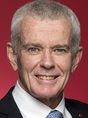
Malcolm Roberts Queensland, Pauline Hanson's One Nation Party
7:06 pm
Let's call net zero what it really is: fraudulent, supposed science covering up income redistribution protected with big brother government measures—that's it—making everyday Australians economically, environmentally and socially worse off. Net zero measures are driving up the price of electricity and increasing prices with flow-on effects throughout the economy—food, groceries, clothing, transport, travel and accommodation. Everything you buy goes up if electricity goes up. Manufacturing, smelting and heavy industry all use electricity and are struggling to stay in business.
In 2024, there were 5,136 closures of established businesses, meaning those in business for five years or more. In 2024, there were 10,497 business insolvencies—up almost 30 per cent on 2023. Has anyone on the Greens benches bothered to ask what these Australians who have lost everything think about what you and net zero have done to their businesses? Has anyone asked? We have. Some of these measures are idiocy—green hydrogen, green steel, green aluminium. This technology does not work. That is proven. It does not work, and it never will. Physics and chemistry tell us that. It's nothing but a scheme to farm parasitic subsidies, without which the idea would not even be contemplated.
These appropriations bills channel billions of dollars of taxpayer funds into the pockets of crony capitalists, lining up like pigs in a trough, and there's Minister Bowen, throwing more and more taxpayer money into the trough—wasted, but who pays? The people pay. Small businesses pay. These appropriation bills contain significant allocations for net zero measures.
First, for the Department of Climate Change, Energy, the Environment and Water there is $1,234,567,890. There's $1.2 billion for what? It's support for net zero emissions by 2050 through renewable energy initiatives and emissions reduction programs. This is the stuff that comes out of the south end of a northbound ball. Second, there is $987,654,321—nearly $1 billion—for what? It's funding for decarbonisation projects and clean energy infrastructure to achieve low emissions targets. Carbon is in every living organism's every cell. And then, third, there is $456,789,123, almost half a billion dollars. What have we racked up so far? It's $2.7 billion. For what? Investment in carbon abatement strategies and sustainable development to mitigate climate change impacts—carbon is in every cell of every living organism. This is just one appropriation bill. This gravy train for the government's parasitic, big-business mates—collecting subsidies, feeding off subsidies—has been going on for years, encouraged by both major parties and the Greens. Yet the Albanese government is projecting deficits in every year of the 48th parliament totalling over $100 billion. That's money that will be needed to be borrowed and debt that everyday Australians will have to repay—$3,700 for every man, woman, baby and child in this country plus interest, and we're already paying interest in such a large quantity that it's almost the single largest line item in the budget.
A One Nation government will abolish the net zero transition. Our policy includes terminating all projects and removing all carbon dioxide accounting requirements on businesses, repealing fraudulent flood maps being used by insurance companies to price gouge consumers and to generate record profits for mostly foreign-owned insurance companies. Think of BlackRock, Vanguard, State Street, Colonial First State et cetera, the global wealth funds. They own and control our insurance companies. We will terminate any existing project that's at a stage where termination is cheaper for the taxpayer than the continuing or where the project is too damaging to the natural environment to continue operation. We will, of course, use the generation that has been put in place until they inevitably fail in 10 to 15 years. And, most importantly, our immigration policy will remigrate hundreds of thousands of people who have broken their visa conditions, and we will limit new arrivals to people holding skills we actually need, especially in housing—remigrate, send home, deport.
Remember, net zero is not reducing carbon use per person. It's supposedly reducing Australia's carbon dioxide production to 2005 levels in total by 2035—supposedly. Think about this—Australia's population has grown by 40 per cent since 2005. That means we all have to reduce our carbon dioxide production by an extra 40 per cent, and this figure goes up with every new migrant arrival. The pain is only just getting started unless the Senate has the courage to stop this madness and the integrity to stop this madness. Join One Nation in saying to this government, 'Not one cent more—you've blown trillions.' I move the second reading amendment on sheet 3466 standing in my name:
Omit all words after "That", substitute "further consideration of the bills be made an order of the day for the first sitting day after amendments are circulated removing all funding for net zero measures and the administration of net zero measures".

Maria Kovacic NSW, Liberal Party, Shadow Assistant Minister to the Leader of the Opposition
7:13 pm
This government is running deficits because record levels of revenue are being outstripped by record levels of spending and record levels of spending growth. What does that mean? That means this government is taxing you more. You are paying more in tax, and this government is then spending that money. This is not the restraint that the Treasurer talks about, and this is not how we build a strong future for the generations that come after us. We are setting up the next generation to pay off even more of this government's debt. We are setting up this generation to not even be able to own their own homes—just pay off the debt of this generation.
Earlier today, we had some discussion around the five per cent home deposit scheme, and I heard a couple of the senators on the other side talk about how groundbreaking that is for young Australians. It would be if there were any houses to buy, but there are no houses to buy. When you spend government funds, you are spending taxpayer funds. The government has no money. That actually comes from taxpayers. What the government has decided to do is to effectively guarantee mortgages so that only a five per cent deposit is required, with no income caps and no oversight measures whatsoever, but they haven't done anything about the supply side of housing—nothing at all—which means we have more people coming into the market for the same number of homes. I'm not an economist, but I know what's going to happen next: the prices of those homes are going to go up because the supply hasn't increased but the demand has.
We have yet another problem in relation to that: the misconduct of the CFMEU in this country and its impact on housing supply. The handbrake that it creates on the supply of homes in this country when young people are not just not able to buy their own homes but have to line up in tens, twenties and thirties to rent a home is entirely unacceptable. And then those opposite sit there and say: 'We're doing a good job. We put the CFMEU into administration.' The administration isn't working. We've all seen that over the last few weeks in the media and over the last few months. But guess what. The Australian taxpayer is paying for that administration. Again—ka-ching!—it is some more spending that doesn't deliver outcomes.
None of us have a problem with spending that delivers outcomes—spending on health, housing, critical infrastructure—but we do have a problem with wasting money that then creates debt for future generations. The RBA is increasing caution on reducing interest rates in part because of this government's high spending. It is hurting all Australians, but it is especially hurting young Australians. It is hurting them in every possible way and leaving them the debt burden of the decisions of this government, and that is not okay. Both Ken Henry and Philip Lowe have called for spending restraint, with Philip Lowe noting in August:
After COVID, we haven't really got back to a clearly articulated framework for decision-making with fiscal policy.
It seems to be that, where there is need, we will spend. That's not how you run a country. You need to make decisions about where to best place taxpayers' money.
Every dollar in the budget, every dollar that's dealt with in the appropriation bills, belongs to the Australian taxpayers. They don't belong to government. Those of us in this place, particularly the government, are custodians of that money. We don't own it. It's not ours to do with as we please. Senator Hume made a comment earlier about what the Governor of the Reserve Bank, Michele Bullock, said about Australia needing to make hay while the sun shines. That's her warning to this government about what they should do in terms of the record revenue they are taking in, but they're not doing that. This government is spending the money that should be used to invest in our future. Let me be clear: there is a big difference between spending and investment. They are two very different things. Australians deserve a government that actually knows the difference between those two things, and it is not fair to any Australian that they are paying more and more out of their personal incomes in tax to pay for that spending. That's part of the reason this government is now presiding over the biggest collapse of living standards in the developed world. I will repeat that. Labor has presided over the biggest collapse in living standards in the developed world, here in Australia, while fuelling an addiction to spending that is driving up the cost of living and leaving a $1.2 trillion debt bomb for the next generation, for my children and my grandchildren and the children of others in this place and outside of this place.
As Senator Hume said, it doesn't go away. Somebody has to pay for it, and we can't look the other way, think it's not our problem and kick that can down the road. But Australians today are also paying the price. They are paying the price through higher mortgages; they are paying the price through higher power bills, higher grocery prices and higher rents; and they will pay the price tomorrow as Labor locks in a decade of deficits and intergenerational debt. Intergenerational debt is the debt that the future generations will pay for the decisions of this government when they are unable to buy the homes that this government hasn't been able to create supply for. What are we creating for our future generations? What are we giving them? What have we done to that social contract where we hand over something better than what we got? We are not doing that anymore. We are handing over a worse outcome to future generations, and we should be ashamed of that. This government should be ashamed of that.
I talked about an increase in mortgages. We've had, I think, three rate cuts under this government. We've had 12 rate increases. I often see the celebration of those three rate cuts. The average Australian with a mortgage is still paying $1,800 a month more. That's a lot of money. That's over $20,000 a year that people have had to change their lives to be able to pay to keep their homes. That's a big deal. That's not something for us to ignore. And that's only if people are lucky enough to have been able to buy their own home to be able to own their own home. We actually have to think about those impacts.
But let's think about young people who can't afford to buy their own home—for a number of different reasons, but now because the prices of those homes have gone up because we just don't have the supply. Whilst they are trying to do that, they are paying 39 per cent more for their electricity; they are still paying 21 per cent more for rent while trying to save for that home; they're paying 16 per cent more for food; they're paying 15 per cent more for health; and, if they are still learning or studying or improving their skills, they are paying 17 per cent more for that as well. This is unacceptable, and every minute we are paying $50,000 just on interest on Labor's debt. Every dollar that we pay for interest is a dollar that we cannot spend on the safety net or on Medicare or on schools or on hospitals. This is not sustainable, and it needs to stop.
The coalition will be guided by our beliefs in freedom, choice, aspiration and enterprise. We will restore fiscal discipline to this country; we will reward effort and encourage enterprise; we will keep government focused and targeted; we will act to deliver intergenerational fairness so young Australians can afford to buy their own homes and don't have to pay off the debts of this generation; and we will back a smaller, enabling government.

Nick McKim Tasmania, Australian Greens
7:23 pm
I rise to speak to Appropriation Bill (No. 1) 2025-2026, Appropriation Bill (No. 2) 2025-2026 and Appropriation (Parliamentary Departments) Bill (No. 1) 2025-2026, which provide remaining appropriations for government expenditure and funding for the government's 2025-26 budget measures.
Inequality in Australia is spiralling. More and more people are struggling to make ends meet. They haven't got enough money to get their teeth fixed. They are really struggling to put a decent feed on the table for themselves or their families. People are having to make difficult or sometimes nearly impossible choices about whether to pay the rent or the school levies or to service their mortgages. At the same time as millions of Australians are living under the stress of not being able to afford the basic necessities of life, big corporations are raking in record profits, CEOs are pocketing eye-watering bonuses and billionaires and the one per cent of the wealthiest in this country are watching their bank balances go through the roof while they don't even lift a finger.
We live in one of the richest countries on earth, yet our wealth and the resultant power and influence are concentrated in fewer hands than before. The people who are working the hardest are in many cases the people who are getting left behind the quickest. Those who have the most keep on making more. It is deeply, bitterly unfair. It is an absolute rip-off for millions of Australians. If you are a nurse, a cleaner, a plumber, a teacher, a carer or a hairdresser, you go to work, work hard and pay a lump of what you earn in tax. But one per cent in this country, the small number of superwealthy people in Australia, don't have to work. Their wealth generates yet more wealth—in many cases without them even lifting a finger. Do you know what? Their wealth and the increase in their wealth do not get taxed in Australia. It is a giant rip-off, and it is deeply and fundamentally unfair.
We need to tax extreme wealth in this country, and we can use the revenue to fund things like putting dental into Medicare so that people don't have to pay to get their teeth fixed. We can use it to fund things like completely wiping student debt so that we can give young people what just about everyone in this place had access to, and that is a free university education. One of the great triumphs of the proponents of this deeply and bitterly unfair society that so many of us are living in now is to convince so many people that a better life is not possible and that a fairer society and a fairer economy are not possible. But those things are possible.
The only reason we don't have a fairer society and a fairer economy is the political choices that are being made by the people in this building and in this chamber. I say to people who are struggling that, if you can't afford to get your teeth fixed, if you can't afford to put a decent feed on the table for you and your family, if you can't afford to pay the rent, if you can't afford to service your mortgage or if you can't afford the school levies, it is because the Labor and Liberal parties won't make the one per cent extreme wealthy people in our country pay their fair share of tax. It's because the Labor and Liberal parties won't force the big corporations to pay their fair share of tax.
One in three of the biggest corporations in this country pays absolutely no tax whatsoever. Seventy-nine companies in Australia have gone 11 years, at least, without contributing a cent to this country, which made their obscene profits possible. Gas corporations dig up our resources for free amid huge amounts of greenhouse gases, sell our resources overseas, walk away with billions of dollars in profits and pay no tax at all. When you go to work as a teacher, a cleaner, a hairdresser or a plumber and you are paying more tax than one in three of the largest corporations in this country, you know you are living in a system that is absolutely cooked, and you know you are living in a system that is rigged against you.
Coles and Woolworths pushed up their profits by 17 per cent and 14 per cent respectively during the worst cost-of-living crisis in decades. Do you know what? Companies like Coles and Woolworths have learned one thing in Australia: greed pays and price gouging pays. Whether it's the supermarkets, airlines, banks or insurance companies, they're price gouging away because Labor and the Liberals will let them price gouge. They are raking in obscene profits and, in most cases, are paying either no tax or nowhere near their fair share of tax. They know that greed pays, because successive governments have shown them that there is no consequence for price gouging and greed if you are a big corporation.
Working people are paying the price for this. They are paying the price at the supermarket check-out. They are paying the price in their rents and mortgages. They are paying the price on their insurance premiums. They are paying the price on their airline tickets, if they are lucky enough to be able to afford those things. They are paying it when their kids can't see a dentist or when their wages are not keeping up with the bills that they have to pay. That's because this economy, crafted by the neoliberal duo in this place, the duopoly of Labor and Liberal, rewards greed and punishes effort. This is a system built to protect wealth, not to share wealth.
Governments give away billions in things like fossil fuel subsidies every year and billions in property tax breaks to housing speculators that make homes more expensive. All the while, they say to people: 'There's no money. There's not enough money for housing, not enough money for health and not enough need to raise income support above the poverty line.' There is enough money for those things. What there's not enough of is political will. Inequality in this country is not an accident. It's not a bug in the system. Inequality in Australia is a feature of our economic system. It is the result of decisions made in this building to keep the wealthy happy, to keep the big corporations happy, to keep the big political donors happy, to protect the profit models of corporations and to cling to an economic model that is deeply and bitterly unfair and that fails most people in this country.
The Prime Minister's decision to override his Treasurer and his plan to just creep the balance a little bit more towards fairness and tax the ultrarich sends a clear message: the top end are going to be looked after, and they're going to be looked after whether we have a Labor or a Liberal government in this country. Looking after the top end, looking after the big corporations and looking after the superwealthy one per cent is why we still have a housing crisis. That is why wages are so stagnant. That is why billionaires have, in some cases, doubled their wealth since the start of the pandemic. If we made big corporations pay their fair share of tax, if we taxed extreme wealth in this country, we could fix the housing crisis, we could expand Medicare to include dental health and mental health and we could guarantee people an income that they could actually live on with a modicum of dignity. The money is there; what is lacking is the political will. Greed has been written into our tax laws and our economic settings. It's been normalised for decades by successive duopoly governments, who serve the same donors and take advice from the same lobbyists.
But here is the thing: this deeply, bitterly unfair society and economic system does not have to be so deeply and bitterly unfair for so many people. The rampant inequality in Australia can be undone. We can actually make the superwealthy, the megarich, pay their fair share of tax by taxing wealth. We can make the big corporations pay their fair share of tax by putting in place an excess profits tax on corporate profits. If we were to do just those two things, we could not only fund dental into Medicare, we could not only wipe all student debt, we could not only increase income support above the poverty line; we could do all those things, and more, and still have plenty left over. A better world is possible.
I'm here today to challenge this sense of despair, this lack of hope, in so many people. It's not their fault that they feel like that. The reason they feel like that is that the political duopoly in this country want people to live in despair. They want people to live without hope for a better, fairer life for themselves and their families, because hope, genuinely held hope, is a dangerous thing for the status quo—a very dangerous thing for the status quo.
So I say to people: have hope and believe that a better world is possible, because it is. The Greens are going to fight every day for a better, fairer society and a better, fairer economy to end the deeply and bitterly unfair wealth inequality in our society—to make the megawealthy, the extremely rich, pay some tax on that wealth that in many cases continues to grow at eye-watering rates, despite the fact that those very people do little or, in some cases, nothing to see that wealth grow. It is grossly inequitable and grossly unfair.
I say this as I close my contribution. I understand that you don't want people to feel hope. I understand you want people to live in despair—and that, unfortunately, tragically, is where millions of Australians live. And I've been there in my life. I know what it's like to live in grinding poverty. I know what it's like to not be able to afford to pay the rent. I know what it's like to have to eat crappy food because you can't afford a decent feed for yourself. I know what that's like. When you live that way, it is very easy to despair; it is very easy to lose hope. You can't see a way out of the mire of poverty that you are entrenched in. I totally get why people lose hope. I totally get why people live in despair. That's why the millions of Australians that live in grinding poverty—including many who work full time, I might add—need champions in this place, and that's what the Australian Greens are here to do: to fight to tax wealth and to fight to make big corporations pay their fair share so we can have a fairer, more equitable society in this country.
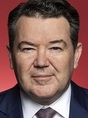
Dean Smith WA, Liberal Party, Shadow Assistant Minister for Foreign Affairs and Trade
7:38 pm
I rise also to speak on Appropriation (Parliamentary Departments) Bill (No. 1) 2025-2026, Appropriation Bill (No. 1) 2025-2026 and Appropriation Bill (No. 2) 2025-2026. These bills provide the legislative authority for the Commonwealth to draw on the Consolidated Revenue Fund to finance the government's programs for the remainder of this financial year—roughly, the final seven-twelfths of 2025-26. While not controversial in form, they are deeply revealing in substance. They expose a government that has lost control of its spending, abandoned fiscal discipline and lost sight of the intergenerational fairness that should underpin responsible budgeting.
In 2024-25 the Commonwealth receipts totalled $717 billion, equal to 25.9 per cent of GDP, the joint highest in nearly 40 years. That means that this Labor government is collecting more in taxes than at any time since 1986-87, when Bob Hawke was Prime Minister and the Howard-Costello reforms were still a decade away. Yet, despite this record revenue take, Labor still delivered a deficit. Payments in 2024-25 reached 26.2 per cent of GDP, up from 24.5 per cent when Labor came to office. That additional 1.7 per cent of GDP equates to around $50 billion in extra annual spending every single year. Real spending growth hit 5½ per cent last year, almost triple the average under the Rudd-Gillard-Swan era and nearly five times the growth rate of the final coalition budgets.
While Labor spends more, borrows more and regulates more, Australians work harder, only to fall further behind. In just three budgets Labor has added $160 billion in new spending. That's roughly $16,000 for every Australian household. Worse still, the Parliamentary Budget Office confirms that Labor's policy decisions alone have added $37 billion to this year's deficit. Had those measures been offset, the deficit would have been as low as $5 billion instead of the forecast $42 billion. When this government came to office, gross Commonwealth debt stood at $887 billion. Today it has already blown past $959 billion and is on track to hit $1.2 trillion by 2028-29, a record both in nominal terms and as a share of GDP outside wartime. Servicing that debt now costs Australian taxpayers $26 billion every year or around $50,000 in interest every minute. That's money not going to hospitals, money not going to schools and money not going to roads. It's money going to bondholders because this government cannot live within its means.
When interest payments rise faster than spending on defence or aged care, as they now do, you know fiscal management has failed. So where did it all go? It didn't go to better outcomes. It went to waste, bureaucracy and political vanity projects—projects including $620,000 on a speechwriter for the Prime Minister, $40 million on an advertising campaign for automatic tax changes and $4.4 billion in new regulatory compliance costs created by more than 5,000 new regulations and 400 new laws since Labor took office. At the same time, core services are struggling. NDIS costs have blown out by $8 billion in just two years; aged-care spending is rising by eight per cent a year with no efficiency dividend in sight; hospital waiting lists are lengthening; and productivity, the true engine of sustainable prosperity, has fallen five per cent since 2022, its weakest growth rate in 60 years.
This reckless fiscal expansion has consequences. OECD data shows that Australia has experienced the biggest fall in living standards in the developed world. By spending at pandemic-level rates long after the emergency passed, Labor has kept inflation higher for longer. The Reserve Bank has said it plainly: government spending is growing very quickly and revenue is not as strong. That high spending is one reason the RBA has held back from further rate cuts. It means mortgage holders across the country, especially in my home state of Western Australia, are paying more for longer. According to the latest data from the Domain House price report for the September quarter, Perth prices climbed 1.6 per cent, or $15,382, over the three-month period to a record median house price of $981,259. That means the average family rolling off a fixed-rate loan is paying an extra $1,800 a month.
So, when the Treasurer boasts about restraint, he should try explaining that to young Western Australians priced out of homeownership or to small businesses paying eight per cent on their overdrafts. Western Australia remains the engine room of the Australian economy, producing more than 45 per cent of our total exports, including iron ore, LNG, lithium, wheat and beef. It is WA that delivers the revenue windfall that Canberra now squanders. Iron ore royalties, company tax from miners and income tax from FIFO workers together contributed over $90 billion in 2024-25, roughly one in every eight Commonwealth dollars. Yet, under Labor, WA families and businesses are being punished with higher costs, slower approvals and fewer housing starts. This is not a state failing to pull its weight; it is a state weighed down by a government that cannot manage its finances or the national economy.
A government running a deficit with record revenue is not managing; it's mismanaging. Australia needs a government that lives within its means, rewards effort, restores intergenerational fairness and controls reckless spending—a government focused on productivity, not popularity. Australians cannot afford a government spending $50,000 a minute on interest while asking future generations to carry the debt for decisions they've never made. This is not just good economics; it's basic fairness. These appropriation bills fund the machinery of government, but they also reveal how profoundly that machinery has been misused. Labor inherited record revenues, a strong economy and an opportunity to rebuild. Instead, it delivered record spending, record regulation and record debt. This government is running deficits not because Australians aren't paying enough tax but because it is spending too much of what they already pay.
West Australians, who generate so much of the nation's wealth, understand this better than most. They know prosperity cannot be taxed or borrowed into existence; it must be earned, managed and respected. Despite the fact that we are approaching the 50th anniversary of the Senate using its full authority and the powers that it has available to it, the coalition will not use this significant historical anniversary and block supply. But we will use every opportunity available to us to make sure that we continue to make the case for better economic management and to hold this government to account for every wasted dollar, every missed opportunity and every unfair burden that piles onto the next generation of Australians. Australia deserves better than record revenue and record debt. It deserves a government that lives within its means.
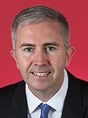
Anthony Chisholm Queensland, Australian Labor Party, Assistant Minister for Regional Development
7:47 pm
I would like to thank all senators who have contributed to this debate on the 2025-26 appropriation bills. These bills seek authority from the parliament for appropriations from the consolidated revenue fund to provide funding for the last seven months of 2025-26, new measures announced in the 2025-26 budget, government decisions and estimate variations from the 2025 Pre-election Economic and Fiscal Outlook and selected 2025 election commitments. The total of the appropriation sought through these three bills is $98.2 billion.
In introducing these bills, the government has already highlighted some of the more significant items provided for in the bills. Once again, I thank all senators for their contribution and commend these bills to the House.

Deborah O'Neill NSW, Australian Labor Party
The question is that the second reading amendment moved by Senator Roberts be agreed to. A division is required, and, given the hour, that will proceed tomorrow according with practice.