
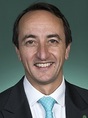
Dave Sharma NSW, Liberal Party, Shadow Assistant Minister for Competition, Charities and Treasury
3:21 pm
A little over a month ago, Australia changed irrevocably. When the sun shone its first rows on Bondi Beach that morning of Sunday 14 December, it greeted the Australia that we knew and we loved. But, when the sun set on that same day, it did so to the cries of grief, to the wailing of sirens, to the frantic agony of families. It set on a nation transformed by a shock and a distress that we are still struggling to understand.
We speak today in this chamber of those whose destinies was stolen: Edith Brutman, a community figure well known for her work B'nai B'rith; Dan Elkayam, a French national who'd made his life and his home in Australia and was celebrating his Jewish faith; Boris and Sofia Gurman, a couple married for over 30 years, who died in each other's arms; Alex Kleytman—a Holocaust survivor, would you believe he survived the Holocaust only to be killed at Bondi?—who died while shielding his wife; Rabbi Yaakov Levitan, a fixture of the Bondi Chabad community, active in the Beth Din, who was the general manager of the main synagogue at Bondi; Peter Meagher, decorated police detective of over three decades in the eastern suburbs, a stalwart fan of rugby and an amateur photographer, whose funeral filled St Mary's Cathedral just last week; Reuven Morrison, who we've heard bravely confronted the attacker and discovered his Jewish identity after immigrating from the Soviet Union a few decades ago; Marika Pogany, who delivered tens of thousands of Meals on Wheels from the COA headquarters in Bondi Junction, even into her 80s, looking after people less fortunate than herself; dear Matilda, who we've heard so much of, who was named by her parents because it was the most Australia name they could think and because they saw her as a gift of their new life here in Australia; Rabbi Eli Schlanger, a close personal friend of mine who I will a little more speak of; Adam Smyth, a father of four, not Jewish himself, who was walking with his wife Katrina on Bondi Beach that afternoon; Boris Tetleroyd, whose son Ya'akov is still recovering from his injuries; Tania Tretiak, a Randwick regular and fixture of the Bondi Chabad community; and Tibor Weitzen, who had one of the best singing voices I know in the Bondi Chabad community. He was also quite a good drinker of scotch.
Each of these people was a universe unto themselves. Each was a biography in the making, defined by dreams, by achievements and by regrets. But they were not just victims; they were people of destiny, and that destiny was snatched away by people with malice in their hearts and with hate in their souls. Their lives were taken by terrorism.
I knew several of the victims personally and others I knew by face and reputation. Many of them were from the Russian-Jewish community centred around the Chabad of Bondi, where Eli Schlanger and Yaakov Levitan served with such devotion. Eli, in particular, was more than a community leader; he was a friend. I shared Shabbat dinners with him. I celebrated birthdays with him. At the time of Passover, as I was a non-Jew, he would arrange for me to buy the chometz and then sell it back to the Jewish community when Passover was over. It was Eli who was the driving force behind Chanukah by the Sea—the celebration that was the scene of this terrible massacre on 14 December. Although he was realistic about the threats that his own community faced, Eli was never willing to hide away his Jewishness. He was never not willing to share the spirit and the teaching of Judaism with non-Jews. He was never prepared to hide who was or what his faith was because of the risks to his community.
Eli's optimism was infectious. His energy was indefatigable. Over the years, I found his belief in humanity and, indeed, his belief in me restorative. We were due to meet just last week, Eli and myself, to discuss Project Noah, which was his latest venture, his latest initiative, to help promote universal values of respect and tolerance. Instead, I met his father-in-law, Rabbi Ulman, to offer my condolences to the family.
The lives of Eli 's family will never be the same. The lives of Matilda's sister, Summer, and her parents, Valentyna and Michael, who spoke so courageously today, will never be the same. The lives of Peter Meagher's widow, Virginia, and his many brothers and the Randwick rugby community will never be same. The lives of Reuven Morrison's daughter, Sheina, and his wife will never be the same. The lives of all those connected to the 15 slain on that day will never be the same. The lives of those wounded and injured on that dark day will never be the same. And Australia, our nation, will never be the same.
Many Australians behaved heroically that day to confront the terrorists, to protect the innocent and to help the wounded, from regular citizens to lifesavers, bystanders, hospital workers and New South Wales police. These heroes deserve our thanks and our recognition, but we must be careful not to use their heroism as a shield. Heroism cannot wash away this stain of national shame. It cannot bring back the dead, and it must not permit us to avoid the searching and the fundamental questions this massacre demands. These are: Why are Jewish people unable to live safely in Australia? Why do Jewish schools require armed guards? Why must a community of faith feel anxious simply for gathering? Why did the worst terrorist attack in our history target a community that makes up less than one per cent of our population—a community that has been nothing but a model of contribution and peace since it arrived here some 240-odd years ago?
Among the victims in Bondi were those who survived the Holocaust, those who fled war and those who fled antisemitism in Europe. They came here for safety. Yet it was here in Australia that the hatred they fled from found them. We've heard many say in recent days that the terrorist attack in Bondi was unthinkable. But it was not unthinkable; it was all too predictable. We've heard many say, including today, that hateful ideology and antisemitism have no place in Australia—but it has found a place. It has a foothold. It has been growing largely unchecked for these past 27 months. We have heard many say, 'This is not who we are,' but, like it or not, this is who we have become. That is the truth we must grapple with.
We cannot claim we were not warned. For over two years, we have witnessed a sustained campaign of harassment, vitriol and violence targeted at one specific community here in Australia, unprecedented in our history. No other form of racial prejudice would have been allowed to fester and grow and ferment and metastasise in this way, but too many of our institutions and too many of our leaders turned a blind eye. Too often the instigators were contextualised or given a pass. Too many leaders treated this as a Jewish problem and not an Australian crisis. It is a tragedy beyond words, beyond comprehension, that it has taken a massacre at Bondi to awaken us to this reality. Let it be clear that, if we cannot guarantee the safety of one community, the safety of every Australian is an illusion.
Many of the victims killed on that dark day were Jewish—not all of them but most of them. In Judaism, they say of the departed, 'zichronam livracha' or 'May their memory be a blessing'. This is an exaltation that the deeds of the dead must continue to inspire those who remain. But we cannot truly honour the memory of those killed at Bondi with words alone. We will only honour them through an honest reckoning with our failings. We'll only honour them by refusing to look away from the hatred that took their lives.
The duty to protect our citizens is the first and most sacred duty of this parliament. We failed that task for the Jewish Australian community and the community at Bondi just last month. We must now spend every day hereafter ensuring we never fail them again.
No comments