
This is a proof (draft) Hansard, not the final version.
The Parliament had not yet published the final text for this day when we fetched it, so the wording, who said what and the results of divisions may differ from the final text.
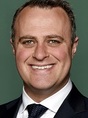
Tim Wilson Goldstein, Liberal Party, Shadow Treasurer
2:47 pm
My question is to the Prime Minister. Yesterday, the Treasurer confirmed families and small businesses will keep paying more for everything for the foreseeable future. But all he has to offer Australians is more taxes and more spending. Even the Treasurer's own colleagues have had enough of his daily diet of doom, denial and deflection. Prime Minister, when are you going to start listening to your own Labor colleagues and get rid of your failed Treasurer?
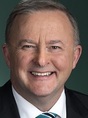
Anthony Albanese Grayndler, Australian Labor Party, Prime Minister
I thank the shadow Treasurer, who has an appropriate title given there's never any light from those opposite. This government and this Treasurer, with the statement that the Treasurer made yesterday, was focused on how we strengthen Australia's economic resilience, how we deal with the challenges which are there, and being upfront about the challenges which are before us and being upfront as well about the plan that we have to deal with those challenges. Inflation is too high. It is putting people under pressure. But Australians have achieved a lot together in jobs and growth, which has continued in wages—which has been above three per cent now time after time after time—and in the trade relationships that we've put forward. Yesterday, what the Treasurer did wasn't just acknowledge those pressures; he spoke about doing something about them.
The Treasurer's statement set out that path forward, with the government playing our part to get inflation down, making sensible savings; making sure at the same time that we don't leave people behind; making sure that, when issues of cost-of-living pressures are dealt with, we target those that will make a difference, such as the cheaper medicines policy that we announced yesterday and maintaining that $25 figure and that $7.70 for those on concessional payments, which will also reduce inflation and put downward pressure on those prices. That is what we will continue to focus on. That's why, in the relationships that we're building, including in the discussions that I had with the Singaporean prime minister today and other discussions that I've had recently as well—we're focused on issues such as the European free trade agreement. This is an opportunity where people who say that they're supporting markets and that they support trade—it used to be a bipartisan position between the parties of government in this place. This will open up an enormous market and opportunities in areas such as critical minerals and rare earths for Australia—areas where we will have a competitive advantage, just like we have a competitive advantage in where we are positioned and located in the world, in our geography and geology and just like the competitive advantage we have in being located where we are in the fastest growing region of the world. (Time expired)
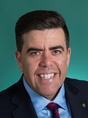

Gordon Reid Robertson, Australian Labor Party
2:51 pm
My question is to the Treasurer. What is the Albanese Labor government doing to address inflation and reform Australia's economy, and are there any alternative approaches?
Unidentified interjection - Hansard doesn't record who said this
Opposition Members:
Opposition members interjecting—
Milton Dick Speaker
Order! Those sorts of interjections are not acceptable. I'm not sure who made it. I've got my feeling, but—
Member for Wright, we don't need to point the finger at anyone. I appreciate your honesty.

Jim Chalmers Rankin, Australian Labor Party, Treasurer
2:52 pm
Thanks to the member for Robertson for the important role that he plays in our team and also for his important question. Tomorrow, we'll get inflation numbers for October. In October, we saw the oil price spike very substantially. The average price of a barrel of oil in October was $108. It got up near $120 in October. Global oil prices were 70 per cent higher than they were the October before, and that's why economists are expecting the number tomorrow—
Unidentified interjection - Hansard doesn't record who said this
Opposition Members:
Opposition members interjecting—
Milton Dick Speaker
I cannot hear a word that is being said. We are not going to continue with this. Otherwise, I will have to take some drastic action. The continual groaning and noises are unbecoming of the parliament. I'm asking everyone now to rise to the challenge to improve standards a little bit for the rest of today.
Order! The member for Paterson will leave the chamber under 94(a).
The member for Paterson then left the chamber.
When I'm trying to bring the House to order, interjecting like that—
Order, the Leader of the Opposition! Honestly, this behaviour is unbecoming, and I'm just asking all members, no matter where you're sitting in the chamber—now that the House has come back to order and everyone now knows the lay of the land, the Treasurer has the call.
Jim Chalmers Rankin, Australian Labor Party, Treasurer
These are the facts, and they are why economists are expecting a high inflation number tomorrow. Inflation is a major focus of the government, and that's why we're taking action, including with the policy for cheaper medicines announced this week. Inflation is a major focus of the mid-year update, and that's why there's a big emphasis on savings. As I made clear in the ministerial statement yesterday, we will strike a careful and a considered and a methodical balance in our savings—sensible and responsible, recognising there are risks in both directions. In making those savings, we'll build on the progress we've made in $180 billion of savings, two surpluses, getting the debt trajectory down and securing the AAA credit rating.
We are the only major party taking the inflation challenge seriously and taking the savings task seriously. Those opposite when inflation was north of six per cent had no savings in their last budget and no surpluses in nine years. Two-thirds of the debt in the budget was racked up by them. They went to the election under the member for Hume's guidance with a policy for higher income taxes and bigger deficits at the same time, and they've learned nothing from that. They call for savings, then vote against them. They call for spending restraint, then make $110 billion in unfunded commitments. They call for lower taxes, then they vote against tax cuts. If they had their way with their policies, there'd be more spending, higher deficits, more debt, higher income taxes, lower wages and less super. By their own logic, that would mean higher inflation and higher interest rates.
What's really going on here is they desperately want the Australian economy to fail, because they see that as the only way that they will succeed. That's why they talk and behave in such an irresponsible way. Australia's long-term economic prospects are good, but the pressures on our people right now are real, and we don't dismiss those genuine concerns. Inflation will be higher than we'd like in the numbers tomorrow. Productivity's been too low for too long. The global environment is dangerous and uncertain. These are the real issues the government is focused on because these are the real issues people in the communities that we represent are focused on as well. It's what the mid-year update will be all about, and that's what responsible economic management is all about as well.