
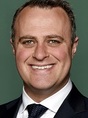
Tim Wilson Goldstein, Liberal Party, Shadow Treasurer
2:08 pm
My question is to the Treasurer. The Reserve Bank has now confirmed in writing to a parliamentary committee that lower government spending would reduce inflationary pressure. Real government spending grew 4.3 per cent last financial year, nearly double the economy's growth. Why does the Treasurer keep asking Australian families to tighten their belts when he refuses to tighten his own?

Jim Chalmers Rankin, Australian Labor Party, Treasurer
2:09 pm
Thank you, Mr Speaker, for that rare question from the shadow treasurer. The governor of the Reserve Bank has made a similar point that I've made on a number of occasions throughout the course of the year. The fact that public demand is part of total aggregate demand is not contested by anyone objective. I've made the same point myself on other occasions. The question is, what is responsible for the uptick in inflation that we've seen over the last 12 months or so? There are two reasons we've seen inflation come up. The first one, as Secretary Wilkinson said this morning at estimates, is that the recovery in the private economy was faster than was anticipated by the Treasury or by the Reserve Bank. That's the first point. The second point is that we have seen the biggest oil shock on record as a consequence of the war in the Middle East. One of the reasons the shadow Treasurer and the Leader of the Opposition don't have any credibility here is that they refuse to acknowledge the impact of higher global oil prices on inflation, not just in Australia but indeed around the world. If you look at the inflation numbers today, the biggest driver was petrol prices—up by almost 10 per cent. Those opposite might want to pretend that's not happening, but it's a factor.
When it comes to public demand and private demand in our economy, for every $5 of demand in our economy, $4 is private and $1 is public. In fact, if you look at the last financial year compared to the year before, public demand growth in our economy halved—it eased—while private demand growth in our economy tripled. The fact that it happened at the same time that we have seen higher inflation than anyone would like tells objective observers of what's happening here that there are other factors at play, including global factors. So if the honourable member wants to refer to the Reserve Bank and comments from the governor, I will quote the governor during her appearance at estimates today, where she said: 'The conflict in the Middle East has escalated, and global energy prices are now much higher than had been assumed in the August forecast.' That's just a fact, whether those opposite acknowledge it or not.