
House debates Questions without Notice
Interest Rates

Llew O'Brien Wide Bay, National Party
2:25 pm
My question is to the Prime Minister. Interest rates have hit their highest level since 2011, under the Gillard Labor government. Does the Prime Minister take any responsibility for the average new mortgage holder now paying $30,000 more per year because of the 16 interest rate rises under his government?
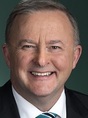
Anthony Albanese Grayndler, Australian Labor Party, Prime Minister
I thank the member for Wide Bay for his question. We, of course, take responsibility for government policy. Our government's policy has been to be responsible when it comes to getting inflation down. Inflation is, of course, lower than what we inherited. Importantly as well, we've done that whilst not scuttling employment because, as a Labor government, we will always be concerned about getting people into work. Something like 1.3 million jobs have been created on our watch. At the same time, we have done what we can to create savings in every budget, as I said in answer to a previous question, delivering over $230 billion of improvement to the budget bottom line.
We know from the evidence of the RBA governor that there are global concerns as well. She gave clear evidence to the House Standing Committee on Economics when she said global cost pressures have increased. There's little sign of resolution of the Middle East conflict. Oil and related prices have increased sharply again and will add directly to inflation. We are not alone in being concerned about this. Central banks in many other advanced economies are responding to this global inflation shock by increasing their policy rates or signalling they will do so if needed. The United States, for example, increased interest rates on 17 September, with the US Federal Reserve saying:
… uncertainty remains elevated owing, in part, to geopolitical developments …
The European Union did the same thing on 10 September 2026, and the European Central Bank said:
The conflict in the Middle East continues to generate inflation pressures, and inflation is set to remain well above target for an extended period.
Of course, just across the ditch, on 2 September, the Reserve Bank of New Zealand did that there as well, as did the Bank of Japan on 18 September.
So that is something that is having an impact on the world economy. It is something, though, that we're very conscious of, and we're doing what we can domestically to reduce pressure by having cost savings. You'll see in MYEFO the work that we're doing already in the lead-up to the budget next year. Like every other economic statement, there'll be responsible savings in there. These responsible savings, though, are aimed at keeping people in employment and keeping growth going.