
House debates Private Members' Business
National Skin Cancer Action Week

Kara Cook Bonner, Australian Labor Party
5:05 pm
I move:
That this House:
(1) notes that National Skin Cancer Action Week will be held from Sunday 15 to Sunday 22 November 2026;
(2) recognises that:
(a) Australia has the highest rate of skin cancer in the world, with two in three Australians diagnosed with some form of skin cancer in their lifetime;
(b) more than 17,000 Australians are diagnosed with melanoma each year; and
(c) prevention and early detection remain critical to reducing the impact of skin cancer;
(3) acknowledges the Government's investment in preventing, detecting and treating skin cancer, including:
(a) $15 million for national skin cancer prevention campaigns targeting Australians at greater risk;
(b) $10.3 million to accelerate development of a national targeted skin cancer screening roadmap; and
(c) investment in medical research and new technologies to improve skin cancer detection and treatment;
(4) further recognises the contribution of Australian researchers, health professionals and advocates working to reduce the impact of skin cancer; and
(5) encourages all Australians to use National Skin Cancer Action Week as an opportunity to take action to protect their skin and understand the importance of early detection.
I was 27 years old when I received a phone call that changed my life. I was on my lunch break in the city in Brisbane, and my dermatologist's phone number popped up on my phone. I'd been having regular skin checks since I was about 16 years of age, but this time it was different. A suspicious mole that had been removed had been detected as a melanoma. In the years that followed, I'd be diagnosed with two more melanomas in different locations—three melanomas in total—before I turned 30. I grew up in Yeppoon in Central Queensland, and my childhood was spent outdoors, sailing and enjoying the Queensland sunshine, without thinking too much about the damage that it could cause. At that age, skin cancer can feel like something that happens to someone much older, but melanoma does not discriminate by age, and I know firsthand how quickly your life can change when you hear that diagnosis.
Australia has one of the highest rates of skin cancer in the world. More than 17,000 Australians are diagnosed with skin cancer each and every year. In Queensland, we have the highest rates of melanoma in the country. In my community of Bonner, the risk feels particularly close to home. The Australian Cancer Atlas has identified melanoma rates in Manly, Lota and neighbouring Birkdale as more than 90 per cent above the national average. These are the communities where we all spend our weekends. We are out on the bay or on the foreshore, enjoying the sunshine, and we should be able to enjoy that lifestyle, but we do need to be conscious of the risks.
My experience taught me many things, particularly that early detection matters and also that the importance of research in our country is absolutely critical. I am incredibly grateful to have started my skin checks when I was only 16 years of age, but I know that my story could have been very different if I had started much later. Not everyone knows their risks, knows what changes to look for or can easily access the care they need, particularly if they live in rural and regional parts of our country. That is exactly why the Albanese Labor government is investing in prevention and better evidence for early detection. In 2024, the government provided $10.3 million to develop a National Targeted Melanoma Screening Program roadmap, led by the Melanoma Institute Australia. This work will help fill important evidence gaps and guide future decisions about a targeted screening program. Recommendations are due in 2028. We are also investing $15 million over two years in national skin cancer prevention campaigns with Cancer Council Australia.
I want to talk very quickly about the important work of Cancer Council Queensland. I can't speak more highly of their professionalism, their service and the support that they provide. When I was first diagnosed, they provided me with a number of counselling sessions, and it was incredibly important for my mental health and for my recovery. I was also really pleased, in recent years, to launch their book, When Mitzy the Foggle Got Cancer, which is a children's book helping support parents who have experienced cancer diagnoses and need to explain that diagnosis to their children. Even in recent years, reading that book to my own children has helped them understand my journey and also understand my scars and what that means for them with their own skin and in their own future.
There is also a reason for extraordinary hope in the work being done by Australian researchers. Last week, Professor Georgina Long AO announced results from a world-leading phase 3 trial of personalised melanoma vaccine. For people with high-risk melanoma whose tumours have been removed, adding the vaccine to immunotherapy reduced the risk of recurrence or death by 42 per cent compared with immunotherapy alone. This is a major research milestone. I want to acknowledge Professor Long and the late Professor Richard Scolyer AO. Their work helped transform melanoma treatment and has brought hope to people facing this disease around the world.
I myself have participated in a number of clinical trials. They help to promote discoveries and turn that evidence into better treatments, ultimately resulting in better outcomes for patients. That is why sustained investment in clinical research matters. I'm incredibly proud of our government for ensuring that the money is being invested into these long-term treatment and vaccine options for patients moving forward. I commend this motion to the House.


Jo Briskey Maribyrnong, Australian Labor Party
I second the motion and reserve my right to speak.

Leon Rebello McPherson, Liberal National Party
5:10 pm
As we approach the end of the year, this is a timely motion to be discussing here in the Federation Chamber. From Burleigh Heads to Palm Beach, Currumbin, Tugun, Kirra and Coolangatta, our beaches on the southern Gold Coast are central to who we are. They attract visitors from across Australia and around the world. We all know on the southern Gold Coast that we have something special, because our beautiful weather and our outdoor lifestyle are among our greatest assets, but they do also come with the responsibility to protect ourselves and our loved ones from the dangers of excessive UV exposure.
This is an acute issue in my electorate. According to the Australian Institute of Health and Welfare, the Coolangatta statistical area recorded Australia's highest age-standardised melanoma incidence rate in 2017 to 2021 at 121.4 cases per 100,000 people. Broadbeach to Burleigh was second at 116.4 cases. These are broader statistical areas not simply the individual suburbs, but they show us why skin cancer awareness is not simply a national health issue but a very real concern for families across the Gold Coast. As a country, we have the highest rate of skin cancer in the world, with two in three Australians expected to be diagnosed with skin cancer during their lifetime. Cancer Australia's estimates for 2025 include 17,443 new melanoma diagnoses and 1,455 deaths from the disease. Importantly, behind each and every one of those statistics is an individual, a family and a community.
I'd like to particularly take this opportunity to acknowledge our surf life saving clubs and volunteers, who spend countless hours on our beaches, keeping locals and visitors safe. Whether it's a young nipper starting out at Palm Beach, a volunteer surf lifesaver spending their weekend on patrol at Currumbin or a family enjoying an afternoon at Burleigh Heads, protecting ourselves from the sun should become second nature. From our nippers through to our dedicated volunteers who patrol our beaches, Surf Life Saving provides an opportunity to instil sun safe habits from a young age, and I thank all those involved in doing so. Childhood sunburn can approximately double the risk of developing melanoma later in life, so it's those habits that we teach our children when they're young that can protect them for decades to come.
This year marks 45 years of the campaign Slip, Slop, Slap. I think we all grew up with that campaign, and it did its part in getting the message of being sun smart out to our Australian community. The message has since evolved into five simple steps: slip on protective clothing, slop on SPF 50-plus sunscreen, slap on a broad brimmed hat, seek shade and slide on sunglasses. Sun protection is not only important at the beach, though; it's equally relevant to our tradies, landscapers, outdoor workers, sporting clubs and everyone who spends extended periods outdoors because we know that UV radiation cannot be seen or felt. Even on cooler or cloudy days, Australians should check the UV index and use sun protection when it reaches three or above. Protection is our first line of defence, but early detection is equally important, and Australians should get to know their skin and seek medical advice when they notice new or changing spots, moles or unusual lesions. We should also recognise Australia's world-leading researchers, medical professionals and cancer advocates, whose work has transformed the diagnosis and treatment of melanoma.
When people or governments in this place do something good, we should acknowledge that, so today I acknowledge the Commonwealth's $15 million investment in national skin cancer prevention campaigns and their $10.3 million commitment to accelerate development of a targeted screening road map, because improving prevention, early detection and treatment is an objective that must enjoy the support of all sides of this House. National Skin Cancer Action Week is a timely reminder for Australians to make sun protection part of their everyday routine. For those of us fortunate enough to call the southern Gold Coast home, enjoying the outdoors is part of our way of life. Protecting ourselves from the sun is how we make sure we can continue enjoying that lifestyle for years to come.

Jess Teesdale Bass, Australian Labor Party
5:16 pm
In my immediate family, five out of six of us have had suspicious spots or skin lesions removed. Thankfully, not every suspicious spot turns out to be cancer, but, when almost everyone around your family table has experienced that worry, it brings home just how common this is. In Tasmania, it's particularly concerning. We have one of the highest melanoma rates in the country, second only to Queensland. It's easy for us to think that our cooler climate somehow protects us, but anyone who's spent a summer in Tasmania knows you can be wearing a jumper and yet still get sunburnt. You don't have to feel hot for the sun to be doing damage.
As National Skin Cancer Action Week approaches from 15 to 22 November, I ask Australians, particularly Tasmanians, to do two things. First, protect your skin before the damage is done. In northern Tasmania, so much of our life happens outdoors—working on a farm in the north-east, taking the kids to Bridport for the day, gardening or cheering on the kids from the sidelines at a weekend sporting event. We love these things about where we live. We're so privileged to live where we do, and we should be able to enjoy the outside safely.
As a former teacher, I know how much effort schools put into sun safety and how very trying it can be to make kids wear hats. We remind them constantly: 'Put your hat on. Put your hat on. Put on sunscreen. Make sure you find shade.' But somewhere along the way we become adults who often forget this very critical advice. For our farmers, tradies, council crews or anyone working outdoors, protecting your skin should be as ordinary a part of a day as putting on your work boots. I acknowledge the Cancer Council and the incredible work they do. Part of that work is recommending all five forms of sun protection when the UV index reaches 3 or above: slip on protective clothing, slop on sunscreen, slap on a hat, seek shade and slide on sunglasses. And please check the UV and not the temperature. I don't know many people who are doing that yet in Tasmania, but that's something we're going to be working on.
My second request is to get to know your skin and please don't put off getting any sort of skin changes checked quickly. Two in three Australians will develop some form of skin cancer in their lifetime. Behind that statistic are people waiting for test results and feeling enormous relief when a spot might be harmless or facing the very frightening news when it's not. It's really easy to think, 'I'll get around to having that checked.' Life's busy, and a small mark might not seem urgent. I suspect a lot of us here, who are very busy, possibly put off doing that ourselves. But this is my call to action for myself and for others. If a spot appears or changes in size, shape or colour, please try and book an appointment. It could be a GP or it could be a specialist if you can get into one. I know that is particularly hard in Tasmania right now. If you've had skin cancer before or you think you might be at higher risk, ask your doctor how often you should have that professional check done. Put it in your calendar. Prebook it. For some people, it might mean every six to 12 months. That early detection can make a real difference.
The Albanese government is investing $15 million into national prevention campaigns, supporting Cancer Council Australia's great work. We're supporting that work towards a targeted melanoma screening road map and funding cancer nursing and navigation services to help patients find the care and support that they desperately need when times get most tough.
I thank Cancer Council Tasmania for the incredible work that they do. It has been a privilege to join their five-kay run. It's been a privilege to join Relay For Life. The work that they do, the work that their volunteers do, is phenomenal, and it does change lives. Thank you to the doctors and nurses, the researchers, the community orgs that are standing beside families from diagnosis and right through treatment. None of us needs to wait for this campaign to actually take action, though. So please make sun protection part of your routine. Take a few minutes to check your skin regularly or, like I'm going to do, make that appointment that you have been putting off. The hope is simple: we want more summers, more birthdays, and more ordinary days with those people that we love.
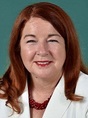
Melissa Price Durack, Liberal Party
5:20 pm
I do appreciate the opportunity to speak on such an important health issue in regional Western Australia—one that is far bigger than politics. Next month, from 15 to 22 November, National Skin Cancer Action Week will be held, offering all of us the chance to get checked for melanoma and acknowledge the serious work and research being done by Australian doctors and researchers. Sadly, Australia has the highest rate of skin cancer in the world. It is estimated that more than 17,000 Australians are diagnosed with melanoma each year. Of that, over 1,450 cases are diagnosed in Western Australia, making skin cancer our most common cancer. It is further estimated that one in 17 Australians will be diagnosed by the time they are 85 years of age.
As regional Western Australians we are blessed with beautiful weather just about all year round. The western Pilbara is the sunniest region in Australia, exceeding 10 hours of sunshine daily, and the Mid West is close behind. As much as we all love the sun and love the weather that comes with living in many parts of regional Western Australia, these conditions come with serious risks to our skin and increase the real threat of skin cancer. The sun's harmful UV rays do not discriminate, either. While males tend to have higher rates of melanoma, 50 out of 100,000 females will be diagnosed with melanoma this year.
We've all grown up with that simple message: slip, slop slap. What a great advertising campaign. Slip on a shirt, slop on sunscreen and slap on a wide-brimmed hat. It is that simple. Even just a few minutes in the sun can cause significant damage. Alongside preventing our exposure to UV rays, early detection remains critical in reducing the impact of skin cancer. It is important to get to know your skin and what is normal for you. Develop a regular habit of checking your skin for new spots and changes to existing freckles or moles. This includes areas that are not exposed to the sun, such as the soles of your feet, between your fingers and toes, and under your nails. The easiest way to detect melanoma is by remembering ABCDE. A is for asymmetry, B is for border, C is for colour, D is for diameter and E is for evolving. Quite frankly, early detection saves lives.
I want to especially acknowledge the work of our Australian researchers. Just last Friday on the ABC's 7.30, we saw further evidence of the hard work they are doing. They are really cutting through in this space. The results from an Australian led phase 3 human trial of a cancer vaccine has revealed a 42 per cent reduction in the risk of melanoma reoccurrence. Led by Professor Georgina Long, this is a significant development in the fight against what has been described as Australia's cancer. Sadly, this vaccine was far too late for my late husband, Colyn, who died from melanoma over 20 years ago.
From our researchers down to our nurses and doctors in cancer clinics throughout regional Western Australia, I've seen firsthand the work that they are doing to reduce the impact of skin cancer and the support they offer families and patients battling skin cancer. They deserve our thanks and help more than anyone. I especially recognise the work of organisations and charities that support the work of our researchers, doctors and families. I also recognise all those who've donated to these charities, who've taken part in a Relay for Life or who've simply given support to the families and victims of skin cancer. My love and support go out to families and Australians who have been affected by this horrible cancer.
As a parliament and as members, we have the responsibility to continue to invest in prevention campaigns, medical research technologies and targeting when it comes to skin cancer. As we approach National Skin Cancer Action Week, I acknowledge and encourage all to take every opportunity to protect their skin. If you can, donate to a cancer charity. Reach out to friends or family who have experienced the hurt of skin cancer and understand the importance of early detection. My final message is to younger Australians. At the moment, it may seem fashionable to be tanned, but being sun smart is far more important and could save your life. I thank the House.
Mary Aldred Monash, Liberal Party
I understand that the member for Pearce would like to present a copy of her speech for incorporation into Hansard in accordance with the resolution agreed to on 6 November 2025. I acknowledge the member for Pearce. I thank her for her contribution to this motion and, more broadly, to the House of Representatives. I thank the member.

Tracey Roberts Pearce, Australian Labor Party
5:26 pm
The incorporated speech read as follows
I acknowledge that this House notes that National Skin Cancer Action Week will be held from Sunday 15 to Sunday 22 November this year. I support this motion because skin cancer is often described as Australia's national cancer, and unfortunately that description is well earned. Australia has the highest rate of skin cancer in the world. Two in three Australians will be diagnosed with some form of skin cancer in their lifetime, and more than 17,000 Australians are diagnosed with melanoma every year.
Behind every one of those statistics is a person, a family a workplace and a community carrying the worry, the treatment and, in the hardest cases, the loss. That is why National Skin Cancer Action Week matters. It is a reminder that skin cancer is largely preventable and, when found early, highly treatable. It is also a reminder that prevention is not about fear; it is about practical, everyday habits that protect us while we continue to enjoy the outdoor life we love.
In Pearce, this message could not be more relevant. Our electorate is home to 32 kilometres of spectacular coastline, stretching from Burns Beach through Mindarie, Quinns Rocks, Merriwa, Clarkson, Alkimos, Eglinton and Yanchep, through to Two Rocks. Our beaches, rock pools, marinas, lagoons, surf breaks and coastal walk trails are central to the way our community lives. On any warm weekend, you will find families at the beach, children learning to swim, surfers in the water, fishers on the rocks, volunteers at surf lifesaving clubs and residents walking the coastal path. That coastline is one of Pearce's greatest assets. But it also means many in our community spend significant time outdoors, often during the hours when ultraviolet radiation is strongest.
In Western Australia, our clear skies and long summers are part of what makes our lifestyle so special, but they also increase the risk of unprotected sun exposure. We need to enjoy our coast safely, not avoid it. The message remains simple: when the ultraviolet index is three or above, protect your skin. Slip on protective clothing, slop on broad-spectrum, water-resistant sunscreen of SPF 30 or higher, slap on a broad-brimmed hat, seek shade and slide on sunglasses. These are small actions, but they can make a lifelong difference.
I also want to speak directly about early detection. Know your skin. Check it regularly, including areas that are easy to miss, such as the back, scalp, ears and soles of the feet. Look for new spots, spots that are changing, sores that do not heal, or moles that change in shape, colour or size. If something does not look or feel right, see your GP or skin cancer clinician promptly. Early detection saves lives.
The Albanese Labor government is taking meaningful action. We are investing $15 million in national skin cancer prevention campaigns, with a focus on Australians at greater risk. We are investing $10.3 million dollars to accelerate the development of a national targeted skin cancer screening road map, because we know that finding skin cancers earlier leads to better outcomes. We are also supporting medical research and new technologies that can improve how skin cancer is detected and treated. This investment recognises that prevention, early diagnosis and treatment must work together. It recognises, too, that some Australians face greater risk than others, including people who work outdoors, people with a personal or family history of skin cancer, and those who have had significant sun exposure over many years. We need campaigns and health services that meet people where they are, with clear, practical advice they can use.
I acknowledge the researchers, dermatologists, general practitioners, nurses, pharmacists, cancer support workers and advocates who dedicate themselves to this work. Their expertise, compassion and persistence are saving lives and improving care for people across the country. I also acknowledge the many community organisations, including Cancer Council WA and our local surf lifesaving clubs, who promote sun safety in practical and accessible ways.
In Pearce, we are proud of our outdoor, coastal way of life. We want our children to grow up swimming, surfing, playing sport and enjoying our beaches. The best way to protect that lifestyle is to make sun safety second nature—at home, at school, on the sporting field, at work and at the beach. This National Skin Cancer Action Week, I encourage everyone in Pearce and across Australia to check the ultraviolet index, protect their skin, and book a skin check if they have any concerns. A few minutes of prevention today can protect many years of healthy life tomorrow.
I commend the motion to the House.

Trish Cook Bullwinkel, Australian Labor Party
I rise to support this motion and National Skin Cancer Action Week. In 2024, I had a skin cancer cut out of my nose. I decided then that I would use what was an uncomfortable—and very ugly to look at—experience to encourage other Australians to take skin cancer seriously, and, importantly, to remind people to get their skin checked. My own experience reinforced that none of us should assume it will not happen to us. That message matters especially in regional Australia because prevention and early detection only work when people can actually access care. The challenge is particularly acute in Mallee.
Research led by La Trobe University found melanoma rates across Loddon Mallee were 34 per cent above the Victorian average, with isolation and access to health care two of the barriers confronting patients. I want to acknowledge the Loddon Mallee Integrated Cancer Service, or LMICS, whose northern Mallee cancer representatives met with me in person and via video in my Mildura electorate office last week. I appreciated the opportunity, particularly as I'd been unable to join their annual forum at Bendigo Health in August, which examined inequity in regional cancer care.
LMICS's message in that meeting was a clear and sombre echo of my maiden speech in 2019: your postcode should not determine your health status. LMICS and its research partners are backing that principle with practical work through their project, RISE4SkinCancer, which is seeking to improve detection, treatment and referral pathways across Loddon Mallee by building the capacity of primary care. Their meeting with me illustrated how fragile and reliant on others regional cancer services can be.
LMICS reported that flight disruptions this year had caused radiation oncologists visiting Mildura to cancel clinics on at least five occasions and convert at least 10 clinics to telehealth. Patients themselves also depend on those unreliable flights to reach specialist appointments elsewhere. That is why bringing detection and expertise closer to home matters. I have strongly advocated for a VECTRA WB360 whole-body imaging system at Mildura Base Public Hospital.
VECTRA uses 46 stereo vision pods to produce a high-resolution, three-dimensional map of a patient's exposed skin. Individual lesions can be recorded against that body map and reviewed over time, allowing clinicians to identify and monitor changes which may warrant further investigation. Following my advocacy, a $3 million expansion through the Medical Research Future Fund established Mildura as the 16th site for the Australian Centre of Excellence in Melanoma Imaging and Diagnosis. The MRFF itself was established by the former, coalition government in 2015—an enduring coalition investment in Australian medical research and innovation.
Technology alone is not enough. We need GPs and nurse practitioners equipped to identify suspicious lesions, reliable referral pathways, specialists and a locally trained medical workforce. In my meeting with LMICS last week, it was clear that our cancer care networks are very fragile due to our dependence on fly-in fly-out specialists or flights to get patients down to Melbourne. Our long-term answer must include training and retaining more medical professionals in regional Australia.
My message during National Skin Cancer Action Week is straightforward and twofold. First, protect your skin, know your skin and get any suspicious changes checked early. Second, governments, both federal and state, must meet Australians halfway as they do their bit in prevention. Governments need to ensure early detection and treatment does not depend on your postcode.
I rise to support this motion and to recognise National Skin Cancer Action Week, which is being held from Sunday 15 to Sunday 22 November. Sadly, Australia has the highest rate of skin cancer in the world. Two out of three people will be diagnosed with some form of skin cancer during their lifetime, and more than 17,400 people in Australia are diagnosed with terrible melanoma each year.
To me as a nurse, as an Australian and as one of those two out of three people with a history of skin cancer, those statistics are stark. In Western Australia, my home, the risk is particularly familiar. We enjoy an outdoor lifestyle across our coastline and bush. We work outside, play sports, gather in parks and at our beaches. Because of that, so many of us spend significant time exposed to harmful UV radiation.
The good news is we can work against what we know is preventable, and prevention is definitely the best medicine. For many years, we have been taught the all-important messaging of 'slip, slop, slap, seek and slide'. Slip on protective clothing, slop on sunscreen, slap on a hat, seek shade and slide on the sunnies. Prevention, of course, must be supported with early detection, because knowing your skin, recognising changes and getting regular checks is all-important. I used to run skin checks with a dermatologist in remote areas. Often, it was the ones that you couldn't see that were the problematic ones, so please get your partner to check as well, or go and see a GP regularly.
Early detection gives the best possible chance of successfully treating skin cancers, and the Albanese government knows this. We have invested $15 million over two years to continue the national skin cancer prevention campaign, which is delivered in partnership with Cancer Council Australia. The campaign this year recognises specific age groups. The End The Trend campaign targets young Australians aged 18 to 30, and it has achieved 43 per cent of those reached overall taking action to protect themselves. The Save Your Skin campaign, aimed at men aged 40 and over, achieved awareness of 58 per cent, with 34 per cent taking some sort of protective action—but, guys, you can do better than that. I'm looking at you! These results show that targeted public health campaigns can do more than raise awareness. They can change our behaviour for the better, and when behaviour changes lives can be saved.
The government is also investing in the future of skin cancer detection. We provided $10.3 million to accelerate the development of the national, targeted melanoma screening program road map. Led by researchers at the Melanoma Institute Australia, their work is addressing evidence gaps and informing future considerations. Their recent breakthrough, having a targeted cancer vaccine for melanoma patients, is pretty much the equivalent of landing on the moon. It is incredible. They do great work, and we need that work in Australia. Cancer Council Australia also is leading with Cancer Connect, on 131 120. It's an information and support line where people can get cancer information and any other information that they need regarding cancer. So please use Cancer Connect on 131 120.
I really want to acknowledge the outstanding work of Australia's researchers, along with the many doctors, nurses, dermatologists, surgeons and health professionals working every day to support people affected by skin cancer. Their work is improving prevention, advancing detection and treatment and helping Australians through some of the most difficult periods of their life. National Skin Cancer Action Week is an opportunity for every Australian to take a simple step that could save a life. Check your skin, become familiar with it, book a skin check, speak to a health professional, speak with your family and friends, encourage your children to develop sun-smart habits, and remember that sun protection is every day, not just for holidays or the weekends. Rain, hail or shine, we should be using sunblock. The message is clear: prevention works. Early detection saves lives, and timely support helps people navigate diagnosis and treatment. I commend the motion to the House.
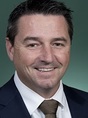
Pat Conaghan Cowper, National Party, Shadow Assistant Treasurer
5:36 pm
I want to commend the member for Bonner for bringing forward this motion about sun protection and the dangers of melanoma. It has my full support for its intent. Some issues in this place should be above the political divide, and this certainly is one. Deputy Speaker, I'm going to ask you to do something unusual when you get home tonight, and that is take your shoes off, take your socks off, and check under your feet. And I'll tell you why. My father and I, when I was a teenager, loved to play squash together. We would do it most weekends. After one game he came off the court and took his Dunlop Volleys off, and one of his white socks was covered in blood. He wasn't aware, but it was a melanoma. The irony of that was that he was the town's GP and had spent the best part of 30 years telling people to cover up, operating on people, taking out melanomas and basically urging them to live well and better. And he had absolutely no idea that he had this melanoma under his foot. So, over many, many months, after operations and skin grafts, unfortunately, he passed away at 59.
He didn't drink, didn't smoke and lived a good life. Hopefully, that means I'm going to live a very long time. But it doesn't discriminate. You can be healthy. You don't have to be old. You don't have to have baked yourself in your younger years. I do caution younger people to listen to the advice now. We know what the sun does. I was very happy the other day. My son came home—he's an apprentice carpenter—and he grumbled, 'We're not allowed to take our shirts off at work anymore.' And I said, 'Good, because, one, it looks more professional, and, two, you won't get cancer.' So the message still isn't getting out to the young people.
But it is very, very promising that this funding has come forward, and, as I said, this is above politics. This should be bipartisan across the board. It's great to see that there's $15 million dedicated to skin cancer prevention campaigns—young people, listen up—and the $10.3 million to accelerate development of a national targeted skin cancer screening roadmap. There's always more to be done. There are more worthy advancements to invest in to protect people from melanoma. Just yesterday, we saw reports on the personalised therapeutic cancer vaccine reducing the risk or recurrence of death by 42 per cent. That is just incredible.
I want to give a special shout-out to the Australian Skin Cancer Foundation for launching its successful skin check trucks in 2023 and, most recently, in December, the 3D skin check clinic, featuring the biopsy room and the VECTRA WB360 technology. As regional MPs, we know that it can be extremely difficult for regional and remote people to actually get access to check-ups, so it's great to see a van driving around. I'd love to see as many vans as there are the breast care clinic vans getting around Australia. We need them because it is a killer. There have been 17,000 diagnoses this year alone, and one life is one too many. I lost my father; a town lost their doctor. It is incumbent on all of us—parents and young ones—to make sure that we listen to the advice and that we get regular check-ups. In fact, I've got a regular check-up on Friday week for that very thing. I urge everybody to go out and do that.
Briefly, I'd like to thank and commend Cancer Council Australia in my region for the work that they do.
Mary Aldred Monash, Liberal Party
I thank the member for Cowper for his contribution, including on his late father.
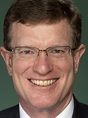
Andrew Gee Calare, Independent
5:41 pm
It's an honour to be able to contribute to the discussion of this motion today, and I commend the member for Bonner for bringing it to the House. The reason I wanted to say a few words on this is that I am a stage 3 melanoma survivor. In 2011, just before the New South Wales election campaign, I was diagnosed with stage 3 melanoma. It was a secondary which had come from a mole which had been removed seven years prior. It was a very traumatic time—you certainly remember where you were when you got that type of news—and it's a time of great uncertainty for not only cancer patients but also their families.
Within a week of getting that diagnosis, I was in Royal Prince Alfred Hospital having lymph nodes removed. I owe a great debt of gratitude to my doctor at the time, Professor John Thompson from Melanoma Institute Australia. After I'd had the operation, I said to him, 'What are my chances?' and he said, 'Well, it's 50 per cent.' I said, 'Is that a 50 per cent chance of it coming back?' and he said, 'Yes.' I said, 'What happens if it comes back?' and he said, 'There's nothing we'll be able to do.' It was basically a 50 per cent chance of survival—the toss of a coin. He said at that time, 'You've just got to make sure you live long enough for the science to catch up.'
This breakthrough, involving the stage 3 vaccine trial overseen by Professor Georgina Long from Melanoma Institute Australia, which has been announced over the last few days, is unbelievable news for cancer patients, because what medical researchers like Professor Long and, no doubt, the team that is working on this represent is hope for cancer patients, and when you're going through something like that, hope is absolutely everything. So I want to commend all of the cancer researchers and the melanoma researchers not only in Australia but all around the world—because it is a global community—for their really important work in delivering this breakthrough, which decreases the risk of recurrence or death by 42 per cent. As Professor Long has said, this is a transformational breakthrough. The science is catching up. Where previously there was not very much in the arsenal to fight a diagnosis of melanoma, they now have this breakthrough vaccine, which is going to give people life and allow them to spend more time with their families and their friends, and for cancer patients, time is absolutely everything.
To all of the cancer researchers out there I say: you are true community heroes. We want to express our gratitude to you. To all members of our community in the Central West of New South Wales—in particular, our country communities—I say: please get your skin checked. It is something that is very easy to put off, but it can actually save your life. One of the reasons that I wear a straw hat around my electorate is that experience with melanoma all of those years ago. As I have said earlier, I commend the motion to the House.
Mary Aldred Monash, Liberal Party
The time allotted for this debate has expired. The debate is adjourned and the resumption of the debate will be made an order of the day for the next sitting.