
House debates Matters of Public Importance
Fiscal Policy

Milton Dick Speaker
3:10 pm
I have received a letter from the honourable member for Goldstein proposing that a definite matter of public importance be submitted to the House for discussion, namely:
The Government's failure to control its spending addiction, fuelling higher interest rates and higher prices.
I call upon those honourable members who approve of the proposed discussion to rise in their places.
More than the number of members required by the standing orders having risen in their places—
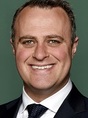
Tim Wilson Goldstein, Liberal Party, Shadow Treasurer
When the mums and dads of our nation drive to work every day and they're listening to the radio, they're hearing challenging economic news. They hear of collapsing consumer confidence. They hear of collapses in small businesses and record small-business insolvencies. But what they also hear is the continual stories of the government not being able to control its spending addiction. What they're hearing is the story of an inflation-junkie government that cannot be moved beyond its addiction to spending, higher costs and inflation, which is pushing up interest rates.
And they've been continually told the con by the used-car salesman in the federal treasurer—by the admission of his own colleagues—that it's all to do with international factors and it's got nothing to do with him. Yet, year on year, the inflation pressure has continued and interest rates have risen. It was only a couple of weeks ago that the Reserve Bank finally said: 'That's it. We can't hold back the wall of inflation anymore.' The minutes of the Reserve Bank that were released today clearly outline that the government cannot continue to be absolved of responsibility, because what we know—what all major economists know—is the government is responsible for the inflation problem across our country. More importantly, every time inflation goes up, interest rates go up.
The government likes to absolve itself of responsibility, but the underlying and sustained pressure on inflation started going up in July last year. This is one of these great myths for the members opposite. They like to say, 'This is because of international factors.' I'll give you a tip. There were no bombs dropping on Tehran in July 2025—in fact, it took until February 2026 before that happened—yet underlying inflation started picking up, and it persisted. That's why, this year, we have had continual interest rate rises throughout the year and there has been more pressure on Australian households, on their mortgages, and more pressure at the supermarket, where people are going to buy the same, paying more and getting less.
This is the problem we've now seen consistently under the Albanese government. Because the government cannot control their spending and inflation addiction, Australian households are feeling poorer. They're going backwards. You see it every time the Labor Party turn around and say they're providing tax cuts. Within six months, they're eclipsed by increases in inflation and they've disappeared. So Australians are falling behind, they're paying more and, of course, their real wages are going backwards. That's one of the key reasons why the coalition has promised a tax-back guarantee—to adjust the thresholds and the tax brackets to make sure that the Albanese government's inflation addiction cannot become a pathway for them to increase the volume of tax they collect.
You just need to look at the package. What has happened? The Reserve Bank has raised interest rates 16 times since Labor was elected—16 times unlucky, for our treasurer. The first time, you might have said it was unfortunate. The second time, you might have said it was an accident. But I can't get to the number of adjectives we'd need to get to 16 times, such is the embarrassment under this treasurer. We know that there's a continued problem around the underlying inflation rate being at 3.6, and, as I made the point, it's been stuck there for quite some time. The government sit around and say, 'It's got nothing to do with us; it's all got to do with factors overseas,' even though it started creeping up in July of last year.
We know that Australia's cash rate is higher than that of the United States, the United Kingdom, Canada, Japan and the euro area—basically, the advanced world. Of course, we also know that we've seen the biggest collapse in living standards in the advanced world under the Albanese government. What's even more distressing for Australians, as they drive to work and hear about the conditions that they're living the realities of, is that, under this government—because it is stuck in a situation of denial, because it will not admit it is at the heart of the problem and because it continues to look at every single vein to tap more inflation in—there is a risk that there will be further increases in interest rates this year and next year, and Australian households will fall further behind. You don't even have to believe me. The Reserve Bank has said that it will do whatever is necessary, including increasing the cash rate further, to target inflation. They have already forewarned the Australian people that, if the Albanese government doesn't change its fiscal course, Australian households will suffer. And today we had an international report card from the IMF that said, again, that the government's addiction to spending is pushing up inflation and cooking up interest rates.
It's even worse. We've now set this record—and it is not something to be proud of—of not just increasing inflation under the Albanese government but also rising unemployment. What an incredible achievement by this government! Normally, you get one or the other. But to get both of them, to get stagflation at the heart of the economy, is a complete disaster for Australian households. And the numbers are—
Thank you, Treasurer. Thank you, used car salesman. That was a real con job you sold to the Australian people. And what are Australians now doing? Australians are paying more just to keep a roof over their head. With the cash rate now being passed on, a family with the average new mortgage of $731,000 is paying about $31,000 a year more in interest than they were when we were last in office. How proud the government must be to continue to increase the pain and the suffering of Australian households! Monthly repayments and the average new mortgage have risen to about $4½ thousand, and the average variable mortgage rate has doubled from 3.1 per cent at the 2022 election to 6.2 per cent. And, as we know, as Australians are driving their cars and they're listening to the radio, the International Monetary Fund is saying, 'It's not over yet.' The Reserve Bank is saying, 'It's not over yet.' Australians are terrified of what this government's active inflation agenda is going to do, and they're terrified that, until we see a change in government and economic policy, they will continue to fall further behind.
And it's not just in their mortgages on a monthly basis. When Australians go to the supermarket, they experience the price of inflation. As they go to the till and swipe the products and see the full bill, they know, when they look in their red basket or their trolley, that they're getting less and less for the dollars they have. The bill goes up, but the amount of food they can take home to their family goes down. And the numbers are very clear. Since the 2022 election, food prices have risen by 18 per cent: bread, 22 per cent; cheese, 22 per cent; coffee and tea, 24 per cent; and eggs, a basic staple of a kitchen, 37 per cent. And that continues to cascade throughout the entire economy. As Australian households are getting poorer, their wages are going backwards and their mortgages are rising. When you say these things, most of the members on the other side of the chamber are utterly dismissive. One of our favourites, of course, is the Minister for Small Business. When she can figure out what her job is and how she can get her way to the despatch box, when she's told about the problems facing small business she has one answer: 'Maybe they were dodgy.' She doesn't understand that, actually, record small business insolvencies aren't because businesses are dodgy. It's because the government's dodgy and can't control its spending addiction. And the Treasurer is a used car salesman, according to the members opposite.
But what we know is that this con will end. Australians are living the consequences of the Albanese government and their inflation addiction. Australian households know the impact of the government's policies. They're living the 24 per cent increases in rent. They're living the 43 per cent increases in the cost of insurance, the 37 per cent increases in electricity prices and the 44 per cent increases in the cost of gas. They're living the $31,000 a year more in interest payments just to keep a roof over their head. This government has betrayed and sold out the Australian community, because it cannot control its inflation, its spending addiction, and Australians are poorer for it. (Time expired)

Daniel Mulino Fraser, Australian Labor Party, Assistant Treasurer
3:20 pm
We've just had 10 minutes of rhetoric, 10 minutes of talking the talk, from a party that, when they were in government, did not walk the walk. There is absolutely no indication that this group in opposition have changed. There's no indication that they're going to walk the walk any time in the near future. They continue to block savings. They continue to commit to unparalleled levels of unfunded spending. What we've seen from those opposite is a willingness to raise the issue of economic responsibility but no willingness to actually commit to practising it, no willingness to commit to the hard work of delivering it.
Our government has demonstrated a willingness to support people who we know are in many cases doing it tough. We've done this in a wide variety of ways. This government has committed to and delivered tax cuts for every taxpayer this year and next. When we get through those tax cuts for every taxpayer, this government will have delivered tax cuts five times in three different ways. And almost all of those tax cuts will have been opposed by those opposite—and not just opposed; they went to the last election with an explicit policy of unwinding two of those tax cuts for every Australian taxpayer.
This government is committed to and is delivering cheaper medicines, more bulk-billing and record hospital funding. It's committed to urgent care clinics, and I've seen two of them in my electorate, delivering help to people day in, day out. I know some of those opposite very much support this policy. I know they support it—not all of those opposite, but I know there are some in particular on the other side who do. This government is committed to higher wages and fairer pay for Australian workers. We've seen that through support for minimum wage increases. We've seen that through increases for workers in the care economy—15 per cent increases for those in early learning, 15 per cent for those in aged care—again, opposed by those opposite and opposed by One Nation.
We're committed to more social and affordable housing and helping first-home buyers get into the market with five per cent deposits, as well as free TAFE, slashing student debt and expanding paid prac. And free TAFE and expanding paid prac is so critical. Not only is it a measure of fairness; it's a cost-of-living measure. It's also a supply-side measure. It also means getting more skills into the economy. It's helping our economy move from where it is to a place where there is downward pressure on inflation. So it ticks all those boxes. We've also supported measures to provide a fairer deal at the checkout, including action against supermarket price gouging. This government has delivered a 10-fold increase in the maximum penalty for price gouging. It sat stable for the almost decade that those opposite were in power. We've increased it 10-fold, as well as increasing funding for the ACCC to look into priority sectors.
Almost all those measures I've just run through are measures to give people higher pay, measures to give people tax cuts to keep more of what they earn, measures to support people through cost-of-living supports—almost all of them opposed by those opposite. But they will come in here with faux outrage about how people are doing it tough and then oppose practical measures to help people. We've put in place serious measures to reform the tax system which for too long have been on the to-do list, such as changes to negative gearing and capital gains tax, which will mean we are tilting the property market back in favour of younger people, back in favour of first-home buyers. We are removing from the housing market longstanding distortions that for too long have seen, over recent decades, house prices gallop ahead of incomes and have seen homeownership rates for younger people, for young families with dependants, falling rapidly. We need to undo that. We need to reverse that. In the last budget we put in place significant benefits in the tax system for small business, making the instant asset write-off permanent. They've been calling for that for a long time; we're the party that delivered it. We're also putting in place loss carry-back measures.
But it's really when it comes to measures to support taxpayers that the difference between the two sides is the most stark. We're delivering tax cuts for every Australian taxpayer, commencing 1 July this year and again from 1 July next year. This means that, when you look at all of the different measures, including the instant deduction and the different tax cuts and the WATO, there is a total of up to $2,816 for the average worker. That is a significant reduction in the tax burden for those on average wages. Again, almost all the elements of that were either not supported or opposed by those opposite.
Let's contrast this with what those opposite are putting forward. They oppose almost every cost-of-living measure. They went to the last election with an explicit promise of higher taxes, and that was, not surprisingly, rejected by the Australian people. But what they've done since the last election is in many ways even worse. The tally so far is around $110 billion in unfunded spending commitments. They come into this place—and we saw this with the last contribution—with the rhetoric of fiscal responsibility, but, every time you turn around, there's a new, huge, unfunded spending commitment and a significant increase in gross debt over the next decade as a result of their overall fiscal settings. This is what we're seeing from those opposite—rhetoric not matched with the actual policies they're putting to the Australian people. Just in question time today, again, they talked about fiscal responsibility and put questions to this side of the House pushing for more spending. It shows the inconsistency between their rhetoric and what they actually deliver in this place. The Australian people will see through this.
The budget as it stands is around $230 billion better off compared to the situation that we inherited—compared to the trajectory that we inherited. That reflects two budget surpluses delivered. That reflects the fact that in the last budget we delivered over $60 billion in saves and reprioritisation. Those opposite talk big, as we saw in the previous contribution, but they don't deliver. That significant improvement in the budget situation means that, because of what we've done over four budgets, there'll be less debt for future generations, which is all the more important.
What we're seeing also from those opposite is an internal debate now playing out, in a way. It's quite remarkable. The former Liberal treasurer, Josh Frydenberg, has a book out in which—and this is one part of it I can sign up to—he roundly criticises the current leadership of the opposition and says it's just not good enough. It's going through a trough. There's an existential crisis. But where I differ with the former treasurer is where he proposes a sharp uptick in the GST. This lines up with what the previous speaker said. His contribution didn't mention this, but in his inaugural speech he backed in a 20 per cent GST—a doubling of the GST. The approach being supported by the prospective leader who's outside the chamber and the shadow Treasurer is a massive hike in the GST. What is that going to do to the cost of living? What is that going to do to inflation? Is that seriously the response to inflation that those opposite are now going to work up? Do those opposite think that petrol is too cheap and that we need to put a GST on it? Do those opposite think that construction costs in this country are too low and we need to add a GST onto them? Do they think that restaurants and takeaway food are too cheap and that we need to whack a GST onto them?
Let's see how this debate unfolds in the opposition. One can see that there are a range of views amongst those opposite. There are a range of views as to where taxes should go, but what isn't consistent across the positions being put by those opposite is exactly which taxes should be increased and how. What is absolutely clear is that those opposite do not support cost-of-living supports. They went to the last election with higher taxes. Now we have a former treasurer suggesting a hike in the GST, and the current shadow Treasurer has in the past supported, on the public record, an increase in the GST. It's very unclear how those opposite would, in any meaningful way, reduce cost-of-living pressures on people in the community. It really is the same old Liberal Party.
This government has delivered concrete support for people. We have, through a range of measures, seen people's wages increase, particularly those in the bottom quintile. We've seen people on the minimum wage get supports, and we have backed those in. We have seen people in industries where there have been longstanding needs for wage increases, including in the care economy, get significant pay increases, and this government has backed those in; this government has funded those. We've also supported cost-of-living measures in a range of ways, including through cheaper medicines, right across the economy. Those opposite have opposed it at almost every turn. Instead, they now have over $100 billion in unfunded spending. It just won't work.

Simon Kennedy Cook, Liberal Party, Shadow Assistant Minister to the Leader of the Opposition
3:30 pm
Cost of living is not a problem in Australia right now; it's a symptom. It's a symptom of poor budget and economic management. It's the nightmare millions of Australian mortgage holders and small businesses are living, while this government lives its dream. Right now we have the highest ever number, in Australia's history, of small and medium businesses going bankrupt. The number has never been higher since we started keeping records. We have mortgage holders right now who've had four interest rate rises this year. I've seen them in tears, losing their house—one woman, in particular, who could not make her mortgage repayments.
There are 43 advanced economies in the world. They're basically every country you'd want to live in. Only one of those 43 advanced economies has had four interest-rate rises—just one—and that's Australia. The truth is that we have an inflation problem in Australia, and the truth is that this pre-existed the war in Iran. Of those 43 countries, we had the third highest inflation prior to the war in Iran. We already had a domestic homegrown inflation problem.
There are a couple of ways we can deal with this. The Reserve Bank can raise interest rates four times, as I just talked about, and the one third—Australian mortgage holders—are forced to cut their spending. They're forced to forgo nights out and holidays away, and many of them cut back on essentials. Some of them are forced to give up their houses. That's one way.
The other way is this. More than one in four of every dollar spent in this country is spent by Treasurer Chalmers; it's spent by the federal government. That's one in four—at the very time we're asking one third of Australians to cut their spending. This group is bearing all the brunt, along with the Australian business owners. Treasurer Chalmers over here, spending one in four dollars in the economy, is actually increasing his spending, while you at home are being forced to wear rate rise after rate rise and cut into essential after essential. The Treasurer is actually increasing his spending, and you deserve to be angry about that.
I recently had a small business forum of 100 small businesses in Cook last week. These people feel betrayed by the government—absolutely betrayed. They are now the highest taxed generation in Australia's history. And it's not just me who thinks this. Just earlier today, the former chief economist of the ANZ, Mr Hogan, said about interest rates right now—and, sadly, it's going to get worse—'The reality is the interest rate probably does need to be up around five or higher. That would take at least another two hikes. We're probably going to need a cash rate around five, but there is a better way. And the governments of Australia, state and federal, had the opportunity earlier this year in their budget to pull back on their spending.' He went on to say: 'They're all looking to grow at around three per cent real this year and, of course, the economy can only grow at two. And the RBA needs it to grow at like one and a half to get inflation down. So governments are actually not doing anything to show restraint, and forcing the rest of us to show restraint. And, if we don't, the RBA is going to force us.' He then went on to explain that there is a better way, and that is for the governments of Australia to cut their spending—their recurrent spending and their investment spending—as much. That's from the former chief economist of the ANZ Bank.
The Treasurer should come into this chamber now and tell us how he is going to cut his spending, so the one-third of Australian households who are struggling and those 15,000 small business owners who have gone bankrupt this year do not need to cut theirs. Some of these people are in tears around dining room tables in Australia, realising they're losing their house, they're losing their business, while this guy in here continues to increase his spending. Well, it's not good enough.

Lisa Chesters Bendigo, Australian Labor Party
3:35 pm
I do find it extraordinary that the opposition have put forward this MPI this week, when the media is nicknaming this week the 'Festival of Josh'. Josh Frydenberg, the former treasurer, has put out his book acknowledging the mistakes he made when he was treasurer of this country. He has acknowledged that, when he was treasurer, he spent way too much money; that the stimulus they provided during the COVID pandemic and the payments they rushed out the door weren't targeted enough; that money went to businesses that weren't laying off workers and that, particularly in relation to JobKeeper, they spent too much money. Those bills have come in. Josh Frydenberg's bills are what we inherited. That debt is what our government is addressing.
When we were in opposition, we raised these concerns. We stood in this parliament—or via the special ways in which we could participate in the parliament at the time—and warned the government of the day that money was going out the door to businesses that did not need it. It was going to workers who weren't properly entitled to it. It wasn't targeted enough. Yet other sectors missed out, like universities and so on and so forth.
Those bills are now in, and we are now looking for ways to pay down their debt. That is why, in government, our treasurer and our government have found over $180 billion in savings since coming to government. That is how we are addressing the debt that we inherited from those opposite. And that is not all we are doing. We recognise that times are tough in Australian households, which is why we have delivered targeted support to households through tax cuts for every worker this year and next, delivering real support to household budgets.
We are delivering cheaper medicine that help everybody when they are sick. We are making sure that we have more bulk-billing and record hospital funding, because it is so critical to people that, when they are sick, they don't have to rely on what is in their bank account to get health care. That is how we are delivering targeted support to those who need it. Those aren't costs that people in my electorate are saying they want us to cut. They want to know that when they are sick their government is there to help them through bulk-billing, through cheaper medicine and through properly funded hospitals.
We are supporting higher wages for workers and making sure that there is fairer pay for workers, particularly those in female dominated industries that were the heavy lifters during COVID that got overlooked. I'm talking about our aged-care workers, our early childhood educators and our disability workers, and, as we announced today, how we are backing the Fair Work Commission's decision to fund a wage increase for predominantly women working in our community not-for-profit charity sector: people who support others in crisis with housing, who are in crisis and need emergency food relief, or who are fleeing family and domestic violence. These are people who do the work because of the care they have for the community, and we are now backing their pay increase. Yet those opposite are saying we're spending too much. We have the priorities right for the Australian people and are making sure we are backing those who back our community.
We are also making sure that we have extended paid parental leave to a full six months and that it is a shared opportunity for parents to access. We are building more social and affordable housing and helping first home buyers get into the market with not just our tax reforms, but our five per cent deposit scheme. Our free TAFE is skilling up the workers that we need for our future, giving people the opportunity to change careers or to start their career in a profession that they want without having to find the money for the fees. It was $22,000 for an enrolled nursing diploma in Bendigo prior to our government's free TAFE commitments. We are now seeing people going into nursing because they want to nurse, not because they have the money in their bank account. We've slashed student debt and we're expanding paid prac. These are the changes that we are making to support households with targeted support that is needed, not more rhetoric from those who created the problem that we are now addressing in government.

Alison Penfold Lyne, National Party
3:40 pm
The Treasurer told Australians the worst of inflation was well and truly behind us. Tell that to a family whose mortgage repayments have just risen. Tell that to a pensioner frightened to open their electricity bill. Tell that to a small-business owner wondering whether they can keep their doors open. Australians are working longer hours, paying steeper bills and still finding themselves falling further behind. While families are forced to tighten their belts, this Labor government refuses to do the same. It refuses to honestly confront reality. It refuses to confront the hardship it has thrown Australians into. We are caught in the jaws of a cost-of-living crisis, watching living standards plummet and interest rates rocket to their highest in 15 years. The government has lost control of inflation because it has lost control of its spending, and it is everyday Australians who are left to pick up the tab.
Since Labor came to office, gas prices have risen 44 per cent, insurance 43 per cent, rent and housing 24 per cent, bread and cheese 22 per cent, coffee and tea 24 per cent and eggs a whopping 37 per cent. These are not luxuries but the unavoidable price of simply making it through each day. Let me lay bare just how real this pain is with some hard numbers. A family with an average new mortgage of $731,000 is paying about $31,000 a year more in annual interest than when Labor came to office. In my electorate of Lyne, families feel this pressure every single day. How much more does this government expect them to give up?
This government is squeezing small business from all sides. Their borrowing costs are higher; their insurance is higher; their electricity is higher; their wages, rent and compliance costs are higher; yet their customers have less and less to spend. Now they face the fiasco of the credit card surcharge ban. Regional business owners are rightly furious. Thanks to this government, small business has been forced to shoulder the burden of card processing fees, whilst the banks and payment providers are allowed to pocket their fees. It begs the question: what did Australian businesses do to become the enemy of the state and the ATM for the Labor Party? What exactly does this government have against small business? Where will they get their much-needed revenue from if these small businesses inevitably have to shut their doors?
Then the Australian Taxation Office made an extraordinary proposal to stop accepting credit card payments from December. For businesses facing tens of thousands of dollars in BAS and PAYG liabilities, credit cards provide a vital short-term cash flow buffer. The government has now delayed that decision following an outcry. But what does this decision say about this government's understanding of small business? It says that they don't understand it at all. How could they when none of them in cabinet has business experience, including, unbelievably, the Treasurer? Small businesses are told to swallow even more costs, all while losing the flexibility they depend on to survive.
What makes this even more maddening is that the government demands restraint from everyone except itself. Commonwealth spending is at a 40-year high, excluding the pandemic. Gross government debt is over $1 trillion. Productivity has fallen around five per cent under Labor. What always follows when government spending runs wild? We get runaway taxes and runaway debt because every dollar Canberra spends has to come from somewhere. Australians do not have a spending problem; Labor does. Had Labor simply kept spending under control, the latest budget outcome could have been a $22 billion surplus instead of another damning deficit. But Labor keeps spending, keeps borrowing and keeps feeding the bureaucracy.
The coalition believes government must live within its means. That means controlling spending growth, cutting unnecessary bureaucracy, reducing corporate welfare and restoring productivity. Australians should not be forced to work harder, sacrifice more and pay higher taxes just to bankroll a government that refuses to rein in its spending. Once again, this government has proven it is way out of its depth. It has proven it does not know how to manage the economy. It has proven that it only knows how to take, take, take—take your money, take your economic security and tear this country down.

Claire Clutterham Sturt, Australian Labor Party
3:44 pm
Every government faces the same complex challenge. Resources are finite, and need and expectations are not. Australians rightly expect governments to help keep inflation under control, to pull what levers they can. Australians also expect governments to fund healthcare, strengthen Medicare, provide dignified and quality care to older Australians, support housing, provide a social safety net, invest in defence and respond when communities need support. The real challenge of governing is balancing those priorities responsibly.
The Australian people understand this. This understanding is reflected in the many conversations I have with people in my electorate of Sturt every week. People understand the need to provide for others less fortunate than they are. They understand that decisions need to be made now which may not appear to have a short-term gain but which are creating the building blocks for long-term prosperity and long-term social cohesion and harmony. They understand there are trade-offs, forgone benefits and compromises that the government has to work through every day. That means recognising that every decision has an opportunity cost. Every dollar spent is a dollar that cannot be spent elsewhere. Equally, every dollar not invested can carry consequences for Australians who rely on essential services or consequences for the long-term strength of our economy.
That is why the Final Budget Outcome this year was so important. It demonstrated that the 2025-2026 position was $6 billion better than forecast. It showed that over four years the budget position has improved by around $230 billion. Gross debt is almost $200 billion lower than projected when this government came to office. Australia has one of the lowest levels of gross debt across advanced economies. This is the result of a government making deliberate choices, finding savings, reprioritising spending and returning the majority of revenue upgrades to the bottom line.
When this government came to office, inflation was above six per cent and rising. While inflation has moderated significantly, there is no question that it remains higher than what we would like. Inflation is not solely an Australian phenomenon. Global economies are facing supply chain disruptions, energy shocks and geopolitical instability. Conflict in the Middle East has put upward pressure on global fuel prices, affecting inflation outcomes across advanced economies. Now when constituents talk to me about the cost of groceries or fuel or insurance, they understand that global events are playing a role. This does not absolve governments of responsibility, and, in this respect, this government has repeatedly been very clear that it has a role to play in the fight against inflation. We've been honest about the combination of factors that drive inflation, and we've been clear about what tools we have available to address it. What this all means is that governments must act responsibly in the areas they can control, which includes the budget. This is what this government has done and will continue to do.
At the same time, fiscal responsibility cannot mean abandoning the services Australians depend on. Those who call loudly for governments to cut spending never outline how they will address the risks of this. The first risk, significantly reducing government support, risks stagflation and a recession and would certainly make responding to other recessionary forces more difficult. The government needs to be careful to manage this significant risk with all of the attendant economic and social costs that would bring with it. The second risk is that the policymaking process has limited bandwidth. Policymakers cannot address all issues at once, and good policy making is about prioritisation, not just offering up a wish list of things to cut risk. The third risk is that building future initiatives will get overlooked. Cutting spending on programs supporting health, R&D, education, the social safety net and the care economy means the economic circumstances of Australians who are already at a higher risk of falling behind will worsen. This is not fair, and this lack of investment will leave future generations with a higher debt burden. There is an opportunity cost to inaction. Good government requires difficult trade-offs and balancing budget discipline with a community's legitimate expectation that government will deliver essential services and invest in the nation's future. Responsible government is what we are practising. That is what we are doing.

Carina Garland Chisholm, Australian Labor Party
3:50 pm
I'm really pleased to speak on this matter of public importance today, a matter that goes directly to the cost-of-living issues that we on this side of the House know families are facing across Australia. We know that there are a lot of people doing it tough, feeling under pressure, and that's why we've been working really hard to relieve that pressure. At the outset, it is really important to remember the circumstances we inherited when we came to government. I acknowledge the member for Bendigo's contribution. She reminded us of the destruction wrought by those opposite when they were in government, particularly by the media personality Josh Frydenberg, the former member for Kooyong.
Before entering this place, I had countless conversations with people in my electorate about the pressure they were under when those opposite were last in government. Household budgets were stretched, inflation was running at more than six per cent and rising, and many Australians were worried about how they were going to get ahead. I remember very distinctly standing alongside the now Prime Minister during the 2022 election campaign when he backed a pay rise for some of Australia's lowest paid workers. At the time this statement was mocked, with the coalition absolutely outraged at the notion that the lowest paid workers in this country deserved a pay increase to keep up with the cost of living. So the reality was, when we came to government, inflation was rising rapidly and Australians were paying the price. When we were elected, we got to work, bringing inflation down from its peak while creating more than 1.3 million jobs and delivering the lowest average unemployment of any government in half a century. That is real progress, particularly given the challenges facing the global economy.
Good governments, though, know that there is always more work to do. The job is never done. Inflation remains higher than we would like. Family budgets remain under pressure, and global uncertainty continues to weigh on economic conditions. That's why our government continues to focus on providing practical and targeted cost-of-living relief while maintaining responsible economic management, delivering tax cuts for every taxpayer, cheaper medicines, more bulk-billing and record hospital funding. A healthy society is the No. 1 job of a good government.
We've expanded Paid Parental Leave, delivered free TAFE, reduced student debt and introduced paid prac. I note that the Assistant Treasurer commented on the economic investment, not just in the delivery of cost-of-living relief packages like free TAFE for individuals but for how these educational opportunities are actually helping to build our economy into the future. We're helping more Australians achieve the dream of homeownership, and we've backed higher wages for nearly three million of Australia's lowest paid workers every year, which has seen the national minimum wage rise by over $12,079 per year. We know that these measures aren't going to solve every single challenge overnight but they are providing real support where Australians need it most—through cost-of-living measures.
It's also about ensuring people earn more and keep more of what they earn. I wish those opposite would support that notion, but the record shows that they do not, and I suspect that they will continue to not support that notion. We've always done what we can to target the cost-of-living measures at every single budget. We know, too, how important it is that we support those who support our communities and that's why it's really excellent to see that health, disability and community services workers are going to benefit from fairer pay after the Fair Work Commission found that work in these sectors has been historically undervalued. Placing gender equality at the centre of our workplace reforms has meant that our cost-of-living measures have allowed families to do better, when they are able to have more women return to work. Greater access to early childhood education has been a key part of that.
We know there's more work to do. As I mentioned before, any good government would recognise that the job is never done. I know those of us on this side of the House stand absolutely ready to do what we can to make sure our communities are not left behind.

Tom Venning Grey, Liberal Party
3:55 pm
Forty-six years ago, while debating President Jimmy Carter, Ronald Reagan made points that hold true today. He said:
We don't have inflation because the people are living too well. We have inflation because the government is living too well.
The same is true in Australia today. It's not Australians who are living too well; it is this government. Two weeks ago the Reserve Bank raised the cash rate to 4.6 per cent, leaving Australians paying more for their mortgage than at any time in the past 15 years. And let us not forget what the Treasurer told Australians before Labor was elected. In May 2022 he went on national television and had this to say about mortgages: 'We've got a plan that we're releasing today about cheaper mortgage repayments.' But let us not forget what the cash rate was on the day the Treasurer promised to make mortgages cheaper. It was 0.1 per cent. Today it's 4.6 per cent.
Since Labor was elected the Reserve Bank has raised interest rates 16 times. I'm going to repeat that: the Reserve Bank has raised interest rates 16 times under this Labor government. So Treasurer, what is your plan for cheaper mortgages now? The average variable mortgage rate has doubled, from 3.1 per cent to 6.2 per cent. And with real wages down since the change of government, families are paying more out of a pay packet that buys less. Inflation is at four per cent and rising. In Grey, small business is the town, and small business understands what this government does not. The local mechanic cannot spend more money than what comes through the workshop door. The hairdresser cannot hire more staff just because she'd like to. The truckie knows that every kilometre has to pay its way. If they ran their business the way Labor runs the budget, they'd be out of business.
Yet the Treasurer wants to blame the conflict in the Middle East for his economic woes. He wants to blame the coalition government—some six years ago—for his economic woes. Sure, Labor cannot control the price of oil in the Middle East. But what this government can control is how much demand is added to the domestic economy. That is precisely where fiscal discipline matters. This is not a government that has put the public finances on a diet. Government spending reached 26.9 per cent of GDP last financial year, the highest in four decades outside the pandemic. Commonwealth payments are up to $170 billion in four years. And interest on debt now costs a record $27 billion. That's just the interest on our debt.
At the same time, Labor's tax take has risen to 24.1 per cent of GDP, just short of the record. Australians are paying more tax, keeping less of what they earn and paying more for everything. Even Labor's own backbench can see it, and I welcome them here today. In the Daily Telegraph, a Labor MP had this to say about inflation:
There's no point in Jim Chalmers jumping up and down saying it's got nothing to do with government spending. That's clearly not true. I'm not an economist and even I can see that.
Well, neither is the Treasurer. He has a doctorate, but not in economics. It is in political spin. Maybe if Labor put an economist in charge of the Treasury, we would start to see some sensible economic decisions. But perhaps that is too much of an ask for Labor. Families and small businesses have tightened their belts for four years. It is time this government tightened its own, because, when Labor spends, you pay.

Alice Jordan-Baird Gorton, Australian Labor Party
4:00 pm
I'm really excited to contribute to this afternoon's debate. We've seen some really odd references to Reagan and Thatcher, but ultimately what we've heard from the other side today has been pretty outlandish. With this motion, the shadow treasurer is trying to sell Australians yet another outlandish story about our current cost-of-living pressures. The coalition can dish it out, but they can't take it. With this motion, they're asking a lot of Australians. They're asking Australians to forget about their own record in government—to forget about the debt, inflation and cost-of-living pressures Australians faced for more than a decade under the coalition. The coalition spent a long nine years in government. When they left office, they left our country with almost $900 billion in gross debt, as well as inflation above six per cent and rising. Australians deserve to have the challenges they faced under almost a decade of coalition government recognised. Instead, the coalition wants to sell them a narrative that their current cost-of-living challenges started the day Australians elected a Labor government in 2022. Australians deserve better, and, given their record, it's no surprise that the coalition's carelessness with money has followed them to the opposition benches.
The shadow treasurer demands that the government further reduce spending while making more than $110 billion in unfunded commitments. He demands that we reduce debt faster while the opposition opposes the difficult choices needed to save money. As Josh Frydenberg so eloquently pointed out for us, the Liberal Party has to change. Yet the coalition is still trying to convince Australians that, if they were in government, debt, inflation and cost-of-living pressures would magically disappear. Australians aren't buying it.
Unlike the coalition, we would never dismiss the cost-of-living pressures faced by Australians. We know that Australians continue to face these cost-of-living pressures and we know there is more work to be done on debt and inflation, but our government has been working tirelessly on both of these measures. Even with international conflict throwing a wrench in the works, the work we've done has seen Australians much better off than they were four years ago. We've provided cost-of-living relief while still ensuring real government spending growth has averaged just two per cent. That's half the average of the previous government and well below the 30-year average.
We've found savings in every budget and every budget update, which is no easy feat. We're doing the hard thing, taking responsibility for our part of the fight against inflation, and that means continuing to manage the budget responsibly. It's why we've made savings and reprioritisations, reducing gross debt by $198 billion compared to what we inherited. We're one of only nine countries with a AAA credit rating from all three major rating agencies. Australians deserve an economic debate that recognises the pressures households are facing and measures governments by what they deliver. We are a government that is doing exactly that: delivering.
I'm proud to represent the incredible western suburbs of Melbourne, and every day I talk to working families who are feeling the pressures of living in our community. On this side of the House, we recognise that people are under pressure. That's one of the reasons why we're looking for savings in the budget. It's so we have space to do things like tripling the bulk-billing incentive, which is enabling more Australians to see a GP for free; like making medicines cheaper and making the bulk-billing urgent care clinics a permanent part of Medicare; like cutting income taxes five times in five different ways, putting nearly $3,000 a year into the pockets of a worker on an average income by 2028; like backing higher wages for nearly three million of Australia's lowest paid workers every year, which has seen the national minimum wage rise by over $12,078 per year. It's why I can stand here proudly and say that 94 per cent of clinics in my electorate are now fully bulk-billed.
At the end of the day, Australians deserve more than outlandish stories and empty promises. They deserve a government that takes responsibility, makes the tough decisions and delivers real relief. While the coalition wants Australians to forget their record, Labor is focused on their future, because, ultimately, Australians don't need more political blame games; they need results. And that's exactly what our government is delivering.

Leon Rebello McPherson, Liberal National Party
4:05 pm
I rise today to speak to this matter of public importance moved by the shadow treasurer. This matter of public importance goes to something that is absolutely critical not only for Australians right now but for Australians to come—the future generations—because this is about the government's failure to control its addiction to spending. Yes, we are seeing those consequences in the form of higher interest rates. We're seeing the consequences in the form of higher prices. But something that I would like to add to this debate is the fact that we are going to see the consequences of this government's failure to rein in its continuous expenditure for years to come.
We have now hit a trillion dollars of debt, and it is the next generation that is going to have to pay that off. I look to the galleries today. We have St Joseph's from Murray Bridge here as guests of the member for Barker. It is that generation of young people in this country who want an optimistic and hopeful future where they can go out into their communities, generate wealth and contribute to this economy and to the future of Australia. But a consequence of what this government is doing is that it is denying people like them the opportunity to do so, and that is concerning.
It's basic economics that, when government spending is too high, this puts upwards pressure on inflation in this country, and we've seen that through the 16 interest rate rises that this country has had to endure over the time that this government has been in office. We have a situation now where we have an interest rate of 4.6 per cent. The last time we had that was in 2011, 15 years ago. Australians—individuals and businesses—are hurting, and we all know that businesses have not hurt this much for some time.
I just had the privilege of visiting the Amazon showcase at Parliament House. I had a chat to some of the local businesses, including King Brown Pomade, a fantastic local business from my electorate at Burleigh Heads. I spoke to the business owners about some of the pressures that they're facing here in Australia at the moment. We've seen small businesses that have been blindsided by the decisions that this government has made. The worst bit is that we have a Minister for Small Business who has no concept of the reality of the decisions that she is imposing on people across this economy who are trying to do the right thing. They're trying to generate wealth. They're trying to employ Australians. They're trying to create products or provide services. And that is something that is quite concerning for all Australians who want to do the right thing, such as our next generation, including those in the gallery today.
It is time that this parliament stopped, took stock and started to think about the consequences of this government's actions, because the continuous fuelling of this inflation fire is doing nothing but hurt Australians. And the worst bit is that everybody in this country seems to get it, apart from those on that side—those sitting on the government benches. The standard of fiscal responsibility that we expect of the people whom we govern should be the same standard that this government holds itself to, and that is not what we are seeing today. So this is a matter of public importance. It's a matter of public importance for the future generations who are going to be saddled with the $1 trillion debt bomb that this government has left—it will be $1.2 trillion by the next election.
It is a matter of public importance for every single business I have to speak to, for the member for Berowra to speak to in his electorate, for the member for Grey to speak to in his electorate and for the member for Capricornia to speak to in her electorate. But, Mr Speaker, it is important for all Australians right now, and that is why the shadow treasurer has put this forward on the Notice Paper. It's time those opposite sat up and listened to what we are saying. But don't just listen to us; listen to the voices of the thousands of small businesses across this country, to whom we are giving a voice in their parliament.