
House debates Bills
Private Health Insurance Amendment (Modernising the Private Health Insurance Rebate) Bill 2026; Second Reading
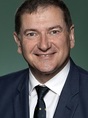
Llew O'Brien Wide Bay, National Party
10:03 am
The Private Health Insurance Amendment (Modernising the Private Health Insurance Rebate) Bill 2026 abolishes the age based private health insurance rebate loading available to Australians 65 years and over and also represents another attack on older Australians at the worst time in their life, at the worst time that they can afford it. The government claims this change will simplify the rebate and make it fairer, more targeted and financially sustainable. According to the minister, the current system is not equitable because older Australians receive a larger rebate than younger Australians on the same income. Labor argues that removing the age based rebate will free up billions of dollars that can be redirected to other health, disability and age-care priorities. But what it really means is that the Albanese Labor government is proposing to cut the incentive that's specifically designed to encourage older Australians to maintain their private health insurance at a time when they need private health insurance the most and after a lifetime of hard work, paying taxes, raising families and helping build this nation. The government is sacrificing the private health insurance of older Australians in the name of what Labor calls 'intergenerational equity'.
All Australians, young and old, have every reason to be sceptical and critical of this counterproductive move. This is the same government whose version of intergenerational equity involves giving universities an extra $16 billion to reduce student debt while expecting senior Australians to pay around $50 an hour for assistance with showering, dressing and personal care. This is the same government that has presided over an aged-care system where more than 3,000 older Australians remain stuck in hospital beds because there is nowhere else for them to go. So, when Labor says the savings from the bill will somehow improve services for older Australians, many seniors rightly wonder: where is the evidence?
The government's justification rests on the assumption that older Australians will continue to hold private health insurance even after the rebate cut. Labor argues that the higher rebate has little influence on participation rates and that most seniors will simply absorb the additional cost. This is a deeply flawed assumption. The age based rebate loading was introduced by the Howard government in 2005 for a reason. It recognised a simple reality—older Australians are more likely to require hospital treatment and healthcare services than younger Australians. The purpose of the additional rebate was to make private health insurance more affordable at the stage of life when people are most likely to need it. It helped retirees and pensioners maintain cover and reduced pressure on an already stretched public health system. This bill turns its back on that principle.
More than three million Australians are expected to be worse off under the changes, including 1.2 million pensioners living on fixed incomes. The government's own modelling anticipates that around 44,000 older Australians will drop their private health insurance as a result of this move, but many believe that figure significantly understates the real impact. The insurance sector estimates that around 62,000 seniors will reduce or abandon their cover, and National Seniors Australia has warned that up to 400,000 older Australians could downgrade their cover, with around 270,000 potentially giving up private health insurance altogether. If even a fraction of these forecasts prove accurate, the consequences to Australia's public health system will be substantial. Every senior who leaves private health insurance becomes more reliant on public hospitals. That means longer waiting lists for everyone who relies on the public system, young and old, and it means greater costs for state and territory governments already struggling to manage growing healthcare demands.
The irony is that, while the bill claims to deliver savings to the Commonwealth, it shifts costs elsewhere and leads to worse health outcomes. State and territory governments will be left to deal with the consequences. This is why concerns about this policy extend beyond the coalition. The South Australian Labor government has voiced opposition to the measure. The New South Wales, Queensland and Tasmanian governments have also raised concern about the impact these changes have on their health systems. These governments understand what the minister refuses to acknowledge—that reducing incentives for seniors to maintain private health cover risks pushing more patients into public hospitals and increasing costs for taxpayers in the long term.
Perhaps the most alarming aspect of this legislation is that the government appears to have proceeded without fully understanding the consequences, which seems to be something this government does a lot. During Senate estimates, health department officials acknowledged that they had not modelled the impact this bill would have on demand for public hospital services. Think about that. The government that is proposing to remove billions of dollars in support from older Australians and admits that thousands of people are likely to leave private health insurance has not bothered to model the impact on public hospitals. That is not evidence based policymaking. That is budgeting first and asking questions later.
As is so often the case, regional Australia stands to bear the greatest burden. Regional hospitals are already under immense pressure. They face workforce shortages, specialist shortages and growing waiting lists for elective surgeries. Communities across regional Australia simply do not have the capacity to absorb a significant increase in patients moving from the private system to the public system.
In the electorate of Wide Bay, these concerns are not theoretical. Pensioners are worried, and they've been contacting my office en masse. Many have told me how they are already struggling with Labor's cost-of-living crisis and they do not know how they will afford rising premiums once their rebate is reduced. Others say they will have no choice but to downgrade the level of cover they have carefully maintained for years. These are not wealthy Australians seeking special treatment; they are retirees who have done the right thing. They have paid for private health insurance throughout their working lives because government encouraged them to do so.
Now, just when they are most likely to need procedures such as cataract surgeries, hip replacements or knee replacements, Labor's asking them to pay more and receive less. For many, the alternative will be joining already lengthy public waiting lists. This bill uses smoke and mirrors to improve the Commonwealth's bottom line, but it does so at the expense of older Australians and at the risk of placing ever-greater pressure on our public health system. This is why I cannot support this legislation, and I urge the House to reject it.
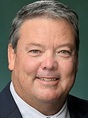
Andrew Willcox Dawson, Liberal National Party, Shadow Assistant Minister for Manufacturing and Sovereign Capability
10:12 am
Getting older costs more—more prescriptions, more specialist appointments, more scans, more procedures and very often more health care. Yet the government has said that, from 1 April next year, it will scrap the additional private health insurance rebate currently available to Australians aged 65 and over. Older Australians won't lose the rebate altogether, but they will lose the extra support they currently receive. That raises a pretty basic question: why remove support at the very stage of life when people are more likely to need their health care?
I've been speaking to people right across Dawson, and they're asking themselves this difficult question: can I still afford my cover? These aren't people looking for some exclusive healthcare experience. They are retirees and pensioners who have paid for private health insurance because they want choice and certainty when they need treatment. For many of them, their income is not going up, but their insurance premiums are. Their electricity bills are. Their groceries are. And now the government wants to take away part of the rebate that helps make their private health cover more affordable.
For some on a fixed income, that can be the difference between keeping their cover and giving it up altogether. That is where the policy stops being a budget measure and starts becoming a health system problem because people who leave private health insurance don't stop needing health care. They still need a specialist. They still need the procedure. They still need the hospital. The question is whether they continue to access the private system or whether they end up adding to the pressure on the public hospitals. In regional Australia, that pressure matters.
We know public hospitals don't have unlimited capacity. If more older Australians are rushed out of private health insurance, it will have a flow-on effect. It will mean more demand for beds and longer waits for people already relying on the public system. This includes younger Australians living with chronic conditions—people who are already on long waiting lists for treatment or specialist care.
That is why I've been listening carefully to the people who are most affected. Recently I met with Warren and seven fellow members of NQ Retirees in Townsville. They said they didn't want luxury. They're not asking for any special treatment. They're just telling me that, after years of paying for private health insurance, they're worried that they may soon have to choose between their health cover and other basic household expenses. And this is simply not good enough. They are also generally concerned, if more people choose to give up their private health, about what that means to the public health system, what that means for people who cannot afford private health care and what it means to the state economy when more expensive procedures are pushed into the public system. And that is a choice I don't think the government should be forcing on older Australians.
The government says the change will affect about 3.2 million Australians aged 65 and over and save around $3 billion over four years. For the Treasurer, that is a line in the budget. But for an older Australian on a fixed income, it is a line too far in his or her household budget. This Labor government spent months resisting calls to release the modelling behind this policy, and now we know why. Labor says this change will save $3 billion over four years, but the Parliamentary Budget Office modelling shows that almost $1.6 billion of those savings will come from age pensioners who hold private health insurance. That is half the savings. It puts a very different face on the government's decision to standardise the rebate, because behind that word and behind the modelling are pensioners who are already going to be paying more to maintain health cover they already have. You can call it standardisation, but for the person receiving the bill it is a higher cost, and when you follow the money you find poor pensioners. And this is a shame.
Let's not forget the self-funded retirees, who receive little or no government assistance, who will save throughout their working lives and who pay their own way through retirement. They don't fit into a pensioner statistic, but they will still feel the impact. They face the same question: do I keep my cover or cut it and use that money for something else? The government's own modelling suggests around 44,000 people could leave private health insurance as a result. But that isn't the whole story. Some people won't cancel their policy completely. They will downgrade it. They will accept the higher excesses, reduce their level of cover or drop benefits that they can no longer afford.
The question shouldn't be simply how many people cancel. What everybody should be asking is: how many Australians will have less health cover than they have today? Private Healthcare Australia has warned tens of thousands could drop their cover, with many more downgrading. Medibank has pointed to external modelling suggesting that the number who leave could be as high as 91,000. And National Seniors have also found significant numbers of older Australians considering dropping or downgrading their hospital cover. These figures tell us there is real uncertainty.
Private health insurance is not some foreign system that sits outside Medicare. It is part of Australia's health system. It takes pressure off the public hospitals. It gives patients another pathway treatment, and it gives Australians another choice about how and where they will receive their health care. If those opposite truly cared about Medicare, they would take off their rose tinted glasses for long enough to understand the real consequences this change will hold for everyone, even those with a Medicare card.
A pensioner paying a private health insurance premium is not saying they are too elite for Medicare; they are trying to make sure that they have another option when they need care. They are trying to ensure that those who genuinely need free health care can access it. For someone on a fixed income, maintaining that option can require real sacrifice. I have met pensioners who tell me they go without luxuries like dining out, because they consider their health care worth protecting. This is not elitism; this is personal responsibility and personal choice. If the argument is that everyone should simply use their Medicare card—well, Australians already do. But a Medicare card is not a hospital bed, a Medicare card does not build another operating theatre and a Medicare card does not shorten a public hospital waiting list.
The point of having a mixed health system is that Australians have more than one pathway to care. We should be strengthening that choice, not making it harder to maintain. And Labor's defence of this policy seems to be, 'We are simply bringing Australians over 65 into line with everyone else.' But the argument ignores why the higher rebate exists in the first place: older Australians are more likely to use health care. I'll repeat that: older Australians are more likely to use health care. Their healthcare needs reflect that. The higher rebate recognises that reality. Removing the additional rebate doesn't make those healthcare needs simply disappear. It simply makes the cover harder to afford.
And older Australians are not the only ones who will be affected if private health insurance participation falls. If people move into the public system, the pressure doesn't simply stay with these people. It spreads. It reaches the families waiting for an elective procedure. It reaches the regional hospital already trying to manage limited beds and limited staff. That's why the states have taken notice. New South Wales, South Australia, Victoria and the Northern Territory have all raised concerns about the flow-on pressure to public hospitals. And Queensland and Tasmania have gone further, calling for the cuts to be scrapped. These governments understand something the Albanese Labor government seems determined to ignore: you can't move pressure off one part of the health system without putting it somewhere else.
This isn't really a debate about insurance; it is a debate about health system capacity. Yet somehow, when Labor needs to find another few billion dollars, it's looking at the pockets of older Australians, and this is truly a shame. The coalition position is straightforward. We believe Australians should have a choice in health care. We believe people who want private health insurance should be supported and it should be maintained. This will take pressure off the public system. We believe older Australians who have spent years paying premiums should not be treated as an easy source of savings simply because they have reached a certain age.
It is not too late. The government can still change course if it wants to. It can listen to older Australians and scrap this cut. It can recognise that private health insurance is not the enemy of Medicare. It is one of the things that helps make the whole system work. This rebate reduction is fundamentally wrong, and it's wrong on so many levels. It is wrong to make health care harder to afford for older Australians. It is wrong to put more pressure on the public health system. The public health system is already overstretched. And it is wrong to treat the people who carry almost half of this saving as simply another line in the budget.
After a lifetime of contributing to this country, older Australians deserve security. They deserve choice and dignity in their health care. The answer should be to make their security stronger, not harder to afford. I ask and I plead with the Albanese Labor government to please reconsider this. Please give older Australians the dignity and respect that they deserve.
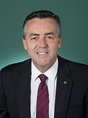
Darren Chester Gippsland, National Party, Shadow Minister for Veterans’ Affairs
10:25 am
It's a pleasure to join this debate, the Private Health Insurance Amendment (Modernising the Private Health Insurance Rebate) Bill 2026, after my great friend and colleague the member for Dawson. I want to associate myself with everything the previous speaker had to say about this government's approach to older Australians because what this legislation before the House does is confirm what everyone on this side of the chamber knows, and what more Australians are understanding every day—that is, this government is at war with older Australians and is at war with people who have aspirations to look after themselves and who take steps to save and prepare for their own retirement.
Everything you need to know about this bill before the chamber today is included on this speaking list. There are 94 members of the Labor Party in the House of Representatives, and yet they've run out of speakers. The only speakers left on this list are on the coalition side. We have far fewer numbers on our side of the chamber compared to Labor Party, and yet they are missing in action.
I have been in their position. I have been part of a previous government where changes had been made that I didn't always enjoy. What you would do there is avoid speaking on the legislation. You'd avoid having your name on the record defending what is garbage legislation. They have 94 members on that side, compared to the lower numbers on our side, and they've run out of speakers. That tells you all you need to know. They're hiding in their offices because they do not want to be on the public record defending these cuts to the private health rebate for older Australians.
This is an assault on older Australians. This is an assault on the aspirations of people who have worked hard, tried to get ahead, made difficult choices about spending their money on private health to try to look after their own healthcare needs in their later years. They are asking me, and I'm sure they're asking members on the other side of the House as well: 'What did we do to deserve this? What did we do wrong? We worked hard. We saved our money. We took out private health insurance like you told us to do, and now you're cutting our rebate, which is making it harder to have private health at exactly the time we need it the most.'
Now, this decision by the government has real life impacts. I want to read from a letter I received from Joanne in my electorate. She said to me, 'This proposal feels like boomer bashing, which seems to be becoming increasingly common in many quarters. We boomers had our own hard times and made sacrifices to get where we are today. I'm on a part age pension and would be unlikely to continue paying for private health insurance if the rebate is cut or removed. It is already one of my greatest household expenses and something of a luxury.'
I asked the Prime Minister yesterday, 'Why, Prime Minister, in the middle of a cost-of-living crisis, is your government making life harder for 1.5 million aged pensioners like Joanne?' And just like those members opposite who are missing in action here today and refusing to speak on the bill, the Prime Minister refused to answer the question. He handballed it. Quick hands. He handballed it to the minister for health and dodged going on the record to defend this appalling decision.
So what did the minister say? Well, the minister waffled and procrastinated his way through something that vaguely resembled an answer. What he tried to claim was this: the government is using the money saved, which has been ripped out of the pockets of older Australians—$3 billion in fact—to put into more Support at Home packages. Is the minister seriously trying to tell us there is going to be a direct hypothecation from the savings of this measure into aged care year on year? I've seen the way budgets are formed in this place for 18 years now, and there is no such budget rule that involves a direct hypothecation of money saved from one part of the budget going directly into the hands of the Support at Home package. If that were the case, then the fuel excise would be directly hypothecated to road safety measures, which it's not.
I think the minister is making things up on the spot. The minister is pretending that there's going to be a benefit for older Australians by taking money out of one group of older Australians to pay off the problems the government has accumulated in the aged-care system.
At its core, this bill is a government deciding to make life harder for one section of the Australian population primarily because they realise that that section of the Australian population probably doesn't vote for them that much after all. Older Australians, self-funded retirees and people who've taken out private health insurance are probably not a core constituency for the Labor Party, so it's, 'Let's hit 'em; let's hit 'em and take more of their money out of their pockets and then pretend we're going to hypothecate it to the aged-care system.'
Even if that's not the case, even if I'm wrong about the government's motives, any decent government—any government that didn't have a culture of secrecy and sneakiness—would have the courage to take these changes to the Australian people at an election. That is how public policy is formed in this nation. Major changes of this nature are traditionally taken to the Australian people to decide, because we live in a democracy. We live in a democracy where big decisions, big changes, are taken to the voters, and they decide for themselves. Because of the sneaky culture of this government, it doesn't do that anymore.
It didn't take its capital gains tax changes to the election. It didn't take its negative gearing tax changes to the election. In fact, the Prime Minister said 50 times—he claims he said 50 times—'no changes to these tax measures'. Well, Prime Minister, that was deceitful, that was dishonest and that was untruthful, just like these changes. It is sneaky. It defies the traditions of our democracy to make such major changes to people's personal financial arrangements and not give them a chance to vote on it. And the government know it; they know it because they're not here speaking about it. They're not here defending it. They know it was sneaky and deceitful to do this to older Australians, because no-one heard about it until it popped up in the budget as another savings measure.
This is just another broken promise. Again, it wasn't taken to the election, and the reason it wasn't taken to election is that the Labor Party knows that Australians wouldn't have voted for it. They know that Australians would have seen how unfair this is. This is unfair because people have done everything the government asked them to do. They've worked hard. They've saved their money. If they've been in a position to be able to afford some private health insurance, they've done that. The rebate has helped to make it more affordable for them, and, at precisely the time they're most likely to need that private health, they're now faced with higher costs, and the consequences during a cost-of-living crisis are going to be very severe on a large number of people.
What the government has also been dishonest about is the flow-on consequences. You can't pretend that you make changes like this to people's personal financial arrangements and there aren't consequences. The first consequence is that you're going to force people out of the private health system. When they're already struggling with the cost-of-living pressures, this extra cost is going to make many households examine their budgets and say: 'I simply don't see how we can afford our private health anymore. We're going to have to drop it.' They don't want to do it, but they're going to have to drop their private health insurance or they're going to downgrade their coverage.
What does that mean? That means you'll have more Australians fully dependent on the public health system. They don't exist in isolation, Deputy Speaker Buchholz. You know that. I know that. We have a private health system. We have a public health system. It's all part of the health system, and, if more people drop out of private health, that's more pressure on public health. That is more pressure on waiting lists.
People are already waiting too long to have surgery. People are already suffering in pain on those waiting lists for months and months. Putting more people on the public hospital waiting list is a poor health outcome for all Australians. It is madness if anyone on that side thinks there's not going to be a consequence on the public health system. You're going to shift the cost from private health to public health and increase the waiting times for people, and people will be suffering in pain for longer to get the treatment that they want.
The other thing it'll do, which concerns me greatly as a regional member of parliament, is make it harder for our private hospitals to remain viable. In some of our regional communities, there may only be one private hospital. For my electorate, there's one private hospital servicing about 50,000 square kilometres. It's the only private hospital. It's already quite marginal in those thin markets in regional areas to operate a private hospital. But, when you take away more private health customers from a hospital like that, the margins get skinnier, it gets harder and they become less viable. That is another consequence of this decision: we're going to see private hospitals, particularly in regional areas, find it harder and harder to maintain their services. And, again, if they shut their doors, it will all fall on the public health system to pick up the slack, and that is not a good outcome for all Australians.
The coalition opposes these measures for all the reasons I've just described. They're an attack on aspiration. They're an attack on older Australians. They're sneaky; they were never taken to an election. And the long-term consequences of this decision will flow through the entire health system. You don't have to take my word for it. On our side of the House, we have been inundated by people who've been impacted and also by other jurisdictions.
The state health ministers right across the country have made it very clear that they are concerned about the impact it's going to have on the states' budgets in every corner of our nation. According to a ministerial media release from the New South Wales government—the New South Wales Labor government—there are now over 3,600 patients stranded in state hospitals across Australia waiting for Commonwealth government aged-care places. So there's already pressure on the state system, with older people not being able to access the services they need. They made the point:
Public hospitals were not designed as alternatives or substitutes to aged care facilities, and patients waiting indefinitely in hospital face poorer prospects for recovery.
There is now a united front amongst Labor and coalition state health ministers, who are saying this policy will add to the waiting list of an already overcrowded public system, where there's already 3,600 patients waiting in state hospitals to receive the care that they deserve and need.
The Queensland minister for health has indicated this will punish older Australians, forcing them to pay for their own aged care. He says:
Queensland remains ground zero for stranded older patients, with more than 1,270 stuck in our hospitals and interim care through no fault of their own.
The Tasmanian minister for health, Bridget Archer, said:
Too many Tasmanians remain stuck in our hospitals, sometimes for weeks and even months at a time, because the Federal Government has not provided them with the aged care or NDIS supports needed.
The Victorian Labor minister Ingrid Stitt said:
Every older Victorian deserves to age with dignity—and no one should stay in hospital longer than they need to. We'll continue to advocate strongly to the Commonwealth to ensure its aged care reforms are properly funded and no Victorian misses out—
which is the core of my concerns. We already have in the order of 200,000 older Australians waiting for the care they deserve in the aged-care system. We have 100,000 waiting for Support at Home packages.
Last financial year, more than 4,800 older Australians died on the waiting list for Support at Home. These were people who had been assessed as being eligible for a Support at Home package, and they died before the support was ever provided to them. That is a national shame. We have to do better than that, and it's because there is not enough support being provided to actually deliver the services, particularly in our regional communities. Everything this government is doing with changes to the private health insurance rebate is going to place more pressure on the state system and more pressure on the care that is being provided in our regional economies.
Finally, this is the last point I want to make, which deals directly with the question of whether the private health system will be able to survive with a reduced number of people contributing to their private health. Latrobe Health Services in my electorate have written to me to make precisely the same points that I've endeavoured to make today. They're saying the proposed policy changes will obviously increase the financial pressure on older Australians. This is from a letter they sent to me only a few weeks ago. They're saying that it will involve reduced activity in local private hospitals and that there will be increased pressure on the public health system. So, even if this sneaky, deceitful, dishonest government doesn't believe what members of the coalition are saying, surely it will listen to people with direct lived experience in the field who are delivering the health services that Australians need. I urge the Albanese government to stop this war on older Australians and to stop this war on the aspirations of the people who have worked so hard to prepare for their own retirement.

Andrew Hastie Canning, Liberal Party, Shadow Minister for Industry and Sovereign Capability
10:40 am
Australians expect a basic bargain from their country: work hard, pay your taxes, save what you can and take responsibility for yourself and for your family, and, if you do those things, the government shouldn't punish you for it. But that's exactly what the Albanese Labor government is doing to older Australians. People in my community are telling me life is getting harder. Power bills are up. Insurance costs keep climbing. The weekly shop costs more. The family budget doesn't go as far as it did a year ago. For older Australians living on fixed incomes, there isn't much room left for them. I've seen seniors working through their groceries in their local Coles and Woolies trying to work out whether they can afford half a dozen eggs, and it's a sad scene to watch. Now Labor wants them to pay more for their health insurance as well.
Adrian and his wife live in Dudley Park, in my electorate. They're both in their 80s. They've worked hard. They've paid their taxes, and they've paid for private health insurance for decades. Now they're worried that Labor's changes to the private health insurance rebate could push their premiums up by more than $30 a week. That's more than $1,500 a year. That's a lot of money for seniors on a fixed income. Adrian is 82. After a serious fall, he needed to see a neurologist. He tried the public system and was told he could be waiting for years. At 82, he doesn't have years to wait. That's why his private health insurance matters. Adrian and his wife aren't wealthy, but they planned ahead. They paid their own way. They kept their private cover because they knew there might come a day when they needed it. And that day came. Now, in their 80s, Labor is making that cover harder to afford.
I'm hearing the same thing from older Australians across Canning. Grant is 77. He and his wife are sitting around the kitchen table working out what level of cover they can still afford. Margaret is 78. She has paid for private health insurance for 56 years. That's 56 years. Scott is 65 and lives on a disability support pension. He told me that, if his premiums rise any further, he simply won't be able to keep his cover. These Australians have done exactly what governments have asked people to do for decades. They've taken responsibility for themselves. They've paid into the private system. In doing so, they've taken pressure off our public hospitals. Labor should be thanking them. Instead, they're taxing them. And here's what makes it worse.
The Albanese government announced an $11 billion cut to private health insurance rebates without even knowing how many pensioners would be caught by the change. It was only after pressure from the coalition and stakeholders that the Department of Health produced an estimate—around 1.2 million pensioners, many of them full-rate pensioners. I see that we've got young Australians up there in the gallery. They might be your grandparents who are affected by this change. The government didn't count them before it made the decision. It still doesn't have a reliable, up-to-date number. They made the decision first and worked out who would pay later. Now the states are warning them.
The Labor governments of New South Wales and South Australia oppose the change. Premier Minns of New South Wales and Premier Malinauskas of South Australia are pretty smart people. They know what's at stake here. So do the coalition governments of Queensland and Tasmania. They know what happens next. If older Australians drop their private health insurance, they don't stop getting sick; they just go into the public system. In Western Australia, that system is already struggling. Waiting lists are long, emergency departments are under enormous pressure and people like Adrian are already being told that they could wait years to see a specialist.
Labor's answer is to push more people into an already overloaded and broken system. The insurers are warning about it too. Medibank says the number of people dropping their cover could be more than double the government's estimate. Medibank, HCF and Bupa say poorer retirees and older Australians in regional communities will be among the hardest group of people hit. The Australian Medical Association has questioned whether this will even save money once the extra pressure on hospitals is accounted for.
So, what is the point of this policy? It's a good question, and people in the galleries are asking: 'Why the change? What's going on here?' It makes private health insurance more expensive for older Australians. It risks pushing people out of private cover. It puts more pressure on public hospitals, which we need to be operating far more effectively for Australian citizens. Labor didn't even know how many pensioners would be affected when they announced it. People like Adrian are already being squeezed by the cost of living. They pay more for electricity, more for groceries, more for insurance, and our seniors are particularly struggling with loneliness.
If they can't go out and socialise because they don't have the discretionary spending in their budgets, that means they're isolated from their community, and it means that they're kept at home and they struggle with loneliness. I think that's a tragedy. It's a tragedy, and there is a consequence, a very human consequence and impact, of the way governments change policy. This change right now is having a big impact on our seniors. They're watching every dollar because in retirement there isn't another pay rise coming next year. They made their plans based on what they had worked and saved for. Now, Labor is changing the deal on them. They're pulling the rug from underneath them. There's something deeply wrong with that. A country should reward people who work, save and take responsibility. It should encourage people to provide for themselves when they can, because that's good for them, good for their families and good for the country. But, instead, Labor looks at these people and sees another place for raising revenue.
The coalition will fight these cuts. We're going to fight them very hard. They should be abandoned because Adrian and his wife have spent their lives working, paying taxes, saving and taking responsibility for themselves—as have Grant and Margaret and so many more Australian seniors and pensioners across our great country who've made their contribution over a lifetime and are now going to be hit by this change. They've held up their end of the bargain, and it's about time this Albanese Labor government did the same.

Dai Le Fowler, Independent
10:47 am
The government frames the reforms in the Private Health Insurance Amendment (Modernising the Private Health Insurance Rebate) Bill 2026 as a matter of intergenerational equity and simplification of our aged-care system. If that is truly the outcome, then I welcome it. But, in its current form, I have serious doubts about that. In recent days, many members in this House and in the other place have expressed those doubts as well. No-one denies that our aged-care system desperately needs better funding. But the solution cannot be to claw back money from the very people who need it most and already have the least.
But, before I turn to the detail, I want to make one request of this place. It is also a request of the people who design these policies and advise this government. Australia is a vast country. We have deeply diverse populations and deeply diverse needs. A policy that looks fair on a national average can land very differently in a suburb like Cabramatta or Liverpool. Too often reforms are built around an imagined average Australian. Communities like mine do not fit that picture. Here in Fowler many people speak a language other than English at home. That is not malice; it is unconscious bias. It is quietly baked into the assumptions, the modelling and the data. It is my job to name it.
The government projects this measure will reduce Commonwealth spending by around $3 billion over four years, with promises that those savings will be redirected to high-priority aged care. They are meant to go to the Support at Home program, new dementia care units and residential capital subsidies. These are good priorities. They speak to what families in Fowler worry about every single day—whether their elderly parents can stay safe at home, whether there is dementia care that understands their language and their faith, and whether local facilities are properly staffed.
But behind those good intentions is a story untold. A recently published Parliamentary Budget Office analysis found that, under the reforms in this bill which scrap the rebate on private health cover for those aged 65 and over, about $1.6 billion would be taken from around 1.5 million age pensioners who hold private health insurance.
Another issue is accountability. Every cent of that $3 billion must flow to the front line—to families struggling to care for their loved ones and to services built for a multicultural Australia and the communities that need them most.
I say this because I have seen what happens when the money does not reach the front line. For years, alongside the Mayor of Fairfield, Frank Carbone, I have fought for Fairfield Hospital. We fought to have its electrical capacity upgraded because the old building could not carry the load. But our case was always bigger than the wiring. We fought for an improved emergency department, we fought for the resources to care for a growing senior population and we fought for a community carrying more and more chronic illness in a low-socioeconomic area. We want that capacity upgrade. We have secured extra funding since. And yet I'm told that some of that money has gone to a car-park building. Meanwhile, the wards still do not have wi-fi because the old building blocks the signal.
I do not raise this to score a point. I raise it because it is the truth of how this works. A funding announcement in Canberra is not the same as care on the ward. The headline is decided here. The reality is lived in Fowler. So, when the government tells my community that $3 billion will flow to aged care, my community is right to ask one question: will it actually arrive?
In my community we have a very large number of seniors living on modest incomes. They've worked their whole lives in factories, in service jobs and running small family businesses. Many arrived here decades ago with nothing, and they built a life. Today they rely on the age pension, modest super or limited self-funded income, and they are already being crushed by the cost of living—energy bills, rent, groceries and the rising costs of treating age related illness. For these seniors, private health insurance is a safety net. It is how they manage their health when public waiting lists are long and specialists are hard to reach.
Under this bill, the age based uplift in the rebate is removed entirely. Older Australians will receive the same percentage rebate as younger Australians on the same income. That is a direct cut for seniors. The estimated average reduction for those aged 65 and over in the affected income tiers is $252 per person by 2028-29. In Canberra, $250 a year might look modest. In Cabramatta, Liverpool or Fairfield, it is a fortnight of groceries. It is the difference between keeping the lights on and falling behind. And this is exactly where the unconscious bias shows itself—not in bad intent but in the design.
The department did not consult specifically on these changes. It cited budget confidentiality and relied on data from 2022 to 2023, so the full weight of today's cost-of-living crisis on our seniors was never captured. The model assumes 99 per cent of seniors will keep their cover. The thinking is that older Australians value it more, but that assumes everyone can absorb the hit. What if the affordability tipping point has been miscalculated? If seniors can no longer bridge the gap, they will downgrade from gold to silver or silver to bronze. They will raise their excess or they will cut extras like dental and physio. Every one of those choices strips away protection.
A national average smooths all of this over. It cannot see the pensioner in my electorate, for whom $252 is the line between coping and going without. That is the blind spot I'm asking this place to correct. Moreover, the headline $3 billion saving may be no saving at all, just a cost shifted from the Commonwealth onto our already stretched state hospitals, and money taken out of struggling pensioners' pockets. When older Australians give up their private health cover, they do not stop needing care. They move from the private system to the public one.
Not long ago I visited a private day hospital in Chipping Norton, in my part of Sydney. I walked the floor. This is the place that does the very elective work I am talking about: cataracts, endoscopies and, in early years, orthopaedics, and gynaecology as well. These are the procedures our oldest Australians wait for. The staff told me something that has stayed with me. During the pandemic, that one facility took on public cases from Fairfield, Liverpool, Campbelltown and Bankstown. I was told they did it at a fraction of the cost of the public system. They were proud of their work, and they were right to be. I raise it because it shows how tightly the private and public systems are bound together in my electorate. When an older person can no longer afford their cover, they do not stop needing the surgery; they join a longer queue—and that queue sits in a public system already carrying enormous demand. The pressure does not vanish; it simply moves, and, in south-west Sydney, it moves to where people can least afford to wait.
For our culturally and linguistically diverse seniors, there is one more layer: people who do not speak English fluently already struggle to navigate a complex system. They find it harder to compare products, harder to understand sudden changes to their rebate and harder to advocate for themselves. Weaken their cover, and their vulnerability grows—in ways that national data simply does not capture.
I urge the government not to proceed with this bill because it risks doing more harm than good. The minister has stated multiple times in this House that this is a hard choice to make, but a hard choice made in Canberra might have unbearable consequences for pensioners in communities like mine. My closing message to everyone who designs and delivers policy in this country is: see the whole of Australia, not just the average. Check the assumptions, check the bias and build policy for the diversity that lives here. The people of Fowler deserve to be seen.
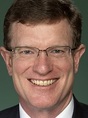
Andrew Gee Calare, Independent
10:56 am
Seniors across the electorate of Calare are absolutely outraged by these cruel and unnecessary cuts. These cuts are going to slash private health insurance rebates for Australians over 65—some of our most vulnerable Australians. The outrage has come from right across the Central West of New South Wales. People are outraged because there is no mandate for these cuts. If the government had wanted to come in and slash these health rebates for older Australians, they should have taken that to a federal election; they should have put it to the people and got a mandate for it. But there is no mandate for these cruel cuts.
These Australians have worked hard. They've sacrificed. They decided they didn't want to be a burden on the state public system, so they took out private health insurance. And what's happened? Their rebates have been ripped away from them. They've paid their premiums year after year, doing their bit to relieve the pressure on the public health system and the public purse. Now, with crushing cost-of-living pressures, what is their reward for all this? The reward is that these rebates have been snatched away.
It's hard to put into words the anger being felt across Australia about this, but, here today, I want to give voice to some constituents who have contacted me. They want Australia to know the effect of this and how they feel about this. For Glen and Frances Rich, from Bathurst, it is stated:
At 80 and 84 years of age, the change will impose an additional financial burden that they can hardly afford.
They are concerned about the increasing cost of maintaining private health insurance and believe the removal of the rebate will place further pressure on older Australians living on fixed incomes.
That is what Glen and Frances have contacted our office and told me about.
Lindy Conran, from Spring Flat, says:
My husband and I are over 65, self-funded retirees receiving absolutely no financial government assistance … (the thanks we get for working hard, saving our money and going without to make ourselves self sufficient in retirement only to be slugged once again).
As we reside in a rural community, the need for health cover is paramount as sadly healthcare in the bush is lacking. The cost of our healthcare rising because of the removal of the age-based rebate coupled with the rising cost of living will take a toll on our finances and it may be that we will need to either reduce our level of health cover or cancel it entirely. I would point out that we have held health cover continuously for 40+ years and now in our advancing years, when potentially we will require access to health cover, we may be denied because of this proposed initiative.
Lindy goes on to write:
Being in a rural area it is important that we are able to access treatment in a timely manner thus avoiding long public hospital wait times and choking up an already ailing health system even more so.
These are very, very valid points for country Australians. Lindy goes on to describe 'this ill thought out, short-sighted proposal'. Lindy says:
Our healthcare system is unable to keep up with demand now so imagine what the outcome will be if this proposal is mandated.
Well, there is no mandate for it as we know. She says:
Once again it is penalising those in the community that can least afford it, those living on a fixed income who have tried to future proof themselves for retirement without relying on government assistance.
John Gray, a constituent, has written in. John says:
I question on behalf of myself and other like pensioners the removal of the private health benefit to those over 65 …
He describes it as 'abhorrent'. He says:
We have worked all of our lives and paid our taxes and this is the reward we get. Can't these Labor politicians see that this could cause more problems in the hospital wait times if we drop our private insurance at a time in our lives that we may need more medical attention?
He then goes on to describe the whole thing as a 'debacle'. Rosemary from Orange has written in, and she says:
I'm not certain if we would be able to bear the cost of this. I suffer from osteoarthritis and have had a hip replacement and will need to have the other one done within the next 2 years. I worked in the Public Health sector and I don't wish to go on the 'waiting list' for 12 months or longer to get the replacement done. We are pensioners but our income is supplemented by a small income stream from superannuation, which we worked towards all our working lives. We are lucky compared to a lot of people, for which I'm grateful for.
They've worked all of their lives, and they were told this is the system. If you take out this insurance, if you pay the money, if you do the right thing—what we're asking you to do—then you will be looked after. And that's been proven to be a lie with this legislation. It's heartbreaking. It's stressful. It's causing great angst in our communities. It's causing anger and outrage.
Terry Longmore has contacted me, and Terry wants me to pass on his 'utter disgust at the way in which older Australians are being punished both financially and mentally for getting old'. He then says:
Australia, the lucky country, says who?
No wonder people are losing faith in governments and institutions. They're told one thing, and then another thing happens. Governments are not true to their word. This should have been taken to an election. There should be a mandate for it. If you want to do it, get the mandate. It's very simple. Peter Dowdell writes in. He says that he and his wife are over 65. They've worked, and they've paid for taxes and private health insurance all of their working lives. He describes this as a 'disgraceful grab'. For members on the other side of the aisle here, he doesn't varnish his words. He says that it's 'just another example of this appalling, destructive Labor government'. That's how strongly they feel about this.
It's a terrible amount of angst and anxiety and stress that we're placing on our seniors because of this. We know that these cuts will swamp state hospitals and add hours to wait times. That's what our constituents are all pointing out when they're writing in about this. They see it. We see it. Those opposite must see it too. Our local hospitals across the Central West are already strained by severe workforce shortages and bed block. They're at breaking point. If thousands of people across country Australia are forced to drop cover due to these premiums rising and the rebates going, it will crush our regional public health system into collapse. It'll just put more pressure on it. So there is no point in doing this. It's going to cost government in the long run—particularly state governments but federal governments too. Its short-sighted. Just for a quick cash grab, you've targeted these older Australians. It's just wrong and it's cruel.
This policy is short-sighted. It is unfair to our seniors. It's bad for regional health care. It's bad for Australian health care. And this policy needs to be binned immediately. So I'd say to those opposite: you must be getting these letters, emails and phone calls from your constituents. They must be writing in. Heed their words, heed their pain and anger, and reverse course on this ill thought out policy, this cruel policy. And bin it immediately.

Alison Penfold Lyne, National Party
11:06 am
I rise to speak on the Private Health Insurance Amendment (Modernising the Private Health Insurance Rebate) Bill 2026. I want to start with the title of this bill because I find it offensive, as so many other older Australians do. 'Modernising the private health insurance rebate'—there's nothing modern about making older Australians pay more for their health care. There's nothing modern about taking support away from pensioners. There's nothing modern about forcing people on fixed incomes to choose between paying their private health insurance premium, paying their electricity bill, buying groceries and filling a prescription. And there's certainly nothing modern about a government that recklessly squanders taxpayers' dollars only to turn around and ask older Australians to help balance the books. Calling something 'modern' does not make it better, it does not make it smarter, and it certainly does not make it fairer. Let us call this bill what it actually is. It's a cut to the private health insurance rebate for older Australians.
From 1 April next year, the higher rebate available to Australians aged 65 and over will be removed. I've spoken in this parliament before about what these changes mean for people in my electorate of Lyne, and I said in May that the reduction in the private health insurance rebate was nothing short of a stab in the back. Since then, nothing I have heard from the government has changed my mind. In fact, the more we learn about this proposal, the worse it gets. The government itself acknowledges that millions of older Australians will be affected, but it doesn't seem to care. Private health insurance is not some luxury exclusively held by wealthy retirees. National Seniors Australia has found that as many as 45 per cent of people whose sole source of income is the age pension maintain private health insurance. That should stop members opposite in their tracks. People living entirely on the pension are making room in their very tight household budgets for private health insurance because they believe it is important to their health and their security.
National Seniors Australia is firmly opposed to this bill. Its research tells us just how strongly older Australians feel about it. In a survey of more than 5,400 older Australians, 91 per cent opposed cutting the rebate to fund aged-care reform. National Seniors Australia says the issue has generated extraordinary anger amongst older Australians and has pointed out that it actually had been advocating for a higher rebate for lower income seniors because affordability was already a problem. Clearly, National Seniors Australia is listening to older Australians. When is this government going to do the same? When is it going to start listening? When is it going to start listening to people like Warren from North Haven in my electorate, who wrote:
At a time when things are already incredibly hard, and everyday Australians are struggling just to maintain a reasonable standard of living, this policy is yet another massive financial hit. The Albanese government needs to wake up and be realistic about the financial pressure people are under. If these cuts go ahead, it will completely defeat the purpose of having private health. Frankly, this is the breaking point… it will push me to give up my private health fund entirely, and I know I won't be the only one forced to do so.
When is this government going to start listening to people like Candy from Laurieton? She wrote to me to say that, without private health insurance, her husband would have died waiting in the public health system. Candy, who was her husband's carer, has had to go back to work just to pay the bills and, after nearly 50 years of paying for private health insurance, is looking at having to let their cover go. When is this government going to listen to people like Ann from Beechwood, who said that she and her husband have always had private health insurance but because of this rise in price, sadly, will have no choice but to cancel their policy, putting two more people into an already stretched public health system? When is the government going to listen to the thousands of people who've signed online petitions and my paper petition as well, calling for the government to axe and bin this dreadful policy?
I've spoken previously in this parliament about Lorraine from Forster-Tuncurry, who said:
I thought I was doing the right thing by always having private health insurance but now feel totally betrayed and misguided by this government.
Those words matter: 'I thought I was doing the right thing.' That goes to the very heart of this debate, because these are Australians who did exactly what governments told them to do—take responsibility, plan ahead, save, insure yourself and reduce your reliance on the public system where you can. And, after decades of doing exactly that, Labor changes the rules.
Alarm bells are ringing across the Australian health system in response to this bill. Private hospitals are already operating under enormous pressure. If private hospital activity falls, regional facilities will become even less viable. Once a private hospital service disappears, once specialists leave a regional community, rebuilding that service is extraordinarily difficult. That should deeply concern every regional member of this parliament.
People in Lyne understand exactly what limited private health and health choice means. We already struggle to attract specialists. We already see people travelling considerable distances for treatment. We already have enormous pressure on Manning Base Hospital and Port Macquarie Base Hospital. We already have patients waiting for procedures, and here we have the Albanese Labor government proposing something that national medical organisations warn will make our existing problems worse. What the government is doing makes absolutely no sense.
Catholic Health Australia, one of this country's largest non-government providers of hospital, aged-care and community services, has warned that the government has not adequately assessed the potential cost shift onto public hospitals, aged care and private hospitals, particularly regional facilities. It has called for further analysis before the government proceeds. Catholic Health Australia has undertaken its own modelling of the consequences. Its modelling suggests that changes could drive around 200,000 people to downgrade their private health insurance and impose an additional $675 million a year on public hospitals. It is also warning that the viability of some private hospitals could be put at risk. That is an extraordinary warning for the government to ignore.
The Australian Private Hospitals Association has described the government's approach and analysis as flawed. Private Healthcare Australia has warned that reducing support flowing directly to patients will hurt consumers, put further strain on the private hospital sector and affect the viability of services. The Members Health Fund Alliance, representing not-for-profit and member owned funds, has also opposed the bill. National Seniors Australia opposes it. The Australian Medical Association opposes the policy in its current form. Catholic Health Australia has serious concerns. Patients Australia has joined the campaign. So has the Medical Technology Association of Australia. In fact, nine national medical, hospital, health fund and consumer organisations joined together to write to the Prime Minister and the health minister arguing against this change. These organisations do not agree on everything. They represent different parts of the health system, but they can see the danger in what Labor is proposing. Perhaps the government should ask itself why.
This basic policy problem is very simple. Removing private health insurance does not remove illness. It does not eliminate demand for health care. If somebody drops their private health, their hip still needs replacing, their cataracts still need treating, their cancer still needs treatment, and their heart condition still needs a cardiologist. The patient does not disappear. The cost does not disappear; it moves. And, overwhelmingly, it moves towards a public hospital system which is already under enormous pressure.
That is why the government's own modelling deserves much greater scrutiny. The government estimates that only around 44,000 fewer older Australians will hold private health insurance than otherwise would have. But the material provided to us shows that Medibank has pointed to external modelling suggesting the number leaving cover could be more than double that, up to 91,000. Medibank, HCF and Bupa have jointly warned that poorer retirees and older regional Australians are likely to be particularly exposed and that a smaller insurance pool risks increasing premiums for the Australians who remain insured. The Australian Medical Association is not convinced that this measure will result in genuine net savings once the additional cost imposed on public hospitals is taken into account.
That is the problem. The Commonwealth may make its spreadsheet look better, but somebody else gets the bill. State hospitals get the bill. Private hospitals get the bill. Other policyholders will get the bill. And, ultimately, patients get the bill. That is not reform. That is just cost-shifting.
Remarkably, state governments understand this too. Labor governments in New South Wales, Victoria and South Australia have opposed the change. Coalition governments in Queensland and Tasmania have opposed it. When governments of both political colours—the governments actually responsible for running the public hospitals that will carry the additional load—are warning Canberra about the consequences, perhaps Canberra ought to listen.
Then comes perhaps the most cynical part of the government's sales pitch. We are told this money is going to aged care. Forgive Australians for being sceptical. No-one I speak to believes that taking money out of the private health insurance rebate provides any guarantee whatsoever that their mother will receive a home care package sooner or that their father will get an aged care-assessment more quickly. Where is the guarantee? Where is the direct connection between the pensioner paying hundreds of dollars more for private health insurance and improved aged-care services in the community? Even the Australian Medical Association, while supporting increased funding for aged care, says it should not come at the expense of older Australians' access to health care.
That is the point. Health care and aged care are not rival causes. Older Australians should not be told, 'We can improve your aged care, but first we will make your health care more expensive.' That's an absurd choice. People no longer accept the proposition that every new government tax, cut or charge will somehow produce a better service down the road. They judge governments by what they actually experience: the hospital waiting lists, the shortage of doctors, the aged-care waiting lists and the rising premiums. People in their 60s, 70s and 80s cannot simply go out and dramatically increase their income. They cannot work another shift. They can't negotiate another promotion. They cannot simply absorb hundreds of dollars of additional household costs without something else giving way. So what gives way? Is it the insurance? Is it the groceries, the dental care or heating the house? Is it the specialist appointment or seeing the grandchildren? These are the real choices this bill creates.
There's something else I reject in the government's argument: the suggestion that giving older Australians a higher rebate is somehow unfair to younger Australians. This is not a competition between generations. Older Australians receive a higher rebate for a rational policy reason. They use more health care. Keeping them privately insured takes pressure off the public system. And who benefits from that? Everyone. Generational fairness is not achieved by making one generation worse off. A health system works when its public and private components support each other. Weakening one ultimately puts greater pressure on the other.
Perhaps that is what bothers me most about the title of this bill—'modernising'. Governments have become very fond of euphemisms. A cut becomes a reform. A tax becomes a contribution. Taking something away becomes modernisation. But changing the language does not change what happens to the person paying the bill. There is nothing progressive about making health care less affordable to an 80-year-old pensioner. There's nothing innovative about forcing a retired couple to reconsider insurance they may have held for 30 or 40 years. There's nothing clever about pushing patients from private hospitals onto already overcrowded public hospital waiting lists. And there's absolutely nothing fair about asking Australians on fixed incomes to solve a spending problem created by Labor in Canberra.
When National Seniors, the Australian Medical Association, the Australian Private Hospitals Association, Catholic Health Australia, not-for-profit health funds, consumer organisations and private health insurers are all warning you, and when Labor and coalition state governments alike are warning you, perhaps the problem is not that everybody else has misunderstood the policy. Perhaps the policy is wrong. This government should withdraw this cut. It should stop pretending that changing the name changes the substance. It should stop trying to manufacture a generational argument to justify budget savings. And it should stop treating older Australians who have done the right thing for decades as the next place to find money.
The coalition will fight this measure. We'll fight for choice. We'll fight for a strong and sustainable private health system. We'll fight against further pressure being placed on our public hospitals. Most importantly, we will fight for older Australians who worked, saved, contributed, fought, did the right thing and deserve much better than this from the Albanese Labor government.

Alex Hawke Mitchell, Liberal Party
11:20 am
It's a privilege to follow the passionate contribution from the member for Lyne on this matter. The member for Lyne is totally correct about the Albanese government's agenda in relation to targeting some of the most vulnerable people in our society who've put away a lot of their savings and income in their lives to pay for their own health insurance to ensure that that burden is taken off the public and the public system and to prioritise their health care.
Why would a Labor government put forward a bill like this—the Private Health Insurance Amendment (Modernising the Private Health Insurance Rebate) Bill 2026—to cut a rebate which saves the public health system much more than it costs? That's the whole point of a rebate and an incentive for private health rebates. The savings that governments, state and federal, make from this rebate is incalculable compared to the cost of the rebate, yet the Albanese government is pursuing an ideological attack on elderly people. Some people in Australia might say, 'This is about rich people or people that can afford it.' Well, I want to commend the member for Kooyong for getting the Parliamentary Budget Office to do the analysis on this. It shows, in detailed analysis, that this is about 1.2 million age pensioners who have access to these private health rebates. It's people on the pension—the pension, if Labor members aren't listening!
I asked my electorate to tell me the impact of what would happen when the Albanese Labor government cuts this rebate through this bill in this House today. What would happen to their choice to have private health insurance, and how would it impact them? I can tell you that the evidence is stunning—absolutely stunning—from everybody in all of the age cohorts as they get older in their lives. Remember, let's not play the intergenerational card here; this is when you are most vulnerable. As you age, you need health care the most. This is when access is critical. You've paid your whole life. You're young and healthy. Then you get to this stage of your life. This is when you need no mess and no fuss.
All of us will get there. None of us can stand here and pretend that we won't be old one day, that we won't need health care and that it won't cost a fortune. We need assistance at this stage of our life when we're most vulnerable. Think of your parents. Think of your grandparents. All of us will be there. For the Minister for Health and Ageing to stand at the dispatch box every day and say, 'We have savings'—and we have the Minister for Aged Care and Seniors sitting at the dispatch box for his portfolio. Did the minister for aged care request that we cut private health rebates to make savings for aged care? What a Hobson's choice! This government is saying that we have to cut private health rebates to pay for some more aged care, but, actually, what this will do is put immense pressure on the public health system, ratchet up the costs, not save any money and not pay for the aged-care portfolio. It's a complete debacle.
Let's hear the words of the people, and I think Labor members should hear this very clearly. We say 1.2 million pensioners. The Parliamentary Budget Office says up to 1.4 million—1.4 million pensioners affected by this cut to their rebate. I want to start with a few words from actual pensioners in my electorate—actual examples of what will happen. Julie from North Kellyville says: 'As we are both full pensioners, we are struggling now to pay for our health cover. This additional payment will force us to use the public system, which can't cope with more seniors ending up in the public system. After all the years we've worked for our country—we've paid taxes, I've been working from the age of 14, and we've raised our family without any handouts from the government—I feel that they owe us this rebate at this stage of our life. I feel I've been paying into a health fund since I was 14 years old,' Minister for Aged Care. 'We deserve to have this rebate, and the government should start looking after the seniors who are the backbone of this country.' Why would you take off this rebate at the age of 70-something, when you have a person who contributed their whole life, worked their whole life, who's now on the age pension?
We can go to other areas. Margaret from North Kellyville says, 'I'm only on a pension. The changes would make private health insurance, which I've had since I left school'—here's another 78-year-old with private health insurance since she left school; she's taken the burden off society, taken the burden off the public system—'unaffordable for me.' That's what Margaret from North Kellyville says. Judy from Baulkham Hills says, 'I've been covering myself in my family since I was 16.
Are we getting a sense of this generation? This is one of our greatest generations. They worked their whole life, never took anything from the government and contributed by not being a burden to the public health system. Now the only thing they've got in their life—as we all understand and people here have forgotten, certainly this government has—was the age pension. That was the compact with this generation. They didn't have superannuation. They didn't have compulsory superannuation. The compact with this generation was the age pension. These people are so good that, with their remaining income, they paid for private health insurance, so they're not a burden on the state. Now, this Labor government says to them, 'You've done this your whole life, and you get to this point, and we're going to take it off you.'
It's: 'I've been covering myself and my family since I was 16. I'm paying $400 a month as it is. My husband and I are on the age pension. It's going to put a real strain on our budget. We still have a small mortgage.' This is the real world. This is ordinary people. They're not well off. They've still got a mortgage on their own family home. That's quite normal in Australia. People don't have a lot of wealth. The 1.4 million pensioners we're talking about are not well-off people. That's what the Minister for Health and Ageing will not address in this House.
This isn't taking from the rich to give to other people. This is taking from the poor. This is taking from the working poor that have worked their whole life and are on the age pension. 'When we started working, there was no super. Now, with the cost of electricity'—does that sound familiar, minister at the table—'water rates, the cost of food, things are getting out of control. Something will have to give. Unfortunately, it will have to be our health, and the government doesn't realise they're going to put more pressure on the hospital system because we won't be in charge of our health.' There are hundreds and thousands of these examples of pensioners in my electorate. Some of them are going to be forced to cancel their private health insurance.
We know from the Albanese government that they have not consulted with the states on this measure, and the premiers are speaking about it now. We know from the parliamentary budget modelling that the one weakness of the member for Kooyong's modelling is that it did not model the increase in cost and burden on the public health system—an overloaded and overburdened system. So all of these elderly people who are quite sick and who have legitimate and substantial healthcare needs are unable to charge their private health insurer and are reducing their cover. I have dozens of examples of people here who are going to have to change their cover from gold to silver, who are going to go from silver to bronze. It is heartbreaking to read; I've got to say. I defy anyone here to not think about their parent or their grandparent.
Surely people in this House, members of the Labor government, have parents who are struggling, who are on the pension, who aren't well-off people. Surely, from a Labor Party background, from a working-class background—if there's any working class left in the Labor Party members of parliament there—they would understand that this is not about some kind of luxury rebate or some kind of luxury concession to people. These are very marginal people doing the absolute best in life, doing the right thing by society, working hard, putting aside and contributing to private health.
So, then, what is really behind this? Even the government's modelling says 1.2 million pensioners will have financial pressure. I have an excellent point made by another pensioner in my electorate, who points out, 'They increased the pension $25 and then they've taken away $600 in the same breath.' It's incredible, right? The government has the temerity to stand in this House and say, 'Hey, we've increased the pension again because of natural indexation.' But they didn't mention in the same breath, 'Oh, by the way, we're taking away $600 from your rebate on average and more for some people.'
Let's get back to the point. The premiers and the states have not been consulted. The public health system is not prepared in any way for the impact of this. People are not prepared. How is it good for the federal government to remove the incentive to keep people at higher levels of health cover that mean that private funds pay for them instead of the public system? Make it make sense. Make it make sense, Minister for Aged Care and Seniors. I ask the minister at the table: did you ask the Minister for Health and Ageing to find money for your portfolio to fund aged care by removing the private health rebate for 1.4 million people? There are standing orders that the minister can take to answer my question right now. The minister for health has said that the reason they are cutting the private health insurance rebate from 1.4 million pensioners is to fund his portfolio. Did the minister for aged care request it? Did he ask his senior minister, 'I need $1 billion'?
From the Parliamentary Budget Office, it's $1,023.5 billion by 2030. In the out years, this will save the government $11 billion, allegedly, by 2037. But, without the modelling on the public health system, I would argue this would cost maybe five times as much, just from listening to some private health insurers and hospital people. Did the minister ask his senior minister for that, or is this just a fabricated defence of an ideological move by a Labor government with too large a majority?
I'm going to tell the public this, and I say it to everybody in my electorate. I thank the thousands of people who've sent me these—thousands of elderly and vulnerable people. I have to be honest with you and say I'm saddened to read all of your responses. I'm terrified that a government is so stupid as to target the elderly and the vulnerable in our society at a critical point in their health care and their life and say to them, 'We'll give you an indexed pension increase, but we'll take away $700, even though you're already struggling to pay your bills and you're not well off.'
The real reason that the Labor government are doing this, with their 40-seat majority that the Australian public gave them—they had a supermajority. It's time to move into the ideology of Labor—that is, if you work hard and you save and you put aside money, you're the enemy of the state. The Labor government of 2026 wants dependency on the state. It's true. It's their modus operandi. The minister for health is part of the left-wing faction of the Labor Party, which absolutely hates private health. Why? Because he doesn't like anything private. Everything should be government in society. Everything should be government. That's his world view. So when he gets the power, when he's given the majority, he's prepared to go after 1.4 million pensioners. It's part of his ideological quest. That's what a Labor government with too much power, too large a majority, will do.
They won't listen to any of the thousands of age pensioners in my electorate who are talking about aged care. Have a listen to Malcolm from Baulkham Hills. I'd say, Labor, maybe you should prick up your ears. 'I've voted Labor for 50 years. You've been my representative for 19 years, but I've never voted for you. But Labor has definitely lost my vote, and I'm voting for you for the first time ever.' There will be many more of those. The reason I raised that political point is that that's the only thing the Labor Party actually listens to.
Perhaps they should listen to the premiers, who are saying: 'Just hang on a minute. If you guys massively reduce the rate of private health insurance amongst the elderly and the vulnerable, who put the most cost on the system, and more of them downgrade their cover, more of them will end up in the public system more often—all the time with more cost and more burden on the system. But you haven't spoken to us about it. We haven't prepared for it. We haven't budgeted for it. We haven't got the doctors and nurses and other things in the public system, and the private system will be sending more bills to us all the time.' No wonder the premiers are angry with the Prime Minister. No wonder the premiers are actually in a revolutionary mind against the Prime Minister.
That cost is going to be much more than the Parliamentary Budget Office says are savings and much more on the government. And who pays the government bills? Again, the Labor Party doesn't seem to understand this. We the people pay the government's bills, so that means the cost of scrapping the rebate is going to be paid through more and more taxes and charges for the public. So there are no savings, because the cost to the public system will go through the roof.
No wonder the government doesn't want to model this or talk about it in the parliament. It's a terrible measure. It's bad policy. Because I know the government doesn't listen to arguments about bad policy, I'm going to give you a lecture on this: it's bad politics as well. I can tell you that there are 1.4 million pensioners out there who will not forgive you for cutting a rebate they get because they made their own individual choice to put money aside so they're not a burden on the state and so they can have peace of mind about their health care. Why do this to them at this age and this stage of their life? On behalf of every parent and grandparent of every person in this country, it's the wrong thing to do, Minister. It's the wrong thing for the Albanese government to do. This is a government drunk on power, drunk on its own majority, thinking it can pursue ideological folly.
I would like to hear from every Labor member about this. But guess what? There are no speakers on this bill. We know why they're hiding in their offices from this measure. They're hiding in their offices because of this measure. Every older Australian, every age pensioner—1.4 million—who's having their rebate slashed will be speaking to them in coming months, just like Malcolm from Baulkham Hills and just like the tens of thousands in my electorate. I can assure you, it is not going to be what Labor wants to hear.
Kevin Hogan Page, National Party, Deputy Manager of Opposition Business in the House
11:35 am
I rise to speak against the Private Health Insurance Amendment (Modernising the Private Health Insurance Rebate) Bill 2026. Government is about choices. I acknowledge federal governments, state governments, governments across the world and local councils have limitations and stretches on budgets, on what they can afford to pay and on what benefits they can afford to support. There's a lot of pressure on where they get their income from and how they spend their money. I certainly acknowledge that. But what a government portrays is its priorities, and this government has portrayed a very bad ideology here in what they are pursuing.
This government has decided to take a health rebate away from 1.2 million senior Australians. They also never promised or said they would do this at the last election. They didn't tell these senior Australians they were going to do this at the last election. At the same, they are wasting money in other areas. Their priority is to spend $9 billion on a green hydrogen fantasy. The Minister for Climate Change and Energy said he never believed the hype about green hydrogen, yet this government spent $9 billion on green hydrogen at the same time as they're taking money away from senior Australians who are going to lose their health rebate. That says everything about the priorities of this Labor government—let's take money away from senior Australians who've worked their whole lives, who now won't be able to afford private insurance, but let's keep putting billions of dollars into green hydrogen projects that even the minister doesn't believe will work. That shows the folly of this Labor government.
We've had many cases—and I will go through a few—in the sense that a lot of these senior Australians who have paid for their private health insurance over many years or many decades now won't be able to afford it at a time in their life they're going to need it. There's another ramification of this. The federal government has looked at this as a zero-sum game. When the Minister for Health and Ageing was asked to justify this, he said, 'Well, we have difficult decisions to make here, so we've taken it from people's private health rebate, and we're putting it into aged care—zero sum, all square.' It's not all square. We've had every state Labor premier, every state premier, say this is bad policy. We all understand this. I know you understand this, Deputy Speaker Buchholz. When these senior Australians can no longer afford their private health insurance, they are going to be completely dependent on the public health system.
At the moment our system works. People are spread around to different things. If you can afford private health insurance, a lot of those people will go into a private hospital to have a procedure done or when they need to use those resources. There are tens of thousands of cases where people are going to say they're no longer going to pay for private health insurance. They will be rolling into our public health system and public hospitals instead of the private health system. What does that mean? Our public hospital and public health systems are already overrun. There are already huge delays. There are already huge queues. Does this Labor government care about that? No.
The next time you go to a public hospital and there's a huge queue or the next time you go to your doctor and you need a public health procedure that is going to take you months, if not years, to get, you can blame this Albanese Labor government. Lifting this private health rebate means that those queues and those waitlists at public hospitals are just about to get longer. You can thank Anthony Albanese, the Prime Minister, for that the next time you go to your doctor. As every member on this side has spoken to and given quotes about, all the state premiers—the New South Wales Labor premier, the Western Australian Labor premier, the South Australian Labor premier—have spoken about this.
I don't think a lot of the ministers opposite get the reality around what this actually means for real people, so I'm going to read out some correspondence that I've had from people in my community about the ramifications of this cruel decision by the Labor government. Christine from Iuka says:
I have so far managed to keep my private health insurance but that will change with this disastrous decision.
Robyn from Gulmarrad says:
Currently private health insurance costs us 9.4% of our total income being the highest single cost of our cost of living other than food.
He will now no longer be able to afford private health insurance, because of this Labor government's decision. Rob from Lismore says:
We are both in our 70's & have paid private health all our working life. If this rebate is removed, we will seriously have to consider cancelling our cover as the cost will come out of our reach on a pension as I am sure many others like will also have to do. This will put more pressure on Medicare.
Rob from Lismore can work out that this is going to put more pressure on the public health system, but obviously the federal government can't work that out. Sally-Ann from Tregeagle says:
I am writing because I am feeling so disillusioned with the decision to once again punish the older generation by the government. I absolutely cannot understand how making pensioners pay more for private health insurance helps a young person into their first home.
This emotion is epitomising how this generation more generally are feeling about this government. They've saved money, they've had a bit of a go, they've paid their taxes, and the message they're getting from this Albanese government is they don't care: 'Bad luck, because we're not going to help you. And we're going to take a rebate off you to make life harder.'
Elaine from Yamba says:
I believe the government has discriminated against those who are over the age of 65 and have private health insurance. We have been paying private health insurance for over 54 years and have not been a burden to the public hospital systems. Now we are being discriminated against because of our ages.
Yes, Elaine from Yamba, you are being discriminated against by this Labor government because of your age. Colin from Lismore Heights says:
From the beginning of my teaching career, I paid for private health through the Teachers Federation Health Society. Through marriage and family, I continued with family contributions. I am now into my fifteenth year of retirement. My wife, also a teacher, paid into the Teachers Health Fund when she commenced teaching. She taught for over forty years. She has had some significant medical needs over the last few years, and we were grateful that we kept up our private health (at considerable cost).
However, this proposal by the Labor Government is adding to the hardship of trying to maintain a reasonable retirement in our later years. We are on a fixed pension income. We don't have the capability to offset increased living costs by taking on work. We even supervise HSC to gain some extra income for Christmas gifts. That's it!
It seems the older you get the more you disappear.
Surely there are savings to be made elsewhere instead of this attack on a soft target.
Please keep fighting this unfair impost.
Well, Colin, I will. And there are other areas where this government could have made savings, and I'll go back to one: the $9 billion spent by this Labor government on green hydrogen projects. Now, Minister Chris Bowen says he doesn't believe all the hype about green hydrogen. If he has spent $9 billion on a project that he believes there was a lot of hype about, how many taxpayer dollars would he have spent if he seriously believed in it? But, again, these are the priorities of this Labor government.
Max from Yamba says it was a very poor decision of the government to cut the rebate on oldies' private health and 'we, for one, will be no longer doing private health'. So there will be more pressure on the Clarence Valley public health system because Max from Yamba is leaving his private health insurance.
Brian from Woolgoolga says:
I am age 74 come October this year and i have been a member of HCF since 1971 when I commenced work. I am married and I find it important to have access to Private Health as one never knows when an emergency may arise and I am well aware of the pressure our Public System is under in the area where I live. In addition, as I get older, I am facing Hip, Knee and possibly Vack Surgery so I know I need to maintain my Private Health Insurance.
You are aware that under the Albanese Labor Government with Inflation and Cost of Living on the rise the last thing I need is a reduction in Private Health Rebate that puts further pressure on my budget.
Brian from Woolgoolga, I am certainly aware of that and, yes, very aware, as you are, of the pressures that this will put on the public health system.
Loris from Grafton says:
I recently looked into this cut and realised that with the annual health insurance increase, in April, and the rebate reduction in July, I will be paying approximately 20 per cent more for my health insurance. As a pensioner, surviving only on my fortnightly payment, it can't afford this. I phoned my health insurer and cancelled my hospital cover and now only pay for extras.
When I lived on the Gold Coast, before retiring 4 years ago and moved to Grafton, there were plenty of private hospitals to choose, so if I have an emergency, I'd go to Grafton Base Hospital. To have to go to Lismore or Coffs Harbour for treatment isn't realistic.
I've had 2 operations in the past 12 months, one at Grafton Base Hospital and the other at the Royal north Shore. Although I had private cover, both … So what's the point of paying for private? I am now saving $165 …
for other cost-of-living increases they have—
… by cancelling hospital cover.
Lisa from Numulgi says:
I am so mad at labour I want to scream. They are ruining our retirement which we purposefully worked diligently, invested wisely, saved and sacrificed for. Why do we have to be brought down to the level of those who didn't even try.
Anthony from Richmond Hill says:
Ever since I commenced my first fulltime job (in 1970) I have had private health insurance. It has long been known that health care costs rise in old age, but we were always told back then it would be okay because the premiums are structured to take this into account.
I am considering withdrawing my contribution after the change comes into effect. I am also looking at whether I can reduce the premium and pay more excess.
Bob from Glenugie says:
I had heard of this and have already decided to cancel my private health …
insurance, because he worked out the increase it will be for him. He goes on:
My wife and I … have utilised … private health membership but with everything else going up it will now be dropped.
A couple from Goonellabah says:
Yes, we, too are appalled at this decision. Surely there are other areas other than health the Govt. can reap extra funds. Leave the pensioners alone. They are the group that has probably paid private health care premiums for most of their lives. As it is, the regular rises in health premiums is far over the top, almost unaffordable …
Angelo from Coraki says:
I'm 64 years old dropped out of private health insurance on 30 June this year. I worked continuously since I was 17 years old and now …
he can't afford to pay for his private health insurance.
John from Modanville says:
Both Helen and I will be affected by this miserable Labor governments cut to our private health rebate. I am 80 Helen is 78, we received full aged pension, with a very modest superannuation allocated pension.
We have paid private health insurance continuously since before we were married in 1966, over 60 years. The premiums continue rise and we sometimes go without to keep insured during this difficult cost of living crisis caused …
they know—
… by our government's reckless spending and mismanagement.
If this cut happens it's likely that we will have to opt out of private health at a time in life that we really need to be covered.
Liz from Townsend says:
Like so many others I have worked long and hard throughout my life, always enjoying private health care.
I am not wealthy; health care is important to me.
I worked mostly in community organisations, managing homelessness and all its complexities for last 40 years and retiring at 73.
… Paid my fair share of taxes, earned lower superannuation benefits, I stuck with it because I see the value in my fellow humans and it was ministry as well as my work.
Nowadays I am receiving a full aged pension …
and she has a super contribution as well.
I am in no position to absorb the higher health cover costs. This at a time when I more 5likely to need timely health care as I age. Public health wait lists are months and years long.
Yes, they are, Liz, and they're going to get longer now.
This move by Labor is insulting, arrogant, ruthless. As I see it, it's another attack on older Australians. The rubbish that comes from Labor about fairness and equity is unfathomable.
Labor seems set on eliminating older people as quickly as they can, wearing them down by creating stress and anxiety, devaluing them, creating less opportunity for timely health care, and that's before I mention the last Labor budget.
I think we get the essence there. They're not my words; they're the words of elderly people, seniors, in my community.
What concerns me most is not only their concern but the mental health anguish that this is now causing older Australians. Those people have had private health insurance, maintained it and kept it because they realised it was going to be more important to them in their senior years. This very cruel and heartless decision by the Labor government means they are not going to be able to afford it at the very time they need it. Shame on this government.
David Littleproud Maranoa, National Party, Shadow Minister for Agriculture
11:50 am
This bill, the Private Health Insurance Amendment (Modernising the Private Health Insurance Rebate) Bill 2026, is friendless. If you look at the speaking list since the bill was introduced into this parliament, just 13 of the 94 members of the government have been prepared or had the courage to come forward and try and defend it. I don't know where the other 81 are hiding, but I think they have the same personal view that we on this side have—that this is one of the most egregious things a government can do to those that have worked so hard for our nation over so many years, that have made and built this country up to what it is today.
People have done all the right things. They've saved, they've put into superannuation and they were asked, told and encouraged to get into private health insurance to take that burden off the Australian taxpayer, to give a little bit back to this country and to ensure that there was some support there for those that can't afford any health care whatsoever—and they would get a rebate for doing the right thing by the nation in building this nation, and, in their twilight years, get a little bit back. For this government to callously take that away from those Australians that have done so much, that have built what we've got, and that they here are distributing out in any way they see fit—we talk about a government that say they're attuned to the cost-of-living pressures. We hear the mantras of cheaper child care, free TAFE and all these types of things. Well, what about those Australians that have retired, made a contribution and weren't getting anything for free? They were just getting a small rebate. They were just getting a little bit of a thankyou from government to say, 'Thank you for your contribution to our nation in building our nation.'
As we all get older, it's inevitable we'll need that help; we'll need that support to get the health care we desire and need. Those Australians were prepared to pay a bit extra for that and take the burden off the taxpayer, to get away from the public system where they could. To then callously say: 'Sorry, your contribution isn't worth it. Your contribution to this country is now not valued. You can actually now go and pay full freight. You can actually now go back to the drawing board, and you can pay for health care'—which those on the other side have championed, apparently, for so many years—puts so much more pressure back on the public system.
It's not just those that have worked and got money in their pockets; it's the 1.2 million pensioners that also worked hard and didn't get the benefits of superannuation in their early years, and need to get that safety net—that safety net that every Australian has had. It is the principle that both sides of parliament have protected and advanced. It's those 1.2 million pensioners that have tried to do the right thing and have been scratching it together. They're not going on world trips. They're not going on cruises around the world. They're living their lives. They're contributing to their community. They're mostly volunteering and enjoying their twilight years of making a contribution to our country and enjoying a fruitful retirement. They have done something remarkable that shows their values, their belief in our nation. Even though they're on a pension, they're prepared to prioritise not just their health but our nation in taking that burden off our health system where they can.
That's the beautiful thing about our country: we have those men and women that have done so much for our nation that are still prepared to give back just a little bit. And all the government was giving was just a little bit. They're not asking for anything for free. They weren't asking for a free hit. They were just saying they wanted choice, and they were prepared to actually pay for that choice and to actually sacrifice what was in their wallets to give up not big world trips but an extra coffee or an extra bagel. A couple going down to the local café—they were giving that up. Understand what this also means for the people that I represent in western Queensland, particularly in outback Queensland. Many of them decide to make this decision, this contribution, because they know they'll have ailments that need to be fixed and they know they can't get that support, that health care, in their local communities.
There are 344 rural and remote communities across Australia, many of which I represent, that actually don't have any medical support apart from a pharmacist. I believe those heroes that wear a white coat and are still there after the doctors have taken their shingles down are our last line of healthcare defence. The last person we've got is the local pharmacist. They choose to pay for health insurance so they have choice. They invariably have to travel hundreds of kilometres to get medical treatment, and they want to have that choice. They've worked damn hard in feeding and clothing you, putting the food and fibre that we produce in this country on your plate and on your back, and they don't have a lot of choice.
But, when they do have that choice, they want to be able to make it, and they're prepared to make that commitment to travel those hundreds—sometimes, like in my case, thousands of kilometres—to get to see the health professionals they want. They were prepared to pay for health insurance and get a little bit of support back from the government to help pay for it and to have that choice and be able to do it. Now this has been ripped away. You've taken away the choice of people in remote Australia that don't really ask for a lot. They do a lot for our country but never really ask for a lot. They're not out there whinging.
We can't even get free TAFE. We don't have TAFE out there. We're not asking for cheaper child care, because we can't even get a childcare place. This government spent $4.7 billion on subsidies for child care—let's just go into this—so that someone in Sydney, Melbourne and Brisbane that's on $300,000 to $500,000 picks up an extra $21,000 in subsidy support, yet we can't even get a childcare place in most of the communities that are west of the great divide. We have childcare deserts where it's not about childcare affordability; it's accessibility. We can't get any help out there and have been relying on local government to do much of the heavy lifting in that place.
They're prepared to spend $4.7 billion on support for people in capital cities, and all the people in western Queensland are asking for is a little bit of support to make health insurance a little bit more affordable so that, when they do decide to travel those couple thousand kilometres down the road to get that help in their hour of need, it's worth it and they get that support. To think that this government would callously turn around and sit there and say, 'You're not important any more,'—you've just got to ask the question: what are the priorities of this government?
The Minister for Veterans' Affairs and Defence Personnel walks in at a timely moment. When you think about the $700 million he's tried to save putting a cap on the value of veterans allied care, there's a pattern of behaviour here. It's not just veterans and their health care that they've put a cap on, valuing their worth at $5,000. It's now also extended over to older Australians that have given a lifetime to this nation in building this nation. They're not asking for a lot, nor are the veterans. This is where you've got to understand that this government has lost its way. It's lost its way in terms of its priorities and understanding what is important.
I am the first to acknowledge that cheaper child care is important and that childcare accessibility is important, but so too is health insurance for people who have contributed so much. That's important. That's a priority that we should not have lost sight of, and this government has. This comes back to their values and their principles—the values and principles of a government that has spent willingly and recklessly in things like green hydrogen. The member for Page quite poignantly pointed out before that that was a real game changer that the minister was very enthusiastic about but for some reason has now gone missing after they spent billions of dollars on a pipe dream that was never going to work, and yet the priority of our elderly Australians is being overlooked. That's not the values or the principles of a government that understands. It's not the values and principles of a government that cares. This is where governments can lose their way, and this government has lost their way. They've lost their way with veterans. They've lost their way with elderly Australians. When you make that contribution to this nation, the nation doesn't always want everything for free, but they just want that helping hand.
I say to this government that it is an opportunity and a reflection on them that, since this bill has been introduced, only 13 of their members have had the courage to stand on this side and defend the principle of what they are saying, of taking a little bit away from a generation of Australians who have given so much. The fact that only 13 of them have had the courage to put it on the record says to me, quite clearly, that they too don't believe it, but the party machine has told them they must. Well, have the courage to stand up and stand for something. Stand for that generation of Australians that have given us what we take for granted standing here today. That's what we're doing. We should never take that for granted. They've handed over a nation to our generation that we should be proud of, but what is the Australia we're going to hand over to the next generation when we don't value that generation, when we don't value veterans for the sacrifice that they were prepared to make for our nation? What have we become?
This is just a desperate government that is looking for any means, whether it be veterans or elderly Australians, to try and save whatever dollar they can to spend on whatever, where we don't know that it makes any sense in this country. There's no Australian that feels better off after 4½ years of this government. Today, when this thing gets passed, there'll be fewer Australians that feel even better off. That's not the Australia that we inherited. That's not the Australia that we should hand to the next generation. So I say to this government please reconsider. And, to those backbenchers, if you don't have the courage to stand up and say it, at least vote against it. Show the courage of what we're actually sent here to do, to do the right thing by the Australians that sent us here, particularly those Australians that have done so much for our nation.
That's the Australia and that's the parliament that we should have in this country. That's the parliament the Australian people deserve—members of parliament that, in that moment that a government is prepared to do the wrong thing, are prepared to stand up against it and to be counted against it. I doubt that it'll happen with the other 84 or 83 that haven't had the courage to come in here. I challenge them. They're probably watching. Come out of your office if you so believe in this. If you so believe that you want to take that little bit off that generation, well, come in here and put your voice to it. But the fact that only 13 out of 94 have been prepared to do it speaks volumes about a government that's out of touch and its members that have lost touch. I oppose the bill in every sense and form.

Julian Leeser Berowra, Liberal Party, Shadow Minister for Indigenous Australians
12:03 pm
Deputy Speaker Buchholz, it's an honour to be in your presence, and it's an honour to follow my friend the member for Maranoa, who made a very passionate speech, as did the member for Page before him, the member for Mitchell before him and the member for Lyne before him. We've had a series of very good contributions across the last hour from coalition members on these issues. We will keep speaking on this bill, the Private Health Insurance Amendment (Modernising the Private Health Insurance Rebate) Bill 2026, because this is bad policy and we want to put our voices on the record. We want to demonstrate to our constituents, to the pensioners across the country and to the Australians who've worked hard and who've played by the rules that we're on their side.
As the member for Maranoa points out, there are very few on the other side that have spoken. Only 13 members have spoken in favour of this policy. If it was such a good policy, this bill would be filled with Labor speaker after Labor speaker after Labor speaker, telling us why it's a good idea to slash the private health rebate on our pensioners—on people who've served our country, who've built our country and who've made it the wonderful place it has been. In their retirement, they will rely more on the health system. They have limited or fixed incomes and they want to be able to afford to access that system. They want to be able to afford to maintain their private health insurance. These are people that are taking responsibility for themselves, and yet this government is kicking sand in their faces.
Australia has a mixed health system. It's one of the great advantages of our system. We don't have the extremes of either America or Britain—America with its completely private health system that is very income dependent; and Britain with its completely state controlled health system, with its queues, its inefficiencies and its limited choices. The mixed system of both private and public is a strength of Australia. The mixed system, with both private and public, a system that allows for choice, is bolstered by the presence of private hospitals and bolstered by people taking out private health insurance. That bolstering of the private system improves competition, it improves service delivery, it gives people choices, and it tells people that, if you take responsibility and make a contribution to your health care, then you will receive benefits.
We know it is a value of older Australians that they are a generation of people who take responsibility. We also know that, as you get older, the body wears out and you become more dependent and reliant on the health system. You get older, you get run down and you need more help. Yet, at the very time when Australia's pensioners, Australia's old people, who've built this country, who've worked hard, who've played by the rules, who've given back, who've done the right thing for years, who've paid into the private health insurance system, might be looking to claim more, the government is stripping back on the private health insurance rebate. This will adversely affect older Australians, but it will also adversely affect our health system.
I think what we're seeing here is part of the fundamental values of the Albanese government—if you do the right thing, if you play by the rules, if you serve our country, this government will take from you. They will not encourage you; they will take from you. They're taking back the private health insurance rebate, just like they're doing with the $5,000 veterans allied health cap. Both of these ideas should be scrapped because both of these ideas are an attack on people who have served our country.
And this makes choices for older Australians very hard. The reduction of the private health insurance rebate means that we are going to see hard choices being made by older Australians at a time when they're on fixed incomes, at a time when they need health care more than ever in their lives. They're going to have to look at cutting back on other expenditure, downgrading their private health insurance or dropping it altogether.
We know that this is a bad policy for 1.2 million Australian pensioners. In fact, I have rarely had as much correspondence with my office on any issue as I have on this issue. Nearly 2,000 people have written to me about this particular issue. I want to read some of the contributions that they have made because it's good to hear from people in my constituency in their own words about how they feel about the Albanese government slashing the private health insurance rebate for older people.
Chris from Galston writes:
Thanks to the Albanese government, I will have to inquire whether a lower level with health fund would cover my needs with my age requirements.
Roy from Glenhaven says:
I am in the fortunate position of being able to afford the additional cost …. but I live in a retirement village with many residents who cannot afford Labours scandalous cash grab
Nancy from West Pennant Hills writes:
As a couple we are with AHM and paying over $8,000 per year!! This year we paid in for the whole year so to avoid the April rise of monthly payments.
This is an important point that Nancy makes here. Costs are rising for people on fixed incomes, and now they're getting sand kicked in their faces by the Albanese government. She goes on:
With rising cost of living, we don't think we can continue to keep our private health insurance cover. With that the government will be paying for our health requirements more than $650 per year when we move to the public system.'
There we go—more strain, more drain, on the public health system as a result of Labor's bad policies.
Peter from Westleigh writes:
The annual increase is hard enough. 8.8% this year from BUPA. The reduction in rebate to 24% will have a dramatic affect on my wife and I. We want to be able to stay in private but will have to seriously consider dropping out.
Chris from Glenhaven writes:
We are already seriously considering our options with private insurance due to ongoing financial pressures.
The impact of increased costs for our age group, especially when we are also not eligible for a pension is making us review all financial decisions.
Cheryl from Hornsby Heights writes:
It's unfair to increase our expenses when we're retired and therefore not eligible for any of the tax cuts because we don't have taxable income
Shane from Hornsby says:
I have already cancelled plans to go private
Charles from Arcadia says:
Government should be encouraging Private Health Insurance—NOT penalizing it!
Private Health Insurance is good for all as it reduces the burden on the Public System!
Well said, Charles from Arcadia. He says:
Those who leave it will simply impose more costs and pressure on our Public Hospitals!
Charles agrees with the views of many of the Labor premiers. Terry from Cherrybrook says:
We cannot afford to cancel our Private Health as my wife has cancer and the annual cost of the medications outweighs our annual premium payment which is around $6,000.
Suzanne from Pennant Hills says:
At 80 1 have had private health insurance since I started working at age 16. This might just make it unaffordable and I will have to rely on the public system Where will we find another $600+ a year, pay electricity, water and council rates, put food on the table and try to stay in our own homes.
These people are not wealthy. They may have paid down some of their debts, but their expenses, particularly in the cost-of-living crisis that we've faced—created by this Albanese government—makes an increase in what they're going to have to pay for their health care all that much worse.
John from Thornleigh says:
We have a policy covering my wife and I and the cost is becoming difficult. The sharp additional cost as a result of the budget is going to mean we will need to reassess our cover. We have had private health cover sine we were married in 1970—
56 years ago. After 56 years of paying premiums they're thinking about giving up. He says:
We are now 75 and these costs and general cost of living is becoming difficult to manage
Well said, John. Ray and Sue of Glenorie say:
We may have to lower the level of Private Health cover we have, but with cancer and heart problems it is important to maintain the best cover we can afford
You can see the effect that this decision is having on people in my community. Alan, in Hornsby, says their decision will be to 'likely reduce extras cover to compensate'. That's not helpful to anyone.
Bruce from Castle Hill says:
Now in my 70's I need this cover more than ever as both my wife and I medical expenses are more than $25k per annum. I have paid for private health insurance for our family and now my wife and myself every year for the past 50 years.
These are the contributors. These are the lifters, not the leaners.
Anthony from Cherrybrook says:
We are self-funded retirees and are at our absolute limit of expenditure with our small monthly income without this additional expense.
We see no option but for me to find a small part time job—
Wow! He says:
(I'm almost 84) or cancel our insurance which we are very reluctant to do!
Eighty-four-year-olds are going out to look for new jobs: that's Australia today under the Albanese government.
Catherine from Thornleigh says:
Private health is already very expensive but does help take load of public system so why penalise older people on fixed small income
Robert from Glenhaven says:
This is ridiculous, we're already paying more than enough an extra $640.00 per annum we will have to carefully consider. Our allocated income has not increased nor has our part pension so how on earth are we supposed to keep paying for everything that's increasing- gas and electricity/ Foxtel which we're considering cancelling because of the cost. Car insurance and we haven't got to registration yet! Whatever you can do to block this increase is very much necessary and appreciated.
Well, Robert, we, in the coalition, will vote against this increase. So many of my colleagues and I have spoken against it because it's just plain bad policy.
Ian in Dural says:
I cannot afford to cancel my private health insurance as I have a number of health issues which means I cannot live without health insurance
Robyn from West Pennant Hill says:
I think it is a disgusting move by the Federal Government on those of us who want the certainty of health care, to be slugged with the extra cost of no rebate. I am 80 years of age have worked and paid taxes and now feel like I am being set aside as if I no longer deserve to be considered.
This is how older Australians are feeling under this Albanese Labor government.
Kevin, from Cherrybrook, says:
Based on the premium advice in the latest health fund communication received I have calculated our premium will go from $511 to $753 per month—an additional $2,904 PER ANNUM
Michael from Berowra says:
I am 67 years old , retired, receiving a pension, and yes, the changes will impact me to the extent that I will seriously consider dropping my private health insurance altogether, at a time when I feel that I need it most.
I think Michael is speaking for older Australians right across the country when he says this.
Barry and Beverley of Dural write—in capital letters:
IF A LARGE NUMSBER OF US OLDIES ARE FORCED TO CANCEL OUR PRIVATE HEALTH COVER
WHAT SORT OF LOAD WILLL THIS PLACE ON THE PUBLIC HEALTH .....OUR PUBLIC HOSPITALS
ARE REALLY STRUGGLING AND ALREADY HAVE OVER 3000 BEDS FILLED BY OLDER PEOPLE WAITING
FOR A NURSING HOME.........THIS GOVERNMENT DOESN'T REALLY CARE ABOUT THE OLDER GENERATION
I couldn't have put it better than Barry and Beverley.
Anne of Beecroft says:
I am a pensioner age 82 and I need to be reassured that my private health insurance is affordable to me as I get older and require it more.
I struggle to pay the fees now , but feel it is necessary to have the assurance of health care when I need it
Arun from Epping says:
I will have to rethink about private health insurance whether it is worth it.
This is a terrible public policy outcome. Pensioners across my electorate and self-funded retirees are thinking of exiting the private health insurance system at the very time we need them to be there more than ever.
Christine of Cattai writes:
At our age Health Insurance is necessary but with the added cost we cannot afford it.
Madeleine from Epping says:
The increase would make me seriously consider cancelling or amending my present cover.
Don from Epping says:
I have no income other than the superannuation. Therefore I cannot accept any increase in Private health insurance.
Wayne from Cherrybrook says:
I will definatly have to reduce my level and hope I dont get sick.
This is Australia. This is one of the wealthiest countries on Earth, yet people are reducing cover and hoping they don't get sick. Those are the measures people are taking.
Grahame from Berowra says:
My wife and I have family insurance and have held this health insurance since 1968—
nearly 60 years. He says:
Now aged 81 and 79 we are told that the current government subsidy will cease for people our age. A disgraceful action by this communist government.
Teresa from Thornleigh says:
I am 76 years old and my husband is 83 years old in November. We have had private health insurance for many years and at times this has had a huge impact on our month to month financial situation. If the Government reduces the current rebate we are not sure that we can afford this in the future … The public health system is good but it is being stretched to the limit. Please do not let this Government reduce rebates for private health. I am very worried about the state of Australia at the moment.
Well, Teresa, you're right to be worried about the state of Australia at the moment under the Albanese government. You're not alone in my community and you're not alone around the country, particularly as people see the effect of this policy.
Karen from Cheltenham says:
It's going to make things worse for the public system if older Australians drop out of private funds
John from Mount Colah says:
I have just had a knee replacement. Huge costs. We could not afford extra health care costs
Shirley from Berowra says:
We are already finding private health insurance a strain, any additional cost would probably mean that at least one of us ( my husband or myself) will have to cancel.
And Susan from Galston says:
I am now in my eighties and receive a single pension. I would not wish to cancel my private health insurance and have to budget my expenses carefully; any increase would lead to cost cutting elsewhere.
There you are, Deputy Speaker Buchholz. You've heard the voices of older Australians from my community. That was just a sample of the nearly 2,000 people who've written to me about these issues—individual letters, individual messages, telling me the story of their families, telling me the story that they've worked hard and that they've played by the rules. They value private health insurance. They value our public hospitals and don't want to see them under strain. But, as they get older, this government is making them make difficult choices. In a cost-of-living crisis, with the economy out of control, with spending out of control, with regulation out of control, this new policy is making our pensioners poorer. The government is leaving Australia in a very bad way.
It's for this reason that so many Labor premiers have opposed this. They know what bad effect this is going to have on the public hospitals. In New South Wales, Victoria and South Australia, they've joined with the coalition premiers in Queensland and Tasmania. This is going to put massive strain on our local hospitals at Hornsby, at royal north shore and at Westmead.
This is a bad policy. It's a bad bill. It deserves to be opposed. It deserves to be reconsidered. I beg the Labor Party: withdraw the bill. Withdraw this reduction of the private health insurance rebate on older Australians.

Angie Bell Moncrieff, Liberal National Party, Shadow Minister for Youth
12:18 pm
I rise today to speak on the Private Health Insurance Amendment (Modernising the Private Health Insurance Rebate) Bill 2026—or so it's called. If I were to rename this bill, I would call it a thwack to the over-65s in my community and around the country, who have saved and worked their whole lives.
I note, when I look across the chamber, there aren't any Labor members here willing to stand up and defend their communities, who have saved and scraped together the cost of their health insurance to pay for years and years. They have worked hard to be able to pay for private health insurance so that, when they retire in their older years—after 65, let's say—they can actually access the health care they need. This government has now pulled that rug out from under my community, from under all of those who are over 65 who have private health insurance.
I want to start by talking about the people that work in this sector and thanking them for the work that they do, caring for older Australians in particular—nurses, doctors and admin officers, all those in private hospitals and public hospitals across the country but also across my community on the Gold Coast. We know that there are long hours. We know that you are stretched in the health system. We know the pressures that you have. And we know that people that work in the health system really do care about the health of Australians, particularly the older Australians that they look after. Your patience, your support—your work is invaluable, and we on this side of the chamber stand with you in that work that you do, and thank you.
The changes in this bill really are a blatant attack on my community on the Gold Coast because stripping back this rebate means that people who have private health insurance have to find that extra money every year that the government is now pocketing because it is not paying that rebate. Now, that is tantamount in my mind to theft from over-65s, who have an understanding of what the health operations are—what the settings are in health. The government has moved the goalposts on their plans for retirement, and what it means to those over-65s is they have to cut down their spending on other essentials. That means they have to go without because the government has stolen that money that they have banked on since their retirement. They have to downgrade their cover or drop it all together.
And what does that mean, for those who are listening? What does that mean in reality? It means that they can no longer access that health insurance, which means they can't access the doctor or the hospital that they choose for their health care. So that means they'll go where? They'll go to the public health system. They'll go to a public hospital. Other people who can't afford health insurance will also be at the public hospital, so there will be even more pressure on the public health system.
This is not about wealthy retirees with private health insurance, because National Seniors Australia has found that as many as 45 per cent of people whose sole source of income is the age pension hold private health insurance. So this is an attack on all Australians who have built this country. They've worked their whole lives. They've paid their health insurance dues every month, and it's been going up under this government like anything, increasing every single year. I pay health insurance myself. I've seen it go up from when I first started. Personally, I've had private health insurance for, I don't know, 25 years. I haven't used it much, but, when I have needed it, it's been there. I've been able to choose my doctor and been able to choose my healthcare environment. That's what older Australians deserve, and that is what this government is taking away from them.
The government admits that 1.2 million pensioners will face financial pressures as a result. The government are admitting they are making your life harder when it comes to your health insurance. They will pocket $3 billion from the change—$3 billion. They're raiding your retirement piggy bank; that's what they're doing. This is what happens when the Albanese government runs out of money: it comes after yours.
I have to say that the timing of this could not be worse for over-65s around the country. The government is stripping back the private health rebate at a time when they need it the most. It's not fair. It's them moving the Gold Coast—goalposts. Sorry, I've got the Gold Coast on the mind. Of course, the Gold Coast is very close to my heart. These are the people that it's going to hit the most—Gold Coasters over 65 and others around the country who are over 65.
The minister says hard decisions need to be made. He stood in this place and said hard decisions need to be made. I can't imagine him sleeping very well at night, knowing that he is punishing over-65s in this country who have worked their entire lives to make sure that they can retire and access private health insurance. It is absolutely disgusting because the cost of living at the moment is taking every single cent from people who are on a fixed income—our retirees over 65 in this country. Energy is up by nearly 40 per cent. Food is up by nearly 20 per cent. Rents are up 24 per cent. Healthcare costs are up by 20 per cent on top of this, and this decision is just another blow to the already stretched budgets of older Australians. Retirees will have to reassess what they can afford. People on fixed incomes, like age pensioners and even self-funded retirees who have a fixed income, do not have the wiggle room for this drastic change.
The pressure that it will put on the public system when we look into the future is outrageous. It's going to make life much harder for those healthcare workers that I started talking about in the beginning—those nurses, those doctors, those admin people, the support workers in hospitals and other public settings. It's going to put even more pressure on them as more and more over-65s are forced to access the public system.
The government modelling claims that 44,000 will drop their cover, and Medibank modelling suggests it's more like 91,000. People who have Medibank, HCF or Bupa will be forced into this change. Every state government has criticised the bill, and that includes coalition and Labor governments. This is a blatant money grab against over-65s in this country, and there's not a Labor member here that's willing to stand up and defend their communities after I've made this speech. It's an absolute disgrace.
We on this side support choice for Australians. When it comes to public and private, I can hark back to a great prime minister, John Howard, who talked about the benefits to our country of private and public not just in education settings but also in health settings. What it means is that those who can afford private health insurance cover and to access the private system do so. It takes pressure off the public system. That is the same in health care as it is in education, and having both as an option in our country is very important for choice. What John Howard said as a warning in 2006 was:
The great test of our policy balance in coming decades will be our ability to reconcile inexorable demographic change with demands of Australians for even greater choice in education, health, family support and work opportunities.
This will only be done by staying the course with reforms to the way we work and to our welfare arrangements. The first of the baby boomers are now turning 60. This milestone roughly coincides with the beginning of an expected decline in Australia's labour force participation rate over coming decades.
And he was right. What Labor are doing is ruining our country when it comes to your choice, particularly if you are over 65 and particularly if you're on the end of this money grab by this terrible, woeful Albanese Labor government.
I want to talk about the local impact in my community. Recently I took our shadow health minister, Senator Anne Ruston, to Lady Small Haven Retirement Village in Benowa. It's a beautiful retirement village whose residents wanted to talk about this change. They were disgusted, disappointed, upset, angry with this government for making this change, for doing all those things that I just talked about, for moving the goalposts as this government has done on so many other things—and I'll get to broken promises next. But we spoke to residents at Lady Small Haven. Across the road from them is Pindara Private Hospital. Many Gold Coasters, me included, have been under the care of Pindara Hospital at different times. That is a private hospital, and many of the residents at Lady Small Haven that have private health insurance were very concerned that they would no longer be able to access that hospital across the road. Across the road—no ambulance needed if you need to go over to Pindara. Now all of that is at risk under this government. The residents chose Lady Small Haven for that very convenience—so that they could access their health care directly across the road. This is, make no mistake, an attack on my community on the Gold Coast.
This broken promise on health care is just another one on top of all of the other promises. It started before the election when the government changed. We might recall that the Prime Minister said that he would give you $275 back on your electricity bill. That was the first broken promise. Australians know that their electricity bills have gone up by 40 per cent under this government, and that's not going to change any time soon. They promised no changes to capital gains tax and negative gearing, and here they are. The Prime Minister says, 'We've changed our position,' and Australians have to suck that up. Australians have to pay the price for this government's woeful, woeful choices.
They promised transparency, yet corruption is alive and well on that side of the House. We've seen that this week with the Prime Minister delivering a $6 million grant to the golf club across the road, pushing up house prices in the area and fixing the sewage there. He was a member and didn't declare it—corruption. The government has broken every single promise that it's put out there. The Prime Minister said in 2021 that, 'When I make a promise, I'll keep it because promises matter.' 'My word is my bond,' he said to Australians very loudly and very clearly. But I have to say that this country is going backwards under this Prime Minister and his ministry.
Australians cannot afford this government any longer, and it's for these reasons that I stand here and plead with this government to stop. Stop shifting costs. Start focusing on care and what matters most to Australians. To the Minister for Health and Ageing, stop it. Change course. Look after over-65s. Stop stripping away their choice and start recognising the importance of balance. Australian health care is strongest when our public and private systems work together. To every Labor member whose community put their trust in you, I plead with you: don't punish older Australians like this.
The minister is saying that difficult choices have to be made. We've got the Minister for Veterans' Affairs and Defence Personnel sitting across from us, and he's had to make some difficult choices too—that is, capping health care for veterans at $5,000. That is absolutely disgraceful. Not only is this government attacking over-65s and taking your money, but this government is also attacking veterans. At the very heart of our nation is our veteran community. I have 3,000 veterans in Moncrieff on the Gold Coast, all very close to my heart. I have three RSL subbranches, and this government is thwacking you as well.
They don't respect over-65s. They don't respect the veteran community. They certainly don't respect small and family business like we do on this side of the House. They move the goalposts—


Zoe McKenzie Flinders, Liberal Party, Shadow Cabinet Secretary
for first home owners. They move to the Gold Coast! Thank you very much, member for Forde. Everybody is moving to the Gold Coast. They move the goalposts. They lie to Australians, and it's not right. They need to stop, do a U-turn and fix this bill now.
Colin Boyce Flynn, Liberal National Party
12:32 pm
Older Australians are facing another very real financial hit under this Labor government. This one will be felt right across the country, including by older Australians in regional communities that I represent in Central Queensland. The Albanese government wants to remove the higher private health insurance rebate for Australians aged 65 and over. Let's be clear about what this actually means. From 1 April next year, Australians aged 65 and over will lose the additional age based component of their private health insurance rebate. The government says this will make the rebate fairer and better target assistance according to income.
That might sound great on paper, but what actually happens in the real world? What happens to a pensioner sitting at the kitchen table, trying to work out how they are going to pay another bill? What happens to a self-funded retiree who has paid for private health insurance for 30 or 40 years? What happens when they can no longer afford the same level of cover? Do they cut something else? Do they downgrade? Do they simply give up? If they give up, where do they go? Do they go back to an already overcrowded public health system?
That is what this government needs to answer, because older Australians do not suddenly stop needing health care when they turn 65. It is quite the opposite. As people get older, they are more likely to need hospital care and other health services. That is one of the reasons that the higher rebate exists in the first place. We cannot simply ask how much money the government saves; we have to ask what happens next.
This backward government legislation will affect around 3.2 million Australians aged 65 and over. The government says the average increase in premiums will be around $250 a year. This is the Labor government's own figure. But an average is not a household budget. An average does not tell you what happens when you're sitting at home looking at your electricity bill, your grocery bill, your rates, your insurance and everything else that has gone up. Then there is another bill that lands on the table. For a pensioner or a self-funded retiree living on a fixed income, every additional reoccurring cost matters. According to the Australian Private Hospitals Association, a couple aged 70 with private health cover could face an additional $1,614 a year. For an individual, it could be up to $807 a year. That is not just loose change—not to somebody on a fixed income—and it does not happen in isolation.
Older Australians are already dealing with the rising cost of groceries, power bills, insurance, rates, rent, fuel and everyday essentials. So what do they cut? That is the reality. Do they spend less at the supermarket? Do they stop doing something else? Do they downgrade their health insurance? Do they walk away from private health cover altogether? The government estimates that around 44,000 fewer Australians aged 65 and over will have private health insurance by 2028-29 because of this change, but that figure is disputed. The government says around 44,000. The insurance industry has pointed to higher estimates, including modelling cited by Medibank suggesting the figure could be as high as 91,000. Which is it?
There is clearly uncertainty about how many people will ultimately leave private health insurance, but there is another part of this that I think is just as important. What about the people who do not leave? What about the people who stay insured but downgrade? Cancelling private health insurance is not the only option. Someone might move from gold cover to a lower level of cover. They might increase their excess. They might remove extras. They might take whatever steps they can to keep the premium within their household budget. They still have private health insurance; they do not show up as a cancellation number. Their health care has still changed, and that matters.
The Australian Private Hospitals Association has warned that downgrading could be a significant response to increased premiums, and it has also warned that lower levels of cover may not provide the same cover for some procedures and treatments particularly relevant to older Australians. Surely that deserves some proper consideration. If we don't count the people who cancel their insurance, we are not looking at the whole picture. What happens to those who downgrade? What treatments do they lose access to? Where do they go if they need something that their policy no longer covers? Again, they may end up relying on the public health system.
The government has also acknowledged that around 1.2 million pensioners will be financially affected by this change. Think about that. These are not necessarily wealthy Australians. National Seniors Australia has found that as many as 45 per cent of people whose sole source of income is the age pension hold private health insurance. Why is that? That's because, for many older Australians, private health insurance is not some luxury. They have made a deliberate choice to keep it. They have budgeted for it. They have sacrificed for it. They want a choice of doctor. They want some certainty around where they can receive their treatments. They have spent years and sometimes decades paying for those premiums.
Former Australian Medical Association president Dr Michael Gannon described affected patients as people who have decided to put their health insurance ahead of holidays and leisure pursuits. I think that gets to the heart of it. For some Australians, their private health insurance is the holiday they did not take. It is the new car they did not buy. It is the money that they did not spend somewhere else. They have made a choice; they have paid their premiums year after year. They did what governments encouraged them to do. Now, when many of them are retired and living on fixed incomes, the government wants to change the rules.
There is also another side, and that is our public hospital system. Australia has a mixed health system. We have Medicare, we have our public hospitals, and we have our private health system. They all play a role. Private health insurance helps take pressure off the public system. That is just common sense.
Now, I'm not going to stand here and claim that every Australian who leaves private health insurance automatically turns up at the public hospital the next day—of course they don't do that—but surely we have to ask what happens when you deliberately make private health insurance more expensive for millions of older Australians? What happens next?
The Australian Medical Association has expressed concerns that the claimed savings may not account for the broader costs across the health system. The Australian Private Hospitals Association has also warned about the additional pressures on public hospitals. The states are all raising their concerns as well. That should tell the government something. New South Wales, South Australia and Victoria have raised concerns about this change. The Queensland and Tasmanian governments have gone further and called for the measures to be abandoned.
These governments are not all on the same side of politics, but they do have one very important thing in common: they all run public hospitals and they know what happens when the emergency department is full. They know what happens when there are no beds. They know what happens when elective surgery waiting lists get longer and they have to deal with it. So when the governments responsible for running public hospitals are warning Canberra about the consequences of this policy, perhaps Canberra should listen. Actions have consequences, and the shifting cost from Commonwealth government to state hospital does not make the cost disappear.
Australians aged 65 and over accounted for more than 2.5 million private hospital admissions in 2024-25 according to the Australian Private Hospitals Association. More than 2.5 million! Now, obviously, I'm not suggesting that these admissions would suddenly move to the public health system—they wouldn't—but it demonstrates something very clearly: older Australians are significant users of hospital services. If you change the financial incentives to keep those Australians privately insured, you had better understand what happens next. What happens if 44,000 leave? What happens if 91,000 leave? What happens if tens of thousands simply downgrade? Does this affect private hospitals? What does it do to public hospitals? What does it do to waiting lists and what does it mean for regional Australia?
I represent a large regional electorate. Health care in Flynn is not the same as health care in inner-city Brisbane, Sydney or Melbourne. People in Gladstone, in the central highlands, in the Banana shire, in the North Burnett region and in other communities across the electorate already know what it means to travel for health care. You cannot necessarily drive 10 minutes down the road to find another hospital. You cannot simply choose another specialist around the corner. Sometimes people travel hundreds of kilometres. Sometimes families need accommodation. Sometimes they have to take time off work. And sometimes they just wait. That is the reality of accessing health care across regional Australia. So when governments make decisions here in Canberra that have potential to put more pressure on a hospital's capacity and waiting lists, regional Australians notice. They live with the consequences.
The government says this measure will save around $3 billion over four years and that those savings will be redirected into aged care. Nobody is arguing that aged care is not important—of course it is—but you have to look at the whole system. If the Commonwealth saves money over here but, as a result, state governments have to spend more money over there, what have we actually achieved? Have we saved any money or have we just moved the bill? Somebody still pays and, ultimately, 'somebody' is the Australian taxpayer. The patient does not care which level of government pays for the hospital bed; they care whether there is a bed. They care whether they can get surgery. They care whether they can see a specialist. They care whether they can get back on their feet. They care whether they can go home to their family, and that is what matters.
I would like to make another point. Australians have maintained private health insurance for decades, and did so under a system that encouraged them to do exactly that. They made financial decisions around it, they budgeted for it and they paid their premiums. They sacrificed other things to keep it. Many did so because they wanted to take responsibility for their health care and reduce their reliance on the public system later in life—and they did the right thing. Now, many of them are retired. Their income has changed, their ability to simply earn more money to meet another increase has changed, and so that is when this government decides to remove the additional rebate. It makes no sense.
The coalition supports choice. If somebody has worked hard throughout their life and paid for private health insurance for decades, why shouldn't we encourage them to maintain that cover if they choose to? We should not be making it harder. Nobody is suggesting the private health system should replace our public health system, it shouldn't, but Australia needs both. We need a strong public hospital system, we need a viable private hospital system, and we need Australians to have genuine choice when it comes to their health care. You cannot make major change to one side of the system and simply assume that nothing happens on the other side. That is why the government needs to listen. It needs to listen to older Australians, listen to pensioners and listen to the states that actually run our public hospitals. It needs to listen to doctors, private hospitals and insurers and properly examine what happens when people downgrade their cover, not just when they cancel it. The government's own impact analysis recognises that downgrading is a possible response. So where is the full picture?
The Senate Community Affairs Legislation Committee is examining this legislation, and its report is due on 7 October. There is still time to get this right. There's still time to look properly at the evidence. And there is still time to consider what this means for pensioners, for self-funded retirees, for regional Australians and for the broader health system. There is still time for the Albanese government to reconsider this measure, because behind all of these numbers are people—pensioners who have paid for private health insurance for decades, couples who have gone without elsewhere so they could maintain their cover, the retiree who wants peace of mind knowing that they have another option if they need surgery and regional Australians who already have to travel to access health care. These Australians have worked hard. They've paid their way. They've contributed to this country. And many have spent a lifetime making responsible decisions about their health and their finances. They deserve to have those decisions respected. This is really quite simple: if Australians have worked hard and maintained private health insurance throughout their working lives, we should not punish them for having done so when they retire. They paid their premiums, they made their choice, they did their part, and now the government needs to do its part and reconsider this cut.

Zali Steggall Warringah, Independent
12:46 pm
I rise to speak on the Private Health Insurance Amendment (Modernising the Private Health Insurance Rebate) Bill 2026. I should say at the outset that I do have serious concerns about the consequences of these changes for older Australians and our hospital systems, which are already under strain, and the broader health implications. From 1 April 2027, the bill would remove the additional age based rebate for eligible people aged over 65, bringing their rebate into line with what younger people on the same income are paying. The government estimates approximately 3.2 million older Australians would receive a lower rebate. To be really clear, we're talking about how there is currently a rebate to a fee paid and how it would be a removal of that rebate. For people managing retirement incomes and increasing healthcare needs, that deserves very careful scrutiny, because many are on fixed incomes, and costs of living and costs in other areas are increasing.
The government argues that these changes improve intergenerational fairness and help fund aged care. I support properly funding aged care, and I know that, when it comes to balancing the budget, these are decisions around priorities. It is essential that we protect older Australians in their dignity and help them remain independent and healthy. I also very much am focused on intergenerational fairness and fairness to young people. In this system currently, young people on the same incomes as older people are paying a higher price for private health insurance. They are paying more for health insurance than older Australians. We have to also be real that this is a system that has real challenges. Many young Australians are simply choosing to go without health insurance because they simply cannot afford it, and there are too many other pressures on their ability to meet their needs. Of course, we know the system around private health insurance requires young people to get on it to create the new base of income and financial support. That's because we know, as people age into the system, they of course make up a much greater share of the claims on the system.
But we have to consider—and I call on the government to consider—how policies work together. Improving aged care should not come at the expense of people's ability to obtain health care that helps them stay well. I feel like this is a bit of a convenient justification that the government is using, saying that, by taking away the rebate for older Australians around their private health insurance, that will go into funding aged care. The reality is it goes into consolidated revenue, and then the government makes decisions as to spending priorities and what it will focus on.
We know that aged-care costs are escalating because we have an ageing population, but there are many priorities before the government in deciding how it funds and what it pays for. The Australian Medical Association has raised two concerns that go directly to this question. First, older Australians may drop their insurance or downgrade their cover because they can no longer afford it. If that is what happens, there are serious consequences. The reality is their need for treatment remains. A person who needs a hip replacement still needs that operation after cancelling their policy. They may then join a hospital waitlist alongside patients already waiting for care. So there is a consequence to this. The consequences will be for everyone relying on the public system.
The Commonwealth may spend less on the rebates in relation to private health insurance but will then pay more when it comes to public hospitals facing additional demand, and governments will face costs elsewhere. Just because the government says it is going to put the savings into the aged-care system—again, that is not a system that keeps people out of hospitals. There are tensions and trade-offs across all these sectors, and more transparency is required. We know patients may spend longer in pain or reduce mobility while waiting for treatment because the public system cannot cope with the increased demand. We need to understand those consequences before claiming a saving and before putting forward a justification saying that this is going to be allocated to increased aged-care funding. I would suggest it's very likely to be a false economy.
The government projects almost $3 billion in reduced federal expenditure over four years. The AMA questions whether those savings adequately account, in fact, for costs across the broader health system. That is a reasonable question. The government should answer it with transparent, independently tested analysis. Its own modelling indicates approximately 42,000 fewer insured adults by 2028-29 than under unchanged settings; that is 42,000 people with additional demands on the public health system. It also expects additional public hospital demand, although it describes that increase as 'marginal'—but, again, the transparency is important. The AMA contests the scale of the government modelling. The direction of the pressure is acknowledged by the government itself. For a hospital system that is already struggling with staffing and bed availability, additional demand still requires a response. We should be asking where the capacity will come from and how it will be funded.
In 2025, the National Consumer Sentiment Survey—a survey of over 5,000 Australians—found that nearly 72 per cent of respondents without private insurance said it was because it was too expensive, and 33 per cent cited excessive out-of-pocket costs even with insurance. The reality is, once retired, Australians have very limited avenues for additional income to meet increased demands and costs. We know the system will then buckle under those increased health costs if we have more people going off private health insurance.
In Warringah, the cost of seeing a doctor is already substantial for many residents. Cleanbill pricing data reported in June that the average GP gap fee in Warringah is at around $58. For someone paying that fee, postponing an appointment may become a way to meet a higher insurance bill, or it's precisely the risk that an older person may retain their insurance while going without other necessary care. The government must examine the behavioural response of what people sacrifice to keep their cover if it passes this legislation.
In Warringah, the experience of the Northern Beaches Hospital has reinforced how much the community depends on safe, properly resourced and publicly accountable health care. That was a model where we lost two public hospitals to a private-public model that was a complete failure, and that has now had to be returned to public hands. A robust public health service is essential. I advocated for stronger oversight around the Northern Beaches Hospital and supported the hospital's return to public ownership. Unfortunately, that's only occurred as a result of really drastic consequences—tragic deaths in our community.
The experience of our Northern Beaches region makes me particularly conscious of the need to assess funding decisions against their practical consequences for patients and staff. Northern Beaches Hospital's new surgical hub opened on 1 July, with the New South Wales government expecting it to deliver up to 5,000 additional operations each year. That is a welcome investment in reducing waiting lists for our community and patients across New South Wales. The Commonwealth, though, must explain whether cutting older Australians' insurance rebates could in fact generate additional public hospital demand that absorbs some of this new capacity. We need both levels of government, state and federal, to be working together. Every Australian should have access to timely public health care, regardless of whether they hold insurance, so government must ensure that the public system has the resources to deliver it.
We know that, at the moment, elderly Australians are cutting back. The AMA's second concern is equally serious and risks being overlooked if the government measures success mainly by how many people keep their insurance, because some older Australians have maintained their cover for decades. To meet higher premiums when they are in a fixed-cash-flow situation—often maybe asset rich but not always—they are likely to cut back on other healthcare spending. They might postpone a GP appointment with a gap fee, delay a recommended scan or put off seeing a specialist. The insurance policy remains in place, but the person goes without care. So continued participation cannot, by itself, demonstrate that the change proposed is affordable or harmless or has had a positive effect.
The AMA warns that delaying necessary care could worsen health outcomes, and then, ultimately, it is our system that will bear the brunt. It's a risk the government needs to examine directly, including through consultation with older people about the choices they would face.
The government's estimated average rebate reduction is $252 per affected person in 2028-29. Individual losses will vary with age, income and the cost of their policy, so an average can't really tell us whether a pensioner can absorb that expense alongside their other bills. Nor can we assume that someone who keeps paying for their private health insurance has done so without sacrificing other things that are also essential.
There's also a difference between retaining a policy and retaining useful cover. Downgrading a policy may mean losing coverage for treatment the person later needs. The AMA highlights procedures such as cataract surgery and joint replacement, which become increasingly relevant as people age and can require more expensive insurance products. So we do need to understand what cover people retain and whether it meets their needs.
The AMA also warns that reduced activity could affect the viability of private hospitals, particularly smaller or regional facilities. If services close, patients may have fewer options and public hospitals may then face even further pressure.
These are connected parts of the same health system. They need to be assessed together. You can't take from one claim to be giving back in another without considering all of the consequences. The government should—I call on it to—publish a fuller assessment of the effects on public hospital demand, waiting times and private hospital viability, with independent scrutiny of the assumptions about people dropping or downgrading their cover.
The specific proposal was developed without consultation because of budget confidentiality. That's a red flag there in itself. The Office of Impact Analysis has found that further consultation would have improved the analysis. Parliament now needs to ensure that those affected are properly heard. Any changes should be accompanied by public reporting on affordability and access to care, including evidence of people delaying treatment, so emerging harm can be addressed promptly. Unfortunately, we see this too often: ill-thought-out and badly consulted policy is announced and pushed through, and then we have to deal with the consequences.
I do want to talk about one of the justifications, that being intergenerational equity, and I do acknowledge the case for intergenerational equity. Under the current system, an older Australian and a younger Australian on the same income, probably with vastly different assets—let's get real; younger people do not have the assets older people have—can receive different rebates for the same policy because of their age. Younger Australians also help sustain the very system because community-rated private health insurance is subsidised through young people's premiums, even though they generally make fewer claims. So genuine equity requires more than treating everyone identically. Many low-income retirees have greater healthcare needs, and that is why the viability of this system is so important.
In 2022, 65 per cent of men and 60 per cent of women aged between 65 and 74 had two or more selected long-term conditions, compared with only 30 per cent of men or 36 per cent of women aged between 25 and 44. The public system does not cover common procedures like cataract surgery, which affects many in our communities. The government should preserve additional support for older Australians in the base income tier, while better targeting the assistance for those on higher incomes, and some consideration should be given for those that have more equity and more assets. Older Australians need confidence that they can afford the care that keeps them well and independent. The test for this legislation must be whether it improves people's access to care and supports a sustainable health system. Those outcomes must guide the government's response to the concerns raised in the bill's inquiry process.

Kate Chaney Curtin, Independent
1:01 pm
I rise to speak on the Private Health Insurance Amendment (Modernising the Private Health Insurance Rebate) Bill 2026. This bill amends the Private Health Insurance Act 2007 to remove the higher rebate currently paid to policyholders aged 65 and over. At present, someone aged 65 to 69 receives a rebate about four percentage points higher than a younger person on the same income, and someone over 69 receives about eight percentage points higher. Under this bill, that uplift disappears. From 1 April 2027, the rebate will be set by income alone. The minister has told the House that this affects around 3.2 million people over 65. It saves the Commonwealth just under $3 billion over four years, and the government has committed those savings to aged care.
I want to start with what I agree with in relation to this reform. I accept the principle that two households with identical incomes should not receive different levels of taxpayer support simply because one of them is older. That's a subsidy based on birth year rather than need, and it's difficult to defend. The rebate uplift was introduced in 2005 in a very different fiscal context, and, since then, the intergenerational bargain in this country has shifted a long way. When I talk with older constituents in Curtin about this, the conversation often turns to their grandchildren and to a tax burden and a housing market that looks nothing like what they faced at the same age. That generosity of perspective is why I think this parliament can have an honest conversation about how support is shared across generations, including where that touches people over 65.
I also accept that savings are going to be an area of need. Aged care is under real strain. The average wait for home-care support has passed 12 months. Most residential homes are running at an operating loss. Delayed discharges are a growing pressure on public hospitals. And if this money genuinely lands in residential beds and in Support at Home, that's a case that I can take seriously, and I've said so to the minister directly. So my concerns are not with the principles behind the bill. My concerns are about the evidence, or, more precisely, about the evidence that this government decided it didn't need when designing this change.
The impact analysis prepared by the Department of Health in relation to this bill is, to its credit, frank. It says that some policyholders are expected to drop or downgrade their cover, that slower growth in the insured population will mean marginally higher demand for public hospital services and that change could place additional pressure on public hospitals if consumers do not accurately assess their future health needs when choosing a level of cover. And then it says this—and I want the House to hear it precisely. The department estimates how far this change will reduce private hospital separations—that is, episodes of care in a private hospital paid for by insurance. Of those estimates, it writes that they 'do not take into account privately insured people who decide to downgrade their cover'.
The government's participation numbers count only the people who cancel their policy outright. The 44,000 fewer insured people, the 0.4 per cent, the assurance that participation will keep growing—all of these measure cancellation. None of them measures the person who keeps the policy but strips it back, moving from gold to silver or lifting the excess to the maximum to keep the premium under control. Those people still show up in the participation statistics as being insured. They just may not be covered for the thing they need when they need it. And, when a 74-year-old finds out her downgraded policy no longer covers a joint replacement, she doesn't disappear; she joins a public waiting list.
Health insurers tell me the downgrade effect is at least three times the size of the dropout effect. I don't simply accept the industry's figure, because they have an obvious interest here, but the department has not produced a comparative number. It has not produced any number at all. It identified the risk, described the mechanism by which it would hit public hospitals and then left the box empty.
The one relevant precedent we have is not reassuring. When the rebate was means tested in 2011, surveys for the industry found that for every person who said that they would drop hospital cover, roughly two more said they would downgrade it. Among those downgrading, six in 10 said they'd be more likely to use a public hospital. That survey was commissioned by the insurers and it's 15 years old. It sampled people under 65 rather than the cohort this bill affects, and it measured what people said they would do rather than what they actually went on to do. But it is the evidence before us where the government has offered none.
I acknowledge that not everyone shares this concern. Health economists at the University of Melbourne have modelled the change and found the impact on hospitals is likely to be small. Professor Stephen Duckett, who once ran the health department, has called it 'trivial'. They may well be right, but their work, like the department's, models people leaving private health insurance. The question I'm asking is: what happens to the far larger group who stay and reduce their cover?
I want to turn to how the government proposes to find out whether it got this right. The evaluation plan in the impact analysis sets a single success metric. The department will check the Australian Prudential Regulation Authority's quarterly statistics to see whether the number of insured people, as a proportion of the population, has fallen by more than one percentage point in the May 2029 quarter compared with March 2027. If the fall exceeds one percentage point, the department says, 'This may indicate that the change has had a greater than anticipated impact on private health insurance participation.' If that happens, the department will communicate the information to the government 'as appropriate'.
Let's consider what this means in practice. The change commences in April 2027. The first formal check happens two years later. The threshold is a full percentage point across the entire population, which is a bar the department's own modelling says will not be reached because it expects a 0.4 per cent whole-population effect. And the metric counts insured people; it doesn't count what they're insured for. A wholesale downgrading of cover among older Australians would pass this test cleanly.
Suppose the threshold were crossed and the evidence showed, in 2029, that this measure had done real damage. Nothing follows from that finding. There's no commitment to pause the change, to reverse it or to bring anything else back to parliament. The information goes to the government with nothing further required.
We're being asked to legislate a change now and to find out two years from now whether it worked, using a measure that cannot detect the risk that the department itself flagged. This is the wrong way round. Private health insurance is not a scheme that can be unwound at speed. People who drop cover face lifetime health cover loadings to come back. People who downgrade face waiting periods to upgrade again. By the time a problem is visible in the 2029 data, it will be years in the making and years more in the fixing, and the public hospital system will have had no choice but to absorb the difference in the meantime.
My second concern is about the distribution of this change. Analysis from the Parliamentary Budget Office, commissioned by the member for Kooyong, found that, of the $3 billion this measure raises, about $1.6 billion comes from age pensioners. About 1.5 million pensioners hold private health insurance, so roughly half the savings in this bill are being drawn from people on the age pension, when ACOSS research puts 28 per cent of this cohort below the poverty line. The minister says the average increase is around $250 a year, less than $1 a day, but an average tells you little about a group of 3.2 million people. On my own office's figures, for a couple over 70 in the base tier, the rebate falls from around 32 per cent to around 24 per cent—a real increase of roughly $474 a year. If you're on a full pension, that means giving something else up.
Here's what I find difficult to reconcile. The department's own table shows the expected fall in coverage among people aged 65 and over is 1.2 per cent, not 0.4 per cent. The 0.4 per cent figure is the whole population number diluted by millions of people this bill doesn't affect. The government has consistently quoted the diluted figure. On 15 June, I wrote to the minister asking four questions. I asked for the modelling of dropout and downgrade rates and its assumptions, for any analysis of the impact on public hospital waiting lists and system costs, whether a carve out for pensioners and the lowest income earners had been considered, and what steps would ensure the savings actually reached aged care.
I received a courteous reply on 19 June, but it didn't answer any of my four questions. On modelling, I was referred to the published impact analysis, which is the document that says downgrading was not taken into account. On public hospitals, there was nothing beyond an assurance that Medicare exists. On a pensioner carve-out, there was silence. On aged care, there was a list of policy intentions and a reference to the National Health Reform Agreement but no mechanism tying these particular savings to that particular spending.
I want to support reform that makes this system fairer between generations, and I've said so publicly. But I'm not prepared to vote for a measure affecting 3.2 million older Australians when the government has not modelled the principal risk its own department identified. It has not assessed the flow-on cost to public hospitals. It has not examined a concession for pensioners and proposes to check its work in 2029 against a threshold 2.5 times greater than the impact it anticipates. So I say to the minister: publish the downgrade modelling. Publish the public hospital cost analysis. Tell this House what a pensioner carve-out would cost and why it was rejected.
I'll support the amendment moved by the member for Kooyong to carve pensioners out of this change. If the government will not model the consequences, the least this parliament can do is protect the people least able to absorb them. If that amendment fails, I cannot support this bill in its current form. I do not disagree with the principle behind it; I disagree with being asked to take its consequences on trust. The people of Curtin, including a great many who've written to my office about this change, expect their representative to read the evidence before voting and to say so plainly when the evidence is not there.

Allegra Spender Wentworth, Independent
1:12 pm
I rise to speak on the Private Health Insurance Amendment (Modernising the Private Health Insurance Rebate) Bill 2026. Australia's healthcare system is the envy of the world. That's not hyperbole. I say that as someone who's worked in the UK's NHS for several years. Australia runs a high-quality public health system alongside an affordable private system. Primarily through the private health rebate and the Medicare levy, the Australian government encourages those who can to contribute to their own cost of care, but those who can't aren't turned away from care either.
This system has been able to balance extremes between the American model, where basic health care is a privilege, and systems like the UK's NHS, which are constantly under strain—now more than ever. This bill removes a higher age based private health insurance rebate available for those over 65 that was introduced by the Howard government in 2005. This rebate provides an additional increase in the rebate for anyone over the age of 65. This policy predates the means testing component of the rebate that was subsequently introduced in 2012. Removing this rebate will increase the immediate cost on Australians over the age of 65 and will have some effect on the level of private health cover.
Those impacts are real and raise genuine concerns, particularly from elderly Australians in the community, at an already difficult time for household budgets. I want to acknowledge those concerns, particularly as they unexpectedly apply to pensioners and retirees on fixed incomes. Estimates of these costs vary depending on the source from about $250 according to the government's documents to $800 from the sector's own estimates. Those additional costs are not trivial. I acknowledge that. However, I support the government in this move to bring Australia's private health system in line with a more focused principle of means testing. That is a difficult and unpopular decision to make, but I think it is ultimately the right one, not just on health insurance but more broadly.
Means testing is an important part of the Australian social compact. Australia's healthcare system, and our social support system more broadly for that matter, enables Australians to balance high-quality safety nets and an acceptable level of general taxation. It is a very delicate compact, and any moves either way warrant a proper policy discussion that helps us manage the expectations of the public. This is a discussion I think we've neglected as our social programs over the previous decades have moved steadily away from cash payments towards in-kind transfers in composition. Policy Institute Australia highlights that, from the last decade to the end of 2026-27, in-kind payments will have increased 62 per cent to reach $305 billion, or 10.4 per cent of our GDP. This is a trend that has also been identified with caution by economists at the think tank e61.
Some of this is policy decision, but much of this is demographics. An ageing population is putting greater pressure on our health and our aged-care systems—systems that I believe should be universal. But, for that to be the case, they must be sustainable. At the same time, cash transfers—those social supports intentionally targeted towards those most in need, schemes like the Commonwealth Rent Assistance and JobSeeker—are not increasing at the same level. These payments have increased by just 10 per cent over the same period and have not kept pace with the cost of living. Yet our spending as a share of GDP has increased to near record highs outside the pandemic, at almost 27 per cent of GDP. And we have now unceremoniously reached $1 trillion worth of debt. This is a problem with our system that extends beyond this one area of policy, and I commend the government for difficult choices already made to address other cost pressures, including areas such as the NDIS and aged-care system.
I do not argue that the government's decisions are perfect, and I think in many cases they have to deal with unintended consequences better, particularly in relation to the NDIS. And I'm still sceptical at the speed at which they're intending to bring these changes in. But I think we need to be honest with ourselves that we have moved to a level of spending which is not commensurate with the taxation that we raise, and we need to work out how to deal with it. This is an honest position to try and address that from. I believe that, if Australia wants to maintain that compact, which gets strong support of low levels of tax and spending, then we need to have more conversations about the role of targeted means testing in other areas of our social support systems, not just in private health systems.
My principle that we need to, over time, increase our means testing and learn to better balance our budget doesn't dismiss the valid concerns held by opponents of this bill. As I've already mentioned, this will add non-trivial costs to pensioners and retirees. Analysis released yesterday by the PBO shows that 50 per cent of the 3.2 million people expected to be affected by this policy are pensioners, raising questions about the underlying assumption that those benefiting will simply absorb the cost. Are these true net savings, or are they health costs simply shifted to the state's public health system? These are questions I do not think that the government has adequately answered.
This needs to be considered carefully, and I'm pleased that the Senate committee will have a chance to review it. However, health economists from Melbourne Institute of Applied Economic and Social Research have independently modelled the impact of these changes and corroborated the government's assessment that the changes to the rebate will be manageable within the public systems. These academics have independently estimated that the number of people downgrading cover is likely to be similar to numbers estimated by the government. Around 44,000 people will drop or downgrade their cover. But, as Professor Stephen Duckett argues, most emergency procedures are already dealt with in the public system, meaning any changes to wait times caused by a dropped or downgraded cover will predominantly impact elective procedures rather than the emergency sections of our hospitals. Those same Melbourne institute academics have estimated that this will increase wait times for elective procedures by a matter of days rather than months.
It's not trivial. These do matter to people, but at least the expected impacts are more manageable than some would suggest. In the meantime, the government is redirecting these savings towards Australia's aged-care system, which, as we all know, is facing growing pressures, and all of us have been asking the government to do more. I don't believe that what I'm saying here diminishes the impact it will have on older Australians, but it just highlights that there are trade-offs here that we face in managing our growing budgetary pressures. Government funds must be directed towards areas of greatest need.
Where I do think the minister made an error was in describing this policy as an issue of intergenerational equity. This is not one generation against another. It's not about robbing boomers. It's about returning our social safety net to a principled means-tested orientation for all Australians—regardless of means—so that we have access to high-quality supports that are sustainable and within our means. When it comes down to it, that's what Australians expect.
Spending is at a record high. We have a growing tax burden, lacklustre productivity, a resource boom that is unpredictable and a debt burden that is increasingly underwriting current spending. That does mean there are genuinely difficult trade-offs ahead of us. The concerns about this bill are genuine, and I acknowledge the impact these changes will have on older Australians at a time when the cost of living is already difficult. But I do not believe I can constantly argue that we need to rein in spending and push the government to rein in spending, and, at the same time, reject it when the government has made a fairly principled approach to try and rein in spending in this area.
I'm pleased to see the government take this bill to the Senate and have that reviewed. I think the government have some questions to answer in relation to the evidence and the detail they've provided. Those are real issues. But, given the trade-offs, I believe any decision to increase supports for the private health rebate should be focused squarely on those most in need, not just based on age.

Cameron Caldwell Fadden, Liberal National Party, Shadow Assistant Minister for Housing
1:21 pm
I rise today to speak on the Private Health Insurance Amendment (Modernising the Private Health Insurance Rebate) Bill 2026. Of course, as is typical, it's a very cleverly titled bill presented in this place by the Labor government which completely avoids the fact that what it's really doing is taking much-needed assistance away from older Australians under the guise of modernisation. It's not. This is a hatchet job on older Australians. In what has become the typical fashion of this Labor government, this was another surprise to the Australian people back on 12 May this year, when the budget was delivered by the Treasurer. I'll come back to that a little bit later.
But, suffice to say, there was no discussion about this prior to the 2025 election. The government, in fact, in the months leading up to that election, were actively selling the affordability of private health insurance and the provision of rebates to older Australians. What this bill actually does is strip back the private health insurance rebate. We on this side of the House fear that it will leave many older Australians extremely vulnerable, having to make difficult decisions about how they are going to spend their precious dollars. Many will be forced into making the difficult decision to let their private health insurance lapse. If they don't let it lapse, they might need to downgrade it.
But all of this is acknowledged by the government. They know this is going to happen. At a time when there is clearly a cost-of-living crisis presenting itself to everyday Australians as they pay their power bills, pay their rent, pay their mortgages or go to the shops to buy groceries, this Labor government, instead of making things easier, is going to make things much, much harder and more expensive for older Australians.
What has been commented on quite broadly by the states, who deliver the frontline health services in our country, is that they know that this will place an enormous amount of pressure on the public health system. The way we see the public health system operating is that healthcare workers are working so incredibly hard to try and keep up in very difficult circumstances where there is extreme pressure already on the public health system. If you add one patient or 10 patients to public hospitals, let alone adding thousands of patients to that public hospital system, with people at a point in time in their lives when we know that they are more likely to be needing these services, it is absolutely going to put more pressure on our public health system.
As people get older, they are more likely to need to engage with health care. That is why private health insurance helps to reduce the pressure on the public system. It is extremely sound for the government to recognise this and help to shift that burden from the public system onto the private system for those who can afford it. And a little bit of an incentive for older Australians to get there has been available to them for many, many years now.
We also know—and the member for Kooyong has an amendment to give effect to a change in relation to this—that many of the older Australians who invest their hard-earned money in private health insurance are pensioners. These are not fictional wealthy older Australians. These are some of the people who've worked hardest through their lives and have the lowest and most basic form of income in their latter years but have still made the decision to prioritise their health care and to prioritise their investment in private health care to ensure that they can get that service in their later years.
National Seniors Australia has found that as many as 45 per cent of people whose sole income source is the age pension hold private health insurance. That's an extraordinary amount and one which is probably counterintuitive to many of those opposite. But this is exactly what the government is doing in this bill: they are going to make it even harder for pensioners in our country to be able to afford to continue with their private health insurance. We believe that the government should scrap this proposed cut and stop treating older Australians who have done the right thing for decades as its next revenue source to prop up their failing budget.
I know why this is an important issue because I have had many, many of my local constituents write in to explain their views—their concerns—about the decision that's been taken by this government in their May budget. Ken from Runaway Bay has maintained private health insurance for decades, and he told me:
We did as we were asked back in 2000, we continued our Private Health Insurance and this compliance allowed us access to receive a rebate from the Australian Government to help cover the cost of premiums which of course continue to rise.
Ken went on to say:
We did as we were asked and for that compliance we are now being punished when finances are restricted/limited.
His message to the government is very clear and one that I deliver in this place today:
Please reconsider the changes and allow the aged community to maintain their quality of life.
Richard, from my local suburb of Hollywell, has raised exactly the same concern. He said: 'Cameron, if this goes ahead, it will force many pensioners to drop out of private health insurance and put much more pressure on Australia's public health service. Sir, this matter is very serious.' He wrote again and said, 'This ruling could put extreme pressure on our already struggling national health service.'

Sharon Claydon Newcastle, Australian Labor Party
This debate is interrupted in accordance with standing order 43. The debate may be resumed at a later hour, and the member will be granted leave to continue speaking when the debate is resumed.