
House debates Bills
Private Health Insurance Amendment (Modernising the Private Health Insurance Rebate) Bill 2026; Second Reading
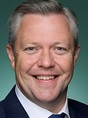
Cameron Caldwell Fadden, Liberal National Party, Shadow Assistant Minister for Housing
4:45 pm
I'm in continuation for the next 6½ minutes, so I'll continue from where I left off just before question time, relaying some of the stories of concern that have been sent to me from people in my electorate.
Greg, a local at the northern end of the Gold Coast, said:
There is every chance that this will backfire on the Labor government, as it may force older Australians, especially pensioners causing them to drop their Health cover and then rely on the Public Health System.
Greg summed it up in seven words:
Labor is robbing Peter to pay Paul.
Liz from Hope Island contacted me with a very direct request. She said:
Please confirm you and the liberal party will fight the government on the proposed reduction in health care rebates.
Liz, we as a coalition will stand here and fight for you and every older Australian who is being attacked by this Labor government with this decision. She explained what her concern was, saying:
We have had health insurance all our lives.
And she warned:
Premiums continue to rise and the changes to the rebates will force many seniors to reduce their cover or get rid of it all together thereby putting more strain on the public system.
They're not members of parliament. They're not the Treasurer. They're not the health minister. They're everyday Australians who can see very clearly what's going to happen here. Even on the government's own modest modelling, they know that people will leave the private health system and will then go into the public health system. This is going to be a cumulative problem for the government in years to come.
As we've seen, this is repeated conduct by this government. They don't tell us something before the election and then they stab every Australian after the election with some sort of change that's ripping your hard-earned dollars out of your pocket. They went to the election and they said they weren't going to change capital gains tax. They said they weren't going to change negative gearing. They said: 'I didn't fall off a stage. Blah blah blah. It's just a change in position.' Well, here's another one: Labor didn't tell us anything about this change for older Australians before the election.
In fact, just before the election, the government formally confirmed the age based rebates for the 2025-26 year. On 26 February 2025, only a few months before the election, the health department published the rebate rates commencing 1 April 2025—for under-65s it was 24.288 per cent, for people 65 to 69 it was 28.337 per cent and for over-70s it was 32.385 per cent. There was no indication given to the Australian people that, if you voted Labor, you were going to get this rebate ripped out from underneath you.
What's worse is the health minister, who popped in a few moments ago, was actively selling Labor's support for the rebate immediately before the election. In his pre-election material on private health insurance, he said, 'The Albanese Government will provide $7.6 billion this year to Australian policyholders through the private health insurance rebate.' He went on, in one of his favourite pastimes, to attack the then leader Peter Dutton. Of course, they were campaigning on having restored indexation and protecting affordability of private health insurance through this rebate, rather than announcing what their real intention was—and that was to cut the thing.
In February 2025, the health minister's election period comments were specifically about keeping private health insurance costs down. On 27 February, he said he had repeatedly sent insurers back to reduce their proposed premium increases and framed the issue in terms of cost-of-living relief. Where has that process gone in his mind? It has disappeared completely, because, all of a sudden, we've got pensioners and older Australians who are getting absolutely screwed with higher premiums without notice. They have been doing the right thing year after year after year. They did exactly what the government of Australia had asked of them for many, many years. Both Labor and Liberal governments had given the assurance that this was the thing to do. But Labor are the ones that come in here, occupy that side of the House and then rip the rug out from underneath them. It's disgraceful. The Australians who deserve the most amount of support are those that have done the right thing through their whole lives and don't deserve to be treated like this.
Who does Labor claim to stick up for? Those who really need help. Well, do you know who the people are who need help? Older Australians, veterans—but these are actually the victims of this Labor government's methods, trying to tax-grab money at every available opportunity to support their spending habit.
Almost a year after the election, on 22 April, this new idea of the health minister, to stick it to older Australians, came to fruition as he announced it at the National Press Club. Not even a year after the election, he forecast what the Treasurer was going to do to every older Australian. It's a shame on this government.
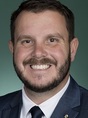
Phillip Thompson Herbert, Liberal National Party, Shadow Minister for Defence Industry
4:52 pm
I move:
That all words after "reading" be omitted with a view to substituting the following words:
"while also:
(1) noting that:
(a) the Government developed this $11 billion tax on older Australians without adequate consultation with industry, stakeholders, or state and territory governments;
(b) the Government did not determine how many of the 3.1 million older Australians affected are pensioners, until forced to do so by stakeholders, and now concedes the figure is well in excess of 1 million;
(c) these pensioners, and older Australians on fixed incomes more broadly, must absorb higher costs or go without care, with couples aged over 65 with gold cover to be slugged up to $1,614 a year extra from April 2027;
(d) independent modelling by Finity Consulting, provided to the Government, finds that for every $1 saved by cutting the rebate, the public hospital system will be charged $1.20 in extra hospital admissions and pressure;
(e) the Government's own modelling concedes at least 44,000 older Australians will drop their cover, while industry research suggests more than 250,000 older Australians will drop or downgrade their cover, pushing more Australians onto public elective surgery waitlists and increasing ambulance ramping;
(f) evidence to the Senate inquiry into the bill found this measure places private maternity services at risk of closure and will increase the cost of having a baby;
(g) health ministers in New South Wales, South Australia, Victoria, Queensland, Tasmania and the Northern Territory have all warned this measure will push more patients onto public hospital waiting lists, worsen elective surgery delays and leave older patients stranded in hospital; and
(h) this policy is a false economy that will cost the health system, and taxpayers of all ages, more than it saves; and
(2) calling on the Government to immediately abandon this Bill and scrap this damaging policy in its entirety".
I often ask myself this, and I'm sure the government members have too: When do you think people need more help with their health care? At what age? Is it younger Australians, or is it our retirees? I would have thought that everyone would have been on the same page here and said, 'It's our retirees.' They need more support. They need more health care. They need the government to be in their corner. But, as we've heard with speaker after speaker, this is not the case. This government is punishing older Australians.
The health minister during question time, day after day, stands up at the despatch box and says: 'Yes, I've had to make tough choices. I had to make tough choices, and'—paraphrasing—'the tough choice is going to be at the expense of those that need support and help the most.' That is older Australians, the people that built this nation, the people that have done everything that the government has always asked of them, that have worked, that have provided, that have paid taxes, that have done everything. They know that health care matters, so they've got private health insurance, because they know that, if something were to happen, they could get the support that they needed. As we've seen, that's now not the case.
I don't like the language that the health minister continues to use, which is: 'We'll have to make cuts to spend somewhere else. We have to make sure that we're making tough choices, because we need the savings.' Well, I think the priorities of this government are all wrong. They're cutting services to older Australians. They're cutting services to veterans by placing a $5,000 cap on allied health. That is two groups of people about which I would have thought that any government in the federal parliament would have said, 'These people are off limits.' Those that built the nation and those that served the nation—those two groups of people are in their corner 100 per cent, all day, every day. This shameful government has decided to attack both of them. This shameful government has decided to hurt both of them. When they're sitting around the cabinet table and they're discussing where the savings need to come from, and they've got a Treasurer with an arts degree, not an economics degree, arguing that he needs to find money somewhere else—I find that to be a part of the problem. I'm sure, if the member for Parramatta, who's got a PhD in economics, was around that table that he wouldn't be going after older Australians, he wouldn't be going after our veterans.
I'm so privileged to represent the people in my electorate—and I'm sure every member in this place says that about their electorate—and you'd be hard-pressed to find more heartbreaking stories where our older Australians have said: 'Why? Why are we hurting? Why are we the stopgap for this bad government? Why are we being treated so poorly?' We're not talking about the top end of town. We're not talking about some special group of wealthy Australians. We're talking about our retirees, our pensioners living on their fixed incomes. We're talking about our older Australians who plan carefully so that they can maintain their independence.
We heard yesterday from the member for Bowman. He was talking at the dispatch box about a person who was down on their luck, was homeless, but still had private health insurance because that person knew how important it was. I don't think placing additional pressure on the public health system is the way to go. We've got beds being taken up in Townsville and around the country, beds that are needed for those who come to ED or have surgery. We're going to choke the system here.
This legislation wasn't negotiated or spoken about with stakeholder groups or the state and territory governments. This was placed upon people. They were told, 'This is now what's occurring.' That's what a bad government does. Our job is to listen, work and deliver. The key word there is listen, then work with the experts and deliver on the needs of Australians. There is no expert who sits here. Politicians aren't experts on anything. No good ideas come from Canberra; they come from real people. They come from those who work in their industry their whole life. They come from those who the policies are going to affect. Our job, as parliamentarians, is to be out there with them listening, working with them and then delivering for them.
It's clear that this was not part of any consultation. It's clear that this government was not thinking of older Australians first or our retirees first. This was about a budget. I don't think that our older Australians who built this nation or our veterans who served this nation should be an inconvenient dollar figure on this Labor government's budget bottom line. But, sadly, that's what has happened.
My office has received, as I'm sure everyone here has received, concerned emails and phone calls from constituents. One constituent told me that, after more than 30 years with private health cover while on the age pension, she had recently undergone a hip replacement operation. Thanks to her private health insurance her costs were covered, apart from a modest annual excess. She fears that, if these changes proceed, many older Australians will no longer be able to afford private cover and will be forced into the public system. Her concern is simple and entirely reasonable: if older Australians leave private health insurance because they can no longer afford it, where exactly are they supposed to go? What happens next?
I don't like when a government says, 'Trust me, we're the government,' or, 'We're the government; we're here to help,' because I don't trust what has been going on with this Labor government. I don't trust when the Prime Minister says something because his word is not his bond; his word has been proven, time and time again, to be false. Whether it's a minor thing like 'I didn't fall off a stage' when you watched him drop a couple of metres to the ground, whether it's 'we won't go after housing policy, negative gearing or the GST'—he said it 50 times. He got angry and yelled at a journalist, and then did it. How can you put your faith and trust in a prime minister or a government that can't tell the truth, that can't talk about their failures?
Government should find it easy, a prime minister should find it easy, to admit when they've done something wrong. They should find it easy to stand up and say: 'I'm sorry. I thought this was the way to go. We are now going to change that. I'm sorry. I got it wrong.' But this Prime Minister time and time again will double down. I know it sounds quite simple, but the Prime Minister fell off a stage backwards and then said, 'I took a step down,' and then doubled down, tripled down and continued with it. If you can't just go, 'You know what? I did fall. I had a little misstep'—it's about trust in a government. When you don't trust a government, then you get upset.
I like the member for Parramatta sitting across from me, because he wouldn't have placed this burden on our retirees. He wouldn't have done it, because he's got a PhD in economics. He's a smart guy, but you've got a Treasurer with an arts degree who just wants to rip out costings from aged care, retirees and our veterans—those that have built the nation and those that have served the nation. But it's OK. The minister across from me can get upset as much as he wants, but at the end of the day retirees around Australia have got their number. They can see what they're doing. They can see that they're being used as that inconvenient dollar figure on a very miserable budget bottom line from this Labor government.
Another constituent told me that both her and her 84-year-old mother are facing annual premium increases from between $800 and $900 if this proposal proceeds. Her family has maintained private health insurance continually since the 1960s. She herself has held cover since starting full-time work in 1979. These are not people looking for handouts. These are Australians who have done exactly what the government has asked them to do for decades, yet now they have been told they should pay more. Independent analysis indicates that around three million older Australians could face higher out-of-pocket costs under these new changes, with some facing premium increases approaching 12 per cent or more than $400 a year on top of all the premium increases that they already face.
For older couples, the total impact could exceed $1,600. We're talking about retirees. We're talking about people that have budgeted their whole life and just want the cover and support that they need to get the treatment if something happens, but you've got a government that is obsessed with changing the goalpost without taking things to an election. You've got a government that is not trustworthy. You've got a prime minister that's not trustworthy. Every time they change something and they give you minimal detail and stand out and say, 'Trust us. We're the government,' don't. I wouldn't. Older Australians built this country, and this is how they're being repaid.
For someone on their fixed income, an extra $1,600 a year is not a minor inconvenience. People are paying higher power bills, higher grocery bills, filling their prescriptions and trying to maintain private health cover and insurance that is going through the roof. If you're in regional Australia, everything is compounded and is worse. In the cities you might have little bits of choice when it comes to the other expenses, but in places like Townsville and other regions it's all compounded. It's all worse. Everything costs more. To be lumped with extra costs on top of this is just ridiculous.
The government says this is about intergenerational fairness, and it's not. It is absolutely not. You're creating an 'us and them' right now. There's nothing fair about targeting pensioners and retirees who have paid into the system their entire lives. There's nothing fair about increasing costs for people whose healthcare needs are increasing, not decreasing. You need more help as you get older, not less. So doing this is punishing those that need the support more.
It's ridiculous. The argument is so flawed that it's—well, there are not even government members talking on this part of the bill. If you don't believe in it, how are the Australian people supposed to buy this rubbish? If you can't stand up and talk for it today for 15 minutes, then how can you go to your constituency and say this is good for them? I don't think you can. If you can't back it, surely they're not going to. The warning signs are already there in an ageing population that are doing it tough.
In Townsville and across North Queensland we already understand the pressures that are facing our health system. We've got longer waitlists, higher demand, workforce shortages, pressure on beds and pressure on services. The last thing we should be doing is implementing a policy that risks making those challenges even worse. If you have to, let that sink in. Why would you place an extra burden on people?
The Minister for Health and Ageing, when he stands up at the dispatch box, says: 'We've had to make tough decisions because we're looking for savings. We're making decisions on those that need more health care and those that need the support. And we're making the same tough decisions'—apparently this Labor government is—'on cutting veteran services to allied health care.' This Labor government is punishing those that built this nation and punishing those that serve this nation, and that is shameful. The coalition does not agree with the government, and that's why all of our members have come into this chamber over the last two days to talk about why we don't support it.
The stark difference is that the government members don't. The stark difference is that you haven't got government members defending their own bill, because their backbench knows that it's bad. Their backbench knows that they've been led off a cliff by a treasurer with an arts degree, not an economic one. Their backbench knows that in their electorates they're going to have to answer to this. I just wish that all governments put two groups of people before themselves: older Australians who built this country and veterans who served this country.
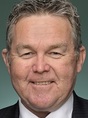
Scott Buchholz Wright, Liberal Party
5:07 pm
I second the amendment. I want to offer my congratulations and affirmation to the honourable members that have made a contribution to this cruel, cruel piece of legislation, the Private Health Insurance Amendment (Modernising the Private Health Insurance Rebate) Bill 2026. I want to acknowledge the member for Calare and the member for Fowler, who came in and gave passionate commitments. They cited constituent letters by those who had contacted their offices raising concerns about the extra charge or extra cost that was going to be imposed on people in their electorates.
I want to acknowledge the member for Lyne, who gave a very impassioned speech. She spoke about the amount of peak bodies that didn't support this—one after the other after the other condemning this piece of legislation. I want to acknowledge the member for Fadden, who gave his personal commitment when at the dispatch box that he would continue to fight for those seniors over 65, for those pensioners who were going to be worse off under this government. He put his political reputation on the table and said he would continue to fight.
The member for Berowra came in here and, time after time, relived the real-life experience of constituents that had contacted his office sharing their great concerns. The member for Mitchell came in and simply asked the question: if there's going to be a cost shift away from private health insurance into state medical health systems, were they advised, and do they have a sense of preparation? The answer is no, of course; the states are not about it. The member for Page came in and spoke about how we wouldn't be having this debate if those on the other side weren't reckless with their expenditure, spending $9 billion on the pursuance of green hydrogen. If only that money could have been spent servicing and looking after our veterans and those people who have got private health insurance over the age of 65.
In thanking those members, I wanted to give consideration as to how the Australian Labor Party come up with such cruel ideas—such cruel legislation. I know how we give consideration to ours in our joint party room: combined members of the Liberal Party and the National Party will be discussing legislation. I conjured up this image of those on the other side in their party room. The Treasurer gets up and makes a statement and says: 'We're out of money. I want to throw to the room. Can anyone come up with an idea about how we can save some money?' Someone throws their hands up and says: 'We've squeezed the veterans as hard as we can. I'm suggesting that we don't go there again. But I think we can go after pensioners and those with private health insurance. I modelled it, and I think we can save around $11 billion over the forward estimates.' The party room goes: 'Huzzah! That's a great idea.'
The person says, 'We're going to call it the clubbing baby seals bill.' The Treasurer says: 'No, we can't call it clubbing baby seals. That's too obvious. We're going to call it the Private Health Insurance Amendment (Modernising the Private Health Insurance Rebate) Bill 2026. That way, people won't really know what's in it.' The party room goes: 'Huzzah! We've got a new name for the bill.' Then someone goes up and says: 'But, Treasurer, if we go after the pensioners, there are 1.2 million of them that are going to be adversely affected by this bill. I don't think they're going to vote for us after that.' The Treasurer says: 'It doesn't matter. We've already thought of that. Quietly, we've snuck in 1.5 million immigrants. We've got that vote. It's going to offset the 1.2 million that we lose on this bill.' They go: 'Huzzah! These problems are being solved.'
They're going to tell everyone, and then they go: 'How are we going to sell this? Originally, we were going to call it the clubbing baby seals leg.' And they say, 'We're going to tell the Australian public that the people who are going to be affected by this legislation are rich, and there'll be no sympathy for them because they'll be rich.' Then the Treasurer goes: 'I think most of them are pensioners. I think 45 to 50 per cent of the people who are going to be adversely affected are age pensioners. I know what we'll do. We'll give them $25 and then take $800 off them.' The party room goes, 'Huzzah!'
Then another person gets up in the party room and goes, 'But won't it push those people who leave the private health insurance system into the state health system?' The Treasurer gets up and goes, 'Yes, of course, we all hope so, because that's what we call a cost shift from the federal government to the state government.' 'Huzzah! But won't our friends, the ALP premiers from the states, be disappointed with us?' 'Well, we hope so. We want them to be upset with us because then we can draw to their attention the inequities in the GST pool and set them on the path of Western Australia to go and seek their remedies from a redistribution of the GST pie.' The party room goes, 'Huzzah!'
Then they go, 'How do we sell this policy, then, to the Australian public?' And the answer is: 'I'm glad you asked, because the way we're going to sell it is that, when the bill comes before the House, speaker after speaker after speaker from the Liberal Party and the National Party are going to get up and speak about it. What we're going to do is stay silent. No-one will speak to it.' 'Huzzah! What an amazing plan.'
The next question is: 'How are we going to sell it to the pensioners? How will we do that? How will we sell such an awful piece of legislation to our pensioners when it is going to reduce their private healthcare rebates?' The Treasurer says: 'Well, there's the brilliance in the plan. We don't tell them before the election. We don't tell them. Yes! We'll get elected and then we'll tell them. We won't tell them before the election—just the same as we did with the capital gains taxes. We didn't tell them that. It's a brilliant plan! We've got it all worked out. Then, we'll bundle all this up and we'll put it into the group of policies that we deny we ever developed. We'll talk about how he never fell off the stage, that his word is his bond and for the fiftieth time he's not going to repeat it. We'll simply say nothing, and then we'll use our numbers in the House of Representatives to ram it through.'
The party room goes: 'Brilliant! Huzzah! We're noting that there are 1.2 million pensioners, and there's nothing they can do about it. And to put icing on the cake, we're going to call it a productivity reform. Huzzah!' And that is how Labor came up with such a cruel, cruel tax.
Colin Boyce Flynn, Liberal National Party
The original question was that this bill be now read a second time. To this the honourable member for Kooyong has moved as an amendment that all words after 'that' be omitted with a view to substituting other words. The honourable member for Herbert has now moved as an amendment to that amendment that all words after 'reading' be omitted with a view to substituting other words. The question now is that the amendment moved by the honourable member for Herbert to the amendment moved by the honourable member for Kooyong be agreed to.
Milton Dick Speaker
The question is that the amendment moved by the honourable member for Herbert be agreed to.
Milton Dick Speaker
5:29 pm
The question is the amendment moved by the honourable member for Kooyong be agreed to.