
House debates Business
Consideration of Legislation

Zali Steggall Warringah, Independent
12:02 pm
I move:
That so much of the standing and sessional orders be suspended as would prevent the following from occurring immediately:
(1) the Commonwealth Electoral Amendment (Voter Protections in Political Advertising) Bill 2026 being called on;
(2) debate on the second reading of the bill proceeding immediately for a period of no longer than one hour; and
(3) any questions required to complete passage of the bill then being put without delay.
On this International Day of Democracy, we should remember that every seat in this chamber rests on a choice made by the Australian people. As you just now reminded us of on this International Day of Democracy, the importance of the information on which voters rely is so very important in this current day and age, even more so than previously. Australian people entrust us with their future, and we owe them an electoral process in which they can have confidence. That responsibility is becoming urgent, from the Victorian elections to the New South Wales elections within the next six months. Queensland, the Northern Territory and the ACT have elections scheduled for 2028, and, of course, the Australian Electoral Commission is preparing for a federal election in the period from August 2027 to May 2028—ironically, potentially within the next 12 months. Across those campaigns, Australians will confront an information environment that is rapidly changing at extraordinary speed.
Australia lacks a national truth in political advertising laws to protect voters from misinformation and disinformation during election campaigns and also from AI generated deepfake content. Artificial intelligence can manufacture a candidate's words and voice. Their networks of bots can amplify a lie until it appears to be common knowledge. Increasingly, AI agents can coordinate that activity with limited human direction. The risk is that Australians make decisions about their future on the basis of events that never happened, statements that were never made and apparent community sentiment manufactured by people hiding behind a screen, often in foreign nations, which essentially amounts to foreign interference. Those threats cross electoral boundaries. This parliament must lead by putting effective protections in place for federal elections and referendums and encouraging stronger standards across Australia.
That is why I moved this motion to suspend standing orders on the International Day of Democracy. It's to bring on debate without delay to ensure we have protections in place. The government has an opportunity to act while there is still time to prepare for the coming elections, and we should take it. I urge the House to suspend standing orders, to resume debate on the private member's bill that I presented and to then put the questions necessary to complete the passage through the House. The integrity of elections that put all of us in this place warrants parliamentary debate and a vote.
Voters are left exposed to misinformation, disinformation and intentional weaponisation of deep fakes in our democratic elections. I've repeatedly asked the major parties to close this gap. Australians are protected when misleading advertising is used to sell them a product or service in the commercial environment. No-one disputes that that is some impediment of freedom of speech for commercial companies. Yet here we are, in the political space, and a different standard is applied. Overwhelmingly, Australian voters want this fixed. They want this change. They want all of us held to a better standard. They should be entitled to comparable protections when advertising is used to secure their vote.
At a federal level, the existing prohibition primarily addresses deception about casting a ballot. It leaves a significant gap around factual claims used to influence a voter's choice. This does not mean impeding opinion. You can have opinion, but factual claims can be established. The government knows this. It has had ample opportunity to act. In fact Labor, in the previous parliament, tabled legislation to amend electoral communications but then chose not to bring it on for debate or a vote.
There are so many examples around where this is important. I bring up the example of the previous member for Goldstein, Zoe Daniel, at the 2025 federal election. In February 2025, the National Anti-Corruption Commission concluded that no corruption issue arose from the referral that had been made about her. There had been no use of Commonwealth resources and the relevant conduct occurred without her knowledge or authority. This referral to the NACC had been done by an ex-member of parliament, a former Liberal member, and it was clearly politically motivated. Yet we saw billboards continuing to circulate in Goldstein, after the NACC had dismissed the referral, invoking the referral and knowingly casting doubt on her integrity. This billboard was authorised by the former Liberal member for Mackellar Jason Falinski without including that the referral had been dismissed with no proper basis for it to have been made.
This is the weaponisation of an integrity process. A person can make a politically motivated complaint that does not establish wrongdoing and yet advertising that will significantly impact and influence voters can be freely thrown around with impunity as there is no legal recourse. If this were commercial, it would be stopped. So, the urgency is obvious. A correction after polling day cannot give voters back their opportunity to make an informed choice.
AI and coordinated bot networks make that problem vastly harder to contain. ABC News Verify examined 370 images posted by 14 overseas-run Facebook accounts in a single week in support of Pauline Hanson and One Nation. Now if that is not foreign interference, I don't know what is. Genuine and AI generated images were combined with fabricated stories about Australian public figures. Australian voters are already engaging with this material. This month, Anthropic reported AI assisted influence operations using fake profiles and news sites, including campaigns, timed to national elections.
The machinery for deception is being developed and deployed. Meanwhile, parliaments don't even have the courage to debate whether to respond. Suspending standing orders today will give Australia that opportunity. The research from the University of Southern California also demonstrated that, in simulated social networks, AI agents could autonomously co-ordinate political messaging, amplify one another and reuse successful content. Agents can manufacture the impression of consensus and make a false claim look credible through repetition.
Nearly 10 years after the Cambridge Analytica scandal, we cannot allow a repeat of a deception event of this nature with more advanced technology available. We can't leave individual Australians to investigate every account, image, ad and voice that they encounter. Those commissioning and distributing political advertising must carry responsibility for its accuracy.
The private member's bill—the Commonwealth Electoral Amendment (Voter Protections in Political Advertising) Bill 2026—that I call on for debate provides a practical framework to do that. It establishes enforceable rules against misleading factual claims, false endorsements and deceptive representations about who authorised and distributed electoral material. Politicians, parties, candidates and third-party campaigners would be covered.
First, it establishes a political advertising standards board. It would sit within the AEC but be quite independent. This takes away any concern of the AEC commissioner being implicated in having to be the decision-maker. I am responding to the direct feedback of the AEC. It would bring judicial, legal or other specialist expertise to investigate breaches that require corrections, removal or withdrawal. Second, it introduces an enforceable ethical political advertising code. This is not brain surgery. This is not a fanciful idea. Every other area of advertising has a standards code applicable to it. Why is political advertising exempt? This ethical political advertising code should be introduced. Third, and probably most importantly, AI generated political content would require clear watermarking disclosure, including deepfake images and audio. Minor technical edits can be left alone, but, if it is substantially AI generated, it should be disclosed; viewers should be aware.
I want to plead on this because, for women in politics, this is incredibly important. We face, more than anyone else, disproportionate online harm, including sexualised abuse and deepfakes. When intimidation drives women out of public debate, the whole community loses. In June, I asked the Prime Minister during question time when the government would act. He acknowledged the risks and dangers of AI and how it could change how politics operates and would consider these proposals. But here we are, within 12 months of the next federal election, and still nothing.
Today, International Day of Democracy, is the day to act. It is an opportunity for the government to make good on its previous proposal and bring on a debate to ensure that we have protections for truth in political advertising.
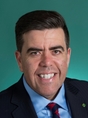

Dai Le Fowler, Independent
12:12 pm
I second the motion. As the member said, and as you also mentioned, Mr Speaker, today is International Day of Democracy. The member for Warringah's Commonwealth Electoral Amendment (Voter Protections in Political Advertising) Bill 2026 rests on a simple principle: that Australians deserve the truth when they are being asked to cast their vote. That should not be a hard question for our political leaders. The fact that it even needs to be made in 2026 is quite extraordinary.
Our democracy depends on healthy, robust debate. It needs competing ideas and competing visions about who's best able to shoulder the responsibility of representing their community. But, for democracy to work and to thrive, what is put before voters must be honest. Too often, campaigns become a race to debunk claims that should never have been made in the first place.
When the member for Warringah first introduced this bill, she shared stories of community independents being targeted by third-party campaigns during the 2025 federal election. I can tell this House that my community was also targeted. I found out, by chance, at the end of a prepoll day. Going home at night, I listen to meditation. I turned on my YouTube channel, and what did I see? I saw photos of me next to the then opposition leader, Peter Dutton, and the words 'a vote for Dai Le is a vote for Dutton'. There were many untruths in that ad.
At prepoll booths, posters were displayed falsely claiming I was preferencing the Liberals over Labor. I did not preference anyone, but that mattered little. I gave my community a guide and I told them to number the boxes as they saw fit, because that is their right and choice. As a matter of fact, on the how-to-vote card Labor was above the Liberals, therefore that was already false—because, if the number was going downwards, I would have preferenced Labor before the Liberals. My team challenged the posters the day before the election. The wording was changed from 'a vote for'; it became 'a risk of'. It was still misleading but apparently close enough to be allowed. Social media advertisements kept running, and so did the targeted disinformation campaign aimed to confuse the people least equipped to test it.
The member for Warringah and I represent very different communities in very different parts of Sydney with different challenges and vulnerabilities. That is precisely why I support this motion. If an effective disinformation campaign including AI generated material that people struggle to distinguish from the real thing has a damaging impact in one of Australia's most highly educated electorates, imagine the consequences in a community like mine in Fowler. For many of my constituents, English is a second language. Working out how to complete a ballot paper without support in their first language is very challenging already. It cannot also be a burden for them to work out whether what they read about a candidate has been fabricated. As the member said, it is our responsibility to make things simpler so that, when people cast their vote, they know what they're casting and who they're casting it for.
In a community as rich and vibrant as Fowler, we cannot allow diversity to be exploited as a weakness. It is unacceptable for multicultural communities to be targeted through closed social media groups, which are often their only accessible source of news. As a proud democracy, we must do better than prove the mistrust right. The only way to do that is to start with the truth. This bill proposes that political advertising be truthful and factually accurate, that substantially AI generated content be clearly labelled and that an independent political advertising standards board be established to uphold those standards. This is not an extraordinary ask. It is a bare minimum. Australian Consumer Law already prohibits businesses from making false or misleading claims about a product. Surely we can extend the same protection to the foundations of our democracy.
My message to the government is simple. Do not take the public for granted. Do not assume that a slogan repeated often enough is a substitute for earning someone's vote. I support the member for Warringah's motion so that this House can properly debate a bill that puts truth at the core of Australia's democratic process. As today is the International Day of Democracy, the least we can do is actually have a democratic process in this House and call on a debate and actually have a conversation and talk about what is truth and what can be used, especially during the campaigning period, where emotions are high and where members are trying to win votes but to win votes in an honest and democratic way. I really commend this motion to the House.

Pat Conroy Shortland, Australian Labor Party, Minister for Defence Industry
12:17 pm
I move:
That the debate be adjourned.