
House debates Bills
Private Health Insurance Amendment (Modernising the Private Health Insurance Rebate) Bill 2026; Second Reading

Sarah Witty Melbourne, Australian Labor Party
3:57 pm
I rise to support the Private Health Insurance Amendment (Modernising the Private Health Insurance Rebate) Bill 2026. This bill is about a clear and simple principle: government funding should go where it can make the biggest difference. At a time when more Australians are living longer, when demand for aged care continues to grow and when families are seeking better support for ageing parents and grandparents, this government is investing more in aged care. Aged care is one of the biggest challenges facing Australia, and, before this government was elected, for too long it was neglected. The royal commission exposed serious failures across the aged-care system. It exposed a system under pressure, a workforce stretched too thin and older Australians waiting too long for the support they needed. The Albanese Labor government is determined to change that. That is why this reform will help fund almost $3 billion of additional investment into aged care—more aged-care beds, more support at home, better dementia care and better support for older Australians and their families. That is what this bill helps deliver.
The private health insurance rebate currently costs taxpayers around $8 billion every year. It remains an important part of Australia's healthcare system, and this government continues to support Australians who choose to take out private health insurance. The rebate itself is staying. Income based support is staying. Millions of Australians will continue to receive assistance with the cost of their cover. What is changing is that Australians on the same income will receive the same level of government support. At the moment, two households can have exactly the same income and same insurance policy but receive different levels of government support simply because one household is older than the other. This bill removes that difference. It means government support will be determined by income, not age. It means people on the same income will be treated equally, and it means public funding can be redirected to one of Australia's most important challenges: improving aged-care services for older Australians.
The need for that investment is clear. The Royal Commission into Aged Care Quality and Safety found serious problems across the aged-care system. It exposed long waiting times, workforce shortages and a system that had failed to keep pace with demand. Those problems did not arise overnight. They developed over years of neglect. While the coalition spent a decade talking about aged care, too many older Australians were left waiting for support, and too many families were left carrying the burden on their own. The Albanese Labor government is determined to rebuild the system. That is why this government is investing $3.7 billion to deliver more beds, more packages and better care for older Australians. That investment includes around 5,000 additional aged-care beds each year. It includes faster access to Support at Home places. It includes making personal care services, such as showering, dressing and continence support, available free alongside clinical care. It includes expanding end-of-life care pathways, and it includes delivering 20 additional Specialist Dementia Care Program units and expanding dementia support services. These are real services that older Australians need. These are practical investments that will improve people's lives.
As the member for Melbourne, I am proud to represent one of the greatest health and medical precincts anywhere in Australia. My electorate is home to some of Australia's leading hospitals and medical institutions: the Royal Melbourne Hospital, St Vincent's Hospital Melbourne, Peter MacCallum Cancer Centre, the Royal Women's Hospital and the Royal Children's Hospital. These institutes are recognised around the world for the care they provide and the research they undertake. Every day they deliver world-class health care. They train future doctors, nurses and health professionals. They pioneer medical breakthroughs, and they provide specialist treatment to patients from Melbourne, regional Victoria and right across Australia. They are institutions that Melbourne is proud of, but they are also a reminder that a strong health system is about more than what happens inside hospital.
Health care does not begin and end with an emergency department or an operating theatre. It includes access to aged care, support at home, dementia care and palliative care. When older Australians cannot access those services, pressure flows through the entire system. Hospitals feel it, families feel it, and carers feel it. People remain in hospital longer than necessary because the support they need outside hospital is not available. That is why strengthening aged care is also strengthening health care. This government understands that the world-class care available in our great hospitals must be matched by world-class care in the community and in aged-care services. That is exactly what this investment helps to achieve.
This bill is also part of a broader effort by the Albanese Labor government to strengthen Australia's health system. While those opposite are focused on scare campaigns, this government is making record investment in Medicare, public hospitals and primary care. We are rebuilding bulk-billing. We are making medicines cheaper. We are funding public hospitals at record levels. And we have established Medicare urgent care clinics across the country. These investments are particularly important for older Australians. Older Australians are more likely to visit a GP, most likely to use hospital services and more likely to require specialist care. That is why the Albanese Labor government is strengthening every part of the system.
One of the most successful reforms delivered by this government has been the expansion of Medicare urgent care clinics. There are now 137 Medicare urgent care clinics operating across Australia. More than 3.7 million Australians have already received treatment through them. These clinics provide urgent care that is fully bulk-billed. No appointment is required. Patients simply walk in with their Medicare card. For families, it means another option when urgent care is needed. For older Australians, it means easier access to treatment. And, for hospitals, it means less pressure on busy emergency departments.
The impact has been enormous. Nearly half of all patients treated at Medicare urgent care clinics reported that they would otherwise have attended a hospital emergency department or called an ambulance. One in four weekday visits occur after 5 pm and almost three in 10 visits occur on weekends. The clinics are working. That is why this government has made them a permanent part of Medicare.
Alongside that investment, the Albanese Labor government has secured a landmark agreement to deliver record funding to public hospitals. This agreement provides an additional $25 billion in funding for public hospitals over five years. Commonwealth funding for state-run public hospitals will reach a record $220 billion from 2026-27 to 2030-31. Victoria alone has received an additional $5.8 billion in public hospital funding over five years. Total Commonwealth funding for Victoria's public hospitals is expected to reach around $53 billion over the same period. These are enormous investments. They demonstrate the priorities of this government. We are strengthening every part of the healthcare system—primary care, Medicare, public hospitals, aged care and support in community.
Unfortunately, instead of engaging with these investments and the benefits they will deliver, the opposition has chosen to launch another scare campaign. We've heard claims that these reforms will trigger a collapse in private health insurance memberships and that public hospitals will be overwhelmed. But the evidence simply does not support those claims.
Government modelling estimates that the impact on participation will be around 0.4 per cent compared with what would otherwise occur. At the same time, private health insurance membership is still expected to continue growing, including among Australians over 65. Independent research from the University of Melbourne reached a similar conclusion. Researchers found that this reform will not cause a mass departure from private health insurance and will not overwhelm public hospitals.
The opposition wants Australia to fear change. This government is focused on delivering results—more aged-care beds, more support at home, more dementia services, more funding for hospitals and more Medicare services. Those are the outcomes that matter and those are the outcomes this reform helps deliver.
It is also worth remembering that older Australians will continue to receive support through the rebate. Australians on lower incomes will continue to receive a rebate of up to 24 per cent on their premiums. Community rating arrangements remain in place, meaning Australians pay the same premium for the same product regardless of their age or health status. And this government has restored indexation of the rebate after it was frozen under the former coalition government.
This reform does not remove support. It makes the system fairer, it makes the system simpler, and it directs funding where it can achieve the greatest benefit. At the heart of this debate is a simple question: what kind of country do we want to be as Australians grow older? Do we want a country where people wait longer and longer for support? Do we want a country where families are left to navigate an unfunded aged-care system on their own? Or do we want a country that invests in older Australians and gives them the dignity, care and support they deserve?
This government has made its choice. We are choosing to invest in aged care. We are choosing to invest in older Australians and we are choosing to invest in the services that families rely on every day, because behind every aged-care package is a person. Behind every home-care assessment is a family trying to help a loved one stay independent. Behind every aged-care bed is someone's parent, grandparent, neighbour or friend—somebody who has spent a lifetime contributing to their community, somebody who deserves more than warm words and good intentions when they need support. They deserve action.
The opposition wants to talk about scare campaigns. This government is focused on solutions. While those opposite spread fear, we are investing in aged care. While those opposite defend an outdated system, we are building one that is ready for the future. While those opposite look for problems, we are delivering more beds, more support and better care, because the reality is that Australia is ageing. Demand for aged care will continue to grow. Doing nothing was not an option. Delaying investment was not an option. Ignoring the lessons of the royal commission was not an option.
The responsible choice is to act, the responsible choice is to invest and the responsible choice is to build an aged-care system that future generations of Australians can rely on. This is what this bill helps achieve: a fairer system, a stronger aged-care sector, a stronger health system and better support for the Australians who built this country and deserve nothing less than dignity, respect and quality care as they grow older. I commend this bill to the House.

Rebekha Sharkie Mayo, Centre Alliance
4:11 pm
The Private Health Insurance Amendment (Modernising the Private Health Insurance Rebate) Bill 2026 looks to implement the 2026-2027 budget measures that the government did not mention in the election last year. It will remove the additional private health insurance subsidy that's provided to Australians aged over 65. There's nothing really modernising about this bill; this bill is really just an attack on older Australians. That's what it should be called—'Private Health Insurance Amendment (Attack on Older Australians)'. Now, should this bill pass, the government discount for people aged 65 and over on the premiums charged by private health insurance will be limited to no more than 24 per cent.
The reality of this is that older Australians who are barely hanging on to their private health insurance will have no choice but to forgo their private health insurance, because that little bit of extra rebate has helped them just to be able to afford to keep it. Now, it is not all of them—many people have already had to leave their private health insurance—but many tell me that they will do everything possible. They will go without buying food, without going out for dinner, without discretionary items just to keep their private health insurance. And it's not like age pensioners in particular have this ability—particularly those who have been retired for some period of time—to just go back to work. 'I'll just pick up some extra hours here and there.' They're in their 80s, and the government is doing this to them.
The government anticipates that the proposed changes will save $3 billion over four years from 1 April 2027. It says that will be used to increase the funding available for more residential aged-care beds and more Support at Home packages. But this is mean-spirited and, I think, a false economy. The government's own modelling says that the increase is going to be $240 per person, but many older Australians in Mayo that have talked to me have said that they are looking at their premiums. Many are on gold level, and their figures are saying more than $1,000 in costs for them as a couple.
The government admits that, prior to the budget announcement, there was little consultation beyond a 2022-23 independent study of private health insurance incentives. So what we have here is an announce-and-defend policy. The government has, since the budget, had the benefit of significant public and expert commentary on its proposal, and, unsurprisingly, very little of it has been positive. Private Healthcare Australia represent insurers and hospital groups, and they are concerned about the reduced private health insurance participation, the viability of regional private hospitals and the resulting additional pressure on the public hospital system.
In Mayo there are nearly 36,000 residents aged over 65 who held private health insurance as of 30 December last year. As a large electorate with an older demographic, Mayo has more people affected by this policy change than any other electorate in the nation. Therefore, it is very much my duty to continue to highlight this issue in the parliament and plead with the government to change their position.
Many older Australians with chronic health and complex health conditions, including pensioners, devote a high proportion of their often limited and fixed incomes to private health insurance. We in this place know that one in four pensioners are living in poverty, yet the government are still implementing this very friendless policy. They are relying heavily on this insurance rebate change so they can access the funds, which they say they're going to put into aged care. But, ultimately, if the government were a little bit more careful with how they spent the rest of the near $1 trillion every year, we wouldn't need to be so punitive towards older Australians.
South Australian minister Blair Boyer announced that we have a record-high number of South Australians who are waiting for aged care in our hospital system. Indeed, just a few years ago, in the first year of this government, there were just 60. Now there are 487. Can you imagine what that number is going to be next year? We're going to have even more pressure on our public hospital system.
The South Australian government recently warned that cuts to health insurance rebates would further increase elective surgery waitlists, and we had the SA chief health executive, Robyn Lawrence, saying that the removal of age based tiers may have unintended consequences for access to care and place additional pressure on the public hospital system. While people who decide to cease their private health insurance may be treated as a public patient in a public hospital, we all know that the waiting times for public care are already long, and potentially they will blow out even further.
Further, private hospitals in regional areas may no longer be viable, should private health insurance membership drop. Possible additional closures to regional private hospitals will impact the whole of communities, well beyond the target group of over-65s, and regional private hospitals often take on non-urgent patients to ease pressures on the rural public hospital system. In fact, the Australian Private Hospitals Association reports that private hospitals perform 70 per cent of all planned surgeries in Australia overall.
As the peak body, the Australian Private Hospitals Association describes the government's proposed changes to the rebate as a 'disaster in waiting'. And National Seniors Australia is hearing from thousands of older people experiencing angst about their ability to maintain private health insurance. Recently, National Seniors Australia polled 1,400 respondents, and that showed that 50 per cent would consider dropping their premium if it increased from $500 to $1,000 more a year. Another poll of around 5,400 people showed that 91 per cent were against the cuts.
The government says the average cuts will be around $250 a year. The National Seniors Australia estimate shows that this could be $1,000-plus for a couple with gold cover, noting that more than 2.6 million Australians aged 65 and over have hospital cover. More older Australians have gold plans that cover surgeries such as joint replacements, which over-65s are more likely to need. For these people, the impact will be higher than average. I've got to tell you—and I'm sure this is the same for every member in this place—I have been contacted by hundreds upon hundreds of older Australians who are deeply fearful about this government bill.
Here are just a few of their stories. Kathleen said to me:
I am 82 years old and have always had Private Health Insurance and am horrified to learn of the forthcoming downgrading of the rebate for over 65 years. Australia has an aging population and emergency departments in hospitals are overcrowded and ambulance ramping has not improved and I worry that this idea of downgrading of the rebate will cause many people to be priced out of Private Health and therefore increase even further the problems in the Health Care System.
One Mayo resident and her husband, both in their mid-70s, said to me:
We have made considerable sacrifices to maintain our private health cover. We have always believed that retaining private health insurance was a responsible choice, both for our own well-being, having faster access to treatment if required and to help reduce the pressure on the public hospital system, that is already struggling.
In the past year, however, our circumstances have changed dramatically. My husband received a serious medical diagnosis and we have had to rely heavily on our private hospital cover to access timely treatment and specialist care.
At our age, we are already facing rising living costs, increased yearly health insurance premiums and significant out-of-pocket medical expenses as specialist fees are well in excess of Medicare rebates. The removal of the age-based rebate would place an additional financial burden on many older Australians who have worked hard throughout their lives and who are now trying to manage complex health issues.
They are worried that this will place even greater pressure on an already overstretched public health system. I think it is an extremely short-sighted decision to penalise older Australians at this stage of their life, when they are most likely to need healthcare, and in light of the additional costs that will be incurred by the government for health care.
Viv, in my electorate, said to me:
I do not need to let you know of my personal dilemma concerning the Labor Government's unfair removal of the Private Health Fund rebate for the Over-80 age group, supposedly to pay for Aged Care.
Now there is the big decision if that is just one "hit" too many. After 55 years of having Private Health insurance but managing the annual increases, then the big gap payments that come from Specialist costs and Doctor visits, then the increase in the cost of trying to keep warm, or cool, register my car, pay the council rates and water rates, and so it goes on and on …
I never thought I would spend my last years after a full, active and working life of paying taxes, that I would be struggling with the relentless increases in the Cost of Living on a fixed income.
Does the Federal government despise older people that much?
That's what they've said to me. Jonathan says:
I am writing to let you know my anger and dismay at the Federal Government's proposal to cut the private healthcare rebate for those aged 65 or older. This proposal, especially during this time of cost-of-living pressures, is an appalling way to treat people who will likely need their health insurance more as they age and are also likely to be on fixed incomes. For the Government to dress it up as "intergenerational fairness" ignores the many sacrifices already made by older people and to signal that any savings would be directed back into the aged care system is of little to no comfort. One reason why older people have private healthcare is to avoid the aged care system for as long as possible. Potentially forcing people to consider relinquishing their private healthcare because of this proposal, on top of the already costly premiums, is mean-spirited and ignores the great contribution that older people have already made and continue to contribute to society.
This is why, as a representative of Mayo, the oldest electorate by median age in South Australia and that which will have the highest number of constituents affected by this government's cruel cuts to private health insurance rebate for older Australians, I call on the government. I beg the government to please rethink this bill and look after our most vulnerable. They've already paid their taxes. They're already paying their private health insurance. They want to be able to maintain that and maintain dignity in their older age.
This bill is a dreadful bill. It's actually bad policy as well as bad politics. I would urge the government to reconsider.

Madonna Jarrett Brisbane, Australian Labor Party
4:25 pm
I rise today to support the Private Health Insurance Amendment (Modernising the Private Health Insurance Rebate) Bill. Australia has one of the best healthcare systems in the world. It is underpinned by our great Medicare system, which operates alongside our private health insurance system. Together they deliver affordable health care to people across my electorate and across Australia when they need it, regardless of their income or their postcode.
Ensuring our health system was rebuilt and remains available to all Australians was one of the main reasons I put my hand up to run as a candidate back in 2022. Under those opposite, access to affordable health care was disappearing, and I really wanted to make sure that that didn't happen. Since 2022, this Labor government has taken significant steps backed by billions of dollars to ensure everyone in our community can get the care they need when they need it. This bill is yet another step towards ensuring government support of our health care is fair, sustainable and targeted to where it's needed most. It's about recognising that our health system has changed, our population has changed and the pressures on government budgets have changed. Fundamentally, it's about making sure that, when taxpayers subsidise private health insurance, that assistance is based primarily on a person's capacity to pay, not simply on their age.
Medicare represents a simple Australian principle—that your access to health care should depend on your need for treatment not the size of your bank account—but, as I said earlier, we also recognise the importance of Australia's private healthcare system. Private hospitals, private health insurers, doctors, nurses and allied health professionals all form part of the broader health system that gives us access to quality health care. Private health insurance gives millions of Australians greater choice in their health care and helps meet the costs of private hospital treatment and services such as dental, optical and physiotherapy.
As of March this year, almost 12.8 million Australians, almost 46 per cent of the population, had hospital treatment cover, while around 15.5 million Australians, or 55.5 per cent, had some form of general treatment cover. We understand that private health insurance matters. In 2026-27, the government expects to provide around $7.9 billion through private health insurance rebates. That's a substantial public investment. Whenever governments spend billions of taxpayers' dollars, we have an obligation to ask two questions: Is the money being distributed in the fairest and most effective way? Does it address the needs of the community?
The private health insurance rebate has been part of our health system since 1999. It was originally introduced at a flat 30 per cent rate. In 2025, additional rebates were introduced for older Australians, with the higher rebates applying from the age of 65 and again from the age of 70. Those arrangements have continued in their various forms since that time. That's almost 20-plus years ago. Today, because of those age based arrangements, two Australians earning the same income and purchasing the same comparable health insurance are paying two different amounts simply because one is older than the other. That policy is simply very hard to defend. For the period from April 2026 to March 2027, for example, the base tier rebate is approximately 24 per cent for those under 65, 28 per cent for someone aged 65 to 69 and then approximately 32 per cent for someone aged 70 or over.
This bill changes that. From 1 April next year, the additional age based rebate for people aged 65 and over will be removed. Instead, though, Australians with the same income tier will receive the same rebate, regardless of whether they're 45, 65 or 75. Importantly, the rebate itself is not being abolished. The government is not removing Commonwealth assistance to support private health insurance. The rebate will continue, but it will continue to be income tested, as it is now. Australians with lower incomes will continue to receive greater assistance than Australians with higher incomes. What changes is the additional subsidy provided solely on the basis of age.
There is an important principle behind this reform. Age is not the same thing as financial disadvantage. There are older Australians living on very modest incomes, and government policy must continue to recognise the different circumstances. There are also younger Australians raising families, paying rent or mortgages, dealing with childcare costs and struggling with various cost-of-living pressures. There are young Australians working two jobs. There are families trying to save for their first home. There are middle-income workers facing significant household expenses. And there are some older Australians who, after decades of work, have accumulated substantial assets and retirement savings. So a modern rebate system needs to recognise all those differences in our community. That's why income is a more appropriate measure of capacity to pay than simply someone's age.
This reform says that, if two Australians have similar financial circumstances, one should not automatically get a larger rebate than the other purely because of their date of birth. That's a question of intergenerational fairness, and intergenerational fairness matters. I talked about this in my first speech. Governments make decisions today that will affect Australians well into the future, and younger Australians are helping fund Medicare; they're helping fund aged care; they're helping fund the Pharmaceutical Benefits Scheme; and they're contributing through their taxes to pensions, hospitals and other essential services. At the same time, many are facing the greatest housing affordability pressures experienced in generations. So, when we design government subsidies, we have a responsibility to ensure that those subsidies remain appropriately targeted. This bill moves the private health insurance rebate towards that principle.
We should also be clear about the facts of this change, as there is a bit of misleading information being spread around, including a fear campaign being waged by those opposite. People aged 65 and over will still receive a significant government-subsidised discount of up to 24 per cent on their private health insurance—the same as the rest of the population. A single person earning $101,000 or less a year currently receives a 24-and-a-bit per cent rebate on their private health insurance premium. The government will continue to deliver this income based support. The government also expects there will be a very small reduction of about 0.4 per cent in private health insurance membership as a result of these changes.
There's another important part of this reform. It redirects funding towards the ever-growing aged-care sector. The government has stated that the savings of approximately $3 billion from this measure will be reinvested into aged care, and that's an important point. It's not about turning our backs on older Australians. It's about reconsidering the way government supports older Australians. Instead of maintaining an additional private health insurance subsidy simply because somebody has reached a particular age, we can direct resources towards services that older Australians increasingly rely on.
We know the enormous challenges facing aged care. We know Australians want older people treated with dignity. We know our families want confidence that, when their parents or grandparents need care, that quality care will be available. And we know an ageing population will place increasing demands on aged-care services over the coming decades. A responsible government must prepare for that reality.
This legislation also needs to be understood as part of Labor's broader commitment to Medicare and universal health care—like our Medicare urgent care clinics. There are now 137 of these across Australia, including one in the heart of Brisbane in Kelvin Grove. You can walk to these clinics and get the care that you need using only your Medicare card. These clinics play a really important role. They take pressure off our hospitals and give families around the country access to health care when they need it. With the opening of these 137 clinics, four out of five Australians can now live within a 20-minute drive of a Medicare urgent care clinic. We've also delivered more bulk-billing so that people can see a GP for free and record funding for hospitals, and we're making more life-changing medicines cheaper. Labor created Medicare and Labor understands that the foundations of Australia's health system must remain a strong, universal, free public system.
Private health care, though, does have an important and complementary role to play, but private health insurance should never become the price of admission to quality health care in this country. Whether somebody has private health insurance or not, they should know that Medicare is here. Whether somebody lives in Brisbane, regional Queensland, Western Australia, Sydney, Melbourne, Adelaide or in any of our remote communities, they should know that Medicare is there. Whether they're wealthy or struggling, young or old, employed or not employed, Medicare should be there. That principle matters. Illness doesn't check your bank account before it arrives. Cancer doesn't check if you have private health insurance. A heart attack doesn't check what your income level is. An accident doesn't wait until it's financially convenient. Health care is one of the greatest shared responsibilities of a civilised society, and that's why Labor will always defend our universal healthcare system.
I also want to acknowledge older Australians directly. Older Australians have worked hard. They have paid their taxes. They have raised their families. They've contributed to our communities. They've built businesses. They've staffed our hospitals. They run our shops. They teach in our schools. They've been part of our factories. They've built our roads, and they've served our communities. This reform means ensuring that older Australians can continue to rely upon Medicare services, quality hospitals, affordable medicines and dignified aged care. It means protecting pensions and supporting Australians who genuinely need assistance, and it means targeting public resources responsibly so that those services can remain sustainable and be there for the long term. This bill is about modernisation. It simplifies the rebate. It removes an age distinction that no longer represents the best way to target government assistance. It still retains income testing. It maintains substantial Commonwealth support for private health insurance, and it redirects significant resources to other areas in need.
I hold a lot of mobile offices across my electorate and I doorknock, and there have been times when I've had to have a chat to locals about the rebate change. I've changed the names, but I'd like to relay to you a conversation I recently had with Lou, who lives in my electorate. She was concerned about the rebate change. She's retired. She still draws on her super. She gets a very, very small part pension. I also then explained to her that there's Elly, who has private health insurance, which she's only had for just a few years. It's another bill for her, and their income levels are similar. She is effectively paying more for her health insurance than Lou. Where's the fairness in that? Not to mention that Elly feels that this is just another example of how the younger generation are being left behind. She's struggling to save to buy her own home. 'Where's the intergenerational fairness in that?' I asked Lou. Most decent people understand this, if you put it in that context, and, as Australians, they accept a fair go for all, as Lou did.
Our communities are changing. Brisbane has one of the youngest electorates in the country, but we also have our fair share of older Australians. We believe older Australians deserve security and dignity, but we also believe younger Australians deserve a fair go. This bill seeks to balance those responsibilities. It modernises an existing subsidy rather than abolishing it. It makes income, not simply age, a central determinant of the rebate. It improves the sustainability of Commonwealth expenditure. And it allows billions of dollars to be redirected to our aged-care sector, which is under stress and needs to be there for the long term.
These are sensible principles, these are responsible principles and they are consistent with Labor's belief that Australia's health system should remain strong, universal and available for Australians today and into the future. For those reasons, I commend this bill to the House.
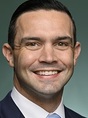
Aaron Violi Casey, Liberal Party, Shadow Minister for the Digital Economy
4:40 pm
When you're in government and you make budgets, it's about making choices. This government made two significant choices when it came to older Australians and veterans in the last budget. They made the big decision to just not honour their word at all and completely mislead the Australian people when they broke their word on their tax changes. But when it came to the savings, they decided they were going to bank $734 million from our veterans in the first three years and just over $320 million every year thereafter—a billion dollars in savings from our veterans for their budget bottom line. That was choice 1 by this government and this Treasurer.
Choice 2 by this government and this Treasurer was to punish older Australians over 65 by taking away their private health rebate in this budget—another saving at the expense of older Australians. If you happen to be a veteran with medical issues who will likely exceed the $5,000 cap, and you're over 65 with private health insurance, you have well and truly been sold out by this government—and that is many in my community that have been sold out and thrown under the bus by this government. It is about choices.
What are the other decisions that this government have decided to make when it comes to budgets? These are the contrasts with throwing veterans under the bus and throwing older Australians under the bus. The Minister for Climate Change and Energy was up today, talking about his Cheaper Home Batteries Program. It's been very successful, and there's been a big uptake, but it's also blown out significantly. I was talking to someone that took up the home battery program. They said to me: 'Yes, of course I'm going to take it up. I got a $40,000 battery and solar into my place. Between the government handout at a federal level and the government handout at a state level, I had to pay $20,000—got half of it off. How good's that? How lucky am I?' I said, 'Okay, fair enough.' Then I asked them a question: 'So, for that $20,000, did you have to take out a loan? Did you have to go onto a payment plan?' 'No, I had the cash in the bank. I was going to do it anyway, but of course I'm not going to say no to an extra $20,000 and get my money back.' That's just one example.
There was $150 million wasted on a conference/holiday for the part-time COP president, part-time minister for energy to go to Fiji with no-one else turning up, and $300 million given to the NAB—a bank that delivered over $4 billion in profits. They were given $300 million of taxpayer money—your money—at the expense of veterans and older Australians so they could subsidise green loans for those that wanted to buy EVs; I kid you not. This government is telling you: 'If you're a bank making billions of dollars, if you're on over $250,000 a year and you can afford to pay $20,000 to get a battery, we'll give you money. If you want to go on a holiday with Minister Bowen to Fiji, we'll spend $150 million on it. But if you're an older Australian with private health insurance, we'll take away that support for you.' That is the reality and the choices of this government.
Now, you'll hear those opposite—and we should be worried, Member for Forrest, because we've heard it twice today; we heard it with veterans this morning and we've heard it now with this private rebate, about misinformation and being misled, which makes me very confident that we made the right decision not to give the Minister for Communications the ability to determine what harm is on social media. Those opposite will talk about misinformation and say, 'This isn't true.' The only problem with is the fact that the minister stands here at question time—and the member for Brisbane just contradicted herself and talked about how that money that they're saving will be moved into aged care. She can't have it both ways either. Either older Australians over 65 aren't going to lose money, and there's no savings, or, if they are going to make money and they are going to have savings, it's going to aged care. It is a complete contradiction, because those savings that you are talking about going to aged care have to come from somewhere, and they are coming from those older Australians over 65. So let's see if the next speaker talks about misinformation and facts not being out there.
But then we get this argument about age. If you're over 65 and you're on a pension, you're on a fixed income. You have no ability to earn more money or to take up a part-time job because, if you take up a part-time job, it will impact your pension. So you don't have that ability. You're on a fixed income. If you're someone on 35 or 40, you have that ability to pick up an extra job if your expenses go up. You also have the ability to earn more money above inflation, if you're lucky enough to get a pay rise. There's more flexibility for those at a younger age. But then we hear the member for Brisbane and those opposite talk about how it's fairness. The reality is, if you're 35 or 40, you're not saving any money from this. If you are 35 or 40, let's be really clear: your private health insurance costs do not go down. This is a cynical attempt by this government and those opposite to pit younger Australians against older Australians, because younger Australians do not benefit from older Australians losing this rebate and paying more.
Let me share a couple of the words of some of my community. An 82-year-old age pensioner told me: 'I thought I was doing the sensible thing by having private health cover for many years.' Now she will have to cancel her coverage completely. That is the reality. Another constituent implored the Albanese government to 'stop attacking the older generation'. These are two members of my community. The member for Fisher tried to table today a petition signed by over 10,000 people, saying they were going to be impacted. The government wouldn't accept that petition. They denied leave for the member for Fisher because they didn't want the voice of those 10,000 Australians heard in parliament—in the place of democracy. The minister denied their voice in this House because this government are clearly embarrassed by these decisions.
We talk about the younger generation and this intergenerational warfare that this government is stoking. The reality is that these changes won't save someone who's 35 or 40 any money, but it will hurt them, and it'll hurt all Australians. If you were thinking that you would not be impacted by these changes, you would be wrong. What this government are doing is something that they like to do so often, and it's called cost-shifting. They are moving the health cost from the federal government, through providing the rebate, to the public system, which is conveniently paid for by state governments. That's what is going to happen. There's lots of modelling out there. Lots of people are saying that they're going to drop their private health insurance, and they will have to rely on the public system, which will put more pressure on the public system than it can afford.
As a Victorian under the Andrews-Allan-Carroll Labor government, our health system is broken. The last thing it can afford is more people needing more demands and moving from the private sector to the public sector. But don't take my word for it. Even the Victorian Labor government and the South Australian Labor government in Minister Butler's own home state joined the Labor governments of New South Wales and the coalition governments of Queensland and Tasmania in opposing these changes. All state premiers are telling this government that this cost-shifting will overwhelm their hospitals at a time when hospitals are already overwhelmed, delivering a worse outcome for the Australian people.
Then we see today in the Australian an article talking about Minister Butler's advice to those that need hearing aids and processors from Deaf Australia. Minister Butler in December wrote to the Deafness Forum of Australia. The minister said:
Many private health insurance policies include CI processors under their policies, and I trust that older Australians that undergo CI surgery would consider this avenue of support where possible.
Well, doesn't that sum up this government and this minister? On one hand, he's saying: 'No, we're not going to help Deaf Australia with their CI processors. You're on your own. Use your private health insurance.' Months later, this minister is saying: 'No, we're going to take that away from you as well. We're going to take that rebate away from you.' It shows the callousness and the inconsistencies of this government. They're not prepared to put the health of older Australians first. They are making these choices, as I said, to cut the rebate for anyone over 65 at a time when they can least afford it.
If you're an older Australian under this government, you have seen your energy bills skyrocket despite this government promising to reduce power bills by $275 once they were elected in 2022. They promised that. 'My word is my bond. I've done the modelling.' The Prime Minister promised 97 times to reduce your power bills by 2025. You've lived with double-digit growth as an older Australian, as every Australian has. Inflation is out of control under this government. The price of everything at the supermarket is going up. Every Australian has spent 4½ years struggling to keep their heads above water.
In fact, just two weeks ago, I was at a local food bank, talking to them about their challenges. They were talking about the growth they have seen in their products. It's not growth that you want when you're a food bank providing for Australians. They have a range of people coming in. They have older Australians on the pension, over-65s on a fixed income who will be impacted by these changes, who come in for food so they can make the dollars last. They have families on two incomes, dual-income families, that they themselves in their own words described as 'the working poor' needing food from their organisation. It has never been tougher than it is now under this government.
And what does this government choose to do? It made a choice. It made a choice in the budget by the Treasurer, the Prime Minister and the Minister for Health backed in and supported by everyone on the front bench in the cabinet and every backbencher to punish older Australians, punish our most vulnerable—those on a fixed income looking to retire and make the dollars count. The backbenchers of the Labor government have created a little bit of a habit recently. Some of them will publicly speak out. Many of them will sit there quietly, background journalists, and talk to others about how they're unhappy with this train wreck budget from this Treasurer and the lack of leadership from this Prime Minister.
We saw it at their national conference, where dissent was not allowed. They follow the orders of the Prime Minister, but it's the Australian people and their constituents that pay the price. It's those that are over 65 that are paying the price. It is veterans in this country that are paying the price. But again and again we're going to hear speech after speech regurgitating the Minister for Health's talking points. They're not listening to their communities. You can spin, you can spin and you can spin, but it eventually catches up with you.
We've seen that with the Treasurer of this country—4½ years of spin has caught up with the Treasurer. It would be a little bit humorous to watch the pain he was in, except we on this side know that—while he's feeling political pain for his ambitions—it's our communities and those that are most vulnerable that are feeling the economic pain every day because of a treasurer, a minister for health and a prime minister who don't understand their struggles, have no ability to fix the economic challenges we face and choose to punish older Australians for their failures.

Alice Jordan-Baird Gorton, Australian Labor Party
4:55 pm
I rise today to contribute to the debate on the Private Health Insurance Amendment (Modernising the Private Health Insurance Rebate) Bill 2026. In Australia we're dealing with two realities—one, we have an ageing population, and, two, we have younger generations who are not afforded the same opportunities that their parents and grandparents were. As we legislate for a better future for all Australians, we need to hold both these realities and account for both. We want to set up a system that helps all of us and senior Australians in our communities to age with dignity, and we want that system to be fair.
Right now, two households living next to each other on exactly the same household income will receive a different level of taxpayer subsidy depending on whether they're over 65 or under 65. That has become a hard policy to defend. It means that two households on the same income can receive different levels of government support based only on their age and that doesn't really make sense. The original system didn't include this differential treatment according to age, and we want to bring it back to that original design.
I want to be clear and echo some of the comments from the Minister for Health and Ageing. We're not taking away the private health insurance subsidy that is paid to Australians. What we are doing is changing the rate to ensure that it's effectively age neutral so that the government will pay a subsidy for people's private health insurance that is based on their income rather than their age.
This is a difficult decision, but it's made for good reason, because every single dollar that we're saving through this change is being invested into our ageing population, backing our aged-care system with over $3 billion investment in this recent budget and delivering more aged-care beds and better care for older Australians. We're holding both of those realities. For our ageing population, we are investing heavily in improving aged-care services, and, for our younger generations, we are creating a fairer system that works for everyone. Every single dollar that we effectively save through these changes will be invested in new aged-care services that, frankly, we just have to start putting in place if older Australians are going to get the care and dignity they deserve.
People aged 65 and over will still receive significant government subsidised discounts of up to 24 per cent on the premiums private health insurers charge them, the same as the rest of the population. A single person earning $101,000 or less a year currently receives a 24.118 per cent rebate on their private health insurance premium. The government will continue to deliver this income based support. Returning to income based rebates restores fairness in the rebate system and frees up funding to provide more dignity and care to older Australians.
A few months ago, I spent some time with the Deer Park Probus Club, who hold monthly meetings at the Deer Park Club. This is a fantastic volunteer group for seniors in my community in the western suburbs to connect, with activities including a recent trip to Daylesford and other regional towns. I spent some quality time with them, answered questions and listened to them. Thank you so much to Marie McVey for the invitation. The common theme from this was how the aged-care system wasn't working for them, how the wait times for Support at Home places were too long, how they struggled to get personal care services and had to pay out of pocket, and how—while they're not the only ones—older Australians are experiencing these challenges right across the country.
It's why we're listening to older Australians, their families, advocates and providers. Our $3.7 billion investment into aged-care services will make sure older Australians can access the care they need when they need it. That includes delivering 5,000 additional aged-care beds every year and focusing on making sure people with limited financial means can access quality residential care.
We're doing this by building subsidies and increasing and restructuring the accommodation supplement, giving providers the certainty they need to build and maintain quality accommodation. And we're making it easier for older Australians to access support at home by increasing the number of Support at Home places, expanding the supports available, improving assessments and working to bring down wait times. Personal care services like showering, dressing and continence support will be free alongside clinical care. This is huge. By making sure older Australians won't have to make a co-contribution for these services, we're recognising them for what they are: essential.
We're also expanding the End-of-Life Pathway so that more people on palliative care can access the support they need at the very end of their lives, and we're strengthening dementia care with 20 additional Specialist Dementia Care Program units and an expansion to the Hospital to Aged Care Dementia Support Program. These measures build on the changes we delivered in our last term of government. They're about making aged care fairer and more accessible, giving providers the certainty they need to invest in quality care and accommodation and building a system that will support older Australians for generations to come. Because every Aussie deserves to age with dignity, with access to quality care and with the choice to live safely and independently for as long as possible.
But it's not just our aged-care system. It all ties together with our public health system as well. This is something we know well in the Labor Party. We introduced the PBS. We introduced the NDIS. We introduced Medicare. And today, we're committed to making sure our public health system continues to have the capacity to care for Australians when they need it. This includes our record investments in Medicare, including the opening of 137 urgent care clinics across the country—like those near my own community, in Sunshine and Melton—and our landmark agreement with the states and territories to deliver record funding for our public hospitals and secure the future of the NDIS.
Under this agreement, the Commonwealth will provide an additional $25 billion in funding for public hospitals. That means Commonwealth funding for state-run public hospitals will reach a record $220 billion between 2026-27 and 2030-31. For Victoria, that means an additional $5.8 billion in public hospital funding over the next five years. This matters because when you or your loved ones find yourselves in a position where you need to go to the hospital, you shouldn't have to worry about whether the system has capacity to care for you. Every Aussie should be able to walk into a public hospital knowing that the doctors, nurses and health professionals caring for them have the resources that they need.
We also need to make sure that Australians can access a GP in their own community. This is important in fast-growing communities like Thornhill Park in my electorate. Thornhill Park is one of Melbourne's fastest growing suburbs. There are more families moving in, more homes being built and more people who need regular access to health care. But the community is facing a GP shortage. Locals are having to travel outside their suburbs to see a doctor. For families with young children, older Australians, those living with disability or anyone relying on public transport, this is a real barrier.
Earlier this year I visited Thornhill Family Clinic, which provides such an important role in providing primary care to the local community. But the clinic is facing difficulties attracting and retaining GPs. Part of the problem is that the area is classified as MMM1, meaning it is regarded as a major city or metropolitan area in Australia where there are plenty of available GPs. But the reality tells us something very different. Thornhill Park is an outer suburban area with a rapidly growing population, and the lived experience of the community is that there is a genuine shortage of doctors and insufficient capacity to meet local demand.
This situation highlights a significant limitation in relying solely on geographic classifications to determine workforce need. For this reason, I advocate for the reclassification of Thornhill Park and a review of the DPA classification and workforce needs in Thornhill Park that take into account the suburb's rapid population growth, limited public transport, demographic diversity, access barriers and actual availability of local GPs so that suitably qualified doctors can continue practising at Thornhill Family Clinic and ensure the community does not lose existing GP capacity. But access to a GP is one part of making sure Australians can get the health care they need. It's not only about having a doctor nearby but also about making sure that Australians have the information they need to make informed decisions about their health care and that they can understand the costs they may face. This is particularly important for Australians with private health insurance, and it's why we're making sure Australians with private health insurance have more information and more power when making decisions about their health care—because we know that navigating private health can be complicated.
The costs of seeing a specialist can vary significantly, even for the same procedure in the same part of Australia. For families already dealing with the everyday cost of living, unexpected medical bills can be really difficult to manage. That's why we're strengthening the Medical Costs Finder. We want Australians to be able to see individual medical practitioner fees and insurer out-of-pocket data for common medical services. This information can be drawn from Medicare hospital and insurer billing data that the government already collects, so you can get better information without creating unnecessary admin work for doctors.
We're also making sure that people can have more confidence in their private health insurance. Under our legislation, insurers will need ministerial approval not only when changing premiums for existing products but also when introducing a new product or making changes that reduce the cover, benefits or terms of an existing product. And we are also banning product phoenixing, where an insurer closes an existing product and then opens an identical or similar product at a higher premium. When you pay for private health insurance, you deserve to have confidence in what you're paying for. You deserve to understand the costs, to understand your cover and to be able to make informed choices about your health care. That's what these reforms are about.
At the heart of this bill is a really simple principle: we need a healthcare system that is there for Australians when they need it and a healthcare system that is fair, accessible and sustainable for generations to come. That means making the difficult decisions that see our funding do the most good—making sure that our ageing population can access the care they deserve, investing in our public hospital system, strengthening Medicare and giving people with private health insurance the information and protections they deserve so that they can make informed choices about their own health. We have a responsibility to make sure that, when Aussies need access to health care, that access isn't determined by their age or their income but by their needs. We are working towards a fairer and stronger healthcare system. I commend this bill to the House.
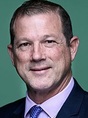
David Batt Hinkler, Liberal National Party
5:07 pm
I rise to speak in opposition to the Private Health Insurance Amendment (Modernising the Private Health Insurance Rebate) Bill 2026. My electorate of Hinkler has the second-highest percentage of people aged over 65 in the country. That's a total of more than 44,000 people over 65 just in Hinkler. Each and every one of those 44,000 deserves better. It's estimated 26,300 of these seniors have taken out private health cover. This group was already struggling with the escalating costs of just surviving, let alone of living—even before the budget of broken promises. And now it's gone from bad to worse.
Labor's $11 billion tax on older Australians' private health insurance will result in excessive pressure on our already crowded public hospitals. These people who pay their private health cover will be forced to either downgrade their insurance or to drop their insurance altogether. The so-called consultation—after Labor announced these changes in the May budget—is revealing more and more opposition. The pressure points are staggering.
Who's opposed to this attack on over-65s? Private Healthcare Australia is opposed; Members Health Fund Alliance, opposed; National Seniors Australia, opposed; the Australian Medical Association, opposed; and the Australian Private Hospitals Association, opposed. Add to that list Medibank, HCF and Bupa. All have jointly warned that the change will fall hardest on poorer retirees and older Australians in the regions and that a shrinking pool will push premiums higher for everyone who remains.
This devastating policy could close our private hospitals. Submissions to the Senate's inquiry surrounding the rebate cuts reveal the policy will hurt our regional communities and not just our seniors, as this policy will affect all generations. Here's an example. Experts warn an exodus of older Australians from gold cover will push up premiums for the younger families left behind who need gold cover for maternity services. And 3.2 million older Australians will then be pushed sooner into the aged-care system—a system that is already broken. This cruel move against our over-65s, who have worked hard and paid taxes for decades, is a disgrace. The more the policy is examined, the worse it looks. Labor sold it as a fairness between generations, but the fine print shows it will hurt regional hospitals, young families and older Australians alike.
Catholic Health Australia, which represents around 30 per cent of the country's private hospitals, warns the cut will strip revenue from regional private hospitals that serve the oldest communities and those that have no alternative provider. When regional cities lose a private hospital, it's not easy to get it back. The people of Hinkler, and all regional Australians for that matter, need more investment in their health care not another reckless policy that will leave families across the country worse off. Only Labor could design a health tax on older Australians that, at best, also pushes up the cost for anyone having a baby and, at worst, will lead to the end of private maternity services across the country. This isn't intergenerational fairness; everyone is worse off.
The fact is, this Labor government has failed, and is failing, our older Australians, and with an $11 billion tax grab on private health insurance, they are pushing our health system under further stress. The Australian Private Hospitals Association put it simply as 'a disaster in waiting'. It's estimates show that slashing the rebate will see a couple aged 70 pay $1,614 more next year for their cover. They say, and the coalition agrees, that public policy in a vacuum rarely ends well, yet something that looks to affect 3.2 million older Australians has reached parliament without any consultation with anyone. Keeping older Aussies in private health insurance saves the public system from collapse, yet this change is a half-baked cash grab that sends the entire health system into a downward spiral.
In 2024-25, those aged 65 and older accounted for more than 2.5 million private hospital admissions. It's not rocket science that any portion of that case load shifting to public hospitals can only make public emergency departments dysfunctional with bed block, waiting lists and taxpayer costs even worse than they are now. The government has a bizarre assumption that only 44,000 seniors will cancel their health insurance entirely as a result of these changes. Yet, that's how many over-65s I have in my electorate of Hinkler alone. It's one thing to scrap your health insurance because it becomes unaffordable, but even downgrading is a major issue. The Australian Private Hospitals Association says it's the most likely response for those looking to manage the looming surge in their premiums.
The government's impact analysis acknowledges the risk but does not bother modelling what it means for patients or the hospital system. If you're over 65 and you downgrade, will the removal of cataracts still be covered? What about joint replacements? Mental health care? The work hasn't been done. The scrapping of the private health insurance rebate for Australians aged 65 and over is built on zero consultation, untested assumptions, incomplete modelling and an impact analysis that overlooks the policy's most significant consequences. That's why the coalition are opposing the bill before us today.
During the winter recess, I conducted an electorate-wide survey and the interim results are in. One of the many questions in Hinkler's biggest survey was asked of those aged over 65 with private health cover: will you continue with your insurance when Labor scripts fuel rebate? The results so far indicate that three in four will stop or, at the very least, consider ending their cover. That's 42 per cent of those surveyed saying they simply can't afford to continue if the rebate is scrapped, and 33 per cent are unsure if they can hold onto it.
Those who, until now, have been able to pay for private health insurance should be encouraged to do so because the equation is simple: it takes pressure off the public health system. And yet the Labor government is punishing older Australians at every single turn. Take Bundaberg's David Orpin as a prime example. He is a 68-year-old pensioner and carer for his 91-year-old mother. Both have private health insurance, but Mr Orpin fears the Labor government will force him and his mother to cut back on essentials. His minimal carer's payment doesn't cut it when it comes to forking out for rising rates, rego, fuel, food and general health costs. David asks how many people will ditch their private health cover and then be a burden on the public system? Dave's mum, Shirley, is an OAM recipient, with lifelong service to our community through Scouts, Rotary and her church. In David's words—a message to Labor:
I hope you can see that we are doing it tough, very tough.
If we give up health insurance, then the government pays for all the bills.
Andrew and Isobel from Woodgate tell me that they will have to consider the cancellation of their current policy and rely on the public health system. They ask:
It all seems a bit counterproductive, don't you think?
Robyn and Len from Bundaberg pondered in an email to me:
Maybe the Labor government wants us all to just die, and the problem will go away.
The couple went on to say that they worked all their lives and that they deserve better. I agree. We must give back to the people that have made lifelong sacrifices. These people are in their twilight years, and a fair go is the least we can do.
Wendy is battling breast cancer and has been treated in a private hospital. Wendy says her ongoing treatment will have to come to an end once the cuts come in. She says:
This Labor policy will break our backs as pensioners and put us into an overloaded public health system.
The over-65s in my electorate of Hinkler and right across the nation deserve a fair go. They should not be forced to downgrade or drop their private health cover altogether. But, under this $11 billion tax grab, this is what will happen.
This is the same government that has left older Australians waiting longer than ever for aged care and handed decisions about their care to a computer algorithm. Now, it wants to strip away the private cover that keeps them well and independent and push them out of their homes and into a residential aged-care system that is already buckling. It is a pattern of disregard for older Australians, and the coalition will fight it every step of the way. Labor has designed this policy to exploit the vulnerability of older Australians by banking on them being too frightened to walk away from their private health insurance.
Here are some more stats. Forty per cent of seniors in outer suburban and regional Australia are ready to drop their cover. This isn't just a coalition complaint; state health ministers in Queensland, Tasmania and New South Wales have all warned the policy will flood public hospitals already under strain.
Older Australians on fixed incomes are the least able to absorb a price shock like this, and Labor's own department has confirmed they simply don't have the income to do it. Removing the additional rebate for older Australians, a cut of four per cent for over-65s and eight per cent for over-70s, is a cost shift, not a saving. Canberra pockets the money while the states are left to pick up the pressure on public hospitals.
As people get older, they are more likely to need health care. Private health insurance helps reduce pressure on the public system. That's why older Australians currently get a slightly higher rebate. National Seniors Australia has found that as many as 45 per cent of people whose sole source of income is the age pension hold private health insurance. Former Australian Medical Association president Dr Michael Gannon says it will affect individuals who have decided to put their health above the holidays and their leisure pursuits.
The coalition team supports choice. The coalition believes, if people work hard to pay for private health insurance their entire working life, they should be encouraged. That's why we will fight to stop Labor's cut to the private health insurance rebate. We are witnessing another case of Labor not doing their homework. It's a pattern, and every single time it's the older and more vulnerable Australians who are left to pay for the government's mistakes.
When it comes to aged care, this policy will potentially rush people to aged care, yet Labor has once again shortchanged older Australians. Announcing a residential aged-care funding increase that falls well short of the rising cost of delivering care. The government recently confirmed that the 2026-27 Australian National Aged Care Classification price will rise by just 2.55 per cent from 1 October, a figure that doesn't come close to covering the pressures facing the sector. Latest ABS data shows health inflation rose 3.8 per cent over the past 12 months, with medical and hospital services up 4.9 per cent, the largest contributor to that increase. The stranded patients crisis is growing rapidly in Hinkler and across the nation. What did older Australians do to deserve to be treated so badly by this Labor government?
The electorate of Hinkler is serviced by the Wide Bay Hospital and Health Service. At last count, 117 mostly elderly people remain stuck in our hospitals even though they're fit for discharge. While 117 people remain stranded in Hinkler hospitals, that figure is well over 1,000 across the state of Queensland. People are stranded with nowhere to go and the impact is felt across the entire health system, with fewer beds, increased pressure on patient flow and longer waits. Hinkler is an electorate that has the second-highest percentage of people aged over 65 in the country and the highest percentage of people living with one or more long-term health conditions.
Just today, it has been revealed that new Parliamentary Budget Office modelling has confirmed that almost half of Labor's $3 billion cut to the private health insurance rebate—close to $1.6 billion—will be ripped directly from the pockets of age pensioners, exposing why the government fought so hard to keep its own modelling secret. The revelation comes after health minister Mark Butler repeatedly claimed there are no 'lazy savings' left in this budget.
Let's not make things worse by adding this pressure to over-65s. It is simply unfair for Labor to punish older Australians by reducing the private health insurance rebate. When will Labor stop short-changing older Australians?

Renee Coffey Griffith, Australian Labor Party
5:21 pm
Every Australian should be able to look forward to getting older with confidence, staying connected to their community, enjoying their independence and knowing good care will be there when they need it. That is what the Albanese Labor government is investing in. We are strengthening Medicare through more bulk-billing, permanent urgent care clinics and record funding for our public hospitals. We are building on that work with more aged-care places and better support for people to remain in their own homes.
For older Australians in Griffith, these investments support the freedom to keep living the lives they value, close to family, friends and familiar places. This bill, the Private Health Insurance Amendment (Modernising the Private Health Insurance Rebate) Bill 2026, will help fund that care. It brings greater fairness to the private health insurance rebate and directs an estimated $3 billion in savings over four years into aged care. This is a decision about how public money can best support older Australians today and in the years ahead.
For families, these services are closely connected. A parent may need regular GP appointments, then Support at Home after a hospital stay. As their needs change, the care available to them must change too. Our responsibility is to make those services work together so people can receive the right care at each stage of their lives. The private health insurance rebate helps eligible Australians meet the cost of their insurance premiums.
At present, people aged 65 and over receive a higher rebate than younger people with the same income. It means two households on the same income can receive different levels of government support based only on their age. That difference is difficult to justify. This bill removes that extra age based subsidy. From April next year, the same income based rebate rates will apply across age groups. Older Australians who qualify will continue to receive a significant government contribution towards their premiums, at rates of around 24 per cent. The rebate will remain means tested, with greater assistance for people on lower incomes.
But this is also a question of intergenerational fairness. Younger policyholders make an important contribution to the system. People under 65 pay more in premiums, on average, than they receive in benefits. Participation by younger and healthier people helps keep private health insurance affordable. Their income should determine the support they receive, just as it does for older policyholders. People on comparable incomes will qualify for the same rebate rate regardless of their age. At the same time, we will direct the savings towards aged care, where older Australians have particular needs. That funding will help people access care according to their circumstances, including those without private health insurance.
Younger Australians also have a stake in a strong aged-care system. Many are helping ageing parents while raising children and meeting their own living costs. They want to know their parents can get support now and that reliable care will be available when they need it themselves. Modelling puts the average increase in out-of-pocket premium costs at around $250 a year per affected person, or about 70c a day. We understand that some older Australians will be unhappy with this decision. For someone carefully managing their retirement income, any increase needs to be considered seriously. An average also means some people will face a different cost.
We should explain the change clearly and acknowledge its effect on household budgets. I believe this is a fairer way to allocate public funding and provide more care in older age. The savings will go directly into aged care, helping fund the support people need and new residential places to meet rising demand. It is also important to be clear about the support that will remain. Eligible older Australians will continue to receive the income based rebate, and modelling shows that private health insurance membership is expected to be only around 0.4 per cent lower than it would be without this change. Overall membership is still expected to grow, including people aged over 65.
This decision forms part of a much wider commitment to health and aged care. We are investing in the services people need throughout their lives, from their local general practice to hospital treatment and care at home. The savings from this measure will help fund our government's broader $3.7 billion aged-care investment. This investment will support an additional 5,000 residential aged-care beds each year, principally for people with limited financial means. Building subsidies and a higher restructured accommodation supplement will help providers build and maintain suitable accommodation. This builds on our first-term changes to encourage construction and give providers greater certainty to invest in residential aged care. The package will improve assessments and reduce waiting times for Support at Home, helping people receive support sooner.
We have monitored the program closely and listened to older Australians, families, advocates and providers. Their experiences have informed changes to make them fairer and more affordable. Many older Australians want to remain in familiar surroundings. They want to keep their routines and stay close to the people they know. The government has listened to concerns about the cost of personal care. Under these changes, showering, dressing and continence support will be free alongside clinical care. Making that care free is a direct response to older Australians and their advocates. Help with showering or dressing is deeply personal. Receiving that support respectfully can allow someone to start their day comfortably and keep living at home. Costs should not force a person to go without essential care. Timely support also helps families and unpaid carers. Many are balancing work and caring responsibilities, trying to arrange appointments and make sure that someone they love is safe. They need a system that responds before those responsibilities become unmanageable.
The package will expand the End-of-Life Pathway, providing more care for people needing palliative support. We are investing more than $200 million to deliver 20 additional Specialist Dementia Care Program units and expand the Hospital to Aged Care Dementia Support Program. People living with dementia need care suited to their needs. Their families need support from people with the training and the time to provide it. These investments will help older Australians move from hospital into appropriate residential care. We are making a budget decision with a clear purpose: to make more care available to the people who need it.
This investment responds to the needs that have developed over many years. Almost a decade of underinvestment under the coalition left aged care desperately needing more funding. Older Australians and their families have waited too long for a system to meet their needs. Labor has taken responsibility for that work. We began reform in our first term. Our budget builds on this reform through more residential places and improvements to Support at Home. Our response to the independent review of residential aged-care accommodation pricing will help providers build and maintain the homes older Australians deserve. These decisions require funding, and this bill helps provide it. We want older Australians to receive dignified, quality care, whatever their financial means. We want families to have confidence in the support available for the people that they love. That commitment guides our investment in aged care and our wider work to strengthen Medicare.
Older Australians need a health system that works long before they require aged care. They need access to a GP. They need affordable medicines and somewhere to turn for urgent treatment. We have invested in more bulk-billing so Australians can see a GP for free. That investment supports general practice and helps people seek care without an out-of-pocket charge. For older Australians, a trusted GP can provide care over many years. They know a patient's medical history and help manage changes in their health. For someone living with several ongoing health conditions, medical appointments are a regular part of life. The cost of each visit adds to a household budget already stretched by other bills. More bulk-billing makes it easier to keep those appointments and seek help early.
But access to affordable care is a concern across generations. Older residents, working families and young people all benefit from a stronger Medicare. That same commitment to affordable treatment extends to the pharmacy counter. We are making more life-changing medicines cheaper alongside our investment in bulk-billing and public hospitals. For an older person managing ongoing health conditions, affordable appointments and medicines are both part of receiving the care that they need. That is the purpose of our investment: helping Australians afford care throughout their lives.
Our Medicare urgent care clinics provide another example of that commitment in practice. There are now 137 clinics operating across Australia, offering fully bulk-billed treatment for non-life-threatening urgent care. They are open seven days a week with extended hours and no appointment required. People can walk in with their Medicare card and receive the urgent care that they need. The three clinics serving Griffith have recorded over 50,000 presentations combined. That includes 8,200 at Carina-Carindale, 6,400 at Coorparoo and 36,000 at South Brisbane. Each presentation represents someone receiving urgent care fully bulk-billed close to home.
These clinics give our community more options for treatment and help take pressure off hospital emergency departments. Nationally, these clinics have recorded more than 3.7 million presentations. One third of patients are under the age of 15, showing the value of this care to families too. Four out of five Australians now live within a 20-minute drive of a clinic, and 45 per cent of patients reported that they would have attended an emergency department or called an ambulance without their local clinic. The hours these clinics operate make a real difference, and 29 per cent of visits have taken place on weekends. On weekdays, one in four visits have happened after 5 pm. That's why I'm proud that in this year's budget we made these urgent care clinics a permanent part of Medicare.
The Albanese Labor government is also providing an additional $25 billion in public hospital funding. Commonwealth funding for state and territory public hospitals is expected to reach a record $220 billion over five years. In my home state of Queensland, that share includes an additional $5.7 billion, with total Commonwealth funding estimated at $51.4 billion over those four years. For an older patient, hospital care can involve treatment for a serious illness, surgery or support after a sudden decline in health. We are funding more care in the community and better support for people returning home or moving into aged care after a hospital stay.
An older person ready for discharge needs suitable support beyond the hospital ward. More aged-care places and better support at home can help them leave hospital safely. That is why our hospital and aged-care investments belong together. Funding the care people need after hospitals helps them recover in an appropriate setting and makes beds available for other patients. Being ready to leave hospital does not always mean being ready to manage alone. Someone may still need help with personal care or ongoing clinical support. A safe discharge depends on having that help in place.
People who hold private health insurance deserve value for the premiums that they pay. Our government has introduced separate legislation to improve transparency about medical fees and strengthening oversight of insurance products. These changes would strengthen the Medical Costs Finder by publishing individual practitioners' fees and insurers' out-of-pocket data for common medical services. The information would come from billing data already collected by government, removing the need for doctors to upload it themselves. Patients would have clearer information to compare costs and make decisions about their care. Supporting the health of the nation requires sustained investment and decisions about how to pay for it.
Labor accepts that responsibility. We are investing in bulk-billing and our permanent urgent care clinics; as you've heard, Deputy Speaker Georganas, the three centres we have in my community of Griffith have been functioning beautifully. We're delivering record public health funding and making more life-saving medicines cheaper. Through this bill, we will direct an estimated $3 billion towards the aged-care services older Australians need and deserve. Our record reflects a clear belief: every Australian deserves access to affordable, quality health care, older Australians deserve care that they can rely on and families deserve confidence that help will be there.

Helen Haines Indi, Independent
5:35 pm
I'll make some brief remarks about this bill. I rise today to speak to the Private Health Insurance Amendment (Modernising the Private Health Insurance Rebate) Bill 2026. Australians with private health insurance are entitled to a means tested rebate on their premiums. It's available to individuals earning less than $164,000 per year and families earning less than $328,000 per year who receive between eight per cent and 24 per cent of their premiums back. There is an additional four per cent if the oldest person covered is at least 65 years of age, and another four per cent on top of that if they're 70 years of age or older.
This bill removes the additional rebates. Everyone will receive the same amount back on their private health insurance, depending on income but regardless of age. The government estimates that the reduction will save as much as $3 billion over four years, which will be redirected to aged care. There's no argument that there is an urgent, desperate need for more aged-care funding, especially in communities such as mine in rural and regional Australia. We're simply not doing enough to meet the needs of an ageing population. So I welcome further investment in more beds, better packages and measures to reduce wait times.
However, I am concerned that the people who will be hit the hardest by a reduction in rebates are the very ones who can least afford it. In fact, that's exactly what the modelling shows. PBO analysis requested by the member for Kooyong, released today, confirms that about half of the $3 billion saving will come from age pensioners. The very highest earners won't be affected by this change at all because they're not entitled to rebates in the first place. It's individuals and families on lower incomes, including pensioners, who will pay more for their insurance. I just can't see how that's fair.
The people who will feel the greatest pinch from the loss of these rebates are already grappling with higher costs. They're paying more at the supermarket, at the petrol pump and on their bills. The last thing they need is to have to find another couple of hundred dollars for their health insurance next year. Some will manage by going without. Others have nothing left to cut. I've heard many stories now from constituents across my electorate who are looking at their budget and making those decisions as we speak. They'll have no choice but to drop or downgrade their cover, which will affect how and when they access not just medical treatment but things like podiatry, optometry and dental care, with all the potential flow-on consequences for the entire healthcare system.
The first question I ask when I'm considering legislation is, 'What will this mean for the people of my electorate of Indi?' Rural and regional Australians already have worse health outcomes than people living in major cities. We have higher rates of chronic disease and a lower life expectancy—something I speak of often in this House. Our health services are already stretched and our public hospitals simply cannot accommodate any potential increase in demand. We have fewer health workers and fewer doctors out in rural and regional Australia.
The population of Indi is older than the national average. Almost a quarter of my constituents were aged 65 and over at the 2021 census. We also earn less on average than wealthier metropolitan electorates. People in Indi with private health insurance are much more likely to rely on those additional rebates than in many other parts of the country. It's no surprise that I've heard from so many of the people that I represent, worried about how this change will affect them. They've worked hard, they spend carefully and they feel like the rug is being pulled out from under them at the very time they need it.
I don't think anyone disagrees that we need to invest more in aged care, but the government should not be going cap in hand to pensioners to fund it. And, while I welcome the intention to direct resources towards ensuring Australians have access to safe and dignified care through the aged-care system, in this case, I simply cannot support this bill.

David Moncrieff Hughes, Australian Labor Party
5:40 pm
Neglectthe title of the 2019 interim report of the Royal Commission into Aged Care Quality and Safety in Australia is succinct and sobering. It reflects the state of the aged-care sector as it was under the Morrison government. The royal commission laid bare a system that had become unkind and uncaring. It failed to meet the needs of elderly people, often neglecting them entirely. Royal commissioners Richard Tracey and Lynelle Briggs said the aged-care industry was a 'sad and shocking system that diminishes Australia as a nation' and that it needed to be changed.
Under the Morrison government, home-care waitlists blew out by tens of thousands of places, forcing vulnerable seniors to wait years for basic support. Facilities faced widespread staffing shortages and a lack of oversight left providers struggling to maintain basic standards of dignity. When we came to government in 2022, the aged-care system had been run into the ground and was failing to deliver adequate care to older Australians. Change to aged care is exactly what the Albanese Labor government has been implementing since it came to office. It's why the 2026-27 budget of the Albanese Labor government is investing more than $3 billion in delivering more aged-care beds, more packages and better care for older Australians.
The Albanese Labor government has listened to older Australians, their families, advocates and providers, and that's why we're investing $3.7 billion to deliver more beds, more packages and better care for older Australians to ensure that they get the support they need. This means that 5,000 additional aged-care beds are available each year, principally for those with limited financial means, incentivised through building subsidies and an increase and restructure of the accommodation supplement. It means faster access to Support at Home places, increasing supports, improving assessments and bringing down wait times—improvements that are desperately needed. It means personal care services, including showering, dressing and continence support, will be free alongside clinical care. It means expanding the end-of-life pathway to provide more care for palliative patients. It means 20 additional Specialist Dementia Care Program units and an expansion of the Hospital to Aged Care Dementia Support Program.
Our government is incentivising the construction of beds for aged-care residents and giving providers the certainty they need to build and maintain quality residential accommodation, making Support at Home fairer and more affordable for older Australians and continuing our work to set the system up for generations to come. It's work that is so important to ensure that older Australians have the dignity that they deserve. These initiatives complement our government's efforts to date. Since Support at Home began on 1 November last year, estimated wait times for an ongoing place have fallen across all priority categories by several months. In the face of enormous demand, our government has released 32,000 new Support at Home places this financial on top of the 83,000 additional places released last financial year. Almost three times as many older Australians will have access to a Support at Home place compared to those with a home-care package in 2020.
To fund these substantial investments, our government has had to make principled decisions about where scarce funds are best allocated to improve the lives and wellbeing of older Australians. One of those decisions was to remove a Howard-era distortion in the private health insurance market, which has meant that some Australians have been priced out of the market, not because of their health, their income, their needs or their lifestyle, but simply because of their numerical age. For a person aged 64 and living in Bangor in my electorate, this distortion has made private health insurance more expensive than it would be for their neighbour who is 65 even if the 65-year-old is less healthy, as they are likely to be. Why should two Australians with similar health needs, risk profiles and means be given different levels of private health support based simply on their age? Why should a person aged 64 miss out on the generous subsidy afforded to their neighbour on the basis of their age? The policy violates the principle that we should be consistent in how we treat people with similar needs and of similar means.
It is a horizontal inequity for a person aged 65 to receive a cross-subsidy from their 64-year-old neighbour with the same health needs and income. It is fairer to provide different levels of support to individuals on the basis of their needs or ability to pay than to do so based on age. This policy has meant that younger, healthier people are being priced out of the private health insurance market, and increasingly it has meant that they are deciding that it's just not worth it. This is bad for the person who decides not to get covered, but it's also bad for everyone else in the market. Insurance is about risk pooling. We need younger, healthier people in the market to ensure that insurance remains viable. Otherwise, insurance will continue to become riskier for providers, driving up prices and driving even more people away from coverage. It's why the government is returning the private health insurance rebate for older Australians to the same level paid for everyone else.
The changes proposed under this bill would ensure that Australians receive the same private health support based on their income, not their age. It's not a politically easy decision, but it is a principled and right decision. The easy way would have been to leave this distortion in place and hope that the market would sort it out, but the reality is that the market was not sorting itself out with this distortion, and we were left with a policy that was neither equitable nor efficient.
This government is investing in Australians health thanks to our record investment in Medicare, there are now 23 bulk-billing clinics in my electorate of Hughes. We've also made Medicare urgent care clinics, like those in Campbelltown and Liverpool, a permanent part of Medicare. The opposition needs to decide whether they support this government's policy to deliver the 5,000 more aged-care beds, more support at home places for those with limited means, faster assessments and shorter wait times, more personal and clinical care services and more care for palliative and dementia care patients that this policy is funding. If they don't, they should come in here and explain to the Australian people why they don't think that those people deserve care.
For those opposite, the debate is not over the merits, the rationality or costs of the current settings; it's all about the politics, all about the three-word slogans, all about the anger they can marshal within themselves to present themselves as an ally of older Australians that they never were in government. In contrast, the Albanese Labor government is investing in the much-needed aged-care supports that make a real difference to older Australians and their families. And we're doing it in a way that is direct, that is fair, and that gives real funding to where it will make the biggest impact—not through favouring some Australians over others on the basis of their age rather than their needs or their means, not through inefficient subsidies that distort the private market and put structural pressure on premiums, not through politically motivated attempts to shirk the hard business of real reform in pursuit of a headline. It is the responsibility of those opposite, who trade so extensively in anger and grievance policies, to articulate the reasons why someone aged 65 should receive a higher rebate than their 64-year-old neighbour with the same income and health needs. The consequences of relentless negativity and irrational opposition are that older Australians are realising the coalition offers them no real support in government and has no plan to support them in the future.
The Albanese government is building on the changes we delivered in the previous term to incentivise construction of beds for aged-care residents and giving providers the certainty they need to build and maintain quality residential accommodation, making Support at Home fairer and more affordable for older Australians and continuing the work to set up the system for generations to come. It's work that's so important to ensuring that older Australians have the dignity that they deserve. People aged 65 and over will still receive significant government subsidised discounts of up to 24 per cent on the premiums that private health insurance charge them, the same as the rest of the population. A single person earning $101,000 or less a year already receives a 24 per cent rebate on their private health insurance premium. Our government is continuing this support.
The reality is that this revenue could be spent on giving older Australians the aged-care support they need and building new homes to meet rising demand. Returning to income based rebates restores fairness in the rebate system and frees up funding to provide more dignity and care to older Australians. Those opposite have been scaremongering about this change, like the sky will fall in. It won't. Even taking this change into account, the overall number of people with private health insurance is expected to continue to increase, including people aged over 65, as it has consistently over the last five years. Independent research from the University of Melbourne has confirmed that the impact will be minimal, estimating that between 15,000 and 43,000 could drop their cover, with researchers saying this reform won't cause a mass exodus from private health insurance and definitely won't overwhelm public hospitals, as some states predict. We expect the impact of these changes will be less than a dollar a day over a year from when they're planned to take effect, from 1 April 2027.
Over the last four years, we have committed ourselves to restoring trust in the aged-care sector and restoring trust in our healthcare sector. It's why we've invested so much in bulk-billing, and it's why bulk-billing is slowly becoming the norm again across Australia. It's why we've got 23 bulk-billing clinics in Hughes. It's why we are restoring the trust of Australians in the aged-care sector. But these decisions don't come without consequence, and we are taking the tough political decisions to make the necessary reforms to make our system sustainable. We're restoring fairness to the rebate system and directing much-needed funding to provide more dignity and care to older Australians and responding to the neglect that was identified by the royal commissions. It is for this reason that I commend this bill to the House.
Sam Birrell Nicholls, National Party, Shadow Assistant Minister for Regional Health
5:52 pm
It's fascinating to watch the Labor members come in here and try to defend this, and I will give my complete plaudits to the creativity of the talking-point authors, because what they've managed to weave into a defence of what is quite clearly a cost shift, a cut and an attack on older Australians is quite breathtaking. I rise to oppose the Private Health Insurance Amendment (Modernising the Private Health Insurance Rebate) Bill 2026, like people on this side of the House, for many reasons. Its consequences will not be shared evenly across Australia. This bill is not a saving for regional Australia. It's going to be a cost shift from Canberra onto older Australians, regional hospitals and state health systems and families. In metropolitan Australia, patients may have many alternatives. But in regional communities, like the one I represent, when capacity is lost, there may be no replacement hospital specialist or maternity service nearby. The coalition opposes this bill and calls on the government to abandon it.
For regional communities, this affects whether an older Australian can keep their private cover and whether a regional hospital can retain a viable service and whether an already stretched public hospital absorbs still more demand. People in regional Australia are already forced to travel longer, have access to fewer specialists, have a thinner workforce and have less choice. A policy that makes private cover less affordable compounds every one of these disadvantages, and the government is using amazing language to try and defend this—'modernisation', 'distortion'—and trying to bring the age gap into it, somehow saying 'the huge divide between 64- and 65-year-old people'. We make age based decisions on many things, and that never gets called into question. This has been a way of acknowledging the service that older Australians have given to this country and making it a bit easier for them to access private health insurance when they turn 65.
What does this bill do? From 1 April 2027, the bill removes the higher age based rebate for eligible people aged 65 and over. For the base income tier, the current rebate is about 28 per cent for people aged 65 to 69 and about 32 per cent for people aged 70 and over. Both would fall to about 24 per cent. The government says the average additional cost for the affected person is about $250 a year. That average hides the wide variation experienced by age, income, policy and premium. In fact, I remember—I think it was during question time today—that the member for Fisher talked aboutJanice and her husband from his electorate, people who've worked very hard, paid their taxes and done the right thing. It's going to affect them to the tune of $800 per annum. That's $800 for a retiring family.
After this change, the rebate will be determined by income alone, and the government argues that households on the same income should receive the same subsidy, regardless of age, and says the savings will be redirected to aged care. But genuine fairness must account for fixed retirement incomes, high use of hospital care, decades of continuous premiums and the unequal availability of services outside of capital cities. It's a point worth making, for those of us who represent regional areas, that the regional impact is different, like in so many things.
Regional health systems operate with less redundancy. A metropolitan patient may have several hospitals within reach. A regional patient may have one local option or, if that's not available, it's a long trip to Bendigo, Melbourne or another major centre. Regional public hospitals are already managing workforce shortages, constrained theatre capacity, specialist gaps and long elective surgery queues. Private hospitals aren't a luxury add-on. They are part of a region's total health capacity: theatres, beds, nurses, visiting specialists, rehabilitation and maternity services.
If older policyholders cancel or downgrade cover, demand does not disappear, it moves into the public system or care just gets delayed. Regional communities also understand that distance itself is a health cost: fuel, accommodation, time away from work and family and the difficulty of returning for follow-up care. Regional equality is not achieved by applying the same rules everywhere. It is achieved by recognising that the same policy has a harsher effect where alternatives are scarce.
Catholic Health Australia warns that more than 200,000 older Australians could drop or downgrade hospital cover and that some regional private hospitals could become unviable. Now, their case study is St Vincent's Private Hospital in Lismore. It's the only inpatient private hospital serving a large regional catchment, and it reports that 73 per cent of admissions and 79 per cent of bed days involve patients who are over the age of 65 years. Its modelling suggests that 1,200 to 1,800 patients a year could no longer be treated there, with an annual revenue loss of $2.6 million to $3.9 million.
That example is Lismore, but it matters so much beyond there. It shows how a national rebate decision can concentrate its damage in an older regional population and weaken an entire local healthcare service. Once a regional theatre, ward or maternity unit closes, it is extraordinarily difficult to rebuild. We lose staff, the specialists take work elsewhere, and the community's confidence in the healthcare service of the region—and, by extension, the region itself—falls. When a country community loses health capacity, patients remain but their care becomes further away, later and more expensive.
The government's modelling estimates that 44,313 people will drop cover entirely. The government characterises the overall membership impact as—and I quote, because I've heard it from many of those opposite—'marginal'. Obviously, the talking point author loved the word 'marginal' and loved the word 'distortion'. Stakeholder estimates are higher and include an additional risk that many people will downgrade rather than leave altogether. Downgrading matters because lower-tier policies may no longer cover procedures such as hip replacements or cataract surgery. Catholic Health Australia estimates the policy could shift about $675 million per year in additional costs to public hospitals.
Whatever figure one prefers, the direction of the travel is clear: when privately insured activity falls, pressure increases elsewhere. The regional effects are practical: longer elective surgery queues, more delayed treatment, greater reliance on patient transport and more people travelling to larger centres. And state governments that operate public hospitals have raised concerns about whether they can absorb this demand.
Many older Australians keep private insurance by making sacrifices elsewhere. We know that. Regional retirees often face added transport and access costs before the treatment even begins. Timely cataract surgery, joint replacement and rehabilitation can be the difference between remaining mobile at home or needing to enter higher level care. Again, Catholic Health Australia estimates that the delayed access associated with this change could result in more than 800 additional people entering residential aged care each year. This is a warning about a system interaction. Weakening access to timely hospital care can increase aged-care demand rather than reduce it.
The government says that the savings from this—and there are savings, so they've got to admit that it's a cut—will fund aged care. But it needs to explain how many additional hospital episodes, delayed procedures and earlier aged-care admissions have been fully modelled, particularly by geography. We're getting some comments from some of the Labor members coming in to defend this, saying, 'Obviously, by opposing this cut, you don't want us to fund aged care.' It really is ridiculous to say that this is the only way we can have a proper aged-care system—which is, in my electorate and I suspect other people's electorates, going from bad to worse. And the home-care patient system's not working.
The minister needs to come in here and give some better answers, to be honest and frank, about when we're going to see an improvement in aged-care delivery, both in home-care packages and in aged-care facilities. He needs to explain how aged care is going to be correctly funded. You can't just say that we're going to fund it by taking people's rights and their ability to get a subsidy on private health insurance away from them.
But it's not only an issue for retirees. Stakeholders warn that if older Australians downgrade from gold cover then premiums may rise for younger families who remain in that pool, and they need gold cover for things like maternity service. That risk is especially serious—again—in regional Australia, where private maternity services are already fragile and closure can force families to travel long distances to give birth or rely on an overstretched public system.
So I believe that the policy test for the government has not been met. Before proceeding, the government should publish transparent modelling of cancellations and downgrades, not merely national participation. It should quantify impacts on public hospital admissions, elective surgery waiting lists and state budgets. It should identify regional private hospitals and maternity units at risk and model the impacts by postcode, age profile and service catchment. It should explain the consequences for aged-care entry and home-care demand. It should consult the states, private and not-for-profit hospitals, seniors, rural health organisations and regional communities before legislating.
I sound like a broken record coming into this place, but it is the government of unintended consequences. Not enough thought, not enough modelling and not enough of the 'what if' question goes into the policymaking of this government and the decisions that it ends up putting into this parliament. We've seen that with the budget. We've seen it with the Murray-Darling Basin Plan. We've seen it with so many. We've seen it with the energy transition. Not enough modelling and thought goes into what might happen. Therefore, we get these terrible unintended consequences, and I fear this may be similar.
In conclusion, regional Australians do not ask for special treatment. They ask the government to understand the conditions in which services are actually being delivered, and this bill makes private insurance less affordable for older Australians at the stage of life when they are most likely to need hospital care. This change risks shifting patients into public hospitals that are already under significant pressure, weakening regional private services and therefore creating flow-on costs for aged care and younger families. The coalition will oppose this bill, and it should be abandoned. It's poor policy to try and achieve budget savings by taking health choices from older Australians and hospital capacity from regional Australians.
Andrew Wilkie Clark, Independent
6:05 pm
The Private Health Insurance Amendment (Modernising the Private Health Insurance Rebate) Bill 2026 is a shocker, and I for one will not be supporting it. We've already heard from honourable members a range of reasons why it's unsupportable—including most recently from the member for Nicholls, who I think laid out the case against very effectively. Let me dwell on a few of the points that have already been well ventilated.
Firstly, older Australians who are in the retirement phase simply cannot afford this change. It's not about where the savings go or whatever. It's the simple fact that most Australians will not be able to afford this and as a result many Australians will either drop their private health insurance or cut it back significantly. Let me explain the mathematics behind this, the numbers. The median income for a single retiree in Australia is about $40,000. The median income for a retired couple in Australia is about $60,000. By any measure, that is not a lot of money, and that's the midpoint of the bell curve. It's $40,000 or so for a single person and $60,000 or so for a couple who are retired. That is not the sort of income where people can afford to suddenly be having to pay significantly more for their private health insurance.
That's the midpoint of the top of the bell curve there. Remember, a lot of Australians are reliant on the age pension. The figures there are that a single retiree fully dependent on the age pension receives about $31,000 in age pension a year. That's with all the supplements, I would add. For a couple reliant on the age pension with all the supplements, it's about $47,000. These people certainly cannot afford to suddenly have to find more money to maintain their private health insurance at the level they've had it at historically. It's as simple as that. The fact is that they're already in the retirement phase, so it's not like they can suddenly earn some extra money to cover the gap or suddenly find some extra savings to cover the gap.
They're already in their retirement phase, which means that this change is effectively retrospective and being applied to retirees who have planned for their retirement. They've done the sums. They've worked out what they need and where they can spend money, and they can just make it work. To then retrospectively, in effect, change the arrangements for someone in the retirement phase is just bad policy. It's really bad policy. You shouldn't be making any retrospective changes when people are in the retirement phase. They've got no room to move, particularly if they are a single pensioner on $31,000 a year or they're doing a bit better and they're enjoying the median income as a single retiree on about $40,000 a year. They've got no room to move.
I'm not talking small numbers here as far as the number of people that are affected, not at all. In fact, something like 40 per cent of older Australians rely entirely on the age pension. I'll say that again: about 40 per cent of older Australians who are retired are relying entirely on the age pension, and about another 25 per cent of Australian retirees are partly reliant on the age pension. These people have no room to move. In fact, they're already going without to find the money to maintain the health insurance that they do have. I'm sure I speak for many members in this place when I say that we're meeting people every day in our work who are going without basics so that they can afford their private health insurance.
I've met countless constituents that go without meals. They go without medication. They go without travelling to visit family. It's not that these people are going to have to go without an overseas holiday. They're already going without the basics of life. They've got no room to move.
The government might say, 'That's okay, we've got this fabulous public health system safety net,' if people have to—and who knows what the figure is; the government had a figure of about 40,000 people—drop their insurance or reduce their cover. The industry estimates over 200,000. Let's use the government's figure of about 40,000 people. That would be an enormous surge on the public healthcare system—a system that, in many parts of Australia, is already stressed and stretched to breaking point, and I'll talk about Tasmania in a moment, here.
These people will not, with any certainty, be able to get quality health care in the public healthcare system, so they will get sicker. There'll be no savings down the track for these people when, instead of early intervention, perhaps through the private healthcare system, they're an emergency admission into hospital in the public healthcare system because they've let their health go, because they haven't been able to afford proper health care.
When I said that in many parts of Australia the public health system is stretched to breaking point, there's no better example than my home state of Tasmania. Tasmanians are already more likely than residents of any other state or territory to, at least, have one chronic health condition. In fact, in 2022, four years ago, 85 per cent of Tasmanians were living with at least one long-term health condition. That's 474,700 Tasmanians that are already living with a chronic health condition. The elective surgery waiting list in Tasmanian public hospitals is—this is a very recent figure; just last month it was 9,595 people.
That's the current state of the public health system in Tasmania, and it would be quite similar to a lot of places elsewhere in the country; in particular, regional and rural areas. Those health systems can't have 40,000 older Australians, who tend to have a much greater need and more expensive needs with health care, suddenly parachuted into the public system.
There is this idea that often goes around that older Australians are pretty wealthy, and they can afford this. I think baby boomers, in particular, are far too often being demonised in the media and by politicians. Sure, older Australians are more likely to be asset rich, particularly if they're lucky enough to own their own home. They might be asset rich—more asset rich than younger Australians—but they're often cash poorer because their asset is their family home. Forty per cent of Australians are living on the aged pension. Some of those people, particularly in cities like Brisbane, Sydney and Melbourne, may be living in an expensive dwelling, but they don't have two bob to rub between their fingers. They sure can't afford, when they're in the retirement phase with no room to move, a big hike in their private health insurance premiums. So this idea that older Australians, particularly baby boomers, are loaded and this won't be an issue for them—it's just a myth.
In fact, this brings me to a concern I have with the government's policy and why they are doing this. I can see why they're doing it: because it's a budget saving. It'll help the budget out. But I sense there's also a pretty grubby political dimension to this. I think that the government has made the political calculation that by playing to that concern among many younger Australians that older Australians made a killing in the property market—they're doing okay—I think there's a calculation by the government to ever so subtly criticise the baby boomers. They figure it will be a net positive. Sure, they might lose some votes among so-called baby boomers, but it will be more than made up for by increasing their popularity among younger Australians. Now, I dearly hope that's not the case, but all the evidence is showing that there is a pretty basic political calculation going on here.
I'll leave some of the last words on this to some of my constituents. Like many people in this place, I've received countless emails, phone calls and letters; I've had conversations on the street and I've had meetings with people. People have voiced their alarm about this to me, so I'll just read a couple of the comments from my constituents. Here's one who said: 'While I understand the pressure on aged care and the public system, this change is fundamentally unfair to seniors who have acted responsibly for decades. We paid for cover we didn't use, and now we're penalised when we need it.'
Another constituent got in touch and said: 'Many older Australians, including myself, have maintained private hospital cover for years, often at significant cost, while remaining healthy and making few or no claims. We did this to reduce future pressure on the public hospitals, to take responsibility for our own health costs and to follow the implicit social contract that if we look after ourselves, we won't be punished later.' This constituent goes on to say: 'Now, just as we reach the age where we are more likely to need treatment, the government is cutting the very support that helped us keep that cover. This feels like a breach of trust'—there's that word again!—'as we paid premiums and accepted higher costs when younger, avoided using the system when we could and are now told the rebate we relied on will be reduced precisely when our health needs arise.'
Another piece of correspondence said: 'The current federal government's disregard for pensioners desperately needs to be challenged in Canberra. The PM wants to disadvantage pensioners by removing a discount on private health insurance. Many pensioners have paid for private health for most of our lives—my wife and I since we married 68 years ago—and now, more than ever, older residents need to maintain their membership because the Tasmanian healthcare system is in disarray. We need your assistance.'
Well, I'm giving voice to those constituents in the Clark electorate, and to many others as well. In fact, I reckon those of us on this side of the chamber, and I think many of my crossbench colleagues, are giving voice to almost three million older Australians. We're giving voice to the 40 per cent of retirees who are totally dependent on the age pension and who somehow—I don't know how they do it—still manage to pay their private health insurance premium. And we're giving voice to the 25 per cent of retirees who are partly reliant on the age pension, people who are in the retirement phase and who have no room to move.
Frankly, which figure do I believe, that 40,000 will drop or reduce their cover or more than 200,000 will drop or reduce their cover? The truth is it's probably somewhere in the middle there. But I'll tell you what, it's a lot of Australians. Tens of thousands of Australians will drop their cover or reduce their cover, in particular people in places like Tasmania where the health indicators are relatively poor, the incomes are relatively low and a lot of people still keep their private health insurance because the public system is just so broken.
The member for Nicholls made the observation, and I agree with him, that, when you look at this in the context of the budget, it's a budget saving. It really is as simple as that. It's very sad that we're debating this tonight when just this morning the House of Representatives passed a bill that would put a $5,000 cap on veterans. What is it about this government and disadvantaged people at the moment? This morning, they rammed a bill through the House of Reps to gut the allied health treatment for veterans in this country. And here we are tonight basically talking about gutting assistance funding for older Australians, a very vulnerable group of people in this country, to help them maintain their private health insurance. They're both budget measures. They're both budget savings. At the end of the day, that's all it is. And if we need more money for residential aged care, let's go out and find it. Let's go find it elsewhere.
We've capped allied health for veterans at $5,000. Let's not take off the additional private health insurance rebate for Australians over the age of 65. Find the money elsewhere. We've got the 14th biggest economy in the world. We are a rich country. It's all about priorities. Whether it's looking after our veterans better or it's looking after our oldies better—we can afford to do both. It's all about priorities, and the sorts of priorities that we've seen on full display today, whether it be this morning with the veterans bill or this evening with the health insurance bill, are evidence of a government whose priorities are out of whack, and that needs to be remedied.
I call on the government to reverse your decision on this cut to private health insurance rebates for oldies and to do it tonight. Maybe the assistant minister will stand up tonight.

Sophie Scamps Mackellar, Independent
6:20 pm
I rise to speak on the Private Health Insurance Amendment (Modernising the Private Health Insurance Rebate) Bill 2026, which I cannot support in good faith. From 1 April 2027 this bill would abolish the additional age based private health insurance rebate for Australians aged 65 and over. Instead, the rebate would be determined by income alone.
The government's modelling estimates that 3.2 million Australians will be affected at an average additional premium cost of around $250 a year. Many of those who will be affected are pensioners and retirees living on fixed incomes who have maintained private health insurance for decades. The government estimates that around 44,000 fewer older Australians will hold private health insurance by 2028-29 than would otherwise have been the case. The measure is expected to save approximately $3 billion over four years, with those savings directed to deliver additional aged-care beds and supports.
These estimates quoted by the government have been contested by several other organisations, which I'll elaborate on later. Also missing from the government's narrative are the costings related to the increased load to the public health system and the increased burden of chronic disease as people postpone medical care.
Currently, Australians aged 65 and over receive a higher rebate than younger Australians on the same income. This is in addition to the cross-subsidy already built into private health insurance through community rating, under which people generally pay the same premium for the same policy regardless of their age, gender or health status. The bill would remove that additional age component so that the rebate is calculated in the same way for people over 65 as it is for younger Australians.
This matters greatly in my electorate of Mackellar. As of December 2025, almost 79 per cent of people in Mackellar had private health insurance. More than 105,000 adults held hospital cover. Private health insurance funded more than 74,000 hospital admissions for people in Mackellar, with $277 million paid in hospital benefits. People aged 65 and over accounted for more than half of those hospital admissions. Among the major procedures funded were hip and knee replacements, interventional cardiology, orthopaedic treatment, endocrinology and back and neck procedures. So, for my community, this is not an abstract debate about rebate formulas; it directly affects how older Australians access health care and how much pressure falls on our public hospitals.
The government argues that older Australians are generally less likely to change their decision to hold private health insurance in response to changes in the rebate. It argues that the additional subsidy is poorly targeted and that the money can be better directed towards other aged-care priorities.
There is no question that we need greater investment in aged care. Our states desperately need additional aged-care capacity to address the shortage of aged-care places across the country and bed block in public hospitals. Too many older Australians remain in hospital because the appropriate care and living arrangements are simply not available elsewhere.
I support the intent of directing public money where it can achieve the greatest benefit. But this bill, as currently drafted, risks unintended consequences, particularly for those older Australians who are not wealthy and who are already struggling with rapidly rising living and insurance costs.
A central assumption behind this reform is that reducing the rebate will have only a marginal effect on private health insurance participation. That assumption deserves much greater scrutiny. Private Healthcare Australia, PHA, has modelled the direct financial impact of this bill on policyholders, and it is estimated that the added cost of the rebate change will include things like $151 per annum for a gold single policyholder aged 65 to 69, $302 per annum for a gold single policyholder aged 70-plus and $604 per annum for gold couple policyholders aged 70 and above. When PHA combines the rebate change with its assumed ordinary April 2027 premium increase, the estimates rise substantially. For a couple aged 70-plus with gold cover, their yearly cost is estimated to be approximately $1,614 per year. This will put significant pressure on already stretched household budgets.
The Office of Impact Analysis identified this risk and found that private health insurers participation could fall by more than anticipated. It also warns that people may respond not only by cancelling their insurance but by downgrading their level of cover. That distinction is important. A person may technically remain privately insured while dropping the level of hospital cover they need for procedures such as joint replacements, cataract surgery or cardiac treatment. If people discover only later that their downgraded policy does not cover the care they need, those patients are likely to turn to the public system. That means longer public waiting lists and greater pressure on state hospitals.
The Australian Medical Association has raised precisely this concern. The AMA accepts that additional aged-care funding is needed but argues it should not be funded by making private health care less affordable for lower- income older Australians. Analysis released by the Parliamentary Budget Office found that about $1.6 billion would be raised from age pensioners. It is this cohort who are most likely to have chronic conditions, more likely to need their private health insurance and more likely to need procedures that are in the gold level tier of health insurance.
The AMA warns that cancellation and downgrading could increase pressure on public hospitals and further weaken private hospitals, particularly in regional areas. Another unintended consequence could be that older people keep their cover but find it increasingly difficult to afford it and so offset their increased expenditure by forgoing other care like visits to their GP, their regular medicine or out-of-hospital visits with other specialists. This will potentially delay necessary care and worsen their health outcomes.
I've heard from a multitude of my constituents across Mackellar. Many have told me that the loss of aged based rebate could be the difference between retaining private health insurance and giving it up. Gavin, from Beacon Hill, is over 70. He has worked for more than 50 years and continues to pay tax and support himself and his wife, largely from his superannuation. He told me:
This rebate has helped us remain in private health insurance. If it is removed, I will really need to think about the alternatives.
Kerry, from Narrabeen, told me that she and her husband have paid for private health insurance for more than 50 years. They feel that, after decades of rising premiums and declining value, this additional cost is the final straw. She told me they intend to cancel their private health insurance.
Laurel, from Warriewood, still has two adult children on her family policy. Her family already pays around $800 a month. She's approaching retirement and fears further increases will make maintaining private hospital cover unsustainable.
Rita, from Cromer, feels that older Australians who have worked, paid taxes and provided for themselves throughout their lives are increasingly being asked to absorb costs at precisely the stage of life when their healthcare needs are increasing.
Robyn, from Belrose, has been retired for 12 years and remains a self-funded retiree—but only just. She has held private health insurance continuously since she began working at age 17. She told me that, after 57 years of paying premiums, the age rebate could now be the difference between being able to keep that insurance or being forced to give it up.
John and Robyn Gibb are both in their 80s and have significant health needs. Robyn has experienced breast and uterine cancer, requiring major surgery, and John lives with a severe disability following polio. For Australians in circumstances like theirs, timely access to health care is not a luxury.
Geoff and Sharon, from Newport, are in their mid-70s. They pay more than $440 a month for private health insurance while relying primarily on the aged pension. They still have a mortgage. Sharon has suffered a stroke. Geoff has experienced two heart attacks. They told me very clearly that, if the cost of their insurance rises significantly, they will no longer be able to afford it.
These are the people we must keep in mind when considering this bill. I accept that some Australians over 65 do not need a greater incentive than younger Australians to hold private health insurance. A wealthy retiree should not automatically receive a greater public subsidy simply because of their age. But pensioners and lower-income retirees are in a different position entirely. People like Gavin, Kerry, Laurel, Rita, Robyn, John, Geoff and Sharon are telling us that the rebate influences whether they can afford to remain privately insured.
Their concerns are reflected in stakeholder evidence to the Senate inquiry. Council on the Ageing—COTA—Australia has raised particular concerns about pensioners, women, people with chronic illness and Australians living in rural and regional communities. It has also warned that reducing private coverage may shift additional demand into the public system. COTA has also called for broader reform of private health insurance affordability and value, including better transparency around out-of-pocket costs and stronger consumer protections.
National Seniors Australia argues that this policy cannot be considered in isolation from annual premium increases and adjustments to the rebate. In one gold cover scenario, it estimates that a household aged over 70 could face a net premium increase of almost 28 per cent. National Seniors also argues that the government's estimate of 44,000 fewer insured Australians does not sufficiently capture the potentially much larger number who may downgrade their policies. In a survey they conducted of around 2,000 older Australians, 8.4 per cent of respondents were considering dropping hospital cover and 12.5 per cent were considering reducing their level of hospital cover. This was extrapolated to the wider insured older population as up to around 270,000 people dropping hospital cover and up to 400,000 downgrading their cover.
NSW Health modelling goes further, analysing public health system consequences. The modelling estimates that up to 80,000 people aged 65 in New South Wales alone could cancel or downgrade their private health insurance. This estimate in one state alone exceeds the Commonwealth's national estimate of roughly 44,000 people who would no longer be insured. In New South Wales, this will mean more than 23,000 additional surgeries per year moving into New South Wales public hospitals and 12,000 additional hospital bed days.
The Colorectal Surgical Society of Australia and New Zealand has warned that, if older patients leave private care, more colorectal procedures will move to already stretched public waiting lists. For cancer patients, treatment delays can have serious consequences.
The Australian Dental Association has also highlighted that, for many older Australians, extras cover is one of the principal mechanisms through which they meet dental costs, because Medicare provides limited support for most adult dental care. Cancellation or downgrading can therefore lead not only to increased hospital pressure but to people delaying essential dental treatment.
There are also legitimate questions about the overall fiscal impact of this policy. The Commonwealth may save money on the rebate, but, if more patients enter public hospitals, wait longer for treatment, experience deterioration in their health while waiting or require aged care sooner, some of those savings may simply be transferred to state health budgets or create additional costs elsewhere in the Commonwealth system. State governments and hospital stakeholders have argued that these effects have not been sufficiently modelled.
I support the government's objective of ensuring taxpayer funded rebates are properly targeted. I agree that higher income older Australians should not automatically receive a larger subsidy simply because they are over 65, but reform must protect the people least able to absorb these increases. There is a sensible path forward, so I ask the government to release detailed modelling quantifying additional public hospital admissions, costs, beds or waiting times by state or hospital. I also ask the government to consider an amendment to this bill before it proceeds that exempts people aged over 65 who are pensioners or on low incomes from the rebate reduction.

Ben Small Forrest, Liberal Party, Shadow Assistant Minister for Electoral Matters
6:35 pm
Unfortunately, standing here in the House tonight to discuss the Private Health Insurance Amendment (Modernising the Private Health Insurance Rebate) Bill 2026, we find ourselves seeing firsthand in cold, hard fact the Albanese government's absolute addiction to spending and the fact that they have run out of money, so they're coming after yours.
To strip back the private health insurance rebate for Australians aged over 65 is a blatant tax grab. That is what this is. This is not reform; this is a tax grab. This will leave many older Australians, right at the time of their lives where they're transitioning typically to some sort of fixed income, whether that be super or the aged pension, and their ability to earn extra income is coming to an end—and yet that is the moment in time at which this government has sought to whack them with a truly difficult choice: to cut spending on other essentials or to downgrade their health cover. Some local constituents of mine are looking down the barrel of having to drop their healthcare cover altogether, and we'll get to that.
But, firstly, from a first principles point of view, if people drop their private health insurance cover, that only adds pressure to the public health system. In my home state of Western Australia, that will worsen the state's ramping crisis, which recently hit another all-time high just last month. You really do wonder what the logic is of taking folks from a different health system and then forcing them into one that is literally crumbling at the seams in front of our eyes.
Each night in Western Australia, we see a vision of streams of ambulances parked in the car park with patients onboard who can't get in the door to the emergency department. That's through no fault of our nurses and doctors who are absolutely doing their darndest to treat all Western Australians, but it is the reality. The state government has overseen a crisis in our public health system at home, and now the Albanese Labor government is proposing to put fuel on the fire.
It's a statement, I think, of some self-evident fact that, as people get older, they're more likely to need health care. Private health insurance has helped reduce that pressure on the public system, and that's why Australians currently get a slightly higher rebate to reflect the fact that they're still putting their hands in their pocket. They're making a contribution, as most indeed have for decades, towards their own health care in this country. National Seniors Australia has found that as many as 45 per cent of people whose sole source of income is the age pension hold private health insurance.
We aren't just talking about a cohort of the uber wealthy, those who at seeing the increase in their bill are in the luxurious position of not having to blink twice. We're not talking about those people. We're talking about 45 per cent of these people who are on the age pension. They hold private health insurance and they are the ones facing the difficult decision as to whether or not they drop it altogether simply to continue putting food on the table. Former AMA president Dr Michael Gannon has said, 'It'll affect individuals who have decided to put their health above holidays and their leisure pursuits.' These are people who have tried to do the right thing.
So let's be really frank about this. It is simply unfair for this Labor government to punish these older Australians simply because the Treasurer has run out of money, simply because the Treasurer of this country is addicted to spending. On this side of the chamber, the coalition supports choice. We have long believed that, if people work hard to pay for private health insurance their entire working life, they ought to be encouraged, not punished. That's why we will fight to stop Labor's cut to the private health insurance rebate. We will fight it tooth and nail.
The government should scrap this proposed cut and stop treating older Australians who have done the right thing for decades as its next great source of revenue, just another piggy bank to smash open as they hunt for pennies after blowing the lot. Couples aged over 65 with gold cover are being slugged up to an extra $1,600 a year from April 2027. That's a staggering 21 per cent increase, and yet for individuals it's no better, with them staring down the barrel of an $807 increase. To have this sort of a hit to your household bottom line when interest rates are high and going higher, when the cost of living is still biting because of the Albanese government's home-grown inflation crisis and when this government continues to spend uncontrollably is going to affect these older Australians and their families in a very negative way.
Somehow, some on the other side have sought to claim that this fixes in some way generational inequity. Well, that's a con job, because all this does is push people from the private health system into the public health system, which in my great state of Western Australia, as I've already said, is crumbling before our very eyes. It's a further attack on aspiration in Australia. What sort of message does it send to young Australians that, even if you do the right thing for decades, even if you're an Australian of relatively modest means and you're one of the 45 per cent of seniors who are on the age pension in your retirement, even then you won't be safe from a Labor government that has run out of money? If you follow the rules, work hard your whole life and do the right thing, do you know what you get from this Labor government? You get a government that's going to whack you with more taxes right at the time when you're seeking a little extra support after your many years, your decades of contribution to this country.
And so it is that we find ourselves with a majority of states and territories lining up against this measure, unafraid to call out the federal Labor government for its attack on private health insurance. Victoria and South Australia, which are, of course, home to Labor governments at the state level, have joined with New South Wales and the coalition governments of Queensland and Tasmania to oppose this change. When Labor and coalition state governments alike—the governments that are actually running our public hospitals—are telling the Commonwealth that this policy shifts cost, not care, and that this policy puts pressure on health systems that can ill afford to take it, you need to stop and listen. What do we get from the government? They're going to steamroll ahead like they try to do with everything else—perhaps for some dirty deal with the Greens in the Senate. Who knows what the price of that will be? But I tell you what: these older Australians can turn to us in the coalition to stand up for them, because we will fight this tax, this hit, this tax grab tooth and nail.
So it's time for Albo to call in the clean-up crew yet again on aisle 9 and fix another poor decision from his out-of-control Treasurer. It's time for the Prime Minister to stand up, take accountability and say: 'I did not before the last election tell you that I was coming after you. I did not undertake to push ahead with this sort of tax grab, and therefore I admit I was wrong. This government of mine will actually stop.' That's what we want.
In my electorate of Forrest, I've been inundated with calls and emails from deeply angry people concerned with how this will impact them. Terry was one of the first out of the gates to email me, and he said, as a pensioner, he didn't want to become a burden on our public health system. Terry is one of those Australians who has sought to do the right thing. He just wants to be able to afford to live and to keep his private health insurance, as he has for decades, despite being an average Australian of limited means. He's asked me to present his concerns to the government, and so I do tonight in the vain hope that this prime minister and this Labor government will desist from their tax grab and stand by the private health insurance of older Australians.
Another couple, who I won't name at their request, emailed me with similar concerns, and, describing as 'inconceivable' the pressure that this would put on the public health system, they also had a message for this government, which I'm very happy to quote tonight:
To target the elderly in such a manner on such an important issue as health can only be described as a "dog act" by an uncaring and incompetent government.
That's the Albanese Labor government, a government that has run out of money and so it is coming after people like this. I couldn't have said it better myself. But these are the feelings of people who are contacting me in my own electorate. These are the people that are calling and talking to my staff wondering how on earth we have found ourselves in these circumstances. It's not good enough, and this government needs to repeal this decision.
At the end of the day, modelling is not the government's strong suit. We know that from, of course, the ill-fated RepuTex modelling which led the Prime Minister, the then opposition leader, to look down the barrel of cameras and declare 97 times that he would cut Australians' power prices by $275. When challenged at that policy announcement, he said:
… I don't think, I know. I know because we have done the modelling.
Well, here we go again, because the government now has modelled the fact that 44,000 people across the country would drop their cover.
Medibank, who happen to know a thing or two, I would contend, about private health insurance because they are a private health insurer, contend that the number will be double that, at 91,000 Australians. Imagine that—almost a capacity crowd at the MCG suddenly forced into the public health systems that are not coping across our country. Medibank, HCF and Bupa have jointly warned that this change will actually fall hardest on poorer retirees and Australians who happen to live in the regions—people who live in regional communities like mine—and that a shrinking pool of Australians in the private health system will push premiums higher for those who remain. Not only will they face a tax grab from a government that is addicted to spending but they will also face the double whammy of having to pay yet higher premiums because fewer people are carrying private health insurance.
For my community, these warnings are deeply concerning. The government are yet again steamrolling in the implementation of a policy that will disproportionately hurt regional Aussies, like my people, in a new chapter in their story of the sick postcode lottery with which they govern. We've seen it with the NDIS reform. We're now seeing it again with private health insurance. They're putting pressure on poorer Australians and driving up premiums for those who are left. It doesn't sound like a 'future made in Australia' to me—well, certainly not one that I want to be part of, and that's why I'm joining with my coalition colleagues to fight this terrible change.
It is, at the end of the day, not tax reform; it is blatant tax grabbing. On its own admission, the department doesn't actually have an up-to-date number, but the health minister did announce in April that this would yield $11 billion for the budget. This is not about delivering higher standards of health, despite the fact that Labor want to talk about what they do with Medicare and talk about what they want to do with health. This is an $11 billion tax grab targeted at older Australians at a point in their life where they are losing the ability to earn extra income.
The groundwork hasn't been done. There's been no meaningful consultation process on this. So the bill doesn't even pass what's expected for good legislation, let alone the pub test, when it comes to a mean and nasty government that has run out of money and is now targeting Australians over the age of 65. We won't stand for it, because we have long supported those Australians who do the right thing; who deserve reward for effort; and who, in wanting to get ahead and do the right thing by their country, have maintained their private health insurance for decades.
I return to that stat that I mentioned at the start: 45 per cent of them over the age of 65 are actually on the pension. These aren't Australians who are minted. These aren't Australians who are millionaires. They are Australians who want to do the right thing and expect only that their government will back them in that. I don't think that's unreasonable. In fact, that's the sort of compact that I would expect any decent Australian government would have with its older citizens. That is why this decision to strip back the private health insurance rebate for over 65s is a disgrace, and that is why we will oppose it tooth and nail.

Henry Pike Bowman, Liberal National Party, Shadow Assistant Minister for Mental Health
6:50 pm
I congratulate the member for Forrest for such an articulate defence of our position. I'm assuming it is the case for every MP on both sides of this House—it's certainly the case for me—that this has really been the No. 1 issue that's been brought to my attention since the budget was dropped and since the Minister for Health and Ageing announced this in the lead-up to the budget. Wherever I go—whether it's a doorknocking expedition, whether it's a coffee catch-up that I host in any corner of my electorate, whether it's emails I'm receiving or phone calls into the office—by every measure, the No. 1 issue that people are raising with me is concern about the government's cuts to the private health insurance rebate.
Building off the contribution of the member for Forrest, I make the point that the people who are reaching out to me are not the one per cent. These aren't the people who will be able to just swallow an increase in their insurance premiums without too much of a hassle. For these individuals, this isn't a luxury; this is something they've paid into for decades. They've sacrificed. They've made real sacrifices in their budget for, in some instances, decades to try to ensure, firstly, that they are not a burden on the public health system and, secondly, that they're able to get that level of care that they need. Now Labor wants them to pay more.
I'll share a story. I hope I don't steal his thunder! The member for Fisher was speaking to a constituent of his. To illustrate the point that these people aren't the richest citizens within our community, he was speaking to a homeless man within his electorate and trying to support him, and the homeless gentleman asked him what was making news in his world and what the big issues were that people were talking to him about. And he said: 'Private health insurance rebate cuts is the No. 1 issue. It may not affect you.' The member for Fisher started to articulate the position and where we're at with the policy debate. And the homeless man said to him, 'No, I've got private health insurance.' This is a man who doesn't have a home, but he knows the importance that it has for his health. He has sacrificed everything that he has and—I'm sure—made many tough decisions in his financial journey but has kept the private health insurance up to date.
Now we're going to have so many thousands of Australians potentially—we saw the figures, and I'll go to those shortly—who are going to be now facing, in a cost-of-living crisis, even more pressure on them to maintain that cover. Of course, that places more pressure on our public health system at a time when our public health system in many states, including mine in Queensland, is under significant pressure. There's no wonder at all why the state governments are coming out almost as one voice and criticising this change in policy and outlining the impact that it's going to have on their capacity to deliver a robust and needs based public health system.
In the Redlands, in my electorate, there are 23,169 people over the age of 65 with private health insurance. They account for more than 23,000 hospital admissions every year. Every one of those people who keeps their private health cover helps ease pressure on our already stretched health system. I'll point out Redland Hospital in my electorate: it's got ambulance ramping issues. At one stage, in the course of the last state government, it had the worst ambulance ramping statistics across the state. They do not need 23,000 additional hospital admissions every year. They don't even need a tiny fraction of that. They've got their hands full just dealing with the existing caseload.
These cuts come after another round of premium increases and during a cost-of-living crisis that is already stretching the household budgets of those 23,169 Redlanders absolutely to the max. What concerns me most is the message that it sends, and the member for Forrest touched on this. Thousands of Redlanders in my electorate have done the right thing by maintaining their private health insurance and helping to take pressure off public hospitals, and now they're being penalised for it.
I want to read out some of the emails that I've received. These were just the first three that were in my little folder. Stephen from Birkdale wrote to me. He spoke about this policy and this bill. He said:
This is certainly a great concern for all of us aged over 65. We have paid significant amounts for health insurance over many years to cover ourselves and our children's' health during what have generally been our healthiest years. Now, when our health is most at risk and our pension incomes are lower, we are asked to pay more.
The principle of insurance is to smooth out costs, something that our Labor government doesn't seem to understand. As a self funded retiree who worked for over fifty years, raised five children, all of whom are tax payers, with thirteen grandchildren, six of whom are now working and paying taxes, I take umbrage at policies that target Australians who have built our nation to fund those who have not. The world is a changing place but it is hard to accept—
it goes on a tangent here, on an economic argument, but I think it's a strong one, so I'm going to go there—
that aggregate government expenditure as a percentage of GDP has increased from 11% in 1960 to almost 40% today.
The message that Labor is sending to young Australians is that they are better off not saving, not investing, and certainly not taking out health insurance, but rather relying on government handouts.
A very sad state of affairs indeed that does not augur well for the future.
Paul from Alexandra Hills wrote to me and said:
You can add me to the list of residents who are upset, to use a polite word.
I am 74, soon to be 75.
My parents paid into private health insurance, and when I went into work I paid for myself.
I'm now a pensioner … I still pay into private health insurance.
The government has kicked me in the guts, with this insult to older Australians.
I could be insulting, which I won't, but this legislation must be reversed—
or stopped from passing. He said:
The outcome is that we all leave private insurance.
It will send them broke.
And Kevin from Redland Bay wrote to me and said:
I've been in a private health fund all of my working life and because of the latest changes bought in by this … government I'm now forced to give serious consideration to cancelling my cover.
I've already cancelled my extras cover and I still can't afford the monthly cost. I'm 76 and I'm a pensioner so I can't afford to pay $250 a month for health insurance.
Nobody is talking about this anymore!!?
… … …
A lot of us are in this situation and just because it's not in the news cycle, it doesn't mean it goes away.
You have to keep fighting this!
Well, that's exactly what I'm going to do—for Kevin, for Paul and for all the Redlanders who've written to me and spoken to me on this issue.
Phillip Thompson Herbert, Liberal National Party, Shadow Minister for Defence Industry
Good luck.
Henry Pike Bowman, Liberal National Party, Shadow Assistant Minister for Mental Health
Thank you. This will leave many older Australians with a really difficult choice: to cut spending on other essentials, downgrade their cover or drop it altogether. If people drop private health insurance, it puts, of course, more pressure on the public system.
I want to touch on the modelling discrepancies that we've seen between the government's numbers and what we're hearing from industry and from other advocates. The government has been forced to admit that its cuts to the private health insurance rebate for older Australians will place financial pressure on about 1.2 million pensioners. On its own admission, the department still does not have a reliable up-to-date count, despite the health minister announcing the $11 billion tax grab in April. The government argues that these cuts will save money, but the government's own independent actuarial modelling suggests the opposite. It found that, while the Commonwealth could save around $482 million, the resulting increase in demand on public hospitals would cost governments around $547 million. In other words, we've got a situation here where taxpayers are going to end up paying more while patients are waiting longer. It's an absolute lose-lose. This is the worst of both worlds. We found out today from the Parliamentary Budget Office that $1.6 million of $3 million will be ripped from the pockets of pensioners. It's an outsized impact on those who are the most vulnerable in our community.
The country's biggest private health insurer has also disputed the government's own modelling. The government projects around 44,000 people will drop their cover, which isn't an insignificant number. That's half a Tasmanian electorate or maybe even more. This is a significant number of Australians who, just by the government's what I think is underdone modelling, will be impacted. But Medibank points to external modelling suggesting that the figure could be more than double that, up to 91,000. There were slightly more than 91,000 watching the NFL game at the MCG, but it wasn't much more. Imagine that number of Australians pouring into the public health system. What sort of impact would that have? I'll tell you what. It would completely flood the Redland Hospital, and I don't think the Townsville hospital would be very far behind, the member for Herbert!
We're hearing many other expert views on this as well. Medibank, HCF and Bupa have jointly warned that the change will fall hardest on poorer retirees and older Australians, particularly in our regional areas, and that a shrinking pool will push premiums higher for everyone else who remains. That point was made very articulately by some earlier speakers. More people dropping out of these insurance pools means extra pressure on everyone else, and, of course, that creates then a race to the bottom where people start withdrawing as it becomes more expensive, and we'll find ourselves with even greater expenses and even more pressure on the public system.
The Australian Medical Association says that it's unconvinced that the measure will deliver genuine net savings once the flow-on pressure to public hospitals is counted. I think that's an important point. I often make this point to stakeholders who meet with me on my mental health and disability portfolio: too often I think that the decisions made by Treasury, and potentially the Parliamentary Budget Office too, are based on the immediate impact that they're going to have on the federal government's bottom line. But what about the overall impact on taxpayers once this has been pushed onto the states, not to mention the ongoing costs that happen when you don't get that opportunity to get preventative investment?
National Seniors Australia has found that as many as 45 per cent of people whose sole source of income is the age pension hold private health insurance. National Seniors also warned that some older Australians could end up paying more than $1,000 extra each year to keep the level of cover that they already have. Now, I'm sure that what we're going to see is a lot of people who are able to scrape it together and just hold on to their cover. But, of course, what they're going to do is scale down that cover. They're going to move from higher levels down to lower levels and they're going to gamble that or make the judgement that that will cover them. Well, these are the years of life where most people will find themselves meeting the health system far more than they actually want to, and, when you make those sorts of savings decisions, they can ultimately cost you a lot more—cost the taxpayers a lot more—in the long run.
It's simply unfair for Labor to punish older Australians by reducing the private health insurance rebate. It's simply unfair. It doesn't make economic sense. It doesn't make sense from a health perspective. It might make sense to the Treasurer, but I don't think it makes much sense to the 23,000 Redlanders who are going to be affected. It certainly doesn't make sense to the health professionals within my electorate as well, who are concerned about it.
When people ask me about the government's rationale, I try to explain how they're justifying this. But ultimately I struggle because I think it is a very cynical move. It's a political calculation. That's what this is—the political calculation of 'we can take a little bit of the benefit that these Australians receive and we can take it away from them with a minimal political cost'. According to their political judgement, it means that they're not going to lose too many votes out of that cohort. Well, I can tell you that I think they are going to lose a lot of votes out of this. I think this is a classic misjudgement—a bit like 2019, perhaps, with some of those property tax changes. But I won't go there; I want to stay relevant. I see this as a very cynical political exercise. It doesn't make sense from a health perspective. It doesn't make sense from an economic perspective. It is purely a budget-saving measure that is very short term in its thinking.
I could go on. I've got a number of press statements here from various groups who are opposed to these changes. Private Healthcare Australia outlined that three million older Australians could face much higher health insurance costs under this proposal. It could cause up to 62,000 to drop their cover and another 200,000 to downgrade. Two federal electorates downgrading their cover—imagine the impact that's going to have on the public system. I could run you through Bupa's submission, which is chock-full of goodies just like that. They've made the point that it disproportionately impacts older Australians on low and fixed incomes. That's an important point.
The coalition supports choice. The coalition believes that, if people work hard to pay for private health insurance their entire working life, this should be encouraged and not punished. That's why we are going to fight to stop Labor's cuts to the private health insurance rebate. We are going to fight this every step of the way. The government should scrap this proposed cut. They need to scrap it and stop treating older Australians who've done the right thing for decades as its next revenue source.

Michelle Landry Capricornia, National Party
7:05 pm
I rise to oppose the Albanese government's plan to abolish the age based uplift in the private health insurance rebate, a change that will impose an $11 billion cost on older Australians and place further pressure on our public hospitals. The government calls it budget repair and intergenerational fairness. In Capricornia, it means a pensioner in Rockhampton, a retired couple on the Capricorn Coast or an older Australian in Sarina or Moranbah paying more for the cover they have maintained for decades.
From April 2027, couples aged over 65 with gold cover could face up to $1,614 a year in additional costs, while individuals could pay up to $807 more. Combined with the expected annual premium increase, some older policyholders face a rise of more than 21 per cent, the largest increase in private health costs on record. A higher rebate was not an accident; it recognises that older Australians, who are generally on fixed or modest retirement incomes, are more likely to require hospital care and are less able to absorb sudden premium increases. Helping them remain insured is fair to them and prudent for taxpayers.
Holding private health insurance does not mean someone is wealthy. National Seniors Australia found that as many as 45 per cent of Australians whose sole income is the aged pension maintain private cover. They make sacrifices elsewhere because access to health care provides security and peace of mind. Former Australian Medical Association president Dr Michael Gannon describes those affected as 'people who have put their health ahead of holidays and leisure pursuits'. Labor's response is to make that responsible choice harder to sustain.
Under the current arrangements, the base tier rebate is a little over 24 per cent for people over 65, just over 28 per cent for those aged 65 to 69, and just over 32 per cent for people aged 70 and over. The Private Health Insurance Amendment (Modernising the Private Health Insurance Rebate) Bill 2026 would flatten those rates so age no longer provides any additional assistance. The government says the average additional cost will be $252 a year, but that figure conceals the households carrying the heaviest burden. Independent analysis indicates an average effective premium increase of around nine per cent, rising to around 12 per cent for some members.
The burden is not evenly shared. Around 70 per cent of affected Australians aged 65 and over have incomes of $55,000 or less, and more than 80 per cent are in the base-income tier. These are lower and middle income retirees with little room in tightly managed household budgets. For older Australians already dealing with higher grocery, electricity, insurance and rate bills, this leaves three choices: cut spending elsewhere, downgrade their cover or abandon it altogether. None is a good outcome. One Rockhampton couple, both aged 87 and reliant on the full aged pension, told me that keeping the cover they have maintained for decades could cost about $800 more each year. If it becomes unaffordable, they will have little option but to rely on Queensland's public system. This is the real impact hidden behind the phrase 'modernising the rebate': a retired couple deciding which essential expense must give way.
The consequences are particularly serious in regional Australia. In Capricornia, private health insurance is not marginal—90,934 people, 53.5 per cent of the electorate's population, hold cover. In the year to December 2025, private health insurance funded 30,291 hospital admissions for local residents and paid $119.5 million in hospital benefits. Almost 42 per cent of privately insured hospital patients from Capricornia were aged between 65 and 84, with a further four per cent aged 85 or over. The group targeted by this measure is therefore central to the private system's role in our region.
Those figures show what is at stake. Private cover helps fund treatment at the Mater Private Hospital Rockhampton and Hillcrest Rockhampton Private Hospital and other services used by Central Queensland patients. It supports timely access to procedures, including hip and knee replacements, cardiac interventions, lens and glaucoma procedures and neurological treatment. Private health insurance also supports services beyond major surgery. It helps people access dental, optical, physiotherapy and other allied health care, while private hospitals provide more than half of the inpatient beds used for mental health illnesses and addictions nationally. When cover is downgraded, the effects can extend across a patient's care, not simply to one future operation. For patients in Moranbah, Clermont, Sarina and smaller communities, specialist care can already mean long-distance travel, fuel and accommodation costs, time away from family and limited appointment options. Private cover provides greater certainty where geography already narrows choices.
If an older Australian drops or downgrades their cover, the need for a cataract operation, joint replacement, scope or cardiac procedure does not disappear. Gold-to-silver downgrades can remove cover for precisely those high-use treatments. The patient and the cost are simply transferred to the public system. Private hospitals perform roughly two-thirds of Australia's elective surgery. Weakening participation among older Australians—the people most likely to need hospital care—risks longer public waiting lists, greater bed pressure and more ambulance ramping.
That is why this measure is a false economy. Independent Finity modelling found that, for every one dollar the Commonwealth saves by reducing the rebate, public hospitals face about $1.20 in additional costs. Earlier modelling put annual rebate savings at $482 million but extra public hospital costs at approximately $547 million. The consequences already extend to private hospital capacity, specialist services and regional jobs. If higher cover products become less viable as older members leave or downgrade, hospitals operating with small patient bases and tighter margins may offer fewer local services, forcing more patients to travel.
Rockhampton Hospital is the major referral hospital for Central Queensland. Any policy that shifts more patients into public care will be felt there and across the regional network through longer elective surgery queues, greater demand for specialists and added pressure on beds and staff. That concern crosses party lines. Labor governments in New South Wales, Victoria and South Australia, together with coalition governments in Queensland and Tasmania, have raised objections because they operate the public hospitals that will inherit the costs.
The government argues that people on the same income should receive the same rebate regardless of age and that the savings will be redirected into aged care. No-one disputes the need to invest in aged care. The question is whether the investment should be funded by making health insurance less affordable for the very Australians most likely to need hospital treatment.
That argument also ignores the purpose of age based assistance. Community rating means people generally pay the same premium for the same policy regardless of age or health status, while younger members help cross-subsidise older members higher claims. The additional rebate complements that structure by recognising that older Australians are often on lower fixed incomes precisely when their need for hospital care rises.
Insurers, including Medibank, HCF and Bupa, have warned that the change will fall hardest on poorer retirees and older Australians in regional areas. The government's modelling says at least 44,000 people will drop their cover, while external and industry estimates suggest up to 91,000 may leave and up to 190,000 may downgrade from gold to silver. A National Seniors Australia survey of 2,042 older Australians found 8.4 per cent were considering dropping hospital cover and 12.5 per cent reducing it. Applied nationally, that could mean up to 270,000 people leaving and 40,000 downgrading—far beyond the government's estimates. The government has also admitted that around 1.2 million pensioners could face additional financial pressure, yet it still lacks a reliable up-to-date count of those affected. Parliament should not be asked to endorse an $11 billion measure on incomplete homework.
The Senate inquiry is due to report in October. The responsible course is to allow that scrutiny to test the assumptions, to hear from consumers, hospitals, insurers and state governments, and to assess the regional consequences before this measure proceeds. A change of this size affecting millions of Australians and commencing on 1 April 2027 deserves more than assurances based on disputed estimates.
The coalition believes Australians who have paid for private health insurance throughout their working lives should be encouraged to keep it. Reform must be evidence based and designed to strengthen the entire health system, not improve one Commonwealth budget line by transferring costs to households and the states. Before parliament supports such a significant change, the government should release transparent modelling showing how many Australians will pay more, how many pensioners will be affected and how many people will downgrade or leave private health insurance, and what this will mean for elective surgery waiting lists, state budgets and regional health services.
Older Australians have spent their lives contributing to this country, building businesses, working on farms and in mines, teaching children, caring for patients, raising families and volunteering in their communities. The government should scrap this proposed cut and recognise what Central Queenslanders understand instinctively: shifting a patient from a private hospital to a public hospital does not make the illness disappear or the operation unnecessary. It simply moves the demand and the cost into a regional system already working hard across enormous distances. Labor should abandon this cut before older Australians and our public hospitals are left paying the price.

Monique Ryan Kooyong, Independent
7:17 pm
Older Australians need more aged-care support; I hear that every week in Kooyong. The question before the House is not whether aged care should be adequately funded; of course it should. The question is whether that funding should come at the expense of private health supports for nearly 1.5 million pensioners. I don't believe that it should, and that's why I've joined the Australian Medical Association, Patients Australia, Private Healthcare Australia, the Australian Private Hospital Association, National Seniors Australia, Catholic Health Australia and others to ask the government to rethink this bill, the Private Health Insurance Amendment (Modernising the Private Health Insurance Rebate) Bill 2026.
The private health insurance rebate for Australians aged 65 and over recognises that older Australians, particularly those on fixed and low or moderate retirement incomes, deserve support so that they can continue accessing private health care following decades of contributions to health funds—contributions that they have made in good faith to secure their preferred health care in retirement. Many constituents have told me that they don't regard their private health insurance as being a discretionary cost. It's so important to them that they are prepared to sacrifice everyday household expenses, dining out, entertainment, social activities and other expenses to keep it. The private health insurance rebate ensures that insurers don't charge older, sicker and less wealthy Australians more than they charge younger and healthier people for the same product. The rebate is not what it is being portrayed as; it is not a windfall for wealthy retirees.
Labor already means tested the rebate in 2012. It did so recognising that low-income retirees and pensioners should maintain that extra support and that wealthier retirees could afford the cost of their private health cover. Removing the age based rebate will increase the cost of private health insurance for older Australians with low incomes and with limited or no earning capacity—those Australians who are least able to absorb the cost increases.
This is not to say that the private health insurance system is perfect—far from it. For years, the gap between premiums paid and benefits received has been widening. Every year, we pay more and we get less. I hear that from Kooyong constituents pretty much every day. The fact is that out-of-pocket costs continue to increase for the insured. That's the problem that the government should be fixing.
Now, the government could establish a compulsory floor for treatment benefits. It could minimise the variability in benefits that insurers pay. It could address the no-gap cliff, where a few dollars difference between a doctor's fee and the insurer's benefit can lead to hundreds of dollars of extra cost to the patient. It could modernise the Medicare levy surcharge. It could better target the rebate by looking into whether or not eligibility should be confined to those with silver and gold cover. It could crack down on specialist fees, on price gouging and on exorbitant equipment costs. The government could establish an independent authority to oversee the private health insurance sector. But it has done none of these things. Instead, this bill makes private health insurance more expensive for the Australians who need it most, without making it better targeted or better value. The Office of Impact Analysis, the government's own independent assessor, has rated this policy as adequate only.
The department has acknowledged that it did not consult industry on the changes in this bill. The state governments of New South Wales, Tasmania and Queensland have confirmed this in a recent public hearing.
Independent modelling commissioned by the department during the 47th Parliament recommended a very different approach to that in this legislation. It recommended that private health insurance rebates for seniors be increased and that cutting the rebate would have an initial net negative fiscal impact. But, instead, the government has chosen to rely entirely in this instance on its own internal modelling but will not release that modelling to the public or to this parliament.
The government has suggested that the average cost to over-65s will be about $260 a year. In contrast, Private Healthcare Australia has suggested that the figure is more likely $655 a year for those under 70 and $800 a year for those over 70. Again, the government has predicted that only 44,000 retirees will drop their private health insurance as a result of this measure. But, in a survey of 2,000 older Australians, 8.4 per cent reported considering dropping their health cover and 12.5 per cent considered downgrading. That gives us as many as 270,000 people who are considering dropping their insurance as a result of this measure, and as many as 400,000 who are considering downgrading. The New South Wales government have told the parliament that they're expecting 80,000 people to downgrade or completely group drop their insurance cover. Those who are most likely to drop or downgrade their cover are pensioners and low-income retirees who have no ability to absorb increased premiums. The government is asking us to believe that, of the over three million older Australians with private health insurance who are facing premium increases of up to $800 a year, only 44,000 will drop their cover. It's a remarkably optimistic assumption about pensioners who are already struggling with the cost of living.
The most serious deficiency in the modelling of this reform is that the government has not produced a net savings figure. The $3 billion savings that the government is quoting is a gross savings figure. It represents the reduction in rebate expenditure. It does not account for the additional costs for state and territory public hospital systems when those older Australians drop or downgrade their private cover and present to our public hospitals as public patients. Patients don't simply disappear from our health-care system when they leave or downgrade their private health insurance.
The department's impact analysis acknowledges that downgrade behaviour—specifically, patients moving from gold to silver or adding exclusions—was not included in its modelling. This could materially worsen the impact on public hospitals. Downgrades typically remove cover for cataracts, hip replacements, knee replacements, hearing aids and mental health care—the services most needed by the 65-plus cohort. That means that older Australians who have, in some instances, spent decades making payments on their private health insurance may now be forced to wait up to two and a half years in the public system for cataract surgery, typically two to three years for joint replacement surgery and a year or more for acute mental health care. But the government has refused to provide modelling on this.
This bill represents a significant cost impost for more than three million older Australians. It will have a significant impact on our public health system. It is a cash grab from older Australians and a cost shift to our states. I'm not sure how anyone looking at this proposal with a clear mind could in any conscience support it. The cost shift is going to fall disproportionately on state governments, which carry about 55 per cent of additional public hospital activity under the National Health Reform Agreement, but they won't receive any of the savings from the rebates.
Private Health Australia has suggested that the cost shift to the public health system will be $260 million in the first year alone. The explanatory memorandum for this bill acknowledges the parlous financial state of many private hospitals in this country, but the government is proceeding with a measure that will further reduce demand for private hospital services without quantifying what that means for the public hospital system that will absorb the overflow, and without any binding commitment to act if the impact proves larger than predicted. In 2023-24, 48.8 per cent of all private hospital admissions in Australia were of people aged 65 and over. Those hospitals with the highest concentration of older patients, the thinnest margins and the fewest alternative options are those in regional and rural Australia, which are often the only private alternative in their catchment. They will bear the impact of these changes most acutely.
Private hospitals are where most Australians get their hips and knees replaced, their cataracts removed and their babies delivered. In Kooyong and across Melbourne, private hospitals provide services that public waiting lists can't currently absorb. The private hospital sector is already under significant stress. Since 2018, at least 18 private maternity units have closed across Australia. Since 2020, some 80 private hospitals have closed. Similar closures are occurring in private psychiatric services despite a rapidly growing demand for mental health care. Those closures are happening because the economics of community rating, combined with declining private health insurance participation in high-cost service areas, are making services unviable.
In 2023, a Commonwealth Department of Health review found that the private health insurance rebate saves about $554 for each person it helps with these subsidies each year. The analysis weighed premium rebate subsidy costs plus forgone Medicare levy surcharge revenue against what the government would spend if those people used the public system instead. Specifically, it flagged that benefits are largest when older people take up private insurance. In other words, the net savings to government are not evenly spread with age. The savings are concentrated in older cohorts who use more health services and would otherwise cost the public system more.
Independent modelling commissioned by Avant Mutual found that the rebate generates $1.25 in government savings for every dollar spent. But those findings did not appear in the government's impact analysis. If this bill produces a larger than predicted exit of older members from private health insurance and the government's own modelling suggests this is a possibility, the downstream consequences for private hospital viability and for public hospital demand will be felt for years. There is no mechanism in this bill to identify that outcome early and no commitment to act if it materialises.
My second reading amendment asks the government for more clarity before this bill proceeds further. First, publish the figures. The $3 billion gross figure is not the number that this parliament needs. The government can't in conscience claim that the impact on public hospitals will be marginal, while failing to put a net savings number on it. I also want to see a detailed assessment of the effects on private hospital viability and public hospital demand. Secondly, exempt age pension recipients from the bill.
The Parliamentary Budget Office has released an analysis at my request which shows that 1.5 million pensioners will lose $1.5 billion in support at the time they need it most as a result of this legislation. In the first two months alone, when this commences on 1 April 2027, pensioners will lose $111 million. That will rise to a total of nearly $1.6 billion by 2029-30 in savings that the government has chosen to find in the pockets of pensioners.
Debate interrupted.