
House debates Matters of Public Importance
Tobacco Control

Milton Dick Speaker
3:12 pm
I have received a letter from the honourable the Deputy Leader of the Opposition in the House of Representatives proposing that a definite matter of public importance be submitted to the House for discussion, namely:
Australia's tobacco wars becoming a national organised crime crisis.
I call upon those honourable members who approve of the proposed discussion to rise in their places.
More than the number of members required by the standing orders having risen in their places—

Andrew Hastie Canning, Liberal Party, Shadow Minister for Industry and Sovereign Capability
Australia's tobacco wars are causing a national organised-crime crisis. We got a reminder of that this morning at 3.15 am, in the Melbourne suburb of Sunshine, where police are now investigating a suspicious fire at a tobacco store in Sunshine; we got a release from the Victorian police at 5.10 am. This is just another firebombing—after we've already seen 200 firebombings in Victoria, and six murders.
Over the last two days, in question time, we've asked the Prime Minister four times about Australia's tobacco wars and the organised-crime crisis that it's creating. And what has he done? He has not answered the question once. Who has he deferred to? He has deferred to his three leadership rivals—the minister for health, the Minister for Home Affairs and the Treasurer. Rather than answering the question, he's deferring to his leadership rivals and ignoring the problem facing Australians across this country.
What are we actually looking at here? Well, we've seen it in communities across this country. We've seen the empty convenience stores, with shelves stocked with lollies and confectionery and gum, and not many people, but fortified with steel doors. And next to them, quite often, you'll see illegal brothels masquerading as massage parlours.
But what we are seeing is a thriving illicit tobacco trade. From Mandurah to Melbourne, from Darwin to Adelaide, Australia's illicit tobacco market has become a serious organised-crime problem, and legitimate small businesses are now struggling to compete with highly-organised criminal enterprises with global supply chains. We see the shopfronts in our community, but the supply chains reach back to China, the UAE, Singapore and Hong Kong, who act as supporting logistic nodes.
And this Labor government is losing the battle against illicit tobacco. It's a weak Labor government. It's weak on borders, it's weak on crime and it's weak on health policy as smoking rates increase in this country.
So, what does this mean? Well, business is booming for criminals in this country. The Australian Bureau of Statistics estimates that 80 per cent of tobacco consumed in Australia last year was illegal. The government's own Illicit Tobacco and E-Cigarette Commissioner has estimated the illicit tobacco market to be worth between $4.1 billion and $6.9 billion annually.
At the same time, tobacco excise revenue has fallen from around $16 billion in 2019-20 to around $8 billion this year. Our budget has taken a massive hit under the negligence of the Albanese Labor government. The government keeps taxing smokers harder while collecting less revenue, and it's forcing working Australians who choose to smoke—I don't recommend it, but there are Australians who smoke—onto illegal, black markets. As those Australians move to the black market, billions of dollars are flowing into the hands of organised crime syndicates, and those profits are funding drugs, scams, money laundering and violence. The ratlines that the illicit tobacco industry have created through our borders are also being used to run guns and fund drugs, terrorism and other illegal activities.
In Victoria alone, as I said, we've seen more than 200 tobacco related instances of arson and six murders—six murders linked to the trade. In Sydney, gang related violence is also on the rise. We've seen shootings, kidnappings and other violence, including in cases of mistaken identity. Innocent Australians are being harmed by this illicit tobacco trade, and something needs to be done. This is no longer about isolated incidents. This is a scaled criminal enterprise that is controlling our borders and damaging our local communities.
So why is this happening? It's not a coincidence. It's a direct result of the Albanese government's tobacco excise increases and their failure to protect our borders and enforce the law with the criminal networks who run the illicit tobacco trade. In 2023, Labor added a five per cent annual increase to an already indexed tobacco excise. They failed to foresee the consequences and have failed to respond, as the Prime Minister has failed to respond in question time these last two days. It's now become a lucrative criminal enterprise. This is what happens when your tax settings get so ridiculous—when you allow public health zealots to tax an industry to the point that people have no alternative but to go to the black market to purchase tobacco related goods.
The price gap between legal and illegal tobacco has become enormous. A legal packet of cigarettes costs around $50, with more than $30 of that coming from the tobacco excise. Illegal packets, by contrast, are selling for between $15 and $20. Australians who continue to smoke are being given a huge financial incentive to buy illegally, and criminals have stepped in to meet that demand.
No matter how expensive tobacco becomes, there will always be Australians who choose to smoke. There is no political utopia where smoking does not exist; we on this side are realistic. I don't recommend it. There are all sorts of complications that come from smoking: lung cancer, emphysema, mouth cancer, tongue cancer, heart disease—and death. Please, I recommend you not smoke. But there will always be people who smoke, and it's those who are already being punished by Labor's cost-of-living crisis, by inflation and by flatlining real incomes who are forced to buy cigarettes and other tobacco related goods from the illicit tobacco market.
There's a choice here. The choice is simple. Do we have a tobacco industry governed by the Commonwealth, where products are regulated, businesses operate legally and taxes are collected? That's what we believe should be the reality. Or do we have a tobacco industry governed by international criminal networks that run illicit cigarettes, drugs, firebombings and terrorism and make Australia unsafe? That's the choice. We want to take on the criminal networks. We want to drop the excise. On that side, they don't want to hear or see anything to do with the illicit tobacco trade. It's just too hard.
That's what happens when you have a weak prime minister. That's what happens when you have a weak government presiding over our borders and not enforcing the law. Even the New South Wales premier has called on the Prime Minister to cut the excise, saying the current policy isn't working. Chris Minns, the New South Wales premier, is spot on, and I will quote him here now:
… I think it's perversely driving a situation where you're seeing more people not less people smoking because they've got access to readily available cheap cigarettes.
This government, in its weakness, is forcing working Australians into a black market that is funding all sorts of criminal activity in this country, and we in the coalition want to see an end to that.
So what's our plan? Our plan is to tackle this problem head on. Under the Leader of the Opposition, we are going to take down these tobacco criminal syndicates. We will cut the tobacco excise by 80 per cent, and we will strengthen law enforcement—cut the excise and hit those criminal networks hard with the full force of Australian law. Our plan will see the excise component of a standard packet of 20 cigarettes fall from around $30 to $6. That's the point at which you start destroying the black market. You've got to be active here. You've got to take these guys head on, and we're going to do it by cutting the excise and disrupting and crushing their illicit tobacco market. This will dramatically reduce the price advantage enjoyed by criminals. Right now, the government has created a black market where a smoker can buy an illegal packet for less than half the price of a legal packet. That's the business model that organised crime is exploiting, and under our leader we intend to break it. We will not be weak like the Labor government.
It's not just about excise, though. The coalition's plan will be backed by $200 million, with a nationwide law enforcement surge. We're going to get all elements of law enforcement onto this, and we're going to push them hard to break apart these criminal syndicates. It's pretty straightforward. It requires tough political leadership. That's what you'll get with the Leader of the Opposition. On the other side, you have a weak prime minister who won't even answer questions about this. We will increase raids, arrests and seizures; shut illegal shops; stop shipments at the border; and follow the money through the AFP, Border Force, ASIC and AUSTRAC. We're going to come after the economics of the black market and the illicit trade, and we're going to hit them hard with law enforcement—stronger enforcement that goes after the criminals who remain.
But we're also realistic. We're also going to legalise, regulate and tax vapes and nicotine pouches for adults, overturning Labor's ban and bringing these products under Australian regulation. We're not going to be captive to public health zealots. We live in the world of realism, and there are Australians out there who, for whatever reason, choose to buy tobacco products. Well, we want them doing it under the law, not under a criminal syndicate. That's our plan. It's going to work—strength, weakness, strength, weakness.

Julian Hill Bruce, Australian Labor Party, Assistant Minister for Citizenship, Customs and Multicultural Affairs
3:22 pm
I'll give him points for humour, actually, with a bit of a gag at the front about having a go at leadership rivals. But, anyway, it is a bit sad, isn't it? This is the party—or what's left of it—of Menzies and Howard, which was the government of our country for much of the last century. The chaotic rabble that's left is now surrendering to One Nation, organised crime and big tobacco. I actually admired the member for Canning when he said he would not bend the knee to One Nation and that he'd stand up against the forces of extremism and the populist right, and here he is. Instead of doubling down, he's backing down.
I'll pick up on two words in the motion: 'organised crime'. The opposition are right. The scourge of illicit tobacco is being fuelled by organised criminal syndicates. It's being driven by two things: a massive surplus of cheap global production right across the world, and organised criminal syndicates that are weaponising and industrialising it. These are like multinational businesses. They're commodity agnostic. They just want to make money. They don't care whether it's meth, tobacco, Gucci handbags, wildlife or human trafficking. They just want to make money, and they're flooding national borders right across the world. This is a global issue flooding every nation in the world, regardless of their public health or excise policies.
Yet, despite everything being chucked at our country by these organised criminals, I want members to hold on to this really important fact: the gold-standard data released last month by the Australian Institute of Health and Welfare shows that smoking rates in our country have continued to fall. Fewer Australians are smoking than ever, and vaping rates have stabilised. Smoking has reached record lows. The last big measure in 2022-23 was 8.8 per cent; it's fallen to 5.8 per cent amongst adults. Smoking is the most important public health policy issue in the country.
I will pull the previous speaker up on one point—he talked about complications from smoking. Well, death is more than just a complication. Smoking kills one in two users; every day 66 Australians die of a smoking-related illness; two in three long-term smokers will die of a smoking-related illness. It is the leading cause of preventable disease in Australia and still represents 20 per cent of our nation's cancer burden. For decades we have had a bipartisan policy in Australia that has secured these gains for Australians. We freed up hospital wards and hospitals right across the country. My grandfather's generation condemned overwhelmingly the scourge of smoking related early disease and death. This has freed up tens of billions of dollars in our health system for other, more productive uses, and extended the lives of countless Australians. So what has the opposition chosen to do in the face of this? Instead of going after the crooks in a serious way, they've put forward a policy package trying to out-One-Nation One Nation to surrender to organised crime. Instead of doubling down, they're backing down.
If you were sitting down at home, trying to design a package that, genius-like, would drive up smoking rates, kill more Australians, fill up the hospital wards, and divert health funding into dealing with smoking related disease again, it literally would be what the opposition has come up with: a price war that they can't win with organised crime, and let vapes rip. Australians would be quite within their rights to ask: 'Why is there no modelling with this policy? Why are the opposition not fessing up how many new smokers will be created and how many more Australians will die?' It's a don't ask, don't tell policy. How many people will become sick and die? How many new hospital wards will we need? How many billions of dollars will we have to divert into the health system if the next generation gets hooked on tobacco?
There are two parts to their policy—the bidding war with organised crime to slash excise, and the 'let vapes rip into every corner store and then tax it' bit of the policy. I'll take them one at a time. On excise, last year I heard them talking about a 30 per cent cut. Then it was a 50 per cent cut. Then One Nation got up a few weeks ago and said 75 per cent, so now they're saying 80 per cent. By next week it'll be 100 per cent, and the week after they'll be paying people to smoke. It is ridiculous. Under Labor, since we came to government, excise has risen by just under 40 per cent, and the CPI related indexation, in addition to the post-COVID inflation bump, has kept the price of cigarettes constant with real inflation. Under the coalition it was 215 per cent, and not a single dollar went into public health, nothing was done on enforcement, and no funds were given to the states and territories as they let this monster grow. There has been credible evidence given to the Senate inquiry that one of the original sins here was letting the vaping crisis emerge under their watch when they were in government, which hardened the supply chains through the borders for the crooks to then bring tobacco in. They did nothing. It's also quite genius that they managed to jack up the cigarette tax, not put it into public health and not put it into enforcement, but still managed to never deliver a surplus, to have a decade of deficits and to double the debt before COVID. But that's for another time.
A few facts: even if you wiped out all of the tobacco excise, the illegal cigarettes would still be cheaper, and you'd still have to go and close the shops. Their modelling doesn't even presume that organised crime, with the profits they keep talking about, would not just lower the cost of the product. Fact: excise used to be bipartisan. I'll just read into the Hansard how last year Senator Paterson, when he was the coalition election campaign spokesperson, and a journalist asked him, 'Why not just end the sin taxes? No more excises, wipe out the punishment taxes,' said: 'Well, that will be a massive tax cut for Big Tobacco companies. I'm not sure that would be a big improvement for public health. The member for Casey said in the parliament:
Both Labor and coalition governments have consistently raised tobacco excise taxes to reduce affordability and discourage smoking, further demonstrating our bipartisan commitment to addressing this critical public health issue.
Oh, how times change! People may wonder what influenced them. The point I would make is it is not the Labor Party that takes donations from Big Tobacco, and the same cannot be said about the coalition or One Nation. It is not the Labor Party that had secret hearings in the Senate inquiry, shuffling in the witnesses from Big Tobacco—secret identities, secret hearings, secret witnesses—while the public health advocates, who also copped the public abuse, had to come in the front door.
But the second part of the policy—if you thought there might be some economic logic to what they were proposing and took them at face value, 'let vapes rip' betrays the fact that they have abandoned any pretence of caring about public health. They have caved in to the vaping lobby holus-bolus. There's a lie that's being sold here. I timed it—10 minutes from the previous speaker, and seven seconds he spent acknowledging and admitting that the core of the policy is about vapes. The lie that's being sold is that vaping's not that bad. Vaping is just a way of quitting smoking—you know?
For some very long-term addicts, that's right. I'm not judging addiction. It's a health issue. It's not a moral issue. For a very small number of very long-term smokers, they can still go to their doctor, they can get a prescription and they can get vapes now, if they see this as a way of quitting smoking. But, the fact is, vapers are five times more likely to take up smoking. Vaping drives up smoking, not the other way around.
The link between vaping and cancer is now as established as it can possibly be without 30 years of body bags and corpses to look back on in the epidemiological studies, which no doubt will come. The Sydney University study, the groundbreaking research earlier this year, established that link. They're as sure as you can be without lining up the corpses.
Don't just believe me. I want to read a couple of quotes—the member for Cook. I recently had another email from a constituent in Cronulla. She emailed me with dread about one of her young boys in high school who'd become addicted to vaping and nicotine because he was being sold illegal vapes repeatedly in the Cronulla mall. The mums and dads of high-school students at Cronulla, Jannali, Miranda and Caringbah get it. They are watching their kids get addicted to cut-price vapes. So why is their policy to let vapes rip? Well, Anne Webster, the member for Mallee.
Then there is vaping. Young people who vape are three times more likely to take up smoking. I remember the arguments when vaping came in: it would be an off-ramp. I don't think so. The government has taken tough action on vaping. I'm proud of the fact that vaping rates have stabilised and have now started to decline amongst young Australians, saving the next generation from the scourge of nicotine addiction and early death.
I'll finish on this point. The government is acting on every front. The previous speaker is right: something needs to be done, and it is being done, to disrupt the organised criminal syndicates pre border, at border and post border. The best container of illegal tobacco is one that never arrives in Australia. We've had record levels of disruptions offshore. We've had record levels of seizures at the border in the last nine months. I couldn't be prouder of what the Australian Border Force is doing. But the biggest, most urgent gains now come post border.
The Minister for Health is right. The big states, Victoria and New South Wales, were way too slow to get onto this. Queensland—an LNP government—and South Australia have been leading the way. What we are seeing from the retailers in Queensland, which has gone harder and faster than any jurisdiction, is early evidence that legal sales are rising, that the black market is shrinking and that the price of illegal products is rising. It's time to double down, not to back down to organised crime, One Nation and big tobacco.

Mary Aldred Monash, Liberal Party
3:32 pm
There's an old saying: insanity is doing the same thing over and over again and expecting a different result. That is exactly what the Albanese Labor government is doing—same excise policy, same enforcement-only rhetoric, same denial—and every single day it is putting Australians at risk.
I'll pick up on a couple of points from the previous speaker. Smoking rates are going up across the country and in different states. You only need to look at the Australian Bureau of Statistics data to see a 40 per cent increase between 2017 and 2025. I don't know whether the government are contesting the data from the ABS. You can also look at state-by-state data. For example, Western Australia has recorded an uptick for the first time in 30 years. New South Wales, our most populous state, has just hit 15 per cent.
I care about driving down smoking rates. My grandfather passed away from smoking induced lung cancer. Many of us in this place, on both sides of the chamber, care deeply about this. But I say in the strongest possible terms: if you genuinely care about driving smoking rates down, the current approach is not working.
The previous speaker raised the issue of vaping. Illegal vapes are dangerous and addictive, and they are fuelling organised crime. There is a 97 per cent illegal market for vapes in this country. Illegal vapes have no manufacturing standards and no mandated nicotine doses. They have things like cottonwool buds as the ignition point.
Dr Nick Coatsworth, the former deputy chief medical officer of Australia and no less than a respiratory specialist—you could not get a better qualified person on this—says that legalised vapes with a standardised amount of dosage and manufacturing standards are an important bridge to harm minimisation. For people who genuinely want to quit smoking cigarettes they're an important tool, and I think that should be acknowledged.
In question time today and yesterday, the Prime Minister handballed every question on this issue to different ministers. I had to look back a long way to see the last time the Prime Minister was on the record about the tobacco excise. It was back in June of this year, and he ducked and weaved and tried to pass off a straightforward answer onto any other issue. It is really interesting that, at this point in time—he is doing anything possible to provide an answer on the record on the issue of tobacco excise tax.
The government love to say that Australia is a world leader on tobacco. Well, they are. A fortnight ago, we passed 300 arsons, so that's world leading. This morning in Sunshine, in Melbourne's west, we had people inside a building where a suspected illegal tobacco shop was torched. That's five people—not statistics. That's five human beings. In the Minister for Health and Ageing's home town of North Adelaide, residents living above a tobacconist scrambled to safety in the middle of the night. South Australia has been held up as a poster child of nationwide enforcement, but the firebombings are continuing after three years. This is happening in Melbourne, Sydney, Perth, Adelaide and Brisbane. This is a national crisis.
Consider who is actually paying the price. A teenager in Bega had a handgun pointed at her during a robbery for a packet of cigarettes. Staff across this country now work behind roller shutters and CCTV because the government they pay tax to has allowed organised crime to set up shop next door. And these are not statistics. This is somebody's daughter; this is somebody's son. They're often young. They're retail staff. For many of them, this is their first experience in a workplace environment. I think this government should care more about their safety and wellbeing.
And then there is Kaz Hamad, who is a man law enforcement has linked to a terrorist act on Australian soil. Indeed, he was the AFP's No. 1 national security target. He has run an illicit tobacco empire that has been funded by the very price gap this government's excise settings have created. This government's own figures now show the illicit market has surged past half of total tobacco consumption—worth billions of dollars every year.
This is not working. The Minister for Home Affairs says it's an enforcement problem. The customs minister admits, correctly, that the excise gap is driving the black market. They cannot both be right, and Australians are the ones that are caught in the middle of this contradiction. So I say to the Prime Minister, the health minister, the Treasurer, the home affairs minister and the government stand up and do your job.

Carina Garland Chisholm, Australian Labor Party
3:38 pm
I want to be really clear from the outset that the Albanese government is not going to surrender our nation's health policy to serious and organised criminals or big tobacco, who just want to see a new generation of Australians hooked on nicotine. Illicit tobacco is a global problem and countries around the world, regardless of their taxation policies, are experiencing problems with the illicit trade. A pack of 20 cigarettes can be produced in South-East Asia for as little as 28c. Those same cigarettes can be sold on the black market in Australia for as little as $7 or $8 a pack if you buy the tobacco by the carton. This is a terrible problem, and instead of giving up and capitulating to criminals our government has committed more than $365 million since 2024 to crack down on illegal tobacco before it arrives, when it arrives and after it arrives in the country.
If one were to sit down and try and design a policy to drive up smoking rates in this country, which would see our hospital wards fill up with diseased and dying Australians and would see the next generation of children hooked on nicotine, it would be what the opposition has put forward in the last few days, which is disgraceful. It's a policy devoid of modelling and substance in their tragic race to the bottom with One Nation. They're racing to get into bed with big tobacco and the vaping lobby. I don't know if its because they've got no modelling or because they're not prepared to release the modelling showing how many Australians their policy would make sick by driving up smoking rates, but it is pretty shocking that they are taking the position that they are.
While headlines over the last few days have focused on their call to cut the tobacco excise by 80 per cent, the real stalking horse here is their radical plan to let vapes rip through our communities. The assistant minister clearly articulated this in his contribution. It is terrible that, at the very moment when Australia has recorded the lowest smoking rates on record, the Liberals and the Nationals are calling to unleash unregulated vapes and other nicotine products onto the public.
Vapes are not a safer alternative to smoking. I note that the previous speaker attempted to make arguments to the contrary. This simply does not stack up with the facts. Vaping causes significant harm to Australians. We know that vapes are highly nicotine potent, and there is clear evidence of the links between vaping and cancer. People who vape are five times more likely to end up smoking, which ends the argument around vaping being a safer alternative. It is a gateway mechanism to smoking. New data from the University of Sydney has found—from clinical monitoring, animal studies and mechanistic data—that vapes are likely to cause lung cancer and oral cancer.
One of the lead researchers of that study has said, 'We can hardly say that e-cigarettes are somehow safer than conventional cigarettes.' These are the facts. These products are highly nicotine potent. One vape can contain as much as nine packs worth of nicotine. They're not a safer alternative to smoking, and they drive an increase in smoking. It is truly appalling what we are listening to today—and what we've listened to this week—as a policy from the Liberal Party.
I know the community is disgusted by this approach. I remember the many parents who contacted me both before and after the 2022 election before we were able to implement laws around vaping. I had many attend mobile offices, concerned about the prevalence of vapes in the community; they were concerned for their children. I want to now reflect on a conversation I had with a local dad who attended one of my mobile offices. This dad was really concerned about the ease with which his young teenage son was able to walk into the local milk bar on Elgar Road with his mates after school and purchase as many flavoured vapes as he liked. This dad was furious about the ease of access as well as the blatant marketing and targeting of these vapes to teens by the tobacco companies—not to mention the trail of empty vape plastics that were often scattered on local footpaths and the negative impact this had on the local amenity and environment.
I'm really proud to be part of a government that has taken action against nicotine addiction, that has taken action against vapes and that continues to take action against organised crime. What those opposite have proposed is a disgrace.

Leon Rebello McPherson, Liberal National Party
3:43 pm
I rise to support this motion moved by the member for Canning, and I'd like to also pay tribute to the incredible work of my colleague, the federal member for Monash. We all know that Australia's illicit tobacco trade is no longer simply a tobacco problem. It's an organised crime problem. The sale of illegal tobacco is fast becoming one of this country's most lucrative criminal enterprises, and it's no longer confined to back alleys in our major cities. It's turning up in our suburbs and in our shopping strips right across the country, including in my electorate on the southern Gold Coast.
The reason is not difficult to understand—or so I thought until hearing some of the contributions from those opposite. For years, governments have continued to increase tobacco excise on an assumption that ever higher prices would simply drive people away from smoking, but public policy cannot be judged solely by what it's intended to achieve. It has to be judged by what it is actually achieving or what is happening on the ground.
A legal packet of cigarettes can now cost around $50, with more than $30 of that price coming from tobacco excise. An illegal packet can be bought for $15 or $20. That's an extraordinary price difference. For people already facing cost-of-living pressures, it's created an enormous incentive to move their purchasing away from legitimate retailers and into the black market, and the result is entirely predictable: organised crime has stepped into the gap.
We've effectively created a market in which criminals can dramatically undercut legitimate Australian businesses, pay no tax, comply with no regulation and then use the proceeds to fund further criminal activity. That's not a theoretical concern. We've seen the firebombings, we've seen extortion and we've seen violence and intimidation connected to the so-called tobacco wars. In Victoria alone there have been almost 200 tobacco related arsons and six homicides directly linked to the trade.
The government estimates that organised crime groups are making somewhere between $4.1 billion and $6.9 billion from illicit tobacco. Those profits don't simply disappear. They're being fed back into organised criminal networks involved in drug trafficking, scams and money laundering. Behind those statistics are legitimate small businesses—family businesses run by people who pay their taxes, employ Australians, pay insurance and comply with the law—who increasingly find themselves competing against criminal organisations operating outside every single rule that applies to them. More than 130 legitimate small businesses across this country have already been attacked in connection with this illicit trade, and we can't allow the rest of Australia to follow the same path. We've had thousands of small businesses that work hard, employ locals and do the right thing. They should not be left exposed while criminal syndicates are allowed to build a more profitable business model beside them.
None of this is about encouraging Australians to smoke—in fact, quite the opposite. Almost every family in this country has a story of losing someone to lung disease, heart disease or another illness connected to smoking. But pretending that the current approach is working does nothing to achieve that. It legitimises what is happening. If legitimate sales collapse while illegal consumption grows, public health does not win; it is the criminals that do. That's why we need to have an honest conversation about price, and the coalition is doing that.
Prohibition and extreme price differences do not work when they simply push an enormous market underground. Returning excise to more realistic levels can take the oxygen out of the illegal trade whilst still discouraging smoking. And that's exactly what we're proposing. Our plan will cut tobacco excise by 80 per cent, reducing the excise on a standard packet of 20 cigarettes from about $30 to around $6. The purpose is straightforward: you destroy the enormous price advantage that organised crime currently enjoys.
But tax reform alone is not enough. And that's why we've announced that we'll back it with a $200 million nationwide law enforcement surge—more raids, more seizures, more investigations and stronger action—to shut illegal shops, intercept illicit tobacco at the border, follow the money and dismantle all of the criminal networks behind this trade.
This isn't a choice between public health and law enforcement, and it's not a choice between sensible tax settings and strong policy. Australia needs both. Take away the gangs' massive price advantage, bring customers back into the legal economy and then concentrate our police, border and intelligence resources on the criminals who remain, because you can't smash organised crime while protecting its business model. So the coalition has put forward a serious plan. For the sake of legitimate businesses, our communities and our families, that work cannot begin soon enough.

Gordon Reid Robertson, Australian Labor Party
3:48 pm
There are moments in public policy when we should be very clear what is at stake, and tobacco and vaping controls is one of them. The Liberal-National-One Nation coalition is seeking to use current pressures and current challenges in the tobacco market as an argument for weakening the controls Australia has built over decades. This would be a profound public health error because tobacco is not any ordinary product. It is a product that causes disease by design.
In the emergency department, I see those consequences. I see patients with severe COPD arrive unable to complete a sentence because they are too breathless to speak. I see patients sitting bolt upright, shoulders lifting with every breath, exhausted by the physical effort required simply to move air in and out of damaged lungs. I see oxygen saturations fall and carbon dioxide levels rise. I see patients placed on non-invasive ventilation because their lungs can no longer adequately perform one of the most basic functions of human life. Sometimes, despite all of that intervention, all of that treatment, they will continue to tire. That is the clinical reality of smoking related lung diseases.
For many patients, the deterioration is slow and the deterioration is relentless. Walking to the bathroom is difficult. Showering is exhausting. A flight of stairs becomes near impossible. Then come the recurrent infections, the repeated hospital admissions, home oxygen and the ever-increasing dependence on others for the most basic parts of daily life. This is why Australia has strong tobacco controls—not to inconvenience smokers and not to make a political point but because governments have a responsibility to reduce preventable disease and have a responsibility to reduce premature death. We know what happens when fewer people smoke. There's less lung cancer, there's less cardiovascular disease, there's less chronic respiratory disease, there are fewer admissions to the hospital, there are fewer medications required, and there are fewer trips to the GP. Then there are fewer families watching someone they love progressively lose the ability to breathe and suffocate to death.
I reject here, right now, any proposal or any proposition that would weaken tobacco controls or make tobacco easier or cheaper for people to obtain in our country. That's not pragmatism. That is surrendering public health policy to short-term political convenience. Australia has spent decades changing the culture around smoking, because the medical evidence has demanded it. We should not walk backwards now. Our responsibility in this place is not to make tobacco consumption easier. It is to make preventable disease less common, it is to protect the next generation from addiction, it is to help people who already smoke quit, and it is to reduce the number of patients who end their life tethered to oxygen, struggling for breath because of a product we already know causes devastating disease. Good public health policy requires resolve, and, on tobacco, Australia has shown that resolve, and, now, we should show it again.
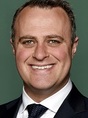
Tim Wilson Goldstein, Liberal Party, Shadow Treasurer
3:52 pm
Why is no-one talking about this? The Albanese government has been running interference for organised crime every step of the way. They've consistently blocked parliamentary inquiries into the role of organised crime, its connection to the CFMEU and the Labor Party cartel. We know, when there have been public projects where public money has been invested in building infrastructure and it's ended up in the hands of organised crime, the response from this government has been to turn around, open up the chequebook and ask how much the governments want to pass on through to the CFMEU and then organised crime. We know the Albanese government continues to run a protection racket for the super profits of organised crime around illegal tobacco.
Australians want to stop the illegal tobacco trade. They do not want a government that protects the super profits of organised crime for selling illegal tobacco. This is the fundamental problem with the Albanese government's approach towards illegal tobacco. The government thinks that it knows the answers by simply going down the pathway of law enforcement, and it does not matter how many times it fails, how many times it claims it's cracking down on the trade but all it sees is more organised crime making super profits as they ship more containers into our country and we see rates of nicotine consumption increase. We know full well that this government does not have a plan or a solution to the problems Australians are facing right now, and we know that it's because pride is getting in their way.
The Minister for Health and Ageing, the Prime Minister—they're all standing up there defending their former colleague Nicola Roxon's plan, which has catastrophically failed. It's taken a product that was regulated and that was taxed, and that money then went to support the health system—the consequences for people. There has been an absolute collapse in the revenue that is received from tobacco consumption. And what has that meant? Public revenue has gone down. The superprofits for organised crime from illicit tobacco have skyrocketed. But the cost to the health system has not changed.
So we don't accept any sanctimonious speeches by members opposite. We do not accept any morally superior position in their arguments, because in fact what they are inviting and they are tolerating is superprofits for organised crime from illicit tobacco sales and trading off the lives, the safety and the security, and the health of the Australian people. Their position doesn't just not make sense. It's dangerous, and Australians are living the consequences of it, one Molotov cocktail at a time, through the hundreds of businesses across this country that have been firebombed. Of course, there are the human consequences, as many members have outlined. Members in this place have constituents who have been taken off to hospital with burns from fire directly from these Molotov cocktails—these firebomb attacks on small businesses. We're not prepared to put up with it.
Sometimes reality gets in the way of a mad ideological objective. This government, so dominated by its progressive ideology—where they think they are the superhuman superpowers who can decide how the economy works and how society works—is confronting a brutal reality. Organised crime doesn't report its payments to the ATO, organised crime doesn't care about the health and wellbeing of the Australian people, and organised crime certainly doesn't care about the law. That's why they take this pathway.
It's time Australians saw through this government and the consequences of what it does. We know there's been a collapse in tax revenue. We know there's been an increase in the superprofits of organised crime. And let's not mistake this. When organised crime in this country makes superprofits, that then goes towards other illicit activities—illicit alcohol, gunrunning. And we know there's a direct connection between the illicit tobacco trade and financing terrorism, including from foreign interests, against the Australian mainland. This is the problem. We have a situation where our government is running interference and backing the worst of our society against the Australian people.

Zaneta Mascarenhas Swan, Australian Labor Party
3:57 pm
It is really interesting to hear the words of the member for Goldstein. I have to say that we are not here to back big tobacco, and it's clear that those opposite want to back big tobacco. Quite frankly, it's disgusting. Think about the children.
What the member for Canning brings to the House is nothing but a backhanded tactic that plays right into the hands of those who benefit from the decline in our nation's health, and that is big tobacco. It is disappointing to see those opposite use organised crime as a cover for the policies of the tobacco industry, and these are policies that big tobacco has wanted for years. As the Minister for Immigration and Citizenship said yesterday, the last thing this parliament should ever do is outsource its health policy to organised crime. This would see us as a country bending the knee to an industry that has spent decades hurting Australians.
Yet we have two parties in the parliament chasing each other's tails over who can cut the tobacco excise the most. We saw One Nation with a pledge to cut the excise by 75 per cent, and two weeks later the coalition—running after One Nation's policies yet again—said that they'll cut the excise by 80 per cent. We've been trying to say for some time you can't out-One-Nation One Nation. I guarantee we'll see a rise in daily smoking and vaping rates. This is the same coalition that raised the tobacco excise by more than 215 per cent when they were last in government, without a cent of it going to public health—outrageous.
Medical experts and academics have warned, as they have for decades, that smoking is the No. 1 leading cause of preventable death. Professor Simon Chapman, a public health professor at the University of Sydney, said this week that the single most important thing that a person can do for their health is quit smoking. Smoking kills 66 Australians every single day.
Those opposite want to legalise vapes, the gateway to smoking cigarettes. Those opposite want to do this to make sure that they see people hurt. Professor Mike Daube from Curtin University in Swan has led the fight against tobacco for four decades and warns that we are facing an extraordinary tobacco resurgence that risks undoing decades of progress and overloading our hospitals for years to come. Don't take my word for it. Listen to their own colleagues. The Nationals member for Mallee told this parliament that young people who vape are three times more likely to take up smoking. Even those opposite know that's what this policy does, and they are choosing to do it anyway. To put the cherry on the cake, they want to implement a $60 million public awareness campaign on the dangers of smoking. So what I'm saying is that they want to make smoking more prevalent by dropping the price and then spend a bunch of money to tell you how dangerous it is—absolutely absurd.
This excise is working to protect Australians. According to the 2025 National Drug Strategy Household Survey, daily smoking among adults has fallen to historic lows of less than six per cent. That's roughly half a million fewer smokers than there were three years ago. For the first time ever, daily vaping has stabilised at less than four per cent. As Minister Butler said, these results show our world-leading vaping reforms are making a difference. But we know that there's more work that needs to be done to protect Australians from the harms of smoking and vaping. This is a direct result of decades of deliberate public health policy. Since 1991, the number of Australians who've never smoked has climbed to its highest level on record, at 65 per cent.
Let me be clear. We are not denying that what is happening in Victoria and around Australia needs addressing. That is why the government has already committed more than $365 million since 2024 to stop illegal tobacco before it arrives, when it arrives and after it arrives in this country. We are making a difference, and this government's plan is enforcement, not surrender. Those opposite will not trade Australians' health for a quick, irresponsible fix.

Angie Bell Moncrieff, Liberal National Party, Shadow Minister for Youth
4:02 pm
Today we confront a problem that can no longer be ignored: Australia's booming illicit tobacco trade and the organised crime that it's fuelling. We've all seen the wave of firebombings across cities like Melbourne, where criminal syndicates fight violent turf wars to control the illegal tobacco and vape trade. Shop owners are being threatened and intimidated, businesses are being burned to the ground and innocent Australians are being caught in the middle. Just today we've seen another report of a suspected illegal tobacconist that has been firebombed, with innocent civilians in the apartments above fleeing for their very lives. This is the reality of the illicit tobacco trade, and we need to ask ourselves: how did we get here?
For years, tobacco policy has rightly been focused on reducing smoking and improving public health. It is a public health concern. We all understand the devastating health consequences of smoking, and none of us are suggesting anything else. But the reality is that increasing the tobacco excise has not eliminated demand or eliminated the health impacts on Australians. People are still smoking, and not just the regulated kind. As tobacco excise has risen and legal products become more expensive, an enormous gap has opened up in the market, and this has created a highly profitable opportunity for organised crime—one that criminal networks have been quick to exploit. Communities have lived the consequences of this: violence, intimidation, firebombings, fear and crime.
While those opposite sit on their hands and turn a blind eye, the coalition can recognise that something needs to change. Their policies are simply not working, and that's why we've committed to cutting the tobacco excise by 80 per cent. It's not about encouraging smoking, as those opposite would have you believe; it is about recognising that smoking addiction will continue despite regulation. This is about taking the oxygen out of the black market, reducing the profit flows to organised crime and addressing the violence that's spilling into our communities. The coalition's plan is about tearing down the business model that has allowed this organised crime to flourish, while strengthening enforcement and giving Australians access to properly regulated alternatives because enforcement alone cannot solve a market that's become this large and indeed this profitable.
Consequences of the illegal tobacco trade are not only being felt by our police and border agencies; they are also being felt by Australians who are doing the right thing. Just up the street from my electorate office is a local convenience store—just metres away. The owner is an honest small-business operator. He's doing everything by the book. He told me how his sales have dropped dramatically as the illicit tobacco trade has taken an increasing share of the market. I heard a similar story from a local newsagency in my electorate in Nerang. In an age of digital media, cigarette sales have for years provided an important source of income that has helped keep businesses like these afloat. Yet these local businesses find themselves at breaking point as a result of the illicit trade's market share. These businesses pay their taxes, these businesses follow the rules and they employ locals, yet they are being forced to compete with criminals who do none of those things.
This is why this issue matters. The illicit tobacco trade is not just about cigarettes; it's about the criminal networks profiting from them, the violence being inflicted on our streets and the legitimate small businesses being pushed out of the marketplace. It's also about whether this government is prepared to admit when a policy is no longer achieving its intended outcome. We don't see this government admitting failure on anything. And, let's face it, Australians know they have failed on everything.
We need stronger borders. We need intelligence led policing. We need to follow the money and dismantle the criminal networks behind this trade. But we also need to remove the enormous financial incentive that has allowed this black market to flourish. That's why the coalition's plan to cut tobacco excise by 80 per cent is so important. We cannot continue doing the same thing and expect different results. That is the definition of madness, and that is the definition of the Albanese Labor government. It's time we act—before it goes further.

Mike Freelander Macarthur, Australian Labor Party
4:07 pm
I really want to speak on this MPI. I've had a longstanding interest in public health policy, and included in that is involvement in antismoking campaigns—really, since the BUGA UP campaigns of the late 1970s, which not too many in this House would remember. But it was all about tobacco advertising and advertising of harmful products like tobacco.
It really is very sad to hear the coalition using focus group language, like when the member for Canning was reading out his speech, and cliches when talking about this policy, because there's been a longstanding bipartisan policy based on public health around smoking in Australia that all major parties have accepted for many, many years. It's very sad to hear what's happening in the coalition, but there's nothing much I can do about that.
I've had a long involvement, as I've said. When I was a young medical student in the 1970s, we were seeing the results of the peak of tobacco smoking which occurred in the sixties. Every major hospital's respiratory ward was full of patients with lung cancer. They were often in the prime of life but with terminal lung cancer or oxygen-dependent emphysema caused by smoking. Many of them would die. In fact, two-thirds of smokers die from the effects of smoking. This is a huge public health burden. Luckily, smoking rates have come down, and they're now at their lowest level ever.
I don't know from where the coalition are getting their figures, but the figures from the Australian Institute of Health and Welfare show that daily smoking rates are now well less than six per cent in Australia—amongst the lowest in the world.
Our public health policy is working, and smoking rates are coming down. Why would we want to go back to the times when cheap cigarettes were available and more people were smoking? The price signal is very important. Why would we want to get our vaping rates up by making vapes cheaper and more readily available? Why would we want to do that and get more of our kids nicotine addicted? That may be a gateway to smoking, but we now know—there's plenty of accumulating evidence, in fact—that vaping causes serious health harm, including lung cancer and including obstructive lung disease. Why would we want to go back to that?
Who wins when cigarettes become cheaper, which they will under the coalition, or when vapes become readily available? It certainly isn't our healthcare workers or our health system. Every public health authority in Australia and even overseas sees that a reduction in our excise on tobacco will lead to more people smoking. Why would we want to do that? Who wins? It's not the families who watched their loved ones struggle with smoking related illness, lung cancer, emphysema and cardiovascular disease. It almost certainly isn't the children we should be trying to prevent from becoming the next generation who are nicotine addicted or smokers.
Speaking about generations of smokers, the smoking rate in Australia has dramatically fallen and continues to fall. Our public health policies are working. The price signal is an important part of that, yes, but there are other factors involved as well, including education and better public awareness of the harms of smoking. Those opposite want to undo all of that. I don't understand why. I think it's very sad. It's very important that we fight against this.
Our government believes in enforcement. All governments around Australia need to engage with better enforcement. Yes, organised crime is a problem, but enforcement will help with that. There are lots of ways we could improve our enforcement policies. We need to look at the business models of organised crime. We need to empower our police to have the resources to be able to do that. But we must keep our smoking costs high so that the price signal stays. That is really important. Public health policy has been proven to work. The policies of those opposite have no evidence base at all. They are really a fight to the lowest level and must be opposed.

Sharon Claydon Newcastle, Australian Labor Party
This discussion has now concluded.