
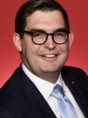
Ben Small Forrest, Liberal Party, Shadow Assistant Minister for Electoral Matters
6:51 pm
I move:
That this House:
(1) notes the Opposition's plan to put Australians first by:
(a) managing the budget responsibly;
(b) reducing debt; and
(c) making sure the Government spends within its means;
(2) recognises that when government spending is out of control, everyday Australians pay the price through higher taxes, higher prices and greater pressure on family budgets;
(3) further notes the Opposition's plan to place a speed limit on government spending, so that the Government does not keep spending faster than the economy can afford;
(4) acknowledges the Opposition's commitment to restore the tax-to-gross domestic product cap, so that:
(a) Government takes less from Australians; and
(b) families, workers and small businesses can keep more of what they earn;
(5) further recognises the Opposition's Tax Back Guarantee and Future Generations Fund as practical measures to help pay down debt, protect taxpayers and invest in infrastructure that benefits future generations; and
(6) calls on the Government to put Australians first by:
(a) easing pressure on households and small businesses;
(b) strengthening the budget; and
(c) making responsible decisions that protect Australia's future.
Despite the mess that we find this country in tonight, we on the coalition side believe that Australia is worth fighting for. We believe that our strong plan to fix our economy and protect our way of life is what the country needs to again ensure that our country's best days lie ahead and that tomorrow might be brighter than yesterday. While debt is now $1 trillion, with an interest bill that Australians have to pay of some $50,000 a minute—a staggering amount of money that would buy every house in Western Australia today—it's our kids that will have to pay for it if something isn't done. That's why our plan for lower taxes, lower debt, better government and a system that puts Australians first is what the country needs. As I say, our plan is exactly that—to fix the economy and to protect our way of life and we'll step through it because ultimately it deals with the problems that this Labor government has caused for our country today.
They say that there are two certainties in life, and we know what they are: death and toxic taxes from a Labor government. We know it to be true because, every time they make an election promise on taxes, we find that they break it in office. We all remember former prime minister Julia Gillard loudly declaring on national TV, 'There will be no carbon tax under a government I lead,' only, on the other side of the 2010 election, to have exactly that. And of course, just recently, before the 2025 election, Prime Minister Anthony Albanese said, 'How hard is it? For the 50th time, no, there will be no change to the taxation arrangements around housing and investment in this country.' Well, we've subsequently discovered he's changed his position, and yet again we see a Labor government breaking a promise made solemnly before an election so it can introduce taxes afterwards. It's a tale as old as time, and somehow it's more consistent than our poor old Fremantle Dockers. When Labor run out of money, they come after yours.
It means that households in Australia are currently being made to live within ever-diminishing means, because our real standard of living is declining at a faster rate than anywhere else in the developed world. And yet, for the government, the spendathon continues. The RBA has said that government spending was too high and directly contributing to the inflation that we see raging in the Australian economy—higher prices for everyday Australians who are already struggling with the cost of living.
That's why it's so important that our plan includes measures to get spending under control. It's simply not fair to rack up a huge credit card bill and leave it to the kids to pay off. So we'll put a speed limit on spending so that government can't grow faster than the economy. It has the added bonus of giving every Australian an automatic tax cut every year. It's not at the whim of the government of the day but an automatic tax cut worth $250 in the first year and more than $1,000 by year four, growing bigger and bigger.
We'll end Labor's corporate welfare, like the National Reconstruction Fund, hiding behind veils of secrecy. Of course, we'll end the madness of the EV tax rebate that makes a Tesla cheaper for a surgeon than a nurse. We'll bin the Net Zero Economy Authority and the Rewiring the Nation Fund. We'll consign the failed housing bureaucracy to where it belongs, because the Housing Australia Future Fund, on the government's own numbers, will miss its target by more than 220,000 homes. We'll take the National Construction Code, which now has more than 2,000 pages telling our builders how to build houses, and slash that red tape to just 200 pages. We'll reserve future access to some 17 welfare programs and the NDIS for Australian citizens only because it is right that our citizenship is the most exclusive club in the world and that that membership should come with benefits, indeed. We'll end Labor's assault on aspiration in the economy because we understand that it's small business that generates wealth, prosperity and jobs in this country. We'll end the inflation tax. We will see our future generations fund putting money away from our resources for our kids tomorrow. That's our plan to fix the economy and protect our way of life.


Simon Kennedy Cook, Liberal Party, Shadow Assistant Minister to the Leader of the Opposition
I second the motion and reserve my right to speak.

Claire Clutterham Sturt, Australian Labor Party
6:56 pm
I welcome the opportunity to outline the 'Australia first' agenda of the Albanese Labor government with respect to easing pressure on households and small businesses, strengthening the budget and making responsible decisions that will protect Australia's future. Work to ease pressure on families is always ongoing and always involves tax cuts. Since coming to government, we have repeatedly implemented these tax cuts. The $1,000 instant write-off and putting in place the long-term architecture to support the working Australians tax offset are examples. Complaints that the tax cuts are too small or ineffective are out of touch. Every tax cut on income earned by working Australia speaks to a policy of keeping more of what you earn, and the wage growth in this country—in particular, the deliberate wage increases for nurses and early childhood educators, to name a few—speaks to a policy of earning more. You regularly hear that refrain of 'earning more and keeping more of what you earn' in this place because that refrain underpins this government's policy agenda. Labor's tax cuts are sustainable, do not risk cuts to services through lower revenue and, particularly with the working Australians tax offset, are scalable when the settings, particularly the inflationary settings, are right.
The impact on the budget's bottom line of the coalition's tax back guarantee, which indexes tax thresholds to inflation, has not been explained. Similarly, a coalition plan to tackle inflation in the face of complex, unpredictable and constantly changing global events has also not been articulated. What has been explained is how this government backs small businesses. Loss carry-back provisions which may result in a cash refund, a reduced tax liability or a reduction of a tax debt are a practical policy that meaningfully assists small businesses. Small businesses will also benefit from the $20,000 instant asset write-off, which is applicable on a per-asset basis. So small businesses can instantly write off multiple assets. Up to 90 per cent of small businesses will also benefit from the four capital gains tax exemptions.
Strengthening the budget relies on finding efficiencies and finding savings. In the most recent federal budget, circa $64 billion of savings were found, meaning more can be done to ease pressure on families, which we have seen with fuel price relief, hospital funding, cheaper medicines and, yes, tax cuts. Also, Australia remains one of only nine countries with a AAA sovereign credit rating from all three major ratings agencies, with lower gross debt than every major advanced economy. That is a powerful endorsement of this government's fiscal and economic agenda not because it's the highest available rating but because it carries with it the lowest possible expectation of default risk. The sovereign AAA rating is a measure not just of whether a country is good for the money but of how it is faring politically, economically and financially, and of how resilient it is to adverse events outside of its control. S&P's opinion was that Australia's fiscal performance is sound, with modest public debt by international standards and with an ambitious and reformist agenda to shore up and improve Australia's fiscal position over the next decade. Finding savings, finding efficiencies and reprioritising targeted spending means that gross debt is down from what we inherited. Indeed, debt last year was almost $200 billion lower than the trajectory we inherited.
This government makes decisions every day that protect Australia's future, and none is more currently prominent and important than the government's deliberate strategic decision to focus on our national security through building relationships with our partners in the Indo-Pacific region and beyond. We were able to draw on these relationships such that there have been no fuel restrictions in this country because of the Iran conflict. Our region is also stable and secure because we're investing in the economic prosperity of our neighbours. We don't have health care, education, tax cuts and AAA credit ratings if our region is unstable and affected by conflict. This government will continue to make decisions to shore up our regional security, because to do so means protecting Australia's future.
Simon Kennedy Cook, Liberal Party, Shadow Assistant Minister to the Leader of the Opposition
7:01 pm
Australians don't need another lecture from Canberra about living within their means. People in my electorate have been doing it for years. They're making decisions around the kitchen table every week—what can wait, what expenses they can defer, what they can cut. Can they afford insurances? Do they skip insurances? Do they put the kids in sport? Do they move them from private schools to public schools? Small businesses around the electorate of Cook are closing in rapid rates. We've seen Caringbah hollowed out, with businesses leaving the main street. We've seen it in Jannali. We've seen it in strip malls all over the electorate of Cook.
Last year, I told this House about a pensioner in my community who couldn't afford his electricity bill. I had to pass him on to Wesley Mission to pay it so he could keep the lights on, the fridge cool and the stove working. I spoke about FJP Manufacturing, where electricity costs had risen by more than 70 per cent in two years and gas costs by more than 50 per cent. They used to have seven apprentices; they're down to one, and they're risking shutting up shop. The owners watched the number of tradies in the business fall from seven to three, and they fear it could fall to zero. They understand something this government seems to have forgotten: there's no such thing as an unlimited budget.
The Albanese government has brought Australia's debt to over $1 trillion. This money, and the money now spent servicing the debt, could be used for funding better roads, hospitals or defence capability. The first principle is simple: government spending should not keep growing faster than the economy that has to pay for it. The coalition has proposed a spending limit that would put a guardrail around expenditure growth. This means recognising that every new program, every expansion and every permanent commitment must ultimately be paid by someone—a taxpayer, a business or a hardworking family. Usually, that taxpayer is an Australian.
Income tax is now the highest percentage of our GDP that it's ever been. That means average everyday Australians are paying more than they ever have. They're getting screwed by this government, and they know it. They know it when they see it in their pay packet. They know it when they look at their bank statement and wonder how they're going to pay the mortgage payment. They know it when they look in their kids' eyes and wonder whether they are going to be able to provide for their children's future. They know it when they have fights over the kitchen table at night because of the pressures their families are under. They know it because they worry about the future of this country. They know it when they browse through Seek and look for other jobs, trying to find another job that could pay them the five or 10 per cent that might pay for next month's mortgage rate increase—or the second one that many banks are predicting later this year. They know it when they feel anxiety in the morning, when they wake up and think, 'How am I going to get through this month's expenses?' They know it when they despair about which political party they're going to vote for. They know it when they're forced to vote for different political parties than they may have grown up thinking of supporting, because they're despairing. They're wanting to junk the system because this government isn't delivering what it promised—and we're all paying the price.
The coalition want to give people back control of their own lives, give them the feeling that they can have their hands on the steering wheel and take control of their life. That's why we'll look to give them a tax cut every year for the rest of their lives—a lifetime tax cut. Every single year you will have more of your money back in your pocket; that's our tax back guarantee. This would mean the two lowest income thresholds would be linked to inflation, protecting 85 per cent of income earners from being pushed into a higher tax bracket every year. This is a practical response to Labor's stealth tax. They call it bracket creep. It is a silent income tax increase on you every year. Yes, your mortgages are going up. Yes, your insurance is going up. But what they hide is that your tax and income tax goes up every single year. We'll stop it. We'll give you a tax cut this year, next year and the year after, every year for the rest of your life—and they all build on one another. We want to give you back control. We want to give you power around your own life and your decisions, to empower you to look after yourself and your family.

Julie-Ann Campbell Moreton, Australian Labor Party
7:06 pm
Australians better watch out when the member for Cook and the coalition start using phrases like 'spending limits', because when they say things like 'spending limits' what they mean is 'cuts'. How do Australians know that? They know it because they have seen it before. They know it because when the axe came down on health care, it hurt everyday Australians. They know it because when those opposite offshored manufacturing, Australians lost their jobs. They know it because when those opposite took the scissors out and chopped up education, people suffered.
When I look at the private members business today, what is clear is that I do agree that the opposition has a plan for Australians; that much is true. But when I look at the dot points that the member for Forrest has set out—(a), (b), (c)—I think they need a little bit of a revision. Point (a) is that part of the coalition's plan is to increase taxes for every Australian. We know it because they voted tax cuts down again and again. Point (b) is that the coalition may pontificate on cutting spending, but what they really mean is that they are going to put to the chopping block the social services that Australians need—and they refuse to tell us what those cuts will be. And to point (c), we know that they are hell-bent on ripping up the general compact for retirement that every Australian relies on in superannuation. Their plan means that an aged-care worker looking after our parents and our grandparents will have to stump up more taxes. The coalition's plan means that money will be ripped out of health care again. And the coalition's plan means pinching a boilermaker's superannuation, reducing it by tens of thousands of dollars when it counts, at the point of a dignified retirement. What is clear is that if you had to sum up the coalition's plan, it is a plan for higher taxes, it is a plan for lower wages and it is a plan for bigger deficits and more debt.
Let's talk about Labor's responsible economic management in contrast to what we have seen and heard from the coalition. The budget is nearly $45 billion stronger than the mid-year update and more than a quarter-of-a-trillion better than we inherited in 2022. There are $64 billion of savings in this budget—more than any other on record. Debt has decreased from the mid-year update, and last year was almost $200 billion lower than the trajectory we inherited. It will peak at 35.8 per cent of GDP—9.1 percentage points below the peak that we inherited from the coalition.
This responsible budget management has enabled Labor to cut taxes five times in three different ways, putting nearly $3,000 a year into the pockets of the average worker by 2028; it supports 75,000 more Australians into that elusive housing market; and it delivers over $3.8 billion in new measures that lower taxes for businesses and for start-ups.
So let's call this motion out for what it is: a dishonest one and one that fails to recognise the actions and track record of a coalition who for years have only sought to cut, who for years have only sought to vote down tax cuts for everyday Australians, and who for years have failed to live up to the expectations of what working people deserve, which is someone in their corner. It is a continuation of coalition strategy to talk down our economy and attempt to divide our community, to distract from the fact that they voted for higher taxes on workers and promised bigger deficits and more debt while cutting what matters to people the most: health and education.
Helen Haines Indi, Independent
( ): The time allotted for this debate has expired. The debate is adjourned and the resumption of the debate will be made an order of the day for the next sitting.