
House debates Motions
Tertiary Education and Training

Michael McCormack Riverina, National Party
4:46 pm
The motion moved by the member for Holt is an interesting one, and there's a bittersweet irony to this particular motion about Commonwealth practicum payments because on one hand Labor is asking the parliament to congratulate it for giving students cost of living relief but, on the other hand, we've got four years of hardship because of the cost-of-living crisis. Perhaps no-one feels this more than some of those students who are doing their best to go and educate themselves, to get that degree, to get that certificate. Quite frankly, it doesn't matter whether it's a tertiary or a TAFE education that they're receiving; I believe it's worth the same, because not every young student is geared to go to university. For those who go to TAFE, I say good on them, and they should, when they graduate, when they finish their course, hold that piece of paper up, because it is worth every bit as much as the university degree.
Now, the Minister for Education visited Wagga Wagga and the Charles Sturt University campus in early August, and he had productive discussions with the university and with students, and I thank him for coming. He alerted me to the fact that he was going to the university before his visit, and that's always good courtesy, and he was launching the Connected Pathways Program as a bridge between university and TAFE. I acknowledge this initiative. I do. But what I also acknowledge is the fact that what we need to do is place veterinary students, of whom there are many at CSU Wagga Wagga, to get Commonwealth prac placements support, because many of those students are doing it tough.
Wagga Wagga has, I think, the best veterinary course in the country. Others might beg to differ, but let me assure you that that course is looking at animals from the smallest pet mice to the largest draught horses and everything in between. Those students that CSU are producing are the best of the best. Certainly, for regional areas, we understand perhaps more than most the importance of animals—farm animals and, dare I say, racing animals. But the students are learning everything, and they're great young people, but they need support. It is not right that many of them are coming from far-flung places and just can't seem to get the rent, to get the accommodation, and they really desperately need that help.
So I've implored the minister to go back to the drawing board. It's good that he's put those other courses onto that prac placements program support, but he also needs to very much add veterinary students to it, because they're undertaking lengthy, compulsory placements. Often those are in country areas, often in rural communities, where the need for vets, as I said before, is greatest. Veterinary students are doing the hard yards to become the vets for our farmers, our livestock producers and our regional communities. They shouldn't be forced to choose between completing their compulsory placements and, quite frankly, putting food on their own table.
About 60 to 65 vet science students graduate from CSU Wagga Wagga every year, and this is a fascinating statistic—90 per cent of them are choosing to stay in a rural and regional location. They know the work is there. They know that the opportunities are there. They know that they can make money there, but they desperately need help at that time of compulsory placement, and the government can do that. They can do that with a click of a finger, with a signing of a pen, and it's up to the minister to do just that, because our veterinary students need that support.
But don't just take it from me. Final-year CSU veterinary student Hannah Chick said studying in a rural area came with additional financial and logistical challenges, particularly when it came to completing compulsory placements. Her words were compelling. I implore the minister to look at not just student Hannah Chick but all of her cohort and many others in the future who will decide that veterinary is for them but may turn against it if they cannot support themselves financially.

Cassandra Fernando Holt, Australian Labor Party
I understand the member for Pearce would like to present a copy of her speech for incorporation into Hansard, in accordance with the resolution agreed to on 6 November 2025.

Tracey Roberts Pearce, Australian Labor Party
4:52 pm
() (): The incorporated speech read as follows—
I would like to commend the Albanese Labor government for investing a further $158.4 million to expand the Commonwealth prac payment to students training in 10 additional frontline health professions. From 1 July 2027, this expansion will build on paid prac already available to eligible teaching, nursing, midwifery and social work students, with around 95,000 students expected to receive support each year. In Pearce, practical placements are a significant part of health degrees, making up more than a year of study in some courses. For our students at universities across Perth and beyond, those placements are not optional extras—they are the gateway to registration as physiotherapists, clinical psychologists, paramedics, occupational therapists, speech pathologists, radiographers, pharmacists, rehabilitation therapists, audiologists and podiatrists.
But placement poverty is real. Students in Pearce have told me that, when prac starts, they often have to cut back their hours at work or give up their paid job altogether. Some have had to sleep in their car so they could afford to do their prac. The grocery bill doesn't stop. Neither do the costs of petrol and parking. The rent doesn't stop, and sometimes it has to be paid in two places—at home and where you do your placement. That financial pressure can discourage students from undertaking placements in regional and remote Australia, where health workforce shortages are often most acute. For families in the northern suburbs, the eastern suburbs and the coastal communities of Pearce, that means fewer local options for allied health care, longer wait times and more pressure on our GPs and hospitals.
Eligible students currently receive $338.60 a week, benchmarked to the single Austudy rate and indexed annually, providing real cost-of-living relief while they undertake mandatory placements. From 1 July 2027, that same support will be available to students in 10 more key frontline health professions: clinical psychology, physiotherapy, occupational therapy, speech pathology, paramedicine, radiography, pharmacy, rehabilitation therapies, audiology and podiatry. These are the people who look after us when we're sick, who help us recover from injury, who support Australians living with disability and who rush to our aid in an emergency. We need more of them in Pearce, in Western Australia and across the country.
For a radiography student from Mindarie or a paramedicine student from Wanneroo, this payment can mean the difference between completing their qualification or not. It means they can spend less time worrying about paying the bills and more time focused on their training. It makes it easier for students to take up placements in the bush, where the costs of travel, accommodation and relocation can be even greater. Expanding the Commonwealth prac payment will help more students complete their qualifications, growing the health workforce Australians rely on and strengthening Medicare. A stronger Medicare needs a strong health workforce. We need more physios, psychologists, pharmacists, paramedics, occupational therapists, speech pathologists, radiographers, audiologists, podiatrists and rehabilitation therapists, especially in communities like ours.
This is the type of policy only a Labor government would deliver—cost-of-living help that also strengthens Medicare. Labor created paid prac. At the last election, the Liberals wanted to get rid of it. They still do. We created it and we're expanding it. They want to get rid of it. Paid prac is just one of the ways we are helping with the cost of living: cutting student debt by 20 per cent, free TAFE, tax cuts for every taxpayer, cheaper child care, expanding paid parental leave and backing wage rises. We're helping with the cost of living, making it easier for Australians to get the skills and qualifications they need and building the health workforce Australia needs.
To the students of Pearce studying to be our next generation of allied health professionals: the Albanese Labor government sees you, we hear you, and we are backing you. Your placements are not a barrier to be endured; they are the foundation of a career that will serve our community for decades. And, from 1 July 2027, you will have more support to get across the line.
I commend the motion.
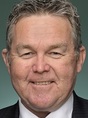
Colin Boyce Flynn, Liberal National Party
While I support the Commonwealth prac payment and its intent, the reality is that there are students in my electorate of Flynn who will not be able to access it. These are the students who are choosing the vocations that Flynn desperately needs our young people to study and succeed in. We need nurses and teachers. We need midwives to help return birthing clinics and maternity services to our regions. We need allied health professionals who want to live in our regional areas, become part of our communities and raise their families there.
There is something special about a student who grows up in a regional community. They understand it, and they know what it means to live hours from a major hospital. They know what it means when a local service cannot find the professional that it needs. And they know that their communities support their education and they want to see them succeed. Many of them want to come home. They want to bring their skills back to the towns that raised them. That doesn't just fill a vacancy; it strengthens the same community. It gives the next generation someone to look up to and say, 'I can do that too, and I will do it here.'
I heard about this issue from Grace, who is studying nursing and wants to go on to become a midwife. Grace is training for a profession our regional communities desperately need. But, when she undertakes her compulsory placements, the cost of everyday life does not stop. She still needs to pay her rent, she still needs to put fuel in her car and she still needs to buy her food. She will need to travel significant distances to complete each placement and potentially pay for accommodation away from home. Like many students, she may need to continue working wherever she can just to support herself.
This is where the reality of regional education matters. For many students from Flynn, a placement is not just a trip across town. It means hours on the road, time away from home, additional accommodation costs and loss of income from paid employment. The Commonwealth prac payment recognises that these mandatory places can often create a financial barrier to these students completing their studies. We need to make sure that these students facing that barrier are not the ones who fall through the cracks, because a regional student should not have to choose between completing a qualification their community needs and being able to pay their bills.
I welcome the government's recent expansion of Commonwealth prac payments to additional allied health professions. That is a positive step. But for regional Australia the question is: have we gone far enough—and we should go further—and why does this expansion not include GPs? Our regional GPs are already struggling with a lack of support as they age. The pipeline of medical doctors does not reach the regions, and our more senior GPs have been raising this issue for decades. This is not a new issue. There are many GPs in their 70s who are still serving their communities long past what most people would consider a reasonable retirement age.
The Commonwealth prac payment must help support the next generation of GPs. It should include specialists like optometrists and even veterinary students. These are services that regions like Flynn are desperate for, and this Labor government needs to recognise this by supporting their inclusion. Practical hands-on placements are an essential component of these occupations. It gives students real-time exposure to the role and the opportunity to work with mentors and form relationships and networks in these industries before they graduate.
We need policies that recognise the additional costs that regional students will face, particularly when their compulsory places take them away from home. This is about more than just a payment. If a young person has the ambition to study, the determination to work and the commitment to return home to a regional community, government policy should be helping them across the finish line and not putting other hurdles in their way. We need to make sure our young people can finish their training, return to the regions and help build the future of the communities they already call home.
We should not have to import these skills. We should be growing our own skills here in the regions. We should be bringing these qualifications home, and we need to put Australians first. We need to support our regional students to achieve tertiary education outcomes and, in turn, bring a better and brighter future to regional Australia.

Trish Cook Bullwinkel, Australian Labor Party
4:57 pm
Before entering this place, I spent decades on the front line as a registered nurse and midwife. I know firsthand the sheer volume of hours, the emotional weight and the intense physical commitment it takes to earn clinical qualifications. Later in my career I had the immense privilege of lecturing enrolled nurses at the TAFEs in Kalgoorlie and Northam. Then, at Edith Cowan University, I also taught and mentored the next generation of registered nurses.
In those classrooms and simulation labs, I saw the extraordinary passion and drive of our students. But far too often I also saw the profound stress etched onto their faces. They weren't burning out because the coursework was too hard or because of their lack of dedication. They were burning out because placement poverty is real. When mandatory practical placements start, students are required to do full-time hours across hospitals, clinics and care facilities. To do that, they may have to cut their shifts at their regular job or resign entirely, and these are often highly feminised workforces. Of course, the grocery bills do not stop, petrol and parking fees do not stop, and rent certainly doesn't stop.
We have heard heartbreaking accounts of dedicated students sleeping in their cars because they cannot afford to do their required prac. This is why, in 2024, the Prime Minister and our Labor government introduced paid prac. For the first time in our nation's history, the Australian government stepped up to provide financial support to eligible nursing, midwifery, teaching and social work students undertaking mandatory placements. Since its rollout, it has made a huge difference, alleviating the grinding pressure of daily living costs so students can focus on developing their clinical and professional skills. It has meant the difference between dropping out and walking across the graduation stage with a qualification in their hand.
From 1 July 2027, we're expanding paid prac to include eligible students from across 10 additional frontline allied health professions, including clinical psychology, physiotherapy, OT, speech pathology, paramedicine, radiography, pharmacy, rehabilitation therapies, audiology and podiatry. These are the professionals who treat us when we're unwell or after a severe injury, and they're the ones who rush out to us in emergencies.
We cannot build a health system that relies on people to bear the brunt, especially during this time of cost-of-living issues. We are building a stronger Medicare and a stronger workforce, but with practical financial support for these healthcare workers of the future, who are really going to take on the tsunami of older baby boomers, like myself and Bob, who are heading towards health care very soon. So, we need these nurses, midwives and aged-care workers to work in our aged-care facilities, to work in our hospitals and to work in regional areas. That's why, regardless of your financial background, we are helping to train and graduate carers for our communities. I commend the motion to the House.

Mary Aldred Monash, Liberal Party
There being no further speakers, the debate is adjourned and the resumption of the debate will be made an order of the day for the next sitting.