
House debates Private Members' Business
Private Health Insurance

Anne Webster Mallee, National Party, Shadow Minister for Regional Development, Local Government and Territories
11:59 am
I move:
That this House:
(1) notes that:
(a) private health insurance is an important component of Australia's health care system, providing greater choice while reducing demand on the public system;
(b) more than 3.1 million Australians aged 65 years and over hold private hospital cover, with many maintaining it over decades to provide greater certainty over their healthcare as they age;
(c) the Government's proposed changes to the private health insurance rebate for Australians aged 65 years and over will increase the cost of private health insurance for older Australians;
(d) on 12 August 2026, National Seniors Australia (NSA) released the results of a survey examining how older Australians may respond to the proposed rebate changes;
(e) of the 2,042 respondents:
(i) 8.4 per cent indicated they were considering dropping their hospital cover; and
(ii) 12.5 per cent were considering reducing their level of hospital cover;
(f) NSA estimates that, if the survey findings were reflected across the wider population, up to 270,000 older Australians could drop their hospital cover and up to 400,000 could reduce their level of cover, significantly exceeding the Government's estimates;
(g) NSA reports that the real cost could exceed $1,000 per year for a couple holding gold hospital cover;
(h) older Australians, particularly pensioners and those on fixed incomes, should not have to choose between maintaining health insurance and paying for the essentials; and
(i) measures that encourage older Australians to downgrade or discontinue private hospital cover risk transferring additional demand to an already stretched public hospital system, with potentially disproportionate consequences for rural and regional patients; and
(2) calls on the Government to:
(a) release transparent modelling of the expected impact of the changes on:
(i) private health insurance premiums and participation;
(ii) older Australians, including pensioners and people with gold hospital cover;
(iii) the number of full aged pensioners who will be forced to pay more for private health insurance;
(iv) demand for elective surgery and other services within the public hospital system; and
(v) rural and regional health services; and
(b) explain the discrepancy between the Government's estimated financial impact and the potential costs and behavioural responses identified by NSA.
I rise to speak on this motion and present this motion to call out the Albanese Labor government's failure yet again to understand that Australians are not stupid. They treat Australians as though they're stupid. This cut to the private health insurance rebate for those over the age of 65 is a hit on older Australians. What the government says is that this is actually going to benefit older Australians, because the $3 billion of thought savings will go into aged care, but what we know is that the numbers just don't stack up.
The simple question Labor cannot answer is: how many older Australians will be worse off under this change, and what will happen when some of them can no longer afford private health cover? More than 3.1 million Australians are going to be impacted by this cut to the rebate. Of those, 1.2 million Australians are pensioners. These are people who do not have a wealth of funds behind them to pay increases of up to $1,600 for a couple. That is a huge difference when you are living on a small amount each week in a cost-of-living crisis where people cannot afford to put food on their table and they cannot afford to turn the heater on. To keep their private health insurance going is a priority for our older Australians because they know that the body breaks down as you age and that you do need surgeries, such as hip replacements, knee replacements and cataract surgeries. These all cost money.
What the Labor government has failed to acknowledge here is that it will simply cause a greater burden on the public health system. The estimation by National Seniors is that 400,000 people will reduce their cover, often taking them out of gold to silver, which will mean that those surgeries will not be able to occur, so they'll go onto the public health surgery waiting list. National Seniors Australia estimates 270,000 will drop their cover altogether. This is not good for anybody. Even our state premiers are calling this out as a bad decision. It is not a smart decision for the budget. It is not a smart decision for health care for our older Australians.
While the minister, Mark Butler, would like to say that this is about equity and intergenerational fairness, no, it's not. Australians who are older than 65 have been paying into their private health insurance for decades. That's called investment—investment in their future. It's called being responsible for their future so that they can look after their own health care as they age. Now what we have, according to the minister, is fairness, where young people who are in their 20s and 30s will actually be paying the same amount as those over 65. We paid that amount when we were 25 and 30 and 35 as well. It is not a fairness issue. It is about taking money from those who are over 65. It's about reducing that responsibility and rewarding that responsibility of our over-65s.
Labor gaslights Australians once again, saying changes will be marginal—read 'nothing to see here'. If that is so, why won't the minister release the modelling? If older people drop their private cover, they will have no choice but to join the queue in the public system, which matters everywhere but is diabolical in regional and rural areas. Out in the regions, we do not have enough doctors. We do not have enough hospital beds. We do not have enough allied health. Out in the regions, when people drop their private health cover, it is often the only way they're going to get surgery in under two years, and it means that they will have to travel to other centres in order to get that care that they need. This is not only not fair but also completely unjust.
The New South Wales minister for health stated that this burden is likely to be $100 million on the New South Wales state health budget. That's pretty significant, and that's one state, let alone the other states. So this is robbing Peter to pay Paul, and it is fundamentally unfair.

Cassandra Fernando Holt, Australian Labor Party
Is there a seconder for this motion?

Monique Ryan Kooyong, Independent
I second the motion and reserve my right to speak.

Shayne Neumann Blair, Australian Labor Party
12:04 pm
Well, here we go again. Those opposite are confecting outrage and scaremongering, all designed to create fear and anger among one section of the community—namely, older Australians. Frankly, we're not going to take lectures from the Liberal and National parties, whose record on health care was totally abysmal when they were in government. 'A hit on older Australians', the member for Mallee says. I can tell you what they did when they were in government. They cut $80 billion out of health and education funding in primary health care and assistance to Australians.
The member for Mallee got elected in May 2019 but campaigned for a party that did the following. In the 2014 budget, Joe Hockey, the then member for North Sydney and treasurer, was the one that cut the tens of billions of dollars out of health funding for this country. They were proposing to introduce a GP tax. That is, they were proposing to increase the cost for primary health care for older Australians to the tune of $7 every single time they visited a GP. Then they froze the Medicare rebate to doctors, forcing doctors to charge more for people to see them, older Australians in particular. So we're not taking lectures from the Liberal and National parties.
Also, now in opposition, they've opposed the urgent services and proposed cutting services like the Medicare urgent care clinics, and they opposed the 60-day scripts for older Australians who are getting PBS medicines. So it's confected outrage. 'We're really worried about aged care. We're really worried about health care for older Australians.' That's just complete nonsense. It's tosh. They're not worried about it at all. When in government, they never talk about it. There's political amnesia from the Liberal and National parties on this topic, because they have an atrocious record in health care.
Our proposals to the private health insurance rebate are both fair and fiscally responsible, considering the government spends $8 billion a year on the rebate to help keep private health insurance more affordable and take pressure off our public health system. Our changes will address intergenerational inequity and simplify and target the rebate more fairly. They're going to remove the higher rebate for people 65 years of age and older.
Let's not forget the history of the current arrangements, because, of course, the member for Mallee never talked about it. I'll tell you what happened. In the lead-up to the 2004 federal election, when it was raining gold bars from the China and mining boom, the then prime minister John Howard decided, in a blatant pitch for votes, to increase the private health insurance rebate but only for Australians over 65 years of age. The higher rebate for people that age and above meant that two houses on the same income received different levels of government rebate based solely on their age. The fact is that older Australians are more likely to retain private health insurance and they receive significantly higher benefits on average than younger Australians, so the rebate is clearly poorly targeted and isn't fulfilling its purported purpose—to incentivise take-up. We need to restore the original purported intent of the policy.
On top of this, the current modelling is simply not the best way nor the wisest way to spend precious taxpayers' money on behalf of older Australians when they significantly need greater aged-care services, which we're doing, and greater public hospital funding, which we're doing. The rebate will remain means tested, paid at a higher rate for those on lower incomes, which I might add was a change that Labor made in 2012 and opposed by the coalition at the time. This is all about making sure all Australians receive the same private health support based on income, not age. The government estimates this measure will generate about $3 billion in critical savings, which we'll use to deliver more residential aged-care beds, more Support at Home packages, shorter waiting times and better care for older Australians.
But I didn't hear a word of that from the member for Mallee, nothing at all, and no support for that proposal either from the coalition as well. This will allow more people to access aged care, address delayed discharge from hospital or bed block, as the premiers like to talk about, and provide dignity and care to older Australians towards the end of their lives. We are cleaning up the shocking mess that left people living in residential aged care malnourished and some starving. The title of the interim report of the royal commission was one word—Neglect. That's what happened. They kept on taking money from residential places. These are the people that cut the dementia supplement and the veterans supplement when they were last in, so don't give us this nonsense about being worried about older Australians.
Monique Ryan Kooyong, Independent
12:09 pm
Australia's private health insurance system is far from perfect. Every year we pay more and we get less. There is a very good case for better regulation of the private health insurance industry in Australia, but that is not what the government is attempting here. More than 160 of the 171 submissions to the Senate inquiry into this bill to reduce the private health insurance rebate for over-65s opposed the legislation in its current form. That is 94 per cent of submissions that opposed the bill. Only seven submissions supported the bill. Nearly every major medical and health stakeholder opposes this bill in its current form. That includes the Australian Medical Association, Australian Private Hospitals Association, Private Healthcare Australia, National Seniors Australia and the Council on the Ageing. Doctors, hospitals, insurers, health experts, seniors organisations, consumer advocates, state governments, pensioners and self-funded retirees all oppose this bill.
The overwhelming concern is not protection of wealthy retirees, as the minister would have us believe. It is about the impact on older Australians who are living on fixed and modest incomes. Pensioners and modest self-funded retirees are facing rising living costs, rising insurance premiums, rising out-of-pocket medical costs and growing healthcare needs. Many of these individuals have maintained their private health insurance for decades in good faith. They have paid their premiums throughout their working lives, often when they had little need for the system. They made that choice because the governments encouraged them to take responsibility for their own health care and because they were trying to do the right thing to reduce pressure on the public hospital system. Now, as they enter that stage of life when their health care needs are increasing, their health insurance is set to go up by hundreds of dollars every year.
This government is arguing people won't drop their cover because demand is price inelastic, but price inelasticity doesn't mean that the cost is easier to bear. It just means that people are going to have to sacrifice essentials rather than go without their health care. Retirees in Kooyong are already telling me that they are cutting back on meals, entertainment, travel and other expenses to afford the rising cost of health care. This private health insurance rebate hit is another hit when they're already struggling with a slow, hostile and opaque aged-care system. Evidence to the Senate inquiry said that pensioners could make up more than half of those who are projected to have to drop their cover because of this bill. In fact, the bill will affect those people who are least able to absorb the additional cost of care.
The concern is not just that people will cancel their insurance; it's that they're going to be forced to downgrade. Some modelling suggests that 200,000 people could be forced to downgrade their gold cover as a result of this legislation. The government is not releasing its modelling, despite repeated requests that it does so. Downgrading from gold to silver means losing insurance cover for your cataract surgery, your hip replacement, your knee replacement, insulin pumps, sleep studies, rehabilitation and mental health treatments. It's going to push people into the public system or it will lead them to forgo care altogether. We know that delayed and forgone care can carry serious downstream implications.
It's not just public hospitals I'm worried about. Private hospitals perform the majority of elective surgeries in this country. Many are already operating on very thin margins. ABS data shows that the sector recorded its first ever full year operating loss in 2023-24. At least 80 private hospitals have closed in this country since 2020. That includes maternity services, mental health services and general acute services. This bill will accelerate that trend. It's not a saving; it's a transfer. Every dollar taken off the rebate resurfaces as a longer wait for a hip replacement, another private hospital closing or a state government that has to foot a bigger public hospital bill.
I support the almost unanimous calls to ensure that pensioners and low-income retirees are protected from this legislation. And, yet again, I am calling on the government to release the full modelling for this bill, including what proportion of savings will be achieved from short-changing pensioners and vulnerable low-income retirees. I want the government to release its modelling on the impacts on waiting times and the demand on public and private hospitals. I want it to be honest with older Australians.
Cassandra Fernando Holt, Australian Labor Party
I understand the member for Pearce would like to present a copy of their speech for incorporation into Hansard, in accordance with the resolution agreed to on 6 November 2025.

Tracey Roberts Pearce, Australian Labor Party
12:14 pm
The incorporated speech read as follows—
Private health insurance is an important part of Australia's health system. It provides choice for millions of Australians, supports our private hospital sector and complements our universal public health system. But that does not mean every subsidy within that system must remain unchanged forever, regardless of whether it remains fair, well targeted or the best use of taxpayers' money.
The Albanese Labor government is not abolishing the private health insurance rebate. It is not removing income testing. It is not preventing older Australians from receiving assistance with the cost of private health insurance. From 1 April 2027, Australians within the same income tier will receive the same rebate regardless of whether they are 64, 65 or 75. At present, a person in the base income tier aged under 65 receives a rebate of 24.118 per cent. Someone aged between 65 and 69 receives 28.139 per cent, while a person aged 70 or older receives 32.158 per cent. The question is whether two Australians earning the same income should receive substantially different taxpayer subsidies simply because one is older. The government believes assistance should be targeted according to capacity to pay rather than age alone. And let us be clear: the Commonwealth will still provide around $7.9 billion through the private health insurance rebate this financial year.
I also want to address the National Seniors Australia survey relied upon heavily in this motion. I respect National Seniors Australia and the important advocacy work it does. We should listen carefully when older Australians raise cost-of-living concerns. But survey results must be represented accurately. The survey found that 8.4 per cent of respondents were considering dropping hospital cover and 12.5 per cent were considering reducing their cover. Considering doing something is not the same as doing it.
The figures of 270,000 people dropping their insurance and 400,000 downgrading are extrapolations based on an assumption that those responses are replicated across the entire insured population and that those considering a change ultimately make that change. National Seniors itself says those figures would occur only if its survey findings were reflected across the wider population. The government's published impact analysis estimates that by 2028-29 there will be around 0.4 per cent fewer people aged 65 and over with private health insurance than there otherwise would have been. Importantly, the total number of older Australians holding private health insurance is still expected to increase. The government has also acknowledged there may be additional demand on the public system, but the modelling describes that increase as marginal. So the suggestion that the government has failed to consider participation or public hospital impacts is simply incorrect.
Nor is the government pretending that nobody will pay more. The estimated average increase for affected older Australians is approximately $250 a year. Some people with more expensive policies, including some gold policies, will experience larger increases. We acknowledge that. But governments must also decide where finite taxpayer dollars produce the greatest benefit.
The reform will save approximately $3 billion over four years, with those savings being invested back into aged care. That means more residential aged-care capacity, investment in specialist dementia care and, from 1 October, eligible older Australians receiving Support at Home no longer facing out-of-pocket charges for essential personal care such as showering, dressing and non-clinical continence management. We are not taking money out of health and putting it into consolidated revenue. We are redirecting an age based subsidy towards services overwhelmingly used by older Australians themselves.
As the member for Pearce, I represent many older Australians, and I know private health insurance matters to them. I also know that affordable aged care and access to home care, dignity and independence matter enormously. Reasonable people can debate whether the balance struck by this reform is the right one. National Seniors is entitled to put its case, and the government should continue listening to the concerns it raises. But this motion takes a survey measuring what people are considering doing, extrapolates those intentions across millions of Australians and presents the resulting figures as though they represent the likely outcome of the policy. They do not.
The government's approach is based on published modelling, maintains a substantial private health insurance rebate and redirects savings from removing an age based uplift into desperately needed aged-care services. That is a reasonable and responsible reform.
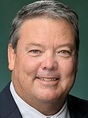
Andrew Willcox Dawson, Liberal National Party, Shadow Assistant Minister for Manufacturing and Sovereign Capability
12:15 pm
For an older Australian living on a fixed income, the family budget is already a balancing act. Under Labor, the grocery bill has increased, the electricity bill has gone through the roof and now Labor wants to make private health insurance more expensive. There is nothing fair about asking older Australians to choose between health cover that they rely on and other essentials that they need to live. One older Australian put it perfectly: 'We can't afford health insurance, but we cannot afford to be without it.' That is a choice that Labor is forcing older Australians to make. From April next year, more than three million Australians aged over 65 will lose their higher private health insurance rebate. For some, the increase will be more than $800 a year for a single person or more than $1,600 for a couple. The Minister for Health and Ageing says it was a hard decision. I'll tell you what is a hard decision: it is pensioners choosing whether to keep their health insurance or cut back on their groceries, choosing between turning on the aircon on a sweltering day or keeping health cover. It won't be the health minister that is making these decisions. It will be a pensioner looking at the electricity bill, the grocery bill and the insurance bill, trying to work out which one can wait.
Here the Labor government's argument completely unravels. The government says around 44,000 people will leave private health insurance. The ministers described the impact as very minimal. But National Seniors Australia surveyed more than 2,000 older Australians. They found that 8.4 per cent were considering dropping their hospital cover, while another 12.5 per cent were considering reducing it. If these results were reflected across the wider population, National Seniors estimates that up to 270,000 people could drop their hospital cover and another 400,000 people could downgrade it. This is a serious warning for the health system, and that is why the government needs to release the modelling.
Labor has got the numbers wrong. The cost of health cover does not disappear. It moves from private health cover to public health cover that is already overstretched. It moves from an insurance premium to a taxpayer funded waiting list. Private Healthcare Australia has warned that these changes could threaten the viability of some regional private hospitals which care for a large number of over Australians. For regional Australia, it could mean travelling hundreds of kilometres from home to access treatment.
In Dawson, we know what regional health care looks like. When the service you want to receive isn't available locally. You have to travel to Mackay, to Townsville, to Brisbane. In regional Australia, that can mean hours of travel, greater expense and longer waiting times. The government says it is saving around $3 billion over four years, but that saving for government becomes a cost to the healthcare system. What happens if more people downgrade their cover? What happens if regional private hospitals lose viability? What happens when those patients arrive in the public system? You cannot solve a health system capacity problem by simply moving patients from one waiting room to another. That is a fundamental flaw.
Private health insurance is not simply a subsidy on an individual bill; it is part of the architecture of the Australian health system. Every Australian who maintains private health cover helps to maintain capacity outside of the public system. If the government wants to change the rebate, it owes Australians more than a line in the budget. It owes them the numbers. It owes them the transparent modelling of how many people will leave or downgrade and what happens to private and public hospitals. Australians deserve a health policy that adds capacity, not shifts pressure. Older Australians deserve better than being told aged care must be funded by making existing health care more expensive. Labor should not cut the rebate and pretend it has cut the cost of health care. The need for health care remains. The patients remain, and the cost remains.
Cassandra Fernando Holt, Australian Labor Party
There being no further speakers, the debate is adjourned and the resumption of the debate will be made an order of the day for the next sitting.