
House debates Matters of Public Importance
Senior Australians

Milton Dick Speaker
3:13 pm
I have received a letter from the honourable member for Mallee proposing that a definite matter of public importance be submitted to the House for discussion, namely:
The Government's ongoing failure to support older Australians, while imposing an $11 billion tax grab on private health insurance.
I call upon those honourable members who approve of the proposed discussion to rise in their places.
More than the number of members required by the standing orders having risen in their places—

Anne Webster Mallee, National Party, Shadow Minister for Regional Development, Local Government and Territories
Labor were cunning with the spin when they fooled Australians into electing them into power. Now, in government, Labor are shockers—absolute shockers. The shocking thing is that older Australians are suffering and dying because of Labor's incompetence in government. Labor are trying to cover that up by dividing Australians yet again. This time, Labor are making it about young versus old. They call it 'intergenerational equity'. Give me a break. While Labor talk about intergenerational equity, they are targeting older Australians with an $11 billion tax grab on private health insurance while leaving older Australians waiting for the care they desperately need.
Let me be clear. Pensioners and self-funded retirees live on fixed incomes, and, in many cases, those are not very high incomes. Some of them sacrifice heavily so they can keep up with their private health cover, yet Labor expects them to absorb higher private health insurance premiums. They have no real choice. Older Australians will have to pay more, downgrade their cover or give it up altogether.
The Minister for Health and Ageing wants Australians to believe that only 44,000 private health customers will be affected. That claim has been blown apart. National Seniors Australia told me today, based on its July survey, that 400,000 Australians will reduce their level of hospital cover and another 270,000 Australians will drop it altogether. And I might point out to the minister for health that this is not an insurance company; this is the lobby group who work with senior Australians all across Australia—the peak body representing older Australians.
And where do these older Australians go after dropping their cover? Well, surprise, surprise—they'll end up in the public health system, and that will work so well. Lucky there is no pressure there and it's all working swimmingly! The public health system is already choked up with ambulances ramping, older people unable to be safely discharged and hospitals under enormous pressure. Labor's $11 billion tax grab will simply cost-shift older Australians onto state and territory public health systems. I'm sure they'll be happy about that—the state governments managing their finances so well!
But it's far worse than that. An older Australians might end up in that public health system because they have fallen, had a heart attack or suffered another serious health episode after being stuck at home, getting sicker, waiting for care. So, when we say 'cost-shift' in this House, remember what that actually means. It can mean an older person deteriorating and fading away at home. It can mean an older person ramped in an ambulance. It can mean an older person stuck on a hospital ward. 'Older person' sounds, really, fairly vague—these are our parents. These are your parents. These are everybody's parents, their aunts, their uncles, their grandparents.
This is a Labor Party that once stood on this side of the House and called the aged-care system a 'national disgrace'. Yet look at the system on their watch. And what did the health minister say yesterday? The same old broken record—'It's the coalition's fault.' The record is scratched. After more than four years in government, that is all they have got. They are in government. Labor are responsible. And, when Labor get into government, they are not just hopeless; they are negligent. They talk about robotic debt determinations while implementing a system that will robotically determine whether an older Australian gets the care they need to stay alive—algorithms.
I spoke earlier this week about concerns in my electorate, and I look forward to meeting with the Minister for Aged Care and Seniors next week about the untenable situation with Grampians Community Health in my electorate. This is not an abstract policy problem. There are real people behind the statistics. One of them is my constituent Lou Horta. Lou is in his 90s. He is legally blind. He is now in palliative care. He's been waiting for care for 18 months—and he's still waiting. When Lou came to my mobile office in Talbot last week, he held both my hands and told me what he thought about the Albanese Labor government:
I have lived in this country 70 years and have never seen such incompetence.
I repeat: 'never seen such incompetence'. Lou is the human face of Labor's aged-care failure.
The government's own data shows a median wait of around 10 months between Support at Home approval and services actually starting. In regional Australia, it can be significantly longer. National Seniors reports that some applicants are waiting up to 15 months to receive the level of care they have been assessed as needing. These are not just numbers; these are frail, elderly Australians waiting in pain. These are families desperately trying to care for their loved ones. Labor promised Support at Home would fix wait times. Their own data shows it has not.
Even Labor's own people are calling it out. On Tuesday, Labor's aged care minister in Western Australia said the home care scheme had not lived up to its promise and that the lack of access to services was unacceptable. That's a friend of the Labor Party—a person in the Labor Party. In Western Australia, an inflexible assessment algorithm left a person with Alzheimer's and their 92-year-old carer waiting nine months for services. This is outrageous.
Yesterday, the Leader of the Opposition, the shadow health minister and I met with leading health, seniors and patient groups. We heard directly about the real-world impact of Labor's $11 billion hit to private health insurance. They are very worried. They are worried about older Australians already struggling with the cost of living. They are worried about the pressure on public hospitals if more seniors are forced to downgrade or drop their cover altogether. State health ministers in Queensland, Tasmania and New South Wales have also warned that this policy will put more pressure on public hospitals already under strain. Older Australians on fixed incomes are the least able to absorb this price shock.
Labor is running out of other people's money, so they're going after the limited resources and the limited incomes of self-funded retirees and pensioners. It is scandalous; it is a national disgrace. Labor is failing older Australians; they are neglecting older Australians, and Labor is leaving older Australians without the care they need.
These are Australians who did the right thing. They worked, they saved, they scrimped, and they paid their own way. They paid for private health insurance because they wanted security in retirement. Some sacrificed a great many comforts just so they can keep their private health insurance. What I find absolutely appalling is that these people have, for decades, put money away for private health insurance. At a time when they need it for a hip replacement, a knee replacement, a cataract—our bodies actually wear out; isn't that amazing—they, who have done the right and responsible thing to ensure that they would have a future that they could maintain their responsibility for, this government is prepared to take money out of their pockets to 'fix' a problem created by this government. It is an absolute disgrace, and the Labor Party needs to own up to its own responsibility.

Rebecca White Lyons, Australian Labor Party, Assistant Minister for Women
3:23 pm
I'll tell you what's a disgrace, Deputy Speaker: the deliberate scaring of older Australians that is occurring with the comments that have been made by the coalition members on the other side of this chamber and by the shadow minister who just resumed her seat.
The shadow minister has disgracefully scared older Australians by repeating the lines of the insurance industry, stating that there will be an $11 billion hit to older Australians with private health insurance. There was independent modelling released last week and there was modelling released by the Treasury that refutes that categorically. I call on those opposite to be more responsible. Older Australians deserve to be treated with more respect than what they're being shown by those opposite. Older Australians have been prioritised by our government. It was our government, in 2022, that came to power with a commitment to deliver—

Sharon Claydon Newcastle, Australian Labor Party
Member for Mallee, you were heard in silence. I want to see the same respect awarded to the assistant minister.
Rebecca White Lyons, Australian Labor Party, Assistant Minister for Women
It was our government that came into office in 2022 with a clear mandate from the people of Australia to invest in care, to invest in our aged-care system and to invest in our healthcare system. That is what we have delivered—a $47 billion investment in aged care this year that will see more Australians get access to the packages of care that they deserve and more aged-care beds built and delivered right across the country.
This is a government that came to office after 10 years of a coalition government that neglected aged care, that cut funding to aged care and that oversaw a royal commission with one word as the title of that report, and it was 'neglect'. You come in here and preach about neglect. How about you look in a mirror and take responsibility for the outrageous way you treated older Australians and the neglect that you showed when you were in government?
Our government has not only prioritised care, taken that to the Australian people and receive their endorsement, but we have delivered on that. We have delivered on increases in wages for our aged-care workforce, who are the people at the very coalface looking after our older Australians. We have invested in a universal healthcare system through Medicare. We have provided greater access to bulk-billing doctor appointments. Just today, 84 per cent of doctor appointments across the country are fully bulk-billed, a significant increase because of the investment our government has made into healthcare. That benefits Australians of every age, including older Australians who can now go to a doctor for free.
We have made 137 Medicare urgent care clinics permanent, providing an option for older Australians, for all Australians of any age, to go and access the urgent healthcare that they need. That was a policy initiative that was designed and delivered by our Labor government. We have provided access to cheaper medicines, an initiative that is benefiting thousands upon thousands of Australians, including many thousands of older Australians who are now able to access the medicines that they deserve. Many of them are now just $7.70, a price that will remain in place until 2030. Our government has provided record hospital funding with the National Health Reform Agreement which concluded this year and sees $219.6 billion invested into our state and territory hospitals right around the country over the next five years. That will include access to elective surgeries.
Now, I don't for one minute deny the fact that there are older Australians who are worried about what the changes to the private health insurance subsidy will mean for their ability to retain their private health insurance. I've met with people in my electorate and I've spoken to them, but I think it's very unhelpful of the coalition to come in here and parrot the lines of industry and continue to scare older Australians.

Ben Small Forrest, Liberal Party, Shadow Assistant Minister for Electoral Matters
We're not here to be helpful.
Rebecca White Lyons, Australian Labor Party, Assistant Minister for Women
You should be here to be helpful. I'll take that interjection. You should be here working on behalf of all Australians, including older Australians, who expect you to come in here and be constructive. You should be coming in here and thinking about the ways that you can support good policy design and delivery, but instead you come in here and say you want to be oppositional and unhelpful. We have an obligation to be responsible and that is the way that we take our jobs and do it seriously. I would encourage you, through the Deputy Speaker, to encourage those opposite to do the same.
There are Australians who've raised this question with me, and I think it's really important to put some facts on the table. The $3 billion that the government will be able to realise through this change in policy will all go to investing in services for older Australians. It will mean more aged-care beds. It will mean more packages of care. That $3 billion is only going to be used to support older Australians to access the care that they need to deal with some of the challenges the honourable member raised in her contribution. She spoke about wait times. Well, I'll tell you what. They've come down under Labor. She spoke about problems that she's hearing in conversations with her constituents. It's a Labor government that took seriously the recommendations from the royal commission and invested record amounts of money into our aged-care system.
It is important to recognise where the money will be going, and it is also important to recognise what the independent modelling and the Treasury modelling tells us. The $11 billion figure that the shadow minister bandies around is very, very different to the independent analysis and the Treasury analysis, and I think older Australians should be comforted by the fact that what the fearmongering opposite is forecasting is, in fact, very different to what Treasury has provided advice to us about. Treasury advice shows that about 44,000 people may choose to exit private health insurance, which is a 0.4 per cent decline compared to current settings. That is very different from what those opposite are saying. The independent research, which was released last week, that I referenced has confirmed that the impact will be minimal. Researchers have said:
… this reform won't cause a mass exodus from private health insurance, and definitely won't overwhelm public hospitals as some states predict.
We want all Australians to have access to the health care that they deserve. We want our system to be fair and equitable. This is returning to the model that was designed and implemented under former prime minister John Howard, which means that if you take out private health insurance you receive a rebate. I think it's important to put that on the record too, because there's been a lot of scaremongering, where older Australians have heard that they will lose it entirely. That is not true. You will receive a rebate based on income, and for the majority of older Australians that'll be a rebate of about 24 per cent. That is important to note because I think a lot of people have been made to worry unnecessarily and have heard figures in the thousands of dollars that they are supposed to find to maintain their private health insurance, when in fact the Treasury modelling indicates it should be about $250 a year.
I recognise that for some families and for some older Australians that might be a lot of money, but that is also why we've invested in Medicare. We've made it free to see a GP, we've made medicines cheaper, we've invested in the Medicare urgent care clinic network, which provides more people with access to a health professional wherever they live and to not have to worry about the out-of-pocket expense. This has to be seen in the context of our investment in the broader health system. Seeing it in isolation ignores the investment that we are making in other ways and in other complementary parts of the healthcare system.
I recognise that there will be some people in our community who are worried about this and I want to reassure them that we continue to work very closely to make sure this is implemented in a way that is sympathetic. But I also call on the private health insurance industry to be responsible here. I have spoken directly with the private health insurance industry, I've heard their feedback and I ask them that, if they are worried about holding on to those loyal customers of theirs who've paid private health insurance for many years, then why don't they reward those customers by reducing the cost they pay annually?
One sure way to retain those older Australians in the private health insurance system and to reward their loyalty over many years of paying private health insurance payments would be for those private health insurance companies to offer them a discount. There is nothing stopping them from doing that. Rewarding loyalty would be a surefire way to retain their customers if they value them as much as they claim to, and I believe that they do. So I look forward to seeing how they might respond to that opportunity. The Labor Party and this government take our responsibility to all Australians of all ages incredibly seriously, and we are continuing to deliver a healthcare system that works for everyone.
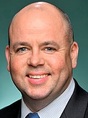
Sam Birrell Nicholls, National Party, Shadow Assistant Minister for Regional Health
3:33 pm
When Labor asks us to be helpful, what they're really saying is: 'When we attack a cohort of Australians, don't call it out. Ignore the people who come into your office and say: "Do you realise that my private health rebate is being cut? It's going to affect me badly." Yes, but we can't go into parliament and say anything about it, because we're not being helpful to the government.' We're not here to be helpful to the government with policies like this.
The baby boomer generation has helped build this country. They absolutely have. They were born in the postwar period. They took the opportunities of education in the late sixties. They had to endure the deprivations of the Whitlam government, which must have been very difficult when they were trying to get ahead. They endured the economic transition of the eighties. They endured unfathomable interest rates in the late eighties and early nineties. And they've really worked hard, paid taxes and done a lot to try and build this country.
They're now getting to their retirement periods—where they're over 65, and some of them are much older than that—and we have an obligation to make sure we look after those people and honour what they have done to build this country and build this economy. One of those things is to make life a little bit easier with a private health insurance rebate, and Labor is now cutting that. For the minister to come in and say, 'The insurance company lobby groups are saying that this is $11 billion or that this is how many people are going to be affected'—it's actually National Seniors, a respected group representing the interests of older Australians. It's clear, under this government, the interests of older Australians need some very serious advocacy, because the government's showing that it doesn't care about them. It's very difficult. We are sitting in electoral offices, and we have people who are probably about my age coming in and saying: 'I can't get a care package for mum and dad. It's been ages. What can be done about it?' We come in and ask the minister for aged care, who I must admit is very good at deflecting questions from the dispatch box—it's impressive to watch, but it doesn't deliver the aged-care packages that should be getting out to people.
We heard from the member for Bowman, who got up and spoke about John and Cheryl in his electorate. He's saying they're going to be about $1,000 worse off. Now, $1,000 out of their budget, when they really need that health care—it's pretty tough for a lot of people, particularly in this cost-of-living crisis that we're still talking about four years after the election of the Albanese government. When is something going to be done about that? To take away some of the protections that were there—a small thing in a health insurance rebate for people who have served this country and paid their taxes—is really mean spirited.
What's going to happen? That's the next thing. We say that we're going to do it, and we're going to do it because we need to push money to somewhere else in the aged-care sector. If we really got the economy firing with some good policies, we'd probably have more money to put to all sorts of things. How about that for an idea? But what's going to happen? Older Australians will drop their private health insurance, and they will be forced onto the public system. I can tell you the public health system does not need any more pressure. I'm sad to report that I'm a Victorian, but that state is going to make a comeback after 28 November, I'm sure of that. At the moment, the public healthcare system is straining under huge pressures—ambulance ramping and people sitting around in EDs for far too long. If we force a whole heap of older Australians onto that system, it's going to mean poorer outcomes for those older Australians, who don't deserve it, because they've done a lot for this country. It's going to mean poorer outcomes for people who are trying to access that service at the moment.
It's probably too late, but I really ask you to rethink this. Think about the people you're affecting. Think about what they did for this country, and show some compassion towards older Australians. If you want to get some home-care packages out in the meantime, that would be great too.

Kara Cook Bonner, Australian Labor Party
3:38 pm
There are more than 25,000 people aged over 65 in my electorate of Bonner. They are the older Australians who are an incredibly important part of the community I have the privilege of representing, so I take supporting older Australians very seriously, and that is exactly why I want to start by correcting the ridiculous scare campaign that those opposite are running today. This motion misleads not only this parliament but the Australian people and the older Australians that every single person on this side of the chamber take very, very seriously in our representations to them.
Those opposite are the only ones who have failed to support older Australians, and they did it for over a decade. Our government is proposing to return the private health insurance rebate for older Australians to the same basis as everybody else—income rather than age. Australians will continue to receive significant taxpayer support for their private health insurance. What changes is that two households on exactly the same income will receive the same level of taxpayer support, regardless of if they are 55 or 75. The money will be redirected to where older Australians need it most. Labor is investing more than $3 billion to deliver more aged-care beds and better care for older Australians. Those opposite know this, but the facts are terribly inconvenient when you've already written the scare campaign.
When those opposite want to talk about this government's record of supporting older Australians, I am more than happy to have that conversation because Labor's record speaks for itself. Let's start with health care.
Older Australians in my community of Bonner are paying less for their medicines because this government has cut the cost of scripts to just $25. Pensioners and concession card holders continue to pay no more than $7.70, and that price has been frozen until 2030. Across my community of Bonner, more than 2.7 million cheaper scripts have been dispensed, saving people in my community—including older Australians in my community—more than $19 million. Eligible Australians managing ongoing health conditions can also now access 60-day scripts. Those opposite just hated that! It has meant fewer trips to the pharmacy and fewer dispenser fees and fewer trips to the doctor. This government has made record investments in Medicare, with the number of bulk-billing clinics in my community of Bonner doubling. For older Australians managing multiple health conditions, being able to see their GP for free, fill their scripts and go to a Medicare urgent care clinic without worrying about the cost is not optional for those on this side of the chamber; it is absolutely essential. This government is making that care more affordable and accessible.
We also need to talk about aged care, because, when those opposite talk about supporting older Australians, I think Australians are entitled to look at their record. As I've said, those opposite had almost a decade in government, and they left behind an aged-care system so badly neglected that it required a royal commission into quality and safety. That royal commission found serious failures in the treatment and care of older Australians.
Labor came to government and acted. We required residential aged-care homes to have registered nurses on site, 24 hours a day, seven days a week. We introduced mandatory care minutes, so that older Australians can actually receive the time and attention they deserve. We backed aged-care workers, with substantial wage increases, because you cannot deliver quality aged care while treating people who provide that care as an afterthought. We have introduced a new, rights based Aged Care Act that puts the dignity, choice and rights of older Australians at the centre of the system. We've also rolled out Support at Home to help older Australians remain independent and stay in their homes for longer.
It is an absolute embarrassment that those opposite come in here and try to scare older Australians, not only those in my community of Bonner but right across our country. Those in this government are the only ones committed to supporting older Australians, and we will continue to do that every single day.
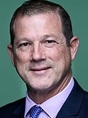
David Batt Hinkler, Liberal National Party
3:43 pm
I thank the member for Mallee for highlighting this matter as a priority. The fact is: this Labor government has failed, and is failing, our older Australians, and, with an $11 billion tax-grab on private health insurance, they're putting our health system under further stress. Labor is ready to take back the rebate, pocket the money and leave the states to pick up the pieces, as pressure builds further on public hospitals.
My electorate of Hinkler has the second-highest percentage of people aged over 65 in the country. That is a total of more than 44,000 people, just in Hinkler, doing worse off under this Labor government. An estimated 26,300 of these seniors have taken out private health cover. They are already struggling with the escalating costs of surviving, let alone of living. Labor's reckless attack on rebates will most certainly put excessive pressure on our crowded public hospitals. Now, these people, who pay their private health cover, will be forced to downgrade or to drop their insurance altogether.
During the winter recess, I conducted an electorate-wide survey, and the interim results are in. One of the many questions in Hinkler's biggest survey was asked of those aged over 65 with private health cover: 'Will you continue with your insurance when Labor scraps your rebate?' The results so far indicate that three in four will stop or, at the very least, consider ending their cover. That's 42 per cent of those surveyed saying they simply can't afford to continue if the rebate is scrapped, and 33 per cent are unsure if they can hold on to it. Even health officials have admitted the government doesn't know how many of the three million older Australians affected are pensioners. However, they concede many older Australians really do value private health insurance. Those who, until now, have been able to pay for private health insurance should be encouraged to do so, because the equation is simple: it takes pressure off the public health system. But the Labor government is punishing older Australians at every single turn.
Take Bundaberg's David Orpin as a prime example, a 68-year-old pensioner and carer for his 91-year-old mother. Both have private health insurance, but Mr Orpin fears the Labor government will force him and his mother to cut back on bare essentials. His minimal carer's payment doesn't cut it when it comes to forking out for rising rates, rego, fuel, food and general health costs. David asked me: how many people will ditch their private health and then be a burden on the public system? And the coalition is asking that question too. Let's support the people who have given our regional communities so much.
Dave's mum, Shirley, is an OAM recipient with lifelong service to our community through Scouts, Rotary and her church. Dave is simply making his case clear to those opposite. In his words, 'I hope you can see that we are doing it tough, very tough.' He said, 'If we give up health insurance, then the government pays for all the bills.'
In the Senior, in the Queensland edition for 3 July, the editor Desiree Savage made these comments:
… I have never seen so many Letters to the Editor on one particular topic as the proposed cuts to the Private Health Insurance rebate has.
Desiree writes that it is very clear readers of the Senior 'fear they will be forced to go without'.
Again directly from my electorate of Hinkler, Andrew and Isobel from the seaside town of Woodgate tell me that they will have to consider the cancellation of their current policy and to rely on the public health system. They ask, 'It all seems a bit counterproductive, don't you think?'
Robyn and Len from Bundaberg pondered in an email to me, 'Maybe the Labor government wants us all to just die, and the problem will go away.' The couple went on to say that they worked all their lives and that they deserve better. And I agree. We must give back to the people that have made lifelong sacrifices. These people are in their twilight years, and a fair go is the least we can do.
Wendy is battling breast cancer and has been treated in a private hospital. Wendy said her ongoing treatment will have to come to an end once the cuts come in. She says, 'This Labor policy will break our backs as pensioners and push us into an overloaded public health system.'
The over-65s in my electorate of Hinkler and right across the nation deserve a fair go. They should not be forced to downgrade or drop their private health cover altogether. But, under this $11 billion tax grab, that is what will happen: Canberra pockets the money while the states are left to pick up the pressure on public hospitals. Labor must scrap this damaging policy because it hurts older Australians and increases pressure on taxpayers.

Ash Ambihaipahar Barton, Australian Labor Party
3:48 pm
I have the opportunity to reflect a little bit on the member for Mallee's comments today in respect of this MPI. Her tone was quite disturbing, and her comments continue division—but this is between the old and the young. I'm tired of this.
The reality is I cared for my grandparents, particularly my grandfather, who recently passed away. During the time when the coalition was in power, we suddenly watched the decline of bulk-billing in the area of Hurstville, which is in my electorate. It is a big issue. Running as the candidate for Barton, I found that being able to access bulk-billing services was a big issue, particularly for older people in my community. That decline was a result of the coalition not investing in health. The reality is, reflecting on the member of Mallee's comments today, particularly those putting down our health system—no-one is saying it's perfect, not at all. But it has taken an Albanese Labor government to invest fully to make it better after a decade of neglect. I'll take the eye roll from the member of Mallee as well. When she talks down the nurses that work at St George Hospital, she talks down the doctors who work there as well. She also talks down the aged-care workers in the aged-care services in my electorate.
Anne Webster Mallee, National Party, Shadow Minister for Regional Development, Local Government and Territories
That is rubbish!
Ash Ambihaipahar Barton, Australian Labor Party
That came from your mouth. The member for Mallee made it very clear—
Sharon Claydon Newcastle, Australian Labor Party
Let's direct comments through the chair. No more interjections from the member for Mallee either.
Ash Ambihaipahar Barton, Australian Labor Party
But the reality of her reflections on this particular point of the Australian health system, on the workers in particular, is really damaging. The reality here is that we in the Labor Party have increased the amount of funding, particularly for bulk-billing services, which is great. For the electorate of Barton, we've seen a significant increase of 14 fully bulk-billed services.

Ash Ambihaipahar Barton, Australian Labor Party
And in Banks as well. I want to reflect on the issue of the MPI, which is about restoring that fairness in the rebate system. This directs much-needed funding to provide that dignity in care, particularly for our older Australians.
Labor has invested $3 billion in delivering more aged-care beds, more packages and better care for older Australians in this current budget, and it's important to reflect on that because the reality is we saw that neglect over the past 10 years under the coalition. Also, the reality of caring for grandparents—I think it's one of those big challenges for a lot of us, regardless of age; I'm kissing 40—is that it is quite challenging. But it's pertinent to reflect on the fact that having cheaper medicines has been a great achievement for our older community in the electorate of Barton and across Australia. Also the free RSV vaccinations—that life-saving vaccination costs almost $300, and, from May of this year, older Australians didn't have to pay a cent. That's another policy implementation to help our older Australians.
The urgent care clinic in Carlton has been a huge hit, particularly because of a decade of not having bulk-billing services there. It has been well received by people in my electorate. I also wanted to quickly reflect on the PBS—in particular, on medication for older women who are experiencing menopause—and on the expansion of endometriosis and pelvic pain clinics that are quite beneficial for older women in Australia. I'm quite proud of that.
I heard the contributions from those across about funding for hospitals. The Labor government has increased that funding by $25 billion over the next five years through that landmark hospital funding agreement. That is delivering more money for public hospitals across the states and territories.
More importantly, as a former employment industrial relations lawyer, the workforce is very important, and it has grown. The health workforce had an extra 17,000 doctors joining the Australian health system in the last two years. That's more than any time in the past decade. We're giving students more opportunities and training more doctors and nurses with the largest GP training program in history, and we're giving hundreds of scholarships for nurses and midwives to extend their skills and qualifications.
While I hear some concerns, particularly about older Australians who are contributing through the private health system, there are also other Australians—older Australians—who don't have the opportunity to pay for that. Those people are coming to the St Vincent de Paul Society for help. The Albanese Labor government has made sure that we invest significantly in health not only for young people but also for older Australians.
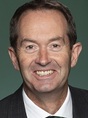
Andrew Wallace Fisher, Liberal National Party
3:53 pm
I rise in support of the member for Mallee's MPI—and I want to acknowledge the great work that she does in this space—and in support of my friend the member for Hinkler, with the egregious exception of the member for Hinkler's talk about people aged 65 being in the twilight of their years. I am in the twilight of my late 30s—that is what I tell my kids!
All jokes aside, this is a very important issue because Australians who've worked hard, paid their taxes and planned carefully for retirement are being asked to pay more and more and more under Labor. The Albanese government wants to impose an $11 billion hit on private health insurance by ripping away the additional rebate for older Australians. Couples aged over 65 with gold cover could be slugged by up to $1,614 extra every year from April 2027. That's a 21.3 per cent increase. For a retiree on a fixed income, that is not loose change; that is groceries, heating, insurance and fuel.
Patricia from Dicky Beach in my electorate is a retired widow living on the age pension. She contacted me. She told me that she and her late husband had made sacrifices all their lives to keep private health insurance because they valued continuity of care and wanted to help keep pressure off the public system. Patricia has worked out that Labor's changes will cost her more than $1,000 every year. She fears that many retirees simply will not be able to afford to keep their cover, and I agree with her. And when they drop that cover they don't stop needing health care. We know that they will go onto the public system. That's why three state health ministers—for Queensland, Tasmania and even New South Wales, a Labor health state minister—have said that this federal Labor policy is going to be disastrous for the state's health systems—

Emma Comer Petrie, Australian Labor Party
Don't you mean shadow minister?
Andrew Wallace Fisher, Liberal National Party
I'll take the interjection. Even your own New South Wales state Labor health minister acknowledges this.
Independent modelling has found that for every dollar Canberra claims it will save by cutting this rebate the public health system could face around $1.20 in additional costs. Newsflash: that's not a saving, for those on the other side of the House. It's a false economy. It shifts costs onto pensioners, taxpayers and state hospitals. It's robbing Peter to pay Paul. The government's own modelling concedes that at least 44,000 older Australians will drop their cover. That's their own concession, while industry research suggests that more than 250,000 could drop or downgrade. I know which one I am going to believe. When an older Australian drops gold or silver cover, they do not suddenly stop needing a cataract operation or a joint replacement. They end up on the public hospital waiting list—more pressure, longer waits and more ambulance ramping.
John from Golden Beach in my electorate is feeling the squeeze, too. He's 68. He rents a house and now he's facing higher rents—on his estimates, an extra $60 or more a week—because of this government's recent changes to its tax policies on housing. And now he's going to get slugged more for this private health insurance tax. At the same time, Labor is asking older Australians to pay more for their health cover. Its aged-care system is leaving people waiting months for support that they've already been assessed as needing. The government's own data shows a median wait of around 10 months between approval for Support at Home and services starting. Older Australians can be assessed as needing help to shower, prepare meals, take medication or remain safely at home and then be left waiting month after month after month.
Older Australians deserve better than this hopeless Labor government. After I launched my Stop Labor's Health Tax on Seniors petition I got 9,800 signatures. Go to my website and sign up. I want 200 more signatures, and then I'll take it to the PM.
Zhi Soon Banks, Australian Labor Party
3:58 pm
Older Australians have worked hard to build this country and shape our nation. They deserve our respect and care. Across the health and aged-care sector, this government has had to pick up the pieces left behind by the former coalition government and do the hard work of building systems that are capable of supporting Australians, particularly older Australians, well into the future.
I want to start by looking at access to health care and medications. Unlike some, this government recognised that bulk-billing rates were in decline and that investment was required to protect access to GPs. When the government made its first record investment in bulk-billing it was to triple the incentive for pensioners and concession cardholders—a cohort mostly of older Australians. Additionally, while this government has lowered the cost of PBS medications to the lowest level in more than 21 years, it also extended the $7.70 freeze for pension and concession card holders until 2030. That's right—2030. In my community, the cheaper medicines program is delivering—more than two million scripts filled and more than $12 million saved. Further, the government is taking the action needed to ensure that systemic neglect exposed by the royal commission is never allowed to happen again.
The budget earlier this year delivered $3 billion in new investment for more aged-care beds, more packages and shorter wait times for older Australians. The government is also moving to ensure the sustainability of the residential aged-care sector, through targeted capital subsidies. The government will deliver an extra 5,000 beds a year. This is before we get into new investments for more Specialist Dementia Care Program units and capital assistance to build new residential aged-care facilities, ensuring older Australians get the appropriate high-quality care that they deserve.
The government also recognises that older Australians want to live independently at home for as long as possible. The new Support at Home program delivers $4.3 billion of investment to create a system that delivers a high quality of care and enshrines the rights of older Australians in law. This government recognises that, if we want a high quality aged-care system, we need to invest in the people who make it possible. When Labor first came to government, we promised that we would back our aged-care workers and fight for a pay rise that recognises the value of the work that they do. Labor made supportive submissions to the Fair Work Commission, and we delivered $18 billion to implement the landmark 15 per cent wage rise for aged-care workers.
While this government is delivering, those opposite are only about division and the politics of grievance. When it comes to looking after older Australians, they never mention that a registered nurse is on site in aged-care homes more than 99 per cent of the time—a measure they said would force homes to close. They never mention the 7.1 million extra minutes of care that are being delivered each day. They never mention that median assessment wait times are now under a month. They never mention that more than 80 per cent of aged-care homes now have a four- or five-star rating, when it was barely 50 per cent under their side, or any of the other measures and successes that myself and my colleagues on this side of the House have already outlined. While this government will keep delivering for older Australians and making sure they get the respect and care they deserve, those opposite will keep pedalling scare campaigns and stoking division.

Leon Rebello McPherson, Liberal National Party
4:03 pm
I've spoken on this subject a number of times in this place, but it's clear that the government didn't listen then, and they're not listening now, from listening to some of those speakers opposite, so I will speak to it again. This motion goes to the government's ongoing failure to support older Australians while imposing an $11 billion tax grab on private health insurance. All of us on this side of this chamber have engaged with our communities. We've spoken to the older Australians that we're supposed to represent in this place, and we've actually heard what they have been thinking and what they feel about this. I've received thousands of emails from thousands of people who have reached out to me or to my office to raise the impact that this will have on them and on their future. That's right—thousands. We had over 2,000 who completed my survey in the first 2½ weeks. If you'd like copies of those, I'm happy to provide them to you, for those calling out. I'll read some out to you. Patricia from Mudgeeraba—
Unidentified interjection - Hansard doesn't record who said this
Government Members:
Government members interjecting—
Leon Rebello McPherson, Liberal National Party
The nerve of those opposite to interject on this is ridiculous. It just shows you disrespect for older Australians. Patricia from Mudgeeraba said:
Where do you think we are going to get any extra money from? Have already had to sacrifice House and Car insurance and cannot afford certain food items. Seriously !!!!!!
Lorraine from Burleigh Heads said:
I believe it is ABSOLUTELY DISGUSTING that this abhorrent Labor government is robbing older Australians to cover up their lack of fiscal understanding and knowledge. It's obscene that people—
And this is clear—
that have worked and saved and paid taxes throughout their working lives and continue to be taxed by ATO standards, are now paying STEALTH taxes. Because they are old. Aged Care changes recently implemented, makes the term (Aged Care) a complete misnomer. There is no care from this government for anyone other than themselves and their cronies.
Christine from Palm Beach said:
At 72, I feel betrayed by the government. We're trying not to be a burden on society but we may have to be now. We've worked hard for over 50 years—myself as a nurse and my husband as a chef and raised 2 kids and saved hard for retirement. This is like a slap in the face for our contribution. All the insurances have increased and food and electricity skyrocketing. We feel we are paying the price for this terrible government.
And older Australians are. We've seen this time and time again. Samuel from Reedy Creek said:
This change confirms that Labor has no concern for those who have reached a later stage of life but who have made every effort to bear a share of the costs of the health services necessary for a fair society.
They've done the right thing. They've done exactly what government asked them to do for so much of their working career, and now the rug is being pulled out from under them. That's not only incorrect; it is wrong, it is mean and it is unfair.
I heard the previous contribution from the member opposite, and he spoke about us on this side stoking division on this. He spoke about us stoking division. The ones on the government side of this chamber are the ones who are dividing Australians. They're dividing older Australians from everybody else. You cannot say that you are trying to unite—
Emma Comer Petrie, Australian Labor Party
Mis- and disinformation coming out from those opposite.
Sharon Claydon Newcastle, Australian Labor Party
The member for McPherson has the right to be heard.
Leon Rebello McPherson, Liberal National Party
It's really striking a nerve for them because they're embarrassed. This is their families. This is their parents. This is their grandparents that they're affecting, and they should be embarrassed. I'm going to read them some more because I think they'd benefit from it. Anthony from Coolangatta said:
Things are tough enough as it is.
Glen from Berleigh Waters said:
If responsible fiscal management was done by the Fed Govt they wouldn't have to hit retirees to help balance their budget.
That goes to a key point. Every discussion that we're having in this place is about the government's inability to manage the economy. So what are they doing? They've got no idea for how to grow the economy, no idea for how to grow the pie, so instead they're finding pockets in our economy of people who have done the right thing. They've worked. They've saved. They've invested. They're thinking, 'Okay, we will take their money and we will use it to cover up our economic incompetence.'
There are hundreds and thousands of these stories across the country that have reached out to members of parliament on this side of the chamber. I'm sure they're sitting in your inboxes, members opposite, as well, and I encourage you to read them.

Trish Cook Bullwinkel, Australian Labor Party
4:08 pm
I feel like the fifth speaker for the affirmative side in a high school debate. Some of the selective points that the opposition has made—look, I'm sure we all want the best for old people. Some of us are even old ourselves. as the member pointed out. In my electorate of Bullwinkel, over 31,000 residents are over the age of 65. That's 20 per cent of my community, and it's probably the same for you. We all want to provide them with real support to stay safely in their homes and to have dignity when entering the residential aged care system if they do. Labor is delivering that respectful, dignified aged-care system that older Australians across Bullwinkel and right across Australia truly deserve. That's the area of common ground.
I would like to remind the House that I do have firsthand understanding of the physical, the clinical and the emotional realities of aged care and the toll that the decade of neglect in this area under the Liberal and coalition government took on both residents and staff. As a nurse with decades of experience on the front line, I think I can bear witness to some of the great things we're doing that have really turned things around. The ship is turning, so let's just outline a few things that we've done: a $25 billion landmark public hospital funding agreement; strengthening Medicare; increasing bulk billing; 137 urgent care clinics around Australia, including three that are available to the people of Bullwinkel; cheaper medicines, which cannot be underestimated in the daily cost of living, particularly for people over 65; more medicines on the PBS; free RSV vaccinations; the $7.70 freeze on medication scripts—and that's not even the aged-care system yet, so let's get to the aged-care system.
We're reforming the aged-care system, the home care support and the residential aged-care system. We've introduced the integrated assessment tool, which has reduced waitlists, with median assessment times of 10 months now down to one month. That's huge. That's huge for somebody that's got a package and needs that. That's providing a fairer system. In the aged-care system, we're also looking after the staff. We've legislated to make registered nurses 24/7 in aged-care nursing homes. That's $18 billion in wage boosts. We're improving the wages paid to nurses. We've given five consecutive wage increases. For a registered nurse, like me, working in aged care, that's $36,000 extra a year that that we're delivering, and for enrolled nurses it's $32,000. We're going to retain the staff to provide continuity of care, better care and dignified care in those aged-care settings.
I also want to give a shout-out to Minister Butler and Minister Rae in aged care. They listened to us when we told them that the integrated assessment tool and the prioritising of packages needed tweaking. They listened and they changed it. I visited Barry in his home, who's since passed away, unfortunately, from motor neurone disease. They listened, and they changed the aged-care rules regarding urgent priority care so that people with MND both over and under the age of 65 will now be considered the same and have priority for at-home support packages. These are brilliant things for aged care.
Yes, we are cutting down the rebate they're getting, so they're getting a 24 per cent supplement on private health care, the same as young people. It's the same for all of us. If you're in similar income streams, why should a younger person have to pay more for private health insurance than an older person? In fact, I'm sure that young people would argue that things are a lot tougher for them now. We have had a balanced approach to aged care and we're providing dignified aged care.