
House debates Bills
Health Insurance Amendment (Incentive Payments and Other Measures) Bill 2026; Second Reading

Melissa McIntosh Lindsay, Liberal Party, Shadow Minister for Women
6:23 pm
I rise to speak on the Health Insurance Amendment (Incentive Payments and Other Measures) Bill 2026. The purpose of the bill is to establish a clear legislative framework for Commonwealth health incentive payment programs. These incentive payment programs include the General Practice in Aged Care Incentive program, the Bulk Billing Practice Incentive Program, the Practice Incentives Program and the Workforce Incentive Program.
The bill has been designed to formalise the Commonwealth's longstanding use of incentive payments to support quality improvement, affordability, access, digital health uptake, and rural and remote service delivery. For many years, the Commonwealth government has used incentive payments to support health service access and delivery. Currently, these programs are administered without a legislative framework covering their administration, compliance and oversight. The bill will create consistent processes for program approval and decision-making and will allow for the secretary of the Department of Health, Disability and Ageing and the chief executive of Medicare to undertake compliance action with respect to providers participating in these programs, as well as require providers to share information for the purposes of administering the incentive payment programs.
The coalition supports Commonwealth health incentive payment programs and established several of them when in government. The coalition will not oppose this bill in the House, but has referred the bill to the Senate Community Affairs Legislation Committee for further scrutiny. However, I move the following second reading amendment on behalf of the opposition:
That all words after "That" be omitted with a view to substituting the following words:
"whilst not declining to give the bill a second reading, the House:
(1) notes:
(a) during the 2025 election, the Prime Minister promised on countless occasions that all Australians needed to see their GP was their Medicare card, not their credit card;
(b) the latest bulk-billing rate still sits well below the 88 per cent rate reached under the Coalition;
(c) the latest Medicare data shows average out-of-pocket costs have risen to a record $50.77 per visit, up more than 20 per cent in two years;
(d) the total number of GP attendances dropped by 1.8 million visits in the past year;
(e) these delayed or permanently deferred GP attendances result in Australians getting sicker and ending up in our overcrowded emergency departments; and
(f) the Government is pushing family GPs towards bulk billing, despite the Department of Health's own modelling showing nearly one in three GPs would be worse off if they switched to fully bulk billing; and
(2) criticises the Government for misleading the public and breaking its promises on primary health care".
The Prime Minister promised Australians at least 71 times, 'All you need is your Medicare card, not your credit card.' That sounds familiar! New data confirms that promise is in tatters. Average out-of-pocket costs for GP non-referred attendances have hit a record $50.77, which is a huge increase per service nationally. It is up from $46.31 in the same period of the previous year and up from $41.90 two years ago—a 21 per cent increase in two years. Australian families paid over $2 billion in combined GP out-of-pocket costs in the past financial year alone. The variation across electorates is stark. Patients in some areas are paying over $60 per visit. Tasmania leads the nation with a $59.54 average. The Clark electorate is at $64.20, the highest in the country. In the ACT, $56.24 is the average. In the Canberra electorate, it is $58.91. In New South Wales, Wentworth is the highest, at $61.24. In Sydney, it is $56.56. In Victoria, in Melbourne, it is $60.63. In Kooyong, it's $56.61. Bulk-billing has collapsed under Labor.
When the coalition left office in May 2022, the bulk-billing rate was at 88.5 per cent, at an all-time record high. Under Labor, it has fallen as low as 77.9 per cent, a drop of almost 11 percentage points. The department of health has admitted Labor will not meet its own targets until after the next election. The human cost is real. The latest Medicare statistics show that the number of GP consultations fell by more than 1.8 million consultations compared to the same period last year. Many Australians simply cannot afford to go to the doctor.
Desperate to cover for the PM's lies on free GP visits, Labor MPs have resorted to bullying and threatening family run GP practices to bulk-bill. Labor MPs are sending threatening letters to family GP clinics. That is a disgrace. Why are they doing that? These are small businesses, which form the backbone of communities, not political pawns for the Albanese government to push around. GPs, like all small businesses around Australia, are already under significant strain from the rising cost of doing business, and the last thing they need is political intimidation from their government. Instead of sending heavy-handed letters to local doctors, the Albanese government should focus on fixing the crisis in the health system that they have created from rising out-of-pocket costs to growing ED wait times. These letters are evidence of the Prime Minister's plan to drive out family doctors and hand the system to corporate interests running production-line, six-minute medicine. The coalition will continue to challenge Labor's mistruths around Medicare and will continue to hold them to account for their failings and lack of accountability.

Mike Freelander Macarthur, Australian Labor Party
Is the amendment seconded?

Cameron Caldwell Fadden, Liberal National Party, Shadow Assistant Minister for Housing
I second the amendment and reserve my right to speak.

Jo Briskey Maribyrnong, Australian Labor Party
6:29 pm
Australia is in the midst of a green and gold frenzy. The Socceroos are through to the knockouts at the world cup, our women's cricket team is lighting up the T20 world cup over in England, and the Wallabies kick off their Nations Championship campaign against Ireland at Allianz this weekend.
Jo Briskey Maribyrnong, Australian Labor Party
That's right. But there's another bit of green and gold turning up around the country, and it's one I'm especially proud of. More and more medical clinics are putting the Medicare bulk-billing sticker on their door to show that they have switched to fully bulk-billing. It's a simple thing, but it tells you that, when you walk into that clinic, you'll be looked after, and, when you walk back out, you won't be handed a bill you can't afford. In my community, I dropped into the Essendon Health Medical Centre on Keilor Road just the other week, and there in the window was that green and gold sign. Just down the road from my office, at the Moonee Ponds Super Clinic, I had the privilege of putting that sticker up myself. Every one of them is a bit of proof that Medicare is getting stronger and fairer and that we're keeping our promise to make life just that bit easier for working people, because in this country the only card you should need to see your GP is your Medicare card. With this bill, the Albanese Labor government is setting out to strengthen that little card even further.
It's worth pausing on what that card actually means to people. Medicare is one of the great expressions of who we are. It's the belief, held quietly but stubbornly right across this country, that being able to see a doctor when you're sick shouldn't come down to what is in your bank account. That single mum in Avondale Heights or a retired tradie in Essendon or a migrant family in Flemington all have the same right to care, whatever they earn. But we've seen what happens when that promise gets chipped away. When bulk-billing falls, families pay more. When the gap fee creeps up, so does the worry that comes with it. When seeing a doctor starts costing money people don't have, too many of them put it off until something small and manageable turns into something far more serious. We know this because we've lived through it.
For the best part of a decade, those opposite went after Medicare. The truth is that the coalition has never really made its peace with Medicare. They've only ever retreated when the backlash got too hard. When Medicare was first introduced, they campaigned to repeal it. Their 'Fightback!' manifesto wanted to scrap bulk-billing altogether, as though our health was just another item on the supermarket shelf. Now we've got a fresh reminder of where they stand, because the Liberal Party has made former prime minister Tony Abbott its president. If you wanted one person to sum up the coalition's attitude to Medicare, it'd be hard to go past Tony. As health minister and then as Prime Minister, he went at bulk-billing with everything he had. People still remember the 2014 budget—the one that tried to put a $7 fee on every visit to the GP and then froze the Medicare rebate on top of it. That freeze ran for years, and it pushed more and more doctors out of bulk-billing simply because the rebate was not keeping pace. They have only ever looked at Medicare and seen a bill the country can't afford, while we on this side look at it as something that the country can't do without.
But the threat today doesn't come from those opposite only. One Nation talks a very big game about the forgotten Australia and then votes against them every time it actually counts. When it comes to things that genuinely put money back in people's pockets—the cost-of-living measures that this government has delivered—Senator Hanson and her party have lined up against them. They voted against our tax cuts. They voted against more affordable early education. They voted against cheaper medicines and the very measures that strengthen the Medicare system that working families rely on—none of which should surprise us. Senator Hanson has hitched herself proudly to Donald Trump and his America-first approach. When Australians look across the Pacific at the American health system, they see something that genuinely frightens them: a country where getting treated depends on the size of your wallet and where one trip to hospital can bankrupt a family. Here, those same medicines don't cost hundreds of dollars. In fact, because of the actions of this government, no Australian pays more than $25 for a PBS script—the cheapest they've been since 2004. Senator Hanson votes as though she'd swap our system for the Americans' in a heartbeat. Well, our government is proud to defend the Australian way of doing things and prouder still to strengthen it for our kids. That's what this bill is all about.
It sets up a clear legislative framework for the Commonwealth's primary care incentive payments, including the Medicare Bulk Billing Practice Incentive Program. These are the programs that back the doctors, nurses and practices holding our health system up and that keep good care within reach for people who need it.
And they don't sit on their own. For our government, health has always been a cost-of-living issue; we've treated it as one from day one. I mentioned, earlier, cheaper medicines. The biggest cut to the cost of a PBS script in the history of the scheme has already saved Australians more than $2½ billion since 2022. Then there are our free Medicare urgent care clinics, which mean a parent could have a sprained wrist or a sick kid seen on the same day, fully bulk-billed, instead of sitting for hours in an emergency department, and, through the recent budget, we're making them permanent. There's also our record investment in public hospitals, under our new national health and hospitals agreement. Beneath all of this sits the biggest investment into Medicare in its 40 years—our government's record $8.5 billion to deliver more bulk-billing and to train more doctors and nurses. Every one of these measures keeps people healthier and allows working people to keep more of what they earn, and the results have followed.
On 1 November last year, we extended the bulk-billing incentive to every Australian and started paying practices an extra loading of 12½ per cent when they bulk-billed all of their patients all of the time. The latest quarterly figures put the national GP bulk-billing rate at 81.9 per cent for the quarter from January to March, up 4.6 points in a single year, and it's risen in every state and territory, with the biggest jump of all in the Northern Territory—nearly 14 points—and with strong gains in Victoria too. There are now more than 3,800 bulk-billing practices around the country, and more than 1,400 of them used to charge a gap and have since gone fully bulk-billing, which means something like 97 per cent of Australians now live within a 20-minute drive of a fully bulk-billing GP.
In my own electorate of Maribyrnong, bulk-billing has doubled since the last election. That means workers and young people right across my community have more opportunities to see their GP for free. In the end, that's what these reforms come down to. They're the difference between getting the abdominal pain looked at and putting it off, between filling that cholesterol medication script and skipping it to save money and between following up on that test result and letting the call go to voicemail. The people I talk to in my community are proud to live somewhere that guarantees health care like this. They're genuinely shocked when they see other countries fail at it, and they understand exactly what it means for the people who need it most.
Take cohealth in Kensington. I've spoken about this service here before. Thanks to extra funding from this government, we've secured the continuation of their GP services at that clinic in Kensington and across two other sites, in Fitzroy and Collingwood. But the reason I raise it here today isn't about the funding; it's about what my community did when the board of cohealth first announced it would be closing its GP services. The reaction was something to see. It wasn't a handful of angry people; it was hundreds of local residents, young and old, who flatly refused to accept that nothing could be done. From the outside, Kensington can look like a leafy inner-city pocket—and a lot of it is—but it's also home to some of our community's most vulnerable: public housing residents, refugees making a fresh start and Australians from every background you can think of. My community know it. It's why they turned their frustration into action and why they stood with me to fight to keep those GP services open. As more than a few of them put it to me, this was about more than just a clinic; it was about the community they'd helped build.
That is what Medicare really is. It's the community. It's dignity and it's fairness. That's not the first thing that springs to mind when you picture green and gold. It doesn't run onto the field to a roaring crowd or bring the nation to its feet on a Saturday night, but it belongs on the list all the same, because it belongs to every single one of us. It's the one card every Australian carries, wherever they come from and whatever they earn.
Those opposite have spent 50 years trying to wear it down, and One Nation would trade it for the American model tomorrow, and every time it has been Labor that has stood in the way and defended it. This bill is how we defend it now. It locks in the programs that are driving bulk-billing back up, and it puts the health of working people out of the reach of those in this place who think it costs too much. The people in my community just ask that, when they are sick, they can see their doctor; that, when the script is written, they can afford to fill it; and that staying well doesn't mean falling behind in rent. That's the country I believe in.
I believe in a country that catches you when you fall and that looks after its people, whether your family has been here for generations or you're a brand new citizen here to build a new life. That's the Australia the generations before us built, and it's the Australia we get to strengthen today. Labor will always protect Medicare and will always look to strengthen it. We'll keep that little green-and-gold card in the pocket of every Australian for generations to come, because it's more than a card; it's the best of who we are and it's worth every cent. I commend the bill to the House.
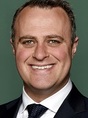
Tim Wilson Goldstein, Liberal Party, Shadow Treasurer
6:40 pm
Everybody in this parliament believes in Australians being able to have affordable, accessible health care. There's a truism of health care, like any other service though, where you have ways you can ration access if there's more demand than supply. It's a pretty basic principle of economics. You have one of two options: you can ration by price, or you can ration by queue. While I hear a lot of the Labor members on the other side of this chamber wax lyrical about their deep and abiding commitment to health care, and I respect that they have a genuine and serious commitment to health care, they shouldn't ignore the fact that they've chosen rationing for price over rationing by queue.
So when grandparents can't get access to what is deemed under the system—different types of surgery, for instance, hip replacements, knee replacements or those sorts of things, are essentially considered to be cosmetic as opposed to lifesaving. As a society, we've made a choice about the limitations of how much access to health care people can have because we have to ration by the price or by queues. In the great state of—in fact, in pretty much all states now. In the Commonwealth we have an ongoing problem, whether you call it ramping or queues, with access to ambulances to be able to get into hospitals. That's a literal demonstration of a queue that occurs.
When we talk about health care, we face a choice: do we want a 'one size fits all' system, where we tell people to wait in line and in some cases live with pain because we don't believe that people should be able to make the choice to opt into a system to improve their welfare or to get ahead, or do we actually believe in a system that encourages people to take responsibility for their health care? We do that by preventative health, of course, but we can also do that by making sure that people choose to contribute to their health care so they take a sense of ownership, which actually frees resources for those least capable of being able to afford it themselves.
That's, in one sense, the great divide that sits between at least the Labor members and some members on this side of the House. There's a licorice allsort in the corner over there, and I don't really know what they stand for, but we believe in a system that has a universal support for those who need it while those who have decided to prioritise their health care or who are of means take a higher degree of agency and responsibility for doing so. That's in everyone's interest. It means you get better investment in facilities and different types of clinical care. You have people who are able to operate between the private system and the public system. We're in a position where they can contribute to each other, not just in a competitive sense—though there is a component of that—but to make sure that we get access to world-leading technology and the specialist services that may not exist in a system solely driven by a public system or a 'one size fits all' system, as the Labor Party would like.
I always find the conversations about health care, just like education and other essential services, in this chamber insightful, if nothing else, because on the Labor side there's a dogged view of only having a universal system without any understanding of the consequences that flow from having only a universal system. The truth is Labor would get rid of private health care if they could. They slowly strangle it every time they're in office in different ways to try and disincentivise people from making choices and taking ownership and responsibility, because at the end of the day they don't really want a private health system.
We've seen this in the recent budget, where they've scrapped rebates for private health insurance for people over the age of 65. We actually know that people's health care becomes disproportionately more expensive as they get closer to the end of their life. Deputy Speaker Freelander, you'd acknowledge that! It's been well established in the Productivity Commission's reports. People pay about a third of their entire healthcare costs in the very last stage of their life. They tend to spend a lot less in the early stages of their life. Why? Because their bodies generally hold up better. While there's occasionally a broken knee or something like that—playing sport might infirm them—it doesn't change the fact that, overall, people are healthier in younger stages of life.
As people move through different stages, they develop comorbidities. They have parallel challenges with the healthcare system. It goes all the way through to very acute challenges in the latter stages of life. This is unsurprising. The research has established this well. Basically anyone who has grandparents could tell you this. We're very fortunate in that we have life-saving medications that actually help people manage chronic conditions. But these are increasing, so the costs of the Pharmaceutical Benefits Scheme go up in the latter stage of life. The cost of Medicare also goes up in the latter stage of life. And, of course, the need—potentially—for more significant treatments through private health insurance also goes up.
It raises the very obvious question, which I don't think anyone on the Labor side of the chamber has answered for any of us yet: why on earth are you then taking away the private health insurance rebate for people over the age of 65? At the point at which you actually want people to have private health insurance and carry the responsibility of their health care—and actually contribute more to the rest of the system than just the individual—why would you turn around and say to those people, 'We're just going to encourage you to go into the public system and increase the cost to the taxpayer and increase the volume of demand on the public system at the most expensive stage of life'? Maybe it's that they don't want to provide health care to that section of the community, or maybe they understand that there are serious consequences when people at that age are delayed in accessing health care. They're not pretty.
The priorities of this government really shock me, actually, on so many levels. This isn't the only one, but it's a pretty substantial one. They're not interested in how they grow the economy. They're not interested in how they incentivise growth to improve welfare. They're not interested in aligning tax policy to incentives to grow the economic pie. It just seems to be a constant and rapacious fight to distribute resources amongst the few, to the advantage of a government that wants to basically be in control of everything.
Some of us don't have that vision for this country. Some of us believe that agency, ownership, responsibility and choice are the foundational principles that make Australia not just a great country but a wonderful place for people to live and have a pathway to live out their best lives—where they can choose to go to a hospital; where they can decide to prioritise their health care or allocate more of their resources towards doing so; where they can have the choice of getting elective surgery as required, based on their clinical need. If they decide to make decisions for how they want to take greater ownership, agency and control of their lives, we should respect that. It's not about the government controlling everything or the government telling everybody how to live their lives. It's actually about how we empower people to make the best decisions to be able to run their lives.
Some of us in this building—shock, horror, Deputy Speaker; I know you're going to be horrified by this proposition—don't believe that parliament or bureaucrats know how to run people's lives better than they do themselves. Nor do we believe that they know how to run communities better than communities do themselves. And we certainly don't believe that Canberra bureaucrats know how to run small businesses better than businesses do themselves. We don't just believe in ownership, agency and choice. We believe in empowerment, lifting people up and encouraging them to have that sense of control in their own lives. It's quite a radical world view in human history to believe that, but it shows that, no matter how radical a proposition it is, it's never really penetrated the minds of the Australian Labor Party, whose only objective has always been: How does it universalise? How does it control? How does it have the levers to be able to dictate and determine how people live their lives?
You just need to look at it because, despite the promises and the rhetoric that come from Labor's approach to health care, they consistently fail the public. They sell a story to the public of how wonderful their beautiful Medicare destination is going to be, but they fail to acknowledge that it comes at a cost—the cost of it being harder to attract people to become GPs or stay GPs. It's harder because people are compelled to wait in queues to be able to access basic services. My fear is, unfortunately, that it's a problem that's going to continue to get worse, as we've seen with the other ideological approaches to health care, in places like the United Kingdom and Canada. We still have a private system, and, so long as we have that, at least there is some component of choice. But, as I said before, the Labor Party isn't a big fan of that.
Of course, despite their promise of the utopia that they wish to create, they fail even by the standards they set for themselves. So many times the Prime Minister has stood about two metres from where I am presently, waving around his Medicare card and saying how—apparently, we're up to 71 times; I've forgotten how many times I've had to deal with these theatrics—all you need is your Medicare card and not your credit card to go and access a doctor. Well, I don't know about you, Deputy Speaker, but not a single person in my electorate would believe that. We already know he's got lots of other tattered histories, with broken promises and everything else. Trust doesn't come naturally to this prime minister. But it's compounded when he continues to engage in the delusion of suggesting that all you need is a Medicare card to access health care.
I've got the data here. In the Goldstein electorate, people continue to pay a co-payment. Every year, out-of-pocket costs go up. In 2023, it was $44.31. In 2024, it was $48.07. In 2024-25, it was $49.91.
Mike Freelander Macarthur, Australian Labor Party
Order! The member is entitled to be heard in silence.
Tim Wilson Goldstein, Liberal Party, Shadow Treasurer
Thank you, Deputy Speaker. We rationed things in parliament by giving cues about when people can stand up and speak. I'm sure the member would like to do that. He's welcome to get up and speak when it is his turn.
Mike Freelander Macarthur, Australian Labor Party
Member for Goldstein, you know this is a not a two-way conversation, so—
please deliver your speech. The member for Hunter has already been spoken to. Please do not interrupt the speaker, Member for Hunter.
Tim Wilson Goldstein, Liberal Party, Shadow Treasurer
Thank you, Deputy Speaker. I can assure you I didn't think it was a two-way conversation. My understanding was that I got to talk and they sat there in silence.
We saw the increase in cost. It was $44.31 in 2022-23. In 2023-24, it was $48.07. In 2024-25, it was $49.91. In 2025-26, it was $52.94. So, despite all the rhetoric and all the palaver that goes on in the chamber about how all you need is your Medicare card, that is in the lived experience, I can assure you, of the Goldstein electorate. In fact, most people I speak to now are paying somewhere between $60 and $100 to access a doctor.
It just seems to me that we're at a tipping point of trust with the Albanese government. Even before the budget, we were teetering, but now we've completely fallen off the cliff. The reality now is that Australians simply do not believe what this government is saying. Even worse than that, if they go and plan their lives on the basis of the expectation, they're going to find it increasingly difficult to trust the government.
I used those data points because they're Goldstein ones, but, basically, they reflect what's happening across the country. Nationally, we've now hit a record of $50.77 per service, for a GP non-referred attendance. Co-payments are now, shall we say, alive and well under the Albanese government, despite the rhetoric. Of course, there are some states that experience it worse, and Goldstein is definitely at the top of that pack.
Again, I come back to a simple point. If you're paying $56.98 a co-payment in Bayside, $53.07 in Glen Eira and $50.70 in the City of Kingston, at what point does the Albanese government turn around and say: 'Actually, we don't want to push more costs onto the taxpayer for the health system. We actually want to encourage people to take ownership and choice'? They clearly like to do it with the sort of—what do you call it?—smoke and dagger arrangement that they've currently got with Medicare, but now they're trying to cannibalise and eat into the very equity that exists with private health insurance.
Coming from an electorate that has more private health insurance policies than voters, I can tell you this has not gone down very well in the Goldstein electorate. More importantly, people are increasingly seeing the gap, the gulf, the distance between truth and Albanese government rhetoric. They're living in the gap between truth and Albanese government rhetoric. At some point, we are going to see the full consequences of it.
Mike Freelander Macarthur, Australian Labor Party
Member for Goldstein, I didn't want to interrupt your speech, but the Speaker has spoken about respect in parliament, and I think some of your comments during your speech were deeply disrespectful, including calling the crossbench 'licorice allsorts' and the phrase 'distrustful government'. I think you should reflect on that.
Tim Wilson Goldstein, Liberal Party, Shadow Treasurer
A point of order. Can I seek clarification on this?
Tim Wilson Goldstein, Liberal Party, Shadow Treasurer
I said 'licorice allsorts of crossbench'. That means that there's different colours. I don't think that that's a disrespectful thing to say. And saying that it's a distrustful or 'distruthful' government—I'm sorry, Deputy Speaker, there is no basis for which I would withdraw that, because unfortunately it is quite simply the truth.
Mike Freelander Macarthur, Australian Labor Party
I'm not asking you to withdraw it. I'm asking you to reflect on your speech.
Tim Wilson Goldstein, Liberal Party, Shadow Treasurer
I will happily reflect on it and happily double down on saying this government has no trust with the Australian people.

Shayne Neumann Blair, Australian Labor Party
6:56 pm
In 1972 to 1975, Bill Hayden was member for Oxley and my federal MP, and he was responsible for bringing in the forerunner of Medicare—it was called Medibank—against the opposition of the Liberal Party and the Country Party, as the Nationals then named themselves. It was ferociously opposed by doctors and health professionals who had vested interests at the time in opposing what they thought was socialised medicine. Of course, when Malcolm Fraser became the prime minister in 1975, thereafter, he abolished that universality of Medibank, which was the idea that everyone in Australia, regardless of their circumstance, could get access to decent health care.
When Hawke became the prime minister in 1983 and Neal Blewett was the minister for health at the time, they brought back Medibank in the way that it was originally intended, and they called it Medicare. Until 1996, the coalition parties opposed ferociously the universality of Medicare. Once they got in, of course, they did everything they could to undermine it. Who can forget when Peter Dutton, the former member for Dickson, was the minister responsible for health care—he was voted the worst healthcare minister in the history of the Commonwealth of Australia—and he wanted to put co-payments in relation to it?
Tonight we saw the shadow treasurer—this is not a backbencher; this is a shadow treasurer—pouring scorn on the universality of Medicare. You could not listen to that speech and not understand that if he became Treasurer and deleted the adjective 'shadow', he would do everything he could to undermine Medicare. It's so obvious. It was dripping with sarcasm and scorn. In addition to that, his position in relation to the crossbench was one of complete disrespect. The way he referred to them, and I'm not even going to repeat it, was a disgrace, frankly—that he, in that position, would call them that. It was not just about the fact that there are different views or indeed different parties. To pour scorn on a parliamentarian that way is a disgrace. It was an absolute disgrace the way he carried on there.
In addition to that, what he said in terms of private health insurance and the premiums is completely disingenuous. What we did in the budget was align private health insurance premiums for persons over 65 with those of persons under 65. That's what we did. To claim, as he did multiple times, that we're abolishing it all is completely untrue. He knows it, but he comes here—this is his shadow treasurer coming into this place and doing that—and he's not even talking about what's in the actual bill itself, going on the way he went on tonight. I say to people who may be listening in relation to that: look at what is said and how he's opposed to Medicare. His view tonight, expressed in this speech, was that Medicare was really a safety net for people who couldn't afford it. His little libertarian view was that a universal Medicare was not to be adopted in this country. I think he should reflect on that, and people should listen very closely to what he had to say tonight.
I'm pleased to speak on this bill, and it was two Labor governments which created Medicare. I talked about that. The Albanese government is working to strengthen it and our primary healthcare system. This is an important piece of legislation because Medicare is absolutely at the heart of primary health care in Australia. The idea that Australians can see their GP with just their Medicare card, not their credit card, is something that we believe in on this side of the chamber.
Primary care incentive programs are essential to how this government is strengthening Medicare. If those opposite became the government, based on that speech tonight, I can almost certainly guarantee they would abolish these incentives. We support better access, affordability and quality in our primary care system, and we provide financial incentives to Medicare providers through the Medicare system. These programs are an integral part of Medicare and are targeted support to healthcare providers to improve patient outcomes. It's about expanding access to care, particularly in rural and regional areas, and encouraging innovation in service delivery.
That includes the Bulk Billing Practice Incentive Program, which, based on the tone of that speech tonight from those opposite, the shadow treasurer would abolish. That program supports practices to provide bulk-billing Medicare services to their patients and the General Practice in Aged Care Incentive, which supports the delivery of high-quality primary care to older Australians in residential aged-care settings. These programs are working. Bulk-billing rates are increasing in every state and territory since they were introduced last November.
Thanks to this program, approximately 97 per cent of the population are within a 20-minute drive of a bulk-billing practice. They include longstanding programs such as the practice incentive program, which supports quality improvements and better health outcomes through targeted payments to general practices and the Workforce Incentive Program, which supports a stronger, multidisciplinary primary care workforce, particularly in regional and rural electorates. Together, these incentives represent $1.4 billion of Australian government annual investment in the primary health services.
What we're doing here in this particular legislation is providing the legislative basis to tailor for the administration in compliance and oversight. The legislation addresses the gap where we haven't got a clear legislative framework for the Commonwealth primary health incentive payment program. That means, if those opposite ever came to this side of the chamber, they would have to pass some legislation to abolish it, and I'll be interested to see what their policy is at the next election.
The bill inserts a new part into the Health Insurance Act 1973 to provide a consistent statutory basis. This makes sure that the framework for these particular incentive programs are robust, and there are a number of key improvements in the legislation—greater certainty for healthcare providers, placing their programs on the basis that I said, establishing clear and consistent programs for participation and administration decision-making and enhancing integrity in government expenditure. It provides better administration, protects public money better and, I think, maintains confidence.
These things are really important. The bill also modernises the legislative architecture underpinning the programs. It enables the use of automated administrative processes, supported, of course, with appropriate safeguards, transparency and oversight mechanisms. The provisions are designed to support efficient, high-volume administration with greater accountability and review rights. We expect technology to be used in decision-making, of course, but we need a cautious and deliberate approach. The bill establishes some review mechanisms, including internal reconsideration processes and access to an independent review process such as the Administrative Review Tribunal.
There will be a change in the bill, of course, to the name of the legislation. It will change from the Health Insurance Act 1973 to the Medicare Act, very appropriately, as a result of this bill. This renaming will follow a transition period to allow for consequential amendments across Commonwealth, state and territory frameworks.
The government has been conducting targeted stakeholder consultation along the way, before the introduction of this bill, and meeting with consumer groups, and with states and territories. The feedback we've got is strong support for the clearer legislative framework. The bill gives effect to that, strengthening Medicare.
These efforts have been hugely successful in my electorate of Blair, where bulk-billing rates continue to rise. The latest figures, from March this year, show that the number of bulk-billing GP practices in Blair has increased to 33, including 13 bulk-billing practices that were previously mixed billing practices. This follows the Albanese government's record investment in Medicare in November last year.
This includes the Riverlink Medical & Dental Centre, just near my electorate office in North Ipswich, which is operated by health provider ForHealth, which also runs the Ipswich Medicare Urgent Care Clinic. It was great to visit the centre in October last year with the state member for Ipswich West, Wendy Bourne, to announce that, from 1 November 2025, for the first time, bulk-billing incentives would be paid to GPs for every patient they bulk-bill. Previously, these incentives were only available to children under 16 years of age and concession card holders. I also recall taking the Minister for Health and Ageing to the clinic a couple of years ago.
In October last year we announced additional incentive payments available from 1 November for practices and GPs that bulk-bill every patient under the Bulk Billing Practice Incentive Program. This is part of our $8.5 billion investment in Medicare—a record amount. It delivers on our 2025 federal election commitment for more bulk billing and more doctors in Australia.
It was great to meet some of the very satisfied patients at the Riverlink medical centre and thank the hardworking staff for their valuable service. Thanks to their efforts, Blair has a situation where the bulk-billing rate is now at 86.6 per cent, making it easier for people to see doctors for free.
The Riverlink Medical & Dental Centre is something of a one-stop shop, because it's also the site of the Ipswich Medicare Urgent Care Clinic. These urgent care clinics are now a permanent feature of the health system. This one in particular was a core local commitment of mine ahead of the 2022 election, and it's one of which I'm very proud. This vital new service has been hugely popular. With more than 38,000 visits, it has been delivering free urgent care and helping people over extended hours, seven days a week, since it opened in August 2023. The shame about it is that the coalition didn't support it and were going to abolish these urgent care clinics if they'd won the last election.
There is another urgent care clinic in Goodna in the Ipswich region, which is in the member for Oxley's electorate. This has been a godsend for people in the eastern suburbs of Ipswich. We promised 137 of these services across the country and we've delivered all of them, with the last one opening in Caloundra in my home state of Queensland earlier this month. What's more, patients in Blair have also saved $18.5 million on 3.3 million scripts, with Labor's landmark cheaper medicines reform, which includes 60-day scripts, which those opposite opposed as well. We are cutting the maximum price of PBS medicines to $25 and freezing the price at $7.70 for concession card holders for the rest of the decade.
Rounding this out, the Albanese government is supporting the Queensland public hospital system, which includes Ipswich Hospital and the newly opened Mater Hospital Springfield with its public beds, with an historic funding deal that is delivering an additional $5.7 billion over five years, for a total of $51.4 billion.
When it comes to mental health services, the new Ipswich Medicare Mental Health Centre is making a huge difference on the ground, delivering more than 13,000 occasions of care to locals seeking support since I, along with the Assistant Minister for Mental Health and Suicide Prevention, opened it in May 2024. It was great to drop in to the centre again earlier this year with the assistant minister to see how they were going. This builds on the existing Ipswich headspace, which I was proud to open with the Minister for Health back in 2013. It was great to secure an additional $1.3 million in funding last year for this critical service for younger people in my electorate to increase staff and reduce waiting times.
At the last election, we committed to opening a new headspace centre in Redbank Plains, the biggest suburb in Ipswich, to support the growing number of people aged 12 to 25 in this very fine multicultural suburb in the eastern suburbs of Ipswich. The people in that community are seeking assistance. It's a very fast growing, culturally diverse community with lots of big primary schools and a high school, and I'm looking forward to seeing this commitment delivered in this term of the government.
All of these figures show unequivocally that our initiatives to strengthen Medicare are working in my community in Ipswich, Somerset and Karana Downs. They're changing the face of frontline care delivery and helping keep costs down for local patients, because this is good for their health and good for their hip pockets. We haven't just stopped the Medicare freefall under the previous government; we've reversed it and strengthened Medicare dramatically. We're delivering more bulk-billing, cheaper medicines and free urgent care to people across Ipswich, Somerset and Karana Downs. Since Labor's landmark investment in strengthening Medicare, we've more than doubled the number of GP clinics that are now fully bulk-billing in Blair. Our investment in cheaper medicine is not only helping the hip pockets of locals; it's good for their health. The urgent care clinic I talked about is an absolute game changer and very popular in the city of Ipswich. We're delivering affordable health care and helping people all the time with cost-of-living pressures.
We built Medicare. People like Bill Hayden and Neal Blewett were the responsible ministers who did it. I pay tribute to their fine work, and to Prime Ministers Whitlam and Hawke. These things are what Labor governments do. I thank the Minister for Health and Ageing for bringing forward this important legislation and for the outstanding work we're doing in terms of the wider health agenda, and I support this foundational reform.

Anne Webster Mallee, National Party, Shadow Minister for Regional Development, Local Government and Territories
7:11 pm
I rise to speak on the Health Insurance Amendment (Incentive Payments and Other Measures) Bill 2026. Let me say, at the outset, the coalition will not oppose this bill. We support proper administration. We support transparency. We support accountability for the use of public money. Australians have every right to expect that health programs are properly managed, that payments are made under clear rules and that taxpayer funds are protected from waste and misuse. But we also need to be honest about what this bill does and what it does not do. The bill is about the paperwork of Medicare. It's about the machinery behind incentive payments. It's about how programs are approved, administered, checked and enforced. Those things matter, but they do not on their own get one single extra doctor into a country town. They do not reopen a maternity ward. They do not shorten the drive for a sick child who needs care. They do not make a GP appointment affordable for a pensioner who is already choosing between groceries, power bills and medicine. That is the heart of the problem. This bill may tidy up the system, but it does not fix the system. It is process reform, not patient-care reform.
The bill establishes a statutory framework for Commonwealth health incentive payment programs. It formalises programs such as the Practice Incentives Program, or PIP, the Workforce Incentive Program, or WIP, and the Bulk Billing Practice Incentive Program. It gives the Commonwealth clearer powers for approval, compliance, oversight, information sharing and payment administration. It also renames the Health Insurance Act 1973 as the Medicare Act 1973. That is fine, but let us not pretend this is the bold health reform regional Australia is crying out for. It is not. It is an administrative framework for programs that already exist, while the very communities whom these programs are meant to help are still going without care.
In my electorate of Mallee, people do not talk about Medicare in the language of statutory frameworks and compliance powers. They talk about whether they can get an appointment to see a doctor. They talk about waiting weeks for that appointment. They talk about paying more and more out of pocket. They talk about driving hours for care that people in the city can access in the next suburb if they need to. They talk about ageing parents, sick children, chronic disease and the fear of what happens when the local workforce simply is not there. This is the reality that must guide this debate. Regional Australians are not asking for better paperwork. They are asking for better health care.
Across Australia, bulk-billing has fallen from its peak of 89 per cent in 2020-21, and many Australians face higher out-of-pocket costs when they are not bulk-billed. The AIHW, the Australian Institute of Health and Welfare, has reported that GP bulk-billing rates peaked at around 89 per cent, as I said, before falling to 79 per cent in 2025. That is not a minor change. That is families being asked to find money they often do not have. That is people delaying care. That is small health problems becoming serious health problems because someone could not afford the first appointment.
Cleanbill's 2026 reporting also shows the pain for patients who cannot find a fully bulk-billing clinic. The average out-of-pocket cost for a standard consult at a clinic that does not fully bulk-bill has risen to almost $50. That is not a statistic on a page. That is a mother putting off her own appointment so the kids can be seen first. That is an older Australian waiting until things get worse because they're worried about the bill. That is a worker in a country town losing half a day's pay to travel, wait and pay again—and sometimes many more days. The government says it is strengthening Medicare, but, in too many places in regional Australia, Medicare is becoming harder to use in real life. A card in your wallet does not help if there is no doctor to see. A rebate does not help if the gap fee is too high. A program name does not help if the local practice cannot keep its doors open.
Let us talk plainly about the pressure being placed on general practices. GPs are not the enemy. They are small businesses, community institutions and essential health providers. They are facing rising wages, rent, insurance, equipment costs, compliance costs and workforce shortages. Many are doing everything they can to keep fees low while staying open. They should be supported, not threatened. They should be listened to, not lectured. They should not be used as cover for political promises that do not match the reality on the ground.
The deeper issue is this: Medicare's fee-for-service model was never designed for every regional circumstance. You cannot run rural health care on a city business model. A practice in a small town does not have the same patient volume as a practice in a metropolitan suburb. It often has higher costs, fewer staff, longer distances, more complex patients and fewer backup services. When the funding model assumes the conditions of the city, it fails the country. That is what we mean when we talk about thin markets. In many regional communities, there are not enough providers, not enough patients, not enough competition and not enough of a workforce to make a simple market model work. If a practice closes, people cannot just walk around the corner to another one. If a maternity unit shuts, families cannot simply choose the next local service. If a town loses its health workforce, it loses far more than appointments—it loses confidence, it loses families, it loses jobs and it loses part of its future.
This is why regional health needs structural reform, not just administrative reform. We need funding models that are built around access, not just volume. We need blended funding that recognises the fixed cost of keeping primary care available in smaller communities. We need multidisciplinary teams, stronger local training pathways, better support for nurses and allied health, and real incentives that help doctors and health workers build a life in regional Australia, not just fly in and fly out.
We also need to stop treating maternity services as optional extras. Access to maternity care close to home is not a luxury; it is foundational. When a woman is forced to leave her community weeks before giving birth, when a family must travel hours for basic maternity care or when a town loses the ability to safely welcome its own babies, that is not just a health issue. It's a community issue. It's an economic issue. It's a workforce issue. When maternity services leave a town, families often follow.
Regional Australians already carry a heavier health burden. They face longer travel, fewer specialists, fewer GPs, fewer allied health services and worse access to timely care. Too often they're told to be patient, to wait, to travel and to make do, but people in regional Australia pay taxes too. They contribute to this nation, I would say, exponentially. They grow its food, move its freight, care for its land, power its industries and hold together communities that are the backbone of Australia. They deserve a health system that sees them, values them and works for them.
This bill does not answer that challenge. It may improve oversight of incentive payments, and that's worthwhile, but it does not make those incentives strong enough, targeted enough or practical enough to solve the crisis in regional access. It does not fix workforce maldistribution. It does not ensure a viable GP clinic in a small town. It does not deliver maternity care close to home. It does not end the two-tier experience, where city patients have options and regional patients have road trips.
The government must do more than rename an act and tidy up program rules. It must face the truth that regional Australia is not just a smaller version of a city. It must design policy for the real conditions of rural and regional communities. It must back local practices, support local workforces and fund care in a way that keeps services open and is not just statistically neat. We will not oppose this bill, but we will not pretend it is enough. We will not let the government claim administrative change as a substitute for real reform. We will not stop speaking for the people who cannot get an appointment, cannot afford the gap fee, cannot find a local doctor, cannot access maternity care close to home and cannot understand why their postcode still decides the health care they receive.
Regional Australians do not need more spin, nor are they asking for sympathy. They do not need another announcement that sounds good in Canberra but changes little in Mildura, Swan Hill, Ouyen, Birchip, Hopetoun or towns right across Mallee—indeed right across regional Australia. They need doctors. They need nurses. They need maternity care. They need affordable appointments. They need services close enough for them to actually use. They need a government that understands distance, understands thin markets and understands that access is not real unless it reaches the people who need it.
That is the standard this parliament should set: not only better paperwork and cleaner administration but also better health care closer to home for every Australian, including those who live beyond the tram tracks, beyond the suburbs and beyond the easy reach of a city hospital. Until this government understands that, it will continue to fail the very communities that need it most, and I will continue to stand here and say clearly that regional Australians deserve better than better paperwork. They deserve better health care.

Renee Coffey Griffith, Australian Labor Party
7:23 pm
When people think about health care they often think about hospitals, doctors and emergency departments first. Those parts of our health system are vital. In Griffith, we know that all too well. We are home to major health institutions including the Princess Alexandra Hospital, the Mater and the Queensland Children's Hospital. But the health of the community is supported by a much wider network than that. It is supported by GPs and nurses, pharmacists and psychologists, physiotherapists and occupational therapists, speech pathologists and social workers, counsellors and dietitians, community health workers, carers, volunteers and other hardworking local organisations. It is supported by people who help us stay well, recover well and live with dignity.
In speaking on the Health Insurance Amendment (Incentive Payments and Other Measures) Bill 2026, I thought it would be worthwhile, given the few minutes that I have, to talk about some of our local organisations working in this space. One of the things I value most about representing Griffith is the extraordinary network of health organisations, allied health professionals, charities and not-for-profits that support our community every day. Some of that work happens in large hospitals and health precincts. Some of it happens in small rooms, on the phone, around a table, in schools, in workplaces, in community centres and in quiet conversations that may never make the news but can change the course of someone's life.
In Morningside in my community of Griffith, the Sunlight Centre is a local mental health charity delivering free crisis-counselling services, prevention programs and expert training across schools, workplaces and the community. Ken and the team respond to crisis, strengthen prevention and build mental health capacity across our community. Their work reminds us that mental health support must be accessible, compassionate and available early. In South Brisbane, the Youth Advocacy Centre works with some of the most vulnerable young people in our community and beyond. Katherine and the team support young people to increase their access to justice, both legal and social. When the Special Envoy for Men's Health, the member for Hunter, and I visited the centre, we spoke about the health and psychosocial needs of the young people that they work with, many of whom are boys and young men. That conversation stayed with me because it was a reminder that health policy must understand the whole person. A young person who is couch surfing, disconnected from school, dealing with trauma or facing legal issues does not experience health in neat categories. They need wraparound support, trusted workers and services that see them, listen to them and stay with them. I want to thank Katherine and the entire team at YAC for the incredible work they do with our young people.
Thinkwell Psychology Hawthorne is supporting families through the unique mental health needs associated with family planning, fertility and conception, pregnancy, childbirth and early parenthood. Perinatal mental health can be a lonely and frightening experience, and we know our government is doing so much work in that space. I spoke before about my own experience more than a decade ago with a little baby and what felt like the weight of the world on my shoulders. Many parents know that feeling. They know the exhaustion, the anxiety, the isolation and the pressure to pretend everything is fine. Services like Thinkwell Psychology in my community help families understand that they are not alone and that getting support is not a failure; it is an act of care.
The Carnelian Foundation is also doing important work empowering children and young people affected by family violence and mental health challenges. Through its Empowering Futures Scholarship, the foundation supports children and young people to access positive programs including sports, music and art. For a child who has been through trauma, those opportunities can mean stability, confidence, connection and joy at a time when they need it most.
I also want to acknowledge the Foundation for Social Health and its CEO, Melanie Wilde, who has spoken powerfully about loneliness and social connection. One-third of Australians feel lonely at least once a week, and loneliness is linked to higher rates of depression, anxiety, heart disease, type 2 diabetes and dementia. The Foundation for Social Health was born from a simple but urgent idea that rebuilding human connection is vital for our mental and physical health, because connection is a form of prevention.
These organisations may not all be named in the text of this bill, but they are all central to the health of our community. They are part of the broader health ecosystem that Medicare supports. When a GP can bulk bill, when a practice can employ a nurse, when a patient can afford a script, when a young person can be referred to the right service, when a parent can access psychological support and when a community organisation can intervene early, the whole system works better.
I also think I might have a few seconds to mention 1800MEDICARE. We've also launched 1800MEDICARE, a free, nationwide, 24/7 urgent care health line for after-hours GP telehealth service. Life is not nine to five and neither is healthcare. A parent with a sick child at night, a shift worker who cannot get to a doctor during business hours or someone who needs advice after hours should not be left with no option except waiting or going to the emergency department. For mental health, the Medicare Mental Health Check In gives people a free way to access online tools and to speak with a trained practitioner, with no referral or diagnosis needed. For someone who is struggling but not sure where to start, that early support can make a real difference.
This is what strengthening Medicare looks like in practice. It's cheaper medicines. It's more bulk billing. It's Urgent care clinics. It's support for general practice. It's training for doctors and nurses. It's strengthening mental health supports. It's recognising the role of Adelaide health community organisations and social connections in keeping people well. This bill is one part of that broader work.