

Simon Kennedy Cook, Liberal Party, Shadow Assistant Minister to the Leader of the Opposition
10:32 am
I move:
That this House:
(1) condemns the Government for using sneaky and dishonest tactics to impose higher taxes on Australians, including new and increased taxes that make it harder for families, workers and small businesses to get ahead;
(2) notes the Government's higher tax agenda is punishing aspiration, making it more difficult for Australians to build a business, invest, buy a home, save for retirement or create jobs;
(3) calls out the Government for picking winners and losers in the economy, choosing which businesses are allowed to grow and pursue aspiration while making others carry the burden of higher taxes, more red tape and rising costs;
(4) recognises the Opposition's tax plan is focused on lower, simpler and fairer taxes, rewarding hard work, backing small and family businesses, encouraging investment and helping Australians keep more of what they earn; and
(5) calls on the Government to remove its harmful new taxes, abandon its higher tax agenda and deliver genuine tax relief that supports aspiration, enterprise and economic growth.
The PM is very proud of his record achievements. He's very proud of his 94 seats, and, to give him credit, he is not wasting it. He's using that 94-seat majority to do exactly what he believes. He has taken this 94-seat majority and used it to usher in the highest taxing budget of all time. Income has never been taxed more as a percentage of GDP than with the Albanese government now. The only time it will be taxed more than now is next year, and the only time more than next year is the year after that. That is because of Labor's sneaky bracket creep tax. Every year, they increase taxes on young Australians and on all hardworking Australians working harder for longer.
Why are they doing this? It's because he is chairing the highest spending government of the last 40 years outside of the pandemic. Australians are working harder than ever, but, under this government, they're being punished for it. The more they work, the more they are taxed, and not just in absolute terms but in percentage terms. The more that you work, the more you've been taxed. This younger generation will never be taxed more than they will this year by any government in Australia's history, far more than me or any other member in this House. Young Australians watching this will be taxed more than any of us ever have been.
And it's not just young Australians; it's families. Families are now paying more for groceries, more for electricity, more for insurance, more for rent and more on their mortgages. How much more are families being asked to take before it breaks them? Small businesses are being hit with higher costs and more red tape, and of course they have weaker confidence. Westpac handed down its lowest consumer sentiment results ever. That is where Australians' confidence is. They're shattered. They don't know what is going to happen to them, their families and this economy under this Labor government. Young Australians are openly wondering whether the dream of owning a home, building wealth or starting a business is dropping out of their reach.
At this very moment, Australians are asking for relief. I had a constituent last week begging me, 'Please, please, please force this government to take these changes to an election.' Well, unfortunately, we've failed at that and, at this very moment when people are begging for relief, this government is reaching into their pockets and taking more money out. This motion condemns a government that's used sneaky and dishonest tactics to impose higher taxes on Australians. They've teamed up with those great economic architects the Greens to usher in these regressive socialist policies. We're calling out a tax agenda that is punishing aspiration.
We want to make it simple. We want to make taxes far simpler. Unfortunately, the only thing simple right now is the point that Australia will not grow stronger by taxing people harder. One of my constituents recently wrote to me, and she said: 'I've been around long enough to see several Labor governments come and go, and the story is always the same. They spend like drunken sailors and, when the money runs out, they squeeze taxpayers under some pretence to try and balance the books. They break promises and blame everything and anyone apart from acknowledging their own incompetence in creating the financial mess the country is in.' She went on to say, 'Voters don't like being lied to or heavily taxed as a consequence of Labor's financial incompetence.' This is an email I received in the last few weeks, and the frustration is being felt not just in Cook but across the country.
And you know who isn't getting a carve-out from these taxes? It is young Australians saving for deposits with ETFs, young Australians buying crypto or workers who are paying income tax. They can't afford the lobbyists that the tech companies and the others are shopping in and out of the Prime Minister's office to get their targets. Who is getting an exemption? It is foreign investors, tech companies, Harry Triguboff and the new builders. Businesses using trusts are no longer getting exemptions either. Family businesses. These hardworking Australians are being left exposed while this government gives carve-outs for super funds, tech businesses and anyone who can afford a high-paid lobbyist.
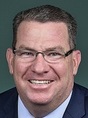

Cameron Caldwell Fadden, Liberal National Party, Shadow Assistant Minister for Housing
I second the motion and reserve my right to speak.

Madonna Jarrett Brisbane, Australian Labor Party
10:37 am
I don't often agree with the member for Cook, but, when he says that our prime minister is proud of his record, he absolutely is, and it's because we value supporting everyday Australian workers, people who work hard, as well as small businesses. They are the people who build and run our nation. We also happen to value making our tax system fairer so more Australians can realise the dream of owning their own home. We value supporting investment and innovation and we value a strong and stable Medicare system, NDIS and other social security services that are there for when people fall on hard times. That's why, since coming into office in 2022, our approach to taxation has been to ease the cost-of-living pressures while maintaining budget responsibility.
Let's look at our record starting from 2022. One of the first things this Labor government did and one of our most significant tax decisions involved the stage 3 tax cuts. Originally legislated by the previous LNP government, the stage 3 tax cuts heavily favoured high-income earners. We thought that this was the wrong priority. Labor's revised package ensured that every taxpayer still received a tax cut, but the larger proportion of the benefits went to low- and medium-income Australians instead of concentrating the largest gains among the highest earners. For example, somebody on $70,000 to $80,000 now receives a larger tax deduction than they would have under the original LNP plan.
High-income earners still do benefit, but it's not to the same extent as was previously proposed. This was a fairer distribution during a period of rising inflation, higher mortgage repayments and increasing household expenses. Beyond personal income tax, the government has also introduced measures designed to reduce multinational tax avoidance by increasing transparency and tightening rules around profit shifting. The objective is simple: ensure large multinational companies are paying taxes on profits earned in Australia rather than moving those profits offshore to lower-tax jurisdictions.
Another area of reform has been superannuation. First, we introduced the LISTO to ensure working Australians earning under $45,000 do not pay more tax on their super contributions than they do in their take-home pay. We also announced changes so those with super balances above $3 million would be taxed at a higher concessional rate than had currently applied. We've also provided $3.5 billion in targeted tax relief for small businesses to boost investment, improve cashflow and support growth, innovation and productivity. These changes vary from expanding the CGT concession to all 2.7 million active small businesses, to making the $20,000 instant tax asset write-off permanent and to progressing the new, innovative business CGT concessions to support early stage investors. In this year's budget, we have broadened our tax reform agenda. We did this because the tax system was broken and too many Australians were being squeezed out of the property market. Those opposite know this, but it was Labor who had the courage to do the right thing and to reform.
Before I jump into these reforms, I want to highlight that Australians will see two new tax relief measures: the $250 working Australian tax offset and the new $1,000 standard tax deduction. These measures will help households manage ongoing cost-of-living pressures. Back to the major reforms, tackling the moral failure of intergenerational wealth disparity and the emerging class structures where only inheritance rather than hard work makes homeownership possible was essential and bold. Our government has changed negative gearing so that, from 1 July next year, tax benefits for residential property investors will generally be limited to newly built homes. Existing investment properties purchased before 12 May this year are fully grandfathered. This means current owners can continue using the existing rules. These changes will encourage investment. There have been changes to our capital gains tax that replace the 50 per cent CGT discount with an inflation indexed system, and that'll be for most future gains from 1 July 2027.
All of these changes are designed to improve housing affordability, reduce tax concessions that disproportionately benefit wealthier investors and redirect investment towards increasing Australia's homeownership and home supply. We know those opposite want to keep Australians down. They came into this House to talk about aspiration—but aspiration for who? Under their policy it's aspiration for a few, not for all, and it's this government whose tax policies are reflecting our collective values as much as our economic priorities.
Cameron Caldwell Fadden, Liberal National Party, Shadow Assistant Minister for Housing
10:43 am
I thank my friend the member for Cook for bringing forward this motion. In the opening sentence, I don't think he could've summed it up better: 'sneaky and dishonest tactics to impose higher taxes on Australians'. Really, that's the summary right there. The member for Brisbane talked about the Prime Minister's record and the record of this government. I don't think they should be as proud of it as what they're making it out to be. This is a government that, in the end, will be judged by its record of having high taxes, high debt and high inflation, and I'll expand on some of those things. To all the people in the gallery: did you know that there is more than $77 billion worth of new taxes in the recent budget, did you know that national debt is shortly going to hit well over $1.2 trillion, and did you know that the inflationary pressures that this government is putting on the economy with their spending and their out-of-control taxation mean that, on average, the inflation under this government has been 4.1 per cent since it came to office?
Just 48 days ago, the Treasurer handed down a broken budget, and last week in this place we saw the Labor government team up with the Greens in a dirty, dishonest and, quite frankly, dangerous way in order to ram through its high-taxing agenda. That has shown us that their preparedness to rush through this budget and these high taxes has left all sorts of defects in the road. Last week, we heard talk about carve outs and exemptions. Quite frankly, you really shouldn't have to start a budget repair within weeks of having delivered the budget. Now we're seeing Labor flip-flopping on whether they're going to fix the widow tax that's now been embedded within these new changes. They knew the bill was defective. They didn't fix it when it could have been fixed. They rammed it through instead. Are they going to fix the widow tax this week or not? We suspect that they probably won't, based on what the Treasurer was saying on TV yesterday.
I just want to go back to the inflation point, because this is a really important point for Australians to understand when they're sitting at home and wondering why they feel poorer. It's because our living standards have dropped dramatically. The inflation is a measure, basically, of how fast things get more expensive. During the coalition government from 2013 to 2022, the average of inflation was about 2.2 per cent. Under this Labor government, the average inflation for the last four years has been 4.1 per cent. That is a significant difference. It means that things are getting more expensive at twice the rate they were under a coalition government. The Treasurer comes in and says, 'Well, you know, when we came in it was high.' Guess what, mate? It has stayed high. It has stayed way too high. The Reserve Bank needs to see it between two and three per cent, and, as I said, we're floating around 4.1 per cent on average. That is why, when you go to the store, you wonder why a loaf of bread or a bottle of milk or a block of chocolate or the washing powder or the toilet paper all seem more expensive, way more expensive, now than it did not that long ago. It's inflation that is the reason.
The Reserve Bank has had no choice but to act. They've had to act to intervene because their mandate is to bring down inflation through the means of monetary policy and their interest rates. That's why interest rates at the moment are 4.35 per cent. We've seen 15 increases in the RBA rate since Labor came to office. For each and every Australian who has a mortgage, that means not only are they paying higher income tax under this Labor government than any other Australian in history; they've also got about $30,000 more on their mortgage thanks to this Treasurer and this incompetent Labor government.

Rowan Holzberger Forde, Australian Labor Party
10:48 am
I rise to speak against this motion today. In doing so, I'd just like to home in on one of the key words in this motion, which is 'aspiration'. As much as I do try to see common ground across the parliament, I feel as if there really is a misunderstanding there about what aspiration means. I don't know how members of the three right-wing parties are out there talking to the community and talking to mums and dads who have basically given up on the aspiration of their kids ever owning their own home. I don't know how, just like we do, they are talking to young people who have basically given up on the aspiration of ever owning their own home. I don't know how it is that they continue to support a system which has effectively broken the spirit of the Australian people. It has effectively killed the Australian dream of ever owning your own home. I don't know how it is that, when they confront a mum and a dad or young people who have given up on the aspiration of owning their own home, that they can just throw their hands up in the air and say, 'It's too hard to change.'
Well, I can assure you that the approach of this government is real change. Since the Albanese Labor government were elected in 2022, we have been working through real and substantial change—and so it is here that we're not going to just throw our hands up in the air and say, 'I wish that we could do something about this, but we're only the government.'
The tax policy in this budget has really done three things. It has levelled the playing field for first home buyers, it has given more tax cuts to Australian workers and it has also provided some important and innovative policies to help Australian small business. I've said on a number of occasions that, since being an observer or a participant in politics, in reference to the decision to triple the Medicare rebate for people seeing a bulk-billing doctor, that I've never seen a policy have such an immediate and positive impact as that decision to triple the rebate for bulk-billing. One night in November last year, we basically fixed the bulk-billing system, though there's still a lot of work to do. One night in November last year, the number of bulk-billing clinics in the electorate of Forde, which I represented, doubled overnight. One policy! I've never seen a policy as effective as that one, but I think we might have a bit of competition.
This policy has also had immediate and positive impacts, from reports across the country—reports gained from talking to constituents. We now see auctions where first home buyers are again buying homes. We've now have sales where it is first home buyers who are able to compete again. They aren't competing against investors who are basically subsidising their bids with taxpayer money in their pocket. I think that the history of this government will show at least two policies—I'm not sure which one is going to be the most impactful yet—that have had immediate and positive impacts. So it is with this policy to assist first home buyers.
Fundamentally, this government is focused on fixing up the problems that we have been left with after 30 years of mainly coalition rule. Twenty years ago, when the current tax arrangements policy was introduced by John Howard 20, the multiple of income-to-house-price was somewhere around one to four. Today it's one to eight. It is even as high as one to 10. That is why people have given up on buying a home, because wages have not kept up with house prices. This policy attempts to repurpose the tax system to, I guess, incentivise or encourage the family home to be just that: a family home and not an investment vehicle.
On the other hand we are also focused on the other part of the equation, which is what workers earn and what they keep. That's why we now see the minimum-wage worker earning $12,000 more than when we came into government. That's why we have increased our— (time expired)

Tony Pasin Barker, Liberal Party, Shadow Minister Assisting for Fisheries and Forestry
10:53 am
Australians know their money isn't going as far as it used to. Groceries cost more, power costs more, insurance costs more, mortgages cost more and so do rents. It seems the Albanese Labor government doesn't register this as a problem, proposing to reach further into the pockets of everyday Australians with the highest tax increases in history through last month's budget, breaking promises along the way. Labor lied before the election; they betrayed Australians on budget night, and now they've rammed through toxic taxes on Australians trying to get ahead. Because Labor can't manage its money, they're coming after yours—and you may not even be told it's coming.
Through a rushed two-day inquiry on the bill, a new tax was discovered: the widows tax, where a change of ownership as a result of death or divorce might mean losing the grandfathered exemptions to capital gains and negative gearing. With the widow tax exposed, Labor had the chance to remove it when passing the bill last week, and you'd think they would have, but they didn't. They refused. They knew the bill was defective and they passed it anyway. The coalition stands ready to help them fix their mistake. Labor faces a simple test this week. If they're serious about fixing the widow tax, then they'll vote for our amendments. If, on the other hand, they vote no, Australians will know this has been just another Labor mistruth.
I also urge the Prime Minister and the rest of the Labor government to get out into their communities and speak to small business owners, families and hardworking Australians. If they do, I know they will see just as how harmful their new taxes are and how much stress Australians are facing because of this tax agenda. I've been in non-stop contact with small-business owners across Barker. On my regular street walks and at roundtables the message is the same: small-business operators are wondering why they should work so hard to try to get ahead. The more they work and the more they grow their businesses, it would seem, the more this government punishes them with higher taxes and more red tape. Of course, this contributes to higher costs.
Australians shouldn't be punished for working hard. They shouldn't be punished for getting a pay rise. Labor's high-tax agenda pushes Australians at every turn. Our plan will be for a freer, fairer system. It will back Australians to work hard, to take risks and to invest in their future. It will also force the government to respect Australian taxpayers' money.
The coalition will introduce a tax back guarantee, which will end inflation tax and stop Australians being taxed more simply because prices have gone up. The principle is simple. When your wage rises just to keep pace with inflation, you're no better off. But under the current tax system you're actually worse off because you're forced into higher and higher tax brackets, paying higher and higher tax for no reason other than that wages are trying to keep pace with inflation that's been let out of the bottle by those opposite.
From 2028-29, the tax-free threshold and the $45,000 threshold will be lifted in line with inflation. This will fully protect around 85 per cent of Australia's income earners. For a typical income earner, relief will be around $250 in year 1, but that will grow to around $1,000 in year 4. From 2031-32, the $135,000 and $190,000 thresholds will also be lifted in line with inflation. Taxpayers in those brackets will see tax relief in the 2031-32 year of around $1,250 and $1,600 respectively. The Tax Back Guarantee is a fair, simple and honest reform that will stop Australians in higher tax brackets being punished just because prices have gone up.
Under those opposite and their high-taxing agenda, Australians are working harder, paying more and falling further behind. Under the coalition, Australians will be rewarded. They'll keep more of what they earn and they'll get back to getting ahead.

Zhi Soon Banks, Australian Labor Party
10:58 am
It is a pleasure to join colleagues in responding to the motion put forward by the member for Cook. To his credit, he has managed to cram every single coalition talking point in. But it's important that we recognise the reality of the budget handed down by the Treasurer last month, not the Liberal scare campaigns.
This budget continues the government's record of structural future-focused tax reform. These reforms reduce the tax burden for over 13 million workers, with the working Australians tax offset and the instant tax deduction. Further, we're raising the Medicare low-income threshold, so over one million Australians on lower incomes will pay either a significantly reduced Medicare levy or none at all.
We're also making changes to the low-income superannuation tax offset so that low-income earners pay less tax and get more in their super accounts. And, of course, the countdown is on to the first of our top-up tax cuts; there are just two more sleeps till every taxpayer will keep more of what they earn.
We are better aligning the treatment of income from work and income from assets, reducing compliance costs by half a billion and ensuring that whole generations are no longer locked out of homeownership in this country. It is remarkable that, despite the combined benefit for the average Australian earner being up to $2,816 as a result of these tax cuts, those opposite will still try and spin it that we have increased your income taxes. The government also continues to manage the budget and the economy responsibly. The budget is $45 billion stronger than it was at the mid-year update in December, and the savings we have found are allowing us to deliver real, practical cost-of-living relief for Australians.
The member for Cook's motion makes claims about those buying a home, but he left out of his remarks that, overall, the budget papers reflect that this government's new policy initiatives will lead to more housing being built in net terms. This is in addition to the massive Homes for Australia Plan, which was already in effect. The motion also makes claims about building a business, but it conveniently leaves out that, after the adjustments that have been announced to the tax changes, every single small business will be unaffected. Additionally, we are making the $20,000 instant asset write-off permanent and reducing regulatory costs by over $10 billion through our productivity measures. Of course, the motion makes claims about the government making it harder to save for retirement, when in fact we are cutting taxes to put more money into the superannuation balances of low-income Australians.
It must be said that there is a level of irony in the Liberal Party bringing a motion like this regarding budget matters. Neither I nor the member for Cook was a member of this place during the last Liberal government, but I certainly remember that the Liberal Party made a whole slew of promises about budget management and debt levels before going to break all of them—and that's before we get to secret ministries, sports rorts, car park rorts, the Building Better Regions Fund or the Leppington Triangle.
This government will not take lectures from those opposite about honesty. This government is going to get on with the job of delivering for hardworking Australians, and it is not going to be distracted by coalition scare campaigns. I'll paraphrase my good friend and neighbour here the member for Bass, who put it best a few short weeks ago: Australians deserve better than being props in another coalition scare campaign. But, unfortunately for all of us, that is all this motion is.
Scott Buchholz Wright, Liberal Party
The time allotted for this debate has expired. The debate is adjourned, and the resumption of the debate will be made an order of the day for the next sitting.