
House debates Bills
Commonwealth Electoral Amendment (Voter Protections in Political Advertising) Bill 2026; Second Reading

Zali Steggall Warringah, Independent
10:25 am
I move:
That this bill be now read a second time.
The major parties refuse to act. For too long, they have used the lack of political advertising regulation to mislead and deceive voters.
This bill is about a simple principle: protecting voter rights from scams, the same way we protect consumer rights.
The major parties have refused to do this for too long. Why I would say can be obvious. But with the rise of the far-right movement and post-truth politics, supercharged by AI and social media platforms, this is only going to get worse and absolutely must be addressed without any further delay.
In 2022 and 2025, fake signage falsely depicted Independents as Greens candidates. This was not policy debate; this was an attempt to mislead voters about who candidates were and who they represented.
The Voice referendum exposed how misinformation can overwhelm democratic debate, with false claims repeatedly circulated to sow confusion, undermine trust and influence voters on the question of national importance.
AI is already entering political campaigning. Labor used generative AI to mock Peter Dutton's nuclear policy, while Queensland's LNP used AI generated content against Steven Miles. The technology is moving faster than the rules.
In the 2025 election, community Independents were targeted by third-party campaigns led by ex-Liberal MPs across Wentworth, Warringah, Mackellar, Kooyong and Goldstein.
In Goldstein, a mobile billboard depicted the then Independent member emerging from a genie's bottle under the headline 'All smoke'. It said that she had been questioned by the National Anti-Corruption Commission even though the National Anti-Corruption Commission had already found that there was no corruption issue.
In fact, there were strong inferences that the very referral led by ex-Liberal MP Jason Falinski was politically motivated, yet the NACC backed down from taking any kind of public stand around that concern on such a politically motivated referral and, in fact, declined to make any public statement to that effect. Without requirements for minimum standards in political advertising, candidates and communities will have no protections, and that situation will recur, and they will be scammed by bad faith actors.
It doesn't take a genie to see that there could be floodgates at the next election of politically motivated referrals to the NACC, which then just happen to be leaked to the media, with third parties linked to the opponents running advertising without any proper basis, making allegations that are incredibly false and damaging.
We have longstanding consumer protections to protect people from being scammed out of their money by misleading and deceptive advertising for goods and services.
Yet we continue to allow voters to be scammed by misleading and deceptive political advertising. We allow different rules for politicians than for the rest of Australians, and it has to stop.
This legislation does four clear things.
First, it requires AI watermarking. Any content that has been substantially created through AI has to bear a watermark, so the viewer is at the very least on notice that this is AI generated. It also safeguards future elections from the risk of electoral AI agents.
Second, political advertising must comply with the Ethical Political Advertising Code. All other consumer advertising has to comply with codes. Political advertising is the only one that is not covered currently. The political advertising code will require political advertising to be truthful and accurate. Claims must not mislead by omission, opinions must be identified as such and scientific claims should reflect the full body of evidence.
Third, this bill creates a political advertising standards board separate from the AEC commissioner to consider complaints and referrals and to take action. This addresses directly the concerns previously raised by the AEC commissioner that, if the AEC held this power directly, it could undermine confidence in the commissioner's impartiality. So I say to the government: we've addressed that excuse.
Fourth, it provides that content that is misleading or deceptive will attract criminal consequences and fines. This bill is targeted at false factual claims. It prohibits electoral or referendum material from including an express or implied statement of fact that is material, misleading or deceptive or likely to mislead or deceive.
Truth in political advertising is not about stopping robust debate, opinion, satire or criticism. It is about stopping false statements of facts, deceptive impersonation and advertising that misleads voters while they are forming their choice. The modern information space is abundant with misinformation and disinformation. Still, political advertising remains a free-for-all in this country.
We're witnessing a fundamental shift in how political information is created, distributed and consumed. For most of Australia's democratic history, political messages passed through institutions that exercised some degree of editorial judgement and accountability. Today, increasingly, information is selected and amplified by opaque algorithms whose operation is invisible to voters, regulators and governments. They have the power to push particular content to target voter profiles. That shift has profound implications for democratic accountability. This is a standards-free zone, and it urgently needs fixing. That's why I'm reintroducing this bill.
Voters have had enough of this status quo. They know this is happening. Voters are ahead of the government. Recent Essential Research polling from the Australian Democracy Network found 70 per cent of Australians want truth-in-political-advertising laws, while only seven per cent oppose them. Australians know the difference between a fierce debate and deliberate deception, and they want parliament and this government to act. Either the major parties need to find the courage to step up and put these guardrails and standards in place—standards that have overwhelming support from voters—or the move away from the major parties will continue and communities will keep looking for alternatives. Prebunking is currently the only approach available, where communities have to be warned of a complete lack of standards and truthful disclosure requirements for any content they receive during election periods or in between. That is appalling.
I commend this bill to the House, and I thank the member for Bradfield for her support in this legislation.
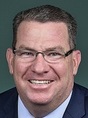

Nicolette Boele Bradfield, Independent
10:33 am
I second the motion. A strong democracy needs a firm foundation in fact, evidence and honesty. For that reason, it's a privilege to be speaking today on the need to have truth in political advertising to improve transparency and ban the lies. I thank and commend the member for Warringah for her tireless work in this area. In the last parliament, the member introduced a bill to establish a truth-in-political-advertising framework for the Commonwealth elections and referendums. The bill she is proposing today, the Commonwealth Electoral Amendment (Voter Protections in Political Advertising) Bill 2026, makes some very important additions.
First, it would introduce a board to oversee the truth-in-political-advertising framework. The board would sit within the Australian Electoral Commission but make independent decisions, be led by experts and be capable of investigating breaches of the law. Second, it would create an enforceable ethical political advertising code to ensure that ads aren't peppered with disinformation and lies, that scientific claims reflect the evidence and that opinions are not presented as fact. And, third, and very importantly, it responds to the rise of AI by requiring all ads to disclose when they use AI generated visual or audio content.
We are already seeing malicious actors use AI to disrupt democratic processes. The ABC found 370 fake Australian political messages in just one week across 14 foreign run Facebook accounts, and, in the 2024 US election, AI voice agents were used to call citizens and tell them not to vote. We need to inoculate our political process and our democracy from these risks.
It's shocking that, as a politician, I could run ads tomorrow that have no bearing to the truth and face next to no consequences. It just doesn't make sense. Most Aussies agree. Seventy per cent of voters support laws to require claims in political advertising to be accurate and truthful according to a poll commissioned by the Australian Democracy Network. And why wouldn't they? Who wants to live in a democracy where our elected leaders, or those running against them, are free to lie and deceive. We don't allow it in our supermarkets, in our super funds or in our gas networks. Why do we tolerate it in our elections? Without truth in political advertising, the quality of public discourse is degraded. I recommend this bill to the House and I thank the member for Warringah for her work in this area.
Scott Buchholz Wright, Liberal Party
The time allotted for this debate has expired. The debate is adjourned and the resumption of the debate will be made an order of the day for the next sitting.