
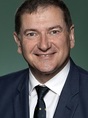
Llew O'Brien Wide Bay, National Party
2:39 pm
My question is to the Prime Minister. Can the Prime Minister advise whether a bricklayer who comes up with a faster way to lay bricks, a farmer who comes up with a more efficient way to harvest his crops or a hairdresser who comes up with a new hairstyle will be eligible for the innovative business CGT concession?

Jim Chalmers Rankin, Australian Labor Party, Treasurer
2:40 pm
When it comes to the examples that the honourable member has used, in every case—or in almost every case—they would be included in the new, much higher threshold for small-business turnover. I understand that the honourable member is asking whether those businesses would apply for this kind of concession. I'm saying that they would apply for another kind of concession, which would have a similar effect. So—
So the hairdresser is going to be turning over more than 10 million bucks, is it, mate? It might be where you get your hair cut!
Opposition members interjecting—
I do. I'm envious!

Milton Dick Speaker
The Treasurer will return to the question. When the House comes to order, I want to hear the remainder of the Treasurer's answer.
Jim Chalmers Rankin, Australian Labor Party, Treasurer
The point that I'm making is that there's more than one concession and carve out available. Every active small business will be able to access the CGT concessions and carve outs, and 98 per cent of all active businesses. When it comes to farms—I was asked particularly about farms, and my understanding is—
Milton Dick Speaker
We're just going to hear from the Manager of Opposition Business on a point of order. I mean it's a bit of a difficult time to take a point of order, when he was talking about a point of the question, but I'll hear from the manager.

Dan Tehan Wannon, Liberal Party, Shadow Minister for Energy and Emissions Reduction
The question was a very specific one around whether they would be eligible for the innovative business capital gains tax concession, not others. It was whether, for that one, they would be eligible.
Milton Dick Speaker
The question was about that topic regarding a bricklayer, a farmer and a hairdresser. We've heard about the hairdresser component, and now we're going to hear about the farmer component. The Treasurer just started to say, 'In terms of the farmer' that he was asked about by the member for Wide Bay. I don't know what he's going to say, but I'll make sure he's being directly relevant. But he was specific to the question from the member for Wide Bay, and I want to make sure. But I thank the manager for raising the point of order.
Jim Chalmers Rankin, Australian Labor Party, Treasurer
Me, too. I'll touch on the farmers, and then I'll go to the startups part of the question. When it comes to farmers, as a consequence of the implementation details that we announced on Thursday, something like 99 per cent of all agricultural businesses will be eligible for the updated 50 per cent active asset reduction—99 per cent of ag businesses, including farms. This might be why the National Farmers' Federation has described this as 'one of the most consequential wins for the NFF and its members following sustained advocacy on behalf of farmers'. That's the NFF taking a more constructive approach than those opposite.
When it comes to the startups paper that we released on Thursday, as we flagged in the budget papers on budget night, we are engaging, in good faith, in a meaningful and genuine way, and the consultation paper that we released goes to some of the questions that the honourable member asked me about—defining innovation, how long the business is held for—so we can provide the appropriate number of concessions and carve outs for a really important part of our economy, which is the startup sector.