

Rowan Holzberger Forde, Australian Labor Party
10:04 am
Sometimes it's a little bit daunting following the member for Bruce, but the good thing about speaking in this chamber and the video feed is that I can cut this up to make it sound like I came up with the idea! But I thought he summed it up perfectly when he talked about whether house prices are going to go up or down and what the government's intention is, and our intention is that wages will grow faster than house prices. It's pretty simple. When you look at what has happened over the last 20 years, there was not only a deliberate policy to keep wages down but also an accidental policy, I guess, which forced house prices up. We've seen house prices go from multiples of four or five of the median wage to about 10 times the median wage. It has become totally unsustainable and totally unaffordable. It really has killed the Australian dream.
I think what the last couple of weeks has really revealed in this place is the battlelines of the next election. When people realise that the investments that they have now have been grandfathered and the gains that they've made until now are going to be protected under the old rules, when they realise that, actually, the sky hasn't fallen down and that it's just a sensible recalibration of our tax policies to encourage people to buy a family home because it's a family home and not an investment people, the next election is going to be about that we are a party that believes in people buying a family home and in tax breaks for workers, and they're going to take a manifesto to the next election where they're going to give tax breaks to property investors.
I'm not sure they've really thought this one ahead. That's, of course, unless they change leaders again. Then, I guess, everything is off the table, and there's got to be a high chance of that. At the moment, we have really seen what the battleground of the next election is going to be. The other thing that the last couple of weeks have really revealed is the philosophy of this government. I think the way the Prime Minister summed it up has two key things. One is that nobody is left behind, and nobody is held back. The other thing that he said that really struck home to me—he of course said it more eloquently than I'm going to be able to say it—was, 'When you come across a problem, do you just sort of throw your hands up in the air and say, "I wish I could do something about it, but I'm the only Prime Minister?"' because I think what the last couple of weeks has revealed is that we are the party that is not going to cop the status quo anymore. The people on the other side are the party who are defending the status quo. Somehow, they've got themselves into a position where they think that our settings around housing are good, our settings around health care are good, and our settings around industry support are good. Somehow, I think they've got themselves into this awful situation. No wonder they're doing so badly.
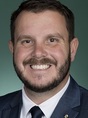
Phillip Thompson Herbert, Liberal National Party, Shadow Minister for Defence Industry
10:07 am
I rise today to speak about an issue that goes to the heart of who we are as a nation—how we care for older Australians and whether the system is designed to support them and whether it's doing its job. Right now, too many vulnerable elderly Australians are being left to navigate a system that is complex, confusing and, in many cases, failing them.
Older Australians built this nation, and they deserve to have the care and dignity that was promised to them. My Aged Care is meant to be a safety net, a gateway to essential services that allow older Australians to live with dignity in their own homes, but, what we're seeing on the ground tells a very different story. We've seen families overwhelmed by red tape, we've seen elderly Australians waiting months—sometimes longer—for care they're already been assessed as needing, and we've seen decisions being made by process, not by people. I recently asked the shadow minister for aged care, Senator Anne Ruston, to come to Townsville because we needed to advocate together for a Townsville man called Merv.
Merv's case highlights just how serious the failures are. Here is a man assessed as needing a high level of care. Support included help with daily tasks like showering, personal hygiene, mobility and the clinical care required as a safety net to safely remain in the home. Merv's family, when he was assessed at a higher level, were given a lower level package. They were finding it hard to get the support to help Merv with showering. They were talking about what days Merv could have a shower. That's just un-Australian. That is a basic human right. When the family had to step in and help him with the daily living activities, they contacted my office and told me about the extreme emotional burden that they were carrying. This shouldn't have happened. It's not about luxuries; it was about where Merv was assessed.
It should never take political intervention to secure the care for someone that has already been assessed as needed. And, as for Merv, whose case is now resolved thanks to the advocacy of Senator Anne Ruston and me, it shouldn't have to happen like that. People are struggling. Older Australians need the support and shouldn't be falling through the cracks. What happens if the family don't or don't know how to reach out to their federal representative? We shouldn't have to see a system failing these people. People are assessed at a higher level; they deserve the supports they need. Older Australians deserve the dignity that they always should have.