

Milton Dick Speaker
3:20 pm
I have received a letter from the honourable member for Gippsland proposing that a definite matter of public importance be submitted to the House for discussion, namely:
The impact of the government's budget of broken promises and toxic taxes on small businesses and Australian farmers.
I call upon those honourable members who approve of the proposed discussion to rise in their places.
More than the number of members required by the standing orders having risen in their places—

Darren Chester Gippsland, National Party, Shadow Minister for Veterans’ Affairs
It's now official. Our country is being run by a jellyfish caucus. The modern Labor Party has become a blubbering mess and is a political party which has simply lost its spine. Jellyfish are defined by their lack of brains, their lack of bones and their lack of heart. They are spineless and they are gutless, without the brains to think for themselves, drifting along on the ocean currents. Now, does that sound familiar? We have a jellyfish caucus drifting along the opinion polls, focus groups and the will of an untrustworthy prime minister. They don't even have the guts to be upfront with the Australian people.
Today the Labor Party guillotined debate on its budget of broken promises after only 24 members of the jellyfish caucus actually spoke on the second reading of the bill.
Unidentified interjection - Hansard doesn't record who said this
Government Members:
Government members interjecting—
Darren Chester Gippsland, National Party, Shadow Minister for Veterans’ Affairs
You can speak now! You could have spoken earlier. You gagged your own debate. Twenty-four members of the jellyfish caucus spoke on their own bill. Where were the rest of them? If these changes were that good, if they were so good, you'd think they'd all be lining up to come and talk about them. They'd be making these bold statements about their changes, and they'd cut them up into little Instagram posts and be promoting them on social media. But only 24 turned up. The jellyfish caucus went missing in action. They were hiding in their offices. But they can't hide from the Australian people forever.
There's another thing the modern Labor Party, this jellyfish caucus, has in common with its spineless ocean soulmates. Jellyfish have long tentacles, and they can sting without warning. That sums up this budget—sneaking up on small-business owners, sneaking up on farmers, sneaking up on retirees, sneaking up on veterans and stinging them with more taxes. The jellyfish caucus didn't have the spine, the brains or the guts to take these changes to the Australian people at an election.
This goes to the very core of why 66 per cent of Australians believe the country is heading the wrong direction. The latest mood-of-the-nation survey is a damning indictment of this government. After four years of the Albanese government, Australians are worse off, and they know our country is heading the wrong direction. The most common thing I'm hearing on the ground is this very simple message: Australians want their country back. They are angry, they are frustrated and they have been left behind by a prime minister who promised to govern for all Australians. This prime minister, as we know, is big on promises but very short on delivery.
Unlike the Prime Minister, I actually get out and talk to a lot of people in regional Australia. More importantly, I listen to their concerns. I listen to our farmers. Our farmers are world class. One of the reasons our farmers are world class is they know how to manage risk. They manage risk, like seasonal conditions. They manage risk, like commodity prices. More recently, they manage risk around fuel and fertiliser prices. But how on earth are our world-class Australian farming families meant to manage the risk of a deceptive Labor Party—a party that misleads constantly, is loose with the truth, fabricates facts and breaks its promises?
In each electorate, how are farmers meant to manage the risk of Labor candidates who are simply allergic to telling the truth, who can't be honest with the Australian people and a prime minister who says 12 months after the election that he simply changed his mind? He just changed his mind about the taxes he promised he wouldn't introduce. He promised not once, not twice, not three or four times. In his own words, he promised 50 times no changes to negative gearing, capital gains tax and trusts. That is not how this great Australian democracy is meant to work. The Prime Minister has simply trashed our democracy with his catalogue of broken promises in this budget.
I've had the good fortune of being through several elections to come to this place. Let me just explain to some of the class of 2025 opposite how it normally works. What happens in an election campaign, normally, is that the Labor Party, the Liberal Party, the Nationals, the Greens and Independents have policies. They make commitments. They make promises, and then the Australian people vote on them. That's how our democracy has traditionally worked. Call me old-fashioned, but that is how democracies have tended to work in this place in recent years—until this election.
Who could possibly believe another word from this Prime Minister as we lead up to next election? The budget confirmed the great deceit at the heart of this government. This is a government which was simply elected on a foundation of deceit, broken promises and trickery. After the federal election in May last year, the Prime Minister said:
We have a mandate for what we took to the Australian people. That is our mandate.
I agree with him. I agree with the Prime Minister. He had a mandate for what he took to the Australian people. He's admitted in his own words that he doesn't have a mandate for the broken promises in this budget. And every one of those members opposite knows it. Every member opposite knows it. We watch them in question time and, as soon as the Prime Minister starts to stumble on the details and doesn't know his own budget, the heads go down, the phones come out and they say, 'My God, I wish he'd just stop talking.' And that's what the Australian people are saying. The Australian people are saying, 'My God, I wish he'd just stop talking.' Every time he talks, he breaks another promise. The Prime Minister admitted in his own words he does not have a mandate for the broken promises and higher taxes announced in this federal budget.
Now the Prime Minister also told Australians—these words will hang around this prime minister's neck like an albatross all the way to next election.
I didn't even mean that one. I didn't even mean that as a dad joke. An albatross! The interjections are disorderly, Deputy Speaker Claydon. The Prime Minister told Australians:
My word is my bond.
And it gets better: 'I believe when you go to an election and you make commitments you should stick to them. My word is my bond.' Wow, Prime Minister! He also said, 'I will lead a government that keeps its promises.'
Ms Mascarenhas interjecting—
Louder! I can't hear you. Get excited. Let me know what you're really saying. Why would any Australian believe a single word he says after a budget of broken promises and higher taxes? Why would any Australian believe your prime minister when he's just delivered a budget of broken promises and higher taxes and every member opposite campaigned on the same broken promises? I don't recall any one of you opposite coming out and saying—
Government members interjecting—

Sharon Claydon Newcastle, Australian Labor Party
Enough interjections from members on my right. I've had enough. Member for Gippsland, direct your comments through the chair and don't engage with that, please. I asked them to stop. I don't expect any more.
Darren Chester Gippsland, National Party, Shadow Minister for Veterans’ Affairs
I'm fine, thank you, Deputy Speaker Claydon. I appreciate the encouragement. Thank you. Why would any of those opposite think they can go back to their constituency at the next election and say: 'Trust the Prime Minister. He's a man of his word. His word is his bond.' You have fundamentally broken the trust of the Australian people. Those opposite have fundamentally broken the trust of the Australian people and they know it. They are waiting out there for every one of you with baseball bats, and they can't wait to have the opportunity to let you know what they think of this prime minister and his broken promises. Why can't this prime minister just do the honest thing with the Australian people and take his proposed changes to the next election, like every other prime minister in history has done?
I'm going to finish where I started, because it's now obvious to every Australian that this prime minister never had any intention of keeping that promise, and it's because he leads a spineless, jellyfish caucus that doesn't have the guts to tell the truth to the Australian people. They do not have the guts to tell the truth to the Australian people before an election and stand on their record and try and get elected. They think Australians will forget about those broken promises and toxic taxes. But they are wrong, because on this side of the House we'll continue to stand up for the rights of small business owners, we'll back our farmers and we'll support aspiration among young people and Australian families. Only a coalition will deliver the policies that will improve our standard of living and restore our way of life, because Australia is worth fighting for.
Sharon Claydon Newcastle, Australian Labor Party
I'm just going to remind everybody in this House that words matter. Robust debate is very welcome in this chamber, but you should think very carefully about the words you use, particularly when directed towards each other. There is a code of conduct in this House, and I think we all should reflect on that a little bit.

Kristy McBain Eden-Monaro, Australian Labor Party, Minister for Regional Development, Local Government and Territories
3:31 pm
I rise today because I am proud to speak about the Albanese Labor government and I'm proud to speak about the work that our small businesses and our farmers do across this country. I know the member for Gippsland well. Our electorates border each other. We both live in coastal communities. And I understand his reference to jellyfish. But perhaps those opposite need to have a think about what their analogy looks like.
For me, it's sunfish: no, drive, no direction and completely dense—no idea, because so many of them don't actually come from small business backgrounds. My parents run a main street business. My husband and I run a small trade business, and we service our local community, like the member for Macquarie, the member for Paterson, the member for Parramatta and many more across this caucus who have all run their own small businesses. I am a representative of a regional electorate, and I get out and I talk to my small businesses. I've just attended four small business awards nights, recognising small businesses across my large regional communities. All of them are innovative. They do amazing things in our local communities, and the most important thing they do is employ local people and back community groups and events, each and every single day.
I know how important farming is to our regional communities. I know that each and every day we sit here we think about how we can support small businesses, how we can do that with our own dollars and how we can do that with policy as well. On this side of the House we're not just about announcements. We want to see what the outcomes are. We're not about the headlines. We want to know what the delivery is, and that's exactly what we're doing. We're delivering for businesses, for farmers, for regional Australia, because we want our small businesses and our farms to thrive.
We want to help with cost-of-living challenges. We want young Australians to be able to own their own home. We want young Australians in particular to grow up in the regions, to stay in the regions they grew up with, to raise their own families in the regions they grew up with and to actually get tertiary education, whether through TAFE or universities, in the regional communities they know and love. That's what we on this side of the House are delivering.
If those opposite really cared they would stop with scare campaigns and focus on the facts here: the fact that CGT changes start from 1 July 2027 and apply only to gains made after that date, not historic gains; the fact that there are existing generous exemptions for small businesses and farms in our CGT legislation; and the fact that our ABS data shows that nine out of 10 businesses in ag, forestry, fishing and across our small business sector will not be impacted by any of the changes in our CGT legislation.
These concessions now mean that the capital gain from selling an eligible small business or farm can be further reduced by half or even disregarded altogether, because there are four very generous existing small-business CGT exemptions. If those opposite were serious about talking with small businesses, they would know that there are already four very generous existing CGT exemptions because we want small businesses to thrive. They exist in our current tax legislation because we want to see more people getting into small businesses. We're maintaining those exemptions. We're supporting small businesses while still making the necessary reforms to rebalance our housing markets. We want to see the next generation enjoy the same dream of homeownership that many generations before them experienced.
Those opposite would have farmers believe that we are coming after their trusts. In reality, our government has already recognised the importance of that and clearly exempted them from this policy. Farm income earned by trust is an exemption under this legislation. The government has proved time and time again that we are the party that supports farmers and small businesses and, not only that, but that listens. We understand and we will make the changes necessary to make sure our policy is right. We're delivering tax cuts for 13 million Australians. We're delivering a simpler system, a fairer system, that is pro worker, pro aspiration, pro investment. We want to look after our Australians who take that risk every single day and back them and their ingenuity.
Our farmers, as I said, are the backbone of our country. They're resilient. They're productive. They are absolutely world class. Under this government, agriculture is going from strength to strength. Since we came to government, we've delivered record investments in ag, and we are continuing to back people who produce our food while making our tax system fairer and more sustainable. Since July 2022, we've invested over $1.3 billion in rural support and resilience funding, with $980 million spent to directly support producers, underscoring our government's commitment to supporting farmers, particularly as they face challenges. This is year-round support to help farmers who face hardship, including concessional loans. We've added $1 billion to the Regional Investment Corporation.
Earlier this year, our government opened the new drought hardship loan for farmers impacted by prolonged drought. Australian ag has achieved record results under our government—more jobs and more are happening across regional economies in the country. We've boosted biosecurity frontline workers because we need to be able to engage swiftly with new and emerging threats. We've expanded opportunities for farmers and producers to export world-class products on the international stage. We've delivered practical investments to ensure our farmers and producers can confidently face the changing climate we have. Forecasts show our farm gate production value remains on track to exceed $100 billion this financial year, which is four years ahead of the industry's 2030 target. When we combine that with fisheries and forestry, the value is forecast to reach $110 billion in the 2025-26 year.
We've been upfront that this year's budget would have a focus on addressing inflation, productivity and global uncertainty. We know each of these challenges has an impact on farmers and producers, which is why it is so important to do something. We've taken steps to shield our farmers and producers from the impact of challenges from the conflict in the Middle East, and the budget will help farmers and producers through our $7.5 billion establishment of the Fuel and Fertiliser Security Facility and $3 billion to establish a government owned fuel security reserve of around a billion litres. We're making the instant asset write-off permanent. We're permanently introducing a two-year loss carry back for businesses with up to $1 billion in turnover, we're funding the CSIRO and the Australian centre for disease protection, which supports important biosecurity testing capability. Our government will not stop backing farmers and producers, and this budget demonstrates that once again.
We're delivering for small businesses too, because, as I said, we know that they're the heart of so many of our regional communities. They're even the heart of our metropolitan communities. From Sydney to Perth and Bundy to Bega, Australian small businesses create jobs. They support families and they help shape our regions and our cities. That's why our government is backing it with a record-high 2.7 million small businesses who are now off the ground and thriving around the country. Even with global challenges in recent years, Australian small businesses continue to show strength and resilience, with more than 180,000 additional small businesses in operation since July 2022. These small businesses employ 5.2 million people and contribute around $600 billion to our nation's economy every single year. We're focused on continuing to back them, to start to grow and to build resilience, and we're doing this through a range of measures: making that instant asset write-off permanent; making the two-year-loss carry back permanent; introducing loss refundability for start-ups; having tax cuts for sole traders; and having the new $250 working Australians tax offset. We're supporting small-business owners with additional funding through mental health and wellbeing support and targeted temporary relief for fuel pressures on small businesses. We're making it easier for start-ups to access funding and we're incentivising research and development investments. We're cutting red tape, we're simplifying rules, we're lowering compliance costs, we're supporting the uptake of digital technologies and we're making it easier for small business to access workers with the right skills. And we're doing all of this because our story—the Australian story—is a story of a nation building, of aspiration and of giving back.
They say we're hurting farmers and small businesses. They say we're taxing farms. None of that is true. Our government is delivering tax cuts, helping more Australians realise the dream of homeownership, supporting investment and innovation through the most significant tax reforms in more than a quarter of a century. I know it's radical, but where I live people support small businesses, and we are going to continue to do that. Those opposite talk a big game, but do you know what? When it comes to it, none of them know how to run small businesses. That's what this side of the house do, and we'll continue to back them.

Anne Webster Mallee, National Party, Shadow Minister for Regional Development, Local Government and Territories
3:41 pm
With the greatest respect to my colleague the member for Gippsland, I think the text of this motion might be a little too kind to the Albanese Labor government. Labor's budget is worse than broken promises and toxic taxes. It exposes the 25 May election as a hoax, a sham. Small businesses and farmers are the primary victims of Labor's election hoax. You see, since federation, the Nationals and Liberals have been the natural parties of government in coalition. That is a statistical fact. The Prime Minister knows it because he and his Labor colleagues covet the mantle of Labor being the natural party of government. Labor, on the other hand, are a fraud on the Australian people, taking a policy platform to the May 2025 election that had nothing to do with the real policy platform of socialism that we, small businesses and farmers have seen in the May budget.
Labor's shock budget hits capital gains, negative gearing and trusts in ways they promised fervently before the election they would not do. I think it was 50 times. How many times do you need to be told, media? Labor have done more than rewrite the electoral playbook—they have thrown it out, burnt it on a pyre of all their other broken promises. Labor went to an election with a policy platform that was a complete fabrication, and small-business owners, farmers, self-funded retirees and young Australians are feeling the brunt.
Let me focus on regional Australians. Take, for instance, Rewiring the Nation. We saw the factual gymnastics before the budget that climate related spending would reduce, yet spending in net zero continues at speed in the budget papers and the cost of transmission line projects keeps going up and up. Consequently, so will every Australian's power bill—everybody in this chamber, everybody across Australia. This is one big reason communities like Mallee don't want transmission lines, yet Labor would prefer foisting transmission lines and associated energy eyesores in coalition electorates rather than their own. I know that may shock this side of the House, but it just appears to be the facts. The recent renewable energy zone—so-called—issued by the Victorian Labor government, recently fastidiously went out of its way to exclude the federal electorates of Bendigo and Ballarat. I wonder why that would be! It is plain as the nose on your face—another sham. Meanwhile, they're ripping the funding for Mallee communities out of the budget papers. It is shameful. But the other big reasons these projects are blowing out, these 'big builds', as they're called in Victoria, is Labor's cosy relationship with the CFMEU. Labor's plan to be the natural party of government is because they would be the only form of government possible, a bit like China—eliminate all the competition, tell fairytales at elections and in budgets, portray your opponents as holding positions they actually don't and blabber nonsense in the House in front of TV cameras on social media and hoodwink the electorate. It's called gaslighting the good people of Australia.
In Prime Minister Albanese's natural-party-of-government dystopia, unions have their fingers in all the pies. Nothing progresses without their say so and a heavy amount of government subsidies to boot. Small businesses will go by the wayside because the union movement perceives small businesses as enemies—they won't unionise a small-business workforce. It's much easier to crush small businesses and have big, unionised business take its place and get a sweetheart union deal that supports the Labor Party all the way to the bank. Sorry, I mean all the way to the election.
Take the construction code, for instance, making it hard for aspiring homeowners and small businesses alike to establish and grow. The construction code now runs to 2,000 pages. We on this side of the house have pledged to slash it back to 200 pages. That is called cutting red tape. Consider Labor's $77 billion tax grab, which they claim in large part is to help young people buy a house. What a load of terminological inexactitude.

Emma Comer Petrie, Australian Labor Party
3:46 pm
I am glad that the member for Gippsland has given me the opportunity to talk about the two backbones of not only our economy but our country—small business and farmers. The government knows just how important small business and Australian farmers to our economy, our communities and our national success.
I'd also ask the member for Gippsland to stop interjecting at me, considering I didn't do it to him during his direction. The reality is that this government is focused on helping Australians with the cost of living while building a stronger economy for our future, and our budget proves it. The government understands just how vital it is that we back small businesses that employ millions of Australians and support the industries that keep our nation moving. In Petrie, I speak with small-business owners every week. They tell me about the rising costs, workforce shortages, energy prices and challenges of operating in a changing economy. They want practical support, and that is exactly what this government is delivering. This budget provides tax relief for every Australian taxpayer. That means more money in peoples' pockets and more customers walking through the doors of local businesses. It continues our investments into skills and training, ensuring businesses can find the workers they need. It supports apprentices with free TAFE, which is encouraging workforce participation, and it is helping address one of the biggest concerns raised by employers across the country. Importantly, it continues our work to ease cost-of-living pressures through cheaper medicines, energy bill relief and a stronger Medicare system.
When families have more financial stability, local businesses benefit too. This government is also directly supporting small businesses by making the $20,000 instant asset write-off permanent from next year so small businesses have the confidence to invest in themselves. This will make a world of difference for the thousands of small businesses in my community. It means more certainty, more cashflow and less compliance costs. Small businesses are the engine room of our economy. They sponsor our local sporting clubs, employ local people and help build the character of our communities. Whether it's a family owned cafe, a local tradie, a retailer or a manufacturer, they need a government that is focused on helping them grow and succeed, and that is exactly what we're doing through our investments in skills, infrastructure and economic opportunity.
Australian agriculture is one of our nation's great success stories. Whilst we don't have many farmers in the electorate of Petrie, the vital work our Aussie farmers do benefits every member of the community. Our farmers feed our nation, contribute billions to exports and support regional communities right across the country. This government recognises that, and we'll continue to always support our farmers.
We continue to invest in agricultural productivity, biosecurity and export opportunities. This government, led by the amazing work of the trade minister, Senator Farrell, has opened Australia's export markets across the world, including the new European Union trade agreement, which means consumers all across the globe will be able to enjoy some of the best-quality produce in the world provided by our farmers—including Tasmanian farmers.
We understand that farmers face real challenges, from natural disasters to global market volatility. That is why our focus is on practical support and long-term resilience rather than cheap political point scoring. Strong agriculture requires strong infrastructure, strong export markets, strong workforce participation and strong environmental stewardship. Australian farmers have shown incredible resilience through floods, droughts and global disruptions. Our role as a government is to ensure they have the tools, supports and market access they need to continue thriving and contributing to Australia's economic success.
The choice before Australia is not between supporting families and supporting businesses, or between helping communities and growing the economy; the choice is whether to build an economy that works for everyone, and that is what this government is doing. The budget recognises that economic strength comes from investing in people, supporting businesses, backing Australian industry and creating opportunities for future generations.
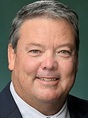
Andrew Willcox Dawson, Liberal National Party, Shadow Assistant Minister for Manufacturing and Sovereign Capability
3:51 pm
This budget is big-spending, high-taxing and full of broken promises. This budget is an attack on our farmers. Are there any farmers among those opposite? Have any of those opposite actually been to a farm? Oh, this is tough! Have any of those opposite driven past a farm? Have any of those opposite driven past, or known anyone who's driven past a farm?
Unidentified interjection - Hansard doesn't record who said this
Hon. Members:
Honourable members interjecting—
Sharon Claydon Newcastle, Australian Labor Party
The member for Dawson, I did have this discussion earlier on. Enough of the interjections! I am asking for comments to be directed through the chair. This is not a game show.
Andrew Willcox Dawson, Liberal National Party, Shadow Assistant Minister for Manufacturing and Sovereign Capability
I take your advice, thank you. I've done that one before, but thanks for that. I'm a proud third generation farmer, and I will just explain to those opposite what farming is all about. I'll go back to my mother.

Andrew Willcox Dawson, Liberal National Party, Shadow Assistant Minister for Manufacturing and Sovereign Capability
A tomato farmer—that's right! Thank you, the member for Forde. It's good to see you back out of the freezer.
Andrew Willcox Dawson, Liberal National Party, Shadow Assistant Minister for Manufacturing and Sovereign Capability
My mother used to get up very early in the morning and make our lunches and breakfasts, and then she used to go over into the shed and pack fruit. She would work all day and then, for afternoon tea break, come home and make sure we kids got some afternoon tea. Then she'd go back and pack fruit. Then, after work, she'd come home, cook everyone dinner and clean up. Then, after we kids went to bed, she used to actually have to go into the office and do the bookwork. That is how hard it is on farms. That is how hard the farmers work. My father was the same. He was out working the fields from daylight to dusk.
While they were doing that and developing the business, they never had any extra money to put into super. The farm was their super. But now, with these new changes that the government has just brought in, people like my parents won't have that same opportunity, because the capital gains will then tax them out of existence. This is simply not fair. Those opposite just cannot get away with this. But I can understand, because of my questions earlier, that the reason this has happened—
Rowan Holzberger Forde, Australian Labor Party
You're just making it up—like what you said I said today!
Andrew Willcox Dawson, Liberal National Party, Shadow Assistant Minister for Manufacturing and Sovereign Capability
Again, the member for Forde's very, very helpful, isn't he! Check the tape. Those opposite just don't get it because they've never ever had to do it. What is the reason for all these extra taxes? It's Labor's addiction to spending—$77 billion more of taxation in this high-taxing, high-spending budget.
What about small business, the backbone of the nation? Well, they've taken on a new unwanted shareholder, and he's got a 47 per cent stake claim in their business. And let me tell you, the Prime Minister is not wanted in these small businesses. He's unreliable, he's dishonest, and he's certainly not required. Small business is so important to the whole of Australia. It's the self-starters. It's where big business gets started. It's so, so important, and this side of the House will back our small businesses each and every day. When the Prime Minister said, 50 times, I might add, that there would be no new taxes, what about the death tax that they're bringing in? The Albanese Labor government want to tax people from the cradle to the grave. It is just ridiculous. And what did they do? They buried it in the budget papers. It's not called a death tax; it's an inheritance tax. What about the promise of the new taxes? There are so many taxes now, and this is after being promised no new taxes. There are changes to the capital gains tax, negative gearing and trusts. Like I said before, there's a death tax.
But we have a plan on this side of the House. The coalition will axe all the toxic taxes that have just been passed because we understand that, when the government taxes something, you get less of it—less housing, less saving, less investment, less small business and less farming. It's less aspiration and less of the Australia that we love. This is a choice before the House—a government that takes or an opposition that builds, a government that hides taxes or a coalition that creates opportunities. This government has spent all its political capital, and they are bankrupt of vision. It's time that they pay the price. And, let me tell you, Australians will make the Albanese Labor government pay the price.

Kara Cook Bonner, Australian Labor Party
3:56 pm
When Labor came to office in this place, we didn't inherit a clean slate. We inherited an absolute mess: a trillion dollars of coalition debt, huge deficits, inflation biting and real wages going backwards. That was the coalition's legacy. And that is what those opposite—a few less are here, actually—left behind. And you know what their response was when we started cleaning it up? They voted against us every single time.
Labor got to work because that is what Labor does. We recognised that people were under real pressure, and we took action. Labor has delivered the most significant tax reforms in more than a quarter of a century. It's not tinkering, and it's not talking; it's the most substantial overhaul of our taxation system in a generation, and we've done it while managing the budget responsibly, strengthening Medicare and helping with the cost of living at the same time.
In health, in housing, in wages and in tax—in every single area that matters to a family who is sitting around a kitchen table—we acted. We have delivered tax cuts for every Australian taxpayer, not just for the top end of town or big donors but for every worker who gets up every single morning and does their job. They are the ones who deserve to earn more and keep more of what they earn.
On top of that, we today have passed legislation for the $250 working Australians tax offset as well as the $1,000 instant tax deduction, because workers deserve a fair go in the taxation system. That is combined with three rounds of tax cuts. The average Australian worker will be $2,800 better off under this Labor government.
We have made medicines cheaper. We have invested in bulk-billing. We have made Medicare urgent care clinics a permanent part of our healthcare system, so, when your kids need care, you can get it without worrying about the cost. We are tackling housing, with over $47 billion in our Homes for Australia Plan, supporting 75,000 more Australians into homeownership and enabling tens of thousands more new homes to be built. We've halved the fuel excise because we know that, when you fill up at the tank to get to work, every cent counts.
And we have backed Australian workers every single Annual Wage Review, five years in a row. That's five years of standing up and saying that workers deserve a real wage increase. The result is that the minimum wage has gone up 30 per cent since we took office. For the first time in this country's history, the national minimum wage will be above $1,000 a week.
Let's be honest about who's fighting us every single step of the way: those opposite, the same people who left us with a trillion dollars of debt, the same people who at the last election wanted to increase taxes on ordinary working Australians. I mean, you can't make this stuff up. And what was that to pay for? It was to pay for taxpayer-funded lunches for bosses and nuclear reactors that would push power prices up, not down. They have opposed our tax cuts, they have opposed our wage rises and they have opposed the very cost-of-living measures that are putting money back in people's pockets right now.
You have to ask yourself why. Why would they do this? And the answer is so simple: they will never, ever be on the side of hardworking Australians. They never will be, because they are more interested in their politics than in your family. They are more focused on themselves than on cost of living. They are divided, they are dangerous, and it will be everyday Australians who pay for their dysfunction.
We are a government that is on the side of working Australians. This government was elected to make life better for ordinary working people, and not one day has passed when we haven't been doing exactly that. We are focused on cost of living and delivering for them. Those opposite are focused only on themselves.

Alison Penfold Lyne, National Party
4:01 pm
The Albanese government taxes aspiration. This side backs aspiration. The Albanese government told Australians one thing before the election and is doing something completely different afterwards. The Prime Minister promised there would be no changes to negative gearing, and he promised there would be no changes to capital gains tax. Australians were assured that these policies were safe—'for the 50th time'. Now those promises have been abandoned. This is a Labor budget of broken promises and toxic taxes. All the spit and polish in the world cannot make it shine.
The Treasurer says Labor's tax reform is good for the economy. The problem is that the people who actually create wealth in this country say otherwise. When you tax investment you get less investment, and when you tax risk-taking you get less risk-taking. That is not politics; that is economics. Yet this government wants Australians to believe we can become more prosperous by taxing investment, enterprise and aspiration more heavily. Well, the people who will feel the impact most are not multinational corporations. They are family farms, they are small businesses, they are family enterprises that have spent decades building something for the next generation.
Across regional Australia, trusts are not an exotic tax arrangement. They are the legal structures used by farming families, tradies, retailers, transport operators and professional businesses to manage risk, plan succession and keep businesses in family hands. Farmers understand something that this government does not: a farm is not a tax structure; it's a family enterprise built over generations. Trusts provide flexibility to manage risk and transition a business from parents to children. Yet Labor sees those structures and sees only a source of revenue. The National Farmers' Federation and many farming groups have warned about the impact these changes could have on family farm succession and investment decisions. Small business groups have similarly warned about the uncertainty these measures create at a time when business confidence is already fragile.
What is perhaps most extraordinary is that this week the government has struggled to answer basic questions about its own trust changes. Ministers have been unable to clearly explain how the policy will operate in practice or how it will affect testamentary trusts, donor trusts and family enterprises. Labor wants you to pay but can't explain the way. If the government cannot explain the detail of a tax policy, how can Australians have confidence that the policy has been properly thought through? This looks increasingly like a government making tax policy on the run, a government announcing taxes first and working out the consequences later. History tells us that, when governments do that, small businesses and farmers usually end up paying the price.
The most extraordinary thing about these taxes is that they are not being introduced because the government lacks revenue. Australians are already paying more tax than ever before. Bracket creep is delivering billions. Inflation is delivering billions. According to the budget papers, Australians will pay around $77 billion more in tax. Yet debt continues to rise, spending continues to rise and deficits remain. Historically, governments use revenue windfalls to repair the budget. This government has treated them as an invitation to spend more. These taxes are not being driven by economic necessity; they are being driven by a government that has become addicted to spending and now needs higher taxes to sustain it.
While the Treasurer talks about fairness, ordinary Australians are asking fair questions. Leigh from Tinonee asks: 'What have I done to justify being penalised by this treasurer and this government? All I have done is save and work.' This budget was sold as a budget about fairness. It is increasingly being revealed as a budget of broken promises. A government that promised not to change negative gearing or capital gains tax is changing both. A government that claims to support small business is making it harder for small businesses to invest. A government that claims to support farming families is creating uncertainty around the structures many farming families rely upon to pass their businesses to the next generation.
The coalition takes a different view. We believe small business should be rewarded for taking risks. We believe families should be able to build wealth and pass opportunities to the next generation, because a stronger Australia is not built on taxing aspiration; it's built on backing aspiration and cutting Labor's toxic taxes.

Cassandra Fernando Holt, Australian Labor Party
4:06 pm
This is a responsible budget—one focused on relief, resilience and reform. This approach matters because we are governing in a difficult global environment. Conflict in the Middle East has pushed up oil prices, disrupted supply chains and placed immense pressure on household budgets. In my community, families are feeling the pinch every single time they fill up the car, pay their bills or do their weekly grocery shop. That is why this budget delivers real cost-of-living relief. It delivers tax relief for every Australian taxpayer. The new working Australians tax offset will provide up to $250 for working Australians from 2027-28, alongside a $1,000 instant tax deduction to simplify tax time and provide immediate practical support. For everyday Australians in my electorate of Holt, it deeply matters.
This budget also backs the small businesses that keep our communities moving. Australia's 2.7 million small businesses are the backbone of our economy. That is why the government is delivering $3.5 billion in new business tax relief. We're making the $20,000 instant asset write-off permanent, giving small businesses more certainty when investing in equipment, technology and tools. We are also introducing a permanent two-year loss carry-back, helping businesses bounce back faster and withstand unexpected volatility. For startups and innovators, loss refundability will help new businesses grow in their first two years. These measures back the people who back our community, because when small businesses do well our whole community thrives. We are backing Australian farmers. We are strengthening biosecurity, opening new trade opportunities, investing in fuel and fertiliser security, and supporting producers through hardship.
That same principle guides our approach to housing. We know that housing remains one of the biggest pressures Australians are facing. Too many young people are working hard, saving and doing everything right only to feel the dream of owning a home slipping further away. That is why our government is reforming the system to support more first home buyers and rapidly increase housing supply. We know it isn't enough to simply announce more homes. We must build the essential infrastructure to make those homes a reality. That's why this budget commits $2 billion through the Local Infrastructure Fund to deliver the roads, water, power and sewerage required for new developments.
Health care is another central pillar of this budget. The government is investing an additional $25 billion over five years into our public hospitals. We are also making Medicare urgent care clinics a permanent part of our healthcare system. This means more families can access care when they need it without spending hours waiting in a busy emergency department.
On this side of the House, we are easing cost-of-living pressures, strengthening Medicare and building more homes. But, from those opposite, we've heard no serious plans—just uncosted ideas, detail-free cuts and division. The clearest example was the opposition leader's proposal to deny permanent residents access to the NDIS and 17 support services.
Let's be clear who they are targeting. These people are not strangers. They work here, pay taxes, raise families and enrich our communities. In Holt, they are nurses, aged-care workers, teachers and tradies, small-business owners and volunteers. Many have lived here for years. I know this story because this is my story. I came here as a very proud migrant, and I know their pride and sacrifices and the contribution migrant families bring to Australia. They do not weaken our nation; they strengthen it. To target them for a cheap political gain is not leadership; it is division. And it has no place in our country, while those opposite rely on divisive scare campaigns and desperate attempts to chase One Nation politics.
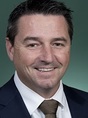
Pat Conaghan Cowper, National Party, Shadow Assistant Treasurer
4:11 pm
We, on this side of the floor, know that, if you tax something more heavily, you get less of it. This Labor government has decided to take aim at aspiration, ambition and Australian values. Are those the things that we really want less of in our nation? We need our nation to prosper.
They also appear arrogant enough to believe that the promises made prior to an election can be arbitrarily broken with the flick of a pen and that Aussies should thank them for it, because let's be clear: no-one voted for these taxes. Before the election, the Prime Minister stated, more than 50 times, he would not introduce them. So much for 'my word is my bond'!
In the pages of this budget, we see a desperate Treasurer at the helm of a sinking ship that's sailing on a sea of broken promises—and I should say 'a pirate ship', because Labor is pillaging the pockets of millions of hardworking Australians because it cannot mention the nation's finances. And the hardest hit by this pirate Treasurer parading as an intergenerational Robin Hood are our small-business owners and our generational farmers—the backbone of our economy and the largest employers in regional Australia. They're the ones that take the risks, and train and employ our young people, and, more importantly, produce things—produce things for their communities and this nation. But the government is reaching into their tills and taking a 47 per cent stake claim.
All those unflattering memes of the PM and his Treasurer alongside small-business owners have flooded our social media pages, and they paint a very clear picture: they've done none of the work and taken none of the risk, but they'll take half of what you earn in the end. And, like pirates, they're taking something that they haven't earned because they saw the opportunity to do so and just because the lower house has the numbers on their ship to do so with disturbing ease.
It's no wonder that Australia is now in the unenviable position of having more than 50 per cent of voters reliant on government as their main income, because why would you take a punt? Why would you get out there and risk everything? Creating, managing and growing a small business or farming enterprise is hard. I can say this from personal experience, having run a business for 18 years before coming to this place—unlike those opposite, who roll out of university into union jobs or political office and have never once shouldered the burden of managing the bottom line, keeping their staff safe and paid, or dealing with cash-flow issues or midnight BAS submissions. Very few have also ever tended to crops or livestock while battling the weather and global factors and everything in between.
Unidentified interjection - Hansard doesn't record who said this
Government Member:
A government member interjecting—
Pat Conaghan Cowper, National Party, Shadow Assistant Treasurer
I take the interjection from across the floor. Perhaps they should go and speak to the member for Forde, who has actually worked on a farm and has made the concession that Australians are worse off.
In this country our business insolvency rates are leading the world. We are clocking in at eight closures per business hour. But, rather than sending life rafts, this government ship seems to be intent on aiming its cannons at those who are now somehow managing to survive against all odds. These are businesses and primary producers that have already taken hits to their bottom line in the form of rampant power and fuel increases, out-of-control insurance premiums surges and skyrocketing rents. It's a far cry from robbing the rich. In reality, this government will be sending former gainfully employed Aussies to the dole line once these small businesses finally break and are forced to start laying off staff.
The Treasurer and Prime Minister insist there will be carve outs that protect small businesses and family farms. The problem is there's no tangible evidence of that to date. We have to take them at their word—and we all know how good that word has been in the past! In stark contrast, we on this side of the floor want to provide Australians with a hand up, rather than a handout for what they have earned. We promise we will repeal these punitive taxes once this government is thrown out by the angry Aussies it represents. Rather than tax something we need more of, we'll provide a tax incentive to build and produce and look after those Aussies that deserve it.

Jess Teesdale Bass, Australian Labor Party
4:16 pm
At the start of this MPI, the Labor Party was compared to jellyfish. Perhaps it's the continuously regenerating immortal jellyfish that they compare us to. But I ask the party and I ask the chamber what is the expected lifespan of the National Party? Do we think it might be like the immortal jellyfish, or might it be much shorter?
This budget delivers for my local community in Bass. It is about supporting local businesses. It helps working families with the cost of living, it strengthens our health care and it builds a stronger regional economy for northern Tasmania. Bass is a community built on hard work. From small-business owners to tradies, manufacturers, farmers, tourism operators, health workers, hospitality staff, we have it all in Bass. Our region succeeds because our local people back themselves and they back each other, and we back them too. Of course, agriculture is absolutely the heart of the story. From dairy and cropping to fisheries and exports, our farmers and producers are central to our economy and our identity.
We also know the last decade has been challenging. Global inflation, supply chain disruptions, workforce shortages and rising international costs are putting real pressure on our households and our businesses alike, including our farmers. Our Labor budget responds to these pressures with practical measures that support growth, resilience and opportunity.
For our local businesses, one of the most important measures that they keep talking to me about is making the $20,000 instant asset write-off permanent. That will help 9,253 small businesses in Bass alone, and that certainty really does matter. These businesses in Bass should be able to plan ahead with confidence, invest in new equipment, upgrade their technology, purchase their vehicles or tools and grow their operations. We need to make sure these measures are permanent. They reduce compliance costs and improve cash flow. And we need to make sure that small businesses continue to invest and hire in our local economy. When they invest, our whole region benefits.
The budget's also about making sure people are earning more and keeping more of what they earn. We've got the working Australians tax offset—goodness me, there are a lot of words there!—and the $1,000 instant tax deduction.

Jess Teesdale Bass, Australian Labor Party
WATO, indeed. It's supporting families, local jobs and businesses.
Since coming to our office, our government has delivered record investment into agriculture, and it's built a strong foundation for this vital sector. I'm proud of the work done by my fierce Tasmanian colleague Minister Julie Collins. We've boosted biosecurity, we've expanded export opportunities and we've backed farmers to deal with a changing climate. Earlier it was asked if we had been to a farm. I've sat on farms with the Minister for Agriculture, Fisheries and Forestry drinking cups of tea, listening to farmers. On Flinders Island we walked down the very long driveway of a farm and looked for Killiecrankie diamonds. It's an incredible place and an incredible part of the world. Our minister knows our community well. I know our community well. In our budget, we know that we need to continue this work. We're investing in market access, international leadership, export support and strengthening the agencies that underpin that agricultural sector. We're also investing in fuel and fertiliser security because we know how critical that is to our farmers and our regional communities, particularly in Bass. These investments are about resilience, productivity and securing the future of Australian agriculture.
While we're getting on with delivering for farmers, those opposite continue getting on with running scare campaigns. It hurts me to hear it day in and day out in this chamber. We need to be really clear about these facts. The changes to capital gains tax do not start until 1 July 2027, and they only apply to gains from that date. It is not on historic gains. Importantly, those existing tax concessions for small businesses and farms remain in place. Our data shows that more than nine in 10 agricultural businesses will fall well under that turnover threshold, meaning that they will continue to benefit from ongoing concessions. When people continue to choose to spread fear, they're continue to ignore the facts. They're ignoring the support in this budget and they're ignoring the reality for Australian farmers.
On this side, we're delivering real support. The Nationals would rather run a scare campaign to save their own seats than support regional and rural Australia. They're chasing headlines while we do the work. They spread fear while we're delivering the facts. Farmers deserve better than being treated as props in another National Party scare campaign. They deserve directness, honesty and certainty. They deserve a government who is focused on their future, not political point scoring. This government will always back our farmers, our workers and our regional communities.
Sharon Claydon Newcastle, Australian Labor Party
The time for this discussion has concluded.