
House debates Bills
Appropriation Bill (No. 1) 2026-2027; Consideration in Detail

Andrew Hastie Canning, Liberal Party, Shadow Minister for Industry and Sovereign Capability
10:32 am
The Albanese government is killing Australian manufacturing and industry with its radical net zero policies. Under Labor, we are witnessing in real time the destruction of the Australian industrial base. The government's Future Made in Australia is nothing but a cover for Labor's push to net zero, which is a taxpayer funded subsidy scheme with no guarantee of success. We're guaranteed failure, though, and time and again the Australian people are being asked to bankroll the bailout of our heavy industry, with no timeline on when the government's support will end. This budget is no different. Labor's budget commits a further $222.6 million to the Whyalla steelworks despite the government having no buyer. What is Labor's strategy when it comes to Whyalla, and how much more taxpayer support can we expect? Does Labor have a plan in place should it fail to find a buyer?
Meanwhile, despite announcing its bailout last December, there is still no money in the budget for the Tomago aluminium smelter in the New South Wales Hunter region. Yesterday at estimates the Minister for Industry and Innovation conceded that not only is there no money in the budget for Tomago but the budget has not finalised a package or a timeline for when funding will be delivered. It has been six months since the minister stood up at Tomago, yet he still hasn't come good on his commitment. Under Labor, there is no transparency and no plan. Instead we see bailout after bailout—Tomago, Boyne, Glencore.
The truth is that Labor's net zero madness is driving electricity prices through the roof. We've seen electricity prices increase by up to 40 per cent over the last four years. The government's policy settings are making it difficult for heavy industry to remain viable in Australia. Despite this, Labor continues with its green ideology by importing solar panels and wind turbines from China while our smelters struggle. This isn't a future made in Australia; it's a future made overseas—courtesy of largely Chinese manufacturing. Meanwhile, Labor is pouring $775 million into their Green Iron Investment Fund over the forwards, which is a massive commitment with no proven commercial outcome. The Albanese government is asking the Australian people to take on a $775 million experiment and wear all the risk. What evidence does the government have that the Green Iron Investment Fund will deliver a return?
Instead of focusing on delivering cheap, reliable baseload power to Australian industry, Labor are pushing ahead with net zero by 2050 at any cost. They should pick up that recent essay by former British prime minister Tony Blair as I think they would find some good advice and counsel in that. Again, the government are pursuing their net zero agenda under the guise of the Future Made in Australia.
At the same time as writing millions of dollars worth of cheques to questionable projects, Labor is taking money out of industry and innovation programs. This budget has no money for the Boosting Female Founders Initiative, the Buy Australian campaign, the Entrepreneurs Program, the Innovation Investment Committee, Australian Critical Minerals R&D Hub, the Critical Minerals Development Program and the Global Mining Challenge program. The list goes on. Labor has ripped more than $8 million from the Industry Growth Program. All of these initiatives—which encourage a prosperous, competitive, secure Australian industrial sector—have been cancelled or cut by the Albanese government. This is the true cost of Labor's industry agenda.
This government is making Australia a less attractive place to do business. Despite promising not to make any changes to the capital gains tax before the election, this sneaky Labor government has imposed its toxic taxes on the Australian people and industry. Under the Albanese government, investments in startups and incentives for Aussie entrepreneurs to grow their business have become less attractive. Labor is increasing taxes on investment at the very time Australian industry needs more capital. If Labor wants more Australian industry, why is it making investment in Australian businesses less attractive? While businesses are struggling, the truth is the Albanese government continues to fund its net zero obsession.
The workforce at the Net Zero Economy Authority, the government's very own statutory body for managing the transition to net zero, has grown from one employee to 158. How many of these roles focus on supporting communities affected by Labor's aggressive push to net zero at any cost and how many are policy positions?
Australian manufacturers need affordable and reliable energy and not more bureaucracy and government intervention. A strong industrial base starts with affordable, reliable energy. That's why the coalition is going to get out of net zero. We're going to put on more coal, more gas; we're going to get a nuclear industry going with the support of the private sector. But the reality is that Australia's net zero is making Australian industry less competitive at a time when our nation needs to be more competitive in a dangerous, insecure and uncertain world. It's enough. Start putting Australian first.

Dan Repacholi Hunter, Australian Labor Party
10:37 am
Today I want to talk about one of the industries that has helped build our nation and continues to power communities like mine in the Hunter. When people talk about mining, they are not talking about some distant industry. In the Hunter, mining is our neighbours; it is our night shift workers; it is the apprentices starting their careers; it is the small businesses supplying equipment, meals, transport and services; it is the families putting food on the table; and it is the communities that have been built on generations of hardworking Aussies. Mining matters to Australia and mining matters to the Hunter.
Across Australia, the resources sector continues to be one of the biggest contributors to our national prosperity. Resources and energy exports were worth around $385 billion in 2024-25. The sector contributed more than $50 billion in company tax and almost $22 billion in royalties, helping fund schools, hospitals, roads and services Australians rely on every single day. Mining alone delivered $231 billion in exports last year, and employs more than 310,000 Aussies. It remains Australia's most productive industry, and one of our greatest economic strengths.
But for me, these numbers aren't just national statistics; they have real meaning to me in the Hunter. In my electorate, mining supports thousands and thousands of local jobs. Those workers earn more than $396 million in wages each year, supporting local households, local shops and local communities. More than 1,000 local suppliers are directly supported by the industry, and mining generates around $2.7 billion in annual direct spending through business purchases—community contributions and payments that all flow back into our region.
That's thousands of families who rely on this industry. That's thousands of workers who get up every day, put their boots on and head to work knowing they're helping support their family and contributing to Australia's prosperity. It's also hundreds of local businesses that rely on a strong resources sector. Whether it's an engineering shop in Mount Thorley, a cafe in Morisset, a transport operator in Cessnock or a family owned business in Singleton, the benefits of mining flow right across our region. That's why we need to have honest conversations about what mining delivers.
Too often people focus only on what comes out of the ground. They forget what flows back into our communities. Mining helps fund Medicare. Mining helps fund our schools. Mining helps fund our infrastructure. And mining helps fund emergency services and national defence. According to industry data, Australian mining paid around $74 billion in taxes and royalties in a single year. That's money that helps deliver the services Australia depends on every single day. The Hunter understands that better than most. We know that a strong resources sector and a strong future go hand in hand. We know that skills developed in mining today will help build the industries of tomorrow, and we know that, as the world changes, Australia has an enormous opportunity to remain a global resources powerhouse.
Australia is already a world leader in iron ore, metallurgical coal, lithium and mineral sands. We are also rich in critical minerals that the world needs for advanced manufacturing, renewable technologies and national security. That's why this government has backed the resources sector while investing in Australia's future. Since 2022 the government has announced more than $28 billion to grow Australia's critical mineral industry and strengthen our position in the global supply chains. For a community like the Hunter, that means opportunity. It means new investment, it means new jobs and it means giving local workers confidence that their skills will continue to be valued for decades to come.
The story of the Hunter has always been a one of hard work. It's a story written by miners, tradies, engineers, machine operators, truckies and small-business owners. It's a story of communities that have helped power Australia for generations. As the member for Hunter, I'll always stand up for those workers and those communities. When mining succeeds, the Hunter succeeds. When mining invests, local businesses grow. When mining creates jobs, local families benefit. When mining contributes billions in taxes and royalties, every Australian shares in that success. The Hunter has helped build this country. Our workers have helped power this country, and our mining industry will continue to play a vital role in Australia's future.
To all the miners out there in the Hunter and all around Australia: thank you for what you do. Whilever people want to buy our coal, we will sell them our coal. Whilever there's a demand for it on the international market, we will supply that demand. Thank you for what you do, day in and day out. Keep up the great work, and I'm looking forward to having a beer with you. Cheers!

Aaron Violi Casey, Liberal Party, Shadow Minister for the Digital Economy
10:42 am
My first question is a pretty straightforward question for the Minister for Industry and Innovation: why have you not engaged with industry about the budget changes, particularly the changes to capital gains tax and trusts? The second question is another very simple one for this minister: Why are you not talking to the Assistant Minister for Science, Technology and the Digital Economy at all about the tax changes? Why is the assistant minister running roundtables that you have no idea about, as the minister confirmed in Senate estimates? Why is the assistant minister running roundtables without the department there to take notes? Why has the Department of Industry, Science and Resources not engaged with any stakeholders or been to any roundtables since the announcement of these disastrous budget tax changes that blindsided industry?
The reality is there is a cold war going on within the Labor Party at the moment, and it's been shown by the member for Parramatta, the member for Bennelong and the member for Chifley speaking out publicly. It's not surprising that the minister, who sits in the left faction, and the assistant minister, who sits in the right faction, are not talking, because there's a little bit underway there, a bit of pressure. You know that there's real pressure opposite when the Prime Minister starts talking about 'unity' and 'order in the caucus' to break their word to the community. The Prime Minister protests a little bit too much.
The sad part about this division and the sad part about having a prime minister that's never worked a day in the private sector, a Treasurer that's never worked a day in the private sector and a finance minister that's never worked a day in the private sector—and they refuse to consult with industry—is that it results in policies that are damaging small businesses, damaging tech start-ups and damaging those who create innovation and solve the challenges that the Australian people face. The tech sector want to get ahead and want to solve challenges that we face as a nation, and they're being kneecapped by this government. It's either ideology or ignorance that is leading to it, but the reality is it's both because they don't understand industry.
The worst part about these changes, in addition to breaking faith with the Australian people and the Prime Minister destroying any legacy he might have had, is that these changes will punish start ups and small businesses and will provide an incentive to investors to invest in large organisations that are already established. Let's say you have $20,000 that you want to invest. If you invest that into a start up who delivers a return on capital increases—they start at zero and build a business, and part of the plan is an exit strategy to sell that business—that means that your capital will go up significantly and you will now be taxed at 47 per cent under this government. So why would you want to put that $20,000 into that business where your exit strategy will be taxed at 47 per cent? The better use of that $20,000 is to put it into the share market, into companies like Woolworths or Coles or the big four banks, big established businesses that are not relying on their value through asset growth. They are providing dividends back to you every quarter or every six months or every year. You want that revenue coming back to you through a dividend, and, if you manage your numbers right, you won't be taxed at that higher rate.
That is the perverse impact of these capital gains tax changes by this government. It will drive less innovation. It will support fewer Australian businesses. It will hurt science. It will hurt technology. It will hurt those that want to get ahead, and it will encourage people to give more money to the big four banks, to Woolworths, to Coles, to those successful businesses. Well done to those successful businesses. They're not the ones that need government help, but they are getting it from this government because this government, as we have seen through the minister for industry, the Prime Minister and the Treasurer, does not understand the challenges that people face. They do not understand industry, and in the long-term, our country will suffer. Products like cochlear and so many other ideas that have been generated in Australia will have less capital, and without capital these ideas cannot go from an idea in a factory or a laboratory into the mainstream and actually commercialise and solve those problems.

Rowan Holzberger Forde, Australian Labor Party
10:47 am
I am very glad that the member for Casey is here because it gives me a chance to talk about some of the things that we were talking about last time we were in this chamber. If you can just bear with me for a second, one thing I'd like to address from his contribution there is that he talks about having an experience in industry, but having run companies and small businesses myself, I know that there are two ways that you can run a small business. One is you can invest in your plant and your people, or you can strip the profits out of it and run it into the ground. And the way the Labor Party runs this country is like the way that we run a business. We invest in our plant and we invest in our people. They strip the profits out of it and they run the country into the ground.
The other thing that I want to talk about is that it was interesting hearing the member for Canning there talk about—are they now opposing the support that we're giving to the Whyalla steelworks? I remember an interview, a now famous interview, where the member for Canning was talking about not making a last stand for economic rationalism. Well, it seems that their support for Whyalla would be testing that statement.
At the end of the day—I would appreciate it if the member for Casey bears with me for a sec—I think there are three things that have landed Australian people at the moment in a situation where we are just not going to cop the status quo any more. They are privatisation, economic rationalism and unfettered free trade. The last time I said unfettered free trade it got the member for Casey really worked up. So it gives me a chance to explain it as he walks out the door. By unfettered free trade, I am a huge supporter in free trade and in tariffs being reduced. It has been wonderfully beneficial for the country. It has been wonderfully beneficial for the world. But what you can't do is just open the borders, lower the tariffs and leave your industry to compete against state owned industries overseas. What you can't do is just abandon the manufacturing and textile industries that were protected by those tariffs by walking away and leaving it to the free market. That's what you did. That's what your side did. Being in South Australia, I knew how important it was to protect our car industry, but the member for Casey's party was happy to walk out on the car industry and let it go to rot.
Do you know why people are so angry? Do you know why they're turning away from the coalition parties? Look at what happened in the South Australian car industry. You would well know, Deputy Speaker Sharkie. When they closed the Lonsdale car plant, they did a study of the workers there. They found that a third of those workers went and found good jobs; a third of those workers went and found insecure, casual jobs and lost their hours and lost their income; and a third of those workers never worked again. So you wonder why people are angry at the moment. You wonder why living standards have gone backwards in this country. You sit there and smirk, the member for Casey. There is a lot of anger out there. Your side of politics seems to be dismissing it and not caring about it and wanting to protect the status quo.
I can tell you it is a feature of the Albanese Labor government that we have realised the status quo is no longer acceptable, and that is why we have picked up the slack to invest, to take part in investment of something like $2½ billion to protect the workers in Whyalla. By the way, I come from that region. As a Broken Hill boy, I grew up with the television network which was connected with Whyalla and Port Pirie. We've also stepped in to protect the jobs in Port Pirie, and there's more work being done on that. We've stepped in to protect the jobs in Mount Isa, at the smelter there. We've stepped in to protect the jobs in Gladstone, in the member for Flynn's electorate, by investing a billion dollars to support the aluminium industry. We have picked up the slack.
We have realised that free trade is a fabulous thing for our economy and a fabulous thing for our country. We cannot let industry wither on the vine like those in the opposition parties did. The member for Canning talks about not taking a last stand for economic rationalism, for neoliberalism. Well, I'm not sure that that is something which is shared universally across the party. I suspect it's shared by a couple of the National Party members sitting there, but the Liberal Party has completely lost the plot, and I think it's really paying a price for it at the moment.
The member for Casey smirks, but I'll tell you who is not smirking—the Australian people, because, over the last 30 years of mainly coalition rule, we have seen industry walk out the door, we have seen housing be run into the ground, we have seen—
Unidentified interjection - Hansard doesn't record who said this
Hon. Members:
Honourable members interjecting—
Rowan Holzberger Forde, Australian Labor Party
So I commend these budget bills. (Time expired)

Rebekha Sharkie Mayo, Centre Alliance
Before I call the next speaker, can we all just be a little bit quiet and a little bit more respectful of whoever is on their feet speaking.

Andrew Willcox Dawson, Liberal National Party, Shadow Assistant Minister for Manufacturing and Sovereign Capability
10:52 am
It's always a pleasure to follow the member for Forde—always ill-informed but very enthusiastic, so congratulations to you. I rise today to demand answers regarding the collapse of the manufacturing industry in Australia. Australia has the world's best iron ore, the world's best resources and the world's best workers. Yet, because of this government's war on affordable energy, we cannot even afford to turn that iron ore into steel. Under this government, we've become a nation that digs it up, ships it out and then pays a premium to buy it back. This is not a strategy. This is a surrender.
While our competitors use Australian resources to build their empires, our local workshops are being priced out of existence by a government that seems more interested in Greens slogans than the reality of the factory floor. You cannot build a manufacturing sector when the basic costs of doing business are being driven through the roof—excessive red and green tape, high energy costs and difficult industrial relations laws.
I recently hosted a manufacturing roadshow in Mackay, and the message was clear. Our manufacturing sector is at breaking point. We have a talented business in Mackay that produces world-class rock bolts, products that underpin the safety of our entire mining sector, yet they're forced to compete with inferior, imported steel bolts that land in Australia much cheaper than it costs to manufacture them in Australia. This is not a fair market. It is a stacked deck. Our foreign competitors operate without crushing energy costs or the heavy handed regulation that cripple our own manufacturers. This government burdens Australian manufacturers with red tape while rolling out the red carpet for subsidised imports.
Minister, why is this government destroying our manufacturing industry because you refuse to hold foreign imports to the same standards you mandate for Australian manufacturers? Will the minister commit to establishing a national import quality taskforce to hold foreign imports to the same standards imposed on local manufacturers? Does this government find it acceptable that Australian made goods are being priced out of the market by substandard inputs?
We also know that modern manufacturing requires baseload electricity—electricity that's affordable, reliable and available 24/7, not just when the sun shines or the wind blows. Labor is so obsessed with reaching net zero that they've zeroed out on manufacturing's ability. You cannot forge world-class Australian steel on the back of a passing breeze. I ask: will this government commit to reforming the energy grid to ensure industrial hubs can access stable, affordable baseload power?
Australia's standing in global resource investment is slipping. We have consistently fallen down the rankings of the Fraser Institute's annual survey of mining companies, not because of a lack of resources but because of the rise of regulatory burden. Capital goes where there is certainty, and right now Australia looks to be a high-risk zone because the environmental goalposts are being moved at the stroke of a pen. Labor's safeguard mechanism is a carbon tax by stealth—a financial handbrake on heavy producers, forcing capital to flee to nations with better policy settings.
Can the minister explain how imposing arbitrary, impossible-to-achieve environmental targets on our manufacturing industry enhances our sovereign capability? Will the minister scrap these mechanisms to restore the investor confidence required to scale up our local workshops?
The testimony from the manufacturing roadshow made one thing very clear: you cannot be green when you're in the red. We need to restore sovereign confidence by ensuring our tax and regulatory landscape is stable. When our large-scale players, particularly in the mining sector, have the confidence to invest, it creates a massive flow-on effect for our local manufacturers. Certainty at the top of the supply chain provides business confidence to workshops in Dawson.
Minister, the final questions I have are: Does this government have the guts to admit its energy policy is destroying our industrial base? Will the Albanese Labor government commit to restoring the affordable power necessary to rebuild our manufacturing industry?
Rebekha Sharkie Mayo, Centre Alliance
I understand that the member for Pearce would like to present a copy of their speech for incorporation into Hansard, in accordance with the resolution agreed to on 6 November 2025.

Tracey Roberts Pearce, Australian Labor Party
10:58 am
The incorporated speech read as follows—
I would like to highlight the Albanese Labor government's commitment to building a stronger, smarter and more resilient Australia. In the Industry, Science and Resources portfolio, this budget backs the sectors that create jobs, drive innovation and secure our economic future.
This is a government that understands modern prosperity does not happen by accident. It is built through investment in our people, our researchers, our manufacturers and our industries. That is why this budget delivers new spending on research and development, strengthens our national science capability, and supports the businesses and workers who are helping Australia lead in the industries the world needs.
The scale of Australia's resources sector shows just how important this portfolio is to our economy. In 2024-25, resource and energy export earnings reached $385 billion, mineral exports were $231 billion and the sector contributed more than $21.9 billion in royalties to the nation. Over 310,000 people are employed in mining, and more than 432 major resource and energy projects are currently under development across Australia. These are not abstract numbers; they are jobs, wages, investment and opportunity in communities right around the country.
This government is also backing the future through critical minerals and value-adding here at home. Since 2022, we have announced more than $28.3 billion to grow Australia's critical minerals industry, including production tax credits, support through the Critical Minerals Facility, the Value-Adding in Resources Fund, and a Critical Minerals Strategic Reserve. We are also working to secure supply chains, support advanced manufacturing and position Australia to be a reliable partner in a changing world.
In gas and energy, the government is taking responsible steps to ensure Australians have secure and affordable supply. We have introduced a domestic gas reservation scheme, strengthened the gas code and acted to put downward pressure on domestic gas prices, while protecting households and businesses from spikes. At the same time, we are ensuring that the transition to a cleaner economy is orderly, practical and focused on national interest.
The budget also provides strong support for science and innovation. The government is providing CSIRO with an extra $387.4 million over four years, alongside ongoing funding for the Australian Centre for Disease Preparedness, because science is not a luxury; it is essential national infrastructure. This investment supports critical research, strengthens our biosecurity and ensures Australian science continues to deliver real benefits for families, industries and regional communities.
I would also like to acknowledge my community in Pearce, which has a very high fly-in, fly-out population and a strong connection to the resources and energy sectors. Pearce is a large and fast-growing outer metropolitan seat in Perth's northern suburbs, covering 755 square kilometres and 30 suburbs. Many families in our communities rely directly or indirectly on this industry for work, for opportunity and for economic security. That is why it is so important that this budget supports stable investment, secure jobs and long-term confidence in the industries that sustain regional and outer suburban communities like mine.
I also want to acknowledge the important role of our regional communities in this national effort. From the Pilbara to the Hunter, from regional Queensland to the Territory and beyond, Australians are contributing to the industries that power our country. They deserve a government that backs them with real investment, practical policy and a clear plan for the future. This budget does exactly that by supporting energy security, research capability, industrial resilience and local jobs.
We are also investing in the kind of nation-building that has lasting impact. That means supporting critical minerals processing here in Australia, strengthening supply chains and making sure our scientists and engineers have the backing they need to turn discovery into practical outcomes. It means giving businesses the confidence to invest, expand and innovate, while ensuring workers have the secure, well-paid jobs that come from a more productive economy. This is how we create opportunity not just for today but for the next generation.
After a decade of neglect from those opposite, the Albanese Labor government is doing the serious work of rebuilding capacity and confidence in Australian industry and science. We are backing innovation, supporting skilled jobs and making sure Australia is a country that not only exports raw materials but also adds value, builds capability and competes globally. That is the responsible path to prosperity, and it is exactly what this budget delivers.

Elizabeth Watson-Brown Ryan, Australian Greens
The new proposed AI data centre in Victoria would be Australia's largest ever, demanding more power than Victoria's biggest coal plant. Data centres like this one consume obscene amounts of land and obscene amounts of energy and water, threaten our energy transition, take away jobs and degrade our environment. What would these data centres do for us? It's really difficult to imagine any good, when they destroy far more jobs than they create, they increase energy prices and reliance on fossil fuels due to their excessive demand, they degrade our precious water and the surrounding environment, and they're privately owned by foreign corporations that don't pay tax. I don't know about you, but I think that's a very bad deal.
Unfortunately, it appears that the government thinks it's a good deal. I was shocked to read the government's Austrade website, which proudly proclaims Australia is becoming a regional data centre hub, where it is cheaper to build and operate data centres than it is in Asia. For big tech companies, the government rolls out the red carpet and says: 'Step right up. We're a cheap date.' It's a pretty sweet deal for the multinational corporations, but it is a betrayal of ordinary people and our environment.
Why the major parties are so friendly to the big AI companies is not a mystery. Technology companies donated over $13 million to political parties at the last federal election. Just last week, Anthropic visited Canberra to sign a memorandum of understanding involving exclusive contracts to investigate AI safety. Can you believe it? The government is asking an AI company worth half a trillion dollars to investigate its own industry. What a joke. Meanwhile, the Victorian government has been so desperate to approve a huge new data centre that they hosted international AI executives at the Australian Open. Regular people don't get that kind of access to our governments, but big AI companies do.
Has the government put any safeguards in place for data centres? No. All they've produced are non-binding expectations—not laws, just expectations. The government will ask nicely, cross their fingers and hope that big tech companies do the right thing. Wishful thinking? Clearly. It's a stunning failure to regulate this emerging threat to our jobs, our environment and our energy security. The Greens have established an AI inquiry into those data centres. The government must learn from past mistakes of being slow to regulate new technologies and pass comprehensive legislation to safeguard Australians from AI risks.
The government is representing gas corporations, not the Australian people. Yesterday, I moved a simple amendment calling for a 25 per cent tax on gas exports. Labor MPs voted to defeat it, and One Nation and the LNP didn't even bother to turn up. Australians are fed up with the gas companies ripping us off. They know that many gas corporations like Santos are paying no company tax. They know that the PRRT scheme is completely ineffective. We're raising more tax from beer than PRRT. Japan's raising more tax from our gas exports than we are. The PRRT revenue is predicted to go down over the next few years. They know that a 25 per cent tax on gas exports is a simple and effective way to make gas corporations pay their fair share for our gas—gas that belongs to us, the Australian people.
People are sick. They're so sick of the gas corporations having more of a say than them. They're sick of the donations, the cash-for-access meetings and the revolving door between gas lobbyists, MPs and senior staffers. People know that our health system, our education system and our other public services are underfunded. The $17 billion raised from taxing our gas would help fix that. Instead, gas corporations are making huge profits from our gas and using that money to continue to lobby against paying their fair share. It's a great, big, self-perpetuating circle of influence over our democracy. I hope that Labor MPs and the minister, who voted against a gas tax, are prepared to answer this question of the Australian people, who overwhelmingly support a tax on gas exports, about why they have once again put the gas corporations first.

Meryl Swanson Paterson, Australian Labor Party
11:03 am
The Albanese Labor government continues to support and invest in Australia's resources sector and our growing critical minerals industry. Australia's resources sector remains one of the greatest strengths of our national economy, and I want to thank and commend our terrific Minister for Resources, Madeleine King, who is leading the charge. In 2024-25, resource and energy exports were worth $385 billion, with a B, for our nation. This sector contributed more than $50 billion in company tax and almost $22 billion in royalties to governments right across the country, and 310,000 Australians are directly employed in mining. Hundreds of thousands more rely on the jobs and economic activity that the sector supports. This includes the hardworking people of my seat of Paterson in the magnificent Hunter region, which is the oldest mining region in the country.
Out of that comes the fact that we are leading the world in resources and extractive industries. We are the largest exporter of iron ore, metallurgical coal, lithium and mineral sands and amongst the world's leading exporters of gold, rare earths, uranium and cobalt. These achievements didn't happen by accident. They're the result of decades—actually, centuries—of investment, innovation, skills, hard work and wherewithal of Australians who are working in our resources sector. That's precisely why Australia is so well placed to lead the world in the next great extractive industry: critical minerals.
Sometimes, the conversation around critical minerals is framed as though it's entirely separate from the traditional resources sector, but the reality is very different. There's a direct interface between our existing extractive industries and these emerging industries. The skills, the expertise, the engineering capability, the environmental management practices and the operational knowledge that have been built through generations of mining in Australia provide us with a significant bedrock and advantage on which to build this new set of industries. We know how to find resources. We know how to extract them safely and efficiently. We know how to manage large-scale projects. We know how to build regional economies and industries and communities.
The challenge before us now, in my opinion, is to take those strengths and apply them to the new critical minerals opportunities. Importantly, we must learn from the past. Australia has often excelled at extracting resources but not always in capturing the full value of them. The critical minerals opportunities allow us to do both. It is not simply about digging materials out of the ground, as some members on the other side have accused us of. It is about local processing, refining and manufacturing. It's about value-adding as much as we can here in Australia, creating the high-value jobs as well as the high-value products. It's more about economic benefit and about that remaining in Australia.
That's why this government has committed more than $28 billion since 2022 to grow Australia's critical minerals industry. We've introduced $17½ billion in production tax credits for critical minerals. We've expanded the Critical Minerals Facility to $5 billion. We've established a $1.2 billion Critical Minerals Strategic Reserve, and we've invested in research and development, infrastructure, international partnerships and common user facilities that'll help unlock these future projects. These are all incredibly important for our country.
We've also recognised that Australia's critical minerals future must be built in partnership with regional Australia, like my regional Australia in the Hunter. I am Chair of the House of Representatives Standing Committee on Primary Industries, and we're currently conducting an inquiry at the behest of the minister looking at critical minerals and rare earths and the social licence and economic benefit of these industries, and we are getting some fantastic evidence. The evidence received in public hearings so far has highlighted the opportunities and the challenges faced by regional communities in hosting critical minerals projects, and I'm really looking forward to delivering a good report with some great recommendations. But I want to thank those regional communities who are working hard in our resources sector.

Mary Aldred Monash, Liberal Party
11:08 am
The 2026-27 budget confirms the federal government is spending over $14 billion on its program Strengthening Australia's Fuel Resilience. My interest and question to the minister is: how much of this is going to support gas security? I'm interested in the minister's explanation of how this spend will allow for continued development of gas availability. I'm very pleased that Minister King is in the chamber for my contribution. I have a high regard for the minister. I cannot say the same for her Victorian counterpart, the energy minister, who has done untold damage to jobs and economic security in the Latrobe Valley. It is a point of interest for me in my contribution today because I'm proud to represent people who grow, make and manufacture things in my region that the rest of Australia relies on.
In the Latrobe Valley, my friend and colleague the member for Gippsland has what were four but now are three coal fired power stations in his electorate, but I am very proud and privileged to do my best job up here on behalf of the many people who work in those power stations. We have, of course, Loy Yang A, Loy Yang B and Yallourn. Previously, we had Hazelwood. In the Latrobe Valley, on current usage rates, we've got 500 years of brown coal resources. It's the largest single deposit of brown coal in the Southern Hemisphere. I'm very keen for that resource not to be left stranded beneath the earth but to continue for important projects. I know the minister has championed the Hydrogen Energy Supply Chain Project, which is of strategic significance between Australia and Japan and which also goes to the heart of sovereign capability challenges around fertiliser and other by-products that the Latrobe Valley can bring about.
I'm most interested in our gas resources. Gas is a very important feedstock for businesses. It is also a very important fuel stock for businesses like food manufacturers who cannot electrify their processes for a variety of reasons. The Latrobe Valley has powered Victoria for generations. Those hardworking men and women in the valley have kept our lights on in Victoria, kept our industries running and kept our economy moving despite the best efforts of the Victorian Labor government. I give my thanks to those men and women who have worked so hard over many decades.
Victoria's electricity demand is not falling. It is, in fact, growing rapidly. The rise of artificial intelligence, cloud computing, advanced manufacturing and data centres is driving unprecedented demand for reliable electricity. Data centres are critical infrastructure that supports everything from banking, cybersecurity and telecommunications to health care, defence and government services. It is important that Australia keeps up and doesn't get left behind. Data centres are also particularly energy hungry. There are a number of compelling national security reasons Australia should be encouraging the construction of more data centres on our own soil. In an increasingly uncertain world, we cannot afford to become dependent on overseas jurisdictions for the storage, processing and security of our own data. Retaining Australian data within our borders strengthens our sovereignty, protects sensitive information and ensures that critical digital infrastructure remains under Australian control.
Data centres require one thing above all else and that is reliable, around-the-clock power. That is why gas fired generation has an essential role to play in Australia's energy mix. While renewable energy is one part of the system, the reality is that, when the sun doesn't shine and when the wind doesn't blow, you still need 24-hour dispatchable power. Gas provides that reliability. Gas fired power can start quickly, respond to sudden changes in demand and provide the firming capacity required to support intermittent renewable generation. It is a perfect backup.
The Latrobe Valley is uniquely positioned to deliver this future. Our region already possesses a highly skilled, highly trained workforce, transmission infrastructure, industrial capacity and the energy expertise to support new gas generation projects. Coal fired generation will be retired over the next couple of decades. I'm desperately worried that, in two years time, Victoria will be losing 22 per cent of its baseload energy capacity with the closure of Yallourn, which the Victorian energy minister has not taken into account at all, in terms of replacement capacity. That's why I believe working with the private sector for private-sector investment and looking at a gas fired peaking station in the Latrobe Valley will support energy security, energy reliability, jobs and industry.

Madeleine King Brand, Australian Labor Party, Minister for Northern Australia
11:13 am
I thank all members for their participation in this consideration in detail, particularly the members for Hunter, Forde, Pearce and Paterson. All are strong supporters of the resources sector.
This government has put resources at the very heart of our policymaking because we know that a strong resources sector means a strong economy now and into the future and more jobs for future generations of Australians. The government is determined to ensure that Australian gas works for Australians and that Australians can access that important energy source at affordable prices. This is the simple principle behind the Albanese government's gas reservation scheme. Gas is an Australian resource. It comes from Australian land and Australian waters. It is developed by Australian workers. It underpins Australia's heavy industry and it is supported by Australian communities in the regions and the capitals right around the country. So it is only right that Australian households and Australian businesses and industry should have access to reliable gas at fair prices.
Gas remains critical to the energy security of Australia and that of our regional partners. Gas offers fast, flexible generation that backs up renewables and keeps the grid stable. It will be essential to our net zero transformation. It is particularly important to support high-heat manufacturing, including critical minerals processing.
We simply won't build a thriving critical minerals industry or maintain manufacturing capacity in this nation without reliable and affordable gas, and that's why we are taking action. From 1 July next year, LNG exporters will be required to reserve the equivalent of 20 per cent of their LNG exports for the domestic market, and they will need to meet these domestic supply obligations before getting access to export approvals. Reserving Australian gas for the Australian community is the right thing to do. That's in stark contrast to the coalition, who, in the past, left the energy market in a diabolical mess. We continue to put policies in place that work in the best interests of Australian gas consumers. Our plan for Australian gas is a better option for Australia.
What the Greens political party, Clive Palmer, the teals and Senator Pocock have in common is their shared campaign for an additional flat tax rate on the gas industry or some kind of windfall profits tax. This campaign has made for a clever slogan, and it certainly makes for some easy clicks and likes on social media. But the reality is very different. Many of these political groups and individuals spent the better part of their political careers campaigning to end Australia's gas industry altogether. For some, a gas tax campaign is an attempt to engineer that outcome via stealth. It is prudent to see what happens in other nations when they bring in such a proposal.
In the energy price spike of 2022 brought on by Russia's illegal invasion of Ukraine, the conservative United Kingdom government brought in a 25 per cent energy profits levy on oil and gas windfall profits. The levy expanded to 35 per cent and then to 38 per cent two years later. Combined with company tax and other taxes, taxation on oil and gas projects in the UK and the North Sea rose to 78 per cent. At the same time, a handbrake was placed on new exploration and development in the North Sea. The result is that revenue projections from the windfall tax have fallen by around 75 per cent, about 5,000 industry jobs have been lost since the introduction of this 25 per cent tax in 2022 and 58,000 jobs are forecast to be gone by the early 2030s. The UK is now relying more and more on imports for its energy.
The experience in the United Kingdom of what started as a 25 per cent windfall tax on oil and gas production is that in four very short years 5,000 jobs have been lost, the industry has declined, production has reduced by 40 per cent and the UK is likely to import the vast bulk of its oil and gas by the 2030s, not to mention the end of the revenue base that was sought to be taxed. This is what the Greens, Senator Pocock, Clive Palmer and the teals have in common: a plan for a windfall profits tax to destroy the gas industry of Australia. Well, I for one will not stand for it.
The gas industry of Australia employs many thousands of people. It has employed many thousands of people over the decades of its existence in this country. It has also generated an extraordinary amount of revenue for the communities that support the gas industry. It provides for our energy security. It provides for the energy security of our region and therefore the peace and prosperity of our region. Nothing is more important. There's not a more important thing Australia could do for the peace of our region.
Proposed expenditure agreed to.

Tim Wilson Goldstein, Liberal Party, Shadow Treasurer
11:19 am
We all know the story of this sordid, destructive budget that has acted as a wrecking ball through investor confidence in Australia—and, of course, household confidence. In the federal electorate of Goldstein, I have gone and spoken to small businesses, and so many of them are in a state of despair and dismay at the state of the federal budget and the impact it had on them.
I spoke to somebody yesterday who said, 'I remember a time where you could skip federal budget night, because it was just the government reporting on its finances.' He says, 'Now you have to see how your life is going to change after the last budget,' because they know full well that the new taxes in this budget are going to be destructive for their small businesses and their chances to get ahead. The small businesses of the country are particularly stressed. They're already living with the consequences of the Treasurer's active inflation agenda and, of course, the cost-of-business crisis that's flowing on from that. We're already experiencing record small business insolvencies nationwide, and we also have a record collapse in consumer confidence and small business confidence. But do you know what the answer is to this crisis of confidence? The government thinks we should add a new tax on top of it, thinking it's somehow going to solve the problem. Somehow, between their new taxes on housing, rents, small businesses and investments, it's all going to end up boosting confidence for the Australian people.
When we've come to the government and asked basic questions about the consequences of their taxes or how they're going to operate, they literally have no answers. They dither in question time. So we're going to give them a chance, perhaps, to address some of these problems. Going through the notthetax.com.au website, we've had lots of questions submitted, like one from a constituent who asked a question about their first child, born 1968 with a brain injury. They live in care, and they're unable to tie their shoelaces or add anything such as one plus one. When they die, their child will not be capable of handling an inheritance, or anything that manages, with their siblings. So the parents wanted, through their will, to establish a discretionary trust to administer the child's share of their equity so that they were able to live a dignified life. Under this budget, the government is going to come along and add a new 30 per cent tax on that young Australian's chance to live independently. Despite what the Treasurer or the Prime Minister says in saying there's an exemption, there isn't because this person is an adult. So there's a punching down from the Prime Minister and the Treasurer on the financial security of people with a disability.
My first question is: Minister, why do your changes to trusts target people with a disability, and why don't they provide an exemption for them when they're an adult, as the Prime Minister at least claimed in question time in the past couple of weeks? My second question to the minister is: what has the government modelled on how quickly the WATO, the Working Australians Tax Offset, will be overtaken by increased receipts from inflation, and, if it will, what date will it be overtaken? Of course, I asked this question yesterday in the parliament, in the House of Representatives, in question time, but the Prime Minister couldn't answer. The third question is: can the government guarantee that, under the budget, a worker on the median wage will be better off in real terms next financial year, adjusted for inflation? It's a simple question. Of course we all know the answer to it, so I'm looking forward to the minister answering that basic question. The next basic question is: what is the total value of off-budget expenditure? We have literally no idea. We now have two budgets. We have the real budget and then we have a shadow budget of off-budget expenditure, where the government just gets away with doing whatever it wants. We'd like clarity on what the total value is of off-budget expenditure.
Minister, how much more will Australians give to the government than they will get back under the new tax measures? Will Australians be better off? Minister, does your budget say it will build more or fewer homes? I think we all know the answer to that one—35,000 fewer homes—but I don't think you're going to hear those words out of the minister's mouth. Minister, does your budget say that rents will increase or decrease? See previous answer; we know they're going to increase.
Minister, does your budget say whether inflation will rise or fall? Of course we know—but how does that compare to the analysis the Treasurer subsequently released after the budget, with its capital gains tax, which assumed an even higher rate of inflation? Will the budget documents, with the sneaky modelling done by the Treasurer, show an increase or a fall in inflation? And, finally, what is the inflationary impact on your budget, Minister? Australians deserve to know the truth.

Tania Lawrence Hasluck, Australian Labor Party
11:24 am
The 2026 budget builds on the cost-of-living relief we've already delivered—practical, responsible support that recognises Australians have been under real pressure and that the government has a role to help, while keeping inflation in check and planning for the future, because we know that the cost of living is not a single problem with a single solution. It is what families feel when they fill up the car, when they pay the power bill, when they take their kids to the doctor and when they try to get ahead at work and keep more of what they earn. We know this, and the evidence that we know this is now enshrined in legislation.
In 2022 we began the work. We cleaned up the budget we inherited and put in place the foundations for responsible cost-of-living relief while inflation was rising and global pressures were intensifying. In 2023 we delivered targeted relief: energy rebates, cheaper medicines and increases to support payments. In 2024 we broadened that relief: tax cuts for every taxpayer, more help with energy bills and additional support for renters. In 2025 we built on that again with a second round of tax relief, major investments in Medicare and further reductions in the cost of medicines and student debt. And in 2026 we are locking that progress in with reforms in this budget that make a lasting difference to people's take-home pay, their healthcare costs and their long-term opportunities.
At the centre of the 2026 budget is tax relief, which continues a multi-year plan to ensure Australians keep more of what they earn. From 1 July the lowest marginal tax rate is reduced again to 15 per cent. That builds on the changes already delivered in 2024—
A division having been called in the House of Representatives—
Sitting suspended from 11:26 to 11:47
That builds on the changes already delivered in 2024 and continues the pathway to a fairer, more sustainable system. And what does that mean in practice? It means middle-income Australians—teachers, tradies, nurses—see more in their pay packet without needing to apply for anything or navigate complicated systems. And we are further simplifying the system as well. From this financial year, Australians will be able to claim a standard $1,000 tax deduction for work expenses, reducing red tape, cutting compliance costs and putting more money back into people's pockets. We're also introducing a new tax offset—the working Australians tax offset—which will provide additional relief for workers on top of the existing tax cuts. Taken together, these reforms are about something fundamental: making sure work pays and that Australians are rewarded for their effort.
Part of making work pay is making sure people actually receive what they have earned when they've earned it. This is why our reforms to superannuation, including the move to payday super, are so important. By requiring employers to pay super at the same time as wages, we are closing the gap where too many Australians, particularly women and lower paid workers, miss out on the super that they're entitled to. It means stronger balances over a lifetime, fewer losses due to noncompliance and greater financial security in retirement.
But cost of living relief is not just about tax relief and fair pay. It's also about everyday services that we all rely on and whether those services cost too much. This is why the 2026 budget continues our major investments in Medicare, making permanent the network of Medicare urgent care clinics across the country and ensuring Australians can access free urgent care close to home without a long wait in a hospital emergency department; expanding bulk billing so that more Australians can see a GP for free, because access to healthcare, of course, should depend only on your Medicare card, not your credit card; and making medicines cheaper. Australians with chronic conditions are seeing real savings every year.
Through reforms to the tax system, we are changing the incentives that shape the housing market so that more investments go into new housing supply and more Australians have the opportunity to own their own home. It's structural reform that makes housing more attainable over time. That is the real story of the 2026 budget. My question for the minister is: how many of these cost-of-living measures that I've mentioned does the minister think would have been enacted if we'd seen a coalition government of the Liberals, Nationals and One Nation?

Tony Pasin Barker, Liberal Party, Shadow Minister Assisting for Fisheries and Forestry
11:50 am
This government has an uncontrolled spending addiction, and it's prioritising ideological objectives, which has in turn turned this budget into a political tool. Those opposite are reaping the rewards of windfalls from the very industries they would seek to shut down, dipping further into incomes earned by hardworking Australian families. All of this is to fuel wasteful spending on a grand scale. They're using record sums of taxpayer funds to prop up their pet projects, and what does the average Australian have to show for it?
Departmental budgets continue to rise, yet delivery remains hindered by bureaucracy, leading to very poor outcomes. Consultants and contractors are still raking in hundreds of millions of dollars while public servants struggle with unclear priorities. Wasteful programs that were supposed to deliver once-in-a-generation outcomes have delivered cost overruns and disappointment. Regional grant programs have had their funding redirected or cancelled altogether under those opposite. This budget continues that trend with the phasing out of the Wine Tourism and Cellar Door Grant Program. For a world-class industry struggling to deal with decreases in global demand, it's a signal that those opposite simply don't care.
The tax sourced from regional communities continues to rise, with ever-shrinking return on investment. All the while, the Albanese Labor government continues to try to sell an alternative reality. 'Australians have never had it better,' those opposite continue to bleat. How many more government advertising campaigns will we need to see, where agencies are directed to spend millions in Australian taxpayer funds to tell Australians how to fill up their car, how to pump up their tyres or indeed how to remove their roof racks? My question to the minister, amongst others, is: what will the total government advertising spend be by the end of this financial year?
Time and again, this government continues to throw good money after bad. They tout themselves as responsible economic managers, but their continued wasteful spending tells a very different story. Sadly, there seems to be no end in sight and seem to be no repercussions for that waste. Budget deficits are forecast to continue to rise every year across the next decade. Government debt will surpass $1 trillion. All of this public expenditure adds further fuel to the fire, placing further pressure on inflation, acting like a silent tax on the bank balances of every Australian. Inflation limits how far your dollar can reach, adding to the cost of everything. We know that out-of-control spending from this government has already been responsible for keeping inflation at uncomfortably high rates. The Reserve Bank has warned those opposite, but they haven't heard the message, and we've seen consecutive interest rate rises across the year.
My question to the minister is: Minister, where is the fiscal restraint? Caught up in a spending frenzy, it seems like times are far too good for Labor to exercise any fiscal restraint. That can be someone else's problem for some other time. Instead, they seek new ways to drain more and more money to fund their addiction. In this regard, the Albanese government is making history. Facing an economic environment where living standards have fallen harder and faster than anywhere else in the developed world, we now have the highest-taxing government in our nation's history. In an effort to sell these measures as anything different, we have tax changes dressed up as reform that will instead hit housing supply, investors and ultimately everyday Australians through higher rents and reduced economic investment. We see new and additional spending measures that fail basic value-for-money tests. Senate estimates has already shown that the government's fuel supply tsar is earning $2,750 a day, or the equivalent of a million dollars a year. On top of this, the simultaneous expansion of the Public Service, the funding of bargaining processes and the presentation of a budget that does not accommodate expected cost increases are reinforcing concern about Labor's broader fiscal approach. Overall, expenditure from this government has skyrocketed, with no respite in sight.
There is no doubt that, because Labor can't manage its money, it's coming after yours. My question to the minister is: Where is the accountability? Or is your government one that's all care and no responsibility? (Time expired)

Julie-Ann Campbell Moreton, Australian Labor Party
11:55 am
The member for Barker talks about this budget having an ideological objective, and he's absolutely right. It has an ideological objective, and that objective is to get young people into homes. That objective is to make sure that families have a roof over their heads. That objective is to make sure that the next generation has the opportunity to open a door that they call their own.
Given that we're talking about consideration in detail in relation to the Finance portfolio, I thought it would be prudent to start with some numbers: 2,800 is the number of dollars that someone on the average income will get back in a tax cut from this government; 75,000 is the number of Australians who will be supported into their very first home because of this budget; $3.5 billion is the amount of new business-tax relief; 137 is the number of urgent care clinics being opened to make sure that health care in this country is more affordable and closer to home; and the last number, half a trillion dollars, is the hole that this opposition will make in the budget—from their irresponsible, unfunded approach to budgeting. Those numbers paint a really clear picture. Those numbers paint a stark contrast between a government that is investing in the things that matter to everyday people—housing, the cost of living, tax cuts—and an opposition incapable of doing that.
When the Treasurer handed down the budget last month, he identified five main focus areas for action. To begin with, this is a budget that helps Australia navigate global shocks, including ups and downs in energy prices, and we've already seen the policies of this government come to fruition with the first steps in reducing energy prices. Secondly, it focuses on taking some of the pressure off households where we can, with targeted support to help people manage the cost of living and to try and get everyday people into their very first home. Next, it works to make the economy more productive, because that's what will lift living standards over the long term. It follows up with necessary tax system reform that supports workers, that supports businesses, that supports young Australians and that delivers tax relief to every Australian taxpayer. Finally, it aims to put the nation's finances on a stronger footing, helping to ease the pressure on inflation.
We are putting more money back into the pockets of Australians with another tax cut for every taxpayer, and, this week, we will finally find out if a tax cut for every Australian taxpayer is something that those opposite support or whether they will double down, wind up again and again vote against a tax cut for every single taxpayer. Making sure that everyone gets a tax cut is part of the architecture of what this Albanese Labor government is doing in this budget. We know what the other side wants when it comes to the deliberate design of their policy architecture. What they want is for working people's wages to go lower. While this Labor government is investing in a tax cut for everyone, while this Labor government is investing in health care and while this Labor government is working towards a pay rise—of up to $12,000 now, by the way—for our lowest-paid Australians, those opposite want to vote against a tax cut yet again.
This government is committed to a fairer tax system, because when nurses, teachers, sparkies, aged-care workers, early childcare and education workers, coppers and boilermakers are paying higher taxes than those people who are earning from assets, that's a problem, and this is a government that will fix that problem through this budget. This budget reflects the view that the strength of the economy must be measured not just in headline figures but in the everyday experience of Australians at the checkout, in energy bills, at the pharmacy and at the pump.
Proposed expenditure agreed to.

Alison Byrnes Cunningham, Australian Labor Party
12:01 pm
This budget is focused on helping Australians find secure work, stay in work and build better futures. Labor has always been the party of the worker and we fight hard to deliver fair wages and conditions. We've delivered pay rises to almost 2.7 million of our lowest-paid workers, with yesterday's decision by the Fair Work Commission bringing the minimum wage above $1,000 a week for the very first time. This means that these workers are now more than $12,000 better off every year, thanks to Labor. We've backed pay rises for aged-care and early childhood workers, and our same job, same pay reforms have benefited more than 8,000 people. We've enshrined penalty rates into law and we've ensured more Australian workers are now covered by an award.
When it comes to skills, we've seen nearly 300,000 students enrol in free TAFE courses in New South Wales alone, putting them on the path to jobs in nursing, aged care, early childhood, construction and more, and saving them thousands of dollars. Our Key Apprenticeship Program is delivering the tradies that we need now in housing, construction and energy by supporting apprentices with $10,000 incentive payments and supporting their employers with $5,000. As of 30 April this year, nearly 26,000 people have started housing construction apprenticeships, and more than 24,000 have started new energy apprenticeships. The National Centre for Vocational Education Research's recent report shows that 95 per cent of people who complete trade apprenticeships will move into work in these sectors. We know it works and we're focusing on the industries we need the most.
In my electorate, we've delivered the $2.5 million renewable energy training centre at Wollongong TAFE, bringing renewable energy, education and career engagement programs directly to local students. This is a collaboration with the University of Wollongong through the Energy Futures Skills Centre, another amazing centre that we have invested $10 million in to create the clean energy workforce of the future. The $47 million Illawarra Heavy Industry Manufacturing Centre of Excellence has been jointly funded by the Australian and New South Wales governments. Again located at Wollongong TAFE, this centre will target training in traditional and renewable heavy industry manufacturing for the defence and transport sectors. It will also equip students to work in digital, electrical and robotic manufacturing and deliver microskills and microcredentials to upskill our current workers.
Our 2026-27 budget continues to deliver that strong backing to employment and workplace relations. We're working to strengthen our employment services system through once-in-a-generation reforms by overhauling Workforce Australia's 'one size fits all' approach, put in place under the former government, and this is very welcome news in the regions. We're so very lucky in the Illawarra to have an experienced and passionate employment sector that is really working hard to support local people into meaningful work and delivering great outcomes.
The Illawarra South Coast Local Jobs and Skills Taskforce, led by local jobs coordinator Andrew Wales, comprises industry leaders, businesses and community representatives who are regularly looking at ways we can better support both businesses and workers, because it's not just workers who are losing out under this system; it's also the businesses, who aren't being linked with the right with workers and with the right skills. Instead, they are being flooded with thousands of applications from jobseekers that they simply cannot assess. Andrew's local jobs program has a range of amazing initiatives to create opportunities for both workers and employers.
MTC FutureReady is another local employment service in Wollongong delivering free courses funded by the Australian government to give jobseekers the skills they need to find and retain work. MTC also works with employers to hire, upskill and retain staff, and local participants have told me that their lives have been changed by this program.
But the reality is that our employment services are overworked and undersupported by a system that is not set up to support the long-term unemployed or people with complex needs. Around one in five Workforce Australia participants, or about 140,000 people, have been in the system for five years or more, and they are being let down by the 'one size fits all' approach, so we are investing $312.1 million to replace this with three new tailored service streams: a digital stream, a provider-led support stream and an intensive services stream.

Zoe McKenzie Flinders, Liberal Party, Shadow Cabinet Secretary
12:06 pm
I want to use my time today to speak up for the people who rarely get a seat at the table when we're talking about employment and industrial relations policy, and that is Australia's small-business owners. Before entering this place I ran a small business, I sat on the board of the committee for Mornington Peninsula, and I worked as an industrial relations lawyer. I know what it's like to try and do the right thing by your people and to feel completely overwhelmed by the sheer volume of workplace law that you're expected to master just to keep the doors open.
The employment and industrial relations framework that governs small business in this country has become extraordinarily complex. We have the Fair Work Act, over 100 modern awards, enterprise agreements, the National Employment Standards, the right-to-disconnect obligations that now apply to small business and, from 1 July this year, payday superannuation requiring employers to pay super with every single wage payment, not quarterly as they have done in the past. Every one of those changes, taken alone, might sound reasonable, but, taken together, they represent an almost impossible compliance burden on, for example, a cafe owner in Frankston or a tradie on the peninsula or a family running a small construction firm.
The Fair Work Commission itself told us in February that lodgements of workplace claims have increased by 40 per cent over the previous three-year average. And what did the government do in the budget? It allocated $1.3 million to give small businesses specialised support to navigate the commission. Rather than fix the complexity, they're just helping small help desks to manage it.
And the pressure doesn't stop there. Yesterday, the Fair Work Commission handed down its annual wage review decision—a 4.75 per cent increase to modern award minimum wages, effective on 1 July. That's on top of payday super, on top of the right to disconnect and on top of a minimum wage that was already lifted by 3.5 per cent last year. Now, I want to be clear: no-one on this side of the chamber opposes workers being paid fairly. But the cumulative impact of these changes landing all at once on 1 July on small-business payrolls is substantial, and the government has provided almost no transition support or simplification measures to help small employers absorb them. Is it any wonder that last year 370,000 small businesses exited the market?
This morning, we've also found out that the government is also pursuing legislation that would allow the Commonwealth to preference employers covered by an enterprise agreement when awarding government contracts. On the face of it, this might appear to be inoffensive. In practice, it is deeply concerning for all small businesses. The overwhelming majority of small businesses in this country operate under modern awards, not enterprise agreements. They do not have the workforce size, the army of HR advisers or the legal resources to negotiate and administer an enterprise agreement. Legislating to preference their larger, better resourced competitors in government procurement purely on the basis of industrial relations structure is not productivity policy. It is using the Commonwealth's purchasing power to tilt the playing field against small business and to force them into multi-employer agreements, as they have already done in early childhood.
I also want to address the CFMEU. Geoffrey Watson SC, the union's own court-appointed corruption investigator, has estimated that criminal infiltration of Victoria's Big Build cost taxpayers $15 billion. The Allen government disputes that figure, but is there any figure that would or could be acceptable to taxpayers? The Suburban Rail Loop, which Senate estimates has revealed already had 16 instances of alleged wrongdoing that the government was aware of, has received another $3.8 billion from this government in this budget. Given that the government continues to reward bad behaviour, it's no surprise that the tactics that triggered the CFMEU's administration in the first place haven't stopped. At Snowy Hydro 2.0, a project that's gone from $2 billion to a potential $42 billion, officials lodged over 500 worksite entry requests in a single year, including 84 in one day. This is not accountability.
I have some questions for the minister about her budget, should she deign to join us today. With Fair Work claims up 40 per cent and AI making lodgement cheaper for claimants—but defence is not cheaper for small employers—the budget's response was $1.3 million for a help desk. Can the minister name one structural reform to reduce that burden? The government's procurement legislation would allow the Commonwealth to preference employers. Most small businesses operate under awards. Can the minister explain why a small-business owner who can't afford to negotiate an enterprise agreement should be locked out of government contracts? The government's criminal wage theft laws took effect in January. Small-business owners who make a payroll error— (Time expired)

Carina Garland Chisholm, Australian Labor Party
12:11 pm
At the core of every decision of the Albanese Labor government is the principle of 'no-one held back, no-one left behind'. The 2026-27 budget builds on the already steadfast progress in creating a better working future for Australians, where indeed no-one is held back and no-one is left behind. The Australian Labor Party is the party that was built by and for workers. On this side of the House we believe that Australians should have secure work, earn a fair wage, enjoy protections from unjust actions and have agency over their working lives. We're taking action to make the lives of working people better, and the results are pretty astounding.
Since coming to office, more than 1.2 million jobs have been created, with unemployment remaining low by historical standards. In fact, this government has presided over the lowest average unemployment era of any government in the past 50 years. At the same time, we are delivering real improvements to wages and workplace rights. Since we came to government, in May 2022, the national minimum wage has increased by more than $10,250 a year, with yesterday's Fair Work Commission decision delivering the fifth consecutive increase. This makes a tangible difference to workers across Australia, including families in my electorate of Chisholm. I will never forget, in 2022, standing beside the then opposition leader, Anthony Albanese, when he was asked whether he supported a wage increase for the lowest paid workers in Australia and he said 'absolutely'. We've enshrined penalty rates into law. We've delivered same-job same-pay reforms that have already benefited more than 8,000 Australian workers, and we're also continuing the work of closing the gender pay gap, which now stands at a record low of 11.5 per cent. There's clearly more to do, though.
We understand that a stronger, more resilient economy depends on stronger wages, stronger rights and stronger opportunities for all working people. We also recognise that having a job is only part of the story. We also need employment services and a system that works for people who are looking for work. For too long, the one-size-fits-all model has failed Australians who need tailored support to find and keep work. Our government is delivering a once-in-a-generation reform to employment services, with more than $312 million of investment. We're creating a new digital service, with personalised tools, training and career support, and we're introducing intensive services for people facing complex barriers to employment, providing more support and more opportunity to move into meaningful work.
This budget is also about building the skilled workforce that Australia needs for the future. If we want to build more homes, make Australia a renewable energy superpower, strengthen manufacturing and secure this nation's future, we absolutely must invest in skills and apprenticeships right now. This is why we are continuing targeted support for apprentices and the businesses that train them. Under the Key Apprenticeship Program, apprentices and small and medium employers in priority sectors like housing and new energy can access incentives of up to $4,000. Importantly, this is already delivering results. Since July last year more than 25,900 apprentices have commenced under the housing construction stream; 24,100 apprentices have commenced training in new energy pathways. Trade apprenticeship completions have risen significantly, including increases among electricians, plumbers, carpenters and bricklayers. And, importantly, we are seeing more First Nations Australians and more women entering trades and construction pathways. This matters because we want opportunity and aspiration to be available to every Australian. We're backing apprentices and we're rebuilding skills, but, unfortunately, those opposite can't decide whether supporting apprentices is valued. We are entrenching free TAFE, whilst those opposite offer the view that if you don't pay for something you don't value it, which is really quite shameful.
This budget also recognises the incredible contributions skilled migrants make to our country. Unfortunately, they often face unnecessary barriers preventing them from working in professions and trades they are trained for, so we're improving those skills recognition pathways, modernising assessment systems and helping migrants move into jobs that match their capabilities sooner. There's lots more that I could say about this part of the budget, because our government is absolutely committed— (Time expired)

Leon Rebello McPherson, Liberal National Party
12:16 pm
This is one of the rare opportunities for the opposition to put questions to the relevant minister in relation to the appropriations for the employment and workplace relations portfolio. I am going to start my contribution with a number of questions.
In relation to this government's same-day super program, noting that small businesses are at the heart of our economy and often operate with similar payroll systems, in the case of a late or mistaken superannuation payment, I would like to know what modelling has been undertaken to indicate the economic impact of penalties imposed on businesses, particularly those which are currently cash poor.
There has been a lot of conversation about the CFMEU and its administration, so I have a question for the relevant minister. If the CFMEU were significantly reformed or deregistered, how much would Australian taxpayers save in debloated construction costs, especially within the context of a housing crisis? And in a similar vein, the most recent federal budget indicates that the CFMEU administrator, chief of staff and deputy chief of staff earn more combined in a year than is allocated to help small businesses navigate the Fair Work system. Is this an indication of the Albanese Labor government's priorities?
We've heard a lot from those on the other side in this chamber, in the context of this debate, and there are two points that I would like to discuss in particular. One is this notion that government members purport about not leaving anybody behind. During the time that I was back in my electorate, between sitting weeks, I can honestly say that is not what people feel on the ground right now. If those members opposite looked very closely at their constituents and engaged with their small businesses I am sure that they would find the same, because people do feel very isolated and alone at the moment—and small-business owners more so than others. In fact, just this morning I had the opportunity to speak to two small-business owners in my electorate who are really frustrated about the changes that were occurring under this government, and especially the changes under the recent budget, because they know the sacrifices they've had to go through. They know the risks that they've had to assume, they know the jobs that they've created and they know what their contributions to the Australian economy are, and yet they feel penalised. And not just once or twice, but layers and layers of penalty that is imposed on them by this government's policies. There are many people in this country who are being left behind at the moment, and small-business owners are at the front of that line.
I'd also like to point out that, prior to my speech, the member opposite, the member for Chisholm, was raving about unemployment figures under this government. And whilst we'd always welcome people to be in jobs, let's actually call it out for what it is. We are seeing that four out of five jobs are being created in the public sector, not in the private sector. When we're talking about those new jobs and we're talking about unemployment rates we need to be upfront and honest with the Australian people. These are not jobs that are being created as a result of the government supporting a private sector that is thriving, enriched and engaged. These are jobs that are being created by government for government at the expense of the Australian taxpayer and at the expense of Australians who are doing the right thing and are running businesses, taking risks and doing all that sort of stuff. So let's call that out for what it is.
We had the minimum wage increase decision yesterday. While I respect the decision and while the coalition respects the decision it's very rich to say, 'Everything's great for small businesses, and everything's great for people who are on the minimum wage,' because what's happening is under this government's mismanagement of our economy and under their ridiculously reckless spending we're seeing all of these increases being eaten away time and time again by inflation, and that is home-grown inflation. If you compare Australia to the rest of the world—I know those opposite like to talk about what's happening in the Middle East, but this was happening well and truly before then. We've had 15 interest rate rises, 14 of which occurred prior to the Middle East conflict, so these minimum wage increases are going to mean a drop in the ocean for Australians who are doing it tough. We've got a government who has lost control of the economy and who does not know how to manage the economy and generate wealth. If you generate wealth in this country by running a small business, what does the government do? They come after you.

Matt Burnell Spence, Australian Labor Party
12:21 pm
This budget builds on the Albanese Labor government's commitment to ensuring that every Australian can find secure work, develop valuable skills and share in the nation's prosperity. From the day we came to office, this government has understood that a strong economy and strong workplace protections go hand in hand. More than 1.2 million jobs have been created since Labor was elected. Australia has recorded the lowest average unemployment rate of any government over the past half-century. At the same time, we have worked to ensure that workers receive a fairer share of the wealth they help create. The national minimum wage has increased by more than $9,120 per year since May 2022, not including yesterday's announcement by the Fair Work Commission to increase the national minimum wage by 4.75 per cent on 1 July.
The gender pay gap has fallen to an equal record low of 11½ per cent, and more than 2.7 million Australians are now covered by enterprise agreements. These are not just numbers on a spreadsheet; they represent real Australians earning more, enjoying greater security and having more confidence about the future. This budget continues that work. One of the most significant measures is a reform of Australia's employment services system. For too long, Workforce Australia operated under a 'one size fits all' approach. People with completely different circumstances were expected to navigate the same system and receive the same support. Whether someone was job ready, returning to work, managing a disability or facing significant personal barriers, the response was often identical. That approach simply was not delivering the outcomes Australians deserve. Despite historically low unemployment, about 140,000 participants have remained in the system for five years or more. That is a clear sign that change is needed.
This budget begins a 'once in a generation' overhaul of employment services. Instead of a rigid and impersonal model, Australians will receive support that reflects their individual circumstances. Those who are ready to work will benefit from a new digital service with personalised tools, career guidance and targeted support. Those needing additional assistance will receive provider led services focused on pathways back into employment. Australians facing complex barriers will receive intensive support with greater flexibility and more tailored assistance, because finding work is not always straightforward, and each path to employment is unique. Importantly, the government is backing these reforms with significant investment. More than $312 million has been committed through this budget to establish new digital services, strengthen assessments, expand intensive support programs and improve customer service. These investments will help more Australians move into secure employment and stay there.
The budget also recognises that a strong labour market depends on a strong skills pipeline. Australia's future will be built by skilled workers in housing, renewable energy and defence, which all require a highly skilled workforce. That is why the government continues to back apprentices and trainees. The reforms announced in this budget ensure that support is targeted where it makes the greatest difference. Small- and medium-sized businesses will continue to receive assistance to take on apprentices. Apprentices themselves will receive direct support to help them complete their training and build successful careers. These policies are already delivering results. More than 25,000 apprentices have commenced under the housing construction stream of the Key Apprenticeship Program. Trade apprenticeship completions have increased significantly. Construction trades are seeing stronger participation, and more women and First Nations Australians are entering occupations that have traditionally been underrepresented.
The budget also recognises that many skilled migrants arrive in Australia with valuable qualifications, practical experience and a desire to contribute. However, complex recognition processes have prevented people from fully utilising those skills. This government is acting to address that problem. By improving skills recognition pathways, strengthening oversight and modernising systems, we are helping skilled migrants move into jobs that match their experience sooner. Alongside these employment and skills reforms, the government continues to strengthen workplace protections. We have delivered same job, same pay reforms that are benefiting thousands of workers, and we believe that opportunities should be available to every Australian regardless of their background or circumstance.
This budget helps Australians find work. It helps them gain skills, earn fair wages and build secure futures. In doing so, it strengthens not only our labour market but our entire nation. I commend the government for these reforms and for its continued commitment to creating a better working future for all Australians.

Dai Le Fowler, Independent
12:26 pm
The government calls this the most ambitious and important budget in decades, but there is nothing ambitious about a budget that cuts the support we use to train the very workers we need to build this country. This budget confirms that, from January next year, the Key Apprenticeship Program incentive pay to employers will be cut from $5,000 to $4,000. That is a 20 per cent cut, and it falls on the exact trades the government says matter most: clean energy and housing construction. We are in the middle of a housing crisis—if we don't already know it. The government has promised 1.2 million new homes by 2029, and they're already not meeting that number. The government's decided to walk away from training apprentices and make it harder for employers to take one on.
The peak body for the home building industry, the Housing Industry Association, said it plainly. It welcomed parts of the budget but warned that cutting this incentive risks discouraging employers from taking on apprentices, especially the firms already training young people at scale. As the HIA put it, this budget is one hand giving while the other hand takes away. Builders and traders have told us for years that they cannot find enough skilled workers and, when they do, they struggle to keep them. Apprentices start but do not finish. Projects are delayed because the people are not there. Cutting support now does not fix that; it makes it worse.
This is not abstract in my electorate of Fowler. On the last census, more than a third of employed people—over 21,000 workers—were in machinery operating, labouring and trades occupations. That is 37 per cent of our workforce against around 26 per cent across New South Wales and 28 per cent across Australia. Here is what makes this cut bite even harder in my community. Far fewer of our young people go to university. For so many families in my electorate, a trade is not a backup plan; it is the plan. It is the pathway into secure work and a good life, so, when this government cuts apprenticeship support, it is pulling the ladder up on the very community that relies on it most.
I saw the hunger for myself last month after the Fowler Future Fest, our careers expo. The Housing Industry Association stall was one of the busiest, crowded with young people who want a trade. They want to earn while they learn and build a real career. Those young people are exactly who this cut lets down. Let me make a broader point: apprenticeship support is not a handout. It is how a small or family business builds its own future by training the next generation in the skills it needs to grow. When we back a small business to take on an apprentice, we are building skills and capability in our young people. That is not a cost to the country; it's an investment in it.
This is not about construction only. For example, take hospitality, an industry that turns over around $66 billion a year and employs close to a million Australians. It has the youngest workforce in the country. From January this year, the support for apprentices and trainees in hospitality was cut in half, from about $5,000 to a maximum of $2½ thousand. So the cafe, the restaurant and the family kitchen that gives a young person their very first job now gets half the help to train them. In the middle of a skills shortage, how does that make any sense at all? There are no apprentices without an employer being willing and able to sign the training contract and to carry the risk. Most employers in my community are small- and family businesses carrying every new cost and every new rule themselves. The budget makes the risk heavier, not lighter, at the very moment the pipeline is already fragile.
The contradiction sits at the heart of this budget. You cannot build 1.2 million homes without the workers to build them. As the Housing Industry Association puts it:
Business as usual will not deliver the trades numbers Australia needs.
Yet this budget cuts the one incentive designed to bring those workers in. So my questions to the minister are these: how does cutting apprenticeship support help employers in communities like mine take on and keep apprentices; why would any government that says housing is top priority make it harder, not easier, to train people who will build the homes; and what will this government do to back the small- and family businesses who give our young people their start instead of giving them every reason to pull back?

Sam Lim Tangney, Australian Labor Party
12:31 pm
Dignity through employment is an important belief of our government. We want a future for Australia where no-one is held back and no-one is left behind. More than 1.2 million jobs have been created since the Albanese Labor government came to office. We are closing the gender pay gap, which stands at a record low of 11.5 per cent. Our same job, same pay reforms have benefited more than 8,000 workers, including workers in Tangney, one who told me how she is benefiting with a pay rise of several thousand dollars a year.
In this year's budget, we are working to strengthen employment services with important reforms to the employment services system. Despite historically low employment, around one in five Workforce Australia participants have been in the system for five years or longer. This is a higher proportion than a decade ago. Currently, employment services treat everyone the same regardless of their differences in skills or experience or the barriers they face. This new proposed reform changes this approach by introducing three service streams and offering (1) digital services with individualistic resources and brief interventions, (2) high-quality, targeted, provider led support for those who need to build skills and confidence and (3) intensive services for people facing complex barriers.
The reforms are backed by a $312 million investment in the recent budget, including more than $205 million to build the digital new digital service and more than $52 million to test and refine the intensive service in the early, targeted rollout. This reform requires significant design detail underneath the overarching framework. I look forward to working in my community on these reforms and ensuring my electorate has the opportunity to contribute to a better working future for Australians where no-one is held back and no-one is left behind.
I recently had the opportunity to meet with Training Alliance Group, an employment services community program and vocational training provider who is active in my electorate of Tangney. They shared with me the work that they do in my electorate, including having supported 227 Tangney residents across government funded programs in employment services, disability employment, parenting pathways and accredited vocational training. I want to acknowledge their work in my electorate. I will value their input into these reforms.
Tangney is home to many migrants. I have heard firsthand from many constituents, who have shared with me their frustration, about the barriers they face when trying to have their qualifications and experiences recognised in Australia. They wish to find work that reflects their skills and expertise so they can build a better life for their family and contribute further to our community. But, unfortunately, this barrier in the system can be difficult and frustrating to navigate and can lead to skilled migrants not being able to work in their field of skills, knowledge and expertise.
Our government is working to improve and speed up skills recognition because we recognise that many migrants already have the qualifications and professional experiences that can help us in a variety of ways, from building homes to supporting essential services. We are working to expand trade skill recognition pathways, strengthen oversight of skill assessment processes and modernise ICT systems so we can unlock their potential sooner. The Albanese Labor government is focusing on backing Australians to get the skills they want for the jobs we need for our country.

Tom Venning Grey, Liberal Party
12:36 pm
I rise today on behalf of the engine room of our economy: our small businesses. In particular, I'm standing up for the small businesses in regional South Australia. Under this Labor government we're witnessing a complete disconnect between the Treasury benches and the daily reality faced by mum-and-dad enterprises. Labor has comprehensively lost touch. They govern for big unions and big city projects, while leaving regional South Australian businesses out in the cold.
In the budget released last month, only two per cent of the infrastructure pipeline was for regional Australia. Look no further than the impending payday super changes that will roll out on 1 July. This government attempts to frame this as a simple administrative update. But, for a hospitality venue in Clare or a local manufacturer in Wudinna, it is a sudden, brutal drain on their cash flow. Superannuation is not the issue here. We all know it's critical to our workforce system and a vital payment that all employees are entitled to. This is not the debate. But, under this scheme, money will now leave businesses much sooner, fundamentally altering their working capital at a time when they are already being battered by high inflation, record energy costs and a raft of burdensome industrial relations changes.
What specific support measures has the government offered to help these cash-poor businesses adjust? There are absolutely none. Instead, they are forcing small operators, whose simple payroll systems were, previously, completely, perfectly adequate, to undertake expensive updates. And what happens when a local butcher or a publican makes an honest mistake or a late payment simply because they don't have the cash in the till? They'll be slapped with penalties.
If you want to see the government's true priorities, you need to look at the budget papers. The government allocated a petty $1.3 million to the Fair Work Commission to help small businesses navigate an increasingly complex and hostile dispute resolution system. Yet, in the same breath, they allocated $5.3 million to the CFMEU. That's $5.3 million of taxpayer money to continue propping up the administration of the CFMEU. Small businesses are the self-starters of our nation. They work weekends. They work nights. They sacrifice holidays and do everything to put themselves in a position to get ahead.
I see this in my own electorate of Grey. Let me tell you about Alby Pierson. Alby is a small-business owner. He runs Roadys Towing and Recovery in Moonta. For businesses like his, Labor's budget and their inability to manage inflation and the fuel crisis have delivered doubt and uncertainty. He has told my office about the impacts of fuel prices and Labor's taxes on him and his family. He is unable to plan for future jobs. He is unable to plan for the future of his business. He said:
Previously, I was paying $6,000 per month on fuel. Last month, it was $12,000 and I was down 800 litres. It is quite stressful.
He also told me:
I work hard 24/7, recently I went out to the Nullarbor and spent 4 days away from my family. While I was out there all I could think about was how half of the money from this will go to Albo.
He went on to say:
We are digging into our savings. That can only go so far. Insurance is going up, rego is going up, even my mobile phone bills are going up.
His conclusion is one that many business owners share today:
You can't forecast, you can't plan ahead, and you can't get ahead.
This is the reality for people on the ground. Now we want them to adhere to a new superannuation system—talk about totally out of touch.
The rules of the economy are rigged against the self-starters. The compliance burden of industrial relations law, tax law and regulatory law falls on small businesses with the same weight as it does on big businesses. But small businesses do not have the HR departments, the legal teams or the lobbyists. Labor can't manage money, so they're coming after yours.

Patrick Gorman Perth, Australian Labor Party, Assistant Minister to the Prime Minister
12:41 pm
I want to thank all members for their contribution as we consider in detail the important work the government is doing in employment and workplace relations. More jobs, higher wages, lower income taxes—that's what Labor governments deliver and that's what this Labor government is delivering. I'll note that those opposite oppose those higher wages, and they oppose those lower income taxes.
We are proud of our contribution in supporting the labour market in Australia. There have been 1.2 million jobs created since the election of the Albanese Labor government. That means 1.2 million more opportunities for people to enjoy the benefits of work in this great country, Australia. In the time since the last election, we've seen some 128,000 Australians enter into the workforce. That accompanies the work that we've done to back increases in the minimum wage. We saw that great news yesterday about a six per cent increase in the minimum wage and a 4.75 per cent increase in award wages. On this side, we welcome that progress. I want to note that, when you look at it, since we've come to office those on the minimum wage have seen a 30 per cent increase in their wages. That's $12,079 more that a minimum-wage worker is taking home for a 38-hour week.
It builds on the work that we've done when it comes to the Fair Work Legislation Amendment (Secure Jobs, Better Pay) Act, making sure that workers can earn more and keep more of what they earn, and the work we're doing when it comes to those who need more support in our labour market, including the work when it comes to the program we call Parent Pathways—supporting parents back into the workforce and staying engaged in the workforce and close to the labour market so that when their kids are a little bit older they've got the supports that they need.
I'm also pleased to report that, as this budget supports, the gender pay gap in Australia is at historic lows. On top of that, this government has expanded paid parental leave and included superannuation on paid parental leave. I want to thank a range of members who did the work when it came to supporting parents who face one of the most unimaginable tragedies of losing a child or having a stillbirth. The work that this parliament did last year when it came to the Fair Work Amendment (Baby Priya's) Bill 2025, which passed in the parliament on 3 November 2025, means that there is protection for those entitlements for parents at a time of unimaginable grief. I want to thank all members who supported the passage of that through the parliament.
We've also seen legislation pass through the parliament to protect penalty rates in law, benefiting some 2.6 million Australian employees, 59.8 per cent of whom are women. On top of that, we've got our $30 billion National Skills Agreement, free TAFE and programs to help people start their own small businesses through self-employment assistance. Now we embark on the important work of employment services reform. The Minister for Employment and Workplace Relations announced this at the National Press Club last week, acknowledging it's major and complex reform. We've put the money in this budget—$312 million—to establish key parts of the new system: a digital service in stream 1, a highly targeted provider-led service in stream 2 and intensive services in stream 3, for those furthest from the labour market.
I encourage all Australians to engage in the consultations that are happening across the country and to go onto the department's website and have their say to make sure that we can have an employment services system that serves the Australian people. I commend the portfolio budget to the chamber.
Proposed expenditure agreed to.

Darren Chester Gippsland, National Party, Shadow Minister for Veterans’ Affairs
12:46 pm
Australia is home to world-class farmers, and one of the reasons our 85,000 farmers are world class is that they know how to manage risk. They can manage the risk of seasonal conditions. They can manage the risk of commodity prices. More recently, they've had to manage the risk around fuel and fertiliser prices, related to the war in Iran. But how is an Australian farming family meant to manage the risk of a prime minister who deliberately misleads them prior to the election and does something completely different only 12 months later? How is a farming family meant to manage the risk of having a prime minister promising no changes to capital gains tax, no changes to trust arrangements and no changes to negative gearing and then, 12 months later, changing his mind? How are farming families meant to manage that risk?
This is precisely the wrong time for the government to be making it harder for our farming families. Just yesterday ABARES released a forecast that indicates quite a concerning picture for Australian agriculture. Production is forecast to decline. Export earnings are forecast to decline. Winter crop production is forecast to fall significantly from recent highs. Most concerningly, the average broadacre farm business profits are forecast to fall dramatically in 2026-27. These are tough times for a lot of our farming families, and this prime minister has just made it tougher. At precisely the moment when farm profitability is falling and under pressure, there is little—if not nothing—in this budget that directly addresses declining farm incomes. If the government's own forecasters are warning about tougher conditions ahead, you'd expect a positive budget response. Instead, like always, the answer from the Labor Party is more punitive tax measures.
The complex issue that we need to deal with here—

Julie Collins Franklin, Australian Labor Party, Minister for Agriculture, Fisheries and Forestry
Rubbish!
Darren Chester Gippsland, National Party, Shadow Minister for Veterans’ Affairs
I hear the minister interjecting, saying 'rubbish'. She'll get her chance.
Family farming businesses rely on long-term investment decisions and succession planning. Succession planning is one of the most difficult aspects for our farming families across the nation as they try to make sure the next generation has a future on the land. The government's tax changes have generated significant concern across the agricultural sector, and no amount of bluster and bulldust from the government can take away from the fact that the peak farming organisations are raising concerns with this government about the broken promises contained in the budget.
The concern is that these changes create additional barriers to intergenerational farm succession. The National Farmers' Federation chief executive, Mike Guerin, said:
If you impose CGT on that transfer you make farm succession impossible.
… … …
The current threshold is $2m in turnover and $6m in net assets. That was set in 2007, so it doesn't reflect the operating realities of farming businesses today.
The NFF president, Hamish McIntyre, said:
… the message from agriculture is clear: The last thing this country should be doing is making it harder for the next generation to stay on the land.
He also said:
We need to ensure changes to CGT don't unintentionally compromise the future of Australian farmers
The Victorian Farmers Federation acting president, Peter Star, said:
A farming family … simply cannot absorb the kind of CGT liabilities now arising when transferring a farm to the next generation.
That is the feedback not from the Liberal Party and not from the National Party but from the peak farming bodies. They're concerns being expressed about how farming families are meant to manage this broken prime minister—sorry, this broken promise; he's a broken prime minister as well. This is a broken promise from a prime minister who promised no changes to capital gains tax.
My questions to the minister today are: Will the minister stand up today and guarantee that Australian farming families won't be worse off as a result of the changes her government has made in the capital gains tax arrangements in the budget? Why did the government announce significant capital gains tax and trust taxation changes affecting family farms without first consulting your own department or Australia's farming sector? At a time when invasive pests and weeds are costing Australian agriculture billions of dollars each year, why did your government cut the established pest animals and weeds program without putting a replacement program in place? After four years in government, can you explain why regional communities were promised stronger support for agriculture, yet this budget contains cuts to drought preparedness, cuts to pest management, no funding to implement the national food security strategy, fewer industry support programs and no meaningful response to falling farm incomes?
Meryl Swanson Paterson, Australian Labor Party
12:51 pm
With a world in flux, there has never been a time of more critical importance when it comes to food and fertiliser security for every Australian family, regional community, farmer, producer and food manufacturer across our country. We know we have the best farmers in the world. Food and fertiliser security is an issue I have worked on extensively as Chair of the House Standing Committee on Agriculture and now as Chair of the Primary Industries Committee. The parliamentary work and the inquiry that we did led to a landmark report on food security. It was a prescient report. That inquiry brought together farmers, producers, transport operators, retailers, food charities, academics and industry leaders from right across Australia. We heard a clear message: Australia has a strong food system, but we cannot take it for granted.
The committee found that food security is about much more than what happens at the checkout. It relies on a resilient supply chain, access to essential inputs, strong biosecurity, protective farmland practices and a skilled workforce. Most importantly, it means ensuring all Australians have access to safe, nutritious and affordable food, and that is the work of a government. That work highlighted the growing challenges though from climate impacts and natural disasters to workforce challenges, supply chain disruptions and increasing geopolitical uncertainty. That is why I'm so proud that the Albanese Labor government—under Julie Collins, Minister for Agriculture, Fisheries and Forestry—committed to developing Feeding Australia: A National Food Security Strategy.
This strategy builds on the work of the parliament and reflects the recommendations and evidence gathered through the inquiry. More than 400 individuals and organisations have contributed to the process so far, a national food council has been established, and co-design sessions have been held right across the country. This is progress on food security. Our farmers, fishers, processors and transport operators produce world-class food and fibre that feeds Australians and, importantly, millions around the globe. Farm gate production is forecast to exceed $100 billion this financial year. That's four years ahead of the target set out by the National Farmers' Federation. Strong export opportunities are helping drive this growth, but we cannot afford to be complacent. Food security requires planning, coordination and long-term vision. It requires government to work alongside industry, communities and producers to strengthen the systems we all rely upon, and that's exactly what this government is doing.
At the same time, we know our ag sector is facing immediate challenges. The conflict in the Middle East has created uncertainty for farmers, fishers, freight operators and regional communities right across Australia, particularly across access to fuel and fertiliser, and our government is acting swiftly on this. From day one, we've worked closely with industry to monitor impacts and keep Australia's food, fibre and fuel moving. We have announced that we'll underwrite the purchase of fuel and fertiliser by the private sector, giving suppliers confidence to secure additional supply and meet demand, including for regional and independent fuel suppliers. We've released fuel stockholdings to ease regional supply pressures, temporarily amended the fuel quality standard to unlock additional supply and worked with regional partners to identify alternative sources of key agricultural imports. Importantly, support through Export Finance Australia has facilitated six cargoes, carrying more than 209,000 tonnes of additional agricultural-grade urea into Australia, with more expected. This is important. The fertiliser working group continues to meet regularly with industry representatives to monitor supply, access demand and identify practical solutions. We're working closely with Fertilizer Australia, the National Farmers' Federation and suppliers to ensure Australian farmers have access to the fertiliser inputs they need because when farmers have certainty, regional communities have certainty.
The Albanese Labor government is committed to a strong, sustainable and profitable agricultural sector, and, since coming to government, we have strengthened biosecurity, we have boosted the workforce, we've opened new trade opportunities, and we've invested in the long-term sustainability of Australian farming.
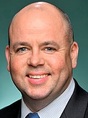
Sam Birrell Nicholls, National Party, Shadow Assistant Minister for Regional Health
12:56 pm
This budget and its approach to agriculture reflects a general lack of interest in agriculture from Labor. That's not to take away from some of the members who are interested in it and who do understand it, but, from the top, I've noticed since I've come to this place there's a general lack of interest in agriculture. Farmers continue to face rising input costs, labour shortages, biosecurity threats, market uncertainty, natural disasters and increasing regulatory burdens. In that environment, the budget should have delivered measures that improve productivity, competitiveness and profitability.
I do want to start by acknowledging the government's efforts on fuel security. This is a key concern of the agricultural industry, and the government has made significant efforts to go around the world looking for fuel and making sure it gets to Australia so we've got the diesel we need. What about a long-term strategy—what if what's happening in the Strait of Hormuz were to happen closer to home? Have we got a long-term strategy on using our natural resources to create our own fuel security instead of just flying to Asian refineries and saying: 'Hey, we've got some gas, can you please give us some fuel? We've run out.'
The other issue is in relation to fertiliser. I haven't seen a targeted effort in fertiliser in the same way that there's been on fuel. There is some relief coming in fertiliser in relation to the Perdaman facility in north-west Australia. That was initiated by the previous coalition government using the NAIF, despite the fact that some members opposite might like to take credit for it. It will come online, but, at the moment, we have got some serious concerns about fertiliser availability for the coming cropping season. Forecasts are increasingly pointing to the return of El Nino conditions, bringing a heightened risk of drier weather and other agricultural regions. Having lived my whole life in regional communities, I've been through drought. It is awful. It is horrible for the farmers; it is horrible for the community. Given the fact that I'm from the Murray-Darling Basin, we have another thing called a man made drought, where the government takes away the irrigation water that's used to grow the crops. We had that foisted upon us, not by seasonal conditions necessarily but by the fact that the amount of consumptive water there was to use previously for crowing our crops has been taken away by the government. That is incredibly frustrating.
Given the fact that drought has such a powerful fact on regional communities, I want to ask the question of why the government has made the decision to cut funding from the Future Drought Fund, one of the key drought preparedness and resilience programs, brought in in 2019. There's been some drought decision-making in South Australian programs, some mixed farming strategies for drier times, some water-smart dams in WA and simplifying agtech and using that innovation to work through drought issues. All of that was funded by the Future Drought Fund. And this government has decided that it's a really good idea, given the threats that farmers and farming communities face from drought, to cut all that funding in the budget. It's incredibly short sighted, and I will ask the minister some questions about that.
In relation to taxes, family farming businesses rely on long-term investment decisions when they're succession planning and when they're making their arrangements. Often they've got a high level of assets but a low level of income. The government's tax changes have generated concern across the agricultural sector, because many farming businesses operate through trust structures. They're also concerned about the capital gains tax implications. What they've told me is that they don't need a government which is spending too much to treat them like a cash register. That's what they're doing with their higher taxes.
There have been some comments from the VFF and NSW Famers that show significant concern about the changes to the tax arrangements. I have three questions for the minister. Minister, can you point to a single new budget measure that will directly improve the profitability of Australian farmers, or was agriculture once again overlooked in Labor's budget? Secondly, Minister, with the growing concerns about the return of El Nino conditions and worsening seasonal outlooks, why did your government cut funding from the Future Drought Fund instead of strengthening support for drought preparedness and resilience? Thirdly, Minister, your government continues to talk about a national food security strategy, but where in this budget is the funding to actually deliver, implement and strengthen Australia's food security?

Trish Cook Bullwinkel, Australian Labor Party
1:01 pm
I rise today to support the appropriation bill for the Department of Agriculture, Fisheries and Forestry. The Albanese Labor government and Minister Julie Collins are committed to a strong and sustainable agricultural sector, one that continues to grow, back regional jobs and support communities right across Western Australia and beyond. Agriculture is the backbone of our regions. It drives our exports, underpins local economies and feeds our nation and other nations.
Since coming to government, we have been delivering for farmers and producers, strengthening biodiversity, boosting the workforce, opening new trade opportunities and supporting more sustainable farming practices. Let's be clear: Labor is the party for farmers, and we know it has been a tough period. Across WA and across the country, farmers are facing extreme weather, rising costs and ongoing uncertainty. On top of that, global instability, including the conflict in the Middle East, is putting enormous pressure on supply chains including fuel and fertiliser, and that creates real concern for farmers, fishers, freight operators and the regional communities that rely on them. That is why the government is acting, supporting these industries now, while investing in their future.
When we came to office, agriculture was worth about $88 billion. Today, it's forecast to exceed $100 billion in this financial year, four years ahead of the National Farmers' Federation 2030 target. That growth is being driven by strong trade. Since 2022, we have delivered 272 market access outcomes, opening new markets, improving export conditions and restoring lost opportunities. We have repaired relationships that were neglected for nearly a decade and secured the removal of trade barriers worth $20 billion, including restoring trade with China. We are strengthening ties with India, implementing our agreements with the UAE and expanding opportunities right across our region. For WA producers that means more markets, better prices and more certainty.
But we also know farmers cannot take advantage of these opportunities if they're under pressure at home. That is why we've taken practical steps on fuel and fertiliser supply. We are underwriting purchases to secure supply, releasing fuel stockholdings and supporting the import of critical fertiliser like urea. We are working closely with industry to ensure supply keeps flowing and that farmers have what they need to keep producing.
For WA, drought resilience is absolutely crucial. This government has invested more than $1.3 billion in rural support and drought preparedness. We are delivering the new drought resilience hubs, including in southern and northern Western Australia, connecting farmers with the latest science, technology and expertise to prepare for and respond to drought. We are also backing with real financial support, including concessional loans and drought hardship assistance, so that farmers can get access when they need it the most. At the same time in WA, we are supporting communities through the transition of the live sheep exports by sea. We understand how significant that change is to our Western Australian farmers, particularly in my electorate of Bullwinkel, and that is why we have committed almost $140 million to help producers, transport operators and regional communities plan for their future. Through this transition funding, we are supporting farmers to diversify, invest in new opportunities and strengthen their long-term viability while helping transport operators adapt and continue contributing to the regional economies.
Finally, food security remains one of the most important responsibilities of any government. Australia has a world-class food system, but we cannot take that for granted. That's why we're developing 'Feeding Australia: A National Food Security Strategy' to ensure that our food systems remain strong, resilient and prepared for future challenges. Behind all of this are the people who make our ag sector what it is: our farmers, fishers and regional communities. We know the pressures that they are under, we know the challenges they face and we're backing them, because this government will always have their back.

Rick Wilson O'Connor, Liberal Party
1:06 pm
Last year, Western Australian farmers produced a grain crop of 27.2 million tonnes, which is a new record, breaking the previous record, which was set two years prior. That represents about a 100 per cent increase on the 10-year average, which is an extraordinary achievement by my farmers across the Western Australian Wheatbelt on the back of better sowing techniques, with the introduction of genetically modified crops, particularly canola, allowing much better weed control and much earlier sowing, completely changing the farming systems. However, they do face significant challenges in repeating that exercise this year.
On fuel and fertiliser costs, we all know that the war in the Middle East has disrupted supply chains dramatically, but the main impact is being felt not just in fuel prices. We've seen diesel fuel prices increase more dramatically than other fuel prices, but I want people, particularly the minister, to remember that the reduction in fuel excise doesn't benefit the farmers, because off-road fuel is already completely excise free. So there's been no relief from those elevated fuel prices for the farming community. More importantly, fertiliser prices have jumped dramatically. Urea is the main nitrogen input of that 27.2-million-tonne crop, and West Australia used 800,000 tonnes of urea last year. While I accept that the minister and the government have been doing some work and they made an announcement about 200,000 tonnes of urea from Indonesia, which is a positive announcement, that is not even 25 per cent of the WA crop requirement, let alone Australia-wide.
So we have got significant challenges not just for this year. I point out that the safeguard mechanism, which is part of the government's net zero policy, will force up the price of not only fuel but also fertilisers. Urea is effectively solid natural gas, and the Perdaman development up on the North West Shelf is a welcome development that, hopefully, will shore up the supply chain. They'll be selling it at export parity, so it won't make any difference to the price, but at least we'll have a supply of urea on shore. But they will be hit by the government's safeguard mechanism, and that will force the price of urea up for our farming communities not just in Western Australia but Australia-wide.
The second major component of agriculture in my electorate, of course, is livestock—most particularly sheep. The devastation that's been wrought by this government is being manifested as we speak. Minister, you may not be aware, but the sheep numbers in Western Australia have dropped from around 9 million in 2024 to 6.5 million today. That has meant the supply of animals going into the local abattoir system has dropped dramatically. Are you aware that a $3.3 million transition grant was granted to a processing facility, Beaufort River Meats, the day before they closed their doors because they couldn't get enough stock? I'd like you to address that issue.
Other major processors are down to four days and three days a week of processing because they simply can't get the numbers. We are losing the critical mass of livestock across Western Australia, and that will have ongoing implications—not just in the meat-processing sector, but amongst shearing teams. We've seen livestock transporters selling their crates and going out of business, and that impact is going to be profound and long felt in my electorate. Minister, my questions are: Farmers continue to face high fuel and fertiliser costs that are eating into already-declining farm incomes. Why did this budget fail to provide any meaningful relief for those growing cost pressures?
In terms of seasonal conditions, even in Western Australia we suffer seasonal ups and downs. El Nino does affect the west coast as well as the east coast. So with the growing concerns about the return of El Nino conditions and worsening seasonal outlooks, Minister, why did your government cut $52 million of funding from the Future Drought Fund instead of strengthening support for drought preparedness and resilience?

Shayne Neumann Blair, Australian Labor Party
1:11 pm
Since coming to office, the Albanese Labor government has delivered for the Australian agricultural sector by strengthening biosecurity, boosting AgForce, opening up new trade opportunities and improving farm sustainability.
We're working to diversify trade opportunities to export more of Australia's world-class cultural products than we did before. We've unlocked $20 billion worth of trade with China and delivered more market access opportunities than ever before for Australian farmers and producers. This has been a game changer in my electorate of Blair as, under the former Morrison government, China imposed import restrictions on two local meat-processing plants—JBS Dinmore in Ipswich and Kilcoy Global Foods based in Kilcoy and Coominya. Thanks to the efforts of this Albanese government, these were removed in 2024 and two red-meat processors were able to resume exports with China. This government is focused on opening doors for Australian agriculture and processing industries to grow and diversify overseas markets.
Between July 2022 and March 2026, the Albanese Labor government recorded 272 market access achievements. Australia's farm gate production value is forecast to exceed $100 billion this year—years ahead of the National Farmers Federation target. The opposition spent nearly a decade eroding and neglecting our relationships with many of our trading partners, and Australia's reputation suffered as a result. We're getting those relationships back on track and opening opportunities. My question to the minister is: how will the Albanese Labor government continue to support and secure more market access for our agriculture exporters, including red-meat processors in my electorate?
The government is backing the beef industry to ensure a stronger, sustainable profitable future for our producers and regional communities. We provided record funding for Beef Australia, including $12 million to deliver a bigger and better Beef 2027 in Rockhampton, in my home state of Queensland. This underscores our commitment to Australia's almost $16 billion beef industry, which is our most valuable agricultural exports.
Beef and veal were Australia's third-largest agricultural export commodity to Indonesia in 2025, valued at $581 million—a figure which has grown 49 per cent since we came to office. My question to the minister is: What is the government doing to support beef producers and processors in my electorate, and elsewhere, to export world-class products? How is the government assisting them to diversify their export markets to provide our farmers with the best platform for continuing growth?
The Albanese Labor government is also working with stakeholders delivering the PALM scheme, a reliable and productive source of labour for employers that is particularly beneficial and safe for workers. Under the Albanese government the PALM scheme has continued to grow, from about 8,000 workers in March 2022 to more than 32,500 this year. Now, 29,000 of those workers are across agriculture and meat processing, including at JBS Dinmore and Kilcoy Global Foods. Importantly, the number of long-term workers has increased significantly in both agriculture and meat processing.
So we're getting on with the job—strengthening PALM, investing in skills and training, and adding occupations to the Australian Apprenticeships Priority List—while working with the industry to address ongoing challenges. We're also investing $440 million, from 2022 to 2027, to expand and improve the PALM scheme. I know this is a win for Australia but also for many of our Pacific neighbours—including, for example, the Solomon Islands. We've had the Prime Minister of the Solomon Islands here in the last few days. I met him at Brisbane Airport recently and raised this topic with him. The number of employers participating in the scheme is at a record high, with 130 new employers joining since the deed and the guidelines were introduced, in July 2023, bringing the total number of employers to 537 as of February 2026. How is the PALM scheme going to help our local farmers?
I also want to talk about our national food security strategy, Feeding Australia. The government has undertaken consultation and received 400 submissions. We've established the National Food Council, and we've also got a national food supply chain assessment going on. The Lockyer Valley and Somerset Water Security Scheme, in my electorate, is very important, with the capacity to deliver a 50 per cent increase in irrigation water for agriculture and horticulture. They made a submission to Feeding Australia. Minister, my question is: can the government update the House on the progress of the National Food Security Strategy?
Finally, I also want to know where we're going on fertiliser and fuel security for our farmers, our producers and our fishers.

Barnaby Joyce New England, Pauline Hanson's One Nation Party
1:16 pm
There's a range of things I believe need to be addressed in this. We've just had a 0.6 per cent fall in productivity in Australia, and agriculture has a major part to play if we want to turn that around. That fall was premised before any effects of the Iran crisis came through, so I imagine right now it's worse. I want to know what the current focus of the government is to develop agriculture—where that focus lies and how you're intending to bring it ahead.
I want to know what your current plan is for infrastructure, especially vital infrastructure such as dams. Where do you intend to build them? Do you intend to build any If not, what is your plan for the growing requirements for food security, which is indelibly linked to water security? I want to know how you've been working with industry on a water basis. In certain areas, like the protein hub, which is Tamworth, our biggest issue now is getting hold of water to underpin producers such as Baiada. Their kill rate will be going up to seven million chickens a week. They cannot possibly do it—they cannot employ the 1,400 people who will work there—unless they have access to water. They want to know what the answer is and, to be quite frank, so do I.
I want to know about an issue that is especially pertinent to the cattle industry of Central Queensland, which my colleague the member for Wright would understand. We currently have an incursion of fire ants. If the fire ants get out of the Brisbane area and into Central Queensland—
Unidentified interjection - Hansard doesn't record who said this
Government Member:
A government member interjecting—
Barnaby Joyce New England, Pauline Hanson's One Nation Party
I don't know what's so funny about this. This could lead to a beef productivity reduction of up to 40 per cent, as has been found in Texas in the United States. I want to know what your plan is for that. How do you believe that is progressing, and what do you intend to do about it? If you intend to do nothing, I intend to put it on Facebook and let everybody know.
I also want to know what you are doing to try to drive the skill sets in agriculture in a decentralised form. Do you have a plan for decentralisation? Do you have any form of plan to take the resources into the areas where people are?
For Western Australia, I want to know what your plan is, as has been brought up by the member for O'Connor, with regard to the massive hole that's been left from the loss of the live sheep trade. Do we just remove it and expect something to organically grow there, or have you now gone out and said, 'This is our plan to promote another industry to take its place, to utilise the transport industry, the labour force that will obviously be looking for further work—such as in the shearing industry, where the AWU started from—and also the export dollars'?
I'd like the minister to comment on exactly where she sees food security in Australia. We couldn't believe this, but, more and more, we are seeing a slip in Australia's capacity and food security. It was most pronounced during what I think they call the tinderbox drought, when we had to import about 60 per cent of our dairy product because we didn't have the capacity to deliver it ourselves anymore. In areas where this was so prominent, such as parts of Queensland and New South Wales, we no longer have a dairy industry. Is this going to be the way of the future—that we'll be importing dairy product from New Zealand—or do you have a plan as to how we'll once more reinvigorate the dairy industry so as to get that vital part of our agricultural infrastructure underpinned not only for the country but also for the city?
Finally, in the marketing of products, how do you believe we are going in dealing with the major supermarkets? Do you feel that the competitive pressure is there and the honesty and transparency in trade are apparent? Do you believe farmers are getting a fair deal? Do you think that there is an unreasonable centralisation in our retail capacity?

Anne Urquhart Braddon, Australian Labor Party
1:21 pm
In the great state of Tasmania and more specifically in the mighty electorate of Braddon, you would be hard pressed to find anyone who does not have some connection to agriculture and primary production. The north-west of Tasmania is the food bowl of our state. Our temperate climate, reliable rainfall and rich red volcanic soils support a huge variety of premium crops and livestock. The region is renowned for its potatoes, onions, carrots and brassicas grown for both domestic and international markets. While we're on the topic of carrots, Braddon is home to the Carrot Festival, hosted by the marvellous team at Harvest Moon in the Forth Valley. Harvest Moon is a proudly Tasmanian success story, growing premium vegetables for more than 40 years. If you've enjoyed a packet of snack sized carrots recently, there's a good chance that they came from Harvest Moon.
The electorate is also known for premium fruits such as apples, cherries and berries. Tasmania's fruit and berry industry generates around $400 million in farm-gate value and employs more than 10,000 seasonal workers. Braddon is also leading the way in high-value crops, including poppies for pharmaceutical use, pyrethrum daisies for insecticide production and lavender for oils, teas and honey. We also produce truffles, wasabi, oysters, saffron and avocados, all of which pair beautifully with the famous Cape Grim and King Island beef grown in the electorate.
Agriculture is a major employer in Tasmania, supporting well-paid jobs and our local communities. Beyond the farm gate, it creates hundreds of jobs in processing, manufacturing and transport. I know this firsthand because, before entering this place, I spent 11 years working at the Edgell Birds Eye factory, now Simplot, starting on the potato production line. That is why it is so important that governments continue to support the sector.
The Albanese Labor government is backing agriculture and primary production in a range of ways, including through our strong biosecurity system. We are managing the threats that are posed by pests and disease that could impact our industry's environment, plants, animals and communities. Thanks to our investment in biosecurity, Australia remains one of the few countries free from many of the world's most damaging invasive pests and diseases. Our biosecurity system protects agricultural, forestry and fisheries exports worth more than $51 billion while supporting jobs and safeguarding our natural environment. We apply these protections offshore, at the border and onshore.
The government is also investing in research, innovation and resilience. The Tasmanian Institute of Agriculture demonstration farm in my electorate is a fantastic example of collaboration between researchers and producers. Last year, the Climate-Smart Agriculture Program supported workshops and field trials focused on improving soil health and sustainability. We're also helping farmers prepare for the future challenges through the Future Drought Fund. In 2025, grants were awarded to restore dams across Tasmania, helping to strengthen water security and drought resilience.
At the same time, we're rebuilding international relationships and strengthening trade partnerships to create new opportunities for Australian producers. We have seen trade barriers removed and new market access opportunities open for a wide range of agricultural products. However, we know that market access alone is not enough. We can open as many export markets as we like, but if we do not have the workforce to harvest, process and pack our produce those opportunities cannot be realised. That is why the Pacific Australia Labour Mobility scheme has been so important for our region.
The north-west has embraced workers from the Pacific nations and Timor-Leste who have become a critical part of our local workforce. The PALM scheme has helped fill labour shortages and provided businesses with reliable and skilled workers, many of whom return season after season. By supporting our farmers, protecting our biosecurity, investing in innovation and strengthening our workforce, we are helping to ensure Tasmania's agriculture sector remains strong and prosperous for generations to come. Minister Julie Collins is a strong voice and an active participant right across the agriculture sector, and I congratulate her on her commitment in supporting the sector, particularly through this difficult time.

Ben Small Forrest, Liberal Party, Shadow Assistant Minister for Electoral Matters
1:26 pm
I do want to acknowledge the presence of the minister here today. She's offered to respond to our questions, so I'll be nice and brief to reflect that. Invasive species are a concern to anyone involved in the agricultural sector. Indeed, on my own property in the Ferguson Valley, I've got a problem with pigs, and a south-west farmer recently spoke to me about their property, which has been in the family for 170 years. Never have they had a problem with pigs, but they do now. So I do want to know why this budget, of all budgets, has seen the axing of the established pest weeds control program.
Additionally, my patch is home to that little emerging wine region called Margaret River. It's globally renowned for its quality wine but an industry that is nonetheless facing its worst oversupply crisis in recent memory, so the axing of the cellar door grant program in the out years of this budget and the allocation of nothing towards the transition funding that the industry has advocated for over several years now is a disappointing oversight in the budget. Minister, your government's own forecasts show that farm incomes are expected to fall significantly in the year ahead, and this budget contains so little by way of direct support to help farmers facing lower incomes and tougher conditions over the coming years.
Finally, it would be remiss of me not to mention the demersal fishing ban that has crippled our local fishing industry in WA as a result of the Western Australian government's ban on demersal gillnet fishery. The last correspondence from the Commonwealth, on 31 October 2025, said nothing about the sustainability of the sector, yet 33 days later the industry had its licence to operate cancelled. I'd like to know what consultation the Commonwealth received from the WA government before making this decision and how the Commonwealth departments were seemingly so unaware of the precarious state—if we're to believe the state Labor government—of the demersal fishery.
I've galloped through that, Deputy Speaker Fernando, so we can hear from the minister.
Julie Collins Franklin, Australian Labor Party, Minister for Agriculture, Fisheries and Forestry
1:29 pm
I do want to thank the member for Forrest for going so speedily there through his questions. I also want to thank the members for Paterson, Braddon, Blair, Bullwinkel, Gippsland, O'Connor, Nicholls and New England, who all made contributions today. I'll do my best to answer some of these questions very quickly.
Certainly, our agricultural trade, in terms of the trade questions, is the most diversified it has ever been, and we have been working really hard to restore international relationships. We've now had, between July 2022 and March 2026, over 272 market access achievements, and that's new markets open, markets sustained and markets improved, all restoring access where market was lost. So that is incredibly substantial.
I do also need to put on the record, in relation to some of the assertions in some of the questions, that our government is investing over $440 million for the nationally cost shared pest and disease response programs and that there has been no cut in this budget to the pests and disease programs. I do need to be very clear about that. Of course, that comes on top of the fact that our government has invested over $2 billion into biosecurity since we've come to office. Part of the investments that we have made in terms of pests and diseases, to answer the member for New England, is shared with the states and territories. We're investing $592 million in the imported red fire ant issue and the incursion there. So we are working with the states and territories on those.
There were also a range of questions about what we are doing to improve productivity for farmers. Obviously the biggest item in the budget is around the security of fuel and fertiliser, which is top of mind for our farmers. As many people have mentioned, the ABARES data that came out yesterday did say that seasonal conditions would impact farmers' productivity and on-farm productivity, particularly in relation to the seasonal conditions but also, of course, through fuel and fertiliser and the impact of the war in the Middle East here in Australia but also globally. That significant investment was welcomed by the National Farmers' Federation and, indeed, by everybody across the sector. We have been working incredibly closely with the industry. I am having weekly meetings with over 60 representatives of the sector and the industry on how we work with them in relation to fuel and fertiliser.
We did get some congratulations from those on the other side in relation to fuel and diesel, and there were some questions around fertiliser. Since the beginning of the war, we have processed through biosecurity in Australia a million tonnes of urea. That has come through our biosecurity system. So the fact that we have underwritten six cargoes of over 290,000 tonnes is not the end of the amount of urea that has been coming into Australia. Since the beginning of the war—since February—over a million tonnes of urea has gone through our biosecurity system. We are working incredibly closely with the fertiliser sector and with industry to source the urea that Australian farmers need and provide as much certainty as we can in what are clearly very uncertain times.
I do want to state that we also, of course, have available at all times assistance to our farmers who are doing it tough. We have put an additional $1 billion into the Regional Investment Corporation from 1 July. We have the new drought hardship loan as well for those that may encounter some of the difficulties, and some farmers around Australia have already applied for that loan. So I do want to put on the record that we do understand some farmers are doing it tough, which is why we're doing that investment in the Regional Investment Corporation, which is why we have that very significant investment of over $14 billion in terms of fuel and fertiliser security and the ongoing capability of security going forward here in our country. I have addressed some of the issues that people have raised around pests, diseases and trade.
I think I've covered off on most of the questions that I was asked, but I also do want to put on the record that there has been a bit of a scare campaign being run around what is happening with the significant changes we are making in the budget in terms of taxes. I want to quote the NFF's media release:
Family farms are generational businesses built over decades and often represent a family's life savings and retirement plan. We are pleased the Government has listened.
Again I put on the record that we have been working closely with the National Farmers' Federation in relation to the changes. We have also been working with them very closely in terms of the budget and in terms of the current situation in relation to the Middle East. We continue to do that. Even last Friday, we had the NFF go on air and say that the figures that I have used in the parliament, that around nine out of 10 agriculture, fisheries and forestry businesses would be exempt from the capital gains changes under the existing small business provisions—and I say that we continue to work with them.
Proposed expenditure agreed to.
Sitting suspended from 13:34 to 15:58

Michael McCormack Riverina, National Party
3:58 pm
The government is reclaiming $103.9 million from the National Water Grid Fund because it's 'uncommitted', yet councils and water utilities are queued up with shovel-ready projects. Uncommitted doesn't mean unneeded; it means undelivered. This is a delivery failure. Will the minister tell us how many ready-to-go water grid projects sit unfunded whilst this $103.9 million is handed back? From that same fund, $140 million has been committed to Queensland for 2029-30 with no named project and no location. We're asked to wave through $140 million for a project that on the papers does not yet exist. Will the minister name the particular project? Where is it? What does it deliver, and why can money be found four years out for an unnamed Queensland project but not for the communities from which $103.9 million has just been taken?
The Sustainable Rural Water Use and Infrastructure Program collapses from $479 million this year to $357 million next year and to just—wait for this—$3 million in 2027-28. Then it's gone—completely gone. This is the program which helps farmers lift water efficiency and recovers environmental water without ripping it straight out of irrigation for river towns. Why is the government defunding the one tool that recovers water without hollowing out communities, leaving only buybacks? Lazy, lazy politics equals water buybacks.
The Sustainable Communities Program, which is meant to cushion the socioeconomic hit of buybacks and water recovery, is also cut after 2028-29, justified by a claim that the Murray-Darling Basin Plan will be 'delivered in full' by the end of 2027. Good luck with that. The government has not shown how this will be done. It has not. So I do ask: will the Murray-Darling Basin Plan be delivered in full by the end of 2027—yes or no? If the minister cannot guarantee it, why switch off community support on the assumption that it will? That is exactly what the minister is doing with this particular initiative.
Costs across the budget papers for water recovery are marked 'not for publication'. The department's own tables admit this is because of commercial sensitivities and ongoing government-to-government negotiations with the states. This is—I hate to say it—a polite way of saying there are deals being done with your money that this parliament is not allowed to see. What is being offered to sweeten those deals, what's the total value hidden behind these NFP lines and when will basin communities get to see what's been promised on their behalf?
Our river communities are hurting, and whenever the government goes in and buys more water out of these river communities it not only distorts the water market and the price of water; it also hurts the baristas and the schools. Coleambally Central School, for example, has had its student population halve over the past decade. It hurts motor mechanics and small businesses across the board, because they don't get anything in return. It's the farmer who gives up the water who gets paid, sometimes at an inflated figure, and that farmer often leaves town, taking their family and their children with them. Sometimes, they head for the coast—and good luck to them—but it leaves a community which is a shell of what it once was.
The Murray-Darling Basin Plan, to this end, does not mean that these communities should lose their socioeconomic status, but unfortunately they are and unfortunately the government implements lazy politics by buying water out of these communities and shelling out these communities. It's simply not right. Our river communities and our irrigation communities, many of which are based on soldier settlements back after the First World War, are being short-changed by this terrible government.

Sarah Witty Melbourne, Australian Labor Party
4:03 pm
There is a simple test for this budget. Does it make the future cleaner? Does it make the systems fairer? Does it help people in their real lives? On environment, water, climate change and energy, the answer is yes. For Melbourne, that matters, because my community does not see climate and environment policy as something distant from their daily lives. It is not distant when a family is trying to bring down their power bill. It is not distant when a renter wants access to clean energy but has no control over the roof above them. It is not distant when a young person asks whether government is actually listening to the science. Melbourne expects ambition but Melbourne also expects delivery. That is what this budget is doing. It takes the big national task in front of us and turns it into work that can be achieved step by step, program by program.
The Albanese Labor government is delivering an extra $1.3 billion for the environment and water, taking total investment to $9.9 billion over the next four years. That means we are not just talking about protecting nature; we are funding it. We are starting up the new National Environmental Protection Agency from 1 July 2026. That means stronger enforcement of national environmental laws. For too long, Australians saw environmental protection treated like paperwork. This government is treating it like responsibility.
We are also making the approvals systems work better. The budget funds modern environmental information, data and digital systems, including the use of artificial intelligence, so assessments can be clearer, simpler and faster. That matters, because Australia needs to build. We need homes, we need renewable energy and we need the critical minerals that power the clean economy.
This budget funds changes to environmental offsets through the nature repair market on a new restoration contributions system. That means restoration must be real. When nature is damaged, the response cannot be vague. It must help repair the places and species that need it. The budget invests $110.8 million to extend the Saving Native Species program.
We are delivering for the Great Barrier Reef, providing $91.8 million for protection, restoration and monitoring, supporting the Reef 2050 Plan. That work supports traditional owners, scientists, tourism operators and regional communities. It protects a living wonder, it protects jobs and it protects the future. And, because environmental work does not stop at the shoreline, this budget also invests in Australia's marine parks, including stronger action on illegal fishing and work to protect and restore our oceans.
We are acting on waste. The budget delivers a national pilot of solar panel recycling, because the clean energy transition has to be clean all the way through. It is not enough to put panels on roofs; we have a plan for what happens when those panels reach the end of their life. That is forward thinking. That is responsible. That is Labor delivering.
On climate change and energy, the same principles apply. This budget supports the National Consumer Energy Resources Roadmap. That means helping households and communities get the benefits of solar, batteries, electric vehicles and a smarter energy system. It maintains battery system inspections under the Cheaper Home Batteries Program. That means safer batteries, better consumer protection, more confidence for people buying electric vehicles and more support for workers and businesses making the transition happen.
For Melbourne, fairness has to sit in the centre of this. Clean energy cannot only work for people with big roofs, a garage and a private driveway. It has to work for renters, apartment residents, students, older people and small businesses. The transition must be cleaner, and it must be fairer. The budget strengthens energy security through the National Fuel Security Plan, with stronger reserves, storage, stockholding rules and market oversights. This budget passes the test—cleaner future, fairer systems, stronger protection and real help in people's lives. That is what Labor is delivering, and I am proud to support it.

Dan Tehan Wannon, Liberal Party, Shadow Minister for Energy and Emissions Reduction
4:08 pm
It's a shame Minister Bowen isn't here to answer these questions. What a surprise. But, because we've seen blowout upon blowout upon blowout upon blowout—and I think that the minister's starting to get a bit of a nickname as 'Blowout'—it's no understanding that he's not here. I would hope that these questions might be passed on to the minister, who is getting the nickname 'Blowout'.
We turn to the Capacity Investment Scheme. What is the true cost? What is the true cost of the Capacity Investment Scheme? There's a very simple answer. I understand that with every single project there might be—and I only say might—a valid reason as to why they might be commercial in confidence. But there is no reason why the whole program shouldn't be. And do you know why? It's because the Capacity Investment Scheme promised 40 gigawatts of power across 75 projects yet Senate estimates just confirmed only one project has actually been built. So how much money is being poured into this scheme and what's the blowout in the budget? That is what we would like the answer to. Please, the Australian people deserve some transparency around this scheme, which is absolutely failing.
We have the Cheaper Home Batteries Program blowout. It's unbelievable. It was budgeted for $2.3 billion and it's now $8 billion. It blew out by so much that the regulator had to put money out the door. The question I've got is: is it good governance when you blow a scheme out so much that the regulator, who's meant to oversee it, is the one who's funding it? Under what regime would that be good governance, apart from that of Old Blowout, who seems not to care that everything blows out.
Green hydrogen—why did you cut $1 billion out of the green hydrogen scheme? Is it because it is completely failing? There's another billion in there. Are you going to blow that as well? Please, can you be upfront about what is happening with green hydrogen. Are you going to blow another billion dollars on green hydrogen? We would love to know the answer to that.
There's something else we'd like to know. In the budget papers it says that you've got no idea what each individual department is spending on net zero. That's what the budget papers actually say—that you do not know what each individual department is spending on net zero. So how much is each individual department blowing on net zero? Do you have any idea about this? There is a blowout of such significance—seriously, there are going to be gale-force warnings soon because of this minister. So we want to know what each individual department is going to do.
Last of all, what we'd love is some real honesty around the Office of the Presidency. Did the minister whisper to the secretary: 'Could you name it Office of the Presidency, because that'd make me feel really good. I'm blowing all these programs to kingdom come, so I need something to make me feel like I'm sort of doing my job'? What I'd love to know is how many staff will be ongoing in the Office of the Presidency after this year. At the end of this year, when the Office of the Presidency is no longer needed, do you think the minister is going to keep the Office of the Presidency, just to make him feel good, or will it go? Can we get an answer to that? Is the Office of the Presidency only for this year, or will there be another reason for the minister to keep the Office of the Presidency and the 30 staff working in it? It would be great to get an answer to all of those questions today.

Matt Smith Leichhardt, Australian Labor Party
4:13 pm
I'm very proud to speak on this bill. Climate change, energy, the environment and water matter where I'm from, and there are lots of numbers here. Numbers are great. Minister Bowen will update you on the numbers daily—on how many solar batteries are being installed and what that means for the environment and what that means for bringing down power bills. I don't want to argue the science, although some of those opposite will still have that argument. Arguing the science right now is a bit like arguing the existence of cats. It exists. Deal with it. Move on.
The member from Wannon kept asking: What is the true cost? What is the true cost? What is the true cost? The cost is Saibai. The cost is the cape. The cost is the turtles. The cost is the reef. It's disgraceful. Climate change is an existential risk to my communities. Minister Wilson stood on the shores of Saibai and looked out over Papua New Guinea, maybe three or four kays away. His feet got wet by the inundating tide. The bodies of the children and the elders of Masig wash out to sea as the tides inundate the cemetery.
This government invests in seawalls. It invests in resilience. It takes the time to go to the places where climate change is at its worst, where it is most critical, and that is the Far North. This is not limited to the Torres Strait. We had two cyclones cross the coast this year within two weeks of each other. We were lucky. For reasons that remain clear only to nature, Cyclone Narelle missed the community of Coen. Being a category 4, it would have caused death. This is what we're fighting against. It's not about anything other than giving people the chance to live their lives on the country that they grew up in and to make sure that the species of fish that they catch is still there. There is a duck that heralds the change of seasons on the Torres Strait. The duck has not been seen for 20 years. It is a victim of climate change.
As part of my electorate, I have custody of some of the great natural wonders of the world: the Daintree Rainforest, overrun by pigs, and the Great Barrier Reef, under threat to the crown-of-thorns starfish, the drupella snail and climate change. We invest in local business and the tourism industry to get on top of these threats. We make sure that the future and the jobs that are connected to the reef exist. There are 77,000 jobs under threat because the Queensland government wants to approve more coalmines and more coal fired power plants, which will put the World Heritage listing at risk. The World Heritage listing, which drives tourism to the area, which drives small business and which makes sure the people in the Far North have jobs, things to eat and places to go, provides all of our economic benefit, as does the reef and the Daintree. Cape York is a truly spectacular area, almost as special as the Daintree and the reef. The sawfish is endangered. It's a truly unique species that people have never heard of and that some people will travel their entire lives to look at. That's money. That's tourism. That's economic development. While you want to turn climate change into an ideological battlefield, it's not. It's an economic outcome. It drives entire regions. It drives entire cities.
It is really important that we make sure that we're pulling our weight and that the resilience exists to keep our natural wonders, which people travel across the world to see. The reef is in great shape because of the actions of this government, because of the work on the riparian corridors, because of the work to shore up the run-off into the reef and because of the work that we're achieving in making sure—
A division having been called in the House of Representatives—
Sitting suspended from 16:17 to 16:29
Strap in for the best 43 seconds of the day! This matters. As I outlined previously, it makes a real difference to the people and the places that I represent. Some things are bigger than us, and climate change is one of them. It impacts our neighbours in the South Pacific, in the Torres Strait and the people on the cape. It impacts our tourism industry. It's something that has to be taken seriously. It's something that needs an all-of-government, all-of-nation approach and response. Fighting over it is useless. This is people's lives and this is people's livelihoods. I commend the bill to the House.
Ben Small Forrest, Liberal Party, Shadow Assistant Minister for Electoral Matters
4:30 pm
Long-time listeners of the Federation Chamber won't be surprised to know that the focus of my questions today begins with Labor's offshore wind proposal for Geographe Bay. It started at 8,000 square kilometres, an area some 10 times the size of Singapore, being locked up for an offshore wind farm. That's hundreds of the most modern turbines, each taller than the biggest skyscraper in Perth, being connected across Geographe Bay, a whale migration superhighway. My community was outraged.
After a community backlash at the bungled consultation process, the zone was halved to 3,995 square kilometres, which was declared in August 2024. In January this year, the government granted the final feasibility licences to three projects across 732 square kilometres of that zone. The question really is whether this government—which has, as I said, bungled the consultation process—failed to realise that the imposition of the vast exclusion zone threatens the activities that are the lifeblood of our community. This includes fishing, or what's left of it after the state Labor government decided to ban commercial fishing, boating and diving, as well as the important contribution that tourism makes to our local economy.
Given that these three ventures are foreign owned—Westward Wind is a joint venture with Spain's EDP Renewables and France's EDF—the question is whether these feasibility licences will be progressed by this government and whether the Geographe Bay offshore wind farms will actually lower power bills for households and businesses in WA's south-west. If the government can't categorically confirm that it will lower power prices in south-west WA, the question is why on earth are these proposals proceeding at all? Offshore wind is being cancelled around the world. Large turbine manufacturers are making significant parts of their workforce redundant in response to turbine cancellations, which does beg the question: why is this government so intent on pushing ahead with these projects at the same time the rest of the world seems to have woken up?
Until we get some straight answers on these three projects, south-west residents will remain sceptical of the approach this government takes to managing climate change and energy, not least because we'd have a hard time believing any commitment the government does make with regard to the lower power prices. We're still waiting for the $275 power price reduction that we were promised before the 2022 election! It seems that RepuTex modelling is a phrase that we don't say in this place either!
The member for Wannon referred to the Cheaper Home Batteries Program blowout from $2.3 billion to $8.5 billion. I'd like to know whether the minister, who is not here, has done any work to understand what the distribution of those grants has been in relation to household income. Early criticism of the scheme was that this was reckless spending; it wasn't targeted in any way. The government tells us this budget is predicated on fiscal responsibility and restraint, so you'd think such a program, now running at $8.5 billion and counting, would have been carefully targeted on some sort of socioeconomic base or subject to means testing. I'm looking forward to hearing from the government as to whether or not those concerns have been addressed through this process.
As a proud Western Australian, when it comes to the energy portfolio, there is nothing more important to me than the government's proposal around the gas industry and the imposition of a nationwide reservation scheme, which in principle is the sort of thing we've been calling for for quite some time. But the interaction with Western Australia's long established 15 per cent domestic gas reservation scheme seems to be very unclear because ministers have been out saying different things. The industry doesn't know, because it can't get a straight answer. This is deeply impactful when you consider things like the Browse Project being on the horizon.

Sally Sitou Reid, Australian Labor Party
4:35 pm
I have sat through a number of the contributions from those opposite on the matter before us at the moment. Hearing their contributions has been uninspiring because at no time have they recognised the impact that climate change is having on our environment. At no time have they recognised the huge economic and human toll climate change is having on our country and globally. The only time I think they may have mentioned climate change was to refer to the department itself. It's like they are trying to talk about this debate but refusing to acknowledge the fact that climate change is having a huge impact on our lives economically and socially.
I remember how bad the 2019-20 bushfire season in New South Wales was. It was so bad that the former New South Wales fire and rescue commissioner Greg Mullins came out strongly with a number of retired fire chiefs to say that—if we do not act on climate change, take it seriously, stand up as political leaders and do something to address this problem—the bushfire season will become more intense and more frequent and everyone will be left suffering the consequences. We have seen that come to bear with the bushfires in California and with the bushfires in parts of Europe. And yet those opposite still refuse to acknowledge the impact that climate change is having on natural disasters—making them more intense and more frequent.
My colleague the member for Leichhardt spoke incredibly eloquently about the impact that climate change is having on his community in Far North Queensland—again, something those opposite refuse to acknowledge. But—even if we were to take them on their concerns about cost, what this all means and particular projects running over time—what did they have that they were proposing? A $600 billion nuclear energy program. I tell you what, the cost blowouts there would have been enormous. The time taken to build those things would have run into the decades. What a ridiculous policy. They not only came with a ridiculous policy but have also now abandoned net zero in its entirety, such is the stranglehold by the far right of this country. They're refusing to even attempt to get to net zero. I'm really pleased that we on this side of the House are talking about climate change and the impact it's having on our community. We're committed to net zero, but we've also got the practical steps to help us get there.
Last year, I stood in this chamber and I had the opportunity to speak on a very similar bill because we are taking real, practical action on climate, energy and our environment. We have done so since we were first elected four years ago. Now that I'm standing here again, I'm really proud to talk about the significant environmental law reforms that we have put in place—the most significant in more than a decade—because for too long the system was outdated and ineffective, failing to properly protect nature while also creating uncertainty for businesses trying to do the right thing. Through reforms to the Environment Protection and Biodiversity Conservation Act, we've changed that. We've established a new National Environmental Protection Agency, a strong independent regulator with the powers, resources and transparency needed to properly protect our environment. It is something that has been missing from this country for far too long. Just as importantly, we've made the system work better. We're cutting duplication between levels of government, improving access to high-quality environmental data and giving businesses clearer guidance and faster decisions. That matters because Australia should not have to choose between protecting nature and building homes, clean energy and the infrastructure that we need.
The last fortnight has demonstrated that the work we are putting in to get more renewable energy into the grid is working. We are now seeing that 50 per cent of our electricity is now coming from renewable energy. That has resulted in prices starting to come down as well as emissions coming down, and what a great achievement that is.

Nicolette Boele Bradfield, Independent
4:40 pm
One startling statistic about the budget has flown under the radar this year, and it's funding for nature. It's made up just 0.3 per cent of total spending. That's less than one-third of one per cent of the budget. To put that into perspective, for every $100 spent by the federal government this year, only 30c will go to activities that benefit nature. It gets worse because the 30c declines to 10c in 2029. That's down from a $1.10 per $100 under the Rudd-Gillard governments.
Let's take it a step further and narrow down to the money allocated specifically to on-ground conservation activities. These are the programs that directly protect nature, like establishing new conservation areas, restoring habitats for native animals like koalas, or combating invasive species. Here the picture is even worse. The Biodiversity Council calculates that funding for on-ground nature programs is only 0.6 per cent of the budget. That's $1 for nature out of every $1,667 spent by the government. In other words, it's practically nothing. Our main program for preventing new extinctions, the Saving Native Species Fund, only has two more years of funding, and it's less than $40 million a year. Australia is the world leader in extinctions. It is No. 1 in the world for mammal extinctions and No. 2 for biodiversity loss. These are not records of which we should be proud.
It's great that the government has committed to no new plant and animal extinctions and to conserving 30 per cent of its land and marine species areas by 2030. But these are just commitments. They're just words. The great thing about the budget is it allows us to evaluate whether the government is doing what it takes to achieve those commitments. This budget shows too clearly that it's not. At the same time as providing minimal funding for nature protection, it's pouring far more money into activities that harm nature—fossil fuel subsidies, including fracking projects that damage water tables; native forest logging; and projects that clear native vegetation.
When the odds are stacked against it like this, Australia's unique and ancient biodiversity will continue to die and on this government's watch. This isn't just a problem for environmentalists; it's a problem for Australians. The good news is that we know it's smart economic management to invest in nature. Nature underpins everything else in the budget. A strong economy is impossible without a healthy environment. Our prosperity would crumble without well-functioning ecosystems to provide us with potable water, clean air, healthy and productive soils, pollinators for fruit and nut trees and other crops, and mangroves for storm and flood protection. None of these things is nice to have. Each is absolutely critical.
So what kind of spending do we need to put nature on a better footing? Is it 10 per cent of the budget? Is it five per cent? It's actually not that large a number. Leading scientists and ecologists from organisations like the Wentworth Group of Concerned Scientists and the Biodiversity Council have calculated that to put Australia's environment onto a more secure footing would cost only one per cent of the budget. That's about $8 billion a year. Yes, it's a lot of money but an incredibly worthwhile investment. Research shows that the more a country spends on conservation, the fewer species it loses. That one per cent of the budget would go to tackling invasive species, stopping new extinctions, protecting 30 per cent of Australia and restoring Australia's degrading landscapes—in other words, its habitats. One per cent is to stop us going backwards and set us up for a healthier, cleaner future.
Now, most Australians want this to happen. Australians care about nature and they want the government to do more to protect it. Ninety-five per cent of Australians believe that spending on nature should be increased to one per cent or more. One per cent is doable. It's well within the realm of possibility but only if the government treats nature as a priority. And budgets are just that; they are priorities. They are the one time in the annual political calendar when governments have no choice but to lay all their cards on the table. In following the money, this budget makes it clear as day that this government simply doesn't prioritise nature, so my question to the government is: to meet the government's commitments to no new extinctions and conserving 30 per cent of Australia's land and sea by 2030, what advice are you relying on that has led you to reduce funding for nature in this budget?
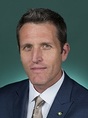
Josh Wilson Fremantle, Australian Labor Party, Assistant Minister for Climate Change and Energy
4:45 pm
I'm grateful to all the members who have contributed to this debate, this conversation, and will answer some of the questions that have been put. I'll start by saying that, in this portfolio area, as across the budget, the government is focused on resilience and reform. We know that we're living through a fuel crisis at the moment. It's interesting that that none of the contributions to date, particularly from non-government members, have picked up on that. I think that that is a very pressing concern for Australian households and businesses. Making sure that we are more resilient has been a big focus of this budget, with a $10 billion investment in fuel security as we address supply issues, as we address cost issues. But, as the Prime Minister, Treasurer and cabinet ministers have said—


Julian Leeser Berowra, Liberal Party, Shadow Minister for Indigenous Australians
I think the debate on this issue is supposed to finish at 4.45 and the consideration in detail of the next item is supposed to commence at 4.45.
Helen Haines Indi, Independent
I thank the member for Berowa for his interjection there, but my advice is that the minister started right on 4.45, which is the instruction we have from the table office, so we'll proceed.
Josh Wilson Fremantle, Australian Labor Party, Assistant Minister for Climate Change and Energy
As I was saying, whilst we take those really important steps to improve resilience in Australia, particularly around fuel security and both supply and cost impacts, we're not neglecting the obligation of government to take on much needed reform. That is certainly true in the portfolio areas that we're discussing.
I'll pick up some of the things that were raised by members. The member for Riverina talked about the Murray-Darling Basin Plan. Of course, that was poorly managed by those opposite in the nine years that they were at the wheel. We are going to deliver and are delivering the Murray-Darling Basin Plan in full—indeed, 400 of the 450 gigalitres that need to be secured under that plan will have been secured by the end of this year. That is good for the environment. It's good for the river system and therefore good for all of the human communities and agricultural users who depend on that. I think the member for Wannon let himself down by really indulging in a lot of name calling more than anything, and I'm not really sure what quality debate this country gets by that kind of conduct, particularly from an opposition that didn't even have an energy plan for the nine years that they were in government. They tried 22 and they landed none. He asked about the Capacity Investment Scheme. I hope that he understands that the Capacity Investment Scheme is an underwriting scheme. Those projects don't involve direct funding contributions from the Australian government. The recent tender, tender 7, will deliver 19 renewable energy generation projects in the eastern seaboard, with $17 billion worth of private investment creating tens of thousands of jobs and obviously helping us achieve the clean and cheaper energy transition that is essential to our future.
The member for Forrest talked about wind farms and wind power. I'm not really sure that the member for Forrest was clear enough in saying that he doesn't think that wind power should be part of Australia's energy future. It's a big part of almost every other country's future, and we have some of the best wind resources in the world. We think that Australia should benefit from that resource; that's why we've created those zones. There are three feasibility licences in the area of south-western Western Australia, and consideration of those licences will proceed in a sensible and orderly way.
The member for Bradfield did use some, I think, strangely selective number positing. The work that we do for Australia's environment obviously includes focused work on threatened species and improving the condition of our environment, but it significantly includes all of the serious things we're doing to address climate change. Climate change is the newest and most significant factor affecting Australia's environmental condition and biodiversity, and this government is doing what the Australian community would expect. We're taking that very seriously, making a big difference in reducing emissions here, domestically, and being part of that global, cooperative effort.
Australians will look at this budget. They will see that we're backing up the remarkable achievement of having more than 50 per cent of our oceans in a marine protected network, with an additional $100 million to back that in. They'll see the additional contributions we're making in terms of consumer energy resources off the back of the remarkable progress we've already made in taking Australia towards its destiny as a renewable energy superpower and a clean industry powerhouse. That is our obligation as government. That's what we are delivering in the Albanese Labor government.
Proposed expenditure agreed to.
Julian Leeser Berowra, Liberal Party, Shadow Minister for Indigenous Australians
4:51 pm
I want to raise an issue of child safety and whether an international convention, which is nearly 50 years old, and its application is serving the interests of the safety of Australian children. This is an issue I've worked on and raised several times throughout my parliamentary career. It's an issue I became aware of because of one of my courageous constituents who has been forcibly separated from her infant daughter for several years. Her Australian daughter no longer lives in the safety of this country and has been forcibly returned overseas by a court order. Since meeting my constituent, I've met other people whose Australian children are in similar situations overseas. Because of this law, Australian courts, Australian bureaucrats and Australian police aided the removal of Australian children to foreign countries. The situation for my constituent came about because of the actions of the application of an international convention that doesn't put the protection of Australian children as a paramount consideration.
On Sunday, Channel 9's 60 Minutes broadcast an investigation into the way in which the Hague Convention on the Civil Aspects of International Child Abduction is currently being implemented in this country. I commend 60 Minutes for bringing those stories to the Australian public. What was shown was deeply confronting. I encourage every member of this parliament to watch it. Since that story was broadcast, I've been contacted by other people whose families have been adversely affected by the application of the Hague convention and who are fearful for the safety of their children.
The Hague convention was well intentioned. Adopted in 1980, it was designed to deal with children being taken across international borders. The purpose of the convention was to return the child to its habitual place of residence. Under the convention, the removal to the habitual place of residence can only be challenged where there's a grave risk that the return of the child would expose the child to physical or psychological harm or otherwise place the child in an intolerable situation. But those terms are interpreted very narrowly. Practitioners who've worked in the field for many years have rarely, if ever, seen a case where the Australian child is allowed to remain in Australia. Judges may but are not required to consider family violence when determining these matters. When issues of domestic violence are raised they're often not tested, as would be the case in ordinary family court proceedings.
The way courts deal with the Hague convention cases reflect an outdated understanding of attitudes towards child safety. In the 46 years since the Hague convention, the world has changed. Our understanding of the hurt inflicted on children who witness or experience abuse has changed enormously, and the convention has not. When I was the shadow attorney-general in 2022, I raised these issues with the then attorney-general Dreyfus. I asked him to review the application of the Hague convention. His department made a small amendment to the Family Law Regulations. This was a legislative note which clarified that courts may have regard to the risk that returning a child would expose them to family violence. This was well intentioned, but my concern is that it has simply not gone far enough.
In November 2024, the Family Law Council did a report on the Hague convention. That report Protecting victims of family violence, including children, in the family law system: international child abduction made several recommendations for legislative reforms, but it did not consider the merits of the convention itself. Today, I'm calling on the Attorney-General to convene a public inquiry into the Hague convention. That inquiry should examine whether the grave-risk-of-harm threshold is fit for purpose; consider whether courts should be required, not merely permitted, to take evidence of domestic violence into account; and ask whether Australia should advocate at an international level for reform of the convention itself.
My questions to the Attorney today are as follows. At present, the Hague convention's return orders are procedural in nature only. There's no cross-examination of evidence, and sometimes evidence isn't even considered. Are there plans for Hague cases to be heard like other family law cases and become proceedings where evidence can be heard and tested? Has the government considered amending the law to require that domestic violence 'must' be considered when assessing the grave risk of harm to the child, rather than, as currently is the case, that it 'may' be considered. Has the government considered legislative changes so that, in Hague convention cases, the psychological effects on young children who are exposed to domestic violence can legitimately meet the grave-risk-of-harm threshold, as outside observers will tell you that they do? And has the government considered amendments to allow the Attorney-General to step in in relation to the return of children who would otherwise be at risk of physical or sexual abuse under a Hague return order?
These are important and serious issues which concern the safety of Australian children and the way in which an international convention that is 50 years old deals with those under Australian law. They're important issues. I raise them in a serious way because of the effect that they've had on my constituents and other families across this country.

Claire Clutterham Sturt, Australian Labor Party
4:56 pm
I'm pleased to have the opportunity to contribute to the consideration in detail with regard to budget measures relating to the Attorney-General. This portfolio is charged with providing expert advice and high-quality legal services to the Australian government and its entities, always as a model litigant. The requirement to be a model litigant means the Commonwealth and its agencies are required to act honestly, consistently and fairly in handling claims and litigation; deal with claims promptly; make early assessments of the government's prospects of success; pay legitimate claims promptly; not take advantage of a party who lacks resources to litigate a legitimate claim; keep costs to a minimum; not rely on merely technical defences; and consider alternative dispute-resolution options.
In addition, the portfolio has responsibility for designing, implementing, maintaining, evaluating and reforming legal and policy frameworks to promote better outcomes for the Australian community in a range of areas, including rights, justice, security and integrity. This all sits within the ambit of the Attorney-General, and this element of the portfolio is significant because it touches on how we live, how we interact as a community and how we protect and maintain the way that we live.
The Attorney-General's portfolio often goes about its work quietly, but the significant work that the portfolio undertakes with respect to law reform is meaningful because it impacts the frameworks which govern and guide our communities and our country. Importantly, this portfolio is also charged with the critical task of working to improve access to justice for vulnerable people—including women, children and First Nations peoples—and of establishing and providing support to royal commissions, to assist them to commence their inquiries in a timely manner, consistent with their terms of reference. The portfolio has broad, wide-ranging and impactful responsibilities, and we see this play out in the budget.
A key budget measure for the Attorney-General's portfolio is ending gender based violence. The gravity and significance of this cannot be underestimated, and it must always be properly funded and resourced. It is a huge challenge but one that we must meet through this portfolio to drive legal and systemic reforms that we need to eradicate gender based violence. Key initiatives in this respect include funding specialised sexual-violence legal-service pilot schemes, criminalising image based abuse and advancing the 2022-2032 National Plan to End Violence against Women and Children.
Similarly, the Attorney-General, alongside the National Office for Child Safety, drives the National Strategy to Prevent and Respond to Child Sexual Abuse. This 10-year framework implements key recommendations from the Royal Commission into Institutional Responses to Child Sexual Abuse. There are several key areas of focus in this respect. Firstly, there is awareness and education which is delivering nationwide campaigns like the One Talk at a Time campaign, to build child-safe cultures and teach body safety. This has been rolled out and is a simple, non-threatening campaign designed not only to educate children and young people but to create an environment where they feel safe and empowered to speak up for themselves. Then there is the offender prevention program, which is about implementing frameworks to identify and prevent online child sexual abuse and enhance vetting capabilities.
The portfolio is also coordinating the government's response to the antisemitic attack in Bondi. The supported measures, which are critical, include stricter hate crime laws, the banning of hate symbols and organisations who engage in hate crimes, and the development of powers for the Minister for Home Affairs to refuse or cancel visas based on hate motivated conduct. The time to continue acting in this respect is now.
I also want to highlight the role of the Attorney-General in Australia's nuclear-powered submarine program, which supports the government on policy and legal issues related to nuclear powered submarines. The critical and essential national endeavour that is AUKUS needs to be supported by properly considered regulation and policy. We often talk of AUKUS in the context of STEM only—and we should talk about it in this context—but there is more to it. We need to continue the work to develop and implement the frameworks by which matters relating to AUKUS will be governed and measured. This is a critical role for the Attorney-General.
Finally, I would like to ask the Attorney-General, in her remarks, to outline how the government is investing in our justice systems, our integrity framework and our institutions.

Alison Penfold Lyne, National Party
5:01 pm
I rise during consideration in detail of the Attorney-General's portfolio because there is a simple question at the heart of Australian law that this government can no longer avoid. It's a simple question that should not be controversial. What is a woman? Australians know the answer. A woman is an adult human female. In fact, that is exactly how the Prime Minister himself answered the question just a few years ago. Yet today Australians are increasingly being told that asking that question is somehow part of a culture war. The Prime Minister says concerns raised by women about their rights, their own rights, under the Sex Discrimination Act are a culture war. With respect, that response is not leadership; it's avoidance.
Calling something a culture war is not an answer. It does not explain what the law means, it does not explain how competing rights should be balanced and it does not address the genuine concerns of millions of Australian women. What troubles me most is that the Prime Minister's comments suggest that women who raise concerns about privacy, safety, fairness and dignity should somehow be dismissed because their concerns are politically inconvenient. Australian women are not participants in a culture war. They are asking legitimate questions about laws that were originally enacted to protect them.
Last week, Australians watched Senate estimates and heard the Sex Discrimination Commissioner, Dr Anna Cody, suggest that protections relating to pregnancy and potential pregnancy could apply based on how someone is perceived, rather than whether they can become pregnant. If a senior official responsible for administering the Sex Discrimination Act can advance an interpretation that many Australians struggle to reconcile with common sense, then Australians are entitled to ask whether the law is still clear. If the law is clear, it should be capable of being explained in plain English.
The Sex Discrimination Act was introduced by the Hawke government in 1984 to protect women from discrimination and advance opportunities for women and girls. Today, many women are asking a different question. Does the law still protect us? The Federal Court's decision in Giggle v Tickle exposed a problem politicians have spent years trying to avoid. When rights based on biological sex come into conflict with claims based on gender identity, whose rights come first? The court interpreted the law that this parliament wrote. The court did not create the problem; this parliament created it.
Specifically, the ambiguity was created when the Gillard government amended the Sex Discrimination Act in 2013 and failed to include a clear balancing test for competing sex and gender rights. The Albanese government inherited that problem, but it owns it. Women are increasingly being told they cannot object to biological males entering spaces established specifically for women. Many women feel they have lost the right to say no. Whether members agree with that view or not, it is a genuine concern held by millions of Australians. Dismissing these concerns as a culture war is a cynical attempt to silence debate rather than answer the question.
My bill, the Sex Discrimination Amendment (Sex-based Rights) Bill, seeks to provide clarity. It retains protections for transgender Australians. It does not remove gender identity as a protected attribute. What it does do is recognise a reality that most Australians understand instinctively: biological sex matters in some circumstances—women's sport, women's toilets and change rooms, women's prisons, female-only spaces and services. Most Australians understand why those spaces exist. That is why the Nationals have launched a national petition today, calling on parliament to support my bill and restore protections for women and girls in law.
Australians deserve to have their voices heard. The Federal Court has spoken. The Sex Discrimination Commissioner has spoken. Women are speaking, yet the Prime Minister and the Attorney-General continue to avoid taking a position. The Prime Minister and the Attorney-General now have their feet firmly stuck on the sticky paper. Either the law is ambiguous and needs to be fixed, or the law is not ambiguous and the government believes that trans women are women for the purposes of Australian law, even when rights based on biological sex are affected; there is no longer any middle ground.
So my question to the Attorney-General is this: does the government believe the Sex Discrimination Act is ambiguous and in need of reform, or does the government believe the law is already clear and that trans women are women for the purpose— (Time expired)

Kate Thwaites Jagajaga, Australian Labor Party
5:06 pm
The Albanese government is committed to ending violence against women and children. Within this portfolio, support for victims of gender-based violence who have to interact with the courts and the justice system is particularly important. The prevalence of domestic and gender-based violence in our country is still too high, and the barriers and burden of proof too often still prevent victims-survivors from reporting these crimes. When victims-survivors are brave enough to report their experience and bring about charges, they can sometimes be retraumatised through the legal process.
I want to acknowledge that in May the Albanese and Allan Labor governments announced joint support for the expansion and extension of the specialised trauma-informed sexual violence legal services pilot in Victoria. This completes the national rollout of these services and builds on announcements of the establishment of new pilots across New South Wales, Queensland, South Australia, Northern Territory and Tasmania and the extension and expansion of existing pilots in the ACT and WA. These pilots are aimed at creating and expanding a legal service delivery model that is trauma informed, victim- and survivor-centric, culturally safe and accessible.
I'm really pleased to see the Albanese government build on this investment in the 2026-27 budget, with the item 'support for specialist family violence legal services' providing $11.7 million to support victims of family violence from being cross-examined by their perpetrator in family law proceedings. This will be very important for those people who are facing courts and justice systems as part of their process. I note this funding is in addition to approximately $2.5 million per annum ongoing funding provided to support solutions for domestic and gender-based violence. I want to acknowledge all the people who work on the front line in this very important area, and I want to acknowledge how important this funding is.
In concluding my remarks, I'd like to ask the Attorney-General to outline some of the key measures in the budget which strengthen frontline responses to family, domestic and sexual violence to keep women and children safe.

Kate Chaney Curtin, Independent
5:08 pm
I want to raise a number of issues that are within the Attorney-General's portfolio and require urgent attention. The first is child sexual abuse material.
Last year I introduced a private member's bill to make it an offence to download AI tools designed specifically to generate child sexual abuse material. These tools are available on websites, app stores and the dark web. Intelligence company Graphika reported in late 2023 that they had moved from niche internet forums into a scaled, monetised business, with more than 24 million unique visits recorded to 34 of those websites in a single month. Possessing a single image is already illegal, but these tools let perpetrators generate, delete and regenerate material endlessly, evading existing laws. Every AI generated abuse image starts with photos of a real child. They normalise abuse, overwhelm law enforcement and make it harder to identify actual victims. The government acknowledged in 2023 that existing laws likely do not adequately prevent AI facilitated harms. My bill offers a ready solution. Minister, will the government commit to legislating against AI child sexual abuse material generators before the end of the year?
Governments are increasingly using automated systems to make decisions that affect people's lives—welfare payments, visa applications, tax assessments, child protection and the NDIS. Robodebt showed us exactly what can go wrong when automated decisions are made at scale, and the robodebt royal commission recommended a mandatory legislative framework for government decision-making. The problem isn't automation itself; the problem is automation without transparency, proper human oversight or meaningful avenues for people to challenge the decisions made about them. People have a right to know when an automated system has made a decision about them and a right to have a real person review it. The Attorney-General's Department has a central role in ensuring our legal frameworks keep pace with these emerging risks. Minister, will you legislate mandatory safeguards for automated government decisions?
Australia urgently needs whistleblowing law reform that delivers accessible, consistent and comprehensive protections across both public and private sectors. The announcement yesterday of a review into Australia's private sector whistleblower regime is welcome and is something I've urged the government to progress, but while that review begins there's still silence on promised reforms to public sector protections. The Public Interest Disclosure Act has applied to Commonwealth whistleblowers since 2013. It's outdated and overdue for reform. Public consultation on draft legislation, including a proposal for a new whistleblower ombudsman, concluded on 1 October 2025. That was eight months ago, with no bill, no timeline and no explanation since. People who speak up about wrongdoing in the public sector deserve better than a government that consults and then goes quiet. Minister, when can parliament expect for the bill to protect Commonwealth public sector whistleblowers to be introduced?
Freedom of information is one of the few everyday tools citizens, journalists and civil society have to scrutinise government power, and the system is broken—not in my words but from the findings of every major review over the past decade: Hawke in 2013, Shergold in 2015, Thodey in 2019 and the Senate inquiry in 2023. All four reviews reached the same conclusion: the system is not fit for purpose and needs a comprehensive, independent review. None of them actually conducted one. The government's recent attempt at reform proposed reducing disclosure, expanding exemptions and introducing fees. It did not address collapsing rates of full disclosure, serious processing delays or what advocates describe as administrative torture. Reform that only moves towards less transparency is not neutral; it's a political choice. Minister, will the government commit to a comprehensive, independent review of the FOI Act led by independent experts with genuine public participation?
The NACC was established to investigate corruption and restore public trust in government. Australians are watching closely, and what they're seeing is concerning. No public hearings have been held, and not one case has met the exceptional circumstances test. The workings of the NACC have occurred almost entirely behind closed doors, and now there's a vacuum of leadership, with vacancies for both the commissioner and the deputy commissioner. This is a critical moment. The appointments you make, Minister, and how you make them will either rebuild or further erode public confidence in this institution. Minister, will you commit to an open, merit based appointment process by advertising the roles, publishing the selection criteria and disclosing the assessment process?

Michelle Rowland Greenway, Australian Labor Party, Attorney-General
5:13 pm
I thank all honourable members for their contribution to this debate, and I do want to thank the member for Jagajaga for her comments relating to the government's priorities on women's safety and acknowledge her longstanding advocacy in this area.
The government is committed to ending the scourge of family, domestic and sexual violence, which has such devastating impacts on individuals, families and communities. Tragically, at least 21 women and children have already been killed this year through intimate partner violence or domestic violence. Addressing this requires sustained, evidence based action, and that is exactly what the Albanese government is doing. In my portfolio, that includes investing in police capability through a world-leading $4.1 million national training package that's now available across all jurisdictions. This cutting edge training uses real-life case studies with immersive virtual reality to help improve responses to domestic violence, coercive control, technology facilitated abuse, trauma and misidentification. More than 10,000 frontline police officers are expected to undertake the training.
Last year, the government piloted specialised, trauma informed sexual violence legal services in three jurisdictions. Following their success, we've now completed the rollout nationally. This helps ensure victim- survivors in every jurisdiction can access stronger support to navigate the justice system. We also continue to support the Family Violence and Cross-examination of Parties Scheme, with almost $36 million allocated since 2025 to ensure that victim-survivors are not directly cross-examined by perpetrators in family law proceedings. Combined with the Albanese government's significant reforms to the Family Law Act, these measures form part of a broader, ongoing commitment to ending this violence.
Through the National Plan to End Violence against Women and Children, the Albanese government has also committed $4.4 billion to help prevent violence and reduce intimate-partner homicide. I'm mindful of time, but I mention that, in my portfolio, this includes $28.6 million to pilot new policing models targeting high risk offenders, $50.6 million to improve information sharing and $6.8 million to support children after separation. These are significant investments, but there is so much more to do.
In this budget we've provided essential funding across the portfolio to strengthen institutions, uphold the rule of law, address gender based violence and help keep vulnerable Australians safe. Whilst time does not permit me to conduct an exposition of every measure, there are a few I'd like to highlight, including $37.3 million over two years to strengthen the capacity of the Commonwealth Director of Public Prosecutions; $74.2 million to strengthen the integrity of the migration system, including investments in the Federal Court and the Federal Circuit and Family Court to improve efficiency, and a duty lawyer pilot to support access to justice; $10.8 million over four years and $2.7 million ongoing to support the Australian Law Reform Commission; and $27 million over four years and $5.7 million ongoing to the OAIC to strengthen privacy regulation and oversight across digital initiatives.
This budget reflects the clear priorities of the government in my portfolio. It strengthens institutions, while delivering practical protections that keep Australians safe.
Proposed expenditure agreed to.
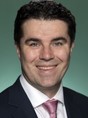
Tim Watts Gellibrand, Australian Labor Party
5:17 pm
There is no more important partner for Australia than Indonesia, or, as former Indonesian president Jokowi told this place in 2020:
Australia adalah sahabat paling dekat Indonesia.
And this year's federal budget says 'Oke, gas!' or 'Let's go!' to furthering Australia's engagement with our neighbour, partner and friend Indonesia.
The recently signed Australia-Indonesia Treaty on Common Security embodies the spirit of respect and friendship that lies at the heart of our relationship between our peoples and our governments. The treaty builds on our long history of cooperation and takes our bilateral partnership to the next level. To implement this treaty, to take this next step in our relationship, we need Australians who understand Indonesia and speak its national language. While it's clear that there's no partner more important to Australia than Indonesia, it's also clear that there's no partner more important for Australia to understand than Indonesia.
And that's why, in this year's budget, the Albanese Labor government has committed $33.2 million to support the implementation of the Australia-Indonesia Treaty on Common Security. It includes $11.4 million to boost Indonesian language education and $3.4 million to establish an Australia-Indonesia leadership dialogue. Language is essential for building a relationship underpinned by trust and understanding between Australia and Indonesia. It's a pathway for deeper relationships across all sectors—government, business and civil society—for the benefit of both countries.
In his 2020 address to the Australian parliament, President Jokowi commended Australian students for learning Bahasa Indonesia. He noted that our people-to-people links were a strategic asset and that investing in the next generation would strengthen the bilateral relationship. In 2010, then president SBY said a similar thing to our parliament when he said that he knows of 'no other Western country with more Indonesianists in your governments, universities and think tanks'.
But, unfortunately, since 2010, when SBY gave that speech, there's been a 58 per cent decrease in the number of Australian year 12 students studying Bahasa Indonesia. In 2024, just 486 Australian year 12 students across the whole country studied Indonesian. Today, only 13 of our universities offer Bahasa Indonesia, almost half the number of institutions that offered it in 1992. Without intervention, the teaching of Bahasa Indonesia in Australia will be extinct in the next term of parliament. This government has already started to take action to turn around this trajectory through our reforms to the New Colombo Plan.
In 2025, NCP reforms placed greater emphasis on long-term, immersive experiences and study of priority Asian languages like Bahasa Indonesia. As a result, this year, there are a record 29 long-term NCP scholars heading to Indonesia, an over 80 per cent increase from 2025. Under the new semester program, there were 170 grants awarded to universities to support students going to study in Indonesia for a full semester. New funding to support Indonesian study and engagement in the federal budget is another significant step. The $11.4 million announced in the budget is a further targeted strategic investment for Indonesian language study. Funding will go towards increasing Indonesian language and country expertise, including through cultural exchange.
A cultural exchange early in a student's life plays an essential role in fostering the Indonesian experts of the future. Australia's Ambassador to Indonesia, Rod Brazier; and former ambassador to Indonesia Penny Williams are two key examples of this. Williams lived in Jakarta with a local Indonesian family for a year as a high-school student in 1981. She was our first ambassador who spoke Bahasa Indonesia. Rod Brazier immersed himself in the local culture in Makassar in South Sulawesi on a university exchange in 1990. These opportunities are essential for building intrinsic interest and a deep passion for Indonesia, for its people, for its culture and for its language. To continue to be effective in our region, we need more people like Ambassador Brazier and former ambassador Williams. We know that we need to have deep connections at a leadership level too, and that's why we've committed $3.4 million to establish an annual Australia-Indonesia leadership dialogue.
Last month, I visited Indonesia as Chair of the Parliamentary Friends of Indonesia along with Vice Chair Senator Richard Colbeck. We visited Solo, a political and cultural hub in central Java and the home of President Jokowi and the current vice president, Gibran Rakabuming Raka, both former mayors. We engaged with young political leaders, including the current mayor, Respati Ardi; and the 10th Prince of the Mangkunwgaran royal house. In Jakarta, we met with members of parliament, including the Chair of Indonesia's Australia Parliamentary Friendship Group, Ibu Sara.
It's an experience that more MPs in this building need and more Australian leaders need. The Australia-Indonesia leadership dialogue will help us better understand Indonesia. Shortly, the House Standing Committee on Education, which I chair, will release its report into building Asia capability in Australia, and it will make further recommendations on how to build a pipeline of future Asia-capable Australians to chart our way forward.
Ben Small Forrest, Liberal Party, Shadow Assistant Minister for Electoral Matters
5:22 pm
It's interesting to note that the government's first contribution here was all about boosting their expenditure—nothing to mention about the cuts in this budget. Representing a region like mine, home to the Margaret River wine region, it's interesting that in the European Union free trade agreement the government has sold out Australian producers and their right to export their wine as prosecco, surrendering the name to EU producers after a 10 year phase-out, which is clearly a blow-off for the Australian producers who currently export Australian prosecco. Not only is this a slap in the face for Australian producers, to add insult to injury, the Minister for Social Services was on social media promoting the EU free trade agreement and celebrating access to cheap European wine and champagne.
I don't know about you, but I'd put the quality wine of Margaret River up against any in the world, let alone just in Australia. I don't think it's worth celebrating on behalf of a government that portends to represent regional Australia. It's such a slap in the face. Producers who export Australian prosecco now face a forced transition away from the name that they've built their export businesses on, and I'd like to know why. Additionally, it's extremely important to the south-west of WA that organisations like Tourism Australia are well funded and well resourced to ensure that 'Brand Australia' is on point internationally and attracting tourism to our shores.
Shortly after international borders reopened after COVID, as one of its first acts, Labor cut $35 million from Tourism Australia at the exact moment that we needed to be shouting to the world that we were open again, competing again and ready to welcome tourists back to our country—pockets full of cash with lots to spend it on.
In 2026, the visitor economy is still not back to where it needs to be. Total international visitation remains below 2019 levels, and genuine holidaymakers—the sorts of people who fill hotels, book tours, hire cars, visit attractions and, importantly, spend money at cellar doors and otherwise keep our regional communities afloat, are still at less than 90 per cent of the 2019 levels. So here we go again—another Labor budget and more cuts to Tourism Australia. Indeed, this budget exposes some $50 million in reductions for Tourism Australia over the forward estimates. Again I'd like to know why. This is a time when international holidaymakers still have not recovered, as I said. The fuel crisis is hurting travel confidence as Australian families find it more and more difficult and, indeed, more and more expensive to get out into the regional parts of Australia. And so this cancellation, this cut, is sending exactly the wrong signal.
In 2026-27 alone, Tourism Australia's total expenses are $15.1 million lower than the government itself forecast in last year's budget. The most concerning cut, though, is to Tourism Australia's demand-building work. This is the core function that gets people on planes, fills hotel rooms, supports the aviation recovery and drives visitors back to regional Australia—like my part in south-west WA. That funding is down by almost $42 million over the comparison period. Again I'd like to know why, because my constituents, who are doing it tough being ignored by this government, are now staring down the barrel of budget cuts at the worst possible time for a regional economy like mine. It seems to me that the government cannot continue to credibly claim that it supports tourism, that it supports regional Australia, while continuing to cut the very programs that are designed to drive demand and convert it into bookings and businesses for those small and family owned businesses who rely on tourists coming to our part of the world and spending up big.
This is a real reduction in the resources available to sell Australia to the world. It means less capacity to compete in key international markets, less marketing firepower, fewer partnerships and weaker support for regional Australia. And again I'd like to know why.
Claire Clutterham Sturt, Australian Labor Party
5:27 pm
I rise to contribute to this consideration in detail regarding the portfolio of foreign affairs and trade. Now, the work of this portfolio is directed at promoting and protecting Australia's interests overseas in support of our security and prosperity. We do this by maintaining a global diplomatic presence, and we have an overseas network spanning 114 overseas posts and consulates in 85 countries of resident accreditation around the world. The Department of Foreign Affairs and Trade also works to shape our international strategic policy to strengthen our economic engagement with our partners, particularly in the Indo-Pacific region, and to provide development assistance. Global conflicts and challenges, trade and investment opportunities, the application and upholding of international rules, support for regional stability and support for Australians overseas all form part of this portfolio. In this respect, there are more than one million Australians overseas at any time, and the portfolio leads and coordinates efforts to help Australians in trouble overseas. In the 2025 financial year, the department managed over 26,000 cases of consular and crisis assistance and responded to over 61,000 calls to the consular emergency centre. The department supports around 1,500 consular cases at any one time, and earlier this year the department sprang into action to assist the thousands of Australians living, working and visiting countries in the Middle East after the conflict in Iran began.
Building relationships around the region and strengthening our partnerships with our neighbours has been a hallmark of this government. Our region benefits from stability and peace. When Australia is peaceful and stable, when the Indo-Pacific is peaceful and stable, the entire region benefits. Peace and stability across Australia and the Indo-Pacific and meaningful cooperation between all countries in the region sends a strong message that goes beyond. That message, which this government prosecutes, is that when collective responsibility is used to secure and maintain peace and stability, everybody benefits. It speaks to the importance of sustaining productive and mutually beneficial relationships with our regional partners, our traditional allies and our European, Asian and Canadian middle-power friends. The need to continue to generate, maintain and then further build regional security is an imperative that has been rightly recognised with this government's facilitation of both the Jakarta Treaty with Indonesia and the Pukpuk, or crocodile, Treaty with Papua New Guinea.
Regional security and stability lead to the creation and maintenance of circumstances in which the aspirations of the Indo-Pacific can be best realised, steering economic development and prosperity for all countries in the region. Stable regions have stable, resilient and fair economic environments that can grow and thrive, which is good for citizens and, importantly, good for democracy. Relationships with our regional partners have proven fruitful in recent months, with the government able to draw on these meaningful partnerships to secure additional fuel and fertiliser supplies for the Australian people in the midst of one of the most serious energy accessibility crises the world has ever seen. We would not have been at the front of the queue without having first done the work to build those relationships, which included exploring and crystallising what is mutually beneficial from a gain-of-trade perspective. The time to build relationships is not when a crisis arises; the right time is all times, which is the approach this government has taken and the approach that has been successful.
The EFA, legally constituted as the Export Finance and Insurance Corporation, also falls under this portfolio. It's Australia's export credit agency, and it is also playing a critical role in fuel security. Last month, approximately 100 million litres of additional diesel was secured for Australians, with two shipments coming from Brunei and South Korea. This is the first of the expected shipments of fuel secured under the government's new strategic reserve powers, which saw Export Finance Australia partnering with Viva Energy to facilitate this purpose. Export Finance Australia has also reached commercial terms with Ampol, IOR and Park Fuels, supporting them to purchase the additional fuel needed to address regional shortages and critical supply gaps. We now have more fuel in this country than prior to 28 February. Perhaps the minister could update the chamber as to where we stand.

David Littleproud Maranoa, National Party, Shadow Minister for Agriculture
5:32 pm
I rise for my contribution around consideration in detail, particularly since the minister's here, and to reinforce what the member for Forrest asked, particularly around the callous cuts to Tourism Australia. Over $85 million has been ripped out of Tourism Australia since they first came to government and over the forwards. In a time when tourism in Australia hasn't got past 2019 levels—we're sitting at about 90 per cent of 2019 levels, and if you cast your mind back, we had this little thing called COVID where planes stopped and the world stopped—I would have thought that one of the first actions of a government that took over after COVID would be to ensure that Tourism Australia was properly funded so that airlines could continue to bring people here, motels could be full and tourist operators could get their fair share after going through a pretty tough time.
I think it's important that the government gives an explanation to Tourism Australia, who has passionately defended this industry and has grown this industry in the important way that it contributes to this economy. It is important that the government gives an explanation as to why they cut it, what impacts that will have on the particular industries and what parts of tourism it will actually impact. I'm sure there would have been Treasury modelling on that. It's important that the government shows transparency to Tourism Australia out of sheer respect.
I'd also like to bring to the minister's attention—as the previous speaker, the member for Sturt, alluded to—the shortages around fuel. This mismanagement by the government in the initial stages of the fuel crisis in not understanding there were two markets—one in which regional markets are supplied by secondary tiered distributors, when we had towns running out—caused the government to spend $20 million on an advertising campaign that effectively trashed tourism in regional Australia.
I'll give you a perfect example. In my electorate, between Easter and October, we see somewhere between 50,000 and 60,000 visitors every year. People come out as part of the drive market and go to towns like Longreach, Winton, Roma and Charleville. But we have seen nobody this year. In fact, I've been to caravan parks in Charleville where there is nobody there. I've been to motels in Charleville where they are sacking people today. This is because the government has put out a $20 million campaign telling us to take our roof racks off and to pump our tyres up. This has created fuel anxiety across regional Australia. People in the cities are too scared to come out. And when you talk to these tourist operators, they will tell you that 70 per cent to 80 per cent of the cancellations are because tourists believe they will get stuck in regional Australia. Tourists believe there isn't fuel there.
I have five councils in western Queensland that could create, in less than a week, an app that could tell people travelling across western Queensland whether there was fuel at fuel stations. We have a government that spent $20 million on telling us to take roof racks off and to pump our tyres up, but cannot create an app that gives Australians confidence to get out, travel across regional Australia and make sure there is economic diversity in these regional communities. The drive market is shot. And as we go into winter and into the ski season, you are going to see much of that sector also hurt because of the scare campaign that this government undertook. It's not going to take much to recalibrate some of that $20 million.
I wrote to the minister back in April—it would be great to get a response from him—asking him to get the government to create a national app. They have FuelWatch. All they have to do is add a little green bar next to it where they can actually show people, when they drive across regional Australia, where there is fuel at a fuel station. That would help take away the anxiety. They can pivot their $20 million into scaring Australians into submission. They could actually go and shout to the world that they have actually solved the fuel crisis and there is fuel there. They could create confidence across this country that there is fuel in regional Australia. If they recalibrated those ads immediately then we would get people out there. Our season isn't finished in regional and rural Australia.
It takes leadership to understand you have made a mistake. It takes leadership to fix it. But when you've got a minister who won't even respond to a letter that was sent with genuine intent, with genuine concern and real solutions for a little group of councils in western Queensland—I mean, the department would spill what it would cost to put an app together before smoko on a Monday. Surely, they can put together something that would give confidence to the Australian community that maybe this fuel crisis is over and that tourism is important in this country. Unfortunately, we have a government that has ripped the guts out of it in their budgets and has ripped the heart out of it with a purely senile advertising campaign.

Zhi Soon Banks, Australian Labor Party
5:37 pm
In my first speech to the House, I talked about my time as an Australian diplomat and how alliances work in practice. In an increasingly uncertain world, our diplomatic relations have never been more important. The budget handed down by the Treasurer three weeks ago will continue to invest in strengthening Australia's relationships, our region, our resilience and ensuring we remain secure and influential.
The uncertain international environment that we are operating in is an important context for foreign affairs and trade. Countries across the Indo-Pacific are confronting a triple shock of major global aid cuts, trade disruptions and energy insecurity as a result of conflict. Each of these challenges risk increasing instability in our immediate region, and undermining years of hard earned diplomatic gains.
A stronger, safer and sovereign Pacific is good for our region and good for Australia, and this Labor government is investing in rebuilding relationships and restoring trust and friendship in the Pacific so that Australia can once again be the partner of choice. There is no better demonstration than the deepening of our relationships with Papua New Guinea, Fiji and Tonga with landmark agreements that strengthen our economic integration, climate resilience and regional security cooperation. And we welcomed the new prime minister of the Solomon Islands to parliament today as part of a high-level delegation agreeing to negotiate a new comprehensive treaty. Through the Pacific Islands Forum, we are backing responses to energy supply disruptions and inflation that are Pacific led, such as regional energy distribution hubs in Fiji, deepening our relationships by making sure our neighbours are equal partners.
There is no country more important to Australia's national security than Indonesia. The Australia-Indonesia Treaty on Common Security—or, more simply, the Jakarta treaty—signed in February 2026, represents a major step in the bilateral relationship between our nations, and the most significant one in decades. Alongside the budget's $33.2 million in funding to institutionalise the Jakarta treaty, we are working to increase the prevalence of Indonesian language and country expertise within our own nation and creating new leadership dialogues to foster connections and understanding between the next generation of Indonesian and Australian leaders. Australia and Indonesia share deep trust and an unbreakable bond as neighbours, partners and friends, and we are building the future of the Australia-Indonesia partnership during this time of instability and uncertainty.
Additionally, Australia's partnership with India continues to build on the unprecedented progress that we have made across the strategic, economic and people-to-people relationship. The $25.3 million allocated in the budget will allow us to expand on the opportunities created by India's rapid economic growth. By enhancing commercial links with India, including through the Australia-India CEO Forum, we will create new opportunities to diversify our trade flows and build secure and open supply chains for our exporters and businesses, creating jobs and promoting economic growth.
When it comes to the difference between those opposite and this government, the contrast is clear. While the Liberals lectured the Pacific and left a vacuum for others to fill, this government is stepping up to the challenge. The investments we make in our region help stop people smuggling, drug trafficking, illegal fishing and the spread of disease and help address climate change. It is cheaper, smarter and safer to invest in stabilising our region now than to deal with the consequences of instability later. This budget delivers that investment to support peace, stability and prosperity in the Indo-Pacific, strengthening Australia's partnerships and protecting Australians at home.

Kevin Hogan Page, National Party, Deputy Manager of Opposition Business in the House
5:42 pm
I acknowledge the minister in the chamber, and I have some specific questions, especially in relation to the EU deal, compared to the UK deal that we did when in government, because there's a stark contrast. But I want to pick up a couple of things about trade.
I acknowledge the great work the coalition did when in government. As members would remember, when we came to government in 2013, about 20 per cent of goods and services that Australia exported were covered by free trade agreements, and by the time we left government it was 80 per cent. There were 15 or 16—I forget which number—multilateral or bilateral trade agreements that we did, including the CPTPP, which was significant, but also Korea, Malaysia and China. We set up a lot of free trade agreements in government because we believe in free trade. We have always been the country that has driven trade deals, and we have been very successful at it.
Members have been talking about fuel security. I want to remind everyone in this chamber right now that we sell about $650 billion worth of stuff overseas every year, and there are four big ones: coal, iron ore, gas and food/agriculture. They're the four big ones, and they add up to about $400 billion worth of stuff. Everyone was talking just now about what the government has been doing to guarantee fuel security—speaking to some of the leaders across South-East Asia and trying to guarantee that we would get fuel supply. Do you know what they were guaranteeing in return? There was something they went up there with. They said, 'If you give us and guarantee us the fuel supplies that we need, do you know what we'll make sure we guarantee you? We will guarantee you all the coal and all the gas and all the iron ore that we sell you.' That was what we had to trade.
I never hear it, but I'd love members opposite in the chamber to get up and celebrate our coal industry, to get up and celebrate our gas industry and to get up and celebrate our iron ore industry, because they are the industries that the ministers had as leverage to get our fuel supplies. The other thing—
Matt, I'll take the interjection. Have you ever celebrated the word—have you said 'coal' in the House?
Have you said the word 'coal'?

Matt Thistlethwaite Kingsford Smith, Australian Labor Party, Assistant Minister for Immigration
Australian resources—
Kevin Hogan Page, National Party, Deputy Manager of Opposition Business in the House
Oh, 'Australian resources'! They can say 'resources'. The Treasurer obviously said the names of the things that we sell overseas. They can say 'resources', but they can't say the word 'coal'. Some of them could say the word 'gas'—many of them couldn't say the word 'gas' either—but none of them can say the word 'coal'. Celebrate it. It's how your ministers went up and guaranteed our fuel supplies. Coal was an important part of that, as was gas, so celebrate that.
The other thing I'll remind those opposite of as well—I don't know if any of you are regional—is the $400 billion worth of stuff. You need to be reminded. That $400 billion worth of stuff all comes—the main things that come out of Australia are regional. There are no coalmines in your electorates, there are no meat abattoirs in your electorate, there's no gas—
I'll take the interjection. What's the interjection?

Kevin Hogan Page, National Party, Deputy Manager of Opposition Business in the House
Good. I'm reminding you. I'm just reminding you: you don't have them. So respect them. Just because you don't have them doesn't mean you shouldn't respect them.
Meryl Swanson Paterson, Australian Labor Party
I ask that all comments come through the chair, please. Thank you.
Kevin Hogan Page, National Party, Deputy Manager of Opposition Business in the House
Celebrate those industries. I remind you all that country Australia, regional Australia, is the backbone of this nation. We export everything. We are the electorates and the parts of Australia that sell everything. So thank us; don't demonise us like you do. Don't demonise regional Australia. Don't demonise coal workers, don't demonise gas workers and don't demonise farmers, as you do, with the way they farm and what they do.
Actually, Deputy Speaker Swanson, I'll give you a shout-out because I'd say you're one of the few Labor MPs who know what I'm saying, and you do respect it. You respect the coal industry, you respect the gas industry, you respect iron ore and you respect food. I know that you have a bit of a battle sometimes with some of your inner-city, wokey, leftie caucus members, who don't support those industries. So good on you. I know you agree with everything I've said, being a regional MP and supporting that wonderful backbone.
I'm running out of time, but I just want to make some comparisons. In the UK FTA, we got 170,000 tonnes of beef. The EU deal—35,000 tonnes. In the UK FTA, we got 220,000 tonnes of sugar. The EU deal—45,000 tonnes. One hundred and twenty-five thousand tonnes of lamb—shocking deal! (Time expired)
Ash Ambihaipahar Barton, Australian Labor Party
5:48 pm
This budget is about resilience and reform at a time of global uncertainty. In uncertain times, Australia cannot turn inwards. We have a responsibility to lead in our region. I'm a proud member of the Tamil heritage—the first member of this background from New South Wales. I am also the first member of Papua New Guinean heritage in the House of Representatives. I represent Barton, one of the most diverse electorates in Australia. It is a place where people understand that our story as a nation is tied to the stories of our neighbours, our families and the region we call home. When I come to this place, I try to act in a way that honours that heritage. But, more than that, I try to act in a way that helps build the kind of Australia we need and the kind of region we need. In this budget, that means supporting peace, stability and prosperity in the Indo-Pacific.
At the moment, Australia and our neighbours are facing a triple shock: global aid cuts, trade disruptions and energy insecurity—all linked to the conflict in the Middle East. These shocks are being felt across the world, but they are being felt particularly hard by developing nations in our region. That is why we are reprioritising our aid budget so that more than 75c in every development dollar is directed to our region.
For too long, Pacific nations were lectured, mocked and dismissed by the former coalition government. Their concerns about climate change were not taken seriously, their ambitions were belittled and their communities were treated as an afterthought. Development assistance was cut and a vacuum was left for others to fill. We're taking a different approach. We are treating the Pacific as family because they are family. That means trust. It means reliability. It means support.
Through the Pacific Islands Forum, we are backing Pacific-led responses to energy supply disruptions and inflation shocks, including targeted budget support in Fiji as a regional energy distribution hub. We've signed the Pukpuk Treaty, a historical mutual defence alliance between Australia and Papua New Guinea, and we are pursuing a landmark partnership agreement with Tonga focused on strengthening economic integration, climate resilience and regional security cooperation. That is what respectful partnership looks like.
When we turn to Indonesia, we see one of the most significant steps in our bilateral relationship in decades: the Australia-Indonesia Treaty on Common Security, or the Jakarta Treaty. This is about strengthening the ties between our two nations at a time of real upheaval. It recognises that our futures are connected and that our security is stronger when we work together. With India, the next phase of our comprehensive strategic partnership will continue to deepen our relationship with one of the fastest growing economies in the world. That means diversifying trade. It means building secure and open supply chains for our exporters and businesses. It means continuing to build our capacity in the Indian Ocean so critical maritime trade routes remain free and open.
Now, some members of this parliament would have Australians believe that investing in our region is somewhat at odds with putting Australia first. But that is the problem with slogans; they might sound tough, but they do not deal with the world as it is. The wellbeing of our region is directly connected to the wellbeing of our own country. Development assistance to the Pacific and South-East Asia helps disrupt people-smuggling routes. It helps tackle drug trafficking, illegal fishing and the spread of disease. It helps build stability in the places closest to us, and it also ensures that Australia remains the partner of choice so that other powers cannot simply step in, gain influence and build proximity to our region. The truth is that backing our region is backing Australia. It is how we protect our borders, it is how we strengthen our economy and it's how we build the peace, stability and prosperity that our country and our region need.

Zali Steggall Warringah, Independent
5:52 pm
Australia's international affairs budget is $76.18 billion, or some 9.5 per cent of the total federal budget. That includes defence, development, diplomacy, intelligence and international policing. But the distribution of that funding raises serious questions about whether the government is investing in the full range of tools needed to protect Australia's interests.
Defence dominates the international affairs budget, accounting for approximately 82 per cent of total spending. By contrast, official development assistance is just $5.2 billion, only 0.63 per cent of the federal budget. At a time of increasing conflict, geopolitical instability, climate disruption, humanitarian need and regional concerns, we need to make sure that we are adequately investing in all forms of statecraft.
Firstly—and these questions are in relation to foreign aid—will the government commit to returning Australia's foreign aid budget to at least one per cent of the federal budget, as called for by the Australian Council for International Development? Secondly, given that aid is now just 0.63 per cent of the federal budget, in what year does the government expect Australia's aid contribution to return to at least one per cent? Thirdly, how does the government justify aid declining in real terms when global official development assistance fell by 23.1 per cent from 2024 to 2025?
Conflict and global instabilities are increasing, yet investment in preventing these crises is moving in the opposite direction. Official development assistance across OECD Development Assistance Committee countries declined by 23.1 per cent from 2024 to 2025, the largest single-year decrease on record. Australia's own contribution remains historically low. Australia's ODA as a share of gross national income has fallen to 0.18 per cent, below the OECD average of 0.26 per cent—we're already talking about everything being very low here—and behind comparable partners, including the UK, Japan and Canada. This is all the while we have two billion people—around one quarter of the global population—living in conflict affected areas. Foreign aid is not charity; it is preventive statecraft. It supports regional stability, economic development, health security, humanitarian response and the ability of countries in our region to resist coercion. Polling also shows strong public support. YouGov polling from May 2026 found that 74 per cent of Australians support aid being maintained or increased. The government can't claim that there is no public support to rebuild the aid program, but what there is is an overestimation. The public believes we are providing much more aid than we actually are. The numbers are much lower than the public perception.
The next question I have is in relation to a CBAM. Does the government intend to implement an Australian carbon border adjustment mechanism? Has the government modelled the revenue that could be raised through a CBAM or fossil fuel export levy? Can the government ensure Australian industry is not disadvantaged by competing against imported products that do not face equivalent emissions costs?
The EU's carbon border adjustment mechanism is set to expand, and the UK is also moving towards a similar border carbon regime. These mechanisms are designed to apply a carbon cost to imported goods where emissions have not been priced earlier in the supply chain. Australia's safeguard mechanism applies to large domestic emitters, but it does not price exported fossil fuel emissions when those products are consumed overseas. Similarly, we do not address the imported emissions that come into Australia. That creates a serious risk. Other countries may collect carbon revenue at their borders on Australian products while Australia misses the opportunity to raise revenue at Australian borders and reinvest that revenue here. An Australian CBAM, alongside a fossil fuel export levy set at the same effective emissions price as the safeguard mechanism, could help protect Australian industry, support cleaner manufacturing and raise revenue for climate resilience. Is the government preparing Australia for this shift in global trade or waiting while other countries set the rules, because they are active in this space?
Matt Thistlethwaite Kingsford Smith, Australian Labor Party, Assistant Minister for Immigration
5:57 pm
We're living in a period of sharper strategic competition, where rules and norms that underlie our security are under enormous pressure. The conflicts in Ukraine and the Middle East are having material effects on Australians at home and their safety abroad, where disruptions to trade and global reductions in development assistance threaten the economic prosperity of our region. In this environment, we can't afford to be passive. We must work to shape a peaceful, prosperous region where Australia is a trusted partner, and that's what the budget does. The budget continues our government's commitment to investing in our region, our resilience and our relationships. It focuses our development assistance where Australia has the most at stake and where it can have the greatest impact, and that is in our neighbourhood, in the Indo-Pacific. The global development landscape is changing rapidly, and developing countries in our region face significant pressures, including major global aid cuts, trade disruptions and energy insecurity as well.
In 2026-27, Australia will invest $5.2 billion in official overseas development aid. Going to the last speaker's question, it's an increase in our overseas development aid budget. It's an indexed increase of $112 million from 2025-26, and our government introduced indexation to the overseas development aid budget. More than 75c in every development dollar will support the Indo-Pacific. There is $2.2 billion for the Pacific and $1.4 billion for South-East Asia. This is a strategic investment in Australia's national interests. When our region is peaceful, stable and prosperous, Australia is more secure. When our neighbours are more resilient, Australia is more resilient.
This budget continues our deepening engagement with the Pacific, supporting climate resilience, health, education, economic resilience, connectivity, infrastructure and access to essential services. Our focus is primarily on security, and we've already announced the Pukpuk Treaty, which builds on other agreements that we have: the Vuvale Partnership with Fiji and the Falepili Union with Tuvalu. It was also wonderful to see Matthew Wale, the new Prime Minister of Solomon Islands, here today—evidence of the growing relationship between Australia and our Pacific neighbours. We're backing that commitment with the Australian Infrastructure Financing Facility for the Pacific, with an additional $550 million in capitalisation, supporting high-quality, sustainable infrastructure across the region. For Pacific island countries, climate change is the No. 1 priority, and Australia will provide $173.7 million directly to climate change and environment initiatives for our regional development partners, which is a $29 million increase.
In South-East Asia, this budget also strengthens Australia's engagement with a region central to our future. The Australia-Indonesia Treaty on Common Security—the Jakarta treaty—is a major step forward in our relationship with Indonesia, and this budget provides $33.2 million over four years to strengthen our institutional ties, increase Indonesian language and country expertise in Australia, support economic security and resilience, improve civil maritime capabilities and establish an annual Australia-Indonesia leadership dialogue.
With India, the budget provides $25½ million over four years to build our comprehensive strategic partnership. These are practical investments in the relationships that matter most to our community and to Australia.
At a time of global uncertainty, the government is investing in trade diversification. We've been successful in securing the Australia-European Union Free Trade Agreement—and I will give credit to the opposition. The A-UKFTA and the CPTPP were good agreements, and Labor offered support to those. The question for the opposition is: will you offer similar support for the Australia-EU Free Trade Agreement, which opens up and expands markets for Australian agricultural producers, into the largest market in the world—Europe? That is a question that they will not answer. Will they or won't they support the Australia-EU Free Trade Agreement?
I was asked to provide an update regarding fuel. I can tell the House that we now have 48 days worth of fuel, 30 days of avgas and 36 days of diesel. Who would have thought that we now have more fuel supplies in stock than we did when this crisis began! It's a great example of the wonderful work that our government has done in securing fuel supplies for the Australian people, to ensure that our economy doesn't face disruption, and a great example of the strong relationships that we have internationally.
Proposed expenditure agreed to.
Tim Wilson Goldstein, Liberal Party, Shadow Treasurer
6:02 pm
It's such a train wreck of a budget that we have right now, and one of the worst things is the complete failure and unwillingness of the Prime Minister and the Treasurer to answer basic questions of the Australian community about the impact the budget is having—how it's kneecapping young Australians and kneecapping small businesses, rather than backing them in for a pathway to growth. It doesn't seem to matter what question we ask in question time or in this chamber—the minister barely even turns up, let alone answer a question. They either don't understand their budget, or they don't care about the impact it's going to have on Australians.
I raised this question this morning and there was still no answer from the sneaky Treasurer, who spends an awful lot of time promoting 'doubleplus untruths', as we'd call it in Newspeak—I don't want to be unparliamentary—about the impacts and his data, just to spin a line to get himself out of a tricky situation. Have you ever seen that episode of South Park where people get this problem of smug and they can't see through the smug? That's certainly what it's like when the Treasurer is in question time.
I raised the example this afternoon of what impact the budget is going to have on trusts. Through our notthetax.com.au website, we've collected a lot of stories that have stepped through the impact to trusts. I'll use this one example: 'In 1968, my first child'—I'll leave out their name—'was born with a brain injury. He lives in care. He's unable to tie his shoelaces or even add one and one. When I die, he will not be capable of handling an inheritance or managing the challenges of siblings. Therefore we established a discretionary trust to administer his share equitably and to make sure that he was able to live a dignified life, despite his brain injury.'
What's the Albanese government's solution to that, Member for Mitchell? The answer is to tax it. Chuck a minimum 30 per cent tax on people with a disability. When we used similar examples in the House of Representatives and asked the Prime Minister whether he was going to impose taxes on people with a disability, he dismissed it as though there were no problem at all; he even denied that it was going to happen.
This government can't answer basic questions about its budget. I think it's actually because they don't understand their budget, and I think we're more seeing and more evidence of that. The slippery treasurer—I could come up with a different word, but I'll just leave it at 'treasurer'—might think he can dart his way in and dart his way out, but eventually economic reality will catch up with him. You need to answer basic questions, Treasurer, because what you spin isn't what Australians are living.
I know the Prime Minister goes into question time—and the Treasurer does the same—and says that Australians have never had it so good under the Albanese government, but the reality is something quite different. We've had a three per cent decline in real wages since the start of the Albanese government. There have been record small business insolvencies—that's jobs, that's aspiration, that's hope and, of course, that's employment. Every time somebody wants to work hard to get ahead, under the Albanese government the answer is to punch down at them and to tax them. Even worse than that, they don't want them to succeed. Since the budget, we've had examples of small businesses that are concerned about the impact these tax changes are going to have on them in the future, and the Treasurer wants them to fail so that they fall short. What a despicable act from a government—to want the citizens of their own country to fail at commerce, to want them not to be fully successful or able realise their ambitions and their dreams. That's what makes me so angry.
They won't even answer basic questions. 'Minister, has the government modelled how quickly the tax cuts that you're offering in this budget will be overtaken by receipts from inflation, and, if so, when will it be overtaken?' We asked that yesterday. Did we get an answer? No. Zip. Zero. 'Minister, can the government guarantee that, under the budget, a worker on the median wage will be better off in real terms next financial year, once you factor in inflation?' They couldn't answer that one either. We know the reason why. It's because Australian workers won't be better off. 'Minister, what is the total value of budget expenditure?' That's the other big problem we've got. They just keep accruing more and more on the off-budget expenditure side, or the shadow budget. 'How much will Australians give to the government that they can get back under new tax measures?' They can't answer that. 'Does the budget say it will build more or less homes?' We know the answer to that—35,000 fewer. 'What about the direction of rents?' They're going up. (Time expired)
Sally Sitou Reid, Australian Labor Party
6:08 pm
I will give the shadow treasurer some credit here. He does have some great oratory, with a lot of flair and a lot of hyperbole, but let's look at some of the facts here. Something that they don't want to admit is that a change to the CGT in 1999 by then prime minister John Howard did not have the result they were hoping for. Instead, that change—the 50 per cent discount on CGT—had the unintended consequence of making homeownership harder for first home buyers. In the shadow treasurer's hyperbole, I don't know if he's going to recognise that fact, but let us all recognise the fact, today, that the change failed to do what the Howard government was hoping it would do, which was to increase investment in shares. What actually happened was that investment in shares and dividends went down, whereas investment in property shot through the roof.
We want people to succeed. We want them to invest. But we don't want a first home buyer going to an auction and having to compete against an investor who has the whole taxation system—negative gearing and the 50 per cent discount on capital gains tax—working for them. That's an unfair playing field. Anyone would admit that. So what happened under their watch? When my parents bought their first home 40 years ago, the dream of homeownership was within reach because a home cost about three times the average household income and you could save for a deposit in just four years. When I bought my first home 15 years ago, it had already become twice as hard. Homes were six times the average income, and it took eight years to save for a deposit. For a young Australian today it's even harder. Homes cost around nine times a typical household income, and it takes close to 12 years to save for a deposit. So what have we done as a country in less than three generations? We've made it three times harder to buy a home and take three times longer to save, because homes cost three times more relative to income. And that's not just a statistic; it's a whole generation locked out of homeownership.
Those opposite don't want to admit this fact. They don't want to talk about how first home buyers are finding it really difficult. The challenge is absolutely difficult. The challenge is immense. Part of it is making sure that we get our tax system right. Part of it is making sure that we increase supply, that we're building more homes. And part of it is to help first home buyers get their foot in the door. We on this side of the house are actually trying to address it from all three fronts. While those opposite ignore it—in fact, they fuelled it—we on this side of the house are addressing it on all three fronts. At every budget that we have delivered since we have been in government, we have put measures in place to increase housing supply and to support first home buyers trying to buy their first home.
Let's remember what those opposite did. They failed so completely that they forgot to appoint a minister for housing. That's how seriously they took the problem. But we have addressed supply, we're addressing support for first home buyers and now, in this budget, we are levelling the playing field. We are making changes to negative gearing and we're making changes to the capital gains tax so that, when that first home buyer, that young Australian who has an aspiration to own a first home, goes to that auction, they are getting a fair crack at being able to afford buying that home. They're not having to bid against investors who have a taxation system that is heavily weighted towards them. Now, if that is not aspirational, I do not know what is. We on this side of the House are pro homeownership. We are pro aspiration and, importantly, we are supporting that first home buyer.
Kevin Hogan Page, National Party, Deputy Manager of Opposition Business in the House
6:13 pm
I have about three or four questions to the government and to the minister, and the first one is: why did you deceive the Australian public? There's an issue of integrity that's really important here. I understand that people might have opinions on certain policies and might want to do stuff. I even understand that you might say, 'Well, we came to this conclusion because of whatever reason.' When you do something that you didn't say you were going to do is one thing. If you just said, 'Well, we didn't say we—' there's so much deceit here, I'm not even sure how to frame this. At the election campaign, you said you weren't going to do it. So there's a different level you've gone to in the deceit of the Australian public. There's a different level of deceit you've gone to with your communities, and you should hang your heads in shame. I know you're all looking at your phones, but hang your heads in shame at the same time, because what you went to the Australian public with 12 months ago was that you weren't going to do this. Not only did you not announce it—a lot a lot of governments haven't announced things that they then went and did after the election; I get that—but you actually said you wouldn't do it. So there's a level of deceit there. There's a level of dishonesty there. There's a level of a lack of integrity there. There's a level of arrogance there. There's a level of hubris there that I really think you should all have a long, hard look at, because what's happened is the Australian public now don't believe you. Anything that especially your leader and your Treasurer say no-one believes any more. The Prime Minister has got a bit of a record of it: 'No, we're not going to make changes to super. No, we're not going to make changes to tax cuts, and we're going to promise you $275.' There's a long list now of deception and deceit. I think they've now finally worked it out. So my question is: why did you deceive the Australian public 12 months ago?
My next question is: why do you think one of the highest capital gains levels in the world is good for business and private enterprise in this country? We have countries like New Zealand and Singapore. I mention them because they're sort of our closest neighbours and two comparisons which are moving capital gains taxes in the exact opposite direction because they realise to attract investment, to attract capital, you've got to be competitive. So why are you making us one of the countries in the world with the highest level of capital gains tax? The thing that people now tell me—small businesses, medium-sized businesses and big businesses now say: 'This is the rule in Australia. This is how Australia now works. We have to take the risk, and the Albanese Labor government take the reward.' That's what they're saying to me. Why do you think one of the highest levels of capital gains taxes in the world is good for our economy? I'd like to know your answer for that.
I do have a little bit of a theory behind it, which I'm happy to share. I think it's because both the Treasurer and the Prime Minister have never worked in private enterprise. They wouldn't know what it's like to make money and don't know what it takes to make money in a private enterprise because they've never had any experience in private enterprise. They've been bubble boys in the sense that all they've ever done is work in politics, whether it be in federal or state politics as a staffer. So neither the Treasurer nor the Prime Minister has had a real job. That's one of my theories. If I'm wrong, please tell me why they understand private capital and how the world works at that front. So I have two questions so far: why did you deceive the Australian public last year, and why do you think some of the highest capital gains levels in the world are going to help our economy? I do have a theory, though, for that one.
I was actually in the budget lock-up. This is not me saying this; this is actually in the budget paper, so I assume it's Treasury saying this. Why do you think it's a good idea, when we don't have enough housing stock, that tax proposals you announced on budget night will mean that 35,000 fewer homes will be built over the next 10 years? You might say, 'You're just saying that because you're the other side of politics.' No, I'm not. I'm quoting Treasury. I'm very interested in the answer to this one as well: why do you think we don't have enough homes being built? We all acknowledge that. It's something we both agree on in politics. So I'd love to know the answer to the question: why have you introduced tax policies that will mean 35,000 fewer homes will be built over the next 10 years? That's in quotation marks from Treasury. So could you explain that to me and to Treasury. I think Treasury probably may be interested as well in why you want to build fewer houses.
I do want to bring up trusts as well. I've got a couple of good examples here that I'll let go. So just remember: Why did you deceive the Australian public? Why do you think the highest capital gains taxes in the world are going to be good for our economy? And why do you want fewer homes to be built?

Madonna Jarrett Brisbane, Australian Labor Party
6:18 pm
Despite the comments from those opposite, I am actually very proud to stand here today as a member of the Labor government that has been delivering on commitments to all Australians. We've delivered on so many. Here are three of the best. No. 1 is making health care cheaper and more accessible, with more free doctor visits following record investments in bulk-billing, $25 PBS scripts, free Medicare urgent care clinics, including the great new one in Kelvin Grove in my electorate, and the free walk-in Medicare mental health centres, including one in Lutwyche in Brisbane. No. 2 is supporting wage increases for our lowest paid workers, including aged-care workers and those who service at our local pubs. Low-paid workers will see an increase of between 4.75 per cent and six per cent in their pay packets in about three weeks. No. 3 is enabling almost 250,000 first home buyers into a home of their own and building 5,000 social and affordable homes for those in need. These reforms have made a real difference to every worker and their families. Let's not forget that those opposite opposed all of these measures.
There is so much going on in the world around us at the moment—a war in the Middle East, oil price shocks and natural disasters. This Labor government can't control these events, but we can support Australians who are impacted and who continue to do it tough. That's why, in this '26 budget, we continue to roll out responsible cost-of-living relief for people across Brisbane and Australia. It's why we've taken strong decisions to introduce big reforms that start to address intergenerational inequalities, especially when it comes to housing, to make our tax system fairer. It's why we've designed this budget to make our economy more resilient.
At the same time, we're building a responsible and a stronger budget with lower deficits and less debt, which will help take pressure off inflation and build our fiscal buffers during these times of global uncertainty. Responsible economic management is a defining feature of this government, and this budget is our most responsible yet. Decisions in this budget mean we're saving more and we're spending less compared to the midyear update. And, as a proportion of the economy, debt is below what we inherited from those opposite. This is strong economic management by our Labor government.
This government is committed to helping Australians earn more and keep more of what they earn. We're delivering another tax cut for 13 million Australian taxpayers from 1 July this year. That's on top of the one from last year, and there'll be the third one in July next year. We're taking an extra $250 off working Australians' tax bills permanently, and there's the $1,000 instant tax deduction without receipts. That, of course, comes on top of cutting fuel taxes to save many when they fill up at the bowser.
One of the most important reforms of this Labor government's tax package is rebalancing tax payments so that the system is fairer for everyone, especially young people. What I hear when I talk to our community in Brisbane is 'We're working hard. It's tough to get ahead. The system is not working for us'—and guess what? They're right. The status quo is not working, especially when it comes to the big Australian dream of owning your own home. We've already delivered five per cent deposits for first home buyers, and we're building 100,000 homes just for them. But right now, first home buyers are being priced out by property investors backed by tax breaks like negative gearing, which also happens to be helping drive up the price of homes. This can't go on. A whole generation is being left behind. That's why we're acting. We're levelling the playing field for first home buyers by changing the capital gains tax and negative gearing.
Another thing we're doing is making housing more affordable by building more homes, and that's why we're helping fund some of the essential infrastructure like water, power and roads. Labor has always been and always will be the party of fairness in Australia. That's why this budget is pro aspiration. It's pro-worker. It's pro-investor. It's for every young person who dreams to buy a home. It's for every person who goes to work every day, maybe before dawn or working through the night, and who brings home that pay packet but is still finding it tough. It's for those who have fallen on tough times, and it's for those who want to invest. This government is doing everything it can to help Australians with the cost of living, and we're changing the tax system to make it fairer for our younger generation.
Now the LNP has a clear choice. They can continue to watch the ground sink beneath young people's feet and pretend that it's solid, or they can join us and recognise that Australians need a tax system that works for everyone. While those opposite continue to be focused on themselves, this Labor government is focused on delivering for all Australians.
Aaron Violi Casey, Liberal Party, Shadow Minister for the Digital Economy
6:23 pm
The first question is one that all the Australian people want to know. Why did this treasurer and this government mislead and deceive the Australian people at the last election? Suddenly, 12 months later, they've realised that housing is an issue. It's been an issue for a long time, and their position has changed. So the real question then is: has the Minister for Housing failed? Is it about time that the housing minister gets reshuffled out of another portfolio that they have failed in—the minister who failed in Home Affairs and has gone to housing and has failed? That answer can be given by the RBA.
There was a secret document released that the government didn't want out. The RBA didn't want it out. It showed that this government has failed when it comes to housing in their first term. The Australian people know that and young people know that because, when they try to get a house, it's harder than ever. Those opposite will talk about how this budget is about housing, but if it's about housing why are they increasing taxes on stocks, on small businesses, on ETFs and on those young people that leave a corporate job and join a startup and take stock options? How is collecting $77 billion of increased taxes helping young people get into housing? The answer is that it's not, because this budget is not about helping young people get into housing. It is about taking more from the Australian people so that the government can spend it as they see fit. However, we know that this government continues to fail when it comes to spending money on behalf of the Australian people.
We know this budget is so bad that this Treasurer is doing everything possible to avoid scrutiny. Today in the House there was an opportunity for the Treasurer and for the government to be proud of their work, proud of their budget and support this work going to the House economics committee for review. We wanted to make sure that there were no unintended consequences; to make sure small businesses, young people and the Australian people were not impacted. But this government hid from scrutiny.
Those opposite all went in and voted against referring this to a committee that they control. I don't know why the Treasurer would not want the member for Chifley, of all people, scrutinising this legislation. The Treasurer and the member for Chifley are working closely together and have a great relationship, so I cannot imagine why the Treasurer would be scared of scrutiny, other than the fact that he can't defend his changes. That is why he is rushing this legislation through. But that committee referral was important to scrutinise this. As media reports showed on the weekend, one backbencher from the government was quoted as saying, 'I don't understand this legislation.' We literally have a member of the government about to vote on legislation that they admitted, in their own words, they don't understand, so what hope does a business owner have of understanding it?
We saw the pathetic efforts in question time yesterday where the Minister for Housing, when asked about new builds, couldn't answer the question in a five-second answer. The Minister for Housing doesn't understand the detail of how this legislation will impact housing and the Australian people. This government want to hide from scrutiny. They do not understand the basic facts.
We saw a protection racket today when the Manager of Government Business had to protect the Minister for Sport from answering a question about how this budget will impact sporting clubs in my community and in every community across the country. The Minister for Sport does not understand the detail of how these changes will impact the Australian people, sporting clubs and community groups who are working so hard to support young people. In many cases, sporting clubs are the lifeblood of a community.
This government does not understand the changes that they have made. They are continuing to hide from scrutiny. This Prime Minister and this Treasurer are playing political games, rushing this legislation through when it doesn't come into effect until 2027. They want to hide from scrutiny. We've heard again and again over the past three days, and we're going to hear it again tomorrow, government backbenchers regurgitating talking points without understanding the detail of what they are voting for. They are not allowed to have their own thoughts on the government side. The reality is that if it stood up to scrutiny, they wouldn't have misled the Australian people at the last election. They would be proud of their changes. They would be happy to have a House economics committee review it. They would be happy to have more than two days of scrutiny in the Senate. This is a bad budget that is going to hurt the Australian people, and it is going to cost this government because they have been dishonest with every Australian. (Time expired)

Matt Gregg Deakin, Australian Labor Party
6:28 pm
I rise in support of the proposed appropriation. This is about funding our essential government agencies under the Treasury umbrella. These are agencies that help shape our economic policy, administer our tax system, protect consumers, support business and ensure that all of us, as decision-makers, have the information and thoughtful advice we need to make good decisions on behalf of the Australian people.
We know that our economy is facing a series of long-term challenges—the difficulty for Australians to buy their first home; demographic change; technological change, which is presenting both remarkable opportunities and challenges at the same time—so we need more than good intentions. We need strong, robust institutions that support good governance in Australia.
This budget paper is more than just about supporting bureaucrats, it's about maintaining and building on our economic resilience, our productivity and on our consumer protections. The efficiency and effectiveness of our institutions doesn't mean that this is something that can just be ignored. I understand the temptation for political theatre, and I have enjoyed some of the showmanship as much as anyone, but the reality is a well-governed society requires good institutions. It's the boring bit of the budget process, but it is important. It ensures that, when we come up with challenging policies, we actually have the facts behind us. It ensures that, when we're confronted with decisions that affect the future of the Australian people, we have the relevant facts on the table, whether we like them or not, and that we have the economic reality put in front of us, whether it suits us politically or whether it reflected our perceptions years ago, simply to make decisions based on the world as it is, not how we wished it to be. The strength of those institutions is essential for us to maintain the strong governance that Australians rely on.
These institutions also play an essential role in protecting us from things like scams, like the work of the ACCC. I know in my electorate of Deakin there are a lot of people—older people, young people and even small businesses—that are being affected by scams, and some of the remarkable work being done by the ACCC in helping protect individuals and small businesses from the increasing risks of scams has been incredibly important. That is the kind of day-to-day grunt work that is so essential to keeping our economy going, and it's these bodies that sit under Treasury that do a lot of that thankless work.
They do the stuff that we don't talk about in either the main chamber or in this chamber but is really important and affects people's day-to-day lives, such as ensuring our tax system works properly and with integrity to ensure that we receive the revenue that is required to pay for all the things that Australians need—defence, health, education and all of those important things—but also making sure that it is done in a way that Australians can have trust in. That institutional trust is essential for the functioning of our democracy and our economy. It's the strength of our institutions which can give investors confidence all around the world that Australia is the right place to invest. So, when we invest in the institutions listed in this appropriation, we are actually investing in our own economic prosperity going forward.
There's also a lot of important work being done around cutting red tape. We've had a lot of discussions in this chamber about small business, but I think one thing we can all agree on is that we've really got to get out of our own way. We've got to minimise the impost of compliance on small business. The work being done to cut unnecessary red tape is an essential piece of work that we've been following through on in successive budgets, and certainly this one has a real focus on ensuring that we continue to cut red tape and simplify things for small business going forward.
It also has some specific measures that are of benefit to workers. We have the $250 working Australians amount. We also have the simplification of a year-on-year tax through that $1,000 instant deduction, saving a whole lot of people the trouble of keeping receipts and hiring an accountant when they have fairly straightforward tax returns by simply being able to tick and opt for a $1,000 instant deduction, which we expect to help millions of Australians recover more every single tax year. That's not just an election sweetener. That's not just a one-off. That is permanent structural reform to the tax system.
It's because we have the support of professional institutions that we were able to develop and implement these really important policies and changes. While we get the glory work and get to take the credit for the good—and sometimes we cop the blame for the bad—the hard grunt work is really being done by our institutions in government, who really don't receive enough credit. I get as frustrated as anyone with bureaucracy, but the important work that our Public Service does really lacks recognition in this place sometimes. The important work being done to ensure that the trust and integrity in our institutions that we currently enjoy is preserved and built upon is essential. If we continue to invest in these important institutions, we can all be assured that governance in this country is based on robust information and advice from professionals who have done the grunt work. I commend this appropriation to the House and thank all of the hardworking people in Treasury and all of its agencies for their great work.

Allegra Spender Wentworth, Independent
6:33 pm
Government spending sits at 26.8 per cent of GDP against a 50-year average of 24.5 per cent, and it is forecast to remain elevated across the entire forward estimates. New policy decisions in this budget added $12 billion of payments over two years. Off budget, there's a record $32.5 billion in net cash flows from investments in financial assets next year alone. This was an expansionary budget delivered in an inflationary environment. The savings the government has relied on rely heavily on restructuring the NDIS, which I wholeheartedly support, but it is one of the most politically and administratively challenging reforms in recent memory. I support the intent, but these savings can't be banked until they're delivered.
Beyond that, I don't believe the hard calls in this budget were made enough in spending, particularly in things like infrastructure and the EV discount. Why is this? Because the Budget Process Operational Rules make restraint structurally difficult. The offset rule sounds like a discipline; in practice it encourages ministers to hoard savings until they can be recycled into new programs. Combined with broad exemptions for election commitments and ERC discretion, programs only ever grow. Demand driven spending compounds this, with costs routinely exceeding budgets.
In place of restraint, considerable spending has been pushed off-budget, where public scrutiny is weaker. This amounts to an extra percentage point of GDP. Next year, $7 billion of that is too commercially sensitive to even itemise. This is not transparency; it is the opposite. Spending concerns are compounded by an inability to show what it has bought. A recurring finding from the audit office is that agencies cannot demonstrate effectiveness, because evaluation was never built in. Programs run for years, get extended, get increased budgets and never face a rigorous test of whether they work.
Productivity growth has averaged 0.2 per cent for seven years against 2.2 per cent in the 1990s. Addressing this decline is essential and urgent for our future prosperity. I welcome the productivity package in this budget on the performance tests, venture capital, loss refundability and carry back. The deregulation agenda is also welcome, but it is devoid of clear timeframes and metrics, and it is promised by every government. Like the NDIS savings, there is still a long road to the bank.
The government's centrepiece growth thesis is Future Made in Australia. I support investment in clean energy where Australia has a genuine comparative advantage, but building strategic redundancy in the name of national security is the explicit antithesis to productivity. There may be a price worth paying, but it should be named honestly, costed honestly and evaluated honestly. We do not have that.
So the government must do three things. Firstly, a bottom-up build of every portfolio, with existing measures scrutinised line by line and justified in, with the goal of returning to structural surplus without raising taxes. Secondly, every policy proposal must state publicly what they think success looks like, by when and against what benchmark, and programs that don't meet the mark must be reconsidered. Finally, the government must commit to real timeframes to deliver its national single market and deregulation agenda.
When government takes income through taxation and returns it through spending, it substitutes its own judgement for that of the people who earned it. That is sometimes right, but it should not be the default. The people of Wentworth are not asking for more programs; they're asking for better ones. They're asking for the room to shape their own lives on their own terms. That requires lower taxes on working incomes. The income tax cuts in this budget are welcome, but they are insufficient and are undermined by an expenditure trajectory that keeps pressure on the fiscal position indefinitely. There is a choice: a government that grows its own footprint and crowds out the choices of its citizens or one that trusts people to build their own futures.
There are a number of issues with the government's budget, and these are the fundamentals that need to be addressed. I can see that the government is trying to address some of the issues in relation to spending, but it needs to go significantly further. Our economy has changed; our population is ageing. That does put additional spending pressures on the budget. But the speed at which the government has moved from a more traditional percentage of GDP spending to its current level of spending does not reflect demographic changes. It just reflects a different way of running the country, which is a way I don't think the Australian people have supported.

Zaneta Mascarenhas Swan, Australian Labor Party
6:38 pm
It's useful to think about our housing crisis by way of looking at people. Sometimes that might be a friend who's not wanting to move out of their school catchment area so their child doesn't have to change school; maybe it's walking up to someone that's in the process of selling stuff on Facebook Marketplace and they have a six-month-old baby, but they're packing up their house because the landlord has put up the rent; maybe, as I saw, it's a lady playing the clarinet at the park next to the zoo because that's where she lives while facing homelessness; or it could be a FIFO worker who just cannot find a rental. These are the many stories that we've heard all across Australia. What this budget is fundamentally about is fixing the system to make it fairer for more people. The ability to own a home should not be a privilege for some; it's a right that should belong to every Australian, and for too long that has not been the reality—not for the people that I represent in my community and not for Australians all across the country. This bill introduces tax reforms that rebalance the system. They are reforms that back the workers, the first home buyers and the generation coming up behind us.
For too long, the way that we tax labour income and the way that we tax investment in residential property has been out of balance. The result over many years has been a system that has rewarded those who already own assets as opposed to those that are trying to acquire their first home. Since 1999, house prices have increased by more than 400 per cent. That growth has been twice as fast as the growth of incomes. That is the gap that this generation has been asking the government to close. It has locked too many people out of ownership. Young people in our communities go to school, university or TAFE; get their first job; work hard; and do everything right, and they still find themselves locked out of the housing market.
As the Prime Minister said earlier today, the Labor Party is the party of home ownership. That's why the Albanese Labor government is coming at the housing challenge from every single possible angle. We're building more homes, we're making rent fairer and we're backing first home buyers, and now we're making the tax system fairer. Let me start with supply because, contrary to what the opposition believes, you can't fix housing without building more of it. In my electorate alone, we are delivering 524 new social and affordable homes, and 487 of those are coming from the Housing Australia Future Fund, a fund that the coalition voted against—a fund they tried to stop. That fund is currently delivering homes in my community, but the supply alone is not enough.
That's why this budget matters. It reforms negative gearing. It reforms capital gains tax. These reforms over time will help an additional 75,000 Australians enter the housing market over the next decade. This is a significant change, and it is a significant change of direction after a period of time in which home ownership rates have been decreasing. But this government is not just relying on these generational tax reforms to rebalance the scale. We're already helping Australians own their own home in my electorate. In the electorate of Swan, 1,965 first home buyers have already bought their first home through Labor's five per cent deposit scheme.
The week before last, when I was doorknocking in the electorate, I spoke to a young man who was grateful to get a 20 per cent HECS cut but also recognised that we're trying to make the housing system fairer for his generation. And then I spoke to an older gentleman called Gary, who told me that he loved the changes and wanted Labor to go further. Last week, when I was in Canberra, I spoke to Shane North, who called the office to say that these are fantastic changes. What he explained is that he had worked hard and bought his own home and he wanted the same for the next generation. It wasn't because he was a father, because he's not. He said that it was just fundamentally the right thing to do. That is my community, and I am proud to represent them.
I want to acknowledge that this kind of reform is not easy. With this in mind, the test of tax reform is not whether it pleases every commentator or billionaire. The test is whether the system is fairer as a whole. To that test, this bill stacks up.

Cameron Caldwell Fadden, Liberal National Party, Shadow Assistant Minister for Housing
6:43 pm
The budget each year is probably the most important set piece that a government will engage in. An important part of that process is this consideration in detail on which we're embarking this evening. It's quite concerning to me that we don't have the Treasurer here and we don't have the Minister for Housing here. We've just heard the member talk extensively about housing, but the people who don't seem keen to come up here and defend the budget are the Treasurer and the Minister for Housing.
Chirping away over on the other side there, we've got the Assistant Minister for Productivity, Competition, Charities and Treasury, which is wonderful. He probably knows a thing or two about the tax changes that were in this budget, because he was the assistant shadow treasurer between 2013 and 2019, the period in which I might say these taxes were born under the leadership of the then shadow treasurer, Chris Bowen.
All these great changes to CGT and negative gearing were put out there at the 2019 election—in an honest fashion, I might say. They were wholeheartedly rejected by the Australian people. As a result, the assistant minister opposite spent another three years in opposition licking his wounds, lost the job of being the shadow assistant treasurer, and now finds himself here tonight trying to defend the indefensible broken promises in this Labor budget.
It really deserves to be asked: if the members are so deadset keen on this being the great solution for housing, why, on page 158 of the budget papers, does it disclose that there will actually be 35,000 fewer homes constructed as a direct result of the taxation changes that are proposed in this budget? If one of these senior ministers were here, I would like them to acknowledge whether or not they know that, in fact, just not introducing these new taxes would lead to more homes. Imagine that: if they had just decided not to introduce all of these big new property taxes, we would actually be 35,000 properties ahead of where we are now.
All of this—with the objective, I might say, of throwing out a taxation system that has been well settled—is for an objective of 7,500 additional first home buyers each year. If you take that down to the electorate level, like the member was just talking about, that's 50 new first home buyers in her electorate and in each and every electorate across Australia. That is a massive risk for this government to take—to tip over the taxation system that has served Australian first home buyers and families well, over many, many years—for that outcome.
We know that this government, over the course of the last four years, has let 1.4 million new Australians into this country through net overseas migration. They're now on track for two million people. I would like to know, from the housing minister or the Treasurer: Do they agree that this migration intake has put pressure on housing? Do the ministers agree that tying migration to housing completions would actually help? We think it would. It would assist in reducing this incredible demand that's been created through what has been going on with net overseas migration over the last four years.
I've got to say that I'm not surprised that the housing minister is not here. She's had a rough day, because she woke up to news on the front page of the Australian today talking about her answer—her words—in question time yesterday, when she responded to a question from the member for Capricornia about a granny flat and said:
A new dwelling is one that genuinely adds new to housing supply.
We also know that the budget explainer states that a granny flat adjacent to an established property is ineligible for negative gearing. So, Minister, explain. If you can't understand your own policy, how on earth are Australians supposed to understand it? Will a granny flat be negatively geared or not?
Proposed expenditure agreed to.
David Littleproud Maranoa, National Party, Shadow Minister for Agriculture
6:49 pm
I have one simple question, which I hope this government can answer. After four years of an Anthony Albanese government, why are we still filling out a paper based declaration card, when returning to, or coming to, Australia, to declare what is in your bags and where you have been? I can give a little bit of feedback and a little bit of experience on this because I was once the agriculture minister. Back in 2021-22, we sat on a pathway of digitising the declaration card so that we could simplify it like the rest of the world has done to make it easier for our airports to process passengers through those airports so they can enjoy their holiday here in Australia but also to protect our biosecurity and for Border Force to have the information about those coming in here. Wouldn't it make sense that, in 2026, after we set this in train back in 2021-22 at the cost of a bit over $20-odd million to digitise this, we have a government that has been here for four years and still hasn't prioritised this?
Just so we understand—this goes beyond Border Force into biosecurity, because we were also putting in place and prioritising 3D X-ray scanners with AI intelligence. We were doing that in New Zealand. If you put your bag through New Zealand and came to Australia, that scan would marry with your electronic declaration so that our Border Force and an AQIS staff would know what was in your bag before you even came here and whether it married up with the declaration card. That was going to save hundreds of millions of dollars in what was required of the resources at our airports to process passengers through every one of our ports. The fact is that, four years on, this government has fallen asleep at the wheel and hasn't digitised the declaration card when the rest of the world has. When we face the Olympics in Brisbane in 2032, you'll have line-ups waiting to come through airports, whether they be in Sydney, Brisbane, Melbourne or wherever they want to come into this country to go and experience the Olympics. We will still be waiting because the Albanese government has been sitting there doing three-fifths of bugger all.
The reality is that the technology's there, the opportunity is there and the streamlining of this process helps Border Force and AQIS to process passengers. That feeds in to what happens in terms of what we actually charge for the processing of passengers coming through. This government added to the processing of passengers an extra $10 in this budget. Well, if you invested in technology, you wouldn't have to increase that and put a tax on tourism by actually saying there's another $10 on the passenger movement charge in this country. If you had invested in a simple digitisation of the declaration of those coming into this country for a measly $25 million, you would have sorted this out. What is the minister doing? Literally—where are the Minister for Home Affairs and the Minister for Agriculture, Fisheries and Forestry? We had it sorted. We were ready to actually implement this. We'd actually invested in further technology down the supply chain to ensure that we could process passengers but also protect our borders even better with AI intelligence and 3D scanning. That would go further to make sure that we protected Australians. We would streamline this. This is just common sense. But, for some reason, this minister has been asleep at the wheel and has let this fall away. This is an opportunity for the minister to explain why.
To finish in the time allotted to me, I saw in the Australian today a story about illicit tobacco and a new report that tells us that now we are to the point where only about 20 per cent of the market is through a regulated model. The rest is through the black market because we have gone down this model of prohibition. Prohibition has never worked anywhere, and the fact that this government has said that they think that it will work has meant that we have lost billions of dollars of excise that will now not go into our health system, where we will still have the health problems to abide. This is the reality of a government that has lost touch with the reality of where we sit as a nation and where the pressures are as a nation. I say to the minister: there are a couple of quick fixes here, and you could do them very quickly. (Time expired)
Julie-Ann Campbell Moreton, Australian Labor Party
6:54 pm
You might live in Sunnybank on Brisbane's south side in my electorate of Moreton. Your kids might go to one of the local state schools. It could be Sunnybank Hills State School, the No. 1 school in all of Queensland. You might sit on the local P&C and turn the sausages at the barbecue for the big fundraiser. You might coach the local netball team. You might work as a nurse paying your taxes and looking after some of the most vulnerable people in our community. But you've got a problem, because the coalition has you in their sights, because you are a permanent resident.
Unidentified interjection - Hansard doesn't record who said this
Opposition Members:
Opposition members interjecting—
Julie-Ann Campbell Moreton, Australian Labor Party
Those opposite may 'ooh', but it's not funny, and it's not funny because we're talking about the lives of real people not only in my community but in yours. Yes, these are hundreds of thousands of hardworking taxpaying people, people who are a critical part of our community, people who are a critical part of our economy, and many of them live in my community, which is the most multicultural electorate in all of Queensland. They are doctors, nurses, aged-care workers, childcare educators, builders, teachers and volunteers. They are our family, our friends and our neighbours.
These are the people who've chosen to build their lives and families here. Their contribution is real, and it's felt every day in the services and support Australians rely on. But that doesn't matter to the Leader of the Opposition. In his budget reply speech, he stated that a coalition government will cut off permanent residents' access to the NDIS and 17 other different programs. The list includes the aged pension and the disability support pension. Under his plan, carer and parenting payments, family tax benefits, Austudy and seniors and low-income healthcare cards would be cut. The Leader of the Opposition said: 'If you're not an Australian citizen then you do not get the privileges of an Australian citizen. When you commit to this country, we'll commit to you.'
As those opposite 'ooh' and 'aah' and as they make claims across this chamber, I've got a challenge for them. That challenge is to go back to your communities, to your constituencies, and look these community members in the eye and tell them what you will cut. Because the words here are big and brash, but when you get back home, these are people who are our friends. These are people who are our family. These are people who make up our community. So when you get home, you tell the person with a disability who's been paying taxes and working in health care that no longer under a coalition government—
An opposition member: I'll tell them it's grandfathered.
You can tell that elderly person when you get back that no longer will they, as a senior, get those concessions. That is a slap in the face of all permanent residents working hard, paying the same taxes as everyone else.
Let's be clear about what this really is. Let's be clear, mate, because it's about scapegoating migrant communities.
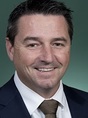
Pat Conaghan Cowper, National Party, Shadow Assistant Treasurer
Don't call me that! A point of order.
Julie-Ann Campbell Moreton, Australian Labor Party
It's about bolstering—
Mary Aldred Monash, Liberal Party
Yes. Please refer to a member's proper title.
Julie-Ann Campbell Moreton, Australian Labor Party
the fictitious claims the opposition trots out. I grew up in Queensland. I grew up in Queensland in the nineties when Pauline Hanson had 11 seats out of 89, and you can sigh, but that time leaves a mark on people. It means that when you hear a dog whistle, you know what it sounds like. This ain't a dog whistle; this is a blowhorn.
When Labor came to government in May 2022, we inherited a broken migration system. In fact, when net overseas migration peaked in 2023 after COVID-19, it was because the Morrison government policies were still in place. It was unsustainable, and that's why Labor has cut net overseas migration by 45 per cent from its peak. Labor recognises and respects the contribution of Australia's permanent residents. Australian values of mateship and a fair go are core, and when you take this action you throw them out the window. (Time expired)
Pat Conaghan Cowper, National Party, Shadow Assistant Treasurer
6:59 pm
Every Australian knows that taxpayer dollars should be allocated to the areas and the projects that best enhance our nation's chance at a safe and prosperous future, that align with our values and that protect our sovereignty. These are tenants that should be overlaid in every portfolio, and Home Affairs is no exception. Today, I'd like to focus on two areas within the portfolio that I've received the most commentary on from my constituents. They are namely illegal tobacco and, more recently, the ISIS brides. I've been banging on about illegal tobacco for seven years. Illicit tobacco and vapes are just flooding our local high streets with illegal products, and it's directly affecting significant members of my constituency.
Parents are worried about their teenagers getting addicted to unregulated and unsafe products that they can access very easily by walking in. There are no checks. There are no licences. They can pick up a vape. They can pick up illegal tobacco—chop chop—without even being questioned. You're seeing these pop up every single day on the corners of regional and rural Australia. And then you have the owners of the legitimate shops who literally are closing. People who are trying to do the right thing, using legal products, are now closing their shops. Quite often, they're the ones who sell the milk and the bread in those tiny towns—like Dorrigo, which is in my electorate. We notice there's a very real lack of action and bizarre inaction by this government.
On behalf of them, I ask the minister: when will you admit that a blanket ban of vapes was never going to work without adequate AFP and Border Force resourcing and was nothing more than headline-grabbing tokenism? When will you admit that the current excise levels on regulated tobacco have actively created the illicit tobacco trade boom and take action? Why haven't you created a permanent, standalone federal vaping, alcohol and tobacco agency similar to the US model, an agency that is funded properly and set up to work with state and territory law enforcement agencies and assist them rather than expecting them to do the heavy lifting? Why haven't you taken action to empower our courts to crack down and crack down hard on illegal operators and agents?
Without every single one of these measures, the illicit tobacco and vape trade will continue to thrive and in fact expand into our markets. This year, we're seeing reports of firebombings that have engulfed Melbourne's hospitality industry being linked to organised crime and the sale of black market liquor. It was not a stretch of the imagination to see that liquor was the next thing to come into this business model.
Then there are the ISIS brides and the litany of unanswered questions that the Australian people deserve real answers to from the minister. The first one is: why were they allowed to slip through the back door when there was a Hollywood-esque production of the arrest of Ben Roberts-Smith? We need answers on that. Why was the temporary exclusion order not imposed on the entire group of ISIS brides and children seeking to travel to Australia during 2025-26 as we saw in the example of Hodan Abby? Were passport arrivals, identity checks, consular engagement or liaison with foreign authorities provided in relation to the returns of ISIS brides in 2022, 2025 and 2026? Every Australian knows that taxpayer dollars should be allocated to the areas and projects that best enhance our nation's future and safety.
Matt Smith Leichhardt, Australian Labor Party
7:04 pm
On Friday I was in the Cairns Airport, which is basically the hub for all of the far north, and I ran into my friend and former teammate Deba George. I hadn't seen Deba for a very long time. He hails from Erub, which is also known as Darnley Island, in the Torres Strait. As old friends do, and as men of a certain age do, the conversation turned to our children. His eldest child, Fabian, who has just turned 21, is down in Brisbane, and Deba said: 'Listen, it's time to go home. It's time for you to get back in touch with culture. It's time for you to go fishing with your uncle.' So, in a couple of months time, Fabian is going to do just that. He'll work the finfish, catch the crays and provide some of the best fish in Australia. But, more than that, this is Fabian getting in touch with who he is—as well as with his family, his culture and his birthright—as a Torres Strait Islander and fishing those waters, as his forefathers have done for tens of thousands of years.
In October last year, Minister Hill and I travelled up to the Torres Strait. We knew that there was probably trouble afoot. Operation Lunar had done a really great job of pushing illegal fishermen out of the waters of the Northern Territory and the Kimberley, and they had eyes on the Torres Strait. We met with the elders, with council and with the PBC to discuss what needed to happen. We provided an uplift almost immediately, with manpower and winged aerial vision on the waters. A few other things went wrong. The northern summer did northern summer stuff, and the weather pushed more Indonesian fishermen into the Torres Strait. We travelled back up there to discuss with the elders what the solution could be. What were we going to do?
One week after my meeting with Minister Burke and Minister Hill, Operation Broadstaff was launched, which is an operation specifically designed to protect the traditional fishing waters of the Torres Strait—their livelihoods, their way of life—by keeping control of our biosecurity, but, most importantly, by allowing the culture to live and breathe. People of the Torres Strait were fearful. They did not want to have people they didn't know in their waters. The response was quick, swift and effective. We told these fishermen, 'If you come here we will take your catch, we will lock you up and we will burn your boat.' We have delivered on every single one of those promises. The fishermen are coming less and less now.
But that was just a bandaid response. It was a quick response and a hard response to stem the bleeding. The ultimate response is the cooperation between the wonderful officers in Border Force—and they are fantastic. We spent a fair bit of time with them and with the community itself. We are co-designing a response led by Torres Strait Islanders to protect Torres Strait Islander waters. This is the demand of the community. This is the response of our government to make sure that they feel that their government, their country, is listening to them.
The Torres Strait is a long, long way away from Canberra. Parts of it are four kilometres away from Papua New Guinea. There are treaty villages where the border between our two nations is more of a philosophical impediment than anything else. Families travel across for trade, ceremonies and culture. Getting that balance right to keep illegal fishermen, who should not be in the area, away but still allow for that tradition and culture which has been around forever is so important, and it cannot be achieved without that local knowledge, which can only be provided by sitting with the elders and by taking the time on the islands to understand.
In our travels, Minister Hill has seen places of this country that no-one else gets to go to. You need permission to land on these places. We've been to Boigu, Dauan and Saibai. He has spent time, he has listened and he has acted. That garners respect in Aboriginal and Torres Strait Islander communities. Minister Hill has earned that respect through his deeds, his actions and his time on the ground. He is welcome anytime in that part of the world. I will travel back to check on Operation Broadstaff in the next few months and hear from the locals about how it's going, but the consultation continues. The interaction between Border Force and the community has been second to none, and it is something I know this government is very, very proud of.

Andrew Wallace Fisher, Liberal National Party
7:09 pm
One of the greatest and most important obligations of any federal government—in fact, any government—is to ensure the protection of its citizens, and the Department of Home Affairs is principal, as is the Minister for Home Affairs, to that responsibility. So this evening I want to talk primarily about the return of the so-called ISIS brides and I want to ask the minister a series of questions.
Who arranged the health checks for the Sydney arrivals on 26 May, and was the purpose to keep the arrivals away from waiting media? Why did those arrivals receive what could essentially be described as a rockstar arrival process? Why was the national counterterrorism coordinator unaware of those arrangements if they related to a cohort of national security concern? Were similar arrangements offered to the Melbourne arrivals or to any previous returned ISIS bride cohorts? Where did the 26 May arrivals go after landing in Sydney and Melbourne? Why could the Home Affairs secretary not answer that question at estimates? What monitoring, reporting or control arrangements are now in place for each member of the latest cohort? Were passport approvals, identity checks, consular engagement or liaison with foreign authorities provided in relation to the return of the ISIS brides in 2022, 2025 and 2026—yes or no?
No-one believes this government—we could put a full stop there—when they say that they did not provide any assistance to the return of these ISIS brides. It is inconceivable that you could bring these cohorts from Syria, from a refugee camp, without any assistance from this federal government, yet that is what they continue to portray to the Australian people. It is a fiction. It is a fib. It is a fabrication—one of the many that this government continues to make and expects Australians to believe. How much taxpayer funding has been allocated already and how much will be allocated in the future to support ISIS brides and their children? This is a reasonable question to ask. These are people who decided to leave Australia and fight with a group of terrorists that were willing to fight and kill Australians. They made that decision. We can all feel a high degree of sympathy for the kids, but the women and men that left this country to do that have to face the consequences of their very poor decisions.
Why is it that of all of the ISIS brides this government has only once used a temporary exclusion order? Despite the fact that a number of the returnees were charged with some very serious criminal offences, why did this government not form the view that a temporary exclusion order should've been placed on these people who were returning to this country? A temporary exclusion order is not a permanent ban. It simply enables the government to control these people's return in a much more systematic and controlled way so that law enforcement agencies and our intelligence agencies can then manage their return. Why did this government not provide or institute temporary exclusion orders on these other individuals? I'd really like an answer to that question.
Finally, Minister, I'm very keen to understand—this perhaps may have been dealt with in estimates, and I may have missed it—why was Ben Roberts-Smith humiliated? He was filmed effectively being dragged off the plane and away from his family while these ISIS brides effectively received the gold treatment from this government. (Time expired)
Zaneta Mascarenhas Swan, Australian Labor Party
7:14 pm
Australia is known as one of the most successful multicultural nations in the world, and, out of all the countries in the world, my father chose to migrate to Australia, which is something that I will always be very grateful for. My electorate of Swan is one of the most culturally and linguistically diverse electorates in Western Australia. The people I represent come from many places across the globe, from the Philippines to India, from Vietnam to South Africa, from New Zealand or even the Pacific. They are nurses and teachers, small-business owners and tradies. They show up. They contribute. They help build this country. This government has made structural decisions that reflect this reality.
We established the Office of Multicultural Affairs to co-ordinate settlement services, community grants and advocacy so that the voices of these culturally and linguistically diverse communities can help shape public policy rather than simply receive it. For the first time in 11 years, there is a standalone minister for multicultural affairs at the cabinet table, not tucked into another portfolio and not an afterthought. We commissioned the Multicultural Framework Review, the first examination of this nation's multicultural policy in more than 50 years, and we committed $100 million in response to this. Also, the office has been engaging with CALD communities and peak bodies, making sure that their voices are indeed represented in public policy, research and design. One of the things that we saw during the pandemic is some of the impact of laws, whether state or federal, on culturally and linguistically diverse communities. It's really important that we actually think about the way that these policies affect communities and can be implemented in a practical manner. By doing this, we are building an Australia which recognises the importance of inclusion, diversity and opportunity and empowering people to contribute to this amazing nation. We also have the national Translating and Interpreting Services that has been providing services in Australia and has helped translate more than 51,000 documents and provided over 236,000 interpreting services. We also have the Australian migrant English program, which has helped about 70,000 clients in previous financial years.
What we're trying to do in the future is actually continue to strengthen the modern multicultural Australia, and a part of that is with the $500 million in funding to support multiculturalism, social cohesion and community priorities. This is something that's particularly important at this moment in Australia's history, because I would say that social cohesion is challenged right now. The Albanese government is also targeting investment through the Infrastructure for Multicultural Communities grant, making sure that Australians have access to modern, fit-for-purpose community infrastructure. We're also continuing the community languages program by investing another $25 million to support 600 community schools across Australia, helping 90,000 students learn 84 languages. At the time when my mum and dad migrated to Australia, they were very focused on integration, so much so that they did not continue practising the language that my sister already knew, Swahili, and I don't know any languages other than English, and sometimes I feel like I should, but modern Australia is a much different place, and what I'd say is that, for people that are bilingual or multilingual, our globalised world needs more people that can speak more languages, and I am a little bit jealous of the member for Tangney.
The Albanese government is also extending its economic pathways to the refugee integration program for another 12 months as well. I'd also say that the Royal Commission into Antisemitism and Social Cohesion is incredibly important and that what we saw happen in Bondi was absolutely unacceptable. We need to make sure that that never happens again, and I want to make sure that Australia is a place where everyone can reach their full potential. I'm proud to be a part of the most multicultural federal government in Australia's history. That's not just backbenchers; that's also around the cabinet table as well. We represent modern Australia.
Mary Aldred Monash, Liberal Party
7:19 pm
Australia is in the grip of an illegal tobacco crisis. The problem of illicit tobacco has moved well beyond a revenue loss issue and is now being described by Commonwealth agencies as a public health, community safety and organised crime problem. It is putting at risk the lives of everyday Australians who go about their work, business and family lives. The Illicit Tobacco and E-cigarette Commissioner says illicit tobacco and vapes are a serious and growing threat to public health, community safety and the economy, while the Australian Criminal Intelligence Commission and the Australian Institute of Criminology have reported that, in the period of 2023 to 2024, illicit tobacco alone cost Australia $4 billion, a fourfold increase over three years.
Since 2023, there have been over 200 firebombings, many in my home state of Victoria, and there is a clear link between the illicit trade and organised crime—even terrorist activities, in some instances. At the same time, enforcement activity has reached record levels without yet reversing the trend. The Australian Border Force reported 23,097 illicit-tobacco detections in the 2024-25 period, seizing nearly 2½ billion cigarette sticks and over 435,000 tonnes of loose-leaf tobacco, but also stated plainly:
… we can't seize this problem away. Enforcement at the border … must complement education, health, domestic enforcement and compliance.
The policy debate in Australia has shifted from whether illicit tobacco is a problem to what combination of excise, retail regulation, intelligence, law enforcement and public health measures can realistically shrink this illicit market. So my question to the minister is: why, when the government claims to be investing record amounts into investigation and enforcement activities through this portfolio, is the tobacco black market continuing to grow out of control, putting the lives of Australians at risk every day?
The second issue I wish to raise is connected vehicles coming into Australia. All of these relate to electric vehicles, and many new combustion engine cars have the same capabilities. There is a custom-made ship that has just brought thousands of BYD cars to Australia, with communications systems manufactured by Huawei. The privacy commissioner gave a clear and public warning over a year ago now that Australia's privacy protections for consumers in the area of connected cars were simply not up to scratch. The government is years behind other countries, particularly our security partners, in stepping up to protect consumer privacy, especially where a known risk of the misuse of biometric information like voice recognition and health data is domestic-violence-offending.
I note that the US trade commission has already announced action against the selling of data, including geolocation information, to third parties without the knowledge or consent of consumers. The fact that the former US Biden administration is still years ahead of where the Albanese government is on recognising the risks and setting an appropriate regulatory regime is a matter of concern.
The Australian Signals Directorate has an advice book urging consumers to note the risks of information collected in connected vehicles via text messages and the like. I think it would be prudent for politicians to take that advice. Smart vehicles are equipped with hundreds or even thousands of sensors that collect real-time information on vehicle status, road conditions, passenger behaviours, geolocation, voice recordings and facial imprints.
I note that, in 2024, in a Senate estimates hearing, department officials confirmed that they were still working on connected-vehicle privacy settings. I'd also reiterate the Australian privacy commissioner's warnings in this regard. I have serious concerns about the misuse of connected vehicles in domestic-violence perpetration and the breaching of consumer data and privacy, so my question to the minister is: after years of public warnings from national security advisers about concerns around privacy and consumer data, why does the Australian government not have a fit-for-purpose regulatory framework to protect Australia and Australians against these known threats?

Gordon Reid Robertson, Australian Labor Party
7:24 pm
I rise on the Home Affairs appropriations at a time when the security environment facing Australia is more complex, more contested and more consequential than at any point in recent memory. The first responsibility of any national government is the protection of its people, and that responsibility is not theoretical. It is not confined to briefings, agencies or capital city institutions. It is felt in every community across this country, including in regional New South Wales, including on the Central Coast and including in the homes, workplaces, hospitals and small businesses of the people that I represent.
National security today is broader than it once was. It is about the integrity of our borders, it is about the resilience of our critical infrastructure, it is about countering terrorism, espionage and foreign interference, and it is about disrupting organised crime, human trafficking and people smuggling. It is about ensuring our cyber defences are strong enough to protect not only Commonwealth systems but the local services and businesses that Australians rely on from day to day, and it is about maintaining confidence in the institutions that keep our democracy secure, orderly and free. This is the serious purpose of the Home Affairs portfolio.
Australia cannot afford the luxury of complacency. We live in a region and a world where strategic competition is sharpening, where authoritarian states are more willing to test boundaries, where cyberoperations can reach into local communities and where criminal networks are increasingly sophisticated, transnational and technologically enabled. These threats do not always announce themselves at the border. They do not always arrive by sea or by air. Sometimes they arrive through a phishing email to a small business; sometimes they arrive through attempts to compromise a local council, a hospital network, a water provider or an energy system; and sometimes they arrive through coercion, misinformation, illicit finance or foreign interference designed to weaken our democracy.
That is why appropriations before the House matter. They support the capability of the Commonwealth to identify risk, respond to threats and protect the national interest. They support the work of our border agencies in ensuring that legitimate travel and trade continue, while those who seek to exploit our systems are met with firmness and resolve. They support the integrity of our migration system because public confidence depends on a system that is orderly, credible and fair and administered in the national interest. They support the cyber and infrastructure resilience that modern Australia requires, because in 2026 a cyberattack on a regional health service, a port, a freight network or an energy provider is not merely a technical inconvenience; it is a national security event with local consequences. And they support the work required to counter extremism, espionage, foreign interference and organised criminal activity before they cause us harm.
For regional Australia, national security must never be understood as something that happens elsewhere. Our communities are part of the national security architecture. Our hospitals hold sensitive data, our councils operate essential services, our regional transport networks move goods and people, our small businesses are part of our national supply chains, and our emergency services stand on the front line when issues arise. That is why investment in Home Affairs is not an abstraction. It is practical, it is necessary, and it is about ensuring that the Commonwealth has the capability, the discipline and the operational readiness to meet the threats of the present and prepare for the threats of the future, because our nation's strength is found not only in our agencies, our intelligence capabilities and our border systems but also in the cohesion of our communities, the trust people have in democratic institutions and the confidence Australians have in their government acting in the national interest. That balance matters. Australia can be strong on border protection and still be fair; we can be uncompromising against people smugglers and criminal networks while remaining decent and humane; and Australia can meet a changing security environment with calm resolve and not fear.
This is the work that these appropriations support. They support the Home Affairs portfolio, which is central to the protection of Australia's sovereignty, security and social cohesion; they support the agencies and personnel who perform difficult, often unseen work in the service of our nation; and they support the systems that allow Australia to remain open to the world without being vulnerable to those that seek to do us harm. In matters of security, the parliament should always remember what's at stake. It is about ensuring that Australia remains sovereign, secure and free. From the Central Coast to every regional community across New South Wales and beyond, Australians expect their government to act with steadiness, strength and purpose, and these appropriations help provide that foundation. On that basis, I support the Home Affairs appropriations and commend them to the House.
Barnaby Joyce New England, Pauline Hanson's One Nation Party
7:29 pm
I have great respect for the member for Bruce, and I want it known that I genuinely think that the member for Bruce has his heart in the right place on this. What I do believe is that we have to understand the political dynamic that is currently before us. Australia is moving to parties such as One Nation because of this being a crucial issue. If you don't recognise that, then you don't recognise exactly what's going.
In 2021-22 170,900 people, net, came into Australia. In 2022-23 538,000—1½ times the population of Canberra—came into Australia. In 2023-24 about 1¼ times the population of Canberra came into Australia. In 2024-25 306,000—slightly less than the population of Canberra—came into Australia. This is not looking after the home affairs. This is being completely recalcitrant from the reality of what is before us. Why do you believe that you can match the political, personal and religious philosophies just by reason of them arriving in Australia? It's not correct. It doesn't work. I'm not an imbecile. I'm not a racist. But we have to that understand that we can't just keep pouring people into Australia and thinking that everything's going to be fine and dandy. It's not.
I want to ask the minister—and he knows better than all of us—how we can bring into this nation people with a view which I know would be anathema to the member for Bruce and just expect them to change that view. What are we going to do to change it? I know that the member for Bruce and I, on different sides of the political equation, believe in something. There are the guardrails for Australian culture, and if you step outside them you're stepping outside what Australia is. You must abide by those guardrails. Home Affairs, where he is responsible, must make sure that those guardrails remain intact.
Do you see any problem with any other philosophy that comes into our nation? Do you ever step aside from political correctness and say: 'No, that is not acceptable. That philosophy is not acceptable, and we will not tolerate it in this nation, this incredible nation we've created'? Do you have the courage to clearly enunciate what those issues are, to stand behind exactly what those issues are? Do you have the courage to say, in the face of the people who do not believe them, exactly your beliefs on behalf of Australia are? It's dangerous. It's scary. But you've got to do it.
Can you explain why we exist in this netherworld, where we talk up and down and around about the Chinese Communist Party and the PLA without ever mentioning their name? We know what's going on here. Why do we play this stupid game? We've just had the Prime Minister of the Solomon Islands here—and I'd like to commend the Prime Minister of Australia on that; I really would. Congratulations. Good work! But why do we all play this game? How are we dealing with that, Minister? Why aren't we being honest about exactly what the problem is? We all know it, but we don't say it, because we're scared. We're scared. That's a terrible thing for a nation that prides itself on the Gallipoli experience on Anzac Day.
Can the minister explain what he loves about Australia and what he'll offer to protect it? What is the culture of our home? Minister, Member for Bruce, what is the culture that connects you and me on different sides of the political chasm, with the same incredible, indelible belief of a love of our nation that we know is at threat and that you must protect? (Time expired)
Proposed expenditure agreed to.
Ordered that consideration in detail of the bill be made an order of the day for the next sitting.
Federation Chamber adjourned at 19 : 35