
House debates Bills
Appropriation Bill (No. 1) 2026-2027, Appropriation Bill (No. 2) 2026-2027, Appropriation (Parliamentary Departments) Bill (No. 1) 2026-2027; Second Reading

Simon Kennedy Cook, Liberal Party, Shadow Assistant Minister to the Leader of the Opposition
10:38 am
Unfortunately, this budget is an assault on aspiration, and the Prime Minister has never seen an aspiration he didn't want to crush. I wonder whether the Prime Minister and the Treasurer actually want to hear from the Australians affected by the budget—not the spin, not the slogans, not the carefully chosen lines from a Treasurer's presser but the real stories from people who are paying the price, who did everything right, who played by the rules, who worked incredibly hard to get ahead and who are having the rug pulled out from under them. Many of them are younger Australians who will be taxed far more than my generation and far more than generations that came before them. Behind every one of these Labor tax changes is an Australian who worked, who saved, who sacrificed and who invested. Behind every so-called reform is someone who made decisions in good faith, built a plan for themselves and often for their families. They tried to get ahead and are now being told by the government 'we're going to tax future wealth'.
Labor wants to talk about fairness. Well, let's talk about fairness. Is it fair to tell a young nurse or teacher that the taxes on the investments they built for their first home deposit are now being doubled? Is it fair to tell a retiree who spent decades saving and renovating their plan to stay off pensions that it's now under threat? Is it fair to tell Australians before the election that there would be no new taxes, and then, after the election, hit them with taxes on housing, savings and small business, and income taxes through bracket creep?
This government doesn't want to hear these stories because these stories expose the truth. Labor's budget is not about hitting a political stereotype. It's about hurting real people in real households around real kitchen tables. Their stories say more about this budget than any speech from the Treasurer ever could. I recently heard from Lyn in my electorate. I want to read her words on the record. She wrote:
I'm wondering if you have any ideas how we can object to the Labor Party's new budget regarding property investment?
It's totally unfair to bring these changes in against their election promises and to punish us for our hard work to buy and retain these investments.
It hasn't been a walk in the park with savings, renovating, managing, putting up with good tenants turning bad causing thousands of dollars of damage which we could not have endured if it wasn't for negative gearing.
Now we have retired our plan was to sell something to help while retaining a couple which would help us from requiring the pension and provide much needed homes for renters.
Our portfolio is not a multimillion dollar empire that was achieved without blood sweat and tears. The banks still own a major portion too. We worked hard for this and believe that Labor is going to ruin us.
This is the human impact of Labor's housing tax. This is not about some caricature of wealthy property barons. This is about people like Lyn, who worked hard, saved, renovated, took risks, dealt with the damage, dealt with the debt and tried to build a retirement that would keep them off the government pension.
Labor is punishing aspiration. It's punishing people who provide homes for renters, and, worst of all, it's doing so after promising to not do exactly this thing just 12 months ago. If it was such a good idea, why would you purposefully mislead the public about it just 12 months ago? You don't fix a housing crisis by attacking people who provide rental homes. You don't fix a housing crisis when your very own budget papers say that this policy will lead to 35,000 fewer homes.
Andrew, a young Australian in his late 20s, trying to build a future for his family, wrote this to me:
My name's Andrew and I'm Writing to you as help as an Australian citizen, Tax payer and Public servant. Life has been hard for someone in his late 20s to try and build a future for my family as with many other Australians. Inflation has made it difficult to keep up with saving for a house and my wife and I have been saving, investing, working hard to try and build a home and call our own.
Do you have a message for Andrew?

Susan Templeman Macquarie, Australian Labor Party
He's going to really love our changes, because he'll have a better chance.
Simon Kennedy Cook, Liberal Party, Shadow Assistant Minister to the Leader of the Opposition
Andrew, what you've heard today from Labor—and I'll finish reading your letter in a minute—is that they're not listening. They just said, 'You're going to love these changes.' That is how tone deaf this Labor government is. But, Andrew, do not worry, because I'm going to fight for our community; I'm going to fight for people in their young 20s. And when they say, 'You're going to love it,' I'm not going to be interrupted, and I will finish reading your letter right now. Andrew went on to say:
The hard part is the Labor government without asking it's citizens has decided to change the Capital Gains Tax discount which means the investments we've worked so hard to build and risked so much money on will now only give us half the profit we would have and is now dragging us further away from having to call a home our own.
Please please please help with rectifying this and at the very least force a vote as to whether the capital gains discount should be changed because it's not fair for hard working people trying to get ahead. My wife's a nurse and I'm a teacher, we should be able to have a roof over our head and not worry about money.
That is what Labor's tax changes are doing. Andrew is a teacher and his wife is a nurse. He's written to me out of desperation. He said 'please, please, please' three times, and the message I heard from a Labor member in here today is, 'Andrew, you're going to love these changes.' That is how much this government listens to you. They don't listen to what I say even when I come to parliament and read out your letters. Instead of reflecting or asking a question—

Susan Templeman Macquarie, Australian Labor Party
I don't know the order, but I feel like I've been misrepresented by the member's comments.
Simon Kennedy Cook, Liberal Party, Shadow Assistant Minister to the Leader of the Opposition
It's not a point of order and not the time.
Alicia Payne Canberra, Australian Labor Party
The member did take the interjection, and that was not what she had said that you said, so I'll just remind members—
Simon Kennedy Cook, Liberal Party, Shadow Assistant Minister to the Leader of the Opposition
What she said is 'Andrew would love the changes'. That's exactly what she said.
Susan Templeman Macquarie, Australian Labor Party
'Because it will help him get a home'.
Alicia Payne Canberra, Australian Labor Party
I'll just remind members to come to order and—
Simon Kennedy Cook, Liberal Party, Shadow Assistant Minister to the Leader of the Opposition
I'm not interjecting. I have the call, so I'm not interjecting. If she wants to interject, I'll take the interjection. But Andrew will not love these changes. This is what Labor's capital gains tax changes look like, and this is what it looks like when you call them out in parliament—defensiveness, no listening and telling people like Andrew that they'll love them. I've had enough of it, and you can tell I'm hot under the collar, and I am, because I think this could destroy Australians. They're getting double the CGT tax that I have ever paid. Not only are you getting double the CGT tax that I ever paid; you'll be paying more in income tax than I have ever paid because of Labor's bracket creep tax. Every single year, your income tax will go up, and, as I read out here today, you will lose the negative gearing benefits that all boomers have had and that I have had. You will never have those same opportunities.
Instead of actually showing some self-reflection and wondering why people like Andrew and Lyn are writing in to me, asking me to come to parliament and fight for them, which I will do—I will not be deterred from fighting for you. Instead of listening, being curious and asking questions, we hear interjections, interrupting my speech, that you will love them. I've had enough of that. This isn't just a debate for economists, accountants and politicians. This is about Andrew and his wife, a teacher and a nurse. These are two people serving their community, working hard, saving and investing, taking risks, trying to do the most basic Australian thing imaginable—buy a home and build a future. But their deposit is now being taxed double than what my deposit was when I invested in shares and ETFs, just like them. What message are they getting from this government?
What they're hearing is, if you work hard, save carefully and invest responsibly, Labor will come after you. Andrew and his wife are not asking for special treatment. They're just asking for the same settings that applied to every other Australian until two weeks ago. Andrew and his wife are not asking for a handout. They're not asking for free money from the government. They're not asking for someone else to pay their way. They're doing exactly what every government says young Australians should do. They're working. They're saving, they're investing, and they're trying to get ahead—a teacher and a nurse. But Labor's answer is to punish them at a time when inflation has already made it harder to save for a deposit. You're struggling, and I know many in my electorate are. I'm here fighting for you. At a time when inflation has pushed your rents higher, when mortgages are out of reach because interest rates are higher, while there's a war in Iran with inflation going up and while petrol prices are going up, Labor is now making the ladder even harder for you to climb because you are going to pay higher tax than any generation before you—far more than me. I think that's incredibly unfair.
This is intergenerational unfairness at the very heart of these changes. Older Australians have had the chance to build their wealth under a completely different set of rules with lower taxation. Younger Australians are now being told the rules will change just as you start trying to get ahead. They're now being locked out of homeownership, so they're asking you to invest in other assets to build a future, but then they come up with a tax on that too—doubling CGT. CGT now being at the top rate taxed at 47 per cent. In New Zealand, it's zero per cent. In Singapore, it's zero per cent. In communist China, it's more than half what ours is at 20 per cent. We have a communist country with less than half the CGT that we have. I'm almost speechless. I don't understand it.
I would love to fight an election on this issue. It's a shame we didn't, and they weren't upfront about it 12 months ago. I think we would have had a very different result. I'd love to, but they're trying to jam it in between elections. I think we could win an election on this, but I hope they backflip on it. I really do hope this is backflipped on because I think it will destroy Australia. We're hearing about carve-outs, and now we're hearing in the press carve-outs aren't going to fix it. It's not going to go far enough. We need these taxes axed for Andrew and his wife, a teacher and a nurse. That is the face of what is happening here. This budget's not just a fiscal document; it's a statement of values. And Labor's values are clear. If you work hard, they're going to tax you more. If you save, they will tax you more. If you invest, they will tax you more. If you run a small business, they will tax you more. If you try to build a future for your family, they will make that harder. It's not reform; it's an assault on everyday Australians. And the great contradiction is this: Labor says it wants more housing and more housing supply, but its policies will drive investment away from housing. Labor says it wants to help renters, but fewer investors means fewer rental homes, and we know how many: 35,000. It's in black and white in the budget papers for that policy.
Now, they try and trickily say it will lead to a 35,000 increase, because they came up with another plan, spending the money they're taxing from you to build more homes, which they've been unable to do in the first four years in government. But this time they're saying, 'Trust us.' Well, they said that at the election 12 months ago, and you've seen just 12 months later how much you can trust.
This is a government that can't manage its spending. Spending is at a 40-year high outside the pandemic. That is why this is the highest taxing budget of all time—it's one of the highest spending governments of all time. And Australians are just starting to wake up to where they get the money from. It's from you. But, because those tax settings haven't changed aggressively, this increased government spending is catching up with them, and this is the only way they can pay for it. It is increasing the taxes on people like Andrew and his wife, who's a nurse. It's everyday Australians.
So this Treasurer can dress this up however he likes, but Australians can see what's happening. This is a government addicted to spending and looking for new ways to fund it, pushing tax hikes onto millions of Australians. Under Labor, families have been hit across the board. Gas is up, electricity is up, food's up, health costs are up, education's up, child care is up, insurance is up, rents keep going up. And then, after all of that, Australians are being asked to pay even more tax—none more so than the next generation. That's why people are angry. That's why our social media feeds are littered with memes. They're not angry because they've refused to contribute. Australians are happy to contribute. They just want a fair go. They pay income tax. They pay GST. They pay rents. They pay strata fees, levies and charges. Small businesses pay company tax, payroll tax, workers comp, insurance and compliance costs. Investors already pay CGT tax. Retirees pay tax. Families pay tax every day in one form or another. What they object to is a government that wastes money, drives up inflation, breaks promises and then lectures Australians about fairness and tells them they should love it. That's what I heard here today. 'You should love it.' There's nothing fair about telling a young nurse and teacher that they should love a path that they don't. There's nothing fair about telling a retiree who built a modest property portfolio through sacrifice that their plan is now under threat. There's nothing fair about treating aspiration and hard work as a loophole. Hard work is not a loophole. Saving is not a loophole. Australia should be a place where aspiration is rewarded, where a teacher and nurse can believe that, if they work hard and save carefully, homeownership is still possible, where retirees who plan for their future are not punished for staying off the pension, where small businesses can invest with certainty and where young Australians are encouraged to build wealth, not told that Canberra will take more money away from them for the wealth and homes and assets they're trying to buy.
Susan Templeman Macquarie, Australian Labor Party
10:53 am
There's been a lot of focus on tax reforms in this budget. Our three objectives are to make it easier to own a first home, to cut income taxes and to better align the tax treatment of income and assets. I want to touch on some of the things that haven't really been talked about in some of the misinformation and disinformation willingly peddled, including by those opposite. From the 2026-27 year—so the next financial year—a new instant tax deduction of up to $1,000 every year, which will simplify work related expense deductions, kicks in. This will deliver 6.2 million workers an average tax benefit of $205 for that year. The following year we're introducing a $250 working Australians tax offset, the WATO, providing another ongoing tax cut annually for more than 13 million Australian workers. These are on top of the three tax cuts that the government's already legislated.
From 1 July this year, the 16 per cent tax rate on taxable income between $18,201 and $45,000 will drop to 15 per cent. From 1 July 2027, that tax rate will drop to 14 per cent. As this flows through every single tax bracket, it means that every single Australian taxpayer will receive a tax cut of up to $268 from 1 July and then $536 every year from 1 July 2027, compared to the 2024-25 tax settings. In every budget, we've embedded these tax cuts that are small, affordable and meaningful and that build up over time. For an Australian worker on average earnings, the combined benefit of the government's five tax cuts, which started back in 2024, could be up to $2,816 a year, helping every Australian worker keep more of what they've earned.
These cuts also help every single sole trader running a small business. Since the Treasurer handed down this budget, I've been talking to local small businesses about some of the practical measures that will benefit them in this budget. We've permanently extended the $20,000 instant asset write-off from July this year. This allows small businesses with turnovers of up to $10 million to immediately deduct eligible assets costing less than $20,000 off that year's tax return. You can claim more than one asset, which helps businesses make their investment decisions with confidence. This is estimated to improve cash flow for small businesses by around $890 million over the next five years. These are testing trading conditions for some businesses and, from July, eligible companies that make a loss in the current income year will be able to use that loss to get a refund against tax paid in the prior two income years. This will benefit up to 85,000 companies, mostly small businesses.
We're also introducing loss refundability to support new startup businesses. From 2028-29, small startups in their first two years of operation will be able to get a refund for tax losses up to the value of the fringe benefits tax and withholding tax paid on employee wages. This will benefit up to 25,000 young companies each year, providing valuable cashflow support. I think there's been less focus so far on these measures. But, from speaking with local businesses and learning about their situations, there are benefits that they'll receive.
One of our stated aims in this budget is to make it easier to own your first home. It's something I did as a matter of course in my 20s when I started earning a full-time wage. I remember the joy of being able to put whatever I wanted on the walls, to paint, to change things and to have the sense of security that having your own place brings. I think younger generations deserve to be able to make the same choice without being forced to gamble on the stock market to build their deposit. They should have an even playing field. But right now, and for many, many decades, would-be first home buyers have been up against it because it has been an unfair playing field tilted towards people buying their second, third or 13th property. In this budget we're reforming negative gearing and capital gains tax concessions to level that playing field for first home buyers. But grandfathering arrangements remain for some of the measures to respect the decisions that current investors have made. If investors still want to use negative gearing on property into the future, they can do so on new builds so that their investment goes towards creating more housing supply. These changes are estimated to support an additional 75,000 homeowners over the decade to get their own first home. I want our kids and grandkids to be able to realise the dream of owning their first home. That's the purpose of this and the housing measures in the budget. It's the most ambitious housing agenda in decades.
We're extending the ban on foreign investors buying existing homes, until mid-2029, and we're establishing the new $2 billion Local Infrastructure Fund to help governments and state utilities build essential infrastructure to support new housing, including by connecting those essential services, like water, power, sewerage and roads. In Macquarie, where we face a dual challenge of bushfires and floods, we aren't likely to see as much activity as some other areas when it comes to new housing from the Housing Australia Future Fund, but at East Penrith, not far over the electorate boundary, there are right now 135 new homes under construction. One housing measure that is already helping plenty of Macquarie first home buyers is the Australian Government 5% Deposit Scheme. More than 1,200 people in Macquarie have bought their own home using the scheme.
Our budgets—this one and earlier ones—recognise that you can't build new homes without a skilled workforce. More than 545 construction trades apprentices in Macquarie have benefited from the $5,000 incentive payments. What's really exciting is the establishment of a new TAFE centre of excellence for construction at the Kingswood TAFE campus. Thousands of construction workers and their employers will benefit from new skills to help boost housing supply, thanks to this $11 million joint investment by the Albanese and Minns Labor governments.
The centre will work with industry and universities to develop a first-of-its-kind higher apprenticeship in construction, creating a new pathway that combines hands-on training with higher level qualifications. Over the next two years, the TAFE NSW Construction Centre of Excellence will deliver more than 20,000 enrolments across microskills and microcredentials via online and in-person training. The centre responds to industry demand for short, practical training that helps small and medium-sized construction businesses, like those throughout my electorate, so they can upskill their workforce and deliver quality housing right across the country.
The Kingswood TAFE marks the establishment of the 20th and final nationally networked TAFE centre of excellence under the National Skills Agreement, a landmark five-year agreement between the Commonwealth and the states and territories, focused on building the skilled workforce to set Australia up for now and the future. This is Labor restoring TAFE, as we promised we would, and creating the workers who will continue to build new homes for Aussies to buy or rent.
The budget continues the important work we've done to secure Australia's fuel supply, which has come under such pressure as a result of the war in the Middle East. We're expanding the minimum stockholding obligation, with an additional 10 days supply for diesel, jet fuel and petrol. We're establishing the $3.2 billion government controlled Australian Fuel Security Reserve, which will hold around a billion litres of diesel and jet fuel to provide an additional buffer for any future crisis. Through these efforts, Australia will increase its diesel and jet fuel reserves to 50 days. We've also strengthened the fuel security services payment to protect the future of our two remaining refineries, and we've committed $10 million for feasibility studies into expanding our domestic refining capacity.
Since the budget, we've been able to announce a number of fuel deals, including 150 million litres, or 900,000 barrels, of additional diesel in three new shipments, through partnerships with Ampol, Viva and regional supplier IOR, and discussions between Australia and China helped to secure an extra three shipments of jet fuel, totalling more than 600,000 barrels, or about 100 million litres. This is all part of working with the industry to keep people and goods moving.
Securing more fertiliser is also part of the Albanese government's actions to help Australia's agriculture industry manage the impacts of the conflict in the Middle East. In Macquarie we have fruit growers and vegetable growers providing produce not just for local farmers markets and produce stores but for markets and customers further afield. Everyone knows how vital Hawkesbury-grown turf is for the backyards, footy fields and landscaping all around Sydney and beyond. Just this week, we made another announcement: around 80,000 tonnes of additional urea, now locked in through the government's $7.5 billion Fuel and Fertiliser Security Facility. These sorts of shipments, arriving in Australia in coming weeks, give confidence to small businesses growing turf and vegetables in the Hawkesbury that they'll be able to keep doing what they do best.
Our efforts to help people with the cost of living, through this budget and previous ones, is seen starkly in health. This budget contains more work in the healthcare area—like making medicines cheaper by listing new and amended medicines on the Pharmaceutical Benefits Scheme, including treatments for cystic fibrosis, chronic kidney disease and various cancers, with $5.9 billion provided over five years. An additional $25 billion over five years will strengthen our public hospitals. We're also securing the future of Medicare urgent care clinics, with $1.8 billion over five years, with ongoing secure funding.
The benefits of our investment in health care are being felt right across the electorate of Macquarie. We've increased bulk-billing rates so that more people in Macquarie are able to see a GP without any out-of-pocket costs. Prior to our reforms, it was pretty common for GPs to offer bulk-billing only for pensioners, kids and concession card holders across Macquarie. Being a fully bulk-billing practice was the exception rather than the rule. Since the Albanese Labor government's successive boosts to bulk-billing incentives, the data collected in March of this year showed that we now have nearly half of all GP practices across Macquarie bulk-billing every single one of their patients—every single one. From the top of the mountains down to the Nepean River and across to the Hawkesbury, we have 26 fully bulk-billing GP practices.
One of the reasons the improvements are happening is that we've grown the health workforce, with an extra 17,000 doctors joining the Australian health system in the last two years. That's more than at any other time in the last decade. We'll continue to give students more opportunities, and to train more doctors and nurses, with the largest GP training program in history and hundreds of scholarships for nurses and midwives to extend their skills and qualifications.
Now, there's always more to do. But these improvements are making a real difference.
Something else that I know is making a real difference in the Hawkesbury part of my electorate is the Windsor Medicare Urgent Care Clinic. This urgent care clinic, which I promised in the 2025 election, has already treated thousands of patients quickly and efficiently and saved people from presenting to Hawkesbury hospital.
Just this week, one of my staff heard from Bridget from Kurrajong, who said, 'Tell Susan I said thank you for the urgent care clinic.' Last month I received a more detailed letter from Stephen, who wrote to me about his treatment at the Windsor urgent care clinic. He said:
This is a genuinely outstanding initiative. Having used the clinic last Monday evening to treat a leg injury, I experienced first hand what an efficient, well run and highly valuable service it provides to the community.
The clinic was accessible, prompt, and professionally managed throughout.
Importantly, it delivered exactly what is needed in situations that require urgent attention without the necessity of attending a hospital emergency department.
He asked me to particularly acknowledge Dr Roy Mariathas, who treated him. Dr Mariathas is a constituent in my electorate. I'm very proud to have local doctors working in this new local facility.
Our decision to have ongoing funding to make sure these clinics remain a permanent part of the health system is another change from the Albanese Labor government to keep the cost of living under control but also to give people the best possible health care.
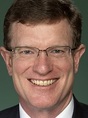
Andrew Gee Calare, Independent
11:08 am
I would like to add some observations on a few different aspects of this budget that have great relevance and are also of great concern to the communities of central western New South Wales and Calare. Firstly, I was bitterly disappointed that there was nothing in the budget to help our businesses being smashed to pieces by the indefinite closure of the Great Western Highway. In question time, the Prime Minister has already conceded that the failure of the convict bridge at Victoria Pass was the fault of successive governments—that all governments have to share in the blame for this debacle. So, that being the case, it's the responsibility of his government to put down some serious money to help our businesses going broke because of government negligence.
About a week ago we had the announcement of a NSW government support package, which amounted to a one-off $10,000 payment for businesses only in the reasonably small Hartley area. Quite frankly, that announcement has been met with extreme disappointment right across the region, particularly in the areas most affected by this unbelievably negligent closure that is the fault of governments who have kicked this can down the road for many, many years.
When I spoke to business owners about it last week, they said $10,000 wouldn't even cover the wages bill for a week—or, in one case, a fuel bill. I was at one local business and, while I was waiting for the business owner to come, the employee said: 'You know what? I'm just very worried that I'm not even going to have a job in a week.' We've got business owners selling homes because of this closure. I think that if this were happening in a city seat, they'd be moving heaven and earth to help. But because it's out in the country, just 65 kays over the other side of the sandstone curtain, we're being ignored.
The business support package that the NSW government has put on offer does not even cover Lithgow. Lithgow businesses are going broke as well. Local residents aren't able to patronise their own businesses because they're too hard to get to; it's just gridlock. There are over 12,000 extra vehicle movements a day in Lithgow at the moment. It's hell.
I don't think the state and federal governments are doing enough. It's plain and simple: they're not doing enough. This was a glaring oversight in the federal budget. And it's very galling for our communities to think that, just over the eastern side of the sandstone curtain, they can open gleaming new expressways to the new Sydney airport. We can open multibillion dollar expressways up the North Coast and down the South Coast. But, when it comes to the western side of the Great Dividing Range or the sandstone curtain, they expect us to make do with a patch-up job of a bridge built by a convict chain gang in 1832. It is completely and utterly unacceptable. We are being treated as second-class citizens. No wonder there is such anger and resentment in regional communities at the moment, when we are being treated like this.
There was no plan or funding in the budget for further high-speed access in and out of the Central West. There's no plan. The New South Wales white paper on the Great Western Highway was a joke. There was nothing in there; it was empty. There are no ideas, no funding commitments—nothing. They knew that this convict bridge was going to fail, but they kicked the can down the road, chose to spend the money elsewhere and just thought, 'We'll monitor it until it fails.' Well, it's failed. They knew it was going to happen—total and utter negligence.
I was also very disappointed that the budget didn't deliver funding for any new veterans and families wellbeing centres. Working with our local veterans, we have submitted a proposal for stage 1 of a Central West veterans and families centre at Bathurst. There was no funding in the budget for it at all. Has our country not learned the tragic lessons from the Royal Commission into Defence and Veteran Suicide?
I have a lot of respect for the Minister for Veterans' Affairs. He's been out to Bathurst and met with members of the Bathurst RSL sub-branch, so he knows the issues. He knows how much this means to our local veterans. The Bathurst RSL sub-branch is also willing to co-fund part of this veterans and families wellbeing centre—they're going to pay for some of it—but we just don't seem to be able to shake any money out of the federal government. I would like to meet with the Minister for Veterans' Affairs about it, and I would like him to meet with our local veterans, again, to explain to them what's going on with the funding here, because there can be no argument that our local veterans need this funding to support the growing cohort of veterans in our region. There's hardly any support for them west of the Great Dividing Range. Our veterans have put their lives and their welfare on the line for us, and that has been ignored and overlooked. It has to be the highest priority for our country and also our region. I ask the Minister for Veterans' Affairs to have a look at what's happened with the funding for the veterans' and families' wellbeing hubs and to get some more funding going. They're not asking for much, but it needs to start.
In the federal budget, $6 million was allocated towards the construction of the Orange Planetarium and Conservatorium, including teaching spaces. While this is a positive outcome, it also comes with a warning: it is my hope that council uses this funding in a productive, open and transparent manner. In 2019, I secured $10 million to kickstart the new conservatorium, and there is nothing worse than seeing hard-won funding frittered away through mismanagement and defective work. We cannot have a repeat of the debacle that is the Orange Regional Sporting Precinct. I believe an independent inquiry is needed to get to the bottom of what's gone on there. I won't go into detail in this contribution, but I may well do so in a further contribution to this House. What is happening at the Orange Regional Sporting Precinct is not acceptable, and there needs to be some transparency and accountability with what's going on out at this Bloomfield project.
When it comes to changes to private health premiums, this budget hits older Australians and regional families. Coming right after the steep 4.41 per cent average premium hike on 1 April, the government has now quietly axed the extra age based rebate for seniors. Starting from April 2027, the enhanced rebate for over 65 will be slashed to a flat 24 per cent, treating retirees on fixed pensions the same as younger earners and directly hitting over three million older Australians. It will be a real kick for our fixed income seniors. While the government hides behind averages, a 4.41 per cent premium rise adds roughly $167 a year for individuals and $330 a year for families on gold cover, with some major funds hiking prices by up to six per cent. For our regional seniors who need comprehensive care, the data shows that gold policies often jump by 11 per cent to 12 per cent when insurers restructure. These are vulnerable people in our community who are now going to have to choose between buying groceries and keeping their health cover. If seniors are forced to drop their private health cover, it will have a massive impact on our hospital system, which is already overstretched.
Let's talk about the capital gains tax and changes to trusts and negative gearing. If government wanted to bring in changes to the tax system, it should have had the courage of its convictions and put it to the Australian people at a general election. It chose not to do that, and it's why people lose faith and trust in politics and government institutions and political parties—because governments aren't upfront and honest with them. There are changes also affecting the way that a lot of young people invest through crypto and exchange traded funds and microinvesting apps. All of these hit young people in significant measure, and these are the very people the government says that it is trying to help through its tax changes. Well, put them to the people. What could be more simple than that? Don't try to hide it as you run into an election and then hit everyone with it afterwards. This is a huge issue for people of all ages—not just young people, not just older people but all Australians.
There is real anger out there, including amongst the business community. They're very worried they're going to be hit with this new capital gains tax. They're asking, 'Well, what is the point in taking risks, what is the point in fostering enterprise, what is the point in employing people and what is the point in following your dreams and building something if the government is going to take almost half of it at the end of the day?' It's a great point. If we want businesses to drive the economy, and everyone says, 'Yes, small business is the engine room of the economy,' well, let's support them and give them some tax measures that actually support what they're doing rather than penalise what they're doing. It's a huge issue out there, and I don't think it's going to go away for the government. So I would urge the government to rethink what it's doing with its tax changes. There is widespread concern out there, and there will be a price to pay for this at the next election.
Another glaring omission from the budget was the failure to impose a 25 per cent tax on gas exports. Since 2022, this equates to $70 billion in lost revenue. Imagine how many great western highways we could have built with $70 million, how many convict bridges we could have replaced, how many business support packages we could have put out there for our struggling businesses being smashed to pieces by that closure? That's $17 billion a year, $2 million an hour and $577 per second. Why hasn't it happened so far? The answer is: follow the money. It's these big gas companies that are major donors to the major political parties. They're just buying influence. That's the cold, hard truth of the matter. That's why the major parties don't want to go here, because they're basically in league with these gas companies. This is not an issue of left versus right. This is an issue of national interest versus vested interests. It's the vested interests of the big gas companies, which are winning out at the moment, and we're forgoing revenue. We've got overseas countries making more out of our gas than we are. It's an outrage!
I would urge the government to bring in a gas export tax. I would also urge the government to be upfront and transparent about its dealings with the public. Regardless of what you think about these tax changes, if the government had wanted to bring them in, it should have had the integrity to go to the Australian people and ask for a mandate for them. It's very simple. I'm a crossbencher, but I have seen this happen before. When coalition governments broke promises, they were rightly condemned for it, including by those on the opposite side of the chamber. So you shouldn't expect anything different to happen to you. There is no mandate for this. For us, this budget was a budget of broken highways and broken promises—and you can't build public trust on broken promises, and you can't run a regional economy on broken highways.

Kara Cook Bonner, Australian Labor Party
11:23 am
This budget builds on the work of the Albanese Labor government, delivering more cost-of-living relief, stronger health care, more housing and greater opportunities for all Australians. While Australians are working hard, we know many are still doing it tough. This budget responds to that challenge. It delivers more tax cuts for every taxpayer, putting more money back into people's pockets when it matters most, benefiting millions of workers right across the country, including more than three million Queenslanders.
It keeps medicines cheaper. We know that PBS scripts are now costing just $25. That's making a difference not just for people in my community of Bonner but right across the country. People don't have to choose between whether or not they can receive lifesaving medication or can purchase their groceries that week. It makes Medicare urgent care clinics permanent. I now have not one but two Medicare urgent care clinics servicing my community of Bonner. The Carina-Carindale and Capalaba clinics have both seen over 8,000 people through their doors since they opened in December. And it builds on Labor's historic investment in women's health, making contraceptives cheaper, expanding menopause support and backing endometriosis and pelvic pain clinics. There are now 33 right across the nation. The closest in Brisbane's south side is in Oxley, and that also is servicing my community of Bonner. This budget backs skills and opportunity through fee-free TAFE, supports apprentices, strengthens child care through Labor's three-day guarantee and continues making housing fairer for first home buyers. This is a budget helping Australians with the pressures they face today while building a stronger future for tomorrow.
When you work hard, save your money and do all the right things, you should have a fair shot at owning your first home, but for too many Australians homeownership feels out of reach, and that is exactly why the Albanese Labor government is taking sensible action to make housing fairer. We are backing first home buyers through the five per cent deposit scheme, helping more Australians buy a home sooner without the need for an enormous deposit. Over 500 people in my community of Bonner have already accessed the five cent deposits and are now in their very first home. And we are helping build the homes Australia needs. Recently, the Albanese Labor government announced support for more than 50,000 new homes in Queensland, including more than 20,000 that will be exclusively for first home buyers. That is helping to unlock housing supply and get people into their own homes sooner. We are also making sensible changes to negative gearing and capital gains tax arrangements to better support new housing supply and help level the playing field for first home buyers, because aspiration should not be reserved for those who already own property; it should be available for the next generation as well.
I want to share a story today of a local mum, Zoe, who shared with me exactly why Medicare urgent care clinics matter in her experience at one of our two clinics servicing my community of Bonner. Zoe said: 'Thank you so much, Kara, for your amazing service and amazing outcomes in such a short period of time. I'm so grateful for the urgent care clinic you made happen. My youngest son was very unwell on a Sunday in early March, and we could not get a GP appointment. I remembered seeing your post about urgent care clinics, so we presented there. We were taken care of by a wonderful nurse and GP and didn't have to wait more than an hour. We were then redirected to the children's hospital because our little one ended up having scarlet fever and required a hospital stay of three nights. But the ability to access the urgent care clinic was such a great relief to me, my sanity and the wellbeing of my youngest. Thank you from the bottom of my heart. Your hard work, dedication and getting things done have made a real, positive impact on your constituents and wider community.' Thank you, Zoe, for providing that feedback about our urgent care clinics. It is wonderful to see that they are now a permanent feature of our Medicare system.
Across the country, of course, these clinics have already seen more than three million presentations since opening in 2023, helping Australians get free urgent care when they need it most. As I said before, our local clinics have had over 8,000 people through the doors since December. This is also building on our agenda to strengthen Medicare with more bulk-billing GPs. In Queensland, the bulk-billing rate has now increased to 79.5 per cent. In Bonner, GP clinics that are bulk-billing have doubled. I'm really proud to be part of the Albanese Labor government, delivering practical health care right across Bonner and of course across the country, because, when people need care, help of course should be there.
Good climate policy should not just be good for the planet; it should help families save money too. That's exactly what the Albanese Labor government is doing with our Cheaper Home Batteries Program. Already over 3,000 home batteries have been installed across Bonner, helping local households cut energy bills by storing cheaper, cleaner power at home. For families doing it tough, lower power bills do matter, and practical action on climate matters too. For too long these conversations have been framed as an either/or, but the truth is that good policy can be both. It can help thousands with cost-of-living pressures while supporting cleaner, more reliable energy for the future. That is why Labor is backing these practical solutions that help families save money and strengthen Australia's energy system at the same time. In my community of Bonner, local families are already seeing the benefits. Climate action should not feel out of reach; it should feel practical. It should make life easier, and it should leave the next generation with a cleaner, stronger future.
Healthy men and boys are built in communities not in isolation. They are built through connection, positive role models, belonging and support. Recently, I had the privilege of hosting Assistant Minister for Social Services and Assistant Minister for the Prevention of Family Violence Ged Kearney and Special Envoy for Men's Health Dan Repacholi, as part of the National Healthy Men Community Conversations project. We began with a local roundtable bringing together service providers, community organisations and frontline workers to hear directly about the challenges facing men and boys in our community. Later, we were joined by over 100 community members at the Wynnum Manly & Districts Men's Shed for a broader conversation about what it means to support healthy men and boys. We spoke about the kind of community we want to build for men and boys—one where help seeking is encouraged, connection matters, respectful relationships are modelled and young boys grow up with positive role models around them.
We know many men are facing challenges, from loneliness and mental health struggles to social isolation and disconnection. Conversations like these encourage connection, support help seeking and, importantly, help shape future government policies and better programs to support men and boys. I'm so pleased that we were able to host the very first of these community conversations in my community in Bonner, and I know that the rest of Australia will benefit from these conversations as they travel right across the country. I also want to thank the Wynnum Manly & Districts Men's Shed for hosting us at their shed and for the delicious barbecue that included not just a sausage sizzle but also kebabs for a lovely surprise.
It is also National Reconciliation Week, and this year's theme, All In, is a reminder that reconciliation is not passive. It requires all of us to keep listening, learning and working towards meaningful change. But reconciliation is not only about reflection; it is also to be backed by action. This week, as Australians reflect on the truth of our history and on the ongoing impact on the stolen generations, the Albanese Labor government has announced an additional $2.6 million to support stolen generations survivors. This builds on the government's broader investment in the budget of $87 million to continue specialised support for stolen generations survivors and will support the important work of the Healing Foundation and Link-Up services—organisations that provide trauma informed, community led support to survivors and descendants while connecting and helping to reconnect families with culture, country and kin. As we approach the 30th anniversary of the Bringing them home report next year, this investment recognises that healing is ongoing and that there is still more work to do, because reconciliation will not happen by itself, and it cannot solely rest on the shoulders of First Nations people, who have carried this work for far too long. Reconciliation requires all of us to be all in.
Heard, seen and believed—these three words should be the experience of every victim-survivor of domestic, family and intimate partner violence, yet, for many LGBTQIA+ Australians, it is not. Today marks LGBTQ+ Domestic Violence Awareness Day—a day that began here in Australia and is now recognised across the world. It was created to shine a light on violence and abuse occurring within LGBTQ+ communities, an issue that is often hidden from direct view. Research does show that more than 60 per cent of LGBTQ+ people will experience domestic, family or intimate partner violence in their lifetime, yet many victims-survivors remain invisible within our systems. LGBTQ people are less likely to identify abuse, less likely to seek support and less likely to report it. Many victims-survivors fear discrimination or not being believed or worry their experiences will be misunderstood, creating real barriers to reaching out for help or accessing mainstream services.
Today I was so proud to join the LGBTQ Domestic Violence Awareness Foundation, who work towards creating change for this community through practical tools, education and free resources, including their See, Hear, Believe campaign. They are helping workplaces, frontline services and communities to better recognise abuse and support victims-survivors. These resources are available for free through the foundation's website, helping more people to access support and information when they need it. No-one should feel invisible when seeking safety. Every person, regardless of their sexuality or gender identity, deserves to live free from violence, to be seen, to be heard and, of course, to be believed.
Today is also Public Education Day, an opportunity to recognise the incredible role our public schools play in communities like mine in Bonner and, of course, right across Australia. Schools are not just places of learning; they are places where young people build confidence, discover their strengths and shape their futures. That is why this budget delivers an additional $20 billion investment into our public schools. We are fixing the funding of our schools and tying it to real, practical reforms that will help students succeed. There are things like year 1 phonics and numeracy checks to make sure children are getting the foundational skills that they need earlier; small group tutoring to help students who fall behind catch up, keep up and finish school; and practical support to help teachers focus on what they do best—teaching.
Every parent wants their child to have the best start in life, and every child deserves the opportunity to succeed—no matter where they grow up or what challenges they face. When we invest in schools, we invest in opportunity. And when we invest in young Australians, we invest in the future of our country.
I also had the honour of hosting the Minister for Education, Jason Clare, in my community of Bonner. We visited Wynnum State High School and heard firsthand from students about their aspirations and, of course, the needs of the Wynnum State High School community. I want to thank the minister for his commitment to hearing firsthand from my community and for the additional $20 billion in this budget, which is a wonderful outcome and extremely welcomed by my community back home.
May is also Queensland Small Business Month, an opportunity to recognise the contribution small businesses make in my community of Bonner and right across the country. I've had the chance to visit so many businesses since I came into this role 12 months ago. From Edith Street Espresso in Wynnum to the IJ Group in Hemmant, these businesses reflect something really important about Bonner: local people creating jobs, backing their communities and, of course, growing our local economy. I know many small businesses are doing it tough, but that's why there is practical support in this budget for small businesses, with $3.5 billion in new business tax relief measures. That includes making the $20,000 instant asset write-off permanent, giving businesses more certainty to invest; around 830,000 Queensland businesses are eligible.

Tony Pasin Barker, Liberal Party, Shadow Minister Assisting for Fisheries and Forestry
11:38 am
The member for Bonner has just updated the House, in terms of her time spent with small businesses across her electorate, and I commend her for doing that. Someone else in this place has been really busy with respect to small businesses too. He's been popping up in my feed—not once daily, but continuously. The Prime Minister seems to have visited almost every startup operating in Australia. I see him at plumbing businesses, at cafes and at tech startups; he has been a busy man. And he takes a selfie on every occasion—at least, that's what I used to think, but then my friends told me this was AI generated spoof, which I thought was funny.
In any event, I couldn't help but accept the invitation that the member for Bonner offered me at the end of that contribution, when she was talking about her time with small businesses. I can talk a little more about why it is that small businesses around the country are taking to social media to congratulate the Prime Minister for becoming part-owner, part-shareholder and part-director of their businesses; that's for later.
Overwhelmingly, Australians think our nation is headed in the wrong direction. I don't think anyone could argue with that. Now, it is the case that very many of them are struggling, and I see and feel that every day in my electorate. Imagine you are doing it tough, struggling to make ends meet, making the choice between heating or eating. You sit down on budget night, turn on the television and listen in to what the Treasurer has to offer—a budget that confirms record spending, the highest taxes a government has ever levied on the Australian people, a series of broken promises. But then comes the end of the speech.
Australians in their lounge rooms watching this coverage saw an Australian Labor Party stand up and cheer. Now, I've got to tell you, more than one of my constituents has spoken to me about how that really got under their goat. In fact, I've had people say to me, 'Tony, I'm a constituent of yours. I've never voted for you. I probably never will because I'm a rusted-on Labor voter, but it really stuck in my craw to watch the political class, the governing class of this country, cheer—cheer higher taxes, more spending, broken promises.' And that's why, when we read today Labor were expecting the fallout for this budget, I call BS. In any event, I'll speak to more of that in a minute.
I want to take this speech to the things that perhaps my electorate were desperate to see in the budget, but sadly didn't. Madam Deputy Speaker Payne, we share a constituency that includes wine grape producers. You would know, as I do, the industry is doing it tough. That is perhaps the understatement of the day in this building. I think the industry has done it tough for a very long time but is now at the point of catastrophe. What was needed was real support that could help structural reform for the wine industry, whether those are my producers in the Riverland, the Barossa, the Limestone Coast or, indeed, Deputy Speaker, yours in the Hunter. For years we have warned this government, the Australian Labor Party, or at least I have, that there was need for support. Peak industry body Australian Grape and Wine have been doing the same. We need targeted structural reform to assist this industry.
Global demand for wine is in significant decline. The industry is in structural oversupply. There was nothing in this budget to support struggling wine grape producers. But almost as if to kind of grab the knife and twist it, or to provide a kick in the guts on budget night, we read in the detail that the government has decided to phase out the Wine Tourism and Cellar Door Grant program. I don't know what message Australian wine grape producers can receive out of that other than the Australian government just doesn't care. You're producing red wine grapes at about $80 a tonne. You're getting paid about $80 a tonne but you've spent nearly $100 just to harvest them—no care, no support; in fact, the very modest offering of the Wine Tourism and Cellar Door Grant program is gone.
I'm also grateful for the member for Sturt, who's in the chamber. She, like me, would love to see heavy vehicles out of the suburbs of Adelaide. Adelaide now remains the last capital city in the country to have a major freight route through the middle of it. In my electorate, producers—primary producers principally—and indeed contractors who move goods drag their freight all the way up to the top of the Adelaide Hills. Under great stress they come down at a controlled speed, only to arrive and to be blessed by the suburbs of Adelaide. They're driving 60-tonne B-doubles along causeways that include many schools. They're traversing the electorates of the member for Sturt and others on the way to Port Adelaide. We have got to get those trucks out of those suburbs.
The way to do that is to build the Greater Adelaide Freight Bypass. We can take trucks off at Monarto; we can send them along Sedan to Cambrai to bypass those towns. We can duplicate the Swanport Bridge. We can build the Truro bypass. I shouldn't get distracted, but I have been. The Truro bypass—that project that was ready to go, shovels in the ground, before the minister for infrastructure ordered a review. That review cancelled that project, crushing the work that had been done to get the project not just shovel ready but to have equipment there and ready to go. In any event, we have to build a bypass. There is nothing in this budget for that.
I was also surprised because when this side of the House were in government and when there were offerings in our budgets for transport infrastructure, we would hear criticism coming from SA Labor. I have heard nothing. I have heard no criticisms about—well, there have been criticisms on the front page of the Advertiser. There has been plenty of criticism, but we haven't seen the Premier or the Treasurer of South Australia stand up and call this out—perhaps because we won't have a South Australian election for a number of years hence. But the truth is we're not going to see the Greater Adelaide Freight Bypass in this term of government. In fact, my prediction is we won't see it for a very long time, and certainly not the aspects of it that were ready to go. This budget confirms that.
Those opposite like to champion what is in the budget for health. I've been championing a headspace for the community of the Barossa for a very long time. I was hoping it might find its way into the budget, but nothing for a headspace in Barossa.
Perhaps, Madam Deputy Speaker Swanson, your electorate office, like mine, receives any number of complaints about mobile phone reception. In fact, it remains the No. 1 issue that constituents raise with my office. This budget cut $21.4 million from regional communications funding. The budget axed the Better Connectivity Plan for Regional and Rural Australia, including future rounds of the Mobile Black Spot Program, the Regional Connectivity Program, the On Farm Connectivity Program, disaster and communication resilience measures, the regional tech hubs and the National Audit of Mobile Coverage. Labor is treating regional Australians like second-class—
A division having been called in the House of Representatives—
Sitting suspended from 11:48 to 12:00
Before we were rudely interrupted by the bells, I was bemoaning the silence that has emanated from the South Australian Labor government regarding the disappointment for South Australians with respect to this budget, particularly around infrastructure spending, which is something they've been quite muscular about in the past, particularly when there were coalition governments, but now there is silence. That does stand in contrast to criticisms that have been levelled at this budget by other Labor premiers, such as Premier Minns and his government in New South Wales and Premier Cook from your own state of Western Australia, Deputy Speaker Lawrence, but unfortunately in South Australia we have a Labor government that understands who their overlords are.
In any event, in the time I have remaining, I just want to talk about an alternative plan—the alternative plan—set out by the Leader of the Opposition on the Thursday following the budget in the budget-in-reply, the centrepiece of which of course is the tax-back guarantee. There's an infinite tax revenue glitch, if you like, here in Canberra. It's called bracket creep. Very few people perhaps fully understand it, and they certainly don't understand the scope of what it does. But, effectively, as inflation rages, wages try to keep pace with prices. People receive wage increases, but of course that puts them into higher and higher and higher tax brackets. Governments love bracket creep because it's the silent killer in the night. It's the silent hand that fills up government coffers. Well, we've said we'll end bracket creep. We will index income tax thresholds to inflation because that is the fair and appropriate thing to do, not these one-off handouts in terms of the working Australian tax offset. That's not the fair way of doing it. The fair way of doing it is to index income tax thresholds.
We've also indicated that we'll cap migration based on how many homes Australians build. It makes sense. You can only invite as many people to your country as you can appropriately house. On budget-in-reply night, we also squared it with the Australian people that—surprisingly to many, particularly in my electorate; there was an amazing amount of feedback about this—there are no less than 17 welfare payments that are made available to noncitizens in this country. To be clear and to avoid the scare campaign that is obviously emanating from places in this building, every single individual who is currently in the country will be grandfathered, but what we're messaging is that, if you want to come to Australia, then we as Australians will commit to you once you commit to us in the form of becoming citizens.
I think the element of this budget-in-reply speech which is perhaps not referred to enough is the Future Generations Fund. I talked earlier about the revenue glitch that happens in this place in terms of bracket creep. There's another one. Treasury officials, reasonably and appropriately, take a very conservative approach when they're setting commodity prices in the budget. We wouldn't like to overestimate those things and be underwhelmed at the end of the financial year. But what happens, consistently, is that we realise commodity prices are much higher than those forecast in the budget papers. That revenue comes in, of course, in the form of higher company tax receipts.
Instead of squirrelling that money away to pay down debt or to build productive infrastructure—which are the two things that we will do with those windfall gains—those opposite have consistently spent all of those windfalls in the year in which they've been received. That's not how you build a nation. That's not how you pay down debt. That's how you end up with a budget which represents the highest spend and tax budget this nation has ever seen. At a time when Australians are doing it tough, those opposite celebrated on budget night—celebrated a budget of broken promises; a budget of higher taxes, with more spending and less to see for it.

Matt Thistlethwaite Kingsford Smith, Australian Labor Party, Assistant Minister for Immigration
12:05 pm
There are three challenges facing the Australian economy: an unaffordable housing market; low productivity growth, that is hampering increases in living standards; and the demographic challenge associated with an ageing population. Our reforms in the budget, particularly to the taxation system, are aimed at curing these ills, ensuring that Australia is a productive, growing economy where living standards are increasing for all.
Our housing market is a market that is broken. When a nurse, a teacher, a police officer or an early-childhood educator is paying more tax than someone who is earning millions of dollars in buying and selling assets, then the system is broken. And that is exactly what is occurring at the moment.
Our taxation system does not incentivise productive work. It incentivises people owning and holding on to assets, and making windfalls from asset appreciation. That is the reason why we have low productivity growth in Australia and, potentially, lower living standards. So we are changing the system that is broken into one that supports hardworking Australians, not one that punishes them simply because they can't afford to buy investment assets. We want to see workers get a fair go from the taxation system, not to be punished the harder they work.
The Liberals, the Nationals and One Nation are working together to oppose our reforms. They want to keep the broken system. They want to maintain the status quo—a system that is broken and that punishes hardworking Australians who are trying to get ahead, and yet, at the same time, is providing large tax concessions for people who are making millions from buying and selling assets. They want to prop up a system that is actually increasing wealth inequality in Australia and seeing workers and families being left behind.
We are determined to fix this broken system, to ensure that our taxation system supports workers who are trying to get ahead, rewards aspiration and ensures that aspiration isn't confined to people who can afford to buy investment properties, and to ensure that our tax system promotes productive work in our economy. How are we going to do this? Well, we're proposing to reform the taxation system so that it promotes productive work rather than concessions for people who are buying and selling assets. One way that we're going to achieve this is by reforming negative gearing in the property market.
Anyone who currently owns an investment property and who owned it up until the point of the budget night is not affected. So you don't need to be anxious based on the Liberals' mistruths. You need to make sure that you understand the facts. And the facts are that, if you had an investment property before budget night, you are not affected; you can continue to negatively gear your property. But, from budget night, there will be changes in respect of negative gearing. They are that, from 1 July 2027, negative gearing will still be available, but for new builds—off-the-plan developments that will add and encourage adding to the housing stock in Australia. So here we are changing the system so that it supports productive investment in our economy—namely, the construction of more homes for Australians and more building—rather than promoting people buying investment assets, sitting on them, selling them down the track and then getting a tax concession, in the form of a discount on the capital gains tax, to facilitate wealth generation.
That brings me to the second point of our reforms, and that is to capital gains tax. From 1 July 2027, we will reform the way that capital gains tax works. Instead of a 50 per cent discount on any gains, we will return to a cost base indexation and a 30 per cent minimum tax rate. This will ensure that only real capital gains are subject to tax in the future. Again, there have been some mistruths that have been spread by the coalition, One Nation and others. Indeed, there's been a meme campaign going around, started by a fella called Frank Greeff, who last week admitted that the memes that he started weren't actually truthful. He said:
Not all businesses are going to be taxed at 47 per cent, that's correct.
He also said:
That's just kind of what the truth of social media and attention is like, unfortunately, the more nuance you have, the quicker someone will scroll past and not really care about what you're saying.
So here you have the bloke who initiated the memes campaign about capital gains tax changes, admitting that what he was putting out there was actually false and not truthful.
Here are the facts about the capital gains tax changes. Firstly, if you operate a company, there is no change. Companies never received the 50 per cent discount on capital gains tax. Companies have always paid capital gains tax on assets that are sold, at the corporate tax rate of 30 per cent or the small-business tax rate of 25 per cent. That will not change. There's no change for companies.
If you operate your small business as a partnership or a sole trader or maybe through a trust, there are small-business exemptions under the current capital gains tax regime. If you are a small business with a turnover of less than $2 million, there are substantial exemptions from capital gains tax and they will remain. There's the 15-year operating exemption; the 50 per cent active asset reduction exemption; the retirement exemption—upon retirement, up to $500,000 of the proceeds of the sale of the business is exempt from capital gains tax; and the rollover exemption—if you defer and reinvest in a replacement asset, you are exempt from capital gains tax.
The majority of businesses in Australia will not be affected by the change. In fact, we're actually doing more. We're introducing new measures to provide more support for small businesses in Australia. From 1 July 2026, a business will be able to carry back tax losses and offset them against tax paid up to two years earlier. There's been a lot of talk about start-ups. Here's a reform that's supporting start-ups: from 1 July 2028, start-up companies with turnover under $10 million that generate a tax loss in the first two years will be able to convert that loss into a refundable tax offset. Small businesses operating through discretionary trust, who may face a 30 per cent minimum tax, will be afforded rollover relief for three years, from 1 July 2027, to support small businesses that wish to restructure out of discretionary trusts.
Here you have the facts about the changes that we are making to capital gains tax and negative gearing. The changes are all aimed at ensuring that the taxation system works for working Australians who are trying to get ahead. They aim to encourage people to invest in productive assets, rather than simply sitting on assets, waiting for price appreciation, making windfall gains and getting a tax deduction.
The second area where we need to improve is productivity. We want a tax system that encourages people to work and to try and get ahead, not punishes them the more that they work and for the longer hours that they work. We want to make sure that the tax system supports people who work longer hours by providing them with incentives rather than providing incentives for people who are relying on asset price inflation and appreciation for gains. So we're reforming the capital gains tax, as I mentioned.
We're also introducing a 30 per cent tax on discretionary trusts from 1 July 2028. The tax will be paid by the trustee, and the beneficiary will receive a non-refundable credit, similar to franking credits, for tax already paid. This is to ensure that we're stopping people who can afford it shifting income to family members and others to reduce their marginal tax rates and avoid paying income tax. Someone may be able to transfer their income to their kids or their partner through a trust to avoid paying their income tax. Currently, that's not taxed. It's untaxed. The majority of people who own and operate these discretionary trusts are in the top 10 per cent of income earners in the country.
Again, there have been mistruths spread about this. I want to correct those mistruths. These are the facts. Disability trusts, testamentary trusts, deceased estates and charitable trusts will be exempt from the changes. There'll be no additional tax burden on those particular types of structures. That's clearly outlined on page 31 of Budget Paper No. 1.
We will also introduce other measures to improve productivity—removing 1,000 nuisance tariffs; the $20,000 instant asset write-off; faster environmental approvals; modernising the energy market; faster skills assessment, particularly for migrants; reforming the points test for migrants; and a permanent two-year-loss carryback for firms with up to $1 billion in turnover. So here we are reforming the system again so it promotes productivity and cures one of those ills that we have in our economy at the moment.
These reforms ensure that we can generate additional revenue and budget savings. The revenue will increase by $44 billion to 2028-29 since MYEFO. We're also ensuring that there are savings that are outlined in our budget through reforms to the National Disability Insurance Scheme, to the way private health insurance operates and to uncommitted funding across programs. In total, there's $63.8 billion in savings in this budget alone. That will take pressure off Australians because we will be able to return some of those savings to Australians in the form of returning bracket creep. That's in the form of the two tax cuts that are coming over the course of the next two years, the working Australians tax offset, the $1,000 deduction and being able to halve the fuel excise at the moment while Australians are facing increasing prices at the bowser. Because we're making those responsible decisions, because we're reforming our taxation system and because we've been able to find savings, we're able to return some of the bracket creep to Australians in the form of lower taxes and additional incentives in our taxation system.
I want to conclude with an overview of the budget position because I think some of this has been lost in the discussion that's been going on around tax reform. We've actually improved the budget bottom line as well in this budget. We'll run a deficit of $31 billion over 2026-27. But, importantly, the budget will be $44 billion better off over the forward estimates compared to MYEFO. That is because of responsible economic management, finding savings in the budget and returning most of those savings to the budget bottom line. There'll be $63 billion in savings and additional revenue that will go to ensuring a better budget position because of this government's responsible management. Gross and net debt will be lower compared to MYEFO under this budget.
I also want to finish with some international comparisons about our budget position. These are outlined on page 93 of Budget Paper No. 1. The deficit that Australia will run in 2027 will be 2.1 per cent of GDP. I want to provide you with an international comparison to see where Australia sits. Canada's deficit is 2.5 per cent of GDP. The UK's is 3.1 per cent of GDP. The euro area's is 3.4 per cent of GDP, and the United States's is 7.4 per cent of GDP. When you look at our budget deficit in the context of international comparisons, the Labor government is doing a sterling job in managing our nation's finances and ensuring that we're on a pathway back to surplus in accordance with the outlines that we've measured.
The gross debt position is also very interesting as well. If you look at our gross debt position as outlined in the budget—again, this is all outlined on page 93 of Budget Paper No. 1—our gross debt is 50 per cent of GDP in 2027. How do we compare to other nations? In the Euro area, gross debt is 85 per cent of GDP. In the UK, gross debt is 100 per cent of their GDP. In Canada, it's 110 per cent of their GDP. In the United States, a whopping 130 per cent of GDP is their gross debt position. When you look at those figures, you see what an excellent job the Albanese Labor government is doing in managing our nation's finances and ensuring that we are returning any savings and additional revenue in the budget to the people of Australia to reduce their tax burden.

Michael McCormack Riverina, National Party
12:20 pm
This federal budget brought down by the Treasurer, the member for Rankin, will be remembered for all time as the broken promises budget, the low-incentive economy, or LIE, budget. This budget has let so many people down. Whether in the regions or indeed the cities, so many people feel so badly represented by this government of broken promises. I want to focus on the regions because that is where the resources that keep the lights on come from and that is where the agriculture that keeps the food on our tables and the fibre on our backs comes from. It is the regions which have been neglected, which have been deserted and which have been overlooked by this Labor government. This Labor government promised so much more when it first came to office in May 2022 and then, three years on, made a series of promises which have now been broken—a breach of faith with the electorate which placed its trust in the government.
We talk about trusts. We look at how many farmers have their arrangements and their farms wrapped up in trusts, which will now be raided and which will now be absolutely torn apart by this Labor government. When it comes to trusts, it comes to farming succession plans—farms which go from one generation to the next—and that is a breach of faith, when the government had said it wouldn't look at trusts and at changing the rules around them. There is also a breach of faith when it comes to the capital gains tax situation—something that the Prime Minister, quite angrily and quite vehemently at press conference after press conference, said he would not change, on around or more than 50 occasions. He was quite vociferous about this point, and, now, with the budget, he has turned his back on those people, those aspirational middle Australians.
I refer to a 1966 publication called Men of the Murray. It's a book written by Gordon Wentworth Broughton, who was born in Deniliquin in that southern Riverina country in 1888. It's a fascinating book. The author served Australia in both world wars. He is a fine Australian. In the frontispiece, the very first paragraph says:
How little we really know of other people's lives and their jobs becomes acutely obvious as we read this story, Men of the Murray.
It's fascinating to see. On page 199—when I picked this wonderful little publication up, it was the first page I opened—it states:
In the years before the creation of the immense storage at the Hume Reservoir, the Murray occasionally stopped running completely. Once was in 1914, and I saw it near Swan Hill in 1923, when we stepped across a trickle three feet wide and four inches deep, "flowing" from a stagnant pool held back by a clay bar.
The difficulty with the water situation is that much of the infrastructure around the Hume Dam, Burrinjuck and the great Snowy Hydro scheme—a scheme set up for irrigation not necessarily producing electricity—is now near a century old. You would think that a sensible, practical government with a vision to the future would be investing in water infrastructure. No, not this government. What this government wants to do is to buy water out of productive use, take it away from the farmers. Yes, it will compensate the irrigators for doing so, but in the process it will distort the water market. Who are left high and dry out of all this? Well, it's the baristas, it's the hairdressers, it's the motor mechanics in those river communities.
Student enrolment at Coleambally Central School in the past decade has almost halved. Hundreds of kids are now no longer being educated at Coleambally. Why? Because, people from that New South Wales irrigation community, which was set up for irrigators in the 1950s, have deserted the area, and why wouldn't they when we've got a government that doesn't believe in Australian made and grown food? Obviously they don't, because they continue to buy water out of the consumptive pool. Well, we will stop that.
Water for the environment is important. I'm the first to admit it, and the river communities will say that too. Without a healthy river system, they have nothing. But all this government believes in doing is buying more and more water out of the system. For what? Much of the policy will lead to some of those low-lying areas around those river communities being flooded. They can't push the water that they've bought out of the mouth of the Murray fast enough, and it is a concern.
Well, we have a better way. We have a much more improved way of dealing with the Murray-Darling Basin Plan, a plan to which I moved a disallowance motion in 2012. I have not changed my position from that day to this. The coalition's principles are that we will end further reductions to the amount of water available for farming jobs and productive use, targeting an increase in the amount of water set aside for farmers, towns and businesses to use in the consumptive pool to deliver a future for basin communities and reforming the Commonwealth Environmental Water Holder to return surplus water not required to meet priority outcomes to the temporary consumptive pool for farmers, towns and businesses to use, to lower prices. That's what it does. It distorts the water market.
Interestingly, the CEWH, the Commonwealth Environmental Water Holder, holds 72 per cent of the available water in the Murray-Darling Basin—all but 28 per cent. It is the largest irrigator in the country, and it does not have to equate and be accountable for every single drop of water it uses. But our farmers do, and our farmers do because they pay for it, and they are held to strict requirements that the CEWH is not. I have nothing against Simon Banks and nothing against the Commonwealth Environmental Water Holder, but what they are doing needs to be held to account. At the moment I believe it is not so. There is a better way.
This government in this budget stole $191.6 million from pest eradication. When we talk about pest eradication, we talk about carp, which make up around 80 per cent of the biomass in the Murray-Darling system. We also talk about rabbits. They are infesting communities in my electorate. I visited the Junee cemetery the other day to take a look for myself, and many of the century-old headstones are in danger of toppling over because of the rabbits that are burrowing beneath. We're also talking about pigs: there are more pigs in Australia than there are humans. But the government is taking away the money to control these feral pests, including foxes and blackberries—you only need to talk to Carlie Porteous of the Murray Region Forestry Hub, in New South Wales, to know what a problem the infestation of blackberry is—and mice. I'm told we have a big problem with mice at the moment in Western Australia, and it's coming to an eastern state near you! What did we see last time there was a mouse plague? Well, we had the Greens running around saying—wait for this—that we should rehome these little rodents, rehome these furry little pets. The member for Bruce laughed. I'm not kidding! That's what they said. That is the Greens's way of controlling mice. Of course, they were getting in grain bins. They were getting in the beds of farming children trying to sleep at night, and I'm not exaggerating. Then we have the Greens wanting to rehome the little critters. I mean, this is the Greens's attitude. And when the Greens get anywhere near economic policy, you know you're in trouble. You know that anything that they say can't be held up as common sense.
But it gets worse. In the appropriations that the government wants to put in place, there is not the infrastructure spending that we desperately need in regional Australia. The roads are crumbling. They are actually unsafe, and we've seen money stripped away from the Local Roads and Community Infrastructure Program—money for safer, better roads. Certainly in my electorate, I'm yet to see the $140 million promised by the member for Eden-Monaro before she entered parliament during the by-election. She is now the regional development minister. What I want to see from the member for Ballarat, who also happens to be the infrastructure minister, and what I want to see from the member for Eden-Monaro, who is the regional development minister, is for them to go in to the cabinet process and shake those city-centric frontbench members up and say, 'Where is the fairness for country Australia, for rural, regional and remote Australia?' Because it's not there at the moment, and it's their job to represent the people who send them to Canberra to do a job. If they don't do that, the city-centric frontbenchers will always ride roughshod over them. They will.
It doesn't matter what political persuasion the government is, the regional members have to stand up and defend the fairness of funding for country people, because, if we don't, who will? If we don't, no-one will, and that is the truth of the matter. At the moment the members for Ballarat and Eden-Monaro are failing in their jobs, failing in their duty, and regional Australia is suffering as a result. It's so sad and it's so wrong. When you look at the infrastructure spending, the Labor government will pat itself on the back and say, 'Well, the inflation rate is down.' Well, yes, it is, but only on the back of the fuel excise being halved, a provision which was demanded by the coalition opposition. It generally takes a whole lot of public outcry and the opposition standing up for what is right to get the government to do what's right for and on behalf of people in this country.
Then we see $21.4 million cut from regional communications funding—that is, mobile phone communication, mobile towers. I hear so often, to the point where I'm sick to the back teeth of hearing about it, about colour-coded spreadsheets. There were colour-coded spreadsheets when the coalition was dealing with infrastructure spending. But those colour-coded spreadsheets were there to make sure that there was fairness and equity across the board. We do also see colour-coded spreadsheets from Labor. But, the trouble is, they only have one crayon and it's red in colour. The round of mobile telecommunications infrastructure spending after the 2022 election was all red, all Labor. The only seats that gained better mobile coverage were those seats which happened to be represented by Labor members. This is so wrong.
We saw during our terms in government—those wonderful glory years of the coalition government, of the Nationals and Liberals running the show—fairness. We saw equity. I know because I was the person responsible for making sure that infrastructure was spent for regional people, not just regional people who happened to be in National Party seats, not just regional people who happened to reside in Liberal Party seats, but regional people, whether they were in a Labor-held seat or whether they had an Independent as their member. And that is the way it should be, because regional people keep the lights on. Regional people provide the hard work and the perspiration. They roll their sleeves up. They do the right thing so that we have our public schools and our public hospitals funded, and that is the right way. There are priorities. This Labor government has missed all of those priorities.
That's why I say that this budget is a budget of broken promises. This budget only provides for a low-incentive economy—the LIE budget that unfortunately the Treasurer will probably tell us we had to have. Well, we didn't have to have it. There is a better way. The better way is to make sure we put in water policies, housing policies, migration policies and farming and agriculture policies that will work for and on behalf of the national interest and protect those regional Australians who protect this country. I haven't even gotten to the veterans, who have been absolutely deserted by this government, but I will certainly have more to say about that in future speeches. We need to protect those who protect us.

Julian Hill Bruce, Australian Labor Party, Assistant Minister for Citizenship, Customs and Multicultural Affairs
12:35 pm
I want to contrast the government's budget with the opposition's chaos and cuts. This is a responsible budget. It's focused on relief now, resilience for the country in the face of global shocks and reform to set us up for success in the future, particularly for the next generation. It's a tough environment globally and for many in Australia. The conflict in the Middle East is weighing heavily on our economy and compounding the cost-of-living pressures experienced by too many Australians. The budget is about delivering more cost-of-living help and building a more productive economy, a better tax system and a fairer housing market with a stronger and more sustainable budget.
I'll just summarise some of the ways the budget is helping with the cost of living. First is tax cuts. There are now five different ways that the Labor government is cutting income taxes. That contrasts with the Liberals, who took tax rises to the last election. Then they made the shadow treasurer, the bloke who was the genius mastermind of that little escapade, their leader. This budget sees rolling out legislated tax cuts for every Australian taxpayer this year and next year, delivering new and permanent income tax cuts for every Australian worker with the $250 working Australians tax offset, along with the $1,000 instant tax deduction for workers and small businesses.
The working Australian tax offset is really important to understand. Yes, I get it. It's only 250 bucks now, but what it does is set up an architecture in the tax system for the first time to be able to target tax cuts now and in the future to those who go to work for a living—a tax cut directed specifically at workers. It is part of the big overarching theme of more fairly balancing the taxation in this country between income earnt from work, from labour, and income earnt, quite legitimately, from other sources—investments and capital gains and so on.
We're increasing the Medicare low income thresholds, reforming the tax system to support 75,000 more homeowners into the housing market and investing an extra $2 billion for that enabling infrastructure to support up to 65,000 more homes to be built. Fundamentally, the housing crisis is a supply problem that's built up over generations. Australia has not been building enough houses. This takes the Homes for Australia plan to over $47 billion invested, as well as securing social housing for more than 4,000 eligible young people at risk of homelessness, with $59 million more for the states and territories. We're halving the fuel excise, reducing the heavy vehicle road user charge to zero for three months and doubling penalties for breaches of major consumer laws.
In health, we're making health care more accessible and affordable. A big one for our area—my and other electorates in south-east Melbourne—is making Medicare urgent care clinics a permanent part of Australia's health system and Medicare system. The clinics in Narre Warren and Dandenong will now be permanent, making medicines cheaper and making major investments in public hospitals. At the same time that we're making these critical investments in supporting people now, setting the country up with fuel security plans and made-in-Australia plans for resilience in the face of global shocks and helping the next generation get into the housing market—75,000 more Australians will be able to buy their own home with these changes—we're building a stronger budget with lower deficits and less debt to help take pressure off inflation and interest rates, therefore, and build our fiscal buffers during global uncertainty.
Strong fiscal discipline is even more important at a time of heightened global uncertainty, and that's exactly what this budget delivers. They don't like to hear it on the other side, but responsible economic and fiscal management has been a defining feature of this government in every budget. The truth is, from when the government was elected four years ago, debt is in a better place. It's lower, deficits are lower and the debt-to-GDP ratio is lower. The fact is—and you can see it in the budget papers in black and white—the budget is in far, far better shape than the mess that the Liberals left behind. Decisions in this budget mean that we are saving more than we're spending compared to the mid-year update just six months ago. The budget bottom line is $45 billion better off over the forwards compared to the mid-year update six months ago. This is more than a quarter of a trillion dollars better than what the coalition left behind.
I'd contrast that with the opposition leader's budget reply speech. It should have been delivered by Sussan Ley. They knifed her. She didn't even get a chance to deliver a budget reply speech. Instead, what we got was this weird, angry magic-pudding grab bag of uncosted thought bubbles and massive cuts outlined but with no costings and no detail. This, of course, was the genius mob, the Liberals, who took tax rises to the last election. In its own way it was as dystopian as Peter Dutton's last effort, but for a different reason. It wasn't designed to scare people before an election, which was his tactic. It was a blind-panic response and a flawed effort to out-Pauline Pauline. It was a giant dog whistle to One Nation.
On migration, it's a fact that the government inherited in 2022 a set of policies on migration that saw migration rise soon after that election to unsustainable highs. Some of that was because the borders reopened post COVID and people came in. Some of it was because we had the lowest average unemployment for 50 years and fewer people left because the labour market was so strong. But some of it was because of rorts in the migration system, and we've made tough decisions to tighten its integrity. Because of the government's work, net overseas migration has fallen by more than 45 per cent since the peak that we inherited soon after the election, and it will fall further.
But there was this giant dog whistle. I want to talk about this because it affects people in your electorate, Deputy Speaker Fernando, and in mine and right across the country. It was their plan to cut benefits from permanent residents of Australia. I'll quote the opposition leader:
Tonight, I announce that a coalition government will reserve the NDIS and 17 different welfare programs, including JobSeeker, Youth Allowance and the family tax benefit, for Australian citizens only, and save taxpayers billions.
There's no doubt that, instinctively, that is popular. The picture they're painting is of all these nasty migrants coming into the country to get benefits. Temporary residents of Australia do not get benefits, to be very clear. Let's understand the proposal of the Liberals to cut 17 payments from permanent residents of the country. That includes family payments, the age pension, youth allowance, parent payments and carers' payments. I quote the opposition leader:
… if you don't want to become a citizen, there's a price you pay for that.
Let's understand this. Who are the permanent residents of our country? Who are these noncitizens the Liberals want to go after? They're doctors, builders, nurses, teachers, aged-care workers, volunteers down at the footy club, your co-workers and valued community members. Overwhelmingly, these permanent residents of Australia have lived here for years or, in some cases, decades or just about their entire lives. They pay taxes—billions of dollars in taxes. They contribute to the country. There are over 150,000 of them. They're parents, partners and children of Australians. There are over 600,000 Kiwis who've been living in this country for years or decades, working and paying taxes. For all intents and purposes, they consider themselves Australian. As I said, many of these permanent residents are married to Australians. They're the children of Australians. They're the parents of Australian citizens. They live in the same households.
There are lots of reasons that people who are permanent residents have not become Australian citizens. They might be waiting for one more year till they're eligible. They might not have got around to it. Yes, there's a cohort there. There are also those who have the very difficult choice that, when they become a citizen, they'll lose their ancestral country citizenship. For most people in the modern world, they can become an Australian citizen and remain a citizen of another country, just like Australians can when they go to other countries and marry and fall in love. But there are many who can't. They have to make a choice. That choice means that they can no longer own their ancestral property. For example, in your home country of Sri Lanka, you have Singaporean-Chinese heritage, many family members consciously make a choice for decades that one half of the couple, the husband or the wife, will be an Australian citizen with the kids and the other will maintain an ancestral home country citizen, because that's how they can own their mum's property they might have owned for generations. That's so they can come and go efficiently to care for their ageing parents. That's so they can operate businesses that create jobs and national wealth in Australia. These are deliberate choices. But since this budget reply, the news has spread that the Liberals will take family payments and pensions away from permanent residents of Australia.
My office has had numerous inquiries in the last two weeks from people worried about their family situation. They've been asking about applying for Australian citizenship. I'm a minister in the Home Affairs department. We are prepared for a surge in citizenship applications now. If that's what people want to do, we'll meet that. I welcome permanent residents of the country applying for citizenship. Applying for citizenship is a welcome act of patriotism to me. It's not something to be made ever more difficult and demonised, as those opposite or many on their extreme fringe do. I want people to confirm their commitment to their country, the place that is already their home, and in often cases for decades. Deputy Speaker Fernando, you do citizenship ceremonies with me. One of the questions I often ask when we do a bit of a hands-up is: how long have you lived here? I find people who've lived here for 60, 65, 70 years—one bloke, after 72 years, finally got around to it. There was no reason. It took him a while to do the paperwork. There you go. They've paid taxes. They've worked here. They're good Australians in every other respect.
As Home Affairs is prepared for a surge in citizenship applications, I've heard from New Zealanders, from Kiwis, and, frankly, I can't tell them not to apply for citizenship. I'd encourage them to apply for citizenship. And, frankly, in many respects, they'd be mad not to. If the Liberal Party wants to come after their family payments and their pensions, then, yes, it's a very rational thing to get on the website and apply for citizenship. If Australians of Indian heritage want to apply for citizenship because they're eligible, they're paying tax, they're contributing and their kids are Australian citizens, then that's a difficult choice because it means they can no longer travel to and from their home country, their ancestral country, as easily to see parents and family. But that's a choice I think tens of thousands of people will make in the coming months to make sure they're safe.
I read the words that the Liberal opposition leader said in his budget reply speech—not the spin and the clean-up they're trying to put out there. I'd also observe that there are no costings to this policy. There's no detail. It's a dog whistle to One Nation and a thought bubble. To be very clear, there are already 10-year waiting periods for a non-citizen or a citizen to collect an Australian pension when you move here. There are already waiting periods of many, many years before you're eligible for any of these things. Overwhelmingly, permanent residents aren't even eligible for the first few years, and they can become citizens. There are not billions of dollars of savings in this. That's why they won't put out a costed policy. This is a giant dog whistle.
But if Australians of Chinese heritage are worried about losing their family payments and their pensions, then, yes, apply for citizenship. Frankly, that's what we're expecting to happen. The first Sri Lankan born member of the Australian parliament grew up in my electorate. Deputy Speaker Fernando, you taught yourself English. I know your story. If your community and your aunties and uncles are worried about losing their benefits when they've paid taxes in Australia for decades, then, yes, they'd be mad not to apply for citizenship. And, frankly, I think that's what's going to happen in the coming weeks and months. Any permanent resident of Australia eligible to apply for citizenship would be mad not to consider applying now to protect themselves and their family.
I'll finish on this point. Permanent residents have often spent decades in Australia paying taxes and making contributions. They're part of every facet of Australian life. Many of them are just our future citizens. The idea that you take family payments away from a family when the kids are Australian citizens is just ridiculous. It pushes children into poverty.
Unidentified interjection - Hansard doesn't record who said this
An honourable member interjecting—
Julian Hill Bruce, Australian Labor Party, Assistant Minister for Citizenship, Customs and Multicultural Affairs
Well, they might say it's grandfathered. That's what they said when they had to clean up this mess. That's not what was said in the budget reply speech. The other thing I would observe is that, let's pretend what you say is true—and I don't believe it—you haven't put a single costed policy out. The way the citizenship law works is that there will continue to be thousands of families in this country with Australian citizen children and permanent resident parents. That's how the citizenship law works. For years and decades into the future, there will be Australian citizen kids, often with permanent resident parents, and the Liberal Party will be saying, 'No, no, you're an Australian citizen kid, but we're going to take your family payments away and push your family into poverty.' Have they really thought this through? What about the Australian citizens who are in exactly the same situation overseas, living in New Zealand, living in other countries? Are you now going to say to other countries 'come after Australian citizens and muck up their families'?
This is a giant dog whistle to One Nation, because of their blind panic and their strategic mistake in thinking they can out Pauline Pauline. That's what this dystopian budget reply was about. It's not about modern Australia. It's not about supporting families who pay tax. It's a giant panicked dog whistle to One Nation.

Kevin Hogan Page, National Party, Deputy Manager of Opposition Business in the House
12:50 pm
The theme of this budget is deceit, deceit and deceit. That is the whole theme of the budget. Why do I say that? Because, when you are doing radical reform of the tax system—and this is a radical reform of the tax system, what the Labor government are doing—you never do it as a matter of course through a budget; you always take radical reform like this to an election. Historically, that's how it's always been done. With respect, that's what Bill Shorten attempted to do. Bill Shorten attempted to do what this government is now doing in this budget. Bill Shorten at least had the credibility to take the reforms that this government are now doing to an election. And, in the 2019 election, the Australian public had the opportunity to have their say on that, and they said no by voting against the then Bill Shorten Labor opposition.
What this government has done is deceitful. It's disrespectful of the Australian people and is almost dismissive of our parliamentary democracy. Why do I say that? Not only did they not get the mandate from the Australian people by taking it to an election—it actually gets worse than that. Not only did they not take it to an election, like Bill Shorten tried to; what they also did, which is an insult to the Australian public—and shame on every member of the government for it; shame on every single member of the Labor caucus for it!—is they actually said at the last election that they weren't going to do this. Infamously, the Prime Minister was asked 52 times if he was going to make these changes to negative gearing, if he was going to make these changes to the capital gains tax and trust, and over 50 times before the election he said no.
There are two very distinct things here: (1) they didn't take it to the Australian public to vote on, like Bill Shorten did in 2019 and got rejected, and (2), worse than that, they actually said they wouldn't do it. Shame on every member of the Labor caucus who voted for this and put this through. They have basically deceived the Australian public. They were deceptive in their language before the last election, and they deceived the voters of Australia. Shame on every single member of the Labor caucus for doing that.
The other thing that's been interesting is that, in reaction to this budget, there's been an organic uprising from small businesses in Australia and the mum-and-dad investors of Australia across social media and many other platforms. It's been an organic uprising led by them. I raised this in the House of Representatives yesterday in an MPI. What I think one of the main major problems the Labor Party have, especially the leadership of the Labor Party—being the Prime Minister and the Treasurer—is that they have no real-world example. It's actually embarrassing, I think, to the Labor Party and to this government that both the Treasurer and the Prime Minister are bubble boys. They have never worked outside of politics. They've never worked outside of a Labor minister's office or this chamber. That's embarrassing, and it shows they have no real-world example.
From memory, I think the Prime Minister's first job was with Tom Uren, a Labor minister. Then, he worked for the General Secretary of the Australian Labor Party in Sussex Street. Then he worked, I think, for Bob Carr, and then he became a Labor MP. He has no real-world example. Does he know what it's like to open a small business? Does he know what it's like to work in a small business? Let alone does he know what it's like to work in private enterprise in any structure? No.
I thought I might get a bit more encouragement from the Treasurer having some real-world, practical economic, financial experience. As the Treasurer, you would hope he would have that. But, no. He went from Wayne Swan's office, I think, to Kim Beazley's office to Morris Iemma's office and then back to Wayne Swan's office—God help us! That demonstrates the hubris and arrogance of the leadership of the Labor government and the bubble that they operate in, where they have no practical, real-world example, as the Prime Minister and Treasurer of this country. So there are two things.
This has been deceitful to the Australian public not just because they said they didn't take it to the election but because they were deceiving and misleading the Australian public before the last election in actually ruling it out. Shame on them! Not only is it the three tax increases—the capital gains tax, the changes to negative gearing and the changes to trusts—which they were deceptive about, which they misled the Australian public on and which they didn't give the Australian public the opportunity to vote on or talk about, but the other issues too.
As an aside, I make the point that, while the Treasurer and the Prime Minister have no idea about and have never stepped in a private enterprise as an employee, let alone owned or operated one in their lives, two state premiers seem to have a little bit more connection with their communities. Chris Minns and Premier Cook in Western Australia are also saying that this government's lost the plot on this stuff. They're saying that. That's not me. I give credit to some Labor MPs who have had real-world experience. The member for Parramatta has done very well in private enterprise. He's been a staffer as well, but at least he stepped out into private enterprise. He's made comments about the inappropriateness of this.
I also read out a number of quotes from business people yesterday. Forty under 40 leaders have said that this will crush ambition. We've had people like the starter of Boost Juice and many others saying it. Australia was built on a fair go, and we all know this. If you had a go, you had the opportunity to do well. That's what's been the successful culture of this country. But not our socialist Labor prime minister and our Labor socialist treasurer.
They don't get it. When you work in private enterprise, when you have to make money not only to fund your salary but to fund other people's salaries, there is something cellular that happens to you. You understand the importance of private enterprise and the importance of building something. You understand that. When all you've done is operate within this building, or with people who work in this building, it's just theoretical. As the Prime Minister said, the most important thing he does in this building is fight Tories. He's actually said that. That's not my quote. That's his. It's all just politics. It's all just the art of what this building is about. It's not about the real world. It's not about private enterprise. It's not about people trying to build this country, build the economy of this country and, importantly, employ people.
I reiterate that this Labor government did not take this to the last election like Bill Shorten did in 2019, when it was rejected. Worse than that, he actually ruled it out. I think there's an important message for the Greens here too. The Greens, at least, admit to their socialism and their crazy left-wing ideas. I respect that. They don't pretend to be something they're not, like the Labor Party does. I also put the challenge out to the Greens. The only people who can leverage the government into doing something here is the Greens in the Senate. I made the point with one of the Greens senators this morning on an interview panel we were both on. Are they going to support this? They might agree with the policy, but do they support the fact that the Labor Prime Minister was deceptive to the Australian people at the last election, because he didn't take these policies to the election? His worst deception was that he actually denied he was going to do this. So the Greens have a question here too. Are they going to support deception? Forget the policy for a second. Are they going to support the deception of this Labor prime minister and this Labor government?
I encourage all the Labor caucus members who are in here to stand up to this. You might agree with the policy. I respect the fact that you might agree with it. I disagree with it. I think it will kill private enterprise. I encourage the Labor caucus members in this chamber to go to the leadership of your party and at least question whether it was appropriate to be deceptive with this. Was it appropriate that, 12 months ago, we, as a political party, as the government of this country, deceived the Australian people? Dave Hughes has gone public. He said he voted for you lot in the election last year. He is saying that you do not have the mandate for this. And you don't have the mandate. If you think you have the mandate, look at how you important you think democracy is and how important you think elections are. If you're going to bring important legislation—this is not just normal budget appropriation stuff. This is radical reform to the tax system. That's when you take that to an election first because of the ramifications it will have. I say shame on every Labor MP who's going to vote for this.
Debate adjourned.