
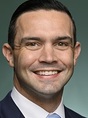
Aaron Violi Casey, Liberal Party, Shadow Minister for the Digital Economy
4:45 pm
What's clear is that this budget contained many broken promises from a prime minister who said that his word was his bond and that the Australian people could trust him. Well, the Australian people now clearly know that, when it comes to tax, they cannot trust this prime minister. Everything, moving forward, that this prime minister says will be tainted by those broken promises and those solemn commitments he made—in his own words, over 50 times—to the Australian people before the last election. No investor, no business operator and no worker in this country can have any confidence in investing and wanting to get ahead, because this government can change the rules just like that, at the drop of a hat. They've done it twice, and they'll do it again.
There's even more pain in this budget for the Australian people. It didn't help in any way with the cost of living, and if you're over 65 and you're relying on private health insurance, that rebate has been ripped away from you, with no warning, no notice and no consultation. That's going to impact three million Australians across the country. It's going to increase the costs—about $800 per year for a single and $1,600 per year for a couple. So many older Australians are on fixed incomes. This is money, which they cannot afford and do not have, that they will lose because of the heartless and callous broken promise from this prime minister.
I've had many constituents contact me, upset, concerned and worried about these changes, and I want to share Graham from Belgrave South's concerns. He summed it up quite well: 'I would like to register my concern not only for my wife and I but for the hundreds of pensioners who will be affected by the proposed changes to the rebates announced by the government. This issue has barely had a mention in the media, but it is nothing but another tax grab by them. We have paid gold for many years. It's currently costing us $611 a month. An increase such as the one proposed is totally unfair for the senior citizens who have tried to resist adding to the public hospital numbers. It may be the last straw for many of us. I've been using my cover frequently in the last couple of years due to bouts of surgery.' Thank you, Graham, for sharing your story.
Graham's right—many older Australians rely on health services as they age, which makes this decision so galling, but, even if not directly impacted by these changes, everyone will be impacted. It will put additional pressure on the public health system, making it harder, and every Victorian knows that the public health system in Victoria is already under pressure because of the Allan Labor government's failure to fund it.
In this budget there was nothing to help Australians when it comes to the cost of living in 2026. When so many Australians are struggling to put food on the table, the best this treasurer and this prime minister could offer is a mirage, and that mirage is $250 in two years time. That is literally the only support they have offered for the Australian people. And the little secret of this mirage, which they will all claim when they say they're making a difference, is that it's not going to make a difference today for the Australian people.
Those opposite are also waiting until inflation catches your pay increase, because, if you're lucky enough to get a pay increase, which you deserve and work hard for, this government will collect more tax on it. It's called bracket creep. That's why the coalition said, 'We won't do that anymore; we're going to index bracket creep,' but this government has come out and said it will oppose it. So they want to pat on the back for saying that they'll give you back $250—about $5 a week in two years' time, once your wages have gone up and they've taxed you for it anyway—pretending they're making a difference today. This is at a time when Foodbank in Victoria are talking about how they were providing 69,000 meals a day and that has gone up to 76,000 meals a day, just in Victoria alone, just Foodbank—one organisation. Australians are struggling to put food on the table. There are stories shared by Foodbank about parents themselves not being able to eat. There's a heartbreaking story of a mother who drives her children to school, walks home and then walks back to pick them up because she can't afford the fuel and she doesn't want her children to know how tough it is. For that mum and for so many Australians, this budget provides them nothing—no support, just more spin from an out-of-touch Prime Minister, an out-of-touch Treasurer who break their word with the Australian people.

Madonna Jarrett Brisbane, Australian Labor Party
4:50 pm
I wholeheartedly reject the motion that's been moved by the member for Fadden, and some of the comments just made by the member for Casey. We on this side of the House do know that Australians are doing it tough at the moment, and that's why the priority for our 2026 budget has been to continue to roll out responsible cost-of-living relief for people across Brisbane and Australia. The budget is about making our economy more resilient and about introducing some big reforms that start to address the intergenerational inequalities, especially when it comes to housing, particularly young people being locked out of the housing market by unfair tax incentives for others.
We're cutting taxes for 13 million workers, so the average working Australian will be about $2,800 better off every year. Conflict far from home is pushing up prices here, from the servo to the supermarket, so we're delivering more tax cuts from 1 July for every Australian taxpayer. More tax cuts are rolling out now, an extra $250 off working Australian's tax bills permanently. Some might say that that's not enough, but I say, when I speak to people from my electorate, 'every little bit helps'. A $1,000 instant tax deduction without receipts makes it easier for people. And on top of that, we're cutting fuel taxes to help save Australians money.
We're also making health care more accessible and more affordable. A sudden fever or an unexpected injury can turn into bills that people just aren't ready for. That's why we've delivered the urgent care clinics and are ensuring that they remain a permanent part of our Medicare system.
Young people are also at the centre of this budget. They're telling us that they feel the dream of homeownership is disappearing for their generation. When you work and you save hard, you should be able to buy a home of your own but the current system is skewed against that. We have delivered the five per cent deposit scheme for first homebuyers, and we're building 100,000 homes set aside just for them. But right now, first homebuyers are being priced out of the property market because of investors being backed by tax breaks like negative gearing. We're levelling that playing field. We had to do something. People were asking me and telling me about the difficulties they're facing across our electorate.
Mary-Cait is one. In fact, Mary-Cait, who I spoke to no more than three or four days ago, had moved from Brisbane to Ipswich to Toowoomba and wanted to settle in Brisbane. Eventually, under the five per cent deposit scheme, she has found a safe and permanent home in the Brisbane electorate. She said, 'It's not just a safe roof over my head and that of my family's. It makes me feel settled and it enables me to build my community.'
This budget is also putting an extra $2 billion into infrastructure needed to build more homes more quickly. It's part of what we need to do to build those 1.2 million homes over the next five years. But we are living in an uncertain world—there's no question about it—which is why we're investing to buy more fuel and fertiliser now. We'll grow our national reserves of jet fuel and diesel to 50 days by keeping more fuel here and by making gas companies reserve 20 per cent of their exports for Australia. We are making sure that we're better prepared for future energy shocks. But no matter what's happening in the world, these changes are all about remaining focused on helping Australians here at home.
Making sure hard work pays off and everyone has the opportunity to get ahead is what's important to this government.
This budget comes on top of a lot of reforms we've already delivered: a tax cut for every taxpayer; pay rises for all minimum and award wage workers, taking total increases under Labor to over $9,000 a year; an extension to paid parental leave to 24 weeks; superannuation paid on government paid parental leave; a $10,000 bonus for housing apprentices to top up their wages, to encourage more skilled workers in a sector that is greatly needed; 30 per cent off home batteries; paid pracs for nurses, teaching, social worker and midwifery students; a boost to Medicare, with $1.8 billion in extra hospital funding; more choice, lower cost and high-quality health care for Australian women; the expanded five per cent deposit scheme; pay rises for aged-care nurses; the expansion of bulk-billing; a freeze on the draft beer excise and 20 per cent cuts to student debt. We've opened more Medicare urgent care clinics—50, in fact—including one in my electorate. From 1 January, we have delivered the next stage in our plan to make the biggest cut to the cost of medicine in the history of the PBS: $25 or less is all that it will cost.
The government understands that people are doing it tough. Imagine how much harder it would have been for the people of Brisbane had these cost-of-living measures not been put in place. We're working hard. We're looking after the people of Queensland and Australia.
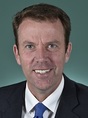
Dan Tehan Wannon, Liberal Party, Shadow Minister for Energy and Emissions Reduction
4:55 pm
We've heard Albanese Labor government MP after Albanese Labor government MP after Albanese Labor government MP talk about the budget. But there are two things, sadly, that we've failed to hear any of them say. The first is quite easy to do, and I know people in my electorate would greatly appreciate it: just say sorry. You broke promise after promise after promise. Just say sorry, especially you, Prime Minister. You looked the Australian people in the eye and said 50 times 'I'm not going to do it'.
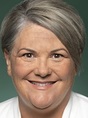
Meryl Swanson Paterson, Australian Labor Party
I remind the member that comments need to come through the chair, please.
Dan Tehan Wannon, Liberal Party, Shadow Minister for Energy and Emissions Reduction
Sorry, Deputy Speaker. I say this to the Prime Minister: Prime Minister, you told the Australian people 50 times that you would honour your word, and you didn't do it. So it's time that you said sorry, Prime Minister. It's time that you said sorry.
The second thing we haven't heard is any government MP admit that living standards have collapsed under this government. They've collapsed. That's a fact, and maybe we could get an apology for that. Guess how big the collapse has been. It's been the biggest collapse in living standards in the world. No other country has had a collapse in living standards like we've had here in Australia.
You'll hear these long lists of everything that the government has done, but the fact is none of it has addressed the two biggest failings of this government. And those are that it can't tell the truth to the Australian people and that living standards are falling beyond belief.
I've been out and about in my electorate talking to people about the budget. Well, I should rephrase that: I've been listening to what people have to say about the budget, whether it be small business, whether it be farmers, whether it be families, whether it be pensioners, whether it be people in aged-care residences. I've got to say the overwhelming response has been 'there is nothing in this budget to help me; there is nothing in this budget to address my cost-of-living concerns'. There is nothing in this budget to address what is happening to living standards in this nation.
It's worth asking why that is the fact. There are two reasons. The first reason is that spending is out of control, and what happens when spending is out of control? It pushes up interest rates. The government won't do the hard yards, so the Reserve Bank has to. That is one of the reasons why living standards continue to plummet—because the government can't get its own house in order; it can't get its spending under control. That is what is pushing up interest rates. And the sad fact is we're likely to see more interest rate rises, not less, over the coming months.
And the second reason is that the Albanese Labor government is addicted to taxing. It can't see an idea that it doesn't want to tax. Seriously—I never thought that I would be in this chamber pointing out the fact that we now have death duties coming in in this country.
A government member interjecting
No, it is, because you've had to rule it out. You've had to rule it out and say, 'Oh, well, maybe we're going to change our mind. Maybe we won't. Maybe we are,' but the fact of the matter is here we are talking about death duties.
A government member interjecting
You cannot believe it. And of course you get a reaction from those opposite. 'Oh, no, seriously—you can trust us. We're honest. You know you can believe what we say, because we go to the Australian people and we say 50 times we're not going to do this.' Seriously—you've got no credibility now when it comes to being honest. The fact of the matter is we've now got to the stage where you're trying to sneak in death duties. It's an absolute disgrace.
Living standards are plummeting, the cost of living in this country is going through the roof and you've got no ideas to fix it.

Renee Coffey Griffith, Australian Labor Party
5:00 pm
Across Griffith I hear the same message in different ways. At my mobile offices, commuter terminals, my coffees at local cafes, community events and in conversations with families, students, renters, first home buyers, workers, small-business owners and pensioners, people are working hard and doing their best. They are making careful decisions about household budgets and they want to know that their government understands those pressures and is acting responsibly to help. This year's federal budget is about helping people now while making responsible changes for the future. That is why we are delivering cost-of-living relief, strengthening fuel security and lifting productivity while reforming our tax system to address longstanding issues of housing. These national changes are felt locally across every suburb in my community.
In health, this budget strengthens Medicare and invests in care close to home. We're delivering $1.8 billion over five years to make Medicare urgent care clinics a permanent part of our health system. In South Brisbane, Coorparoo and Carina, the clinics have already supported more than 40,000 presentations in my community. Now they will provide permanent relief to our healthcare system so families can access walk-in bulk-billed care without sitting for hours in an emergency department. We're also delivering an additional $25 billion over five years for public hospitals, including for the Princess Alexandra Hospital, the Mater and Queensland Children's Hospital in my community. We are continuing to make medicines cheaper through the PBS, with an additional $5.9 billion to list more medicines, including treatments for cystic fibrosis and chronic kidney disease, so Australians can access life-saving and life-changing treatments without being priced out of care.
Across Griffith, I speak with young people who are working hard, saving for a deposit and doing everything they were told would put homeownership within reach, but the path to a first home has become steeper, narrower and less fair. People in Griffith are going to inspections, turning up at auctions and bidding for homes they want to live in—a place of security, stability and belonging. Too often I hear they are competing against investors who have the tax system on their side and they are watching prices move further away. Since 1999, house prices have risen by more than 400 per cent, more than twice as fast as incomes. We owe it to them to level the playing field and give them a fairer pathway into homeownership. That is why this budget rebalances the tax system in the housing market. From July 2027 negative gearing for residential property will be limited to new builds that add to our housing supply. People who want to invest in property, build wealth and use negative gearing still can, but that support will be directed towards building more homes. Under this approach, investment in property will also support the construction of more of the homes that we need. This is not easy reform, but it is the right reform. I am proud to be part of a government that backs aspiration for all, because the opportunity to build a secure future should not depend on whether you own property already. It should be within reach for the young worker trying to buy a first unit, the family saving for a modest home, the renter hoping for stability and the next generation working hard to build a life of their own. We are also investing a further $2 billion in enabling infrastructure to help build 65,000 more homes, extending the ban on foreign investors buying existing homes, continuing support for social and affordable housing through the Housing Australia Future Fund and providing $59.4 million to community housing providers to help secure housing for young people at risk or those experiencing homelessness.
Our approach is clear for working Australians: people who work hard should be able to keep more of what they earn. We're introducing a $250 working-Australians tax offset that will benefit more than 13 million workers, including around 1.5 million sole traders. We're also introducing a $1,000 instant tax deduction, making tax time easier and delivering cost-of-living relief for workers who claim work related expenses. Together with tax cuts already delivered and legislated, these measures mean an Australian worker on average earnings could be up to $2,816 better off each year. This is Labor's approach: helping households with the pressures they face today while strengthening Medicare, building more homes, backing workers, lifting productivity and making our tax system fairer.
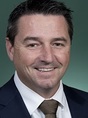
Pat Conaghan Cowper, National Party, Shadow Assistant Treasurer
5:05 pm
Labor promised to be the party that left no-one behind, and they promised to be the party that governed for all Australians and the party of homeownership, and they even went so far as to say they would build a stronger, fairer and more resilient Australia. But, over the last four years, Labor have only proven that they are party of broken promises and broken dreams when it comes to the lives and livelihoods of Australian people.
You'll recall, in 2022, the Prime Minister said, on no less than 97 occasions, that your power bills would go down by $275 by 2025. Well, we're past that. Here we are with the average household bill increase of 35 per cent since the last time the Prime Minister made that extraordinary promise in front of the cameras. Let's be real here, when prices go up, everything goes up, because, the higher the input to businesses and producers—something that the Prime Minister and the Treasurer have never done; they've never been in business and never produced anything—the higher the cost at the checkout for every Australian. Because of this government's ridiculous net-zero-only fantasy and rejection of our own natural resources, every family is paying more for basic needs.
Labor tried to hide these energy price increases for a while and artificially curb inflation by offering a $75-a-quarter rebate on your bill. We know what happens then. We know that you, as the taxpayer, are paying for your own rebate. While some say it was achieved in the short term, in reality the underlying inflation was still too high, and the artificial curbing couldn't last. We've seen, over the last 12 months, that inflation in Australia now is higher than any other advanced economy around the world. This is another promise broken spectacularly by the Prime Minister, leaving households forced between choosing heating and eating.
Labor also promised to build 1.2 million new homes by mid-2029, and, as of this month, projections suggest a shortfall of 350, 000 homes. Interestingly, the only promise where Labor has exceeded expectation is in the record projections of two million immigrants to come into this country by the end of their second term. This high-spending, high-taxing government is hoping that bringing in more bums on seats will fatten up their coffers, but the influx has only put more pressure on infrastructure, health care, aged care and housing and has continued to reduce our standard of living.
Now to the latest broken promise—one on which our Prime Minister glibly retorted to a journalist 'for the 50th time' that he would not be making changes either to the negative gearing or capital gains tax. And now we see sweeping changes to both of them. This prime minister has no credibility. I don't know how he stands at the dispatch box and talks to the Australian people about what is in the budget, because I believe that all Australians out there are thinking, and are saying to me: 'We don't know whether he's telling the truth or whether he will change his position.' A broken promise is a broken promise. He needs to stand up and apologise for being untruthful to the Australian people.
Australians deserve a government that acknowledges the pressures of today whilst building and safeguarding for the future; a government that rewards ingenuity and aspiration while remaining grounded in reality; a government that understands that Aussies need a hand up, not a hand out; and a government that recognises and taps into the wealth that we hold in our own resources here in Australia and that puts the real needs of Australians above all else.

Josh Burns Macnamara, Australian Labor Party
5:11 pm
This motion is as much of a joke as the modern Liberal Party, to be honest, because the modern Liberal Party is completely spooked. They are spooked by the fact that they had a 31 per cent primary vote reduction at the hands of One Nation. The National Party proudly declared that they were back, though they got a less than 10 per cent primary vote in that same by-election. All of the pivoting from the Liberal Party has been towards being in this position where they are unable to process what that means. Instead of taking some accountability and responsibility and listening to the Australian people about what might actually be happening here, the Liberal Party is just lurching further and further to the right—further and further towards the One Nation party that is taking up all of their votes and all of their supporters.
The Liberal Party has a lot of smart people in it—a lot of people who I genuinely respect, who are really smart people who care about this country. But, if you are going into an election and you're only talking about One Nation and preference deals with One Nation, and you're going into an election only spouting policies so that you can compete with One Nation, and your whole focus in everything you talk about is just One Nation, One Nation, One Nation—well, why on earth would the voters of Farrer do anything other than pick the real version, not the Diet Coke version? And that's exactly what has happened. The people of Farrer have said to the Liberal Party: 'If you're going to try and pretend to be someone else, we're not going to bother with you. We'll just go to the other person.'
The Liberal Party's demise right now is also evident in the fact that, when you actually look at the issues that are affecting Australians and the issues that people are raising that are leading them into the parties like One Nation, who have no practical solutions and are just seeking to divide our country on the basis of grievances, then you have to ask yourself: are they really listening to the needs of Australians?
And the truth is that Australians are hurting. They are hurting right now, because the cost-of-living pressures are real. When you add up all of the pressures to pay for your rent, pay for your mortgage, pay for the kids, pay for the groceries, pay for all of the things that add up, like fuel, things are really tough. And when inflation goes up, the people who get hurt the most are low- and middle-income Australians.
Then you come into this place and you ask: 'Alright, what are the things and what are the levers at our disposal to take the pressure off all of these hardworking Australians who really rely on the things that we can do in this place?' Then, when you look at each and every measure that we have put forward, the Liberal Party have come up with an excuse. Despite people like the shadow treasurer previously saying that they support it, and putting it in writing, and coming into the House of Representatives and saying they support these measures, they have turned around and said that this is somehow just a pox on Labor. I mean, the Australian people aren't listening to that sort of rubbish.
So let's go through housing as one example. The decoupling between housing prices and wage increases has happened over decades. Right now, young Australians are looking at houses and saying, 'It is just absolutely inconceivable that I could get into this market,' mainly because the amount of time it would take to save up a deposit is just too long when you've got all of these other expenses. Then, by the time they could get a mortgage, young Australians are also looking at the price of housing and saying, 'Well, that would just push me too far.'
What is the solution? The solution is that we need to build more homes. And we've set targets to work with the states and territories, who do have a lot of the levers. But, of course, at every opportunity, instead of saying, 'Well, at least the federal government is trying to push the states and territories to set housing targets,' they've criticised the fact that we've got them in the first place. When you look at the fact that we have put in so many different measures, like Help to Buy, to at least try and remove some of those barriers that I just described—the Liberal Party have said that that five per cent deposit scheme is support for billionaires. Over 2,000 people in my electorate and over 200,000 people across the country have used that five per cent deposit scheme, and they are not billionaires. When you look at the Help to Buy scheme—which is a shared equity scheme which allows the government to purchase a portion of the home so that someone can at least get into the housing market if they are an essential worker, a low-income or middle-income worker or a single parent—it's only 10,000 places, but, for every single one of those homeowners, it means that they are going to have stability and safety at home.
Then you have the fact that, right now, we're putting forward changes to negative gearing and capital gains. I understand that there is a whole range of commentary around it, and it's absolutely fair game around the actual policy discussion, if you want that. But there haven't been any discussions around the actual policy; it's only been around the politics. The policy is simple. The decoupling between house prices and wages has occurred over decades because we incentivised investors. While there are those who want to make sure that they are continuing to support investors, we want to support those hardworking Australians who want to buy their first home.

Michelle Landry Capricornia, National Party
5:16 pm
I rise today in support of the motion moved by the member for Fadden. The reality for families and small businesses across Capricornia is clear: this government has not delivered on what it promised. Before the election, Australians were told that life would be easier, with lower power bills, relief from rising costs and a plan to make housing more affordable. But, when I speak to people across Rockhampton, Yeppoon, Emu Park, Moranbah, Clermont and our rural communities, they tell me the opposite is true. They tell me they are falling behind.
In Rockhampton, families are telling me that their grocery bills have surged week after week. Fresh food, meat and basics that used to be manageable are now stretching household budgets to the limit. At the same time, fuel costs are biting hard. In Yeppoon and Emu Park, I've spoken with retirees on fixed incomes who simply cannot absorb rising electricity costs. These are people who have worked hard their whole lives, and now they're being forced to cut back on food, air conditioning and everyday essentials just to keep up with the bills that they were promised would go down. We were told power prices would fall by $275, but across Central Queensland people aren't seeing that. Instead, they are bracing for higher costs, despite living in one of the most energy-producing regions in the country. This is simply not good enough.
Small businesses are under enormous pressure as well. A cafe owner in Rockhampton recently told me that their electricity bill has jumped significantly over the past year, while the cost of ingredients from milk to flour has also risen. They are doing everything they can to keep prices reasonable for their customers, but margins are being squeezed. In Moranbah and across our mining communities, tradies are telling me that the costs of materials and transport have gone through the roof. Projects are becoming harder to deliver, and small operators are finding it tougher to stay competitive. Tourism operators on the Capricorn Coast are also feeling the pinch. Higher operating costs and reduced discretionary spending means fewer bookings and tighter margins in a region that should be thriving.
Then there is housing, which is one of the biggest challenges facing Capricornia. In Rockhampton, rents have risen sharply, and vacancy rates remain incredibly tight. I've had young families come into my office saying that they've applied for multiple rental properties and missed out every time. In places like Yeppoon, essential workers—nurses, hospitality staff, teachers—are struggling to secure accommodation close to where they work. This has real consequences not just for those individuals but for the services our community relies on. For those trying to buy their first home, the dream is slipping further away. Rising interest rates, higher construction costs and limited supply are making it harder than ever for young people in Central Queensland to get a foot on the property ladder.
We cannot forget our primary producers and regional families. Out west, I've spoken with farming families who are battling rising costs for fuel, fertiliser and freight. These are families who want to pass their farms on to the next generation, but they're worried about how they'll manage under increasing financial pressure. They don't want handouts; they want a fair go. But right now they feel that a fair go is getting harder to find.
This is what broken promises look like on the ground. It's not abstract; it's real. It's the pensioner in Emu Park turning off appliances to save power. It's a single mum in Rockhampton working extra hours but still struggling to make ends meet. It's the apprentice in Sarina putting their plans on hold because they can't afford the rent. It's farming families across Capricornia unsure about the future of their livelihood. These are the voices this government needs to hear because Australians were promised relief and they are not getting it.
The government cannot continue to shift blame or point to external factors. The expectations were set clearly and they have not been met. People in Capricornia know that, and they are feeling it every single day. What our region needs is practical, targeted relief. We need policies that genuinely lower energy costs, not increase them. We need investment that boosts housing supply in regional areas like ours. We need cost-of-living measures that actually make a difference at the kitchen table. Most importantly, we need a government that understands regional Australia not just in words but in action. In Capricornia we are proud, we are resilient and we work hard, but we should not have to work harder just to stand still. Families and businesses across Central Queensland cannot afford more broken promises. They deserve better and they deserve it now.

Gabriel Ng Menzies, Australian Labor Party
5:20 pm
I rise today to speak against this motion. This motion is part of a pattern we see from those opposite. The Liberal Party and the National Party come in here, moving motion after motion, and they talk about the cost of living, hardships and struggling families—these are all legitimate things to raise; we absolutely recognise that people in our communities are doing it tough—but those opposite never have solutions. And when we bring forward practical measures to provide relief to hardworking households in our communities, they oppose them—every single time. They opposed our tax cuts at the last election. They opposed energy bill relief. They opposed free TAFE. They opposed minimum wage increases. They come in here and claim to speak for everyday Australians, and then they vote against every single thing we put forward to help everyday Australians. That is not genuine concern for living standards; that is political theatre.
Members opposite have been running a line that Australians have experienced the biggest decline in living standards in the OECD. But, as usual, they're relying on cherrypicked figures to gaslight Australians. During COVID, household incomes were artificially inflated by JobKeeper emergency payments and record low interest rates. When global inflation hit and interest rates rose, incomes fell back. That is the drop they are measuring. They are starting the clock at the top of the bounce. Australia was hit harder than most because we have more people on variable rate mortgages.
So let's talk about some real figures. The OECD's own 2026 report shows that real wages are recovering and consumer spending is picking up. Employment was at record highs, but the OECD says the economy is returning to pre-pandemic growth levels. Now, there's no denying that this picture will be complicated by the conflict in the Middle East and the resulting energy crisis. But just as we did with the previous international inflation challenges, we'll continue to manage the economy responsibly while we support people through the difficult times. And, as importantly, we'll do so ensuring we have an economy that works for people and not the other way around.
Let me set out what this government has delivered on cost of living. We have cut income taxes five times. There will be a further income tax coming at the end of this financial year, and another income tax coming at the end of the next financial year. Every taxpayer received relief in the last round of the stage 3 tax cuts, restructured to benefit low- and middle-income earners who were hit hardest by the cost-of-living crisis. The budget that we've just handed down delivers a permanent $250 working Australians tax offset for over 13 million workers. It delivers a $1,000 instant tax deduction that will save people time and save resources by making sure they don't have to collect lots of receipts in order to claim that instant tax deduction. We've halved the fuel tax, putting $2.9 billion of relief directly at the petrol bowser every time people fill up. That's immediate, practical relief for families and small businesses who are feeling pressure every time they visit the petrol station.
We've backed higher wages for nearly three million of Australia's lowest paid workers every single year at the Fair Work Commission. The national minimum wage has increased by over $9,000 per year since we came to office. That is money in workers pockets.
Members opposite love to tell Australians that renewables are wrecking the grid and will send prices through the roof. In the December quarter of 2025, renewables comprised more than half of energy supply, driving down wholesale electricity prices by nearly half. Coal-fired generation fell to an all-time quarterly low. Gas-fired generation plunged to its lowest level in 25 years. Under the coalition, more energy left the grid than came in—and the prices reflect that. What we are seeing now is the result of sustained investment and reliable policy in renewable generation and storage, backed by hydro and gas.
We also delivered direct relief. Over the last two financial years, this government provided $5 billion in energy bill relief, with up to $300 on household electricity accounts in the 2024-25 financial year and a further $150 in the first half of this financial year applied automatically to every bill. And we're investing in long-term relief. The Cheaper Home Batteries Program has been expanded from $2.3 billion to an estimated $7.2 billion over four years, expected to see more than two million Australians install a battery by 2030. A household with existing solar could save up to $1,100 a year.
Andrew Willcox Dawson, Liberal National Party, Shadow Assistant Minister for Manufacturing and Sovereign Capability
5:25 pm
In this place, I represent the good people of Dawson. In Dawson, we trade in three commodities: honesty, integrity and truth—and, let me tell you, under the Albanese Labor government, truth is in very, very short supply. So let's talk about the broken promises, and let's be honest, the Albanese Labor government breaks promises hell, west and crooked. The promise: no Australian is going to be worse off. But the truth of it is that every Australian is worse off. Grocery prices are up and are becoming nearly unaffordable. Mortgage rates are up and, by all reports, are going to go higher. Insurance prices are up. Electricity prices are through the roof, which is in stark contrast to the gentleman who was speaking just before, saying how fantastic it is that wholesale electricity prices are down. I don't know how you buy wholesale prices. We buy retail prices. But, anyway, that's another learning curve for a new member—fair enough! Rental prices are up. Gas prices are up. These are all broken promises.
Let's unpack the promises a little bit further. The promise: no new taxes—and yet, let's have a look. The Treasurer has just brought down the highest taxing, highest spending budget in history. The new taxes: capital gains tax, negative gearing tax and a tax on trusts. When asked about capital gains tax and negative gearing tax, the Prime Minister said, 'How hard is it? For the 50th time'. Prime Minister, let me tell you, it's very hard. People are doing it tough—and, let's be honest, you haven't been. And what about the sneaky death duty hidden in the budget? Oh no, it's not called death duty; it's called inheritance tax.
Let's have a look at the cuts for veterans' welfare. Allied health is capped at $5,000. I ran into a veteran on my last trip to Townsville. He said: 'Andrew, when you have allied health for veterans capped at $5,000, that is only enough for 15 weeks! What am I supposed to do for the rest of the year? So, if the Prime Minister could answer that and look the veteran straight in the eye and tell him what he should be doing, when this veteran's been good enough to put his life and his body on the line for this country, what should the Prime Minister be telling him?
And what about the private health fund changes for the over-65s? After working their whole lives and at a time they probably need some more health care, there are changes to that. That will put more pressure on the ED. That is absolutely crazy. And there's housing, with 1.2 million homes promised by 2029. But recent reports are showing that they could be up to 250,000 to 300,000 short. And the Prime Minister said, 'My word is my bond.' Well, I certainly wouldn't like to take that bond to the bank. I give you that tip. And this is probably the biggest, most famous one of them all: 'Under Labor, if you vote for Labor, you will be $275 better off on your power bill.' That little story was reproduced 97 times. That wasn't a slip of the tongue. That was repeated, repeated, repeated.
Australia has just witnessed a trial of broken promises, and they've shattered families' budgets. This is in a Labor created cost-of-living crisis. A federal budget should be a road map and an opportunity, but this Labor government has turned it into an economic dead end. This budget doesn't reward effort. It punishes it. The foundational deal in this country used to be simple. If you worked hard, if you had a go, you could get ahead. But, under this prime minister, the great Australian promise is dead. I think the Prime Minister should come into this chamber and say, 'I apologise to the Australian people.'

Mary Aldred Monash, Liberal Party
The time allotted for this debate has expired. The debate is adjourned, and the resumption of the debate will be made an order of the day for the next sitting.