
House debates Private Members' Business
Private Health Insurance
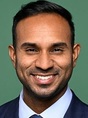
Leon Rebello McPherson, Liberal National Party
12:06 pm
I move:
That this House:
(1) notes the Government's decision to cut the private health insurance rebate for Australians over 65, which will significantly increase health costs for older Australians during a cost of living crisis;
(2) recognises analysis showing couples over 65 with gold cover could face an additional $1,614 in costs from April 2027, representing a record increase in private health insurance costs;
(3) condemns the Government for targeting older Australians and pensioners on fixed incomes, forcing many to either pay substantially more or abandon their private health cover altogether;
(4) expresses concern that this policy will place even greater pressure on already stretched public hospitals, leading to longer elective surgery waitlists, increased ambulance ramping and worse patient outcomes; and
(5) calls on the Government to immediately reverse these rebate cuts, release the modelling underpinning the decision, and protect older Australians from further cost of living pressures and declining access to healthcare.
Today I rise because too many older Australians are facing a choice: the choice between private health insurance and the basic necessities. I stand here today to give voice to the more than 1,368—and counting—older Australians who have reached out to my office to express their concerns, their frustration and their fears.
This government is forcing more people to make the choice between private health insurance and the basic necessities of life. And let's call this for what it is. This is a government that is punishing those who do not vote for them. It's a government that is punishing the older Australians who have worked so hard for this country and who have secured their own future and structured their retirement in a way to make sure that they have a comfortable retirement, and who, now, are seeing the rules change.
Under Labor, health costs have risen by around 17 per cent. This pressure is not abstract, because, as I've said, we ran a survey of McPherson residents over 65 and found that a significant proportion have experienced repeated increases in the cost of private health insurance over the last four years under this government. This is a government that should be easing that pressure, not forcing these residents to pay more for the health care that they need.
Australians over the age of 65 on fixed incomes, or those who rely on the aged pension, often are the ones who have the greatest healthcare needs, and they have those needs increasingly as they age. And those are the Australians that depend on the private health insurance system.
The average age of a person covered by private health insurance in McPherson is 63, and 47.72 per cent of admitted patients who used private health insurance were aged 65 to 84. These are our most vulnerable Australians. Cutting that rebate is going to hurt around 3.2 million older Australians. But it's not just hurting them; it's hurting their families—it's hurting the young people that are looking after them. And, as for all those who are in that ageing bracket below the age of 65, it's going to hurt them as well.
My survey has had nearly 1,500 respondents. Let's have a look at what it shows. It shows that only 18.8 per cent of respondents said that they could afford any increase to their private health insurance cost, that 31.4 per cent intend to cancel their private health insurance altogether, and that an additional 40 per cent say they might have to cancel their private health insurance.
The same survey showed that older Australians rely on private health insurance for a range of often very serious conditions. Patricia from Merrimac has already had to cancel her home, contents and car insurance and says that this increase to her fees says that she won't be able to eat properly. Susan from Robina says that she's already living week to week and, at her age, needs private health insurance more than ever. She's having trouble sleeping, worrying about how much her bills are increasing under this Labor government. Margaret from Coolangatta says that she and her husband need to make a choice to cancel private health insurance for one of them and pray that the other one who no longer has cover doesn't experience any new health conditions as the cost could be fatal.
We can't allow people who've worked hard, paid their taxes and contributed to Australia to be forced into a position where they have to choose between cutting back on groceries, putting petrol in the car, paying the power bill and keeping their private health insurance that they rely on. Those opposite should be hanging their heads in shame, because these are our parents and grandparents and they do not deserve this. A government that has run out of money is going after them. That's not the way to do it. Older Australians are the ones who built this country and they are the ones who are most vulnerable right now. I've said it before. We'll call it out for what it is. It's a government that has lost control of the economic narrative. They've lost control of the economy and they're trying to recover money from older Australians, who are the most vulnerable. Just keep in mind as well that every older Australian who is forced to drop their private health insurance will actually put more pressure on an already stretched public system. Shame on this government. We are going to stand up for older Australians and make sure that we hold this government to account.

Cassandra Fernando Holt, Australian Labor Party
Is there a seconder for this motion?

Ben Small Forrest, Liberal Party, Shadow Assistant Minister for Electoral Matters
I second the motion and reserve my right to speak.
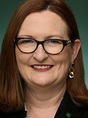
Louise Miller-Frost Boothby, Australian Labor Party
12:11 pm
The changes to the private health insurance rebate are about a fair go for all Australians. It's also about having a long-term vision for the provision of aged care in this country. The extra subsidy previously provided to older Australians over the age of 65 for private health cover was the legacy of an era when Australia was able to take full advantage of the mining boom 20 years ago, when we had more working-age taxpayers and fewer retirees. Over 20 years later, Australia finds itself in a dramatically changed position. We have more retirees and so the service mix that this government needs to provide includes a stronger emphasis on aged care—at home and residential. So, instead of applying subsidies according to age, subsidies will be applied according to income level, a much fairer outcome for all Australians. Older Australians will continue to receive a rebate between eight and 24 per cent based on their income level, settings which will apply to all Australians.
These changes are about providing older Australians with financial support to access private health care according to their income, while recognising another urgent reality that is affecting the provision of aged-care services in this country. We have an ageing population and so the demand for aged-care services is increasing. Those opposite ignored this reality, not even implementing the recommendations of the royal commission into aged care. A new aged-care home needs to be built every three days for the next 20 years in order to be able to service our cohort of older Australians at the rate at which it is now growing. Currently, we are not meeting that demand and the entire system risks collapsing under its own weight. So any savings from the change in rebate arrangements will be redirected to expanding and improving the provision of aged-care services in this country.
This will mean more aged-care beds, more packages and better care. It will mean 5,000 more beds year on year. It will mean being able to build and maintain quality residential accommodation. It will mean a Support at Home program that is fairer and more affordable, with faster and improved assessments and shorter wait times. It will mean free personal care services, such as showering assistance, dressing and continence support alongside free clinical care. It will mean an expansion of the end-of-life pathway to provide dignified care for older Australians in their final months. It will mean 20 additional Specialist Dementia Care Program units and an expansion of the Hospital to Aged Care Dementia Support Program, providing crucial transitional support for older Australians going from hospital into residential aged care.
These are in addition to the Albanese Labor government's ongoing commitment to provide more accessible and affordable health care for all Australians, including older Australians. This includes making urgent care clinics a permanent part of Medicare, with 135 urgent care clinics across Australia and more being built. This will mean four in five Australians will live within an only 20-minute drive from urgent health care. An extra $25 billion, on top of $220 billion already committed, is going to our public hospitals over the next five years. Cheaper PBS medicines with a maximum price of $25 per prescription and $7.70 for pensioners and concession card holders have already saved Australians more than $2.3 billion. And with almost 3,800 fully bulked-billed practices right across Australia, more bulk-billing clinics means a projected nine out of 10 GP visits will be bulk-billed by 2030.
The Albanese Labor government has a long-term vision for this country—a fairer Australia for all Australians, including the right service mix for our changing demographics to meet the demand now and into the future. While older Australians will continue to receive a concession on their private health insurance based on their income, aligning with the rebate received by all Australians, the additional funds will be invested back into the improvement of the aged-care system more broadly by creating an aged-care system that will be affordable, accessible, fit-for-purpose and provide the highest standard of care for generations to come. This government is committed to investing in the future of all Australians.

Cameron Caldwell Fadden, Liberal National Party, Shadow Assistant Minister for Housing
12:16 pm
I rise to support this motion that has been moved by my fellow Gold Coast colleague the member for McPherson. I do so because, ultimately, what we are seeing from this Labor government is a cruel, short-sighted and really unnecessary attack on older Australians.
For many Australians who have reached the retirement age, the later years in life, this isn't just a line in a budget paper. This is this Labor government, this Treasurer and this Prime Minister reaching into retirees hip pockets to take more of their hard earned money. These are older Australians who have done the right thing for years and years and years. The Labor government rolls into town with this new slogan of 'intergenerational equity', but we know what it really is. It's another hit to the hip pocket. It's another tax grab from this Labor government, which, when it runs out of money, will come after yours. And it fits the pattern, because Labor says one thing, in this case about fairness, but what it's doing is actually something entirely different.
We heard the member for Boothby use the word 'fair'. There is nothing about this that is fair. This wasn't taken to the last election, not that that would stop them. You see, this government now has a track record of saying one thing and doing something completely different. People are genuinely starting to wonder whether this Prime Minister can be trusted. The impact of this particular decision will remove the higher private health insurance rebate for older Australians from 1 April 2027. This aligns older Australians with younger age groups, rather than recognising the reality that older people need health care more often. Labor's private health tax on pensioners will probably cost couples over the age of 65 an extra $1,600 from April 2027—a 21.3 per cent increase.
My friend over here, who is the doctor in the house and has bit of credibility in this area, says it might not be that much. Well, for some people it will be that much. In fact, I'll give the good doctor a working example from my electorate just to prove that some people are impacted to the max. Robert and Miranda, from my electorate, have contacted me. They are absolutely staggered at this proposal. They already pay about $1,000 a quarter after the discount. They estimate they'll pay another $680 each per year, or 17 per cent. A quick bit of maths takes that to about $1,300 or $1,400 per year for this couple. These people are genuinely concerned they're going to be forced out of the private health system and into the public system. They deserve better than that. They're very worried, and I'd be worried too if I was them, because the impact that no-one's talking about is that push into the public health system, which is what the private system was entirely designed to try and mitigate—the demand on the public health system.
We've seen reports that there could be around 44,000 people drop their private health cover. Now, none of this is good news, because we already know that our really wonderful and hardworking health sector employees are working harder than they've ever had to before to try and keep up with the service standards that they want to deliver. But older Australians are going to land in these hospitals and it's going to put more and more pressure on our doctors, on our nurses, on our allied health professionals.
So going into the last election, when the Prime Minister waved around his Medicare card and said, 'This is all you will need,' well, ultimately that's not going to be enough because sometimes you need to go to a hospital, and oftentimes private health insurance is the way that you can get there quicker. But now there'll be more pressure, and older Australians deserve a lot better than this
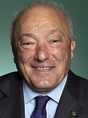
Mike Freelander Macarthur, Australian Labor Party
12:21 pm
I'm very happy to rise and speak on this private member's motion. It's about leopards and spots, and the coalition is the leopard that doesn't change its spots. I've seen it through my entire medical career. The Fraser government tried to destroy Medibank, our first national comprehensive insurance scheme. The Howard government allowed de-mutualisation of the health funds and so introduced a profit motive into private health insurance. Then we saw Dutton, as health minister in the Abbott government, try to introduce a co-payment to destroy Medicare. It really shows the coalition, as far as health care is concerned, doesn't change its spots. They're not interested in equity. They're not interested in comprehensive care. All they want to do is bring it down. They haven't had a health policy in 10 years that's worked. They worked very hard during the Abbott, Morrison and Turnbull governments to bring down Medicare. Unfortunately, they're still showing with this bill that they don't understand health care.
All the Albanese government are doing is bringing the rebates down to show that it is equitable to make older Australians pay the same level of private health insurance as younger Australians. That's very, very fair. The number of people with private insurance is, in fact, increasing. We know that from the last data available from 2024. We know that private health insurance has to be value for money. And we've seen that the Albanese government, in its first term and now, is doing everything it can to reduce health costs for people, to make sure that our health system works appropriately. Our bulk-billing rates in general practice are now going up. We've recently also started an inquiry into specialist access, including the gap fees that people have to pay, making it more equitable for people to see specialists. We have announced and introduced legislation to make transparency about medical fees be available to all Australians. We are doing whatever we can to make sure our health system is the most effective and most equitable in the world.
In fact, in Australia we pay around 10 to 10.5 per cent of GDP every year for health care. This compares to around 12 to 14 per cent for other OECD countries and up to 17 per cent for the United States. So we are making our healthcare system efficient and keeping it efficient and still providing very high levels of equitable care to all Australians. We make hard decisions about health care. We make no apologies for that. This reduction of the health rebate for the over-65s, bringing them in line with under-65s, is part of that. Hard decisions have to be made. We are encouraging people into private health insurance. We know that we need to get younger people into health insurance. As a general rule, younger people tend to pay more in fees than they receive in health care, whereas the opposite is true for older people. They get more health care than the amount they pay in private insurance or in Medicare surcharges. We are doing what we can to make our healthcare system equitable, and this is part of the solution.
The Albanese government is doing a huge amount in health care, including in women's health and in our urgent care centres, so that all Australians can access the most equitable care that they can. Modern health care is expensive. We know that the medications for some of the new genetically caused diseases, such as cystic fibrosis, cost huge amounts of money—sometimes up to $300,000 a year per patient for every year they're alive. The costs are huge. But the Albanese government is making sure that our health costs are amongst the lowest in the developed world, and, as a percentage of GDP, they are much lower than many of our OECD or equivalent countries are paying and certainly much lower than what is occurring in America. The Albanese government is doing a marvellous job in health care.
Ben Small Forrest, Liberal Party, Shadow Assistant Minister for Electoral Matters
12:26 pm
Labor says it is helping with the cost of living, but this policy directly increased the cost of health care for older Australians. Labor says it supports Medicare, but this policy risks putting more pressure on crumbling public hospitals around the country. Labor says it cares more about older Australians whilst directly targeting those aged over 65. Labor says this is about fairness, but it is simply unfair to increase the cost of health care for pensioners and retirees on fixed incomes. Labor says this is about strengthening our health system, but this policy weakens one of the pressure valves that helps keep health care moving in Australia.
These aren't just arguments that we make here in a hypothetical sense. These are the experiences we are hearing from constituents in our own electorates. Take Margaret and Glenn from Bunbury. Glenn's a Vietnam vet, and Margaret, now at the age of 85, is a stalwart volunteer for the Bunbury Soup Van. Margaret has written to me, at her wit's end, unsure about how they are going to make ends meet with this massive hit to the cost of their private health insurance—a cost that they as Australians chose to wear because they wanted to do the right thing. They wanted to be in private health insurance so that, when they needed help, it was there for them, at their own cost. This is another cost-of-living hit from a government that, on one hand, tells Australians that it understands the pressure that they're under, but, on the other, does everything in its power to make life more expensive.
Many Australians over 65 aren't wealthy. They shouldn't be thrown on the scrap heap of victims from this budget of betrayal built on Labor lies, higher taxes, higher debt, more migrants and fewer homes. At a time when insurance premiums, groceries, power bills, council rates, medicines and out-of-pocket health costs are already going up, Labor's answer is to make private health insurance even more expensive for older Australians. We believe that those older Australians deserve dignity, certainty and access to the health care they need, not to be victimised in yet another budget raid dressed up as reform.
Labor want to frame this as intergenerational fairness, but there is nothing fair about forcing older Australians, many of whom are on fixed incomes, to pay more for their health care. They've worked hard, paid taxes, raised families, built communities and contributed to our country. This shouldn't just be another budget line item to be scratched out by Jim Chalmers' pen. This measure, in particular, is nasty. It pits younger Australians against older Australians in the divisive politics of this prime minister when the real issue is Labor's failure to manage its own spending and relieve pressure on households.
A fair health system in Australia should have both public and private health care. We must have a safety net for all Australians, but it shouldn't punish those Australians who can and do do the right thing by taking pressure off the public health care system. Every person who drops or downgrades their private health insurance in the wake of this budget raid, which of course was never ventilated in the election campaign—there was no public commitment that if Australians voted for the Albanese government this is what they would get. This is another Labor lie in the budget of betrayal. It means more pressure on public hospitals, longer elective-surgery waiting lists, more pressure on EDs and more stress on doctors, nurses and, of course, the ambulance paramedics parked outside hospitals because they simply can't get their patients in—in some cases for eight, 10 or 12 hours at a time.
Public hospitals across this country are already stretched. The last thing that they need is a policy from Canberra that pushes more Australians into the public queue. This is a classic Labor cost shift from a government that is addicted to spending. The Commonwealth books are saving, but patients, families, states and public hospitals are left to deal with the consequences and, inevitably, the cost blowouts that flow from that. The private system isn't separate from the public system. It helps to carry the load in Australia. Weakening private participation risks the sustainability of the entire health system in Australia. So let's see from this government— (Time expired)
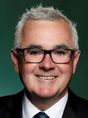
Andrew Wilkie Clark, Independent
The time allotted for this debate has expired. The debate is adjourned, and the resumption of the debate will be made an order of the day for the next sitting.