
House debates Matters of Public Importance
Albanese Government

Milton Dick Speaker
3:29 pm
I have received a letter from the honourable member for Riverina proposing that a definite matter of public importance be submitted to the House for discussion, namely:
The Government's broken promises and failure to deliver for regional Australia.
I call upon those honourable members who approve of the proposed discussion to rise in their places.
More than the number of members required by the standing orders having risen in their places—

Michael McCormack Riverina, National Party
At the moment, in the government, there is much more than an Agatha Christie novel going on. It's a whodunnit: who leaked, or who misplaced, the talking points? Some are suggesting the Butler did it! But we don't actually know. But I tell you what: it makes for very interesting reading on this, the fifth budget day by the member for Rankin.
What we see here is the main message: 'We will deliver a responsible budget for working Australians, focused on relief, resilience and reform.' I think not. Moreover, the Australian public thinks not, as well.
Then there's this subheading, in bold, just so that it stands out, and it reads:
HAVE YOU BROKEN A PROMISE
It should carry a question mark, but grammar has never been the strong point of those opposite. What it should actually say is: 'You have broken a promise,' because each and every one of them—particularly the Prime Minister—has broken a promise.
The first dot point under 'Have you broken a promise'—lack of question mark—is:
The right decision is to do the right thing with the right policies at the right time
I agree with that—tick! The second dot point is:
Young people, and their parents and grandparents are worried they will never own their own home
I agree with that, too—a tick for that.
I would suggest Labor members don't go out to the doors and repeat this next dot point:
They are frustrated with the intergeneration all equity.
I'm not quite sure what that actually means, but don't repeat it. Anyway, the next is:
Any responsible government must take these issues seriously.
Well, this isn't a responsible government; it's actually an irresponsible government, and it has been for four years. It has let Australians down so often.
Now, up the top—and it might give Cluedo, or whoever is investigating this, some sort of point and guide as to who might have misplaced it—it says either '6,060' or '6,000'—I don't know which—'social and affordable homes since elected'. It also then adds '23,000 in planning'. Well, that's a long way short of the one million, which then became 1.2 million, homes that Australia said it would build—a long, long way short.
The government's broken promises and failure to deliver for regional Australians is the topic of the matter of public importance debate today, and never has there been a better time to discuss this important topic. We heard the Prime Minister today so often saying that he has not broken his promises, when he actually has, on numerous occasions, whether it came to energy relief, whether it came to the number of houses he was going to build—whatever the case might be.
We also heard, interestingly enough, from the Minister for Infrastructure, Transport, Regional Development and Local Government. Now, she was talking about the Inland Rail, and that is yet another broken promise by this broken government. When she said that ministers should go and hang their heads in shame—any of those before her responsible for this project—I tell you what: she's not in agreement with the now premier of Victoria, Jacinta Allan, because it was on 16 March 2018 that Jacinta Allan, then a Victorian minister responsible for infrastructure and transport, actually said this. She thanked the Deputy Prime Minister—I wonder who that could be?
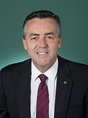
Darren Chester Gippsland, National Party, Shadow Minister for Veterans’ Affairs
Who was that?
Michael McCormack Riverina, National Party
It might have been me!—for acting quickly to release the funds which would provide much-needed upgrades to every regional rail line through the Regional Rail Revival program. Tick! That was under a coalition federal government. And we know, when there's a coalition federal government in Canberra, the split between federal and state is 80-20. And when Labor gets to power, gets to office in Canberra, it's fifty-fifty. And so, therefore, the states hold off on building infrastructure. They hold off on building anything. And this minister for infrastructure is now the minister for no structure, because the only thing she's building is complaints in her in-tray. And they are coming, rest assured, under the Rescue our Rail commitment that we're making to ensure that Inland Rail is actually delivered—not just half baked, under this mob; not just Parkes to Melbourne, but indeed Melbourne to Brisbane. And Minister Allan said: 'I'm also pleased that, in addition to the $1.57 billion Regional Rail Revival package, the Commonwealth will increase its contribution by $135 million to upgrade the north-east rail line to a class 2 standard to allow faster modern trains and give communities along the north-east line the services they expect and deserve.' See, there's a minister saying how pleased she is with what a federal government will do. The only thing that Premier Allan is now banking on is the Suburban Rail Loop. Do you know what the reason is? I made a mistake when I was the Deputy Prime Minister. I did, and I'm happy to fess up right here, right now. You know what I did?
A government member interjecting
Go on. I'm being goaded now by the minister. I enlisted the services of the ARTC to build the Inland Rail. I should have got the CFMEU on board. Had I got the CFMEU on board, the Comancheros, the Bandidos and all of those bikie gangs that benefit from the CFMEU, Inland Rail would continue. It would be continuing right now, and it would continue from Melbourne to Brisbane. Unfortunately, I erred. I mucked up. I apologise to the Australian public. I apologise to regional Australia for not getting the CFMEU on board. Anyway, there we go.
Jacinta Allan was right. I have to say Mark Bailey, another Labor minister, was right, because he also signed the intergovernmental agreement for inland rail. They recognised the importance of Commonwealth-state relations in building infrastructure. I'll tell you what, there are a lot of Labor infrastructure ministers and roads ministers who are now not so sure that they've got the right team, the right colour, in Canberra, because they're unable to build anything because they've got to stump up a whole lot more money. Certainly, tonight's budget will not bring the relief or the resilience or restore the funding that they so desperately need.
Our roads in regional Australia are crumbling. The National Stronger Regions Fund, which became the Building Better Regions Fund, has been axed by this mob, and, when they came to power, the member for Ballarat, the minister for infrastructure, said that they were going to pause and they were going to review and that there was going to be a 90-day review of all the infrastructure spending. It then became a 206-day review, but we haven't seen any programs or projects built since then. Regional Australia and certainly our councils on low rate bases are crying out for infrastructure. Their roads are deteriorating. They can't see any light at the end of the tunnel. Certainly, the Inland Rail has caused so many businesses so much heartache in the last 48 hours since Labor axed the program and said it was going to only become a Melbourne to Parkes line—less than half the distance of the total 1,700-kilometre corridor of commerce, which was first talked about in the 1890s and which was funded and started under a coalition government in 2018.
I remember when the first lot of steel was dropped off at Peak Hill on 15 January in that year, 2018, and it took a Labor government in 2026 to shelve it, to axe it, to bring the sledgehammer to it, and that is typical Labor, because typical Labor brings the sledgehammer to anything that's aspirational in this country. The Treasurer and every infrastructure minister and regional development minister stand condemned for doing this. It is just not right. What they should be doing is picking up the phone and talking to some of those hardworking businesses—such as AusRock Quarries at Parkes, such as Calvani Crushing at Forbes, and such as KB Concrete, which has offices in Dubbo, Wellington, Narromine, Coonabarabran and Gilgandra—who were left high and dry by axing the Inland Rail, not to mention Austrak at Wagga, which was going to build the sleepers for the Parkes and Narromine section through to Brisbane. It's simply not good enough, and Labor needs to explain why it is not delivering this nation-building piece of infrastructure.
More than that, it's in defence, it's in housing, it's in the capital gains, and it's in the whacking pensioners who need that rebate for the private health insurance that Labor said that they wouldn't touch and are now bringing the sledgehammer to. This budget will not bring the resilience or the restoration or the recovery or the relief to Australians right throughout this country. It's only going to bring more heartache, and Labor stands condemned because of that. Every single item tonight—you're not going to see the hope and confidence, the cost-of-living measures that the people of Australia are so desperately seeking. They want a government to succeed. They want a government to have their backs. And this government is doing nothing but bring more heartache and less hope to Australians—Mr and Mrs Average, farmers, small businesses, people right across particularly regional Australia, regional Australians who keep the lights on, who keep the exports going and who produce the food and fibre. They've been neglected by this shameful government. (Time expired)

Kristy McBain Eden-Monaro, Australian Labor Party, Minister for Regional Development, Local Government and Territories
3:39 pm
I'm glad to stand here today to have another opportunity to talk about regional Australia. It's one of my favourite pastimes, although I was a bit surprised that the member for Riverina chose to raise our record on delivering for regional Australia this week. Going by the results of the Farrer by-election, I would have thought that the Nationals and Liberals might want to stay quiet for a bit longer. They've got a lot of work to do to win back the trust of regional Australia—a lot of work.
Unidentified interjection - Hansard doesn't record who said this
Hon. Members:
Honourable members interjecting—

Sharon Claydon Newcastle, Australian Labor Party
The interjections—they were not forthcoming previously. I'd like the debate to be heard. I'm warning everybody.
Kristy McBain Eden-Monaro, Australian Labor Party, Minister for Regional Development, Local Government and Territories
I am a proud regional member of this place, and it's a great privilege to stand here as the minister for regional development. I'm incredibly fortunate to have spent my entire life living in regional Australia—to raise a family there, to run a business there and, now, to represent a regional community. I'm proud of our record in delivering for regional Australia, because that is exactly what we are doing: delivering. We're delivering programs across all portfolios that help regional Australians, with health, with housing and with education, from home batteries to cheaper child care to more home packages—no-one held back and no-one left behind—unlike those opposite, who pork-barrelled, issued press releases and called it a day whilst never actually delivering on so many of these 'projects'.
Our government is investing billions of dollars in remote, rural and regional Australia, and tonight's budget will reinforce that, with investment to increase access to housing, to deliver better health care, to create opportunities to study closer to home and to ease cost-of-living pressures. Our government wants every hard-earned dollar to go further for regional Australians. That's why, from 1 July this year, Australians will see further tax cuts as part of our broader agenda to ease cost-of-living measures. Not only that, our government is also saving small businesses thousands of dollars by making the instant asset write-off permanent. This means small businesses will be able to immediately deduct up to $20,000 for new equipment, from new tech to tools and machinery.
Speaking of dollars in pockets, we've got cheaper home batteries, which permanently cuts power bills for every Australian. In my electorate, Ray from Braidwood got in touch and said that his home battery system has already lowered his electricity bill. In the first month since his battery was installed, his bill dropped to $22. It has helped him change his usage habits so he can make better use of electricity in off-peak hours. But, instead of supporting regional Australians like Ray, those opposite are continuing to fight the climate wars. They're out of touch and out of reality.
I want to acknowledge the pressure that is on regional Australians as a result of the international fuel crisis. The conflict overseas is having an impact on our country, but nowhere more so than across our regions. We have further to travel. We need to access affordable diesel for our machinery, for long-haul freight and simply to get around. The availability of fertiliser is absolutely critical for our farmers. By acting quickly to secure fuel for industries most exposed to the shortage, which is agriculture, transport and mining, we are protecting regional productivity. We've moved quickly to more than halve the fuel excise and reduce the road user charge to zero for three months, to the end of June. This has helped to keep freight moving across our country, because we know Australians are feeling the pinch.
The availability of fertiliser is absolutely critical for our farmers, and that's why our government secured a deal for 250,000 tonnes of additional agriculture-grade urea for the upcoming planting season. We have also underwritten the purchase of fertiliser for the private sector, to make sure that we can support availability. Farming and agriculture have always been the backbone of our country and of regional Australia in particular.
We know how important it is to support these industries, and that is exactly what we are doing. That's why tonight our budget will deliver a landmark $10 billion Australian fuel security and resilience package, to safeguard the nation's energy sovereignty. This will secure more fuel and fertiliser supplies for Australians by targeting financial support and establishing a government owned reserve. Our government will protect Australia's energy interests, support essential industries and help secure reliable fuel access during future supply issues.
While we're on the topic of keeping regional Australia moving—our government is delivering when it comes to vital transport infrastructure. We've doubled Roads to Recovery funding to $4.4 billion, with 85 per cent of that program being spent in our regions. We've increased the road Black Spot Program to $150 million annually, with around half of that going to our regions. I was lucky enough to join Minister Catherine King and Minister Gallagher yesterday for the announcement of $100 million upgrades to rail infrastructure between Sydney and Canberra, which is another good news story for our regions, making rail travel from Queanbeyan, Bungendore, Tarago, Goulburn and more more efficient and more reliable on that Sydney to Canberra line.
We're also making access to health care more reliable for people in the regions. Our Medicare urgent care clinics have been a game changer for our health systems. They are providing free, timely and high-quality access to thousands of Australians closer to home. Of the 137 urgent care clinics, 47 are in regional, rural or remote communities. I know what a difference it makes. Mary from my electorate, in Googong, took the time to let me know about the excellent service her granddaughter received at the Queanbeyan urgent care clinic recently. She was so impressed she was able to see a doctor after hours, with no wait time and professional and attentive staff who even took the time to draw a couple of pictures on her granddaughter's hand to distract her from the procedures.
We've delivered more regional university study hubs to help country students access higher education without moving. It's critically important, because your postcode should never be a barrier to opportunity. In April I was delighted to open the new country university centre in Tumut, in the Snowy Mountains. In fact, the member for Riverina was also there, and he was quite impressed with the investment that our government had made to provide access to more tertiary education where people are, closer to home.
A government program or a policy doesn't have to have the word regional in it to benefit regional Australians. One-third of Australians live outside our major capital cities. I think it should be more. Those of us who live there know how good it is. Not only do they not have to have regional in the title but, every time a policy comes in front of us, we've got to make sure it works for every Australian and that they are considered across our work, no matter where they live.
Those opposite have talked a big game about their infrastructure investments. But it wasn't the case. A billion dollars was committed by this side of the House in 2013, before we left government, to plan Inland Rail. When those opposite took government, they announced Inland Rail and they wanted to fund it through debt—$9.3 billion, and that would get from Melbourne to Brisbane. We know that never happened. By 2020, the cost estimate rose to $16.4 billion. That's what happens when you don't have a plan. By 2022, when we came to government again, the ARTC said, 'We no longer know how much it will cost.' So we got a review—$31.4 billion. Now, according to independent estimates, it's $45 billion and it can no longer be funded by debt equity. I know the member for Riverina is passionate about rail. I think a lot of people across this place are passionate about rail. But Wes Judd, a dairy farmer in Millmerran, said, 'In an environment of necessary budget restraint, this decision protects taxpayers from an unsustainable project while safeguarding prime agricultural land.'
There is a time to make sure that things get done properly, and, each and every time the Nationals and the Liberal Party have tried to deliver an infrastructure program, it has been poorly planned with colour coded spreadsheets and poor audit reports. The Building Better Regions Fund, which the member for Riverina referenced, was so badly planned and was so totally dismissed by the ANAO that we had to can it. There was no saving the project. Inland Rail has been described as 'let down by weak ministers and gutless politicians'. Some have said:
The corridor was wrong from the start, and regional Queensland has paid the price for a decade.
They're not my words; they're the words of the former leader of the Nationals, David Littleproud, and they are about the former, former leader of the Nationals, Barnaby Joyce, the member for New England.
On that, I'll conclude my remarks. Those opposite want to talk a big game about regional Australia, but time and time again it's left to this side of the House, the Labor Party, to deliver. That's why there are more regional members on this side of the House than there are on that side of the House—because regional Australia no longer believe what the Liberal and National parties say. They rely on the Labor Party to deliver, and that's exactly what we're doing. (Time expired)

Anne Webster Mallee, National Party, Shadow Minister for Regional Development, Local Government and Territories
3:50 pm
Today is an incredibly important day. It is budget day. We're all hanging out, waiting to hear what the Treasurer is going to bring to us. I've compiled a playlist especially for tonight using some of the Prime Minister's top songs. I'm not going to sing them. It's okay! Songs include 'nobody held back', 'nobody left behind', 'no-one worse off in aged care' and don't forget the old faithful 'my word is my bond'. Well, they have been clearly broken. They have been broken, every single one of them, especially in regional Australia.
I want to start with the private health rebate. This government has run out of its own money to spend and therefore is coming for, in this instance, our older folk, our over-65s. It is raiding the private health fund to, apparently, pay for aged care a little bit later. The fact is that these people have been paying their taxes all their lives. They now get to 65, when they just might require more medical intervention, and, as pensioners, they are now going to be having to pay potentially up to $1,000 extra. There will be so many who exit the private health fund for their own needs. They've been responsible all their lives, and now guess what? They're going to have to rely on the public health system. I don't think that's a good move. I just don't think that's a good move, and I don't think anyone in that situation is going to think that's a good move. Minister Butler is going to be ripping $3 million from private health consumers for aged care. What for? It's for beds, for home-care packages. I heard what Minister Rae had to say during question time—that there are over 230,000 people waiting for Support at Home, waiting for their Commonwealth home-care package.
In the regions, there is no-one to deliver those services. We have aged-care providers who are saying to potential elderly clients 'sorry, our books are full; our books are closed; we'll get back in touch with you when we've got a space'. What are they doing? Are they actually waiting for people to die—is that the plan?—because there's not enough money in the Commonwealth Home Support Program? Two hundred and thirty thousand people waiting is just not good enough. And I can assure you that in my electorate of Mallee they have been coming to tell me so.
We have assessments being done with AI, for crying out loud! Whoever thought that was a good idea ought to lose their job. The fact is that I have a deaf man who is 80 years old and who had his assessment for functionality done on the phone. Who thought that was a good idea? They've done the assessment, and now he's on a waitlist. This goes on and on under this Labor government. It cannot manage its portfolios, and it is the people in the regions who are particularly suffering.
The Commonwealth Home Support Program—I could go on about this all afternoon. The reality is that even gardeners and the people who would clean your home are not around; there is no-one out in the regions who is able to do this. So we have elderly people who don't want visitors coming to their homes because their grass is up to their doorhandle and because their homes are filthy. They can't clean them. Where is the minister on this? Why does it matter so little, while the government is expending and building debt like there's no tomorrow? A trillion dollars of debt is what Australians are going to be paying for into the future.
If I hear a spiel from the Treasurer tonight about intergenerational equity and fairness, I tell you what: I will go spare. I will have to control myself because I'm in the House, but I am so done with this argument. It is our young people who are going to be paying off this debt into decades to come. The way this Labor government has treated the people of Australia on an ongoing basis is a disgrace, and for the Treasurer and the Prime Minister to gaslight Australians is unbelievably poor. (Time expired)

Lisa Chesters Bendigo, Australian Labor Party
3:55 pm
I have to confess I had a little chuckle when I saw the title of this MPI. Possible a better title would have been 'Nats running scared over One Nation's surge in the region'.
Unidentified interjection - Hansard doesn't record who said this
Opposition Members:
Opposition members interjecting—
Lisa Chesters Bendigo, Australian Labor Party
I think it's a little bit triggering when you mention the success that One Nation is having in their heartland. Who really has broken the promises to regional Victorians, and who really has betrayed regional Victorians? The seat of Farrer wasn't a Labor Party seat, yet its voters sent a pretty big message to this place about what they think about the opposition, the Liberal and National parties. I see people on that side exiting the chamber—people whose electorates share borders with the seat of Farrer. Echuca-Moama is a really good example. Echuca is in the seat of Nicholls; Moama sits in the seat of Farrer. In Moama, 75 per cent of the vote went to One Nation. Last time they got about, I think, seven per cent in that seat. Yet the Nationals come in here and attack our record. Perhaps it's got something to do with their side and the way they've broken trust with regional Australia.
Let me take a moment to reset the record and remind the House what Labor is doing for regional Australia and why it is we are now in this historic place where there are more regional MPs in the Labor Party government than there are National Party MPs. In fact, there are more crossbenchers than there are National Party MPs. That is the state of the parliament that we have today.
Bulk-billing is a really good example. We are rolling out bulk-billing across the whole of Australia, and who benefits the most? Regional Australians. There are more doctors and more bulk-billing clinics in my electorate than ever before. Three out of five clinics in my electorate are now bulk-billing. New clinics are opening up and bulk-billing.
There are tax cuts for every worker—all workers—not their outdated old stage 3 tax cuts, which would have seen the top end of town—people living in inner-city Melbourne and Sydney—receiving the biggest tax cut. We are making sure every Australian gets a tax cut—every worker. Who benefits the most? Those on the lowest incomes. And where do they predominantly live? In regional and rural Australia and outer metro areas.
We have supported award-wage workers with getting a wage increase. Those opposite said it would break the bank and break small business. We are supporting those low-paid workers and ensuring they get a fair day's return for a fair day's work. We are the government that is making sure that people keep more of what they earn and earn more. That is what we're doing.
The cuts to student debt are really making a difference, particularly for those who live in the regions—those who choose to live in the regions and support people in the regions and forgo big salaries in town to work in the regions. That is making a real difference to their cost of living. In my own electorate of Bendigo, just over 17,000 constituents benefited from that one measure alone.
But it's not just in health and education that we're delivering real changes for people in the regions. On infrastructure, just using my own electorate of Bendigo as an example, since we came to government we've seen the million-dollar investment that we've got into stage 1 of the North Bendigo Recreation Reserve start. We've seen funding go into the Heathcote Civic Precinct upgrade and the Frederick Street precinct upgrade—$12 million to transform that part of Castlemaine. Funding has gone into Marong through the Housing Support Program to make sure that Marong has the water pressure that it needs to build more homes. Funding is going into what I mentioned prior to question time: updating our rural water system to ensure that we have piped water in parts of Greater Bendigo which are currently being serviced through gold-rush channels.
We're also investing more in Bushmasters and securing that workforce for the next five years. We're investing more in manufacturing and helping really innovative small local manufacturers grow, double their footprint and give more people in our region a job. This is just my example. We have so many regional MPs that we could have this MPI go all afternoon, and they should be given the opportunity to stand up and talk about the great achievements of this government and how we're delivering for regional Australia. As our minister said, a third of Australians live in regional Australia. We have not forgotten them. We are delivering for them, and that's why there are more people who represent regional electorates on this side of the House.

Jamie Chaffey Parkes, National Party, Shadow Assistant Minister for Agriculture
4:00 pm
Today we're on the brink of what looks like yet another brick being kicked out from the foundations of our nation. Australians know that anyone can front the camera ahead of an election and make promises. Over the last few years, we've heard promises like this: $275 off your power bill; protecting the rights of those who have worked all of their life by not scrapping negative gearing and not increasing capital gains tax; and no health cuts. But it takes leadership, integrity and responsibility to the Australian people to keep those promises and to do the work that makes those promises a reality.
It is becoming alarmingly apparent that we have a Labor government that's not willing to do the work. Just last week, the government announced the Inland Rail would not go ahead north of Parkes. As the member for Parkes, I am aware of what this means to Australia, and I'm acutely aware of what it means to the electorate of Parkes. Businesses, organisations and families have been planning around this landmark project for many years. This is not a new project. There has already been significant money spent on this freight route between Melbourne and Brisbane. Some of it has been built, including 160 kilometres of upgraded track between Narrabri and North Star to the north of Parkes. Now this is a rail line to nowhere. Businesses have invested and relocated for the Inland Rail. Families have planned their lives around it, and whole communities are now facing a different future.
This project is critical to the growth of our nation. It would take hundreds of thousands of trucks off the road every single year. It would cut emissions, build jobs and ensure that we have the capacity to increase productivity—have you heard that word, 'productivity'?—population and economy. I'll now quote from the ALP website:
… the Albanese Government continues to deliver the infrastructure, skills, jobs and services that will stimulate regional economies and build thriving communities.
How does axing one of the single most important infrastructure projects drive regional economies, and how does it build thriving communities? It doesn't.
This is just one of a series of betrayals by this government. Earlier this year, I asked councils across the Parkes electorate what they needed from the federal government in the budget. Councils, the very organisations that provide so many essential services to Australians, are experiencing severe financial stress. They're facing higher and higher costs. Their grant funding and funding streams have been cut, and they're being handed more and more responsibilities by both state Labor and federal Labor governments. This is the No. 1 priority for councils, not only in the electorate of Parkes but right across regional Australia. As the shadow assistant minister for local government, I have heard this message time and time again. Local government is hurting. Local government is hurting from announcements such as axing the Inland Rail and cutting road infrastructure.
Councils have more responsibilities in aged care, child care and health care, where the state and federal governments have let them down. They are struggling to fund the infrastructure our communities need. Where is the money to help them with the facilities Australians use every day for water security, community halls, emergency airstrips, libraries, public pools and roads? They ask, but they're not being heard by this government. They ask, but they're being ignored by this Labor government. This is from a government that claims it's putting regional Australia at the centre of its plans for prosperity and a resilient future.
The government's promises to local government ahead of the 2022 election are being broken. There is no respect and no trust, just broken promises. Cut by cut, brick by brick, this government is bringing down the foundations of regional Australia that have been built by hard work over many generations. Cut by cut, brick by brick, this government is cutting the legs out from under the people who have made our country. In the past year alone, we have seen their rights and their services undermined through changes to water law, devastating cuts to the NDIS, a rapidly rising cost of living and a lack of planning for or even recognition of the fuel crisis, backward-sliding telecommunications and hasty changes to the gun laws without any consultation. These are just some of the ways in which the Labor government is targeting regional Australians through a thousand cuts. In tonight's budget, you can bet your bottom dollar there'll be another thousand more.

Anne Urquhart Braddon, Australian Labor Party
4:05 pm
The Albanese Labor government is investing billions in remote, rural and regional Australia. We don't just deliver a pork-barrel chunk of money for regional infrastructure and call it a day, like those opposite did. We are delivering all our programs, across all portfolios, to help regional Australians with their health, housing and education.
I represent a rural, remote and regional electorate in the electorate of Braddon, which spans across the north-west coast of Tasmania, down the west coast—the wild west—across to King Island.
An honourable member: It's beautiful.
It is beautiful, thank you. I was shocked when I read what this MPI is about, because I wanted to come in here and talk about some of the things that we are delivering not only for the electorate that I represent, which is rural, remote and regional, but also right across the country in.
In Burnie, we have delivered an urgent care clinic that has seen 1,800 presentations, and it opened in March; 1,800 people have been able to go through the doors of that urgent care clinic to keep them out of the Burnie hospital emergency department. The Devonport Urgent Care Clinic, open for two-and-a-bit years now, has seen over 40,500 presentations. I had to actually go back and look at that figure because I thought it was wrong. It offers free walk-in care when people need it over extended hours, seven days a week, taking pressure off both our North West Regional Hospital and the Mersey Community Hospital. It is improving accessibility to health services for regional Australians—the people that live in my region.
Our government has committed to deliver more urgent care clinics right across the country, with four out of five Australians living within a 20-minute drive of their local clinic. So don't try and stand there and tell us over on this side that we are not delivering for regional Australia, because that is one part. There are Medicare mental health centres offering free walk-in mental health care and support. We are establishing a national network of 92 Medicare mental health centres, including five in Tasmania. In the electorate of Braddon there are two, one in Burnie and one in Devonport. There's no need for an appointment and no need for a referral. Access to timely mental health care is available without delay, without a referral and without cost. The really important thing that I love about these centres is the support from support workers who have travelled their own journey with mental health issues.
We delivered tax cuts for every taxpayer, including more coming this year and next year. That will benefit all taxpayers right up and down the income scale—not just those on the big money up there but everyone, on every scale of the system. The average tax cut was $43 a week in 2026-27, and that is benefiting over 45,000 taxpayers in my electorate of Braddon alone.
On penalty rates: we've passed legislation to protect penalty and overtime rates. That benefits 2.6 million Australians who work on our public holidays, and we can thank them for that. But, also, the fact is that they now get recognition for their weekends, late nights and early mornings, and that delivers on a commitment that we put to the electorate in 2025.
And just take a look at the number of regional electorates that we represent right around this horseshoe. They put their faith in us, and we have delivered on that. We're funding road upgrades in regional programs like Roads to Recovery and the Black Spot Program. These programs support the construction and maintenance of local roads. Again, in the electorate of Braddon, between 2024 and 2029, local councils—those people that do rely on us to support them, which we do really well—will receive almost $29 million through Roads to Recovery. That's important for people who travel the roads every day to go to work and for our transport industry in coming and going from our ports. Those are really important issues.
We have cheaper medicines, bulk-billing and hospital funding. We've tripled the bulk-billing incentive, helping pensioners, concession-card holders and families with young children. In Braddon, we've got 70 per cent of GPS now fully bulk-billing. We've got 27 Medicare bulk-billing practices—10 of these switched to bulk-billing after we made the changes on 1 November. That is making quality health care accessible, along with the urgent care clinics and the cheaper PBS medicines for people who live in our regions. There is so much more, if only I had more time, but we are delivering for regional Tasmania. (Time expired)

Garth Hamilton Groom, Liberal National Party, Shadow Assistant Minister for Energy Security and Affordability
4:10 pm
I'm going to start with an apology to the member for Riverina. When I came into this place in 2020, he was the infrastructure minister at the time, and I was very hard on him. I was very hard, as a local member looking after my community that had Inland Rail running through it. We all saw the benefits, but it's difficult to deliver big infrastructure. I see the member for Blair, and he has equally raised the concerns of his community in the Lockyer Valley, and that's been important because local communities need to be represented when we deliver these big projects. They impact us. The impact is not just local; it benefits the whole nation. That's what nation-building infrastructure is about.
I pushed the minister of the time hard and I said some things that I probably should have considered a bit more deeply, but at no stage was there ever any doubt that it was our intention to deliver Inland Rail, to overcome the challenges, to work through them with our local communities and to spend the time that it took to get that job done. That was important to me because Inland Rail has been a dream for Toowoomba for some time. It was back in the 1930s that Littleton Groom, one of my predecessors in the role, after whom the seat is now named, first started talking about an inland rail coming up through to Toowoomba and connecting us with Melbourne. Of course, the war got in the way, but subsequent members have talked about it, and, under Ian MacFarlane, we started to get this thing going in consultation and working with the Labor government of the day. John McVeigh played a huge role in getting the project through, and I think about the work that was done in getting the project aligned with the Wellcamp airport.
We have three major highways running through Toowoomba—the Warrego, the Gore and the New England—and, at each of those intersections, we started planning for Inland Rail. We had the Second Range Crossing come through—a $1.2 billion injection of infrastructure into our region that was lined up so that, when the Inland Rail came through, we'd have a great trucking route that would access the highways, to enable us to move freight from rail to road easily. We made that investment. I think of places like InterLinkSQ. This is an investment that's been made right on the connection between the east-west rail line that Queensland Rail own, and Inland Rail was going to intersect with it. They've invested more than $50 million of private money into preparing that site for Inland Rail. In the same area, there were grants given by local, state and federal governments of both sides over the past 10 years. The Labor government in Queensland contributed to that as well. And we got ready for it. We saw, at the 2022 election, a change of government, and the Prime Minister promised my electorate that this project would be delivered, that Inland Rail would be delivered. They said they needed to fix it, but they would deliver it, and at a no stage was there any suggestion this project would be cut short.
When questions were raised about the cost of the project, I pointed out multiple times that the opportunity was there to pause the project at Toowoomba, where you would get 90 per cent of the benefits of the project, that most of the cost is between Toowoomba and Brisbane and that that's where most of the challenges, as raised by the member for Blair, come through. I made that suggestion, and I put it through many, many times. It was an important piece of discussion. I sent 31 questions in writing to the minister during the last four years, asking when this project is going to be delivered, when we will start seeing works and what things are holding it back. At no stage, in any of the 31 answers I got, was there ever a suggestion that this project would get cancelled. I wrote six letters to the Prime Minister. At no stage in their response did they suggest that this project was going to get cancelled. After all of that, here we are. This is a project that Toowoomba has been waiting for, has invested in and has built its future around. It was promised that it would come to us. The Prime Minister has just canned it and walked away. He didn't consult with us. He didn't talk to anyone who'd invested money in the project. He didn't talk to anyone locally. There was no consultation. He just canned it and walked away. We've heard some wonderful speeches here, all talking about the wonderful things Labor does. No-one on the Labor side has acknowledged that Toowoomba has invested significantly in this project based on the promises made by this Prime Minister that he has now broken.

Meryl Swanson Paterson, Australian Labor Party
4:15 pm
If the road to hell is paved with good intentions, then under the former Liberal-National coalition government, let me tell you: it was a colour coded origami horror show of press releases and false promises for our regions. The roads, infrastructure and sporting facilities, if they were built—who will ever remember that bastion of regional sport, North Sydney, getting a pool? They took our regions for mugs.
The claim that this government has made broken promises and failed regional Australia is patently untrue. It's not what I see in Paterson, and it's not what I see across regional Australia. Regional Australia is not being talked about from a distance under this government; we're here representing it. It's being backed with real investment in real communities with real outcomes that are already changing real people's lives. And that's exactly what governing for regional Australia should look like.
In the last month alone, we've seen significant projects and investments delivered across my electorate of Paterson, all while keeping a clear focus on strengthening regional communities, regional jobs and regional services. The Hunter Veteran and Family Hub that has just been opened is supporting 22,000 veterans right across the Hunter, Newcastle and the Central Coast. Five hundred veterans have passed through the doors, not to mention the 3½ thousand serving Defence personnel from RAAF Base Williamtown and those that serve at Singleton, who are all using this fantastic hub in Maitland. Kurri Kurri has just received new netball courts. Maitland has received the new Max McMahon sporting facilities.
Delivering for regional Australia isn't just about major highways and big announcements; it's about making sure our kids have the same opportunities as kids everywhere else, right across the country. Port Stephens Koala Hospital has just received $3 million for groundbreaking research, because we're saving the koalas in regional Australia as well. MGA Thermal, an incredible company, got $3.2 million through ARENA to commercialise cutting-edge energy storage technology that will save energy for businesses in the regions and the cities alike. That means local jobs, local industry and regional economic growth.
These aren't promises on paper; they're projects on the ground. They're already being delivered. And, when we look at the last 12 months, the scale of delivery for regional Australia becomes even clearer. The expansion and opening of our magnificent Newcastle Airport as an international gateway opens up new opportunities for tourism, trade and economic growth right across our region. For too long, communities like ours were told to wait our turn, but international connectivity, economic support and investment shouldn't only be for capital cities—and we know it's not. Our airport is the airport that our region deserves, and that's why a Labor government has delivered it.
We have the Kongsberg missile factory that's just under construction in my electorate, a $50 million solar foundry at Black Hill that will create 300 jobs, $1 million for Carrie's Place, supporting women and children escaping family violence and $1.6 million in black spot funding for local roads in Port Stephens. These aren't false promises. They're delivering—we are delivering.
The Maitland Urgent Care Clinic has also opened its doors and is already making a difference for families across our region. Every week around 300 people are walking through those doors to access free urgent care close to home without the long waits of an emergency department or the cost of private care. That's exactly what Medicare was designed to do and exactly what regional Australians deserve.
Alongside these local investments, we're backing nation-building infrastructure that will transform regional Australia for generations to come. We've committed $667 million to progress high-speed rail from Newcastle to Sydney, and we are doing the proper planning. This will not be the debacle that we've seen through the Inland Rail. For the Hunter and New South Wales, it means faster connections and a greater opportunity. Alongside that, we're delivering the M1 Pacific Motorway extension to Raymond Terrace—a $1.7 billion investment—and we're going to deliver it on budget and more than 12 months early. That's right—early and on budget! That's what an Albanese Labor government does in the regions. Right next door in my neighbouring electorate, we've got the Singleton Bypass, the Hexham Straight Widening and the Newcastle Inner City Bypass—over $3 billion worth of roadworks happening in our region. That's not a government that just delivers with a press release. That's a government where the rubber hits the road.

Tom Venning Grey, Liberal Party
4:20 pm
To understand the country, you actually have to visit it. But, more than that, you have to listen. Only yesterday I was in Coober Pedy—just one of the many communities forgotten by Labor. I've been travelling and listening every day, recently in the far west coast, the far north and the far north-east. There I heard from residents, station owners and industry leaders. Whilst these communities are remote, they are vital to South Australia. Out in the bush, your word is all you have. If you make a promise, you keep it. If you say you're going to help a neighbour, you help them. If you say you're going to do something, you do it. Unlike Labor, this is the code we live by in the country. To them a promise is just a script for a TV ad. Their word is absolutely useless.
Let's look at the facts. I spoke with David Bell from Dulkaninna Station. He told me about the Birdsville Track. This road carries over half a billion dollars worth of stock every year. It is a vital freight path. It needs to be sealed. It has been closed for 150 days, and station owners can't get their stock in and out and are instead still going through Queensland. The Albanese government is looking to slash local road funding, essential support, from $78 million to $60 million. Even with supplementary funding, South Australia remains the lowest funded state in the nation on a per capita basis. Since 2017, our supplementary funding has been frozen at $20 million, meaning that Labor's inflation has already silently cut this vital program by more than 20 per cent. This is a broken promise from a government that said it would leave no Australian behind.
Labor also promised to deliver on regional health, but in Port Lincoln, amazingly, they are still waiting on an Medicare urgent care clinic. Whyalla received a clinic, which I welcome, but the data shows a greater need in Port Lincoln. This is an act that looks decidedly political. The government promised to fix child care. I have the lowest access to child care in the whole country. They announced the Building Early Education Fund grant program. We got excited, but look at the rules. In Crystal Brook, Andrew Sargent and the community group is ready to build, but the rules say that you must already own a centre to apply. It locks out the very people—the community volunteers—who need it the most. It is a plan for the city, made by people from the city.
I'll say it again: in the country, if you make a promise, you keep it. My electors in Grey will remember those broken promises. If you say you're going to help a neighbour, you help them. This is another broken promise from a government that said it wouldn't leave the country behind. Its word is worthless.
Finally, we come to this very budget. Anthony Albanese promised no new taxes, no changes to super and no changes to CGT.
Sharon Claydon Newcastle, Australian Labor Party
I will remind the member to use correct titles in the House, please.
Tom Venning Grey, Liberal Party
But, as you know, his word is his bond, and, just like Pinocchio, his nose gets longer. He is now planning a housing tax and a tax on family and farming trusts, and he's letting bracket creep take $2,000 a year from workers. This is the highest-taxing government in history. The government's new tax on discretionary trust distributions and adjustments to the capital gains discount pose a massive risk to family planning. Farmers use trusts to manage volatile income and to transition family ownership. If trusts lose that flexibility, regular farming families could face crippling tax bills. Combined with potential changes to CGT on land transfers, these policies risk draining finances. There is the old adage that farmers die rich but live poor. Increased tax liabilities will disrupt family farming models and force unintended asset sales just for farmers to stay afloat.
This government gave its word to regional Australia, but it broke it on roads, broke it on health and broke it on taxes because Labor's word is worthless.

Trish Cook Bullwinkel, Australian Labor Party
4:25 pm
Today, the Albanese Labor government holds more regional seats in this parliament than the Liberal Party does and than the National Party does. We don't just represent the regions; we are the voice of the regions. Since I became the member for Bullwinkel, I've made it my mission to ensure that our regional towns are seen and heard. I'm proud to say that I have welcomed more than 16 ministers to our electorate in the last year, and bringing those decision-makers of this country directly to our farms and our clinics and our local business is important.
While I was born and raised in the city, I served as a remote area nurse for two decades. I've been on the frontlines in the communities where the nearest hospital isn't just a few suburbs away but is a journey. I understand on a personal level that in the regions health care isn't just a policy area; it's a lifeline. And that's why I'm so proud that our government is delivering in health care, including the largest investment in the history of Medicare to ensure that nine out of 10 people are bulk-billed by 2030. We aren't just patching up a system; we are strengthening it from the ground up. We've committed an additional $1.8 billion to our public hospitals to reduce waiting times, bringing our total hospital funding to a record $33.9 billion.
In Northam, I had the honour of opening up our Medicare mental health urgent care clinic, which has already become a pillar of the community there. And, just 40 minutes up from the regional town, in the periurban township of Mundaring, we've opened the new Mundaring Medicare Urgent Care Clinic, which has already, in the last couple of months, seen over 1,600 visits. This is a fully bulk-billed urgent care clinic located right on the highway artery that serves our electorate and those people in regional areas. By June 2026, 47 of the 137 urgent care clinics will be in regional areas, providing the quality care that our families deserve.
But clinics, of course, are nothing without the people that staff them, and attracting professionals to the regions is a longstanding challenge that we acknowledge. That didn't just happen overnight, and it won't be fixed overnight, but we are making the biggest investment in decades. For example, we have waived HECS debt for doctors and nurses who work in our regions for five years. We've provided over $600 million to grow our health workforce, supporting hundreds of scholarships for nurses and midwives, and we are funding a record cohort of GP training places, 1,750 for this year alone. There is a huge focus within that on the Remote Vocational Training Scheme for hard-to-fill locations.
We know that productivity is lifted when we invest in our people, and that's why we also want our regional students to have the same opportunity as those in the city. Last year, I was incredibly proud to join Minister Jason Clare to officially open the northern Regional University Study Hub. This is one of 56 regional study hubs nationwide that have supported nearly 21,000 students. From Northam to Broome, we are ensuring you don't have to leave your home in the regions to get world-class education.
We stand with our primary producers. In York, I recently walked the farms with agriculture minister Julie Collins to meet with grain growers who were dealing with the high cost of diesel and fertiliser. To protect them, we're delivering a landmark $10 billion Australian Fuel Security and Resilience package. We also met with the shearers association to ensure that woolshed shearers are trained in the off season.
And, of course, beyond that there are cost-of-living relief measures—tax cuts for everyone, capping PBS medicines and 1800MEDICARE—and a doubling of the Roads to Recovery funding to $4.4 billion, with 85 per cent of that funding going to regional areas. And we're fixing the telecommunications and digital divide through our $1.1 billion Better Connectivity Plan for Regional and Rural Australia, bringing fibre upgrades to nearly one million regional premises. We are governing for all Australians. (Time expired)
Sharon Claydon Newcastle, Australian Labor Party
The time for this discussion has now concluded. I just remind the House that, when people are on their feet speaking, it's courteous not to have too much chat in the chamber.