
House debates Private Members' Business
Cost of Living

Alison Penfold Lyne, National Party
7:11 pm
I want to thank the member for McPherson for his motion on this very important issue. I'm sure that, for all members in this chamber, cost of living and how they are dealing with the crisis are the most important issues for our constituents. I know that, in my own electorate, it's certainly the topic that's most raised with me, and I know that it's biting hard and hurting people harder. Across communities of families, farmers and small businesses, people are being hit from every direction. Fuel prices are surging. Supply has been uncertain. This comes on top of relentless increases in everyday costs—electricity, gas, food, health, education, insurance and rent. At the same time, wages have not been keeping up.
Lyne is one of the lowest income electorates in Australia. People simply do not have the buffers. They don't have the flexibility in their budgets, and they're having to make real sacrifices—skipping essentials, telling their kids that they can't play footy this season, delaying retirement and, in some cases, working longer simply to stay afloat. That is not the Australian promise; that is a failure of economic management.
After several years of this government, Australians have experienced a collapse in living standards. Inflation has remained stubbornly high, and government spending is at levels not seen outside of crisis periods. When government spending fuels inflation, interest rates stay higher for longer. That is why families have endured repeated rate rises and why mortgage holders are going backwards. At the same time, national debt is climbing, productivity is falling, and confidence is weakening. This is not a coherent economic strategy; it's a cycle of higher spending, higher taxes and lower expectations.
Nowhere is this failure more obvious than in housing. Australia is in the middle of a housing crisis, yet the government continues to prioritise demand-side subsidies—schemes that inflate prices—rather than address the real problem, which is supply. We're building fewer homes than we were just a few years ago, while our population has surged. That imbalance is pushing prices higher and locking young Australians out of homeownership, an issue I raised in my first speech. Now, we hear talk of changes to capital gains tax and negative gearing. Let me be clear, you cannot tax your way out of a housing shortage. If anything, such changes risks reducing investment and worsening supply constraints.
The real solutions, the ones that are discussed with me in my electorate, are about releasing more land, investing in enabling infrastructure, streamlining planning and environmental approvals, and reducing red tape and green tape, which are driving up costs. In my electorate, families are facing tens of thousands of dollars in upfront regulatory costs before they even start building, and builders are way down too, with local government and state government taxes, and are struggling to find the workers they need. That is a barrier created by government, and it can be fixed by government.
Fuel prices are another pressure point. In regional Australia, fuel is simply not optional; it's essential. It affects everything: groceries, freight, farming and household budgets. Yet we've seen delays, confusion and a lack of urgency in responding to supply pressures and price spikes as a result of the Middle East conflict. The government has been reactive, not proactive. A better approach would include strengthening oversight of fuel supply chains and pricing transparency, including giving the ACCC an explicit antihoarding power, supporting smaller wholesalers and independent service stations, not just major players, to manage price risk; improving fuel security through diversified supply, storage and domestic production; and ensuring regulatory settings allow rapid response in times of disruption. When fuel prices spike, that flows through the entire economy and drives inflation higher still.
Australians do not expect perfection from their government, but they do expect competence. They expect a plan to bring inflation down without crushing growth. They expect housing policies that build homes, not just inflate prices. They expect practical and timely action on fuel costs and supply, and they expect a government that understands the pressures facing regional communities. What we need is a reset in economic policy; fiscal discipline to ease inflationary pressure; a relentless focus on productivity and private sector growth; supply-side reform in housing; a cheaper, better, fairer energy policy that delivers on reliability and affordability; support for small business, not large corporations; and a recognition that regional Australians cannot be an afterthought.
People in Lyne are working harder for less. This is a moment that calls for strong, responsible economic leadership.
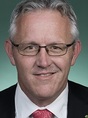
David Smith Bean, Australian Labor Party
7:16 pm
I'm happy to see that the member for McPherson is concerned about the cost of living and interest rates for Australians and that he has presented us the opportunity to talk about these issues in this chamber. However, I think a more efficient use of the member's time would have been to discuss this with his own shadow treasurer, who has gone on record in parliament as saying, 'We need to create the policy settings to progressively increase interest rates.' He's been consistent on this, also stating, 'Nobody wins from low interest rates.' I wonder what Australians think about that. And, earlier this year, the shadow Treasurer was forced to back down when he declared he no longer supported the twin objectives of the Reserve Bank, with the ultimate effect of the changes he was proposing being a climb in unemployment and climbs in interest rates.
Compulsory superannuation is one of the greatest ways people are able to secure their retirement and future. It was introduced under the Keating Labor government and strengthened under the Albanese Labor government, who lifted the compulsory contribution to 12 per cent. If the member for McPherson is so concerned about people working later into their lives, I'm sure he must have been outraged when the Abbott government froze the superannuation guarantee at 9½ per cent, which was then continued by successive coalition governments—a repeated failure to help workers secure their futures. So forgive me if I'm a bit shocked by the hypocrisy on display here from those opposite.
But doesn't this just show who the coalition are deep down? They've got no policy, no solutions—not even a consistent ideology anymore. They have stood against every piece of cost-of-living relief implemented by this government. Their only ideology is opposition—no meaningful progress for older Australians, no meaningful assistance for our younger Australian and no support for those in our cities or out in our regional areas. In the crisis we see now, in which the Albanese government has taken strong action to secure the supply of fuels and supplies to Australia, all we have seen the opposition do is play politics. They call for urgent responses and then do everything they can to delay those responses and delay assistance to Australians across the country, including our farmers. It appears the only farming the coalition is interested in these days is clip farming.
But let's compare that approach with that of this side of the chamber. We're backing another pay rise for minimum wage and award-reliant workers to help with the cost of living. My first job was at my local Big W down in Woden. I'm speaking from firsthand experience when I say that these pay increases matter and help improve the lives of so many people across my community. The only workplace policies that we've seen the coalition promise are cutting 41,000 workers from our Public Service, particularly in my land of Bean and right across the Canberra region, and providing taxpayer funded lunches for bosses.
On this side of the chamber, we've just marked 12 months since introducing tax cuts for 14 million Australians—14 million Australians who are better off under this government than they would have been under a government led by those opposite, because those opposite committed to revoking those tax cuts. What can I say about that except, 'Fantastic; great move—well done, Angus!'?
But it's not just about pay increases and it's not just about superannuation; it's about investing in other services. Just last Friday in my electorate, we announced major investments in the ACT to secure more access to bulk-billing for people across Canberra, including an additional two bulk-billing GP clinics in my electorate of Bean. These new clinics, in the Molonglo Valley and southern Tuggeranong will help ensure that, when families in my community need health care, they can fully access it without having to worry about their hip pockets. This is what action on the cost of living looks like.
The Albanese government is there to support our community, and it's committed to helping Australians in these trying times. We want to see Australians thrive and help them earn more and to keep more of what they earn.

Simon Kennedy Cook, Liberal Party, Shadow Assistant Minister to the Leader of the Opposition
7:21 pm
I'm very pleased to speak on this motion, because cost of living is an issue dominating household budgets right across my electorate of Cook. Just recently I received an email from Carol, a volunteer with St Vincent de Paul, and I'd like to quote some of this email: 'In the ever-increasing cost-of-living times, it's become extremely obvious the number of people in your electorate around Caringbah who are in need of help has increased dramatically. We have noted that these people are much younger. We receive requests for food assistance, with one lady pleading she has nothing left for school lunches. We've also been asked to supply beds for people sleeping on the floor with only one blanket. We've supplied washing machines, refrigerators, and we've been asked by a very distressed lady for financial help as she could not afford to bury her father. Financial assistance with utility bills is for another. The increased number of calls is placing all volunteers from Caringbah under pressure to fit these visits in their daily lives. Many of these people appear to be living under the poverty line. It was brought to my attention that, during COVID, there was an increase in income support payments, and I think something like that is needed. These people we assist cannot live without dignity, without a hand from Vinnies or the charities. The government has a responsibility to adequately support those who are unable to support themselves. I can only see the desperate calls for help increasing, especially with the cost of fuel.'
This is the lived reality, and we're not talking about an area that's below the poverty line or impoverished; we're talking about my local electorate of Cook, which does better than most of the electorates around the country. So, if this is how people in the heart of metropolitan Sydney, with high house prices and good employment prospects, are living, I shudder to think of the number of families across this nation doing it tough. That's mums and dads having tough conversations about whether they can pay grocery or energy bills. It's about packing school lunches, paying for fuel, the pressure that puts on relationships and the conflict that creates in families. That is the lived reality.
What has the government's role been in this? Well, since the Albanese government took office, we've had 14 interest rate rises. Yes, rates were at an all-time low coming out of COVID, but what we have seen from this government is increased government spending—the highest it's been in 40 years. It's actually at a record for 40 years. What we see with increased government spending is that there's too much demand in the economy, which is made up of government spending and private spending. When that government spending is too high, the Reserve Bank tries to drive down spending by increasing interest rates. That's led Australia to have the highest inflation of any advanced economy in the world.
It's at this time, when we are suffering from the highest inflation in the world, that we've had an oil shock globally. Had we been in the US, in Asia, in the UK or anywhere in Europe, we would have been much more sheltered from this oil shock, with lower inflation. But instead Australian households are getting smashed. They're looking to pick up the pieces. They're struggling to put together lunches. You heard it here: in Cook, people are struggling to provide their kids with lunch. This government's responsibility was to shelter Australians when we had an international shock. Instead, they've been left flailing in the wind, exposed to these international shocks by an irresponsible Treasurer.
More than 760,000 Australians aged 65 and over are now in the workforce—the highest number on record. Many of these people are working because they have no alternative. Rising costs are forcing people to delay their retirement or return to work simply to maintain financial stability. After a lifetime of contribution, Australians should be able to retire and live with dignity. I met a pensioner the other day at a listening post and I had to introduce them to Wesley Mission to pay their electricity bill. This pensioner was unable to run their fridge or their air conditioning, or turn the lights on, because the pension was not enough. This was a lovely immigrant man who had worked for his entire life.
What is missing is a clear path to bring these pressures under control. Australians want to see inflation reduced in a sustainable way, with disciplined fiscal settings. This is what we ask for from the Treasurer: not excuses but real action to lower the cost of living.

Madonna Jarrett Brisbane, Australian Labor Party
7:26 pm
I'm really pleased to be speaking on this motion tonight, because, if you listen to the debate that's gone on, you can see the stark difference between us—a government that really cares about people and gets that it is tough for Australians at the moment—and those on the other side. We understand cost-of-living pressure and it's a priority for us. We are continuing to roll out many cost-of-living measures. It's our No. 1 priority.
That's why you'll see that we're doing tax cuts for every taxpayer and a pay rise for all minimum-award-wage workers, totalling an increase of around $9,000—not a small amount of money. Last week, the minister for workplace relations announced the government would back an above-inflation minimum-wage increase for low-paid workers. We've got paid parental leave up to 24 weeks and super now being paid on all government paid parental leave. We've got a $10,000 bonus for housing apprentices on top of their wages. We've got 30 per cent off home batteries to permanently cut power bills. We've got paid pracs for nurses, teachers and social workers.
We've got a boost to Medicare, with $1.8 billion extra in hospital funding so Australians and people in my electorate can get the quality health care they need and deserve. We're seeing more choice and lower-cost health care for women with our record women's health package. We've expanded the five per cent deposit scheme to all first home buyers, with more than 230,000 first home buyers accessing the scheme. There's been another pay rise for aged-care workers. We're expanding bulk billing. There have been cuts to student debt. There's so much that this government is doing across the board. They might only be little bits, but they're making a big difference to people's hip pockets.
We will make medicines cheaper—we started that on 1 January with the $25 scripts—but we know we've got more to do. It's our government that's always there. It's our government that's about fairness and equity for all Australians. That's why we're doing other things around strengthening our social safety net, on top of increasing wages for some of the lowest-paid and most vulnerable people in our communities. We're helping with the cost of essentials. We're improving access to housing and education. One million households are benefiting from back-to-back increases in rent assistance, 1.1 million Australians are benefiting from higher social security payments and tens of thousands of single parents have access to the parenting payment (single) for longer.
As the member for Bean mentioned earlier, this is on top of the tax relief that every single taxpayer is getting. They've had one; there's another one coming this year and another one next year. We are also making sure that 1.2 million people on low incomes continue to pay no, or a reduced, Medicare levy while still having access to cheaper medicines and more bulk billing. There's so much more I could talk about.
We also know that we're in the middle of a war overseas and Australians are feeling the pinch at the bowser, which is why today we announced a 50 per cent cut in the fuel excise for three months, cutting fuel prices by around 26c a litre. It's also why, last week, we passed legislation to enforce higher penalties for petrol companies that might want to use the war to profit off Australians through price gouging. If they do the wrong thing, they'll be hit with a maximum $10 million per offence. We've also passed legislation in the House to allow truckies and road transport businesses to negotiate a fair deal more quickly to keep their trucks moving.
So this government is doing everything it can to support Australians with the cost of living. Just imagine how much harder it would have been for the people of Brisbane and the people of other electorates, our fellow Australians, if these cost-of-living measures weren't there. That was at stake because we know those opposite voted against all our cost-of-living measures, or at least most of them, and Australians depend on them. They depend on a government that's fair and reasonable, that cares for them and that understands that we have cost-of-living pressures. But we know we have more to do.
Federation Chamber adjourned at 19:31