

Steve Georganas Adelaide, Australian Labor Party
6:49 pm
I rise today to raise an issue in South Australia and in my electorate. As many of you may or may not be aware, last Friday, 20 March, was World Oral Health Day; in other words, a day internationally that we look after our oral health or talk about oral health. In my electorate, I have a magnificent, not-for-profit organisation that assists people with emergency dental issues. They provide critical dental triage services in South Australia. It's run by volunteer dentists and volunteers who assist with fundraising and a whole range of other things. At the head of this is Dr Greg Miller, a renowned dentist in South Australia—and a very good dentist, I must say. He also looks after the orangutans at the Adelaide Zoo. Have you ever seen the teeth on an orangutan? I was asked to go into an extraction of a tooth that Dr Miller performed while the orangutan was asleep, which was a very difficult situation. He's a very good and renowned dentist in South Australia.
Dr Miller runs a critical service for people living in regional South Australia and in nursing homes in South Australia. They call themselves the Australian Dental Foundation. It's Australia's largest dental health charity not-for-profit group. They're registered; they have an ACNC registration, and they are based in my electorate in North Adelaide. They're celebrating 10 years of operation and can proudly say that they're now genuinely a national charity, because they get calls from all over Australia. The service is being delivered to vulnerable people in every state of South Australia.
In 2020, ADF was successful in receiving some small funding through Country SA Primary Health Network to provide dental triage services for regional South Australian zones such as the outback and Murray Mallee. The funding has been renewed each year, under performance based criteria, and the service has expanded to include all non-metropolitan areas of South Australia, but he still gets calls from metropolitan areas, and they still do the triaging service. They don't turn anyone away.
I've been an advocate from day one, when I came to this place, that we should include dental care in our national scheme for health care. I've been saying it for many, many years, and my position hasn't changed from 2004 when I was first elected in this place. I've shown a great interest in dental care. For example, if you have an issue with any type of oral dental problems after hours or on the weekends, there's nowhere to go except for the emergency department. There, you will have doctors dealing with everything from strokes to heart attacks. If you have a tooth knocked out or an abscess on your tooth or an infection, you'll most probably sit there waiting for hours and hours and hours with no relief and absolutely no treatment. Maybe someone will look at you after seven or eight hours and give you some painkillers and send you home.
This service provides a 24-hour telephone number that you can call, and they will triage you and tell you exactly what's required and what you can do. It's an incredible service. It extends access to dental services. It refers people to different dentists who operate after hours. It has basically provided emergency dental triage services for more than a thousand people just in 2023-24. The case load was 62 cases a month from country SA and 184 cases a month from Adelaide. Even though they're not provided in the small funding they were getting for the metro area, they were providing the services. Currently, the calls are ramping up to hundreds per day as nursing online services and GPS are now contacting them. Their name is getting out there; they're being contacted, and they don't turn anyone away.
We've written to the state health minister and to the federal minister to see if there is some way to continue the small funding that gave this great service, the Australian Dental Foundation, the ability to continue their wonderful project. It's got a significant benefit in that it triages patients away from the emergency department areas of those overcrowded hospitals, where doctors have real life-saving dramas taking place. It's not the place for dental care or for a dental emergency. So they've managed to do that. The majority of dental emergencies for which patients are attending GPs and hospitals are toothache, avulsion, luxation and trauma. These issues are not dealt with appropriately through the ED hospitals because that's not their expertise. Their expertise is looking after trauma victims, heart attacks, strokes et cetera.
What happens, as I said, is that people ring this number and they get the advice that is specific to their injury or their sore tooth. By the time they present to an emergency department or to a GP and by the time they're eventually seen, a knocked-out tooth will be long past that viable period. The ADF explained to me that it needs to be dealt with immediately. Most doctors—GPs or people working in emergency departments—are not experts in this. Information can be given immediately over the phone—what to do with the tooth that's been knocked out, how to place it back in the gum, how to put ice on it et cetera—and many, many people's teeth are saved just by talking on the phone. You can imagine, being a mum or dad, that your kids are playing football or soccer on the weekend, on a Saturday afternoon, and there's a tooth knocked out. What do you do? You ring this number, and they'll give you the right advice.
I think reducing the specific dental advice to patients in South Australia will create an unnecessary pain burden for patients, delayed specialist dental treatment, poorer prognosis and outcomes due to delayed advice and reduced access to equivalent primary health care for regional South Australians. So I've asked both the state minister and the federal minister to look at it, to make sure that we can keep this group going. They will keep on going even if they get no funding. They'll still answer those calls at any time after 6 pm right through to 6 am and on the weekends. It's an incredible service. They also go out as volunteers to nursing homes, to aged-care facilities, to the outback and to Aboriginal communities.
It would be such a pity not to be able to get them a little bit of funding to keep them going because we know that poor oral health isn't just about tooth cavities. It affects other parts of our bodies as well. If you're not eating well because you haven't got teeth or because of things that could have been prevented years ago—perhaps losing a tooth through an accident—that may contribute towards serious health conditions later on in life. Not eating effectively affects a person's ability to speak and to go to work or school.
I've been given examples of some of the things that they've dealt with. This is one particular call they got from Murray Mallee. Miss H bit on a fork whilst eating her dinner and fractured the coronal of tooth 12, upper right lateral mouth, exposing the dental pulp. It goes into technical talk. Something was performed with mineral trioxide, and the bonding of the coronal fragment effected an excellent prognostic outcome. This is advice on the telephone that you just wouldn't get at an emergency department. Another one is about Mrs K's slip and fall. Mrs K fell over and was triaged by the regional medical centre. After a significant commute she was discharged and contacted the triage service—that's the Australian Dental Foundation—which arranged for an immediate dental visit from someone that was perhaps operating after hours. Unfortunately she had recurrent pain and swelling in her upper lip after her discharge from the dental examination, and radiographers determined that fractured tooth fragments were embedded in her lip. It was arranged for these to be retrieved by a dental expert. I've got some gruesome photographs, which I won't show to anyone.
It emphasises the importance of appropriate case assessment, of appropriate experts and of people like Greg Miller and the cohort of dentists that work at this not-for-profit association giving the right advice at the right time. They do important voluntary work by visiting Indigenous communities, outback communities and regional areas, making sure that people are getting the right advice. So I've written to the state minister for health and to the federal minister as well.
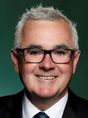
Andrew Wilkie Clark, Independent
The time for the grievance debate has expired. The debate is interrupted in accordance with standing order 192B. The debate is adjourned and the resumption of the debate will be made an order of the day for the next sitting.
Federation Chamber adjourned at 19:00