
House debates Bills
Appropriation Bill (No. 3) 2025-2026, Appropriation Bill (No. 4) 2025-2026, Appropriation (Parliamentary Departments) Bill (No. 2) 2025-2026; Second Reading

Rick Wilson O'Connor, Liberal Party
5:50 pm
As I'm in continuation, I'll just reiterate some of the points I was making last week about the government's profligate spending. I just remind people that spending growth is running at four times the rate of the growth of the economy, and debt is forecast to soon reach $1.2 trillion. Spending is now $160 billion higher than when the government came to office in 2022. That's an additional $16,000 for every household across Australia. Since coming to office, the government has added around $100 billion to the national debt.
In 2024-25, the Commonwealth raised $717 billion in receipts, which is equal to 25.9 per cent of GDP, the highest in 25 years. While I touch on revenue raised, many middle-income earners would have experienced over the last four years bracket creep taking a larger percentage of their wages every week. Those are the stage 3 tax cuts that the previous government legislated and which were reversed by the current government. As we as we know, last week the inflation figure jumped back to 3.8 per cent, which is the highest in the developed world. Comparable countries like the United States are at 2.4 per cent, and the European Union is at 1.9 per cent.
One of the things about having lower inflation as a starting point is that, when you do get a world shock, like the current conflict in the Middle East, then you're starting from a reasonable point. When you start at 3.8 per cent, as the Reserve Bank have forecast, the conflict in the Middle East will add 1.2 per cent to our inflation. We will be up at five per cent, according to that forecast, which will be catastrophic. In February, the Reserve Bank raised interest rates by 25 basis points, so we're now sitting at 3.85 per cent.
The government simply cannot escape the law of economics. High government spending always results in higher inflation, and higher inflation demands higher interest rates. According to Compare the Market, a single 0.25 percentage point rate rise could push monthly repayments up by about $94 for someone with a $600,000 mortgage. That's an extra $1,182 per annum. The Prime Minister and the Treasurer were very keen to take the credit when inflation briefly started to trend down, and they now must accept the blame as it goes back up. Let's not hear any excuses from the Treasurer about the current conflict in the Middle East. That 3.8 number was baked in well and truly before we saw that conflict erupt.
People have asked, and there have been senior ministers from the other side of the chamber calling out during question time: 'What would you cut? Where would you cut?' I'll give the government a bit of free advice here. It's about the fringe benefits tax exemption on electric vehicles. Now, this is an absolute doozy. This is the scheme whereby people buying electric vehicles under novated leases are exempt from the fringe benefits tax. The cost of this scheme has blown out by a factor of 15 on the government's original numbers. These are numbers I'm getting from a climate policy think tank called Climateworks Centre. They were quoted in the Australian Financial Review. This is a climate change think tank:
… $1.35 billion in lost tax this financial year—up from the original forecast of $90 million. Under the FBT exemption policy, a person who leases a $60,000 car would save close to $12,000 per year if they bought an EV instead of a petrol car …
The Financial Review reported in August that the policy was set to cost more than $23 billion over the coming decade. But the real clincher here is that the benefits of this scheme flowed disproportionately to workers earning more than $150,000, who made up more than 50 per cent of the recipients. This is the Labor Party, right?—the party of the battler, the party of the worker. You couldn't make this stuff up.
The one last clincher here is that this $1.5 billion per annum subsidy—effectively, to the Chinese car-making industry—is more money than the Australian governments, both Labor and Liberal, used to subsidise our own domestic car industry. Get that! We are now subsidising the Chinese car industry to a greater extent than we ever subsidised our own domestic car industry. That is the level of complete economic mismanagement that this government has foisted on the country.

Joanne Ryan Lalor, Australian Labor Party
5:56 pm
This government is focused on one thing, and that is helping with the cost of living, because we know every little bit helps. We've delivered tax cuts for every Australian taxpayer, we've created more jobs and we've lifted pay. These tax cuts are about easing pressure and helping households get ahead. As we know, as opposed to the plan from those opposite, every Australian taxpayer under Labor got a tax cut. We're also introducing a new $1,000 instant tax deduction from 2026-27, giving Australians even more support at tax time.
We've made medicines cheaper by reducing the maximum price of PBS medicines to only $25, and for those pensioners with a card, $7.70 is all they're paying under Labor for their PBS scripts. From July 2025, people in my community have already saved $9 million under that measure, and they're set to save even more now, with it going down to $25 a script. We've already cut 20 per cent off student debt, which is relief for around three million Australians, including more than 80,000 people in Victoria and over 18,000 people in my electorate of Lalor. This really goes to the nub of supporting people with the cost of living.
Under the former coalition government, many families were locked out of childcare support by a prejudiced activity test. That's why we've introduced the three-day childcare guarantee, ensuring all families receive three days of subsidised child care, regardless of their financial circumstances. This, we know, is a productivity measure. We know it will get mums and dads back into the workforce. We're investing $430 million over four years to deliver cost-of-living relief for young families and we're helping parents get back to work.
In fast-growing communities like mine, these measures matter. It's not rhetoric in Lalor. It's not rhetoric in Hoppers Crossing. It's not rhetoric in Werribee. It's not rhetoric in Tarneit or Manor Lakes. It's targeted, practical support that helps productivity and helps young families, because helping young families and helping Australians with the cost of living isn't optional. It's our responsibility, and that's exactly what this Albanese Labor government is doing.
I want to talk now about investment in roads. For a decade, while I was in opposition, I watched growth corridors like the one I represent be neglected by the former coalition government. Our community was growing rapidly, without support from a federal government. Despite that, infrastructure continued to be lacking. It just went on and on.
When the Albanese Labor government was elected in 2022, we got straight to delivering what our community needed. In partnership with the Victorian government, we committed $114 million to deliver the first stage of the Wyndham ring road. This transformative project is now nearing completion. The bridge is finished. Now, with Wyndham City Council and the state government completing the Ison Road extension from the bridge to the service station roundabout, we're nearly there.
That congestion-busting infrastructure will be further supported, because we haven't stopped there. We've made another commitment, matched by the state, of $125 million for the Princes Freeway and Werribee Main Road Interchange Upgrade. That will start the minute the second part finishes. That means that people will be able to get off the freeway, cross over onto the extension and onto the bridge over the railway line and then go into Manor Lakes and Werribee. This really will make a difference.
We delivered an additional $13.2 million through the Roads to Recovery fund to upgrade local roads, because safer local streets also mattered. This is double what the former government had given across the country. We're upgrading the Princes Freeway and the Werribee Main Road interchange. That'll improve the intersections and provide local families with a safer commute. I want to give a shout-out here to the new state member for Werribee, my colleague John Lister, who has already made sure that we've got temporary lights there so that people are supported in coming off that freeway, because it was getting so dangerous. We're transforming the Ballan Road intersection, replacing the roundabout with traffic lights and building additional lanes and priority bus lanes, again in conjunction with the state government. This is what congestion-busting infrastructure looks like. In my community, it is time saved in the car, it's a safer commute to school and it's getting people home to their families sooner and safely.
At the most recent federal election, Labor again committed to investing in Lalor—a total of $70 million, which the state government will match, to deliver the second stage of the Wyndham ring road, a bridge over the Werribee River. It's been coined the fourth bridge over the Werribee River because the City of Wyndham has the Werribee River running straight through the middle of it, separating our communities. We need more crossings, and this will be another one, futureproofing our community, taking pressure off the CBD and supporting the people of Tarneit and Wyndham Vale to commute from one side to the other, because growth corridors like Lalor deserve infrastructure that serves its community, and that is exactly what this government is delivering.
We're also assisting people with getting into a home. In my community, a highly aspirational community, buying your first home has, for too long, felt like a dream—out of reach—for local young people. First home buyers were told to simply save harder whilst house prices continued to rise under a coalition government. The Albanese Labor government has been determined to change that, and we have. From 1 October last year, first home buyers became eligible to buy with just a five per cent deposit and, for single parents, a two per cent deposit. In communities like mine, where hardworking young families are looking for stability and for somewhere to call home, the five per cent deposit scheme has shaved years off the time it takes to enter the housing market and therefore years off their mortgages.
The result of this policy speaks for itself. My electorate has had the second-highest uptake across the nation of the government's housing policies. Since our election to government in 2022, 5,404 individuals in Lalor have benefited. In growth corridors like my electorate, homeownership goes beyond just housing; it's about belonging, setting down roots and a chance to build a future, with a new school provided by the state government just around the corner, with infrastructure to match. This government believes that, if you work hard, owning your own home should be within reach. It is clear that this policy has changed the lives of locals in my community. It's made a real difference.
I just touched on education and that 'school around the corner'. The former treasurer for Victoria, Tim Pallas, who was the member for Werribee, would joke and say that there were more schools built by state Labor in the City of Wyndham than there were in any other state in Australia. The growth is so intense; the need and the demand is so high. As someone who spent over two decades in schools as a teacher, a principal and a proud public educator, I know firsthand that funding has a direct impact on what happens in our classrooms, and that is why I'm so proud to be part of a government that is delivering a better and fairer education system. Through the Better and Fairer Schools Agreement, we're delivering an additional $16.5 billion in Commonwealth funding to public schools over the next 10 years and an extra $49 billion in the decade after that. In my electorate, this means support for over 35 public schools supporting tens of thousands of local students. It's funding certainty tied to reforms that lift student outcomes and that support effective teaching and learning practices. It means more resources in classrooms and more support for teachers. Compare that with the coalition's record, where they ripped $30 billion out of public schools. Under the coalition's national reform agreement, attendance rates went down, high school completion went down and teacher shortages got worse. Their ideas about supporting private education over public education meant worse outcomes across the country.
Only Labor is rebuilding public education, and that's what our $16.5 billion Better and Fairer Schools Agreement is all about. We're tackling teacher shortages head on through strengthening teacher training, paid prac and Commonwealth teaching scholarships that encourage more students to become teachers. As we heard from Minister Clare last week during question time, we now have more teachers in training. We're strengthening antibullying and wellbeing reforms because children can't learn if they don't feel safe. I know this firsthand. This government is backing teachers, schools and families because investing in education is an investment in our future, an investment in our productivity, an investment in our economy. Education is not a cost. The difference between those opposite and those on this side is a belief in that fundamental truth.
The Albanese government is also prioritising investment in our precious public health system. We've heard many, many, many talk about the Medicare urgent care clinics and about more bulk-billing happening in our communities, but we've also done more around hospitals. We've committed an additional $25 billion for public hospitals over the next five years. I say to those opposite: is that something you'll cut? This is an unprecedented 12 per cent increase in funding to support public hospitals across the country. It's historic. It strengthens our universal health system when it matters most. And it is backed by the investments into urgent care clinics; women's health, with $800 million; and getting those bulk-billing rates back up in primary health. We understand preventative measures and preventative health are where the rubber hits the road. Through the National Health Reform Agreement, Commonwealth funding for public hospitals will reach $219.6 billion nationally from 2026 to 2030-31. The Albanese government's funding is three times the increase provided by the previous government's five-year deal.
At the core of this Albanese Labor government is a commitment to Medicare. It represents health care as an Australian right, and no amount of Liberal red tape will change that. The Albanese Labor government has made the single largest Medicare investment since its creation 40 years ago, allocating $8.5 billion to deliver more bulk-billed GP visits. That is happening in my electorate. There are now 1,300 more bulk-billing GP clinics across the nation. In Lalor it's changing every day. We've also launched 1800MEDICARE. The Labor government delivers on its election commitment to better access to free health care.
When the Albanese Labor government was elected in 2022, we inherited an economy under serious pressure and a budget weighed down by years of fiscal mismanagement. Inflation was already at 6.1 per cent and rising. Let me repeat that for those playing at home: 6.1 per cent and rising. That was the inflation figure that we inherited, and it put real strain on household budgets. Those opposite promised Australians a budget surplus; in nine budgets in government, they failed to deliver a single one. Under the Morrison government, spending peaked at 31.4 per cent of GDP, yet there was no plan to repair the budget. In fact, they went to an election proposing even bigger deficits and more debt.
Labor took a different approach of responsible economic management focused not on politics but on the long-term interests of every Australian and supporting our Australians doing it tough. Since coming to office, we've delivered two consecutive budget surpluses, the first in nearly two decades. This is strengthening the nation's finances. Under the coalition, debt was forecast to exceed $1 trillion in 2023-24. Through disciplined budget management, we've pushed that back and avoided more than $60 billion in interest costs. We've identified $114 billion in savings, including $20 billion in the December MYEFO. We know households are still under pressure and inflation is stubborn. That is why we are combining responsible fiscal repair with targeted cost-of-living relief, rebuilding the budget while supporting Australians through challenging times.
Unemployment is low under Labor. We've lifted wages. We've given every taxpayer a tax cut, with two more on the way.
This is a government that is serious about fiscal management. It's serious about budget discipline. It's serious about what is a cost and what is an investment, and—I speak for everyone on this side—education and health are clearly investments. When those opposite go looking and getting their razor blades out, those are always the areas that they cut; history will tell you that.
This government will support the vision that we have for Australia. It includes fairer super. It includes universal health care. It includes access to early education through to higher education, so that every Australian can make the best of every opportunity they're given in this country.

Kate Chaney Curtin, Independent
6:10 pm
I rise to speak on Appropriation Bill (No. 3) 2025-2026 and its companion bills. These appropriations give effect to the government's expenditure decisions since the 2025-26 budget, including measures announced in the 2025-26 Mid-Year Economic and Fiscal Outlook, or MYEFO. In this speech, I want to cover three things: first, to acknowledge a number of important and effective programs that deserve recognition; second, to offer some cautions about the risk of excessive, ineffective or opaque future spending; and, third, to suggest practical ways to raise revenue fairly and to improve the quality of our budget decisions.
Firstly, I'll cover important programs worth supporting. I welcome the expanded Cheaper Home Batteries Program, which is doing exactly what it set out to do: reducing the upfront-cost barrier, so more households and small businesses can store their rooftop solar energy, cut bills and reduce emissions at the same time. Australia is already a world leader on solar. We have more than 4.2 million rooftop solar installations—more than a third of all households. We have more rooftop solar panels per person than any other country on Earth. On average, rooftop solar panels save Australian households about $1,500 every year. With a battery alongside solar panels, bill savings nearly double. A household with solar and batteries could save up to $2,300 a year. Often, bills will be reduced to zero. As well as reducing energy bills, batteries and rooftop solar reduce emissions and can stabilise our energy grid. They play an essential role in our net zero transition.
At my Curtin's Pathway to Net Zero—Progress Report event a few weeks ago, we heard from a constituent and a neighbour of mine, Chris Johnson, about his solar journey from a tiny PV system 18 years ago to an updated one with a battery. He now lives in a zero-emissions household, charging his EV with sunlight and paying little more than his connection fee for electricity. He's one of nearly 1,500 Curtin constituents who have taken advantage of the Cheaper Home Batteries Program.
The government has expanded this program in response to unexpectedly high take-up. This bill enacts the expansion from an estimated $2.3 billion to $7.2 billion over the forward estimates. I welcome this expansion and support continued cost-effective investment in reducing energy bills and reducing emissions.
Second, I welcome the government's $1.1 billion investment in mental health care. This continues to be a neglected, yet increasingly important, problem in society. Mental ill-health is now the leading health and social threat to young people worldwide, yet mental health receives roughly two per cent of health budgets globally. This is not enough, given the size of the threat. My Curtin Youth Advisory Groups from the past four years have all reiterated the importance of appropriate supports for young people experiencing mental health challenges. For this reason, I support the government's investment in mental health care, and I hope that it continues.
Housing is the other major pressure on household budgets and productivity. I support the government's plan to invest $10 billion to deliver up to 100,000 homes reserved for first home buyers. But ambition must meet delivery, and, while the government's rhetoric on housing has been good, house prices continue to rise and the affordability crisis continues to worsen. I would encourage the government to look at the 15 policy ideas surfaced by my community in our Curtin Housing Policy and be bolder on this issue. At UWA's orientation day recently, housing again came up as the No. 1 concern for first years on their first day of university.
There are other programs in MYEFO and the appropriations bill that I support, including investments in the net zero plan, CSIRO, and vital skills for the construction and energy sectors. On the big picture, the government is right to point out that this MYEFO improves the bottom line in every year of the forward estimates, reduces gross debt in each year and delivers net savings from policy decisions. The 2025-26 deficit is now estimated to be $36.8 billion, about $5.4 billion better than before the election. These are non-trivial improvements and they deserve credit.
I also acknowledge specific steps to restrain spending efficiency and reprioritisation across the Australian Public Service, including a drive to reduce spending on consultants, contractors and other non-wage costs; attempts to improve the sustainability of the NDIS, including through the Thriving Kids initiative; and introducing reforms to the aged-care system to improve sustainability, including through means-tested copayments for independence and everyday supports. But even with improvements in the forward estimates, the long-term outlook still shows upward pressure from defence, aged care, health, the NDIS and disaster recovery, and government spending is at 26.9 per cent of GDP, the highest level since 1988 outside of the pandemic.
Further, while this mid-year budget reduces debt as a percentage of GDP during the four years of the forward estimates, it increases debt as a percentage of GDP over a 10-year horizon. It's yet another example of short-term political decision-making that we see so often in politics. As usual, governments would prefer policies that look good in the forward estimates, even if they make our spending problems worse over the long-term, simply because people primarily look at the forward estimates. With inflation rising and a continually growing national debt, it's increasingly important that the government makes decisions for long-term budget sustainability. Now, it's easy to call for budget sustainability but much harder to actually talk about where you would cut spending. As soon as any politician puts a potential spending cut or new tax on the table, they're open to attack, but we need to have these hard conversations.
There are a few areas that I would put forward for consideration to improve long-term effectiveness, efficiency and sustainability of our spending. Firstly, we need to prioritise prevention over treatment. Particularly in social services and health care, investment in prevention can reap significant savings in treatment. There are some practical improvements that could support a greater focus on sustainability. Currently, Treasury costings exclude consideration of second-round fiscal effects and do not consider impacts across portfolios. This means that social intervention programs that may drastically reduce costs to the healthcare system or judicial system down the road cannot consider these benefits in their costings because they exist in different departments and are considered second-round fiscal effects. Now, while this policy is designed to ensure costings are conservative and well-evidenced, the government should be investigating ways to prioritise prevention and early intervention over treatment for long-term sustainability in our social services and healthcare systems.
The Victorian Department of Treasury and Finance is trialling the use of the Early Intervention Investment Framework, a policy proposal assessment framework that's used to calculate and bank not just upfront costs and expected outcomes but also an estimate of the avoided cost to the government from the reduction in the use of acute services. This has allowed support to be provided for programs that may have struggled to get up otherwise, such as the Journey to Social Inclusion initiative, which has reduced homelessness by 90 per cent and hospital bed stays by 60 per cent in the intervention group. When considering the second-round fiscal effects, this program is cost negative. It saves more money than it costs. This is just one example of the way the government could consider investing in long-term preventive solutions to support the long-term sustainability of the budget.
There's a lot to be said for investing in prevention in a wide range of areas. Climate change is another obvious one. The government now spends an average of $1.6 billion each year on disaster recovery, but each year forecasts that it will only spend $215 million in the following year. Apparently, each year we're again surprised by the scale and scope of natural disasters, and this is only going to worsen. We need to invest in the net zero transition at home and build momentum abroad to limit the growing impact of disasters on our communities, environment and budget. We also need to properly consider the cost of future natural disasters in our budget projections and find sustainable ways of supporting recovery efforts. These problems are going to worsen, and we need to be ready.
To find other ways to balance the books, there are a number of expensive programs that the government could consider reforming. The Fuel Tax Credit Scheme costs the budget roughly $11 billion per year, with the top 15 claimants alone receiving about $2.9 billion in 2023-24. These top 15 claimants are often multibillion-dollar companies, and yet they continue to receive nearly $3 billion in rebates every year, incentivising them to burn more fossil fuels. Several independent proposals recommend requiring that the rebates for the largest companies be used for decarbonisation, turning a blunt subsidy for wealthy companies into a driver for decarbonisation without impacting farmers or small operators.
There's also been noise about the capital gains tax discount. The CGT discount costs the government about $22 billion per year, while negative gearing costs about $6 billion. These are expensive schemes that in large part support wealthy investors in housing. These two concessions do play an important role in our economy, but there is appetite for reform which could increase budget sustainability and support first home buyers. My community of Curtin is supportive of reform despite receiving a lot of benefits from these tax concessions.
Finally, there are a number of potential future sources of revenue for the government. The Superpower Institute, for example, has recently put forward two concepts. First is a polluter-pays levy on the carbon content of fossil fuels extracted or imported for use in Australia. This would cover around 140 sites, accounting for roughly 80 per cent of emissions, while raising an average of $22 billion per year to 2050, with a substantial share recycled back to households. Secondly, they've suggested a fair-share levy on superprofits in the gas sector, raising an average of $13 billion per year, largely borne by offshore foreign shareholders and designed not to raise domestic gas prices. Together, these two levies are estimated to raise $35 billion per year on average between 2026 and 2050. Now, there is much to consider before implementation of these proposals, but they do show that there are options out there for long-term budget repair while supporting outcomes such as intergenerational equity and the clean energy transition.
Appropriations are ultimately about choices: how we invest scarce public dollars to ease cost-of-living pressures now, build the productive capacity of the economy and honour our obligations to each other, especially to the young and to the vulnerable. There is much in these bills and in MYEFO that helps: cheaper home batteries that cut bills and emissions, a serious expansion of youth mental health care and a housing package focused on first home buyers. But we must also be honest about our long-term fiscal pressures. We keep the budget on a sustainable path by prioritising prevention, by raising revenue fairly, by reducing tax concessions that no longer serve their intended purpose and by considering well-designed levies where the public interest is clear. That is how we protect the next generation's opportunities, how we give people in Curtin and across Australia confidence that their parliament can deliver practical progress, clear priorities and long-term responsibility at the same time.

Ash Ambihaipahar Barton, Australian Labor Party
6:23 pm
I rise to speak on the appropriation bills before the House and, in doing so, I want to celebrate the priorities of this Albanese government. Now, budgets aren't just about numbers; they are also about values. Every appropriation bill tells a story about the country we are trying to build together. These bills are not simply line items on a spreadsheet; they are investments in the kind of Australia we want to be. They show what we believe matters, and what this government believes is very simple: that Australia works best when no-one is left behind.
The Prime Minister has coined a phrase: progressive patriotism. As Assistant Minister Hill explained in a speech earlier this year, progressive patriotism refers to a pride in Australia and an unashamed, overt focus on inclusion and a striving for a shared Australian identity. It is patriotism that looks forward, not backward. It is pride without exclusion. It is a love of country that grows stronger the more people are welcomed into the story. Put simply, progressive patriotism says that you can love your country and believe it can always be better because the Australian story has never been static. It has always evolved, expanded and grown. We are one, but we are many, as the song goes. That means we have to foster a deep respect for uniquely Australian institutions, educate one another on our core Australian values and celebrate together. Australia's not defined by sameness. Australia is defined by a shared purpose. Our diversity is not a footnote in our national story. It is the story. The Australian story is written in hundreds of languages. It's cooked in kitchens that smell like every corner of the world. It is told at dinner tables where grandparents speak one language and grandchildren answer in another. Yet the values are always recognisably Australian—fairness, opportunity, respect and community.
That is why the politics of division are so corrosive. We are not angry, vindictive or divided people. We must not let imported populist attitudes and rhetoric poison our politics and split us apart. Australians know instinctively that the strength of our country comes from pulling together. That is why this government is focused on the things that actually improve people's lives—real issues, real services, real opportunities. For this reason, my speech today is a celebration of all the initiatives this government is supporting in order to lift up all Australians and celebrate the diversity of electorates like my own of Barton.
Firstly, we are investing in our healthcare system because health care should not depend on your bank balance or your postcode. In Barton, that investment has seen a 64 per cent increase in bulk-billing Medicare practices. That is on top of the brand new urgent care clinic in Carlton where you can walk in and see a doctor with just your Medicare card. That is what universal health care looks like in practice. Investing in bulk-billing is first and foremost an investment in frontline services, but it's also an investment in equity. It shows people in very practical terms that health care is an inherent right of Australian citizenship and that you have that right not because you can afford but because you are one of us. Our Medicare cards are green and gold. It is proudly an Australian institution, and by investing in bulk-billing we are ensuring it remains so for decades to come.
In this chamber, we often hear the member for Lyne lobbying for an urgent care clinic in Taree—

Ash Ambihaipahar Barton, Australian Labor Party
You are. I have a lot of time for that argument because when members advocate for doctors, hospitals and healthcare services they are talking about real issues facing Australians. But sometimes when I listen to many of the member for Lyne's colleagues they're not talking about frontline services. They're talking about culture wars. They're talking about fear and division—not about bread-and-butter issues like access to doctors, which should be the focus of any decent opposition. When was the last time you heard a serious health policy from the coalition? When was the last time you heard One Nation talk about bulk-billing? Too many on that side are not talking about the problems that are facing their constituents. They're talking about the problems they are finding in their own algorithms instead. On this side of the chamber we are listening to our communities, talking about their problems and building the type of nation our citizens deserve. I challenge those opposite to rise to the same challenge.
I want to turn celebrating our multicultural communities. Last month I had the privilege of attending the opening of the Museum of Chinese in Australia in Haymarket. The Albanese government is proud to have supported the establishment of this museum, contributing $2.6 million in funding. The museum celebrates and preserves the history of Chinese Australians and is hosted in the heritage listed former Haymarket Library in Sydney. But what makes this museum so powerful is not just the history it preserves. It is the message it sends. It says that the story of Chinese Australians is not separate from the Australian story. It is part of it. As the Prime Minister said at the opening, the museum celebrates, 'a vital thread through the history of our modern nation – the long and extraordinary story of Chinese people in Australia.' As the member for Sydney, Minister Plibersek, said, it reminds us that migrants do not arrive in Australia and replace the national story. They add to it, they enrich it, and they expand it. Every generation adds another chapter, and that is how a nation grows.
It was particularly special to celebrate the museum's opening during Lunar New Year. This year is the year of the fire horse, a time of renewal, hope and connection for millions of people here in Australia and across the world, including in my own electorate of Barton. Lunar New Year is celebrated by many cultures, including Chinese, Vietnamese, Korean and other East and Southeast Asian communities. Whilst traditions may differ, the shared themes are very familiar: hope for good health, prosperity and good fortune in the year ahead.
Across my electorate and across Australia, Lunar New Year is marked not just by lanterns and shared meals but by something more enduring: the strength of community. It is a time when generations come together, when elders pass on stories and values and when young people learn the importance of respect, hard work and belonging. For many families who migrated to Australia, Lunar New Year is also a reminder of resilience. It reflects journeys of sacrifice and courage—the courage to leave behind everything familiar, as well as the courage to build a life somewhere new and the courage to hold on to culture, language and identity along the way.
Multiculturalism in Australia has never meant leaving culture at the door; it means bringing culture to the table. When every culture brings something to the table, the whole country is much richer for it. That is why celebrating multicultural Australia is not just about festivals or food. It is about recognising that modern Australia has been built by people from every corner of the world and that the Australian story is still being written. Every migration journey adds another page, every community adds another voice, and every generation adds another chapter.
Across Barton, local organisations hosted Lunar New Year celebrations, including CASS, Kogarah Storehouse, Advance Diversity Services, CanRevive and the Bayside and Georges River councils. They had been planning these occasions for many months, practicing celebratory dances, ordering red packets, sending invitations and preparing speeches, and most of this work was on volunteer basis. This represents so many hours spent serving and celebrating others, not for personal gain but the love of one another.
These organisations play an extraordinary role in bringing communities together. They are the quiet architects of social cohesion. They support families, they build bridges across cultures and they remind us that multiculturalism is not an abstract idea; it is something that happens every day in local halls, community centres and neighbourhood festivals. Thank you to those local organisations that made Lunar New Year so special. I am so thankful to be invited and included in your celebrations.
We have similar historical preservation works also being undertaken in Barton. I was proud to pledge $200,000 to restore the Hermis-Ilion Hall and Library in Bexley. This space is an important place for people to come together to celebrate and hand down their Olympian culture and traditions. In turn, it illuminates another thread in our Australian story. Every culture adds another colour to the national tapestry, and every story adds another chapter to our shared history. In Barton, Greek Australians have been part of that story for generations. They build businesses, churches and community organisations, and they raise families and help shape the character of the local community. The restoration of the Hermis-Ilion Hall ensures that their history and their culture will continue to be celebrated for generations to come.
In a similar vein, I also want to sincerely thank the Australian Tamil Congress for their generous acknowledgement of my election. To be supported and welcomed by a community organisation with such a strong history of advocacy, service and leadership is deeply meaningful for me. For many years, the Congress has worked tirelessly to ensure the Tamil community is not only seen but heard and that its contributions to the Australian story are recognised and respected. I've seen the work that they do standing up for community welfare, preserving culture across generations and advocating with courage and dignity on issues that deeply matter to them.
The work strengthens not only the Tamil community; it strengthens Australia. Every time a community preserves its culture while contributing to Australian life, the national story becomes much richer. The Tamil story in Australia is one of perseverance and contribution, and it deserves to be reflected in our institutions, our policies and national conversations. I'd like to thank Mr Rajeevan, the executive and the committee of the Australian Tamil Congress for their dedication and service, and I look forward to continuing to work side by side with the congress and the Tamil community into the future.
Finally, I want to highlight the government's Commonwealth paid prac payments because, once again, this side of the House is focused on equipping young people, no matter their background, with the skills they need to enter the workforce. Most importantly, we are equipping them to enter sectors where there are real skill shortages. This policy is for students studying teaching, nursing, midwifery and social work, and these students will now receive financial support for the mandatory placements required as part of their training. For too long, these placements forced students to work full time for weeks or months without any pay. For many students, particularly those from migrant or working-class families, that was simply not sustainable. This reform matters because talent should not be determined by your bank balance and opportunity should not depend on whether you can afford to work for free. This is the first time an Australian government has provided financial support for mandatory placements. It is a significant reform and one we should all be very proud of.
I know many students at Kogarah TAFE will benefit directly from this policy, and the professions that benefit from this reform share something important in common. They are caring professions—professions built on empathy, humility and service—and they are the professions that hold our communities together. I think of Karuna Rawat, a local in my electorate of Barton, who is a mental health nurse and also Miss Nepal International, and she is an icon. She works night shifts in our local wards, caring for some of the most vulnerable members of our community, and then she wakes up the next day to champion the Nepali community and advocate for reform in our health system. That is the Australian story in action: a migrant community member serving others, a young woman stepping forward as a leader, and a professional giving back to the country she now calls home.
These are the stories our investments help create. Budgets are not just about economics. They are about opportunity, they are about fairness, and they are about ensuring that every Australian, no matter where they come from, can see themselves in the story of this country. That is progressive patriotism, and that is the Australia we are building together.

Leon Rebello McPherson, Liberal National Party
6:37 pm
I rise to speak today on the appropriation bills 2025-2026. For those watching from home, these bills provide legislative authority for additional funding from the Consolidated Revenue Fund for decisions taken since the 2025-2026 budget, and that includes decisions announced in the Mid-Year Economic and Fiscal Outlook. The government is today seeking approval for $12.7 billion in additional appropriations, of which $9.1 billion is for ordinary annual services of government, $3.5 billion is for non-ordinary services and $9.2 million is for parliamentary departments.
Let me be very clear in saying that the opposition doesn't support all of the policies and programs that are contained within the budget. However, given the bills provide the legislative mechanism to fund government operations, we will not oppose or delay them. But appropriation bills and appropriation debates are one of very few opportunities in this parliament where we can examine the total list of operations of government and the direction of fiscal policy in this country, and those are the areas that I intend to address.
When I came to this place in the middle of last year, in my first speech here in the House of Representatives I made a comment that, in my time in this place, it is my duty and privilege to represent the people of McPherson, to share with this place their thoughts and their values and to work hard to ensure that they get the attention of government when they need it. I think about those words very often. In light of that commitment, I received an email from a constituent in Coolangatta only a couple of weeks ago, and I've had the opportunity since to go and meet with that particular individual and hear about their business. I did tell them I would put their concerns on the public record in this place, and I think it's appropriate for me to read out the email that I received, because, within the context of the debate that we're having here, it showcases the interests, the needs and the concerns of people in the area that I represent on the southern Gold Coast. The email that was sent to me said:
Dear … Mr Rebello,
My name is Paul … I am a veteran and co-owner—
of a small business in Coolangatta—
… a Mum and Dad small business established in 2012 …
We built this business ourselves. No safety net. No corporate backing. Just risk, hard work and long hours.
Right now, small business is being crushed.
More than 700 small businesses reportedly went broke on the Gold Coast in 2024. That is not a statistic. That is families losing livelihoods.
It is happening in our own street.
The Coolangatta Pie Shop—operating since the 1960s—will close on 30 June.
Waffle & Bean is gone.
Dreamtime Artistry is gone.
Established operators. Decades of trade. Gone.
Here is what we face:
Margins shrink. Risk rises.
We employed someone in good faith under a wage subsidy program. The employee resigned after just over three months. We met every obligation. We carried the cost. We received nothing.
That is not support. That is risk transfer.
… … …
Small business is constantly described as "the backbone of the economy." If that is true, policy must reflect it. We are not asking for favours. We are asking for a fair environment in which to operate.
That is the sentiment of many small-business owners across my electorate on the southern Gold Coast. As I said, I had the opportunity to go and sit down with Paul the day after he sent me that email, and we talked through some really serious issues. Paul is someone who had never reached out to a politician before.
The fact is, we're seeing—as, I'm sure, are colleagues across the political divide, but I know we are especially on this side, and I look at my colleague and friend, the member for Lyne—this becoming all too frequent, and it's becoming all too frequent because of the decisions that are made in this building. For the rest of my contribution, I'd like to speak to that record—to the full operations of this government. I'll start with something that we've spoken about on this side of the chamber quite often: record spending and record deficits.
Australia is currently running deficits, but it's not running deficits because our revenue is weak. It's running deficits because our spending is out of control. I know, in recent times, due to events happening around the world, the current Treasurer has been out and about speaking about those particular issues. I've said this in the past: there is no doubt there will be some level of contribution based on what's happening elsewhere, but we can't take away the fact that we have seen this record spending over the last three years. We've seen inflation running over the last three years as well.
In 2024-25, the Commonwealth raised $717 billion in receipts, which is 25.9 per cent of GDP—the highest level in 25 years. There is no shortage of revenue, but, again, we are running deficits because spending is out of control. This isn't the fiscal restraint that the Treasurer talks about. What have we seen? We've now seen a government—the Albanese Labor government—which has recorded the highest levels of government expenditure over the last 40 years outside a recession.
Spending as a percentage of GDP is projected to reach 26.9 per cent in 2025-26, 26.9 per cent again in 2026-27 and 26.6 per cent in 2027-28, so this isn't just a temporary blip on our record. This is something that is becoming systematic. Spending growth is running at four times the rate of the economy itself.
Now, when I speak to the small business owners, when they hear those sorts of statistics—that spending is outpacing economic growth in this country at such a level, four to one; that is not something that is sustainable—they know that they can't run a business like that. You can't run a household like that. So the fact that we've got a government who is prepared to run a country like that is concerning, and it's resonating with our small businesses. We've said it many times that we expect many things of the people we represent, and one of those is to be fiscally responsible. I think it is high time that we in this place practised what we preach and do the same, and it's high time that this government does that.
Since coming to office, spending is now $160 billion higher, or about $16,000 for every household in Australia. You'd understand that if we saw an increase in services provided to us to the value of $16,000. But I know—when I'm out in my community, whether it's in Burleigh Heads, whether it's in Coolangatta, in Currumbin, in Mudgeeraba—that people on the southern Gold Coast do not see value for money. They do not see that additional $16,000 per Australian household being injected through value back into their household. The small businesses in my seat don't see that either.
We are now on track to hit $1 trillion in debt. This is not in 10 years. This is not in five years. This is any day now. By the time we get to the next election, there's talk of $1.2 trillion in debt forecast. That isn't sustainable, and it's not fair. Not only is it not fair for us now; it's not fair for our future generations. And again, I draw back to my maiden speech—the founding principles of me being in this place—where I stood up and said that, as the youngest member of the coalition, I think it's important that I voice a very significant concern of the next generation. That is the debt burden that we are leaving them and the intergenerational fairness that that is creating—because, as we all know, each and every dollar that we borrow today must be repaid at some point. It's not repaid by us necessarily; it is repaid by our children and by our grandchildren.
The only way we can get around that is by establishing some sort of fiscal discipline. That is something that this government is lacking. High structural spending, which is locked into the budget, means fewer options in the future. It's less flexibility during downturns and less room for genuine emergencies. Responsible economic management means living within our means, and it means finding meaningful savings when we can, not just creative accounting.
We saw in Senate estimates recently that the Minister for Finance spruiked $114 billion in so-called savings. But what did we see when she was questioned and put under a bit more pressure? It became clear that they actually weren't savings at all; they were reallocations. Taking money from one program and shifting it into another one is not a saving. Instead of that, we're seeing $50 billion in new spending. So the fiscal guardrails have come off. I think being upfront and honest with the Australian people, which has been a longstanding tradition in this country, is something that has not been occurring as well.
Then we look at inflation, which Australians see every single day. Inflation in Australia remains much higher than it should be. This isn't something that we're seeing across the world. This is homegrown inflation. Make no mistake. This is the Treasurer's homegrown inflation. On 28 January, the ABS confirmed that headline inflation in the 12 months to December was 3.8 per cent. This is outside the Reserve Bank's target band. As we all know in this place, or as we all should know in this place, the Reserve Bank's target is two to three per cent. This is 0.8 per cent above the upper end of that target.
That all sounds interesting, but what does it actually mean? It means that every single Australian is paying on average up to 39 per cent extra on their electricity bills. Rent is up 22 per cent. I know in my electorate a lot of the young people in particular that I speak to really struggle to get into the housing market, not only because there's not enough supply; where they do find a place, they're competing with others and the rents are going up. Health is up 18 per cent, education is up 17 per cent and food's up 16 per cent. It's not that these are luxuries; these are essentials for people across Australia and essentials for people in my electorate. They are everyday costs that are hurting families. When you look at our inflation rate, we are a standout and we are a standout for the wrong reasons. If you compare us to comparable countries—the UK, 3.4 per cent; United States, 2.7 per cent; Canada, 2.4 per cent; Japan, 2.1 per cent; and Germany, 1.8 per cent—it's not a global phenomenon. Again, this is homegrown inflation. It's a domestic problem. We've seen this analysis backed in by senior economists. IFM's investor Alex Joiner has warned that fiscal guardrails have come off. Shane Oliver also said that many of the factors driving inflation do relate to government spending. Those of us on this side of the House know that when public demand grows faster than supply, inflation follows.
For those who have managed to get across the line and buy their first home, I come to this place as someone who has in the last five years not only rented, so I've had that first-hand experience, but also bought my first home. But for all of those Australians who have gone through that hurdle and bought their first home, they've now been dealt a blow with 13 interest rate rises that, again, are as a result of the government's increased expenditure, which the RBA is trying to counter by addressing interest rates. What does that actually convert to? It converts to the average Australian mortgage holder paying an extra $1,800 every month on their repayments. These are all significant issues. Again, we go back to that intergenerational fairness. We need to start thinking in this place about what legacy we are leaving for our children. The $50,000 every 60 seconds that we're paying on our debt is not sustainable.
We will support this bill. We don't support all the measures in this bill but we will support it. But we will not let a day go past as the federal coalition without reminding this government that it must think about all of those individuals like Paul from my electorate in Coolangatta who are doing it tough because of the decisions that are being made under this Labor government, under this Treasurer, who, frankly, should know better.
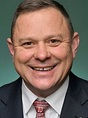
Matt Burnell Spence, Australian Labor Party
6:52 pm
Appropriation bills may not always attract the attention of this House or get the front-page headlines in the morning paper but they sit at the very heart of our parliamentary democracy. They are how parliament exercised one of its oldest and most important responsibilities—control and release of public expenditure. Without an appropriation passed by this House, the Commonwealth cannot lawfully spend a single dollar. Programs cannot operate, services cannot be delivered and commitments made to the Australian people cannot be honoured.
Appropriation bills are what turn policy decisions into real outcomes. They provide the legal authority that allows government to fund hospitals, schools, payments and national institutions. They ensure transparency, accountability and parliamentary oversight over how public money is used. Importantly, they allow government to respond to reality, to changes in demand, to updated cost pressures and to circumstances that could not have been fully anticipated at budget time. They ensure continuity of government, stability of services and confidence across the economy. At their core, appropriation bills are about responsible governance, about meeting obligations, paying the bills and ensuring the machinery of government continues to function as intended. That is why appropriation bills matter and why this House must always treat them with the seriousness they deserve. When appropriation bills are passed, it means that government promises can be delivered to communities. Communities like mine in Spence have been reaping the benefits of Labor delivery since 2022.
Recently, I had the pleasure of welcoming the Minister for Education to Elizabeth to officially open Uni Hub Playford, South Australia's first permanent suburban university study hub right in the heart of Adelaide's north. This is a significant moment for our community because, for too long, where you lived has determined whether higher education felt possible. Located at the TAFE SA Elizabeth campus, the hub provides modern, purpose-built study spaces, high-speed internet, quiet work areas and shared facilities for students enrolled at any university or training provider.
But this hub is about much more than desks and wi-fi. Students will have access to academic skills assistance, career advice, wellbeing support and guidance to help them stay on track and succeed. For many people in the north, the barriers to study are real: long travel times into the city; juggling work, caring responsibilities and family life. Uni Hub Playford helps break down those barriers by making study reachable, practicable and part of everyday life.
This hub is part of the Australian government's Suburban University Study Hubs program. Working in partnership with local universities, TAFE and our school communities, it supports pathways into the jobs of the future in areas like defence, health, advanced manufacturing and technology. Most importantly, it sends a clear message to young people and mature-aged learners alike: you don't have to leave the north to build your future. Opportunity is no longer something you travel hours to reach. It has arrived right in the heart of Elizabeth, and that is something our community can be proud of.
In keeping with the topic of this Labor government delivering on education, we recently had the pleasure of celebrating three years of fee-free TAFE courses. Free TAFE is about opening doors for young people leaving school, for workers retraining or changing careers, and for people looking to upskill without taking on more debt. It recognises a simple truth: a strong economy needs skilled workers and Australians deserve clear, affordable pathways to secure jobs.
At TAFE SA, some of the most popular fee-free TAFE courses reflect the real needs of our workforce. Courses in information technology are in high demand, building digital skills that are now essential across almost every industry. Early childhood education and care has also seen strong uptake, supporting the educators who underpin families, communities and workforce participation. Building and construction courses continue to attract strong interest, helping train the tradies needed to deliver homes and vital infrastructure.
Importantly, free TAFE is delivering real cost-of-living relief, with South Australian students able to save up to $4,400 on courses like certificate IV in information technology and certificate III in early childhood education and care. Free TAFE isn't just an education policy; it's a workforce reform, a cost-of-living measure and an investment in Australia's future. If you're willing to learn, the government is willing to back you
Beyond education, another key area of deliverables for any Labor government comes in health care. In the town of Gawler, we have just opened the new headspace facility to provide high-quality mental health services for the north. This new facility means more young people in the Gawler region will now have timely access to mental health support, counselling services and wellbeing programs right here in their town. Headspace has a proud national reputation for delivering youth-friendly, evidence based care, and bringing that service to Gawler recognises the very real challenges local young people and families have been facing.
For too long, many in our community have had to travel long distances to get the help they need. At a time when reaching out for support can feel only too hard, the centre provides confidential mental health support, assistance with work and study concerns, alcohol and drug counselling and guidance on physical and sexual health, all in a safe, welcoming space. This investment means that a young person struggling with anxiety, depression or stress doesn't have to wait weeks for help or leave their community to access care.
Importantly, the new headspace in Gawler will be a community hub where young people feel seen, heard and supported by professionals who understand their world. It's a recognition that mental health is as important as physical health and that early intervention changes lives. This centre will make a real difference in the lives of young people and families across Gawler and the surrounding districts.
Across the country, we are also providing a record investment into more bulk-billing practices so anyone can see a doctor for free. This is real relief for families facing cost-of-living pressures, for pensioners, for parents and for people managing chronic conditions. By increasing Medicare rebates and introducing new incentives for bulk-billing practices, Labor is helping clinics to keep their doors open and continue offering care that is free at the point of use.
At its core, Medicare is about universality—the idea that everyone deserves access to quality health care, no matter their income or postcode. In my electorate of Spence, that investment is already delivering results. We now have 16 fully bulk-billed practices, out of 25 GP practices in total, meaning more locals can see a doctor without delay or cost. That translates to earlier diagnoses, better preventive care and less pressure on our hospitals. It also supports the hardworking GPs and practice staff who keep our primary-care systems running. Labor's commitment to bulk-billing is a commitment to fairness, prevention and a healthcare system that works for everyone. It's a commitment we will continue to deliver on for communities like Spence.
A strong health system starts with a strong workforce. That is why the Albanese Labor government is investing more than $1 billion to train more doctors in more communities. This historic investment is about planning for the future and ensuring that Australians can see a GP when they need one, no matter where they live. Through new five-year grant agreements, we are supporting the continued growth of Australia's GP and rural generalist workforce, providing certainty for training providers and for doctors choosing general practice. This year is on track to surpass 2025 as the largest GP training cohort on record. An estimated 2,100 doctors will commence GP training in 2026—including rural generalist trainees, who play a critical role in delivering care in regional and rural communities. These trainees begin their training this month, stepping into a pathway that is essential to the long-term strength of primary health care.
Importantly, this work is being delivered through the Australian General Practice Training Program, with both the Australian College of Rural and Remote Medicine and the Royal Australian College of General Practitioners committed to continuing their role. By backing training, Labor is backing access, prevention and continuity of care. It is a clear signal that general practice matters and that Labor is serious about building a healthcare system that works for every community.
Another area we pride ourselves on is housing. One of the clearest commitments made by the Albanese Labor government was to tackle Australia's housing shortage head-on by building 100,000 new homes for Australians who have been locked out of the market for too long. This wasn't a slogan. It was a promise grounded in the reality facing families, renters and first home buyers across the country.
In South Australia, that promise has been delivered in a very real and tangible way. The announcement of 17,000 new homes to be built in South Australia is a game changer for our state, boosting supply and easing pressure in a tight housing market. Importantly, around 7,000 of these homes will be reserved specifically for first home buyers, giving young people and working families a genuine pathway to homeownership. For too many South Australians, owning a home has felt like something slipping further out of reach, with rising prices, rising rents and limited supply. This investment is about changing that trajectory. It's about increasing housing where people actually want and need to live—close to jobs, schools, transport and services. It's also about supporting local construction jobs, apprentices, apprenticeships and the small businesses that rely on a strong building sector.
By partnering with states to unlock land and accelerate construction, Labor is addressing housing from every angle: supply, affordability and opportunity. This is nation-building work, but it's also deeply personal for the families who will finally get the keys to their first home. Labor said we would act on housing, and in South Australia that action is now underway.
And what is a house without a source of power? The Albanese Labor government's Cheaper Home Batteries Program is about helping households take control of their power bills and take part in Australia's clean energy future. For many families, rooftop solar has already made a difference. But, without a battery, too much of that energy is sent back to the grid during the day and bought back at night. This scheme changes that, making home batteries more affordable so families can store the power they generate and use it when they need it most. It means lower electricity bills, greater energy independence and a more stable, reliable grid for everyone. It also strengthens our transition to renewables by supporting distributed storage across suburbs and communities, rather than relying on a handful of large projects alone.
In my electorate of Spence, locals are already embracing this opportunity. We now have 2,622 home batteries installed—the fifth-highest total in South Australia and the ninth highest in Australia. That tells you something about our community. It's practical, forward looking and ready to back solutions that save money and support the environment. The Cheaper Home Batteries Program builds on that momentum, helping more families participate in reducing upfront costs that can otherwise be a barrier. This is good for households, good for cost-of-living relief and good for our national energy security. Labor understands that the energy transition must be affordable and fair, and schemes like this ensure communities like Spence are not left behind but leading the way.
As I conclude, it is worth reminding ourselves why appropriation bills matter so profoundly in this place. They are not simply numbers on a page, lines in a ledger nor dry counting exercises. They are the mechanism by which this parliament turns priorities into progress. Through appropriations, we give legal authority for the public's money to be invested in the public good. It is through these bills that Medicare is strengthened, that bulk-billing clinics keep the doors open and that free TAFE students gain new skills without new debt. It is through these bills that new homes are built, that mental health services open their doors and that more doctors are trained for more communities. Every initiative we have spoken about today, from education to housing, from health care to energy, depends on the authority granted by this parliament.
Without appropriations, commitments cannot be delivered. Services cannot operate. Communities cannot rely on continuity and certainty. These bills are how we uphold responsible government, ensuring transparency, scrutiny and accountability in every dollar spent. They reflect our values, what we choose to prioritise and who we choose to support. Ultimately, appropriation bills are about trust—the trust Australians place in us to steward their resources wisely. Through these measures, we demonstrate that trust is being honoured with investments that strengthen communities and build Australia's future.

Aaron Violi Casey, Liberal Party, Shadow Minister for the Digital Economy
7:06 pm
I rise today to raise my community's voice in our nation's parliament, and I have the honour to serve my community, the community my family has lived in since 1953, and to ensure that I am a strong local voice fighting for our region, from the suburbs to the valley, the hills and all of the outer east. When I'm out speaking with locals, visiting community groups and hearing from small business owners, I know and they know that we live in a beautiful part of Australia. Just like them, I want our region to remain the best place to live, to work, to invest in a local business, to raise a family and to enjoy your retirement. But I know the past few years haven't been easy. Household budgets are being stretched to cover rising housing costs, insurance, child care and groceries. Families and small businesses are paying more for electricity and gas, and local roads and telecommunications are not keeping up. As we move forward into 2026, my focus remains on being a strong local voice for our region. I'll continue to advocate for cost-of-living relief, cheaper power bills, safer local roads, stronger emergency resilience and reliable telecommunications. Together, we'll keep working to make our community stronger.
A strong economy is a key pillar for a strong community. In the economics committee recently, I asked a question on behalf of a local directly to the Reserve Bank governor, Michele Bullock, as part of the hearing. The Lilydale local was Matt, and he wanted to know: how is the government spending affecting the economy, and has it contributed to the rate rise? The RBA governor said:
Government spending is part of total spending and total aggregate demand in the economy. … that's contributing to inflationary pressures. That's why we've decided to raise interest rates …
This statement by the RBA governor completely contradicts the spin from Treasurer Chalmers. For our local community, it's not just economic theory. It's about real people, real families and real small businesses who are seeing their cost of living rising because the government refuses to show spending restraint. The RBA confirmed that the Albanese Labor government spending is contributing to interest rate rises, and, while local families and small businesses are having to manage their own household and business budgets, the Treasurer and Labor cannot manage their own budget, and it's Australians that pay the price. Local residents like Matt from Lilydale deserve to know why their interest rates have gone up, why they are paying more on their mortgage and why cost-of-living pressures continue to worsen. The Treasurer thinks he can spin his way out of inflation, but the reality is that he cannot, and it's the Australian people who continue to pay for his failures.
It's not only mortgages that are up; rents are up by 22 per cent, insurance premiums have risen by 39 per cent, food is 16 per cent more expensive, healthcare costs are up 17 per cent and families are paying up to 40 per cent more just to keep the lights on. The increasing cost of living is by far the single biggest challenge facing families. What we're going to see now is a Treasurer trying to spin his way out of this and blaming overseas factors, but the community in Casey and all across the country know that the pressure they are under happened well before conflict in the Middle East and the failures sit squarely with the Prime Minister and Treasurer of this country.
Australians have suffered the largest decline in living standards compared to any other nation in the developed world. It's because of the poor decisions of Prime Minister Albanese and his Labor government that Australian families are left paying the price for his cost-of-living crisis. The truth is that Australians are working harder, paying more and getting less under this government. I want to hear directly from Casey locals about how they're going and the relief that they need here in Canberra. That's why I've launched my household budget survey. I want them to let me know how the cost of living is impacting them—is it higher interest rates, higher childcare costs or higher electricity bills?—to best represent them and our community. It's so important that I hear about the issues that matter to them.
Every Australian deserves access to affordable housing, whether it be buying a home or being able to rent a place of your own. When I speak to young Australians, it is devastating to see that so many have almost given up on the idea of buying a home. They see that not enough houses are being built and prices for existing stock keep climbing, and renters are paying 22 per cent more. Interest rates have increased, and mortgage holders are paying more as well. House prices increased by around $23,000 in the September 2025 quarter alone. Labor is failing to hit its own housing target, with recent data showing the government fell 15,000 homes short of its own goal. I know that affordable housing is a challenge for so many in our community, and I'll continue to advocate for real action on housing to ease the pressure on renters and homebuyers and increase supply of housing in our community. If you listen to the minister for housing, it feels like she thinks that the job's done and she's solved the challenge. But that's not what the Australian people are feeling.
Not only do locals in Casey want to own a home; they also want to access health care when they need it. I was proud that our local campaign for a Medicare urgent care clinic to be established in the Yarra Ranges was successful. A new bulk-billing Medicare urgent care clinic opened in December, located at Access Health and Inspiro, at 17 Clarke Street in Lilydale. The clinic is open for extended hours. I'd like to thank the many local residents who signed my petition and joined our campaign for better local health care. I was proud to be your voice here in parliament and advocate for better access to health in our community and make a commitment at the election for an urgent care clinic in my community. I'm glad the government chose to follow the lead and match my commitment. It is good to see that we can make a difference as good local members. Imitation is the greatest form of flattery, so I'm glad the minister for health chose to copy my announcement.
The clinic in Lilydale will help residents of the Yarra Ranges receive urgent care close to home and help to reduce pressure on our closest emergency departments. While a clinic in Lilydale is a step forward, families in the rural parts of our community are still left travelling long distances to access health care. Together, we'll keep pushing for better local health care, and I'll keep being a strong local voice for all in our region.
Unfortunately, our community has one of the highest rates of youth mental health challenges in Victoria, and more needs to be done, especially since the government heartlessly shut down the Lilydale Youth Hub. We need to increase the capacity at Lilydale headspace and make it a full-time service for the Yarra Ranges. Please add your voice to our local campaign for better youth mental health support, and I won't stop working until our community receives the healthcare services that it needs and deserves.
It is crucial that we have reliable phone and internet communications, particularly during emergencies. I have lived firsthand our local telecommunications challenges during weather events, like the June storms and the 2009 Black Saturday bushfires. I'm proud that the Liberals improved local network capabilities by investing in phone towers in East Warburton, in Steels Creek, in Reefton, in Mount Evelyn, in McMahons Creek, in Silvan, in Menzies Creek and two in Chum Creek. I'm focused on advocating for a reliable communications network that keeps us safe and keeps us connected every day, including in times of emergency.
Where we live, emergency preparedness is not optional; it is essential. We know that prepared communities recover faster and stay stronger, and I am proud that I helped to deliver $10 million to Yarra Ranges Council to implement the Resilient Yarra Ranges program, which has improved our local disaster resilience by upgrading community buildings with solar, generators and plug-in points. This includes resilience upgrades on facilities in Monbulk, Olinda, Healesville, Montrose, Dixons Creek, Warburton, Mooroolbark, Mount Evelyn, Upwey and Kilsyth. I will continue to advocate for stronger emergency resilience right across our community to ensure that we are prepared for natural disasters.
A key part of emergency preparedness is first-class road infrastructure. It is 2026, and my community is rightly asking what is happening with the Maroondah Highway and Killara Road upgrade. The former federal Liberal government secured $20 million to upgrade this busy intersection back in 2019, and we've been waiting on the Victorian state Labor government to deliver the project ever since. I have continuously followed up this project with both the federal and state Labor ministers for infrastructure and the Victorian Minister for Roads and Road Safety—to no avail. Our community was told pre-works and community consultation would occur in 2024, with construction to follow in 2025. I stand here now, in March 2026, and demand that the government step in until their Victorian colleagues to get on with the job at Killara Road. Residents in my community who use this intersection daily, including local CFA brigades turning out to emergencies, are fed up with being stuck in traffic and seeing near misses at this dangerous intersection. With the new estate now complete in Coldstream, the added traffic has increased the urgency for this upgrade. It's time that federal Labor told Victorian Labor to get on with it and upgrade this intersection.
One of the reasons upgraded roads are needed is to prevent accidents; however, when accidents happen, we need to support those impacted. This government talk a big game when it comes to supporting people; however, the reality is very different from their spin. Recent funding cuts to community based and peer-led support models are impacting disability advocacy networks. Brain Injury Matters is an advocacy and community education organisation run by and for people with acquired brain injury. I recently met with Casey local Ross Greenhorn, someone I was lucky enough to grow up with in Yarra Glen. Ross explained how these cuts are impacting him. Disability advocacy networks and groups have reported that there are significant delays with new supports, which means that organisations like Brain Injury Matters are facing the possibility of closure or a reduction in supports available for the community. This is causing an uncomfortable level of uncertainty for participants like Ross, impacting social, mental and physical health outcomes. These are vital supports to help individuals and families after traumatic events have changed their lives, and they must be supported. And thank you, Ross, for having the courage to share your story. It was great to see you, and I look forward to continuing to support you on your journey.
The federal government has a core responsibility to keep Australians safe. It is disappointing to see cuts to our defence capability in one of the most globally uncertain times our nation has seen. I'm proud that the coalition has committed to increasing defence spending to three per cent of GDP, up from two per cent under the current government. The government's two per cent does not meet the strategic environment that we face. We have been warned that what we are currently spending to keep our nation safe is not adequate, and it is time those opposite heed those warnings.
On the topic of defence and veterans, I wish to take the opportunity to publicly condemn recent comments by US president Donald Trump about our service men and women who served overseas with US forces. Many constituents in Casey, including Deane, have contacted me to express their disappointment. This was deeply offensive to our Aussie diggers and all allied troops who fought overseas, many paying the ultimate sacrifice. Those who pull on a uniform to serve their country and allies deserve our respect and gratitude, and I'll always stand up for and support our veterans.
As we're seeing right now, we live in dangerous times, and we need to support the ADF and make sure they have the equipment that they need to keep our country safe.

Steve Georganas Adelaide, Australian Labor Party
7:21 pm
It gives me great pleasure to stand here today and talk on the appropriation bills: Appropriation Bill (No. 3) 2025-2026, Appropriation Bill (No. 4) 2025-2026 and Appropriation (Parliamentary Departments) Bill (No. 2) 2025-2026. It gives members of parliament an opportunity to look at budget promises that were made and what's been delivered—and certainly in the area of infrastructure, lots has been delivered in the federal seat of Adelaide.
We have seen the tram grade separation projects, which basically included building new tram overpasses over certain roads, something that's been an issue in the federal seat of Adelaide for many years. Ever since I've been a member, constituents have lobbied me and have sent me letters about the traffic congestion, about crossroads, about the tram crossing and about Marion Road, which has been a huge congestion pocket. It is right on the border of the member for Boothby's electorate and mine, and I'm very pleased that funding of $870 million—jointly funded by the Australian federal and South Australian state governments, 50-50—has now come to fruition. We've seen the Marion Road and Cross Road level crossing removals with the tram overpass, starting at South Road, going right through to Marion Road and down to Morphett Road into the seat of Boothby.
For many years, the South Road Tram Overpass Upgrade is something, as I said, about which constituents have been lobbying members of parliament to have fixed. I was very pleased that it was announced at the last election and that it's now come to fruition, together with the state government. I went down to the original sod turning and then to different stages of the project. It was great to see the $435 million of federal funding—and the rest from the state—come to fruition and clear up the congestion that used to take place. That makes it easier for people to access the Marion Road and South Road and, of course, Morphett Road in the seat of Boothby.
We also had an upgrade in the suburbs of Cowandilla and Hilton at the Marion Road and Sir Donald Bradman Drive intersection. Those from South Australia who know that area know that crossing through Sir Donald Bradman Drive takes you straight into the airport. Thousands and thousands of cars use it every day. It was getting really congested. Marion Road and Sir Donald Bradman Drive are major commuter freight and public transport routes, with around 60,000 vehicles crossing the intersection daily. The intersection became very congested with long queues, especially during peak times, with increased demand. The current intersection will not cater for future road-user demands, and therefore this project has come to fruition and is nearly completed, with $85 million from our federal Labor government and $42.5 million from the South Australian state government. The day after the last federal election I was there to do the announcement, together with the then state infrastructure minister, Tom Koutsantonis. So we had the election on the Saturday and on Monday morning at nine o'clock we did a press conference releasing the information. I'm very pleased that it is now just about completed, if not completely completed.
The other big one in South Australia, of course—which is huge and has been going since 2013—is the River Torrens to Darlington project. This project involves constructing two separate tunnels under the ground, the Southern Tunnels and the Northern Tunnels. The tunnels go right through my electorate and will be connected by an open motorway. The motorway and the tunnels will have three lanes operating in each direction, with a combined total distance of 10.5 kilometres. A preferred alliance partner has been selected to deliver this important project. The consortium includes John Holland and others. There are more than 120,000 vehicles using South, Marion and Goodwood roads each and every day. When completed, with the rest of the network it will decrease the crash rate. The crash rate along the T2 section of South Road is 11 times higher than along the Northern Expressway and seven times higher than on the Southern Expressway.
Infrastructure Australia expects daily car trips across Adelaide to increase by 26 per cent by 2031. That's up to 6.2 million car trips each day. This needs to be addressed, and I'm very pleased that this government is addressing it. In fact, in 2013 we turned the first sod with the Prime Minister, who was then the infrastructure minister, Minister Albanese, and I recall that moment very clearly. To see this project coming to fruition today is a great result, because this congestion will clear up the North and South roads, especially going right through my electorate. It had put into the Australian economy more than $230 million each year in lost productivity, just from the time wasted on that north-south corridor. It's one of Adelaide's most important transport corridors. It has access to Adelaide Airport and to Port Adelaide, the state's maritime gateway, as well as to the wider national highway network, and there's funding of $7.7 billion—so, $15.4 billion in total. It is another project where we're working very closely and collaboratively with the state government and the federal government.
Also during the last election many commitments were made in my electorate, and I was very pleased that some of them are starting their works right now. For example, the Western Youth Centre, through the Thriving Suburbs Program, was given $7.5 million, and the council is putting in some extra money. The Western Youth Centre is a great community group in my electorate. They are a governing body that has about 15 different groups that operate at the centre—everything from football to cricket to judo to kinder gym; you name it. It offers programs for individuals of all ages, from infants right through to seniors. I'm very pleased that the $7.5 million will come to fruition by the end of this year. It'll be a great refurbishment of the club rooms, the tennis courts and the oval. Certainly it'll be an area that many people in Cowandilla and those western suburb areas will be able to use for years to come. For example, I played sport there when I was a kid, my kids played tennis there and my grandkids are now participating in the activities there, from kinder gym right through to tennis and other things. So three generations just in my family have used those facilities. I'm very pleased they were successful in getting the $7.5 million.
We also have the Hutt Street revitalisation. That's another three-point-something million dollars. Those of you who know Adelaide will know that Hutt Street is a beautiful street with restaurants, pubs, cafes and small shops. This will be redeveloped to entice more foot traffic into the area to ensure that the street remains a thriving street. It needs to be revitalised, because it's a great street. There were some issues with parking and how many car parks we're going to have. That's been resolved. We conducted a meeting with the state member, Lucy Hood, and the shop owners. Thankfully, council listened to them and have come up with a viable plan now that everyone's happy with. We believe works will be starting very soon once they've been ticked off by the infrastructure minister. This will be keeping Hutt Street's village feel and making it safer and easier for people—
Debate interrupted.