
House debates Matters of Public Importance
Health Care
Milton Dick Speaker
3:27 pm
I've received a letter from the honourable member for Fowler proposing that a definite matter of public importance be submitted to the House for discussion, namely:
The postcode lottery of accessing quality healthcare in Australia.
I call upon those honourable members who approve of the proposed discussion to rise in their places.
More than the number of members required by the standing orders having risen in their places—

Dai Le Fowler, Independent
A constituent of mine recently wrote to me about her elderly father. In just one week, at Fairfield Hospital, she watched his wound deteriorate to a shocking degree. She was very clear that this wasn't the fault of the nurses. They're doing everything they can, but when you don't have proper staffing ratios or enough support on the floor, everyone suffers—patients and staff alike. When vulnerable people are left without basic care and dedicated health workers are burning out, that's not just a staffing hiccup; that is a policy failure. She knows the system is broken. She sees that the nurses are overworked and underpaid, but knowing the reason doesn't make it less unacceptable.
Things need to change now. We love to talk about Australia's universal health, and we should be proud of Medicare. But, for families in south-west Sydney, especially in Fowler, that promise is slipping away. I hear the government making announcements as if they've solved health care. They point to new urgent care clinics like they are a magic wand for chronic disease and the doctor shortage. In Fowler people are being admitted to the hospital at higher rates for things like diabetes, asthma and heart failure—conditions that could be managed in the community if we actually had enough GPs and the right ongoing support. This isn't just about a spreadsheet or ribbon-cutting ceremonies. It's about people. We need more than just bricks-and-mortar announcements. We need the doctors and nurses who actually do the healing.
The government says the number of GPs, nationally, is up. National figures don't mean much if you can't find a doctor in south-western Sydney. In Fowler we have roughly one GP for every 917 people. Meanwhile, in the Prime Minister's own seat or in wealthier suburbs, it's closer to one for every 700 residents. A surplus of doctors in wealthier postcodes does nothing for a community like mine that is carrying a much heavier burden of chronic disease. We have to move past one-size-fits-all policy. Equity doesn't mean treating every postcode exactly the same; it means recognising where the need is greatest and actually doing something about it. That is why today I'm calling for something very specific: that Fowler be given a special workforce category, just like rural and remote communities under the Modified Monash Model. If the government can recognise that rural Australia needs extra incentives to attract doctors and nurses, then it must also recognise that places like Fowler, with high disadvantages, high chronic disease and low GP numbers, need the same level of priority. The needs in Fairfield are not like the needs in Fairlight.
Fowler should be formally classified as a priority area for workforce incentives. This would mean that doctors and nurses who choose to work in our community receive additional loadings, scholarships, training placements and long-term support, just as they would if they went to a rural town. We need Monash thinking applied to communities like mine. If the need is greater, the incentives must be greater too. So, instead of the government using this green card as a talking point, calling it a plan, I'm calling on them to actually redesign workforce incentives. Give Fowler a special category and take the health of this nation seriously. This card here is a promise. But, for families in Fowler, it's a promise that isn't being kept. A piece of plastic doesn't provide care—people do.
Today I'm calling on the government to look past the symbols and start fixing the system. Redesign the workforce incentives and give Fowler the priority status it deserves. If the need is greater in our community, then the investment must be greater too. The government must end the health care lottery. Health investment is critical for the health of Australians, but especially for those from lower socioeconomic backgrounds. We are looking for the same access to a doctor that the Prime Minister's own neighbours enjoy. For this card to work, our health system must be reformed to make it equally accessible and targeted to those in need.

Rebecca White Lyons, Australian Labor Party, Assistant Minister for Women
3:32 pm
I thank the member for Fowler for raising this issue. We love talking about health in this parliament, and I'm pleased to be able to speak to some of the points that you raised, recognising that we want all Australians, no matter where they live, to have access to the health care that they deserve. That's where our government has been so strong by investing in Strengthening Medicare. I also recognise you raised issues around access in hospitals. Our government did strike a deal of $25 billion with states and territories for the National Health Reform Agreement, which will see extra investment flow into hospitals, including those in your electorate.
It is critical that we look at where we are providing services across the country. Where there are doctor shortages, we are keen to work with doctor groups to understand how we improve workforce opportunities and address those needs. I can assure you that the minister and the government are looking to do exactly that, particularly in some of those metro areas across the country. You've spoken about your own community, but the same can be said for other metro areas around the country where we are seeing some challenges.
It is not just one policy that we set and forget. As much as I love talking about Strengthening Medicare and lifting bulk-billing rates, it's also about growing the workforce. It's why we're now seeing record numbers of GPs going through that training program in our universities. We saw a record number last year on top of a record number the year before, and we're hoping for a record number again this year—increasing the number of Commonwealth supported places.
In your own electorate, you should be incredibly proud of the bulk-billing rates, at about 94 per cent now, being the best in the country. Constituents in your electorate have access to bulk-billing rates from great doctors who are providing that service at a rate better than anywhere else in Australia.
You mentioned, of course, Medicare urgent care clinics. We are very proud of the investment we've made in Medicare urgent care clinics, including one in your own electorate, the Liverpool Medicare Urgent Care Clinic, which has been very busy and had over 15,000 presentations as at 23 February this year. It is taking pressure off emergency departments, providing that extra opportunity—an extra step in the process, I guess—for people who might need to see a GP for an urgent presentation and can go to an urgent care clinic instead for that appointment. It takes take pressure off the emergency department because their issue doesn't reach the threshold that you want to have patients presenting to the emergency department for. The investment that we've seen across the country, including in your own electorate, has meant that a lot more of your constituents are now able to access affordable health care close to where they live. That is the premise that underpins our investment in a lot of the programs that we're delivering throughout health.
One of the other opportunities that our Strengthening Medicare measures provide through the lifting of bulk-billing rates—and this is particularly true in your electorate, where you've got such high bulk-billing rates—is that doctors are now earning more because of the bulk-billing incentive. Where every GP in a practice signs up and says, 'We are going to bulk bill every patient who walks through the door', they get paid an extra incentive in recognition of the fact that they are doing that. Where you had a fully bulk-billing doctor in 2023 earning about $280,000 a year, that fully bulk-billing doctor now, in 2026, earns over $400,000 a year, on average. That is a recognition of their contribution to delivering health care in our local communities. It is also better for patients, who are now able to access a fully bulk-billing GP.
In your contribution you also mentioned concerns about the numbers of patients that most doctors might see. On average, a doctor sees 1,100 patients. That's the average across the country. You mentioned the rate in your own electorate being less than that. I recognise that you're doing your job, advocating for your community, who are telling you that they want even better access to health care than what they currently have, and that one of the challenges is the workforce. But, in that electorate, your electorate of Fowler, you already have really good representation of bulk-billing GPs and good opportunity for patients to get in and see a GP.
That's not to downplay the fact that, across the country, including in urban areas, there is more work to do. That is what we are absolutely committed to. There are other efforts that our government has taken, and I'll take some time to speak to these. In addition to strengthening bulk billing and rolling out urgent care clinics across the country, we're also making medicines cheaper. From 1 January this year, medicines listed on the PBS went down to $25, or $7.70 if you're a concession card holder. That has enabled people—sometimes for the first time—to get access to the medicines they need to stay healthy and well and to live a good and dignified life.
I've spoken to members in my own community who have shared stories with me about how they can now go and see a GP for free at a bulk-billing clinic. In my own electorate, we have also seen a significant uplift in bulk-billing rates, with 18 practices now fully bulk billing from just six before November last year. That's a significant increase in bulk-billing practices in my electorate. What that means—both patients and doctors have shared this with me—is that somebody can go to an appointment with their GP and get bulk billed for that, but, when they have a follow-up appointment because they need to get some results or they need to go back for a further consultation, they are showing up. They are actually receiving the care that they need and showing up for those follow-up appointments. They are no longer prevented from doing that because they can't afford to pay the out-of-pocket cost. This is going to significantly transform the lives of thousands, if not millions, of Australians, and we are already seeing the impact of this across the country.
From making medicines cheaper, we are also hearing stories of people who've been able to get the treatment that they need without having to worry about whether they can afford to pay for groceries that week, put fuel in the car and get their medicines—things that they had to choose between previously. They can now look after their health and look after their family. I think this is one of the significant improvements that we've been able to make in delivering the reforms that we have across health: to provide cost-of-living relief to households everywhere around the country. Access to health care shouldn't be something you're forced to choose based on whether you can afford it or not. We fundamentally believe, here on this side of the House, that access to health care should be universal for everybody. That's why we've fought so strongly to protect and defend Medicare and to strengthen it.
When it comes to access to cheaper medicines, one of the things I'm really proud of is the work that's being done in the women's health space, with the listing of new medicines—whether it's contraceptive medicines, endometriosis medicines or menopause medicines—that have seen hundreds of thousands of women in Australia benefit from being able to access products they may never have had the choice to access before in their lives, but, because of these changes, they now can. I've spoken to women who've been able to get menopause therapies and medicines listed on the PBS and to finally find relief for their symptoms. They've been able to work with their GP to take different hormone therapies until they find the right mix, and they've been able to afford to do that because these medicines are listed on the PBS and are capped at just $25.
They've been able to work with their GP, and in some cases that's a bulk-billing GP, so their out-of-pocket expenses are significantly reduced. That has meant that in some cases it's enabled women to continue in their work. It's increased their productivity, it's improved their relationships, and it's given them their life back at a time when they thought they were losing the ability to engage in life as they knew it. So I'm incredibly proud of the work that has been done there and the work that we're rolling out with the endometriosis and persistent pelvic pain clinics. I'm very hopeful that we'll have all of the 33 clinics open very soon. That, again, is vitally important, because we know that when women have good information about where they can access the health care that they need it can be life-changing.
In addition to those reforms, of course, we are working every day to listen to Australians about what they need to see happen to make sure that they can continue to have access to the health care that they deserve. I thank you, Member for Fowler, for raising the point you have in the parliament today, and I can assure you that, further to the improvements we've been able to make for constituents in your electorate of Fowler, we are determined to grow the health workforce. It's why, as part of our Strengthening Medicare commitments, there's been a significant contribution of about $800 million to train more GPs and nurses. It is why we are working with medical practitioners who are in colleges and peak bodies to understand these workforce constraints and how we can address them. We want all Australians to have access to the health care that they deserve, and we are keen to work with anybody who wants to achieve that too.

Helen Haines Indi, Independent
3:42 pm
I rise to discuss a matter of immense public importance that every member of this House I know deeply cares about: the postcode lottery of accessing quality health care in Australia. I thank the member for Fowler for raising this issue and inviting this important conversation. I acknowledge what the assistant minister has just spoken to in the House, and I'm particularly appreciative of the many actions the government have taken, in particular, in regard to PBS and Medicare. But they know—and I'm about to point out to them—that there is more work to be done. Access to health care should not be a game of luck. Whether you live in Cabramatta or Chiltern, or in Liverpool or Londrigan, you should have access to the services you need to look after both your physical and your mental wellbeing. Unfortunately, we know this is not the case, because the data lays it out very clearly.
In Australia, access and outcomes strongly correlate with where you're from, and nobody knows this better than people who live in remote, rural and regional Australia. I've spoken countless times in this place about health inequity in my electorate of Indi. We're more likely to have a long-term chronic health condition and less likely to be able to see a local doctor, dentist, pharmacist or psychologist. In fact, we are more likely to die younger than our metropolitan cousins. This is not a problem caused by regional and rural people. It's not a problem caused by our wonderful healthcare professionals. It's a problem that's been caused by years of policy settings that do not appropriately support regional and rural health care, with models tailored specifically for our context.
One thing that's missing in non-metropolitan postcodes, in addition to many others, is the necessary health infrastructure. Many regional health services operate out of ageing facilities that struggle to accommodate growing patient volumes and simply aren't equipped to accommodate and deliver modern health care. While urban hospitals receive upgrades and expansions, regional and rural hospitals struggle against a funding gap that's only getting bigger. Before you say, 'State governments do hospitals,' I have to remind the House that we see a very different story come election time when the taxpayer funded chequebook comes out and we see investment from the Commonwealth in our hospitals, in particular seats. Now, this is dispiriting. But, to address this disparity, I've come to the House. Last year I called for the establishment of a $2 billion Building Regional and Rural Hospitals Fund. That's a lot of money, but it takes a lot of money. But what I want is fairness and equity.
This Building Regional and Rural Hospitals Fund would be a needs based investment in facilities and equipment for hospitals in Modified Monash Model areas 2 to 7. People living in rural and remote areas have higher rates of hospitalisation, but they don't have the luxury of choosing between several nearby hospitals. The one that they can access then needs to be reasonably equipped to treat them. One way to tackle the postcode lottery is to give regional and rural hospitals a clear, transparent pathway to seek funding from the Commonwealth for the infrastructure for the communities that they are trying to serve.
Next we need to concentrate, of course, on workforce. Health workforce shortages are another factor that contribute to the postcode lottery. This is well known. These shortages are particularly acute in regional Australia, and there are many pieces of the puzzle required to ensure that we have enough of the healthcare professionals that we truly need. We know that regional students who complete their training rurally are more likely to stay and work in rural communities. That's one of the best pieces of evidence we have. So increased funding for rural medical training is a logical solution, to support our regional students to complete their degrees, and I commend the progress that we've made on this. But we need more. We could triple the Murray-Darling medical program. When we do recruit doctors, we must have enough housing, childcare and education options for them to bring their families and actually build a life and stay.
Another practical solution is to help all healthcare students complete their study, and I've been very loud in this place in calling on the government to expand the Commonwealth prac payment program. We know that teaching, social work, nursing and midwifery students are already eligible and benefiting from the Commonwealth prac payments, and I'm hearing very positive reports of this. In fact, Demi, a teaching student from Bathurst, in regional New South Wales, told me that the Commonwealth prac payment significantly reduced her financial stress. Last month, in collaboration with Allied Health Professions Australia and Senator David Pocock, I launched a national petition calling for the expansion to include all allied health and medical students, and already, Minister, 20,000-plus—and counting—people are on that list.
In summary, I thank the member for Fowler. It is a postcode lottery in Australia, and we need to do more to breach it.

Joanne Ryan Lalor, Australian Labor Party
3:47 pm
I want to thank the member for Fowler for raising this important discussion today. I think it's a critical discussion. I also want to thank the minister who's sitting at the table, the Minister for Health and Ageing, for the work that he's done in this space since we took office, because I can say that, with the election of the Albanese Labor government, the postcodes of 3030, 3029 and 3024, much like the postcodes the member for Fowler represents, now have a government committed to strengthening Medicare.
One of the first actions this government took in the health space was to reverse the cuts the Liberals and Nationals made to outer-suburb communities' priority access. The cuts the Liberals made meant local clinics in my community were reporting they couldn't take on any new patients, there was a loss of 30 per cent of effective full-time doctors and wait times were out to five days. This put enormous pressure on our local medical professionals, and in some cases local doctors, nurses and staff were in tears. This government got to work, and the DPA was restored to the City of Wyndham. We have since seen the number of doctors increase, along with our capacity to be part of the training of doctors—of overseas doctors in particular—and out-of-hours or longer-hour surgeries have seen people flocking back to GPs.
We've also home to one of the first of Labor's 126 Medicare urgent care clinics. Before the last election, 20,000 people had already been through that urgent care clinic. Our urgent care clinics are taking pressure off our hospital emergency departments. The clinic was opened in July 2023, and it has provided urgent care for over 32,000 people now. I note that in the member for Fowler's electorate there is an urgent care clinic, and I'm sure the locals there welcome that as well.
Of course, we have to talk about the bulk-billing increases—the new arrangements. New data shows that Australians can now access over 3,400 Medicare bulk-billing practices across the country. Almost 1,300 of these practices previously bulk-billed. In Lalor, we now have 40 bulk-billing clinics. Eleven of these were previously charging patients an out-of-pocket fee before our record investment in bulk-billing, which came into effect on 1 November last year. And I want to use this opportunity to thank those GP clinics who have opened their doors and welcomed me for a visit. I encourage all members: reach out and contact the GP clinics in your electorates that are bulk-billing. Go and visit. I have been absolutely thrilled to meet the GPs operating in my area. Something I've shared with the minister before is the number of people in my community who have put down roots as doctors, and now I'm meeting their adult children who are just finishing med school. It's an amazing, uplifting experience to know that the people who live in my electorate are getting such good care. As the assistant minister referenced, they're all saying the same things—that people are spending less time waiting to go to the doctor, they're presenting earlier and they're appearing for follow-up consultations. So we can be assured that our primary health care is in better nick and that the people we represent here and the people that the member for Fowler represents are getting better service from their doctors, because they're accessing their doctors more often and their doctors are appreciating their walking through the door.
We've also made medicines cheaper. Millions of Australians rely on the PBS every year. In fact, seven in 10 Australians fill at least one PBS script annually. Since 22 July, the Albanese Labor government has expanded the PBS with 399—we need that number to go up by one, Minister—new and amended listings while also delivering the largest PBS price cuts in decades. I'm sure that, in the member for Fowler's electorate, people are feeling the value of that. They certainly are in the electorate that I represent, with the reduction of the maximum price of a PBS script down to $25 from over $40 under the former government, and, for pension and concession card holders, the price is just $7.70 per script—in law. That's $13.3 million on over 1.8 million scripts saved, and I'm sure the figures in the member for Fowler's electorate are similar because our electorates are so similar in terms of economic demographics. I welcome the opportunity every day to talk about the work that this government is doing in the health space, because, in my community, it is valued and it is appreciated. People understand the value of good health care.
Andrew Wilkie Clark, Independent
3:52 pm
I thank the member for Fowler for bringing this important matter before the House, because access to quality, affordable health care is a fundamental right, and it shouldn't be dependent on your postcode. But, sadly, it's the case that it is. The postcode lottery is the daily reality for too many people in this country, particularly in my home state of Tasmania. I do acknowledge that this situation is, in part, due to health policy and funding being a complicated responsibility shared between the federal and state governments. But that doesn't mean the difficulties being experienced by the community can't be solved nor that we should accept the situation when specific challenges seem to be intractable. And, boy oh boy, aren't there some challenges to confront right now!
As I speak with families and healthcare workers in my community and, indeed, right across Tasmania, I hear the same concerns repeated again and again—that GP clinics are overbooked, that bulk-billing is still difficult to find, that facilities are outdated, that emergency departments are cramped or overflowing, that diagnostics are limited and that, way too often, essential care is delayed. At the start of this year, GP bulk-billing across Tasmania was up more than 5 per cent—to 80 per cent—compared with 12 months ago due to the government's boost to incentives. And that's great. But, to be honest with the community, that improvement is off a low base, and Tasmania remains the second-lowest bulk-billing state in the country, well behind New South Wales and Victoria. Moreover, the figure is distorted by improved rates in rural areas, leaving the actual bulk-billing rate in Hobart somewhere between 60 and 70 per cent, and all that is despite Tasmania having one of the oldest, poorest and sickest populations in the country.
As the Grattan Institute notes, boosting the bulk-billing incentive has the perverse side effect of 'entrenching a dysfunctional funding model' which incentivises practices to see more patients for shorter visits, regardless of patients' needs. This leaves GPs feeling overstretched and unable to meet patient needs and leaves patients without the time and support to properly address increasingly complex and chronic conditions.
It's not just primary health care that's shackbaggerly in my home state, because acute care lags the rest of the country too. For instance, in Tasmania hospital emergency department waiting times are markedly worse than the national average, with the latest data showing that the state recorded the worst results in the nation for emergency department performance. In fact, only 46 per cent of patients were seen on time in 2024-25 compared with the national average of 67 per cent—the goal, of course, should be 100 per cent—and that's if you actually manage to get to the ED, because Hobart has the longest ambulance response times of any state capital in the country. Across Tasmania last year more than 4½ thousand emergency incidents had to wait more than 35 minutes for an ambulance to arrive. That's just shameful.
Meanwhile, the public mental and dental care system remains in dire straits in Tassie too. In fact, if you're on the waitlist for the public dentist, you're likely facing a wait of about four years. This is, of course, not because our healthcare workforce aren't doing their best. No, they are highly professional and do an excellent job under a huge amount of pressure. But they do need to be properly supported by a funding model and a healthcare system which works no matter where you live. That's something we should be able to provide in this country. I've said many times before that Australia is one of the wealthiest countries in the world, and if we decide something is a priority then we can afford it. Indeed, according to the latest UBS Global wealth report, Australia ranked second in median wealth behind only Luxembourg. In the last budget, the government had over three-quarters of a trillion dollars on hand to spend. In other words, it's all about priorities and teamwork.
Instead of each jurisdiction wandering around like Brown's cows on healthcare policy and funding, they should be working together with the Commonwealth to ensure that, no matter what your postcode is or where you are in the country, you can be assured of access to quality and affordable healthcare when you need it.
Ed Husic Chifley, Australian Labor Party
3:57 pm
I think in this debate too context is important. I want to read some stats out to the House, if I may. Americans spend on average more than $12,000 per person on health care, almost twice as much as Australians. That gap alone cancels out about half the difference in income per person between the US and Australia, according to the World Bank. Nearly half of US adults find it difficult to afford health care, with uninsured individuals and those with lower incomes facing the most significant challenges. Seventy per cent of adults in low-income households in America report difficulty affording healthcare costs. Three in four uninsured adults under the age of 65 say they went without needed care because of the cost. That's an important stat I want to come back to. Medical expenses are the leading cause of personal bankruptcy in the United States. Job loss, often linked to healthcare related bankruptcy, is a close second. Finally, and most devastatingly, two out of five Americans are emotionally affected by medical debt more than other serious incidents or illnesses. This isn't an accident. That system has been set up and run in that way for ages.
Medicare was not an accident. It was a deliberate decision. It is, I dare say, an actual reflection of value in this country. Medicare reflects our value of fairness. Universality is about people in need who should get the support they require at that time of need, regardless of income, and we all chip in to make sure people get access to that health care.
I'd also make the point that it was a Labor government that introduced Medicare. Nearly every MP—well, I would say every Labor MP—in this House is enormously proud of that. But I must say it will go down for all of our days as a huge point of pride that this government has invested more in Medicare than any Labor government other than the one that set up Medicare in the first place. This is hugely important. I come back to the point I talked about earlier where you've got uninsured adults, say, in America who'll go without health care because they can't afford it. I'll tell you, Member for Fowler, in my community, in my part of Western Sydney, I never want to have one single person say that they will not go to a doctor because they can't afford it or say that they just cannot face the fact of having gap fees, which was a genuine threat three years ago. There was a threat that gap fees would be introduced in areas where they had bulk-billing.
I might just say to the House that Mount Druitt, 2770, has the highest MBS bulk-billing rate in the country, Blacktown has the fifth-highest and, I think you'd be proud, Member for Fowler, Fairfield is at No. 3. This is not a lottery; it is a reflection that, in areas where the socioeconomics demand it, we'll provide for that. It is very important. There were deliberate decisions taken by Liberal governments. When they couldn't pull Medicare apart, they choked it. They underspent. They underinvested in the MBS and hoped that it would wither away, that it would be replaced by gap fees and that there would be less requirement for government to spend. It was a deliberate decision.
I take on board the point that the member for Fowler made about workforce shortages. But that happens in many parts of Western Sydney. Some of it is also reflected by the fact that some doctors who get trained in our area go to the eastern part of the city, where they'll make more money. I reflected in the Federation Chamber today on the recent passing of Dr Teng-Kiong Kek. He worked for 40 years in Mount Druitt. He could have gone anywhere else, but he deliberately stayed in our part of Western Sydney because he wanted to provide that level of care. There are a lot of doctors like him in our part of the world and in the member for Fowler's part of the world.
The fact that $12 million has been saved on two million scripts in my part of the world because people can get their medicines cheaper and don't have to worry about costs is huge. The Medicare urgent care clinic that means people don't have to wait in EDs was a deliberate decision by our government. That's huge. The fact that we've invested huge amounts of hospital funding in the states was a deliberate decision as well. This is not a lottery. This is not chance. This is because you've got a Labor government that's dedicated to the proposition that our value of fairness must be reflected in our healthcare system, principally through Medicare, of which we are all enormously proud.
Andrew Gee Calare, Independent
4:02 pm
I thank the member for Fowler for bringing this matter of public importance to this House today. The topic is 'the postcode lottery of accessing quality health care in Australia'. I can tell you that there is a fundamental unfairness and inequality in access to health services in this country. I'm from the Central West of New South Wales, and we are on the western side of the Great Dividing Range. We call that Great Dividing Range 'the sandstone curtain' because it divides city and country physically but it divides city and country in so many other ways as well. One of those ways it divides is in access to health services. The cold, hard truth of health care in this country is that the further away you live from a city, the shorter your life expectancy is. In fact, devastatingly, people who live in very remote areas die about 15 years earlier than their city cousins. It's a shocking statistic in this modern and prosperous Australia, but it is true.
Part of that is the rural doctor shortage crisis. The Salvation Army Social Justice Stocktake 2025 found that 40 per cent of people in the Calare electorate felt they had waited longer than acceptable for a GP appointment. It's weeks and months to see a GP across the Central West of New South Wales, and many GP practices have closed their books to patients so you can't get in to see a GP. The situation is absolutely dire. It's not just a rural doctor crisis. There is a shortage of providers across all healthcare professions, and it manifests itself in an increasing scarcity of all rural health services. Analysis by the National Rural Health Alliance shows that rural communities miss out on $8.3 billion in health funding every year, with underspending across hospitals, disability services, aged care and community health. It is a crisis which is having devastating impacts across regional New South Wales and, indeed, country Australia.
The rural doctor shortage crisis has been made much worse by changes this government has made to the distribution priority area system. Basically, the way the system worked was that, when overseas trained doctors wanted to come and work in Australia, they would have to work in a country area for up to 10 years. These country areas were known as distribution priority areas. But the current government has changed the boundaries. In July 2022 it all changed. For the first time, instead of country areas having priority for overseas trained doctors, basically the whole of the country—except for central business districts—was opened up to overseas trained doctors, so they didn't have to work in a rural or remote area. In city areas, you can get more money, you can see more patients and there's more support for you as a GP. So, of course, as soon as that was announced, there was a great movement of doctors from the country to the city. In terms of the way these boundaries changed, it means that areas such as Fairfield, Hornsby and Warringah and the outer suburbs of Sydney and Melbourne now have the same priority as country areas for overseas trained doctors.
If you look at the map of New South Wales, it's now basically one big distribution priority area, except for the inner suburbs of Sydney. Sydney does not have a doctor shortage. That's why I introduced the Doctors for the Bush Bill in the last parliament—to remedy this unfairness and to restore the priority that country areas should have. Unfortunately, when we put it to a vote, none of the major parties supported it. I count the so-called 'guardians of the bush', the National Party, in that, as they would not support the Doctors for the Bush Bill, despite my bill restoring the boundaries.
I would urge the government to look at distribution priority areas and get more Medicare urgent care clinics and Medicare mental health centres into the Central West and into the seat of Calare because, at the moment, we've only got one clinic, in Bathurst. (Time expired)

Ash Ambihaipahar Barton, Australian Labor Party
4:07 pm
First off, I'd like to thank the member for Fowler for her contribution today. I'm a little bit offended by her referring to our wonderful healthcare system and Medicare as a 'postcode lottery', particularly because part of my old role at St Vincent de Paul Society was to look after your electorate. It was a large area I looked after—from Gosford down to Helensburgh and out to the Blue Mountains. I'm very aware of the challenges in your electorate from the perspective of not only health but also the cost-of-living pressures out there.
I do want to acknowledge your contribution on the workforce shortage. As a solicitor at the NSW Nurses and Midwives' Association, I did a lot of representation for our members out in your area, but mainly up north. I understand some of the challenges in the New South Wales health sector, in particular around ratios, staffing and burnout.
But I also have to highlight a couple of things that we haven't really discussed here today. I want to remind the member for Fowler that the former coalition froze Medicare rebates for six years. You can't underfund primary care for nearly a decade and then have the hide to bring an MPI here today and say we're not doing enough. No-one's saying we are done and have finished the job. There is absolutely more work to do. But I need to make that very clear to the member for Fowler, particularly when her electorate has been able to benefit from an urgent care clinic.
I did have the opportunity to look at the member for Fowler's social media account and her contributions to parliament in the Hansard. I could not find any records of her talking about this. I think it's wonderful that the member for Fowler has an urgent care clinic in Liverpool. I think we spoke about 94 per cent of practices in the electorate of Fowler now bulk-billing every patient, which is one of the highest rates in the country. I think that needs to be highlighted, particularly for my electorate of Barton. I do want to talk about my contributions as a regional director at Vinnies and about how I perceive my role as being not only the member for Barton but someone who takes into consideration everyone's electorate in this country and how they are impacted. I think that is the underpinning principle of the Labor Party. We don't talk about individualism; we talk about collectivism. I think everyone here on this side of the chamber is very proud of that. We will advocate for the electorate of Fowler.
I want to highlight that, in my electorate of Barton, we have 34 Medicare bulk-billing practices across the electorate, and 13 of these practices were previously charging patients an out-of-pocket fee before Labor's record investment into bulk-billing on 1 November last year. Unlike the member for Fowler—she's got 94 per cent—I have 64 per cent of practices in Barton now bulk-billing all their patients all the time. We also have an urgent care clinic in Carlton. It's been there for a while. There have been about 23,000-odd presentations to that particular urgent care clinic, and it has been a success. We have a large medical precinct in Kogarah as well, and we've seen the impact of this urgent care clinic's operations on reducing the workload in the emergency department.
I need to highlight that no-one on this side of the chamber is saying that the work is done. I do want to recognise the contributions from the member for Fowler and understand the challenges in the workforce. We have been able to listen to some of the contributions from this side of the chamber about what the Labor Party has been doing in the past couple of years, particularly in this term of government. I want to highlight, particularly for the member of Fowler, that everyone on this side of the chamber absolutely supports the people in your electorate. As a new MP, I see my role as a community service, and I think it's a responsibility of everyone in this parliament to use their platform to promote and inform our community about those services, whether you agree with them or not. I think that's an important thing to highlight to the member of Fowler today.
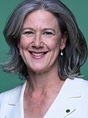
Nicolette Boele Bradfield, Independent
4:11 pm
I thank the member for Fowler for raising what is clearly a matter of public importance—that healthcare in this country should not be a postcode lottery. It is a proposition with which it is impossible to disagree. In Australia we quite rightly pride ourselves on our world-class healthcare system. We rank first among the OECD countries for equity and healthcare outcomes and third for overall healthcare performance, behind only Norway and the Netherlands. But, like all systems, ensuring its ongoing success requires maintenance and vigilance, and healthcare equity—in other words, ensuring that we do not succumb to a postcode lottery—requires not just funding but funding where and when it is needed.
In addressing that issue today, I want to focus on one particular part of the healthcare system, and that is mental health and the inequity of service delivery around the country. According to government data, we spent almost $14.5 billion on mental health services in the year 2023-24. That's around seven per cent of total government expenditure. That's an extraordinary amount of money, so it very much matters where and how it is allocated. We also know that five million people, or 18 per cent of the population, were dispensed a mental health related prescription in the same period. So mental ill health is incredibly prevalent and widespread, but the delivery and accessibility of mental health services is inconsistent.
Let's first have a look at the variations between states and territories. The 2025 Report on government services identifies major differences in per capita spending on mental health, access to state and territory specialised mental health services, and rates of delayed or avoided care due to cost. For example, my home state of New South Wales recorded the lowest per capita expenditure on specialised mental health services among the states, and, despite the vast public spend on mental health services, 22.4 per cent of people across Australia delayed or avoided obtaining care due to cost, with cost pressures differing between jurisdictions. These variations affect service quality, wait times and the ability of people to receive appropriate care at all.
As we've been discussing already today, national reporting also consistently shows that communities in regional and remote areas have fewer mental health professionals per capita and that emergency departments in regional areas, like the member of Calare's, bear a disproportionate load, as community services are thinner. This leads to longer wait times for services, greater reliance on emergency departments and limited continuity of care after discharge.
In short, the delivery of services in Australia's mental health system is not uniform. There are clear measurable differences in service availability, funding, waiting times, outcomes and access to community versus hospital based care. These disparities exist between states, between urban and regional and remote areas and between individual primary health networks.
Pleasingly, the government is acting to address inequities in health outcomes, and I do commend the minister for his work in this regard. The Reducing Health Inequities Mission is investing $150 million over 10 years from 2027-28 to research and address inequities in health outcomes. This funding aims to improve access to quality health services by priority populations. But is it enough, and is work going to be done quickly enough? As is the case in all complex public policy areas, there is much, much more work to be done.
Similarly, we could not lay claim to having a world class without already exceptional services being operated by incredible healthcare professionals, and that's certainly true in the mental health services space in my electorate of Bradfield. KYDS Youth Counselling offers free, confidential counselling for children aged 10 to 18 without the need for a Medicare card, GP referral or a mental health plan. If you're a young person at risk, KYDS makes the barrier to accessing these services very low. That's ever so critical for people who are very often too shy to ask for help. Lifeline Harbour to Hawkesbury has also provided vital services to my community for over 56 years. EPIC, Empowering Parents in Crisis, collaborates with schools, police, hospitals, family support organisations and the community to demystify pathways to support and create awareness regarding youth mental health. I want to thank these wonderful organisations for their high quality and sustained service to our community. I also want to urge the government to continue to work to ensure that funding for mental health services like these ones continues to be successful and thrive in my electorate of Bradfield and in other communities because we do not want Australia's mental health services to be a postcode lottery.
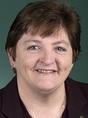
Anne Stanley Werriwa, Australian Labor Party
4:16 pm
Health is always a first order issue for Australians, particularly for the people of the electorate of Werriwa. Constituents consistently talk to me about how much they care about health and education of their children and families. Health care is one of the key services the Australian government delivers, and, for the Albanese government, it is a cornerstone and a key priority. Medicare is Labor's DNA. It was true when Gough Whitlam first introduced Medibank, it was true when Bob Hawke later restored it after it was abolished by Fraser and it is true to this day with the Albanese Labor government injecting historic amounts of money to improve the system.
At the last election, the Prime Minister was often seen with his green Medicare card on display, and why wouldn't he be? The card is a guarantee of free access to the finest healthcare system in the world. There is no lottery, no luck or no chance in the provision of Medicare cards, as suggested by the member for Fowler. All Australians regardless of postcode, education, wealth or ethnicity are entitled to one. The Prime Minister has one. I have one. The member for Fowler has one, and the newest Australian citizens have one. Of course, we can always improve the Medicare system, but we need to be clear. Our universal healthcare system is the envy of the world, and talking it down unnecessarily belies that fact and devalues the wonderful healthcare workforce we have.
Front and foremost in our healthcare system in Australia is recognising that GPs are the frontline as primary healthcare workers. They need to be respected, valued and, more importantly, remunerated. The improvements to GP payments from 1 November do this. Not only have those improvements ensured GPs are appropriately paid, but they have significantly improved bulk-billing rates. The success of the $8.5 billion injection into Medicare by the government is undeniable. There are now over 3,400 Medicare bulk-billing practices across the country. That's almost 1,300 more, who were previously mixed billing. The bulk-billing rate for all Australians has increased to 81.4 per cent nationwide. These statistics mean that of the Albanese government's policies 96 per cent of Australians are now within a 20-minute drive of a registered Medicare bulk-billing practice.
In terms of the electorate of Werriwa, there are 32 Medicare bulk-billing practices. That is seven more than before 1 November. Ninety-one per cent of practices in Werriwa are now bulk-billing all their patients all the time. Interestingly, the constituents in the electorate of Fowler, with whom I share a border, have a choice of practices, 94 per cent of which bulk-bill. That is the highest in the country, and it's nine more since 1 November. The Albanese government has further supported south-west Sydney and the residents of Fowler and Werriwa by investing $80 million to upgrade the Fairfield emergency department. Werriwa also has a new urgent care clinic in Austral, which was promised during the election campaign. It opened on 27 January and has already seen 280 people in the last four weeks. The government has also made a massive $25 billion investment into the public hospital system, which was recently announced by the Minister for Health and Ageing and the Prime Minister, after negotiations with all the states and territories.
There is also the $792 million investment into women's health, which is changing so much, and changing how women's health is looked at in this country. There are cheaper medicines which, from 1 January, meant that PBS scripts were only $25, or $7.70 with a concession. In my electorate of Werriwa, constituents have saved more than $8.2 million with over 1.3 million cheaper scripts. Then there is the historical investment that the government has made into mental health, which has seen a headspace in Edmondson Park open, which is doing such great work.
The motion moved by the member for Fowler referred to a lottery, but the winners of this lottery are the people of Werriwa, Fowler and wider Australian communities who have a government that, in all aspects of health, is improving the lot for all Australians.

Sharon Claydon Newcastle, Australian Labor Party
The discussion is now concluded.