
House debates Private Members' Business
Government Spending

Julie-Ann Campbell Moreton, Australian Labor Party
6:24 pm
All that the member for Fairfax has demonstrated with this motion today is that he obviously has an incredibly short memory. He has forgotten that, when Labor came to office, inflation had a six in front of it and now it has got a three in front of it. He has forgotten that the former government left us with huge deficits, $1 trillion of Liberal debt, and he has forgotten that annual real wages fell for five consecutive quarters before Labor came to office. I suppose focusing on the economy takes a back seat to the coalition's self-made drama, to the on-again off-again relationship with the National Party and the unedifying jostling for leadership positions. The Australian people deserve more than that. They deserve a functional opposition.
The Albanese Labor government, on the other hand and in comparison, has a clear and consistent focus, and that is supporting Australians with the cost of living. Every day, our focus is on delivering cost-of-living relief for those across our nation. The truth is that if the opposition seeks to change that approach, if the opposition thinks that that's not a good idea, then they have to come clean with the people of Australia and tell them what they intend to cut, because we know that the opposition has got form in this space. We've seen them try to destroy bulk-billing by introducing a co-payment. We've seen them send manufacturing jobs overseas. We've seen them rip billions of dollars out of the Public Service, and we have seen them cut from health and education over and over again.
We understand that Australians remain under pressure, that families are continuing to do it tough. That's why we're continuing to roll out targeted cost-of-living relief. Australians are benefiting from cheaper medicines and from more bulk-billing GPs. In my electorate, that's risen from 11 to 23 under our investment for GPs. We have reduced student debt, provided fee-free TAFE and are supporting students on mandatory pracs. We've delivered cheaper child care and are holding the supermarkets to account. We've delivered tax cuts for every Australian taxpayer.
We've done this all in a responsible way. While providing this range of measures, we've paid down Liberal debt, delivered two budget surpluses and delivered the biggest budget turnaround in a parliamentary term ever. Debt is $176 billion lower in 2025-26, which is a saving of $60 billion in interest costs. The budget position has improved by more than $233 billion over the seven years to 2028-29, compared to what Labor inherited in May 2022.
There are positive signs for our economy too. Growth in the economy is increasing, being driven by that private sector. The data shows that private investment recorded its fastest quarterly growth in almost five years. There's also been growth in dwelling investment. Under the coalition it was going backwards by 3.6 per cent in annual terms. Now, under the Albanese Labor government, it is growing 6.5 per cent and has risen for seven consecutive quarters. This is the longest consecutive period in 10 years.
As I mentioned before, under the former coalition government, annual real wages fell. They went down, they went backwards. This was by deliberate design. It was a deliberate feature of the economic architecture. As a result, living standards, real per capita incomes, were going backwards too. I'm proud to be part of a Labor government that's turned that story around, a government that stands up for Australian workers, a government that said that wasn't good enough. Labor has the lowest average unemployment rate of any government in 50 years. Most recently, it was at a historically low 4.1 per cent.
This is a result of Labor's economic policies; reducing inflation from its peak, wage and employment growth, and tax cuts for every Australian taxpayer. While the coalition has spent its time infighting and consistently voting against Labor's cost-of-living supports, Labor has been getting on with the job of taking the pressure off Australians. Before the opposition gets to speak on this, the question that they need to ask is: if you want to change that approach, what are you going to cut?
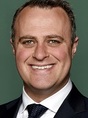
Tim Wilson Goldstein, Liberal Party, Shadow Treasurer
6:29 pm
The last speaker started with a question: 'What is it that you want to cut out of the federal budget?' No. 1: the $15 billion that the Labor Party gave to organised crime through the CFMEU-Labor cartel. I absolutely want to get rid of public money being given to organised crime. That should not be up for debate, but under the Albanese Labor government, they just keep doling out the cash to organise crime through the CFMEU-Labor cartel, and the reason they do it is that they actually get a little bit on the side. The second thing is NDIS corruption. That program is there to support the most vulnerable in the community, who in many cases cannot stand up for themselves. The NDIA themselves have identified that up to 10 per cent of the $50 billion program goes towards fraud. I absolutely want to cut out the heart of that corruption. That is not in dispute, so I'm happy to answer this question any day of the week. But this just goes to the rotten heart of the Albanese government's approach to managing the problems of inflation.
Think about the reality of so many Australians: only a few years ago, they might have paid a couple of hundred bucks at the supermarket and walked out with a full trolley; now, increasingly, they're not even filling a red basket. Increasingly, when I speak to people, I hear how people go deliberately to the self-service checkouts because they know that, if they go to the self-service checkout and they can't afford everything, they can reverse the system without having to talk to a person. That's how challenging the lived reality of inflation in Australia is today—rising rents and rising bills, particularly at the supermarket checkout—and they have a tone-deaf government. When a small-business owner is struggling to make ends meet, what does the small-business minister say to that former small-business owner? 'Maybe you were dodgy.'
This is the most despicable and arrogant government I've ever seen. They pull tricks left, right and centre. You just need to look at what they did with their trickster approach to energy subsidies before the last election, where they promised that they would cut electricity bills by $275. Nobody believes that anymore. They did then take money from the taxpayer and give it back to Australians, to the level of $300, so they could claim that electricity bills had gone down by $300 and they'd delivered on their promise, but what did they do? They borrowed from the future and fuelled inflation. They keep pouring debt petrol on the inflation fire in this country, and that's why Australians are paying higher costs and higher rents. And it's not just households; it's also small businesses.
The jig is up. The Reserve Bank has made it clear that public expenditure is driving private demand. As a consequence, we now have a problem where inflation is letting rip through the Australian economy, and Australians are within its trajectory. You just need to look at some simple stats. After nearly four years of Labor's complete recklessness and mismanagement, pouring petrol on the inflation fire, Australians are paying more for almost everything. Insurance is up 39 per cent, energy is up 38 per cent, rents are up 22 per cent, health is up 18 per cent, education is up 17 per cent and food is up 16 per cent.
But do you know what's really up? It's the return on investment that the CFMEU made to the Labor Party. They made a $1.5 million donation in Victoria and they got a 10,000-fold return through $15 billion of public money, which then went through to organised crime. Every single member on the Labor side is tainted by that legacy, and they should be ashamed of themselves. That's public money. That's taxpayers' money. More importantly, that money is borrowed from the future and is fuelling inflation today.
Under Labor you pay multiple times over. You pay through higher costs and higher inflation, which means you live a lower standard of living. You pay because they're paying through debt, which means that that's tomorrow's taxes. And you pay because your children and your grandchildren are going to live with the legacy of this Labor government. With cockiness and hubris, the Treasurer struts around thinking he has all of this under control, and the gaggle of Labor members get up and spin their message in the hope that somehow their constituents will be fooled. Their constituents are now living the consequences of Labor's inflation agenda. It's an active inflation agenda to pour debt petrol on the inflation fire. Australians won't stand for it, and I can assure you at the next election we are going to show you the door.

Claire Clutterham Sturt, Australian Labor Party
6:34 pm
The Treasurer has been repeatedly clear that he takes responsibility for his role in the fight against inflation. He's been clear that inflation is too high, and no member of this government has shied away from that. The Treasurer is fighting hard. We know that inflation is significantly lower than its peak and significantly lower than when we came to government, but that is history, and we know it is too high. The Treasurer has also been clear that the economy, including productivity, cost of living and growth, is central to the Albanese Labor government's agenda. Increases to productivity and growth are what this government's policy initiatives are directed at, as are help and assistance to Australians with the cost of living.
Inflation and what drives it are not linear. It's not black or white, one thing or another. It's an oversimplification to blame government spending. Governments of the day have the privilege and responsibility to take measured and practical steps within their sphere of reference to tackle inflation, but condemning the Treasurer for this and that is an easy shot that does nothing to assist the Australian voter. Australians know that contributors to inflation are a mix of fluid and ever-changing factors that need to be constantly monitored and adapted to. Factors like the time of year, private demand, climate, the labour market, global challenges—more real than ever—and government policy all play a role in the ingredients that make up inflation. Sometimes one factor plays a bigger role, sometimes smaller. It's not linear, and it's not as simple as saying, 'Just cut this,' 'Just do that,' or, 'Just change this.' It is certainly not as simple as just alleging that the so-called out-of-control spending is the primary and only cause or saying that if you didn't spend on one thing, like the $25 billion spent on public hospitals in partnership with states and territories, inflation would be lower. Bare allegations of this nature do not assist the Australian voter. Slogans regarding petrol and fire do not assist the Australian voter. Facts do, and what also assists is an understanding that governments do actually need to spend at the same time as endeavouring to finding efficiencies and savings and undergoing departmental reform and budget restructure. That is what this government seeks to do.
With respect to the facts, claims that government spending is now a very large share of the economy are exaggerated. Reserve Bank estimates that were published on the Reserve Bank of Australia website after the Reserve Bank of Australia met in February 2026 estimated that what we now know as public demand or spending by all governments, federal, state and local, expanded by 2.2 per cent during the course of 2025. Consumer spending expanded by 3.1 per cent. Home building expanded by 5.5 per cent, and business investment expanded by 2.5 per cent. Both public and private sector wages have been growing sustainably, around an average of 3.5 per cent in recent years, with no sign of the significant spike that occurred in the 1970s and which saw considerable upward pressure on inflation. This government has a deliberate mandate to get public and private sector wages growing after the decision of the previous government to deliberately keep them low by design. Wages have moved, but sustainably and not significantly, putting to rest the suggestion that the public sector wage bill is inflationary.
On that basis, inflation is expected to peak in mid 2026, and, in quarterly terms, underlying inflation is forecast to start slowing from the June quarter of 2026. This peak is one of the factors as to why the May 2026 budget is being crafted through the lens of responsibility as a solid, future focused plan directed at productivity, spending restraint and tax reform. There is an ambitious agenda on tax, and the centrepiece of that is income tax cuts for all Australian workers. When it comes to tax policy, lower taxes are the policy of the Albanese Labor government. The Treasurer has been clear. The objective of the budget would be to lift the speed limit on the economy so that it can achieve higher growth with lower inflation and so that Australian workers can earn more and keep more of what they earn.

Leon Rebello McPherson, Liberal National Party
6:39 pm
Today I rise to condemn this treasurer for refusing to take responsibility for the government's out-of-control spending—spending that's fuelling inflation and keeping interest rates higher for longer. In Senate estimates, we saw the finance minister proudly spruiking $114 billion in so-called savings, but when pressed it became clear that these were not savings at all. They were simply reallocations: money taken from one government program and shifted to another. That's not savings; that's reshuffling the deckchairs.
At the same time, government spending is growing at four times the rate of the economy itself. That trajectory is simply not sustainable. In fact, the Treasurer's own budget papers show he's added $50 billion of new discretionary spending in this financial year alone. And who pays the price for this? It's Australian families, Australian individuals and Australian small businesses. Out-of-control spending is driving inflation, and higher inflation keeps interest rates higher than they otherwise would be. The average mortgage holder is now paying around $21,000 more per year in interest compared to under the previous government, and that burden could rise even further. This isn't abstract economics; this is real pressure on real household budgets.
Let's look at where their money is going. Interest payments on Commonwealth debt alone are now one of the largest line items in the Commonwealth budget. That should alarm every member of this House. Under Labor, spending has blown out from 24 per cent of GDP to 27 per cent, the highest level outside a recession in nearly 40 years. Labor's taken a blowtorch to the fiscal guardrails that responsible governments of both persuasions have respected for decades. Treasury officials have confirmed that there are no quantifiable fiscal rules guiding Labor's budgets. What does that mean? It means no measurable spending cap, no debt anchor, no clear path back to balance, no speed limit and no seatbelt, just a foot on the accelerator.
Since coming to office, Labor has added a $100 billion to the national debt. Debt is now on track to breach $1 trillion any day now and $1.2 trillion by the next election. Every single minute $50,000 of taxpayer money is burned just on paying interest on that debt. That's $72 million every day—$72 million that cannot go to hospitals, that cannot go to schools, that cannot go to essential services and that, at a time of increased threat, cannot go to Australia's defence. Instead, it goes to servicing the consequences of fiscal recklessness.
Let me be clear: responsible government spending on essential services is necessary. Programs like the age pension, like Medicare and like aged care are vital, but spending must be targeted, efficient and effective. What we're seeing instead is spending driven by political convenience and short-term interest, piling up debt with no regard for the generations who will ultimately foot the bill. That's why we call on the Treasurer to adopt clear, measurable budget rules, rules that restore discipline to the management of our nation's finances so that the people who come after us, our kids and future generations, are not burdened by the choices of today. We call on the Treasurer to adopt rules that ensure spending growth is sustainable, rules that anchor debt and rules that bring transparency and accountability back to the budget process. Without discipline there is no stability.
Australians are really hurting at the moment. They're hurting when they're running their businesses, they're hurting when they're paying the cost of groceries and they're hurting when they're paying the cost associated with raising a family. Without stability, Australian families across my electorate in McPherson, from Burleigh Heads to Currumbin to Coolangatta, will continue to pay the price for Labor's higher inflation, for higher interest rates and higher debt. It's time we reined in expenditure and put Australians and our future generations first.

Gabriel Ng Menzies, Australian Labor Party
6:44 pm
I rise today to speak against the motion moved by the member for Fairfax, a motion that, as is typical of the opposition, cherrypicks figures and ignores the advice of independent experts to gaslight the Australian people. If those opposite were so worried about interest rates, they must have been ready to tear up their membership to their party at the last election, because, when they left government, inflation was at six per cent and higher. Since we came to government we've been able to bring inflation down to a number with a three in front of it.
The member for Fairfax knows that the governor of the independent Reserve Bank of Australia did not talk about public spending as a driver of the recent uptick in inflation. The member for Fairfax, like so many of those opposite, misrepresents the governor's words in an attempt to reclaim credibility on economic management. He knows that the governor has stated very clearly on numerous occasions that the recent uptick in inflation is due to a higher than expected increase in private demand. The Liberal Party claim to be the party of the private sector and entrepreneurialism, and you would think that this would be something that they would celebrate, but, instead, it is something that they talk down or ignore.
We have seen the fastest growth in the private sector, the fastest quarterly growth in almost a decade. We've supported private sector investment in areas like renewables and data centres, investing in those parts of the economy that will be the future industries for Australia. And that's why we've been able to see that growth in the private sector and why growth has been better than expected.
The coalition trashed their reputation for economic management when they were last in office, and they put the final nail in the coffin when they went to the last election promising higher taxes, bigger budget deficits and more tax. Now they've made the member for Hume, who was the architect of this plan, the Leader of the Opposition. They've also made Senator Jane Hume Deputy Leader of the Opposition. Senator Hume was the architect of their disastrous working-from-home policy, a policy that said to working Australians that working from home is not a legitimate way to balance work and family life and that sought to drag people back into the office. The senator also said that Chinese Australians who were participating in democratic process were 'Chinese spies'.
We are the party of responsible economic management, the party of fiscal discipline and the party of surpluses and of paying down debt. In the last term, the Labor government delivered the biggest improvement in the budget in a single parliamentary term. The government delivered two surpluses, something the coalition weren't able to do for the nine years that they were last in government. We exercise fiscal discipline and we bank those savings to pay down debt. The budget is $233 billion better off than what it was when we inherited it. Debt in 2024-25 was $176 billion lower than that which was left to us, and that will mean $60 billion less in interest costs over the medium term. We've got peak gross debt down 45 per cent to 37 per cent, and we've done it all while keeping unemployment at historically low levels and while increasing wages. We've created jobs, and we've ensured that, during tough economic times, people have been able to keep their jobs.
The new shadow treasurer recently did a bit of freelancing and said that we should question whether or not the Reserve Bank of Australia should have its dual mandate—to bring inflation down but also to have full employment. I think that's a case of saying the quiet bit out loud. We know that those opposite don't care about Australian jobs. We want to build an economy that works for people—not the other way around—and that means that we're making sure that people stay in or can get good, secure jobs with good conditions.
Of course, we have made spending commitments, and those opposite have referred to some of those spending commitments. We stand by those because spending is about priorities. We've prioritised policies on health, education, housing, cost of living and tax cuts. These are policies that were endorsed by the Australian people at the last election. For that, we will be eternally grateful. We've been able to start implementing those policies and have seen an increase in the rates of Medicare bulk-billing. We'll prioritise these policies while better managing the budget, focusing on productivity and helping Australians with cost-of-living relief.

Tom Venning Grey, Liberal Party
6:49 pm
There is a crisis that everyday Australians are feeling right now. There's a crisis happening at the supermarket check-out, at the petrol pump and at the kitchen table, where the monthly bills stack up. To understand what Labor are doing to our economy, think of it as a balloon. Every time the government announce a new program, every time they borrow more money and every time they refuse to rein in their budget, Dr Jim Chalmers is blowing more hot air into this economic balloon. But here is the reality: if you keep pumping air into a balloon, eventually it pops. When this balloon finally bursts, it is not just going to blow up in Labor's face; it is going to hurt everyday Australians who are already stretched to their absolute limits. Labor's reckless spending is out of control. The Treasurer's own budget papers show that he has added $50 billion in new discretionary spending in this financial year alone. Government spending is at its highest level outside of a recession in nearly 40 years. Because of all this hot air, Labor's debt is racing towards a staggering $1 trillion. That's $1,000 billion. Just to pay the interest on that debt, Australians are shelling out $50,000 every single minute. That is money that adds demand and keeps pressure on prices.
Last week, an article written by the greatest Australian treasurer, Peter Costello, stated that the long-term fiscal focus established by the 1998 Charter of Budget Honesty, which was designed to protect future generations from unsustainable policy, is now gone. Costello contends that, while Australia was in a strong debt-free position two decades ago, the nation's sovereign economic capital has since been severely run down—a wasted 20 years. From its position of zero net debt 20 years ago, the Australian government has come to carry a net debt of nearly $20,000 per citizen.
But the better way to think of that—because not all people pay taxes—is this: if you combine the net debt of the South Australian state Labor government and the federal Labor government, over the South Australian workforce that's over $100,000 per worker. That debt will be paid off by their children and their grandchildren. Since 2007, tax per person has risen by approximately $16,000 in constant dollars. Yet the government continues to signal that further tax increases may be necessary. Government spending per person has grown by 32 per cent since 2007, double the rate of tax growth. Australia's best and longest serving treasurer is worth listening to, Dr Jim Chalmers, and you should take some notes.
This never-ending cost-of-living crisis is homegrown. Domestic inflation is running hot at 4.9 per cent, and, because of this, our living standards have plummeted. In fact, under Labor, Australia has suffered the biggest fall in household disposable income in the entire developed world. For the first time in Australian history, Aussie kids will be worse off than their parents. That should be a national shame.
Our inflation is now worse than any major advanced economy—higher than the US, the UK, Canada, Germany, Italy, France and Japan. When inflation stays high, interest rates stay high. The average Australian with a mortgage is now paying around $21,000 a year more in interest than they were under the previous coalition government. After nearly four years of Labor, everyday Australians are paying more for absolutely everything: energy, 40 per cent; food, 16 per cent; rent, 22 per cent; insurance, 39 per cent. Labor claimed they would fix child care, yet out-of-pocket costs are up 11 per cent. Energy—the net zero ideology is failing. With temporary energy expiring, the truth is out. Electricity prices have jumped 32 per cent this year alone, and now, suddenly, Labor is whispering about spending cuts. Do we really trust Labor to cut spending after years of zero restraint? I certainly do not. I'll tell you what I would cut—the $15 billion of corrupt money given to the construction sector and CFMEU rorts, or the 10 per cent of identified corruption in the $50 billion a year we spend on the NDIS.
As Liberals we stand for lower inflation, lower interest rates, lower taxes and lower spending. We must cut red tape to help businesses grow. As such, we have called on Labor to form a joint taskforce on spending restraint. If the Prime Minister is serious about our economy, he will back this proposal. We are running out of time and we must stop inflating the economy before it bursts.

Kara Cook Bonner, Australian Labor Party
6:54 pm
The member for Fairfax and those opposite want to lecture this place about government spending with this private member's motion today. Let's talk about government spending. Under those opposite, spending ballooned, debt ballooned and deficits were entrenched. What did Australians have to show for it? Higher inflation, real wages falling and a trillion dollars of Liberal debt.
On this side of the House we've done the hard work. Labor has paid down Liberal debt. Labor has delivered two budget surpluses. Labor has overseen the biggest budget turnaround in a parliamentary term. We've improved the budget position by more than $233 billion compared with what we inherited. Debt is $176 billion lower in 2025-26, saving $60 billion in interest costs alone. We've got the budget in much better nick than what we inherited from those opposite.
While we've repaired the budget, we've also delivered for all Australians. It is Labor that has cut taxes for every taxpayer so Australians can earn more and keep more of what they earn. If those opposite had won the last election, income taxes would be going up for more than 14 million Australians. They had plans for higher taxes. They had a plan for more debt. They had a plan for lower wages. If they had their way, Australians would be earning less and paying more. That is not economic responsibility; that is economic recklessness.
Labor's spending is responsible, is targeted and is fixing years of neglect. Through our Better and Fairer Schools Agreement, we are delivering the biggest new investment in public schools by an Australian government because every child deserves the opportunity to fulfil their potential. We are delivering real, practical cost-of-living relief. In my community of Bonner over 6,000 families receive Commonwealth rent assistance. Those opposite failed to keep it in line with inflation. Labor has increased rent assistance by almost 50 per cent.
We are strengthening Medicare. Thousands of residents in my community have already benefited from our brand-new Medicare urgent care clinics—the Carina-Carindale and Capalaba Medicare clinics—which are open seven days a week and are fully bulk-billed, with not a cent to pay. There are now 130 Medicare urgent care clinics right across our country. There are over 3,400 GP practices now fully bulk-billing right across the nation, including 13 in my electorate of Bonner. More than 95 per cent of Australians now live within 20 minutes of a bulk-billing practice. That is what responsible investment looks like. We are also delivering for people with disability. Labor has reduced waiting times for the disability support pension from an average of 96 days to 34 days—and that is because we invest in frontline services.
We recognise Australians are under pressure. That is why we are delivering tax cuts, cheaper medicines, more bulk-billing, higher wages and housing support while still improving the budget. Those opposite talk about spending, but when they were in government low wages were a deliberate design feature of their economic architecture. Real wages fell for five consecutive quarters before we came to office, and inflation had a six in front of it. Real wages are now growing. Living standards are rising. More than 1.2 million jobs have been created since May 2022, with more than four in five in the private sector. The private sector is recovering. Growth is picking up. Investment is strengthening.
We are focused on higher living standards, secure jobs and responsible economic management. Those opposite stand for higher taxes, lower wages, bigger deficits and more debt. Labor stands for stronger Medicare, better schools, housing security and cost-of-living relief. I hear those opposite sighing. If the member for Fairfax and those opposite want to see actual reckless spending, they don't need a private member's motion in this place; all they need is a mirror.

Simon Kennedy Cook, Liberal Party, Shadow Assistant Minister to the Leader of the Opposition
6:59 pm
Those on the other side want to talk about reckless spending. Right now, under this Treasurer, public spending as a percentage of GDP is the highest it's been in 40 years outside the pandemic. It's easy to talk in abstractions—percentages of GDP, aggregate demand, fiscal settings. But what does it all mean? It means $21,000 a year more in interest to the average household on their mortgage. It means we're paying $50,000 a minute—every single minute. In the time I will take to do this speech, that's $250,000 to the government debt just on interest alone.
The Treasurer's own budget papers show around $50 billion in additional discretionary spending this financial year alone. Economists are clear about what this means. KPMG's chief economist recently said:
Government spending, which has been adding to aggregate demand … needs to … be reined in to help better balance the demand and supply pressures driving the current push up in inflation.
EY's chief economist has warned that elevated government spending could contribute to more rate rises this year. The RBA's own forecasts are banking in at least another two rate rises. We've had 13 rate rises under this Labor government, and recently the Reserve Bank's own governor, Michele Bullock, acknowledged that government spending is adding to inflationary pressure and, when this inflationary pressure persists, the Reserve Bank must push up interest rates.
The Treasurer tries to hide and obscure this fact with weasel words. He likes to talk about private and public demand and saying private demand has been stronger than public demand. But what do these weasel words obscure? He does not talk about government spending, because in private demand it contains mountains of government spending—NDIS payments, health payments, social security transfers, energy rebates and battery payments. All this government spending shows up in private demand. This is why we have the Treasurer obscuring the fact, talking about private demand, because he thinks he's fooling the Australian people that it is not about government spending. There are mountains of government spending in that private demand. That presentation of the facts obscures the fact we have the highest government spending in 40 years today, outside of the pandemic.
Inflation was 3.8 per cent in January, but guess what? Domestic inflation, the homegrown inflation, is running at 4.9 per cent. This is the highest of any developed economy in the world. Why is Australia so different? Why are we different from the USA? Why are we different from the EU? Why are we different from Japan and all these other advanced economies? It's because of the government spending. It's because of Jim, 'Jimflation' and the government spending. Recently I sat down with a single mother in Sans Souci. After 13 interest rates, she could no longer afford to pay the mortgage in her unit in Sans Souci. She has lost the deposit. It's eaten away. She got a bargain basement loan in COVID, but after 13 interest rate rises, an average of $21,000 a year more, she's had to give it up in tears thinking about that money she's worked for and put away in the bank that is now evaporating away.
When fiscal policy is expansionary while the economy is operating at near capacity, monetary policy—interest rates—must tighten further. The Reserve Bank recently said two per cent economic growth is the speed limit for our economy. Any economic growth above that just pushes inflation. Well, we are growing at two per cent, so every time this government increases government spending, you pay more at home. Your money becomes worth less. The prices of everything go up, and you get left footing the bill. And haven't the prices of everything gone up? Childcare costs have gone up 11 per cent in the past year. Energy prices have gone up 32 per cent alone in the last year and over 40 per cent since Labor came to office. Groceries remain elevated. Insurance remains going up as well. Even still, this treasurer is spending more and more and more. Government spending is not predicted to go down next year; it will continue to increase. So, if Australians are tightening their belts, if the mother in Sans Souci is tightening her belt, the Treasurer must do the same and start reducing government spending.

Tania Lawrence Hasluck, Australian Labor Party
I'll just remind the member for Cook, if you're going to make reference to members, to refer to them by their correct title, please.

Tony Pasin Barker, Liberal Party, Shadow Minister Assisting for Fisheries and Forestry
7:04 pm
I rise in support of this matter of public importance because this is a debate about accountability, discipline and a treasurer who refuses point blank to take responsibility for his out-of-control spending, which is fuelling inflation and keeping interest rates higher for longer. After nearly four years of this Labor government, Australians are paying more for literally everything. Insurance is up 39 per cent, energy is up 32 per cent, rents are up 22 per cent, housing is up 19 per cent and food is up 16 per cent—I think you get the drift. But these aren't abstract figures. They're not just something that's rattled off in this place. This is real life. There are mortgage repayments, there are power bills and there are grocery bills, and they all keep rising.
While Australians have tightened their belts, this government hasn't. The Treasurer's own budget paper shows $50 billion—that's 'b' for 'billion'—in new discretionary spending in this financial year alone. Two-thirds of the increase in spending this year is the result of deliberate policy decisions taken by those opposite. Spending has risen from 24.3 per cent of GDP to 26.9 per cent. Debt is heading north of $1 trillion, and mortgage holders are paying around $21,000 a year more in interest repayments. That's the real-world cost of fiscal recklessness.
And, when you look at where the money's going, the problem becomes even clearer. We've had a bit of weather recently, and a lot of people have turned to the Bureau of Meteorology. Let's leave aside the fact that the new website still doesn't work as well as the old one. This was a project that was meant to cost $4.1 million and is now slated to cost the taxpayer around $96 million. That's $96 million for a website that Australians can't even rely on! That's millions of dollars funnelled out the door to big consulting firms. At CSIRO, more than half a million dollars a year is going to grounds maintenance at their headquarters and—wait for it!—over $100,000 a year goes to indoor plants and flowers. That is while staff positions are under pressure—seriously! And now we learn that Australia and Australian taxpayers are helping to fund a fleet of electric buses and boats. That's okay, until I tell you that those buses and boats are in Wuhan, China, to attract tourists and boost the climate resilience in a Chinese city—spare me! While Australian families are struggling with power bills and mortgage repayments, their taxes are being used to subsidise transport fleets overseas. That is the priority of those opposite using Australian taxpayer dollars. That's not cost-of-living relief; that's waste.
Billions have been committed to hydrogen and carbon capture experiments, while there's little to show for them in terms of reliable energy supply or lower power prices. Electricity prices, as I said, have surged over 32 per cent. Australians were promised, of course, $275 off their power bill, but that never happened. Instead, we've seen prices skyrocket, and, after all that spending, emissions reductions have flatlined. Billions have been spent. Power bills are up, and emissions are barely moving. That's not political success; that's waste laid on top of failure. And this is a pattern: spending up, debt up, power bills up, mortgage stress up, with accountability nowhere to be found.
The Treasurer blames global conditions, but global conditions didn't force the injection of $50 billion of discretionary funding into the economy this year alone. Those were choices, and, when you add that level of spending into an already inflationary environment, the Reserve Bank is left to do the heavy lifting. Higher spending means higher inflation. Higher inflation means higher interest rates. Australian families are once again left to carry the cost of the decisions taken by those opposite. Real wages have gone backwards. Income tax has risen through bracket creep. Mortgage interest rates have surged. Australians are working harder for longer and getting less.
That's why this motion matters. It condemns the Treasurer for refusing to take responsibility. It highlights $50 billion in discretionary spending. It recognises the burden that mortgage payers are under, and it calls for measurable budget rules, rules that will restore discipline, restrain spending growth and ensure windfall revenue is used to pay down debt, not fuel pet projects.
Tania Lawrence Hasluck, Australian Labor Party
There being no further speakers, the debate is adjourned and the resumption of the debate will be made an order of the day for the next day of sitting.