
House debates Matters of Public Importance
Cost of Living

Milton Dick Speaker
3:25 pm
I have received a letter from the honourable member for Page proposing that a definite matter of public importance be submitted to the House for discussion, namely:
This Government's betrayal of Australians due to higher energy costs and other cost of living pressures.
I call upon those honourable members who approve of the proposed discussion to rise in their places.
More than the number of members required by the standing orders having risen in their places—
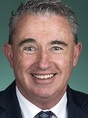
Kevin Hogan Page, National Party, Deputy Manager of Opposition Business in the House
3:26 pm
I know you're aware, I know everyone on this side of the House is aware and I know that the Australian community is aware that the cost of living is a crisis in this country. It's a crisis for family budgets and it's a crisis for small business in Australia that the cost of everything is just going up and up and up.
I want to focus on a couple of things through this next 10 minutes. One is obviously the focus of this—energy. I want to talk about the failures of this government on energy policy and also want to note, too, that just this week we saw mortgage rates go up for Australian families. Interest rates around the world are going down in most countries. They're coming down in just about every country around the world except Australia. It's commented on by most economists around Australia and the Reserve Bank themselves that a lot of this is about government policy right now. Every mortgage went up in Australia this week because of the policies of this Labor government. The damage that's going to do to family budgets and, indeed, in higher interest rates to business is not good.
You can't go past the cost of living and you can't go past talking about this government without first talking about the Minister for Energy and Climate Change. They have an ideological obsession that, at the expense of $9 trillion, they should get Australia to net zero by 2050. I'm going to go to some of the costs of that and why that is so destructive, but, before I do, in regional Australia, I'm very conscious that that involves 60 million solar panels to be physically built in predominantly regional Australia and 20,000 wind turbines as well. The minister likes to get up and say that renewable energy is cheap or free. It's not, and he's very misleading in saying that. One of the major costs behind it is the new transmission system—20,000 kilometres of a new transmission system. Why do they need a new transmission system? Because all this generation capacity they're building with these 60 million solar panels and these 20,000 wind turbines—they're being built where there aren't any transmission systems, and they're being built where there aren't poles and wires. The cost of that is enormous. About 50 per cent of the bill is because of some of those delivery costs, but he says it's free. He's misleading. He knows that, and he continues to mislead the Australian public on that.
What we're already seeing—we can talk about families and we can talk about the fact that they get their energy bill every quarter and are shocked and horrified by how much it's going up. The other thing that's going on around Australia is that businesses are feeling it, especially big business and heavy business—businesses that are energy intensive, like the smelters around Australia or the refineries around Australia. You could go up and down the coast of Western Australia with the nickel industry and the lead industry. You go to South Australia and see the steelworks or the lead industry in Port Pirie. You can go around the east coast of Australia and see ones like Tomago, a more recent one. All of them have either paused what they do or have asked or said that they need government assistance. What does that say? That says that something is going seriously wrong, if those businesses are unanimously saying that they need government assistance to keep going, and it all comes back to this government's and this minister's obsession with emissions reduction.
We acknowledge that we should do our fair share of emissions reduction, but their obsession has us leading the world in emissions reduction. I want to highlight three countries that are not signed up to the policies of this Labor government. Three countries are saying, 'We're not going to do what Australia is going to do with emissions reduction,' and those three countries are China, India and the United States. All of those countries have said, 'We are not signed up to that.' They're not signed up to it, because they know the expense of it and they know the unattainability of it.
Let's take China as one example. The emissions in China go up more every year than Australia's total emissions. I'll repeat that, because it's important to understand that: the emissions in China go up more every year than Australia's total emissions. This minister and this government are obsessed with emissions. We want to do our fair share, but nothing we do in Australia will change the temperature of the globe, because we only produce just over one per cent of total emissions. Yes, we should be committed to doing our fair share. Yes, we could contribute as a good global citizen. But nothing we do, given the size of our economy and amount of our emissions, compared to any other country, will change anything. But that doesn't fit with the ideological obsession of this minister and this government. While they might feel good, this is not good.
We on this side of the House, as the opposition, do have a plan, and a responsible plan. What we've said we will do is lower emissions by the average of the OECD. Whatever they lower emissions by, we will match that—not what they say they're going to do but what they actually do. That is the target that we have committed to. That will mean a difference. This government's obsession means that those opposite are aiming for emissions reduction in 2035 of between 60 and 70 per cent. It makes them feel good, but, as I've said, the damage that's doing to families and businesses is manifest. By our target, we'd be getting our emissions reduction to around 35 per cent, which is doing our fair share but not killing the Australian economy and family budgets at the same time.
I've mentioned cost-of-living pressures. We know mortgage increases in Australia have gone up this week because of the policies of this government, but I want to just touch on a couple of other things that are doing a lot of damage to cost of living. One is very dear to a lot of colleagues of mine, especially colleagues who operate within the Murray-Darling Basin. The Murray-Darling Basin in one of the great food bowls of the world, not just Australia. The food and fibre growing in the Murray-Darling basin is quite phenomenal. Those opposite have a different ideological obsession on this one.
Their ideological obsession on the Murray-Darling Basin, for some reason, is that the Murray River mouth can never close. The bizarreness of that is that before we had the lock-and-weir system built on the Murray and the Darling, the mouth of the Murray closed a lot. What those locks and weirs do is hold back water so there is a continual amount of water that goes out. In droughts, that would lock up all the time. With that ideological obsession, what they're doing now—talk about a waste of money—is spending billions of dollars buying water off food and fibre producers in this country. I don't think it's hard to work out that if you stop farmers and producers in the Murray-Darling Basin from growing things, that isn't going to help the cost of those things. The Minister for Climate Change and Energy wants to talk about supply and demand. I'll tell you what: if you're growing less of something, the price of it might go up. Their obsession there is not okay.
The other thing I want to talk about on their obsession with emissions reduction is that they have already instituted a ute and SUV tax. That means the cost of SUVs and the cost of utes in this country have already gone up, and not because of anything but government policy on this side. When the tradie wants to go and buy his ute or when the family want to go and buy their SUV, they have all gone up distinctly because of a blatant government policy.
The other thing I also want to talk about—and it's endemic—is the changes we saw made to the EPBC Act on the last day of parliament last year. One thing this Labor government has in its DNA—especially when it has an alliance with the Greens, as it does in the Senate—is it cannot have too much red and green tape. It loves red and green tape. It loves more legislation telling people what they can do and what they can't do.
Every stakeholder I talk to that is trying to export out of this country, that is trying to do stuff in this country, says that the government are making things more difficult, and therefore more expensive, in the government legislation they've done over the last four years. You don't see all this immediately; sometimes, with these legislative changes—and especially the ones made to the EPBC Act—we might not see them for three or four years. But this government don't understand the economy. They are sending companies and families broke in this country. Shame on them!

Emma McBride Dobell, Australian Labor Party, Assistant Minister for Mental Health and Suicide Prevention
3:36 pm
It's good to welcome the member for Page back to the dispatch box! I welcome this matter of public importance today. On this side of the House, we understand the pressures that people and families are facing, which is why we are delivering cost-of-living relief for all Australians, from more bulk-billing to cheaper medicine, to student debt relief, to supporting people to buy their first home. It's measures delivered by this Labor government that are helping people. What is not helping people is the division and chaos from those on the other side.
Last week the member for Page was on the backbench with his Nationals colleagues. Now he's back at the dispatch box—oh, now he's walking out on the MPI, like the Nationals did to Sussan Ley!
Kevin Hogan Page, National Party, Deputy Manager of Opposition Business in the House
I'm staying! I'm just going up the back!

Sharon Claydon Newcastle, Australian Labor Party
Member for Page, just take your seat quietly, please.
Emma McBride Dobell, Australian Labor Party, Assistant Minister for Mental Health and Suicide Prevention
Right now, Liberals are rushing across this building, in and out of offices, trying to do the numbers and topple the first female leader of their party. On this side we're focused on delivering for all Australians. On that side they're focused on themselves.
I genuinely thank the member for Page for moving this MPI, and I hope he stays in the chamber to hear about what this government is delivering for people in his community; I expect he'll probably walk out on me, like the Nationals did to Sussan Ley. As the member for Page knows, I'm a frequent visitor to his community and I rarely come empty-handed. In 2023 we opened the Lismore Medicare Urgent Care Clinic, with walk-in care for urgent but non-life-threatening conditions—not like what might happen tomorrow at nine! It is open seven days a week, over extended hours, and, like all Medicare urgent care clinics across the country, it's popular—not like the coalition. Since opening, 22,966 people have received fully-bulk-billed care—100 per cent free.

Emma McBride Dobell, Australian Labor Party, Assistant Minister for Mental Health and Suicide Prevention
I love Taree! Do they still have the Take Five cafe? They do!
Since opening, 22,966 people have received fully-bulk-billed care—100 per cent free. That is an average of more than 200 people a week. But there's more. In 2022 I was in Lismore, where I opened the Medicare Mental Health Centre, with walk-in mental health support and care from clinicians and peer workers. It is also open seven days a week, over extended hours. I can share with the member for Page and this House that the Lismore Medicare Mental Health Centre has the highest number of occasions of care of all the 18 centres currently open in New South Wales. Just last year the Lismore Medicare Mental Health Centre provided 34,727 occasions of care—all completely free, at no cost to the member for Page's constituents.
It's our government that is delivering completely free, Medicare backed services for people all around the country.
I would say to the member for Page: be more like the member for Riverina and embrace these services in your community. The member for Riverina welcomed me to his community and joined me at the new Wagga Wagga—
Kevin Hogan Page, National Party, Deputy Manager of Opposition Business in the House
Are you saying I don't embrace them? I didn't even know you were coming.
Sharon Claydon Newcastle, Australian Labor Party
Member for Page, this is your MP. Let's not repeat earlier this week where I had to ask people who put the MPI to leave the chamber. So, please, no interjections. I do want to hear the assistant minister, just as I heard you.
Emma McBride Dobell, Australian Labor Party, Assistant Minister for Mental Health and Suicide Prevention
Be more like the member for Riverina, who welcomed me to his community and joined me at the new Wagga Wagga Medicare Mental Health Centre, offering free mental health care to people in his community.
It's the Albanese Labor government that is focused on delivering affordable health care for all Australians, saving Australians time and money. The Albanese Labor government has made the single largest investment in Medicare since its creation over 40 years ago—$8.5 billion to deliver more bulk-billed GP visits every year, hundreds of nursing scholarships and thousands more doctors. Australian patients and families are saving hundreds of dollars a year in out-of-pocket costs. For the first time, from 1 November last year, our government has expanded bulk-billing incentives to all Australians and created an additional new incentive payment for practices that bulk-bill every patient. Already over 3,300 GP practices are now fully bulk-billing. Over 1,200 of these were previously mixed billing practices, making Medicare even stronger, helping with cost-of-living pressures and making sure every Australian receives the best health care, which they deserve, and for free.
The Albanese Labor government's Medicare urgent care clinics are genuinely a game changer for Australians. Our government went to the last election promising to open 50 Medicare urgent care clinics. We've delivered 124 free Medicare urgent care clinics across the country, with more to open. As the assistant health minister, I've recently opened clinics in Gladstone in Central Queensland, Buderim on the Sunshine Coast and Austral in south-western Sydney. More than 2.5 million Australians have already been treated at one of Labor's existing urgent care clinics, which, as I said, provide bulk-billed care for urgent but non-life-threatening conditions seven days a week for extended hours with no appointment needed.
In my community on the Central Coast, the Lake Haven urgent care clinic has seen over 31,650 locals since it opened in late 2023. The recently opened Erina Medicare urgent care clinic, which I opened with Dr Reid, the member for Robertson, has already seen more than 1,700 presentations since opening just before Christmas. Medicare urgent care clinics are trusted alternatives to emergency departments for families across the country, with around one in four patients under the age of 15.
As a pharmacist, the sole pharmacist in this place, I'm pleased to update the House on how we are making cheaper medicines even cheaper, with a script now costing no more than $25 under the Pharmaceutical Benefits Scheme, a general prescription co-payment of $25, as well as freezing the cost of concession scripts at $7.70 through to the end of this decade, to 2030. This is another key cost-of-living measure delivered by the Albanese government. The last time scripts were $25, I was working in a community pharmacy on the Central Coast in my electorate back in 2004. As a pharmacist, I know just how much this matters to Australians. Had we not cut the cost of medicines more than once since coming to government, a single script would now cost more than $50, more than double what it is today. This is a real cost-of-living measure for Australians and it's making a big difference in communities right around the country.
In my electorate alone, locals have saved over $12.7 million on 1.7 million cheaper scripts. As a pharmacist, I know that I would see parents come from a visit to the doctor with prescriptions for their children and say, 'Can I share this antibiotic mixture?' or 'Can I get this prescription filled and can I delay this one?' This means that parents and families are now not being forced to make these decisions, that they can get the vital medicines that they and their families need.
In the time I have left, I'd like to talk about the difference that our Medicare mental health centres are making. I mentioned the Medicare mental health centre in Lismore earlier and the profound difference that's making in access to free care for local people in a community that has been hit by so many natural disasters and the long tail of those that affect communities. We've now established 53 Medicare mental health centres across the country. These centres offer free walk-in mental health support and care from a team of clinicians and peer workers. As part of our $1.1 billion mental health election package, we're growing the number of these free centres to 92 across the country. Recently, we've opened centres in Campbelltown in south-west Sydney, Mount Isa in north-west Queensland, Burnie on Tasmania's north-west coast and Bondi in response to the tragic terrorist attack. These centres mean people get the mental health care they need without the barriers. There's no cost, no appointment and no referral. It's free care when and where it's needed. That's supported by our new national early intervention service, Medicare Mental Health Check In, which we officially launched on 1 January this year and which, in a staged way, is providing more help for Australians for free. Digital mental health support is free for all Australians over the age of 16.
I am proud as a pharmacist, as a local MP and as an assistant health minister to be part of a government that has made the biggest investment in Medicare since it was established, a government that has brought mental health into the heart of Medicare and free services into the heart of communities, and a government that is providing cost-of-living relief to all Australians.

Anne Webster Mallee, National Party, Shadow Minister for Regional Development, Local Government and Territories
3:46 pm
I give a shout-out to the member for Dobell, a lovely member in this House who works incredibly hard. I'm not going to be able to agree with everything that the member says, of course, because I have a different view on our side of the House. I note that the member for Dobell spoke quite a bit about medications, Medicare, clinics and mental health. I really want to focus, however, on a health check for the net zero plan of Labor. I think that it is time, after four years, that the coalition asks the questions. How is this really going? We get a lot of spin from the other side of the chamber, especially from the Minister for Climate Change and Energy. I've got to say that the experience in my electorate is nothing like the spin that the minister likes to give every question time.
He won't talk about retail energy prices. There's probably good reason for that. I think so because every Australian family knows, especially in my electorate, that energy prices continue to go up. Choice out in the regions is also another issue that this government is doing nothing about. You might be able to get one teeny tiny gas line, and that's it. You are at the mercy of the company that runs that gas line. The question that was asked many times in question time today was: how's the $275 reduction in energy actually going across Australia? You know what? We never hear about it. It's never actually spoken about by the Minister for Climate Change and Energy. There is no apology for the fact that, in actual fact, energy prices have gone up about $1,300, nowhere near a $275 reduction. There is a 40 per cent increase in power bills. Think about that. We heard from our side of the House today so many examples of people—these are people. It would be really wonderful if this Labor government could pay attention to the fact that these are people's lives that are being impacted by the rising cost of living, the continuing cost of living. They're paying for it. They're paying for it in their own energy bills. For renters, it's worse than anything else. We have the climate change and energy minister constantly talking about home batteries—amazing savings. No renter can afford a home battery, and no pensioner can afford a home battery. Who is paying for those batteries?
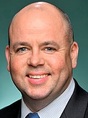
Sam Birrell Nicholls, National Party, Shadow Assistant Minister for Regional Health
The taxpayer.
Anne Webster Mallee, National Party, Shadow Minister for Regional Development, Local Government and Territories
The taxpayer. Thank you. The member for Nicholls is perfectly right. It is the taxpayer. The taxes of those who are earning not even necessarily great wages are going into paying for this fabulous $2.4 billion scheme for the actual home battery scheme.
What is the cost of net zero? Australians are paying somewhere between $120 billion and $140 billion. The figure is a bit washy—really difficult to know. The fact of the matter is that it's taxpayers who are paying the dollars.
The Capacity Investment Scheme alone is aiming to support $73 billion of investment by 2030: $52 billion in generation and $21 billion in storage. That's for the big ones that go mostly onto farm properties. I can tell you right now, for the people of Mallee, for farmers who are wearing this enormous cost by the Labor government to go for that ideological aim of net zero, it is happening out in our electorates. We're paying for it.
The Nationals believe in a much better energy policy which is cheaper, is better and is fairer. We're not planning on diving well and truly above OECD countries of our kind. We just want to match them in real terms—not the promises, not the ideological fanfare that is constantly made, but in real terms. And Australia is already punching well above its weight. There is no way it is justifiable for the Labor government to try to achieve their ideological aims by pursuing families who live in Australia.

Jo Briskey Maribyrnong, Australian Labor Party
3:51 pm
It is the height of hypocrisy for those opposite to come into this chamber and speak the word 'betrayal'. If we want to talk about betrayal, let's talk about the decade of economic wreckage left behind by those opposite. Let's talk about the decade of denial, delay and cuts that stalled our energy grid and gutted the essential services that Australian families rely on. The opposition stands here today pretending to be the champions of everyday Aussies, but there seems to be some amnesia from those opposite.
Let's look at their record. Let's look at the man they are apparently going to elect to lead them, potentially, tomorrow: the member for Hume. Where was he in those decades of those lost years while he was the minister for energy? Under the member for Hume's watch, energy bills didn't just rise; they soared. He presided over a chaotic, ideologically driven era where four gigawatts of dispatchable power left the grid, with only one measly gigawatt put in to replace it. Those opposite didn't just fail to plan; they planned to fail.
We on this side of the chamber know that Australians are under pressure, and we're doing something about it—not 22 failed energy policies. Our plan is clear, and every member on this side of the chamber is united behind that plan. It's to deliver real cost-of-living relief whilst building Australia's future. Since coming into office, we haven't just talked about the problem; we've acted. We are fixing the mess they left behind. We delivered the most significant energy bill relief in our nation's history. And how did the coalition respond to this direct help for Australians they say they champion? They voted against it. Every single time we stand in this House to lower the bills of everyday Australians, they say no. They voted against the Energy Price Relief Plan. They voted against the caps on gas and coal prices. They talk about betrayal. But the fact that they can look into the eyes of struggling families and then go and vote against their bill relief is the ultimate betrayal.
Our government is doing the heavy lifting to rebuild a grid that those opposite ignored for 10 years. We're acting on a suite of energy market reforms to make the market operate more efficiently. We're investing in the renewable revolution. We've launched the Solar Share Offer and the Cheaper Home Batteries Program, ensuring that the benefits of the cheapest form of energy—renewables—are felt in the hip pocket of every Australian. I think of Rhonda and Mark from Travancore in my electorate, who have embraced renewable energy in their household and are now reaping the rewards: cheaper energy prices.
Those opposite may not want to talk about the past, but what about the future? Their decade of denial was a betrayal of the futures of young Australians. By refusing to acknowledge the reality of climate change, they didn't just stall our economy; they risked our children's future. Now they want to double down on that betrayal with a nuclear fantasy that experts say is the most expensive way to generate power and won't be ready for decades. It's a recipe for higher bills and more delay. Well, young Australians cannot afford such reckless policies,
Labor is delivering for working people. We have delivered real wage increases for the first time in a decade, benefiting our educators, our carers and our low-income workers. These are the everyday Australians those opposite say they are the champions of, yet they vote against protecting penalty rates and rail against superannuation reforms that benefit working people.
On health care, we know the cost of living is tough. That's why we've made PBS medicines cheaper, freezing the price of PBS scripts at a maximum of $25—helping people like Fatima in my electorate, who is living with a neurological disorder. She's in her 30s, and the cost of her medicines has been a constant strain on her budget. Fatima represents the many Australians who are benefiting not just from cheaper medicines reforms but from more bulk-billing services, our expanded network of Medicare urgent care clinics and the largest investment in women's health ever.
Those opposite come in here and give speeches about government spending. While we return to our communities tonight to continue delivering for them, those opposite will stay behind for yet another party room meeting, where they'll attempt to knife their first female leader—and they want to lecture us about betrayal!
Sam Birrell Nicholls, National Party, Shadow Assistant Minister for Regional Health
3:56 pm
This topic is about the government's betrayal of Australians due to higher energy costs and other cost-of-living pressures. You will have noticed that we've been asking a lot of questions of the Minister for Climate Change and Energy. What I want to talk about, to begin, is the subject of integrity in campaigning, because I think that's really important. It's one thing to be on the treasury bench, but how you get there, and what you say to get there, matters in a democracy such as ours.
Before the 2022 election, the Labor Party—who spend 80 per cent of their energy on the messaging and 20 per cent of their energy on the actual policy—got RepuTex to do a bit of work for them. Someone came up and said, 'Look, if this happens, this happens, this happens and that happens, people's energy bills could fall by $275.' So the Prime Minister went out before that election campaign and said, 'Australians' energy bills will fall by $275.' I'm going to quote him.
Unidentified interjection - Hansard doesn't record who said this
Opposition Member:
An opposition member interjecting
Sam Birrell Nicholls, National Party, Shadow Assistant Minister for Regional Health
Yes, he said it 97 times. I'm going to quote what the Prime Minister said about that modelling. The Prime Minister said that that modelling, which led to the promise of a $275 fall in energy prices for households, was 'the most comprehensive modelling ever done for any policy by any opposition in Australia's history'. I'm going to repeat that. The RepuTex modelling was 'the most comprehensive modelling ever done for any policy by any opposition in Australia's history'. The people of Australia probably thought: 'Well, they've obviously done the work. If they've done the work, the policy is sound, and, if the policy is sound, we can expect our bills to drop by $275.' There's an inability, on the minister's part, to take responsibility, and that's why we keep asking him about it.
When he gets up to the dispatch box, he starts talking about the home battery scheme. I ask my colleagues and anyone in this place: Did the Prime Minister say, 'Household energy bills will drop by $275 by 2025 if they get a cheaper home battery and they pay 10 grand for it'? Did he add that last bit on? I didn't hear him say that. I just heard him say that their energy bills will be reduced by $275.
It wasn't a plan to reduce prices; it was a plan to reduce coalition seats, and, unfortunately for Australia, it succeeded. But I think it's worth saying that, when you go to the Australian people with a policy and you say it's the most comprehensive modelling you've ever done, you want to have done the modelling and you want to get it right, because now Australians are paying the price.
They're paying the price of a failed energy system that is based on ideology, as many of my colleagues have said. I am a supporter of renewable energy. I think it's a great technology. It needs to be rolled out in the right places, and it needs to be part of a diverse grid. I've spoken before about the Centre for Independent Studies doing some modelling and showing examples from around the world where renewable energy is quite good in a grid up to about 30 or 40 per cent. But, when you get over that, the instability increases, and the prices increase. That is what is happening around the world for the few countries who have tried this, and Australia's attempting to get to 82 per cent renewable energy—intermittent power.
It's not that we don't like renewable energy. It's not that we don't think it has a place, but to put so many eggs in that one basket means that we will get instability of the power grid. That matters for households; I get that. But think about industry that's got to run 24/7. If they don't have reliable energy and if they don't have cheaper energy, I worry—and I'm seeing it in my electorate—that some of those businesses will say, 'It's cheaper and easier to do business offshore.' The global emissions don't change if that happens, but, by gosh, the Australian economy is damaged. People who are employed by those companies lose their jobs. We lose economic activity. The tax receipts will fall. You won't be able to brag about redistributing as much money because you won't be getting as much tax.
It's a real recipe for disaster in the Australian economy. It's causing great damage to families, to workers, to industries. When you go to an election, do the work, get the policy right and be honest with the Australian people; $275 was not honest, and the Australian people are paying the price.
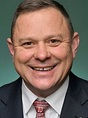
Matt Burnell Spence, Australian Labor Party
4:01 pm
Right now, families across Elizabeth, Salisbury, Gawler and Munno Para are feeling the pinch. Groceries cost more. Power bills bite harder. Mortgage repayments stretch further than they used to. At a time like this, Australians expect their government to focus on them, not on internal squabbles.
The Albanese Labor government is focused on easing cost-of-living pressures. Whilst those opposite fight each other, we are fighting for working people in communities like Spence. We're delivering more tax cuts for every Australian taxpayer. That means workers in Edinburgh, tradies on job sites in Playford and small business employees in Gawler keep more of what they earn. Combined with stronger wage growth and record job creation, that's real support in the weekly household budget.
We've taken decisive action on student debt. We've cut 20 per cent off HELP and student loan balances, wiping an average of $5,500 dollars from individual debts. That's three million Australians nationally carrying a lighter burden. In Spence alone, 19,243 current and former students benefit. That's young apprentices; Uni Hub Playford students; and nurses, teachers and tradies starting their careers in the north. We've changed the repayment system as well. If you're earning $70,000 a year, your annual repayment drops by around $1,300. That's $1,300 staying in your pocket for groceries, fuel, school costs or whatever you choose.
We've made the single largest investment in Medicare since its creation over 40 years ago, because, in Spence, bulk-billing matters. We've expanded the bulk-billing incentive and boosted payments to GP clinics that bulk-bill every patient. More than 3,300 GP practices nationally are now fully bulk-billing. In the north, 21 Medicare centres are delivering that support, and by 2030 nine out of 10 GP visits will be bulk-billed, because we're dedicated to expanding financially accessible services for all Australians.
We've delivered the largest medicines price reduction in the 75-year history of the PBS. No Australian pays more than $25 for a PBS script—concession card holders no more than $7.70. Australians have saved $2 billion at the pharmacy counter, and we've added or expanded those savings to more than 400 medicines on the PBS. For pensioners in Gawler, families in Elizabeth, veterans across the north, that's real relief.
Our Medicare urgent clinics are another game changer. We promised 50; we delivered 124, with more to come. More than 2½ million Australians have received free urgent care. The Elizabeth Medicare urgent care centre is doing outstanding work for the northern suburbs—open seven days, extended hours, fully bulk-billed, no appointment needed. We've also committed $1.1 billion to strengthening mental health services across the country, including new and upgraded Medicare mental health centres offering free walk-in care, because mental health support must be accessible, local and free.
We recognise energy prices are too high. Families across the north know it every time the bill arrives. The people of Spence also understand how important renewable energy is to Australia's future.
That's why our community has embraced the Cheaper Home Batteries Program. We now have the fifth highest battery uptake in South Australia and the ninth highest in the nation. That is the north stepping up. That is households investing in solar and storage to bring down their bills. It delivers real short-term relief through lower quarterly bills and long-term security through cleaner and more reliable energy.
On housing, we are making it easier for Australians to buy their first home. First home buyers can purchase with just a five per cent deposit. If you buy a house in the north, that means that, on average, you will only need a $32,500 deposit to get your foot in the door. That cuts years off the time it takes to save in growing areas like Munno Para, Playford or Gawler. And they won't pay a single dollar in mortgage insurance. We're building 100,000 new homes just for first home buyers, including 17,000 in South Australia—nearly 7,000 reserved for first homebuyers. This is practical cost-of-living relief and an increase in supply.
We've delivered tax cuts, lower student debt, cheaper health care, cheaper medicines, energy bill relief now and energy security for the future, and a fairer path into homeownership. There is more work to do, and we will keep on doing it. Whilst others focus on themselves, we remain focused on everyday Aussies. We're focused on easing pressure, on practical relief and on delivering for every household across the north.

Michael McCormack Riverina, National Party
4:06 pm
I asked the Minister for Climate Change and Energy what I thought was a very reasonable question in question time today. I put to him: why hasn't anyone—just anybody at all—in the Albanese Labor government taken responsibility and just said sorry for failing to deliver the $275 energy bill reduction promised to Australian families? And what did he do back to me? He quoted Taylor Swift. Well, I want to quote another political philosopher, Shania Twain, who once famously said: 'That don't impress me much—oh, oh, ooh. So you got the brains, but have you got the touch?'
Well, I would argue about the minister and brains—I will give him some credit—but he's certainly lost touch with ordinary, everyday Australians. They are hurting. They hurt, especially, every time they get their energy bills because their energy bills are going up and up and up. Indeed, there's been a 38 per cent increase in power costs for the average householder, and this is hurting. Couple that with the cost-of-living crisis, and you can understand why people out there, outside this building, think that the minister has lost touch. And he has; it's sad. We know that energy is the economy. We know, certainly, that food production costs are increasing. The poor old farmers are price takers, not price makers, and their bottom lines are reducing appreciably.
I'm surrounded by my Nats colleagues. We've got the members for Page, Parkes, Lyne, Hinkler and Nicholls—all great food-growing areas, along with the Riverina. I appreciate there are probably some members over there who have areas where food and fibre are grown. I just saw the member for Durack turn around; she's got the biggest electorate in the world. But it takes energy to produce food, and energy is getting more and more expensive. Whether it's the Sunraysia or the Riverina—or wherever it is—it is just costing our farmers so much more. Every step of the way, they are being stymied by this Labor government. They're having to pay more for water, for inputs and for power. But the cost is also being borne by everybody, every time they go to a supermarket. They get to the register and see that they've got less in their trolley, but it's costing them more. They can't afford it. They're having to make expensive decisions, and it costs their families; it does. We heard—earlier, in question time—about families having to choose one sport over another for their kids. This Labor government is just rushing policy through this place in haste. They're not considering the average, ordinary, everyday Australian when they make these policy decisions on the run.
We heard the member for Nicholls talking about renewables. He's right—there's nothing wrong with renewables, but it has to be in balance. Indeed, one in four homes had rooftop solar under the former coalition government. It was the highest in the world. I know the Labor government crow about it and say, 'Oh, we're fantastic in that regard,' but we were getting to work on reducing power costs.
Those opposite are only hurting people with higher energy prices, and it has to stop. The buck has to stop somewhere; it stops with this government. The government said they were going to address the cost-of-living crisis but spent the first 18 months putting in place a $450 million referendum on the Aboriginal and Torres Strait Islander Voice, dividing Australians and, certainly, getting nothing from that. When you get the minister responsible for hoping to bring down energy costs, all he can do is quote Taylor Swift—nothing against Taylor Swift, but he needs to get absolutely serious about the energy costs of this country.
In the Upper Lachlan shire, where they actually support 53 per cent of New South Wales's green energy projects, they're getting blackouts all the time. Then they're expected to put in more towers—towers as high as 260 metres. It's going to cover the countryside of the Yass Valley and the Upper Lachlan shire, when they're already paying the most when it comes to green energy projects. It has to stop. This government has to stop the reckless rollout of renewable projects, because it's hurting regional Australia, particularly my electorate of Riverina.

Tom French Moore, Australian Labor Party
4:11 pm
I rise to address the claim that Australians have been betrayed through higher energy prices and cost-of-living pressures. It's a serious allegation, but it should be tested against facts, history and responsibility. The rhetoric is loud, but the history is inconvenient.
Let us start with energy. Wholesale electricity and gas prices did not suddenly become volatile because of a change of government. They were hit by a global energy shock following the war in Ukraine. They were strained by an ageing coal fleet reaching retirement. They were constrained by inadequate transmission. They were weakened by a decade of stalled reform and policy drift. Those structural reforms were not new; they were inherited—a bit like their wealth.
For nearly a decade, there was no settled national energy framework capable of attracting long-term capital from the so-called party of business. Announcements were made, schemes were floated, leaders were replaced, policies were rebadged and reannounced, and investors were left waiting. Energy systems are capital intensive and long dated. If you delay decisions for political convenience, you do not avoid costs. You compound them.
Member for Page, I strongly suggest you visit regional Western Australia and see those remote communities and those mine sites you love so much adding renewables because of the savings—in the mining industry. Energy systems do not respond to slogans. They respond to steel in the ground and capital committed—capital, concrete, copper.
Let us not forget another uncomfortable chapter, the great privatisation experiment. Across this country, Liberal governments have sold poles and wires, they've sold generation assets, and they promised efficiency, competition and lower prices. Australians got higher network costs, vertically integrated gentailers with significant market power and a regulatory maze that made genuine competition harder, not easier. You cannot sell the family silver, pocket the proceeds and then express shock when the new owners seek a commercial return. Once the assets are sold, governments lose direct leverage over pricing and planning. That is not ideology. This is corporate law.
What Australians saw much of the last decade was drift. What investors saw was risk. What households experienced was volatility. Since forming government, we have taken practical steps. First, we've delivered targeted energy bill relief to households and small businesses. That has directly reduced pressure and contributed to moderating inflation. Second, we've accelerated transmission investment and supported new generation and firming capacity so that reliability is maintained as ageing coal exits the system. Reliability is sustained by engineering and investment, not by a press conference. Third, we strengthened market oversights and competition settings to ensure Australians are not paying more than they should. Importantly, wholesale electricity prices have come down from the extraordinary peaks seen during the global energy shock. That stabilisation matters. Wholesale markets drive retail outcomes. Reduced volatility is not accidental; it reflects coordinated intervention and new supply entering the system.
On the broader cost-of-living question, context matters. Inflation surged across advanced economies. Europe, North America and Asia have all faced the same pressures: supply chain disruption, labour shortages and energy shocks.
The cost-of-living pressures Australians face are real, and no responsible government dismisses them. We have taken inflation seriously since day one. The responsible course in that environment is not to inflame demand or abandon fiscal discipline; it is to stabilise inflation, provide targeted relief, restore wage growth and maintain credibility. Inflation has moderated from its peak, real wages have returned to growth, and tax cuts have been delivered to every taxpayer. Cheaper medicines, expanded child care and energy rebates have reduced household pressure. That is not betrayal; that is disciplined management in difficult global conditions.
In 1964, Donald Horne wrote The Lucky Country. It is often quoted as praise, but it was not; it was a warning. He warned of a nation run by second-rate people—I'm looking at you guys over there—who relied on luck rather than leadership, of shopkeepers and ticket clippers content to take margin from the system rather than build new capability. For too long, energy policy resembled ticket-clipping economics, defending ageing assets, delaying reform, avoiding hard decisions and hoping the market sorts it out. Energy markets do not reward hope; they reward planning.
Sharon Claydon Newcastle, Australian Labor Party
Member for Lyne, I'd actually like to hear the member for Hinkler right now.
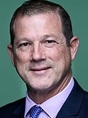
David Batt Hinkler, Liberal National Party
4:16 pm
I rise to support the member for Page, who today provides the House with the important fact that this government's betrayal of Australians due to higher energy costs and other cost-of-living pressures is out of control. Only late last year, I hosted the Deputy Leader of the Nationals in my electorate of Hinkler, one of the lowest socioeconomic regions of this country, and he was able to see firsthand that Labor's mismanagement is hitting Hinkler hard.
As of late 2025, the average weekly rent for houses in Hervey Bay was sitting between $625 and $650. That's a super tight, high-demand market with vacancy rates below one per cent. I recently toured the ever-expanding Hervey Bay Neighbourhood Centre with CEO Tanya Stevenson and committee member Bernard Whebell. The organisation develops and delivers programs and services in response to community needs, and one of the most pressing is the need to support vulnerable people who are feeling the immense squeeze of Labor's cost-of-living crisis. When power prices rise and keep rising under Labor, this impacts the wellbeing of our community, and organisations like the neighbourhood centre step up and are busier than ever. A drop in transport access for the elderly means a loss of connection and not attending medical appointments.
Demand for emergency relief is skyrocketing. The neighbourhood centre's Comfort Kitchen usually serves 80 meals every Wednesday night. It's now around 120, and the growth area, sadly, is in children's meals. More people are coming in for help with housing support, but there's very little left to provide. This week, I also heard from the Salvos in Bundaberg, where Captain Chris Millard described a 20 per cent rise in demand at Christmas time. More people need food and essentials than ever before. This growing list of essential needs is simply too expensive under this government. Labor has presided over the biggest collapse in living standards in the developed world while fuelling an addiction to spending that is driving up the cost of living today and leaving a $1.2 trillion debt bomb for the next generation. Under Labor, we have experienced the largest decline in living standards in the developed world.
Mortgages are up by an average of $1,800 a month after 12 rate rises. Labor's spending has blown out from 24 to 27 per cent of GDP, the highest level outside of a recession in nearly 40 years. Every minute, we are paying $50,000, or $72 million a day, just in interest on Labor's debt. Every dollar that pays interest is a dollar we can't spend on aged care, on Medicare, on schools, on hospitals or on tax relief. We cannot put unsustainable spending on the national credit card for our kids to pay back tomorrow through Labor's higher taxes. After nearly four years of Labor, Australians are paying more for everything. Insurance is up by 39 per cent, energy is up by 38 per cent, rent is up by 22 per cent, health care is up by 18 per cent, education is up by 17 per cent and food is up by 16 per cent.
When I return home over the coming weeks, I will be asked, 'What will the coalition do about this mess?' We'll take the pressure off families, fix the budget and keep Australians safe. We will start by cutting income tax and easing cost-of-living pressures. We'll get the budget under control and stop the waste. We'll introduce affordable energy and responsible emissions reduction. Importantly, we must keep Australians safe at home and secure our borders. It's in our DNA to keep backing small business, growing the economy and creating jobs. We'll cut red tape, support enterprise and get more Aussies into work.
The Nationals have led the plan for a cheaper, better and fairer future, with regional Australia at the heart of this sensible policy. Our energy and climate plan is to lower prices first by amending the rules to prioritise the lowest energy prices, to do our fair share by aligning ourselves with comparable nations and to create a fair go for all by scrapping senseless carbon taxes and reducing the regions' heavy burdens. Empowering local solutions, we'll support the local initiatives on the ground that make a positive environmental difference, and we'll support all technology. It's not just about ruling out renewables but about having a sensible approach and a sensible mix. For protecting our security, we must prioritise defence, our critical minerals and our food and fuel security.
The Salvos in Bundy and the neighbourhood centre in Hervey Bay, like many service providers, are going to need more support to deliver and answer the constant calls for food, shelter and general expenses. It's about the weekly shop, the monthly power bill, the rent and the mortgage. This is Labor's cost-of-living crisis. Labor spends, prices rise and Australians pay.

Sarah Witty Melbourne, Australian Labor Party
4:21 pm
'Betrayal'—it is a dramatic word. It is meant to suggest abandonment. It's meant to suggest indifference. But I represent Melbourne. I know what indifference looks like! I saw it before I entered this parliament. As a CEO of a not-for-profit, I worked with families across Melbourne who had never asked for help before—parents in Carlton, South Yarra and Abbotsford, workers and professionals. They were people who had always paid their bills. When the power bill rose, the rent rose and the grocery bills crept higher, the numbers stopped adding up. What I learned on the front line is simple: governments' choices matter. When government steps up, families steady. When governments drift, families fail.
Energy prices have been volatile; that is true. But they did not rise in isolation. The Albanese Labor government inherited a system where 24 of 28 coal-fired power stations had announced closures without a proper replacement plan. There was a decade of stalled transmission projects, a decade of policy chaos and denial. That is the context. The Albanese Labor government acted strongly, with three rounds of energy bill relief, caps on runaway coal and gas prices, and record investment in cheaper renewable energy and storage. Wholesale electricity prices fell by around a third last quarter. That matters in Melbourne, where renters and families feel every change.
We are reforming the energy rules so that the market works better for customers, not just retailers; tightening the default market offer; cracking down on unfair fees; and ensuring hardship customers are placed on the best available plan. We are delivering more than 150,000 cheaper home batteries nationwide, helping households store cheap solar power and permanently lowering bills. This is not a short-term fix. This is a structural reform that reshapes the system.
The Albanese Labor government has never claimed energy reform alone would solve cost-of-living pressures. That is why this government's response has been broader and relentless. Tax cuts for every Australian taxpayer are already flowing, with two further rounds legislated. By 2027-28, the average annual cut will be around $2,548. We cut student debt by 20 per cent, the largest reduction in Australian history. In my electorate alone, more than 36,000 people carry student debt. That cut means thousands of dollars wiped away from each and every one of them.
The Labor government reduced the PBS co-payment to $25. In Melbourne, residents have saved more than $18.8 million on cheaper medicines. We have strengthened Medicare; opened urgent care clinics, including in Carlton; backed increases to minimum and award wages; delivered back-to-back increases in Commonwealth rent assistance; provided cheaper child care; extended TAFE; and supported apprenticeships in housing and construction. This is not a government standing back; this is the Albanese Labor government getting on with the work, rebuilding and delivering.
Let us be honest about the alternative. Under the former coalition government, real wages went backwards, bulk-billing fell, housing supply stalled and energy policy was paralysed. They had 10 years to prepare the grid, 10 years to strengthen housing supply and 10 years to protect Medicare. They did not. That speaks of betrayal. In Melbourne, betrayal would be doing nothing. Betrayal would be telling renters in Fitzroy that the market will sort it out. Betrayal would be telling young people in Collingwood to accept lifelong debt. The Albanese Labor government rejects that approach. We are cutting student debt while investing in productivity. We are making medicines cheaper while protecting Medicare. We are backing housing supply so Melbourne does not become a city only the wealthy can afford.
I represent a city that organises, mobilises and demands fairness. Melbourne does not want slogans; Melbourne wants delivery, and that is what the Albanese Labor government is providing—practical relief, long-term reform and relentless action for working people. That is not betrayal; that is a government standing shoulder to shoulder with the people of Melbourne. That is a government that stands, fights and delivers for working Australians, and that is a government I am proud to be part of.
Sharon Claydon Newcastle, Australian Labor Party
The discussion has now concluded.