
House debates Bills
National Commission for Aboriginal and Torres Strait Islander Children and Young People Bill 2026, National Commission for Aboriginal and Torres Strait Islander Children and Young People (Transitional Provisions) Bill 2026; Second Reading

Renee Coffey Griffith, Australian Labor Party
4:19 pm
I would like to acknowledge the Ngunnawal and Ngambri peoples as the traditional custodians of the land on which we meet here, and I pay my respects to elders past and present. I extend that respect to Aboriginal and Torres Strait Islander peoples across our country and to the children and young people whose rights and futures we are speaking about today.
This week marks 18 years since the National Apology to the Stolen Generations. On 13 February 2008, this parliament acknowledged the deep wrong of forced removals and the lasting harm done to children, families and communities. I was here in this very chamber—however, up there in the gallery—as Kevin Rudd delivered this apology. It was a profound experience for us as a nation and a profound experience for me personally—one that ultimately led me to join the Australian Labor Party later that year. Anniversaries like this are not only for reflection; they are a reminder of our responsibility to act and to keep acting, especially when the systems around children still too often fall short.
In my electorate of Griffith, we are a community of families. We see the joy of early years, the persistence of adolescence and the pressure that comes when the basics are harder to afford. We also see how quickly a family can end up dealing with systems that feel bigger than them and how difficult it can be to navigate forms, waiting lists, eligibility rules and countless different channels when what you are really asking for is simple: safety, support and stability for a child.
That's why I rise to support the National Commission for Aboriginal and Torres Strait Islander Children and Young People Bill 2026 and National Commission for Aboriginal and Torres Strait Islander Children and Young People (Transitional Provisions) Bill 2026, which will establish an independent national commissioner and national commission dedicated solely to Aboriginal and Torres Strait Islander children and young people. This fills a national gap, ensuring the voices of Aboriginal and Torres Strait Islander children and young people are strongly reflected in advice to government and that there is a clear, coordinated national focus on systemic issues and our human rights commitments.
The need is urgent. Aboriginal and Torres Strait Islander children and young people face high and persistent levels of disadvantage, and the overrepresentation in child protection and youth justice is stark. Aboriginal and Torres Strait Islander children are 11 times as likely to be in out-of-home care as non-Indigenous children and 27 times as likely to be in youth detention as non-Indigenous children. That I am still citing these facts this many years after the first time that I spoke about this is of deep shame to me. Those figures represent children with names, families and futures. They also reflect systems that too often respond late, respond punitively or respond without cultural safety.
In Griffith I have heard from families and community organisations about the importance of early help, stable housing, safe schools and culturally strong supports that wrap around children before crisis hits. I've also heard a consistent message: keep children connected to family, culture and community wherever possible and back community controlled solutions.
This is where the national commissioner matters. The role is designed to promote the rights, interests, development, safety and wellbeing of Aboriginal and Torres Strait Islander children and young people while recognising and building on their strengths. Crucially, it supports children and young people to assert their own rights and interests and ensures their views, needs and experiences shape the policies, programs and services that impact their lives.
The bill also gives the commissioner the practical functions and powers to do the work properly—promoting coordination across Commonwealth entities; advising government on relevant policy and service delivery; undertaking research into systemic barriers; running education programs; conducting inquiries and making recommendations; collaborating with the Human Rights Commission and other relevant bodies; and engaging with international human rights mechanisms where appropriate. This is a systemic reform for a systemic problem. It strengthens accountability across all of government and supports progress on Closing the Gap targets related to children and young people, including the areas where disparities are most severe: in out-of-home care and in youth detention.
This is also why primary legislation is necessary. Interim arrangements can begin important work, and they have, but they do not provide the full authority required to conduct inquiries, make recommendations, report to parliament and use the information-gathering and coordination powers needed to drive lasting change. We have already seen what a dedicated national focus can achieve. Since being established in January 2025, the National Commissioner has been meeting with Aboriginal and Torres Strait Islander community controlled organisations and leaders, and with commissioners, guardians and advocates across jurisdictions, to build strong relationships and identify opportunities for collaboration and change. The commission has been convening networks to address issues affecting children and young people, providing advice to government on policy reform and developing systems to ensure it engages with children and young people in a safe, culturally appropriate and trauma-informed way, including through a child-safe framework.
There is also strong stakeholder support for this reform. Aboriginal and Torres Strait Islander advocates have called for a legislated national commissioner over an extended period, with more than 70 organisations uniting behind this request. That consensus matters. SNAICC has welcomed the bills as a critical step, pointing to the importance of a strong national voice to strengthen accountability. I would like to thank them for their tireless advocacy over many years in this area. The Australian Human Rights Commission has also welcomed the bills, reinforcing that every child has a right to feel safe, to live with dignity and to have opportunities to thrive. Organisations working directly with children and families have similarly recognised the value of a strong, independent, national role dedicated to Aboriginal and Torres Strait Islander children.
Supporting Aboriginal and Torres Strait Islander children and young people is a cause very close to my heart. In my career before entering this place I have had the great honour of working alongside and in support of so many remarkable Aboriginal and Torres Strait Islander children and young people. For 13 years, I worked with the Australian Indigenous Education Foundation, most recently as their deputy CEO. In that time, AIEF provided transformational scholarships to more than 1,000 Aboriginal and Torres Strait Islander children. These children, many now adults and who I count among my friends, have been a joy, an inspiration and an honour to get to know and watch as they thrive and flourish in their careers and in their lives.
Like the member for Goldstein, I too would like to acknowledge the work of the Tudor family and the Melbourne Indigenous Transition School, MITS. Through my close work with and observation of the work of AIEF and the Melbourne Indigenous Transition School, it has reinforced something I carry into this place: young people thrive when they are met with high expectations, practical support and a genuine sense of belonging.
I want to acknowledge Aunty Muriel Bamblett and the many Aboriginal and Torres Strait Islander leaders and community controlled organisations who have been calling for stronger national accountability around Aboriginal and Torres Strait Islander children, especially since SNAICC's 2003 State of denial report but for much longer before that as well.
When speaking on Aboriginal and Torres Strait Islander children, I would also like to take this opportunity to acknowledge my dear friend and mentor, Professor Peter Buckskin PSM FACE, who has been on my mind a lot recently. Peter is a Narungga man from the Yorke Peninsula in South Australia. He worked for over 30 years in Aboriginal and Torres Strait Islander education. In his early years he worked as a classroom teacher in Western Australia and South Australia. He's been a ministerial adviser, a superintendent of schools and a senior executive at both state and Commonwealth levels. He retired as the Dean of Aboriginal Engagement and Strategic Projects at the University of South Australia, and before that he was the Dean of Indigenous Scholarships, Engagement and Research.
I was so fortunate to work with Peter during my time with Reconciliation South Australia in the mid-2000s, when he was co-chair. This period of my life and my ongoing friendship with Peter has played a profound role in shaping my understanding of how best to support thriving, proud and strong Aboriginal and Torres Strait Islander communities. Peter is a strong advocate for Aboriginal and Torres Strait Islander children—a passionate believer in the importance of high expectations and quality, culturally grounded education. He's also such a remarkable man.
I want to close with a quote from Peter from when he was asked what his hopes were for Aboriginal and Torres Strait Islander children:
In the words of Martin Luther King, I hope to see a time when our children 'will be judged on the basis of the content of their character, not the colour of their skin'. I hope we have a future where our children have the capacity to keep true to their Aboriginal and/or Torres Strait Islander cultural identity and are honoured for their contribution to Australia as descendants of the oldest living culture of humanity. Finally, I hope we recruit more warriors to champion this work.
It is my hope that the National Commission for Aboriginal and Torres Strait Islander Children and Young People will do just that.

Michael McCormack Riverina, National Party
4:30 pm
Gerard Neesham is a celebrated Australian football player and coach in Australia. He played in five West Australian Football League premiership teams and is a member of the West Australian Football Hall of Fame. He's a former coach of Fremantle. He played for the Sydney Swans as well as other clubs throughout his celebrated career. But the best thing that he perhaps will be remembered for is the fact that he established Clontarf. He steps down from his position as chief executive officer of that organisation this year.
I'll give you a few statistics about Clontarf, which gives hope to young Aboriginal people. It supports 12½ thousand students at 161 academies, including 1,100 year 12 students, final year students who but for Clontarf would not, perhaps, be sitting for those final exams and who would not, perhaps, have the opportunities that will be afforded them because they've stayed the course at school. And that is in no small measure due to the work of Gerard Neesham. I thank him for the role he has played to enable young Aboriginal boys, in particular, to be the best versions of themselves.
In his remarks on retiring from the position he acknowledged some key people he has worked with in his 26 years of service to Clontarf: Ross Kelly, the founding chair; and Craig Brierty, who has stood alongside him for most of the journey. He said that he appreciates the role that government and corporate partners have played, and the dedicated staff, past and present. He also said this:
I would like to acknowledge
… … …
… most importantly, the thousands of young men who have been Clontarf members. Your stories of success, resilience and contribution to your communities are the true measure of Clontarf's legacy.
It's organisations such as this and people such as Gerard Neesham OAM who, I think, hold the key.
I appreciate that the government is pushing for a national commissioner. This bill, the National Commission for Aboriginal and Torres Strait Islander Children and Young People Bill 2026, and the related bill transition the national commission from its current status as an executive agency to an independent statutory agency. The legislation defines the commissioner's objectives as promoting, improving and supporting the rights, safety and wellbeing of Aboriginal and Torres Strait Islander children while driving greater accountability for policies impacting this group. That's what the legislation says. But will it? That's the question.
We all want what is best for young Aboriginal and Torres Strait Islanders. We all need to work towards the common goal of ensuring that they are not overrepresented in incarceration rates, that they have a future—the sort of future that Clontarf would lay out for them,
The Commissioner will be—I will say 'will be' because we know that this legislation will pass this House, given the Labor government's huge majority of 50-plus seats. It may be amended in the Senate, but who would know? The bill has a financial impact of $33½ million. Whilst that might sound like a reasonably large figure in the scheme of the money that goes towards Indigenous issues, it's not. That money would be well spent if the commission was not building yet another bureaucracy, duplicating much of the work of existing Commonwealth, state and territory bodies. That's where I think the issue for this particular legislation and this particular initiative lies. It does duplicate the work already being done by existing bodies such as the National Children's Commissioner and the Aboriginal and Torres Strait Islander Social Justice Commissioner with the Australian Human Rights Commission. We want to see the best for people who, as members quite correctly point out, are the oldest continuous culture on Earth. We want to see their youth in particular being given the same opportunities as anybody else in this country. But does this bill do this? I'm not so certain.
The new position is essentially about consultation, providing advice to government and undertaking research and advocacy responsibilities that already exist within roles across government. I do wonder, not just with this bill but with others besides, that we are seeing a constant decay and erosion of responsibilities that once lay firmly and squarely and fairly with a minister. Under the Westminster system, ministers carry a lot of responsibility, as they should, and ministers are elected and then appointed by prime ministers through the cabinet process. They wear that responsibility not just as a badge of honour but as a duty to improving the outcomes and the futures of Australians. If we as a parliament keep watering down that level of responsibility by people who are ministers of the Crown, then what we're doing is just giving rubber stamp value to the role that they play.
We can't have the bureaucrats down the hill running the whole show. I have every faith and trust in the public servants, who serve us very, very well. They do. I saw the best of public servants during COVID-19, when this country was very much facing the prospect of losing tens of thousands of people. Public servants such as Steven Kennedy, Simon Atkinson and others did a mighty and amazing job—and also, no doubt, in the Aboriginal and Torres Strait Islander space. What we saw during that time was vaccines going out to remote Aboriginal communities at the same time, or at almost the same time, as in metropolitan Australia. That was right, and that was just, and that was overseen by public servants.
Public servants aren't elected by the people of Australia, but ministers are elected by a process. We all go to an election, we put our name on a ballot paper, and the Australian people vote accordingly. We can't keep watering down and eroding the value and the responsibility of a minister. This is what I believe this legislation and other bills that the Labor government is bringing before this House and the Senate are doing. That's what's happening. We must protect our ministers' responsibility. People say that ministers will have too much power. No, they won't. If they err—I see the minister at the table, the member for Sydney, smiling.

Tanya Plibersek Sydney, Australian Labor Party, Minister for Social Services
You're worried I'm going to have too much power?
Michael McCormack Riverina, National Party
Well, Minister, you would know. You're an experienced minister, and I do have a lot of faith and trust in you. I do, and you know that.
Tanya Plibersek Sydney, Australian Labor Party, Minister for Social Services
I appreciate it.
Michael McCormack Riverina, National Party
I hear you say you appreciate it, and I genuinely mean that. But if Minister Plibersek or I when I was the minister did the wrong thing, let me tell you, we were hauled before the court of public opinion for doing so. That great old pub test. The media will soon catch you out. Besides, when you're a minister you've got a lot of responsibilities to do the right thing. I know that ministers in the Labor, Liberal and National parties take those responsibilities very seriously and earnestly, as they should.
There are already Indigenous-specific children's commissioners in the Australian Capital Territory, Queensland, South Australia and Victoria. Do we need more? Do we need another layer and level of bureaucracy? I doubt it. The Department of Social Services is also already required to consult children and young people, and we know that children and young people are our future irrespective of race, creed or whatever else. But the focus should be on ensuring existing bodies do their jobs, not on creating new bodies and then almost abrogating the responsibility that should lie with existing agencies and the minister.
In his book The Gulf Country: The Story of People and Place in Outback Queensland from 2019, Richard J. Martin writes, 'Aboriginal people on the stations were most commonly involved in stockwork, where their understanding of country and skill with animals were highly valued by the pastoralists.' I use this reference for this particular bill not because I'm straying off the topic—I'm not—but because what we saw in the outback country of the gulf land in Queensland, in the Northern Territory and in other parts was an opportunity taken away from young Aboriginal people when a previous Labor government on 7 June 2011 stopped the live cattle trade to Indonesia.
Mr Martin writes: 'The contributions of Aboriginal women were commonly around the homestead, where they worked as domestics or in the garden. Both men and women helped to look after children.' In this book—and it is a good book and I recommend it—he praises the work and role done by Indigenous communities, and Indigenous people moreover, particularly in agricultural work, to the point where he said they were the best at it of those in Australia employed and engaged in the practice of stockwork. Many of those Aboriginal people lost the opportunity to continue that work when, in a knee-jerk reaction, Labor stopped the live cattle trade. It was a shameful decision that was subsequently overturned. It didn't help the young Aboriginal stockmen who stopped doing it and were never re-engaged in the process. And I say that because many of them were young. Many of them were either just school leavers or getting into the trade as teenage boys.
We need to give Aboriginal youths every hope and prospect of being able to be their best selves. I'm not so certain that this legislation does that. We don't need another onerous layer of legislation. Some might say 'costly'. I would argue against that point. I would say that the $33 million or so would be far better spent in going to the nub of some of the real Aboriginal youth issues. You won't find them in Canberra. You won't find them generally in the eastern states. But anybody who's ever been to Alice or Katherine or Arnhem Land or anywhere else in the Northern Territory—and I know the member for Lingiari would back me up here—will see where money needs to be spent in the Indigenous space.
I know how hard I fought, with the member for Solomon and the former member for Lingiari Warren Snowdon, to ensure that the Northern Territory had two seats. I did that against the best wishes, let's say, of our coalition partners at the time—not that I want to open up old wounds or even current ones! Why is it right that people in Katherine would have to travel hundreds upon hundreds of kilometres to see their local federal member who would be in Darwin? I don't always think people in Canberra get that. I don't always think people in Canberra understand that.
For the best outcomes for our Aboriginal youth, we need to make sure that money is being spent where it best meets the needs, wants, hopes and expectations of people in those remote Indigenous communities. I don't think this legislation does that, and I think we would be far better off going back to the drawing board and thinking this through again.

Carol Berry Whitlam, Australian Labor Party
4:45 pm
I acknowledge the traditional owners of the lands across Australia, and I pay my respects to their elders past and present. I acknowledge and celebrate that First Nations Australians are the custodians of the oldest living culture in the world. As an Australian, I am deeply proud of our 65,000 years of First Nations history.
As a young lawyer, my first case was representing the Sandon Point Aboriginal Tent Embassy in the Land and Environment Court, supporting their fight for recognition of important First Nations history on local Illawarra land that went on to become a housing development. I saw firsthand how local elders felt about their history being undervalued and unrecognised. I felt their desire for self-determination and the deep pride they felt in their culture.
As CEO of the Illawarra Women's Health Centre, I was proud to lead consultation and engagement with Aboriginal women in the community of Warilla and in my electorate of Whitlam. Creating culturally safe spaces and recognition and valuing culture is critical for the wellbeing of First Nations Australians, and I was proud to support their work and honoured to work with local First Nations women who were advocating for stronger recognition of culture, for better services, for economic opportunities and for better support in the community.
Earlier this week, I was proud to rise in parliament to recognise Aunty Lindy Lawler, an Aboriginal elder, Yuin woman and survivor of the stolen generations. Aunty Lindy was stolen from her family when she was just five months old. Aunty Lindy is highly respected across the Illawarra, including in my electorate of Whitlam, for her wonderful work across many areas, including mental health, cultural education and mentorship. I met Aunty Lindy while working at the Illawarra Women's Health Centre, and I saw firsthand the value of her work in defending, valuing and celebrating her people and her culture.
Today I'm proud to support the National Commission for Aboriginal and Torres Strait Islander Children and Young People Bill 2026 and the National Commission for Aboriginal and Torres Strait Islander Children and Young People (Transitional Provisions) Bill 2026, which deliver on the Albanese government's commitment to establish a legislated, independent and empowered national commissioner and national commission for Aboriginal and Torres Strait Islander children and young people. The Prime Minister announced the establishment of the national commissioner in 2024, and the national commission commenced its operations on 13 January 2025.
The inaugural national commissioner, Sue-Anne Hunter, began her term on 1 September 2025, and since her appointment she's held many meetings with Aboriginal and Torres Strait Islander community controlled organisations and leaders and with state and territory and national commissioners, guardians and advocates to build strong relationships and identify opportunities for collaboration and change. She has been providing advice to government on policy reform that affects Aboriginal and Torres Strait Islander children and young people, and she's been developing systems and policies such as establishing a child-safe framework for the national commission to properly engage with children and young people in a safe, culturally appropriate and trauma informed way. As the current and ongoing national commissioner, Sue-Anne Hunter has been consulted in relation to these bills, one of which will transition the office of the national commission from an interim executive agency to a permanent statutory agency that is Aboriginal and Torres Strait Islander led and independent from government.
In 2019, over 70 organisations united to call for a national Aboriginal and Torres Strait Islander commissioner to hold systems and services accountable, and there remains strong stakeholder engagement and support for these bills. They've been informed and shaped by in-depth consultations which began in 2023 and have included state and territory children's commissioners, guardians, advocates, peak organisations and Aboriginal and Torres Strait Islander youth advisory groups, as well as Aboriginal and Torres Strait Islander community controlled organisations. Consultation has also taken place with the National Indigenous Australians Agency, numerous government departments, the Australian Public Service Commission and the Commonwealth Ombudsman.
These bills support the Albanese government's ongoing commitment to improving life outcomes for Aboriginal and Torres Strait Islander children and young people. The national commissioner established by these bills fills a gap and will ensure the voices of Aboriginal and Torres Strait Islander children and young people are strongly reflected in advice to government. This is critically important. I note the bills make it clear that the national commissioner will always be an Aboriginal person or a Torres Strait Islander and that Aboriginal and Torres Strait Islander peoples are involved in designing a merit based process for the selection of the national commissioner that has regard to the interests and needs of Aboriginal and Torres Strait Islander children and young people.
This is a strategic, nationally coordinated initiative that is critically important, because the scale and urgency of system failures for Aboriginal and Torres Strait Islander children and young people is profound. Aboriginal and Torres Strait Islander children and young people face high and persistent levels of disadvantage. They are 11 times more likely to be in out-of-home care and 27 times more likely to be in youth detention than non-Indigenous children. This bill will provide an independent, dedicated agency focused on the systemic failures affecting outcomes for Aboriginal and Torres Strait Islander children and young people across Australia. The National Commissioner for Aboriginal and Torres Strait Islander Children and Young People will drive accountability to support all governments to better achieve outcomes for Aboriginal and Torres Strait Islander children. The national commissioner has the potential to make a significant and lasting impact on the lives of more than 400,000 Aboriginal and Torres Strait Islander children and young people across Australia.
These bills will enable the national commissioner to: (1) promote the rights, interests, development, safety and wellbeing of Aboriginal and Torres Strait Islander children and young people, and acknowledge and build on their strengths; (2) improve development, safety and wellbeing outcomes for Aboriginal and Torres Strait Islander children and young people; (3) identify systemic issues and barriers to Aboriginal and Torres Strait Islander children and young people's development, safety and wellbeing; (4) support Aboriginal and Torres Strait Islander children and young people to assert their own rights and interests and to raise awareness of their views, needs and experiences; (5) increase awareness of Aboriginal and Torres Strait Islander children and young people's rights, interests, views, needs and experiences, and the importance of these factors in developing and delivering policies, programs and services that affect their lives; and (6) drive greater accountability to improve government policies, programs and services to deliver better outcomes for Aboriginal and Torres Strait Islander children and young people.
The bills enable specific functions and powers for the national commissioner to promote and enhance the coordination of effort among Australian government entities and officials; provide advice to the Commonwealth on the development and delivery of relevant policies, programs and services that affect children of Aboriginal and Torres Strait Islander descent; undertake research into systemic issues and barriers that affect the rights, interests, development, safety or wellbeing of Aboriginal and Torres Strait Islander children and young people; provide educational programs for young people and children to empower them to promote and advocate for their views, needs and experiences on the matters that affect them; publicly advocate to promote the rights, interests, development, safety and wellbeing of Aboriginal and Torres Strait Islander children and young people, and to amplify their voices and strengths; engage with a broad range of Aboriginal and Torres Strait Islander children and young people to support them to assert their own rights, agency and leadership; conduct research and inquire into matters and to make recommendations; accept referrals; refer matters to another entity; contribute to inquiries; provide advisory services; collaborate with the Australian Human Rights Commission and other organisations and entities; and, importantly, engage with international human rights mechanisms, including relevant United Nations bodies and processes.
Importantly, these bills support Closing the Gap targets related to children and young people. The national commissioner will have the functions and powers required to drive accountability and influence issues that disproportionately impact Aboriginal and Torres Strait Islander children and young people, such as out-of-home care and youth detention. An empowered, independent commissioner at the Commonwealth level that is solely focused on Aboriginal and Torres Strait Islander children and young people will drive national coordination and accountability to address these important systemic issues. The role will work with relevant counterparts, including all state and territory children's commissioners, guardians and advocates as well as other Commonwealth roles like the National Children's Commissioner and the Aboriginal and Torres Strait Islander Social Justice Commissioner. I note the national commissioner will not duplicate other existing roles. They can make and receive referrals where required, to ensure issues raised are addressed by the most appropriate bodies. So why is this standalone legislation needed? It is needed to ensure the national commission is an independent voice to drive accountability and better outcomes for Aboriginal and Torres Strait Islander children and young people, to advocate for the rights of Aboriginal and Torres Strait Islander children and young people, and to drive important systemic change.
Aboriginal and Torres Strait Islander advocates have long called for the establishment of a legislated national commissioner, and, as I mentioned earlier, there is very strong stakeholder support for a national commissioner right across Australia. The Albanese Labor government is focused on improving the lives of First Nations peoples through economic empowerment, job creation, health improvements and housing. We are resolutely committed to reconciliation and celebrating the profound contribution that Aboriginal and Torres Strait Islander peoples make to our nation.
This morning at Parliament House, I joined the Minister for Indigenous Australians, the Minister for Social Services, the member for Lingiari and many other members of parliament and representatives from the First Nations community for the launch of Australia's first Aboriginal and Torres Strait Islander national plan to end family, domestic and sexual violence. The plan is entitled 'Our Ways—Strong Ways—Our Voices', and it has been developed in partnership with Aboriginal and Torres Strait Islander peoples and state and territory governments to address the disproportionately high rates of violence against Aboriginal and Torres Strait Islander women and children.
The plan is backed by $218 million in funding over four years, with an immediate investment in a national network of up to 40 Aboriginal community controlled organisations to deliver community led support services that help Aboriginal and Torres Strait Islander women and families who are experiencing family, domestic and sexual violence. This new funding is in addition to the record $262 million the Albanese government has already invested in addressing immediate family, domestic and sexual violence safety needs, particularly in relation to Aboriginal and Torres Strait Islander families and communities, through the Aboriginal and Torres Strait Islander Action Plan and our investment of $367 million to more than double funding for the family violence prevention legal services, as part of the National Access to Justice Partnership 2025-30. We are making this significant investment to address family, domestic and sexual violence, because it is a crisis in our nation. Our government recognises this, and we are investing in action plans to ensure that we start to address these issues in a very profound way.
There is so much more work that needs to be done to improve the lives of First Nations people in this country, but the 'Our ways—Strong Ways—Our Voices' plan is yet another example of the Albanese government's action to close the gap. It was almost 18 years ago, on 13 February 2008, that the Labor government, led by Kevin Rudd, made a formal apology to Aboriginal and Torres Strait Islander peoples, particularly to the Stolen Generations whose lives had been blighted by past government policies of forced child removal and assimilation. Today, through these bills, the Albanese Labor government is delivering on its commitment to establish a legislated, independent and empowered national commissioner and national commission for Aboriginal and Torres Strait Islander children and young people. I commend these bills to the House.

Allegra Spender Wentworth, Independent
4:58 pm
I rise to speak in support of the National Commission for Aboriginal and Torres Strait Islander Children and Young People Bill 2026. I'm honoured to speak on this legislation which places into statute the National Commission for Aboriginal and Torres Strait Islander Children and Young People and establishes the national commissioner as an independent statutory officer. This is an important step. It is a step towards stronger accountability, stronger advocacy and, most importantly, better outcomes for Aboriginal and Torres Strait Islander children and young people across the country. I commend, in particular, the minister—who's in the room—for the work that she and many other ministers have done to get to this point.
As Noel Pearson has said, our strength comes from three threads—our ancient Indigenous history, our British institutions and democracy, and our history of multicultural achievement. This commission sits at the intersection of those threads. It reflects our responsibility to ensure that our institutions serve and protect all Australians, including the youngest members of our First Nations people. While the commission has existed in some form since 2024 and has been operational since 2025, this legislation strengthens its independence, formalises its powers and functions and provides clarity about its long-term funding and authority. This bill also fulfils a commitment made by the government under the National Agreement on Closing the Gap. It is a significant step forward, and I commend the government for bringing it forward. But, more importantly, this moment reflects decades of advocacy from Aboriginal and Torres Strait Islander leaders, elders and organisations who have fought tirelessly for their children and for future generations.
I want to particularly acknowledge the SNAICC, the Secretariat of National Aboriginal and Islander Child Care, which has been advocating for this legislation which recognises the rights of Aboriginal children since 1991. Their persistence and leadership have been instrumental in bringing us to this point. It has taken us too long, but it is important that we're here now. Our progress to close the gap is too slow. In fact, we often go backwards. At the time of the 1997 Bringing them home report into the stolen generations, Aboriginal and Torres Strait Islander children represented one in every five children living in out-of-home care. Today, that figure is closer to one in three. Aboriginal and Torres Strait Islander children are 5.6 times more likely than non-Indigenous children to be subject to a child protection notification and 10.8 times more likely to be in out-of-home care or subject to a third-party parental-responsibility order. The Family Matters 2025 report found that we're still far from achieving target 12 of the National Agreement on Closing the Gap, which aims for a 45 per cent reduction in the overrepresentation of Aboriginal and Torres Strait Islander children in out-of-home care by 2031.
Data from the Australian Law Reform Commission tells us the engagement with the child protection system is itself a risk factor for later engagement with the juvenile justice system and adult incarceration. On that point, target 11, which aims to reduce the rate of Aboriginal and Torres Strait Islander young people in detention by at least 30 per cent, is also going backwards. There has been no improvement from the baseline. The latest data from 2023-24 shows the rate of Aboriginal and Torres Strait Islander young people aged 10 to 17 in detention on an average day is 26.1 per 10,000 young people. This is higher than the previous four years. Currently, the minimum age of criminal responsibility in six states and territories is 10. I have long called for this to be raised, and I hope the state and territory governments will listen to recommendations made by this federal commissioner and their respective state and territory commissioners regarding this issue.
Recently, Australia's human rights record was scrutinised by the Human Rights Council at the United Nations. There were serious concerns raised about our low age of criminal responsibility and rising incarceration rates. Our record was brought up countless times—specifically about the disproportionate impact on Indigenous populations. This is not good enough. Of course, many Aboriginal and Torres Strait Islander children grow up in strong, supportive and loving families and communities, but we cannot ignore these confronting statistics. We cannot ignore what they tell us about the systems that surround these children. Another key Closing the Gap commitment is target 4. By 2031, we aim to increase the proportion of Aboriginal and Torres Strait Islander children assessed as developmentally on track in all five domains of the Australian Early Development Census to 55 per cent. Nationally, in 2024, only 33.9 per cent of Aboriginal and Torres Strait Islander children commencing school were assessed as developmentally on track across all five domains. This is a decrease from 35.2 per cent in 2018, which is the baseline year. Again, we are going backwards.
Early childhood development is one of the strongest predictors of lifelong health, education and social outcomes. If we are serious about closing the gap, we must be serious about supporting children from the earliest years of life. I share these statistics not to paint a hopeless picture but to underline how important the work of the commission will be and how much support and cooperation it must receive from governments and agencies across the country. This bill does several important things. First, it establishes the National Commission for Aboriginal and Torres Strait Islander Children and Young People as a statutory agency and formally creates the national commissioner as a statutory office. This ensures independence, authority and long-term accountability within our system of government.
Second, it sets out the commission's functions and powers. The commissioner will promote and protect the rights, safety and wellbeing of Aboriginal and Torres Strait Islander children and young people. The commissioner will provide strategic policy advice to government and support the implementation of key national frameworks, including Closing the Gap. The commission will identify systemic barriers and advocate for reform. It will be able to conduct research and inquiries, publish reports and engage directly with First Nations children, families and communities. Importantly, it will work to improve coordination across the Commonwealth, state and territory systems, which is essential if we are going to see genuine change. These bills also provide funding certainty, with $33.5 million allocated over four years from 2025-26 and ongoing funding thereafter.
Finally, these bills provide clear accountability mechanisms. The commissioner will publish reports and provide advice to the minister, which must be tabled in parliament. This will help ensure transparency and maintain a clear line of sight between evidence, recommendations and government action. However, action must come from these reports and this advice. This commission is designed to support the delivery of the Closing the Gap commitments and align with Safe and Supported: the National Framework for Protecting Australia's Children. In doing so, it will help ensure that the experiences and voices of Aboriginal and Torres Strait Islander children are not only heard but acted upon.
Stakeholders have welcomed this reform. Catherine Liddle, the CEO of SNAICC, has said:
… the National Commissioner can finally serve as it was always intended—a true accountability mechanism to ensure governments follow through on their commitments to our children and families.
She has also emphasised that this legislation gives the commissioner 'the independence, authority and statutory powers needed to drive accountability and systemic change'.
The commissioner herself has highlighted the importance of listening directly to young people. She has said this will give her the ability to talk to kids, bringing their young voices into parliament to hear about the systemic injustices happening. She has also said this can lead to inquiries and the ability for her as commissioner to make recommendations to parliament around these systems, with the data perspective and from the voices of the children. Listening to the voices of children is vital. It ensures that lived experience informs policy and that our institutions respond to what children and young people are experiencing on the ground.
However, as I raised earlier, establishing the commission is only the first step. For this body to succeed, agencies must cooperate and the commission's findings must be acted upon. Its reports must not gather dust, and its recommendations must not sit unanswered. I draw the attention of particularly the government members in the House to the fact that more than 50 committee and inquiry reports across government that the government itself commissioned remain outstanding, without a response over six months. Only four were responded to within six months. That's not good enough, and it doesn't give me a great deal of hope, if we are setting up this new body that is going to report to government, that government is going to even respond to the recommendations, let alone act on them. If we are serious about accountability, which this body is seeking to be, the government must step up significantly in its efforts to respond appropriately and enact recommendations of various committee reports it receives as well as broader reports. We must ensure that, when independent bodies provide evidence and recommendations, governments respond in a timely and meaningful way. I therefore urge the government to commit to clear timelines for responding to the commission's reports and inquiries, and to set out transparent implementation pathways for the recommendations that follow.
This legislation lays foundations for stronger advocacy, stronger oversight and stronger outcomes for Aboriginal and Torres Strait Islander people and young people. Now we must ensure that this foundation is matched by action. For these reasons, I support the bills.

Kara Cook Bonner, Australian Labor Party
5:08 pm
I start by acknowledging the traditional owners of the land on which we gather and pay my respects to elders past, present and emerging. I also acknowledge Commissioner Kiss and Commissioner Hunter, who join us in the gallery today.
Before I turn to the substantive nature of the bills before us, the National Commission for Aboriginal and Torres Strait Islander Children and Young People Bill 2026 and the National Commission for Aboriginal and Torres Strait Islander Children and Young People (Transitional Provisions) Bill 2026, I can't let the words of the member for Riverina go unchallenged. Just before, the member stood up in this place and spoke about some history. He brought in the book and painted an idyllic picture of First Nations Australians working as stockmen and domestics. If that's the case—that he wants to talk about that history—we should talk about the whole history, not just the parts that suit him. He wants to talk about women working as domestics and men working as stockmen. What he leaves out is the actual truth—that many women who worked as domestics were often paid very little or nothing at all, that many were exploited and that many were subjected to sexual violence, causing pain and causing trauma that is generational and is still felt deeply today. The men who worked as stockmen were exposed to brutal conditions, including witnessing frontier violence and massacres. If the member for Riverina wants to lecture this place about history then he should have the courage to tell it honestly, not cherrypick fragments that paint a convenient picture for pastoralists while erasing the suffering of First Nations Australians. It highlights the importance of truth-telling in this place and, indeed, right across our country.
Aboriginal and Torres Strait Islander children and young people continue to face unacceptably high and persistent levels of disadvantage in our country. They are 11 times as likely to be placed in out-of-home care and 27 times as likely to be in youth detention as non-Indigenous children. These figures are confronting. But, as Minister Plibersek has rightly said, our children are not statistics. They are our future, and they must be at the centre of everything we do.
For decades, experts, advocates and Aboriginal and Torres Strait Islander communities have been calling for reform. Since the 1980s, many voices have warned that the systems designed to protect and support Aboriginal and Torres Strait Islander children were instead driving discrimination that was widespread, systemic and intergenerational. Too often, Aboriginal and Torres Strait Islander children and young people have been spoken about but not spoken with. Too often, decisions affecting their lives have been made without their voices at the table. This legislation begins to change that.
The National Commission for Aboriginal and Torres Strait Islander Children and Young People Bill 2026, together with the National Commission for Aboriginal and Torres Strait Islander Children and Young People (Transitional Provisions) Bill 2026, establishes a permanent, independent Aboriginal and Torres Strait Islander led national commission with the authority and responsibility to drive real systemic change. It delivers exactly what advocates have been calling for: a national commissioner backed by legislation, independence and powers, focused squarely on improving outcomes for Aboriginal and Torres Strait Islander children and young people today and into the future. At its heart, this legislation is about listening, accountability and long-term reform.
For me, as the proud mum to three First Nations children and as the wife of a proud Waanyi and Kalkadoon man, this policy that impacts all First Nations Australians is deeply personal. Like all parents, what I want for my children is simple: to grow up safe, connected to culture, strong in identity and supported to reach their full potential. This bill reflects that same aspiration for every Aboriginal and Torres Strait Islander child in this country. Through this legislation, the Albanese Labor government is delivering on its commitment to establish a permanent national institution that does not come and go with political cycles but endures, because the rights of children demand nothing less. The commission will ensure that the voices of Aboriginal and Torres Strait Islander children and young people and their families are heard directly and heard at the highest levels of decision-making. The legislation makes clear that the national commissioner must always act in the best interests of children and young people, and I have every confidence that she will do just that. It empowers the commissioner to identify systemic barriers and failures through inquiries and research; hear directly from children and young people and support them to assert their rights; promote coordination across government; and advise on policies, programs and services that shape children's lives. These powers are not symbolic. They are practical, enforceable and designed to hold systems to account.
This bill also transitions the office of the national commission, established in January 2025 as an interim executive agency, into a permanent statutory authority independent from government and led by Aboriginal and Torres Strait Islander people. That independence is critical. It enables the commissioner to conduct inquiries, gather evidence, publish reports and ensure governments are publicly accountable when they fail to respond. It strengthens oversight, it elevates transparency and it ensures responsibility does not stop at jurisdictional boundaries.
This reform has been shaped through deep consultation and collaboration. It reflects the work of Aboriginal and Torres Strait Islander leaders, the Safe and Supported Aboriginal and Torres Strait Islander leadership group, children's commissioners and advocates across the country and, importantly, the advice of Aboriginal and Torres Strait Islander people themselves. I want to acknowledge the leadership of the permanent national commissioner, Ms Sue-Anne Hunter, who does join us today, whose words remind us of the urgency of this task. She said:
The work is urgent and the statistics are grim. But our children … are our future.
This bill forms part of the Albanese Labor government's broader commitment to closing the gap, because we know that children do not grow up in isolation from housing, health, education, justice and economic opportunity. That is why Labor is investing in housing security—recognising that safe, stable homes underpin better outcomes for children and families—through the Housing Australia Future Fund, $600 million in concessional loans in supporting projects delivered by or in partnership with First Nations organisations, alongside a 10 per cent First Nations tenancy target and a new First Nations concierge function within Housing Australia. Labor is also tackling overcrowding in remote communities, delivering more than 300 new homes already, with up to 2,700 homes to be delivered by mid-2034.
Economic empowerment is equally critical. The government has launched the Remote Australia Employment Service, investing $75 million in prescribed bodies corporate through the First Nations Economic Partnership; expanded Indigenous ranger programs; and invested in digital inclusion through free community wi-fi in remote communities. These initiatives recognise that self-determination, opportunity and connection to land and culture are central to strong futures for First Nations children and young people.
In my electorate of Bonner, there are more than 3,200 Aboriginal and Torres Strait Islander people who call our community home. I want to acknowledge organisations like Yulu-Burri-Ba and Winnam Aboriginal & Torres Strait Islanders Corporation and leaders such as Aunty Merle Dippel OAM, whose work strengthens families and supports children every day. Bonner is also home to organisations like Gundala Community Kindergarten, which for 30 years has embedded First Nations cultural knowledge for all children. I've been proud to also support festivals like the Quandamooka Festival celebrating First Nations culture and traditions. Each of these organisations plays a role in building opportunity, identity and belonging.
The establishment of the National Commission for Aboriginal and Torres Strait Islander Children and Young People is a landmark reform. It recognises that children must be heard. Accountability matters, and lasting change requires systems that are designed with Aboriginal and Torres Strait Islander people, not for them—nothing about us without us. This bill is about dignity, justice and opportunity.
It was a Labor government that said sorry for the laws and policies that caused profound harm to First Nations peoples. It was a Labor government that apologised for the removal of Aboriginal and Torres Strait Islander children from their families, communities and country. And today it is a Labor government that is promoting and protecting the cultural identity, rights and development of Aboriginal and Torres Strait Islander children and young people by ensuring their voices are permanent, powerful and impossible to ignore. This always was and always will be Aboriginal land.
I commend the bills to the House.

Kate Chaney Curtin, Independent
5:18 pm
I rise today to welcome the National Commission for Aboriginal and Torres Strait Islander Children and Young People Bill and the National Commission for Aboriginal and Torres Strait Islander Children and Young People (Transitional Provisions) Bill. These bills mark a significant step towards doing what successive governments have failed to do: listen to Aboriginal and Torres Strait Islander children and young people, act on what we hear and build the structural accountability needed to ensure that they are not left behind.
The government committed, two years ago, to establishing a legislated independent national commissioner, and I'm pleased to see this promise being honoured. I particularly welcome that the bill establishes the commission as a separate statutory agency, with the commissioner recognised as an independent statutory officer. Independence is not symbolic; it's essential. It means the commissioner can speak hard truths, hold government to account and advocate for the safety and rights of Aboriginal and Torres Strait Islander children and young people without fear or favour. Unfortunately, we have a long history of mostly well-intentioned but ultimately ineffective and sometimes damaging policy, and we need independent voices that can call this out.
The power to require individuals or government agencies to provide information or documents, backed by civil penalties for noncompliance, is critical. Without this, systemic issues may remain hidden behind bureaucratic barriers. This is the first national role solely focused on First Nations children and young people. The commissioner will be able to hear directly from children, young people and their families, ensuring that their voices are reflected in advice to government and in the design of programs and services. This should never have been revolutionary, but it has the potential to be transformative. From my experience working in various roles attempting to address Indigenous disadvantage, I've learned that the only path to success is listening and co-developing, centring the experience of people affected by policy in the design and development of that policy.
I also welcome the bill's clarity on the rights, safety, development and wellbeing of Aboriginal and Torres Strait Islander young people and that they must be understood in a manner that's consistent with their cultures and their communities. The commission is resourced with $33 million across the forward estimates and more than $9 million ongoing. Proper resourcing is what allows intent to translate into outcomes. It means research, education programs, community engagement and public advocacy can be done well and in partnership with communities.
I also welcome the commissioner's capacity to prepare and table reports directly to the parliament. This will help to provide a vital lever for sustained scrutiny and action, ensuring the commission's findings, systemic issues and recommendations are placed squarely before the parliament rather than filtered through government agencies. I note, importantly, that this bill has been shaped by significant input from Aboriginal and Torres Strait Islander community representatives and that it's been welcomed by both SNAICC and the Australian Human Rights Commission. These are strong signs, but I want to be clear: a strong commission does not guarantee a strong government response. We've seen too many reports and too many recommendations left to gather dust, including 55 reports from parliamentary committees commissioned by this government and not responded to within the required timeframe. That's a lot of work sitting on the shelf.
Given the disproportionate disadvantage faced by Aboriginal and Torres Strait Islander children and young people, especially the overrepresentation of young people in out-of-home care and youth detention, this commission will only succeed if its findings drive government action. So today I welcome these bills but I also put the government on notice: independence, powers and resources mean nothing unless matched by the courage to act. This commission gives us the chance to shift the trajectory for Aboriginal and Torres Strait Islander children and young people. My hope is that we seize it—that we listen and we act—and that this commission's reports are not just tabled in this parliament but taken seriously, implemented and responded to with the urgency and respect that First Nations children deserve.

Marion Scrymgour Lingiari, Australian Labor Party
5:23 pm
I rise today with a sense of long overdue relief that a legislated, independent and empowered national commission for Aboriginal and Torres Islander children and young people is being established. I want to acknowledge both commissioners—National Commissioner for Aboriginal and Torres Strait Islander Children and Young People Sue-Anne Hunter and Aboriginal and Torres Strait Islander Social Justice Commissioner Katie Kiss—who are here. Like many Aboriginal and Torres Strait Islander people, I have waited a long, long time to see this legislation.
I want to take the chamber back to 2007, when, in this chamber, the former prime minister John Howard launched a savage attack on the Northern Territory remote communities. I want to convey the feeling at that time, as an Aboriginal person and a minister in the Northern Territory government. I had previously served for six years as the Northern Territory Minister for Child Protection. I was, and still am, well aware of the challenges and threats facing young people in our communities.
The historical context and the story that has led to this legislation is really important. In fact, it cannot be separated from the previous, punitive policies pursued by former governments. When the Howard government launched the Northern Territory Emergency Response—or the intervention, as we know it—they did it under the manufactured guise of Little children are sacred. The Little children are sacred report was a report that listed many issues facing children in remote communities. Many of the issues raised were valid and needed a comprehensive response. Such a response was not provided. The Howard government was not looking for long-term systemic action. They were looking for a quick political hit. The Howard government needed a political win, and Aboriginal people in the Northern Territory paid for it. It was felt most strongly by our young people, our families and particularly our men in our remote communities. Howard and his government used graphic language of mass sexual abuse and paedophile rings, none of which were ever substantiated. They demonised Aboriginal men and indeed our communities. The intervention stripped elders and traditional owners of their power. It undermined land rights, and it disempowered Aboriginal communities. The intervention did not make our children safer, and, in fact, I would argue it made our children unsafe.
In this demonisation and disempowerment, the intervention laid the foundations for the crisis we see today for Aboriginal and Torres Strait Islander young people. Let me be clear: there are very real issues with sexual abuse across this country. We cannot hide from this fact. There are a number of intractable, complex social challenges faced by our remote communities that feed into this. It is also clear that we have unacceptable rates of youth crime. I don't need anyone in this parliament to tell me about this. I'm living in Alice Springs. I've lived in Katherine, I've lived in Darwin, and I've also lived for a long time in my home of the Tiwi Islands. I know that some of the behaviour of young people is not acceptable, but we have to ask ourselves seriously, what are the factors driving this? Like many members in this House, I have raised children and grandchildren, and now I have great-grandchildren. I can tell you with authority that ten-year-olds do not belong in jail. I would challenge anyone to look into the eyes of a ten-year-old and tell me that they are inherently criminal. I think about the conditions many of our young people, particularly in remote areas, face every single day—overcrowded houses, intergenerational unemployment, lack of opportunity and things to do and a disrespect of their cultural heritage. These are structural failures and conversations that Aboriginal people themselves have every single day. It is no wonder we see high rates of disenfranchisement of young people.
These conditions are not unique to the Northern Territory but exist all across the country. This is not an inherent failing of youth. It is the failing in the structures that are meant to protect them and support them. What these structural failures have resulted in are record levels of Aboriginal and Torres Strait Islander children living in out-of-home care. It has resulted in abuse. It has resulted in young people turning to crime. It has resulted in alcoholism and has weakened family structures. In the Northern Territory, we are seeing a vicious and punitive Country Liberal government hellbent on locking up as many young people as possible. The problem with this is that they are just perpetuating and extending the crisis. People who break the law should face consequences. And, make no mistake, our communities and people living in them deserve to feel safe. Violent crime and property crime are terrifying for victims and are unacceptable. However, young people deserve to be supported to become strong members of our community.
All of these things can exist at the same time, and we must aspire to this for our communities. In order to address the structural nature of the challenges young people face, which are causing so much harm, we have to improve those systems. We need independent, honest, transparent advice. This legislation will work towards this by establishing a strong body which has the autonomy and the focus needed to address some of the challenges facing our young people. A key principle of the work this government is doing is working alongside communities we believe in—nothing about us without us. This is not just ideological; it is practical. The only way to create long-lasting, sustainable solutions is to work with local communities.
Governments come and go, but it is the community which endures. It is our community which has the solutions to the problems we face. We must keep focused on strengthening families and strengthening communities, and we must work in genuine partnership with communities to deliver real outcomes for our young people. This is the essence of this legislation. The National Commission on Aboriginal and Torres Strait Islander Children and Young People will sit as a statutory agency within the government, but it will have the freedom, the power and the independence to provide the frank and fearless advice that we need to government.
Having seen the work of commissioner Sue-Anne Hunter, I am confident that the commission will be frank with our government about the difficulties and the difficult things it may not want to hear but needs to act upon. This is essential. I come back to the context of the intervention in an era of politicisation around Aboriginal and Torres Strait Islander young people. We must have the advice to government, grounded in policy knowledge and deeply connected to the experience of community. I want to congratulate Commissioner Hunter on her work to date and encourage her to do this work, particularly in the Northern Territory. I look forward to working with her to improve the lives of our young people in the NT. Aunty Violet said this morning that, for real change to happen, our voices from the community must be heard clearly. Commissioner Hunter has a lot of experience in this, and she will not mince her words, I'm hoping. I am excited to hear what she has to say.
This morning, I attended the launch of 'Our Ways—Strong Ways—Our Voices: National Aboriginal and Torres Strait Islander Plan to End Family, Domestic and Sexual Violence 2026-2036'. If we are to improve the lives of our young people, we must also improve the lives of our women. Women are the bedrock of our communities; they keep our families strong and keep our communities functioning. We must expend every effort to keep our women safe, keep them healthy and ensure that they are strong. This is the only way we can get better outcomes for our young people.
All of the legislation and policy work is, of course, in line with our Closing the Gap initiatives. Closing the Gap has had many challenges over the almost two decades it's been operating. As our Prime Minister has said, we all must do more. While it's sometimes challenging, it is also a critical part of our concerted effort to ensure that our mob get the opportunities, attention, care and support that they deserve. I hear a lot of people coming up to me and saying: 'Why do Aboriginal and Torres Strait Islander people get so much attention? Why do they get so much money?' The predominantly clear answer is that they are the most in need of support. This is meant to be a country of justice, of equality and of equity. It is meant to be the land of a fair go, of mateship and of looking after one another.
We cannot just say these things as some sort of cultural beacon. We must mean them. There are many people in this chamber who preach about our national values and what it means to be Australian. To me, being Australian is looking after people in need. This legislation aims to do that. It is about elevating the voices of people so often marginalised by the structure of government. If you look at any one of the targets under Closing the Gap and any of the statistics that underpin them, there is a lot of work to do. The legislation is just one step in that work. I hope those opposite, who speak so often about Aboriginal and Torres Strait Islander people and young people find it within themselves to support this legislation. As in the time of the intervention, our people are being politicised. We must stop. We must take concrete steps together as a parliament, as a country, towards a fairer place and a better outcome for those in need. This is what this legislation does.
I want to acknowledge Assistant Minister Ged Kearney, who did a lot of work leading up to this. I also want to acknowledge Minister Amanda Rishworth and all the work that she did leading up to this, and Minister Plibersek, who now has the work of carrying this forward. Minister Katy Gallagher, who is over in the Senate, has a long-term commitment in terms of women and the rights of women. I think it is a proud moment for all of those ministers and assistant ministers. I want to acknowledge Charlee-Sue, who is with Minister Plibersek. I want to acknowledge the work that Charlee-Sue and a lot of the advisers have done. Often, as politicians, we will stand up here and pat ourselves on the back, but it's often the people behind the scenes who are doing a lot of the grunt work. And I do want to acknowledge Charlee-Sue and all of the people involved in social services who have worked towards this.
I've mentioned our two commissioners. It was fantastic to be at the launch today because it was like being taken back to the old days of advocacy, seeing the women and the men—it was great to see the men there because we often say that to get the solutions here we need to have our men as part of that solution. I think that for our families and for the future of our families, our men need to be front and centre as part of that solution.
This is an important, overdue piece of legislation. I think of SNAICC, with Catherine Liddle and Aunty Muriel Bamblett and the work that they did back in 2001 with the State of denial report in the Northern Territory, when they talked about the state of the child protection system and just how bad and broken it was in the Northern Territory. Things have improved and you can have legislation and structures—there was contemporary legislation brought into the Northern Territory—but it needs people. It needs all of us to work together to make this happen.
I stand here today to say to Commissioner Hunter, our social justice commissioner; and to Minister Malarndirri McCarthy, who is our national minister: I look forward to working—as the local member in Lingiari, which is nearly the whole of the Northern Territory—with everybody to try and turn this around, or to at least to make this better. But I take my hat off to Minister Plibersek for the work she has done. She has brought this piece of really important, groundbreaking legislation. I think only a Labor government will do some of the big reforms, and I'm proud to be a part of it.
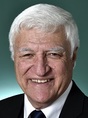
Bob Katter Kennedy, Katter's Australian Party
5:38 pm
I have no disrespect for the last speaker. But I've been here for 50 years, and every two or three years we get a new inquiry or body set up that's going to save us all. All we blackfellas are going to be saved by you whitefellas setting up a body. That's been going on for 55 years, and I've been following it. Every now and then we set up another body. The one that's always been interesting for me—I can't help but laugh when I think about it—was when Prime Minister Tony Abbott introduced the Closing the gapreport. It indicated in its first year that the gap had widened. That was not good. In the second year it indicated that it had widened again, and in the third year it indicated that it had widened again. He had to do something, so he abolished the annual report! That's what he did.
I make no secret of the fact that Kevin Rudd and I have been good friends since the days he and I were running in Queensland. In screaming frustration, I said to him, 'Mate, do you realise how bad it is?' And he said: 'Yes. Talk to the minister.' 'I did—three times. She burst out crying the last time, so I'm not going back to talk to the minister again.' 'Alright, well, talk to so and so in my office.' Well, two months later we'd had an election, he was gone and we were back to square one again.
I'm going to release certain figures that should shock the nation. I have been reluctant to release these figures, because I think that, if the rest of the world finds out what is really going on, then we will become the pariah of this century—we'll be the South Africa of this century. There's no way you can ride around the figures. Everyone knows what's going on, and no-one is doing anything about it. I don't know that everyone does know. If they knew, then, surely, they could not continue. The figures show the highest crime rate in the world, the highest suicide rates in the world, the lowest life expectancy arguably anywhere in the world and the highest unemployment rates anywhere in the world. That's something to be proud of as a nation, isn't it!
I'm related to people on Doomadgee. I always talk about my mob. 'Murri from the Curry', they call us. All of us that are dark and come from 'the Curry' are all a bit mixed up, and we always identify as 'Murri from the Curry'. My brother was called 'Boori' at school. It never worried him. He was a bad beggar when it came to a knuckle, but it never worried him. Obviously, if you're dark, you come from Cloncurry. Far from being ashamed of it—we Kalkadoons held the whitefellas at bay for nearly 25 years. That's not a bad effort. For guerrilla tactics, you'll find very little precedent anywhere in the world. Vietnam would be one of those examples. But it was a pretty good effort. People say, 'Oh, yeah? How'd it end up?' I'm pleased that they ask that question, because there are only about 2,000 of us. We own three million acres in an above-24-inch rainfall area, so I don't think we ended up too bad.
In fact, we may be the most land-rich people on earth. Freddy Pascoe and Paulie Edwards own the biggest cattle station in Australia. The two families fight all the time, but they're both good blokes. He was also the mayor of Normanton, even though he was a First Australian in towns that can be pretty racist at times. He was the mayor of Normanton and Karumba. Both of them were ringers—stockmen—as young blokes, so they've done a very good job in running the biggest cattle station in Australia. I think we're running about 45,000 head there and have done now for about 60 or 70 years. My great mentor, Mickey Miller, bought the station originally, and they made a success of it right from the start.
First Australian affairs are a tragedy. The Prime Minister was giving an award to the Mayor of Doomadgee, the biggest cattle owner in Australia and a bloke I've got a lot of time for. He said, 'Mate, how's Jason Ned going?' And I said, 'He's going good, mate. He's got about 2,000 of those wild mickeys together and branded behind wire—wild cattle—and he made maybe about $4 million over a period of three years.' He said, 'You know he ran all my camps?' I said, 'All of your camps?' He said, 'Yeah, all the camps.' So I rang up Jason. I said, 'Mate, did you run all the camps?' He said, 'Yeah, for 10 years.' I said, 'Do you realise you've mustered more cattle than any other person in human history?' The Americans have big runs. The Argentinians and Brazilians have big runs, but they're nowhere near as big as ours. He said, 'Well, I've never thought about that.' Anyway, the Prime Minister was coming up to Mount Isa to give him a Good Australian Award, a highly sought after honour, and he died a couple of weeks before the award went through. The point I want to make is that he could not get a pastoral lease. Every whitefella in Australia can get a pastoral lease, but a blackfella living on his own land can't get a pastoral lease. What's going on? So he did what the Europeans that came to New South Wales did. He just went out and squatted. He said, 'It's my land. Don't set foot on it or else.'
I wrote a history of Australia. I agonised for 3½ years as to how I would start that book off, and I just couldn't get it right in my head. To get a history book published is a really big achievement. I'll be very proud of that till the day I die. But it suddenly occurred to me—I will mention his name: Clarence Waldron. He was mayor, off and on, of Doomadgee. Clarence had his shortcomings, but he could be really brilliant. A whitefella came up, and he said he was solving all of our black drinking problems: he was going to ban alcohol in Doomadgee, he would preside over it, and he'd had a meeting with the representatives of the community. The five missionary ladies, who all hated the grog—that's who he had the meeting with, and everyone screamed out and yelled that at him. But Clarence didn't say anything until right at the end. He was mayor of the town. When it was his turn to talk—he doesn't look at you, Clarence; he speaks like this. He said: 'Don't you come here and say what's what and that's that. Dis mah lan.' That's how the book opened: 'Dis mah lan'—d-i-s-m-a-h-l-a-n. God bless you, Clarence.
Jason Ned said: 'Well, you're not ever going to give it to us, so we're just taking it, right? We're just taking it, the same as'—well, he didn't say this, but it's the same as what the Europeans did when they came to New South Wales. They just took it: 'You don't like it? Well, too bloody bad for you.'
When I became minister, a bloke jumped out from behind an oleander bush, a journalist, and he said, 'What qualifications have you got for becoming a minister for Aboriginal affairs?' I just said the first thing that came into my head. I said: 'Playing rugby league. It's pretty hard to feel superior to someone when he's buried you upside down in the dirt eight or nine times in a football match.' This bloke laughed, and the comment got a lot of publicity. It was just a quick, off-the-cuff, honest answer. There is no doubt that rugby league has been a great equalising mechanism, and I pay my own sport a very great tribute in this area.
Having said that, I want to go back—I'm coming to the end of my run here—to two quotes. One is from Winston Churchill, and the other is from Carl von Clausewitz, who wrote what is always regarded as the best book on warfare in human history. Churchill said, 'Those that cannot learn the lessons of history are doomed to again suffer its miseries.' Carl von Clausewitz said, in On War, 'There is one truism of history: a people without land will look to a land without people.'
Read Mein Kampf. On every third page, Hitler uses the word 'lebensraum'—living room. 'Well, we Germans have got the population; Russia's got the land.' We know what's going to happen here, because it's happened every other time in human history. The result was, I don't know, about 32 million people dying in the Second World War, which was really more about Russia versus Germany than any other explanation.
To revert back—why won't you whitefellas give us a piece of paper saying we own our own land, like every other person on the planet gets? I didn't know anything about the community areas. I was brought up in a town that was very much—everyone was dark in Cloncurry. 'You Murri from the Curry'—all of us are dark, and who knows what's in the family tree, not that anyone would care anyway. When I went to the community areas, which I'd never been to before, it struck me that—the first one I went to was Yarrabah, the biggest community in Australia, with about 4,000 people—every single bloke I talked to was a whitefella. Every single person running the community was a whitefella, not a blackfella. What's going on here?
In Cloncurry, my father was partner to a cattle grazier—a cattle owner, for the sake of a better word—on a big station outside Cloncurry. They were partners in three or four copper mines together. He was a First Australian and one of the more glamorous station owners in the Mount Isa area—a very famous First Australian family. It's normal in that area.
At Doomadgee, Jason went out and got 2,000 head together. Two weeks before he was to get a Good Australian Award off the Prime Minister, sadly, he died. But, please God, his family are carrying on up there and a whole lot of them now have taken up blocks, saying: 'We don't care whether you whitefellas give us a piece of paper or not. It's our land. We're putting a fence up. Don't you set foot across that fence.'
Earlier today, I was thrown out of the chamber. I'm pretty proud of that, really, because I just can't help but get angry. I think people that have been brought up in a very strong Christian tradition and also people that have been brought up in a very strong Australian tradition don't like watching underdogs get picked on, and their natural reaction is to fight anyone that does that. When I was trying to defend today, a bloke from the ALP kept screaming abuse and I said, 'Mate, on the subject of race, you don't know your history books.' The great John Curtin was easily our best prime minister. But, all the same, he said, 'All we want coming into Australia are Europeans, but not Poles, and no-one from Asia.' I was sad that a great man would say something like that, but that's what he said.
Cocky Calwell, the leader of the Labor Party for about 15 years—everyone laughed at it, but I didn't really think it was all that funny—said that 'two Wongs don't make a white', referring to the White Australia policy. Well, the people that weren't white in Australia copped it as well. When it comes to the lesson for Australia, as Churchill said, 'those who cannot learn from history'—we had an empty land, and there were people that were looking for an empty land. People that didn't have land were looking for an empty land, so they came out here and took it off us. We had no standing armies. We had no ability to resist. We had no rifles. So we got nearly annihilated.
I can't talk about the rest of Australia, but I can most certainly talk about my homeland—where I come from. My grandparents went out there in a Cobb & Co stagecoach in the 1890s and the Kalkadoon Wars were still pottering along at that stage. My partner in mining was always referred to as the 'last of the Kalkadoons'. His mother had been one of the few 'piccaninny' survivors of the big battle on Battle range. So, if anyone knows about it, I do. But I can tell you, absolutely, if it weren't for the Christian missionaries, my mob would've been annihilated. There's no question about it.
I don't want to go into who picked the fight first or anything like that. The fact was that there was a huge fight, and we knew who was going to win it. One had Martini-Henry rifles and the other one had spears and woomeras. We knew who were going to win. But the Christian missionaries roped these people in and secured huge areas of land. I think it was 3½ million acres in North Queensland, and it's all above 26-inch rainfall—most cattlemen in Australia would cry to get 26-inch rainfall—and they can get the cattle in at Pormpuraaw. I went there. Jackson Shortjoe and Eddie Holroyd said, 'We want to have a go at the cleanskins.' I said: 'Alright. Have a go,' and they got 6,000 head together. On that note, I'll sit down.

Madonna Jarrett Brisbane, Australian Labor Party
5:53 pm
I rise to support the National Commission for Aboriginal and Torres Strait Islander Children and Young People Bill 2026. First Nations people are the traditional owners of the land on which this House resides, of my electorate in Brisbane—Meanjin, the place of the blue water lilies—and of all parts of our great country. First Nations culture is the oldest continuous culture in the world—some 65,000 years. Their connection to land, waterways and the spirits that connect past, present and future are very special, and it's a privilege for me to be here in this House and walk this land with Aboriginal and Torres Strait Islander people, who history frankly has not been kind to and who still suffer because of serious injustices and structural failures.
Today, Aboriginal and Torres Strait Islander people maintain strong connections to culture, language and traditional lands. They contribute significantly to the environmental management, economic development and cultural identity of Australia. But the fact is that they do remain underrepresented and face significant hardship. The fact is that colonisation of Australia has negatively affected Aboriginal and Torres Strait Islander people and their communities. This is important to note when considering experiences of disadvantage, discrimination and hardship. From Brisbane to Far North Queensland, the Kimberley and beyond, you don't have to look too far to see the disadvantages. On this side of the House, we are committed to improving life outcomes for First Nations people, including Aboriginal and Torres Strait Islander children and young people.
In my first speech, I relayed the story of my segregated kindergarten, which was a complete contrast to my home, where we ran around the neighbourhood with our Aboriginal friends. I never understood it then, but what it did was ingrain in me the importance of equality and the harm of discrimination. This too is reflected in other remarks I made at that time, which were that everyone, regardless of their heritage, skin colour, sexual orientation, religion or ability must be afforded equal rights and feel safe in our communities. None of us are better than the next, and there must be truth-telling of the historical and cultural current injustices facing First Nations people. Their history is unique, and we should know it, embed it, celebrate it and use it to advance reconciliation and walk forward together as a strong nation.
This government's commitment to establishing a national commission for children and young people goes towards that—towards recognition and towards reconciliation. Why is it so important? We've heard some statistics, but I will raise a few more. These statistics are troubling indeed and provide a stark reminder to this House that there is more work to do. I have to say, hearing the examples from the member for Lingiari, she really spelled out some of these structural failures. She brought that to life with real stories.
In Australia, there are almost one million Aboriginal and Torres Strait Islander people. This represents just over three per cent of the population. In the Brisbane electorate, my electorate, 1.8 per cent of the population identify as Aboriginal and/or Torres Strait Islander. The median age is 24, and one-third of that population is under the age of 15, highlighting a younger demographic that we need to consider. Forty per cent live without two or more essentials for a decent standard of living. Those essentials could be housing, clean water or food. The median weekly household income for First Nations people is 28 per cent less than for non-Indigenous people, and the gap stretches to 50 per cent in some areas. On housing, First Nations people represent three per cent of the population but hold approximately 18 per cent of social housing tenancies; 20 per cent live in overcrowded housing conditions. That's much higher in remote communities, estimated at more than 50 per cent. Almost 25,000 Aboriginal and Torres Strait Islander people were estimated to be experiencing homelessness in 2021, representing over 20 per cent of the total homeless population. As somebody who volunteered at 3rd Space, where we had a number of visitors, they were well and truly overrepresented. Thirty-nine per cent of First Nations people aged 20 years and over had year 12 as their highest level of school completion.
Let's go into health. Approximately 49 per cent of Aboriginal and Torres Strait Islander people have at least one chronic condition. Diabetes, high cholesterol and mental health issues are the most prominent. We all know life expectancy is much lower. I also understand that a large number of adults experience high or very high levels of psychological distress.
Let's jump to the justice system. We all know that Aboriginal and Torres Strait Islander people are significantly overrepresented in the Australian justice system, comprising 37 per cent of the total prison population as at June last year, despite only making up roughly three per cent of the population. It's appalling. They're over 12 times more likely to be incarcerated than non-Indigenous Australians with, sadly, women being the fastest growing cohort. Aboriginal and Torres Strait Islander children and young people are 11 times more likely to be in out-of-home care and 27 more times likely to be in youth detention. We heard this earlier today. The system is clearly not working, and these figures highlight the need for government to act and to work with Aboriginal and Torres Strait Islander communities in closing the gap and implementing reforms like establishing the National Commission for Aboriginal and Torres Strait Islander Children and Young People.
This commission has been in the making for a very long time. I understand that Muriel Bamblett AO, CEO of the Victorian Aboriginal and Community Agency and co-chair of the Our Ways—Strong Ways—Our Voices steering committee, called for a standalone commission back in 1990, and that that followed the State of denial report about the neglect and abuse of Indigenous children in the Northern Territory; the member for Lingiari spoke about this. Let's put that in perspective: that's a quarter of a century ago. This morning, I, along with others in this chamber, heard from Muriel, Aunty Violet Sheridan and others, who relayed their personal stories, including stories of domestic violence. These are real stories of real people. It's why we have to do something. It's why, with Minister Plibersek, they launched the first-ever National Aboriginal and Torres Strait Islander Plan to End Family, Domestic and Sexual Violence 2026-2036. It's another landmark reform.
The national commission fills a gap to ensure the voices of Aboriginal and Torres Strait Islander children and young people are strongly reflected in the advice to government, as it should. The position of commissioner provides a strategic, nationally coordinated focus to raise systemic issues and Australia's human rights commitments. We know that, of the Closing the Gap targets related to children and young people, those related to development, protection, safety and justice are just off track. As I've said before, it's just not good enough. Who better to know the root cause and extent of problems facing Aboriginal and Torres Strait Islander people—and, importantly, how to potentially address them—than Aboriginal and Torres Strait Islander people themselves? That's what these bills are about.
The Albanese government will work with families, communities, the commissioner and the states and territories to make sure all Aboriginal and Torres Strait Islander children have the best start in life. The powers of this commission will be similar to other commissioners, guardians and advocates, including conducting inquiries, making recommendations to government, public advocacy, research and education. However, this role is the only one at a national level with a sole focus on Aboriginal and Torres Strait Islander children and young people. With a focus on Aboriginal and Torres Strait Islander young people, the commissioner will promote their rights, interests, development, safety and wellbeing, and build on their strengths; improve development, safety and wellbeing outcomes for them; and identify systemic issues and barriers to their development, safety and wellbeing.
The bills enable the national commissioner to provide advice to government on the development and delivery of relevant policies, programs and services that affect Aboriginal and Torres Strait Islander children and young people; to undertake research into systemic issues and barriers that affect their rights, interests, development, safety and wellbeing; to provide educational programs for Aboriginal and Torres Strait Islander children and young people to empower them to promote and advocate for their views, their needs and their experiences on matters that affect them; and to publicly advocate to promote their rights, interests, development, safety and wellbeing, amplifying their voices and strengths. The government is putting money behind this—$33.5 million, in fact, over four years, with a further $8.5 million that will support the national commission's continued operations.
The legislation for the national commission delivers on the government's commitment to respond to years of advocacy by around 70 Aboriginal and Torres Strait Islander and non-Indigenous organisations from across Australia. It draws on extensive consultation with Aboriginal and Torres Strait Islander peak bodies, leaders, organisations and community representatives. The national commissioner has the potential to make significant and lasting impacts on the lives of more than 400,000 Aboriginal and Torres Strait Islander children and young people nationwide. It is another step by the Albanese Labor government to close the gap facing Aboriginal and Torres Strait Islander people.
Earlier today, I mentioned that we saw the launch of Australia's first standalone plan that strives for a future where Aboriginal and Torres Strait Islander women and children can live free from violence. We know Aboriginal and Torres Strait Islander women face unique and significant barriers to getting help. They are seven times more likely to be victims of intimate partner homicide and 27 more times more likely than non-Indigenous women to be hospitalised due to family violence. I hear that this can increase to 41 times greater than that in regional and very remote communities. Aboriginal and Torres Strait Islander women have been steadfast in their advocacy to be safe and to be heard, and the plan announced this morning was one part of that. They have been calling for strong action, and the Albanese Labor government is doing just that.
So I'm proud to be part of a Labor government that has introduced this significant reform today into the House. Australia has a proud history of hope and achievement, yet there are still so many areas where outcomes are not improving fast enough. We can do better. We must do better. The task before us is to build a future in which all Australians have access to the same opportunities. The establishment of this national commission will play a crucial role here. It is based on understanding that when Aboriginal and Torres Strait Islander people have a genuine say in the programs and services that affect them, better outcomes are achieved.
We cannot pretend we are fully measuring up to the fair go when basic needs like health care, a safe home and educational opportunities are not afforded to Aboriginal and Torres Strait Islander people as they are to others. This community of young people is our future. Their voices must be embedded in the systems and the decisions that affect their lives. This bill is about supporting self-determination. It's also about bringing to life what many Aboriginal and Torres Strait Islanders have discussed with me, which is, 'Nothing about us without us.'

Melissa Price Durack, Liberal Party, Shadow Minister for Science
6:06 pm
I rise to speak on the National Commission for Aboriginal and Torres Strait Islander Children and Young People Bill 2026. As the member for Durack, I consider this bill to be an issue close to my electorate and to myself. Around 15 per cent of my constituents are Indigenous, equating to 30,000 voters from Broome, Kununurra and Derby, and from smaller communities in the Kimberley, East Pilbara, Gascoyne, Mid West and beyond. This bill directly affects me and my duty to support all those who are Indigenous and reside in Durack. I represent some of the country's most vulnerable people.
The Albanese government, however, continues to let down those Indigenous people across Australia by offering up poor bureaucratic solutions to Closing the Gap targets, particularly those related to young people. First it was the Voice. When that failed because it was half-baked and poorly thought out, the Prime Minister appeared to have turned his back on Indigenous Australians. Unless there is a photo opportunity or perhaps a chance to get in front of the media, you won't see him talking or relating to Indigenous Australians. Prime Minister Albanese and his ministers went missing during the alcohol abuse crisis in the Kimberley in 2024, and also during the time that there were high rates—in fact, continuing high rates—of youth crime in the north-west of Western Australia. Labor was exposed, following the Voice referendum, as not having a plan B to deal with these issues. When it comes to making the tough calls or putting some work into finding solutions, the Prime Minister takes the easy option of hoping that maybe the vibe will fix them.
This bill provides yet another example of just that—a headline-grabbing piece of legislation that doesn't deliver results. It adds more public servants and bureaucrats duplicating work already done by current Commonwealth, state and territory bodies such as the National Children's Commissioner and the Aboriginal and Torres Strait Islander Social Justice Commissioner within the Australian Human Rights Commission. There are also relevant bodies within half of our states plus the ACT, and the Department of Social Services is already required to consult children and young people.
Labor had the choice, during their first 18 months in power, to either spend $450 million on a referendum or spend $450 million on improving the worsening frontline situation. I think we all know what Labor chose, and now four critical Closing the Gap targets are going backwards—adult incarceration, school readiness, children in out-of-home care and, sadly, suicide rates. As a coalition, we would prefer the prioritising of practical solutions rather than symbolic measures.
More broadly, of the 19 Closing the Gap targets, just four are on track—one less than last year. In the context of children and young people, youth detention is up 11 per cent, preschool attendance is down 2.6 per cent, and 1.2 per cent fewer children are commencing school developmentally on track, compared to 2022. It should be obvious to everyone that creating a $33 million commission won't change these trajectories. Only practical, localised action will. Instead of adding bodies and departments, the minister should be reviewing and improving our current bodies to ensure they are doing their jobs and to hold them to account to deliver real results for Indigenous Australians.
The people I represent can tell that Labor prioritise symbolism over practical actions. Frankly, results really don't matter, as long as the photos, the headlines and the reflection in the mirror all look good. It's pretty sad, actually. A hallmark of this government across both terms has been the shirking of responsibility and accountability, and this bill is another example. Work that should already be undertaken by roles within government, such as local consultation, providing advice, undertaking research and advocacy, is simply being shifted to a new position, moving accountability from government agencies, the Coalition of Peaks and the minister.
As an opposition—and particularly as the member for the largest Indigenous population outside of the Northern Territory—we need to question. No. 1: how will the commission's education program reach children? Goodness knows the education department is struggling, so why does the government think the commission is going to be able to do any better? No. 2: why do we need another body to help close the gap? No. 3: what special or specific powers will the agency have, and why do they need these special powers? No. 4: how independent will this new independent authority be? The minister must confirm whether her department will be able to amend, edit and influence work undertaken by the commissioner prior to its publication. I regularly hear from Aboriginal and Torres Strait Islander people that they are tired of consultation. How do we know that this will not be just another outreach body, consulting the same people on the same issues without necessarily talking to the people that really matter—the people who are impacted, in localised areas?
On this side of the House, we will always prioritise practical actions over symbolic gestures. A coalition government will empower Aboriginal and Torres Strait Islander children and young people by ending the cycle of welfare dependency. We will ensure funding is only provided to organisations with a track record of good governance. I know and understand that it's is going to take really difficult work to make sure that there's no duplication by other bodies. We will work to increase school attendance rates, because the coalition considers school attendance a critical protective factor. In fact, I would say everyone in this place would consider that education is the first thing that we must deal with.
The message and call to the government is simple: please drop the symbolism, the egos and the lack of detail and instead start prioritising practical and real action to support young Indigenous Australians and to close the gap. Quite frankly, we're all waiting for the plan B. The Voice failed. What is your plan B? This commission cannot be your plan B. Indigenous Australians deserve so much better from this government. The coalition does not support this bill.

Sharon Claydon Newcastle, Australian Labor Party
6:15 pm
I rise to speak in very strong support of the National Commission for Aboriginal and Torres Strait Islander Children and Young People Bill 2026. I just listened to the member for Durack's contribution, and I'm really struggling. How anyone stands in this House—knowing everything that we do and on the eve of a Closing the gap report that's going to remind us again of the work that still needs to be done—to speak against a bill that is to protect Aboriginal and Torres Strait Islander children is gobsmacking.
I speak to the rest of the Australian community, who are trying to understand this debate that is happening in this House tonight. I want you to be assured that this is a very significant and necessary piece of legislation. It speaks directly to our responsibility as parliament to protect the rights, wellbeing and futures of First Nations children and young people, the first children of this country. This bill recognises a fundamental truth: that Aboriginal and Torres Strait Islander children continue to experience disproportionate disadvantage but, more than that, that there are harms and systemic failures that we know of. We must acknowledge that, and addressing those outcomes requires much more than goodwill or practical good deeds. We are talking about structural, systemic inequalities and failures. It requires enduring structures, accountability and a national commitment to listening to the voices of children themselves. This parliament doesn't have voices of children. Children depend on those of us who stand here and try to give voice to their concerns, to their futures and to their desires and aspirations.
The establishment of a permanent, independent national commission dedicated to Aboriginal and Torres Strait Islander children and young people is a longstanding call from First Nations leaders, communities and organisations, and this bill answers that call. So it is unbelievable for me to hear the opposition say they're not supporting this bill. I have lived in the member for Durack's electorate. I know the communities she represents, and the fact that she could not support this bill will be deeply hurtful. I can assure her of that.
The scale and urgency of the systemic failures facing First Nations children and young people are profound, and we need to acknowledge that very much upfront. Aboriginal and Torres Strait Islander children and young people continue to face high and persistent levels of disadvantage. We have heard speaker after speaker talk about the fact that First Nations kids are 11 times as likely to be in out-of-home care and 27 times as likely to be in youth detention as non-Indigenous children. Nobody could seriously suggest that that is okay. The idea that we do nothing is negligent, and that's the kindest word I could bring to the debate this evening. They're also more likely, of course, to experience developmental vulnerability and poorer health and education outcomes, and these outcomes are not the result of individual failure. I think that is the point that we're trying to make here. They are the product of systems that have too often been designed without these children at their centre—systems that fail to properly recognise culture, family, community and self-determination as strengths.
That is why the establishment of a national commission matters so deeply and why this legislation has such strong support from those working at the front line. More than 70 Aboriginal and Torres Strait Islander organisations across Australia, advocates, service providers and peak bodies have united behind this reform. They are calling for a legislated, independent national advocate with the authority to drive systemic change, not simply observe it. By establishing a national commission with a clear legislative mandate, this parliament is responding to that call and recognising that First Nations children and young people deserve nothing less.
The national commission will have a clear and focused purpose. It will promote and protect the rights and interests of Aboriginal and Torres Strait Islander children and young people. It will examine systemic issues affecting their wellbeing across areas such as child protection, health, education, housing and youth justice. And it will conduct inquiries, provide advice, make recommendations to governments and institutions and report publicly on progress and failures. It's an accountability measure for all of us as well. Importantly, it will elevate the voices of children and young people themselves, making sure that their lived experience inform policy development, service delivery and legislative reform. We hear from this debate tonight just how critical it is to ensure those voices are heard.
Independence is a defining feature of this bill. The commission will operate independently of government, as it should, with the authority to speak openly, as it should. It will investigate systemic problems and make recommendations without fear or favour. And that is how it should be. That independence matters. It ensures credibility, it ensures transparency and it ensures that Aboriginal and Torres Strait Islander children and young people are not silenced by political convenience or bureaucratic inertia. This parliament has a responsibility not only to create policies but to create mechanisms that hold systems to account when those policies fail. The national commission is such a mechanism.
I represent the electorate of Newcastle, a region with a very strong and proud Aboriginal community. The Awabakal and Worimi peoples have cared for those beautiful lands that I get to live on now for more than 65,000 years, and their continued contribution is fundamental to Newcastle's identity and community life today. But the challenges facing Aboriginal and Torres Strait Islander children nationally are not abstract. They are experienced locally by families in Newcastle and across the Hunter, and every single member in this House would say the same if they were to remain true to their heart and representation. Aboriginal families in my region engage every day with child protection, education, health and justice systems that are shaped by national laws, national standards and national policy settings. What happens at the national level directly affects outcomes on the ground, and that's why this bill matters to Newcastle. By strengthening national oversight, advocacy and accountability, it also strengthens the systems that are operating locally. It ensures that Aboriginal and Torres Strait Islander children in Newcastle benefit from a strong national advocate who can elevate local concerns, support local voices and drive change where systems are falling short. It reinforces the principle that children's wellbeing should never be a postcode lottery and that, when disparities exist, they demand national leadership alongside strong local action.
This bill reflects Labor's longstanding commitment to improving outcomes for First Nations people through partnerships, respect and action. The Albanese Labor government has placed Closing the Gap at the centre of its agenda, recognising that genuine progress requires shared responsibility across all levels of government. We have strengthened the investment in early childhood education and care, recognising that the earliest years are critical to lifelong outcomes. We've supported community controlled organisations because Aboriginal led services deliver better, more culturally appropriate outcomes. And we have prioritised listening, ensuring that policy is informed by First Nations voices rather than imposed without consultation. The establishment of this national commission builds on that record. It is the result of extensive engagement with Aboriginal and Torres Strait Islander peak bodies, with child and family organisations and with advocates who have long called for a national mechanism focused specifically on children and young people. This bill is not symbolic; it is practical structural reform.
It's important to acknowledge why this legislation is necessary. Australia has no shortage of reports, inquiries and recommendations concerning Aboriginal and Torres Strait Islander children. What has too often been missing is sustained implementation and accountability. Without a permanent national body, attention shifts, priorities change and momentum is lost. The national commission addresses that gap. It ensures continuity. It ensures expertise. It ensures that progress, or lack thereof, is visible and measurable over time. This bill is about moving beyond short-term responses to long-term solutions.
Some may argue—as, indeed, we've heard tonight—that this bill creates another layer of governance. But this commission is not about duplication. It is about coordination and accountability. It does not replace existing services or agencies; it strengthens them by identifying gaps, highlighting best practice and driving reform where systems are failing.
Others may suggest that a targeted focus on Aboriginal and Torres Strait Islander children is unnecessary, but the evidence clearly shows that outcomes are not equal, and equity demands a targeted response. Treating unequal outcomes with identical solutions does not deliver fairness; it entrenches disadvantage. This bill recognises that principle.
This legislation is in the national interest. When Aboriginal and Torres Strait Islander children thrive, communities are stronger, economies are stronger and our nation is stronger. Investing in children's wellbeing reduces long-term costs associated with poor health, disengagement from education and involvement in the justice system. But, more importantly, it reflects our values as a nation. This bill affirms that First Nations children are not an afterthought; they are absolutely central to our future.
There is also a moral responsibility at the heart of this legislation. Australia's history includes policies that caused profound harm to Aboriginal families and children. The impacts of those policies continue to be felt today. While this bill cannot undo the past, it represents a commitment to doing better and to ensuring that future generations of Aboriginal and Torres Strait Islander children are supported, that they're protected and that they're heard. It's recognition that structural change is required to prevent the repetition of past failures.
Deputy Speaker Scrymgour, I don't need to tell you how important this legislation is. I heard your speech, and I know your work and your lifelong commitment to ensuring the protection of Aboriginal and Torres Strait Islander children. But the National Commission for Aboriginal and Torres Strait Islander Children and Young People Bill 2026 represents a decisive step forward. That anyone would oppose this is beyond me. I really implore those members opposite to rethink their position here. There is not a single First Nations organisation, advocacy group or community not calling for this bill. You do a grave disservice to each and every one of them by opposing this bill. This is a bill that will establish a permanent, independent advocate for children who have too often been unheard,. It strengthens accountabilities across government and systems; it reflects Labor's commitment to partnership, reform and long-term change; and it affirms a simple but powerful principle—that every child in Australia deserves safety, dignity, opportunity and a voice. That's why I commend this bill to the House. That's why I ask members of the opposition and members of the crossbench to lean in and support this bill. You know your communities will thank you for it, and I ask that you look into your deepest conscience and see if you can't bring yourselves to support a bill in the national interest.

Barnaby Joyce New England, Pauline Hanson's One Nation Party
6:29 pm
I do look into my conscience about how I deal with one of the largest communities, one of the strongest proportions of Aboriginal people in an electorate in Australia, which is in New England. There are vastly more Aboriginal people in my area. They call themselves Aboriginal, so I will say Aboriginal. There are more Aboriginals than farmers, to be quite frank. I win the booths, and I suppose, in a little way, that is because I grew up in an Aboriginal area. My children, my sons, still go to the state school, which is a black and white school and always has been. We really love it. That's our community. We've known each other for generations, so this is very close to my heart.
What always worries me is we seem to throw an inordinate amount of money—I'm a white fella, obviously; I'm not pretending to be anything else but that—towards things that don't have any efficacy, that don't actually result in people's lives changing. Sometimes I genuinely believe we have sort of a political correctness about trying to deal with issues that are so self-evident when you live there. In my time I've lived in Werris Creek, which has a strong Aboriginal community; Moree, and obviously we all know about that; and Charleville, St George and Danglemah, where I grew up and where I still am. Up the road is Woolbrook, and it was like Canberra; Aboriginal people from Gympie to Dubbo would come into those come into those areas. My childhood was spent growing up with Aboriginal people around me. They certainly had an effect on how I saw the world.
What I don't see in the administration of this—I bet you right from the start that it's administered down here in Canberra. That's the first step it gets wrong. If you want to deal with a problem, put the administration and the bureaucracy in the areas where the issue is. You get up close and actually understand it a lot better when it's outside your back door. Look for those within communities, especially when kids go off the rails, who have the capacity to bring them back.
I might bring attention to someone that we are involved with, BackTrack and Bernie Shakeshaft, a great guy. I think one of the predominant things of that—it's overwhelmingly money that's given by charity. Bernie does a great job. A lot of the young fellas, the blokes, come down to our place and do cattle work. I'm just a passive observer; the other guys are the role models. That is one of the big things. In so many communities, young guys don't have good male role models. They don't grow up in an environment where they have a reference point of a man who is strong and decent and hardworking and has guardrails of how they exist.
I'm not going to name them, because they'll get very upset if I do, and I have to go work with them, but the one thing I always note when the guys are working with these young fellas is they don't muck about. They're not pushovers. They have a very strict code about how things will work, right down to ablutions. At half past seven, you're in the saddle, and that means at half-past seven, you are in the saddle. When you go back to the ablutions blocks at night after you've finished work, there's structure—your towel goes there, your soap goes there, and we all have to use this area, so it must be clean.
At the start, there's always pushback. A lot of people get referred to them from the courts. There's pushback and cheek. Very quickly, they realise that that won't work out in the bush when you're swagging it. In the long term, without going through the rituals of how people are brought into gear, they actually love it. That's because it makes a statement about who they are. They are a man, and they have a position, and they have competency, and they have pride in themselves, and then things work out. We always get frustrated with having a politically correct perspective of sociology and everything else. It way overcomplicates something that can be done by a more targeted investment to the areas that actually work.
Vikki does a bit of work here too for young girls. People will say, 'Oh, you do that; it's patronising,' and all that stuff. No, it's not. It's essential to actually show people how to shop—just saying, 'You don't buy that.' You take them around with a shopping trolley and say, 'This is the stuff you buy, and that's why.' And we'll show them the structure of a house—this is the time you get up and this is the time you go to bed. People stay in the houses with you—just living with a family and seeing the structure of a family. Once more, people say that it's patronising. No, it's not. People love it. They understand that they get a sense of a life they probably haven't lived. But, if we get too tied up in saying, 'Our perspective of what we believe is culturally appropriate, as determined from Canberra, is going to work in Woolbrook, Cunnamulla or Moree,' it won't. What you'll see is the money spent.
I can go to certain areas where they have what they call 'support agencies'. In some of the communities that I go to, 20 or 30 people turn up in cars. They drive around. They chat to everybody or some people, and then they jump in their hired SUV, and off they go. That's it. It costs a lot of money to have those people wandering around. If you go back to the community and say, 'What did that do for you?' the answer is: 'Nothing. It was pointless.' Someone comes in with their clipboard and goes through the ritualistic clatter about Aboriginal issues that they don't even believe or earnestly think. It's just ticking a box about things they are going to say. They don't actually reside in the area in such a form that they can actually grab hold of the problem and follow it through to a conclusion and a solution that they, the people who came in the SUVs, would be prepared to live with.
My issue with this is that I get a sense of another lot of money about to be kicked out the door, and the actual determination of an outcome, your KPIs, won't be there. I get a sense from this that it's driven from Canberra, not from community. I get a sense that it's just a gathered heap of politically correct terms and bromides that have to be said. Yet, for the kid growing up on a backstreet in Tingha—the heritage from the Bassendean missionary—will their life be better? I don't know—probably not, I presume. I base that on so many of these other programs. They've been going on for decades, and their lives don't change.
But I do find a whole heap of people making a bucketload of money down here from them. I find that. There's no doubt about that. You see the departments. That's why, in certain areas, the cynicism builds up. The biggest Aboriginal community in my area is Tingha, where Nathan Blacklock and Preston Campbell came from. Only 15 per cent of them voted for the Voice. Why? I think it was more of a pushback. They're so cynical now that they just don't think that these things are really going to make a difference to their lives. So let's look for what works. Let's look for the backtracks that work.
I'll give you something that works brilliantly in our area but they never did again. One of the great mechanisms for advancement—once more, going back to guys—of Aboriginal guys in more north-western New South Wales and even southern Queensland, right down to Dubbo, is something that was created by the state. It works, and it's called Farrer Memorial Agricultural High School. It's the second-biggest boarding school in Australia after St Joseph's College, Hunters Hill. So many Aboriginal boys go there and become men. Later on you see them in very successful and fulfilling lives wherever they need to go. They go into trades. Some go to uni. It works. Whatever is happening at that boarding school in Tamworth, it works. So why do we just do it once?
By the way, why is there only a blokes one? Where's the girls boarding school that does the same job? Where is it? I used to terrorise my daughters, saying that, if they played up, I'd send them to Mount St Bernard College up on the Atherton Tablelands, which a lot of kids from the Gulf came into. That always pulled them back into gear. That's sort of doing a similar thing up there, but we need a girls one—and don't make Farrer co-ed. That's where they're going to try and head off to. It works very well as a boys boarding school. Leave it as a boys boarding school because that works. It gives them a collegiality with guys off the land, with Aboriginal kids from Walgett and Moree and Saint George coming in there. It's good. It has proven success. The only thing we're missing is one for girls, where they have a boarding school and do the same thing, bringing in, quite frankly, poor white kids from farms who can't afford to go away to school—the family budget doesn't go that far—and also Aboriginal kids. I bet you that'll work as well. If you bring those sorts of ideas forward, you're going to get so much support, even in regional areas. We'll say, 'Yes, that's great.'
But what we'll see here is that you'll announce this and it just won't turn the dial. It will just be 'here comes another SUV with another clipboard and another person who'll turn up and go through all the welcome to country stuff and say all the right things'. They'll wander around, people will have a chat to them, then they'll jump back in their SUV and off they'll go. That's it—followed by another SUV that'll be here tomorrow.
I want us to close the gap. I think it's incredibly important. I think we have a huge moral responsibility to do it. I just call on this parliament to find the things that work. Put aside your political correctness. Stop believing that there's something magical, that one human being is so fundamentally different to every other human being that they work through a whole different set of genetics. They're not. They're people. Human beings are human beings and want to be treated with respect, want to feel secure, need guidance, need a male role model, need a female role model, need to be respected, want to have dignity in their lives, with a job that's worthwhile, and don't want to be categorised as 'oh, well, you believe that because I'm Aboriginal then this is the sort of life I have to live because you think that that this is the place I have to live'. I might want to live in the centre of Sydney. I might want to be an accountant. Double-up on your successes and be a lot more circumspect about coming up with another yet another Canberra program which will have all the bonhomie as it goes out the door but, if you reflect on it in 10 years time and say, 'What did that achieve?' will have some minimal success but will be a very short story.

Ged Kearney Cooper, Australian Labor Party, Assistant Minister for Social Services
6:44 pm
I rise to speak in strong support of this bill, the National Commission for Aboriginal and Torres Strait Islander Children and Young People Bill 2026. I have to say that I'm very proud to do that while you're in the chamber, Deputy Speaker Scrymgour, because I know that you have been a longstanding champion for this to happen over the years. Thank you for the work that you've done.
I want to acknowledge that I'm standing on the lands of the Ngunnawal and Ngambri people, and I pay respect to their elders, past and present. They are the people who occupied this land long before this building was erected here, long before the nation-state of Australia was even established.
For millennia, the First Peoples of Australia lived on and cared for this continent's land, waterways and environment, passing down their knowledge and cultures, generation to generation, as the oldest continuous culture in the history of this Earth. This is something that we as a nation should be proud of and that we celebrate. Even during the most brutal history of colonisation and invasion, First Nations people have persevered, protecting and nourishing their culture—ensuring its survival in the face of state sanctioned brutality.
But we know the toll that colonisation has taken on First People, a toll that is reflected in cold, hard statistics—a national shame for this country. Nowhere is this more evident than when we look at the challenges facing Aboriginal and Torres Strait Islander children. First Nations children and young people face high and persistent levels of disadvantage. They are 11 times more likely to be in out-of-home care and 27 times more likely to be in youth detention than non-Indigenous children. Data released last year by the Australian Institute of Health and Wellbeing revealed that only one in three Aboriginal and Torres Strait Islander children are on track developmentally. Incarceration rates have climbed, suicide rates and out-of-home care rates are getting worse, and the aspirations for healthy baby birth weights have slipped.
Let me be clear. This is not a failure of First Nations people. Unlike some of those opposite, we as a government understand that this is not a moral failing on the part of Indigenous cultures and communities—no. We understand the legacy of colonialism, of structural racism, of institutional punishment and systemic disadvantage. We acknowledge the history of the Frontier Wars and the Stolen Generations. We know that, despite efforts from more recent, well-meaning governments, if policy and laws are created without genuine partnership and power transfer to Aboriginal people, we will not create meaningful change and we will only perpetrate the brutal, racist history.
The Albanese Labor government is committed to improving life outcomes for Aboriginal and Torres Strait Islander children and young people. We know that this requires a systems based approach, one that works with and champions First Nations people, creates genuine partnership and truly transforms the lives and future of Aboriginal and Torres Strait Islander people. I heard the member for New England's hopes and aspirations for First Nations people, but I fail to understand why he doesn't see that the establishment of this commission will work towards those very goals.
It's why I am honoured to speak to this bill to establish the National Commission for Aboriginal and Torres Strait Islander Children and Young People. By introducing this bill, we are delivering on our commitment to establish a legislated, independent, empowered commission. This is a bill that has come about after years of Aboriginal and Torres Strait Islander advocates calling for the establishment of a legislated national commissioner, over an extended period, with over 70 organisations uniting behind this request. We didn't just dream this up. This didn't just drop out of the sky as a good idea. This has come about through long and hard stakeholder consultation, with Aboriginal and Torres Strait Islander people and community advocates calling repeatedly for this to happen.
The current and ongoing national commissioner, Adjunct Professor Sue-Anne Hunter, has been involved in developing the bill, and I know that she is in the gallery, in the chamber, with us today. I'll say a bit more about Professor Hunter shortly. I'd also like to acknowledge that Katie Kiss is in the chamber with us today—the national Aboriginal and Torres Strait Islander Social Justice Commissioner. It's a great honour to have you here, listening to the introduction of this bill.
The national commissioner fills a gap to ensure the voices of Aboriginal and Torres Strait Islander children and young people are strongly reflected in advice to government. This position provides a strategic, nationally coordinated focus to raise systemic issues and Australia's human rights commitments. The bill will provide an independent, dedicated agency focused on the systemic failures affecting outcomes for Aboriginal and Torres Strait Islander children and young people right across Australia. It will drive the accountability to support all governments to achieve better outcomes for Aboriginal and Torres Strait Islander children. It's truly an important, systemic piece that will help drive system-wide change.
The national commissioner's functions are centred on identifying systemic issues and informing advice to government to directly influence policymaking. This includes powers to inquire into systemic matters affecting the rights, the interests, the development, the safety and the wellbeing of Aboriginal and Torres Strait Islander children and young people and to make recommendations to government. Importantly, the national commissioner can publicly advocate for the rights, the interests, the development, the safety and the wellbeing of Aboriginal and Torres Strait Islander children and young people and can amplify their voices and strengths. Already, I know, the commissioner has been meeting with community controlled organisations and leaders—with state, territory and national commissioners and with guardians and advocates—to build stronger relationships and to identify opportunities for collaboration and change.
Sue-Anne Hunter is a First Nations woman with extensive experience in governance and leadership. She has practised as a qualified social worker and is a recognised leader in the First Nations child and family services sector. She, too, has lived and breathed the issues that Aboriginal and Torres Strait Islander families face. She's widely recognised for developing rights based, transformative practice responses that empower Aboriginal people to heal from the continuing effects and processes of colonisation. Her work across these sectors will be vital to ensuring that the rights, the interests and the wellbeing of First Nations children and young people are protected. I have known Sue-Anne for many years, and I know her to be a powerhouse. She will be a powerhouse in this role.
Late last year, when Sue-Anne had been in the role for just a few short weeks, she and I attended a roundtable with young people from across the country in Sydney with Minister Plibersek. This included First Nations kids, and they talked to us about their experience with domestic and sexual violence. It was incredibly powerful for those First Nations kids to have the commissioner there with them. I remember one young Aboriginal person saying that they experienced family and sexual violence and that they would not have survived without their wonderful aunties, who surrounded themselves around that young person, supported them and loved them. It may not have been a traditional response to that child's needs, but it was what they needed. I know that Sue-Anne understands the unique perspective of these young people. I've got to say that I'm really very proud to be working with her.
This legislation will join other work that the Albanese Labor government is doing in partnership with First Nations people to improve the lives of Aboriginal and Torres Strait Islanders. One such commitment was demonstrated further this morning when I enjoined the Minister for Social Services to launch Australia's first-ever dedicated plan to end violence against Aboriginal and Torres Strait Islander women and children. This was developed in partnership with Aboriginal and Torres Strait Islander peoples and state and territory governments. 'Our Ways—Strong Ways—Our Voices: National Aboriginal and Torres Strait Islander Plan to End Family, Domestic and Sexual Violence 2026-2036' is Australia's new national plan to address the high and disproportionate rates of violence against Aboriginal and Torres Strait Islander women and children. It sits on equal footing with the National Plan to End Violence against Women and Children 2022 to 2032. The plan announced this morning will be backed by $218.3 million dollars in new funding over four years. As an immediate step, the funding will invest in a national network of up to 40 Aboriginal community controlled organisations to deliver community-led specialist support services that help Aboriginal and Torres Strait Islander women and families who are experiencing family, domestic and sexual violence.
The new funding will support programs like crisis responses, such as mobile teams in remote areas to work with families after a violent incident or safe transport and emergency accommodation; planning to help victims leave violence safely and continued support once they have; therapeutic supports, like community playgroups, where mums and bubs can connect with elders, receive parenting support and be linked to early help and healing; and behaviour change and education, like outreach programs for men and boys. I know just how important this work is. Last year, I visited Kununurra in Western Australia. When I was there, I saw firsthand the impact that such programs are having on young kids. I met with the Ord Valley Aboriginal Health Service and Wunan Health service. The work that they are doing there is unbelievable. It is community controlled, culturally appropriate and immediately responsive to the needs of those communities.
One such program, supported by the Department of Social Services, is the Stronger ACCOs, Stronger Family project. It was designed to strengthen partnerships between Aboriginal community controlled organisations and non-Indigenous service providers in the child and family sector. Through meaningful collaboration, the initiative aims to create a culturally responsive and cohesive system that empowers Aboriginal and Torres Strait Islander children and families.
I want to thank everyone who has been involved in the development of this legislation and Our Ways—in particular, the First Nations people who shared their stories with government and who advocated so firmly and persistently for their communities. This legislation doesn't represent the end of this journey but the next step in our shared commitment to support First Nations children and young people. They deserve more. We owe it to them. They deserve to live and grow free from violence. They deserve to live and grow safely in their own homes, on country and with their communities. They deserve to have their strengths acknowledged and celebrated. They deserve the recognition that their communities have the solutions and that they're already doing the work. And they deserve to be supported and to heal. I have to say that I'm proud to be part of a government that will work to turn these words into a lived reality.

Zali Steggall Warringah, Independent
6:58 pm
I rise to speak on the National Commission for Aboriginal and Torres Strait Islander Children and Young People Bill 2026. Firstly, I want to acknowledge the Ngunnawal people as the traditional custodians of the land on which we meet, and I pay respect to their elders past, present and emerging and the same to those of the Warringah region. This bill converts the existing national commission into a statutory agency and makes the national commissioner a statutory officer with legislated functions and powers to advance the rights, interests, safety, development and wellbeing of Aboriginal and Torres Strait Islander young people. The bill is supported by a real financial commitment from the government—$33 million over the forward estimates and nearly $10 million ongoing. The problems the commission will address are structural and inter-generational, and they cannot be solved on a short timeframe, so I hope that that appropriate funding will continue in a meaningful way.
The commission will hold genuine statutory independence. This is important. It will be given powers of inquiry, legal protection for actions taken in good faith and the ability to table documents in parliament and to co-ordinate across government on issues impacting the rights and wellbeing of young Indigenous Australians. I welcome this. The commissioner may also provide formal advice to the Commonwealth on policies, programs and services affecting those children and young people, including the commission of research.
Aboriginal and Torres Strait Islander people have long been overrepresented in youth and adult justice systems in Australia. In 2023-24 First Nations young people aged 10 to 17 were about 20 times more likely than non-Indigenous young people to be under youth justice supervision on any given day. This is despite outcome 11 of the National Agreement on Closing the Gap—that First Nations must not be overrepresented in the criminal justice system. A target to reduce the number of children in detention by 30 per cent by 2030-31 is woefully out of reach at the moment. These figures are underscored by a broader overrepresentation of Indigenous Australians in the justice system among the adult population, accounting for roughly 37 per cent of people in custody, nationally.
All experts indicate very clearly that, when children are caught up in the justice system from such a young age, it only leads to bad outcomes. It increases the likelihood of recidivism and ongoing engagement with the justice system, and it is failing young people, particularly young Indigenous people. It often arises out of the failure of other support systems—whether it is health, educational support or social services—around young people and their families. It's usually other systems having failed that leads us to this problem. It's been really concerning to see the rise in state and territory governments pushing for an age of criminality of 10, when the United Nations Convention on the Rights of the Child has made it clear that it should be raised to 14. No-one wins with a policy of engaging young offenders in the justice system. We lose the potential of so many young people, and we end up with a disproportionate cost. Unfortunately, it doesn't solve anything.
The National Agreement on Closing the Gap sets out 19 socioeconomic targets across key life outcomes: health, education, employment, housing, child protection and justice. They were developed in formal partnership with the Coalition of Aboriginal and Torres Strait Islander Peak Organisations. Last year's Closing the Gap annual data compilation report by the Productivity Commission showed that efforts to improve outcomes for First Nations Australians are having mixed results. Outcomes are improving for targets such as preschool enrolment and employment, but they continue to worsen for life expectancy and incarceration rates for adults and youth. This is clearly a problem area, and I hope this commission will start to make a difference.
This bill is a constructive reform because it gives Aboriginal and Torres Strait Islander children and young people a national champion that is structurally positioned to co-ordinate across governments, drive attention to systemic issues and insist on evidence- and rights-based public policy, but this is not going to be a fix-all. It has to be paired with a clear national commitment to raise the minimum age of criminal responsibility to at least 14, consistent with the UN Committee on the Rights of the Child's guidance as well as contemporary developmental science. The ACT has shown that such reform is possible, moving its minimum age to 14. However, most other states and territories are lagging far behind, with cruel and, I would argue, discriminatory policies in place that see a rise in youth being caught up in the justice system, rather than addressing the social and surrounding issues that lead to the problematic behaviour.
We can't talk about children's rights seriously without acknowledging that Australia's protections are incredibly fragmented. We have treaty obligations under the UN Convention on the Rights of the Child, but we don't have a uniform, enforceable domestic rights framework at the federal level. When this is raised, it's often said that the Criminal Code and the age of criminality refer back to state and territory jurisdictions, but legal advice has been obtained that our ratification of the UN Convention on the Rights of the Child brings a responsibility and the powers, at a federal level, to ratify a minimum age of 14. That's why I've been calling for a national rights-of-the-child framework for some time, and I will continue pushing the government to do that. There is a responsibility in this place to set that national age and to override state and territory laws that are prejudicial to the rights of young people, if one thinks of our ratification of the UN Convention on the Rights of the Child.
The bills are consistent with that direction. I welcome them because they are built on genuine consultation with Indigenous people and representative bodies such as the Human Rights Commission and SNAICC, the national peak body for Aboriginal and Torres Strait Islander children and families.
A very high proportion of Indigenous young people have also had contact with child protection services. Almost two in three young people under youth justice supervision in 2022-23 had interacted with the child protection system in the previous 10-year period. If we are willing to fund a national commission, we must also be willing to reform the laws that keep failing Indigenous children nationwide.
We had a very heated debate across the nation only a short time ago around what should have resulted in the proper recognition of First Australians in our Constitution. Our system is failing categorically. My community of Warringah overwhelmingly voted in favour of that recognition and continually urges me to support legislation and ways in which I can be an ally and the community of Warringah can be an ally. I welcome this legislation but urge the government to look beyond that. We have to look to the age of criminal responsibility. It must be consistent with the UN Convention on the Rights of the Child and the recommendation that it be set at age 14.
I commend these bills. They are a necessary national institution building step, grounded in genuine consultation with Indigenous Australians, and represent a step forward in confronting the inequities faced by Indigenous children in Australia. However, it remains clear that Australia must go much further on children's rights, including youth justice reform.

Sarah Witty Melbourne, Australian Labor Party
7:07 pm
I've spoken in this House many times about my experiences as a foster carer, and it is on behalf of the children who have been in my care that I rise today to speak in strong support of the National Commission for Aboriginal and Torres Strait Islander Children and Young People Bill 2026 and the National Commission for Aboriginal and Torres Strait Islander Children and Young People (Transitional Provisions) Bill 2026. For decades, Aboriginal and Torres Strait Islander children and young people have been overrepresented in systems of harm and underrepresented in the decisions that shape their lives.
Let me start with a silence. It belongs to a child, Mat, who learned too early how systems really work. He was Aboriginal, he was young and by the time I met him he was already carrying more than most adults ever should. He came from a home shaped by violence. His father was in prison for what he had done to his mother. For this boy, safety had never been consistent; it had been conditional, temporary and fragile. Before he came to me, he'd already had multiple foster placements not because he was a difficult child but because he was traumatised. He didn't trust easily. He tested boundaries. He pushed people away before they could leave him first.
One day, after a particularly hard moment, he said something to me that I will never forget: 'I know, if I keep breaking placements, they'll have to send me back to my family eventually.' Think about that for a moment. This was the child who had learned, through systems meant to protect him, that connection had to be earned through failure; that the only way home was to be too much; and that culture, kin and belonging was something you had to break yourself to get back to. Eventually, when he left my care, he went to live with family—with his uncle, alongside his cousins. While I was glad to see him back with mob, I was left asking a hard question: why did it take so much loss for that to happen?
This is why the National Commission for Aboriginal and Torres Strait Islander Children and Young People matters—because children should not have to weaponise their own pain to find belonging, because trauma should not be misread as misbehaviour, because culture, family and identity are not optional extras but protective factors and because every Aboriginal child deserves a system that sees them not as a problem to be managed but as a person to be held, safely, respectfully and in community.
If we are serious about listening to children then we must be serious about building systems that hear what they are really saying, even when they don't have the words. Mat knew exactly what he needed. It's time our systems did too. These outcomes are not accidental. They are not inevitable. They are produced by systems that fragment responsibility, deflect accountability and, too often, fail to listen. This bill is about naming the failure and acting to change it.
The Albanese Labor government made a clear and deliberate commitment to improve life outcomes for Aboriginal and Torres Strait Islander children and young people. This bill delivers on that commitment by establishing a legislated, independent and empowered national commissioner, supported by a national commission with real authority—not a symbolic role, not a temporary arrangement, but a permanent statutory body with the power to inquire, advocate, coordinate and report to parliament. As the Minister for Social Services said when introducing this bill, this legislation delivers a permanent independent statutory agency with the necessary powers to improve the lives of Indigenous children and young people today and into the future. Those words matter. Independence matters. Permanence matters. Power matter. What has been missing for far too long is a national voice focused solely on Aboriginal and Torres Strait Islander children with the authority to expose systemic failures and the standing to demand better.
The scale of the challenge before us is confronting. Aboriginal and Torres Strait Islander children are 11 times more likely to be in out-of-home care and 27 times more likely to be in youth detention than non-Indigenous children. These are not just statistics; they are signals that something is deeply wrong. Behind every number is a child like Mat navigating instability, a family under pressure, a community absorbing loss. Behind those numbers are systems that intervene late, escalate quickly and rarely stop to ask whether they are doing more harm than good. We cannot keep managing crisis without confronting cause. We cannot keep cycling children through systems that were never designed to help them flourish. And we cannot keep calling incremental changes success while these inequalities remain entrenched.
That is why the Albanese government has chosen to act. This bill is not about language; it's about leverage. It's about building structures that force acknowledgement and enable reform. The national commissioner will not replace existing services or override state and territory responsibilities, nor should they. Instead, the commissioner will do the work that no single jurisdiction can do alone. They will draw together threads. They will identify patterns of failure. They will challenge silos. They will insist that responsibility does not dissolve when it crosses a border. The commissioner will work alongside state and territory children's commissioners, guardians and advocates and alongside other Commonwealth roles, including the National Children's Commissioner and the Aboriginal and Torres Strait Islander Social Justice Commissioner. This is coordination with purpose, collaboration with intent and national leadership where fragmentation has failed
At the heart of this bill is a fundamental shift in how we see children. Aboriginal and Torres Strait Islander children are not problems to be fixed or risks to be managed. They are people with rights. The functions of the national commissioner reflect that principle—to promote the rights, interests, development, safety and wellbeing of Aboriginal and Torres Strait Islander children and young people, to support them to speak, to be heard and to shape the decisions that affect their lives, to lift up their strengths, not just catalogue their trauma. All too often, the views of Aboriginal and Torres Strait Islander children and young people are not heard in the decisions that affect their lives. The commissioner will have the power to engage directly with children and young people in ways that are safe, culturally appropriate and trauma informed, to listen carefully, to hear what systems miss and to carry these voices into the heart of government decision-making.
This is the point where policy meets lived experience, because the bill speaks directly to what happens when systems fail children. It speaks of what happens when care becomes transitional rather than relational. It speaks to the long consequences that follow children into adulthood when safety, stability and trust are taken away too early. Those experiences are not isolated. They echo through communities across this country. Too often, interventions happen without listening. Too often, decisions are made without cultural safety. Too often, systems measure success by process rather than by whether a child is actually safer, stronger or more secure. This bill creates the conditions for that to change.
The national commissioner will have the power to conduct research, to inquire into systemic issues and to make recommendations to government. They will be able to advocate, to report to parliament and to ensure that findings are not quietly ignored. Transparency matters because reforms only happen when evidence is visible and responsibility cannot be avoided. The bill also provides the commissioner with information-gathering powers, including the ability to require responses from government agencies. These powers will ensure that, when questions are asked, governments must answer. This legislation strengthens Australia's human rights framework. The commissioner will engage with international human rights mechanisms, including the relative United Nations bodies, to ensure Australia meets its obligations to Aboriginal and Torres Strait Islander children and young people. This is not external scrutiny for its own sake. It's about internal discipline and about ensuring our actions match our values and our commitments are real.
This bill has been shaped through extensive consultation. First Nations advocates have called for a legislated national commissioner for decades. More than 70 organisations united behind this call. Aboriginal and Torres Strait Islander leadership has informed the design of this legislation at every stage. The agreed minimum standard for Aboriginal and Torres Strait Islander children commissioners is embedded in the bill. The current national commissioner, Adjunct Professor Sue-Anne Hunter, has played a central role in its development. As she has said, the statistics are grim, but our children are not statistics. They are our future, and they must be the centre of everything we do.
Since the national commission was established in January 2025, we have seen what focused national leadership can deliver. The commissioner has built relationships with Indigenous community run organisations, convened national networks, advised on policy reform and developed child-safe frameworks to ensure engagement with children is respectful, safe and culturally grounded. This bill ensures that work is not temporary. It ensures it is protected, strengthened and properly resourced. The Albanese government has backed this commitment with funding to ensure the commissioner can deliver on its statutory responsibilities.
This legislation also supports every Closing the Gap target relating to children and young people. Closing the Gap will not be achieved by aspiration alone. It requires accountability, it requires coordination, and it requires systems that listen to the children they serve. This bill strengthens the national framework needed to address the issues that overwhelmingly affect Aboriginal and Torres Strait Islander children, including out-of-home care and youth detention. It will give us a mechanism to see clearly where systems are failing and to act deliberately to change them.
This is not an easy bill. It does not promise quick fixes. It demands honesty, it demands follow through, and it demands that children remain at the centre of everything, even when the findings are uncomfortable. But that is what leadership looks like, and that is what the Albanese Labor government is demonstrating—a willingness to act, a willingness to build and a willingness to be held to account.
When you get it right for children, everything else follows. Families are stronger, communities are safer and the nation is more just.
This bill says clearly that First Nations children matter, their voices matter, their safety matters and their futures are not negotiable. It says we will no longer accept systems that harm more than they heal and that we are prepared to build the structures needed to do better, not just now but for generations to come.
At its heart, this bill asks a simple question of this parliament and of every government in this country: when systems fail children, who is accountable? For too long, the answer has been unclear. Responsibility has been spread thin, passed sideways or lost between jurisdictions. Children have paid the price for the ambiguity. Families have carried the consequences. Communities have absorbed the harm.
This bill changes that. It draws a clear line of responsibility. It creates a national voice that cannot be ignored—a commissioner whose job is not to manage headlines, but to tell the truth about how our systems are working and who they are working for. It says that Aboriginal and Torres Strait Islander children are not invisible. They are central to the future of this country. This bill recognises that the measure of a nation is not how it speaks about children but how it structures power to protect them. It recognises that listening is not enough without action and that action is not enough without accountability.
The Albanese Labor government is choosing to act, to build a permanent, independent institution that stands with children, listens to them and insists that governments do better. That is the spirit of this bill. It is a commitment to truth, to responsibility and to the belief that every child deserves safety, dignity and a real chance to thrive.
I am proud to support this bill. I am proud of the actions taken by the Albanese government. On behalf of Mat and other kids that I've met in my care, I commend this bill to the House.

Andrew Gee Calare, Independent
7:22 pm
I will be supporting this legislation, the National Commission for Aboriginal and Torres Strait Islander Children and Young People Bill 2026 and the transitional provisions bill. Almost eight per cent of Calare's residents are Aboriginal or Torres Strait Islander, and I believe that the National Commission for Aboriginal and Torres Strait Islander Children and Young People can make a very important contribution to closing the gap that still, disturbingly and, quite frankly, disgracefully, exists in so many different ways in this country.
When the Prime Minister announced the establishment of the national commissioner, he noted that Indigenous children are almost 11 times more likely to be in out-of-home care than non-Indigenous children. This must change. I think the establishment of the commission and the office of commissioner is squarely aimed at effecting this change. This can happen through identifying the issues, recommending solutions and ensuring that the government of the day is held to account for policy on Indigenous children and young people.
We need this commission to succeed. Every year the parliament pauses to hear the annual update on Closing the Gap, and, yes, while progress is being made, last year only five of the 19 targets were on track to be met, in the modern, prosperous Australia that we live in.
In 1965, Charlie Perkins and a group of young Australians got on a bus in Sydney and embarked on what became known as the Freedom Ride through western New South Wales. One of the places they stopped—in fact, I believe it was the first place they stopped—was Wellington, in our electorate of Calare. They went to Nanima Mission, now called Nanima village, and saw what were, in effect, shanty houses with earth floors and no running water. They saw discrimination—effectively apartheid—in the Australia of 1965. There was segregation in the cinemas, with separate seating for Indigenous Australians and a separate entry and exit as well.
There was segregation in the hospital. Indigenous women were not allowed the same maternity services that non-Indigenous women were provided and could not have their children inside the hospital. I've heard accounts of being out on the verandah or even in a shed out the back.
There was segregation at the pubs. There were pubs that would not allow Indigenous Australians to enter. Interestingly enough, I spoke to one of our local Indigenous representatives, who was a member of the Australian Army, and he told me that, even as late as the 1980s, when he and his mates came through Cowra in their army uniforms and stopped at a pub for a drink, he was refused entry. It's hard to believe but it happened.
We've made significant progress on closing the gap since 1965, but the gap continues. It's still there. Reconciliation in this country is not complete and the work of the Freedom Riders in this country is not complete. The detention rate of young Indigenous Australians is 21 times higher than non-Indigenous young people. Sixty per cent of young people in detention are First Nations, which is three in five of those that are incarcerated. So this bill can be a very important driver of change, and that's why I'm supporting it.
I've listened to what the opposition has said about this bill and I'm very disappointed by the negativity in their response. They criticise this bill, but they put forward no meaningful policies of their own. Perhaps that is to be expected, because quite frankly their performance over recent weeks almost amounts to an abrogation of their responsibilities as an opposition. They're totally self-absorbed in their own vainglorious grandstanding rather than coming up with meaningful policies that move this country forward.
As I've said, there is still a lot of work to be done on moving reconciliation forward in this country. But, as I've said, this commission can be a very important step along that long and winding journey that this country is taking. So I would commend this legislation to the House and I would encourage the opposition to start taking a more constructive approach to not only Indigenous issues but many other issues that are affecting this country rather than focusing on themselves, which quite frankly is not resonating with the Australian people. They see through what you're doing and they are appalled by it. I commend this legislation to the House.

Ash Ambihaipahar Barton, Australian Labor Party
7:28 pm
I rise tonight to speak in strong support of the National Commission for Aboriginal and Torres Strait Islander Children and Young People Bill 2026. This bill is about responsibility. It's about the responsibility to children who have been let down by systems designed without them in mind, the responsibility to communities who have been calling for change for decades and the responsibility to future generations to do better than we have done before. This legislation reflects a clear intention of this Albanese Labor government to place the rights, voices and lived experiences of Aboriginal and Torres Strait Islander children and young people where they belong: in the centre of the national decision-making.
For way too long, policies affecting Aboriginal and Torres Strait Islander children have been reactive, fragmented and short term. Too often, the response has been crisis management rather than prevention and control rather than care. This bill is a shift to that approach. It establishes a permanent, independent national body with the authority, reach and focus to drive lasting, systemic improvement. The reality facing Aboriginal and Torres Strait Islander children and young people across Australia is stark and persistent.
Debate interrupted.