
House debates Matters of Public Importance
Migration

Milton Dick Speaker
2:59 pm
I have received a letter from the honourable member for Kennedy proposing that a definite matter of public importance be submitted to the House for discussion, namely:
The urgent need for the government to immediately address the unsustainably high level of migration and its serious impact on the state of the nation, and to urgently implement a policy of 'no migration without integration'.
I call upon those honourable members who approve of the proposed discussion to rise in their places.
More than the number of members required by the standing orders having risen in their places—
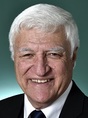
Bob Katter Kennedy, Katter's Australian Party
3:00 pm
I was quite appalled and shocked to find out that 340,000 student visas are being issued—that's the average for the last five years—and only 40,000 of them are going home. So there are 300,000 people coming in on student visas. One lovely young lady came in on a student visa, and I said, 'How'd you get in?' and she said: 'You just get a student visa. Anyone can get that at any time at all. It's easy, and you can bring your whole family in.'
Only 40,000 of the 340,000 leave Australia, so there are 300,000 coming in there and then another 400,000 coming in as migrants. That's 700,000 people coming here to stay—not to go home—each year. Well, you don't have to be Albert Einstein to figure out, within 15 years, we will be a minority in our own country—we Australians. If you're happy with that—I'm telling you I'm not.
Some of those people that are coming in—and I make no apologies for stating this—are coming from the Middle East and from North Africa. I say that because it is not a religion thing. We have a tremendous interface with Indonesia, and you would not find a nicer or better people in the world—or more tolerant. The current ambassador, in fact, is a Christian from Indonesia. They're lovely people. So it is a geographic thing. I'm sorry because there might be some very good people that we're saying 'don't come in' to on those sorts of generalisations, but you'll never make a perfect law. That is for certain.
Probably worse still, nearly 75 per cent of them are going to Sydney and Melbourne. There are no jobs and there's no accommodation, so why the hell are you bringing them into this country for? You've sent all the industry overseas. Let me be very specific. Bonds athletics—over 5,000 jobs went out of Sydney and Brisbane in one hit with that one company. The jobs are gone. They're sitting there in little ethnic enclaves—a lot of them hating Australians and having no intention of ever becoming Australians.
An honourable member: You're a disgrace, mate.
I want to know who that interjection came from. I want to find out who's interjecting, because your name's going to go public. I know the people of Australia have had an absolute—and I'll use a crude expression—gutful of this. We're not running around scared anymore of being called racist—

Sharon Claydon Newcastle, Australian Labor Party
Member for Kennedy, please direct your comments through me as the chair. We'll have no personal exchanges or attacks going on in this chamber.
Bob Katter Kennedy, Katter's Australian Party
He started it, Madame Deputy Speaker, and I'm pretty good at finishing it, let me tell you. I'm pretty good at finishing it, and I'll remember you. I'll find out what your name is. I don't know what it is, but I'll find out.
Sharon Claydon Newcastle, Australian Labor Party
I would ask everybody to stop behaving in a disorderly manner.
Bob Katter Kennedy, Katter's Australian Party
This country is drowning in a flood of 'foreign' migration—and I use the word 'foreign' in inverted commas. I come from a town where almost all of us are from some sort of minority grouping somewhere along the track, and a lot are First Australians. We're regarded as a minority group, too, I can tell you. I'm speaking as one of them.
I saw nearly a hundred people standing in front of the great symbol of Australia, the Sydney Opera House, screaming, 'Gas the Jews.' These Australians don't even remotely resemble Australians. Australians would spit on them. So, if you want to be champions for some overseas cause, then you go back overseas and you bloody well stay there. You don't come to this country and murder 15 people at Bondi—like you did. When I say these things and I say them with rage, they reflect the feelings of the Australian people.
You have done nothing else except promote Pauline Hanson magnificently well. Well, now you're really going to get chewed up. You created the monster, if it is a monster. I'd say it's probably not a monster. I'd say it's probably a lot of good things. But I'm just saying that you created it. You sowed the wind; now you'll reap the whirlwind.
If you think it's only going to hit the Liberal Party, it's not the way this works. Having watched and been involved in political fights for well over 50 years, I can tell you this is not the way the thing works out in the end. And I want to conclude by saying that, when you quote the immigration figures, that's just silly, because there are over 300,000—nearly 400,000—students coming in each year, and they don't leave. So you've got 400,000 there. You've got another 400,000 coming in legally. That's nearly a million a year. Within 15 years we'll be a minority in our own country.
I happen to love Australians, and I happen to love us being Australians. Well, we ain't going to be Australians. We'll be something else. It might be a very ugly something else. Having said that, I say 'integration'. Do they come from a country with democracy—North Africa, the Middle East? No. Do they come from a country with rule of law? No. Do they come from a country with industrial awards? No. Do they come from a country with Christianity? And I make no apologies for saying that any moderate student of history—and I'm not a moderate student of history; I'm published historian author. It's pretty hard to get a history book published, I can tell you. Christianity is integral, whether you like it or not. The year of our lord 2026 is 2026 years since the birth of Christ. Every aspect of our lives is put there to some degree from the great Christian movement. And all it says is: you've got a responsibility to look after your fellow man. That's all Christianity says. You've got a responsibility to look after your fellow man. But there are people that believe that their fellow man should be stamped out unless he agrees with them. And those people coming to this country, screaming out, 'Gas the Jews.' Well, why don't you go over and live in Nazi Germany where you bloody well belong? Excuse my language, Madam Speaker.
In conclusion, these are the figures that have been given to us. Of 340,000 student visas each year, only 40,000 are leaving the country. That's 300,000 people. Another 400,000 are coming in on immigration visas. And if you talk about criteria, there are five I mentioned before. I don't want to go over it. If you take those five principles—well, alright. The Filipinos—tick, tick, tick, tick, tick. The Indonesians—well, they might not be Christian, but as for the other four criteria, I'd argue maybe. Poland—tick, tick, tick, tick, tick. There's miles of country out there where people would die to come to this country. When you put it all together, we really have the highest standard of living in the world because we have houses with land around the houses, which is very, very civilised. Other countries don't have that. I would say that we are arguably the richest people on earth, so people want to come here. And God bless them for wanting to come here. But you're not coming here to make us the country that you came from. There's no doubt in my mind that there are a certain group of people that fit into that category.
I say in conclusion that, obviously, in the live cattle business, we have huge interface with people from Indonesia, and we just find them lovely people—very civilised, very lovely people. There are other exceptions to the rule. But I saw in my country 70 or 80 people standing in front of the Opera House screaming, 'Gas the Jews,' and, to the eternal shame of the New South Wales government, they did absolutely nothing about it. People were advocating murder, classifying themselves as Nazis, and nothing was done about it whatsoever. That's except for one person who had the temerity to stand up as an Australian and say, 'Hey, we don't do that in this country.' The police carted him away. They didn't cart away these fellows advocating murder. The police carted him away.
The immigration department allowed those two people into this country. They allowed them to go back to a terrorist training area and then let them back in the country. They had them on an ASIO watch list, and they allowed them to buy three high-powered rifles. In fairness to the Liberal government in New South Wales, they would not give them a permit to own a rifle, so they couldn't own a rifle legally—not that that stops you very much. (Time expired)

Julian Hill Bruce, Australian Labor Party, Assistant Minister for Citizenship, Customs and Multicultural Affairs
3:10 pm
I thank the member for Kennedy for bringing the debate. I do welcome a chance to talk about migration and integration, the two core topics in the motion that you've put before the House. This matters to the work of my portfolio. I spoke in my first speech nearly 10 years ago this July extensively, though, around the role of migration and human diversity as our nation's defining characteristic and greatest strength. They are the words that I said then, and they're words that I believe now. It also matters to Australians now. The best I can say about some of your contribution is that you are reflecting some of the fears and the anxieties fuelled by misinformation and by things that we see that we don't like, some of which you've outlined, that are completely unacceptable, and I'll talk about that.
I'll say clearly at the outset that migration has been too high. Migration has been too high, and the government is bringing it down. But there is nothing more Australian than a migrant. Everyone in this country except Indigenous Australians—everyone or their ancestors came from somewhere. Since 1945, more than six million people have chosen to make a permanent life in Australia. Every region, every town, every sporting club, every suburb has been touched by generations of migrants. Migrants are our relatives, our friends, our work colleagues, our business leaders, small-business people, researchers and more.
Last year, we marked a number of anniversaries in this country. We marked the 80th anniversary of the first Department of Immigration, put in place by the Curtin Labor government to help with World War II rebuilding. We marked the 50th anniversary of the Racial Discrimination Act, the last big bit of legislation by the Whitlam Labor government, which laid the foundations for equality in this country—that everyone is equal under the law, regardless of their race or ethnicity or background, and that everyone has the right to equal participation. We marked the 50th anniversary of the contribution of large-scale Vietnamese migration to our country and the 40th anniversary of the Hawke Labor government's access and equity strategies, providing for the right of everyone to fully participate in Australian society. In years to come, we can look back on last year for the establishment of the Office for Multicultural Affairs, bringing together investment, services and policies, and a milestone that I'm really proud of: the one-millionth humanitarian migrant welcomed to our country since World War II. That was late last year.
One of the stereotypes that I cannot stand is the one that humanitarian migrants come to our country to get on welfare. It's deeply offensive. They're far more likely to start businesses and to have a crack than other Australians. In the year 2000, six of our country's then eight billionaires came to this country as humanitarian migrants and refugees.
I want to address the two key issues in the motion. The level of migration is a legitimate debate to bring, but it needs to be based in fact. There is no mass migration in this country. Even in that rabble opposite, their shadow minister for immigration admitted this in a moment of honesty. You turn on the TV and look at what's happening in much of the Americas and Europe. They suffer from mass migration. We do not. We have a tightly controlled set of borders.
Bob Katter Kennedy, Katter's Australian Party
A point of order! You gave the figures of 700,000 a year coming—
Sharon Claydon Newcastle, Australian Labor Party
Member for Kennedy, I really tried to make sure that people gave you the respect to listen to your 10-minute speech. It's now the assistant minister's turn, and I really want to ask you for some cooperation.
Julian Hill Bruce, Australian Labor Party, Assistant Minister for Citizenship, Customs and Multicultural Affairs
The size and the shape of our annual migration program will always vary depending on our national and economic interests. It's been true under this government. A fact to inject into the debate is that the permanent migration program this year is 185,000 people. Last year it was 185,000 people. Seventy per cent of that permanent migration program are skilled visa holders. The rest, predominantly, are family—partner and child visas, predominantly. Despite population growth, despite demand, including in regional areas in particular, for skilled workers and despite pressures on family reunions, that number has remained unchanged. Every state—
This is just a tactic to interrupt because I want to respond to the points made.
Julian Hill Bruce, Australian Labor Party, Assistant Minister for Citizenship, Customs and Multicultural Affairs
Indeed.
Sharon Claydon Newcastle, Australian Labor Party
Member for Kennedy, what is your point of order?
Bob Katter Kennedy, Katter's Australian Party
He flatters himself to think I'm trying to interrupt him, Madam Deputy Speaker.
Sharon Claydon Newcastle, Australian Labor Party
What is your point of order?
Bob Katter Kennedy, Katter's Australian Party
He is not taking into account those on student visas who don't go home, and that's what I said.
Sharon Claydon Newcastle, Australian Labor Party
Member for Kennedy, that's not a point of order.
Bob Katter Kennedy, Katter's Australian Party
He's implying that it doesn't exist.
Sharon Claydon Newcastle, Australian Labor Party
Sit down, please. Member for Kennedy, I will not be taking more points of order from you.
Julian Hill Bruce, Australian Labor Party, Assistant Minister for Citizenship, Customs and Multicultural Affairs
Despite pressure from every state and territory saying they want a higher migration program, the government has kept it constant at 185,000. We have an ageing population. In 1980, we had about seven workers paying tax for every retiree. We now have about 3½, trending towards three. You cannot run a labour market, staff the aged-care homes or run our industries, and the healthcare system would collapse, without the contribution of skilled migrants. So I just want to get a few facts in the debate.
I say to anyone who wants to bring this debate, in the community or the parliament: be specific. Don't come here with generalisations and smears on groups of people. I look at the government bench over there. This reflects modern Australia. This reflects multicultural Australia. I don't know what that is, but it does not look like the country that we are. It doesn't look like the country that we are today. But anyone who wants to bring this debate needs to say specifically what they want to cut. Do they want to stop Australians from falling in love with people from overseas and say, 'No more husband and wife for you; you can't bring it here because people say we have to massively cut migration'? Do they want to cut—
Julian Hill Bruce, Australian Labor Party, Assistant Minister for Citizenship, Customs and Multicultural Affairs
We don't have polygamy. This is a nonsensical smear that people like you spread on social media. It really is ridiculous. It's juvenile.
Sharon Claydon Newcastle, Australian Labor Party
You need to direct your comments through me, please.
Julian Hill Bruce, Australian Labor Party, Assistant Minister for Citizenship, Customs and Multicultural Affairs
Do they want to cut child visas? Which industries would you cripple? Which nursing homes would you close? Which regional healthcare centres would you close down? Which parts of the defence and other industries do you not want to see staffed with skilled workers? Be specific. Don't bring the general smears.
The other measure—and I'll address the points made—is net overseas migration. It was too high post COVID and the borders reopening, and it's now falling. It's over 40 per cent down in the last couple of years. Think about it like this, for anyone actually interested in the facts. Net overseas migration plummeted during COVID to negative for the first time since World War II, because—who knows?—if you shut the borders and no-one comes in, it plummets. Then it spiked, when the borders were reopened, for about 18 months or two years, as Australians came back—Australian citizens count as net overseas migrants—and partner visas, students, working holiday-makers and agricultural workers stuck offshore came back. It spiked, and now it's coming down, exactly as the government said it would. The rise was a bit higher, but not because of arrivals. This is the big lie. It was because departures were slower than predicted, because we had the lowest average unemployment in the country for over 50 years. So, if you want to come in here with the smears, deal in facts.
There are two things that you got wrong there, Member for Kennedy. You said most students don't leave. That is not true. It's a falsehood. Most students go home. It's our fourth biggest export sector. International education supports more than 250,000 Australian jobs.. I see the Minister for Education here. It's critical to the internationalisation of our universities, to our global research partnerships, to jobs right across Australia and to our global rankings at our top universities. Most students go home. Some of them stay. They become some of our most highly skilled contributing migrants. That's a pretty good deal for the taxpayer with an ageing population. Their home country pays for the first 20 years—their early childhood education and primary schooling. Their taxpayers pay. They come here and pay, at a profit, for an Australian-standard education, and then they work and pay taxes for 40 or 50 years. It's a pretty good deal for the country.
But really the trick which has been done here—we see this on social media and, sadly, the member for Kennedy has chosen to come in here and repeat it—is the big scary number. What they're doing is taking parts of the arrivals without looking at the departures. They just pick random numbers and put them on social media and say there are a million people coming. It's just rubbish. It's not true. Just because you say it doesn't make it true.
What we have is a competent government, but we do not have a functioning opposition. They're terrified of, and yet cuddling up to, One Nation. They're calling for massive cuts to migration, but they never come in here and say what they actually want to cut. And Pauline Hanson lives rent free inside their heads. Paul Keating said in 1996:
The great tragedy of the shamelessly regressive politics of Pauline Hanson is not so much that it is rooted in ignorance, prejudice and fear, though it is; not so much that it projects the ugly face of racism, though it does; not so much that it is dangerously divisive and deeply hurtful to many of her fellow Australians, though it is; not even that it will cripple our efforts to enmesh ourselves in a region wherein lie the jobs and prosperity of future generations of young Australians, though it will—the great tragedy is that it perpetrates a myth, a fantasy, a lie.
The myth of the monoculture. The lie that we can retreat to it.
We are diverse and the key to being an Australian is respecting each— (Time expired)
Sharon Claydon Newcastle, Australian Labor Party
( ): Just before I give the call to the next speaker, I am going to remind the House that, as challenging as topics may be, this is a chamber in which debates happen. We might not always like to hear what each other are saying, but it is your absolute obligation in this House to provide each other with courtesy when someone is on their feet and speaking. So I'm going to ask everyone to show some courtesy now to the member for Mayo—and I really don't want interjections.

Rebekha Sharkie Mayo, Centre Alliance
3:21 pm
I am going to do my best to take the temperature down somewhat. Migration and integration are two policy areas that shouldn't be taboo, yet they have been taboo to talk about in our nation for some years. There is no doubt that in the last three years we have had a very steep increase in migration. I have enormous respect for the immigration minister, who just spoke, but it was put to me that the reason why we've had such a steep immigration increase is that we were catching up from the pandemic. I just fail to understand why we were catching up, when the rest of the world also had minimal migration. There was really nothing to catch up on.
If I look at the net overseas migration figures from ABS data, in 2024-25, 306,000 people were net overseas migrants; in 2023-24, 429,000; and in 2022-23, 556,000. So over three years this is more than 1.2 million people. It's just supply and demand. This has created significant pressure on housing. The figures don't lie. In South Australia in 2020 the median price of a home was $574,000. In December last year it was $925,000. We've done that in five years, and the thing that's changed the most are our migration numbers.
If I look at South Australia, our state government has a very pro-migration policy, and we've gone from a population of one million in 1969—when we last built a reservoir—to two million. That's enormous pressure on the environment and on water, and I think it's reasonable to have a conversation about the size and structure of the nation that we are creating.
Why are we doing this? I sometimes ask the question when I look at the life that we have created for people now, where you as a family need to have two full-time jobs just to cover a mortgage and basic costs. The Australian dream of being able to buy your home is fading away. Young people talk to me about this all the time. Our population in 30 years has grown by 54 per cent—an extra 10 million people. I gave you our net overseas migration figures before. Back in 1996, 30 years ago, the figure was only 95,000—these are, I think, reasonable conversations to have—yet our poverty has increased. In 1996, 12.9 per cent of our population lived below the poverty line. In 2026, it's over 14 per cent.
So I think we need to have a very real conversation about the size of Australia, what Australia can handle from an environmental and water point of view, and then what our nation stands for, what we value and what we expect of the people that come here. We came to Australia in 1973. It was an expectation on my family. They were told very, very clearly: 'You will follow the rule of law. If you don't, you're gone.' It was as simple as that. There were expectations on us. We are a proud, Western, democratic society. We uphold the rule of law and equality between men and women, and we should expect everyone who comes to Australia, I think, to learn our language, to know our history, to know and value our literature, to embrace all that Australia has to offer. If you come to Australia, you come to be part of our society, to embrace it, and you don't come here to expect Australia to change for you. I think we must affirm these reasonable expectations of all people.
We want to have a harmonious society, but we want to have a society where people can live and breathe and be able to afford home ownership, and right now the demand is far outweighing the supply. All we're doing is carving up as much farmland as we can to try to manage that. I think the Australian community expects us to have a very honest and sober conversation about migration, and I don't think we're doing that at this point.

Joanne Ryan Lalor, Australian Labor Party
3:26 pm
I rise in my place today the proud member for Lalor, Chief Government Whip responsible for the care and consideration of the members of the Labor Party of this House, and I join this debate. Every instinct in my being wants to leave this chamber rather than join this debate. I'll give you a couple of reasons. One is, as I listen to the tropes from some of those opposite, and I look to my left and I see a First Australian, I wonder who asked what they thought about immigrants coming to this country. I look across this chamber and I see modern Australia reflected here. I see the electorate I represent reflected here, an electorate where fifth-generation Australians thrive and first-generation Australians thrive, and they thrive by living together. They thrive by looking after one another, they thrive by supporting one another, they thrive by challenging one another to do better every day.
I absolutely understand that change, for some people, is difficult to deal with. I understand that the pace of change can be challenging for everyone. But I understand that our modern Australia relies on us to see our sameness rather than reflect on our difference, because what do we all want? We all want what's best for our children. We all want a thriving economy for our children to grow into. We all want a world-class education system for our children. I'll tell you what the first generation of Australian migrants are bringing to my community: they're bringing aspiration, they're bringing passion, they're bringing will and drive. They're bringing want for their children to live in a great Australia. They come here to make a contribution and they are making a contribution every day in my community.
I'm going to share a moment with the chamber, if I may, in terms of how this has manifested in my community. On 15 December, the morning after the Bondi massacre, I attended an event in my community. It was the retirement of a school principal of a Catholic primary school. When I arrived, that Catholic primary school greeted me and said, 'Joanne, in the shadow of the events of last night, thank you for being here to spend some time with the community.' I was able to speak and say how good it was to be with the community of faith on that morning, and to hear that community of faith send their love around the country to every Australian. It was a beautiful thing to do. In the afternoon I was at a school graduation—a very new school in my community—with probably two of what are considered traditional Australian kids in that school. The school council president got up to make a speech—a Muslim man who has been in the country for three years. His child was one of the grade 6 graduates. He sent his love around the country on that day. He paused, on what should have been a celebration for those children, to mark that occasion and to make sure that everybody there understood how he was feeling, how our Muslim community was feeling and how important it was for us to come together to support these young people and to keep moving.
Immigration has been the backbone of this country. From a 16-year-old ancestor of mine who got off a boat and walked farm to farm in the Geelong region looking for a job as a domestic servant, I am a descendant of immigrants, as are the majority of the people who are in this House every day. If we're going to talk about immigration, we do need to make sure that the facts that are put on the table are correct, and it is distressing to be part of debates where you can't rely on people's understanding of net migration, the different reasons people come to this country or the value that they bring when they come in through the door to us.
Bob Katter Kennedy, Katter's Australian Party
They're in Sydney and Melbourne.
Sharon Claydon Newcastle, Australian Labor Party
Member for Kennedy, the interjections are becoming unbearable, okay?
Bob Katter Kennedy, Katter's Australian Party
I agree, Madam Deputy Speaker. I'll shut up.
Sharon Claydon Newcastle, Australian Labor Party
Thank you. Member for Warringah?

Zali Steggall Warringah, Independent
I am incredibly concerned about the conduct of the member for Kennedy and would ask for him to be sanctioned again for disorderly conduct under standing order 94.
Sharon Claydon Newcastle, Australian Labor Party
Thank you for your input to the debate. I have been thinking about this and the interjections, and I have asked the member for Kennedy to cease now. This is a debate that you've asked for, Member for Kennedy, and the interjections are taking a precious opportunity from the crossbench to conduct this debate today. I've asked you repeatedly; I really am asking for your solemn commitment to stop these interjections. Otherwise I will have no choice but to ask you to leave the chamber. Now we're going to listen to the member for Wentworth in silence.

Allegra Spender Wentworth, Independent
3:32 pm
We're here to talk about migration and integration. I'm going to focus mainly on integration because I think that is the urgent point in terms of the discussion today, given some of the earlier comments that have been made. But firstly, briefly on migration, I think it's perfectly appropriate for us to have a conversation about the levels of migration. They have concerned a lot of Australians, and a lot of Australians are legitimately worried about house prices, about young people being locked out of homes and about infrastructure not keeping up with our population—100 per cent very fair questions. There are also very fair questions in terms of what pathways are available to people and making sure that those pathways are appropriate. I think those are really important questions.
But I really want to talk about integration, because what we say about this in this House does matter. I feel very strongly about this, particularly as an incredibly proud daughter of a migrant—my mum's family. The reason why I think this is really important is that we have a country that is one of the most diverse in history, and that is a remarkable thing. I don't think it's easy to have a country as diverse as this country is. I think we need to take that responsibility carefully.
Part of that responsibility is treating people with the dignity of the individual, which is actually a deeply Western value. It's a deeply liberal democratic value: you have a moral authority based on you as a human. Your moral authority and your role in life don't depend on your ethnicity, your ethnic origin, your religion, your sexuality or anything else. It comes down to you in terms of your responsibility and in terms of your character. That is what this country is based on: the moral authority of the individual. That is something that we have to focus on when having these sorts of conversations, because there is an implication—I'm not going to make assumptions about what is deliberate and what is not, but I look at the people who are watching this debate today, and I think of the people at home. Every Australian who is in this country, who is willing to live by our values, who commits to the words of our citizenship pledge, which I'm delighted often to hear said by people—those people deserve our respect, and they deserve our support, and we can learn and thrive from their difference as well as the contribution that they make to Australia. I think we just have to keep coming back to the individuals rather than to blanket groups who try and other and dehumanise parts of our community.
I think we need to build a modern version of the Australian story, because we have this Gallipoli myth about who we were back in 1914. We are a very different nation from then and, frankly, a much greater nation from then. To see the world, you don't need to travel the world; you can actually experience the world here in Australia. I think that is a wonderful thing and is something that I enjoy enormously. I see a version of Australia which represents the breadth, the depth and the diversity of our country and can unite around inclusivity rather than hark back to a past which excludes a whole bunch of Australians. If you exclude a whole bunch of Australians, you know what? We are not going to get back to that cohesive Australian country that some would like us to get; we are going to be more divided than ever. I think it is up to us now, as a country, to build on that inclusive version of Australia and to accept that we have Australian values. We expect people to live by the rule of law. We expect people to live by our Australian values, but those Australian values encompass the view that your safety and your acceptance are not dependent on your ethnicity, your sexuality or your religion. It is down to you and your contribution to this country.
As I said, as a child of a migrant, I couldn't be more proud to be part of this country. I couldn't be more proud of my mother's contribution to this country as a migrant. The member for Kennedy referenced Bondi. I could not be more proud that people like Ahmed Al Ahmed made a huge difference in people's lives by saving them, because he did not look at religion or anything else. He stood up for Australian values, and I am proud that he is part of this country. We have to be very careful how we lead this, because this is a special country. It is not easy to be this diverse, but we can do that. That means having a version of Australia that we can all buy into.

Basem Abdo Calwell, Australian Labor Party
3:37 pm
I think the member for Kennedy has taken politics in the pub a bit too literally—a lot of politics and far too much pub. We need to move away from slogans and get a bit of reality—
Sharon Claydon Newcastle, Australian Labor Party
Member for Kennedy, you are now going to leave the chamber please. You have consistently defied my rulings. It is absolutely disappointing that the person who moved the MPI has been asked to leave the chamber. You leave me no alternative for your disrespect for this House.
The member for Kennedy then left the chamber.
Basem Abdo Calwell, Australian Labor Party
It's actually sad to see someone who's spent so much time in this House be reduced to trading in myths about immigration to stay relevant. He has failed at coherence, and he is failing at relevance. Our multicultural Australia is a remarkable achievement. It's part of our story. It's part of modern Australia. As much as he's finding it hard to come to terms with—an identity crisis delivered through megaphones, fist pumps—his arguments and what we could understand from them actually lacked coherence, even though they were delivered loudly. In this place, volume should never be confused with substance.
Immigration is a defining feature of modern Australia. It shapes our economy, our workforce and our communities, and it always has. It remains fundamental to who we are. What we're seeing from those opposite is not a serious contribution to policy debate. It's rhetoric that creates confusion to mask their lack of solutions to modern problems. Modern Australia is multicultural Australia. They're inseparable. That remains one of this country's great achievements. We'll put the theatrics aside and deal with facts.
Let me tell you something about my own community. Those opposite like to wrap themselves in the Australian flag, but one place they don't want to see the Australian flag is on Australian products like Australian cars. They destroyed the Australian industry, an industry built on everyday Australians and on migrants who came to this country and built communities like mine. The Turkish and Greek migrants and those migrants from all across the world were part of our supply chains and in our assembly plants, building our cars. Those opposite, now in the leadership race, put their elbows along and claim that they want to defend Australian manufacturing. That's the hypocrisy of those opposite. That's the haste in which they operate.
Our communities believe in an Australia in which local areas have been built because of industry, which migrants helped contribute to. They helped build our economy. They enriched Australia, not just in a cultural way, as we see in festivals and occasions, but by being everyday Australians—working, living and contributing to defining what modern Australia is about.
When you wrap yourself in the flag, fight with us to bring back Australian made products. Fight with us to build a modern Australia which is inclusive and which actually contributes to our economic life and our social life. Those opposite just give us rhetoric that is made to hide the fact that they have no solutions. It's deliberate confusion, spooked by certain political parties which are now coming in to try to hijack their agenda.
I think the facts about the numbers were mentioned by those who spoke before me. They want to cut everything, but what is it that they want to cut and do without? They really need to say it. Is it our healthcare workers; our teachers; our construction workers; our hospitals, who will struggle without staff; our housing projects; our regional communities; or our outer suburbs? What parts of the economy do they want to leave with deep, long-term skills shortages? These are the real-world consequences that are never acknowledged. They don't believe in modern Australia—just as they don't believe in Australian industry, in Australian manufacturing, in the rights of Australian workers or in what modern multicultural Australia is really all about.
Zali Steggall Warringah, Independent
3:42 pm
I want to start by apologising to the many multicultural, multifaith people in Australia for the revolting diatribe we've heard today from the member for Kennedy. I think it is absolutely disgraceful that on the floor of this place, the House for the representatives of all Australians, we have heard comments that, in my opinion, are so deeply racist and so incredibly wrong. The irony of what is often thrown at migrants, who come here to make Australia bigger, better and greater, is that many people born here have failed to actually look at the pledge they take to become Australian citizens and the commitment they make to Australia.
I would invite the member for Kennedy to have a think about the pledge for people to become Australian citizens. It reads:
I pledge my loyalty to Australia and its people,
whose democratic beliefs I share,
whose rights and liberties I respect, and
whose laws I will uphold and obey.
That includes freedom of religion. It includes respecting people's rights to have differences of opinion, differences of faith, and different cultures and traditions. It means respecting those rights and liberties. Yet, in the very tone of this MPI today, he calls for no migration without assimilation. That is directly contradictory to that very pledge we ask new Australians to make to the Australian people. As a fifth-generation Australian, I find it deeply offensive. It is important that we come and speak out. It is so important that we call out when this kind of rhetoric and language is simply wrong.
There are a lot of false facts and false information to suit a populist narrative around migration and immigration. The census data shows that, in fact, we do not have record levels of immigration. We do not have a problem that is out of control. And we know in so many aspects of our economy and our services, we desperately rely on immigration to bring skilled visas and people that come and deliver services, start businesses and do incredible service to the Australian community. When I meet with chambers of commerce and small businesses, they consistently highlight that accessible and efficient migration pathways are critical for keeping businesses open, sustaining regional communities and supporting local job creation.
We have to call out misinformation where systemic policy failures have led to poor infrastructure, housing issues and crises that are then blamed on migration. Blame it on the others, because that's the easiest thing to do. We know projected net overseas migration has now come back to levels that are reasonably consistent with pre-COVID levels. It's really important that we don't let those false facts take on a narrative, which is simply not true, that somehow the problems we have fundamentally and structurally within our community and our economy are the cause of others. We know we have complex challenges in housing affordability, infrastructure pressures and urban congestion, but they stem from planning and policy decisions. They cannot be blamed on migration or immigration.
We know that, in periods of economic uncertainty, we often see the rise of antimigrant rhetoric. As sure as night follows day, that is what we're seeing in this place. We're seeing it in the other place, with other members of the parliament, and we've seen it today again with the member for Kennedy. We know from social research that such narratives are incredibly harmful. They distort public understanding of our immigration system, and they weaken our social cohesion. Migration intake must be complemented with adjacent planning and infrastructure investments such as road transport projects, child care and public spaces. No-one is denying that. But to lay the blame of structural policy failures on migration is simply wrong. For the member for Kennedy to then imply the assimilation aspect of his MPI is deeply, deeply concerning, because what that really implies is that we should be lose our multidimensional aspect, and I— (Time expired)

Julie-Ann Campbell Moreton, Australian Labor Party
3:47 pm
This side of the chamber is what Australia looks like. This side of the chamber is what our community looks like. This side of the chamber is what our nation looks like. When I made my first speech in this place, I chose to talk about my family's migrant story. It's a story of Chinese immigrants coming here in the 1800s. It's a story of Chinese Australians building railroads. It's a story of Chinese Australians fighting for this country and representing it at war. And it's a story of Chinese Australians helping establish community organisations that bring people together. I am a proud Australian. I am a proud Australian of Chinese heritage. I am proud of my family's migrant story, and I would remind the member for Kennedy that I am proud of my family.
This story is not unique. It's not a one-off. It's the story of so many Australians. It's the story of so many people who call this place home. Over half of all Australians were born overseas or had a parent born overseas. It's part of what makes Australia a great migration success story, because that diversity builds strength. That diversity also helps build our country into a better place. I'm very proud to represent the most multicultural community in all of Queensland in my electorate. From our multicultural community, we see people who run small businesses, we see people who care for our loved ones, we see people who support our oldest Australians, and we see people who support our youngest Australians.
When people think about multiculturalism, often the first thing that comes to mind is food and festivals—because they're great. But, to go beyond that, we should also think of our multicultural and migrant communities as drivers of our economic outcomes, as drivers of our nation's economy. Labor believes that migration should be a function of nation building. When we bring skills to this country, it is to make us better and stronger. If we want to be a country that makes things, if we want to be a country that builds stuff, if we want to be a country that cares for its people, that's what we need.
Unemployment is at 4.1 per cent. It's really low. The question that we need to ask ourselves in this debate is: What do we want to cut? What jobs do we want to cut? Is it jobs in agriculture? Is it jobs in construction? Is it jobs in health? Is it jobs in aged care? Is it jobs in education? That is the fundamental question here. If you believe that Australia should be a country where people are gainfully employed and one where we have an economy that is driving towards a better society, migrants are an important part of that story.
The member for Kennedy has left this chamber. It's unfortunate because I wanted to direct my comments at him today. I understand that it's important for the member for Kennedy to put on a show. I understand that it's important for the member for Kennedy to lean into populism, because it is easy. I will not empower the member for Kennedy's words by jumping up and down, I will not empower the member for Kennedy's words by shouting, and I will not empower the member for Kennedy's words by shaking my fists. What I will say is this: the traditional Australian values of mateship, a fair go and respect for everyone are the bedrock of patriotism. He is no patriot.

Elizabeth Watson-Brown Ryan, Australian Greens
3:52 pm
I welcome the opportunity to debate the question of immigration in Australia. People are not wrong to look for someone to blame for the considerable squeeze and stress we've all felt over the last few years. People aren't wrong to want to live in a peaceful and harmonious community, and they want to know why it feels less and less like we live in one. At face value, I can understand why people might look at immigration and assume that's where the problem lies. I disagree, of course, and I'm going to get into why. Before I do, I want to say that I feel like this conversation can get very heated from all sides, and it's not helpful to anyone if you go around calling everyone woke or racist all the time. I want to deal with this in a measured way.
They say that facts don't persuade anyone these days, but I have a fundamental belief in the intelligence of the Australian people, so I figure I'll give it a shot. The fact of the matter is that immigration is simply not the cause of our current ills. Take housing—if immigration were really causing the housing crisis, how do we explain the fact that house prices shot up astronomically during the COVID period, when we actually had net negative immigration? Over the last 10 years, the population has increased by 16 per cent, and the number of dwellings has increased by 19 per cent. We're building more homes than there is growth in population, yet prices keep rising. The fact that Labor and the Liberals have rigged our housing system in favour of property investors and the banks is the cause of this terrible situation.
Let's look at the cost of living. How can we honestly say that Coles and Woolies are putting up their prices because of immigration—or insurance companies or energy corporations? Studies by the OECD and the Australia Institute show that around 50 per cent of inflation in recent years has been caused by corporate price gouging, largely a result of monopolised and unregulated industries. For those worried about the environment, immigration, again, is not the cause of the lack of regulation on wasteful plastic production, the lack of regulation on damaging suburban sprawl, the lack of regulation on native forest logging.
It is true that our roads are clogged. Our services are struggling. You could say that we've had too many people come into this country, or you could simply point out that our major parties have abysmally failed to plan for growing populations and build the public transport, the hospitals, the schools, the public space that we all need.
It should be pretty clear by now that there is someone to blame for how much harder life is becoming for so many in this country, and it's Labor and the Liberals and their decades-long bipartisan commitment to deregulation, privatisation and tax breaks for huge corporations and the ultrawealthy. While these corporations and billionaires have plundered much of the country and while Labor and the Liberals have squandered our wealth, migrants work hard, build community and enrich our society. No-one's saying we should simply throw the borders open. Maybe in some distant future humanity will be able to live entirely without national borders. Who knows? In the meantime, we need some controls; we need some balance.
The member for Kennedy's statement takes people's legitimate concerns down a dark, distracting and dangerous path, one that renders us all weaker in the face of corporate dominance, since we forget who really has power in this situation—one that makes us more suspicious, less connected to our communities and more anxious, not more peaceful, not more at ease. More to the point, politicians talk about social cohesion, but they never put two and two together. Social cohesion is fundamentally undermined by ballooning wealth inequality.
Ultimately, I think, when we talk about curtailing immigration, we are really talking about wanting to take back control of this country. I couldn't agree more, but let's do that together—let's do it all together. Whatever your country of origin, whatever your religion, we ought to take back the country we call home from the lobbyists, from the moneyed interests, from the big corporations, from a political class that has proved so thoroughly incapable of tackling the major problems we face today.

Matt Smith Leichhardt, Australian Labor Party
3:57 pm
I am Australian. I was born here—and my parents et cetera. I do not have a new-migrant experience to speak of. No-one in my family, in living memory, was one. But a lot of what we've talked about today, a lot of we've heard about, focuses on identity and focuses on control. Australia does not belong to us; we belong to Australia. Australia is not a set point. It is not a fixed moment in time, and it has never been. It wasn't for 65,000 years. It wasn't 230-odd years after that. It's changed in my lifetime, from the late seventies to now, and it's changed for the better.
Our identity as a nation grows. It changes; it adapts. It becomes special. We take away from monocultures and we create something new, something beautiful, something that every single person in this country can be proud of—and we are proud of it. We're proud of it together. We're proud of it when we sing the anthem. We're proud of it where every single member in this House—I guarantee—attends a citizenship ceremony, speaks that oath and sees in the eyes of the people there the hope and the joy that they are now a part of this. They are a part of the beauty, and they are going to add to it. They add to it with their love, the love of their community, the love of the communities around them. They volunteer at our sporting clubs and our P&Cs. They're friends with our children. They introduce us to new foods. I know food is not the point, but, jeez, some of it's amazing, isn't it? The point is though that we will adapt and we will evolve and we will continue to. And, with each wave of migrants we've had, we've changed just that little bit more.
Now, I said that I don't have a new migrant story, but on 24 April 2025 my fiancee Renee became an Australian, and I'm so proud of her. She brought with her customs from New Zealand like the All Blacks. Her ways are not my ways, but she adds to it and she loves it. She's been here 20 years and she's paid her taxes and she coaches triathlon and she inspires kids and she is a net positive. My friend Xiao came over from China to study geospatial mapping. He is now a doctor in geospatial mapping, which I did not believe was a thing until he told me. He came to the Tablelands. He bought an acreage. He had kangaroos hopping in his backyard—something he could never have had in Beijing, something he is grateful for. He's moved down to Brisbane. His son was born in Australia—Luca. Luca is likely to support the Redcliffe Dolphins; no-one is perfect. Luca is grateful that his father made that transition to Australia and grateful that his wife Shirl came with him.
They are the Australian story. We've not asked them to assimilate. They've looked around and they've found the best bits that suit them and they've brought them into their lives. They've showed us the best bits of what they have and they've given it back to us. Assimilation is never the answer. It's never the answer, because, when you enforce that on somebody, they push back. When you look at somebody, at the person, at what they bring and you say, 'I love that; I'm going to make that a part of me,' and they look at you and they go, 'I love that, and I'm going to make that a part of me too,' that is what Australia is. I see it in Cairns. It started with our refugee community. The Bhutanese community arrived probably about 20 to 25 years ago. They struggled. Bhutan and Cairns are not very similar, but, with every cohort of new refugees that has come through, the Bhutanese have been there to help. They smooth their pathways. They make everything easier.
Cairns is the living embodiment of the success story that is Australia. I'm reminded of it every day at our festivals and at our schools and by the people who come to our events. We would have Vietnamese coffee—

Tanya Plibersek Sydney, Australian Labor Party, Minister for Social Services
When you have Vietnamese coffee.
Matt Smith Leichhardt, Australian Labor Party
Thank you, Minister! Cairns is wonderful, and Cairns is wonderful because of the migration story. Australia is the best country on the planet—I've lived in a few—and there's no debating. It's because of our multicultural experiment and success.
Sharon Claydon Newcastle, Australian Labor Party
The time for that discussion has now concluded.