
House debates Bills
Appropriation Bill (No. 1) 2025-2026; Consideration in Detail

Angie Bell Moncrieff, Liberal National Party, Shadow Minister for Youth
10:39 am
Clearly, since the federal budget in March, we've had a federal election. Traditionally, after an election, where there is no change of government, we might expect only minor adjustments, such as a reshuffle of ministerial line-ups and a few tweaks in responsibilities across those portfolios. After this most recent election, what we saw in the Social Services portfolio was far from minor.
On 13 May, the Prime Minister made substantial changes to the administrative arrangement orders, the mechanism by which executive responsibility is allocated amongst ministers. These changes dramatically reduce the responsibilities of the Minister for Social Services. Housing, rental and homelessness policy were stripped from the portfolio. The National Disability Insurance Scheme and foundational supports were also removed. Then, on 26 June, the Prime Minister went further still, with responsibility for disability policy transferred to Health, while the delivery of services and payments relating to social security, health and government services, along with whole-of-government service delivery policy, was transferred to the Finance portfolio. These decisions were not just administrative; they were a clear signal—a signal that this prime minister had little confidence in his own minister. That's hardly a ringing endorsement of either the Minister for Social Services or the previous minister for social services over the past three years under Labor. Can the minister outline what impact these significant changes to the department's responsibilities will have on its budget and your influence around the cabinet table?
Australians are simply doing it tough. They're doing it tougher than ever before. One in six families reported being very concerned about their current financial situation and financial future. Even with a strong labour market and an increasingly mature superannuation system, our social security system supports more than six million Australians at a cost of $152 billion in 2025-26. This represents 19 per cent of all government expenditure. And, under the Albanese government, the number of long-term JobSeeker recipients—that is, those on payments for more than two years—is on the rise. It's increasing. Minister, what macro issues will increase the number of social security recipients, and what measures are in your budget to reduce the reliance of Australians on our social security safety net?
Family and domestic violence remains at unacceptably high levels in our nation. In 2023-24, there were 46 female victims of intimate partner homicide. One in four women have experienced intimate partner violence since the age of 15. Aboriginal and Torres Strait Islander women are 33 times more likely to be hospitalised due to family violence—it's a sickening number—and up to seven times more likely to be victims of homicide. Between 2022 and 2024, sexual assaults rose by 17 per cent, while family violence related homicides and related offences increased by nearly 65 per cent. Minister, with the latest ABS crime statistics for 2024 from across Australia showing domestic violence and sexual assaults on the rise, and the significant delay in the rollout of funding from your so-called rapid review, what is the Albanese government doing now to ensure frontline services have the resources you promised?
The Closing the gap: annual data compilation report provides a sobering reminder of this government's failures. Now in his fourth year, this distracted prime minister has failed to deliver meaningful change. The gap is not closing. It is widening. Of the 19 national targets, just four are on track. That is one less than last year. For too many targets, the data is missing, unreliable or outdated. In fact, only 10 targets had updated figures. And, for crucial areas such as family safety, the numbers were simply not reliable. This is the reality that Indigenous communities face. They are struggling. Women and children remain unsafe, and this government is failing Indigenous Australians. Minister, how can Australians have any faith that this government can close the gap when progress has gone backwards on your watch? And, Minister, where are you? Why are you not here in the chamber to answer these very, very important questions?
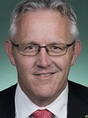
David Smith Bean, Australian Labor Party
10:44 am
I am pleased to rise to speak on the Appropriation Bill (No. 1) 2025-2026, specifically on the sections which relate to the Social Services portfolio. The Department of Social Services is a major employer in my electorate of Bean, and the department and its minister, the member for Sydney, with the assistant minister, my good friend the member for Cooper, sit at the forefront of the social change agenda of the government. The appropriations under discussions here today will improve the lives of many, many Australians.
A key part of the social agenda of our government is the Targeting Entrenched Disadvantage package. This package, which is funded for $230 million, is delivering tangible and sustainable change for disadvantaged Australians and their communities. The package covers a range of areas of disadvantage, utilising different levers to tackle different types of disadvantage. I would like to focus in my time today on one particular area of the package that I have recently learned a little more about.
Under the $100 million outcomes fund within the Targeting Entrenched Disadvantage package is the Social Enterprise Development Initiative. The purpose of the outcomes fund is for the Commonwealth government to partner with the states and territories and social enterprises to fund projects which deliver outcomes in tackling social disadvantage. Of the $100 million related to the outcomes fund, $11.6 million has gone towards funding the Social Enterprise Development Initiative.
The objective of the Social Enterprise Development Initiative is positive—to empower local communities and organisations to use their knowledge and expertise to develop and implement appropriate solutions for Australians who need help. Grants by the Social Enterprise Development Initiative have supported 32 organisations across Australia to support people to build their own positive futures. It is expected that around 60 organisations will benefit over the course of the initiative. In my electorate of Bean, Nansen Digital Forensics received support to engage in critical work to support women experiencing domestic violence. They received a Social Enterprise Development Initiative grant of $92,000. It supports women experiencing domestic violence who want to protect their digital and online security. They provide digital, forensic and cybersecurity services Australia-wide, assisting survivors of domestic violence by providing tailored, trauma-informed digital safety audits that help victims-survivors detect and manage technology related risks to prevent and combat technology facilitated abuse. Nansen Digital Forensics also offers training in digital safety and technology abuse for police, caseworkers and legal professionals, and provides skill-development pathways for women re-entering the workforce in ICT security. The support provided to Nansen Digital Forensics through the Social Enterprise Development Initiative has allowed it to scale its reach and social impact, including protecting vulnerable communities from technology facilitated abuse. I have had the good fortune to meet with Rose MacDonald and Andrew Collins from Nansen Digital Forensics on multiple occasions, and I've always been impressed by their commitment to fostering positive social change and helping people in need. Their support for women experiencing domestic violence will be critical and life changing.
The story of Nansen Digital Forensics is a wonderful example of the types of organisations that are supported by the Social Enterprise Development Initiative. The work done by these organisations will be so important to achieve the social change agenda of our government. Finding the right people in communities with the right ideas and supporting them to achieve real and positive change is how we build a better and fairer Australia.
The social change agenda is one that is in the DNA of Labor governments. In 1891, one of the founders of the Labor Party, George Black, declared that Labor existed to make and unmake social conditions. It's as true now as it was all those years ago. What is contained in this appropriations bill as it pertains to social services is a testament to this, and I look forward to the continued benefits which will flow from it to communities right across Australia.
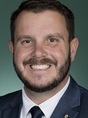
Phillip Thompson Herbert, Liberal National Party, Shadow Assistant Minister for Defence
10:49 am
Australia has some of the best social services in the world, supporting more than six million Australians. At all times we must remember that our strong safety net needs to be managed responsibly because it's funded by the taxpayer—by families and hardworking Australians across the country.
One of the important priorities for social services is ensuring disability participants have access to employment support and work opportunities. There are many fantastic providers around the country who help Australians with a disability find employment and achieve success at work and recognition for the skills that they bring.
As one of the shadow ministers for the NDIS and as the deputy chair of the Standing Committee on Social Policy and Legal Affairs, I have the incredible opportunity to hear about how social services are improving people's lives. But I also hear about the ways that this current Labor government is letting down people with disability, and I'm deeply concerned about Labor's apparent preference for political affiliations over merit when it comes to engaging with providers of disability employment services.
One non-profit provider in Western Australia recently wrote to me, saying their contract for their local community, through which, for over a decade, they have helped people with disability find employment, had been abruptly cancelled by this Labor federal government. Meanwhile, a large for-profit corporation secured extensive government contracts for that region and beyond. That large corporation has Labor Party heavyweights on its advisory board, including a former Labor state premier. This disadvantaged smaller provider wrote to me, saying:
Our exclusion will have devastating effects on people with disability and their families, including my own, who rely on this vital, hands-on support to find and maintain meaningful employment.
They said:
The apparent favouring of corporations with political ties undermines confidence that this process was free from bias or undue influence. If it is happening in my electorate, it will be happening all over Australia.
And they are right.
Australians deserve transparency on whether there are any conflicts of interest in Labor's contract award process in disability employment. Therefore, I'm seeking answers from the Labor Minister for Social Services, Minister Plibersek, on the following questions: why has an organisation advised by a former Labor premier secured major contracts across the country while smaller providers have been excluded from their communities, and exactly what safeguards are in place to ensure fairness and integrity in the contract award process? I wrote to the minister several weeks ago with these questions but have not yet received a response. I will not stop demanding accountability. People with disability and their families deserve assurances that their employment service providers are selected based upon merit and outcomes, not political party contacts.
Another failure is the Labor government's defunding of another critical support program, the Salvation Army 'Sallyman'. The Sallymen have heroically provided pastoral care and support services to our defence personnel, veterans and their families for over 125 years. Our soldiers trust the Sallyman, and anyone who has served knows how important their role is in boosting the wellbeing and morale of our service members. One soldier told me he was in a dark place and that without the Sallyman he wouldn't be here today. That's the kind of support you can't put a price on, yet this Labor government did. Their decision to defund the Sallyman by cutting $1.5 million in federal funding for the program has sparked outrage and disbelief among many of our service members and their families.
In Townsville, Australia's largest garrison city, soldiers frequently ask me if this Labor government will reverse their disastrous decision. So my questions to this Labor government are: Has funding been provided in the Social Services portfolio to fill the gap and fund the Sallyman program after this funding was cut? Did the Minister for Defence consult with the Department of Social Services to see what could be provided for the program? Will this government take responsibility for its decision, acknowledge that it has made a mistake and act urgently to restore funding for the Sallyman so that this vital and longstanding service can continue supporting Australians in need?
These failures, and many others like it, have eroded public confidence in Labor's management of social services. Therefore, I'm calling on this Labor government to act swiftly to restore integrity and fairness to social services and to rebuild trust by listening to those who are impacted by its decisions so that they can continue to receive the support they need.

Kara Cook Bonner, Australian Labor Party
10:54 am
Ending gender based violence is a national priority for the Albanese Labor government and must be a priority for every single person in this place, because every one of us has a role to play in ensuring women and children are safe, supported and empowered. Before entering this parliament, I worked as a domestic violence lawyer. I sat beside women as they applied for protection orders. I listened to their stories of abuse, fear and control but also of courage. I saw firsthand how broken systems can compound trauma, and I also saw how the right support at the right time can change a life. I carry those stories with me into this chamber. They guide the work I do here and remind me that policy is not abstract; it's personal and, in this place, it's urgent.
We know that escaping violence comes at enormous personal and financial cost, and we know too many women have asked themselves not, 'Why don't I leave?' but instead, 'Where would I go?' or, 'How will I afford to leave?' That's why the Albanese Labor government is delivering the most significant investment in women's safety in our nation's history. Since coming to government, Labor has committed more than $4 billion to address gender based violence. That includes funding for frontline services, prevention programs, legal supports and behaviour change initiatives, because we must support victims-survivors but we must also stop the violence before it starts.
We've made the Leaving Violence Program permanent, offering up to $5,000 in financial support, plus safety planning, to people who are leaving or who have recently left a violent relationship. This replaced the escaping violence payment trial, which supported more than 100,000 people. It sends a clear message: if you need to go, we will help you so you can afford to leave. We've also legislated 10 days of paid domestic violence leave so no-one has to choose between safety and their job. We're investing $1.2 billion in emergency and transitional accommodation because leaving violence shouldn't mean entering homelessness. We've reformed family law to make it safer and easier to navigate.
We've also invested in legal assistance services. There's $3.9 billion for the new National Access to Justice Partnership, $82.4 million to strengthen responses to high-risk and serial perpetrators of domestic and family violence and $81.3 million to enhance and expand child-centric, trauma-informed supports for children and young people who have experiences of violence. I want to give a special shout-out to Safe Steps, who premiered their film, Unanswered Calls, at parliament this week. The film portrays young people's experience of family violence, and I thank the assistant minister for her attendance at the premiere.
Labour is fixing systems that have too often failed women. One example of this is the special circumstances debt waiver. Under the old rules, women who unknowingly incurred Centrelink debts, often because of coercive control or financial abuse, were still held liable. Labor is changing that. We're expanding the waiver provision so that Services Australia can consider the broader context, including abuse, when deciding whether a debt should be waived.
We've also invested in prevention and education. Our $40 million Consent Can't Wait campaign is reaching young people with powerful, necessary messages. We've partnered with Teach Us Consent and La Trobe University to build the evidence base and ensure we are tackling this issue at its root. We are taking further steps to disrupt cycles of harm, investing in electronic monitoring of high-risk perpetrators, funding behaviour change programs and working with states and territories to improve criminal justice responses to sexual violence. All of this is informed by the National Plan to End Violence against Women and Children and is strengthened by the rapid review that continues to shape our national response.
I've sat in court with too many women—up to 90 matters a day—who've felt they had nowhere to turn. That is not the Australia we want, and it's not the Australia that Labor will accept. Only Labor is building a system where women are believed, supported and safe—a system that holds perpetrators accountable and that empowers every victim-survivor to reclaim their life with dignity, with choice and with hope. We still have work to do, but we are making progress that is real, tangible and life changing. I'm proud to be part of a government that understands the urgency, that listens to victims-survivors and that invests in safety, justice and prevention—not just words but real action.
I commend the work of the department, of Minister Plibersek and of Assistant Minister Kearney, and commend this government's commitment to a safer future for all Australians, free from violence.

Anne Webster Mallee, National Party, Shadow Minister for Regional Development, Local Government and Territories
10:59 am
This morning I am so glad to be here to ask questions of Minister Plibersek. Unfortunately, I don't see her in the chamber. I want to ask her questions about the department's decisions and her decisions to cut funding for emergency relief. These decisions are having devastating effects on small grassroots volunteer run organisations in my electorate who have been providing high-quality emergency relief to Wimmera locals for a collective total of 82 years. Ultimately, these funding cuts will have devastating impacts on vulnerable people in my electorate of Mallee in their hour of need.
In July of this year, the Minister for Social Services published a media release. It stated:
The Albanese Labor Government is boosting food relief and financial wellbeing support funding by 25 per cent to help ease cost-of-living pressures for half a million Australians.
The minister reported that funding specifically for food relief had been doubled. Two charities in the electorate of Mallee, the Horsham Christian Emergency Food Centre, CEFC, and the Stawell Interchurch Council via the Cottage, have been providing emergency food relief supported by Department of Social Services funding. But the funding that sustains their essential charitable work ceased abruptly as of September. They had just a week or two of notice. The Horsham CEFC received $82,000 in the DSS grant in the 2024-25 financial year. In the same year, the Stawell ICC received a total of $48,500 indirectly from DSS via their funding partner Uniting Vic.Tas. Horsham CEFC also received funding via Uniting Vic.Tas in the 2024-25 financial year. Funding to Uniting Vic.Tas has also been dramatically cut by 80 per cent, resulting in the defunding of the Stawell Cottage and creating even more uncertainty for the Horsham CEFC.
During the 2024-25 financial year, with the assistance of DSS funding, Horsham CEFC provided 3,000 client contacts and a total of $527,912 in client support with the small amount of funding they received from the government. They have been providing essential emergency assistance to people in need for the past 27 years. They are the major provider of food relief and other support in the Wimmera region.
In the 2024-25 financial year, the Stawell ICC assisted 292 households and 661 individuals, 209 of whom were living with a disability, 147 of whom were 17 years old or younger and 132 of whom were Aboriginal or Torres Strait Islander. Their total spend on groceries and food vouchers was $63,834—considerably larger than their government funding. The Stawell ICC has provided emergency food relief in Stawell and the surrounding regions since 1970—55 years—and is the only provider of non-perishable food in the local area.
The Horsham CEFC and Stawell ICC have been kept in the dark about the Albanese government's decision-making process. No alternative funding has been provided to serve the entire community of Horsham and Stawell. Vulnerable people in these rural towns cannot easily access another service in the next suburb; there is no next suburb. Public transport options are few and far between. People who are destitute simply can't put fuel in their car and drive 50 kilometres to get a food package. Both of these local Mallee organisations have reported an increasing need for emergency food services over the last few years. The Horsham CEFC has met record demand in the 2023-24 and 2024-25 financial years.
On Friday 3 October, an email was sent from Simon Pearlman, Funding Arrangement Manager for the Community Grants Hub Victoria—it was sent just last week—to the Horsham CEFC, advising them that surge funding of $45,600 had been approved for the 2025-26 financial year. While this is— (Time expired)

Louise Miller-Frost Boothby, Australian Labor Party
11:04 am
I vaguely remember, a little over 26 years ago, when I discovered I was pregnant. It was a really joyous time. These were much-wanted babies, even though I thought I'd have one at a time, not three at once! But I also remember the stress involved in taking unpaid parental leave from my workplace. As a multiple pregnancy, I had to take leave at 18 weeks for health reasons. We went from being a two-income family to being a one-income family, and then, a couple of months later, we had the additional cost of three newborns to care for. I returned to work on a part-time basis when they were about four months old. While there were other reasons I wanted to keep my hand in in the workplace, the income was definitely a factor. Paid parental leave would have been very helpful and would have taken considerable stress off our new family.
Labor created paid parental leave and Labor is expanding it. Investing in a more generous and flexible Paid Parental Leave scheme is a no-brainer. It's good for mums and dads, it's good for bubs and it's good for the economy. Our changes are the most significant expansion since Labor established paid parental leave under the Gillard government. Since July 2023, the Australian government has been delivering on the biggest expansion to paid parental leave since it was introduced in 2011, progressively increasing the scheme to 26 weeks by 1 July 2026. Thanks to Labor, parents will have more time, more money, more flexibility, and more people will be eligible. To be specific, on more time, from 1 July, parents have been entitled to 24 weeks and, from 1 July next year, they will be entitled to 26 weeks; on more money, superannuation will be paid on paid parental leave for the first time ever, and the weekly payment rate will increase to almost $950 a week; on more flexibility, the time parents can take off together will increase from two to four weeks—and I really love this—enabling new families to spend time together as they get to know their precious new baby; and, on making more people eligible, the eligibility thresholds will increase with indexation. In total, parents will be almost $12,000 better off than when we came to government.
Our changes to paid parental leave will benefit around 180,000 Australian families every year. Adding superannuation to paid parental leave signals that time out of the workforce to care for a new child is a normal and valued part of life. It recognises the vital work of caregiving and reinforces paid parental leave as a fundamental workplace entitlement, like annual leave and sick leave. The 12 per cent contribution will be paid as a contribution to their nominated superannuation fund. Crucially, this change also represents a significant step towards gender equality. Women make up much of the paid parental leave recipients and, as such, due to breaks in the workforce, retire with far less superannuation than men. Furthermore, this change, in addition to the reforms to the scheme, may also encourage more fathers and non-birthing parents to take paid parental leave, helping rebalance caring responsibilities and normalise shared care.
Numerous groups have called for superannuation to be added to the government's Paid Parental Leave scheme, including the Women's Economic Equality Taskforce, the ACTU, the Business Council of Australia and the Diversity Council of Australia. The measure is also part of the government's gender equality strategy, Working for Women: A Strategy for Gender Equality. When I ran homelessness services in Adelaide, the women who came to us often had gaps in their income and gaps in their superannuation contributions from when they were having children. This left them financially disadvantaged, and this disadvantage was lifelong. Decades later, they were retiring into poverty and turning up in the homelessness system. The introduction of paid parental leave in 2011 was too late for me, but it's been a game changer for many other women and families. The changes that this government has introduced and the payment of superannuation on paid parental leave is another step towards gender equality, supporting women and supporting families.
Paid parental leave is not welfare, as the shadow finance minister would have it. Women should not have to pay a financial penalty for the rest of their lives, retire with less superannuation and retire into poverty for being the ones who get pregnant—for genetics—as the shadow industrial relations minister would have it. After all, we want Australian families to have children. A Labor government introduced paid parental leave. A Labor government has expanded it. Only Labor will protect it.

Ash Ambihaipahar Barton, Australian Labor Party
11:09 am
I rise to speak on Appropriation Bill (No. 1) 2025-2026. I understand deeply the significance of this bill and what it means to the people who depend on us to get it right. During my time at St Vincent de Paul Society NSW, I had the privilege of working alongside the frontline workers who operate our Vinnie's support centres and van services in New South Wales, as well as the extraordinary Vincentian members and volunteers who dedicate their time and hearts to helping those most in need. Through them, I have seen firsthand the hardship faced by the most vulnerable members of our community. That is why I know the importance of strengthening entitlements within our social security system to ensure there is always a genuine safety net for those who fall on hard times. I also know too well the devastating impact that family, domestic and sexual violence continues to have in our communities. But it's not just Vinnies doing the heavy lifting. Across my electorate of Barton we see incredible organisations like the Salvation Army in Hurstville and the Kogarah Storehouse working tirelessly to ensure that no-one is left behind.
This Labor government shares that mission. We are focused on ensuring that people, especially those experiencing domestic and family violence, get the help and protection they deserve. Today I want to highlight two key measures that deliver real, practical support: the leaving violence payment and the special circumstances debt waiver.
Every day, people in deep financial hardship come to organisations like Vinnies—people who are simply trying to find a way to move forward when they can barely afford to stand still. The Leaving Violence Program, which became permanent from 1 July this year, provides critical financial assistance for people who are planning to leave or have recently left a violent partner. This government recognises the insidious link between financial stress and the vulnerability experienced by victims-survivors of domestic violence. Through this program, individuals can receive up to $5,000 in financial support. But it's not just about the money. It's also about connecting people with wraparound supports, referral services and safety planning because this isn't just about financial relief; it is about saving lives, restoring dignity and giving people the strength to rebuild on their own terms.
We also know that our social security system can be complex, even overwhelming, for those already navigating trauma or crisis. The Albanese Labor government recognises that, at times, perpetrators of violence have exploited gaps in the system, leaving victims-survivors with debts that were never really truly theirs. That's why we've introduced legislation to reform the special circumstances debt waiver, extending Services Australia's power to waive social security debts incurred as a result of domestic and family violence. Under these reforms, Services Australia will be able to take into account the full context behind a debt, including cases where coercion or financial abuse has led someone to make false statements.
Let me give you an example. Gemma received the disability support pension for several years. During that time she had a partner who later turned out to have been secretly working. After they separated, Gemma discovered this and reported it to Services Australia, only to find herself with a $10,000 debt. Gemma has limited English and has endured years of domestic violence. The pension she receives is her only income, supporting her and her children through ongoing financial hardship. Under current legislation, Gemma was denied a special circumstances waiver because her former partner had knowingly made false declarations about his income. Under the expanded waiver introduced by this Labor government, Gemma's broader circumstances, including the coercion and abuse she suffered, would finally be taken into account. She would have the chance to seek justice and relief from a debt that was never truly hers to bear.
The Albanese Labor government is keeping its duty to put safety at the very heart of our Commonwealth system, to ensure that our social security framework can never, ever again be weaponised against those escaping violence. This is an important step towards a fairer and more compassionate system, one that truly supports those who need it most. At its core, these reforms are about restoring dignity, security and hope for Australians who have endured abuse. I will always support legislation like this, because every Australian deserves a system that protects and empowers them and ensures that no-one is left behind.

Ged Kearney Cooper, Australian Labor Party, Assistant Minister for Social Services
11:14 am
The Prime Minister has proclaimed to the Australian people again and again, ' No-one held back; no-one left behind.' This is a vision, a core belief of the Labor Party that resonated right across Australia during the election. It is with this in mind that I speak in support of the Department of Social Services proposed expenditure.
I thank all the previous speakers from both sides of the House who spoke on this matter. I would like to clear up a couple of issues raised by the members of the opposition. The shadow minister and member for Moncrieff referred to the number of people on JobSeeker for more than two years. I would like to point out that during their term of government, from 2013 to 2022, the number of people on JobSeeker for more than two years actually doubled. When Labor formed government 58 per cent of JobSeeker recipients had been on payments for two years or more. Today that has dropped to 45 per cent. The member for Herbert raised issues about the procurement of disability employment services by the Department of Social Services. I would like to remind him that the department's deputy secretary for disability and carers was the decision-maker for the procurement. The entire process was conducted at arm's length from ministers and ministers' offices.
Social security is a great Labor legacy, from the first national welfare scheme—the Invalid and Old-age Pensions Act in 1908—under the Prime Minister Andrew Fisher, to the foundation of a universal welfare system under the great Gough Whitlam, and from paid parental leave introduced by Prime Minister Julia Gillard to the strengthening of the safety net and cheaper child care under Prime Minister Anthony Albanese today. This legacy, I have to say, has not been so embraced by those opposite. Unfortunately, we didn't have a full number of speakers for this session today.
We have always been guided by the same core principles of equality and fairness, and since coming into government we have continued that legacy, including through increasing JobSeeker by almost $4,000 a year, delivering the biggest increase to Commonwealth rent assistance in 30 years, supporting minimum wage rises that leave workers $9,000 a year better off and lifting the pension for singles by almost $5,000.
One of the most powerful ways we make equality real in this country is by helping families balance paid labour and domestic labour, because all labour is labour. We are the party that values parents and work that has often been prescribed to women and undervalued. That's why the Albanese Labor government is delivering the biggest expansion to paid parental leave since it was first created. Specifically, we're increasing leave from 24 weeks to 26 weeks, we're fighting to close the retirement gender gap by paying superannuation on paid parental leave for the first time, we're introducing higher eligibility thresholds and we're introducing more flexibility so that both parents can now take four weeks leave together—because we want more dads to be able to spend time with their new babies. This increased leave flexibility is important for our new LGBTQIA+ families as well. It's crucial that government systems recognise that there isn't one type of family or only two types of parents. The sum of all these payments means parents will receive roughly $12,000 more support than before we came into government.
Another way we ensure that no-one is held back and no-one is left behind is by doing all we can to end family, domestic and sexual violence. This government has made ending gender based violence a national priority. Since coming to government, Labor has invested over $4 billion across frontline services and prevention programs and made the $5,000 leaving violence payment permanent. We've committed $1.2 billion for emergency and transitional housing. We've legislated 10 days paid domestic violence leave. We've strengthened Centrelink discretion to stop perpetrators using the system to harm survivors, reformed the family law system to make it safer and simpler, improved criminal justice responses to sexual violence with states and territories, and delivered a record $800 million in funding for legal services supporting those fleeing violence. And we're not stopping there. We're also preventing perpetrators from using tax and social security systems as tools of abuse, we're ensuring they can't profit from a victim's superannuation after death, and we're investing in new, innovative perpetrator interventions, from electronic monitoring to behaviour change programs.
'No-one held back and no-one left behind' is not just a slogan. It's Labor's guiding principle—a test of fairness.
Proposed expenditure agreed to.

Melissa McIntosh Lindsay, Liberal Party, Shadow Minister for Women
11:19 am
Australians have really had enough of this Albanese Labor government's misleading rhetoric on health and aged care. The government went to the last election with a dishonest campaign on health and Medicare. Prime Minister Anthony Albanese waved around his Medicare card in front of the Australian public and promised Australians that all you need is your Medicare card, not a credit card and that it would be free to see a GP. He made this promise at least 71 times. But the Albanese Labor government have already broken these promises.
Labor promised to strengthen Medicare, but it has never been harder or more expensive to see a doctor. The bulk-billing rate has plummeted by 11 per cent since they came into government—from 88 per cent under the coalition to 77 per cent under this Albanese Labor government. They promised to put the care back into aged care, and to release an additional 83,000 new home-care packages, but they have withheld new home-care packages from older Australians who need them, causing the waitlist to skyrocket by more than 400 per cent in just two years. The Prime Minister promised to have a new hospital funding agreement in place by July this year and to fund 42.5 per cent of hospital costs by 2030, but he has failed to negotiate with the states and territories, leaving our hospital systems to languish. Worse, he now appears to be planning to cut billions from our hospitals at a time when they are faced with unprecedented pressure.
Despite all of the Prime Minister's promises and campaign slogans, more Australians are now having to use their credit cards to see a doctor under this government. Australians are being charged the highest out-of-pocket costs on record. In fact, Australians paid a combined $2 billion in out-of-pocket costs to see a GP in the last year alone. This is the Prime Minister's $2 billion lie. This means that, under this government, Australians are now paying 75 per cent more from their own pocket to see their GP. This is having a real impact on families at a time when they can least afford it.
More than 1½ million Australians avoided seeing their GP last year owing to cost. Instead of being honest with Australians about this crisis, the Prime Minister has been waving his Medicare card around, doing his stunt to try to distract from his government's failure. This Prime Minister is completely out of touch with the rising costs Australians are facing every single day under this government. Minister, will you finally acknowledge that fewer Australians can rely on only their Medicare card to see a doctor since your government came into power?
I want to use my remaining time to speak about women's health. The coalition and government made a significant bipartisan commitment at the last election to invest $573.3 million in important women's health initiatives. This included enhancing menopause care for women through a new Medicare rebate, expanding health professional training and increasing funding for endometriosis and pelvic pain clinics. This package built on the important work started under the coalition government, including the launch of the National Women's Health Strategy. For women experiencing menopause and living with conditions like endo, access to affordable GPs and specialist care is critical. These new initiatives must be delivered without delay. Too many women are missing out.
It has never been harder or more expensive for women to access critical primary care. The Albanese government must do more to ensure women can access the health advice and checkups they need without record high costs acting as a barrier.
I also urge the Albanese government to urgently deliver on its broken promise to protect Australians from genetic discrimination like what they are experiencing in life insurance. The government committed to addressing this in the last term of parliament. This broken promise has denied hope to Australians at risk of genetic conditions and discourages many from seeking genetic testing. This genetic testing could lead to life-saving information and treatment. Whether it is supporting women with chronic health conditions, helping women manage endo or menopause or assisting families on their fertility journey, we all need to be focused on getting the policy settings right.

Gordon Reid Robertson, Australian Labor Party
11:24 am
The Albanese Labor government is strengthening Medicare through our urgent care network. Can I just say this new model of care in Australia was only possible with the election of the Albanese Labor government in 2022, and it has only been possible to expand that network with our re-election with 94 seats in the 2025 federal election, when people voted overwhelmingly for our health policy.
So let's talk urgent care. If you were too sick for the GP but not sick enough for the ED, under the coalition government you did not have a place to go. You either went to your GP and then went on to the ED or spent hours in an emergency department. Well, we now have a solution for this issue, and that solution is urgent care medicine for a few conditions that are emergent or urgent but not life-threatening. We're talking about the management of ulcers with IV antibiotics; we're talking about mild COPD and asthma exacerbations; we are also talking about the suturing of small lacerations—just to name a few.
I know that across the Central Coast Local Health District—which includes Robertson, Dobell and a bit of Shortland—we have now seen a reduction in triage category 4 and category 5 patients because our urgent care centres are working. Thousands of Central Coast residents are now attending our urgent care centres to get the urgent care that they need.
Not only are people able to go there and get urgent care for non-life-threatening issues if they are too sick for the GP but not sick enough emergency; people are attending here as a first stop for their medical condition and then ending up being referred to the emergency department because it is potentially a life-threatening issue, but the management of that condition has already started. I'm talking about life-threatening arrhythmias; I'm talking about rapid atrial fibrillation; I'm talking about acute myocardial infarction—a heart attack, a blockage of the artery; I'm talking about severe pneumonia—these types of conditions.
I've spoken to the doctors in my urgent care clinic. These conditions are starting to be treated in our urgent care clinics. Then an ambulance is called, and they end up going to emergency. But the treatment has already begun. So, by the time they enter the resus bay—by the time they enter that acute bed in the ED—the treatment has already begun, and the patient is starting to improve. Sepsis is a great example of that. I mentioned severe pneumonia before. In sepsis we talk about the 'golden hour'—making sure that we can get those IV antibiotics and IV fluids on board, and all the necessary investigations and medical imaging done—and it has already started, because they've gone to the urgent care clinic and seen these world-class doctors, who are able to provide urgent and sometimes emergent care, and the mortality rate of these patients will decrease because they are getting the therapy that they need within the golden hour.
So the urgent care network is something I am extremely proud of. I'm proud to be part of a government that has led the way on healthcare reform, particularly in the creation of new models of care. We went to the first election only promising 50; we now have them right across the country, in every corner of the country, taking the pressure off our emergency departments.
But they're also taking the pressure off our general practitioners, whose focus should be preventive health care. Most of primary care is the prevention of disease. That might be looking at your cholesterol levels, prescribing cholesterol medication and making sure that that doesn't then progress to a stroke or a heart attack. It's making sure, for patients with diabetes, that their kidney function is okay and their sugars are intact so that they don't end up going to an emergency department. It's making sure that our GPs across Australia are given the opportunity and time to see the patients that they see in the preventive health space.
Then there is also the emergency component. Patients going to the emergency department, prior to the establishment of these urgent care clinics, would sometimes be waiting hours. I know that, in hospitals across New South Wales, sometimes they've been waiting 15-plus hours as a category 4 or 5 patient because they didn't have anywhere else to go, and they've been going through the fast-track or house doctor section of ED. But, now that they've got somewhere to go, we're seeing a reduction in EDs of these non-urgent cases. And now, if you're too sick for the GP and not sick enough for the emergency department, under the Albanese Labor government you finally have somewhere to go.

Cameron Caldwell Fadden, Liberal National Party
11:29 am
Parliament's a funny place. Today, I'm disappointed but I'm not surprised that we don't have the Minister for Health and Ageing in the room. When the motion was read out before—we are talking about $22 billion worth of government expenditure, and, quite frankly, the minister should be here to explain what his department is doing to help Australians get the care that they need. Instead, we're very fortunate! The member for Robertson's just left. He sent two doctors in, which is great. So we've got the medical care that we need. We just don't have the ministerial care that we deserve. The assistant minister I'll come to in a moment—no, I'll come to him now. Welcome, Assistant Minister. It's great to see you here, and I'm sure that you'll pass on these questions and our concerns from the coalition to Minister Butler. I passed him in the corridor and I nearly—

Meryl Swanson Paterson, Australian Labor Party
I'll remind the member that all comments should be directed through the chair.
Cameron Caldwell Fadden, Liberal National Party
Sorry, Deputy Speaker. I saw Minister Butler out in the corridor. I got very excited that he was nearly going to join us, but he didn't. Now, the thrust of this consideration in detail today is about how Labor is actually failing to deliver health services that Australians deserve. We, as a coalition, are seriously concerned by the misleading rhetoric and the false promises that this Labor government has been peddling when it comes to health. Prime Minister Albanese went to the election waving around his Medicare card, promising Australians that all you'd need is your Medicare card, not your credit card, and that it would be free to see a GP. He made this promise 71 times. But the department of health's incoming government brief, exposed under freedom of information, estimates that a quarter of GP clinics across Australia will not bulk-bill. This data from the health department shows that millions of Australians will still need their credit card as well as their Medicare card to see a GP. I, quite frankly, say to the member for Robertson, if there's anything that's ever going to give you a heart attack, it's the out-of-pocket expenses when you go to pay the bill at the doctor.
Minister Butler has tried to backtrack from what the Prime Minister promised, saying that there was never going to be 100 per cent bulk-billing. Well, the Prime Minister certainly said that when he told Australians, 'One card covers it all'—not your credit card; your Medicare card. Australians deserve to have that delivered, and he is failing. While the Prime Minister was out there during the month of May waving around his Medicare card, Australian families paid a combined $166 million in out-of-pocket costs at the GP—just in that month alone. In the past year, Australians have paid more than $2 billion out of pocket. That's more than $2 billion charged to Australians' credit cards, not through their Medicare cards. This is effectively a big $2 billion furphy from the Prime Minister. It means that Australians are now paying 75 per cent more out of their own pocket to see a doctor under this Labor government, so more Australians have had to rely on their credit cards to visit the GP since the Albanese Labor government was elected in 2022. It's really quite appalling that the Prime Minister was going to mislead the Australian public about their access to health care.
So, Assistant Minister—through you, Deputy Speaker, perhaps the assistant minister could ask the minister if the government stands by its promise to ensure that all Australians can see a GP for free and that the only card that they will need is their Medicare card. Does the minister accept that fewer Australians can rely only on their Medicare card to see a doctor since the Labor government was elected? And will the minister apologise to families in my electorate for overseeing the highest GP out-of-pocket costs on record?
It goes on, because GP bulk-billing has fallen from 88 per cent to 77 per cent since the Albanese Labor government was elected. There have been 40 million less bulk-billed GP visits in the past year alone. That means that the rate of bulk-billing in this country is 11 per cent lower under the Labor government than it was under the coalition. So, quite frankly, this Labor government, as always, is interested in spin and slogans and is not delivering for Australians and their health care.

Mike Freelander Macarthur, Australian Labor Party
11:34 am
I'll just start by saying that the coalition understands the cost of everything, but it never understands the value, particularly the value of health care. For Labor, the value of health care is in our bones and has been for generations. We introduced Medibank and then Medicare. I started my practice on the same day that Medicare started in Australia, and it's been the backbone of health care in Australia for the last 40 years. Sussan Ley, the Leader of the Opposition, was responsible for a huge drop in funding for health care, reductions in bulk-billing and reductions in access to health care, and she should be ashamed of her time as a health minister in this country. For 10 years, the coalition did nothing but cut back on health, yet Labor, in its first term, made some really dramatic changes in health care.
I'll start with 60-day prescribing, which was fought tooth and nail by the coalition. They never understood it. They never understood the importance of increasing prescribing from 30 days to 60 days. It made huge financial gains for families. It also saved time and effort and was a great boon to patients around Australia. The coalition never understood it and fought it tooth and nail.
They've fought any changes to healthcare policy that have improved access to women's health care or that have improved access to some of the new medications—for example, dupilumab, which is a remarkable medication used for severe eczema. The coalition wouldn't fund it through the PBS. As soon as we came to power, we funded it through the PBS and changed the lives of many of the kids with severe eczema that I see. It changed their whole trajectory. They were able to go to school full time. They didn't have to go in and out of hospital for wet dressings and sedation because of the severity of their eczema. It made a huge difference.
We have changed the lives of many children with cystic fibrosis through markedly increasing access to the new genetically targeted cystic fibrosis medications, doubling the life expectancy of people with cystic fibrosis in this country almost overnight. The coalition understands the costs but never understands the value of health care.
The bulk-billing incentives that we introduced in November 2023 have dramatically improved the bulk-billing rates of general practitioners in this country. And it's important to know that the coalition fudged their figures around bulk-billing by including in their bulk-billing statistics the pathology testing during the pandemic. That dramatically increased the apparent bulk-billing rates, which were in fact not true. It was the pathology tests that did it.
We have made incredible improvements in access to some of the genetically targeted treatments for childhood diseases—as I mentioned, cystic fibrosis. But, for some of the inherited neurological disorders like spinal muscular atrophy, there have been dramatic improvements in access to genomically targeted medications, which are life changing for the children and for their families. We've funded Omico, the Australian genomic cancer medicine centre run by Professor David Thomas at Sydney university, improving access to genetically targeted treatments for cancer and improving life expectancies dramatically. We've funded the Zero Childhood Cancer Program, which for years tried to get federal government funding from the coalition. But we, the Labor government, funded it in our first term. In our second term we will do more to improve equitable access to genomically targeted treatments around Australia by funding these projects.
The coalition, unfortunately, doesn't understand the importance of access to primary care. Our urgent care centres have dramatically improved access to primary care, particularly for people who are sick with chronic illness and have acute exacerbations. The member for Robertson has already mentioned some of them. The urgent care centres have made dramatic improvements in access, particularly after hours. They've also reduced pressure on our emergency departments—a dramatic change.
The coalition doesn't understand health care. It doesn't understand the importance of equitable access to health care. Unfortunately for them, the Australian population understood that and walked away from the coalition at the last election—I think in big part due to the coalition's very poor health policy. In fact they did no work on health policy at all. All we got from them was 'me too'. 'I think we'll agree with that,' said the coalition health spokesperson, but they really did no work on health policy. (Time expired)
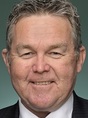
Colin Boyce Flynn, Liberal National Party
11:39 am
You don't have to look very hard in the Flynn electorate to see evidence of the failures of the Albanese Labor government, and it's even more obvious if you focus on the health and aged-care sectors. Workforce shortages, particularly for GPs, have been ignored by the Labor government. Hospitals are struggling to attract and retain doctors or even locums to serve our hardworking people of the Flynn electorate. Flynn constituents are the people who keep the lights on. They keep your heaters and air conditioners running, keep your phones charged and put food on your table via our large agricultural sector. They are the ones who suffer most under Labor's poor management. Our regional areas feel the brunt of poor policy by the Labor government, and it's lack of medical services that really drives home how badly some of our residents are treated.
Every time we travel to a specialist the dollars go out of our regional towns. The flow-on effect increases the impact on small businesses, with at least $1,000 removed from the local economy if families travel to a larger centre for medical services, and that's just for one day. Those who need to wait in a bigger city—for example, for the birth of a child—can expect to spend two to three weeks and thousands of dollars all because of the lack of doctors and service specialists. These people are still dealing with Labor's cost-of-living crisis. The Flynn residents know that it's never been harder or more expensive to see a doctor than it is right now. The coalition has pledged to fix this situation, and we recognise that it takes eight to 10 years to train a GP. This needs to include giving incentives to junior doctors who choose to be a GP in country areas. We know that becoming part of a regional community can lead to a lifetime of connections where families can thrive in a country lifestyle. This helps to permanently fix these workforce shortages. It took the Albanese government 282 days to finally commit to matching this plan. It is another example of how Labor doesn't understand or care about rural and regional Australia.
It wouldn't be right to discuss health issues without mentioning a constituent of mine who had a fall recently, resulting in a broken lower lumbar. She was approved for domestic assistance through My Aged Care, but because she lives regionally—less than an hour from a large city near the coast—she has contacted no less than 11 providers, and not one can help her. She is now on a waitlist, and it may be six weeks or more before she can get any assistance at all. What's the point of funding if services simply aren't available in rural and regional areas? I've also heard from constituents where their home-care-package providers simply don't show up, even for an entire month. This treatment is unacceptable. When you're battling through an aggressive cancer or you've made it through the system to be approved for home-care assistance, you need this to make your life manageable.
It gets worse than that. It turns out that a family member who has tried to become a carer has only failed because they couldn't tick the box for being First Nations or culturally and linguistically diverse. How can we possibly penalise this carer for being a white, English-speaking Australian in an industry where we desperately need more qualified and suitable people? Another major issue in the regions is the Patient Travel Subsidy Scheme. I understand this is a state issue, but this is to subsidise travel and accommodation costs for patients who travel over 50 kilometres to specialist health care. The subsidy of 34c per kilometre barely goes anywhere when you look at the cost of fuel. There's an accommodation allowance of $70 per person per night. Where can you stay for $70 in a capital city? It's impossible. This is the reality of the current health system. Returning specialist services to the regions would go a long way towards easing these additional costs for patients, and it wasn't that long ago that you could see a specialist in Gladstone, removing the need for travelling to Rockhampton or Brisbane.
It is actions not words that matter, and Australians are feeling the cost of Labor's actions in their hip pockets. While Albanese waves around his Medicare card like he was bidding for a new beachfront apartment, Australians have paid more than $2 billion in out-of-pocket costs, and that's in the past year alone. The reality for many Australians is that 25 per cent of GP clinics do not bulk-bill. The reality is that, since the election, more Australians are having to wave around their credit cards to visit the GP.

Trish Cook Bullwinkel, Australian Labor Party
11:44 am
Today I rise to speak in support of the Appropriation Bill (No. 1) 2025-2026, and I do so not just as the member for Bullwinkel but as somebody who has spent their entire professional life on the front line of our health services. Before I entered this place, I spent my career as a nurse and midwife. I have cared for people when they're sick and injured, I have comforted worried families and I have seen firsthand the incredible pressure on our doctors, nurses and allied health professionals. I know what a strong, properly funded public health system looks like. Over the last decade, I saw what a decade of cuts and neglect from the opposition did to it. I saw money taken out of hospitals. I saw dedicated GPs struggling to attract and retain the healthcare workers that they so desperately needed.
When we came to government three years ago, Medicare was in the worst state of its 40-year history. That's why I'm so incredibly proud to be part of the Albanese Labor government that is turning this around. We are not just patching up the damage; we are rebuilding our health workforce and strengthening Medicare for generations to come, and the results speak for themselves. In the last two years, more doctors joined our healthcare system than at any time in the past decade. An extra 17,000 doctors have registered to practise across Australia. That is the strongest workforce recovery in memory. We are seeing many junior doctors training to become GPs, primarily because they can finally see a government that values and invests in primary health care.
This budget builds on that momentum, with a $617 million investment to deliver even more doctors and nurses where they are most needed. We are expanding GP training, with an extra 400 places from 2028. Crucially, we are creating powerful incentives for junior doctors to choose general practice, bridging the pay gap that they face when they leave the hospital system and also providing them with paid parental and study leave. This funding is a game changer for regional and outer urban areas like the electorate of Bullwinkel. For too long we have struggled to get young doctors to make a life in the country, but initiatives like the Single Employer Model trials, which give medical registrars the security of a single employer while they train in rural general practices, are making that choice easier.
Speaking as a nurse and midwife, I'm particularly thrilled by our government's commitment to my colleagues. We are funding an additional 400 scholarships for nurses and midwives to extend their skills and become nurse practitioners or endorsed midwives. These highly skilled clinicians are the backbone of regional health care, and supporting them to work within their full scope of practice means better care for everyone. But we know that one of the biggest barriers for young health professionals wanting to work in regional areas is the burden of student debt. That is why our HELP for Rural Doctors and Nurse Practitioners initiative is so crucial. This policy means that a doctor or nurse practitioner who chooses to live and work in a rural town like Beverley, Toodyay, Northam or York or in an other country or remote community could have their entire HELP debt wiped clean through this policy. But it's not just a policy; it's a powerful statement that we value our regional workforce and we will back it in.
After a decade of neglect, we are delivering doctors and nurses to regional areas and we are providing the support our system needs. We have more doctors and more bulk-billing, and we have urgent care clinics that are taking the immense pressure off emergency departments. We said we would deliver 50 in 2022; we delivered 87, and now we're committing to another 50. When people are too sick or can't wait for a GP but it's not an emergency department issue, they have the option of going to the urgent care clinic, where they just need their Medicare card. We believe that the investment in this is not just numbers on a page; we're committed to helping people, particularly in rural areas such as those in my electorate.

Alison Penfold Lyne, National Party
11:49 am
When the NDIS was created, many saw it as a beacon of hope and progress for people living with a disability and for their families. Family members instead come to me distressed, desperate and demoralised as they struggle with a system that seems to have replaced its mission of care and dignity with antipathy and apathy.
I'd like to share with you the story of Marie and her son, Harry, and the battle they have with the NDIS behemoth. In 2021, Harry was diagnosed with an extremely rare genetic disorder known as Rahman syndrome, which causes a range of developmental, intellectual and cognitive deficits. Marie thought that this diagnosis would herald an NDIS journey characterised by care and value. How wrong she was. In 2022, Harry's funding was cut by more than 60 per cent by an NDIS planner. Despite countless representations by Marie, new costly reports from Harry's medical team and evidence of his diagnosis and difficulties, Marie's attempts to have her son receive adequate care were met with resistance and contempt, being told by a planner: 'I have the power to decide what Harry gets. If you don't like it, you can go to the tribunal.' With only one option left, Marie went to the AAT—a step that led to the most challenging period of her and her husband's lives.
Marie and Harry were subsequently assigned an NDIS AAT case manager, who, instead of supporting them, was combative, hostile and admonishing. During initial conciliations, the NDIS case manager asked Marie, 'What kind of incompetent and inadequate parent can't even toilet train their child?' She accused Marie of using too many continence supplies and directed her to stop giving her son water—unsolicited medical advice—all the while refusing to acknowledge Harry's complex diagnosis and extremely high level of need. Following this, Harry was admitted to the paediatric intensive care unit at John Hunter Hospital with a life-threatening infection. Doctors were preparing Marie and her husband for the worst. During these first few horrific days, Marie received an unscheduled call from the AAT case manager who screamed at Marie over the phone, threatening her with, 'You'll get nothing; I'll see to it,' and callously asking Marie: 'What's his prognosis? Is he going to die?'
Fast forward 86 days and Harry is finally released from the hospital. Marie and her husband are providing all of Harry's care around the clock, with little to no sleep, all the while still having to fight to get Harry care. Marie says that, eventually, after 2½ long years of combative, hostile belittling, soul destroying accusations and demeaning comments, and 756 pages of reports and evidence—and I can only imagine how many hundreds of thousands of dollars of taxpayers' money—they were worn down to the point of settling with the NDIS after an extremely distressing conciliation, where their AAT case manager warned, 'If you proceed to court, the NDIS will remove Harry from your care.'
Harry currently has an NDIS plan that is workable and almost adequate for his needs. Marie and her husband have gradually started to implement the supports they fought for, only to be told that they must start the whole process again, as Harry is due for a plan review. Marie says that Harry is profoundly disabled and that will never change. Marie and her husband provide around-the-clock care for Harry. They get an average of three to four hours sleep a night. They monitor his diabetes every two hours. They do wound care and continence support. And they say: 'We don't mind. He's our baby, and we love him, but we cannot do it alone.'
Marie's story highlights the broader systemic failings of the NDIS, showing how its processes can undermine the very people it is meant to serve. Marie says:
It is clear in Harry's medical documentation that his disabilities are life-limiting, but instead of spending time and making memories with our family, I must waste my time fighting this David and Goliath battle that consumes and controls my life.
This is a shocking indictment on the NDIS, where pleas for help are met with silence—or worse, hostility and apathy. They need to be treated with empathy and respect. Minister, will you initiate a full investigation into this case, including the failings of the NDIS and its employees and legal teams? My predecessor, Dr David Gillespie, and I have written to NDIS ministers on numerous occasions, only to be met with the same apathy that Marie and her family received. This is an urgent matter, and I ask you to have heart.

Claire Clutterham Sturt, Australian Labor Party
11:54 am
The last parliamentary sitting week in September coincided with Women's Health Week. The theme for this year's Women's Health Week was 'Say yes to you' and was about encouraging women to make their health and wellbeing a priority. Too often women put their health and wellbeing last. Too often women's health has been put last by governments. Too often women's health has been put last, or even dismissed, by the medical profession or by the education system that trains our future doctors, nurses and allied health professionals. Women's health needs are complex. They are unique. Women are not 'small men'. Women are women who come in all shapes and sizes, who require both an active and meaningful response to their health needs and who deserve a proactive and sustainable approach to their unique health needs.
In May 2025, I joined the federal health minister and the dedicated and caring staff at Repromed on Fullarton Road in my electorate of Sturt to make critical announcements in relation to women's health. For the first time in 30 years, new categories of contraceptives would be listed on the PBS. That's 30 years! Slinda, a contraceptive that for some women is their only option, would be listed on the PBS, reducing its prohibitive cost of over $300. We know that, thanks to this government's cheaper medicines legislation, that cost will reduce even further to $25 from 1 January 2026. On that same day it was also announced that Pergoveris, a fertility drug, would be listed on the PBS too, making it more affordable for women and their partners wanting to start or expand their family. Contraceptives and fertility drugs being listed on the same day underscores the unique and complex nature of women's health.
Women's health matters. This government knows that women's health is an economic imperative as well as a health imperative. The weekend following the Albanese Labor government's announcement of record investments into women's health led to some great conversations whilst I was doorknocking. The announcement was embraced by women—and it was embraced by men, because, like women, men know that, when women are healthy, families are better off, the economy is more productive and there is more contribution to the community and to our country. When women cannot work or cannot work as much as they want or need to because of health issues, productivity suffers and women are disadvantaged.
One of the biggest causes of absence from work or reluctance to participate in society is pelvic pain. Pelvic pain is complex and is often not caused by just the one thing. Factors that lead to pelvic pain are interwoven like a spider's web and take time and investment to untangle. Two weeks ago I met with Dr Alecia Macrow, a pelvic pain specialist working at Thrive Family Practice, one of the 22 federal government funded endometriosis and pelvic pain clinics that have been established under the Albanese Labor government. Dr Macrow explained to me that a holistic, whole-of-person approach is required to identify the causes of and the treatment plan for pelvic pain and endometriosis, ideally supported by a practice nurse, practice pharmacist and practice physiotherapist. This takes time, this takes patience and this takes tenacity—and it takes government support.
The approach Dr Macrow and her team take is to do what they can to achieve an efficient and accurate diagnosis, to make sense of symptoms and to put together an individualised plan. Dr Macrow and Thrive's approach works, and this is why they have a six-month wait list. This is too long if you can't work, can't function and can't participate in society and live a full and meaningful life because of pelvic pain, like Lucie, a resident of Sturt, who wrote to me about her daughter out of desperation. Six months is too long. So on 9 February this year the Australian government announced an expansion of the endometriosis and pelvic pain clinics over three years to 2028. The expansion will include funding for 11 new clinics, bringing the total number of clinics nationally to 33. The existing 22 clinics will receive an extension of funding to continue providing specialist care and support.
Urgent care clinics, including one soon to be developed in my electorate of Sturt; more medicines; cheaper medicines; funded menopause and perimenopause health assessments; and more pelvic pain and endometriosis clinics so that women don't have to wait years for a diagnosis and to start treatment—this government says to women: 'Say yes to you. We will keep listening to you and providing dedicated health services for the benefit of the community.'

Sophie Scamps Mackellar, Independent
12:00 pm
I would like to question the government today about a critical area of health reform—our national approach to preventive health. For many years successive governments' approach to health funding has been reactive rather than proactive. State and territory health systems around the country are now dealing with the financial consequences of this, and many are in crisis. Hospitals and emergency departments remain under pressure with too-frequent ramping of ambulances and bed block, and surgery waitlists continue to grow. The five-yearly National Health Reform Agenda to fund hospitals is being renegotiated right now. State and territory leaders claim that the federal government's proposed funding changes leave them tens of billions of dollars short of agreed-upon public hospital cost-sharing commitments.
As our population ages and chronic disease prevalence grows, our demand on the health budget will continue to expand unless something changes. That change must be increased investment in prevention of chronic, non-communicable diseases. It is the key both to better population health outcomes for Australians and to reducing our health expenditure. The National Preventive Health Strategy sets a clear target. Five per cent of the health budget should be dedicated to prevention by 2030. Despite this, Australia currently only allocates two per cent of its health budget to prevention, accounting for roughly 0.2 per cent of GDP. This is a fraction of what the UK and Canada dedicate to illness prevention initiatives, which are at five to six per cent and seven to eight per cent respectively.
Failing to act comes at a cost to both our health and our wealth. Chronic conditions are the biggest killer in Australia, making up to 85 per cent of the burden of disease and contributing to nine in 10 deaths. Chronic conditions contribute to around 6.4 million hospitalisations per year. That's 55 per cent of the total, which costs the government approximately $82 billion a year. People with chronic disease are 60 per cent more likely to not participate in the labour force, are less likely to be employed full time and are more likely to be unemployed than those without a chronic disease. In 2024 over one-third of the total burden of disease in Australia could have been prevented by reducing exposure to all the modifiable risk factors.
Obesity and diabetes, in particular, have become pressing public health problems in Australia. Rates of obesity have tripled since 1980, and the prevalence of diabetes has nearly tripled since 2000. Australia is now among the countries with the highest obesity rates worldwide. Currently, 24 per cent of Australian children are overweight or obese, placing them on a trajectory to chronic disease. Among adults, these figures rise to 63 per cent, revealing a systemic challenge that begins in childhood and compounds over time.
This escalating burden underscores the critical importance of prevention as the most effective strategy to halt the rising tide of obesity and related chronic disease. The recommendations of the parliamentary inquiry into the state of diabetes mellitus in Australia in 2024 called for more diabetes prevention measures, including food labelling and a levy on sugary drinks, and for the Australian government to consider regulating the marketing and advertising of unhealthy food to children.
The time for action is now, and we have the evidence and the policy frameworks. The cost of inaction is mounting. By increasing investment in preventive health to five per cent of health spending, the Australian government can reduce long-term healthcare costs, enhance productivity and improve community health and wellbeing now and for future generations.
So my question to the Minister for Health and Ageing and the government is this: what is the government doing to ensure Australia is on track to dedicating at least five per cent of the health budget to prevention by 2030, as outlined in the National Preventive Health Strategy? And will the government implement the recommendations of the inquiry into diabetes mellitus in Australia—specifically, the introduction of a tiered levy on sugar sweetened beverages and the regulation of the marketing and advertising of unhealthy food to children?

Jo Briskey Maribyrnong, Australian Labor Party
12:05 pm
We cannot talk about health care without talking about mental health. Every one of us knows someone who has struggled—a relative, a friend, a colleague—or perhaps we ourselves have. Mental health challenges don't discriminate: they affect people in every community, across every age group and every walk of life. And, sadly, for too many, it ends in tragedy.
Unfortunately, mental illness has a long history of being stigmatised and misunderstood. Our mental health has been treated as less important than our physical health, but the truth is: mental health is just as important. And, just as we expect to be able to see a doctor when we're physically unwell, Australians deserve access to high-quality, affordable, mental health care when they need it. That's why the Albanese Labor government is investing $1 billion to roll out even more places across Australia so that people can go and access free public mental health care, backed by Medicare. Every Australian, no matter where they live or what they earn, deserves access to affordable, compassionate care.
We know there are deep structural issues with the current system. We know the workforce shortage is real. The reform won't happen overnight, but we're getting on with the job of fixing it. Our billion-dollar mental health package represents the single largest expansion of free public mental health services in our nation's history. It will deliver 31 new and upgraded Medicare mental health centres—free walk-in services where Australians can get their help without a referral or an appointment; 20 new youth specialist care centres, for young people with complex needs, offering wraparound support including mental health care, drug and alcohol services, and pathways to study and work; and eight new perinatal mental health centres, to support new parents during those early months when life can feel really overwhelming.
Of course, none of this works without the people to deliver it. That's why we're creating 1,200 new training places for mental health professionals and peer workers—skilled, compassionate people, ready to listen, to support and to care. And that's on top of the additional $361 million over four years under our new mental health services, in a stronger Medicare package, which includes $163.9 million for a new national early intervention service that anyone can access for free whenever they need it.
I'm especially proud that this commitment reaches into my own electorate of Maribyrnong. Today is headspace day, and soon young people in Melbourne's north-west will have better access to free wraparound support through a brand-new headspace service in Moonee Valley. The Albanese Labor government is investing $6.2 million over four years to establish this service, and it's expected to open in the first half of next year. This is all part of a broader $200 million investment to deliver 58 new, upgraded or expanded headspace services across the country.
As a child and youth psychologist, I know firsthand how critical early intervention is. It can mean the difference between years of silent struggle and the chance to thrive. That's why I'm a strong advocate for headspace in Moonee Valley and why I'm proud to work alongside Minister Butler and Assistant Minister McBride to make it a reality.
Reforming mental health care is not a one-off task; it's a long-term commitment—one that demands collaboration between governments, the health workforce and those with lived experience. The previous coalition government failed to make the necessary structural investments. They left a system that was fragmented and inaccessible, and a workforce stretched to its limit. We're fixing that. We are rebuilding a mental health system that is public, coordinated and equitable—one that delivers for those who need it most.
For too long, the stigma attached to mental health meant it came a distant second to physical health. The Albanese Labor government is changing that. We are expanding services, rebuilding the workforce and embedding lived experience at the heart of our reform, because this is what Labor stands for: care, access and equity, no matter your postcode, no matter your pay cheque. There's still work to do, but we're delivering the change Australians voted for and a system that they deserve: one that's fairer, kinder and there when people need it most—no more stigma; no more lives lost—helping all Australians to live happy, healthy lives.

Michael McCormack Riverina, National Party
12:09 pm
We've heard some good contributions. The member for Mackellar talked about childhood obesity, which is such an important issue, and the member for Maribyrnong talked about mental health. I thank you both for those contributions. There have been other good and worthwhile contributions made in this important to-and-fro, because it is a consideration in detail.
I respect the fact that the assistant health minister, the member for Lyons, is in the chamber. I apologise in advance; I have to run off after my contribution because I've got the Georgian ambassador in my office. But it's a shame that the Minister for Health and Ageing, the actual person who heads up the department, is not here. I know when the coalition was in government, the senior minister—with all due respect, Assistant Minister—was here to answer questions, to make sure that they returned fire, so to speak, as soon as the questions were asked. I do hope that you take the questions asked in this chamber back to the minister so that he can respond in an appropriate time.
And I have a few questions, particularly around disability. I'm very, very concerned about the National Disability Insurance Scheme and travel cuts for regional people. I do want to know why the minister is not listening to those country people for whom this is a very important topic, such as Patricia and her son Michael Veney of Cowra. Michael's on the NDIS. He's been cut off from his supports, like his occupational therapy. He is one of the victims of these cost-cutting measures, and it is such a shame. I want to know what the minister will do to alleviate the stress and the worry of those families who previously had that NDIS support and have had the rug pulled out from under them. I would like an answer. I can give a more detailed request for that.
The Thriving Kids program previously was a commitment from the government to implement foundational supports, but it hasn't happened. It really does affect children who continue to be denied access to the NDIS following their sixth birthday—although there are many inconsistencies in the process that I would say make it an inequitable process.
This isn't being partisan. This is being someone who cares for these families who are at the end of their tether. They truly are. I want to know why the minister announces these programs ad hoc, because it causes much angst and stress within the disability community, and then there's no support provided for those families when the programs are not then funded. Will the minister provide clear guidelines for providers and parents to follow? Why is the minister not able to correctly define autism health categories?
It is something that is playing out not just in my regional electorate of Riverina but right throughout Australia. There are so many children these days afflicted with autism, and it is a big issue in the NDIS space. Five minutes doesn't give us time enough to really delve down into the details about autism and what this government is doing to help those NDIS patients. The NDIS claim they're having conversations, but there have been minimal conversations about supports given to adults in this space, and it's simply not good enough.
Aged-care reform delay—I speak of Sandra Wild of Ardlethan, who is one of those people who feels as though the situation is beyond help. She's trying to find an aged-care home for her husband. They've been together for 28 years, and he's got dementia. It's a sad situation. I don't think the minister, who is responsible for aged care and the NDIS as well, is treating aged care in country areas the way it should be. I know we've got the 24/7 nurse in, and I know the royal commission suggested this as a recommendation, but it's having such an impost on those caring facilities. They find it hard enough to find staff let alone RNs to properly meet the commitments that they've had foisted upon them by this government. Why should Sandra sell her house to fund her husband's aged-care expenses? This is a common complaint I'm hearing right throughout the Riverina and elsewhere. The minister does need to show that he cares about senior citizens by answering these sorts of questions and others.
I haven't got a response back from the minister's office about the two letters I've sent from Coolamon shire. They've got an aged-care facility called Allawah Lodge, which is a wonderful facility, and they're doing their best under limited circumstances.
As to the Medicare card situation, people can't just provide their Medicare card and get the services in country areas. That's a falsehood.

Rebecca White Lyons, Australian Labor Party, Assistant Minister for Women
12:14 pm
Undoubtedly, all of us want people across our country to be able to access the services they deserve, whether it's health care or, as a health professional, being supported to deliver their care to patients. I thank all members for their contributions, particularly those on this side who've spoken about some of the excellent measures contained in the budget and the support that's providing to Australians, but I also want to talk about some of the contributions from the other side of the chamber.
Australians should never forget that the coalition wanted Australians to pay more to see a GP. When they were in government they called the Medicare system unsustainable. They said, 'While many Australians already contribute to the cost of a visit to their GP, from 1 July next year the government will ask all Australians to contribute to their own healthcare costs.' The coalition announced the end of bulk-billing when they were in government, but now, conveniently, they very much forget their own history. But we will never forget. Australians will never forget.
I think we can see, from the outcome of this election, that Australians know that Labor can be trusted with Medicare. This election was a vote for Labor to continue to strengthen Medicare, and that is what we'll get on and deliver. We have seen bulk-billing increase in every state and territory. The Albanese Labor government has had the three largest Medicare rebate increases in history. We've delivered that, and now we're making the single largest investment in Medicare since its creation over 40 years ago. By 2030 this will mean 18 million additional bulk-billing visits each year. Nine in 10 visits to see a GP will be free and bulk-billed. Around 4,800 GP practices will be fully bulk-billed, which is triple the current number, and $859 million will be saved by Australian patients every single year. Now, that is something to be proud of.
Compare that to the coalition. When the honourable member Sussan Ley was health minister, she increased Medicare rebates by how much? Zero—there was absolutely not a single dollar increase in the Medicare rebate. We heard the coalition talking about bulk-billing. It was in freefall under them. They claimed that it came from a high of 88 per cent, but that is completely misleading—and it's not just me saying that. It was the College of General Practitioners who said that bulk-billing was in freefall and at a tipping point under the former government. The previous government likes to inflate their bulk-billing figures by relying on massive numbers of COVID related bulk-billed visits during the pandemic, like for PCR swab tests and vaccines, and they tried to fudge their figures by magically producing a bulk-billing figure of 88 per cent on the eve of the 2022 election. How politically convenient. Now they use that as a point in time to compare bulk-billing figures today.
I'm proud that bulk-billing numbers are increasing. Every state and territory across the country has seen an increase in bulk-billing. That is good for patients. From 1 November this year, we are going to see a further increase in bulk-billing rates across the country. Again, that will be good for the hip pockets of Australians needing to see their GPs.
I've talked about spin from the opposition. How about we talk about the facts? Labor is proud of our investment in Medicare. We created it. We have made record investments in health and health care. I will talk about some of those, in addition to what my colleagues have, in the time I have left. We have more bulk-billing. We've seen more Medicare urgent care clinics. We promised to deliver 50 at the election in 2022 and we delivered 87. At this election we committed to building another 50, and I'm proud that we've already seen some of those come online. We committed to deliver more doctors and more nurses. We've made a $617 million investment in this budget that will see more Australians accessing health professionals closer to where they live. We've seen an increase in the number of graduates who are participating in our medical programs through our universities—a record number this year. That has built on the back of a record number last year, and I'm hopeful we'll see a record number again next year—more doctors and more nurses.
We have cheaper medicines, and, from 1 January, they'll be cheaper again. The cost of a script on the PBS will be just $25. We haven't seen a cost like that since 2004. That's being delivered by this government. There'll be more choice, lower costs and better health care for women with our record investment of nearly $800 million in the women's health package. That is delivering much better outcomes already, including cheaper medicines and access to more therapies for women right across this country, and better outcomes from investment in our pelvic pain clinics and more investment in mental health, with $1 billion committed, which is the largest increase that we've ever seen in this country's history.
When it comes to their health, people can trust Labor. They can trust that we'll invest in and strengthen Medicare. I'm proud of this budget.
Proposed expenditure agreed to.
Melissa McIntosh Lindsay, Liberal Party, Shadow Minister for Women
12:20 pm
In the fourth year of this government, we see a prime minister who set high expectations for Australian women, expanding the Office for Women. All the while he was introducing new processes and new bureaucracy. This is what it's been about for the government. The Prime Minister is committed to glossy publications around the impact of the budget more broadly, but the government's failure to rein in overall spending and its failure to protect future generations from the intergenerational debt burden is the actual reality.
There remain stubborn gaps for Australian women: the gender pay gap, the unpaid care gap, the housing gap and the superannuation gap, as well as an emerging HECS debt gap, whereby more women are graduating from university but they are taking longer to pay back their student loans than their male counterparts. Against this backdrop, Labor always looks to what it knows. It knows how to add additional bureaucracy, reward union coffers and spend more of your money, leaving a debt for future generations. What we don't see in this year's Women's Budget Statement is an investment in women in business, including women in entrepreneurship and women in micro and small business.
About 35 per cent of small businesses are owned or led by women. These women deserve attention too. Women-led businesses care about small business support, about fair taxes, about rising energy and supply costs and about how running a business should be unhindered by government regulation. Frankly, small businesses are going backwards under the Albanese Labor government. There's a hollowing out of small businesses in our towns, suburbs and cities. My electorate of Lindsay is home to outstanding women in business—women like Gina Field, whose business was named company of the year at the Women Changing the World global awards, and Jess Jenkins, who's re-energising the night-time economy by heading up the Valley Entertainment Precinct. However, soaring costs, red tape and the state government's cut to the Business Connect program are making it harder for local female-led businesses to thrive.
There are 33,500 fewer employing small businesses than when Labor came to office. Within large businesses, we see women's leadership is also flatlining. It is sitting stubbornly low. The Chief Executive Women Senior Executive Census 2025 shows that there remain just 27 women CEOs in the ASX 300 and that 80 per cent of CEO pipeline roles are held by men. One-quarter of companies in the ASX 300 actually went backwards this year in women's representation. We know from research undertaken by McCrindle that gen Z might be our most entrepreneurial generation, yet 86 per cent of gen Z want to work in something they start themselves.
But in this budget we don't see Labor backing business, backing entrepreneurs or backing women in business. When will the minister see women also as business owners and entrepreneurs? Will the minister commit to working with business women and business owners to reduce the barriers to success for them?
Finally, if a measure of success of a society is to look at the most vulnerable, we must keep focusing collectively on violence against women and the shadow it casts over all of our efforts. The latest ABS crime statistics for 2024 show sexual violence is getting worse. Between 2022 and 2024, sexual assaults rose by 17 per cent and, notably, family violence homicides and related offences rose by nearly 65 per cent. In 2024, 99 women died from family and domestic related homicide.
We stand ready to support the Prime Minister to better address the drivers of violence and to get the funding it promised out the door more quickly. Prime Minister, why are there still unacceptable rates of violence against women? You have our commitment to work constructively with your government on any efforts to address this national shame.

Gabriel Ng Menzies, Australian Labor Party
12:24 pm
I am proud to speak on this Appropriation Bill (No. 1) 2025-2026 and on expenditure for Prime Minister and Cabinet, which is an essential part of the Public Service. It's the Public Service that I was proud to work in for over a decade before becoming a lawyer. There will always be those who deride the Public Service, including, sadly, some of those on the opposite side of this chamber. But I know that the Public Service is an institution that is filled with hardworking, dedicated public servants with deep expertise and commitment to serving the Australian people.
The Albanese Labor government recognises and respects the fact that the Public Service makes up the bulk of the executive arm of government and is essential to the delivery of the policies of governments of any persuasion. That is why I welcomed the Albanese Labor government's commitment to rebuilding and strengthening the Australian Public Service.
The latest APS Employee Census is proof that our commitment is delivering results. It shows a stronger, more resilient Public Service—one that is engaged, innovative and focused on delivering better outcomes for Australians. These results demonstrate that, when we invest in people and systems, we build a service that is confident in its purpose, proud of its work and better equipped to serve the community. Staff are reporting stronger motivation, improved wellbeing and greater confidence in their agencies. Public servants overwhelmingly expressed their willingness to go above and beyond in their roles. They share a deep belief in the mission and goals of their organisations and feel confident to do their jobs with honesty and integrity.
I know from personal experience and from friends who work in the Public Service that, when the Albanese Labor government came to power, it was like a breath of fresh air to the Public Service. Jobs that had been outsourced to labour hire firms were converted into secure, permanent roles. In the Department of Home Affairs, where I worked, a number of jobs in the essential Translating and Interpreting Service—which provides translating services for migrants and refugees when they visit their doctor or use government services—were converted into full-time, secure roles. Staffing shortages, which had festered for years and which resulted in delays for essential services, were finally addressed. Most importantly, when the Albanese Labor government came to power, public servants felt valued by their government again. Years of underinvestment by coalition governments resulted in backlogs, delays and even the disastrous robodebt scheme.
We can see the turnaround most clearly in frontline services. Between April and June this year, Services Australia processed 4.2 million Medicare and Centrelink claims and handled over 10 million calls. Extra staff brought in by this government have helped to clear backlogs that grew during the pandemic, and they have cut processing times dramatically. Paid parental leave claims now take just three days, down from 20 days. That's seven times faster. Childcare subsidy claims take eight days, down from 21—three times faster. New family tax benefit claims take eight days, down from 40—five days faster.
When this government took office, it inherited a backlog of more than 42,000 veterans' claims. Some veterans had waited for over two years before their cases were even assessed. This did not happen by chance. It was a direct consequence of years of staff caps and neglect under the coalition. I visited the Box Hill RSL during the election campaign. I heard from veterans the effect of the delays in processing their claims and how they felt undervalued by their government. It is a shameful way to treat people who have served their country. Today, that picture has changed; 97 per cent of those claims have now been cleared, and what once took more than a hundred days is now being allocated in just a fortnight. The message is simple: when governments fail to invest in a public service, it is everyday Australians who pay the price.
At the last election, the coalition made no secret of its priorities. They put forward a plan to cut 36,000 Public Service jobs, reducing the workforce by 20 per cent. What they chose to label as 'unnecessary spending' is in truth a foundation of essential services that Australians rely on every day. When a baby is born, it is Services Australia that issues the first Medicare card and processes parental leave. When a young person starts their first job, they rely on the ATO to make sure they get their tax file number. Every year, public servants process 121 million Centrelink and Medicare claims, manage aged care, regulate the NDIS and process passports. I commend this bill to the House.

Leon Rebello McPherson, Liberal National Party
12:29 pm
In Labor's fourth year of government, a distracted Anthony Albanese has failed to deliver for Indigenous Australians. Labor is dodging accountability when it comes to practical support for Indigenous Australians, and, for the first time in 17 years, Labor is deliberately evading the scrutiny of a standalone Senate estimates hearing for cross-portfolio Indigenous matters. Aided and abetted by the Greens, the decision to cancel the cross-portfolio sittings for both Indigenous matters and Murray-Darling plan matters speaks to the hubris that Labor now displays. It has actively undermined transparency and accountability in the areas where Australians deserve the highest standards of both.
The $300 million Better, Safer Future for Central Australia plan has made Central Australia neither better nor safer. The Albanese government allowed alcohol restrictions to lapse in the Northern Territory in 2023, unleashing havoc on Central Australia and requiring millions in expenditure to respond to it. Labor fuelled access to alcohol, drugs and gambling through the removal of the cashless debit card in 2022. The Office of the Registrar of Indigenous Corporations database reveals that, as at 4 October, 1,162 Indigenous organisations—many of which received Commonwealth funding—have failed to fulfil their reporting requirements for the 2023-24 financial year. Despite these concerns, the registrar has downplayed the issue. The government has failed to consistently enforce mandatory minimum requirements under the Indigenous Procurement Policy for government contracts. According to the Australian National Audit Office, only one in five government contracts is monitored for compliance with the Indigenous Procurement Policy, and only a quarter of those are compliant. Australians have been hit with a $730,000 bill for the First Nations ambassador's travel expenses across just two years.
The Prime Minister is spending millions of dollars of taxpayer money, and what does he have to show for it? Zero accountability, zero outcomes and zero improvement for the lives of Indigenous Australians. Will the Albanese government commit to the highest standards for funding organisations which deliver the services Indigenous Australians need? Will the Albanese government commit to restoring the Senate estimates hearing for cross-portfolio Indigenous matters for the remainder of this term?
When he turned up at the Garma festival in East Arnhem Land in August, the PM even used his speaking notes from the year before, on economic empowerment, and dodged taking any questions from the press before jetting back out. Let me be clear. We value the Indigenous-led business sector, which contributed more than $16 billion to the national economy in 2022. However, on economic empowerment, the Prime Minister is bringing together service providers and advocates, rather than business and enterprise. As the CEO of the NT Indigenous Business Network wrote in an opinion piece last week:
… let's be clear: on what planet do we think Blak economic development can happen …
The coalition will hold the government to account on its economic empowerment plan, led by our shadow minister for Indigenous Australians, Senator Kerrynne Liddle. Senator Liddle, with her own background working in and supporting Indigenous businesses, will be shining a spotlight on the government's actions, ensuring economic empowerment is grounded in business and growth, creating real jobs, and devoid of symbolism.
The evidence in the July 2025 Closing the Gap data report paints a stark picture of no meaningful change. Four targets—already going backwards—continue to worsen: adult incarceration, children commencing school developmentally on track, children in out-of-home care and suicide. Of the 19 targets, just four are on track—one less than last year. Compared to the previous coalition government, youth detention is up 11 per cent, suicide is up 9.4 per cent, adult incarceration is up 3.5 per cent, preschool attendance is down 2.6 per cent and 1.2 per cent fewer children are commencing school developmentally on track. Will the Albanese government commit to focusing on tangible outcomes for Indigenous Australians so that, together, we can close the gap on Indigenous disadvantage?
Kara Cook Bonner, Australian Labor Party
12:34 pm
I rise to affirm the essential work of the Office for Women within the Department of the Prime Minister and Cabinet, which exists to advance gender equality across every part of government. The Office for Women exists to ensure that every new policy, every cabinet submission and every national priority is viewed through a gender lens, and it's working. Since Labor came to office, we have embedded gender-responsive budgeting across the Public Service. We've brought back the Women's Budget Statement, and we're delivering policy reform that recognises and corrects the structural inequalities that women face every single day.
We don't pretend that one department can solve gender inequality alone. That's why the Office for Women works across government to influence, shape and advocate for policies that make a tangible difference in the lives of women. Since May 2022, this government has delivered over $9 billion in targeted measures to improve outcomes for women, not as an add-on, not as an afterthought but as core government policy. We are funding women's safety with $4 billion in investments to end gender based violence and $3.9 billion in legal assistance. We have legislated 10 days of paid family and domestic violence leave. We are implementing every single recommendation of the Respect@Work report. We have legislated a positive duty on employers to actively prevent harassment. And we are reforming the justice system so that victims-survivors of sexual violence are no longer retraumatised by the very institutions meant to protect them.
We also know that economic inequality is gender inequality. Women still do the majority of unpaid care. They are overrepresented in low-paid, insecure work and they retire with far less superannuation than men. But Labor is changing that story. We've made child care cheaper, we've expanded paid parental leave and we are paying superannuation on parental leave for the first time ever. We've delivered fairer tax cuts—90 per cent of women are better off under our plan. Women are earning $255 more per week than in 2022, and we've lifted the minimum wage, which helps those in sectors like aged care, early childhood education and health. This is how we close the gender pay gap, and, under Labor, it's now at its lowest point on record.
We also need to challenge the idea that certain jobs belong to men. Right now, only 21 per cent of occupations are gender balanced. Women are still vastly underrepresented in trades, construction and technical roles, and that's not because of capability; it's because of outdated, exclusionary systems and stereotypes that push women out before they even get started. Labor is dismantling those barriers. Through free TAFE, we've seen an 80 per cent increase in women entering male dominated apprenticeships and a 115 per cent rise in women training as electricians. Almost 60 per cent of free TAFE students are women. The data is clear: it's working. These are jobs with dignity, security and decent pay, and women belong in every single one of them.
This year's Women's Budget Statement also highlights our $792 million investment in women's health, with dedicated endometriosis clinics, expanded menopause support, cheaper reproductive health care and new Medicare items that acknowledge women's distinct health needs. We are now seeing the results of Labor's focus on women and the Office for Women's hard work. According to the Global gender gap report 2025, Australia has now risen 11 places in the global rankings to 13th out of 148 countries—our highest result ever. Under the coalition government, we had dropped to a shameful 50th. That was the cost of their indifference and, at many times, outright distain for women.
Last year, we celebrated 50 years of the Office for Women, which was established by the Whitlam government. It was created with the belief that gender should never determine a person's safety, salary or sense of belonging. We fund a public service that knows gender matters, and today, on the anniversary of former prime minister Julia Gillard's misogyny speech, we reaffirm our commitment that not now, not ever, will we be lectured to by men about sexism or misogyny in this place—because we and the Labor Party are here to end it.

Mary Aldred Monash, Liberal Party
12:39 pm
In the fourth year of his government, we see a prime minister who says he's focused on delivering for all Australians and repaying and rebuilding the trust they placed in his government at the election. We have a prime minister who also says that many of the economic opportunities our nation has begin in regional Australia. The politest thing I can muster about these empty platitudes is that Moe is a long way from Marrickville.
I'm here to speak and ask questions on behalf of the people of Monash, whom the Prime Minister has disappointed and ultimately left feeling let down by a government that understands neither them nor their aspirations for themselves, their families, their community or their businesses. Today in the parliament we are considering the appropriation bills. These provide the authority for the federal government to spend your money on what has been budgeted for and what has been promised since. Budgets and spending are, ultimately, revealing of the priorities of a government, and what the people of Monash have seen from this Prime Minister is a man who has all of the wrong priorities. Having reviewed his budget and all of his promises, I ask the Prime Minister: is he spending for the future prosperity of all Australians, including those I have the honour of representing, or is he spending only for the future prosperity of his own prime ministership?
Budgets are a helpful way to assess the performance of a federal government because they are very real and direct in the consequences they have for families, small businesses, farmers, volunteers and sporting clubs in my electorate of Monash. I ask the Prime Minister: can he tell anyone in my electorate of Monash that they are better off under his government than before they were three and a half long years ago?
This government is not doing a good job, and that is showing up locally. From the power station worker taxed so high that there is a disincentive to take on some extra weekend overtime because there's literally no reward for effort, to all of the farmers who are forgotten and the volunteer organisations regulated to the ends of the earth, these things matter in Monash. From Wonthaggi to Moe, Drouin to Korumburra, Inverloch to Cowes, Leongatha to Warragul, people are raising the human consequences of the government's mismanagement of our economy every day of the week with me.
Beyond just my electorate of Monash, Australians are not thriving. In fact, many are suffering right now. We have never been less united. We have never been more divided. I ask the Prime Minister: can he tell anyone in Monash that they are members of a stronger community today than before this government came to office? Recently, the Australian newspaper revealed that a child sex offender, anonymised in court records as Hilary Maloney, received a sentence of four years and nine months, with a non-parole period of two-and-a-half years. Maloney was arrested for filming the abuse of a girl inside a Melbourne home in 2023, producing 77 separate files of child abuse material. This is the most horrendous offending. This is a five-year-old child victim who will wear these scars for the rest of her life. As Anthony Galloway in the Australian reported:
While Maloney was convicted of one state charge and two commonwealth offences—the production and transmission of child abuse material—the commonwealth charges together attracted a sentence of just six months.
The coalition has offered the government the opportunity to fix this with draft legislation, to make sure it never happens again. The shadow Attorney-General, my colleague Julian Leeser, wrote to the Attorney-General. He said:
… we have an opportunity to act at the commonwealth level to prevent similar outcomes in respect of commonwealth child sex offences.
Mr Leeser's bill would have included mandatory sentences of five years for the production and transmission of child abuse material. I ask the Prime Minister: can he tell anyone in Monash that they are safer today than before this government came to office?
The Prime Minister offered cheaper power prices, and he's let us down on that as well. Australians deserve better.

Marion Scrymgour Lingiari, Australian Labor Party
12:44 pm
It is a privilege to be speaking today on the Albanese government's agenda for Aboriginal and Torres Strait Islanders. Indigenous public policy is a complex space, and it is one rooted in history and context. I do not shy away from the fact—and it was interesting sitting here listing to the new member for McPherson and hearing his ignorance and hearing him spouting misinformation, particularly on areas in the Northern Territory, when he was talking about the budget. Maybe he needs to get a history lesson on what happened in the Northern Territory under the Morrison Liberal government and the lack of funding particularly for places in Central Australia but also the Northern Territory, which was starved of funding for 10 years under the Liberal government.
I have spent a lot of my professional life working in this area, often at the coalface of government policy, and witnessing firsthand its impacts on a lot of our remote communities. From that vantage point I can see the challenges facing a lot of our remote communities across the nation. The challenges are vast, complex but also structural, and it takes a concerted effort by all levels of government to address them. I was listening to the member for Bonner when she was talking about women's policy and how that policy needs to be across government. It's the same with Indigenous affairs and Indigenous policy. It needs to not be pigeonholed in one area, because our communities, our people are sick of being pigeonholed. It needs an answer from right across government so that these intractable issues, which we are seeing the communities confront all the time, can finally be the responsibility of ministers and the government. I applaud the Prime Minister and all of our government ministers, but in particular our minister for Indigenous Australians, who's putting her shoulder to the wheel and who knows what needs to be done. So good on the Labor cabinet and government, who see that there needs to be a whole-of-government effort, working in this area, to try and close the gap and make a difference to Aboriginal people out in the bush.
One of the policy centrepieces that we took out-bush to a lot of the remote communities during the election was the Low Cost Essentials Subsidy Scheme. I want to commend the Minister for Indigenous Australians and her agency, and Outback Stores for their policy work and the rollout of this scheme. It seeks to reduce the cost of living for people in remote First Nations communities by lowering the price of 30 essential items, such as pasta, rice, tinned vegetables, canned fruit, nappies, soap and toilet paper. These are very basic essential items, but this scheme has certainly made a huge difference to people going into those stores and purchasing those items. We're saying 30, but really it's about 160 items. I can tell you that, going around a lot of the remote communities, it is making a difference to families and it is making a difference to how people are eating. But it is also changing the way people are investing their money and buying those foods. So this has been really good. About 100 remote stores have signed up to this subsidy, and it is being positively received.
The other program that is being rolled out is the Remote Jobs and Economic Development program, which is the old CDP. We've begun the hard work of rectifying this and rebuilding a remote employment program. In a lot of areas in my electorate where jobs are hard to come by we're finally seeing a lot of young people engaged in full-time jobs. That's often good, because if we can stop a young person from ending up in the justice system by being out in their community and working full time and being productive then that is a good thing. The store program, the jobs program, the huge investment into Central Australia—there is so much more that the Labor government has invested in the Northern Territory. They are only three small areas, but they are also big areas that will certainly make a difference to those communities, on top of the $4.2 billion housing and homelands program, which is the biggest investment of any federal government into the Northern Territory.
Proposed expenditure agreed to.
Remainder of bill—by leave—taken as a whole and agreed to.
Ordered that this bill be reported to the House without amendment.