
House debates Matters of Public Importance
Albanese Government

Milton Dick Speaker
3:15 pm
I have received a letter from the honourable member for Gippsland proposing that a definite matter of public importance be submitted to the House for discussion, namely:
The Government's failure to govern for all Australians.
I call upon those honourable members who approve of the proposed discussion to rise in their places.
More than the number of members required by the standing orders having risen in their places—

Darren Chester Gippsland, National Party, Shadow Minister for Veterans’ Affairs
3:16 pm
As the Prime Minister scurries out of the House after another display of hubris and arrogance, I want to pass on to the House a little-known fact. It's a little-known fact that it takes this prime minister twice as long to get to Parliament House from the Lodge than any other prime minister—twice as long as any other prime minister in history. Apparently, it drives his security detail crazy, and you might ask yourself, 'Why would it take the Prime Minister so long to get from the Lodge to Parliament House?' Well, it's because he forces his Comcar drivers to turn left at every intersection. It's a lifetime habit. Every time this prime minister, the member for Grayndler, has to make any decision, he just goes further and further to the left. He'll be in all sorts of trouble when he leaves parliament, doesn't have a Comcar anymore and has to drive his own car, because he'll never give way to the right.
All the dad jokes aside, the career of the most left-wing prime minister in Australian history is summed up in just one quote, and that quote is: 'I like fighting tories; that's what I do.' This prime minister is like the Great Dividing Range of Australian politics. The Prime Minister has become the great divider. He has no interest whatsoever in building a consensus and views every issue through the lens of political opportunism. 'I like fighting tories; that's what I do'—that's the boast of our prime minister. It explains everything about his divisive approach to his parliamentary career and his failure, his complete failure, to govern for all Australians.
There are numerous examples of the Prime Minister as the great divider. As a product of the Labor Left, his career before politics was working for Labor MPs and working for Labor Party officials. He never misses an opportunity to divide and to conquer for political advantage, because, 'I like fighting tories; that's what I do.' This prime minister divided Australians with the Voice. He's divided Australians with his decision to recognise Palestine. He has divided Australians by offending Israel and our most important strategic ally in the United States. He is dividing Australians with his 100 per cent renewables rollout, which is tearing families and communities apart in regional areas. The Prime Minister has widened the city-country divide by cutting regional programs. And he's even created more division in this place by cutting resources for the crossbench and cutting resources for the opposition, because he hates being called out. This prime minister hates being held to account. That's why we have a part-time parliament this year. We have a part-time parliament, sitting for just eight weeks after the election, because this great divider, this prime minister, doesn't want to be held to account. And the list just goes on and on. The Prime Minister divides Australians at every opportunity, between Labor and non-Labor voters.
Regional Australians have been punished the most as the great divider has cut programs. Is it any wonder he was chased out of Ballarat by angry farmers on tractors? The Prime Minister says he won't BS people, but I wonder: did he tell the people of Ballarat about all the programs he'd cut in his first term as a prime minister? The Building Better Regions program is gone. Roads of Strategic Importance is gone. Not only is the Local Roads and Community Infrastructure Program gone; members opposite turned up to cut the ribbons and unveil the plaques for the projects they didn't fund. Regional Australians didn't vote for this prime minister, because he cuts the programs they need. It gets fractionally worse, if you can believe it. In cutting all the coalition-era programs, the Prime Minister decided he'd have his own program, called the Growing Regions Program. It sounds good, but he cut that as well. He cut his own program.
Dividing Australians into those who vote for Labor and those who don't is the modus operandi of the great divider. It's shameless, it's disgraceful and it explains why Labor is loathed throughout most of regional Australia. Yesterday we saw a new low in this House, because the great divider, our prime minister, was at it again during question time. He sought to draw some parallels between the farmers in tractors in Ballarat and Neo-Nazis intimidating the Victorian premier. He tried to link the farmers in Ballarat with Neo-Nazis in Melbourne and created this false parallel—it was a disgraceful slur. It was only when members on this side of the chamber—including the Leader of the Nationals—called him out that the Prime Minister backed away from that disgraceful slur. The Prime Minister is actually trying to link those two activities. That is his basic instinct: 'I like fighting Tories, that's what I do.' He instinctively tries to divide us, and he has no interest in governing for all Australians.
Even after the election, the Prime Minister has continued to stoke division in this place. As the great divider, he has cut the staffing levels for the crossbench and the coalition. Now he's planning to cut speaking opportunities when members on this side of the chamber can raise matters of public importance. There was a motion on the Notice Paper this week that would force the Speaker to allocate three MPIs every fortnight to the government benches. He actually thinks he can have a one-party state in the parliament of Australia. He thinks he can have three MPIs every fortnight, effectively undermining the independence of the Speaker and snubbing years of parliamentary practice in this place. Nothing is beneath the great divider when it comes to pitting those who voted Labor against those who don't vote for Labor. He proudly boasts that he likes fighting Tories. He's going to take away opportunities for members on this sides of the chamber to raise matters of public importance in our own communities. This great divider is allergic to transparency. He's allergic to accountability. It's why we have had this part-time parliament throughout 2025. It's why he thinks he can change the rules of the MPI. The Prime Minister has no respect for the 65 per cent of Australians who didn't give Labor their primary vote at the last election and instead voted for the coalition, minor party candidates or Independents. He has no interest whatsoever in governing for all Australians.
At the outset I mentioned one of the great divisions created by this prime minister during his first term—the Voice. This was an ill-conceived and ill-informed waste of taxpayers' money, a self-indulgent vanity project that was all about the Prime Minister's legacy. On that side of the House, in the Labor Party, they like to mythologise about their former leaders. The Prime Minister just wanted his big moment. Gough Whitlam had Lingiari, Keating had the Redfern speech, Kevin Rudd had the apology—the Prime Minister just wanted his big moment. He didn't care at all that he was dividing Australians in the process.
If the Prime Minister were actually interested in governing for all Australians, if he were actually interested in practical outcomes for Indigenous people, he would have channelled all that money and all his energies into practical projects that make a difference to the Closing the Gap targets around health, education and employment outcomes. Instead, the Prime Minister, the great divider, wasted more than $400 million of taxpayers' money on a referendum which just divided Australians even more. Sadly, his politics of division was there for all to see. The Prime Minister was at it again, dividing Australians and forcing Australians to make choices that they didn't want to make, all because he wanted his big moment and wanted the mythology of Gough Whitlam, Paul Keating and Kevin Rudd—the great divider, dividing Australians for base political opportunities.
It concerns me. Australia has never been more divided in my lifetime than it is today. Social cohesion is being undermined every day, and this prime minister is still obsessed with his university-days passion of fighting tories. The lack of leadership by this weak prime minister on key issues has contributed to the violent protests that we've seen across our country. His lack of leadership has undermined social cohesion, and it is causing enormous unrest right across our nation. Our country is heading in the wrong direction under a leader who has absolutely no interest in governing for all Australians. The great divider just wants to keep fighting tories.

Daniel Mulino Fraser, Australian Labor Party, Assistant Treasurer
3:26 pm
I must say that speech was very high on political rhetoric, personal attacks and dad jokes. I want to put on the record that I will not criticise dad jokes, because, if I do so, my daughter, when she reads this Hansard down the track—which probably won't happen—will roll her eyes at me and my hypocrisy. I'm all for dad jokes. I'm all for a bit of political rhetoric, but, at some point in a 10-minute contribution, you've got to back it up with a little bit of substance. I must say this is a very strange topic for those opposite to bring. Saying that they want to bring a topic about governing for all Australians to this place, after their suite of policies at the last election, is quite a remarkable case of self-delusion.
Let's look at what really matters to people in their lives, and let's look at which side of this chamber is governing for all Australians. Let's look at people's wages. Let's look at what really underpins people's quality of life. In the last term and this term—and, indeed, in the lead-up to coming to government—we backed in the widest possible set of strong institutional arrangements, whether it be supporting unions in their negotiating or supporting minimum wage cases. Right across the board, we've supported people having higher take-home pay. Every time we've done so, those opposite have pushed back. When we pushed for higher minimum wages, those opposite said that the sky would fall in. Those opposite said that it would lead to job losses. The exact opposite happened. What happened was that people's wages went up. What we're seeing right now is that people's real wages, right across the board, are increasing. This is governing for all Australians, providing them with the most foundational of supports for their standard of living.
What's the other side of that? It's not just what you earn; it's what you take home, and this is perhaps where the contrast is just as great, if not greater. We went to the last election with a policy of tax cuts for all Australians, and it wasn't just one set of tax cuts. We've now gone to the Australian people with three sets of tax cuts which would benefit all taxpayers. In contrast, those opposite went to the last election with a policy of increasing taxes on all taxpayers. They come into this place with a motion asking who it is that's governing for all Australians. Where we've gone to successive budgets reducing taxes for all Australians, they've gone to the last election with a policy of explicitly rolling back tax cuts—of coming into this place after the election and increasing taxes on all taxpayers—and they want to come into this place with this MPI. It is truly ridiculous.
Those opposite, with their rhetoric, are attacking us for being too left-wing. It's remarkable when you look at the actual performance over the last decade when it comes to economic management. Those opposite claimed there were surpluses just over the horizon—like over-the-horizon radar. They were almost here. 'Don't worry; they're almost here.' In fact, some of them were so close there were mugs printed. It wasn't just over the horizon; it was within grasp. There were dots on the radar. They never arrived. We had successive surpluses—successive surpluses delivered.
So those opposite come in here with the rhetoric. The rhetoric's fine—this place is all about rhetoric—but the rhetoric from that side is not backed up at all by statistics. They claim the mantle of economic management, but they did not deliver in a shocking decade of fiscal mismanagement, of real wages going backwards and of the worst productivity growth in half a century. We're the party which has delivered tax cuts; they're the party which tried to unwind them.
Another powerful example of where we are governing for all Australians and they are trying to unwind it is universal health care. We have been backing up Medicare for decades. In so many instances over many elections, those opposite come in here and try to undermine Medicare. We went to the last election with a policy supporting higher rates of bulk-billing. Bulk-billing is something we back in. Bulk-billing is so critical for universal access, because it's the best way of ensuring that everybody gets access to the core services they need. We went to the last election with a policy of more urgent care clinics, which I've seen in my own electorate, delivering critical services for people—people who are accessing them outside business hours and who can thereby avoid going to emergency departments.
Those opposite, in the last election, were led by a person who had been a health minister, and yet, after three years of having the opportunity to deliver a health policy, when we delivered our health policy, the next day they said: 'Look, we'll do the same—we'll spend the same amount. Me too.' So, after three years of deep thought on health care, they added nothing, and that's exactly what was reflected throughout the campaign in so many policy areas. When it comes to health care and when it comes to service delivery right across our social safety net, we have been backers of Medicare, of the NDIS and of superannuation—and not just backers of them; we brought them in, and we have defended them against attacks from those opposite over decades. At the last election, the contrast when it comes to Medicare could not have been more stark. We backed in universality; we backed in governing for all. Those opposite had the most shallow and hollow of policies, which would have undermined Medicare.
When it comes to housing, those opposite did so little for so long. We have invested billions upon billions in housing. We've invested in skills; we've invested in programs to help first-time buyers; we've invested in helping the upcoming generation to buy a home—to buy their first home. Those opposite spent almost all of the last term, in combination with the Greens, stopping our policies from coming through the parliament. They were blocking our policies and playing a negative game. We were governing for all in the last term, and we continue to, in the face of opposition from those opposite along with the Greens—a truly unholy alliance—and what we're seeing is that that policy is now paying off.
Perhaps the worst example, though, where those opposite aren't governing for all—not just for current generations and not just the young now but also future generations—is climate change. We went to the last election having delivered so much in the first term when it came to climate change. We had delivered a legislated 2050 target. We had delivered a 2030 target—with those opposite, of course, opposing it and opposing any action. Those opposite had a decade of inaction, which put us in the worst possible position to achieve what we need to when it comes to climate change.
When you think about not just the young people of today but future generations—about truly governing for all in an intergenerational sense—what are we seeing from those opposite? The most bizarre internal political charade, the most bizarre internal political infighting, and inward-looking approaches to policies after an election loss. That is the last thing that they or the country need. We've got senior members of those opposite putting private members' bills into this place, questioning the need to act on climate change. We've got a complete internal debate from those opposite on whether we need to do anything at all. It is truly bizarre.
Let's have a debate about governing for all, because those opposite have had the most sectional, narrow-minded, cynical approach to so many issues. That was reflected in how compelling their policies were at the last election! What we're seeing, unfortunately—both for them and the nation—is that they are doubling down on that, whether it be tax policy, whether it be housing policy, whether it be the social safety net or whether it be climate change.
As I said, when it comes to climate change, they're just getting worse and worse, and it's going to be the future generations that suffer if some of the policies that they are putting forward in their internal party debates get back into the mainstream. Just about every one of our major OECD partners, just about every one of our trading partners, has moved well beyond debating whether or not climate change is happening. Many of those countries look at us and think it's bizarre that we are still debating this.
Unidentified interjection - Hansard doesn't record who said this
Opposition Members:
Opposition members interjecting—
Daniel Mulino Fraser, Australian Labor Party, Assistant Treasurer
I take the interjections from those opposite—as if that's where we want to place ourselves! Those opposite want to put us—
That's an interesting frame, a really interesting frame.
When it comes to all the things that matter to people the most—their living standards, their wages, their taxes, the social safety net and climate change—we are governing for all, and there's a sharp contrast with what's being offered by those opposite.

Sharon Claydon Newcastle, Australian Labor Party
I'd appreciate a lot less interjecting. So I'm going to give you the call and ask for quiet on this side, and I hope you'll respect the remainder of the debate.

Tim Wilson Goldstein, Liberal Party, Shadow Minister for Small Business
3:36 pm
The beauty of the morning is not just the rising of the sun but the opportunity of a new day. As I walk the streets of Goldstein, fresh after the night's rest, I meet Australians brimming with a sense of optimism—young families building their first home, retirees who gave their best years to this country, small-business owners taking a risk on their dream. What unites them all is a simple but profound desire: hope for the future—hope that tomorrow will be better than today and hope that their children will inherit a nation of not just wealth but wisdom, resilience and opportunity.
But we all know hope doesn't sustain itself. I wish I could say that our current government are calling us to a common purpose or that they are encouraging us to lean into the future with optimism. But, around the kitchen tables of the nation, it feels like Australians have a better sense of the challenges for our nation than our current government does. They are asking hard questions: Can I afford to raise my family here? Will my business survive another storm? Do my children have a future in this country or must they seek it elsewhere?
Hope must be grounded in reality, and the reality is that Australia faces challenges, from global uncertainty to rising costs of living to an economy in transition. Yet in every challenge lies opportunity and in every setback the chance for renewal. Hope for Australia isn't just naive optimism. It's the conviction that, when people are empowered, when the government serves rather than smothers and when enterprise is unleashed, we can transform adversity into achievement. Hope means a nation where small business is not burdened by red tape but lifted by opportunity. Hope means harnessing our resources and ingenuity to power the world not with fear of decline but with confidence in Australian innovation. Hope means that, no matter who you are or where you start, your children can dream bigger than you dared and achieve more.
Our forebears understood that Australia's greatest asset is not coal or the abundance of sun, not even our beaches or bush, but our people—industrious, fair minded, determined, coupled with a sense of a fair go. The Liberal tradition has always believed in the dignity of the individual, in the community that supports them and in the responsibility that we owe each other.
This government will end. There is hope. We can have an economy built on aspiration, where reward flows from effort and where every Australian can advance through their enterprise. We can have a society of unity, where diversity is celebrated not as a dividing line but as part of the great tapestry of our nation. We can have a resilient nation where we stand tall in the world, confident in our values, secure in our alliances and ready to shape our destiny. We cannot outsource this responsibility. It's the responsibility of every Australian and the duty of every parliamentarian in this chamber to lead with courage, to govern with humility and to restore the belief that the best days of our country are not behind us but ahead.
Hope is not given; it is built. Together, we can build it—brick by brick, business by business, family by family. The story of Australia has never been written in despair; it has always been a story of hope, and so it shall remain. That is the great task of this parliament, but it is not what is being delivered by this government. What we have seen from the speeches we've heard during question time and the answers that have been given in this MPI today is a government that is simply uninterested in the focus of the issues and concerns of Australians right now. For the people in the suburbs all the way through to the rural and regional centres of this country, they've had a complete disregard for not just the urgency of the needs these people face but, more importantly, the need to take all of us forward together. Their job goes beyond just facing the immediate challenges but to inspiring us towards a better future, to give us a sense of hope about what we can achieve together to be able to realise a better future shared, because Australia can be a great nation. That is what it means to leave people behind, that is what it means when we have a country that does not appeal to our best selves, and that is the challenge we face right now. This government will end, and there will be hope.

Alicia Payne Canberra, Australian Labor Party
3:41 pm
There's a lot of rhetoric coming from those opposite today about governing for all Australians, and I agree with the Assistant Treasurer that it's a very interesting topic for them to bring up, given their record in government over nearly a decade compared to what we have achieved already in one term and just a couple of months of this term.
There are obviously many issues in which we could contrast our record against theirs, where we are actually governing for all Australians and where they neglected Australians. I'm just going to pick one, and that's education, because it's a really important one. Education is how you build the future. If we want to measure a government's priorities, we should start by asking: How we are governing for the youngest Australians? How are we investing in their education, their opportunities and their future? Nothing is more fundamental to fairness and nothing is more essential to national prosperity than ensuring that every child, no matter where they live and no matter their background, has access to a high-quality education. That's why this government has made huge investments in both schools and skills, investing in education at all levels so that all Australians, from the youngest through to older Australians pursuing new skills and training, have the best opportunities to take on the jobs of the future.
In regard to schools, we are delivering the first ever national agreement that fully funds public schools to 100 per cent of the schooling resource standard. This is absolutely huge. This is a historic step. For too long, governments—specifically, the last coalition government—left public school students shortchanged, forcing teachers and principals to stretch resources while parents fundraised for the basics. Let's remind ourselves of the recent history in this space.
In 2012, David Gonski released the report into Australia's school funding, recommending changes with the aim of reducing the impact of social disadvantage on educational outcomes. The key recommendation was introduction of the schooling resource standard, a base rate of funding per student which would determine the required funding needed for each school. When the coalition came to government a year later, they tore up that Gonski report. They directed funds to less needy schools and left public school students to endure substandard resourcing. That all changed with the change in government.
We are ending that era of underfunding because we believe every child in every school deserves the same chance to succeed. I want to acknowledge the Minister for Education, Jason Clare, and the incredible work he's done in this space. Our government has invested $16.5 billion in additional funding to fully fund all public schools. We've introduced paid prac for teaching students to help with the cost of placements. There are more teachers in the pipeline, with enrolments in teaching degrees up 11 per cent this year. I want to acknowledge too that in the ACT, the community that I represent, we were the only jurisdiction that was already at 100 per cent of the resource standard, and that is, in a big way, thanks to our ACT Labor government and Minister Yvette Berry. But this agreement that our government has delivered has actually further increased that funding for ACT schools. As a parent whose children attend public schools I know that that is much needed.
It is really wonderful to see that every school around this country will now receive a 100 per cent of that resource standard and be able to invest in their future and give our teachers, who do such incredible and important work every day, the resources that they need to empower these young people to learn.
There's a particular focus with the agreement on ensuring that teachers have the things they need to stop students falling behind before it is too late—things like the year 1 phonics test, which is critically important to ensure that students at that age are learning the things they need to continue that journey. So I'm so proud of this achievement of our government, this historic Better and Fairer Schools Agreement, which ensures that we back every student in this country—no matter where they live, no matter what their parents' income—and give them the opportunity for a great public education.
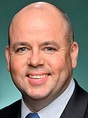
Sam Birrell Nicholls, National Party, Shadow Assistant Minister for Regional Health
3:46 pm
I say to the member for Canberra: all the best. I'm a member from regional Australia, as I think everyone knows by now. I want to talk, though, to the people of metropolitan Australia. Often, it is said, there is a divide, and there is. There are different experiences in the country compared to the city. But what happens in regional Australia and the policies that affect what people do in regional Australia affect people in metropolitan areas. If a government is not looking after the regions, then it's not governing for everyone. And it's not only affecting the regional people; it's affecting people in the cities as well. We all live in this great country together.
Obviously, the thing we have in common, apart from the need to breathe and drink water, is the need to eat. Agriculture is critically important in this country. The people in places like my electorate, the food bowl of Australia, are incredibly proud of what they do, because they want to see people enjoying healthy, sustainably produced Australian produce. This government is making it harder for businesses to produce healthy, sustainable, Australian produced produce. Their changes to the Murray-Darling Basin Plan, the live export trade and the biosecurity tax that, thankfully, got scuppered in the Senate—all of these things, along with a raft of others including some renewable rollouts on agricultural land—make it harder for people to do that.
I believe we will see an increase in food prices, because if you make it harder for Australian farmers to produce you see an increase in food prices. An increase in food prices is not good for people anywhere in Australia. If you damage food production, you're not governing for all Australians.
The electricity grid transition is not going well. The Prime Minister promised all of these people a $275 reduction in their electricity bills based on some RepuTex modelling, which he's now running away from, at a rate that even the member for Canning couldn't catch him!
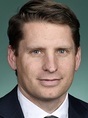
Andrew Hastie Canning, Liberal Party, Shadow Minister for Home Affairs
Andrew Leigh could.
Sam Birrell Nicholls, National Party, Shadow Assistant Minister for Regional Health
Maybe. But $275 was promised, and it hasn't been delivered. You're not governing for people if you go and tell them something and then say, 'We've actually stuffed the policy up, and now we can't deliver it.' You're not governing for all Australians when you attack the historic dynamism of the Australian economy. By putting too much emphasis on Public Service jobs—and I completely respect what public servants do; we absolutely need them—that sector of the economy and the jobs market, then there's not enough emphasis and there's too much competition for the private sector, small businesses, to be able to do what they do.
I think it's really important that governments appreciate the great responsibility that they've been given. Every one of the 150 of us in this place represents roughly 110,000 people. Some of those people vote for us; some of those people don't. We've got to represent them all. When we come into this place in question time, we ask questions and we represent the people in our electorates. People who do that deserve respectful, considered answers. They don't deserve attacks. They don't deserve theatrical flourishes.
Today, the member for Mallee asked a question. It was a reasonable question about concerns that people in her electorate have. The member for Fowler asked a very reasonable question. It was a question based on the concern of a particular business in her electorate, but it's a concern that goes across all the people of her electorate and all of our electorates, which is gas prices. Those two women, who represent people in Australia and who have been elected to this place, deserve the respect of a reasonable answer. What I saw from where I was sitting was a pile-on. It didn't look good, it was disrespectful, and it goes against the kinder, gentler parliament that the Prime Minister promised. He needs to be governing for all Australians—
Sharon Claydon Newcastle, Australian Labor Party
The member for Moreton has the call.

Julie-Ann Campbell Moreton, Australian Labor Party
3:51 pm
As I have said in this place before, I'm incredibly proud to represent the most multicultural electorate, the most multicultural community, in all of Queensland. I myself have an ethnically diverse background. My family immigrated to this country from China in the late 1800s, my last name is Campbell—obviously of Scottish heritage—and my grandma on my dad's side was born and raised in Canada.
What I have come to learn as an adult is that the diversity of my background is a strength and that the diversity that exists in the backgrounds of all of our communities continues to be a strength. It doesn't matter what the colour of your skin is. It doesn't matter what your faith is. It doesn't matter what your postcode is. It doesn't matter whether you are from the regions, it doesn't matter whether you are from rural Australia and it doesn't matter whether you are from remote Australia. Every single everyday Australian plays a critical role in our society and plays a critical role in our economy. It doesn't matter who you are; we all do that. Labor stands up for every single one of those Australians.
I want to take the opportunity to thank the member for Gippsland, because this is an incredibly important question. It certainly is, and it bears repeating because this question goes to the failure to govern for all Australians. I think it's an interesting question and, indeed, an ironic question, given that what we've learned about the coalition in the last few months is that they are completely incapable of governing themselves, let alone a country. It gives me the opportunity to talk about everyday Australians and to examine—not through their words but through their actions—what the opposition thinks about them.
If you're a young person looking to get into your first home, the coalition does not want you to have a five per cent deposit. If you're an apprentice looking to start your trade, the coalition does not want you to be able to access free TAFE. If you're a manufacturing worker, the coalition does not want your job to be in this country. We know that the coalition has offshored manufacturing again and again and again—the car manufacturing industry, the shipbuilding manufacturing industry, the train manufacturing industry—particularly those workers in regional Queensland. That is what the coalition's vision for manufacturing workers is. If you're an older Australian who relies on health care, the coalition does not want you to have better health care and cheaper medicines. If you are on a minimum wage, the coalition does not want you to have a pay increase. If you are a taxpayer, the coalition wants you to pay higher taxes. So, if you are any of those people—if you tick any of those boxes—what we know is that the coalition does not support you.
But perhaps I've been a little too harsh, because I know that there are a number of groups that the coalition really does support. Are you a boss who enjoys a long lunch? Good news! The coalition will back you in. Are you not a fan of working on a laptop? Good news! The coalition doesn't want you to work from home. If you think climate change isn't real, it's good news, because they don't want net zero to be a policy of this government. All of those things demonstrate very clearly that this is an opposition and a coalition that doesn't care about everyday Australians. If you're a young person, if you're an apprentice, if you're a manufacturing worker, if you're an older Australian, if you're a person on a minimum wage, if you're a person who cares about the environment or if you are a taxpayer, this is a coalition that will not back you in.
When it comes to this question, the member for Gippsland and the members opposite do not need an MPI. They do not need to go back to their offices and get out a pen and write out a question or a motion for this House to consider. What the coalition needs to do is take a long, hard, cold look in the mirror, because the only people who have failed to back in Australians at every turn are sitting right there.

Alison Penfold Lyne, National Party
3:56 pm
What about Taree? What has this government got against Taree, against the Lyne electorate and against regional Australia? As a new MP, I had hoped that the PM would live up to the comments he made on 3 May. He said:
This is a time of profound opportunity for our nation.
We have everything we need to seize this moment and make it our own.
And we must do it together, all of us.
Because for Australia to realise our full potential, for our nation to be its very best, every Australian must have the opportunity to be their best.
To serve our Australian values—we must value every Australian and Labor will govern for every Australian.
Well, let me tell you, this government, after just four months, is not governing for all Australians. Regional communities like mine are being left behind.
I think the reception the Prime Minister received at the recent bush summit exemplifies the divide in this country and the feeling of being forgotten by this government. It's already clear that this government is playing favourites, and I've been around long enough to sniff a whiteboard in the air from that side. The Prime Minister's favouritism for his city-centric base and this government's neglect of the regions and regional Australia can be seen in my electorate in a myriad of ways. I know I've been in trouble this week in question time for being a bit too exuberant in my interjections. I do respect the fact that members should be heard in silence, but it's too much to expect me to sit silent while this government gloats about policies that are hurting my electorate.
During the election I called for an urgent care clinic in Taree. It's a policy and an initiative that will benefit my electorate. I'm here for outcomes, and that's why I support it. Bulk-billing rates in my electorate have fallen by 10 per cent in the last four years. It's only getting tougher to see a GP, and Manning base hospital gets slammed as a result. The question is: how many of the government's 137 urgent care clinics operate or will operate in my electorate? The answer is zero. Labor failed to match my election commitment, and, despite writing to the minister and my persistent calls to the minister and the government in this place, I've been told, 'No; there will be no urgent care clinic in Taree.' There will be nothing to break the seismic service gap that exists between Coffs Harbour and Newcastle, which my electorate sits squarely in the middle of. This is not the government governing for all Australians. The government's response feels like partisanship on health, the last place where this should be played.
Now, on energy, again, my electorate, like those of many of my colleagues on this side, feels the ire of the Albanese government. The Prime Minister and his minister for climate change and energy are recklessly driving Australians down a renewables-only path. Like I've said repeatedly this week, renewables are not reliable for base-load power, and they do not have a social licence. It's costing Australians today—and future generations—in their hip pocket and in their energy security.
The Prime Minister expects my electorate to bear the brunt of this transition. His policy is riding roughshod over regional people. He expects my constituents, from Seal Rocks to Hawks Nest, to have their livelihoods, pristine waters and way of life jeopardised for the sake of his industrial wind turbines and his ideologically driven energy policy. He expects farmers across regional Australia to sit back as he installs thousands of kilometres worth of transmission lines through their prime, private agricultural land—land that our nation, and indeed the world, relies on for food and fibre security. He expects industry and businesses like Jamestrong—Taree's second-largest private sector employer, which produces over 100 million aluminium cans per year—and Tomago Aluminium, Australia's largest aluminium smelter, to pay exorbitant prices for electricity as the result of a rush to an intermittent, unreliable source of energy, placing them at a significant competitive disadvantage to their offshore competitors.
This government says it governs for all Australians, but in Lyne we're not feeling it. Regional communities aren't asking for more; they're asking for a fair go. You can't call yourself a government if you don't govern for all Australians. (Time expired)

Emma Comer Petrie, Australian Labor Party
4:01 pm
It has been just four months since the Albanese government was elected for a second term, and we have hit the ground running in delivering for all Australians.
Labor is united and focused on a commitment to build Australia's future not just for the privileged few but for all. Australians were in the back seat for almost a decade while the coalition fought over the steering wheel. Now Labor's driving, seatbelt on, fuel tank full. Where are we headed? To a future built for all of us, where support reaches every Australian in every city, every suburb, every town and every region. We're easing cost-of-living pressures, strengthening Medicare, protecting jobs and investing in a stronger, fairer nation.
I want to highlight some of our recent achievements that are delivering for health care, workers and the economy. From 1 January all medicines on the PBS will be capped at $25. This will save millions of dollars for millions of Australians. For women, we are delivering more choice, lower costs and better access to health care. We're boosting the number of health practitioners qualified to provide birth-control implant services, particularly in regional, rural and remote locations, including Taree. For men, we're investing $32 million in initiatives that support men's mental health and wellbeing and break the stigma around seeking support.
We believe that all you should have to take with you to seek medical support is your Medicare card, and we are taking decisive steps to make this a reality. We're building a healthcare system that works for every Australian. I challenge anyone on the other side to prove it and show they don't have a Medicare card. Australians know only Labor will keep Medicare strong, and we are working hard to prove them right every single day.
We're also supporting Australian workers. As of 1 July, we delivered a 3.5 per cent pay rise for minimum and award-wage workers. We are finally seeing pay packets move in the right direction after almost a decade of wages falling behind under the coalition. From retail staff and hospitality workers to cleaners and carers—this boost means families can get ahead, pay bills and plan for the future. We're also strengthening penalty rates. Penalty rates are not a luxury; they are the difference between paying rent and falling behind. We legislated to protect penalty rates, supporting the retail and hospitality workers who keep our economy going.
Labor is also supporting young people. Young Australians deserve opportunity, not a lifetime of debt. That's why we're cutting student debts by 20 per cent. This will make a world of difference for students and graduates right across the country, from regional TAFEs to city universities. Less debt means more opportunity to get ahead in life, go after your dream career and buy a home.
Speaking of homeownership, every Australian deserves the security of owning a home. We're allowing first home buyers, especially young families and single parents, to enter the housing market with just a five per cent deposit, so they can pay off their own mortgage rather than continuing to pay off someone else's. Labor is also investing in multicultural communities, funding language services, supporting festivals and backing community centres that bring people together. We stand with every Australian who has built a life here and calls this country home.
While Labor proudly stands with all Australians under our national flag and the flags of our First Nations peoples, the former opposition leader couldn't even bring himself to stand in front of them. That is a failure of leadership. That is a rejection of the very values of unity and belonging that our nation was built on, and that is something Australia firmly rejected on 3 May. Labor will never walk away from our flags, from our democracy or from the communities who have built this country brick by brick and generation by generation.
I want to end on a lighter note and express my pride in how Labor is delivering for people like me—the beer drinkers of Australia. It may sound small, but for small pubs and breweries across the country, in cities and regional areas such as Taree, freezing beer tax has been a big win. It helps keep local businesses strong and keeps a cold beer at the end of the day—after a long day, actually—affordable.
In just four months, the Albanese Labor government has done more to ease the cost of living, strengthen Medicare and invest in our future than the coalition did in nearly a decade. This is what delivering for all Australians looks like, and this is only the beginning.
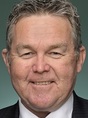
Colin Boyce Flynn, Liberal National Party
4:06 pm
I rise to support today's matter of public importance moved by the member for Gippsland regarding the Labor government's failure to govern for all Australians. Regional communities in my electorate of Flynn feel completely abandoned by the current Labor government. Since their re-election, the Labor government have utilised almost every opportunity to treat rural and regional Australia as a cash cow and as nothing more than an obstacle in the way of their high-spend and high-tax agenda.
Let's first look at Labor's proposed new super tax. The Labor government is determined to push on and impose a 15 per cent tax increase on unrealised gains—paper profits—on superannuation balances worth more than $3 million. Under Labor's plan, earnings on self-funded superannuation balances above $3 million will be taxed at 30 per cent, up from the current 15 per cent, without indexation. This includes both realised and unrealised gains on small businesses, farms and shares held in self-managed retirement accounts.
This superannuation tax carries enormous risk for farmers and young people in particular. In relation to agriculture, the Labor government doesn't care that, in Australia, many farmers own their farms through a self-managed super fund—$3 million doesn't buy you a lot of farm. With land values increasing, how can they possibly pay the proposed tax on an unrealised gain on that asset? Farms are businesses that face a lot of uncertainty and volatility in terms of weather, natural disasters, and land and global commodity prices. To tax unrealised gains at 30 per cent, when a farmer never knows what's in store for them in the next season, is just bound to hurt farmers' ability to plan for the next season. Labor's tax on unrealised capital gains means that Australians will be hit with a 30 per cent tax on the increase in book value on that asset, such as property, that hasn't even been sold. How is that possibly fair? Shamefully, taxing farmers in this way is unprecedented in the Australian tax system.
For younger Australians, going forward, more and more young workers will ultimately be caught by the Labor tax grab. Critically, the proposed $3 million threshold isn't indexed to inflation, and who knows what inflation will be over the next 30 or 40 years?
Right now, the electorate of Flynn is feeling the wrath of Labor's renewables-only approach, with over 90 proposed projects in the Flynn region I represent. This is tearing rural communities apart. Weekly, if not daily, my office and I are contacted by mothers, fathers, brothers, sisters, sons and daughters who are at their wit's end. The terrible burden of fighting these solar, wind and battery projects, as well as associated transmission lines, is emotionally and financially destroying families. What does the Labor government say about these people? Let's hear directly from the Minister for Industry and Innovation and Minister for Science, Mr Tim Ayres. Last week, he said this in the Senate:
We are building electricity generation hand over fist here, and the big obstacle to … transmission projects in the regions … is the silly billies wandering around, stoking fear, stoking resentment …
You couldn't be any more out of touch than that.
On 1 July, the Labor government's fuel efficiency standards commenced, and this new tax could add up to $17,000 to the cost of a new petrol or diesel fuelled car by 2029. Australian families and small businesses will now have to start paying Labor's tax every time they buy a new vehicle, and who is going to be worse off? It's rural and regional Australians. In the middle of a cost-of-living crisis, our nation does not need its own government penalising drivers of petrol and diesel or hybrid cars and utes with an additional tax. This will drive up the prices of new and second-hand cars and make life harder for families, particularly in rural and regional Australia. Labor's tax is estimated to add up to $7,400 to the cost of a Ford Ranger in 2026 and up to $14,400 by 2029. A popular RAV4 hybrid family vehicle will incur almost $5,000 of additional cost by 2029.
Under this Labor government, many Australians in rural and regional Australia are doing it tough. They're grappling with the cost-of-living crisis and a growing shortage of housing and have been bulldozed by overseas renewable developers that are profiting from Australian taxpayer dollars. To any ministers of the Labor government: I invite you to the Flynn electorate, where I can introduce you to real people that the Labor government is affecting with their crazy policies.

Rowan Holzberger Forde, Australian Labor Party
4:11 pm
When I saw that I had an opportunity to address this MPI, I opened up the email and I couldn't believe my luck. I thought, 'You've got to be joking!' because, if the opposition reckoned that we're the ones not governing for all Australians, then they either haven't been watching what's going or have been watching their favourite television programs a bit too much again. But they certainly haven't been listening to people out in the regions, where I come from, and in the outer suburbs and suburbs, so maybe I could tell them what is going on.
We've just opened our 90th Medicare urgent care clinic. That's 90 places where mums and dads, pensioners and battlers and everyone in between can walk in and see a doctor and walk out without paying a cent—bulk-billing, no drama. There's one in the northern Gold Coast in the suburb of Oxenford, and there's one in Logan at Browns Plains, which I hear is one of the busiest in the country, because it's our people that really need this sort of help the most. And there are more urgent care clinics on the way.
Compare that to when the opposition were in government. They watched bulk-billing collapse. They starved Medicare. They abandoned Australians who were at their most vulnerable. This government, though, stepped in. We tripled the bulk-billing rate for pensioners and for kids, and now we're extending it right across the board. That's governing for everyone.
Health care is just one part of it. Let's talk about housing. I spoke about housing the other night in here, about how, back in postwar Australia—really, the foundation of the economic miracle that was postwar Australia was Labor and Liberal state and federal governments working together to build housing, create jobs and lay the foundation for this country's postwar miracle. They weren't mucking about with culture wars and cheap shots; they were rolling up their sleeves. In fact, I like to surprise people a bit when I say that one of my economic role models is actually Thomas Playford, the longest-serving premier in Australia and a Liberal. It's a bit of a surprise to some people I know. Playford understood something that the current opposition don't understand, which is that you build public housing not out of the goodness of your heart but to keep the cost of living down, to give workers a roof over their heads and to help business by keeping wages manageable. Housing is the backbone of productivity.
It was inspiring to hear the housing minister, this week, talk about housing being the Labor project of our generation—from five per cent deposits to Help to Buy, where the government is going to share the equity to dramatically slash the cost of entry into the market; to supporting National Cabinet's ambitious but necessary plan to build 1.2 million homes, 100,000 of which will be earmarked for first home buyers; and to undertaking the biggest public housing program in a generation to build more homes, making it easy to buy a home and making it better for renters.
It's the same story with energy. Back then, post war, governments built the energy networks. They made sure that power was cheap and reliable not just for households but for businesses as well, to help manufacturing and local industries. That's how manufacturing was built in Australia. Now we're investing in renewables, backing cheaper and cleaner power because it's good for the environment and it's good for business. Australians don't want yelling or finger pointing. They just want progress. They want a government that puts people first, and that's what we're doing. Whether it's free TAFE, the 20 per cent cut to HECS debts, cheaper child care, cheaper energy or backing in local manufacturing, we're not just governing for some; we are governing for all.
Here's the bit that gets up the nose of Australians the most; it's the sheer negativity and the divisiveness. Every time we bring forward a policy, whether it's on health or whatever, those opposite just say no—no alternatives, no vision, just no. Well, guess what? You can't build a nation on no. I say this to the opposition: genuinely get involved, change tack, back in these policies and take a hint from the last election. The invitation is there. Let's work together, like we did in postwar Australia. If you're actually interested in governing and not just grandstanding, let's put Australians first, because all Australians want is results, and that's exactly what we're delivering—for pensioners; for parents; for apprentices; for the outback, where I come from originally; for the outer suburbs, where I'm privileged to live now; for the inner city; and for everywhere in between. Spare us the lectures. Take a good hard look in your rearview mirror at your own record.
Sharon Claydon Newcastle, Australian Labor Party
The time for this discussion has now concluded.
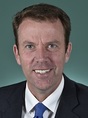
Dan Tehan Wannon, Liberal Party, Shadow Minister for Energy and Emissions Reduction
That's a relief!
Sharon Claydon Newcastle, Australian Labor Party
Member for Wannon, it's getting late in the afternoon, but let's be nice.