
House debates Matters of Public Importance
Cost of Living

Milton Dick Speaker
3:14 pm
I have received a letter from the honourable member for Deakin proposing that a definite matter of public importance be submitted to the House for discussion, namely:
This Government's failure to take effective action on the cost of living crisis.
I call upon those honourable members who approve of the proposed discussion to rise in their places.
More than the number of members required by the standing orders having risen in their places—

Michael Sukkar Deakin, Liberal Party, Shadow Minister for Social Services
After 20 months of a Labor government, it is sad to say that Australians are poorer. Australians are poorer after 20 months of a Labor government, and what we've just seen here—with a very self-satisfied Treasurer coming in here with his grin and a Prime Minister looking very happy with himself—is that clearly they are disconnected from the pain being felt by households throughout this country. It's not often that, after nearly two years of a new government, anyone has been able to stand up and say that people in Australia are now poorer than they were when the Labor Party came to government.
The average household in this country has seen a loss of $8,000. That is the average household. It doesn't include households with a mortgage, and we know that if you've got a mortgage it's well above $20,000—$24,000, in fact, for an Australian family with an average mortgage. That's how much they are worse off after two years of a Labor government. Food is up by nearly 10 per cent. Housing, with this hapless housing minister with no idea, is up by 12 per cent. Electricity is up by 20 per cent. Insurance is up by 22 per cent. It'll be very interesting to see the next quarter's ABS data as Australians start seeing their insurance notices coming through. And, of course, gas is up by 27 per cent.
Let's touch on a couple of those. Electricity is up by 20 per cent and gas is up by 27 per cent, but this Prime Minister, whom the truth is not known to, said on 97 occasions before the election that energy prices for the average house would be down by $275 a year. He said it on 97 occasions. How many times has he said it since the election?

David Coleman Banks, Liberal Party, Shadow Minister for Communications
Ninety-six?
Michael Sukkar Deakin, Liberal Party, Shadow Minister for Social Services
Not 96, no, Member for Banks.
David Coleman Banks, Liberal Party, Shadow Minister for Communications
Ninety-five?
Michael Sukkar Deakin, Liberal Party, Shadow Minister for Social Services
Not 95, no. He has not said it at all. He's not dared repeat his promise that he made to the Australian people of a $275 reduction in power prices. We know that the truth is not something that the Prime Minister is particularly familiar with, particularly as we see his recent breaking of faith with the Australian people, but he did say before the election—and we saw the headlines—'Life will be easier under me.' 'Life will be easier under me,' was the catchcry from the Prime Minister. Does any Australian, other than perhaps a union official, believe that life is better for them after 20 months of a Labor government? The statistics prove that that is not the case.
We now have a huge admission—a massive admission—from the government of the disaster that has befallen the Australian community. Today we see a very belated—and only once they were forced into it—announcement of $14.4 million of additional funding for food relief agencies. We welcome that very belated commitment. But, if things are going so well in this country, as the Treasurer sits there with his supercilious smile and the Prime Minister laughs all through question time, why on earth are our food banks around the country busting at the seams? Every single person in this place knows that, in their own communities, our food banks are seeing families and individuals whom they have never seen before. They're seeing people with full-time jobs. They're seeing two-parent working families who are only able to make ends meet if they come to their food bank.
So, on one hand, if you look at the scoreboard and the results of 20 months of a Labor government, we've got food banks bursting at the seams—and we say thank you for this very belated and late-coming $14.4 million commitment. But, interestingly, on the same day that we see a $14.4 million commitment to food relief—which, let's be frank, won't even touch the sides for our food banks around the country—we see another commitment from this government, which highlights where its priorities are at. Last night in Senate estimates the finance minister confirmed that the government are going to spend $40 million advertising their broken promise on stage 3 tax cuts. That is $40 million for an advertising campaign and $14 million for our food banks busting at the seams around this country; $40 million for high-end political consultants and advertising agency types to put an advertising campaign and $14 million for food banks. That says everything you need to know about the modern Labor Party, everything you need to know about how disconnected they are from the communities in which we all serve.
On this side of the House we are the true representative of working and Middle Australia. We are the people who truly stand up for the people who those opposite have crushed over 20 months. It goes further. The people who are being crushed by this government, sadly, are anybody renting, anybody trying to save for a home, anybody, frankly, who is trying to put a roof over their head, and what do we have? We have a so-called housing minister who has no idea what she is doing and clearly does not have any sway within that caucus, because we have record low vacancy rates, we have housing approvals at lows we have not seen for 20 years, we have first home buyers at their lowest levels since the Gillard government and we have fewer homes being built than we can remember. At that time, with that suite of statistics, we saw the Labor government bring in 520,000 migrants in the last calendar year, with absolutely no idea where those people are going to live. So what do the government do? The government come out and says, 'Well, we're going to commit to a housing target of 1.2 million homes over the next five years, starting from 1 July this year'—so two years after we have been in government we will make a commitment.
What did we see this week? We saw the HIA, the MBA blow the lid on this 1.2 million homes. What did we hear? We heard the Labor government will only miss it by 400,000—only 400,000! That is 400,000 homes short, based on approval data that we have seen today. So that is not missing it by 'this much'. A 1.2 million home commitment is going to be missed by 400,000 and guess what happens during that same period? We ramp up migration—1.5 million migrants over five years. How on earth can you, in good conscience, bring in 1.5 million migrants with no idea of where they are going to live, which will drive up housing costs for Australian throughout this country?
We believe, on this side of the House, that Australia should never get to a point where young hardworking Australians do not have a realistic prospect of owning their own home. We know the government has waved the white flag. The government wants foreign corporates, foreign multinationals, owning our housing stock and how do we know that? Because they have just given a big tax cut through their build-to-rent tax cuts to foreign funds to own homes in Australia. It will be very ironic if we have given a tax cut to foreign corporates to build homes in Australia but seek to smash mum-and-dad investors by abolishing negative gearing. Let's be frank, we know that is what they are going to do. Just as those opposite said on hundreds of occasions 'we have no plans to change stage 3', 'we have not considered it', 'we have no plans', 'we have not modelled it,' we will hear the same denials in coming months. We will hear the same denials from the Prime Minister. We will hear, 'We have no plan to change negative gearing,' from the Prime Minister. The irony will be that on the one hand we smash mum and dads who want to get a leg up, who want to build for their retirement and on the other hand we will give a tax cut to foreign corporates to own thousands, tens of thousands, hundreds of thousands of homes in this country. The government have failed on every measure, and shame on them for walking into this chamber looking so satisfied with themselves while the people of this country, including the people in the gallery, are doing it so tough.

Sharon Claydon Newcastle, Australian Labor Party
I ask members to leave the chamber quietly please. We are in the middle of a debate here. And I ask the member for Moreton to join in that quietness.

Emma McBride Dobell, Australian Labor Party, Assistant Minister for Mental Health and Suicide Prevention
3:25 pm
Since coming to office in 2022, the Albanese Labor government, our government, has been laser focused on delivering cost-of-living relief to households across the country. We know that many Australians are doing it tough right now and families are under the pump. That's why we've introduced a suite of cost-of-living measures, from fee-free TAFE to tripling the bulk-billing incentive and, most recently, our historic tax reform, which will deliver a tax cut to every Australian taxpayer.
The opposition have said they will support the tax cuts, yet we must have heard up to 30 or 40 speeches from members opposite giving reasons as to why they don't think Middle Australia deserves a tax cut.

Madeleine King Brand, Australian Labor Party, Minister for Northern Australia
They don't mean it.
Emma McBride Dobell, Australian Labor Party, Assistant Minister for Mental Health and Suicide Prevention
They don't mean it.
Those opposite don't even pretend to care about the cost of living anymore. All 13.6 million Australian taxpayers will be receiving a tax cut come 1 July under Labor's tax reforms, which deliver a bigger tax cut to Middle Australia to help with the cost of living. Under our plan, 11.5 million people will get a bigger tax cut than they would have under Scott Morrison's legislated stage 3 tax cuts. That's 84 per cent of taxpayers.
Looking locally, in my electorate on the Central Coast of New South Wales it's even higher. Eighty-eight per cent of taxpayers in Dobell will be better off under Labor's plan than under that of those opposite. Who are the biggest beneficiaries of these tax reforms? They are the nurses I worked with at Wyong Hospital, the teachers at Toukley Public School and the retail workers at Woolworths.
As the Prime Minister said, it's not the job of a leader to sit back and wring their hands when confronted with new challenges. It's their job to act, to take responsibility, to do the right thing. That's exactly what we're doing. We want people to earn more and to keep more of what they earn. Take aged-care worker Kylie, who recently received a 15 per cent pay rise and has just purchased her first home. She will now be receiving a tax cut. Take Julie from RFBI in Lake Haven, or Tracey, a single parent and personal care worker. They were on the front line of the global pandemic and they deserve more than thanks; they deserve proper cost-of-living relief. The aged-care sector was completely neglected by those opposite for a decade, and now those aged-care workers, who support our loved ones, are receiving the investment and support to care for others that they rightly deserve under our government and Minister Wells.
Since the stage 3 tax cuts were legislated by Scott Morrison five years ago, there has been a one-in-100-year global pandemic. There have been wars, conflict, a global inflation spike and higher interest rates. These events have put people under greater cost-of-living pressure. As the Prime Minister has said, it's our job as a government, when global economic circumstances change, to change the support that we can provide Australians.
While we're focused on supporting Australians, the opposition have tied themselves in knots over whether to support Labor's tax cuts. The opposition were on the front foot in coming out against our tax reforms. Everyone remembers the Deputy Leader of the Opposition saying: 'We will fight this legislation in the parliament. We don't even know what it will look like.' When you think about it, Madam Deputy Speaker, this is their instinct on everything.
Another key element of our government's cost-of-living relief is fee-free TAFE. I know that in my community on the Central Coast—and I know Dr Reid, the member for Robertson, will absolutely agree—so many people have benefited from fee-free TAFE. Last year more than 300,000 people undertook a course through the program. I had the privilege of inviting the Deputy Prime Minister, Minister Marles, to Ourimbah campus to meet many of the people who are benefiting from fee-free TAFE—people starting out in work, people changing careers or people getting the skills they need for more secure work. That is real cost-of-living relief, and the success of this program in setting people up for work has led our government to commit to a further 300,000 places this year. For workers in areas from hairdressing to plumbing, our government is supporting people to upskill at no cost, helping them into the workforce, into more secure work and better pay.
Just this week the House passed the second part of our government's closing loopholes legislation, after the first half passed the parliament late last year. This legislation delivers much-needed protections and a minimum wage for gig workers, who often work extended hours for minimal pay just to make ends meet. Unsurprisingly, because the legislation made others better off, those opposite fought it every step of the way while being happy to order Uber Eats or Deliveroo. Our government wants all workers to be better off, and this legislation means that gig workers aren't left behind—workers too often forgotten, left behind by the former government unless they were ordering Menulog.
In my area of responsibility, working with Minister Butler in health, this is particularly important in the discussion about the cost of living. As everybody knows, health outcomes, our health and wellbeing, aren't just a result of access to clinical care—although this access is critical, and I will come to that; financial insecurity itself is an important driver of physical and mental ill health. It's no secret that the social grading in this country gives a pretty good proxy for health outcomes. You can map it geographically, too. Equally, in mental health, when you're under financial strain, you're more likely to experience distress.
This is why the Albanese government is so deeply focused on cost-of-living relief across all arms of government. It's a genuine whole-of-government approach to reduce the drivers to stress, to boost protective factors for all Australians. It's why we're getting on with record investment in health to unwind some of the damage those opposite did. And we're strengthening Medicare so that all Australians can access and, importantly, afford quality health care closer to home.
Nowhere is this more the case that in bulk-billing. There is a sharp contrast here. As health minister, Peter Dutton tried to establish a GP tax. When the Senate blocked that, he froze Medicare rebates for six long years. As we said in question time today, he was voted the worst Australian health minister. That demonstrated to GPs what he thought of their profession and to every patient what he thought about their right to care. Those opposite don't see it as a right at all. That's the truth of the matter.
In contrast, under Labor we have brought bulk-billing back to be the absolute beating heart of Medicare. In the two short months since the tripling of the bulk-billing GP incentive, we've stopped the absolute freefall that was happening under the former government and we've seen a big increase in the number of Australians getting their GP appointment for free. It is estimated that some 360,000 additional GP consults were bulk-billed in the first two months of this policy, saving Australians some $15 million in gap fees—$15 million!
I see the member for Deakin, who was so concerned about the cost of living, during his bluster and bluffing earlier, has now left the chamber. In his electorate—
Madeleine King Brand, Australian Labor Party, Minister for Northern Australia
Can't get a question!
Emma McBride Dobell, Australian Labor Party, Assistant Minister for Mental Health and Suicide Prevention
Exactly! Can't get a question; can't stay to hear his MPI. The member for Deakin might be pleased to know that his constituents saved some $76,000 in that period. I encourage him to go out there and to recognise and acknowledge the doctors that have moved back to bulk-billing or mixed billing in response to the government's policy change. If not, I'm happy to go and do it for him.
I am delighted to properly acknowledge and recognise every GP around Australia who has responded to a government which genuinely values their time, their skills and their expertise by bulk-billing or mixed billing again. In my electorate of Dobell, our bulk-billing rate has risen by 5.5 per cent in just two months—5.5 per cent. And do you know who benefits most? Aged pensioners, families with young children, people on low and fixed incomes—those who need it most. That's what Labor governments do.
This is a targeted cost-of-living relief for people under pressure which doesn't put pressure on inflation but makes a real difference to the weekly household budget in every community right around the country. It represents a major strengthening of Medicare from the only party who will truly fight for every Australian's right to quality health care. Before Medicare was introduced, the leading cause of personal bankruptcy in Australia was unpaid healthcare bills. That was the leading cause. It's still the case in the United States, despite Obamacare. One in seven Australians didn't have any health cover. That shows you why it's so important to rescue and revive Medicare, and we're doing that by tripling the bulk-billing incentive. It represents a major strengthening of Medicare and genuine universal access for all Australians, wherever they live.
In finishing, in addition to 360,000 bulk-billed GP appointments, Australian people have also benefited through more than 160,000 presentations to Medicare urgent-care clinics. Just recently, the Prime Minister joined the member for Robertson, Doctor Reid, and I at the urgent-care clinic in Umina, where more than 1,200 patients benefited in the weeks it had been open. This is cost-of-living relief.
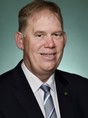
Bert Van Manen Forde, Liberal Party
3:35 pm
It's a pleasure to rise and speak on this MPI. Listening to that contribution from the assistant minister was very illuminating. But, as usual, it doesn't deal with the fundamental issues facing the Australian people. As I said in this place earlier today, the government can wax lyrical all it likes about $15 a week on average for workers across Australia. By the time we get to 1 July, those people will hardly notice that change in their take-home pay, because the multitude of other issues facing the Australian economy are not being dealt with by this government. In effect, in many cases, this government is assisting to make it worse. Let's look at some of the figures to date. Food is up over nine per cent. Housing is up over 12 per cent. Electricity is up over 20 per cent. Insurance premiums are up over 22 per cent. Gas is up over 27 per cent. If I look at just electricity and gas, the government was waxing lyrical a little while ago about putting in place measures to try to reduce the cost of that has had no benefit whatsoever. That's one broken promise.

Bert Van Manen Forde, Liberal Party
I hear the member for Moreton interject, and I'm pleased. I actually did give him permission to interject, which was a little bit silly on my part, but I'm always happy for the member for Moreton to try to contribute to the debate, and I'll be interested to hear what he has to say later. But we have seen, over the 18 or 20 months of this government so far, the amount of personal income tax collected by this government grow by 27 per cent. That has been in large part driven by the removal of the low- and middle-income tax offset. While they're talking about 15 bucks a week over there, they've forgotten to mention they took away the low- and middle-income tax offset. Real net disposable income per person has fallen by some 8.6 per cent. On average, that represents a $150 a week fall in real, net disposable income. The trade-off the government is waxing lyrical about is, 'Oh, well, your position is $150 a week worse off, so we'll give you 15 bucks a week back.' Wow! That's very generous! It's extraordinarily generous of those opposite to make people $150 a week worse off and give back $15.
As I've said many times in this place—and we can go through the long list of broken promises by this government—never listen to what the Labor Party say; look at what they do. Nine times out of 10, they are two completely and utterly different things, and the second one will always make you worse off. We've seen people in real terms about $8,000 a year worse off. But that's before we get to mortgage payments. They're paying on average an extra $24,000 a year in interest out of after-tax income. That doesn't include the capital payments on top of that.
So, if we think that, on average, people are $32,000 a year worse off in total—$600 a week—and those opposite, out of the generosity of their heart, are giving people an extra $15 a week, then: wow. I think that's an extraordinary amount of hubris on their part, to say, 'Well, look how good we are, giving you $15 a week,' when in real terms you're actually $600 a week worse off per year. It's a disgrace. And the government has no answers to this problem. They haven't had any for 18 months. In their current economic plans—which are none—they've demonstrated no capacity to deal with any of the real issues facing the Australian people, and it's about time they started to deal with those issues properly.
Graham Perrett Moreton, Australian Labor Party
3:40 pm
For those driving along listening, who might have just dozed off during that speech by the member for Forde, I'll just explain that the MPI is something put forward by the opposition, and the topic today is about taking effective action on the cost-of-living crisis. Labor knows that Australian households are doing it tough with cost-of-living expenses. These were challenges not created by the Albanese government but we do take responsibility and are urgently dealing with them. Our priority obviously is addressing inflation—because that takes money out of people's pockets—and all those cost-of-living pressures. Labor acts. The coalition pretends to act.
Now, this topic would have been cleared by the Leader of the Opposition, and I just want to contrast a few things in relation to the Leader of the Opposition. From 1 July this year every Australian taxpayer will receive a tax cut. I understand, from talking to the Assistant Treasurer, that that's good in a cost-of-living crisis—to give people more money. Those opposite—I've listened to them—have all spoken against this plan. We gave Australians energy bill relief. So, what did they do? They voted against it.
Unidentified interjection - Hansard doesn't record who said this
Opposition Member:
An opposition member interjecting
Graham Perrett Moreton, Australian Labor Party
Well, let's talk about energy prices going up. The last time I checked there'd been a 0.4 per cent increase. They keep bandying around a 20 per cent increase. It was a 0.4 per cent increase. In fact, wholesale prices have halved, and that will start to flow on, as we committed to.
To higher income support payments—a great cost-of-living measure—they said no. The biggest boost to rent assistance in 30 years: they said no. Expanding paid parental leave: they opposed that. Making child care cheaper: they opposed that. Free TAFE, with 300,000 people getting the benefit—they opposed it. We've strengthened Medicare and rolled out cheaper medicines for Australians—something the coalition voted against.
So, we have the member for Dickson saying one thing—he's supposed to be the champion of the workers—but doing something completely different when it comes to the cost of living. It reminds me of Elton John. Now, I'm not comparing the Leader of the Opposition to Elton John in terms of being incredibly talented and wearing big glasses or anything like that. But it does remind me—and because it's Valentine's Day I thought I'd touch on this, change the tone a bit and talk about that song by Elton John, which many of us saw in Rocketman: 'Don't Go Breaking My Heart'. There was that duet he did with Kiki Dee in 1976, and it was No. 1 around the world, back when I was in grade 6. 'Don't Go Breaking My Heart' has incredible harmonies—and harmony obviously isn't something I'd associate the member for Dickson with.
But this is what Elton John and Kiki Dee sing. They say:
Right from the start
I gave you my heart
Oh, I gave you my heart
Don't go breaking my heart
I won't go breaking your heart
We know that when Elton John said that to Kiki Dee he didn't actually mean it, did he? They were beautiful words, but he didn't mean, 'You will never break my heart, Kiki Dee,' and Kiki Dee knew that, because they were just singing a duet together; they're professional singers. In fact, 40 years ago today Elton John married Renate, on 14 February 1984 at St Mark's Church at Darling Point in Sydney. As Elton John later said of Renate: 'She was the classiest woman I've ever met, but it wasn't meant to be. I was living a lie.' And the Leader of the Opposition gets to go to the people of Australia and ask, 'Do you want to be Kiki Dee, or do you want to be Renate?' They get to make a choice.
The member for Dickson can't sing and he can't play the piano, but we do know that we can't believe his words. So my advice to the people of Australia is, when it comes to the member for Dickson, be a lot more like Kiki Dee, not Renate, because that's not going to work out. It's going to end up being a sham, and you'll end up in a marriage you don't want to be in. Okay? And there'll be secrecy clauses and all that sort of thing. My advice to the people of Australia is to look for someone you can sing with in harmony—and that's the Leader of the Labor Party, Anthony Albanese.
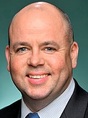
Sam Birrell Nicholls, National Party
3:45 pm
We know that, when it comes to positive economic policy development, the member for Moreton and the Labor Party are 'too low for zero'. Deputy Speaker, do you remember that supermarket advertising jingle, 'Down, down'? You had people jumping around and singing to a not very good jingle, 'Down, down', and you had the red arrows going down, down? If there's any integrity in electoral advertising at the next election, the Labor Party's posters should all be 'Up, up' because that's what's happened to costs since the Labor Party came to office. As the member for Forde reminded us, food is up nine per cent, housing is up 12 per cent, electricity is up 20 per cent, insurance is up 22 per cent and gas is up 27 per cent. It's all just going up, up, and I look forward to seeing posters with arrows pointing to the sky.
I'll tell you one thing that is down, and that's net disposable income, particularly in Victoria. Not only are Victorians suffering from inflation because of the irresponsible economic management of the federal Labor government; they're being hit with all sorts of taxes by the state Victorian government. Consequently—and I think a year 8 economics student would have been able to work this out—they don't spend as much as they used to. If they don't spend as much as they used to, the economy slows, and people are at risk of losing their jobs.
We've got inflation problems. We've got stubbornly high inflation. Every time we ask the government about inflation or they talk about inflation, they say: 'We're doing things to get it under control. We're addressing inflation.' What causes inflation? Excessive and wasteful government spending causes inflation. We saw a lot of that during the Rudd-Gillard years. I spoke about that when I was talking about some of the rip-offs in vocational education training and the RTOs that ran rampant during those years. We're seeing wasteful government spending again.
Even worse than that are taxes on productivity. We seem to be having a debate about how much stuff the federal government can give to people. I'm not averse to the federal government helping people out, but surely we should be having a discussion about productivity and growing the economy and making sure that we've got profitable, competitive, productive businesses, because that will get inflation down and that'll mean real wage rises for people.
I'll give you some examples in an area I'm very passionate about, which is agriculture. Everyone's affected by agriculture, because, as I said, food prices are going up. The way to bring food prices down is to give agriculturalists and farmers the tools they need to increase productivity, profitability and efficiency in their business. The government is taking a lot of those tools away. The PALM scheme is no longer workable for many people in horticulture. The ripping out of extra irrigation water from the Murray-Darling Basin means that investment in agriculture is threatened because people don't know whether their water costs are going to be so high that it's not worth growing stuff. These things affect our economy and they affect the prices people pay when they go into the supermarket.
The government is very excited during question time for members to get up and ask ministers questions like: 'In your portfolio, what's the tax cut going to mean? What's $15 a week going to do?' Well, it is not going to do much compared to how much they have already been smashed under the cost-of-living increases since the Albanese government came to office.
The previous government had a scheme called the low- and middle-income tax offset. That could have been extended.

Sam Birrell Nicholls, National Party
It could have been extended. I take the interjections. But, instead of a temporary solution to a long-term problem, the government had to break their promise on the stage 3 tax cuts and will have to go back to the well again for meaningful tax reform. But I ask the people who are out there driving along who are probably switched over to a station that was playing Elton John rather than listening to the member for Moreton: are you better off? With all these excuses—the 'dog ate my homework' stuff—are you better off? The answer is definitely not.

Daniel Mulino Fraser, Australian Labor Party
3:50 pm
I believe I can say with some accuracy—and I do not mean to belabour this analogy—I am the only person in this chamber to be directly named after an Elton John song, the 1973 hit which inspired my mother to call me Daniel. I cite from that song its important refrain, 'Daniel, you are a star.' As the Speaker said, I am not here to comment on the accuracy of the statement; I just put it to the chamber and the chamber can do with it what it wishes.
On the cost of living, those opposite have come into this chamber and given us a long list of things which are increasing in price. What they haven't given us a long list of is their ideas for dealing with it or the things that we have put forward which they have been willing to vote for. It is all well and good to say that they feel the pain of the Australian people, but they have not actually put anything constructive on the table in the last 18 months. In fact, at every opportunity, they have stood in the way of the government putting forward its plan.
I want to start with one of the most important areas of this government's action, one of the first things we did, which was increasing wages. We did that in a number of ways. Firstly, we took action on the minimum wage. We made a representation to the Fair Work Commission, and the minimum wage was increased by $1 an hour. Those opposite said that would wreck the economy. There were also 15 per cent increases in the aged-care award. There have been tranches of IR reform. At every step of the way, those opposite have opposed those measures to increase people's wages, yet that is one of the most powerful ways to help people deal with the cost of living.
The member for Deakin said that we should acknowledge that in fact they are the true representatives of the workers. After all those steps, I'm not quite sure how, but I don't think they are the true representatives of the workers; I think they really are the true heroes of the workers! They're saving workers the burden of having to deal with all the complexity of thinking about how to allocate more household resources to different things, how to deal with the burden of so many more financial resources and how to deal with the guilt of having wrecked the economy through their wages and conditions improving a little! But, no, they are not the true representatives of workers. When it comes to the most basic of things, when it comes to workers' pay and conditions, those opposite have stood in the way at every single step.
Secondly, let's look at our first two budgets. I won't be able to go through all of the measures, but there is measure after measure, whether it be rent assistance, cheaper child care, energy bill relief—speakers on this side have run through all of the various measures, critical measures, that deal with some of the biggest pressures that households are facing. These are measures that make concrete differences to the lives of people, which matter around the kitchen table every morning. Again, on so many of these measures, those opposite stood in the way; those opposite voted against them. I might just add we have put in place all of these measures totalling over $20 billion in a way which is responsible in its budgeting, which means that fiscal policy has been set in such a way that it is aligned with monetary policy, so we have had targeted measures that help those who need the assistance the most but we have done it in a way which has seen inflation continue its downward trajectory.
Thirdly, I want to touch briefly on the issue that has taken up so much time in this chamber this week, which is the amendments to the stage 3 tax cuts. What we have learned from Treasury is that over recent months it has become clear that inflation is not falling evenly across households. We have seen that, across household income deciles, the lowest decile is dissaving at a very high rate. Moreover, increases in prices are falling unevenly across cohorts, and workers are facing increases in prices two percentage points or more greater than other cohorts. What we were faced with was the original Morrison stage 3 tax cuts—legislated in a bygone era, when times were totally different—that would have given millions of households earning $18,000 to $45,000 absolutely nothing, when the Treasury modelling showed that that was a cohort facing more of the burden of price increases than other cohorts. Clearly the community wanted us to change those tax cuts so that they fell in a more appropriate way, in a more just way and in a more economically sensible way. They are also going to fall in a way which deals with bracket creep and which encourages labour supply.
But, again, those opposite have in this case a completely incoherent position. Their deputy leader stridently opposes the tax cuts, but all of the rest of them seem to come in here and deliver speeches where for 14 minutes and 30 seconds they kind of oppose them, and then for 30 seconds they say, 'I don't want to, but I am going to vote for them because people need them after all.' When it comes to any actual measures, those opposite either haven't come up with any ideas or oppose anything useful that has come into this place.

Aaron Violi Casey, Liberal Party
3:55 pm
Deputy Speaker, you'll be happy to know I have no Elton John references! Sorry to the member for Moreton and the member for Fraser. But the member for Fraser has just summed up very well with statistics—as he does, as a well-renowned economist—how Australians are struggling. I commend him on that. What he didn't talk about was the mistake after mistake that the Albanese government have made that have led to this. But I will talk a little bit about the member for Moreton, because the song he so beautifully deconstructed for us was about trust and integrity. I thought, 'Wow, that's a brave place to go, given your Prime Minister misled the Australian people over 100 times.'
Let's look through what's happened in the last 20 months since the Prime Minister made a few comments. Let's be really clear. The quotes I'm about to provide from the Prime Minister were from his campaign launch. This wasn't off the cuff. This was decisions that he and his team had made for his campaign launch. Let's start with a direct quote. He talked about 'meaningful help with your cost of living'. Well, as the member for Fraser just pointed out so articulately, in the last 20 months he has done nothing to help Australians with their cost of living. Thank you, Member for Fraser, for outlining that so well for me.
In the second quote from the Prime Minister—Leader of the Opposition at the time—he talks about 'going to embark on a new era of economic reform with productivity growth at the centre'. How is productivity growth going since this Prime Minister took over 20 months ago? It's negative 6.1 per cent, and that's with this Prime Minister putting it at the centre of his objectives. Wow! I have another quote, and this is one of my favourites. The member for Groom will understand how important this one is:
Labor has real, lasting plans for
Twenty months later, how is that going, Member for Banks? Not very well for this Prime Minister, not very well for the Australian people. But it's okay; they'll get back $15 a week in five months time—problem solved! The Prime Minister has solved it. The next quote is:
Labor has real, lasting plans for
… … …
We're 20 months into this prime ministership, so he's responsible for everything that's happened. He's had opportunities to make decisions to improve the lives of Australians. What have we seen under this Prime Minister? Interest rates up 12 times. That's not cheaper mortgages for the Australian people. This is another good one, and it's become very relevant:
I will lead with integrity …
The member for Moreton talked about integrity and not misleading people. How has the Prime Minister gone with integrity in the last few weeks? Well, he misled the Australian people over 100 times when it came to the stage 3 tax cuts, including in January this year, well after the invasion of Ukraine, well after the Israel-Gaza conflict began, well after the cost-of-living challenges we're all facing. Then he even said, 'My word is my bond.' Wow! That's integrity.
His solution to these challenges for the Australian people is $15 a week in five months time. But the other bit he doesn't talk about is when the government made a decision last year to let the low- and middle-income tax offset lapse. That was $1,500 a year taken away from the Australian people.
Aaron Violi Casey, Liberal Party
'You did that.' Wow! Member for McEwen, thank you. It was legislated. Guess what? As you have shown with the stage 3 tax cuts, you're prepared to change the legislation, so you can't have it both ways. You're going to change stage 3 now; you made a choice last year not to change the $1,500 offset. Make up your mind. You can't have it both ways.
Sharon Claydon Newcastle, Australian Labor Party
I remind the member for Casey to direct your comments through me in the chair. And Member for McEwen, a little less interjection would be helpful.
Aaron Violi Casey, Liberal Party
Now we get to the last bit: it's all about the politics. As the Minister for Finance admitted last night in Senate estimates, it has taken $40 million of taxpayers' money over two financial years to sell this tax cut. This is using taxpayer money for politics. The Treasurer admitted he had to get the changes out before the Dunkley by-election. It's not about the Australian people; it's about politics.

Louise Miller-Frost Boothby, Australian Labor Party
4:00 pm
I've spent the last few minutes googling Elton John songs as well, and the best I could come up with was 'Cold Heart'. I chose that because of a few lines in there, which are:
Oh, no, no, no
No, no, no, no, no
That really reflects the opposition to me. I think you should judge people on what they do and not what they say. Those opposite suggested the cost of living as their MPI, but they didn't bother asking a single question in question time on this issue, because, clearly, it's not so important for them, and, of course, they didn't vote for any of the cost-of-living measures—or the wage rises or the tax cuts, when they come.
Labor is the party that wants Australians to earn more. Workers should earn a decent wage for their efforts. We backed a rise in the minimum wage and we backed a raise for aged-care workers. Those opposite had wage suppression as a deliberate part of their economic strategy, if you can call nine deficits in a row an economic strategy. They voted against every measure to get wages moving.
Labor is the party that wants Australians to be paid fairly for their time. Our closing the loopholes bill means that workers shouldn't have to be on call 24/7 without being paid for that. The opposition doesn't want workers to have any family time or any downtime. They want workers on call 24/7 but unpaid.
Those opposite are happy to talk a good game about the cost of living, but when it comes to the vote—cold heart—they vote no, no, no. They voted no to energy bill relief. They voted no to cheaper child care. They voted no to cheaper medicines. They voted no to tripling the bulk-billing incentive. They voted no to more social and affordable housing. They voted no to fee-free TAFE. I think you get the theme. Now, the latest, those opposite were horrified at our plans to give tax relief to low- and middle-income workers.
The Labor government says Australia workers should keep more of their hard-earned in their pockets. Labor tax cuts will make a real difference for every taxpayer. No taxpayer will be left behind and no taxpayer ignored; 2.9 million more taxpayers will benefit than would have benefited from the Morrison plan from five years ago. Eighty-four per cent of taxpayers will get a bigger tax cut under this plan. In my electorate of Boothby, it's 85 per cent. Ninety per cent of women taxpayers are better off under this plan. Ninety-seven per cent of care economy workers are better off under this plan. Ninety-eight per cent of young taxpayers are better off under this plan, because gen Z were ignored by the Liberal and National parties.
Under Labor's tax plan, taxpayers earning less than $45,000 will now receive a tax cut. Under the coalition's plan, they got nothing. An Australian taxpayer earning an average wage will now get double the tax cut they would have got under the coalition's plan. An Australian family on an average household income will now get a combined tax cut of $2,600, which is $1,600 more than they would have got under the coalition.
Labor's tax plan also addresses bracket creep better than the opposition's stage 3 tax cuts ever did. As a result, the average taxpayer will pay—wait for it—$21,635 less in tax from their income over the next decade. But the Leader of the Opposition, the Liberals and the Nationals have made it clear that they do not want tax cuts for Middle Australia. I know they've voted against every other form of cost-of-living relief here, but these are tax changes that will put money in the pockets of their own constituents.
Our tax cuts come on top of billions of dollars of targeted and responsible cost-of-living relief, including electricity bill relief, cheaper child care, increased rent assistance, tripling the Medicare bulk-billing incentive, cheaper medicines, boosting income support payments and expanding the eligibility criteria for the single parent payment and the supplement for older job seekers, fee-free TAFE, more social and affordable homes, expanding paid parental leave, creating jobs and getting wages moving again. The Labor government's tax cuts have been very welcome across my electorate. It's a great news story. A hundred per cent of taxpayers will get a tax cut, 85 per cent of Boothby taxpayers, 90 per cent of women taxpayers and 98 per cent of young taxpayers. Labor is the government of higher wages, lower taxes and good economic management.

Garth Hamilton Groom, Liberal National Party
4:05 pm
There's so much to cover here today. Goodness me, where do I start? In times past, it took wars to unify the House. Nowadays, Elton John does the job just fine in the way he has brought us together. I'm going to blame the member for Moreton for this. I hope his song isn't Goodbye Yellow Brick Road as rumours would persist, but I'm glad he started us off. For my contribution to the Elton John analogies I'll go with Sacrifice, because the Prime Minister chose to sacrifice his integrity when he reversed his position on the stage 3 tax cuts. Speaker, I'll leave it to your good discretion who had the best Elton John song.
I am going to mix it up, though, and move musical direction to that well-known economist Sir Mix-a-Lot, because I like tax cuts and I cannot lie. It's been a wonderful question that we've had so many times on our position on these stage 3 tax cuts. Where are we? Where are we going to end up? It's where we've always been—voting for lower taxes. That's what we've always done. That is the Liberal Party legacy, from the days of Menzies and right the way through. This is exactly what we do. Quite frankly, when it comes to tax cuts, Labor has all the legitimacy of a 13-year-old kid walking around in an Elton John shirt. That's not what you grew up with. That's not what moves you. That's not who you are. That's not part of your structure and your DNA. It's cool; tax cuts are cool when you're coming towards a by-election in Dunkley when everybody is hurting. It's very cool to get on board then, but it's not who you've been. This is not what's in your DNA. This is who we are. It's our legacy to the Australian people. It's what we're called upon to do every time we come in, and it's what the Australian people trust us to do. The great part is that I genuinely hope we are still talking about tax cuts at the next election. I really hope we do, because I know who the Australian people trust when it comes to tax cuts. It's the people who have delivered them time and time again.
It's wonderful to hear what the benefits of the new stage 3 tax cuts will be for people, and every time they say, 'And they were going to get nothing from those opposite.' That's except, of course, for stage 1 and stage 2—except for those two little things the Romans did for us. They don't talk about what's happened. We're at stage 3. The clue's in the number 'three'. That's where you go back from. So what happened in stage 1 and stage 2? The same people, who it's often pointed out are going to benefit by $800, benefited by $6,000 under stages 1 and 2. Then there's the wonderful story of the LMITO, which was a decision by this side to step in and address cost-of-living concerns for low- and medium-income tax earners. That's a step that we took. We took another one, which was $420 for the cost-of-living tax offset—another step we took for taxpayers. Do you know why? It was because we understand that when times are tight, the best thing we can do—we've heard Labor trying to take this line now—is to let people keep more of what they earn. That's what we do. That's have we have always done. That is our legacy and what we have done time and time again.
When John Howard was in government, he delivered tax relief in 2003, 2004, 2005, 2006 and 2007. Fascinatingly, when Kevin Rudd came to be Prime Minister, he was smart enough to keep all of those changes that we had from 2007. There we go—Kevin Rudd, one; Mr Albanese, unfortunately, zero on that front.
I'll speak to another one. When times changed—and the government speakers talk about this—a review of their position on tax policy came about. That has happened before. It happened with the GST. In 1993 Mr Howard was against the GST. He went to the election in 1996 and changed his mind. The circumstances changed, and he changed his position. What did he do? He went to an election. He took that commitment to an election and sought a mandate from the Australian people so that he could continue to look them in the eye.

Stephen Jones Whitlam, Australian Labor Party, Assistant Treasurer
Careful what you wish for!
Garth Hamilton Groom, Liberal National Party
Absolutely! I wish for another golden age of Howard-era government, and so do the Australian people right now. If you ask the Australian people what they would like more of, Whitlam-era politics or Howard-era stability, strength and growth of real wages. Between 1996 and 2007, real wages growth was 21.5 per cent. Under Howard, real wages growth was 21.5 per cent. Government members are doing a terrible job on their key commitment.
Stephen Jones Whitlam, Australian Labor Party, Assistant Treasurer
You know there have been four Liberal governments since then?

Alison Byrnes Cunningham, Australian Labor Party
4:11 pm
I'm going to start by saying that I actually agree with one point of the member for Groom.
Honourable members: Good night!
There's 'good night' as well—make that two. I also hope that we are talking about Labor's tax cuts at the next election. Eighty-four per cent of my electorate are going to benefit from these tax cuts and be better off, so I hope that at the next election we are still talking about this, because Australian families are under pressure and our Labor government is responding. From 1 July, every Australian taxpayer will get a tax cut, because on this side of the chamber we want people to earn more and keep more of what they earn. That's why, as I said, 84 per cent of people in my community are receiving a bigger tax cut on their hard-earned wages.
Tackling cost-of-living pressures is our No. 1 priority. That's why we're working to cut taxes, boost wages, bring inflation under control and drive fairer prices for Australian consumers. We have seen the world and our country face unprecedented changes since 2018, when the coalition first introduced the stage 3 tax cuts. It is the role of government to make hard choices and not just easy choices. It is the role of government to respond to the country we have now and not to one that we lived in six years ago. We are doing the right thing for the right reasons. Our tax cuts are good for Middle Australia, good for women, good for young people, good for helping with cost-of-living pressures, good for labour supply and good for the economy.
Our tax cuts are in addition to our $23 billion cost-of-living package introduced last year. In the past 18 months, we have introduced cheaper child care. We've reduced the cost of medicine. We've funded fee-free TAFE, provided energy bill relief and backed a 15 per cent wage rise for 250,000 aged-care workers, just to name a few. Labor has also increased the rate of JobSeeker and rent assistance to ensure that those in greatest need receive the additional financial assistance that they deserve. And, from 1 July last year, the national minimum wage was increased by 5.75 per cent, and wages are still on the rise, predicted to rise by four per cent in the coming financial year.
We have made historic and record-breaking investments in Medicare after years of neglect by those opposite. As part of Labor's $6.1 billion strengthening Medicare reforms, we have tripled the bulk-billing incentive for GPs, making it easier and cheaper for people to see a doctor. In the Illawarra, we have already seen, as my friend the member for Whitlam knows, an increase in bulk-billing rates. In November and December alone, locals saved an estimated $480,000 in gap fees, helping to ease the cost of living in the Illawarra. Medicare is part of Labor's DNA. We are proud to have been the party that introduced universal health insurance to Australia, unlike those opposite, who continually seek to dismantle and disrupt it.
We also know that rising grocery prices are impacting millions of Australians experiencing cost-of-living pressure, and we are acting. On 24 January, we commissioned the ACCC to conduct an inquiry into Australia's supermarket sector and pricing practices to ensure that savings are passed on to our community—the consumer at the check-out.
When those opposite were last in government, their finance minister described low wage growth as 'a deliberate design feature of our economic architecture'. Well, at least he was honest. When the coalition talks about a fair go, it's not a fair go for all. For nine long years, it was the policy of those opposite to keep wages low. Labor's tax cuts will benefit all Australians, not just high-income earners. Low-income earners who were forgotten by the coalition's plan have been included in Labor's plan. From Woollahra to Wollongong and from Point Piper to Port Kembla, all Australians will receive a tax cut under our plan. In just 18 months, the Albanese Labor government has started to turn things around and deliver real outcomes for all Australians. We will help deliver the government's commitment of 30,000 new social and affordable rental homes in our Housing Australia Future Fund's first five years. We are getting on with rolling out the cost-of-living relief that is carefully calibrated to take the edge off pressure for our families.
Sharon Claydon Newcastle, Australian Labor Party
I thank all members for their contribution today. The discussion has now concluded.