
House debates Private Members' Business
Superannuation
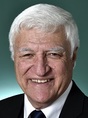
Bob Katter Kennedy, Katter's Australian Party
10:09 am
I move:
That this House calls on the Government to prescribe that Australian superannuation monies be invested in Australian industries and projects by ensuring:
(1) superannuation funds holding the money of Australian citizens be encouraged to investigate mechanisms that will enable them to invest that money in:
(a) entities that have majority Australian ownership; and
(b) projects or industries that are based, or predominately operate, in Australia;
(2) the Government partner with such superannuation funds, under public-private partnerships (PPPs), to invest in Australian industries for money-making projects;
(3) that such PPPs are listed as critical economic generators and have streamlined assessment and approval processes; and
(4) that the Government consider all other necessary measures to maximise the income stream from such investments and offer maximum returns for Australian citizens.
Until 1993, there was a 60-40 rule. Sixty per cent of all superannuation went into government securities. In the very enlightened government that we had in Queensland, we used that money to build the railway lines and the ports to get our coal and minerals out. We went from zero to $60,000 million a year in coal and mineral production. We used that money to build the world's biggest power station, and, since the Country Party did not ascribe to the free-market policies of the ALP and the LNP, the Bjelke-Petersen government in Queensland took one per cent of the coal for free—the biggest power station in the world and free coal. It produced the aluminium industry, because we had the cheapest electricity in the world, generating $14 billion a year. The beef road scheme doubled beef production, generating $8 billion a year. Dams doubled sugar and cotton production, producing $2 billion a year. The railway to Mount Isa was built and generated $6 billion. A hundred billion dollars was created by the 60-40 rule, and it was abolished by the ALP government in the nineties. So no money goes for any of these development projects now at all. The money is going into the stock market, which, to quote no less a person than John Maynard Keynes, is a 'roulette wheel'. I would describe it as a Ponzi scheme. If you've got a lot of brainless wokeys—double-degree 'done-nothings'—making decisions on how your money should be invested, then what you've got is a giant Ponzi scheme. They buy and sell shares from and to each other.
The person who will second this motion has met with and is working with some of the most prominent people in this country, in an effort to rejuvenate for Australia our own motor vehicle industry. The government can do that by simply saying all government cars in metropolitan areas will be built in Australia by an Australian owned company. We thank very much the honourable member for Fowler for her initiative in this area. She is meeting with, as I say, some of the most important people in Australia.
While these people I mentioned spend the money on selling shares to each other, I might add that over 50 per cent of that money goes to buy shares overseas. We don't need to be told that because there's an advertisement where a superannuation company skites about investing in Swedish railways. What the hell would some wokey, double-degree, 'done-nothing' person out of Sydney University know about railways in Sweden? That is our superannuation money at risk. Before, it was guaranteed by the government. You wouldn't give that money to governments today if the 60-40 rule was reintroduced—and Kevin Rudd, in his book, says this must happen. Some of this superannuation money must go into development.
You couldn't give it to governments today; that would just be ridiculous. Look at the Queensland government—spending $62 billion for some sort of fantasy, new-age generation of electricity. We know where that's going to go, because already a lot of it's gone. Another $40 billion is being spent on people running around in a circle and a fireworks display called the Olympic Games, and there will be $10 billion worth of pleasure domes along the Brisbane River. So you couldn't possibly give that money to the governments of today, and most certainly not the Queensland government. You would set up an authority of highly respected Australians with records of achievement, and I don't hesitate to mention people that I consider should be in that group. They include Nev Power, who achieved tremendous success in the mining industry, along with Twiggy himself. I recommend those two people. Kevin Rudd introduced the NBN, which gives us the best communication system in the world, and also introduced CopperString, which opens up the much needed north-west minerals province, with massive vanadium deposits throughout that area, new-age minerals and, of course, copper, which is another new age mineral. I certainly would recommend him. I also recommend Sally McManus, the head of the ACTU, for entirely different reasons. Christine Holgate is a super achiever— (Time expired.)


Dai Le Fowler, Independent
10:14 am
I second the member for Kennedy's motion. Manufacturing is one of the largest employers in my electorate of Fowler. The industry employs nearly 70,000 people, which is almost 40 per cent of the electorate's population—compared to 5.9 per cent of Australia's workforce. For example, Liquip, based in Wetherill Park, is an industry leader in the design and supply of bulk liquid-transport system solutions, as well as hydrocarbon storage, and offers employment opportunities for my Fowler constituents. Liquip is part of OPW, which is part of Dover Corporation and is listed on the New York Stock Exchange.
Then there's the smaller family manufacturing business of BX Earth and Bathox, based in Chipping Norton. I'm sure every Australian remembers Bathox—that blue box of bath salts. As the member for the electorate of Fowler, I have family, friends and colleagues who work in manufacturing and I understand the importance of this sector to our local and national economy. But, as we know, local manufacturing is struggling. I'm encouraged that our manufacturing industry will now get a focus, with Minister Husic setting up the $15 billion National Reconstruction Fund to support local manufacturing. I hope that, as the government talks about the importance of manufacturing to the Australian economy, they recognise the significant contribution that south-western and Western Sydney people make to our manufacturing sector, which is dying for an injection of funds.
We have been talking about this great Australian manufacturing revival for far too long, and now, with so many families around Australia struggling to put food on the table, it's clear to me that the government must ensure funds get diverted into manufacturing regions like Fowler and not just diverted to building nuclear submarines to the tune of $368 billion. Where else could the government better invest in manufacturing than Fowler? As the member for Kennedy mentioned, Fowler can be the hub for EV vehicle manufacturing. We have the people, the resources and the experiences to regenerate the reputation of Australian manufacturing into a viable, sustainable future for all Australians.
I know that we have a workforce who are ready and willing to be trained and educated in the skills required to manufacture not just high-quality but export-quality goods here. Fowler has the potential to excel in production and can extend its manufacturing knowledge to production of EV vehicles or batteries for the nation. With bold leadership and courage, Fowler can become the global manufacturing engine room of this country. This is why I support the motion presented by the member for Kennedy, because it asks us to consider and explore options around investment opportunities into Australian manufacturing.
The motion encourages us to agree on investing a certain percentage of our superannuation funds into Australian industries and projects. In short, that means that existing Australian manufacturers or locally based manufacturers, with a majority of Australian ownership, can continue to grow, develop and expand. The member for Kennedy's motion is a step forward in revitalising the Australian manufacturing industry. According to the New South Wales Modern Manufacturing Taskforce report published in 2022, the New South Wales manufacturing industry has been in decline for many decades and investment in the diversification of the export base and economic complexity is necessary. The report states that advanced manufacturing is an opportunity for Australia and for New South Wales.
A shift in focus for direct investment into the manufacturing industry would support low-socioeconomic income areas by providing employment and investment opportunities for Australian business. I'm not suggesting we reinvent the wheel on superannuation; I just want us to think about diversification. Instead of putting all of our superannuation eggs into one global basket, why don't we think about how some of this can be directed locally to support and reinvigorate manufacturing? Just look at the opportunity we have with the Western Sydney International Airport project. We will see increased opportunities for jobs and skills in a multitude of industries. Instead of axing the rail system that would connect our community to job opportunities, superannuation funds can also go into building infrastructure, including advanced manufacturing. Anything is possible. Let us look at how we can direct just a portion of our superannuation investment to Australia and its industries, such as manufacturing. We could create jobs, develop talented and skilled workers, and boost our ability to innovate and create local technology.

Peta Murphy Dunkley, Australian Labor Party
10:20 am
Before I start my contribution, can I please welcome to the gallery Violet and Poppy Pullum with their mum and dad. They've come all the way from Frankston to have a look at Australia's capital and parliament today. I am pretty excited that they are here.
I thank the member for Kennedy for this motion. I think the intent of it, which is about investing in Australian manufacturing and investing in making things in Australia again, is not something that any right-minded Australian can take issue with. In fact, I know the member for Kennedy knows that making things in Australia again, Australia made, is one of the things at the heart of the Albanese government. The National Reconstruction Fund has been mentioned. The aim of that, in part, is to rebuild Australian manufacturing. Of course, the transition to renewable energy is not just important for the planet and the environment but it presents a massive opportunity to Australia and Australians to become a world leader and a manufacturing superpower in renewable energy. We dig up the critical minerals in this country that are required for renewable energy; we can and should do more in processing them and manufacturing in Australia. No right-minded person could take issue with that.
Where I take some issue with the motion put forward by the member for Kennedy is that superannuation funds should be compelled to invest in Australia. I would like them to invest in Australia. I would like Australian investments to not only be good for Australian businesses but be good for superannuation account holders. It's important to remember that the objective of the superannuation system should be, and has been, about delivering the best retirement incomes for all Australians so that they can retire with dignity.
Since Labor introduced a superannuation guarantee, it has been a great Australian success story. It does show what can be achieved by the combination of efforts of union movement workers and good, progressive governments. Since 1992, superannuation has grown from about $148 billion to over $3.5 trillion, making it one of the world's largest pension schemes. We have to be vigilant to protect that superannuation system. It's really important that while we're doing that we maximise the performance of superannuation investments and hold funds to account to ensure that all decisions are taken in the best financial interests of members.
So, Member for Kennedy, where national interests and the best financial interests of members align, superannuation can and, I would say, should make a significant difference to the national economy. Absolutely. But it is also important to always remember what superannuation is for. It's to make sure that everyone in the system knows that the objective is to deliver the best retirement incomes for Australians. I'm not sure if I qualify as a woke double-degree person that the member for Kennedy was talking about. I have two degrees, but one is in psychology and one is in law, and it's from ANU. I'm not sure whether that qualifies me as a woke double-degree holder. But I am qualified in being someone who will stand up every day for superannuation and for the difference it makes to working people.
We saw during the COVID pandemic the consequences of a failed policy which allowed and in fact encouraged people to access their superannuation early. For many people in my community and witnesses I have heard from before the parliamentary committee that I chair, it meant that their gambling habit got worse, their alcohol habit got worse—their money was just thrown up against the wall for addictions. It also means their retirement is going to be less secure for themselves and their family. We have to guard against the idea of dipping into your super to buy a house, rather than investing for your future. Member for Kennedy, I have no problem with the fundamental focus of this motion, investing in Australia; we just have to be very careful with superannuation.
Bob Katter Kennedy, Katter's Australian Party
Mr Speaker, can I take a point of order on the last comment by the speaker, which reflects upon me?
Milton Dick Speaker
The time is such that we're into the next speaker, but you wish to take a point of order?
Bob Katter Kennedy, Katter's Australian Party
For one second, yes. What I've proposed is that at all times it's government guaranteed. You make a good point, but I must make the point that I seek government guarantee.

Graham Perrett Moreton, Australian Labor Party
10:25 am
I'm about to say something I don't usually say in this chamber, and that's that I largely agree with the member for Kennedy on this topic.
The superannuation guarantee is a great Australian Labor success story. It shows what can be achieved by the combined efforts of the union movement, workers and good, progressive governments. It has helped millions of Australians enjoy a secure and dignified retirement and has built significant infrastructure along the way. Since 1992, superannuation has grown from around $148 billion to over $3.5 trillion. This means Australia has one of the world's largest pension pools.
Australians know they can trust the Albanese government to continue to deliver a strong superannuation system that provides the best outcomes for members and society at large. A key part of this priority is to legislate the objective of superannuation: it's not just 'your money'; it is 'your retirement money'. That is a fact that those opposite chose to forget when in government. By having a clear purpose, settled by the parliament, everyone in the superannuation sector can work towards building a stronger system. No-one wants to see governments institute bad ideas that go against the foundations of super. That's why it was poor judgment of the Abbott-Turnbull-Morrison governments to see super as the answer to every problem they didn't want to solve—private stimulus used to solve a public problem: the pandemic. The then coalition government encouraged people to raid their super throughout the COVID pandemic. In their rush for an economic cash splash, the Morrison government put no safeguards around people hacking into their own retirement.
Those who took this decision will see their super balances stay too low for decades—that compound interest opportunity thrown away. They have forgone retirement savings for a trip to Bali, for a bull bar, for betting, for a boob job or for lap band surgery. There's evidence that these things are what withdrawn money was used to fund. Arguably, a prudent investor wouldn't make any of those investment choices, but humans are interesting creatures. That's where, I humbly suggest, the member for Kennedy misses the point a little bit with this motion. Good governments guide, rather than dictate, where superannuation funds invest. We need to strike a balance between financial pragmatism and economic nationalism. Personally, I've argued for years that too many funds are flying over Asia, where the fast-growing emerging middle class are, and investing in older, less growth oriented European and North American infrastructure opportunities. Asia, Africa and South America have greater risk but also better growth opportunities.
However, fund managers focus on what is best for long-term returns. As an Australian, I would like all investment to be in this country, but the return to members is the paramount consideration. It's important to recognise that there's a difference between the objective of superannuation and the benefits of the superannuation system. The objective of the system should be to deliver the best retirement incomes so that Australians can retire with dignity. That's why it's so important that we maximise the performance of superannuation investments and hold funds to account by ensuring that all decisions are taken in the best financial interests of members. Where the national interest and the best financial interests of members align, superannuation can make a significant difference to our national economy, but we want to make sure that everyone in the system knows that the objective is to deliver the best retirement incomes for Australians. For example, there are opportunities for super funds—if permitted and if the parliament sorts itself out—to invest in Australian housing. I wouldn't mind seeing more Australians benefit from Australia money. Why not invest money in new Australian housing stock instead of buying toll roads in Canada or Gatwick Airport?
But, as I mentioned before, it's up to governments to open these options to the funds, not to dictate to them. Imagine if coalition governments dictated where super funds invested. They'd inevitably come up with some harebrained pork-barrelling scheme—to mix my animal metaphors—in their marginal seats, such as dredging Tumbi Umbi Creek or the Beaudesert rail restoration project, or some sort of milk thing in north Queensland—I remember them.
We do not need risky investment schemes that result in the destruction of people's retirement savings, and that is the core purpose of super as imagined by Labor visionaries like Hawke and Keating. It's all about saving for a dignified retirement. It was a Labor government that established the superannuation guarantee, and only Labor governments have worked to strengthen it to provide for Australians in their retirement. Investing in Australia is a good thing, but you don't need the dead hand of government dictating that. We should let financial funds and financial visionaries make those decisions, because that is what superannuation is for.
Milton Dick Speaker
The time allotted for this debate has expired. The debate is therefore adjourned, and the resumption of the debate will be made an order of the day for the next sitting.