
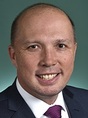
Peter Dutton Dickson, Liberal Party, Leader of the Opposition
2:36 pm
My question is to the Prime Minister. Prime Minister, the government promised Australians before the election that no family will be worse off and that almost all families will be better off. Is the Prime Minister aware that Australians are getting less for every dollar they spend at the supermarket, that power prices continue to surge, that Australians are you working more hours and getting less for it and, in the month of May, a record 40 per cent of mortgage holders struggled to pay their mortgage. Will this Prime Minister admit that Australian families and small businesses are worse off now than when his government was elected?

Anthony Albanese Grayndler, Australian Labor Party, Prime Minister
We are very conscious of the fact that the global economy has softened due to supply chain issues relating to the post pandemic recovery and the impact of the Russian invasion of Ukraine. We are also very conscious of the fact of what we inherited—the largest deficit since the Second World War and a trillion dollars of debt with little to show for it; sluggish economic growth; productivity sliding backwards; declining business investment; widespread skill shortages, which were holding businesses back; a wages policy that was deliberately about keeping wages low; and more Australians than ever in insecure jobs. We are aware of that.
We are also aware that the largest increase in inflation this century, in the March 2022 quarter, was of 2.1 per cent. If you have 2.1 per cent inflation, then that does have an impact. What also has an impact is if that is the context in which you are bringing down a budget—as those opposite did in March 2022. At a time when inflation is the highest of any quarter this century, what they chose to do was to pour petrol on that fire. What they chose to do was try and buy their way through an election with a massive stimulus, which of course all ended once people had voted.
Last week we had the figure of a 0.8 per cent CPI increase in the June quarter. We would like to see that moderate further, but we acknowledge the fact that that is a moderation compared with where it has been and certainly compared with the 2.1 per cent that we inherited. But we do have a plan to combat inflation. It is about turning the $78 billion deficit into the first budget surplus in 15 years—that is what we have done—and banking that. Secondly, it's about providing cost-of-living help that supports household budgets without adding to inflation: cheaper child care, cheaper medicine, energy bill relief, affordable and social housing, strengthening the social safety net—all measures that those opposite opposed. And, thirdly, investing in supply chain challenges, including the National Reconstruction Fund, skills and free TAFE, infrastructure investment— (Time expired)