

Andrew Nikolic Bass, Liberal Party
3:02 pm
My question is to the Minister for Resources, Energy and Northern Australia. Will the minister update the House on the government's commitment to lower electricity prices to promote jobs and growth, including in Australia's manufacturing? Is the minister aware of any alternatives to this approach?
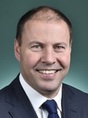
Josh Frydenberg Kooyong, Liberal Party, Minister for Resources, Energy and Northern Australia
I thank the member for Bass for his question and acknowledge that he is a fierce advocate for jobs and growth in his electorate, particularly in the manufacturing sector.
When it comes to electricity prices, the coalition has not only talked about lower electricity prices—it has actually delivered them. After Labor's time in office, electricity prices went up around 80 per cent. The coalition came in and got rid of Labor's carbon tax, and we saw electricity prices fall for the first time in a decade and by the largest-ever single amount. We have also reined in network spending, and network spending is important because it can make up some 50 per cent of household electricity bills.
I am asked: am I aware of any alternative approaches? Well, we are aware of the alternative approach from the Labor Party, because it is to bring in the rehashed, rebooted, reheated carbon tax 2.0—and we know how successful it was the first time! I have to confess: after it crashed at the box office last time, we are surprised to see the sequel here so soon. As the Minister for the Environment outlined, Labor's own modelling on their carbon tax showed that wholesale electricity prices will increase by 78 per cent, that activity in the construction sector will be down 11 per cent, and then, importantly, activity in the aluminium sector will be down 46 per cent. Why that is important is because Bell Bay Aluminium is in the member for Bass's electorate and it employs nearly 500 people directly and around 1,000 people indirectly. So what does the Labor Party say to those workers—to the welders, to the painters, to the truck drivers?
The Leader of the Opposition went on Jon Faine's program, and Jon Faine said to him, 'You would have to say that the carbon tax makes things harder for Australian manufacturing.' Bill Shorten's answer: 'It's never hard'—
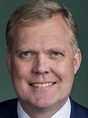
Tony Smith Speaker
The minister will refer to members by their correct titles.
Josh Frydenberg Kooyong, Liberal Party, Minister for Resources, Energy and Northern Australia
It is never hard for the Leader of the Opposition because he has never run a business. He has never employed someone. He has never put his own capital at risk. And that is why it is never hard to see an increase in electricity prices.
So, under the coalition, electricity prices are lower. Under the coalition, jobs are safer. Under the Labor Party, with their reheated, rehashed, rebooted carbon tax 2.0, electricity prices will increase dramatically and jobs will be lost.