
House debates Bills
Appropriation Bill (No. 1) 2026-2027, Appropriation Bill (No. 2) 2026-2027, Appropriation (Parliamentary Departments) Bill (No. 1) 2026-2027; Second Reading
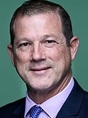
David Batt Hinkler, Liberal National Party
7:05 pm
I rise to speak to the Appropriation Bill (No. 1) 2026-2027. Labor's budget of broken promises and higher taxes destroys any concept of a fair go for the people of Hinkler. I was on the road only last week with my mobile offices straight off the bat. At every stop on the map, from Fishermen's Park at Urangan to Pialba, from the foreshore at Bargara to Woodgate Beach and to the bustling main street of Childers and then across to Bundaberg, in every location I've heard loud and clear that confidence is low and so, too, is the trust in this Labor government. There's the lack of a fair go for veterans, the unfair private health insurance rebate removal for our over-65s, despair over Labor's toxic taxes and crippling conditions for small businesses.
After five Labor budgets, Australians are paying more, working harder and going backwards. We are faced with more debt, lower living standards and fewer homes for the people of Hinkler. Less than two per cent of new infrastructure pipeline projects outlined in the budget are for the regions. That's less than two per cent, and nothing at all for Hinkler—zero. The Labor government is cutting infrastructure payments to the states and territories by $4.7 billion over the budget forward estimates. But it did manage to find an additional $3.8 billion for the Melbourne Suburban Rail Loop—convenient timing in an election year for Victoria. And then there's a $3.9 billion cut to road funding.
With a massive cloud of uncertainty hanging over major projects in Hinkler, local councils and state government MPs are calling on the federal government to do more to help get boots on the ground. I back those calls for more action and less talk as costs for these projects rise and indeed threaten to blow out. Hinkler projects with previously committed federal funding are now sitting in limbo. As an example, what's next for Paradise Dam on the Burnett River? Will it be repaired, rebuilt or left as it is?
Long-term water security remains critical to the future of my region, and I'm committed to seeing the original capacity restored. And we must not forget it was a state Labor government that built this dodgy dam in the first place. Now we must make the right decisions, provide some real certainty to farmers and fund the fix appropriately. And downstream, just two and a half months since the Burnett River's major flood that inundated hundreds of Bundaberg homes and businesses—what's the next step for flood mitigation for Bundaberg? Locals have been waiting for something, anything, for 13 years.
As our Hinkler population booms, our road network is under significant pressure, but this Labor government is ignoring the fact that projects like the Maryborough-Hervey Bay Road and Pialba-Burrum Heads Road intersection upgrade are going nowhere, and the costs just keep climbing and work still yet to commence. I thank the state member for Hervey Bay, David Lee, and the state member for Maryborough, John Barounis, for their interest in this project as we work together to see some action fast. I also recently met with the full Fraser Coast Regional Council to talk about the challenges facing our region, considering the high population growth. In Bundaberg, there's money set aside for the Quay Street revitalisation project. Let's see some of these funds get spent and work commence.
Hinkler needs certainty, not broken promises and lost funds, especially at a time when costs are on the rise. Don't forget the regions like Hinkler. A fair share is what we need. Support for health services. Cheaper electricity. Cutting red tape. Yet, as these issues are pushed to the side under Labor, they will still find a way to spend another $18.2 billion on net zero—$18.2 billion. While I talk about big-ticket items such as roads and infrastructure, it's often the smaller projects that mean the most. Those opposite are quick to announce projects for their electorates, but the regions represented by the coalition are being conveniently forgotten.
Last September, I wrote to the Prime Minister. I outlined the commitments I made prior to the election, and, while these were promises from opposition, they are desperately needed now more than ever. They would support vital community and sporting upgrades across Hinkler. The projects include an upgrade to amenities at the Isis Cultural Centre in Childers; Hervey Bay Basketball Association's complete fit-out of its new home including canteen, office and accessible change rooms; Bundaberg Touch Association's upgrade to lighting and bathrooms; a new LED sign for the Woodgate and District Residents Association; upgrades to accessible bathrooms, kitchen and electrical systems at the Fraser Coast Swim Club; accessible bathrooms and a ramp at the Burgowan Bowls Club; installation of an automated irrigation system at the Burrum District Golf Club; and lighting upgrades for the Bundaberg Hockey Association
Funding of these Hinkler projects would play a key role in building stronger and more resilient regional communities. These projects were identified based on demonstrated community need, regional growth and their ability to provide long-term benefits. While these initiatives would not be considered costly, they would be welcomed for the betterment of the respective groups and organisations. Again, Hinkler just wants a fair share.
I've been advocating strongly for the continued delivery of specialist palliative care—fee-free—for local families. The Fraser Coast Hospice, originally funded with support from a previous coalition government, needs further assistance including community and business support. The shortfall is around $750,000 per annum. Fraser Coast Hospice is a six-bed, short-stay facility where people spend their final days and weeks surrounded by comfort, dignity and the people they love. This is something everyone deserves. Meanwhile, I recognise the efforts of the Bundaberg community hospice group in their bid to build a new hospice. We must do more to help people receive dignified care in their final moments.
Earlier this year, here in parliament, I joined the calls for more support to be delivered to neighbourhood centres. In regional Australia, in electorates like Hinkler, neighbourhood centres are an essential service, the heart of our communities. They foster safety, connection and social capital. They're the places where community connection happens. The Burrum Heads Neighbourhood Centre services a small but rapidly growing coastal community, and it has outgrown its home. Powered largely by volunteers, the team delivers outreach, counselling, training, sewing classes, a library, community transport, an op shop, community markets and so much more. I thank the Burrum Heads Neighbourhood Centre's Julie, Kathy and Lynne for updating me on their situation and sharing the story of the centre's growth over the past 15 years. Centres like this are especially called upon to stand up and support communities during times of crisis. So now, more than ever, we need to provide them with adequate support
To further break down the failures of this budget from Labor, I note that mining investment is collapsing to zero growth in 2027-28. Labor is prioritising gas market intervention and red tape over new investment, risking jobs, investment and future tax revenue.
Then there's tourism. As the whale-watching season draws closer, Tourism Australia is being cut by $49.4 million over four years including a $15.1 million reduction in 2026-27 at the worst possible time for regional tourism operators already battling soaring costs. Hardworking bodies like Bundaberg Tourism and Fraser Coast Tourism & Events are doing all they can with what they have. But, as fuel prices impact forward bookings and the cost of doing business skyrockets, cuts will make it even harder to survive.
Then there are the already infamous toxic taxes. Labor's broken promises will hit regional Australians in places like Hinkler the hardest, with the proposed capital gains tax changes set to damage Australian agriculture and family farms. ABARES data shows the average broadacre farm achieved just a 0.6 per cent rate of return on capital in 2023-24, with most long-term returns coming through land value growth rather than yearly income. Average broadacre land values have risen 9.8 per cent each year over the past decade, meaning Labor's CGT changes will punish farmers for long-term asset growth while discouraging younger Australians from entering agricultural pursuits. Combined with Labor's attack on negative gearing and trusts, these changes further undermine investment confidence, intergenerational family farming and regional small business.
Staying on farming, the lifeblood of Hinkler, Labor is cutting $191.6 million from the agriculture, fisheries and forestry portfolio over five years, with ongoing cuts of $30.5 million every year thereafter. More than $104.6 million is being stripped from regional and agricultural grant programs, including pest and disease preparedness—more hits for Hinkler. Another major issue is Labor's cap on Hinkler Veterans' allied health services. I've been very vocal on this and I'm simply urging the government to remove the uncertainty and reverse the decision to impose the $5,000 annual cap. Veterans should not be asked to bear the costs of Labor's budget repair.
While the Labor government has dealt Hinkler a budget of broken promises and toxic taxes, in stark contrast, the coalition has an alternative plan, a plan for a fairer, freer and better Australia. Only the coalition can deliver a fair tax-back guarantee. From 2029, a coalition government will index the bottom two income tax thresholds to inflation. This will fully protect around 85 per cent of income earners, with a relief of around $250 in year 1, growing to more than $1,000 a year in year 4. From 2031-32, the coalition will index the top two thresholds as well, fully protecting all income earners from inflation or from what many know as bracket creep. This is generational tax reform that is fair, simple and honest.
Only the coalition can fix the migration and housing crisis. We will ensure Australia only brings in as many people as it can house. Under the coalition's pledge net overseas migration will be capped each year at the number of new homes completed in Australia. The pledge will be backed by a housing supply package, including a $5 billion housing infrastructure fund to unlock up to 400,000 homes by funding critical last-mile infrastructure such as water, sewerage, power and access roads.
Only the coalition is putting Australians first. We will reserve welfare payments and future eligibility for the NDIS for Australian citizens. From 1 July 2028, access to 17 welfare payments and benefits will be limited to Australian citizens only. Future eligibility for the NDIS will also be limited to Australian citizens. If you commit to Australia, Australia will commit to you.
Only the coalition will deliver a future generations fund to ensure resource windfalls are used responsibly. Where resource windfalls are higher than forecast, a coalition government will bank 80c in every dollar into the future generations fund and quarantine at least 25 per cent of that fund for regional Australia. The fund will help pay down Labor's trillion dollars of debt and invest in nation-building infrastructure. These windfalls will help build the roads, rail, hospitals and schools our country needs.
Only the coalition can be trusted to deliver more fuel, more storage and more security for Australia. We will reduce pressure on families and small businesses by scrapping Labor's Safeguard Mechanism, a carbon tax on business that will cost refineries around $165 million by 2029-30. A coalition government will keep pushing for a daily public fuel dashboard so Australians can see supply levels in real time. The coalition will also unlock an Australian fuel supply by reversing regulatory barriers, reforming the EPBC Act, and fast-tracking national significant projects like Queensland's Taroom Trough—not far as the crow flies, just inland from my electorate. If fuel stops, Australia stops.
Importantly, only the coalition will boost small-business investment. The coalition will back small businesses to invest with a permanent $50,000 instant asset write-off. The coalition will also continue to fight Labor's changes to capital gains and trusts, which are an attack on small business. I'm conducting a small-business survey in Hinkler this month and, so far, 59 per cent of respondents are not confident with how things are travelling.
When it comes to strengthening Australia's security, only the coalition will make Australia stronger and safer in the face of global threats, with a whole-of-nation national security strategy and real increased funding for defence. By increasing defence spending to three per cent of GDP, the coalition will provide real increases to defence spending.
The coalition will back Australians who work hard, save hard and want to get ahead because our country is worth fighting for. The coalition will ditch Labor's capital gains tax and negative gearing changes. We will scrap net zero and deliver the lowest possible power prices. Australia needs to be a country that uses its land, its resources and its people. Labor may have given up on Hinkler and regional Australia, but the coalition never will. We are just getting started.
No comments