
House debates Bills
National Disability Insurance Scheme Amendment (Securing the NDIS for Future Generations) Bill 2026; Second Reading
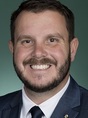
Phillip Thompson Herbert, Liberal National Party, Shadow Minister for Defence Industry
11:21 am
No-one's loved one should feel like an inconvenient dollar figure on any government's budget bottom line. No-one should be worried about treatments being cut or stopped to their children and to their loved ones. Sadly, over the last few months, this is what has occurred. In the electorate of Townsville, there is a school called AEIOU. That school is a specialty school for children with autism. They provide therapeutic services. They provide supports. The children are there for the whole school period, the whole school day. During that day, these children would be able to rock up and get the food therapy that they may need, get the behavioural support, get the OT support, get all of these supports that were then covered by the NDIS. Sadly, AEIOU in Townsville and around the country—those places have now closed. What happens to the young people who need those supports? You regress if you don't get to see your specialists. Children need early intervention so they can get that support now and get the treatment and help that they need so that they can have a functioning life and have a normal life.
AEIOU's doors were open one day, and then, in the afternoon, they told the parents, 'Starting tomorrow, there is no more AEIOU.' So parents that were working, contributing to the economy, whether they were a nurse, an accountant or a soldier, now have to pause their employment and rush to find specialists for their children. We've heard people talk about how it's hard to get a specialist or hard to get treatment for children on the NDIS in the city. Times that by 100, and that's what it feels like in the regions. So there's no availability for occupational therapy, behavioural support or physiotherapy without waitlists going well into the 12-month mark. And still, to this day, many of those parents have had to resign from their employment and can't find a place to get treatment for their children, with many talking about leaving Townsville and moving to a capital city. Townsville is the largest city the furthest away from a capital city. It's the capital of northern Australia, and we don't have enough of these supports there. It breaks my heart. I do support the NDIS, but I support it in a way that provides the care, treatment and support for those that need it, not a way that props up the bank balance of criminals and not a way that allows people to run a business for accommodation, where people will live, and, when found to have done the wrong thing, phoenix that business—the owners of the company travel overseas, come back and start another company doing the same thing. That's who we need to be going after, not cutting services.
If people think that services aren't being cut, you're wrong. I know this firsthand because Emery, my daughter, has level 3 autism and needs support and love. Without early intervention, she would still be non-verbal; she wouldn't be able to talk. But, with early intervention at AEIOU with Autism Queensland, now she can say, 'I love you, Dad.' That's what early intervention can do. That's what the NDIS can do. But my daughter's plan has changed, has not been updated and has been cut. I'm very lucky to be in a fortunate position to be able to fund that extra support—what she's not getting through the NDIS.
But, if you put a review in, you'll wait 12 months. What happens in 12 months for a child that needs the early intervention now? They get worse; they regress. This is what's happening around the country. This is what's happening throughout all of our communities. I know how much and how important these supports are for our children; I really do. My daughter isn't the only one that needs the support, the help, the love, the care and that extra professional support that she gets from a specialist but, because she's had that, she's gone from being non-verbal to counting to 100, to go from January to December and to go up to her sister and say, 'Hug, please.' This is what early intervention does, and this is why we must be ultra-laser-focused when we talk about the NDIS.
My daughter and daughters and sons around the country are not inconvenient dollar figures. They're not. They're people, people that will grow, will laugh and will love, but they need the early interventions. It makes me nervous when we hear people who say, 'Well, there's going to be this thing called Thriving Kids.' We don't know what that is yet, we don't know where it's up to properly, and it's not been rolled out, but supports like AEIOU and like Autism Queensland are all being changed, having funding reduced or having had to close. There's no stopgap in between. There's no support for our children in between when these have stopped and now.
I'm doing my best to be as bipartisan as possible, but the minister said, 'They can just call up the NDIS, and we'll find somewhere.' That's not how it works. You can't just call up the NDIS and say, 'We need a provider.' You can't call the NDIS; you have to go through your case coordinators and your case managers, then they'll get back to you via email. Then, several months has gone past, therapies have slowed down, and children regress. Early intervention is how people live a normal life. I've seen it firsthand; I've seen it with my daughter. She is going to thrive, she is going to kick arse, and she is going to live a great life because she has a loving family and she gets the supports that she needs. I am terrified for those that may not be able to get the supports they need for their children. I'm terrified of what happens if they regress because early intervention will turn into a postvention, and this will be ongoing.
People talk about the cost. I can't put a dollar figure on my daughter saying, 'I love you, Dad.' I can't and I won't, and I refuse to allow the parliament or anywhere else to put a dollar figure on supports for our children. I know that reforms are always good, that change is fine and that we need to work together, but we must communicate it to the communities. We must let the people know what we're doing. We must make sure that when there are changes or different programs that are coming up there isn't a gap in service and there isn't an unknown, where people can't get the support or the help that they need. We must be ultraclear on what we're doing. Everything should be focused on the information that we've been given from the participants and the families, because no good ideas come from politicians—not one. I haven't seen one yet. Good ideas come from the community and the people on the ground, and our job is to work with them to make sure that we can put the framework up and that it can work. If you allow politicians to make up the idea and solution for you, you will be upset. Our job is to listen, work and deliver. That's what we do in this place.
I honestly believe that every politician, regardless of shirt colour, wants the same thing here. We want to get to a point where people on the NDIS get all the support that they need—as well as love, care and everything—whilst we rein in the rorts that are ripping off the taxpayer and robbing our children of treatment. We all want to get there. Some of us might have a different way to get there, but I know that that's where we all want to be. I do not want to be hearing, 'It's a bit hard to go after the criminals.' It's not hard. Let's work together and do it. If it costs money to go after criminals to make sure they're not ripping off the taxpayer and robbing the people that need the treatment, I'm all for it, because in the long-term these people will be out of the disability sector, and then we're not focused on trying to wind in, shorten or make any negative changes to those that need the treatment.
There is always going to be good and bad, and there are going to be mistakes. A friend of mine is missing his leg. Up until recently, every year, he had to send a report to the NDIS that said that his leg hadn't grown back. That is silly and a failure, but it happens. How much does it cost to get the reports done? First, you've got to go to your GP, then your GP has to refer you to your specialist. Your specialist then has to write the report, and then the report gets sent. We're talking thousands of dollars here. This is one person in Townsville. Let's say that there are four people in Townsville. Let's say that there's a person with a spinal injury who is in a chair, and they have to be in a chair full-time. Do they have to do it? I would say that maybe some would have to go down a similar route. They're not going to wake up in the morning and stand just like my friend's not going to wake up in the morning and see a foot has grown back. It doesn't happen. So these are places where we can streamline and make sure that those cost savings are on the red tape that we can cut. Let's get rid of it; we don't need that. You've got one leg; guess what? You're always going to have one leg. You've got no legs? Sorry, they're not growing back. We know that's a fact, so they don't need to prove that year on year.
When it comes to getting a wheelchair, accessories or anything you need to be able to live your life that also shouldn't be a paperwork burden or anything like that. If you have limb loss, you will probably need a wheelchair at some stage. You don't have to get a report to say that; we know that. This is a commonsense approach. I also think there should be some parliamentary scrutiny when we're talking about anything that's automated. If your plan gets put forward and it says what's happening in your life and what you need from the NDIS, then it somehow does an algorithm and says it's similar to someone else's, so the computer says you don't need it, and then you've got to go through the fight, there must be some sort of human oversight. I think that's probably a good part because you don't want things to take so long.
My daughter, when she was young, got diagnosed with autism. There's more that happens then. It's not just the diagnosis—she has autism—and getting treatment. She had a sequela illness called pica. Pica is low iron. She would eat dirt, and I'd never seen this before. I'd never heard of it before. We went around in circles to try and get—
No comments