
House debates Statements on Significant Matters
Women's Budget Statement
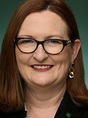
Louise Miller-Frost Boothby, Australian Labor Party
12:47 pm
Women's rights have made significant strides since we first got the vote in my home state of South Australia in 1894. It has been a hard slog to get where we are now. Women were only allowed to open their own bank account in the mid-1970s. No-fault divorce started in 1975. The national Paid Parental Leave scheme started in 2010, the same year that saw our first and only female Prime Minister, Julia Gillard. These are, in the context of the long span of women's rights movements, recent developments, and there is much more to do. The Albanese Labor government's budget recognises the disadvantage that women continue to face across many areas of life in Australia today. This budget doesn't and can't fix all of the issues that women in modern Australia face. But it's another stride in that long trek towards a better future for women. The Women's Budget Statement was first presented by a Labor government in the 1980s. The Albanese Labor government revived the Women's Budget Statement in 2022 because we believe that, in order to seriously address the issues that Australian women face, it requires a planned, practical and sustained response. It requires remembering to think about the impact of women in our economic agenda.
The reality even today is that women have a much smaller superannuation balance than their male counterparts on average, and hence we see more old women retiring into poverty. Women are likely to earn less than men to begin with and to experience unpaid periods away from the workforce. Women are more likely to be doing unpaid work, including the so-called 'second shift' when they get home at night. Women are more likely to experience domestic, sexual and gender based violence. Women are underrepresented in boardrooms and executive roles across a variety of sectors and industries.
By facilitating women's success, we access the talents and skills of all Australians and facilitate the success of our country. We become a happier, healthier, more productive society and a more equal society. This budget, as with the government's previous budgets, will continue the move towards social and economic equity for women. In the words of the late Dame Roma Mitchell, former SA governor and pioneer of women's rights:
There is a need for affirmative action, not to give preference to women over men in employment, but to ensure that women do not suffer detriment by reason of gender.
It is this affirmative posture that the government is taking We have put gender-responsive budgeting at the very heart of this process, which means that every measure has also been considered for its impact on women. Be in no doubt; these measures will make real and long-lasting difference in women's lives.
Women will be able to keep more of what they earn. From 1 July this year, the government will be delivering more tax cuts for every Australian to help with the cost of living, and 6.3 million women will benefit from our $250 tax offset and a $1,000 instant tax deduction. The combined tax changes will mean women will be better off by nearly $3,000 a year.
The cost of child care is a factor that every family considers when making decisions about whether both parents want to and can afford to work outside the home. That is why the Albanese Labor government increased funding for early child care. Families are entitled to three guaranteed days of subsidised child care per week. Cheaper child care has already benefited more than one million families. This supports women having choice about if and when they want to return to work, something that has significant impact on their financial independence. We have invested $1 billion in building more early childhood education and care centres.
We've extended paid parental leave by six months. When I had my children, there was no paid parental leave, only unpaid. The parenting payment has been extended to when the youngest child reaches 14 years of age.
We're also cracking down on abuses in the child support system by making it safer and fairer and ensuring that women receive the funds that they need and are entitled to in order to be able to support their families. The child support system supports around one million children every year. One million children are vulnerable to parents who maliciously weaponise the system—parents who weaponise this system by withholding funds that they are legally obligated to pay to support their children. This can be for cruel purposes to harass, control or inflict intentional harm. It is, more often than not, women who are subjected to this cruelty because recipient parents of child support payments consist overwhelmingly of women.
Currently, there is up to $2 billion in unpaid child support debt, or an average unsatisfied debt of nearly $8,700 for every woman. To combat this, the government is investing nearly $183 million in the biggest reforms to child support in 20 years. These reforms aim to put an end to the weaponisation of the child support system and make it safer and fairer for women to navigate. This is something the sector has campaigned on long and hard, and I'd like to recognise Dr Terese Edwards from Single Mother Families Australia for her excellent work in this field, and I congratulate her on recently receiving her doctorate.
The budget will also provide more secure housing for women and girls in crisis because every woman and girl experiencing domestic and family violence should not have to make the decision between staying in a violent relationship and being homeless. As the former CEO of Catherine House, I understand the crucial importance of resources being readily available to women and girls who have otherwise nowhere to go and no-one to turn to.
Unfortunately, the trend continues. It is women and girls who are the largest cohort and the most likely cohort to seek out homelessness services, and young women in particular are more likely to leave home due to gender based violence. The Albanese Labor government is therefore investing $59.4 million in the community housing sector to support young women who are victims of gender based violence. This is just one facet of the government's overall $308.6 million in continued investment to end gender based violence, and these commitments are in addition to the previous work the government has done to improve housing security for women and children.
Since 2022, the government has invested $1 billion to help women and children escape from abusive circumstances into crisis and transitional accommodation. This is on top of our 50 per cent increase in Commonwealth rent assistance, the $10 billion Housing Australia Future Fund, 30,000 new social and affordable homes and a leg-up for first home buyers, with the five per cent deposit and help-to-buy schemes, because every woman and child deserves a place to call home—a safe place to call home.
Since 2022, the government has provided $3.9 billion in new funding for legal assistance services, $41.8 million for 1800RESPECT, and 10 days paid domestic and family violence leave and has fully implemented Respect@Work, meaning women have stronger protections from workplace sexual harassment. In this budget, we have committed to an additional $61.2 million for the 500 Workers Initiative, which will create 500 new jobs to support victims-survivors of family, domestic and sexual abuse.
Unsurprisingly, issues of health are a major concern for women, and what appears to be innocuous in the first instance can have major impacts on how women navigate their day-to-day lives. This is why, in this budget, we are making a record investment in women's health. We have already made medicines for women cheaper and more accessible, with savings in excess of $647 million across 139 million PBS prescriptions for contraceptives, menopause therapies and the like. We'll be investing a further $2 billion to make medicines more affordable and more accessible. Also, $2.7 million will be invested in making long-acting reversible contraceptives, like IUDs and implants, cheaper and more accessible.
The data shows material improvements in the lives of Australian women as a result of the Albanese Labor government's practical and long-term plan. Women's participation in the workplace is at an historic high, the gender pay gap is lower than it has ever been before, women have been earning approximately $300 more per week since 2022, and Australia has risen in international gender equality rankings from 43 to 13. These are staggering achievements that have made a real difference to Australian women's lives. But, as I stated at the outset, this is only the beginning, and there is so much more to do.
It is vital that the Women's Budget Statement, an in-depth look at how budget measures affect women, remains a fixture of the political landscape, because ignoring a problem—like different gender impacts—doesn't make it go away, and it's important that the budget works for all Australians. In the words of former prime minister Julia Gillard, 'A gender-equal world will be better for everyone.'
No comments