
House debates Condolences
Morris, Hon. Peter Frederick
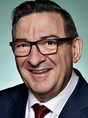
Steve Georganas Adelaide, Australian Labor Party
6:44 pm
We've just heard some great words from the member for Macquarie, the member for Riverina and the member for Newcastle, and from the Prime Minister yesterday and the Leader of the Opposition, about the life of Peter Morris. I can't claim to have known him that well, but I met him on a number of occasions and spoken to him many times on the telephone. When he used to visit Adelaide, he would always drop into my former boss's electorate office—Senator Nick Bolkus's office. They were quite pally and friendly, and I got to meet him through working at Nick's office back then.
Peter was the son of a Greek migrant. His father, Agapitos Montiadis, migrated to Australia and to Newcastle from the island of Symi, which is north of the island of Rhodes on the eastern Aegean Sea, just off the Turkish coast. If you look at the history of the island of Symi, the majority of people, before migration to Australia, were actually seafarers. You can see where Peter Morris got this interest in seafaring and shipping; it was obviously in his blood from his father's side of the family. Even today, some of Greece's richest shipping tycoons come from that particular island. That's not to say that Peter was a tycoon, but obviously he had a keen interest, as many from that island do.
His mother was Ethel Thomas, who was a Novocastrian. His parents obviously met and set up a house in Newcastle, and Peter grew up in the confines of a fish-and-chip shop, as many Greek migrant kids of his era and my era did. His early life would have been around the small business of his father's in Newcastle, which had a very large Greek migrant population at the time. Peter stayed connected to his Greek roots and heritage. He had close ties with the Greek community in Newcastle but also all across Australia and internationally.
Peter was part of the World Hellenic Inter-Parliamentary Association, which I'm very privileged to be the vice-president internationally of at the moment, and Michael McCormack is a member. Peter was part of the inaugural group in 1996 that formed this association in Athens with fellow congressmen and senators from the US, Europe, South Africa and South America. At the time when they were forming the World Hellenic Inter-Parliamentary Association, the Australians, including Peter, were very, very keen and adamant that we have a constitution and by-laws. They were modelled on the CPA, the Commonwealth Parliamentary Association. Some of our colleagues from other nations didn't quite understand the constitutional need for good by-laws of an organisation. I know that our Australian colleagues—Senator Bolkus; Peter Morris; Demetri Dollis, who was the deputy leader of the Labor Party in Victoria at the time; and Theo Theophanous—worked very hard to make sure that it was modelled very similar to the Commonwealth Parliamentary Association. In fact, this year we're celebrating 30 years with a conference in Athens. Michael McCormack and I will be attending. I've already spoken to my executive board over there to ensure that we have condolence motions for Peter Morris and, of course, for another comrade and colleague who passed away earlier, Nick Bolkus. So there will be an Australian presence there this year.
Peter, as I said, stayed close to his Hellenic roots. We were all very proud of him. I remember my parents talking about him continuously. Even though they were in Adelaide and had never met him, they knew about him. You can imagine migrant workers who had come here with no English, no language, no skills—to have one of their own as a cabinet minister was a huge thing. It was actually a huge message to the community that Australia accepts you and Australia will give you every opportunity, just like it did for Peter Morris. He was very good at ensuring that he understood that he was the member for Newcastle but also a role model for Greek migrants all around Australia.
He played a very active role within the Greek community in Newcastle but also nationally. He lobbied very hard for the Hellenic Memorial at the end of Anzac Parade on the left-hand side as you go up to the War Memorial. He lobbied the government at the time to assist and played an active role in the fundraising. There are a number of speeches that he made in Hansard promoting and pushing and lobbying for the memorial. In fact, they started the fundraising in 1987 and they completed it in 1988 during the commemoration of the Battle of Crete in May, which is coming up next week. Peter was at the opening, and spoke at that opening, of the Hellenic Memorial on Anzac Parade. He played an active role within the Greek community across the nation. He was someone we all looked up to.
When Peter came into the parliament, it would have been a very different parliament in those days. You can just imagine—a majority of men, all white and Anglo-Saxon. He would have been one of the rarities in this place, yet he prevailed and became a cabinet minister—the Minister for Transport, the Minister for Aviation, the Minister for Resources, the Minister for Housing and Aged Care and even the assistant Treasurer and the minister assisting the Prime Minister as well. But when you look at everything, one thing that stands out is his inquiry report Ships of shame. As I said earlier, shipping was in his blood. Some great work came out of that. Living in Newcastle, one of the largest ports in Australia, you would see ships that would come and go stranded, sailors that hadn't been paid, ships that weren't fit for humans to live on board et cetera. Yet, through his international connections, Peter was able to ensure there were measures in place when things took place. At a point of time, there was a Filipino crew that was in town, in Adelaide, who hadn't been paid and had no food on board. The ship was embargoed and had to stay in port until all these measures were in place. I remember that, during this particular campaign, the media was reporting it as 'a ship of shame'—so Peter's great work resonated in the community.
Peter also had some sadness in his life. He lost his son Matthew, who became a state MP. I went to a couple of conferences in Athens with Matthew over the years.
Peter will be remembered by everyone that worked with him and had dealings with him. He'll be remembered here in this place. As the Greek Australian media has reported this week, there have been articles on him pretty much every week since he passed away. He'll be remembered by the Greek community, and we'll be doing condolence motions at the World Hellenic Inter-Parliamentary Association. I had a couple of emails from a former congressman in the US who knew Peter and who found out about his death; he sent me an email saying how sad it was. There were people in Athens who heard about it, through his connections. It shows what sort of a person he was. He made connections with politicians from all around the world through this organisation. May he rest in peace. He will always be remembered.
No comments