
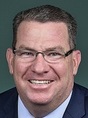
Scott Buchholz Wright, Liberal Party
12:50 pm
I start by offering my comments to my fellow Australians about the current crisis that finds itself at the feet of every Australian at the moment, with reference to those that are exposed to fuel prices and those that are exposed to the lack of fuel. I think, at the last count, there were over 900 service stations without fuel. Perplexing for some to think as to how this could happen when we are being told that we have the storage capacity in hand and that this is nothing other than panic buying by the Australian public—my task here with this grievance debate is not to come in here and join a conga line of tit-for-tat, blaming one or the other for the perilous situation that we find ourselves in, but to have a sobering conversation with the Australian public about what the coming months and potentially the coming years look like.
In the last 48 hours, I have spoken with a number of constituents in my electorate who are reaching out to voice their concerns, and there is no better place than a grievance debate to raise those concerns and share them with the Australian public. I'm sure those on the other side of the chamber are receiving exactly the same calls. I have a fuel distributor who sends nine B-doubles to the fuel terminal a week. He supplies 450 farmers. He supplies two shire councils. He supplies six service stations and three bus companies. Last week, he was down to two B-double loads, and the distributors have told him that there's no fuel this week. Can you imagine what his business model looks like when it comes to clients ringing him right in the middle of a harvest time—those growers that I said that he represents. We got some type of idea of what an essential service looked like during COVID. If those farmers don't have the diesel that they require to plant the food to put on the plates of Australians in a month's time—the crisis that we face now of not having diesel falls into insignificance when we don't have food to put on the shelves. I just make that point I make these points to outline what we need to be doing as a government to make sure that we are trying to inoculate ourselves from every scenario.
Last week, there were two bills that were introduced into the House. One was to deal with the fuel crisis. One was a bill to deal with increasing the fines for the ACCC on regulators or fuel suppliers who may be taking the opportunity to gouge. The second part of the bill that came through the House concurrently allowed the transport sector to pass on the fuel levy. Some seven out of 10 transport operators may have entered into long-term contracts with suppliers. I know, when I was a transport operator, I had rise-and-fall provisions in my contracts that allowed me, when fuel went up, to pass that through and subsequently, when fuel went down, to make sure that those savings would go back to head contractors, multinationals.
I do understand that there's a whole swathe of independent operators that don't have that complexity and that level of sophistication in their contract agreements and that are taking the opportunity now that fuel has near on doubled just to simply park their trucks up. We've all heard the phrase that without trucks, without the transport sector, our nation stops. That is a dire situation, and it's incumbent on us to find solutions to keep our transport sector moving and to keep our truckers rolling.
I also have had conversations in this place with risk assessors, those who will make assessments on this current conflict and assess how this affects their business, the financial markets and the insurance markets into the future. Take, for example, bond rates and what they look like into the future. Assessors will make short-term, mid-term and long-term risk assessments. God willing, the short-term risk assessment is that this is over and done in a matter of weeks, if not months, the Strait of Hormuz in the Middle East is reopened, and we see some return to normality. We as a country have little or no influence over that geopolitical landscape. As a result, we then take a look at what the mid-term risk looks like: troops on the ground and a 12-month insurgence. And the worst-case scenario that the risk assessors are genuinely making provisions around is a four-year conflict. When they make predictions of a four-year conflict, they're doing that around previous conflict timeframes, such as Iraq and Afghanistan. We all remember Russian President Putin's words that he'd be in and out of Ukraine in eight days. Three years later, they are still heavily entrenched with each other's conflict. So there's a real possibility that this could last for years. The risk assessments are being done now, so let's take that as our starting point.
Can I assure those farmers who, as I said at the beginning of my speech, were ringing and telling me about their problems with a lack of fuel that fuel is going to be the least of their problems if this is going on for two or three or four years. Fuel is going to be the least of their problems if they've got fuel in the trucks but they don't have fertiliser, which is another fuel-based commodity, a petroleum by-product that comes predominantly from gas through the urea that we need for nitrogen—a component which has revolutionised the agricultural sector with its yields. Fertiliser now is the single most valuable commodity when we're doing our inputs into a crop. The other concern we have is adBlue.
If we're still having this conversation in two, three or four years, as I said to my growers, 'The inputs that you're worried about today, like fuel, will fall into insignificance when the inflationary effects of fuel, fertiliser, adBlue and all the other costs are felt.' Remember, when you go to a shop and buy something that's packaged in plastic, your fruit and vegetables, all that plastic and packaging is a by-product of fuel. So, when fuel goes up, you won't just feel it at the bowser; you'll feel it across every commodity when you go to the checkout. That inflationary effect that will flow through has the potential, on our current trajectory—and Westpac are making these projections already for the short term, for the next 12 months—for interest rates in Australia alone to move three basis points by the end of the year. That's sobering. So, if this continues and you're doing three basis points a year, that's close to four per cent, with some ebbs and flows, over three or four years. Can you imagine the effect that that will have on the Australian public?
It is incumbent on us as a government to not be doing everything possible but to be acting now. A wise man once said, 'The smartest time to plant a tree was 20 years ago, to be able to sit in the shade of it.' The smartest time now to be building the infrastructure that we need to be able to manufacture our fertiliser and to manufacture and be independent of our own AdBlue supplies and our fuel sovereignty is now. I want to work with the government on bringing solutions that protect every single Australian.
No comments