
House debates Statements on Significant Matters
International Day for the Elimination of Racial Discrimination
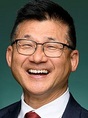
Sam Lim Tangney, Australian Labor Party
10:59 am
A few weeks ago, I was asked about my migration to Australia and whether I faced any discrimination when I first migrated to Australia in 2002. I was in my early 40s when I migrated with my wife and three young children. My English was broken. Even today I have a strong accent. My heritage is Malaysian Chinese. My ancestry is one of the 162 ancestries that we have in my electorate of Tangney. I reflected upon this question. If I had said no, I would have been lying. But I also have tried to focus on all the positive people who make my family and me feel more Aussie—neighbours like Uncle Bruce Baker, who I have talked about before; my friends; my English teacher Sarma Gough; and my police brothers and sisters, especially Inspector Don Emmanuel Smith and my mentor, the late John Harty.
Australia made me who I am. The police force accepted me into the police force. The community accepted me campaigning to be a member of parliament, to be a parliamentarian. Now I'm here as a second-term member of parliament for Tangney. I generally focus on positives. I talk about the success we have in multiculturalism and all the positive progress I have seen since migrating here more than 20 years ago. I talk about the good work that I see happening in Tangney, from the work of the WA Multicultural Lions Club to the culturally responsive aged care provided by Chorus and Chung Wah Community Care. I'm proud of our 13 community language schools in Tangney and of bilingual schools like Oberthur Primary School.
Our Tangney community welcomed my family and me all those years ago, and we continue to embrace people like me with warmth and love and welcome them. But as I praise our community's strengths, I also know the other side and the racial discrimination that happens far too often. When I was a police officer during COVID, I had many people from the Australian-Chinese community approach me. They reached out because they were being targeted. They were being racially abused and blamed for COVID. They had racist remarks yelled at their faces and written on their driveways, including their cars. They were scared to leave their houses, especially some of the migrants who did not have good enough English and were unable to talk back. Most of them didn't want to report these incidents, but, because I looked like them, they were comfortable talking to me in police uniform. My colleagues and I made a project, asking our police officers to let us know when there was a racially motivated attack, and together we worked to put a stop to what was happening at that time.
Every year on 21 March, we observe the International Day for the Elimination of Racial Discrimination. On that day, in 1960, 69 people were killed during a peaceful demonstration in South Africa against the apartheid pass law, which restricted the movement of many black South Africans. Next week is also Harmony Week, which closes with the International Day for the Elimination of Racial Discrimination. As Australia marks both moments, I want to reflect on both.
I have conversations with my constituents about the racism they face in their daily lives and the assumptions based on how they look or their names. A long time ago, a friend of mine could not get a job, so he decided to change his name on his CV to something that sounded more white and less Chinese. Eventually he got a job, and now he has moved up the ranks and is very senior in his role. I have spoken about some of the really ugly displays of racial discrimination that I saw during COVID when I was a police officer, but the example above is one of the acts of racial discrimination that happens every day. I have seen and heard constituents have their accents questioned, their capabilities challenged and their loyalty disputed.
Racial and ethnic discrimination happens daily, and it hinders progress for people in our community, especially in Tangney, across Australia and around the world. Racism has no place in our world. It is a challenging time right now—the Bondi attack, the rise of anti-immigrant sentiment and the terrorist attack in Perth. I speak with Tangney constituents who tell me they are frightened by what they see happening around them. Some people talk to me about how they feel unwelcome or no longer welcome. Others have reached out to me and talk about how they feel the social contract is disappearing. They ask that we find ways to hear each other and respect each other, including our political and civic leaders, even when we disagree—especially when we disagree.
I want to contrast this with some of the recent events in my electorate that I have attended. Last weekend I attended the Australian Sikh Heritage Trail in Riverton. The trail provides visitors with information about the history and heritage of Australian Sikhs, as well as information about Whadjuk Noongar culture and the Canning River. The people participating in this event had so much respect for one another. It was an opportunity to learn more about Sikh culture and the history of Sikhs in Australia, a story that is not always well understood. I thank the organisers for sharing this experience with me.
Tangney is one of the most multicultural electorates in Australia. A few weeks ago I also attended an event on mental health that was jointly organised by WA Multicultural Lions Club and the Melville Baha'i Community. The guest speaker was Tangney resident Nick Titov AO. We had people from all ancestries and backgrounds in that room, sharing their experiences and learning from each other. It was an everyday event that shows how we deliberately work to build harmony and a community where everyone belongs.
These events, and those across Tangney, remind me of how multiculturalism is a strength of our community, of our country. The decision to choose to live, work and play together across all races, languages, religions and culture is the strength of our community. As I said in my first speech as a member of parliament a few years ago, peace, love, unity, respect—four simple words that I choose to live by, four simple actions that we need more of in this world.
No comments