
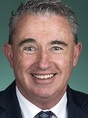
Kevin Hogan Page, National Party, Deputy Manager of Opposition Business in the House
3:15 pm
We all see times when we think and notice that governments have tin ears on issues and are not responsive to something important happening in our communities, but, indeed, this one is happening right across our nation. I mean, I understand that the Minister for Climate Change and Energy believes that there are enough fuel reserves in this country to combat any fuel issues we have, but what he didn't acknowledge today and what he and the other side of the chamber have to acknowledge—remember they are in government—is that there is a fuel supply issue in this country. A lot of ministers have come up. I'll quote one. The Minister for Employment and Workplace Relations said, 'There isn't an issue with supply when it comes to fuel.' There is. There is an issue for supply when it comes to fuel. We've had many examples today where distributors, retailers and, very importantly, wholesalers are not getting their normal fuel supply.
This is a huge issue. Some of the examples we got from this side of the chamber this question time are actually quite scary. We're talking about people who are feeding our country. We're talking about trucking companies who need to transport food to our supermarkets. There is a serious issue going on in our country, and they seem to be oblivious to it.
What I wanted to know and what I thought the minister might communicate today—I thought, when he said he was taking action by having meetings, that that was a bit light on. Well, it would have been nice to know what he said in the meetings. Okay, so people have come and said, 'You should make sure people don't do this.' What did the minister say to all those really important industry stakeholders who were in his office this morning? Did he tell them to get moving? Did he tell them examples of the threats to our food security and food supply? Did he go through in minute detail and give specific examples of geographic locations of companies, of businesses who aren't getting fuel? We've been sending them to his office. Has he communicated any of that to the stakeholders? What did the stakeholders say about that? Did they say they will take action? Did they say they will change the normal course of events because of what is going on in this country right now? We didn't hear any of that. Even with all the great examples that are very important to farmers and to communities across this nation, we heard nothing from the minister today even though he had many opportunities to tell us about what he's doing about this.
Now, I know he's a part-time minister. I know he has a really important role with COP, but he has another very important role. He needed to communicate. This is not for us. We might stay here representing and advocating for our communities. It was important for us to hear, but do you know who needed to hear this today? It was the community out there in Australia—real Australians who operate businesses, who are scared and nervous about their fuel supply. What did the minister say today to allay any fears? Nothing. He gave no information about what he's done.
I don't like to be negative, but should we be surprised with this part-time minister? Obviously, the other thing that this MPI mentions is energy security and energy supply. The importance of fuel supply to our food supply, our energy markets and everything else does bring up our sovereignty in a whole lot of areas. I remind the House that the minister is the minister responsible for Labor's reckless $9 trillion net zero 2050 plan, which is obviously an irresponsible plan and one that we can't afford. Part of it obviously is what we know is a reckless renewable rollout that is predominantly happening through regional Australia. We know the 60 million solar panels. We know the 20,000 wind turbines. We know the fact that agricultural land—food supply—is going to be all used up with this reckless renewable rollout. I always remind the other side of the House when we talk about this that a lot of this is done, as we know, for an emission reduction where have to get to net zero by 2050. I think it's really important that the government and every government be reminded that the three biggest carbon emitters across the planet are not signed up to net zero by 2050. It's important that you acknowledge that. It's important that you realise that China is not signed up to net zero by 2050, India is not signed up to net zero by 2050 and the US is not signed up to 2050. They are the world's three biggest carbon emitters. Yet this government believes we should be racing ahead with carbon emission reductions. There's a cost to that. We know there's a huge cost-of-living crisis in this country, and there is a cost to that.
Are we on this side saying we should abandon carbon emission reductions? Of course not. We believe that as a citizen of the globe we should do our carbon emission reductions as well. Our plan is to match OECD average carbon emission reductions. We're taking out China's and India's, because we could keep putting emissions up and still be matching the average if we left China's and India's in. So we took them out. Our ambition is to match the OECD actual. We think that's a responsible action. We think it's a far cheaper action. We think it will have less economic cost to Australia. So we encourage the government to have a look at that plan. We believe it's a better, cheaper, fairer plan for Australia in emission reductions and energy costs. But I don't have a lot of faith in the minister that he will look at that.
What it will mean practically—and I think it's important to acknowledge what this means in the difference in carbon emission reductions—is that Australia will have, by 2035, about a 35 per cent reduction in carbon emissions, which will be, as we say, in line with a lot of the other countries across the globe. Their emission reductions are going to take us to 65 per cent by 2035. Again, that's why we think this is responsible.
The other thing I want to talk about is that this policy and a lot of policies that have been implemented on the other side are why we have a cost-of-living crisis in this country. Why do I say that? It's not me saying that; it's the official inflation figures saying that. The inflation rate in Australia is 3.8 per cent. It came out last week. It went back up. In the US it's 2.4 per cent. Let's acknowledge that: a 2.4 per cent inflation figure in the US and 3.8 per cent in Australia. The average in the Euro bloc is 1.9 per cent, whereas our inflation rate is well over three.
Unfortunately this means that Australian families are working harder for less. Should that surprise us? The minister doesn't seem to be across the fuel supply issue. He's got a really reckless policy that's putting our electricity grid in danger. And let's not forget, going back to the 2022 election, that this minister was the one who made one of the big promises. They said it was the most modelled. And these are not my words; they're the now Labor government's words. They said the policy they were announcing was the most modelled economic policy ever done from opposition in Australia's political history.
That was of course the famous $275 cut in your power bill. That was meant to happen by 2025. What happened between 2022 and 2025? This is always a divert-and-deflect government, so of course it wasn't their fault. They blamed the Ukraine war. Of course, the Ukraine war had started before they took government. But when they didn't meet that promise, it's not their fault, if anything doesn't go right with this government.
Last week we were talking about inflation. Here I'll give credit to a Labor politician. I'm going to give credit to Peter Beattie, because Peter Beattie would sometimes go to a presser or go into the chamber and say, 'I got it wrong; I apologise.' He actually used to admit it occasionally, and he was quite respected for it—going into the chamber or going to a presser and saying, 'I, my government, we got that wrong.' He apologised, and people respected that. This government—it's beyond them. They have not apologised for any policy that they've ever done or for any promise that they haven't met. I think one of the most infamous ones is the $275. It would have been nice for them to say, 'You know what? We thought we'd modelled it well. We got it wrong. We owe the Australian public an apology,' but we'll never get that. This minister needs to get on top of this fuel supply issue. It's real. He needs to tell us what he's going to do about it.
No comments