
House debates Bills
Appropriation Bill (No. 3) 2025-2026, Appropriation Bill (No. 4) 2025-2026, Appropriation (Parliamentary Departments) Bill (No. 2) 2025-2026; Second Reading
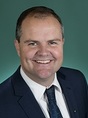
Ted O'Brien Fairfax, Liberal Party, Shadow Treasurer
10:16 am
And that is in addition to a lot of money that workers are having to pay through to the likes of the CFMEU. I want to recognise the shadow minister at the table here. You know where some of that money goes, of course; it goes to the Labor Party. That's what they do—wholly owned subsidiaries. To get back to where the worker is at—they are paying more money than they ever have. If you look at the trajectory over the medium term of the Albanese government's budget, the only way they go near making balance is through higher personal income taxes. We're talking about around half a trillion dollars more of personal income taxes over the medium term. That's the only way that they can feed their spending addiction.
I correct myself; there's another way—debt. Never before has Australia hit $1 trillion of debt, but we heard in Senate estimates yesterday that we are now literally only a couple of months away. We're going to hit $1 trillion of debt. This is a government which always claims it's doing the right thing on debt, but debt has gone up under this government. For the very first time it's going to hit a trillion dollars—probably $1.2 trillion. Why does this matter? This matters not just for economic reasons but also for moral reasons, because that debt will have to be paid off by the next generation of Australians. It's younger Australians who are going to be slugged with this debt. This restrains the options. There are fewer things they can do and fewer things Australia can do in the future when debt continues to rise because the government continues to spend. There is a moral case for getting debt down and controlling it.
This government has had the greatest revenue windfall in the history of Australia—$400 billion—not due to anything they have done. It was never forecast. This was a revenue variation of $400 billion. What would the average family do if they had a lot of debt and they suddenly inherited a lot of money? I'll tell you what they'd do. Australia's leading banks are saying Australians are probably the best in the world at this—they'd pay down their debt. The Australian people are prudent people. They get ahead of their mortgage payments. Upon receiving a $400 billion windfall, what did this government do? It decided to put its hand in the cookie jar: 'Let's go spend a whole bunch of that and bake it into the budget.' If you win the lotto, you can't assume you're going to win it the next week, the week after and the week after that, but that's exactly what this government is doing.
Who pays? Ultimately, it's the next generation. Right now, it's the current generation. Every single minute that goes by, we're paying an extra $50,000 in interest payments. There's no line item that's growing more quickly in the budget than this. Why? It's because they can't stop spending. What happens when the next external shock does come to Australia? And it will come; we know that. History dictates that we will have more external shocks hitting the Australian economy. When times are good, when you do have an enormous windfall, that's when you need to ensure you're creating a buffer for that next shock. If that shock is to hit anytime soon, we have a situation.
We have the highest-spending government in 40 years, outside of the pandemic. The spending-to-GDP ratio has risen from 24 to 27 per cent. That doesn't create a safety net to handle an external shock. We're going to have debt of over a trillion dollars. That doesn't create the buffer you need to handle an external shock. We have living standards performing poorly compared to every other advanced economy. It's completely out of control. At the household level, the economy has shrunk under this government. Every single day, Australians are getting poorer. The economy is getting weaker, and that's just day-to-day business as usual. If an external shock hits our country, this government has left us entirely exposed. Why? It can't stop its spending.
I go back to the budget strategy. Despite calls not just from the coalition but also from Australia's leading economists, this government and this Treasurer refuse to introduce fiscal rules into their budget to contain their spending, and this is just going to continue. That should be step 1: have rules to control your spending. Secondly, they should ensure that they are driving more efficiency in government itself, but they're not doing that. We've seen a complete blowout in the cost of government itself. Even with future potential tools, such as artificial intelligence, all we have from this government is timidity. The government will proudly boast about the majority they have in this parliament—and they do have a whopping majority; I can see that. But, instead of using it to advance the cause of the Australian economy so it can lift all boats and enrich all households, they're frozen when it comes to real economic reform. So, if the first thing is rules, the second thing they need to do is drive more efficiency. The third thing is to go line item by line item through that budget and find opportunities for savings.
You cannot tell me that we've got the highest spending government in 40 years, outside of a pandemic, and there isn't waste there. Again, we've got one minister at the table at least—the Minister for Climate Change and Energy. I'm grateful he's here. Look at his portfolio. The idea of the fringe benefits tax carve outs for electric vehicles—what a whopping waste of money, a complete waste of money. It has blown out. I look at the minister now. Is it five or is it now 10 times what was budgeted for? The minister wants to ignore. That's okay; he can answer if he wishes. That's how bad it is. Why did the government say they were introducing FBT relief on electric vehicles? It was to reduce emissions. Now, this side of the chamber supports reducing emissions. Unlike the government, we have a track record of actually doing so, of actually getting emissions down. The government does not. They talk about it, but, if you look at the scoreboard, they don't deliver it. That's the reason this minister is spending all this money—to get emissions down. Well, here's the thing: it is one of the most economically inefficient ways to reduce emissions.
Don't take my word for it. Take the word of the Productivity Commission, which has made that crystal clear. Do Labor care? No. It's not their money. Whose money is it? It's the hardworking Australians'. The same Australian families who go home each night and don't know how they're going to pay the bills are the ones who're paying for this stuff. Look at that very measure again. Do you know who gets the biggest subsidy? I'm happy for the minister to interject if I'm wrong here. The wealthier you are, the bigger the subsidy you get. How about that?
If you go to your mobile phone and you say you want to take a lease out on a Tesla—go to the Tesla website and look at model Y—what you'll find when you want to take a lease out of electric vehicle is that they'll actually ask you how much money you make. 'What's your income?' That's a bit bizarre; why would they do that? Because that's the way they can understand how much the government—in other words, the Australian people—will subsidise your lease of your vehicle. If you're a nurse and you're on $90,000, you put in $90,000; if you're a lawyer and you're on $250,000, you put in $250,000. The lease is cheaper for the lawyer who's on $250,000 than it is for the nurse on $90,000. Why? Because this government is subsidising, through this fringe benefits tax policy, the more wealthy Australians, at the very time that real wages are going backwards. They've gone backwards by over two per cent under this government. At the very same time, those same people who are struggling to pay the rent or to pay off a mortgage—those who have a mortgage. They have seen the average mortgage holder increase their mortgage payments by $23,000 a year. This year, after the last interest rate rise, the average mortgage holder in Australia will pay $23,000 more a year in interest payments alone under this government.
Can you imagine? There you are working your tail off for your family—to put food on the table and make sure you've got a roof over your head—and, under this government, you're copping an extra $23,000 in your interest payments. Under this government, you're forking out an extra $4,000 in personal income taxes. Under this government, you're paying an extra 40 per cent on your energy bill. You're paying well over 35 per cent on your insurance. Everything has gone up, and the Reserve Bank, you here, says: 'You know what? It's only going to get worse.' Prices are only going to go higher than they are today, probably peaking at 4.2 per cent. The market is pricing in further interest rate rises.
You've got these bizarre policies like the EV FBT carve outs, which means—for your household, with all of that pressure on you—the government is now using more of your money to subsidise high-wealth individuals so they can lease an EV. Don't tell me that's because it's going to be good for the environment. It is the most inefficient way to drive down emissions, which is why the Albanese government has failed on that count too. Yet, despite all of this, we will have the Treasurer and the Prime Minister claim responsible economic management. That is not economic management worth claiming any wins over.
The Australian people are becoming poorer. Our economy is becoming weaker. As a result, Australia is becoming far more dependent on foreign supply chains—because our capabilities are eroding. There is an alternative. That alternative lies with the Liberal-National coalition. Under leadership of this side of the parliament, you will see an Australia where the people are not poor but prosperous, an economy which is not weak but strong and an Australia which is not overly dependent but fiercely independent.
The starting point is good economic management. It's all about putting the economy at the centre. That is why we as Liberals, and with our Nationals counterparts, have always prided ourselves as being the better economic managers. That's not because we think economics is the end game. It is the means. A strong economy is the means by which that struggling family at home don't have to pay so much in personal income taxes. A strong economy is the means by which that struggling family at home don't have to pay so much on their interest payments. A strong economy is the means by which that struggling family at home can have Johnny and Mary doing their extracurricular activities at school, while still having a bit of take out and going on holidays. A strong economy is the means by which the living standards, the way of life, of everyday Australians can be enjoyed with health, happiness and fulfilment.
A strong economy isn't the end game; it's the means by which everyday Australians can have the freedom to pursue whatever opportunity they wish to pursue in this country. A strong economy is what unleashes innovation. A strong economy is what unleashes young Australians to become entrepreneurs, tradies or academics. A strong economy is the only way that we build a future for Australia which will see the next generation of Australians with more money in their pockets when they go home after another fortnight of hard work. It's a strong economy that will allow everyday Australians to have the opportunity to call a place a home of their own. A strong economy is the only thing that's going to allow Australia to remain a strong, secure nation in a very volatile, uncertain Indo-Pacific.
This is why a strong economy matters. It's about people. It's about our future. It's about the younger generations. It's why we are so determined on this side to fight on all things economics—because we know, despite the continual spin from the Treasurer, the way the Australian people right now feel is what matters. They are feeling poor because they are. While the government might like to blame international factors, the thing is that, when you talk about international factors, they affect everybody internationally. But when you are performing so poorly compared to other countries and when you have peer nations reducing interest rates but here they're rising, you know there's something wrong locally. Previously that's been referred to as homegrown inflation—and, indeed, that continues to be the case, which is why opportunities are missing us by as a country. That breaks my heart because I would have thought all of us, regardless of our political stripe, are here to build a better Australia for tomorrow. But every economic indicator says we're becoming a poorer country, and the next generation are not going to have the opportunities we had.
When the world changes there are a lot of things you can't control, which means you need to double down on those things you can control—and what you can control is your own economic discipline. If the families of Australia have been asked to live within their means—and they are—it's not too much to ask the government to do the same. That is why we'll continue to fight on all issues regarding the economy.
This government has to stop its spending spree. It has every right to decide on its spending priorities, but it has an obligation to find room in the budget to pay for them. When it doesn't, it drives up interest rates and the Australian people pay through higher mortgages, higher prices in the supermarket, higher taxes and higher debt. It's no coincidence that the only economic reform proposed by the Treasurer last year was to tax unrealised capital gains and superannuation—coming after more tax, breaching a red line in Australian tax law. They're dying to go after more tax.
As the coalition stands here today, we will support the appropriation bills; we're not going to block supply. We are the party of economic stability. We're the party that believes in responsible government, and thus the government will enjoy our support on the passage of these bills. But I make these remarks today to make it crystal clear that the coalition rejects the economic approach of the Albanese government because it is making Australians poorer and our country weaker and more dependent. We need to make Australians prosperous, strong and fiercely independent.
No comments